KajoMag

KajoMag is a Borneo-based digital publication exploring culture, heritage, travel and contemporary life.

T’Challa finds out the weight of responsibility in Black Panther

Black Panther may not be coming out until 2018, but Marvel fans are already enjoying its mind-blowing trailer that was released 16 October.

While the teaser trailer gave a hint about the world of Wakanda through Ulysses Klaue (Andy Serkis), who called it the ‘El Dorado’ of Africa, we find out more about this fictional African nation in the official trailer.

It begins with a space-age jet flying between looming waterfalls and over virgin jungle before piercing a shield that cloaks Wakanda from the rest of the world – hence the ‘El Dorado’ reference.

What follows are glimpses of King T’Challa’s (Chadwick Boseman) state-of-the-art lair/playroom on top of a cliff, an Afrofuturistic Wakanda that looks like it belongs in a Guardians of the Galaxy movie, kickass women in the forms of bodyguard Okoye (Danai Gurira), his younger half-sister Shuri (Letitia Wright) and his mother Ramonda (Angela Bassett), and of course, bad guy Erik Killmonger (Michael B. Jordan) who will be schooling T’Challa on how great power comes with great responsibility.

“What happens now, determines what happens to the rest of the world.”

Directed by Ryan Coogler, Black Panther drops in theatres 16 February 2018.

Star Wars: The Last Jedi trailer sets up for an epic showdown

We get a nice thrill of DOOM as the trailer for Star Wars: The Last Jedi begins with Emperor Snoke’s voiceover – presumably about the first time he saw Kylo Ren (Adam Driver) – and snippets of the New Order’s expansion plans put into action with burly AT-AT Walkers and blood-red smoke spewing machines crossing a white desert landscape.

Elsewhere, Rey (Daisy Ridley) is training on Ahch-To with Luke Skywalker (Mark Hamill), who echoes the same word – ‘raw’- when he comes to learn more of Rey’s power, and how it could be as dangerous as Kylo Ren’s.

It sets up a cliff-hanger ending where Rey says she needs someone to show her her place “in all this” and Kylo Ren offering her his hand. Will she take it this time? Will she deny him yet again?

For those who thought that The Force Awakens was just another version of A New Hope, the official trailer for Star Wars: The Last Jedi looks like the eighth instalment will be following a more dynamic story arc.

Judging by the trailers alone, however, we still don’t get any confirmation on whether Rey is Luke’s daughter or Kylo Ren’s sister. Meanwhile, Kylo seems as determined as ever to destroy the vulnerable parts of himself as we see him attacking the ship his mother, Leia Organa (Carrie Fisher) is on.

Other showdowns we can look forward to is the one between John Boyega’s Finn, who seems to have matured in the latest instalment as he takes on Captain Phasma, who we didn’t get to see at all in The Force Awakens.

Offering a little breather in the emotional trailer is the Porg, a puffin-like creature that resides on Ahch-To.

Watch out for Star Wars: The Last Jedi to come out 14 December 2017 in Malaysia.

Aquaman crushes it in Justice League trailer

The fourth trailer for the upcoming Justice League may have been a tribute to Superman, but it was really an introduction to what used to be a much-disparaged superhero – Aquaman.

The Internet already saw Aquaman’s reincarnation as a long-haired, savage, reclusive Arthur Curry (played by Jason Momoa) in previous trailers, but what they’re going to see in the final trailer is him seriously kicking ass as he takes on supervillain Steppenwolf’s insect-like minions with a trident, a shit-eating grin and a primal “Yay-ah!”

Fans of the Flash (Ezra Miller) can also look forward to this speedy hero coming up with the wise-cracks and the Amazon delivering on what everybody loved about her in her debut as Wonder Woman (Gal Gadot) – her refusal to back down in a fight.

Underscored with a skin-tingling rendition of David Bowie’s ‘Heroes’ by Gang of Youths, the members of the Justice League show what the world will have to do without Superman. Fans looking for a hint of a red cape in the trailer are going to have to wait until the movie comes out on November 17.

Whether the movie delivers the goods as its trailers promise is a whole other kettle of fish, but so far Aquaman is proving that he’s no fish out of water.

Visiting Krabi’s Emerald Pool and Hot Spring

Krabi Emerald Pool (10)
Visitors taking a dip in the green coloured Emerald Pool.

A visit to Krabi, Thailand is not all about its islands and beaches.

If you are willing to trade the warm seawater for cooling, refreshing freshwater, make a pit stop at Krabi Emerald Pool.

Emerald Pool

Krabi Emerald Pool (7)
Krabi Emerald Pool, the perfect place to take an underwater selfie!

Located at the Khao Phra Bang Khram Nature Reserve about 70km from Krabi town, this large natural pool is perfect for swimming in.

Living up to its name, the pool is indeed emerald in colour. The crystal clear water is perfect to take a selfie underwater.

About 600m from the Emerald Pool, there is another pool aptly named the ‘Blue Pool’ which is closed to the public from May to October during the bird-mating season.

Krabi Emerald Pool (2)
Leave your food here before entry!

In what I thought was a good move to stop littering, no food and canned drinks are allowed in the Emerald Pool area.

But if you have purchased food prior to your visit, there are wooden railings prepared especially for you to leave your snacks or drinks at the entrance.

It’s a simple yet great way to keep the reserve clean, plus, a board for you to hang your food? That is not something you see everyday.

However, visitors are allowed to bring bottled mineral water or drinking water onto the site.

Krabi Emerald Pool (12)
A gravel road leading to the Emerald Pool.

There are two ways to get to the Emerald Pool from the entrance. First is by an 800-meter gravel road which will take about 15 to 20 minutes’ walk and another is over a narrow, concrete 1.4km pathway, which will take about 25 to 30 minutes.

The tranquil walk to the Emerald Pool offers a great opportunity for bird-watching.

There are signs provided along the way on what type of birds you could watch out for, so keep your eyes peeled!

Krabi Emerald Pool (11)
A sign introducing visitors to what type of birds they can spot in the area.

The reserve is home to some rare bird species including Gurney’s Pitta, “the most wanted bird in Thailand”.

Its last reported sighting in Thailand was at the reserve in April 2016.

So if you paid enough attention or have a huge amount of luck, you might be able to spot this rare bird during your visit.

Krabi Hot Spring

Krabi Emerald Pool (16)
Take a refreshing dip in these “hot tubs”.

Some say this place is therapeutic while others call it soothing. Most visitors would agree that the Krabi Hot Spring is one of the must-visit sites in the province.

Rich in natural mineral salts, the water is about 35 to 40 degree Celsius. Some claim that a good soak in these ‘hot tubs’ could cure disease such as rheumatism and sciatica.

Since the place is only about 15 minutes from the Emerald Pool, you can plan to visit both sites in one day.

Krabi Emerald Pool
Pick a spot and take a dip!

Both places are famous among locals, so if you want to avoid the crowd, you might avoid visiting during weekends or public holidays.

The best time to visit is early in the morning before the children get out of school.

Tours to both Emerald Pool and Krabi Hot Spring are available from Ao Nang and Krabi town. If you are feeling adventurous, you can rent a car and drive there on your own.

Read more about travel in Krabi:

Touring Thailand’s Phi Phi Islands

Top Five Things to Buy at Krabi Weekend Night Market

Heineken Malaysia’s Apple Fox Cider comes to East Malaysia

The launch of Apple Fox Cider in Kuching by Loh Ee Lin (罗依玲), Marketing Manager of Heineken Malaysia Berhad and Billy Low Kuek Yaw (罗国耀), Channel Execution Manager
The launch of Apple Fox Cider in Kuching by Marketing Manager of Heineken Malaysia Berhad Loh Ee Lin (third left) and Channel Execution Manager Billy Low Kuek Yaw (second right) on Sept 25.

Hello Sarawak! There is a new fox in town and it is called Apple Fox Cider!

Available in East Malaysia from October 2017 onwards, the New Zealand-inspired cider is a new addition to Heineken Malaysia Berhad’s line of global brands.

According to Heineken Malaysia Berhad Marketing Manager Loh Ee Lin, a growing number of consumers globally are discovering the appeal of cider.

“We strive to present the best ciders that fulfills this demand. Apple Fox complements our cider portfolio, offering the best secrets of cider making at attractive pricing for everyone to enjoy.”

The product which was already launched in West Malaysia last August, enjoyed its official debut in East Malaysia at Magazzino Bistro and Restaurant on Sept 25.

The event was attended by local celebrities, media practitioners, social media influencers and business owners who became the first group of people in East Malaysia to try the crisp and refreshing drink.

Local talents Two of Us featuring Mozaik were also there to entertain the crowd.

So what about #Whatthefox

Apple Fox Product Shot
Apple Fox Cider in its den!

Perfect for those afternoon pick-ups, Apple Fox Cider is a straight-up, instant refreshment with a contemporary and bold edge.

With 45% of its content made up of apple juice concentrate, the cider captures the perfect blend of the sweet and sour flavours of an apple.

It is very smooth to sip and even smoother to drink when served on ice.

Said to be made from the freshest selection of crisp and tart apples, Apple Fox Cider contains 4.5% ABV (alcohol by volume) and delivers an instant refreshing taste.

Apple Fox is available in 320ml cans and 325ml bottles. It will be available at hypermarkets, supermarkets and convenience stores, also in bars, pubs and restaurants.

A special introductory price from RM5.80 per can will be offered for a limited time to celebrate the launch of Apple Fox Cider in Malaysia.

Keep updated by following Apple Fox Facebook at https://www.facebook.com/applefoxmy & Instagram @AppleFox_MY or visit www.applefox.com.

Don’t forget to hashtag #WhatTheFox and #AppleFoxCider while enjoying your Apple Fox with friends.


Touring Thailand’s Phi Phi Islands

Phi Phi (8)
Cruising through Phi Phi Islands.

Thanks to its majestic limestone mountains, rocks and pristine white sandy beaches, it is impossible to take a bad photo at Phi Phi Islands.

Located between Phuket and the west of the Strait of Malacca, it is believed the name of the group of islands named ‘Phi Phi’ originates from the word “api-api” in Malay, referring to the Pokok Api-Api or grey mangrove found throughout the island.

There are six islands in the Phi Phi archipelago, with Phi Phi Don and Phi Phi Lee being the famous ones.

Besides its mountains and beaches, its cliffs and caves have made it a popular tourist attraction site.

Phi Phi (2)
Some stern reminders found on Bamboo Island.

The islands are part of Hat Nopparat Thara-Ko Phi Phi National Park.

There are plenty of tour packages available for those who want to visit the islands.

A day tour aboard a speedboat could cost you up to 2,800 baht during peak season (middle of October till end of March) when the place is packed with tourists.

During the rest of the year, the package tour price could even go as low as 800 baht per person which includes a pick-up from your hotel, drinking water and lunch.

The price of the tour package usually does not cover the national park entrance fee which costs about 400 baht per person.

Whether you are following a group tour or signing up for a private trip, here are glimpses of what await you at Phi Phi Islands.

Phi Phi (5)
A clear blue sky at Bamboo Island.

1.Bamboo Island

Phi Phi (3)
Any part of Phi Phi Islands can be perfect background for photography.

This small island is located between the coast of Krabi and Phi Phi Islands.

Its Thai name is Ko Mai Phai and its English name is kinda misleading.

Do not tire yourself walking around looking for bamboo because no bamboo grows on the island.

The name actually refers to the casuarina trees which cover most of the island.

Like the rest of Phi Phi Islands, Bamboo Island did not escape the damage brought by the Indian Ocean tsunami on Dec 26, 2004 wiping out most of the trees along its coastline.

Today, however, it offers a great chance for snorkelling as the Hin Klang coral reef spans between Phi Phi Don and Bamboo Island.

Phi Phi
A view of Bamboo Island.

2.Viking Cave

Phi Phi (6)
Catching a glimpse of Viking Cave from the outside.

Sadly, visitors are not allowed into Viking Cave but most tour boats slow down to let tourists have a good glimpse of the cave.

Another misleading name, Viking Cave has nothing to do with the Vikings but owes its name to the painting found on the eastern southern walls of the cave.

The painting represent various types of boats including a Scandinavian drakkar.

These rock arts are actually quite recent, believed to be drawn by sailors taking shelter in the cave during a storm.

Now the cave is taken care of by a private company that holds the concession to harvest the bird nests found inside the cave.

3.Piley Cove

Phi Phi (13)
The crystal clear water of Piley Bay

This is one of the most magical places in the world to swim in.

The colour of the sea is turquoise and it is so clear you can see fish cruising around you as you swim.

Boats can only enter the cove when it is high tide due to the low depth at the entrance to the cove.

The limestone mountain surrounding the cove protects it from high waves of the open sea making the water a perfect calming place to swim in.

The depth of the water here ranges between 5 to 20m, so wear those life jackets if you are not confident with your swimming.

Phi Phi (7)
A group of tourists getting ready to swim in Piley Cove.

4.Maya Bay

Phi Phi (10)
A stream of tourists coming into Maya Bay.

This is the most popular site on Phi Phi Islands, all thanks to Leonardo DiCaprio.

Yes, the Titanic’s leading man made this bay famous when the movie he starred in, The Beach was filmed here in 1999.

As beautiful as it is, it also might be the hardest place to visit of all the sites in Phi Phi.

This is because the place is so packed and filled with tourists that during high season, you might not even see white beach but only people as you approach Maya Bay by boat.

Thousands of people visit the bay and more than 30 boats are moored at its coast daily.

Phi Phi (9)
The crowd in Maya Bay during low season.

5.Monkey Bay

Phi Phi (12)
Spot the macaque at Monkey Bay!

Don’t forget to say ‘hi’ to the macaques which gave Monkey Bay or Ao Ling its name.

This place is famous for kayaking and snorkeling but most tour groups don’t make a long pit stop here.

Unless you are on a private tour or boarding the traditional longtail boat, you can always hop off and make a quick visit to see these primates.

Some tour groups offer the chance to feed them, but be careful not to get too close as they are known to bite and scratch.

6.Phi Phi Don

Phi Phi (14)
Phi Phi Don.

The highlight of the Phi Phi Islands tour is supposedly none other than snorkeling off the coast of Phi Phi Don.

It is the largest island in the Phi Phi archipelago and the only one with permanent inhabitants.

Unfortunately, Phi Phi Don suffered the most damage of all Phi Phi during the 2004 tsunami where more than 1,000 people died.

There is a memorial built for those killed in the tsunami on the beach near Lohdalum Bay.

Some parts of the reef have been damaged but there are a few soft corals sprouting here and there.

There are still a few schools of colourful coral fishes found in the area and other marine organisms such as clams and sea cucumbers.

Phi Phi Islands and its visitors

Phi Phi (11)
Visitors can always opt for these traditional longtail boats to bring you around Phi Phi Islands.

The islands are a well known holiday destination among Chinese, Singaporean, Malaysian and European tourists.

It was reported that Phi Phi produces about 25 tonnes of solid waste a day and up to 40 tonnes during the high seasons.

So if you are visiting the archipelago anytime soon, do not litter and always bring your garbage back to the mainland for disposal.

Phi Phi (15)
Unique lamp post found on Phi Phi Don

More Krabi travel stories here:

Top five things to buy at Krabi Weekend Night Market

Top five things to buy at Krabi Weekend Night Market

Krabi Weekend Night Market (1)
Located at Maharat Road opposite City Hotel, Krabi Weekend Night Market opens Friday till Sunday from 5pm onwards.

Whether you are staying in Krabi town or 30 minutes away at Ao Nang beach, your visit to the southern region of Thailand would not be complete without visiting Krabi Weekend Night Market.

Located at Soi 10 Maharat Road opposite City Hotel, it’s open Friday till Sunday from 5pm onwards.

The market offers a great variety of food, affordable fashion items, local produce, exotic delicacies such as crickets and fried worms and tops it off with great entertainment.

It is a relatively small market, so an hour or two is sufficient enough to visit every stall and enjoy as much as possible.

Still, there are so many delicacies to choose from besides the usual and famous Thai food such as pad thai, mango sticky rice, tom yum goong, papaya salad or pineapple fried rice!

Krabi Weekend Night Market (14)
Hearty portions and diverse dishes await seafood lovers out there!

Here’s KajoMag’s top five things to buy at the Krabi Weekend Night Market:

1.Bamboo Cocktails!

Krabi Weekend Night Market (8)
Just like the sign says: Cocktail in the Bamboo!

What better way to start off your weekend in Krabi other than a nice shake of alcohol?

Served in cut bamboo with a slice of pineapple and a cute tiny umbrella, their cocktails simply compliment your tropical vacation in Thailand.

Whether it’s Mojito Strawberry, Mojito, Pina Colada, Kahlua Milk, Screwdriver, Margarita, Tequila Sunrise, Sex on the Beach, Long Island Tea; there are so many cocktails to choose from!

Krabi Weekend Night Market (19)
Choose your cocktails here at Krabi Weekend Night Market!

2. Kao Cluk Ka Pi

Krabi Weekend Night Market (13)
Take home some kao cluk ka pi!

If you take the time to observe the locals, you will see some of them buying packs of rice.

These rice packs turn out to be kao cluk ka pi – fried rice with shrimp paste.

The rice dishes come with shrimp or chicken served together with shredded unripened mango, shredded omelette, tiny slices of red onions and long beans.

It is a hearty meal, perfect for those who are famished after all that walking around the market.

3.BBQ heaven on a stick

Krabi Weekend Night Market (9)
BBQ heaven!

We just made that up, the locals do not call it ‘BBQ heaven on a stick’.

But we are talking about all the glorious meat such as pork belly, chicken barbecued to perfection.

The meat is slightly sweet but tender and juicy, perfect to have with local Thai beers like Chang and Leo…or you can always have another round of bamboo cocktails!

Krabi Weekend Night Market (6)
You can pick your spicy or non-spicy sausages.

4.Beach shorts

For the fashionista in you.

No matter how much you have packed for your island trip – trust us – you still have extra room for extra beach shorts.

Here at Krabi Weekend Night Market, there are more beach shorts to choose from compared to those in Ao Nang and way cheaper.

You can get comfortable cotton shorts with Thai motifs as low as 100 baht. The same items might cost slightly higher in Ao Nang.

5.Local art pieces

Krabi Weekend Night Market (27)
Have personalised shoes handpainted by this artist.

The weekend market is also a great place for visitors to show some support to local artisans.

Here you can find handmade cut-out cards, hand-painted postcards and paintings.

You can even watch some of the artists at work, painting their masterpieces right in the middle of the busy market.

Krabi Weekend Night Market (26)
Another artist at work in the middle of Krabi Weekend Night Market.

Read more:

Visiting Krabi’s Emerald Pool and Hot Spring

How to travel ethically in Thailand

Touring Thailand’s Phi Phi Islands

Kesedapan mi udang Jakar sukar ditandingi

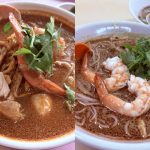
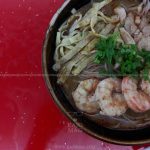
Mi Udang Jakar 1   Mi Udang Jakar 4

Mana-mana pengunjung yang berkesempatan untuk berkunjung ke pekan Jakar, 20km dari bandar Sarikei, wajib merasa mi udang di Peking Restaurant.

Lebih dikenali sebagai Mi Udang Jakar, hidangan tersebut dimasak cara masakan Foochow dimana mi nya digoreng berasingan dari kuahnya.

Hidangan tersebut terdiri daripada mi kuning, udang sungai dan sayur sawi yang dimasak menggunakan sos kicap.

Restoran itu telah beroperasi selama 20 tahun tetapi menurut pemiliknya Wong Lin Siong, 54, perniagaannya hanya mula berkembang sekitar 10 tahun yang lalu.

“Apabila saya mula-mula berniaga, saya tidak mempunyai ramai pelanggan. Syukurlah beberapa pelanggan saya terus kembali dan membawa pelanggan baharu juga,”katanya.

Apabila ditanya mengenai apa yang membuat mi udangnya berbeza dari yang lain, Wong menjawab: “Udang yang dimasak mempunyai tekstur yang bagus dan lembut, menjadikan mi tersebut sangat sedap.”

“Penduduk tempatan akan datang ke kedai untuk menjual saya udang yang baru ditangkap begitulah saya mendapat bekalan saya.”

Wong tidak akan mempunyai bekalan semasa musim hujan apabila penduduk tempatan tidak keluar untuk menangkap udang.

Mi Udang Jakar 3

“Satu lagi perkara yang baik untuk kami adalah pelanggan kami cukup sabar untuk menunggu kerana mengambil sedikit masa untuk memasak hidangan itu.”

Beliau memerlukan masa untuk menyediakan dan memasak udang secara berasingan sebelum menggoreng mereka dengan mi menurut resipi sendiri.

“Saya mahu memastikan kualiti memasak saya jadi saya hanya menyediakan udang selepas pelanggan telah memesan hidangan itu.”

Bagaimanapun, membuka perniagaan di perhentian rehat seperti Jakar tidak menjamin pelanggan sepanjang tahun.

“Kami sibuk dengan ramai pelanggan semasa tempoh perayaan seperti Tahun Baru Cina, Gawai dan Krismas. Hari-hari lain, tidak banyak yang berlaku di sini di Jakar, “kata Wong.

Selain daripada mi udang, pekan Jakar juga terkenal dengan serbuk kopinya. Pekan tersebut mempunyai kilang yang membakar biji-biji kopi yang membekalkan serbuk kopi kepada kedai-kedai kopi di Jakar dan Sarikei.
Antara tarikan pelancongan yang lain ialah rumah panjang tradisional seperti Rumah Nyuka di Ulu Sarikei dan tempat-tempat pelancongan seperti Air Terjun Pala Munso.

Mi Udang Jakar 2

Mi Udang Jakar 5

Upacara Mali Umai oleh kaum Iban di Sarawak

/

Pada zaman dahulu, patung-patung telah dibuat oleh kaum Iban adalah sebahagian daripada ritual penanaman padi bukit yang dikenali sebagai mali umai atau ngemali umai atau nambai umai.

Sebagai pengamal animisme, orang Iban pada masa dahulu akan mengadakan upacara dan perayaan untuk pelbagai majlis.

Daripada merayakan kelahiran seorang bayi  kepada menghindari nasib buruk, kegiatan untuk mengawal serangga perosak juga tidak terkecuali.

Patung buaya biasanya dibina secara berpasangan.

Banchi yang dijalankan oleh Jabatan Muzium Sarawak mencatatkan ada kira-kira 35 buah  tapak patung-patung di seluruh Sarawak.

19 boleh ditemui di bahagian Kuching, Samarahan, Sri Aman dan Betong, manakala 7 boleh ditemui di bahagian Sibu dan Mukah, 3 di bahagian Sarikei, dan 6 di daerah Kanowit.

Kini, masih ada patung-patung tersebut boleh ditemui di Kubu Alice yang terletak di Simanggang atau lebih dikenali sebagai Sri Aman.

Kubu Alice di Simanggang, Sarawak

Sehingga 2015, Kubu Alice telah dibiarkan sehingga ianya dibina semula dan diubah suai untuk  menjadi sebuah muzium warisan.

Kubu ini terbuka untuk orang ramai.

Kubu berusia 153 tahun itu dinamakan selepas Ranee kedua Sarawak iaitu Margaret Alice Lili de Windt.

Kubu tersebut telah dibina berikutan selepas kemenangan Rajah kedua Sarawak; Rajah Charles Brooke yang menentang  Rentap, seorang ketua Iban.

Kubu ini terbuka untuk orang ramai.

Ia berfungsi untuk mengawal kegiatan Iban dari Saribas.

Walaupun kubu baru itu sendiri adalah satu tarikan utama untuk para pelawat, patung-patung tanah lumpur (baya tanah) yang terletak di kawasan kubu itu juga juga mempunyai tarikan tersendiri  dari segi sejarah dan tujuannya pembuatannya yang menarik.

Biasanya patung-patung buaya tanah lumpur akan  dibuat dalam bentuk  pasangan ; satu perempuan dan satu lelaki yang biasanya akan dibuat sedikit lebih besar daripada yang perempuan.

Kadang-kala, pasangan buaya itu disertai dengan sebuah patung buaya yang lebih kecil, kononnya anak buaya. Sebagai sebahagian daripada upacara penanaman padi bukit, ia bertujuan sebagai alat untuk menbasmi  perosak padi seperti belalang, belalang, burung gereja, tikus dan monyet semasa musim rumput (mantun) sebelum padi mula membuahkan hasil biji benih.

Di Kubu Alice, patung-patung buaya yang dibuat adalah pasangan dan kedua-duanya dapat dilihati menghadap ke arah yang sama.

Dengan saiz dua hingga tiga meter panjang dan lebar 0.4 hingga 0.8 meter, kebanyakan patung-patung tersebut akan menghadap ke arah sumber air seperti sungai atau sungai.

Hanya segelintir sahaja  yang akan menghadap ke arah kawasan tanah, dan antara contoh yang ada adalah yang seperti yang terletak di Simanggang di mana patung-patung tersebut menghadap kawasan ladang padi atau ke arah matahari terbenam.

Patung-patung lumpur akan sering dibina di kawasan yang rata dan diperbuat daripada tanah yang terletak di sekitar kawasan yang dipilih. Tanah tersebut akan digali dan dibentuk menjadi bentuk sebuah buaya dengan anggota badan yang terulur, kepala lurus dan ekor melengkung.

Kadangkala, selepas upacara telah dilakukan sebuah jalan kecil akan dibina ke arah kawasan ladang padi yang selalunya terletak tidak jauh daripada moncong patung-patung buaya tanah lumpur. Ini untuk memastikan semangat buaya tidak sesat.

Cawan seramic diguna untuk mata buaya.

Bagi yang terdapat  di Kubu Alice, cawan dan pinggan ceramic digunakan sebagai mata dan skala buaya. Tetapi sebelum ini, batu-batu kecil digunakan sebaliknya.

Piring ceramic sebagai sisik buaya.

Selain ceramic, biji marmar kaca putih atau syiling juga digunakan. Selain mengawal serangga perosak, patung-patung ini digunakan dalam ritual yang dikenali sebagai gawai minta ari untuk menghentikan musim kemarau.

Biasanya digunakan untuk  keadaan cuaca yang teruk, upacara juga dilakukan semasa hujan lebat dan musim banjir, untuk meminta cuaca kering.

Patung-patung itu juga digunakan untuk upacara pelasi menoa yang bertujuan untuk menghindari nasib dan bencana yang buruk.

Walaupun upacara mali umai merupakan  upacara yang lama dan menarik, ramai yang mula meninggalkan amalan tersebut  atas beberapa sebab yang praktikal.

Kini, oleh kerana ramai masyarakat kaum Iban telah menganut agama Kristian, ramai yang mula meninggalkan upacara  lama tersebut.

Selain itu, ramai juga terdorong untuk mengguna racun perosak sebagai alternatif baru untuk mengawal serangga kerana ianya lebih murah dan cepat.

National Geographic enthusiast turns orangutan devotee

Orangutan in canopy_LH
Orangutan usually lives up around the canopy area and is very agile in travelling across canopy. Photo credit: © Lukmann Haqeem

Be it exploring something new or to re-learn our history, the documentaries brought by National Geographic have drawn Lukmann Haqeem to be part of the conservation world.

Working as senior field biologist in WWF-Malaysia under the Sarawak Conservation Programme, Lukmann reminisced, “The show instills the desire to explore nature in me. I have always liked the idea of becoming a pioneer and taking human civilisation to a new level.”

When he was in secondary school, he developed an interest in Biology. During his final year of high school, he won the overall best student for the subject. This propelled Lukmann to pursue his studies in Ecology and Biodiversity at the University of Malaya, Kuala Lumpur.

“I figured that I will do something that I’m good at and passionate about at the same time. Becoming a field biologist is like a dream come true as it incorporates both exploring nature and my love for biology,” said the 29-year old conservationist.

Lukmann, who is fondly known as Bob, now spends most of his time researching wild animals, especially orangutans. He began developing an interest in working with orangutans after watching several documentaries on the charismatic species.

“Although orangutans are popular animals, not much is known about them. I decided to study them because I wanted to find out the answers myself.”

He also mentioned that the orangutan has the slowest breeding rate of any primate and is one of the most slow-breeding mammals. The interval between one birth to the next can be as little as three years or as long as eight years.

“That is why it is important to conserve them. There is no certainty on when the next generation will be born. The death of an orangutan is always a big loss to their community,” he added.

He usually spends about two and a half months to complete a survey on orangutan nests. Within that period, he will conduct three sets of field surveys, about two to three weeks for each survey with short breaks in between.

Like any other field biologist, Bob also faces many challenges. In Sarawak, the orangutan lives in rugged terrains and so Bob has to hike up and down several mountains before reaching any orangutan habitat. Besides that, he also needs to carry his own supplies into the jungle which can weigh more than 20kg.

“Another challenge will be with the orangutans themselves. They are elusive and very hard to detect. Orangutans are known to hide themselves among the canopy when they sense potential danger. Sometimes it takes me weeks before actually seeing one.”

Currently, Bob is assisting in a new transboundary green economy project area in the Heart of Borneo (HoB), funded under the International Climate Initiative (IKI), Federal Ministry for the Environment Nature Conservation, Building and Nuclear Safety of Germany.

This two-million hectare site stretches from central Sarawak, Malaysia to northern West Kalimantan, Indonesia. The project site in Sarawak includes two important orangutan areas which are also biologically rich – Batang Ai National Park and Lanjak-Entimau Wildlife Sanctuary.

One of Bob’s tasks is to investigate species presence within the HoB landscape, and to advocate for the conservation of areas where they are found so that they can have the opportunity to thrive.

“Both sites are where most orangutans in Sarawak live. Although they live in protected areas, they don’t know what a boundary is. There are always possibilities that they will travel outside the protected areas and into the hands of hunters and poachers,” he explains.

Currently there are about 1,600 orangutans left in Sarawak. This figure is nothing compared to 11,000 orangutans found in neighbouring state of Sabah.

Bob hopes that his efforts, along with that of other experts and stakeholders, will help the orangutan population in Sarawak continue to thrive for posterity.

In Sarawak, some communities, like the Ibans, have a cultural connection with orangutans. The orangutan is revered by them as they believe that humans either are descended from the orangutan, or they turned into orangutans when they die. It is also a taboo to kill orangutans according to the Iban native law.

“The people in Batang Ai still practise this cultural connection and hence orangutans are able to survive there. However, this connection has diminished in other places and orangutans have been wiped out as a result of habitat destruction and illegal killing.”

“I hope our conservation efforts will help people to re-establish their culture and connection with orangutans. With the taboo in place, orangutan populations will hopefully recover naturally and they can live harmoniously with these communities,” he said.

The orangutan is Asia’s only great ape and is found only on the islands of Borneo and Sumatra. In Malaysia, the orangutan sub-species, Pongo pygmaeus pygmaeus, occurs in Sarawak and West Kalimantan; and Pongo pygmaeus morio occurs in Sabah and East Kalimantan. In Sarawak, most orangutans occur mainly in protected areas, but incidental poaching cannot be totally ruled out due to lack of management presence in many of the orangutans’ habitats and protected areas. The orangutan is classified as Totally Protected under the Sarawak Wild Life Protection Ordinance (1998).