
By Ng Ai Fern
The Portuguese have a saying: “Quem não viu Lisboa, não viu coisa boa.” It means, “If you haven’t seen Lisbon, you haven’t seen true beauty.”
Portugal’s capital and coastal city, Lisbon (or Lisboa in Portuguese), is built on seven steep hills, which means a lot of walking, and a lot of calories burned – which gives you a reason (or an excuse) to eat to your heart’s content.
Between the colourful ceramic-tiled buildings and breathtaking scenery, its true beauty also lies in its strong coffee aroma, and certain food that feels strangely familiar to us in Borneo.
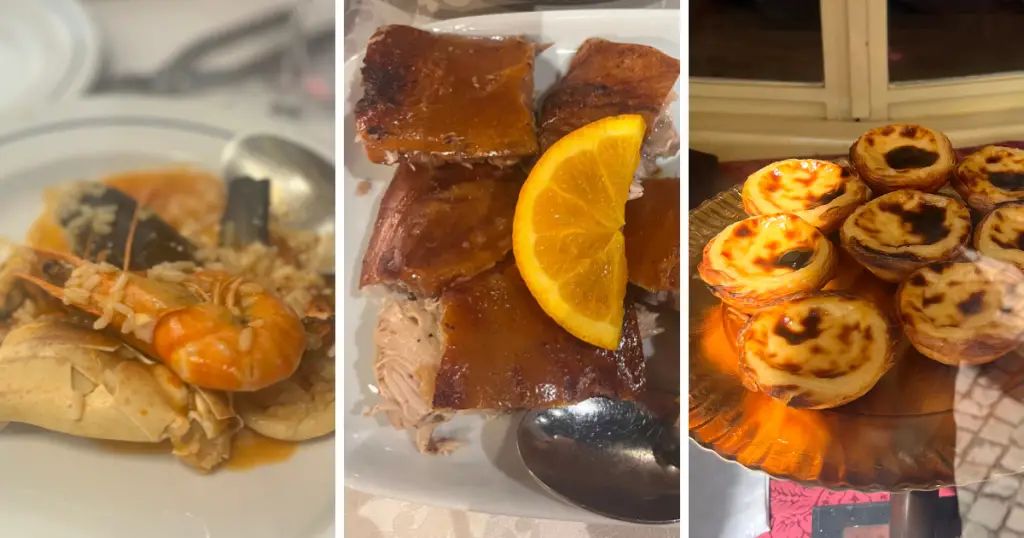
For first-time visitors, here are three must-eats in Lisbon – and their distant relatives in Sarawak.
- Arroz de Marisco – Seafood Rice (or “Porridge”)
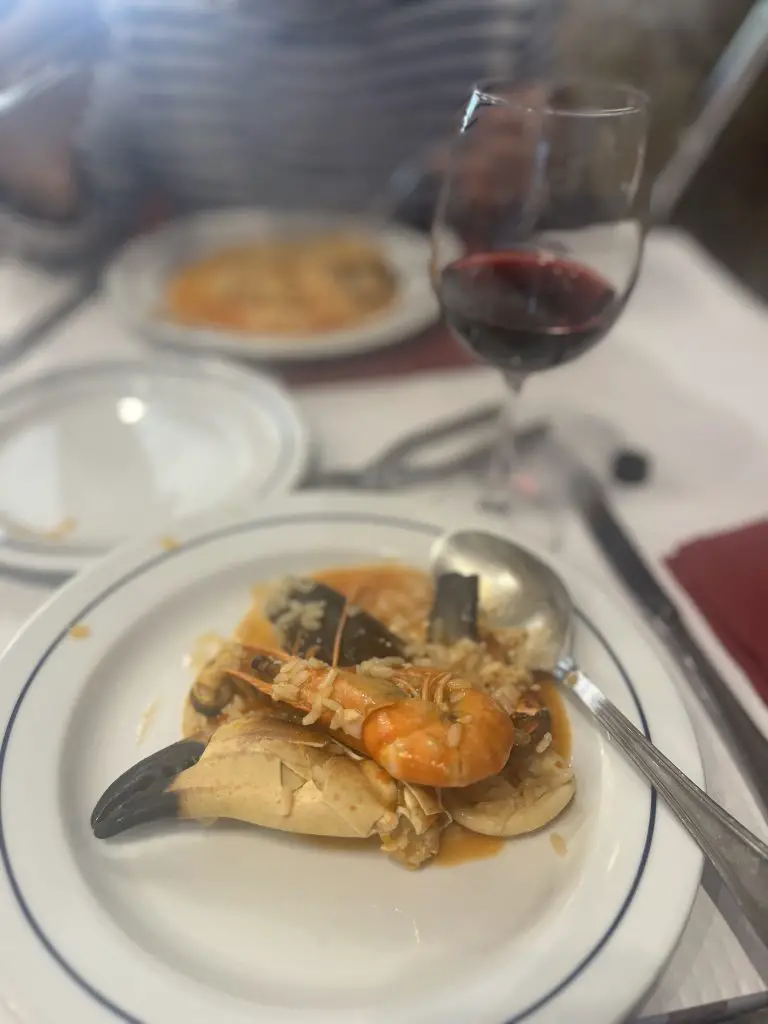
Unlike Spanish paella, Portuguese seafood rice is soupy – closer to porridge. It is called arroz de marisco and can be found all over Lisbon, especially in the touristy old town. Many restaurants look similar and even share similar names. But only one consistently draws a long queue.
UMA Marisqueira, founded in 1988, proudly calls itself “the best seafood rice in the world.”
They are so popular that they opened a second outlet just steps away – but it only operates when the staff are ready, so patience is required when joining the queue.
Each pot – with lots of seafood – is cooked fresh. It is so famous that their menu – with only seafood rice as the main course (for 1 pax or 2 pax) – is printed in multiple languages, except Malay. This is essentially the main reason people come. The wine list, however, is extensive, with plenty of Port wine.
I expected a tourist trap. I was wrong. After finishing every last spoonful, with peri-peri chili sauce added, I left a five-star review without hesitation. The crab was exceptional. Sweet, fleshy, and full of flavour – possibly the best I ever had.
Later during the trip, when I craved real Asian congee – the kind Sarawakians turn to when feeling unwell – I couldn’t even find it in an “authentic” Macau restaurant in Lisbon. It made me realise that although both are called seafood rice or porridge, the Portuguese version and ours are actually very distant relatives at best – sharing a name but not the soul.
- Pastel de Nata – the Original Egg Tart
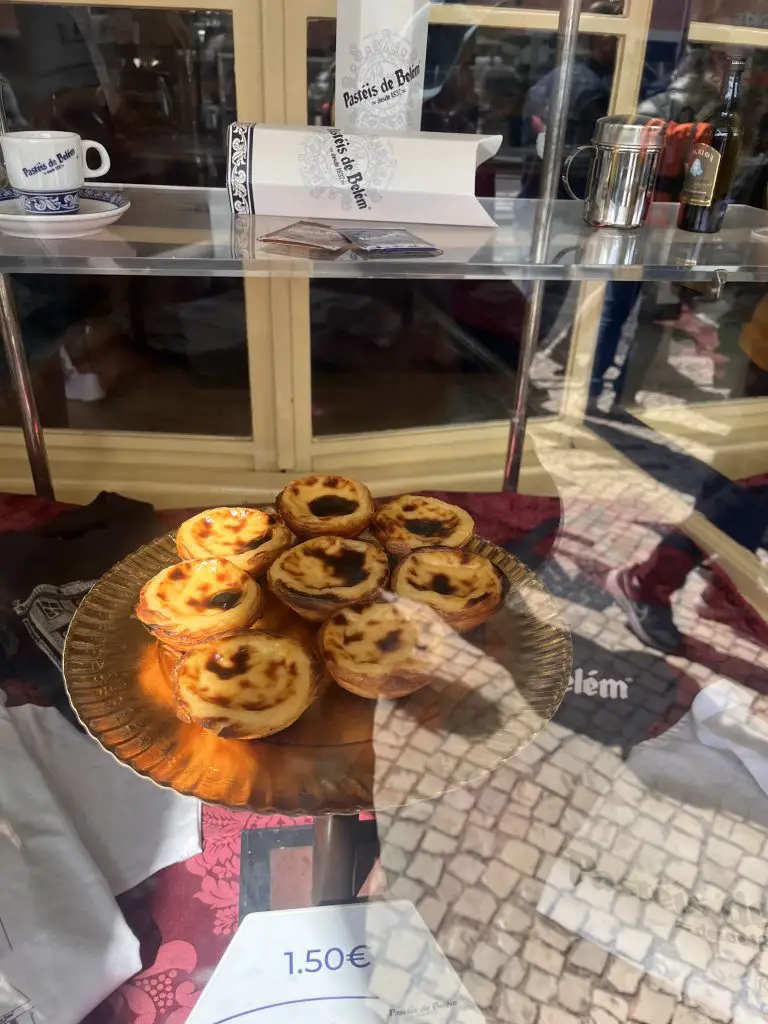
The birthplace of the egg tart, UNESCO’s wonder Jerónimos Monastery in Belém, is another must-visit. And the original egg tart – still made using the same secret recipe and traditional methods – is, of course, a must-eat.
The tart was first sold in the 19th century at its permanent neighbour Pastéis de Belém to raise funds for the monastery. Today, the monastery still stands proudly, although clearly in need of constant restoration without the benefit of proceeds from tart sales.
From the date “1837” tiled into the floor to its blue-and-white tiled walls, and the various displays at Pastéis de Belém, everything is Instagrammable. The queue never ends.
The taste surprises many. They are nothing like the soft flavourful egg tarts we usually get. The crust is ultra-crispy, flaky, and slightly burnt in the best way. The custard is creamy, and not too sweet.
What began as a modest fundraising effort has since become a global phenomenon. Back in Borneo, we have taken it further – with durian egg tarts that boldly outshine their ancestor.
- Leitão / Porco Assado – suckling pork
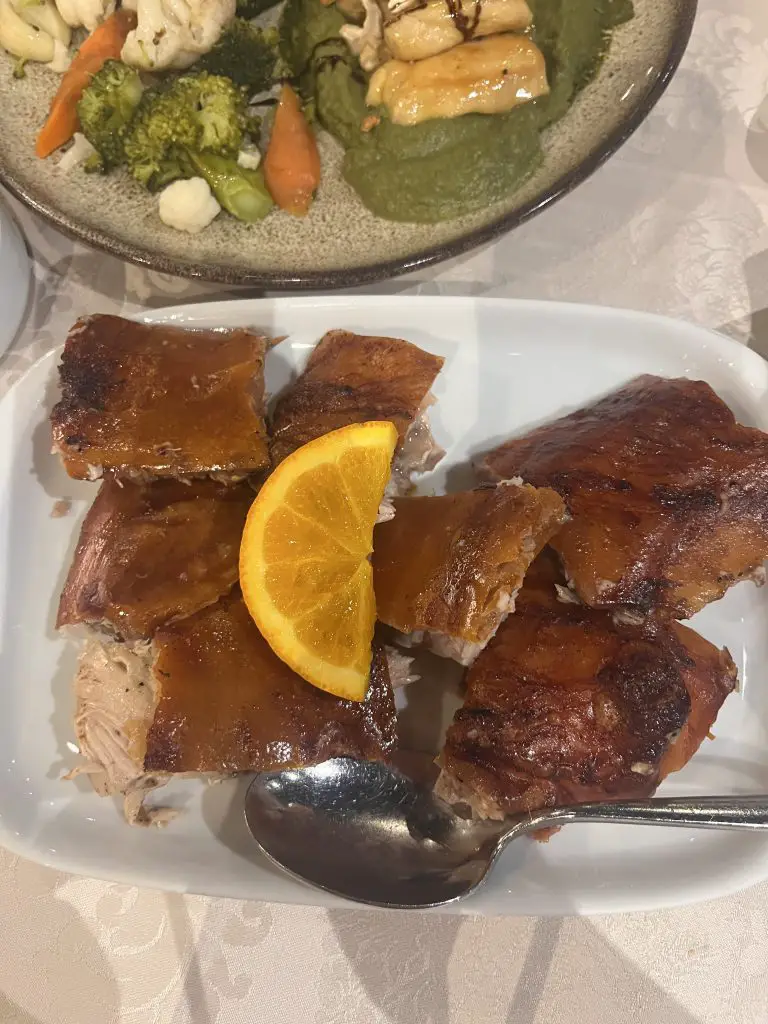
The Portuguese were among the earliest Europeans to reach Malaya and documented Sarawak long before British rule. Still, Portuguese crispy pork and ours evolved differently – although the obsession is the same: perfectly crackling skin.
Crispy pork, whether called leitão or porco assado, is available in many restaurants in Lisbon. I had mine at a Michelin-star restaurant called Mosteiro do Leitão (literally translates to “Piglet Monastery”) famous for traditional roasted suckling pig, in Batalha, about 2 hours from Lisbon city centre,
The open kitchen was a show on its own. Dedicated staff prepared the piglets, using special scissors to cut the meat with precision. Each plate came with a slice of lemon.
It tasted different from Cantonese suckling pig or our local barbecue-style pork, but it was so sinfully delicious.
Sometimes, halfway across the world, you find a dish so delicious it feels like you’ve met it before. It turns out some of our local favorites just have a distant cousin with a fancy passport and a more atas name.