Browse Category

Lifestyle - Page 9

8 egg sandwich recipes from around the world

No matter where you are from, most people find delight in a simple egg sandwich, whether the filling is boiled or fried.

The history of egg sandwich goes back about a century. A 1905 British cookbook describes an egg sandwich made with sliced hard-boiled eggs, marinated in oil, vinegar, salt and paper, and garnished with minced watercress.

During World War I, the egg banjo (a sandwich made of runny fried egg between two thick slices of bread) was a popular snack with British troops.

Fast forward to the 21st century. With more countries discovering the wonder of bread, the sandwich has been popularized and personalized across the globe.

From India to South Korea, here are eight egg sandwich recipes from around the world you can try:

1.Calcutta Street Style Egg-Mayo Sandwich

Bong Eats not only cook traditional Bengali recipes but also document the food of Calcutta, India.

This recipe they share is inspired by a street style snack found in Free School Street, Calcutta.

It has a creamy filling of mayonnaise and soft-boiled eggs and grilled crust.

Watch how to make it here.

2.Korean Street Toast

If you are a big fan of Korean talk show Happy Together then you might have seen singer Byul making this on the show.

Inspired by a common street snack found in South Korea, Byul’s version of the patty was made from enoki mushroom, crabsticks, sweet corn and egg.

Hereone of KajoMag’s favourite Korean food bloggers, Seonkyoung Longest, shares her version of Korean street toast.

She points out that the signature of this snack that makes it different from than any other egg sandwich out there is the amount of veggies in it and its sweet flavour.

So Seonkyoung puts generous amounts of cabbage, onions and carrots into her patty. Talk about a well-balanced egg sandwich!

Watch how to make it here.

3.Korean’s Samsaek Sandwich

“Samsaek” sandwich basically means “three-coloured sandwich” in Korean. Just like you imagine, it has three different colours of fillings in it.

The green filling is made of cucumber, the red filling is cooked ham while the yellow filling is because of the eggs.

Watch how to make it here.

4.Japanese Convenience Store Egg Sandwich

Do you know that there are more than 50,000 convenience stores, known as “konbini” that can be found across Japan?

They are known to providce a wide range of meals and snacks such as onigiri and sandwiches.

Here, Japanese YouTuber Ocikeron teaches her subscribers how to make konbini-style sandwiches. They are basically made from ham sandwich, tuna sandwich and of course, egg sandwich.

Watch how to make it here.

5.Tamago Sando

Who doesn’t love Tamagoyaki (Japanese-style rolled omelette)? It is easy and affordable to make and packed with protein.

So imagine Tamagoyaki in a sandwich – what you get is a Tamago Sando!

Another key ingredient for this recipe is Japanese Kewpie mayonnaise.

Watch how to make it here.

6.American Eggslut’s Fried Egg Sandwich

8 egg sandwich recipes from around the world

Eggslut is a fast food restaurant located in Los Angeles and Las Vegas. It is known for its signature dish “The Slut” which is basically a coddled egg on pureed potatoes.

A quick search on YouTube will uncover different kinds of Eggslut-inspired egg sandwich recipes.

Here is one courtesy of Claire Thomas featured on Food Network.

7.Hong Kong-style Egg Sandwich

Hong Kongers love their egg sandwich so much that Time Out Hong Kong had to put out an “Ultimate egg sandwich showdown”.

They rate the egg sandwiches around Hong Kong in categories such as best value for money, strongest flavour and “eggs thicker than the bread”.

If you have to have a taste of this favorite Hong Kong snack at your home, here is a recipe that you can try:

Watch how to make it here.

8.Saigon Baguette

Some Vietnamese food is inspired by its French colonial history. Take banh mi for example,: it is a typical Vietnamese sandwich filled with ingredients such as pork sausage, coriander leaf and combined with French condiments.

As for this Saigon Baguette, it is filled with two sunny side up eggs filled with vegetables and Asian herbs.

Watch how to make it here.

10 reasons why Malaysians should be talking about gum health

Systema recently launched a free gum health check website as part of “Systema Gumbatte Towards 1 Million Gum Health Checks” awareness campaign 2019.

With the collaboration of the Malaysian Dental Association, the campaign aims to help Malaysians achieve better oral health outcomes with the ultimate goal of motivating more people to retain 20 of their natural teeth when they are 60 years and older. (The average person has 32 teeth in total.)

On March 19, Systema organised the “Gum Health Forum for Sarawak” at Pullman Kuching to introduce the campaign as well as their Advance Anti-Plaque Toothpaste for Sarawak.

Here are 10 important things KajoMag learned about gum health from the forum:

1.Gum disease has overtaken cavities as the leading cause of tooth loss in adults.

This is due to prolonged plaque build-up in between teeth, along the gum lines and in gum pockets due to poor brushing habits and usually remains undetected for long periods of time.

2. 9 out of 10 Malaysian adults suffer from gum disease.

A 2010 study conducted by Lion Corporation on 450 Malaysian adults revealed that 80% of respondents had at least one visible sign and symptom of gum disease, the most common symptoms being bleeding and swollen gums. Only 1% realise that they have gum disease.

3. The main cause of gum disease is plaque

Plaque is the soft sticky film that covers your teeth after you have food or drink. It also contains billions of bacteria. When plaque builds up in between teeth, along the gum line and inside gum pockets, the toxin from the bacteria will damage gum tissues.

4. Periodontal disease can affect the health of the whole body

Studies have shown that your poor oral health can increase chances of cardiac disease, pneumonia, diabetes, and premature birth.

5. How do you know that you have a good gum health?

Your gums should be pink in colour, not red. Healthy gums also leads to healthy bones.

6. There are two types of gum disease

The two types of gum disease are called gingivitis and periodontitis. The good news is gingivitis is reversible by brushing your teeth while periodontitis is irreversible.

Periodontitis is when your gums become inflamed, turn red and your gums bleed easily when you brush. If left unchecked, it can then spread into the gums and into the bones and ligaments supporting your teeth, loosening them.

How to take care of your gums?
10 reasons why Malaysians should be talking about gum health
You can get rid of gingivitis by brushing your teeth. Credits: Pexels.

7. Mouthwash is not essential to gum health

According to Dr Tie Sing Fong from Sarawak Health Department who spoke during the forum, mouthwash was invented for people who were not able to brush their teeth, such as people who suffer from Parkinson’s disease.

Corporate companies have turned them into commercial products which Dr Tie believed were not necessary to use.

8. Flossing is an important part of your oral health care

Dr Tie stressed that flossing was important to do every day, if not every alternate day.

9. It is not necessary to brush your teeth after every meal.

The main cause of gum disease is plaque. According to Dr Tie, plaque is only formed between two to four hours after you eat something. Hence, brushing your teeth twice a day is sufficient enough.

10. Should you rinse your mouth after brushing or keep the toothpaste in?

There is a belief that you should not rinse your mouth after brushing your teeth. It is believed to be better for overall dental health to leave some toothpaste in your mouth for better oral care. Once again, Dr Tie debunked this myth, citing a study that there was not much difference if you rinsed or not after brushing your teeth.

10 kawaii Japanese bento recipes from Ochikeron you can try

Tokyo-based YouTube user Ochikeron has been sharing easy-to-follow Japanese home cooking on her channel since 2011.

If you are not familiar with her, she was the one who created the three-ingredient cheesecake using eggs, white chocolate and cream cheese.

Additionally, Ochikeron created a five-ingredient chocolate lave cake out of chocolate, butter, egg, sugar and flour.

Besides these creative innovations, other highlight of her YouTube channels are her cute, cartoonish Japanese bento.

They look so intimidating to make but if you follow her instructions closely, they are actually easy to make.

Some of the essential tools to make your own bento box are tamagoyaki nabe (rectangular omelette pan), eyebrow scissors (used solely for food) and plastic wrap.

Here are 10 kawaii Japanese bento recipes from Ochikeron you can try to make at home:
10 kawaii Japanese bento recipes from Ochikeron you can try
1.Hello Kitty Bento Box

Do you know that you can find all kinds of rice molds for bento at most Japanese shops even in Malaysia? To make this bento box, get a Hello Kitty mold to make your life easier.

The main highlight of this recipe is its stuffed red peppers which Ochikeron decorated as apples in the bento box.

Another trick she taught in this recipe is on how to make a Kamaboko (fish cake) house. The roof is made of imitation crab meat or crab sticks while the house is made from Kamaboko. Attach the two pieces together to make your house using a small piece of uncooked spaghetti pasta. The hard pasta will be soft after awhile so you can safely eat it.

2.My Melody Bento Box

Now how about making Hello Kitty’s best friend, My Melody? As for this bento box recipe, the main ingredient is Sauteed Shimeji Mushrooms and Peppers.

Meanwhile, the cutesy part of this bento box is what Ochikeron called ‘Fish Sausage Strawberries’.

It required immense amount of detailing to make these ‘strawberries’ out of fish sausage, edamame beans and black sesame seeds but it still looked doable.

Then, she also made ‘Usuyaki Tamago Egg Crepe Flowers’. It is basically thinly fried omelette rolled and cut to look like a flower.

Watch how to make it here.

3.Cinnamoroll Bento Lunch Box

If you want your egg rolls to look like oranges, the key thing to do here is to attach seeds cutouts cheddar cheese on your roll with mayonnaise. Who knew mayonnaise can be used like glue for your food?

Apart from mayonnaise, Ochikeron also used honey to attach the little details on her rice balls.

Watch how to make it here.

4.Pompompurin Bento Lunch Box

Here is another character from the Hello Kitty world. The rice balls which shaped up the yellow-coloured Pompompurin character is pretty easy to make. It is basically minced omelette mixed with rice and forming into the shapes of the character.

As for the main dish, you can always use your leftover from last night’s dinner.

Watch how to make it here.

5.Olaf Bento Lunch

This bento box recipe is pretty easy to make because Olaf is a snowman. There is no extra seasoning or cooking for your rice balls because it uses only the Japanese white rice.

But of course there are those extra steps in making the face and limbs of Olaf. Just like any other bento boxes, be creative and use whatever ingredients you have to make them.

Watch how to make it here.

6.Monsters University Bento

Here is another easy to make bento from Ochikeron. The only tricky part is to make your green and blue-coloured rice.

However, you can always head over to the nearest Japanese store to find rice sprinkles. Or you can always improvise and settle with white rice balls to make the Monsters University characters.

Watch how to make it here.

7.Doraemon Bento Lunch Box

To shape your rice balls, you really need to use plastic wraps. But what if you don’t have any plastic wrap to make your rice?

Here is a bento box recipe which does not require any plastic wrap. Essentially, cut the face of Doraemon using easily available ingredients such seaweed sheets, cheese and imitation crab stick.

Watch how to make it here.

8.Kero Kero Keroppi Bento

If you want to take the art of bento seriously, one of the must have ingredients in your pantry is Sakura Denbu. Basically, it is a mashed, seasoned codfish with red food colouring.

Mix your rice with Sakura Denbu to make pink-coloured rice balls while green laver to make green-coloured rice balls. With some cut-out eyes made from cheese, ham and seaweed sheets, there you have it! Your Kero Kero Keroppi characters in a bento.

Watch how to make it here.

9.Minions Bento Box

These minions from Despicable Me are so doable to make, all thanks to their yellow-coloured rectangular shaped.

Just cut your Japanese omelette and put in the details using seaweed sheet. Just like the Doraemon bento box, you don’t need to make rice balls for this bento.

Watch how to make it here.

10.Santa Clause Bento Box

For this Santa Clause Bento Box, the key point is to wrap the top of your rice balls to make the Santa’s head.

To sum up Ochikeron’s bento making tips, there are four ingredients she uses to make up the details of her characters. There are imitation crab stick, cheese, ham and seaweed sheets.

By using these ingredients and some skills with the eyebrow scissor, you can make your own bento characters.

Watch how to make it here.

Unimas and Limkokwing shine on first night of AMS 2019

/

The long-awaited Alta Moda Sarawak 2019 (AMS 2019) kicked off its first night on March 7 with designs by students from Universiti Malaysia Sarawak (Unimas) and Limkokwing University of Creative Technology.

Officiated by Sarawak Assistant Minister for Youth and Sports Datuk Snowdan Lawan, this inaugural fashion and lifestyle event saw three designers from each university pull off a dynamic runway show, showcasing diverse looks, from dramatic evening gowns to chic street styles.

AMS 2019: Bringing high-fashion to your doorstep

AMS chairperson Datin Esther Mujan Balan, who was regal in her canary yellow assymetrical evening gown, said that she looked forward to Alta Moda Sarawak being a successful annual event that can elevate Sarawak to a leading fashion hub in Southeast Asia, on top of attracting potential tourism.

Esther added, “We hope that events like these, our Sarawak designers and fashion model talents will not need to travel so far to showcase their amazing creations because Alta Moda Sarawak will be able to generate crowds and visitors to Sarawak ranging from among fashion enthusiast, the industry people, fashion magazines and medias, and retail buyers.”

Besides the 21 designers who will be showcasing among the best that Sarawak Malaysia has to offer, AMS 2019 also had international models striding around the runaway among the 24 models from Sarawak.

A boost for Sarawak tourism

Meanwhile, Snowdan, who graced the event in a striking suit with gold embroidered feather motifs, stated that the Sarawak government took pride in having Alta Moda Sarawak as another tourist attraction for the state.

“The organising of the three-day event will complement our efforts to boost tourists’ arrival in conjunction with the ‘Visit Sarawak Campaign’.”

He was also pleased to announce that the efforts in promoting the campaign had shown good results so far even though it was only entering its third month.

Snowdan added, “The number of visitors to Sarawak especially from other states in Semenanjung has dramatically increased to 68% as compared to January 2018. The overall arrivals itself have also increased by 10.72% with the total of 326, 347 visitors.”

About Alta Moda Sarawak

AMS 2019 is a brand platform for Sarawakian designers to come together showcase their talents and creations in the field of arts, culture and craft.

Besides the fashion show, the event also featured art exhibitions by The Accidental Artist, Hasbah Saufi, Mary Ann Vaz and 9-year-old artist Azaira Mohd Nizam from the Dyslexia Association.

In addition to that, there are diamond jewellery by Diamente, songket weaving by Tanoti, Sarawak Malay Keringkam embroidering by Sazalia Warisan Craft, handbags by Sarawak Penan Helping Hands and bead accessories by Punggu creations on display.

The foyer area opens daily from 4pm daily till the show’s closing time.

KajoAsks: Making a social impact through art with Mary Anne Vaz

/

Self-taught artist Mary Anne Vaz was born in Penang, but she has called Sarawak home since she married her Kelabit husband.

She uses various mediums in her art including batik, acrylic, water colour and pastels.

A prolific painter like one of her idols Vincent Van Gogh, her work has been exhibited in various places such as Lingnan Museum of Art in China, Pustaka Miri and Saradise Gallery, Kuching.

She now teaches both young and old from an art center at her home.

Not content to just paint, she, together with her art students, have started a social project whereby proceeds from sales of their paintings will go to buying story books for Penan children in Ulu Baram.

Recently, KajoMag had the opportunity to learn more about the artist behind the paintings and her inspirations.
KajoAsks: Making a social impact through art with Mary Anne Vaz
Vaz and some of her paintings.
KajoMag: I understand that you started your journey in art as early as six years old. What do you remember about your paintings as a kid and what made you want to paint?

Mary Anne Vaz: I attended kindergarten where my teacher, a Chinese man gave me a chance to paint. I painted myself climbing a tree. Then I watched my brother paint big canvases with oil paints. I developed a style that was similar to oil painting in that I used very thick paints.

One day my dad told me, “You won a gold medal.” The concept of winning was not in my experience and I replied “ I don’t want a gold medal.” Then, it appeared on TV and in the news. It was the Queens Gold Medal. 
       
I didn’t have any art books or art teachers. All I had was paint, brushes and paper. But there was a book on the human anatomy. From there, I became interested in painting human figures. So, most of my artwork features human figures.              

I am fascinated with the hornbill dances of the Orang Ulu. Several of my paintings are on the dances, tribal attire, and everyday life of the Kelabits. I have also painted the legends of the Kelabits.

Then, I met the famous tattoo artist Ernesto Kalum. I became fascinated with his tattoos and have painted three paintings featuring him, one of them being “Warrior of Peace”.

KajoMag: How would you describe your style as an artist? Are there any painters that you particularly look up to?

Mary Anne Vaz: I am a symbolic artist. My paintings all carry deep messages. For example “ Warrior of Peace” which features Ernesto without his tattoos, without the sword, conveys the message that a leader must lay down his weapons and be vulnerable in order to lead his people to peace and face a brighter future.

I painted this after the summit between Trump and Kim Jong Un. The USA and North Korea meeting was to me a step towards disarmament. This is true courage. A warrior with no weapon is a truly brave warrior. 

I look up to several artists. The first one was Chuah Thean Teng, the Father of Batik, who showed that this traditional style of fabric painting could be fine art. I studied his techniques and created a style of contemporary batik with traditional processes.

The second one is Vincent Van Gogh. I collected books on him. He was a prolific painter and I identify with him as I am also a prolific painter.

The third one is Raphael Scott Abeng from Kuching. He inspired me as a friend and I find his paintings unique and witty social commentary.

The fourth one is Tan Wei Kheng. He is a dear friend; he stretched my first canvas and has always been supportive.

Pustaka produced an e-book on Tan Wei Kheng called Discover Sarawak and I was the researcher and writer of his art. He is also a symbolic artist; his paintings being social commentary and social documentation.

KajoMag: Are there certain places you feel most inspired to paint? If so, where?

Mary Anne Vaz: The place that most inspired me to paint was Bario. Twenty-nine years ago when my eldest son was born , my husband and I walked 12 hours through the jungle from Bario to Pa’ Mada to have the traditional name changing ceremony.

I remember the trees being tall and the floor of the jungle covered with a carpet of leaves. Later, I made a sketch of my father-in-law’s parang and its tree bark sheath.

I then painted it in contemporary batik style. It is now in the Sarawakiana collection of Pustaka Sarawak. I painted the fireplace in “Kelabit Lady” which was exhibited in China in the Lingnam Museum of Art in Foshan in October 2018. 

KajoMag: Can you name the biggest lesson you’ve learnt from being a part of the Sarawak art industry?

Mary Anne Vaz: The biggest lesson I have learned in being part of the Sarawak Art industry is that an artist must be dynamic, keep learning and growing. No doubt skills with brushes are important, but digital skills are vital to share our art and connect across nations.

Being multilingual is also important. When I went to China I prepared myself by learning to speak Mandarin.

Alta Moda Sarawak is a good example of how artists are being dynamic. Coming together to move forward. The leaders in Alta Moda Sarawak have created a bridge to tomorrow.

KajoMag: Care to share your hope for young artists in Sarawak?

Mary Anne Vaz: My art studio in Miri grooms young artists from as young as six years old. So, my hope is that parents take art seriously.

Give your child a chance to use the correct tools to paint. Give your child a good art tutor to mentor his growth. Let young artists develop their own style. I am happy that in my studio there are several young artists with very high potential.

I share my own techniques with them and encourage them to have their own vision. Parents have been very supportive in giving them time and resources to grow. What we need is more opportunities to exhibit the work of young artists.

KajoMag: Tell us more about your social project to buy books and reference books for the Penan children in Ulu Baram.

Mary Anne Vaz: My students and I started sending books to schools in Ulu Baram with the help of a friend who travels there regularly.

Each time my students sell a painting for RM50, they voluntarily donate RM10 to buy a story book. I also buy books that promote early reading such as books using phonics.

I will put about 20 books in a bag and give to my friend who takes them to the teachers there.

When I sell my paintings. I also buy some books for this purpose. I am thinking that story books are a source of joy, different from school books.
The Penan children and other children who live far from town may not have a chance to enjoy story books. Besides these, I have also bought encyclopedias for them.

About Alta Moda Sarawak

Interested viewers can catch Vaz and her works during this upcoming Alta Moda Sarawak.

To be held from March 7-9 at the old State Legislative Assembly (DUN) Building in Kuching, 24 designers and brands will be taking part in this event which aims to highlight the many colours of Sarawak’s cultures and diversities.

Check more of Vaz’s works on her website or follow her on Instagram.

Want to pick up a new skill? Women can go for these free classes at WWTC, Kuching

Calling out all women living in Kuching area! Did you know that you can take culinary, spa and beauty classes for free at Wisma Wanita Training Centre (WWTC)?

WWTC was officially launched by Datuk Amar Jamilah Anu on Oct 9, 2014.

It was established as a platform for women to pick up a new skill. At the same time, the training centre aimed to train women on how to earn extra income with the new skills they learned.

The classes are open to all women regardless of marital status, age or race.

All the participants need to do is find their way to the centre. However, spaces are limited, so remember to register early.

These two-day classes are mostly organised during weekdays but they do have some classes happening over the weekend.

Here are the classes available at Wisma Wanita Training Centre (WWTC) in 2019:
Free culinary classes at WWTC
Want to pick up a new skill? Women can go for these free classes at WWTC, Kuching
It is not too late to know how to use all of these ingridients. Credits: Pexels.

It doesn’t matter if you prefer cooking or baking, you can learn both at WWTC. From traditional Malaysian desserts such as onde-onde and seri muka to western cakes like butter cheesecake and Swiss rolls.

Additionally, interested participants can pick up how to whip up a dish or two to spice up your dinner table or start a food stall. There are classes to teach how to cook Nasi Kerabu, Ayam Goreng Berempah, Nasi Lemak Pandan, Shepard Pie, Nasi Tomato, Kimchi, Korean Hot Spicy Chicken and many more!

Free spa and massage classes at WWTC
Want to pick up a new skill? Women can go for these free classes at WWTC, Kuching
You can also learn how to do manicure and pedicure at WWTC. Credits: Pexels

Cooking or baking might not be everyone’s cup of tea, but no worries, there are free classes for those who are interested in beauty and spa.

The spa and massage classes at WWTC are organised weekly mostly on Thursdays and Fridays. Who knew there were so many different kinds of massage available out there?

Here, interested students can try to master the art of Thai, Japanese, Balinese massage or even Malaysian massage.

These days, there is a rising number of new mothers looking for postnatal care experts to make home visits. So, there are classes offer to teach postnatal care and massage.

Other classes include sauna and body scrub, foot spa, reflexology, stress reliever massage and more.

Free beauty classes at WWTC
Want to pick up a new skill? Women can go for these free classes at WWTC, Kuching
Learn how to do your own makeup for free at WWTC. Credits: Pexels

A makeup class can cost you at least RM200 these days depending on what kind of makeup and the popularity of your makeup gurus.

But at WWTC, you can learn how to touch up your face from day to night for free.

If you are looking to earn extra income as home-based makeup artist, this is a good place to hone your skill. Furthermore, there are different kinds of bridal makeup to choose from. Pick up a few hair-styling classes and lots of practices, you are ready to beautify a bride!

Take note that WWTC has the rights to change their schedule without prior notice. For more information on schedule and contact persons, check out their Facebook page here.

There will be certificates for those who complete these classes. Remember to dress up decently and appropriately for the class!

KajoTries: The crunchy deep-fried kuih cap or kuih goyang

KajoMag traded our pens and laptops for a whisk and a wok to make our own traditional Malaysian cake – kuih cap.

Even if you have never heard of ‘kuih cap’, you have most probably heard the name of this cake under other names. In Sarawak, it is widely known as kuih cap (sometimes kuih sap). This snack is also called kuih goyang, kuih loyang, kuih ros, kuih bunga durian, beehive cookie and honeycomb cookie.

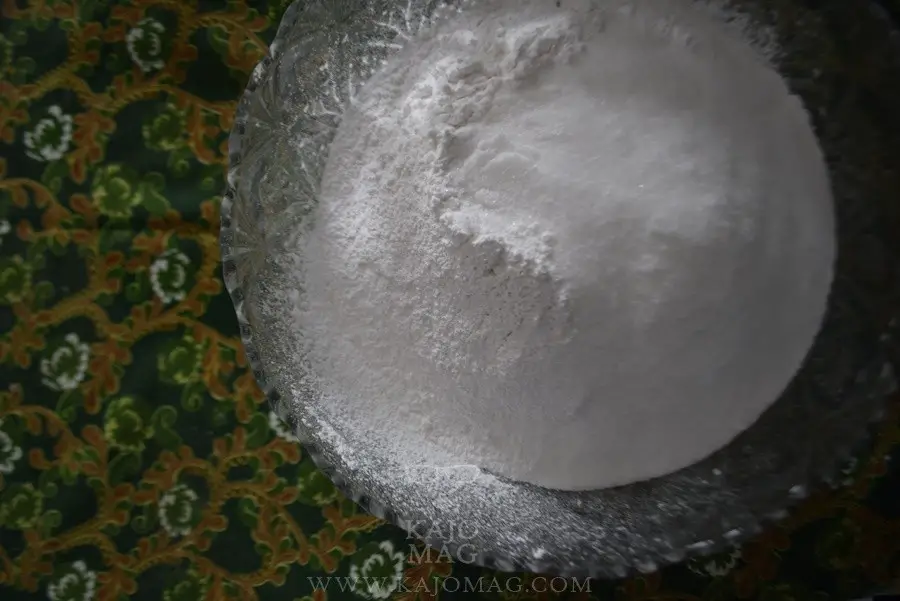
The basic ingredients to make kuih cap are rice flour, eggs, sugar and coconut milk.

Although this traditional snack does not share a common name, it uses the same brass mold to make it. In Malaysia, you can find the mold at major supermarkets, grocery shops or kitchenware stores.

The original kuih cap is golden brown in colour but it can come in other colours as well, especially in pink.

Similarity with snacks from other countries

While there is no proven fact on where kuih cap comes from, the common understanding is that it is inspired by southern Indian’s rose cookies.

Even in India, it is known by different names; Gulabi Puvvulu in Telugu, Acchu Murukku in Tamil and Achapam in Malayalam. Made from flour, sugar, eggs and coconut milk, this rose cookie is a favourite among Indian Christians during the Christmas season.

In Indonesia, this snack is called Kembang Goyang. It shares the same ingredients with kuih cap of rice flour, eggs, sugar, salt and coconut milk.

KajoTries: The crunchy deep-fried kuih cap or kuih goyang
The dry ingridients of Kuih Cap.

Meanwhile in Thailand, a snack which is similar to kuih cap is Lotus Blossom Cookie or Kanom Dok Bua.

The pattern of the Lotus Blossom Cookie mold looks more like a lotus flower and more elaborate from kuih cap’s mold.

Unlike kuih cap, Thai’s Lotus Blossom Cookie is not flat and really does look like a flower. To shape the flower, place a small bowl upside down on a plate. When the cookie is fresh out of the fryer and still soft, place the cookie on top of the bowl to make it curve like a blossoming flower. Allow to cool.

Beside rice flour, some Lotus Blossom Cookie recipes also put in all-purpose flour and cassava flour as their ingredients.

This Lotus Blossom Cookie reportedly can also be found in Hong Kong and Taiwan.

The variations of Malaysian kuih cap recipes

In Malaysia, there are plenty of variations in portions when it comes to kuih cap recipes. However, the main ingredients are rice flour, sugar, eggs, coconut milk, salt, water and oil for frying.

Some put in drops of colouring to make it more colourful. Another ingredient, which is optional for kuih cap, is sesame seeds.

After mixing all the ingredients into a batter, heat the oil together with the brass mold. After the oil and mold are hot enough, dip the mold lightly into the batter and then put it back into the hot oil long enough to cook the batter. Then shake it over a plate until the snack comes off the mold.

KajoTries: The crunchy deep-fried kuih cap or kuih goyang
Dip the heated mold into the batter.
KajoTries to make our own kuih cap

Here at KajoMag, we traded our pens and laptops for a whisk and a wok to make our own kuih cap.

To make the batter, we used 500g of rice flour, one cup of castor sugar, 2 eggs, 250ml of coconut milk, one teaspoon of salt and 400ml of water.

The recipe also stated that we supposed to put a little bit of air kapur (limewater). But we couldn’t find any so we scratched that of the ingredient list. (Do let us know in the comment box why we should put in limewater in our kuih cap).

KajoTries: The crunchy deep-fried kuih cap or kuih goyang
NOT SO EASY!: This is what happened when we left the mold in the oil for too hot.

While the rest of the ingredients were easily available and affordable, the hard part was deep-frying it.

Some people suggested keeping the fire low to prevent it from burning. (But it does take a toll on our patience.)

Sometimes, the mold was too hot that the batter just fell off the mold even before we transferred it from batter to oil to fry it.

Additionally, we realised that therewas an art to shaking the mold while dipping the batter in the frying oil that most online recipes failed to mention. We were supposed to shake the mold up and down – not side to side as we were doing! – in order for the snack to stay in shape.

The end product
KajoTries: The crunchy deep-fried kuih cap or kuih goyang
Obviously, we still have lots to improve on.

After getting the hang of the mold and the frying, we were happy to announce that 60% of our kuih cap were nicely shaped and crispy, while the rest were burnt or deformed beyond recognition.

KajoTries: The crunchy deep-fried kuih cap or kuih goyang
Some of our ‘failed’ kuih cap.

KajoMag readers, feel free to share your ultimate recipe of this traditional snack and tricks to make the perfect piece of Kuih Cap in the comment box.

Do you have any traditional recipes that you want us to try to make next? Let us know!

5 reasons why you should follow Dianxi Xiaoge on YouTube

If you have not heard of Dianxi Xiaoge, then you have missed out on something really awesome on the Internet, especially if you’re a foodie!

One of the trends on YouTube is making videos of cooking traditional food in the most realistic, authentic way.

These YouTubers show you how they live their daily lives in the countryside, farming, harvesting, collecting plants in the jungle and cooking dishes using ingredients fresh off the farm.

Imagine if we had a Sarawakian who documented their lives at the longhouse, working on the farm, making burak (Kayan rice wine) and pounding on cassava leaves for dinner.

Interestingly, these videos have gathered a lot of subscribers and views on YouTube. Though Dianxi Xiaoge’s videos are loosely translated, non-Mandarin speakers can still understand the gist of this interesting show.

5 reasons why you should follow Dianxi Xiaoge on YouTube
Dianxi Xiaoge. Credits: YouTube

Here are five reasons why you should follow Dianxi Xiaoge on YouTube:

1.She introduces you to new dishes, particularly from Yunnan province

Dianxi Xiaoge prides herself on being a local Yunnan girl. She films seasonal ingredients, special local products and everything which reflects the uniqueness of Yunnan cuisine.

Yunnan is a province located in south-central China. It is known for its rich resources as well as being one of the most ethnically diverse provinces of China.

Watch the video here.

That being said, it is no surprise that Yunnan is home to a variety of unique dishes. Being proud of her roots, Dianxi Xiaoge shares plenty of Yunnan traditional dishes. Most of these dishes are unheard of especially in Malaysia.

One of Yunnan dishes which Dianxi Xiaoge introduced to her subscribers is the Zianyi Chilli Chicken. The dish has a history spanning over 100 years. It is cooked differently from the more famous Sichuan Chilli Chicken. The chili is first boiled before being pounded to cook with the chicken while Sichuan uses chili oil.

Another unique Yunan dishes are Bamboo Pipe Cakes. (Yes, it is exactly what you expect it to be.) It is a dessert made in bamboo. The snack is more popular in western Yunnan province.

Other Yunnan dishes featured on her channel are Pig’s head with Dried Daikon, Yunnan-style Grilled Lemongrass Pork Rib and Yunnan Red Bean and Ham Rice.

2.You will never take your food and farmers for granted after watching Dianxi Xiaoge

Besides cooking, Dianxi Xiaoge also shows the sweat and blood that goes into her farms. From pumpkin to soybean, she shares what she farms according to different seasons.

Watch the video here.

Not all of her ingredients are planted on her farms. She also harvests some crops from her relatives’ farm or picks them up straight from the jungle.

3.She makes you want to hug your grannies!

This YouTuber speaks fondly of her grandparents in her videos, especially her grandpa who works hard on the farm to make a living. So, some of the videos dedicated to her grandpa are those which she cooks his favourite dishes such as Brown Sugar Sweet Bean Curd Jelly.

Watch the video here.

Additionally, Dianxi Xiaoge inspires viewers to learn from the elders on traditional recipes and methods before it is too late. In some of her videos, she showcases how she learns how to cook certain recipes from her grandma.

4.Dianxi Xiaoge teaches you to make things from scratch

Speaking of grandparents, Dianxi Xiaoge also gets them to try food they had never eaten before such as hamburgers. Her grandparents had only seen hamburgers on TV.

She lives 20km away from the nearest town and even in town, they only sell traditional food.

Watch the video here.

So what Dianxi Xiaoge did was beyond amazing: She made hamburgers from scratch. Can you imagine whipping out tomato sauce from wild tomatoes?

Watch the video here.

Apart from that, she also educates her viewers on traditional cooking methods and it is her way of documenting this traditional knowledge.

While factory-processed sausages are common today, she shows how to make sausages the traditional way which she calls a genius idea from their ancestors which allows for long-term storage of meat.

5.She might turn you into home-based distiller or vintner

What makes Dianxi Xiaoge more impressive is that she is also a distiller and vintner. In one of the videos, she makes her grandfather’s favourite corn liquor.

She also shows how she makes her own wine and mulberry wine.

Watch the video here.

KajoPicks: Check out these four coffee places in Bintulu

Apart from shopping complex, Bintulu is currently witnessing the rising number of different kind of eateries.

These include coffee places offering good coffee from dirty coffee to nitrogen-infused java and relaxing ambience for patrons to just hang out.

Here are four coffee places in Bintulu, Sarawak you need to check out:
1.Coffee Dream

Located at Parkcity Commerce Square, this coffee place has been operating since 2014.

Besides coffee, Coffee Dream is famous among the locals for its western food.

Omelette sandwich, spaghetti bolognese, mushroom soup, cheesy beef balls, mushroom cheese omelette, eggs Benedict, chicken Caesar salad are just the tip of their wide range of menu items.

For rice eaters out there, don’t worry because Coffee Dream has a selection of Asian favourites to choose from such as the typical nasi lemak.

While you are at it, might as well end your meal with one of their freshly baked cakes for dessert.

2.The Coffee Code Bintulu
KajoPicks: Check out these four coffee places in Bintulu
Do you like it dirty? Dirty Code from The Coffee Code.

The Coffee Code is Sarawak’s very own cafe chains. The first one was opened in Sibu, then Bintulu at Ibraco Town Square and the latest was in Kuching at Saradise, BDC.

When you’re at Coffee Code, how about giving the Dirty Code a try? It is their in-house version of dirty coffee. It is one of the best coffee places in town to spend your tea time because it serves wide range desserts.

Their specialty is perhaps waffles which come with different kind of toppings.

KajoPicks: Check out these four coffee places in Bintulu
Waffles at The Coffee Code Bintulu.
3.Escape Coffee


You can’t satisfy your coffee craving early in the morning at Escape Coffee. But you can satisfy your coffee craving late at night here because it opens from 12pm till 12am.

It is perfect for the late night work hustle since it provides free wifi.

Feeling hungry? They have good options of food on their menu such as beef sirloin steak, mixed grill, lamb chop, butter chicken waffle and chicken macaroni fruit salad.

4.Melt Cafe

The current star of Melt Cafe Bintulu, no, not its famed grilled cheese sandwich but its Nitro Coffee.

If you have not tried Nitro Coffee before, just imagine Guinness draft beer, only it’s coffee! Since the drink is infused with nitrogen, it has this rich, creamy head similar to Guinness.

So if you are a big fan of coffee, this beverage is definitely worth a try.

Longing for dessert? Give Melt Cafe’s Burnt Cheesecake a try. Some described Burnt Cheesecake as the alter ego to the classic New York cheesecake. The differences are this cake is burnt outside with toasty edges and without the usual pressed cookie base.

Of course you cannot leave Melt Cafe without trying its signature grilled cheese sandwich.

KajoPicks: Check out these four coffee places in Bintulu
Nitro Brew Coffee at Melt Cafe. Look at its creamy head on top of the glass!
KajoPicks: Check out these four coffee places in Bintulu
How the Nitro Brew Coffee looks like after few minutes.

5 ways Sarawakians prepare for the Christmas season

Christmas is around the corner! How are your Christmas preparations going on?

In Sarawak, Christmas is not just about having dinner with your loved ones. There are a lot of activities going on around the state this month be it in town or the longhouses. However, lots of activities during this season of joy of means that there is a lot of work going into preparations as well.

So, here are five common ways Sarawakians are preparing for the Christmas season:

5 ways Sarawakians prepare for the Christmas season
It is time to take out the faux Christmas tree to decorate. Credits: Pexels.

1.Cleaning and decorating

We may not have real pine trees to cut down, but we still follow this tradition as we take out the family Christmas tree and start decorating it. 

If you are expecting a lot of guests this holiday, that means this is the period to clean every nook and cranny of your house ahead of 2019.

For those planning to have an ‘open house’ (house visiting), preparing for Christmas also means cleaning, polishing, and counting out your special silverware.

2.Lots and lots of baking

5 ways Sarawakians prepare for the Christmas season
It is a time to bake those Christmas cookies!

Having an ‘open house’ is how Malaysians celebrate most holidays in the country. And this ‘open house’ culture would not be complete without cakes and cookies.

While cookies and cakes are easily available at bakeries and supermarkets, some families prefer to bake their own baked goods.

Being true to our Sarawakian identity, the selection of cakes must include the typical Sarawak layered cake or kek lapis, kek belacan, kek sarang semut and kek lumut.

Besides cakes and cookies, some even prepare snacks such as keropok and acar as well as peanuts to go with the alcohol.

Speaking of alcohol, some Sarawakians even make their own tuak or burak (rice wine) months prior to the celebration.

3.Organising and planning

If you are celebrating Christmas at the longhouse, then you would know this is the season full of activities.

Taking advantage of the long school holiday from Christmas till New Year, some longhouses would organise various kind of events for all ages.

The usual are sports matches such as futsal, volleyball and badminton. And the fun part? Some longhouses even take the sports up a notch by adding funny twist to it. For instance, men playing football while wearing sarongs.

Then for the children, the adults would organise games like telematches and treasure hunts.

When the night falls, the common activities are children’s beauty pageants, ngajat, karaoke competitions and lucky draw. Sometimes for the fun it, there is Ratu Pondan competition (men competing in cross-dressing to see who makes the most beautiful woman).

All these activities are planned by the longhouse committees weeks before Christmas.

4.Planning the perfect getaway

Meanwhile some families choose the Christmas season as the reason to have a vacation. Hence, preparing for Christmas means booking for flight tickets and accommodation as well as planning those travel itinerary.

5.Spiritual preparation

With about 44% of the Sarawakian population being Christians, preparing for Christmas can take more of a spiritual turn.

There are plenty of activities leading up to the day organised by various churches such as house to house caroling sessions and prayers.

In major towns in Sarawak like Kuching, Miri and Sibu, thousands of Christians will come together to join in Christmas parades.

The Miri Christmas Parade themed ‘Glory to God’ this year, for example, saw 40,000 people from 15 churches march around Miri city on Dec 8. Although it was the 11th edition, the parade made Sarawak stand out even more as a state that celebrated cultural and religious diversity while the Anti-Icerd rally was coincidentally being held in Kuala Lumpur.

As for the Catholics, they are encouraged to receive the Sacrament of Penitential to spiritually prepare themselves before celebrating Christ’s birth.

KajoMag readers, let us know how you prepare for your Christmas celebrations!

1 7 8 9 10 11 15