Browse Tag

Food - Page 7

Having a taste of adan rice from the Krayan Highlands

Fresh air, unpolluted environment, clear water from the mountain streams, cool temperatures; perhaps these were the combined factors that contributed to adan rice of Krayan Highlands being so delicious.

Famous for its fine and small grain with a unique texture, adan rice is in high demand not only in Indonesia but also in the Malaysian market.

Located at an altitude between 760 and 1,200 meters, the highlands are not well connected by road with the rest of the Indonesian lowlands in Kalimantan. In addition to that, river transportation is impossible due to high rapids. So, the main centre of Krayan, Long Bawan is only accessible by flight from Nunukan or Tarakan, North Kalimantan.

However, Long Bawan is connected by gravel road to Ba Kelalan in the Malaysian state of Sarawak.

Due to this, most farmers sell their adan rice to the Malaysian market after reserving some for personal consumption.

Having a taste of adan rice from the Krayan Highlands
A view of Krayan paddy fields from our plane.
Paddy farming in Krayan Highlands
Having a taste of adan rice from the Krayan Highlands
Farmers clearing the paddy field in April to get ready for the planting season in July.

The farmers in Krayan cultivate paddy according to traditional and organic practices. Every family farms between one to five hectares of rice fields.

Adan rice in particular takes about five to six months to mature. Hence, only one crop is planted every year.

Having a taste of adan rice from the Krayan Highlands
A farmer takes a break from working on the paddy field.

According to local guide Alex Ballang, some of the locals tried to plant the rice twice a year but the attempts were never successful.

“We are not sure why the attempts failed. Maybe because of the weather or temperature, so now we only plant them in one cycle a year.”

The locals start to prepare the rice seedlings in July and the planting begins. Then, they start to harvest the rice in late December until February.

Everything is organic when it comes to maintaining the paddy fields. The farmers use traditional irrigation techniques like bamboo pipes and canals to channel the clear water from the mountains surrounding the fields to their farms.

Having a taste of adan rice from the Krayan Highlands
Alex describing paddy farming in Krayan.

On top of that, although buffaloes can be seen almost everywhere in Krayan Highlands, they are not used for plowing; they let the buffaloes loose in the fields to trample the soil and eat the weeds.

Plus, what can be more organic than buffaloes’ dung to fertilise the rice fields?

Having a taste of adan rice from the Krayan Highlands
A buffalo takes a bath in the mud.
The nutritional value of adan rice

In 2012, the Indonesian government awarded the adan rice from Krayan highlands the certificate of Geographic Indication (GI). This was to acknowledge the unique characteristics of this rice.

Adan rice comes in a number of colour varieties – white, red and black.

Having a taste of adan rice from the Krayan Highlands
White adan rice.
Having a taste of adan rice from the Krayan Highlands
Red adan rice.
Having a taste of adan rice from the Krayan Highlands
Black adan rice.

The black adan rice in particular was included in the Slow Food Art of Taste products by Slow Food Foundation. Created by Slow Food International and Slow Food Italy, it is the operational body to protect food biodiversity.

According to the foundation, the black variety of the rice is rich in minerals such as iron, calcium and phosphorus.

Additionally, it has high protein content and relatively low fat and carbohydrate content compared to the white variety.

Having a taste of adan rice from the Krayan Highlands
Adan rice wrapped in leaves called isip.
Cooking adan rice

The Lundayeh people of Krayan have different ways to cook their rice.

Luba Laya is their soft rice wrapped in isip leaves. The Kelabit of Malaysia also have a similar dish. It has a soft, almost porridge-like texture. As for other Indonesian dishes, luba laya is most almost like the softer version of lontong.

Having a taste of adan rice from the Krayan Highlands
Luba Laya

Speaking of porridge, the locals have their own known as biter. Almost like risotto, but without the parmesan cheese, it is cooked with different kinds of wild vegetables such as cassava leaves and ginger flowers.

Having a taste of adan rice from the Krayan Highlands

Among the three varieties of adan rice, the crème de la crème of them is none other the black variety.

Traditionally, black adan rice is cooked together with other rice particular the white ones. Now, more and more people love to eat the black variety on its own.

When it cooks, the black adan rice gives out a sweet aroma distinctively different from other rice.

Even when you taste the black adan rice, you will notice that it is slightly sweeter than the others. It is flavourful enough that you can eat the rice on its own.

Having a taste of adan rice from the Krayan Highlands
Some traditional Lundayeh dishes.
Having a taste of adan rice from the Krayan Highlands
An empty paddy field.
Having a taste of adan rice from the Krayan Highlands
Most of Lundayeh desserts are made from rice.

Come for the view, stay for the seafood at Pantai Amal of Tarakan

Do you know that you can take a direct flight from Tawau to Tarakan? That is how accessible this largest city of the Indonesian province of North Kalimantan for Malaysians.

It is also reachable by flight from Balikpapan, Jakarta, Surabaya, Denpasar and Makassar.

Located in northern Borneo, the island is just across the border from the Malaysian state of Sabah.

Historians or World War II buffs would know about Tarakan. It was among the first Japanese targets early in the war.

Realising they were short of oil supply, Japan declared war on the Dutch East Indies (also known as Netherlands East Indies) on Jan 10, 1942 and their troops landed on Tarakan the very next day.

This was because it was one of the five largest petroleum processing centers in the East Indies way back in the 1940s.

The name Tarakan is believed to come from the Tidung language. “Tarak” means meeting place while “ngakan” is to eat.

Long time ago, Tarakan was a meeting place for sailors and traders to eat, rest and trade their catch.

Making a pit stop at Tarakan’s Pantai Amal (or Amal Beach)

If you find yourself in Tarakan someday, follow in the footsteps of the olden day sailors and have a munch and rest at Pantai Amal.

Popular among the locals, the beach is located on the eastern side of the city.

Visitors love to sit along the coastline and simply enjoy the view of Pantai Amal.

Instead of looking forward to the sunset view, the beach is a famous place to have a glance of the sunrise.

But it doesn’t mean you should not visit it during the evening. The place is the perfect hangout site to relax and eat.

There are huts built along Pantai Amal managed by different stall operators.

Just have a seat in one of the huts and someone will come and take your order.

What’s to eat at Pantai Amal?

There are two dishes you need to have at Pantai Amal; its fried shrimps and stir-fried kerang kapah (hard clams).

The fried shrimps are crunchy and tasty while the clams are chewy and juicy. Both are Pantai Amal’s specialties and both are equally addictive.

Come for the view, stay for the seafood at Pantai Amal of Tarakan
The crunchy fried shrimps.
Come for the view, stay for the seafood at Pantai Amal of Tarakan
Suck on these delicious clams, locally known as ‘kapah’.

You can skip the carbs if you want to but if you want to order rice, you have to order buras.

For Sabahans who live in Sandakan, Tawau, Kunak and Lahad Datu, they might be familiar with this. It is a traditional Bugis rice dish cooked in coconut milk and wrapped in banana leaves.

This sticky rice somehow complements the taste of seafood in your mouth. To take your gastronomic adventure even further, dip the fried shrimps and clams into the sambal (chilli paste) before digging them in.

Those who can’t stand the heat, you might want to skip the sambal. Unlike most Indonesian sambal which is sweet, the ones served at Pantai Amal is more on the sour side, making it perfect pairing with the seafood.

For desserts, order a plate of banana fritters. Don’t forget to order coconut too because a trip to a tropical beach like Pantai Amal would not be complete without sipping on a coconut drink.

Come for the view, stay for the seafood at Pantai Amal of Tarakan
Take off your shoes and have a sit at one of these huts.

8 egg sandwich recipes from around the world

No matter where you are from, most people find delight in a simple egg sandwich, whether the filling is boiled or fried.

The history of egg sandwich goes back about a century. A 1905 British cookbook describes an egg sandwich made with sliced hard-boiled eggs, marinated in oil, vinegar, salt and paper, and garnished with minced watercress.

During World War I, the egg banjo (a sandwich made of runny fried egg between two thick slices of bread) was a popular snack with British troops.

Fast forward to the 21st century. With more countries discovering the wonder of bread, the sandwich has been popularized and personalized across the globe.

From India to South Korea, here are eight egg sandwich recipes from around the world you can try:

1.Calcutta Street Style Egg-Mayo Sandwich

Bong Eats not only cook traditional Bengali recipes but also document the food of Calcutta, India.

This recipe they share is inspired by a street style snack found in Free School Street, Calcutta.

It has a creamy filling of mayonnaise and soft-boiled eggs and grilled crust.

Watch how to make it here.

2.Korean Street Toast

If you are a big fan of Korean talk show Happy Together then you might have seen singer Byul making this on the show.

Inspired by a common street snack found in South Korea, Byul’s version of the patty was made from enoki mushroom, crabsticks, sweet corn and egg.

Hereone of KajoMag’s favourite Korean food bloggers, Seonkyoung Longest, shares her version of Korean street toast.

She points out that the signature of this snack that makes it different from than any other egg sandwich out there is the amount of veggies in it and its sweet flavour.

So Seonkyoung puts generous amounts of cabbage, onions and carrots into her patty. Talk about a well-balanced egg sandwich!

Watch how to make it here.

3.Korean’s Samsaek Sandwich

“Samsaek” sandwich basically means “three-coloured sandwich” in Korean. Just like you imagine, it has three different colours of fillings in it.

The green filling is made of cucumber, the red filling is cooked ham while the yellow filling is because of the eggs.

Watch how to make it here.

4.Japanese Convenience Store Egg Sandwich

Do you know that there are more than 50,000 convenience stores, known as “konbini” that can be found across Japan?

They are known to providce a wide range of meals and snacks such as onigiri and sandwiches.

Here, Japanese YouTuber Ocikeron teaches her subscribers how to make konbini-style sandwiches. They are basically made from ham sandwich, tuna sandwich and of course, egg sandwich.

Watch how to make it here.

5.Tamago Sando

Who doesn’t love Tamagoyaki (Japanese-style rolled omelette)? It is easy and affordable to make and packed with protein.

So imagine Tamagoyaki in a sandwich – what you get is a Tamago Sando!

Another key ingredient for this recipe is Japanese Kewpie mayonnaise.

Watch how to make it here.

6.American Eggslut’s Fried Egg Sandwich

8 egg sandwich recipes from around the world

Eggslut is a fast food restaurant located in Los Angeles and Las Vegas. It is known for its signature dish “The Slut” which is basically a coddled egg on pureed potatoes.

A quick search on YouTube will uncover different kinds of Eggslut-inspired egg sandwich recipes.

Here is one courtesy of Claire Thomas featured on Food Network.

7.Hong Kong-style Egg Sandwich

Hong Kongers love their egg sandwich so much that Time Out Hong Kong had to put out an “Ultimate egg sandwich showdown”.

They rate the egg sandwiches around Hong Kong in categories such as best value for money, strongest flavour and “eggs thicker than the bread”.

If you have to have a taste of this favorite Hong Kong snack at your home, here is a recipe that you can try:

Watch how to make it here.

8.Saigon Baguette

Some Vietnamese food is inspired by its French colonial history. Take banh mi for example,: it is a typical Vietnamese sandwich filled with ingredients such as pork sausage, coriander leaf and combined with French condiments.

As for this Saigon Baguette, it is filled with two sunny side up eggs filled with vegetables and Asian herbs.

Watch how to make it here.

The non-Malaysian’s guide to economy rice

Economy rice is a Malaysian favourite when it comes to lunch. It is a type of food stall usually found in hawker centres or food courts across the country.

Recently, a Malaysian even went viral for his Instagram account dedicated only to this rice dish.

Also known as nasi campur or mixed rice, chap fan or chap chye ping, economy rice is quick to have, affordable and reminds us of mom’s cooking.

Here is your guideline if you are a foreigner visiting Malaysia for the first time and wondering what this ‘economy rice’ is:
1.It might look like a buffet, but it is not a buffet.

The first thought if you see an economy rice stall for the first time is “Oh look, it is a buffet!”

No, it is not. I have too often seen foreign tourists take too many dishes and be surprised at the exorbitant price afterwards.

There are four factors contributing to the cost of your nasi campur; the number of dishes you take, the types of dishes (meat costs more than vegetables), the portion amount per dish and your location.

Most of the time your economy rice in a fully air-conditioned shopping mall costs more than the one at an open-air coffeeshop. Additionally, some states in Malaysia offer cheaper nasi campur than others. For example, generally the price of a plate of nasi campur in Kota Kinabalu is more expensive than in Kuching.

2.In Malaysia, there are Chinese, Indian, Malay, vegetarian and Dayak types of economy rice.

Here in Malaysia, thanks to our multi-cultural society we are blessed with so much good food. So you can choose the different kinds of nasi campur from Chinese to vegetarian.

For Chinese economy rice stalls, the most common dishes are sweet and sour pork, braised tofu, stir-fried Chinese vegetables, and deep fried food.

Meanwhile, Malay and Indian stalls will typically serve up curry dishes, and more spicy fare.

Specifically in Sarawak, you can even find Dayak cuisine among the economy rice.

The concept of picking your own dishes is similar to Nasi Padang or Nasi Campur in Indonesia. Singapore and Thailand also have the same concept.

The non-Malaysian's guide to economy rice
A nasi campur stall in Kalimantan
3.Some Malaysian economy rice stalls only open during lunch hour.

Lunch time is the favourite meal of the day to have economy rice. Since most of them cater to office workers, they only open during lunch hour from 12pm to 2pm.

With that in mind, some of the best and affordable stalls are located near office areas.

But how to choose which economy rice stall to go to? First of all, make sure it is clean. Plus, the better quality nasi campur stalls have warmers beneath the food. Then you can ensure your food is served hot.

4.Come with a group of friends if you want to taste more dishes

An economy rice stall can consist up to 30 different type of dishes including meat, vegetables, eggs and tofu. You can select any combination of these dishes together with a bowl of steamed white rice.

Here is a trick; if you want to taste more dishes, bring a group of friends. Each and every one takes a different kind of dish so that everyone can have a taste.

Bon Appetit!

10 kawaii Japanese bento recipes from Ochikeron you can try

Tokyo-based YouTube user Ochikeron has been sharing easy-to-follow Japanese home cooking on her channel since 2011.

If you are not familiar with her, she was the one who created the three-ingredient cheesecake using eggs, white chocolate and cream cheese.

Additionally, Ochikeron created a five-ingredient chocolate lave cake out of chocolate, butter, egg, sugar and flour.

Besides these creative innovations, other highlight of her YouTube channels are her cute, cartoonish Japanese bento.

They look so intimidating to make but if you follow her instructions closely, they are actually easy to make.

Some of the essential tools to make your own bento box are tamagoyaki nabe (rectangular omelette pan), eyebrow scissors (used solely for food) and plastic wrap.

Here are 10 kawaii Japanese bento recipes from Ochikeron you can try to make at home:
10 kawaii Japanese bento recipes from Ochikeron you can try
1.Hello Kitty Bento Box

Do you know that you can find all kinds of rice molds for bento at most Japanese shops even in Malaysia? To make this bento box, get a Hello Kitty mold to make your life easier.

The main highlight of this recipe is its stuffed red peppers which Ochikeron decorated as apples in the bento box.

Another trick she taught in this recipe is on how to make a Kamaboko (fish cake) house. The roof is made of imitation crab meat or crab sticks while the house is made from Kamaboko. Attach the two pieces together to make your house using a small piece of uncooked spaghetti pasta. The hard pasta will be soft after awhile so you can safely eat it.

2.My Melody Bento Box

Now how about making Hello Kitty’s best friend, My Melody? As for this bento box recipe, the main ingredient is Sauteed Shimeji Mushrooms and Peppers.

Meanwhile, the cutesy part of this bento box is what Ochikeron called ‘Fish Sausage Strawberries’.

It required immense amount of detailing to make these ‘strawberries’ out of fish sausage, edamame beans and black sesame seeds but it still looked doable.

Then, she also made ‘Usuyaki Tamago Egg Crepe Flowers’. It is basically thinly fried omelette rolled and cut to look like a flower.

Watch how to make it here.

3.Cinnamoroll Bento Lunch Box

If you want your egg rolls to look like oranges, the key thing to do here is to attach seeds cutouts cheddar cheese on your roll with mayonnaise. Who knew mayonnaise can be used like glue for your food?

Apart from mayonnaise, Ochikeron also used honey to attach the little details on her rice balls.

Watch how to make it here.

4.Pompompurin Bento Lunch Box

Here is another character from the Hello Kitty world. The rice balls which shaped up the yellow-coloured Pompompurin character is pretty easy to make. It is basically minced omelette mixed with rice and forming into the shapes of the character.

As for the main dish, you can always use your leftover from last night’s dinner.

Watch how to make it here.

5.Olaf Bento Lunch

This bento box recipe is pretty easy to make because Olaf is a snowman. There is no extra seasoning or cooking for your rice balls because it uses only the Japanese white rice.

But of course there are those extra steps in making the face and limbs of Olaf. Just like any other bento boxes, be creative and use whatever ingredients you have to make them.

Watch how to make it here.

6.Monsters University Bento

Here is another easy to make bento from Ochikeron. The only tricky part is to make your green and blue-coloured rice.

However, you can always head over to the nearest Japanese store to find rice sprinkles. Or you can always improvise and settle with white rice balls to make the Monsters University characters.

Watch how to make it here.

7.Doraemon Bento Lunch Box

To shape your rice balls, you really need to use plastic wraps. But what if you don’t have any plastic wrap to make your rice?

Here is a bento box recipe which does not require any plastic wrap. Essentially, cut the face of Doraemon using easily available ingredients such seaweed sheets, cheese and imitation crab stick.

Watch how to make it here.

8.Kero Kero Keroppi Bento

If you want to take the art of bento seriously, one of the must have ingredients in your pantry is Sakura Denbu. Basically, it is a mashed, seasoned codfish with red food colouring.

Mix your rice with Sakura Denbu to make pink-coloured rice balls while green laver to make green-coloured rice balls. With some cut-out eyes made from cheese, ham and seaweed sheets, there you have it! Your Kero Kero Keroppi characters in a bento.

Watch how to make it here.

9.Minions Bento Box

These minions from Despicable Me are so doable to make, all thanks to their yellow-coloured rectangular shaped.

Just cut your Japanese omelette and put in the details using seaweed sheet. Just like the Doraemon bento box, you don’t need to make rice balls for this bento.

Watch how to make it here.

10.Santa Clause Bento Box

For this Santa Clause Bento Box, the key point is to wrap the top of your rice balls to make the Santa’s head.

To sum up Ochikeron’s bento making tips, there are four ingredients she uses to make up the details of her characters. There are imitation crab stick, cheese, ham and seaweed sheets.

By using these ingredients and some skills with the eyebrow scissor, you can make your own bento characters.

Watch how to make it here.

10 cafés in Sydney to experience food with a twist!

If Sydney has one thing to boast about other than its sightseeing and adventure offerings, it’s that it sure knows how to dine – with a twist.

Much to the delight of foodies out there, there’s always a new café or restaurant swinging open its doors in Sydney, each with its own unique take on common dishes to stand out from the crowd.

Here are 10 cafés in Sydney to experience food with a twist!
1.Devon Café

Devon Café, known for serving tongue-in cheek comfort food take on café staples, has become a favorite with locals.

Though the café differs slightly from branches, this foodscape never fails to serve up a delightful assortment of Asian-fusion mains and seasonal desserts.

Mostly, it is famous for its Japanese-inspired Breakfast with the Sakumas, a dish made up of a miso king salmon sprinkled with a smoked eel croquette and mayonnaise.

For those with a permanent sweet tooth, you can opt for the ‘DD Special’, a matcha and hojicha soft serve topped with well-seasoned hot chips.

If the hot-cold pairing is too much for your taste buds to take in, there are always other novelty desserts to choose from – a flaky pork floss cronut or a milk tea soft serve topped with black tapioca pearls.

WHERE: Devon Café Barangaroo, 19/200 Barangaroo Avenue, Barangaroo, NSW 2000 | Open daily 7am – 4.30pm
Devon Café, 76 Devonshire St, Surry Hills, NSW 2010 | Open daily 7am – 3.30pm

2.Manly Wine

Craving mouth-watering and Instagram worthy food? Hit up Manly Wine this Spring with its recent menu additions, poké cones and kombucha cocktails (limited time only).

Wrap your hands around the Hawaiian-influenced poke cones filled with a choice of rice and salad and two available protein – salmon and crispy tofu – for a scrumptious snack.

Next, wash them down with three thirst-quenching and refreshing kombucha cocktails: Spring Sour, Cherry Pop and the Kombucha Mule.

Aside from their specials, hit up other menu items that are worth trying, such as their roasted Spanish mackerel with heirloom beets and goats curd. Don’t forget to stop by for a lazy stroll along Manly beach afterwards – voted one of the top 25 beaches in the world on Trip Advisor.

WHERE: 8/13 S Steyne, Manly, NSW 2095 | Open daily 7am – late

3.Maybe Sammy
10 cafés in Sydney to experience food with a twist!

Cue the newly opened Maybe Sammy, a classic cocktail bar with its interior screaming 1950s Hollywood and Vegas.

Though food is not the focus at Maybe Sammy, outshone by its extensive list of signature cocktails and a selection of spirits, wines and beers, it is certainly not an afterthought.

Helmed by Maybe Frank’s chefs, the kitchen whips up bar food offerings that complement perfectly with their drinks, such as a delicate paper-thin blue corn taco with lavender-marinated salmon, avocado, corn and coriander, or a bagel with chunk strips of Wagyu pastrami.

WHERE: 115 Harrington St, The Rocks, NSW 2000 | Open Tuesday to Sunday 4.30pm – 1am

4.Don Taco (Redfern Surf Club)

The owner-chef duo of Sydney’s Bar Ume and Ume Burger will be opening Don Taco inside the inner-city bar Redfern Surf Club, known for its laidback beach vibes and canned cocktails.

Here, the pair will be unveiling their take on a ‘Japi-Mexi’ taco rice bowl, an Okinawan specialty of koshihikari rice topped with Tex-Mex flavours, catered for both carnivores and veggie-lovers.

The chefs hope to roll out more funky assortments on their menu soon, but in the meantime, enjoy food from this holy union between the two cuisines. 

WHERE: 60 Botany Rd, Alexandria, NSW 2015 | Open Tuesday to Sunday 4pm – 12am

5.Sash

Yet another ‘Japi-Mexi’ food instalment, Sash focuses on eye-searing technicolor Japanese-style pizzas, tacos and sliders, most known for its “sashizza” – an award-winning sashimi pizza.

Built on either squid ink dough or oven baked rice, the toppings consist of raw fish, avocado, mango, strawberry and wasabi mayo.

Bite-sized chili mayo prawn sliders and spicy tuna tacos with avocado salsa are available for sharing as well. For the afters, head for their raspberry macaron ice-cream sandwich —a dessert that’s as pretty as it is tasty.

WHERE: 82 Wentworth Ave, Surry Hills, NSW 2010 | Open Monday 4.30pm – 11pm, Tuesday to Thursday 12pm – 11pm, Friday & Saturday 12pm – 12am, Sunday 1pm – 12am

6.Valet by V Lounge

Hopping on to the Butterfly Pea Flower trend is newcomer Valet by V Lounge, serving up their show-stopping Beach Balls – deep-fried sweet potato mochi balls paired with a blue butterfly pea flower custard as the dipping sauce – the embodiment of a summer beach on a plate.

To differentiate itself, this playful café is also introducing their liquid nitrogen infused Tiramisu bingsu and their udon topped with salted egg curry sauce that is both delicious and picture-perfect.

With that, this modern Pan-Asian cafe is not only bringing Cabramatta a wide array of decadent dishes, but also the new kid on the block for Instagram lovers.

WHERE: 38 Arthur Street, Cabramatta, NSW 2166 | Open daily 9am – 6pm

7.General Chao
10 cafés in Sydney to experience food with a twist!
Generla Chao

Located in Sydney’s suburb of Chatswood, the kitchen of General Chao is not only busy preparing decadent culinary creations such as their Jasmine tea smoked duck dumplings and crispy caramelised pork belly salad, but also focusing on perfecting their in-house XO sauces.

Featuring flavours such as black truffles, abalone, dried scallop and shrimp, jamón and gold leaf, the XO sauces are a perfect accompaniment to the dishes.

Not forgetting the dessert lovers, indulge in an intriguing Shanghai Banana – a fried banana wrapped in crispy egg noodles served with coffee caramel and stem ginger ice cream, blending the flavours of east and west.

For something quirky, knock yourself out with their Thai green curry ice cream. Taking inspiration from street food of pan-Asian countries and preparing it with Western techniques, General Chao is definitely a go-to on days that you would like to tantalise your taste buds.

WHERE: District Dining, 436 Victoria Avenue, Chatswood, NSW 2067 | Open Sunday to Wednesday 12pm – 10pm, Thursday to Saturday 12pm – 12am

8.Mark + Vinnys
10 cafés in Sydney to experience food with a twist!
Beetroot Spaghetteni

Just when you think you know all about your pastas, hold that thought because you haven’t visited Mark + Vinny’s.

This intimate restaurant has a menu full of surprises that will tantalise your senses – from a neon-blue spirulina tagliatelle made with a nutrient-dense powdered alga topped with blue swimmer crab, bottarga and pangrattato, to a ruby-red beetroot spaghettini paired with truffle and cashew crème faiche and a charcoal-black bucatini finished with a vegan sweet potato “egg yolk”.

With a full menu of over 50 spritzes to offer, wash your meal down with a drink, or two. Perfect for the adventurous health-conscious millennials, this gem is the place to be. 

WHERE: G08, 38-52 Waterloo Street, Surry Hills, NSW 2010 | Open Monday to Saturday from 6pm, Fridays for lunch from 12 – 3pm

9.Speedos

Over at Speedos, you’re certainly not short of Insta-worthy opportunities, but the one that takes the cake is their Caramelised Banana and Chia Vegan Pancakes – a mouthwatering stack of three fluffy pancakes, topped with poached berries, fig, pistachio crumble and maple syrup.

For a lighter but equally yummy option, try their Raspberry, Lime and Ricotta Hotcake, a drool-worthy combination of fig, semolina, strawberry, pistachio ice cream, rose and lime reduction.

Taking up residence in Bondi’s trendy north side, Speedos Café is a favourite among locals and those just visiting.

WHERE: 126 Ramsgate Ave, North Bondi, NSW 2026 | Open daily 6am – 5pm

10.Cuckoo Callay
10 cafés in Sydney to experience food with a twist!
‘Pimp Mi Goreng’

Cuckoo Callay has surely established a name for themselves with their very own Mi Goreng chicken thigh burger – packed with maple bacon, house-made kimchi, avocado and coriander aioli on a potato burger bun.

That’s definitely one way to do a burger right. This very café is the brainchild of two minds not content with providing a location for die-hard coffee lovers, nor subsidising Sydney’s impressive café eateries – but bringing together the perfection of both. You’ll find the ‘Pimp Mi Goreng’ at both outlets.

WHERE: 413-415 Crown Street, Surry Hills, NSW 2010 | Open Monday to Friday 7am – 4pm, Saturday 8am – 4pm, Sunday 8am – 3pm
BC1 Newtown Train Station, Newtown, NSW 2042 | Open Monday to Friday 6am – 4pm, Saturday 8am – 4pm, Sunday 8am – 3pm


This is a press release provided on behalf of Destination New South Wales.

Want to pick up a new skill? Women can go for these free classes at WWTC, Kuching

Calling out all women living in Kuching area! Did you know that you can take culinary, spa and beauty classes for free at Wisma Wanita Training Centre (WWTC)?

WWTC was officially launched by Datuk Amar Jamilah Anu on Oct 9, 2014.

It was established as a platform for women to pick up a new skill. At the same time, the training centre aimed to train women on how to earn extra income with the new skills they learned.

The classes are open to all women regardless of marital status, age or race.

All the participants need to do is find their way to the centre. However, spaces are limited, so remember to register early.

These two-day classes are mostly organised during weekdays but they do have some classes happening over the weekend.

Here are the classes available at Wisma Wanita Training Centre (WWTC) in 2019:
Free culinary classes at WWTC
Want to pick up a new skill? Women can go for these free classes at WWTC, Kuching
It is not too late to know how to use all of these ingridients. Credits: Pexels.

It doesn’t matter if you prefer cooking or baking, you can learn both at WWTC. From traditional Malaysian desserts such as onde-onde and seri muka to western cakes like butter cheesecake and Swiss rolls.

Additionally, interested participants can pick up how to whip up a dish or two to spice up your dinner table or start a food stall. There are classes to teach how to cook Nasi Kerabu, Ayam Goreng Berempah, Nasi Lemak Pandan, Shepard Pie, Nasi Tomato, Kimchi, Korean Hot Spicy Chicken and many more!

Free spa and massage classes at WWTC
Want to pick up a new skill? Women can go for these free classes at WWTC, Kuching
You can also learn how to do manicure and pedicure at WWTC. Credits: Pexels

Cooking or baking might not be everyone’s cup of tea, but no worries, there are free classes for those who are interested in beauty and spa.

The spa and massage classes at WWTC are organised weekly mostly on Thursdays and Fridays. Who knew there were so many different kinds of massage available out there?

Here, interested students can try to master the art of Thai, Japanese, Balinese massage or even Malaysian massage.

These days, there is a rising number of new mothers looking for postnatal care experts to make home visits. So, there are classes offer to teach postnatal care and massage.

Other classes include sauna and body scrub, foot spa, reflexology, stress reliever massage and more.

Free beauty classes at WWTC
Want to pick up a new skill? Women can go for these free classes at WWTC, Kuching
Learn how to do your own makeup for free at WWTC. Credits: Pexels

A makeup class can cost you at least RM200 these days depending on what kind of makeup and the popularity of your makeup gurus.

But at WWTC, you can learn how to touch up your face from day to night for free.

If you are looking to earn extra income as home-based makeup artist, this is a good place to hone your skill. Furthermore, there are different kinds of bridal makeup to choose from. Pick up a few hair-styling classes and lots of practices, you are ready to beautify a bride!

Take note that WWTC has the rights to change their schedule without prior notice. For more information on schedule and contact persons, check out their Facebook page here.

There will be certificates for those who complete these classes. Remember to dress up decently and appropriately for the class!

KajoTries: The crunchy deep-fried kuih cap or kuih goyang

KajoMag traded our pens and laptops for a whisk and a wok to make our own traditional Malaysian cake – kuih cap.

Even if you have never heard of ‘kuih cap’, you have most probably heard the name of this cake under other names. In Sarawak, it is widely known as kuih cap (sometimes kuih sap). This snack is also called kuih goyang, kuih loyang, kuih ros, kuih bunga durian, beehive cookie and honeycomb cookie.

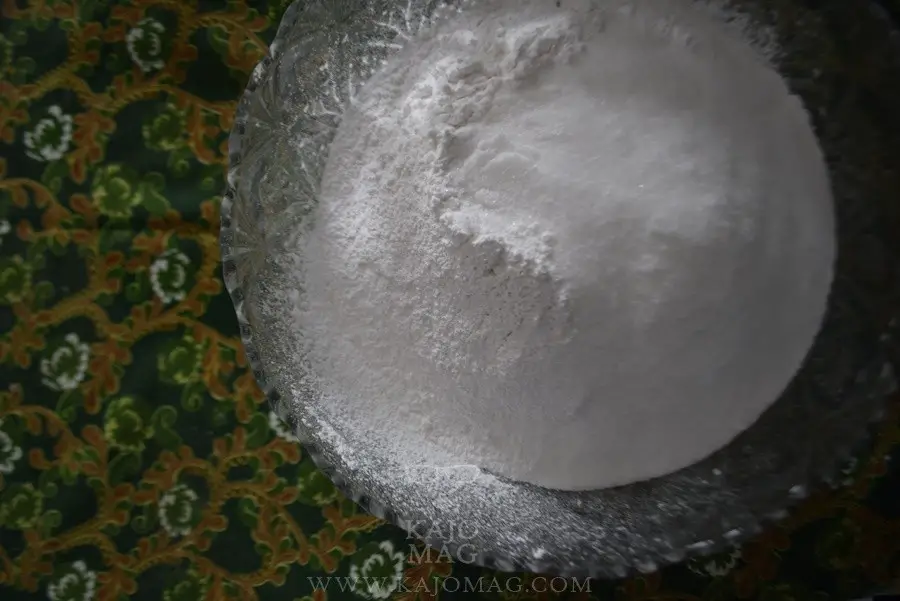
The basic ingredients to make kuih cap are rice flour, eggs, sugar and coconut milk.

Although this traditional snack does not share a common name, it uses the same brass mold to make it. In Malaysia, you can find the mold at major supermarkets, grocery shops or kitchenware stores.

The original kuih cap is golden brown in colour but it can come in other colours as well, especially in pink.

Similarity with snacks from other countries

While there is no proven fact on where kuih cap comes from, the common understanding is that it is inspired by southern Indian’s rose cookies.

Even in India, it is known by different names; Gulabi Puvvulu in Telugu, Acchu Murukku in Tamil and Achapam in Malayalam. Made from flour, sugar, eggs and coconut milk, this rose cookie is a favourite among Indian Christians during the Christmas season.

In Indonesia, this snack is called Kembang Goyang. It shares the same ingredients with kuih cap of rice flour, eggs, sugar, salt and coconut milk.

KajoTries: The crunchy deep-fried kuih cap or kuih goyang
The dry ingridients of Kuih Cap.

Meanwhile in Thailand, a snack which is similar to kuih cap is Lotus Blossom Cookie or Kanom Dok Bua.

The pattern of the Lotus Blossom Cookie mold looks more like a lotus flower and more elaborate from kuih cap’s mold.

Unlike kuih cap, Thai’s Lotus Blossom Cookie is not flat and really does look like a flower. To shape the flower, place a small bowl upside down on a plate. When the cookie is fresh out of the fryer and still soft, place the cookie on top of the bowl to make it curve like a blossoming flower. Allow to cool.

Beside rice flour, some Lotus Blossom Cookie recipes also put in all-purpose flour and cassava flour as their ingredients.

This Lotus Blossom Cookie reportedly can also be found in Hong Kong and Taiwan.

The variations of Malaysian kuih cap recipes

In Malaysia, there are plenty of variations in portions when it comes to kuih cap recipes. However, the main ingredients are rice flour, sugar, eggs, coconut milk, salt, water and oil for frying.

Some put in drops of colouring to make it more colourful. Another ingredient, which is optional for kuih cap, is sesame seeds.

After mixing all the ingredients into a batter, heat the oil together with the brass mold. After the oil and mold are hot enough, dip the mold lightly into the batter and then put it back into the hot oil long enough to cook the batter. Then shake it over a plate until the snack comes off the mold.

KajoTries: The crunchy deep-fried kuih cap or kuih goyang
Dip the heated mold into the batter.
KajoTries to make our own kuih cap

Here at KajoMag, we traded our pens and laptops for a whisk and a wok to make our own kuih cap.

To make the batter, we used 500g of rice flour, one cup of castor sugar, 2 eggs, 250ml of coconut milk, one teaspoon of salt and 400ml of water.

The recipe also stated that we supposed to put a little bit of air kapur (limewater). But we couldn’t find any so we scratched that of the ingredient list. (Do let us know in the comment box why we should put in limewater in our kuih cap).

KajoTries: The crunchy deep-fried kuih cap or kuih goyang
NOT SO EASY!: This is what happened when we left the mold in the oil for too hot.

While the rest of the ingredients were easily available and affordable, the hard part was deep-frying it.

Some people suggested keeping the fire low to prevent it from burning. (But it does take a toll on our patience.)

Sometimes, the mold was too hot that the batter just fell off the mold even before we transferred it from batter to oil to fry it.

Additionally, we realised that therewas an art to shaking the mold while dipping the batter in the frying oil that most online recipes failed to mention. We were supposed to shake the mold up and down – not side to side as we were doing! – in order for the snack to stay in shape.

The end product
KajoTries: The crunchy deep-fried kuih cap or kuih goyang
Obviously, we still have lots to improve on.

After getting the hang of the mold and the frying, we were happy to announce that 60% of our kuih cap were nicely shaped and crispy, while the rest were burnt or deformed beyond recognition.

KajoTries: The crunchy deep-fried kuih cap or kuih goyang
Some of our ‘failed’ kuih cap.

KajoMag readers, feel free to share your ultimate recipe of this traditional snack and tricks to make the perfect piece of Kuih Cap in the comment box.

Do you have any traditional recipes that you want us to try to make next? Let us know!

KajoPicks: Check out these four coffee places in Bintulu

Apart from shopping complex, Bintulu is currently witnessing the rising number of different kind of eateries.

These include coffee places offering good coffee from dirty coffee to nitrogen-infused java and relaxing ambience for patrons to just hang out.

Here are four coffee places in Bintulu, Sarawak you need to check out:
1.Coffee Dream

Located at Parkcity Commerce Square, this coffee place has been operating since 2014.

Besides coffee, Coffee Dream is famous among the locals for its western food.

Omelette sandwich, spaghetti bolognese, mushroom soup, cheesy beef balls, mushroom cheese omelette, eggs Benedict, chicken Caesar salad are just the tip of their wide range of menu items.

For rice eaters out there, don’t worry because Coffee Dream has a selection of Asian favourites to choose from such as the typical nasi lemak.

While you are at it, might as well end your meal with one of their freshly baked cakes for dessert.

2.The Coffee Code Bintulu
KajoPicks: Check out these four coffee places in Bintulu
Do you like it dirty? Dirty Code from The Coffee Code.

The Coffee Code is Sarawak’s very own cafe chains. The first one was opened in Sibu, then Bintulu at Ibraco Town Square and the latest was in Kuching at Saradise, BDC.
When you’re at Coffee Code, how about giving the Dirty Code a try? It is their in-house version of dirty coffee. It is one of the best coffee places in town to spend your tea time because it serves wide range desserts.

Their specialty is perhaps waffles which come with different kind of toppings.

KajoPicks: Check out these four coffee places in Bintulu
Waffles at The Coffee Code Bintulu.
3.Escape Coffee


You can’t satisfy your coffee craving early in the morning at Escape Coffee. But you can satisfy your coffee craving late at night here because it opens from 12pm till 12am.

It is perfect for the late night work hustle since it provides free wifi.

Feeling hungry? They have good options of food on their menu such as beef sirloin steak, mixed grill, lamb chop, butter chicken waffle and chicken macaroni fruit salad.

4.Melt Cafe

The current star of Melt Cafe Bintulu, no, not its famed grilled cheese sandwich but its Nitro Coffee.

If you have not tried Nitro Coffee before, just imagine Guinness draft beer, only it’s coffee! Since the drink is infused with nitrogen, it has this rich, creamy head similar to Guinness.

So if you are a big fan of coffee, this beverage is definitely worth a try.

Longing for dessert? Give Melt Cafe’s Burnt Cheesecake a try. Some described Burnt Cheesecake as the alter ego to the classic New York cheesecake. The differences are this cake is burnt outside with toasty edges and without the usual pressed cookie base.

Of course you cannot leave Melt Cafe without trying its signature grilled cheese sandwich.

KajoPicks: Check out these four coffee places in Bintulu
Nitro Brew Coffee at Melt Cafe. Look at its creamy head on top of the glass!
KajoPicks: Check out these four coffee places in Bintulu
How the Nitro Brew Coffee looks like after few minutes.

Super Ono! Your answer to poke bowl in Kota Kinabalu

If you are craving for poke bowl in Kota Kinabalu, Super Ono is the place for you!

This trendy food store first opened up in Sabah’s capital on Nov 11, 2018.

Poke became a food trend in the United States since 2012 with many of these beautifully garnished poke bowls featured on Instagram.

And now the trend has officially arrived in the northern part of Borneo.

How to make your own poke bowl at Super Ono?

Poke (pronounced poh-keh) is basically diced raw fish served as either an appetiser or as a main course.

It is one of the main dishes of Native Hawaiian cuisine. Traditionally, it consists of fish served with traditional condiments such as sea salt, candle nuts, seaweed and limu (Hawaiian word for algae).

When you first arrive at Super Ono, take an ordering form and start to curate your own poke bowl.

First of all, pick your base. You can choose white rice, brown rice, Quinoa (pronounced keen-wah), green mix or seaweed rice.

Then pick your choice of protein. You can have either fresh salmon, fresh tuna, salmon tartar, baked chicken, baked salmon or shoyu tuna.

Are you a vegetarian? No worries because you can choose tofu as your protein too.

Here comes the fun part where you can choose four different kinds of toppings. The choices are Japanese cucumber, edamame, Pico De Galla (tomato salsa), pineapple, corn, boiled egg, tamago, carrot, kimchi, pomelo, crab meat and chuka wakame (Japanese seaweed).

After that, pick one ingredient as one of your unlimited toppings for that final crunch of your poke. You can pick sesame seed, spring onion, dry chili flakes, chia seed, walnuts, sunflower seeds or several other ingredients.

Finally, choose your dressing to seal the deal on your poke bowl. Super Ono offers Hawaiian Ka Lole, Flaming Sriracha, Super Ono Classic, Sesame Mayo or Japanese Shoyu.

According to experts, salty dressings such as shoyu sauce goes best with your poke bowl.

But why not take the chance to go crazy or experimental once in awhile since you can make your own poke bowl?

Even if you are not familiar with poke, Super Ono still makes a good pit stop for those who want to spice up their food crawl in Kota Kinabalu.

For more information on Super Ono, check out their Facebook page.

Super Ono! Your answer to poke bowl in Kota Kinabalu
1 5 6 7 8 9 12