Browse Tag

Food - Page 9

8 Malaysian recipes with pineapple

While the Italians do not like pineapples on their pizzas, people in Malaysia have plenty of ways to cook it.

For those who are in love with this tropical fruit, here are eight Malaysian recipes with pineapple:

1.Sweet and sour fish
8 Malaysian recipes with pineapple
Sweet and sour pork. Credits: Pixabay.

This dish is originally a Chinese recipe made of fried white fish covered in a sauce made from ketchup, diced pineapples and cucumbers.

The sauce offers a nice blend of sweetness and sourness all thanks to the ketchup, canned pineapple juice and vinegar.

If you are not a big fan of fish, you can replace it with fried chicken meat or pork.

2. Pig intestines cooked with pineapple

Speaking of pork, pig intestines might not be everyone’s cup of tea but in Sarawak it is famously cooked with this tropical fruit.

During Gawai or the harvest festival, pork is the white meat of choice. Usually, each and every part of the pig is not wasted and cooked including its intestines. Pineapple makes the perfect pairing, as its sweetness balances out this organ’s strong taste.

3. Pajeri nanas

From Sarawak, we now head to Peninsular Malaysia. “Pajeri nanas” or pineapple curry is a Malay traditional dish whereby each West Malaysian state has its own recipe.

Watch how to make it here.

4. Sambal nanas

Here is another Malay recipe; sambal is a sauce or paste made mainly from chili peppers with other secondary ingredients such as shrimp paste (sambal belacan) or petai (sambal petai).

Hence, sambal nanas is a rough paste made from pineapple.

5. Nanas Tumis Air

“Nanas tumis air” is a stir fried dish suitable for vegetarians. It is cooked with shallots, garlic, turmeric powder and spices like clove, star anise and cardamom.

6. Pineapple fried rice

Inspired by Thai fried rice, it is commonly seasoned with turmeric powder giving the dish its slightly yellow colour. What makes this dish so good, is the sweetness of the pineapple which gives this Asian staple the tropical fusion it needs.

7. Fruit rojak

Also known as Malaysian fruit salad, a rojak is a famous dish taken during tea-time. It consists of cucumber, jicama, deep-fried tofu and of course pineapple.

8. Pineapple tart

If you are not a big fan of this fruit as a savoury dish, here is the recipe that will suit all taste buds. These tarts are bite-sized baked goods topped or filled with pineapple jam. It is one of the famous festive cookies because it is usually served during Hari Raya, Chinese New Year and Gawai.
However, you can still find them in local bakeries all year round.

Watch how to make it here.

10 pit stops you can make when driving from Kuching to Bintulu

Driving from Kuching to Bintulu takes about nine to 10 hours depending on your speed and the road conditions.

Although the scenery from Kuching to Bintulu may not be as breathtaking compared to the road from Kota Kinabalu to Ranau or Tambunan, there are still a few attractions along the way.

The journey can be exhausting, so you need to stop few times along the way to refuel, refresh yourself and refill your stomach.

Here 10 pit stops you can make when driving from Kuching to Bintulu:

1.Serian

After driving about 60km from Kuching, the first pit stop you can make is at Serian town. There is a petrol station, public toilet and lots of eateries.

You should also have a walk through the local wet market to buy some jungle produce, vegetables and even handicraft.

10 pit stops you can make when driving from Kuching to Bintulu
One of the famous hotspots in Serian, Ranchan waterfall.
2.Balai Ringin

If you are planning to skip Serian, you can drive another 30km to reach Balai Ringin.

Here, the public toilet is relatively clean and there is a small market selling vegetables and fruits in the morning. In the evening, there are stalls selling traditional cakes.

10 pit stops you can make when driving from Kuching to Bintulu
The public toilet at Balai Ringin.
3.Lachau

Lachau is one of the famous pit stops along the Kuching-Sri Aman route. It is famous as a selling hub for preserved fish.

Lachau is usually packed during breakfast and lunch times so parking might be a little bit difficult. This slowly growing town is about 50 minutes away from Balai Ringin.

10 pit stops you can make when driving from Kuching to Bintulu
Buy some preserved fish at Lachau market.
4.Sri Aman Junction

Before you make a right turn into Kuching-Bintulu route, another well-known pit stop is at the Sri Aman junction. There is a food court serving Malay and Chinese cuisine, a grocery store and a public toilet.

Here you can also find traditional cakes and fruits.

5.Mid-Layar Resting Center

After leaving Sri Aman, drive another one hour to reach Mid-Layar Resting Centre.

If you have the time, you can a make a stop at Engkilili town which is about 6km from the main road or you can save that town for another trip.

10 pit stops you can make when driving from Kuching to Bintulu
You can make swing by at small town of Engkilili to visit this mythical rock called Batu Nabau.

At Mid-Layar Resting Center is the most decorated public toilet in Sarawak. So even if you do not need a toilet break, it is still worth making a pit stop here.

The toilet is decorated with fake flowers, posters and funny Malay quotes and reminders. There are photo booths right outside the toilet to make your visit an Insta-worthy moment.

Other public amenities here are the surau, grocery store, food court and a petrol station.

10 pit stops you can make when driving from Kuching to Bintulu
The most decorated public toilet in Sarawak that comes with a photo booth at its doorstep.
10 pit stops you can make when driving from Kuching to Bintulu
Mid-Layar Resting Center near Betong, Sarawak, one of the must-stop pit stop from Kuching to Bintulu.
6.Jakar

Jakar can be considered the middle part of your journey from Kuching to Bintulu. Thus, it makes the famous pit stop to refuel. The public toilet at the petrol station is small but considerably clean.

This famous stopping point is also known for its prawn noodle at Peking Restaurant.

It is cooked in Foochow style with dark broth made of soy sauce. Additionally, the whole area makes a perfect place for a caffeine fix. This is because most of the eateries serve coffee using Jakar’s very own java beans.

10 pit stops you can make when driving from Kuching to Bintulu
Stop by at Peking Restaurant, Jakar and have a bowl of prawn noodle.
7.Sibu

From Jakar, there are two ways to reach Sibu town; it’s either using the Lanang or Durin bridge.
Turn to Waze or Google navigation to decide your route.

Making a pit stop at Sibu would take a lot of time from your journey because of the traffic jam heading to the town centre.

However if it is during dabai (Sarawak black olive) season, a pit stop at this Swan town is definitely a must.
Sibu is famous for the best quality with the most reasonable price for dabai in Sarawak.

8.Stapang

From Sibu drive another 46km to reach the small town of Stapang.

There is not much going on at this pit stop although you will find a market, public toilet and a petrol kiosk. The town is like most small towns in rural Sarawak where it becomes quiet after lunch time.

9.Restaurant Impian Selangau

This halal restaurant is famous among bus drivers so it is hard to miss with rows of buses parked outside.
Located at Selangau-Mukah junction, it is another busy pit stop along the Kuching-Bintulu road.The restaurant is open 24 hours and there is a grocery store, a free entry public toilet and a surau.

10.Tatau

About 55km before reaching Bintulu, the final pit stop you can make is at Tatau town.

If you make a visit to its market, you might find some local traders selling tuak (Iban rice wine). Why not buy a bottle to celebrate your long journey once you arrive in Bintulu?

Take in the view of Padas river from Fatt Choi Coffee Cabin

If you are looking for the perfect view of Padas river, look no further than Fatt Choi Coffee Cabin in Tenom, Sabah. Padas river which flows past Tenom from Long Pasia, south of Sabah, is famous for white water rafting.

The rafting route is 30km long, making it the longest rafting route in East Malaysia to date. It has also been recognised as one of the best and safest rapids in Southeast Asia.

Take in the view of Padas river from Fatt Choi Coffee Cabin
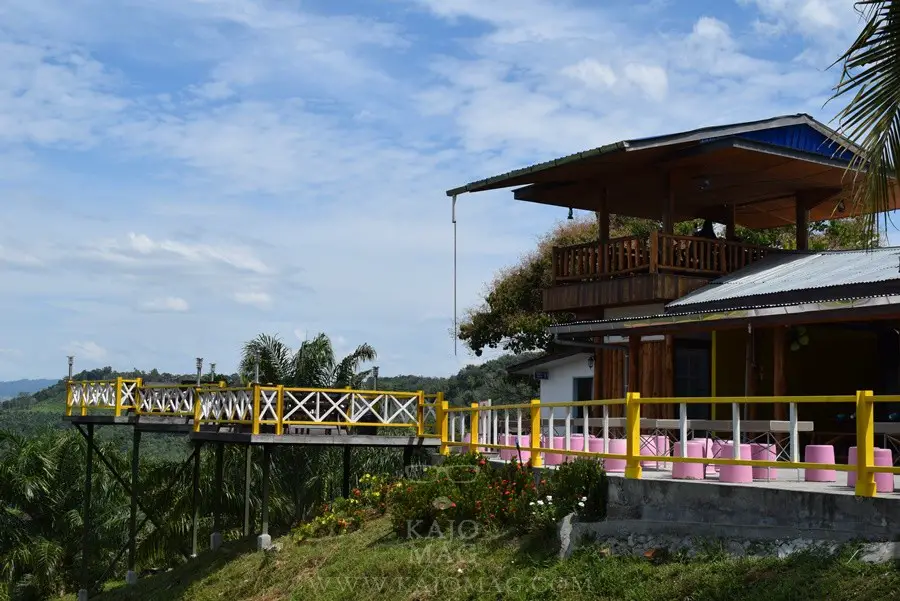
A view of Padas river from the highest viewing point of Fatt Choi Coffee Cabin.

No rafting, only Fatt Choi Coffee

At Fatt Choi Coffee Cabin, you may not  get the thrills of the Padas river but you can experience the beauty of its view.

Beside Yit Foh, Fatt Choi is one of the famous brands of Tenom coffee.

The coffee cabin is located not far from its factory at Jalan Tenom Lama which comes with affordable lodging, eatery and viewing platform.

Take in the view of Padas river from Fatt Choi Coffee Cabin
It is the highest place in town to have a drink of Tenom coffee.

It makes the perfect spot to hang out with friends, drinking a cup of local java while enjoying the view for Padas river.

The place might be too hot and humid for a visit during the noon and it is not air-conditioned but visitors can always cool themselves down with a cup of cold coffee.

Take in the view of Padas river from Fatt Choi Coffee Cabin
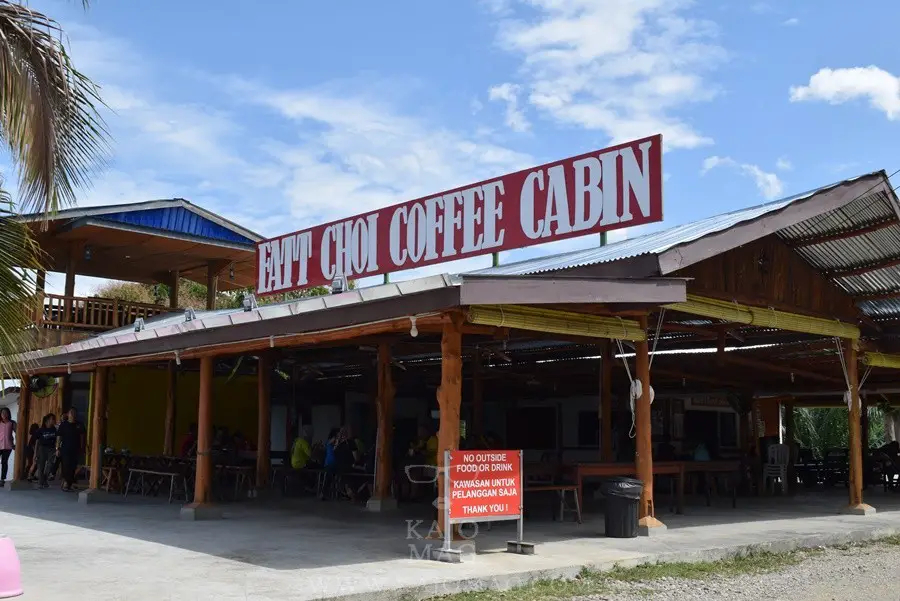
Visitors can stay, eat or just drink at Fatt Choi Coffee Cabin.

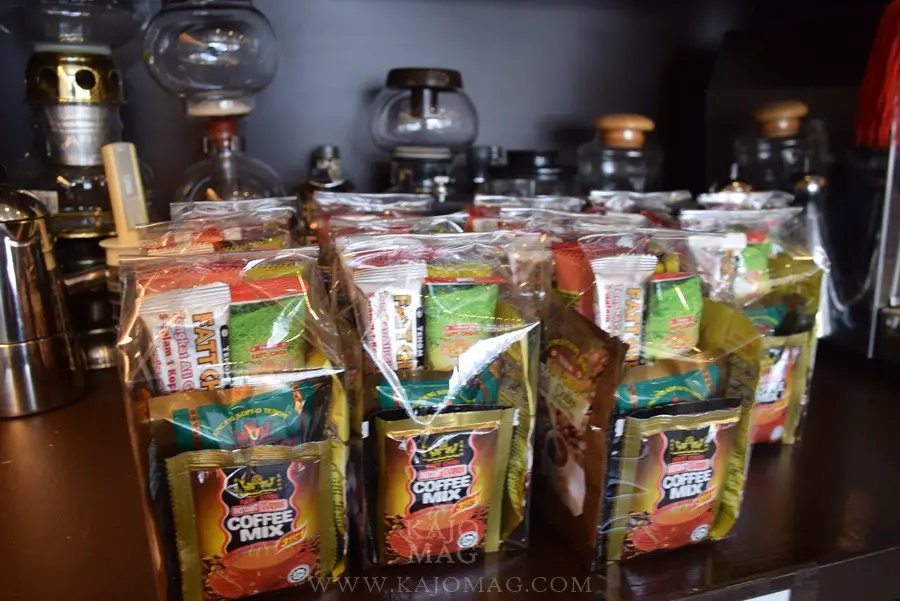
Established in 1987, this brand of Tenom coffee products include white coffee, cinnamon coffee, black coffee and many more.

The best part of Fatt Choi brand is it has a cafe located at Tenom town offering freshly brewed coffee.

So if you are looking for westernised coffee drinks such as Americano, cappuccino, latte and mocha in Tenom, you can find them at TFC Coffee.

The cafe also serves cakes, waffles and sandwiches as well as cozy environment to relax.

Take in the view of Padas river from Fatt Choi Coffee Cabin
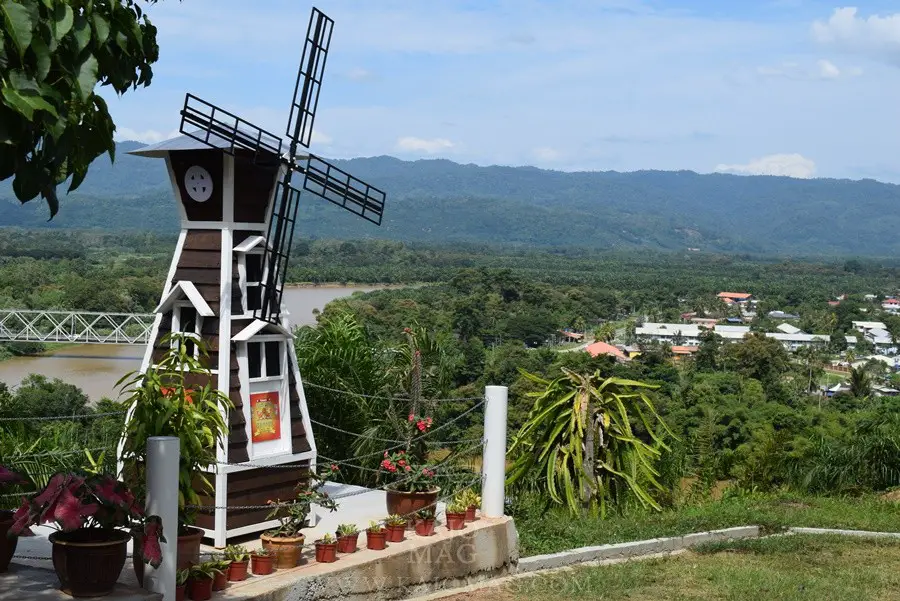
Here is an Instagram-worthy spot in Tenom, a miniature windmill with a view of Padas river at the back.
Take in the view of Padas river from Fatt Choi Coffee Cabin
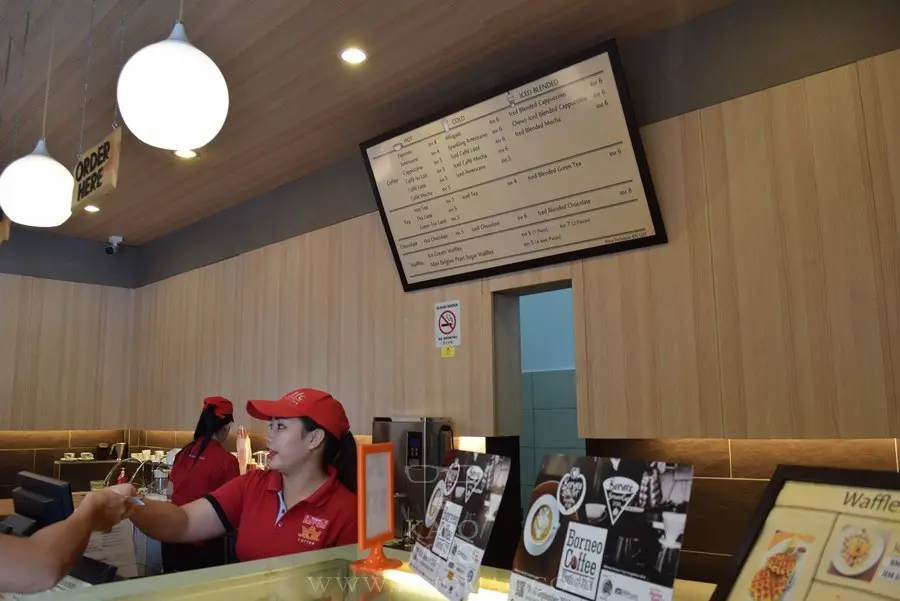
Pick your type of coffee drinks at TFC coffee.
Take in the view of Padas river from Fatt Choi Coffee Cabin
Visitors can also purchase Fatt Choi coffee products at TFC Coffee.


It’s all about classic coffees and cute chalets at Yit Foh Factory, Tenom

The moment you step onto the grounds of Yit Foh Coffee Factory in Tenom, the smell of freshly roasted coffee immediately greets you.

Located about 170km from the Sabah capital of Kota Kinabalu, the town of Tenom is synonymous with coffee.

It’s all about classic coffees and cute chalets at Yit Foh Factory, Tenom
The town of Tenom is synonymous with coffee.

About Yit Foh Coffee Factory

Yit Foh Coffee Factory, also known as Yit Foh Tenom Coffee, is the oldest coffee manufacturer in Sabah.

Founded in 1960 by Yong Loong Vun, the factory still produces coffee grounds the traditional way by roasting the beans over a wood fire.

Visitors can visit the factory shop where you can look for various Yit Foh coffee products.

If you are a purist, you can purchase packages of coffee powder and make your own drinks.

But they also sell coffee sachets such as kopi O (black coffee with without sugar), kopi O 2 in 1 (black coffee with sugar), cafe latte 3 in 1 (coffee with sugar and creamer) and cafe latte 2 in 1 (coffee with creamer).

Other products are white coffee, cafe au lait, oat cereal, teh tarik kaw and three types of drip coffee; Americano coffee, Italiano and Java Mandheling.

It’s all about classic coffees and cute chalets at Yit Foh Factory, Tenom
Pick your choice of java.

When it comes to staying in Tenom town, however, there’s not much choice when it comes to accommodation.

But if you are willing to stay about five minutes outside the town, how about staying near a coffee factory at Yit Foh Coffee Cottage.

It has a longhouse style cabin, deluxe chalet and family hut and each room is named after a type of coffee beverage. How cute is that?

It’s all about classic coffees and cute chalets at Yit Foh Factory, Tenom
Do you want to stay in Kopi Susu or Mocha?
It’s all about classic coffees and cute chalets at Yit Foh Factory, Tenom
Imagine waking up in the morning from one of these cabins and immediately smelling the roasted fragrance of coffee.

Having a meal at Kafe Robusta

It’s all about classic coffees and cute chalets at Yit Foh Factory, Tenom
The outdoor sitting area of Kafe Robusta.

Even if you are not staying overnight, drop in on Kafe Robusta and have a meal.

They serve soto (chicken or beef soup), bakso (meatball served in soup with noodle), rojak (beef noodle in peanut gravy), laksa (spicy noodle soup) and other rice dishes at affordable prices.

Plus, you can order one of Yit Foh product to complement your meal.

If you are visiting Tenom for the first time, your visit to Sabah’s coffee capital is incomplete without a visit to the oldest coffee producer.

Top 3 Sabah fermented foods you must try before you die

Located in the northern part of Borneo island, the Malaysian state of Sabah has its own distinct cuisine different from other states in the country.

Thanks to its multiracial population just like its neighbouring state of Sarawak, Sabah offers various ingredients and style of food preparation.

One of the famous ways they have of preparing food is by fermenting with salt, a similar method to making pekasam (Malaysian fermented food).

When you take a walk through any of their local markets you will find fermented food sold in all sorts of different sizes.

Besides the local market, you can also find them at the roadside stalls along the road from Kota Kinabalu to Ranau or Keningau.

Top 3 Sabah fermented foods you must try before you die
Local sellers selling different kinds of Sabah preserved foods. The ones in red are pickled ‘tuhau’ while the ones in yellow are pickled ‘bambangan’.

If you are up for it, here are top 3 Sabah fermented foods you must try before you die. We warn you; they are not for the faint-hearted because of their strong smell and flavours.

1. Pickled Tuhau

https://www.youtube.com/watch?v=VmsM-7FEmp4

The least threatening of all three Sabah fermented foods is pickled tuhau. Tuhau is a type of wild ginger scientifically known as Etlingera coccinea.

The edible part of this ginger is the inner sheath of the shoot. Chop it up and mix it with chives, chilli peppers, salt, sugar and vinegar.

It is usually served as a side dish with hot rice. You can also whisk in some tuhau with eggs to make an omelette.

2. Pickeled bambangan

https://www.instagram.com/p/BlnEZz9nLyO/?utm_source=ig_web_copy_link

Bambangan (Mangnifera pajang) is an endemic fruit only found in Borneo. The fruit is considered a type of wild mango but unlike the common mango, it has thick brown skin.

It is usually harvested raw and cured with salt and chilies to make pickled bambangan. The locals enjoy it with plain white rice and fried fish.

3.Bosou

https://www.instagram.com/p/BSxdzk9j0SQ/?utm_source=ig_web_copy_link

Bosou is also called nonsom, sambaat, kinaraatan, gagau and tinamba in different Kadazandusun dialects. It is a preserved fish or meat made with biji kepayang in Malay (Pangium edule) or pangi in Dusun language. The most common main ingredient for bosou is river fish. Mix the fish together with rice, salt and pangi.

To spice it up a little bit, you can also add in pineapple or tuhau. It takes up five to seven days for it to be fully fermented. There are two ways to take bosou; you can have it as a condiment or cook it with onions and chilies.

Do not leave Kuching without trying these two ice creams

If you are visiting Kuching for the first time and are a big fan of ice cream, there are two iconic desserts you have to try.

Both ice creams have distinct tastes from each other and have maintained their legendary status in the Kuching dessert scene despite having no air-conditioners, let alone Instagram-worthy settings.

But locals have been flocking to these ice-cream places for years now and by the looks of it, they will continue to do so in coming years.

So no matter how packed your itinerary is, do not leave Cat City of Sarawak without trying these two ice creams.

1.Sunny Hill Ice Cream

Do not leave Kuching without trying these two ice creams
A cup of sundae with sweetened, crushed peanuts.

If ice-creams in Kuching had a king, Sunny Hill ice cream would definitely be sitting on that throne.

This ice-cream maker has been operating since the ’60s, maintaining its canteen-style design over the years.

Located at Jalan Bukit Cahaya, Sunny Hill offers affordable soft ice creams.

Besides their basic ice cream cones, they also offer ice cream sandwiches, banana splits and ice cream floats.

You can also choose to have toppings of syrup and/or crushed peanuts.

Unlike other ice-cream parlours that have an ever-ready selection of flavours, Sunny Hill serves its selection of flavours on a rotational basis.

While vanilla is served everyday, their other flavours are served as follows: strawberry (Monday and Tuesday), pandan and corn (Wednesday to Friday) and chocolate (Saturday and Sunday).

On top of their mouth-watering ice-creams, Sunny Hills also sell baked goods such as cookies, breads and egg tarts.

2. R.G. Ais Krim Bergula Apong

Ice cream gula apong (palm sugar) has been in trend for the past few years. But the first one to come up with the idea is a humble stall located at Kuching Open Air Market.

Do not leave Kuching without trying these two ice creams
A pandan-flavoured ice cream with a drizzle of palm sugar and cornflakes topping.

Reportedly, Richard Tan the owner of R.G. Gula Apong Ais Krim started the ice-cream plus palm sugar craze 20 years ago.

They only have one flavour a day but in three sizes – small, medium and large.

You can choose your own topping – peanut, cornflakes, Oreo or Nestum – for free.

The texture of this ice cream is closer to a shaved ice unlike most of the ice creams with palm sugar out there which usually has soft serve ice creams.

Some people may find R.G. Ais Krim Bergula Apong too sweet for their taste, but if you need an instant dose of sugar, why not give this ice cream a try.

Do not leave Kuching without trying these two ice creams
R.G. Ais Krim Bergula Apong is believed the one who started to serve ice creams with palm sugar.

Your ultimate guide to Malaysian nasi goreng

Nasi goreng, which literally translates to “fried rice” in Malay, has ignited a few cross-country fights over the past few years.

The most famous incident was when former England footballer Rio Ferdinand twitted “Nasi goreng lunch… Keeping it local in Singapore.”

Indonesians were quick to correct Ferdinand saying nasi goreng is not from Singapore, but Indonesia.

Meanwhile, some Malaysians jumped into the squabble, slamming Indonesians for wanting to claim every dish in the region including rendang.

However, do you know that chao fan or fried rice in Mandarin has been served in China since 4,000 BC?

Perhaps now China can stop claiming the South China Sea and stake their claim on nasi goreng instead?

Regardless of who owns nasi goreng, a visit to any Southeast Asian country especially Indonesia, Malaysia and Singapore would not be complete without tasting this dish.

In Malaysia, there are plenty of nasi goreng variations served in different parts of the country.

Some of these variations cannot be found in its neighbouring countries.

So here is your complete guide to Malaysian nasi goreng:

1.Nasi Goreng Ayam/Udang/Kambing/Daging

If you see this on the menu, you just need to choose your type of protein.
This fried rice is cooked with chicken (ayam), udang (prawn), kambing (mutton) and daging (beef).

2.Nasi Goreng Special

Nasi goreng special is usually an in-house specialty. However, most often they just add a sunny side up egg with a piece of fried chicken on top of your nasi goreng.

3.Nasi Goreng Tom Yam

This Malaysian nasi goreng has a Thai inspiration.
It is cooked with tom yam paste, lime, sometimes with a bit of lemongrass and fish sauce.

Watch how to make it here.

4.Nasi Goreng Pattaya

This Malaysian nasi goreng might sound like it comes from Thailand but it is believed to originate from Malaysia.
It is made by wrapping chicken fried rice in a thin fried omelette, almost similar to Japanese omurice. Nasi goreng Pattaya is often served with chili sauce, tomato ketchup and slices of cucumber.

Watch how to make it here.

5.Nasi Goreng Hailam

Hailam refers to a Chinese cooking style which usually uses watery soy sauce.
Hence if it is Nasi Goreng Hailam, it is fried rice served in vegetables, chicken or prawn cooked in Hailam-style.

6.Nasi Goreng Kerabu

Nasi Goreng Kerabu is a fried rice dish serve with ginger flower (bunga kantan), curry leaves and fried anchovies.
It is inspired by Kelantanese famous dish nasi kerabu, a blue-coloured rice served with dried fish or fried chicken, pickles and keropok.

Watch how to make it here.

7.Nasi Goreng Cina

The irony of nasi goreng cina (Chinese) in Malaysia it is usually can be found in Malay restaurants instead of Chinese restaurants.
There are plenty of nasi goreng cina variations out there but they all have one thing in common, sesame oil.

Watch how to make it here.

8.Nasi Goreng Kampung

If you love fried anchovies and kangkung (water spinach) then you will love this dish.
A nasi goreng kampung is not nasi goreng kampung without fried anchovies and kangkung.

Watch how to make it here.

9.Nasi Goreng Yong chow
Your ultimate guide to Malaysian nasi goreng
Yong chow fried rice.

This dish can be found mainly in Chinese restaurants.
It is fried rice cooked with char siu pork or lap cheong (Chinese sausage), scallion and vegetables such as long beans, carrots and green peas.

10.Nasi Goreng Belacan

Nasi goreng belacan is rice fried with shrimp paste (belacan), fish or chicken and long beans.

Watch how to make it here.

11.Nasi Goreng Ikan Masin

If you are into salty food then this is the Malaysian nasi goreng for you.
It is fried rice cooked with salted fish.

12.Nasi Goreng Mamak

Nasi goreng mamak is cooked in Indian-Muslim style. Nasi goreng mamak tends to be oilier than most Malaysian nasi goreng. Besides chilli paste, other main ingredients of this dish are dried tofu, fish cakes and curry powder Maggi’s instant noodle

13.Nasi Goreng DabaiYour ultimate guide to Malaysian nasi goreng

This is a Sarawak specialty of fried rice. It is rice fried with a seasonal native fruit called buah dabai (Canarium odontophylum).

14.Nasi Goreng USA

Again no, this Malaysian nasi goreng does not get any inspiration from the United States of America.
In fact, the acronym USA means udang (prawn), sotong (squid) and ayam (chicken).
Thus, this fried rice is served with prawn, squid and chicken.

15.Nasi Goreng Paprik

The key ingredient in nasi goreng paprik is the sauteed chili paste. With a bit tom-yum paste, this fried rice is a little bit on the spicy side.
This is another Malaysian nasi goreng inspired by its neighbour Thailand. The word paprik refers to Thai phrase pad prik where pad is stir-fry and prik means chilli.

How to order drinks in Sarawak coffeeshops?

Ordering drinks in foreign countries can be confusing. Even here in Malaysia, how to order drinks might even be different depending which state are you in.

Adding on the difficulties to order drinks, most Sarawak coffeeshops and food courts do not even have proper menus.

So here is a quick guide on how to order drinks in Sarawak coffeeshops.

How to order drinks in Sarawak coffeeshops?
How to order your drinks at Sarawak coffeeshops?

If you want to order coffee, take note that you have to say “kopi” or “Nescafe”. “Kopi” usually refers to drinks made with local coffee brands like Kopi Cap Kapal Api or Anggerek, while Nescafe is a Nestle brand of coffee. A cup of Nescafe costs slightly more than a kopi.

So here’s a basic list of what you can order at almost any coffeeshop, ‘kopitiam’ or ‘kedai kopi’ in Sarawak:

Kopi ‘O’ Kosong – ‘Kosong’ means ’empty’ in Malay. This is the Malaysian version of Americano or Long Black since it is just a hot cup of black coffee.
Kopi ‘O’ – Hot black coffee with sugar
Kopi ‘O’ Peng – Anything with the word ‘peng’ means ‘iced’. A Kopi ‘O’ Peng is iced black coffee with sugar.
Kopi – Malaysians love their condensed milk. A cup of kopi is coffee with condensed milk.
Kopi Peng – This is basically iced coffee with condensed milk.
Kopi ‘C’– Malaysians apparently love their alphabet. So a drink with the letter‘C’ means ‘with evaporated milk’. A cup of Kopi ‘C’ is coffee with added sugar and evaporated milk.
Kopi ‘C’ Kosong – If you want a kopi ‘C’ without the sugar, then it is a Kopi ‘C’ Kosong.
Kopi ‘C’ Peng – A glass of iced Kopi ‘C’.
Kopi ‘C’ Peng Kosong – The iced version of Kopi ‘C’ Kosong.
Kopi ‘O’ Peng Kosong – A glass of iced black coffee with no sugar, condensed milk or evaporated milk. An iced Americano, in other words.
Neslo –  Here is a Malaysian version of mocha. It is a mixture of Nescafe coffee and the chocolate and malt powder drink, Milo.

When you’re asking for tea and all its variants, just replace the word ‘kopi’ with ‘teh’ which means tea in Malay. The same rule applies to Malaysia’s favourite chocolate and malt drink, Milo.

If you are in Sabah, change the word ‘Peng’ to ‘Ping’ and you are good to go.

Good luck!

What you need to know about Glycemic Index (GI)

When it comes to food, there are so many numbers that we have to take note of.

These include calorie count, fat content, sugar levels but there is one number that the casual dieter might not have heard of.

It is the glycemic index or GI. According to the Glycemic Index website (yes, there is a website dedicated to it updated and maintained by the University of Sydney’s GI group), GI is a ranking of carbohydrates on a scale from 0 to 100 according the extent to which they raise blood (glucose) levels after eating.

What you need to know about Glycemic Index (GI)

Rice is one of the foods with high GI number. Credit: Pixabay.

What is Glycemic Index (GI)

It is the incremental area under the blood glucose response curve of 50g of carbohydrate portion of a test food expressed as a percentage of the response to the same amount of carbohydrate from a standard or reference food taken by the same subject.

There are three groups of GI:  low (where food GI is below 55) moderate (56 to 69) and high (70 and above).

According to Recommended Nutrient Intakes for Malaysia (RNI) report, research on glycemic response of foods is still low. The argument is that the practical use of GI to assess one single food item is questionable.

This is because there are many other factors including carbohydrate content or even cooking method influencing the glycemic response of foods.

However, there are reports that reducing food intake with high GI can improve overall blood glucose control.

Should you take Glycemic Index into account?

Does it mean that having low GI foods are good for you? Not necessarily.

Some low GI foods may not be good because they have high fat content.

Conversely, some high GI foods maybe be good because it has high nutrient content. Thus, it is unnecessary to completely avoid all high GI foods.

In other countries, nevertheless, GI is advised to be used as part of the nutritional management for people with diabetes.

American Diabetes Association, Canadian Diabetes Association and Diabetes United Kingdom recommends people with type 1 and type 2 diabetes to take note of the glycemic index of food.

Moreover, one study found that a moderately high protein, low GI diet works best for longer-term weight management.

Generally, what experts agree now is that the use of GI is only a base for choosing carbohydrate-containing food.

As for Malaysians, our high GI foods are fried meehoon (99), fragrance rice (97), kuay teow (90), wholemeal bread (85), pineapple (82) and sardine sandwich (73).

8 easy Japanese recipes to try at home

Forget about sushi and sashimi, there are easy Japanese recipes out there for you to try at home.

Fellow Asian countries like Malaysia already have the basic Japanese ingredients like rice and soy sauce.

Other traditional ingredients that you might require to make your own Japanese cuisine at home are miso, dashi, sake and mirin.

In Sarawak, most of Japanese ingredients are easily available at local supermarkets such as Everrise and Ta Kiong.

Here are 8 easy Japanese recipes for you to try at home especially on weeknights:

1. Omurice
8 easy Japanese recipes to try at home
Omurice. Credits: Pixabay.

For Malaysians, omurice is the closest thing you have to nasi goreng Pattaya.

It consists of fried rice covered with an omelette.

The rice is usually fried with chicken and various vegetables. Then a thin sheet of fried rice covers the top of the rice.

2.Tonkatsu
8 easy Japanese recipes to try at home
Tonkatsu anyone? Credits: Pixabay.

Tonkatsu is one of those easy Japanese recipes you might think is NOT so Japanese.

Tonkatsu (a combination of ton for ‘pork’ and katsu for’cutlet’)  is a breaded, deep-fried pork cutlet often served with shredded cabbage.

It’s easy to make. Salt and pepper your pork fillet, then cover it with flour. Dip the meat into a beaten egg before coating it with panko. Panko is a kind of Japanese bread crumb easily available at the supermarket or a Japanese store.

Can’t find panko? Make your own bread crumbs by ripping up some bread, spread it on a baking sheet and put it in the oven at 300 F degrees for 6-8 minutes or until it’s a golden brown. Then crush it into powdery form.

You can either deep-fry the tonkatsu or bake it in the oven for a healthier option.

3.Katsudon

Once you know how to make your own deep-fried pork cutlet, now you can make katsudon.

This dish is a bowl of rice topped with pork cutlet, egg and some vegetables.

4. Gyudon

What you mainly need to make gyudon is beef, onion, dashi, soy sauce, mirin and salt.

Simmer the thinly sliced beef and onion with all the seasoning above. Once it is cooked, pour the beef on top of hot steaming rice.

If you like, add on a raw egg or soft poached egg.

For a complete Japanese experience, serve your gyudon with Japanese pickled ginger (beni shoga) and ground chili pepper (shichimi).

https://www.youtube.com/watch?v=dGdOZBQcbbg&pbjreload=10

5.Oyakodon

Oyakodon is almost similar to katsudon and gyudon.

But for oyakodon, the ingredients such as chicken, egg, scallion, onion are simmered together in soy sauce and stock.

After it is cooked, it is poured on top of a bowl of rice.

6.Onigiri Rice Balls

Forget about Korean kimbap, onigiri is much easier to make for that perfect lunch takeaway.

It is made from normal plain rice formed in triangular shapes and wrapped in seaweed.

Traditionally, the filling is usually made from pickled ume, salted salmon and other fancy Japanese ingredients.

But you can always make your own simpler version of onigiri with ingredients which are already available in your kitchen.

For example, tuna with mayonnaise, or even small portions of fried food such as fried chicken or pork.

7.Miso Soup with tofu

This is one of those easy Japanese recipes which only requires you to boil.

Apart from being easy to make, it is also a healthier cooking method.

Firstly, boil water your nori (seaweed) for few minutes. Then, put in some tofu and if you like some green onions. Finally, add in your miso paste.

8.Niratama Donburi

The word niratama comes from nira which means garlic chives and tama which is an abbreviation of tamago (egg).

So this dish is basically made of eggs and garlic chives stir fried together to make an omelette.

After that, put it on top of a bowl of rice and get ready to dig in.