Patricia Hului

Patricia Hului is a Kayan who wants to live in a world where you can eat whatever you want and not gain weight.

She grew up in Bintulu, Sarawak and graduated from the University Malaysia Sabah with a degree in Marine Science.

She is currently obsessed with silent vlogs during this Covid-19 pandemic.

Due to her obsession, she started her Youtube channel of slient vlogs.

Follow her on Instagram at @patriciahului, Facebook at Patricia Hului at Kajomag.com or Twitter at @patriciahului.

20 videos you should watch on Youtube about Covid-19

During this coronavirus pandemic, fake news and conspiracy theories are also spreading like wildfire alongside the Covid-19 virus.

In an effort to combat fake news, Facebook launched a coronavirus and Covid-19 information hub to provide a central resource for people to get the latest news and information.

Designed to offer reliable official information about the pandemic, the new hub will appear at the top of a user’s News Feed.

Meanwhile, Twitter is removing tweets that are spreading dangerous misinformation about Covid-19. This was after many complained that its policies on misinformation were too lax.

Instead of those unverified news from the social medias and WhatsApp, get yourself educated through proper channels.

If you prefer visual explanation, here are 20 videos you should watch on YouTube about Covid-19:

20 videos you should watch on Youtube about Covid-19

1.The Lockdown: One Month in Wuhan

At 10am on Jan 23, 2020, Wuhan went into lockdown. This was a crucial step to stop a deadly virus from spreading further across the nation.

This documentary by China Global Television Network (CGTN) focuses on the medical personnel, volunteers, deliverymen and community service workers in Wuhan.

It is inspiring to see the frontliners keep their spirits up while working tirelessly against Covid-19.

Additionally, the documentary also follows lives of those under quarantine. For example, when one of the patients under investigation is a Muslim, how did the Chinese authority take care of his meals?

Instead of focusing on the illness, The Lockdown: One Month in Wuhan showcases the human stories of the Covid-19 pandemic.

Watch the video here.

2.Coronavirus in China

Here, DW Documentary brings you life during lockdown in the Chinese capital of Beijing.

The video follows journalist Sebastian Le Belzic who works in Beijing who has been living in quarantine at home with his family.

It gives you a glimpse of life in Beijing going to the mall, the supermarket, boarding the subway during lockdown.

Besides this, the documentary also showcases how China’s communist history helped in maintaining order during this period of time.

Just like any other country, the Chinese government continued to spring up new rules almost on a daily basis for the safety and convenience of its people.

For example, every store that sells face masks sells them in daily ration. They are not allowed to sell more than certain amount of face masks in one day.

Watch the video here.

3.Big Story: Epicenter- 24 hours in Wuhan

This is another documentary brought by CGTN. It is a human interest story of how the frontliners works against Covid-19 pandemic.

They visit the houses of patients infected by the virus and disinfect them. Besides this, they offer to buy groceries for the patients’ families, especially the elderly. They also give out pamphlets about the virus to the families.

While many younger generations are able to rely on technology for information, there are those – especially the elders – who do not have access to internet.

Giving out pamphlets with emergency contacts in a smart and crucial ideas to keep them informed; something that is applicable to other countries as well.

Watch the video here.

4.Coronavirus: How the deadly epidemic sparked a global emergency

In interviews filmed on smartphones, Chinese activists and Australian trapped in the lockdown explain what they are going through in China.

The documentary charts how the outbreak occurred and investigates whether a cover-up by Chinese authorities allowed the virus to spread.

It also shows how the medical field in China is coping with the virus.

Watch the video here.

5.Journalist goes undercover at “wet markets”, where the Coronavirus started

60 Minutes Australia in this video interviews Professor Gabriel Leung, who led the fight against the SARS virus.

Prof Leung believes that 60% of the world’s population could become infected with COVID-19.

Moreover, he predicts that up to 45 million people might die from it.

The video also follows Liam Bartlett who travels to Hong Kong and Thailand to find out the likely cause of the disease as well as the latest ongoing efforts to combat it.

Watch the video here.

6.COVID-19: Tracing the First Month of the Novel Coronavirus

Learn about what happened the first month after the Covid-19 outbreak.

The interviews featured in the documentary including a nurse, a Wuhan native and an infectious diseases specialist.

It also explains how having exotic food could lead to exposure new viruses from the wild.

Watch the video here.

7.Coronavirus: Inside Italy’s Covid-19 Lockdown

Reporter Emma Alberici taps into her network of family and friends in Italy to tell stories behind the lockdown for this special report.

The video follows how a young family live their lives in lockdown, how those who still work in essential services and how a young girl does school from home.

It also follows the head surgeon at one of the city’s major hospitals has contracted the Coronovirus from one of his patients. In this video, he shows his life under isolation and how he is being treated for the infection.

Watch the video here.

8.Covid-19/Coronavirus: Epidemiology, Pathophysiology, Diagnostics

If you are willing to sit through a science class, watch this video by Ninja Nerd Science.

Learn about the origin and zoonosis of the virus, the routes of transmission, epidemiology, pathophysiology and diagnostic tests used to identify Covid-19.

Basically, the Ninja Nerd Science compiles the most up to date and recent data on the virus (as of Mar 15, 2020) and present them in this video.

As new information and research is published, the channel continues to provide the latest updates and all the recent data about the new coronavirus.

Watch the video here.

9.Covid-19: Your questions about coronavirus, answered

If you have questions about Covid-19 especially on how it will affect the economy, this is the video for you.

Some of the questions are will Covid-19 trigger a financial crisis or is that an overreaction, which industries will be affected the most, how will low-income countries be affected.

The panelists in the video also discuss will some leaders try to use the pandemic to cement their grip on power and why do mortality rates differ from country to country.

Of course, some of you might want to know when will the crisis reach its peak and how long will we need to wait for the vaccine.

Watch the video here.

10.How wildlife trade is linked to coronavirus

This video not only explains how the new coronavirus is linked to wildlife trade but also why the disease first appeared in China.

One of the experts in the video stated, “The majority of the people in China do not eat wildlife animals. Those who consume these wildlife animals are the rich and the powerful – a small minority.”

Hence, the video explains how the people of China are themselves victims of the conditions that led to coronavirus.

Watch the video here.

11.Why fighting the coronavirus depends on you

In this video, Vox explains how we could slow the virus down from spreading entirely.

It must be done so that severe cases get spread out over a longer period of time and hospitals are less likely to be overwhelmed.

Vox also explains how social distancing is the best way to slow down the spread for everyone.

Watch the video here.

12.The Coronavirus Explained & What You Should Do

For those who love animation, then watch this video by Kurzgesagt – In a Nutshell.

The team behind this video aims to make science look beautiful and the way they explain things is “with optimistic nihilism”.

This animation explains what actually happens when it infects a human and what should we all do in fighting Covid-19.

Watch the video here.

13.The Science Behind the Coronavirus, the complete series

“Thank you Dr. Soon. You explained it in a way that I understood everything. This was very informative”; “The doctor has given a very enlightening and simplified explanation on this virus”; “I loved how he broke this down so it could be easily understood”; these are some of the comments left on this video.

Here, the executive chairman of the Los Angeles Times, Dr Patrick Soon-Shiong offers and overview of the coronavirus.

He proposes that understanding how the virus infects our bodies and strategies toward treatment can help as allay our anxiety about it.

Watch the video here.

14.What this chart actually means for Covid-19

You have heard the phrase and seen the hashtags, “Flatten the Curve” but what does it mean?

It’s Okay To Be Smart explains through animation why flattening the curve is important and what we can do on our parts.

One of the comments on this video said that we need to “share this video with all the selfish people refusing to quarantine themselves.” And we couldn’t agree more.

Watch the video here.

15.What Coronavirus symptoms look like, day by day

After being exposed to the Covid-19 virus, it can take from two to 14 days for symptoms to develop.

Every case range from mild to critical. While the average timeline from the first symptom to recovery is about 17 days, some cases are fatal.

Here is a video showcasing what it looks like to develop Covid-19, day by day.

Watch the video here.

16.Why Pandemics like Covid-19 keep happening

From the black death to the coronavirus, why pandemics keep happening to the world?

Apparently, there are plenty of factors attributing to a pandemic. If you dissect the problem closely, then it involves sort of social, cultural, political issues and many more.

Here, the Bloomberg explains what we need to think about in order to tackle pandemics.

Watch the video here.

17.How soap kills the coronavirus

People have been stocking up on hand sanitizers. The idea behind any alcohol-based hand rub like hand sanitizers is to use them when no soap and water is available.

So when you are at home; with soap and water readily available, there is no use for hand sanitizers.

Here Vox explains how plain old soap and water absolutely annihilates coronavirus.

Watch the video here.

18.The new coronavirus: How Should the World Respond?

As the new coronavirus is shutting down the Earth, what should we do? Here the Economist takes on what lessons can the rest of the world learn from China, Singapore and South Korea.

Watch the video here.

19.The Race to Develop A Coronavirus Vaccine

Even when scientists are racing against time to discover the vaccine for Covid-19, it might take at least one year or one year and half before the race is over.

CNBC explores what is at stake and when the world can expect a coronavirus vaccine.

Watch the video here.

20.Dr Martin Blaser Answers Coronavirus Questions from Twitter

When should we expect to see mutations? Does Covid-19 have a lifespan? Is coronavirus the 0.01% that soaps and sanitizers can’t kill?

Dr Martin Blaser, the professor of medicine and infectious diseases at Rutgers University takes on questions from Twitter.

What makes this video interesting is that they cover all kinds of questions, even questions that might not sound so serious. For example, should we limit how many times we use sanitizer in a day.

Watch the video here.

20 videos you should watch on Youtube about Covid-19

As there is so much new information and research found on daily basis, it is important to keep yourself updated with new knowledge every day.

What WHO wants you to know about the new coronavirus, COVID-19

Who better to tell you on what to do during this pandemic caused by COVID-19 other than the World Health Organisation (WHO)?

It is a specialised agency of the United Nations responsible for international public health. The organisation’s main objective is to ensure “the attainment by all peoples of the highest possible level of health.”

Basically, the public can rely on them for the most accurate information when it comes to pandemics, diseases and overall health.

While you cannot rely on your minister’s advice – the one who advised that drinking warm water will fight the coronavirus, or your president who wants to end the lockdown while the virus is advancing – you can always rely on WHO.

Since the virus is new, scientists are racing against time to research more about it. According to The Guardian as of 26 March, about 35 companies and academic institutions are working on a vaccine, and the US has already started human trials, so while researchers are still doing their jobs, any other unconfirmed news about the coronavirus should not be shared.

WHO is constantly updating the public with the latest information and discovery on the coronavirus.

Here is KajoMag’s summary of what the World Health Organisation wants you to know about the new coronavirus, COVID-19:

1.Why you should wash your hands regularly and thoroughly clean your hands with soap and water or an alcohol-based hand rub?

You have heard it over and over again; wash your hands! Frequently washing with soap and water or alcohol-based hand solution kill viruses that may be on your hands. It is as simple as that but still very important.

What WHO wants you to know about the new coronavirus, COVID-19
Wash your hands for at least 20 seconds. Credits: Pixabay

2.Why is it important to cover your nose and mouth with a bent elbow or tissue when you sneeze or cough?

Droplets spread the coronavirus. By following respiratory hygiene, you protect the people around you from contracting viruses such as cold, flu and coronavirus.

https://www.facebook.com/WHO/photos/a.167668209945237/2981616371883726/?type=3

3.Why you should avoid touching your eyes, nose and mouth?

You hands touch many surfaces and can pick up viruses, Once contaminated, hands can transfer the virus to your eyes, nose or mouth. From there, the virus can enter your body and can make you sick.

4.Why social distancing is important?

By maintaining at least one metre’s distance from others, you are helping to avoid breathing in any droplets from someone who sneezes or coughs in close proximity.

If you are too close, you can breathe in the droplets including the COVID-19 if the person coughing has the disease.

What WHO wants you to know about the new coronavirus, COVID-19
Image by Gerd Altmann from Pixabay

5.Are smokers and tobacco users at higher risk of COVID-19 infection?

Smokers are likely to be more vulnerable to COVID-19 as the act of smoking means that fingers (and possibly contaminated cigarettes) are in contact with lips which increases the possibility of transmission of virus from hand to mouth.

Besides, smokers may also already have lung disease or reduced lung capacity which greatly increase risk of serious illness.

Debunking some myths on coronavirus

COVID-19 virus CAN be transmitted in areas with hot and humid climates.

From the evidence so far, COVID-19 CAN be transmitted in ALL AREAS including areas with hot and humid weather.

So it doesn’t matter if you are out in the sun where the beach is or in an air-conditioned room, the virus can transmitted in ALL AREAS.

According to WHO, the best way to protect yourself against COVID-19 is by frequently cleaning your hands.

By doing this you eliminate viruses that may be on your hands and avoid infection that could occur by then touching your eyes, mouth and nose.

Cold weather and snow CANNOT kill the new coronovirus.

To date, there is no reason to believe that cold weather can kill the new coronavirus.

The normal human body temperature remains the same regardless of the external temperature or weather.

Again, taking a hot bath does not prevent the COVID-19 virus because your temperature still remain the same.

An ultraviolet disinfection lamp cannot kill COVID-19 virus.

In fact, these lamps should not be used to sterilise hands and UV radiation can cause skin irritation.

Eating garlic cannot help prevent infection with the COVID-19.

Garlic may be a healthy food that may have some antimicrobial properties. However, there is no evidence that eating it has protected people from the new coronavirus.

Are antibiotics effective in preventing and treating the new coronavirus?

No, antibiotics do not work against viruses, only bacteria. Therefore, antibiotics should not be used as a means of prevention or treatment.

However, if you are hospitalised for COVID-19, you may receive antibiotics because co-infection is possible.

Here are some of the things WHO has not confirmed about the coronavirus as research is still underway:

1.Are pregnant women at higher risk from COVID-19?

The data is limited but there is no evidence that pregnant women are at a higher risk for severe illness than the general population.

Nonetheless, due to the changes in their bodies and immune systems, pregnant women can be badly affected by some respiratory infections.

Therefore, it is important for pregnant women to report any possible symptoms to their doctors.

You can read more about Coronavirus, pregnancy, childbirth and breastfeeding here.

2.How long can COVID-19 can survive on a dry surface?

As at the time of writing, there is no data available on COVID-19 stability on surfaces. So far, laboratory studies have shown SARS-CoV and MERS-CoV that stability in the environment depends on several factors.

These factors include relative temperature, humidity and surface type.

However, the preliminary information on the COVID-19 virus may persist on surfaces for a few hours or up to several days.

3.Can the COVID-19 virus be transmitted through the air?

Studies to date suggest that the virus that causes COVID-19 is mainly transmitted through contact with respiratory droplets rather than through the air.

However, WHO is assessing ongoing research on other ways COVID-19 is spread and will share updated findings.

WHO also advised to keep yourself updated on the latest COVID-19 hotspots. These are the cities or local areas where COVID-19 is spreading widely.

If possible, avoid travelling to such places especially if you are an older person or have diabetes, heart or lung disease.

At the end of the day, keep yourself updated only from verified news. Do not rely on forwarded text messages or unverified testimonies on social media. Who cares what your parents’ neighbours’ third cousin says about the coronavirus – if it has not been scientifically proven, do not believe in it.

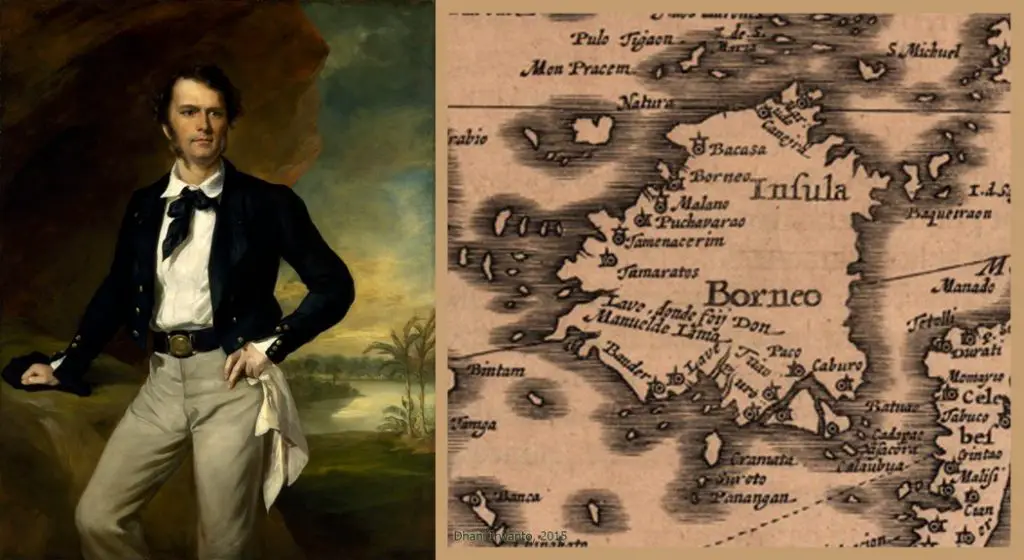
James Brooke’s role in the Battle of Marudu Bay 1845

“The Battle of Marudu Bay sees James Brooke enlisting the help of the British Royal Navy in Singapore to defeat Sherif Osman, a pirate leader from North Borneo, effectively ending his piracy,” this is what you will find on the Sarawak goverment’s official website of what happened in 1845.

But is there more to the story than the first White Rajah defeating a group of pirates?

Marudu Bay is located at the northern tip of Borneo where, in the 1840s, it was led by a man named by Syarif Usman (sometimes spelled as Sherif Osman).

According to Clifford Sather, Marudu Bay in particular, in the early 1800s served as a major staging point for slave-raiding operations.

“By the 1820s, the presence of Bajau and Ilanun settlements in coastal Sabah effectively eliminated Brunei’s political and commercial hold over the region,” Sather wrote.

In the meantime, Illanun slave trading activities allegedly sponsored by the Sulu was causing a blow to Brunei’s maritime commerce. These pirates disrupted sea routes and cut Brunei’s connections with the vital Chinese junk trade.

For a short period in the beginning, the northern Borneo settlement, particularly those of the Tempasuk Bajau was strong enough to ignore Sulu’s hegemony.

However in the 1830s, the Sulu reasserted its influence by recognising the powerful chief Syarif Usman as its regional governor in Marudu.

Believed to be a charismatic and a brave leader among the locals, the Westerners on the other hand, had a different perception of Syarif Usman.

James Brooke’s role in Battle of Marudu Bay 1845

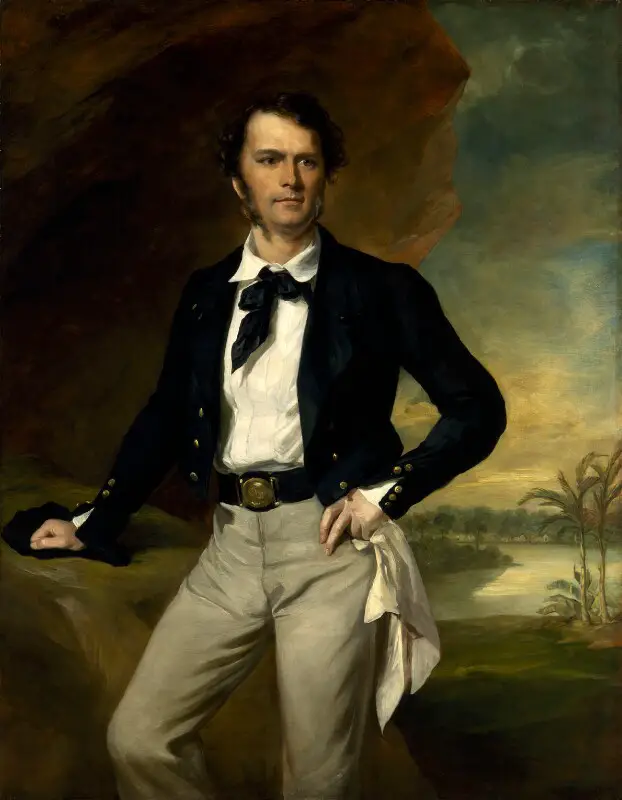
James Brooke’s role in the Battle of Marudu Bay 1845
James Brooke

Brooke at that time was seeking to consolidate his uncertain position in Borneo.

While he was already treated as the Rajah of Sarawak, Brooke was worried about his position with regards to Britain.

Steven Runciman in The White Rajah: A History of Sarawak from 1841 to 1946 wrote, “He wanted official support, some form of official rank and a guarantee that Britain would interest herself in Borneo.”

Brooke finally could sigh a relief in February 1845. At that time, Captain Charles Bethune arrived from London with a despatch appointing Brooke as Confidential Agent to Her Majesty in Borneo.

Runciman stated, “Bethum also brought a letter from the British Government to the Sultan of Brunei, expressing the intention of co-operating with him against the pirates.”

Brooke then accompanied Bethune to deliver this letter to Brunei to which the Sultan received the latter politely.

After his visit to Brunei, Brooke found out that Admiral Sir Thomas Cochrane commander of the Far East Fleet was at Malacca.

He hurried to see him. The admiral shared Brooke’s views about the pirates and promised to join him in expedition against Marudu Bay.

In order to strengthen his position in Borneo, Brooke’s alleged principle method was to campaign for the destruction of ‘pirate’ strongholds on the island including Marudu Bay.

How the Battle of Marudu Bay 1845 went down according to Captain Pascoe

Captain R.N. Pascoe who took part in the expedition to Marudu Bay 1845 recorded about the attack in his journal:

It was on the 18th of August 1845 that a British squadron, consisting of H.M.S. Agincourt, Vestal, Daedalus, Vaxen and the sloops Cruiser and Wolverine, under the command of Rear Admiral Sir Thomas Cochrane, anchored at the entrance of Marudu Bay, the expedition having for its object the destruction of a nest of pirates under a Serip Usman, an Illanun pirate chef.

The attacking force, which consisted of 530 seamen and marines, in 24 boats, of which nine were gunboats, took up station off the mouth of Tandik river, in the southeast corner of the Bay, at 3pm and at dawn next day proceeded up the river, the pinnace with guns leading. Two Malays from Sarawak accompanied the forces as guides.

About six miles from the entrance the advance was checked by a boom moored across the river by view of three batteries “about musket range from the boom;” the largest fort, mounting eight large pieces, stood on the right bank gaily decked with banners, stood at the junction of the river, which at this point divides into two branches, the third was a floating battery moored to the left bank.

A messenger “an Illanun from Mindanao in rich attire,” with a flag of truce came down to meet the force, with the request that the two senior Officers should proceed to the fort and negotiate, “but they were not thus to be trusted,” and a reply was sent back that unless Serip Usman (Syarif Osman) himself came down fire would at once be opened.

Immediately the messenger’s boat was clear of the boom, a galling fire was opened from the forts. Gibbard, mate of the Wolverine, fell mortally wounded, and a brisk fire was kept up from both sides.

The enemy’s guns being lad on the boom, caused fairly heavy loss amongst the attacking force, which was working hard to remove the obstacle. In about at hour an opening was effected; two cutters with marines instantly carried the three-gun battery, and the enemy, abandoning the forts, fled through the town in the rear and made for the jungle.

At 2pm the forts, towns, and enemy vessels being destroyed, the force reassembled to return to the ships, taking with them the hospital pinnace with the wounded. The casualties amounted to ten killed and fifteen wounded, three mortally. The number of the enemy slain is not computed, though it seems to have been very large, the carnage being described as frightful, and the destruction of the pirate’s stronghold was complete.”

The other side of the Battle of Marudu Bay’s story

Even so, not everyone believed that Syariff Osman was a pirate captain. Alternatively, the locals believed he was a leader who brought prosperity to Marudu Bay.

German author Bianca Maria Gerlich who wrote the book Marudu 1845 believed that not everything happened like in the Western records.

She told an audience during a talk on Syarif Osman in Kota Kinabalu in 2019 that James Brooke defamed Marudu as a pirate’s lair.

Moreover, Gerlich said that Brooke defamed Syarif Osman as a pirate chieftain.

Brooke did that to eliminate a possible rival for his influence over parts of Borneo, which were not yet occupied by other Western powers.

She stated, “Syarif Osman had not only built a strong, economically expanding and independent polity in Marudu Bay, but moreover was in contact with many important leader personalities of the region. His fair-reaching authority was considered too dangerous by James Brooke.”

Perhaps Colombian writer Nicolas Gomez Davila’s famous quote was right, “Truth is in history, but history is not the truth.”

With most records still written Syarif Osman as the pirates leader, the Battle of Marudu 1845 did not only destroy the town but also the memory of its development as a coastal state.

KajoMag readers, let us know in the comment box what do you think? Was Syarif Osman the leader of pirates? Was the Battle of Marudu Bay necessary>

5 Korean cafe vloggers you should follow on YouTube

Korean cafes; we have seen them in our K-dramas especially when the leading characters need a place to meet up. Most of the time they just carry on with their conversations with delicious-looking drinks just sitting there on top of the table. It is also a place where we have seen our favourite stars having their first date and breaking up.

Did you know that South Korea’s coffee consumption represents about 6% of the total of Asia Pacific’s coffee market?

It is estimated there are about 49,000 cafes across South Korea and more than 18,000 of which are estimated to be in Seoul.

Additionally, some of these Korean coffee chains are establishing outlets outside of their home country especially in Southeast Asia.

And now, we can even see Korean cafe trending on the internet.

From the country that brought us ‘mukbang’ and ‘gongbang’, there is a new internet trend emerging from South Korea called ‘Cafe Vlog’.

These vlogs are filmed by baristas who document their lives behind the counters of Korean cafes.

For coffee lovers, these cafe vlogs are addictive to watch as these baristas work their magic preparing each and every drink as if it is a work of art.

Some of these cafe vloggers are not just talented in pouring coffee. Some are bakers baking pastries and cakes hours before the cafes are open.

Besildes showcasing baristas pouring beautiful latte art, these videos also show the people who work passionately so that their customers will enjoy their cafe experiences.

If you have never heard of this, here are 5 Korean cafe vloggers you should check out on YouTube:

1.Coffictures

This YouTube channel has gathered more than 96,900 subscribers since November 2018.

The channel covers not only cafe vlogs but various recipes of pretty-looking Korean cafe drinks.

These recipes include strawberry milk tea, Italian hot chocolate and cream mocha latte.

One of the recipes featured in his vlogs is strawberry latte.

Do not be fooled by its name; this strawberry latte contains zero caffeine.

It is one of the most popular drinks found in any Korean cafe and featured in many cafe vlogs.

For his cafe, Coffictures prepares his by cutting fresh strawberries into small pieces. Then he covers them in brown sugar. He then leaves them for about an hour until the sugar melts.

The next step is stirring the strawberry and sugar together. He finally packs them into bottles by pouring the strawberry mix and milk according to a one to one ratio.

2.Zoe

This Korean cafe vlogger only started her YouTube channel in April 2019 but since then has already garnered more than half a million subscribers.

In a way, these Korean cafe vloggers use their YouTube channels to promote their cafes. Zoe, for instance is working for her mother’s cafe at Pyeongtaek city in Gyeonggi province.

The highlight of her videos is parfait, a rich cold dessert made with whipped cream, eggs and fruit toppings. Her most popular video has at least 4.7 million views.

Zoe also collaborates with other Korean cafe vloggers such as Cafeslave Jun and AYA Coffee.

https://www.youtube.com/watch?v=vWInhKYLhiE

3.Cafeslave Jun

Speaking of Cafeslave Jun, this Korean cafe vlogger is followed by more than 352,000 subscribers.

He works in cafe named Good Simple Cafe located at Yeoju city in Gyeonggi province.

There are at least four of his videos which have surpassed 1 million views.

Since channels of people filming themselves living alone is a trend, Jun shares what he does cooking for himself at home.

Besides pouring pretty drinks as a barista, this vlogger also bakes and decorates the pretty baked goods served in the cafe.

In one of the videos, he shows how he prepares tarts, tiramisu, chocolate cakes and brownies.

You might not able to smell these desserts but looking at the effort going into them is enough to make you crave sweet food.

https://www.youtube.com/watch?v=pvSkTfn1HnE

4.Aya Coffee

With more than 77,400 subscribers on its YouTube channel, AYA Coffee is a cafe located at Songpa district, Seoul.

According to their Q&A video, this Korean cafe specialises in latte art made from milk and coffee. So brace yourself for lots of amazing latte art in their videos.

The owner Lee Jong-hyeok explained he did not plan to open a cafe at first but was only planning to start a training centre.

In the end, he opened both a cafe and a training centre.

Their most famous video is a vlog of him making the signature caramel sauce used in the cafe.

Check Aya Coffee’s video of how to make the trendy dalgona coffee at home:

5.Sagun Caffeine

Just like Cafeslave Jun, the vlogger behind Sagun Caffeine is also making desserts on tops of making caffeinated drinks.

Filming from Omelas Coffee in Incheon city, the channel has more than 54,500 subscribers.

The dessert that always pop ups in in Sagun Caffeine is dacquoise. It is a dessert cake made with layers of almond and hazelnut meringue and whipped cream or buttery biscuit base.

You can watch him making different flavours of dacquoise such as strawberry and caramel in his videos.

Looking at the way he works, one could tell he is very hands-on in his cafe. From making desserts from scratch, he is also constantly checking the quality of the coffee.

https://www.youtube.com/watch?v=9HtPmvDk970&t=87s

The advantages of making cafe vlogs

If you are a cafe owner/barista, producing your own cafe vlogs is a great way to earn extra income.

Depending on where you are located and the category of your channel, the earning from YouTube videos varies.

Most of these Korean cafe vloggers have Google Adsense advertisements embedded in their videos.

Of course other requirements is that the channel or content must adhere to YouTube guidelines.

As of February 2019, the requirements for YouTube monetisation are to have at least 1,000 subscribers and at least 4,000 hours of watch time within the past 12 months.

Once you are able to make money of your YouTube channel, make sure that your videos are not victims to plagiarism.

Encourage your subscribers to watch and share your videos just like how these Korean cafe vloggers did. Even if the videos are embedded to other websites, only YouTube and video owners will earn revenue from ads on embedded videos; the site owner where the video (for instance KajoMag in this article) will not earn a share.

Sagun Caffeine once made a video disclosing how much he earned in for his cafe vlog.

Apart from that, starting a cafe vlog channel is a great way to market your cafe.

Many of the Korean cafe vloggers on YouTube mentioned in the videos whenever their subscribers came to visit their cafes.

For example when a subscriber visited Coffictures at his cafe.
When a Youtube subscriber from Los Angeles visit Cafeslave Jun’s cafe.

The reach has gone so far that even non-Koreans have commented they would visit the vloggers’ cafes if they are in town.

As for viewers who are not baristas or cafe owners? These vlogs would give you another level of appreciation to what goes into your drink or a slice of your dessert.

5 Korean cafe vloggers you should follow on YouTube
After watching all of these cafe vlogs, one would appreciate the work of a barista and baker even more. Credits: Pexels.com

Han Gong-ju True Story: Real Events That Inspired the Acclaimed Korean Film

⚠️ Content Warning: This article discusses real-life incidents involving violence and trauma, which some readers may find distressing. Reader discretion is advised.

The Han Gong-ju true story continues to captivate audiences for its sensitive portrayal of resilience inspired by real events in South Korea. Directed by Lee Su-jin, Han Gong-ju (2013) is a South Korean drama starring Chun Woo-hee in the title role as a young woman trying to rebuild her life after a traumatic incident that forces her to change schools.

The film is inspired by real events in Miryang, South Gyeongsang Province, a 2004 case that exposed deep social issues surrounding accountability, victim support, and public perception in South Korea.

Premiering at the 2013 Busan International Film Festival, Han Gong-ju went on to win multiple international awards, including the Golden Star at the Marrakech International Film Festival and the Jury Prize, Critic’s Prize, and Audience Award at the 2014 Deauville Asian Film Festival.

While the film draws from tragic realities, it stands out for its sensitive portrayal of healing and resilience rather than violence – inviting viewers to reflect on empathy, justice, and compassion.

Here are 5 Key Insights into the Han Gong-ju true story and its real-world inspiration

1.Behind the scenes of Han Gongju (2013)

In an interview with the Korean Film Council, director Lee Su-jin explained that Han Gong-ju was inspired by a real case but was never meant to recreate it exactly.

Instead of revisiting the events themselves, Lee focused on the emotional recovery of the survivor—how she copes with judgment, isolation, and the search for hope.

He shared that his goal was to give courage to others who have faced similar pain, portraying a young woman’s quiet strength rather than her suffering.

By choosing empathy over sensationalism, Han Gong-ju became a landmark in Korean independent cinema, blending realism with deep compassion.

Han Gong-ju True Story: Real Events That Inspired the Acclaimed Korean Film
Chun Woo-hee as Gong-ju in the movie. Credits: Youtube

2.The Miryang Case Took Place in 2004

In 2004, authorities in Miryang city uncovered a serious case involving dozens of male high school students accused of repeatedly abusing several younger girls over many months. Reports stated that more than 40 students were implicated in the incidents. The case drew massive public attention, exposing widespread issues of peer coercion, victim-blaming, and social silence around abuse in schools.

3.What happened to the offenders?

One of the survivors’ relatives first reported the case to the police. Initial investigations led to only three students being taken into custody, which sparked public anger and nationwide protests.

As pressure mounted, the authorities later detained additional suspects — eventually identifying over forty students connected to the incident. Of these, five were sent to juvenile reform schools, ten received probation, and the rest faced non-custodial measures. None were criminally convicted, as they were legally minors and tried under South Korea’s Juvenile Act.

The outcome was widely criticised by the public, who viewed it as an example of systemic leniency toward youth offenders. Some reports also alleged that a few of the families involved had social or financial influence, though these claims were never officially confirmed.

This was not an isolated controversy. Around the same period, several unrelated court decisions in South Korea drew public scrutiny for what were seen as disproportionately light sentences in gender-based violence cases, fueling national debate about justice reform and accountability.

In another unrelated case, a South Korean court faced public backlash after a controversial acquittal in a sexual-assault trial, where the reasoning behind the verdict was widely criticised as insensitive and unscientific.

4.The Aftermath of the Miryang Case: Supreme Court Ruling and State Compensation

In 2008, the South Korean Supreme Court ruled that the state had violated the rights of the survivors by mishandling the investigation and allowing their identities to be exposed to the media. The court ordered financial compensation for the survivors and their families, recognising that official negligence had caused additional emotional harm.

During the initial investigation, reports indicated that some officers had made inappropriate remarks toward the victims and failed to safeguard their privacy. Documents were leaked to journalists, making it possible for local media to identify those involved.

The court condemned these actions, stating that investigators failed to protect the victims’ dignity and subjected them to unnecessary humiliation. As part of the ruling, the state was instructed to pay each survivor 30 million won and their mothers 10 million won in damages.

5.Parallels Between the Miryang Case and Han Gong-ju (2013)

Although the film never explicitly references the real incident, several scenes subtly echo what happened in Miryang.

In one moment, a classmate innocently asks Gong-ju whether she has ever been kissed, and her uneasy answer symbolically reflects the trauma she carries.

Those familiar with the background recognise this as an indirect reference to the number of perpetrators in the real case.

Another parallel appears when parents confront Gong-ju, blaming her for their sons’ troubles—a cinematic mirror of reports that one survivor in Miryang was pressured to leave school after being harassed by parents of those accused.

Through these moments, Han Gong-ju examines how survivors are often judged and silenced, transforming real-world injustices into a quiet yet powerful call for empathy and social awareness.

Sources: Korea JoongAng Daily, The Korea Herald, Korean Film Council, Vice, and official festival archives.

10 things you should know about Malaysia Nipah virus outbreak

From Sept 1998 to May 1999, the Malaysia Nipah virus outbreak took place in the Malaysian states of Perak, Negeri Sembilan and Selangor.

Overall, there were 265 confirmed cases with 105 deaths reported during the outbreak. The disease was as deadly as the Ebola virus, but attacked the brain system instead of the blood vessels.

The World Health Organisation (WHO) lists it as one of the viruses mostly likely to cause a global pandemic.

It also served as an inspiration for American movie Contagion (2011) and Indian movie Virus (2019).

The chain of contagion involving bats and pigs in the Contagion (2011) is reminiscent of the trail of Nipah virus. The movie similarly involved the disturbance of a bat colony by deforestation as the source of the outbreak.

Meanwhile, Virus (2019) is a medical thriller set against thr backdrop of the 2018 Nipah virus outbreak in Kerala.

Here are 10 things you need to know about the Malaysia Nipah virus outbreak:

1.They first thought it was caused by JE

The virus first hit pig farms in Ipoh, Perak where the pigs were found to have respiratory illness and encephalitis.

At first, Malaysian authorities thought Japanese encephalitis (JE) was the cause of the outbreak. Hence the authorities deployed early control measures such as mosquito fogging and vaccination against JE.

However, none of the measures was effective since more cases emerged.

2.How the virus was first discovered

If the disease was coming from mosquitoes, it would have infected people of all races and religions. But then only those from the Chinese community were catching the disease.

The key person who realised that they were dealing with a brand new virus was Dr Chua Kaw Beng.

In an interview with US media outlet NPR, Dr Chua recounted how he had discovered the Nipah virus.

Back then, he was still a virologist in training at Universiti Malaya. When he showed his discovery to one of his professors, they told him to throw it away.

Instead of listening to his professor Dr Chua, he packed it up and brought the sample into the Centers for Disease Control (CDC) in the US. Under the pretext of studying mosquito-borne diseases, Dr Chua sealed the virus in his suitcase and hand-carried it on a flight to the US.

There, Dr Chua used CDC’s powerful microscopes to study the virus.

It turned out it was a type of paramyxovirus that actually came from livestock.

The minute he realised how dangerous the virus could be, Dr Chua made a phone call to Malaysian officials.

This time, the government listened and took the most drastic measure. The government deployed Malaysian army for the country’s largest animal culling.

In the end, almost one million pigs were shoved into pits and shot.

What Dr Chua did to bring the virus to the US might be unethical and even against the law (transporting a sample of a virus in your hand carry without authorisation is illegal) but if he did not do what he did, there might be more casualties from the outbreak.

3.What are the symptoms of Nipah virus infection

The symptoms of Nipah virus infection range from asymptomatic infection to acute respiratory and fatal encephalitis.

Initially, the infected people develop symptoms such as headache, muscle pain, vomiting and sore throat.

These symptoms can be followed by dizziness, drowsiness and neurological signs that indicate acute encephalitis.

In severe cases, the patient can progress to coma within 24 to 48 hours after experiencing encephalitis and seizures.

While the incubation period is believed to range from four to 14 days, there are reports of an incubation period as long as 45 days.

Once infected, the primary treatment for humans is supportive care.

Depending on different factors such as effective epidemiological surveillance and clinical capability, the fatality rate is estimated at 40% to 75%.

4.What is the natural host of the Nipah Virus

Scientists have found that fruit bats of the Pteropodidae- particularly species belonging to the Pteropus genus are the natural hosts for Nipah virus.

However, there is no apparent disease in fruit bats caused by the virus.

5.How the virus is transmitted

The virus was subsequently named after Kampung Sungai Nipah where the sample of the virus was taken.

During the outbreak in Malaysia, most human infections resulted from direct contact with sick pigs or their contaminated tissues.

But how did pig farms became the Nipah virus factories in the first place?

About a decade after the outbreak, scientists found that pigs had been getting Nipah virus for years. They most probably picked it up from fruit bats.

Since the outbreaks were small, nobody really noticed because the pig farms were smaller.

As the farmers changed the way they raised pigs by packing them into tight areas so they could produce more meat, the virus could multiply even faster.

10 things you should know about Malaysia Nipah virus outbreak
A depiction of how the Nipah Virus spreads from animals infected by it to communities of people. Credits: Creative Commons.

6.Is there any vaccine?

According to WHO, there are no vaccines available against Nipah virus infection to date. Nonetheless, WHO has identified Nipah as a priority disease for the WHO Research and Development Blueprint.

As for treatment, intensive supportive care is recommended to treat severe respiratory and neurological complications.

The good news is that as of March 2020, it was reported that there is a set of newly potential vaccines against Nipah virus.

Developed by the University of Parma, Italy, the vaccines generated a strong immune response in pigs. This is promising news for protection against the Nipah virus.

7.What are the prevention and control for the Nipah virus infection?

Based on what happened in 1999, routine and thorough cleaning and disinfection of pig farms may be effective in preventing infection.

If an outbreak is suspected, the animal farms are to be quarantined immediately.

Culling of infected animals followed by close supervision of carcasses is also necessary.

8.The aftermath of the Malaysia Nipah virus outbreak

First of all, pig farms in Malaysia became a lot of cleaner after the outbreak. Farmers now keep pigs isolated from other animals and people.

Most surviving pig farmers of the outbreak have turned to palm oil and cempedak plantations.

In Kampung Sungai Nipah, visitors can go back in time to learn about the outbreak at Sungai Nipah Time Tunnel Museum.

There, visitors can listen to survivors’ stories and how their lives changed since the outbreak.

9.Nipah virus outbreak in other countries

Since 1998, there have been at least 15 more outbreaks of Nipah virus, all whicj occurred within Bangladesh and neighbouring parts of India.

The outbreak areas lie within the range of Pteropus species.

One of the outbreaks took place in the state of Kerala, India in 2018. The virus was traced to the fruit bats found in the area. While the outbreak was contained and declared over on June 10 that year, the virus infection managed to claim 17 lives.

10 things you should know about Malaysia Nipah virus outbreak
Transmission electron micrograph (TEM) depicted a number of Nipah virus virions from a person’s cerebrospinal fluid (CSF). Credits: Public Domain.

10.The most important lesson from the Malaysia Nipah virus outbreak

Dr Chua and fellow researchers Dr Looi Lai Meng wrote a paper on the lessons from the Malaysia Nipah virus outbreak in 2007.

According to them, from political to law regulation, there were plenty of lessons to learn from the outbreak.

Yet, there was one particular lesson that we needed to be reminded over and over again and applicable to every other outbreak.

Chua and Looi stated, “Almost 75 per cent of emerging infectious diseases over the last century zoonoses, having jumped the species barrier to infect humans. The far-reaching effects of environmental mismanagement (such as deforestation and haze) cannot be overemphasised, as this can lead to encroachment of wildlife into human habitats and the introduction of zoonotic infections into domestic animals and humans.”

Basically, more humans are exposed to viruses that naturally exist in wildlife because we keep on encroaching into their habitats.

American politician Stewart Udall once said, “Plans to protect air and water, wilderness and wildlife are in fact plans to protect man.”

Once we humans fail to protect the environment and wildlife, we fail to protect ourselves.

5 YouTube channels featuring unsolved cases you need to follow

There is something about unsolved cases, especially cold cases that transfix true crime fanatics out there.

Perhaps, all the unanswered questions and the conspiracy theories keep the stories of these unsolved cases being retold over and over again.

For the victims who have disappeared without a trace, everyone who knows of the stories want answers, whether it’s in the hope that those families will have closure, or to restore their own sense of justice in the world.

For those thirsting for justice on behalf of those murdered, unfortunately, many perpetrators of these unsolved murder cases were identified long after their natural deaths.

If you are interested in unsolved cases, here are 5 YouTube channels to follow:

5 YouTube channels featuring unsolved cases you need to follow
There are many reasons why criminal cases remains unsolved such as lack of evidence and human factor. Credits: Pixabay.

1.Buzzfeed Unsolved Network

With more than 3.55 million subscribers, Buzzfeed Unsolved Network gives viewers everything from the unsolved crimes, disappearances, conspiracy theories to supernatural incidents.

The best part of these videos especially on unsolved cases is that it presents all the possible theories of what might happen.

From famous unsolved cases such as the death of JonBenet Ramsey to lesser known cases such as the disappearance of Dorothy Arnold; Buzzfeed Unsolved Network has them all.

Speaking of Dorothy Arnold, she was an American socialite and heiress who disappeared under mysterious circumstances in New York in December 1910.

On that day, Arnold told her friend that she had planned to walk through Central Park before returning home. When she failed to return home for dinner, her family grew suspicious.

There are so many theories, alleged sightings and rumours surrounding her disappearance even decades after she was last seen. These theories include kidnapping, suicide and abortion gone wrong.

One of thing for sure, her fate remains unknown to this day.

2.Heavy Casefiles

This YouTube channel does not only cover cold cases but also latest unsolved murders and disappearances.

It also keep viewers updated with cold cases that were finally solved.

For instance, the murder suspect of two sisters who was finally identified 31 years later.

On March 5, 1984, Yleen and Lillie Kennedy were found found dead with gunshot wounds in Houston, US. Despite the extensive investigation, the authority was not able to identify any suspects.

In 2009, the DNA found on the crime scene was processed with latest technology but there were no matches found. Finally in 2015, the suspect Edmond Beauregard Degan was identified and subsequently charged with the double murder of the Kennedy sisters.

If you are interested in unsolved mysteries, missing persons cases or unresolved crimes, this is the YouTube channel for you.
3.Merc

With more than 200,000 subscribers, Merc makes videos about mystery, true crime, horror, facts and short documentary videos.

The channel upload almost once a week. Its cold cases fall under ‘Unsolved Mysteries’ which now has at least 79 videos.

There are many unresolved cases out there being featured on this channel including Oklahoma Girld Scout murders.

Less than two months before the murders, a camp counselor discovered that her belongings had been ransacked and her doughnuts stolen at Camp Scott in Oklahoma, US.

Inside the empty doughnut box, there was a disturbing hand-written note vowing to murder three campers. The management of the camp thought it was just a prank.

Then on June 13, 1977, the bodies of three girl scouts between the ages of 8 and 10 were found 140m from their tent at the camp.

Evidence showed that they had been raped, bludgeoned and strangled. At first, the case was classified as solved when Gene Leroy Hart, a local jail escapee with a history of violence, was arrested.

However, he was acquitted when he stood trial for the crime so the murders still considered unsolved.

4.Cold Case Detectives

In October 2015, an American woman Ebby Steppah made an erratic phone call to her older brother, Trevor. Her brother described her as seeming “disoriented” during their conversation. Her last words to Trevor was “I’m f**ked up” then the phone call ended. This was the last know contact anyone had with her.

Days before her disappearance, she had accused four men of gang-raping her at a party she attended.

Two days after her disappearance, her abandoned car was discovered in a park.

Ebby remained a missing person for nearly three years before her body was discovered in a drainage pipe not far from where her car had initially had been found.

Authorities classified her death as a homicide. It is one of the unsolved cases featured on Cold Case Detective.

Created by TJ Ruesch and the team behind Top5s and DestinationDeclassified, the viewers can also send a request to research a specific cold case.

5.Criminally Listed

This Canadian-based YouTube channel is curated for fans of true crime. It aims to bring the most interesting true crime stories and unsolved cases that most viewers have never heard of before.

They have at least 29 videos dedicated to unsolved mysteries. They cover all kinds of topics such as unsolved mass murders, unsolved disappearances ad unsolved serial murders.

In addition to that, this channel also has playlists on serial killers, true crime stories and cannibals.

One of the unsolved cases featured on the channel is the Keddie Murders.

The murders took place in Cabin 28 of the Keddie Resort probably during the late evening of Apr 11, 1981.

Glenna Susan ‘Sue’ Sharp, her son John Steven Sharp, daughter Tina Lyn Sharp and John’s friend Dana Hall Wingate were all found dead.

Sue’s two younger sons Rick and Greg together with their friend Justin Smartt were also in the house but left unharmed.

There were multiple suspects over the years but to this day, no charges have been filed.

Looking back at a punitive expedition to upper Batang Lupar in 1875

Headhunting was rampant in 19th century Sarawak. In an effort to control the death toll brought on by headhunting, the-then Brooke government sent out punitive expeditions to suppress this activity.

Here is an account of a punitive expedition that took place at upper Batang Lupar in 1875. It was written by an unnamed writer and published in the Sarawak Gazette on Nov 3, 1875.

Looking back at a punitive expedition to upper Batang Lupar in 1875
A bridge over Batang Lupar river.

The Sarawak Government, finding peaceable negotiation of no avail with the upper Batang Lupar tribes – who have for the last four years made frequent raids on the Lemanak and Skrang people, causing these rivers to be nearly depopulated- organised a force to attack the upper country, which left Simanggang on the 6th, and arrived at Delok on the 11th, after experiencing hard work, ascending the river and passing the rapids, where it had been expected the enemy would make some opposition, but the way was found clear so far.

The Delok stream is on the left bank, and after ascending three reaches, the river was found to be so small and shallow, that a halt was called and an encampment made at a sharp point.

The force then set to work at clearing the ground for a considerable distance to avoid any hidden surprise.

After throwing up a strong fence which served as a stockade, a council of war was held, in which future arrangements were made for a land force to march against the enemy who were living at the head of the stream and on some of the hills that were within sight of the encampment.

The land force started on the morning of the 13th a pathway having been constructed by a strong party the day before, leading into the Dyak main road.

The country is a succession of steep hills, varying from 400 to 700 feet in height; and the paths leading to them are often so steep; that it is necessary for hands to be used in both the ascent and descent in addition to carrying rifle, forty rounds of ammunition and four days’ provisions – or in the case of Dayaks, a shield, three spears and food – makes the journey no easy matter.

The guides expected the force to come into collision with the enemy, between 9 and 10am the same morning, which some of the leaders did, having been led into ambush by the tactics of the enemy, against which they were specially cautioned.

The ambush tactic during the expedition to Upper Batang Lupar

The mode of ambush with Dayaks is as follows: a few active fellows are sent on, who appear before the leaders of the advancing force, then turn round as if surprised and run for their lives, throwing spears and shields away. This was too much for the young aspirants to glory in the Sarawak force who are not so much used to war as those experienced headhunters.

They broke away and pursued the fugitives until they had separated themselves from the main body; and after passing a ridge the enemy came on them in force; and killed 19 in the course of a few minutes, fighting hand to hand.

The enemy, when the main force came up, retreated, and it was found they had left five dead bodies among the slain.

Meanwhile, the houses of the enemy were mostly deserted and although they were strongly situated, there were not defended and were mostly burnt by themselves on the approach of the force, which early in the afternoon were in the heart of the inhabited country and during four days laid the place waste.

The women and children fortunately had been removed to a distance, and judging by the tracks, they had gone in the direction of Batu Bangkai, which is in the Dutch territory.

Large bodies of the enemy were seen on hills in the distance, and it was reported that all the Dayak of Lanjak and the Seriang had collected to assist their relations in the tribe to oppose the advance of the force.

The Dayaks of the force finding the houses contained little property, or were burnt, now spread in small parties to search, and it was not long before they came on goods and chattels of every Dayak description, either buried or secreted in their farming lands, as well as their paddy, these were all taken or destroyed, and thirsty houses, averaging about ten families in each were burnt in the Delok.

The battle continues

Looking back at a punitive expedition to upper Batang Lupar in 1875
A Dayak Longhouse, known as Rumah Betang in Indonesia or Rumah Panjang in Malaysia, the traditional dwelling of many Dayak Tribes. Original watercolour painting by Carl Schwaner, 1853. Credits: Public Domain.

On the 15th, while a force of Dayaks were advancing to attack a village some distance off, under the chieftainship of a notorious enemy named Jumput, the leaders were surprised by a party of the enemy, and after a hand to hand encounter the Sarawak force lost 11 lives; the enemy suffered severely, but their loss was not known.

On the following day, the force was strengthened under the leadership of Minggat of Kalaka, who marched against the enemy and burnt down all the houses in the vicinity, the enemy did not make any opposition.

A good deal of plunder was brought in from Jumput’s country. A force was also sent from the main camp in Delok to the Menyang stream. And there, three houses and their property were destroyed.

This completed the work of the expedition which had encamped for nine days, had destroyed about 40 houses, and rendered the enemy houseless and foodless. The effect of the expedition remains to be seen. The only danger is that the Dayaks on the Dutch side will assist these rebels sufficiently to cause them to rise again to give trouble on some future day, unless an attack is made on the former also.

The expedition arrived at Simanggang on the 21st. It was under the command of H.H. the Rajah accompanied by Messrs T.S. Chapman and F.R.O Maxwell, and was composed of 300 Malays and 6000 Dayaks- who were raised and has started in boats with twenty days’ provisions, within six days from the time of the command being given. From first to last it has taken less than a month to complete the whole affair.

Where were these battles took place in upper Batang Lupar

The Delok River was where the government’s forces built their camp in 1875. Today, the river is part of Batang Ai National Park and Rimba Sarawak (Research for intensified Management of Bio-Rich Areas of Sarawak).

Meanwhile, Lanjak is a small town in West Kalimantan, Indonesia. Most of the Iban communities there migrated from Sarawak during the 19th century.

Seriang in the article refers to a river which is also located in West Kalimantan. As for the Menyang, the river was on the news for its orangutan population.

These places where heads were once hunted and villages were burnt are not only historically colourful but ecologically rich as well.

Looking back at a punitive expedition to upper Batang Lupar in 1875
Batang Ai lake today.

#KajoPicks: 10 South Korean fantasy movies you need to watch

A good fantasy movie is always fun to watch. Well, primarily because these movies challenge your imagination.

Here are 10 South Korean fantasy movies for you to watch:

1.Vanishing Time: A Boy who Returned (2016)

Vanishing Time: A Boy who Returned (2016) is a Korean fantasy movie inspired by true events.

Director Um Tae-hwa was inspired by the 2014 sinking of MV Sewol where 304 people died.

He believed that the government tried to hide the truth after the Sewol disaster.

The story follows 13-year-old Su-rin who moves to a remote island with her step-father after her mother passes away.

There, she befriends an orphan boy named Sung-min. One day, they decide to explore a cave together with a group of kids.

During their adventure, they discover a glittering egg. According to their local folktale, the egg could instantly turn a child into an adult.

Believing the myth, Su-rin tries to stop the boys from taking the egg. However, the boys take the egg anyway.

When she follows them out of the cave, she finds that the rest of the group have disappeared.

Hence, the police is immediately dispatched. They assume that this is an abduction case and begin their investigation.

Meanwhile, Su-rin tells the police about finding the egg but nobody believes her.

Suddenly, a mysterious man in his 30s shows up and tells Su-rin that he is Sung-min.

Starring Gang Dong-won as adult Sung-min and Shin Eun-soo as Soo-rin, the movie is Tae-hwa’s second long film. He is mainly known for his short films.

Watch the trailer here.

2.Jeon Woo-chi: The Taoist Wizard (2009)

Here is another Korean fantasy movie starring Gang Dong-won. Based on a Korean folktale, the film was the third best selling film of 2009 in Korea.

The story begins in the Chosun Dynasty in 1509 when there is a magician named Jeon Woo Chi (Gang Dong-won) and his dog-turned-man.

Eventually, Jeon Woo Chi is sealed inside an ancient scroll for a crime he did not commit. Fast forward to 2009, he is summoned from the scroll to bring peace in a modern day Korea wracked by goblins.

The problem is Jeon Woo Chi becomes more interested in sight-seeing and womanizing rather than save the day.

Also known as Woochi: The Demon Slayer, this Korean fantasy movie is written and directed by Choi Dong-hoon.

Watch the trailer here.

3.The Piper (2015)

After the Korean War, Woo-ryong (Ryoo Seung-ryong) and his son Young-Nam (Goo Seung-hyun) walk to Seoul.

Woo-ryong wants to get Young-nam treated for tuberculosis. Along the way there, they find an obscured path on a mountainside road.

Woo-ryong decides to take the hidden path. The father and son pair soon come across a village. At first look, the village appears well-off and peaceful. The residents are led by a village leader (Lee Sung-min).

Subsequently, Woo-ryong learns the village is an idyllic place to live, except the area is infested with rats.

He offers to get rid of the rats and the village leader offers to pay him a hefty sum in return.

At the same time, Woo-ryong also falls for a young female shaman (Chun Woo-hee) in the village.

While everything appears to be going well, Woo-ryong’s nightmare is about to begin.

This fantasy movie is inspired by the Pied Piper of Hamelin.

The legend dates back to the Middle Ages, describing a piper who dressed in multicoloured (which is the meaning behind ‘pied’) clothing.

The piper was hired by the town to lure rats away. We warn you; The Piper (2015) is the darker and more twisted version of the legend.

Watch the trailer here.

4.Will You Be There? (2016)

Soo-hyeon (Kim Yun-seok) is a successful physician who, during a humanitarian aid operation, saves the grandchild of an elder in Cambodia.

In return, he receives a few pills, which he tries when he is back in Korea.

As it turns out, these pills take him exactly 30 years back in time.

Knowing that he doesn’t have much time left due to a serious illness, he wants to meet his girlfriend Yeon-ah (Chae Seo-jin) who died in an accident (coincidentally) 30 years ago.

When he meets his younger self (Byun Yo-han), he realises that he can change the past.

As time runs out for him, can Soo-hyeon change his future by toying with the past?

Will You Be There? (2016) is based on the French novel, Seras-tu-la?, by Guillaume Musso.

Watch the trailer here.

5.The Phone (2015)

Here is another Korean fantasy movie about people wanting to rescue their dead loved ones.

A magnetic field anomaly allows a man to phone into the past to talk to his wife before she is murdered.

To save her, he has to identify the killer and warn her before the anomaly vanishes.

Through the phone call, the man enters a thrilling battle against time to rescue his wife.

This action thriller fantasy film is directed by Kim Bong-ju in his directorial debut.

It stars Son Hyun-joo, Uhm Ji-won and Bae Seong-woo.

Watch the trailer here.

6.The Restless (2016)

The Koreans believe that when a person dies, their soul spends 49 days in Jungcheon before their eternal fate is decided.

From there, they either go to heaven, hell or rebirth. And that is where accomplished demon hunter Yi Kwak finds himself as he lies on the edge of death.

Following his fiancee Yon-hwa’s tragic death, Yi enlisted with the royal squad of elite demon exterminators.

He enters Jungcheon where he finds Yon-hwa again. Unfortunately, she does not recognise him as she is a spirit of the afterlife now.

Moreover, she is deeply entangled in a great war between the white-clad warriors of reincarnation and a swarm of dark spirits determined to invade the living world.

The battle is desperately close to a terrifying ending, so Yi must draw his sword to defend the woman he loves.

To make matter worse, his deceased former mentor Banchu is the mastermind behind the demonic rebellion of dark spirits in Jungcheon.

Directed by Jo Dong-ho, The Restless (2006) stars Kim Tae-hee and Jung Woo-sung.

Watch the trailer here.

7.Psychokinesis (2018)

This movie is the first Korean superhero film. It is also director Yeon Sang-ho’s second live-action film after his live-action debut Train to Busan (2016).

It revolves around a bank security guard who gains telekinetic superpowers after drinking water from a mountain spring affected by a meteor.

Shin Seok-heon (Ryu Seung-ryong) then decides to use them for saving his estranged daughter and her neighbourhood from an evil construction company.

Many critics praised this movie saying it is one of the finest superhero movies of the decade.

Thrillist writer Karen Han stated, “The only pity is that Psychokinesis isn’t receiving a theatrical release outside of South Korea. Despite being about an ultimately mundane conflict, it’s filmed with the same energy and grand sense of scales as any recent blockbuster. Maybe it’s a little silly, but all superhero films are. Yeon is just the rare breed of director who knows how to turn that kind of genre stamp to his advantage.”

Watch the trailer here.

8.A Werewolf Boy (2012)

A mother moves with her daughters Sun-yi (Park Bo-young) and Sun-ja (Kim Hyang-gi) to a large home in the countryside.

They moved there under the advisement of her doctor as Sun-yi suffers from a lung ailment.

The home is provided by Ji-Tae (Yoo Yeon-Seok), the son of a business partner who worked with their deceased father.

While the family gets acclimated to their new surroundings, Sun-yi finds that a wild boy (Song Joong-ki) lives within a locked room in the barn.

At first, the family takes him in believing he is just an orphan with little social skills. Not everything in life appears like it seems, so is the boy hiding a secret?

The movie had its world premiere in the Contemporary World Cinema Section of the 2012 Toronto International Film Festival.

Besides that, it was screened at the 17th Busan International Film Festival that year.

This movie is one of the most successful Korean melodrama movies of all time.

#KajoPicks: 10 South Korean fantasy movies you need to watch
A Werewolf Boy is definitely one of the must-watch Korean fantasy movies of all-time. Credits: Youtube

Watch the trailer here.

9.Heaven’s Postman (2009)

If you could write a letter to your loved one in heaven, what would you say?

Kim Jae-joong plays as Shin Jae-joon who used to be a promising young CEO of an IT company.

One day, he unexpectedly becomes a postman. His work? To deliver the letters grieving people have written to their loved ones in Heaven.

Eventually, Jae-joon comes across Hana, who writes a letter full of resentment to the dead man that she used to love.

So he proposes that Hana delivers responses which come back from Heaven. Then they both think up various ways to give peace and happiness to those who are alive and left behind, sometimes by writing the responses themselves.

It is a story of love and acceptance as well as finding closure in the sorrowful experiences of life.

10.Along with the Gods series

Along with the Gods movies series are definitely on our list of must-watch Korean fantasy movies.

This action film is directed by Kim Yong-hwa and based on a webtoon by Joo Ho-min.

It stars Ha Jung-woo, Cha Tae-hyun, Ju Ji-hoon and Kim Hyang-gi. The film was shot as one but presented in two parts.

The first part, Along with the Gods: The Two Worlds, was released on Dec 20, 2017.

In the meantime, the sequel,titled Along with the Gods: The Last 49 Days, was released on Aug 1, 2018.

The third and fourth installment is currently in development with Kim Yong-hwa returning to direct the sequels.

As for the plot, the first movie follows a firefighter navigates the afterlife with the help of three grim reapers.

Meanwhile, the second film circles around the three grim reapers guiding their 49th soul. After guiding their 49th soul, only then they could gain reincarnation.

Overall, the storytelling, CGI, and especially the acting for both movies are all terrific. The second film broke the opening day record in South Korea with more than 1.2 million viewers on the first day of its release.

Watch the trailer here.

#KajoPicks: 10 South Korean fantasy movies you need to watch
The third and fourth of Along with The Gods are another two must-watch Korean fantasy movies. Credits: Youtube.

Do you have any favourite Korean fantasy movies? Let us know in the comment box.

#KajoPicks: 10 Korean action dramas you must watch

If you are looking for Korean action dramas to watch, here are 10 of KajoMag’s favourites:

1.Criminal Minds (2017)

Inspired by the American television series Criminal Minds, this Korean action drama stars Lee Joon-gi, Son Hyun-joo, Moon Chae-won, Yoo Sun and Lee Sun-bin.

It follows a group of highly trained profilers in the fictional National Criminal Investigation (NCI Team).

How much action can you expect from this series? Well, first of all it stars Lee Joon-gi who is widely known as for his skills in martial arts.

In this drama, he plays Kim Hyun-joon, a character equivalent to Derek Morgan portrayed by Shemar Moore.

Meanwhile, Son Hyun-joo plays Kang Ki-hyung, the equivalent of Aaron Hotchner (Thomas Gibson).

For those who love Emily Prentiss, don’t worry, Ha Sun-woo (Moon Chae-won) will play the equivalent of this character.

The freakishly ageless JJ or Jennifer Jareau is portrayed by, the Korean remake has Lee Sun-bin as Yoo Min-young.

The team’s genius is Lee Han (Go Yoon) who is similar to Spencer Reid in the American series.

Just like how the American version Criminal Minds cannot live without its Penelope Garcia (Kirsten Vangsness), this Korean version has its equivalent character named Nana Hwang (Yoo Sun).

If the crime cases feels familiar, that is because they have been adopted by from the American series.

Watch the trailer here.

2.Two Weeks (2013)

In this Korean action drama, Lee Joon-gi uses his martial art skills to play a small-time gangster Jang Tae-san.

Eight years after going to prison to take the fall for his gang boss, Tae-san is now running a small pawnshop.

One day, his former lover shows up telling that their daughter has been diagnosed with leukemia and needs a bone marrow transplant.

Tae-san sees it as an opportunity for him to do something good in his criminal life.

However, things get hard for him when he is framed for the murder of an undercover agent.

While being transported in the police car, it gets into an accident. Tae-san takes the opportunity to escape.

Now, he has to run away from the police and an assassin who is being hired to kill him. Tae-san needs to stay alive and prove his innocence before the bone marrow transplant surgery in two weeks time.

Watch the trailer here.

3.The K2 (2016)

The main character of this Korean action drama is Kim Je-ha (Ji Chang-wook). He is a former military operative stationed in Iraq until he returns to South Korea after being framed for the murder of his lover.

When his skills get noticed by Choi Yoo-jin, Je-ha is hired to work for security agency JSS Security under the codename K2.

His first task? To guard Go Anna (Im Yoon-ah) who is the secret illegitimate daughter of Choi Yoo-jin’s husband, Jang Se-joon.

Je-ha and Anna slowly develop feelings toward each other.

Anna might be the main female character but Song Yoon-ah’s portrayal as Choi Yoo-jin is really convincing.

She is ambitious and ruthless in her plan to have her husband become the President of South Korea so that she can become the First Lady.

During the press conference for the drama, Chang-wook said that The K2 would be his last action drama.

He said, “Among all the projects I have done so far, this was by far the hardest. It was so hard it made me resolve to never do another action drama.”

“I worked out so much for this drama. I practiced a lot of martial arts at action school, and because my character is a former mercenary, I wanted to build muscle too, for a masculine look.”

So if you want to watch a shirtless Chang-wook and him fighting bad guys for the last time, this drama is definitely worth-watching.

4.Healer (2014)

Before Chang-wook starred in The K2, he was in another Korean action drama called Healer (2014).

In this drama, he plays the role of an illegal night courier named Seo Jung-hoo who works under the alias “Healer”.

His goal is to save enough money to buy an uninhabited island off the coast of Panama and to live there alone. It is like every introvert’s dream.

Things change for him when he receives an order to find and protect a girl named Young-shin from being killed.

Viewers can expect it is one of those Korean action dramas in which male lead falls in love with the person he supposed to protect.

In an interview back in 2015, Chang-wook admitted that the action scenes in Healer truly challenged his mental strength.

He said, “Honestly, it is scary. Before jumping off high places, various thoughts run through my mind. What if the cord snaps or how much would I get hurt if I fell down.”

At the same time, he was thankful for his stunt double for the action scenes.

Watch the trailer here.

5.Heartless City (2013)

Yoon Soo-min (Nam Gyu-ri) grew up in an orphanage with Lee Kyung-mi where they treat each other like real sisters.

When Kyung-mi is murdered while undercover, Yoon Soo-min (Nam Gyu-ri) is driven to pick up when she has left.

While searching for Kyung-mi’s murderer in the criminal world, Soo-min falls for the drug lord Jung Shi-hyun (Jung Kyung-ho).

Not a good idea for a undercover agent especially when Shi-hyun is a suspect in Kyung-mi’s murder.

Watch the trailer here.

6.City Hunter (2011)

Want a story that lives by the motto “revenge is a dish best served cold”?

Based on the Japanese manga series of the same name written and illustrated by Tsukasa Hojo, City Hunter (2011) starts with a real-life event called the Rangoon bombing. It took place on Oct 9, 1983 when there was an assassination attempt against the fifth president of South Korea Chun Doo-hwan.

In the actual Rangoon incident, the president survived while 21 were killed, and 46 injured. Three with links to North Korea were hunted down and arrested in connection.

The events that happen in this Korean action drama are fictionalised events following the bombing.

In retaliation for the loss during the bombing, five high ranking South Korean officials plan a covert operation to go into North Korea and kill North Korean agents without the president’s knowledge.

Bodyguards Lee Jin-Pyo and Park Moo-Yul are instructed to gather men to take part in the dangerous mission.

The men are dropped near the North Korean coastline to enter North Korea to carry out their assassinations and are told that a submarine will be waiting for them to take them back to South Korea when they’re done.

So how many ways can you screw up this operation? The five high ranking South Korean public officers, who initiated the covert operation, change their minds while the operation is taking place.

They decide to give up on the 21 special force members taking part in the covert operation.

So when the special force members complete their tasks, they swim into the ocean looking for the submarine to take them back to South Korea.

They spot the submarine waiting for them and attempt to board the submarine.

Instead, a sniper on the submarine kills all of the special forces members except Lee Jin-Pyo – who survives and swims back to South Korea.

Jin-pyo kidnaps Moo-Yul’s baby and raises the baby Lee Yun-seong (Lee Min-ho) in Thailand while training him into an elite soldier.

After many years, he returns to South Korea to avenge his father’s death.

Watch the trailer here.

7.Bad Guys (2014)

This is the Korean version of The Suicide Squad.

When there is a rising number of violent crimes in the area, Detective Oh Gu-tak (Kim Sang-joong) decides to release three convicts from jail to form his crime-fighting team.

In the team, there is Lee Jung-moon (Park Hae-jin), the youngest member of Mensa with a genius IQ of 165 and doctorate degrees in math and philosophy.

But behind his boyish look, Jung-moon is in fact a psychopathic serial killer.

Then there is Pak Un-cheol (Ma Dong-seok), a mob boss who made his way to the top gangster chain in 25 days and is a top dog in prison.

The final member is Jung Tae-soo. He is once a hired hit man who never made a single mistake (in his career as an assassin) but suddenly turns himself in one day.

Watch the trailer here.

8.Last (2015)

Based on the webtoon of the same name by Kang Hyung-kyu, this Korean action drama stars Yoon Kye-sang and Lee Beom-soo.

Kye-sang plays Jang Tae-ho, a successful fund manager. Things turn upside down for him when a seemingly fool-proof financial deal goes horribly wrong, leading to a loss of 35 billion won and his business partner’s death.

While running from loan sharks, he discovers a secret society of homeless people living inside Seoul Station.

Tae-ho is determined to get his life back by finding out what went wrong with his financial deal.

9.Vagabond (2019)

Directed by Yoo In-sik, Vagabond (2019) is one of the highest rated dramas in 2019.

The plot follows the events after a mysterious plane crash kills over 211 civilians including Cha Dal-gun’s (Lee Seung-gi) nephew.

However, his investigation to search for the truth leads him to cases of corruption. That is when he meets Go Hae-ri (Bae Suzy), a covert operative for the National Intelligence Service.

Most actors would go to an action school before starring in any Korean action dramas including Seung-gi and Suzy.

Speaking about the action scenes in the drama, the director revealed in an interview, “All the actors really went through a lot. The martial arts team took on the role of action coordinator. Dangerous stunts were done by stunt doubles. And the less dangerous ones were done by the actual actors themselves. But the scene in which the main character jumps off a building and the scene in which he is hanging off a car were actually done by Lee Seung-gi himself.”

Watch the trailer here.

#KajoPicks: 10 Korean action dramas you must watch
Vagabond, one of the must-watch Korean action dramas.

10.Iris (2009)

We cannot talk about Korean action dramas without mentioning Iris (2009). It has a reported budget of over 20 billion won. This makes it one of the most expensive Korean dramas to make.

The drama follows two elite National Security System (NSS) agents, Hyun-jun (Lee Byung-hun) and Sa-woo (Jeong Jun-ho) falling for fellow agent Seung-hee (Kim Tae-hee).

Hyun-jun is sent on a solo mission to Hungary where he is betrayed by another fellow agent. Seung-hee comes to his rescue but they both are involved in a car explosion.

In the midst of the chaos, they both got separated and are misled to believe that other person is dead.

Meanwhile, Hyun-jun is saved by an unknown voice and from there he learns about the secret society of “IRIS”.

One year later, Hyun-jun returns to South Korea to seek revenge. During this time, the Korean peninsular is set to reunify.

In the same time, the group “IRIS” is going all the way to stop the reunification.

Watch the trailer here.

Do you have any other Korean action dramas that should be on this list? Let us know in the comment box.

1 32 33 34 35 36 75