KajoMag

KajoMag is a Borneo-based digital publication exploring culture, heritage, travel and contemporary life.

Discover SKULLPANDA CAGE-UNCAGE Singapore at the National Museum of Singapore

By Ng Ai Fern

Find your “key” in life at the international debut of SKULLPANDA CAGE-UNCAGE Singapore at the National Museum of Singapore.

Running from 12 December 2025 to 22 February 2026, the exhibition invites visitors on a journey of self discovery through the deeper narrative behind the popular SKULLPANDA character. 

SKULLPANDA, one of POP MART’s successful collectible characters, is created by Chinese artist Xiong Miao. Unlike the playful, mischievous Labubu, SKULLPANDA is dreamy and introspective – a character with a skull-like face wearing an astronaut-style helmet that reflects its inner world.

A quest for the “key”
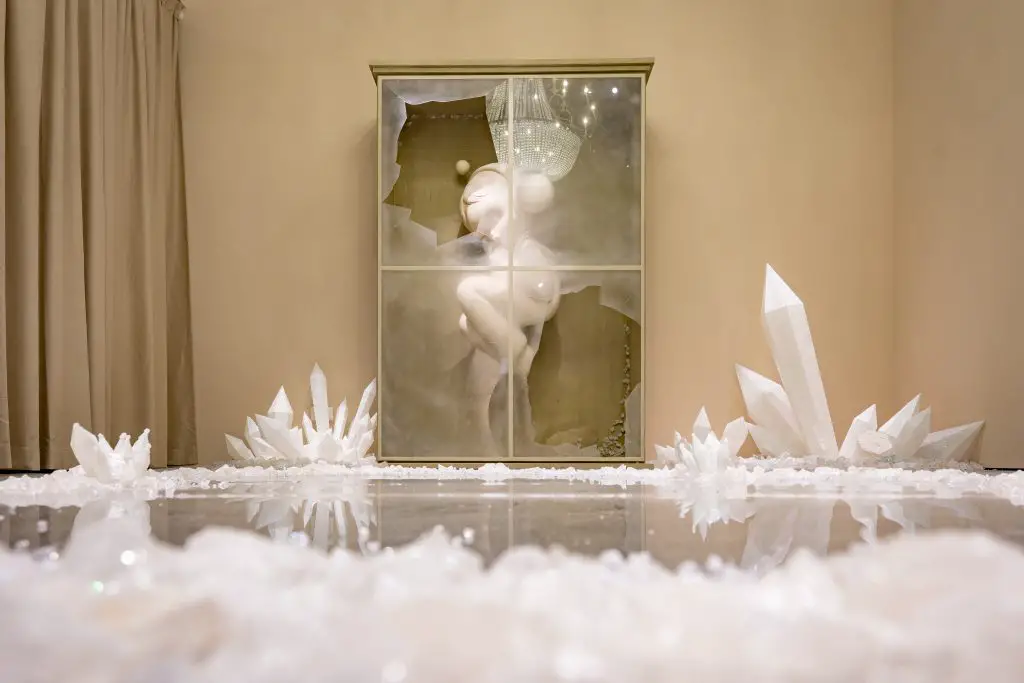
Fortune zone with mirrored surfaces and a central Skullpanda sculpture inside the Cage-Uncage Singapore showcase.

This immersive and thought-exploring showcase is built around a search for the “key,” connecting the dual states of “caged” and “uncaged” that define SKULLPANDA’s conflicting thoughts.

Visitors begin with The Key, where fragmented mirrors and scattered keys invite reflection on the boundaries between reality and endless possibilities. The journey continues through six themed zones – Emotion, Fortune, Rules, Exploration, Life and Direction – each offering a glimpse into SKULLPANDA’s inner landscape.

Visitors  can also become active participants by rotating a large cuboid. As the patterns break apart and reassemble. This simple motion mirrors exploration itself: shift your perspective, and the story changes; rearrange the pieces, and a new meaning appears.

The Room: the heart of the showcase

This central installation, known as The Room, uses reflection and repetition to evoke the inner conflicts at the core of SKULLPANDA’s narrative.
SKULLPANDA’s central installation, known as The Room.

At the centre of the exhibition sits The Room, a mirrored chamber linking all six zones. Two SKULLPANDA sculptures sit back-to-back, each holding a key.

The scene symbolises a familiar tension – the weight of being held back and the hope of breaking free. The mirrors create an abstract cityscape that blurs inside and outside, confinement and possibility, the finite and the infinite. Somewhere within these reflections lies the “answer” – the key held by the sculpture, and metaphorically, by the viewer.

And yes, just like SKULLPANDA, visitors eventually discover their own “key.”

A Singapore-exclusive installation
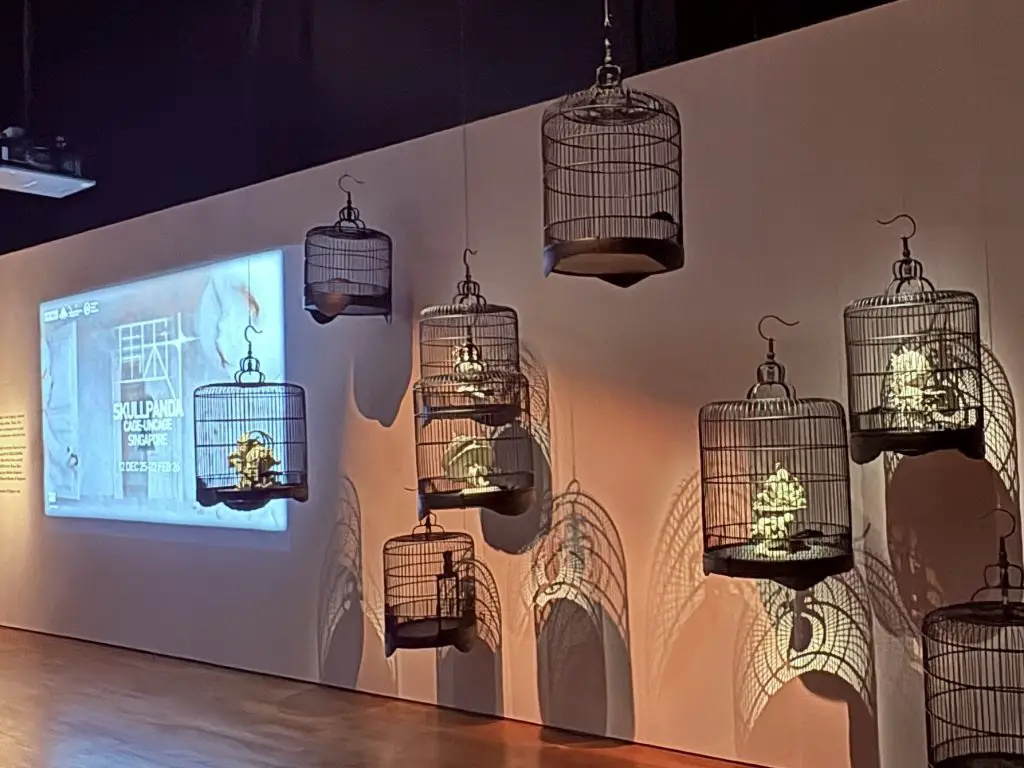
A Singapore-exclusive installation inspired by the city’s bird-singing tradition, featuring prototype Skullpanda figures from The Paradox Series and video art created specially for the CAGE-UNCAGE showcase by Xiong Miao. The exhibit was jointly created by POP Mart, The National Museum of Singapore and The Singapore Tourism Board.
A Singapore-exclusive installation jointly created by POP MART, The National Museum of Singapore and The Singapore Tourism Board.

Exclusive to the Singapore edition of the showcase is an installation that pays homage to bird singing, a beloved pastime enjoyed in Singapore’s housing estates among enthusiasts. Suspended bird cages present the original prototype figurines from the SKULLPANDA TheParadox Series, 

Presented by POP MART in collaboration with the character’s creator, Chinese artist Xiong Miao, and in partnership with the National Museum of Singapore and the Singapore Tourism Board, SKULLPANDA CAGE-UNCAGE Singapore presents a visual journey that delves into the tensions between containment and release that exist within our decisions. 

Showcase-exclusive merchandise is available at the Gallery Theatre retail zone for ticket holders, subject to eligibility and purchase limits. Additional POP MART items can be found at the POP-UP store in the museum’s Longer Concourse.
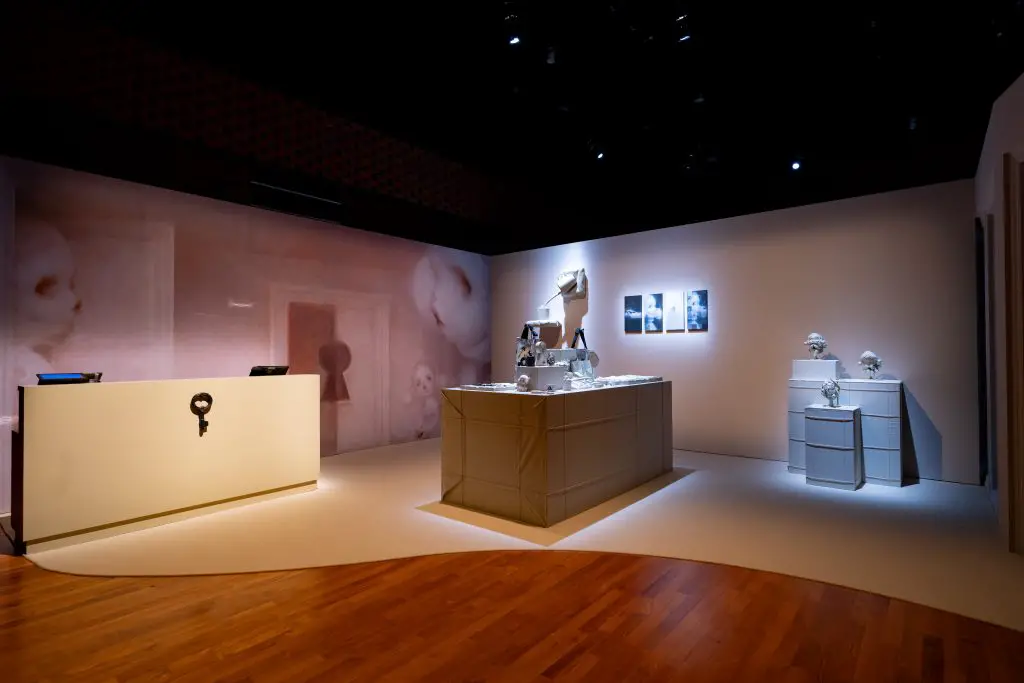
Inside the Gallery Theatre retail zone, visitors can browse exclusive CAGE-UNCAGE merchandise, available only at the Singapore exhibition.
Showcase-exclusive merchandise will be available for purchase at the Gallery Theatre retail zone.

Tickets are available at NMS at their official website or through the showcase’s ticketing partner Trip.com, priced from $36 (RM115) for Malaysian tourists. 

The National Museum of Singapore – the country’s oldest museum – is located at 93 Stamford Road, Singapore 178897.

Travel Note

Direct flights from Kuching, Sibu and Miri to Singapore are available via AirAsia and Scoot. AirBorneo will begin connecting to Singapore next year.
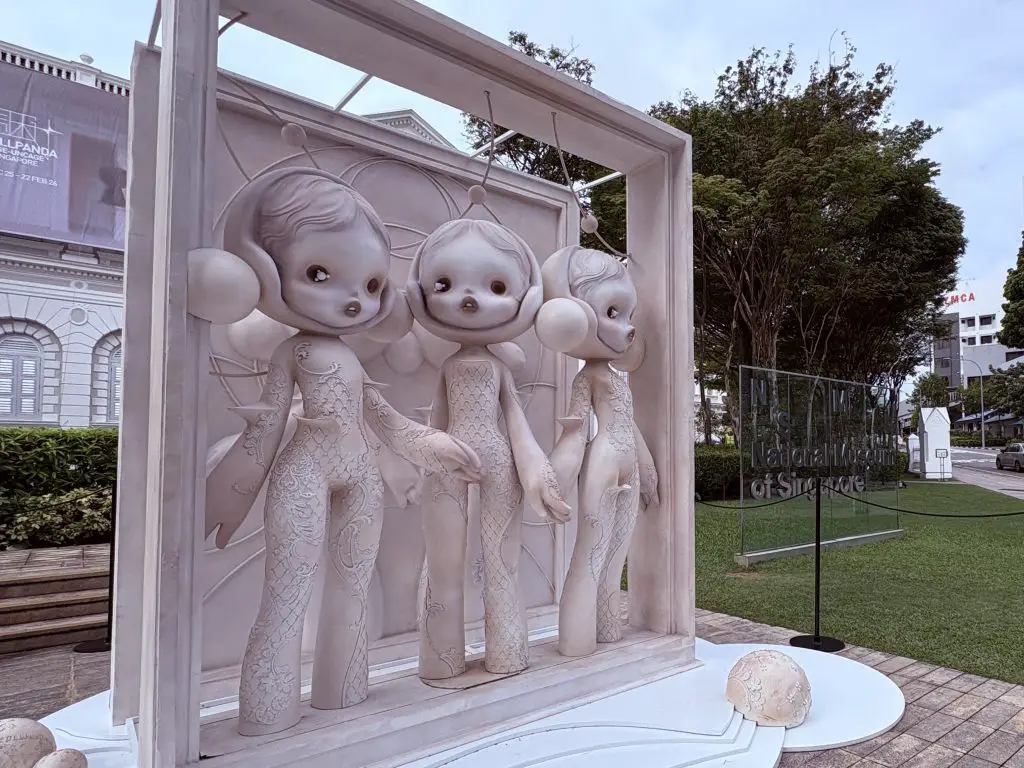
Large Skullpanda sculpture displayed on the front lawn of the National Museum of Singapore during the Cage-Uncage exhibition.
This outdoor SKULLPANDA installation marks the entrance to the CAGE-UNCAGE Singapore exhibition, extending the showcase beyond the gallery walls.
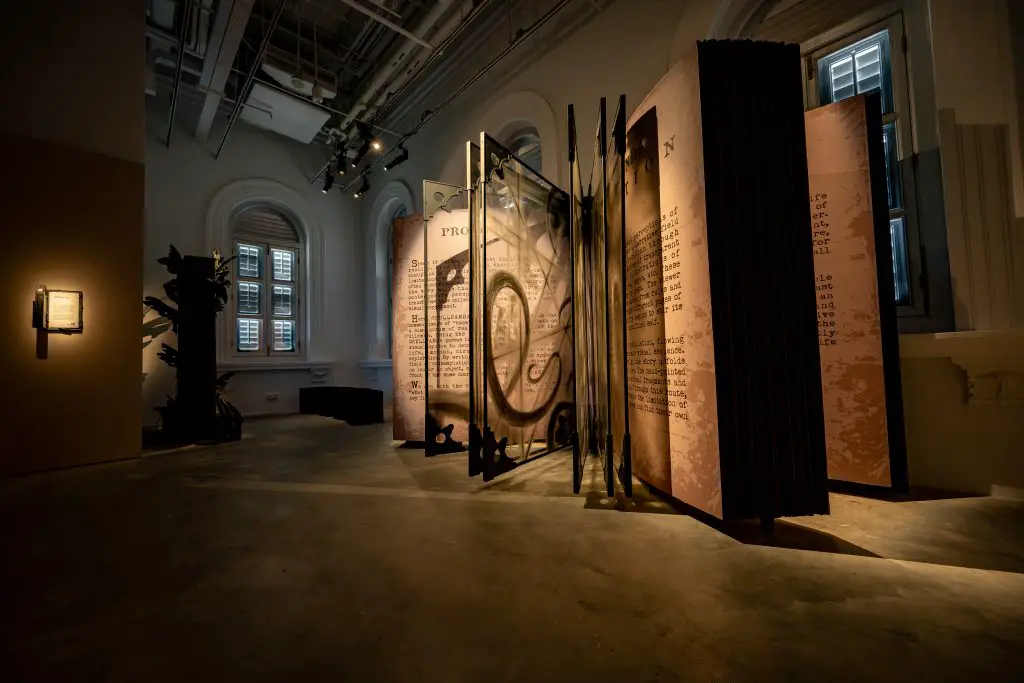
Transparent book pages installation in the Direction zone at Skullpanda Cage-Uncage Singapore.
In the Direction zone, transparent pages marked with thorns, shackles, and webs unfold like shifting paths toward freedom. Each turn reveals a new way to navigate obstacles or find sanctuary within constraints, while a giant picture frame of hand-drawn illustrations and moving light ties the narrative together with Xiong Miao’s signature butterfly motif.
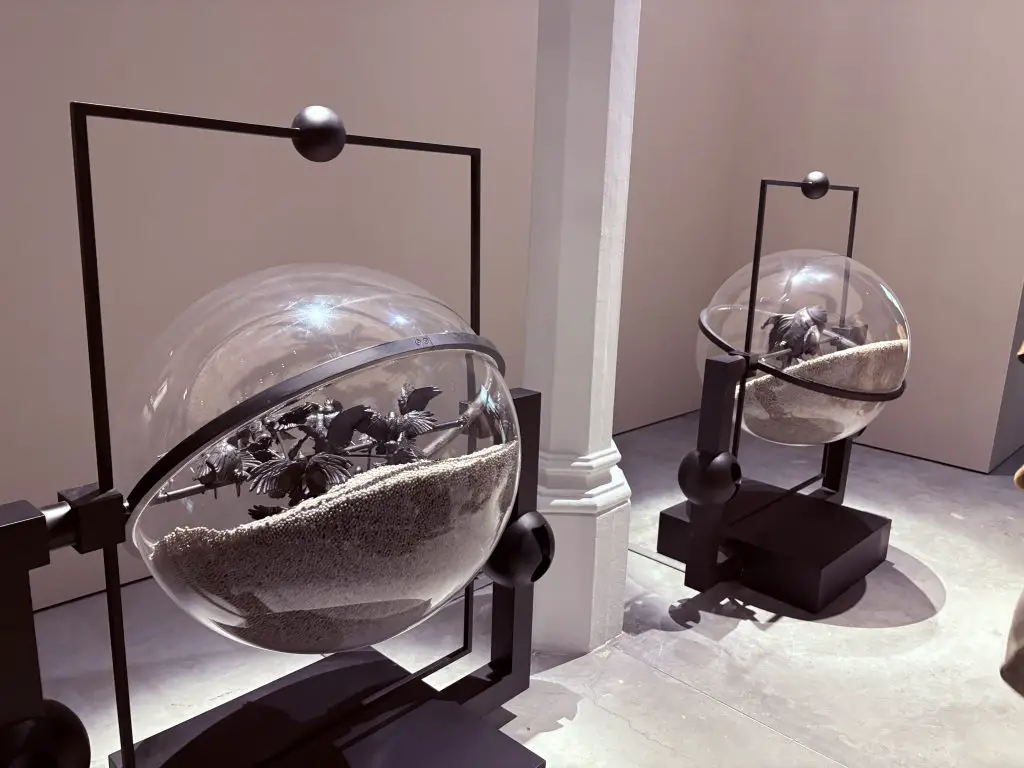
Through motion and balance, the Rules zone reflects the invisible structures that shape how we move through life.

Sarawak Laksa in Singapore: 5 Authentic & Affordable Spots to Try

By Ng Ai Fern

Sarawak dishes have quietly made their way into Singapore’s multicultural dining landscape. And while Sarawakians and Singaporeans share many things in common, one thing Sarawakians remain fiercely proud of is our Sarawak Laksa.

Ask any Sarawakian and you’ll hear the same answer: Singapore Laksa, Penang Laksa, Adam Road Laksa, curry laksa… none match the identity or depth of Sarawak Laksa.

Sarawak Laksa is Sarawak Laksa.

Unlike Kuching, where you must wake up early before your favourite stall sells out, many Sarawak laksa stalls in Singapore operate throughout the day.  

Here are five authentic and affordable spots – not ranked but simply a personal guide – for anyone missing the taste of home or introducing Singaporean friends to Sarawak flavours.

1. Mao You Sarawak KoloMee & Laksa 

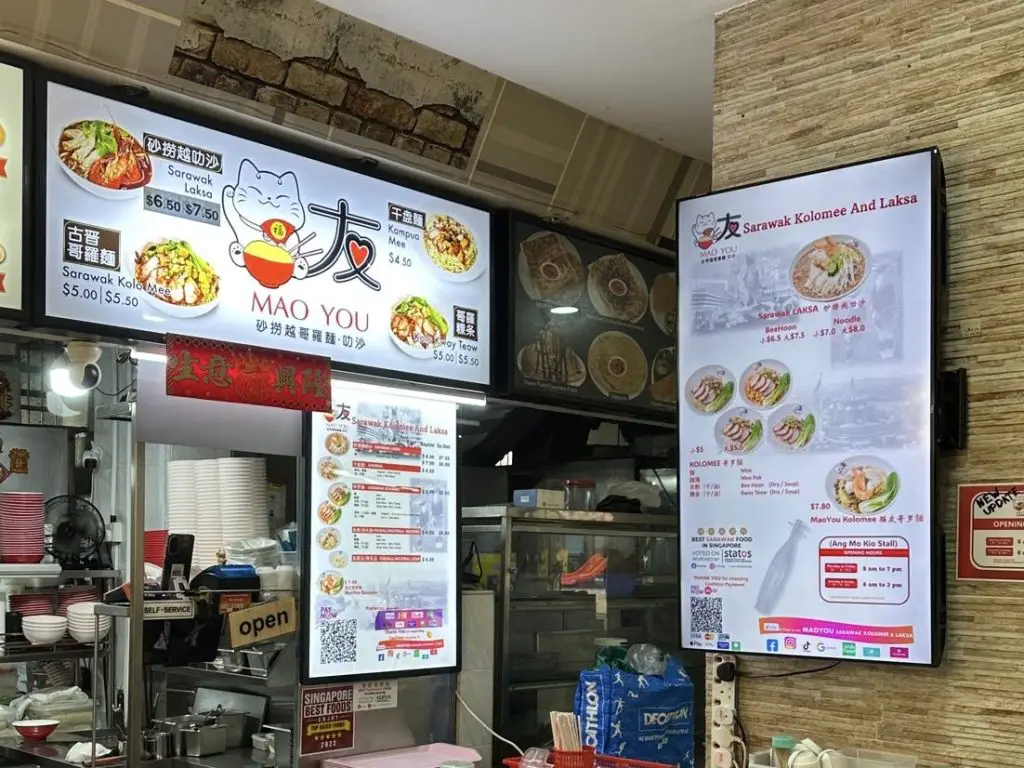
Voted as one of the most loved Sarawak laksa stalls in an online poll organised by STATOS , Mao You has built a following for its straightforward, Sarawak-focused menu: Laksa, Kolo Mee (Mee Pok, Kueh Tiao, Mee Hoon), and Kampua.

During my visit on a Saturday afternoon, the laksa had just sold out, so I ordered kolo mee, only to be called back moments later: “Still got laksa broth – I can make two bowls for you.” A true ‘kaki nang’ moment indeed when you meet somebody from the same hometown.

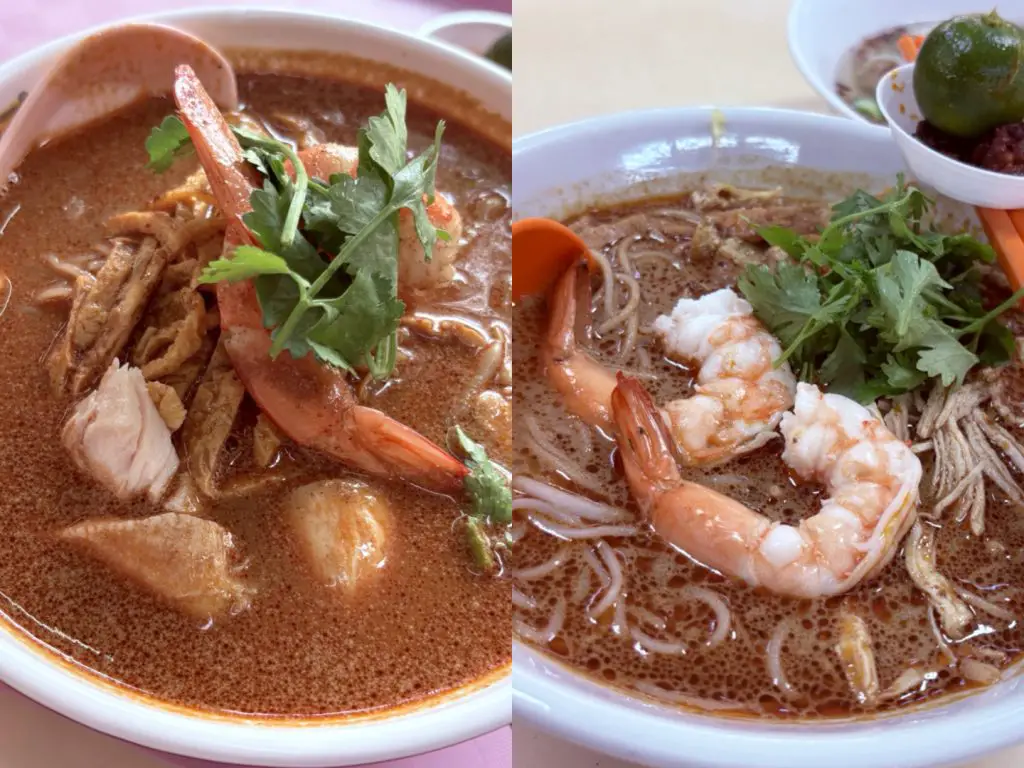
I was served a comforting bowl of laksa that tasted unmistakably like home: richly fragrant, topped with fresh deveined prawns and sliced chicken instead of the usual shredded version. Their bowls feature a cute cat cartoon, and even the serving trays have paw prints.

Mao You now operates two outlets, including one in Woodlands.

Location: 422 Ang Mo Kio Ave 3 (near Ang Mo Kio MRT)

Price: $6.50 / $7.50 (Sarawak Laksa with beehoon), $7 / $8 (noodles)

Exterior view of Mao You Sarawak KoloMee & Laksa stall at Ang Mo Kio, Singapore.
Mao You Sarawak KoloMee & Laksa at Ang Mo Kio.
A bowl of Sarawak Laksa from Mao You, topped with fresh prawns and sliced chicken, served in a cat-themed bowl.
Mao You’s comforting Sarawak Laksa – fragrant, familiar and proudly Sarawakian.

2. Sarawak Delicacy Laksa & Kolo Mee (Bedok)

True to their tagline “taste like home, bringing the true flavours of Sarawak to Singapore”,  Sarawak Delicacy founded by a Sarikei-born owner, has grown steadily over nine years and now runs five outlets islandwide. 

Their original Bedok stall sits in a neighbourhood long favoured by East Malaysians and is also where I had my first Sarawak Laksa in Singapore more than 20 years ago, back when it was rarely found here.

The owner’s son asked whether I preferred xiang cai (coriander) as garnish. After I finished the laksa, he asked for my feedback and immediately went to taste the broth himself – a sign of how seriously they take authenticity.

Their outlets offer variations, from laksa and kolo mee to tomato fried noodles, kampua, minced meat rice and more. 

Location:  204 Bedok North Street 1 (minutes away from Bedok MRT)  

Price: $6.60/ $8.30 (Sarawak Laksa with beehoon), $7.10/ $8.80 Sarawak Laksa (noodle) 

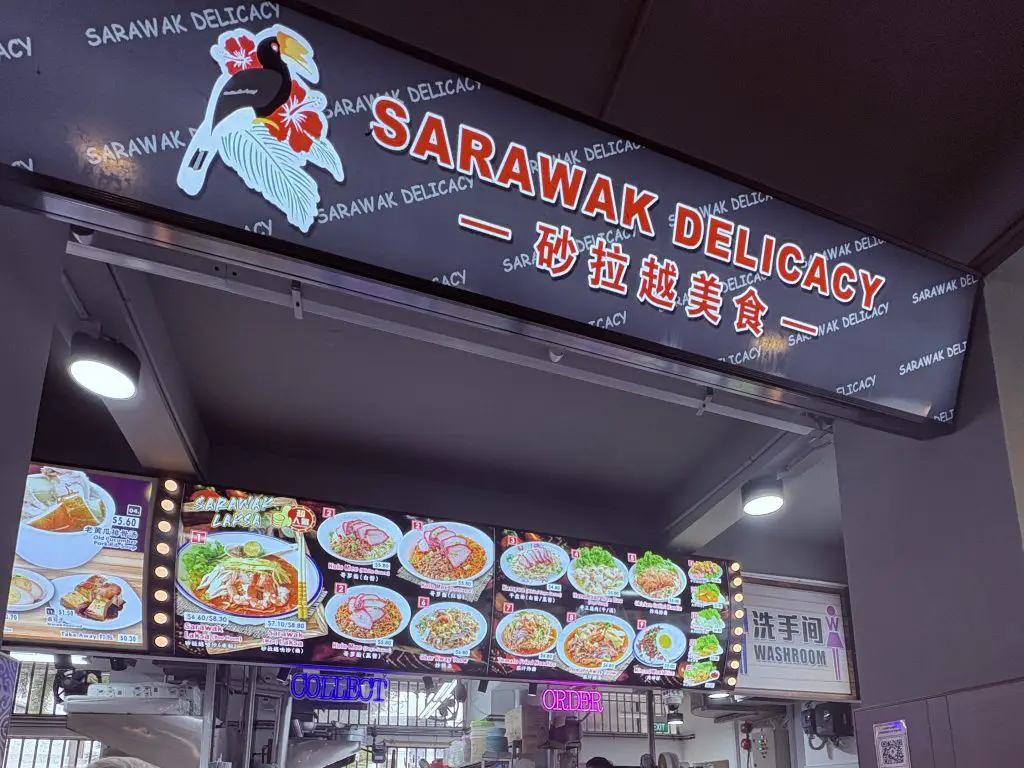
Sarawak Delicacy Laksa & Kolo Mee stall Singapore.
Sarawak Delicacy, serving Sarawak flavours for nearly a decade.
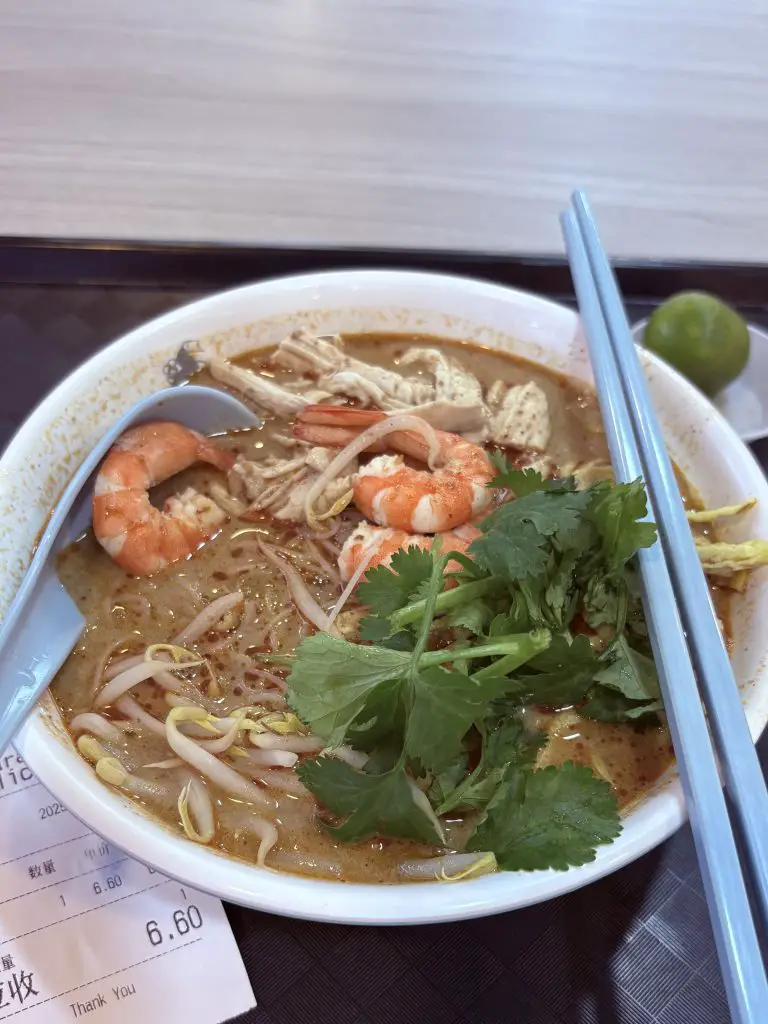
Sarawak Delicacy’s laksa bowl, featuring prawns, chicken strips, and fragrant broth.
Sarawak Delicacy’s laksa reflects the stall’s commitment to authentic Sarawak flavours.

3. Lin Yu Mei Sarawak Laksa

Their original Haig Road stall was under renovation when I visited, so I headed to their outlet at the world’s coolest street Joo Chiat.


The air-conditioned space offers a wider menu than expected: hotpot, fish soup, and several restaurant-style dishes. A large poster featuring Sarawak Laksa and Kolo Mee dominates the wall.

When taking my order, the staff asked, “Prawn or fishball?”  While the broth is authentic Sarawak laksa, I was served with chilli sauce, instead of the typical Belacan. 

Location:  151 Joo Chiat Road  (about 10–12 minutes’ walk or 3 minutes by car from Eunos MRT)

Price: $8.50 Sarawak Laksa (comes with a hot coffee or tea) 

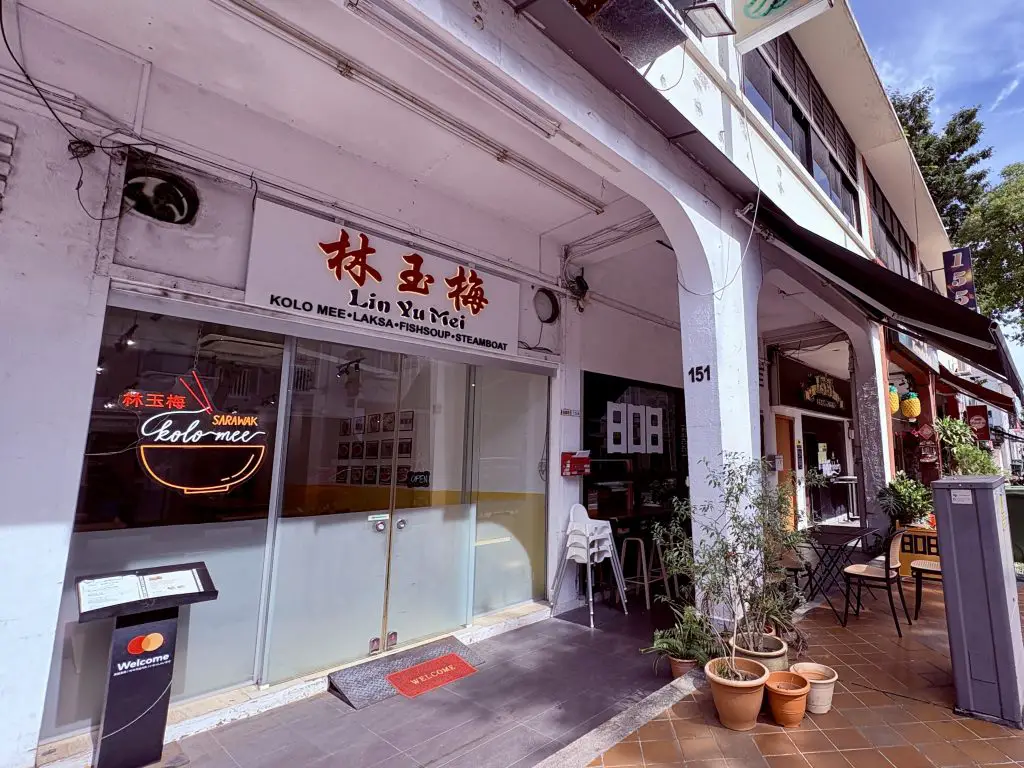
Lin Yu Mei Sarawak Laksa storefront at Joo Chiat Road in Singapore.
The Joo Chiat outlet of Lin Yu Mei Sarawak Laksa.
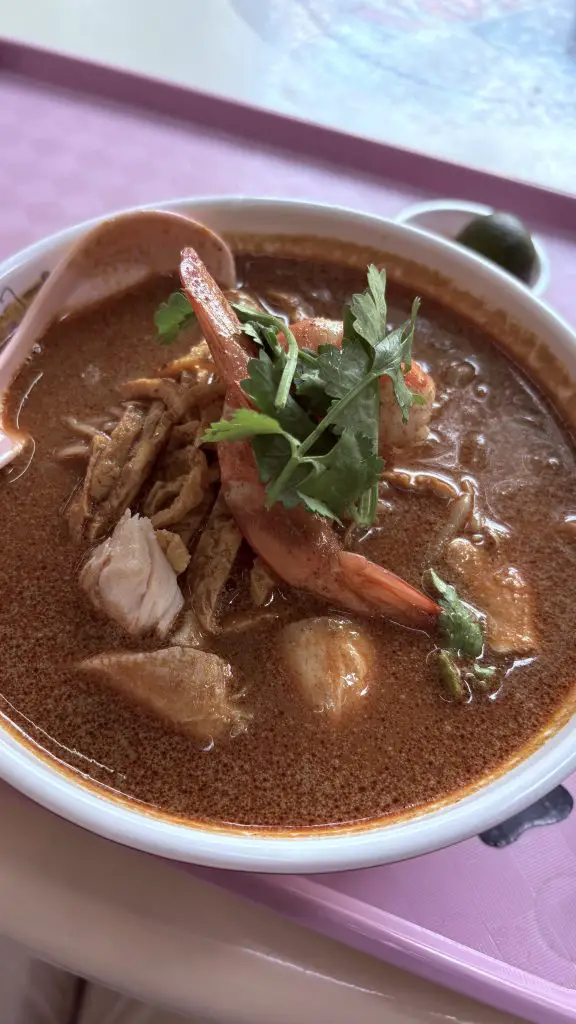
Bowl of Sarawak Laksa from Lin Yu Mei at Joo Chiat, served with prawns and thick, aromatic broth.
A rich bowl of Sarawak Laksa from Lin Yu Mei’s Joo Chiat outlet, enjoyed with a choice of prawns or fishballs.

4. Tracy’s Sarawak Kitchen

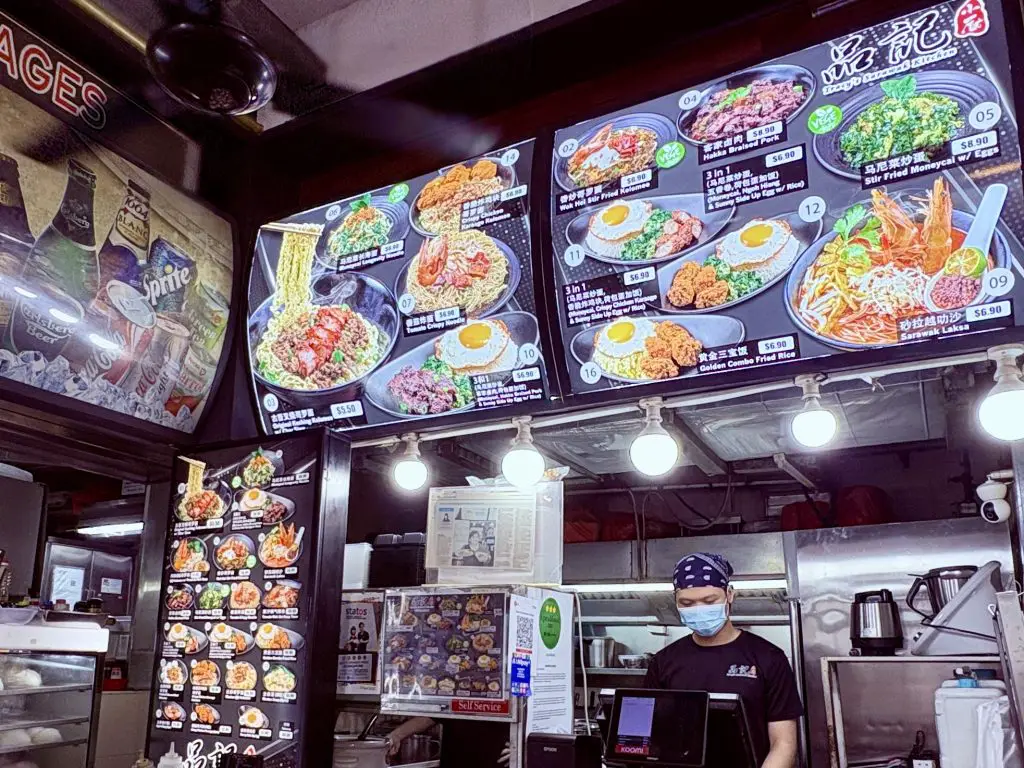
Located just outside Aljunied MRT, this stall is easy to miss, but its regulars never do. It enjoys a strong following and was voted one of the most loved Sarawak food stalls in a STATOS online poll, with media coverage displayed proudly.

Expect a queue during lunch hours. Most of the staff are Sarawakians, and one shared that the majority of customers are Malaysians from across East and West Malaysia, all seeking familiar flavours.

The menu includes Wok-Wei Stir-Fried Kolo Mee, Manicai Longevity Noodles, and Tomato Crispy Noodles, alongside their laksa. The laksa I had on a hot afternoon, paired with delicious sambal belacan, truly hit the spot.

They also operate outlets at myVillage Mall and Choa Chu Kang.

Location: Geylang Lor 25A (outside Aljunied MRT) 

Price: $6.90 for Sarawak Laksa

Front view of Tracy’s Sarawak Kitchen stall outside Aljunied MRT.
Tracy’s Sarawak Kitchen, located just outside Aljunied MRT.
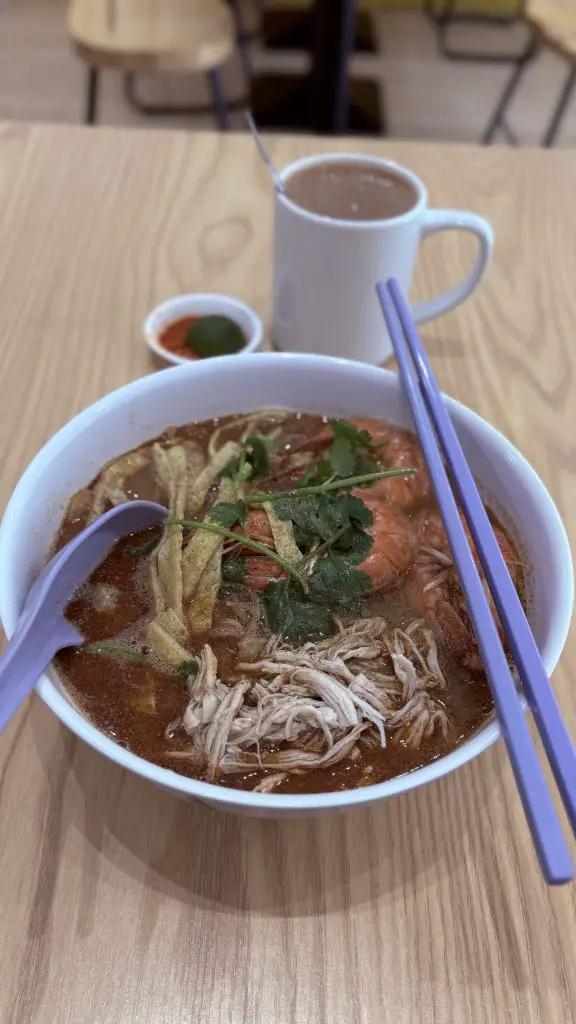
Tracy’s Sarawak Kitchen laksa bowl, served with sambal belacan at Aljunied in Singapore.
Tracy’s Sarawak Laksa is a lunchtime favourite among Malaysians in Singapore.

5. Sarawak Kolo Mee & Laksa

This stall has been in operation for over eight years and became especially popular during the COVID period, when many Sarawakians could not travel home. Weekends here often feel like a small Kuching gathering with familiar faces, familiar accents, and familiar food.

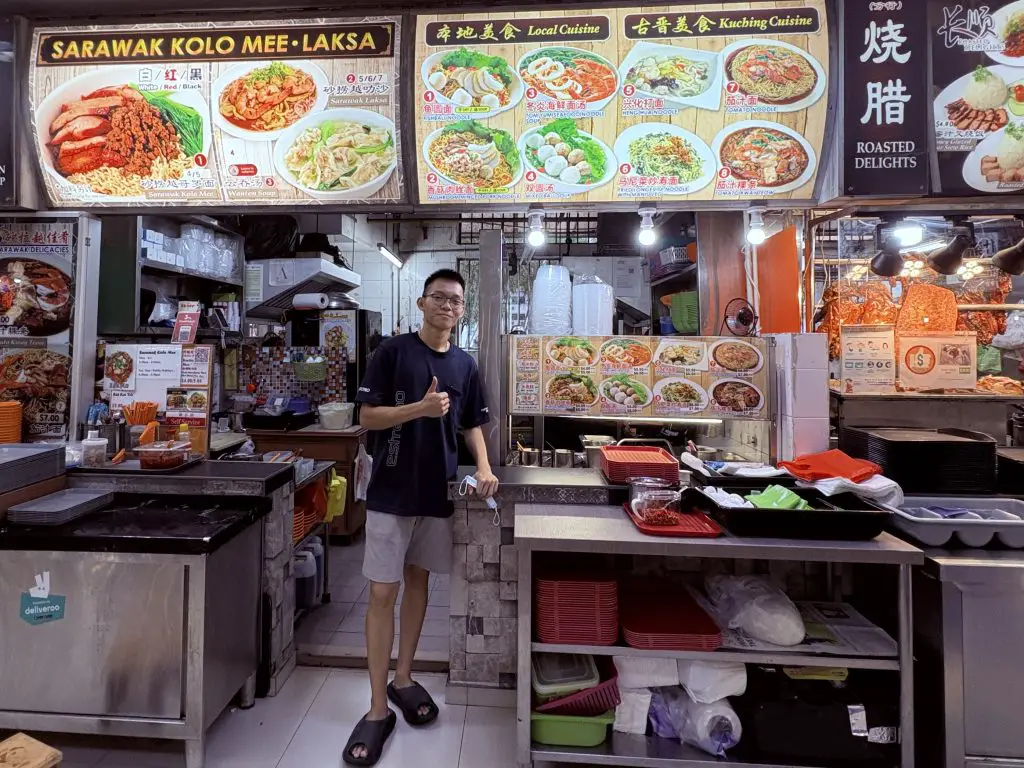
Their menu focuses on three staples: Sarawak Laksa, Kolo Mee, and Kuching-style wanton soup, with kolo mee offered in white (plain), red (char siew oil), or black (dark soy sauce). The camera-shy lady boss and her sister run the stall with a focus on quality over expansion.

Recently, they added a second stall right next door, run by Jong, the boss’s 18-year-old godson from Tapah, Kuching. The new menu includes Heng Hua noodles, tomato noodles, and fried longevity noodles with manis vegetables. When I visited, it was their first day, and the longevity noodles were already a hit.

Come early on weekends, and remember to check their Facebook page beforehand. The owners close occasionally for well-deserved time off.

Location: Blk 25 New Upper Changi Road # (minutes walk from Bedok MRT) 

Price: $5/6/7 Sarawak Laksa 

Jong, the 18-year-old godson of the owner, standing in front of the new stall at Bedok.
Jong, the owner’s 18-year-old godson from Tapah, Kuching, beginning his first day at the new stall next to Sarawak Kolo Mee & Laksa offering Heng Hua noodles and longevity noodles.
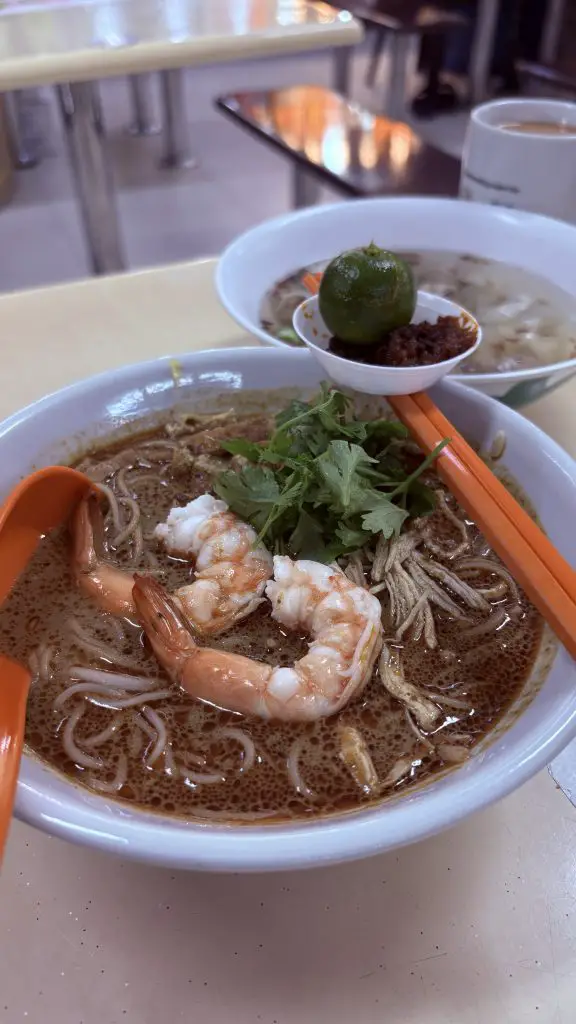
Bowl of Sarawak Laksa from the Bedok stall, featuring prawns, chicken and smooth beehoon.
A classic bowl of Sarawak Laksa from the Bedok stall, a comforting favourite for Sarawakians living in Singapore.

Sarawak laksa stalls continue to pop up across the island. After enjoying a hearty bowl in Bedok recently, I even came across a new stall called “Fat Cat” that had opened just three weeks earlier. With strong air links between Singapore and Kuching, Miri and Sibu, and AirBorneo launching soon, home feels physically close for many Sarawakians here.

For Sarawakians, a bowl of Sarawak Laksa has always represented something deeper – a taste of identity, comfort, and memory. It’s a reminder that sometimes, home is just one good bowl away.

Assorted Sarawak Laksa bowls from various stalls across Singapore, showcasing different toppings and presentations.
From Ang Mo Kio to Bedok, each Sarawak Laksa bowl tells its own story, and every story tastes like home.

AMA platform: Future of Proton cars, key weapon in export strategy

By Geryl Ogilvy

Future models of Proton vehicles will be shaped by the Advanced Modular Architecture (AMA) platform, which underpins the all-new Saga design.

Proton chairman Tan Sri Syed Faisal Albar said the AMA platform was designed to be agile and scalable so it could be adjusted accordingly to meet the size and build specifications of the vehicle models that the national car maker is looking to produce.

The new Saga models, built on the company’s new AMA, represents a future-ready, globally compliant platform whose Intellectual Property Right (IPR) are fully owned and developed by Proton. This would represent a major step forward in Malaysia’s automotive capability.

With full ownership of the IPR, the AMA platform reinforces Proton’s growing engineering capability and opens new collaboration opportunities across the Geely Group ecosystem, potentially positioning Malaysia as a regional engineering hub for future model development.

“Today’s launch is different. It is about our pride and joy because the intellectual property rights to this car truly belong to Proton. When Proton started its partnership with Geely eight years ago, it was easy for the public to say that Proton simply changed the badge on Geely cars.

“However, the years in partnership were planned for Proton to have ownership of its own vehicles through technology sharing between the two partners,” he said at the launch of the all-new Proton Saga at the Malaysia International Trade and Exhibition Centre (MITEC) here on Thursday.

The All-New Proton Saga is the first model built on Proton’s new Advanced Modular Architecture (AMA) platform, designed for future-ready scalability.

Partnership with Geely accelerates Proton’s technical capability

He added that throughout the partnership, over 2,500 Proton staff members have been sent to undergo training at Geely headquarters in Hangzhou and currently, 119 local engineers are based in China. The efforts were undertaken for Proton to own the IPR of its vehicles.

Owning IP meant that more production of components could be localised, hence creating a multiplier effect for the local industries.

“Proton’s ambition to become a global brand – future models produced under the AMA platform will be the ticket for Proton to go global on a bigger scale.

“To penetrate the overseas market, we can’t rely on a single model. We need a consistent supply of exciting products. The AMA platform will be the weapon in our export strategy,” he said.

Syed Albar added that the launch of the all-new Saga was significant, as it also marked the launch of the AMA platform, which would shape the future of Proton cars.

“In Malaysia, our car sales are around 800,000 units annually. For Proton to achieve its ambition of becoming a global player, it cannot rely on the size of the domestic market. We must expand our export market rigorously.”

Saga remains Proton’s strongest global model

Proton is currently present in 18 export markets, including countries in Asia, the Middle East, and Africa. Since its inception, the Saga model alone has garnered two million units in sales, which is half the total number of Proton cars that have been sold, he said.

Investment, Trade and Industry Minister Tengku Datuk Seri Zafrul Abdul Aziz expressed confidence that Proton will expand beyond the current market to strengthen Malaysia presence and reputation in the global automotive market.

Proton has exported more than 20,000 vehicles since 2020. He believes that the sales volume could increase tenfold over the next five years.

On another note, Zafrul said Proton had sourced RM3.2 billion worth of parts and components from local vendors, underscoring its commitment to a localised supply chain that will continue to grow in scale and value.

The doubling of Proton’s total industry volume and its expanded local sourcing have ensured that Malaysian vendors benefit from the economic spillover that is captured within the country.

“Our national automotive policy has played a significant role in strengthening local industry players, especially Proton. These policies have enabled the development of a supportive ecosystem, it encourages technology upgrading, strategic foreign partnerships, and increase competitiveness in both domestic and regional markets.

“Our national automotive policy is our guiding framework to position Malaysia as a regional leader in automotive manufacturing, engineering, and technology.”

EV development aligns with NIMP 2030 goals

Beyond producing cars, he said that Proton continues to strengthen the country’s automotive industrial backbone, from electric vehicles (EV) platforms and powertrain testing to localisation of key components, deepening the nation’s competitiveness.

Zafrul said that, in alignment with the New Industrial Master Plan (NIMP) 2030, Proton’s EV investments and localisation efforts are not just corporate strategies but a spearhead for Malaysia’s transformation into a high-tech and digitally vibrant nation.

“This commitment also drives investments that generate jobs, increase spillover, and create economic value for the country.”

Proton’s localisation programme has created 18 new technologies and forged joint ventures in key areas such as fuel pumps, electronic gear shift modules, and continuously variable transmission (CVT) systems, thus expanding vendor base while elevating technological mastery.

All-new Proton Saga launched – prices start from RM40,990 for the East Malaysia market

By Geryl Ogilvy

Proton has officially unveiled its all-new Saga model, promising the most significant technological evolution of the nation’s best-known automotive nameplate since its debut in 1985.

Themed “Four Esteemed Decades, a Future Without Limits”, the launch celebrates not just a new model but also a national symbol that represents Malaysia’s industrial progress and enduring pride, the company said.

The fourth-generation Proton Saga is available in three variants: Standard, Executive, and Premium. The on-the-road (OTR) prices in East Malaysia, without insurance, are RM40,990, RM46,990 and RM51,990 respectively.

PROTON Chief Executive Officer Dr. Li Chunrong (right) and Dato' Ir. Abdul Rashid Musa, Deputy Chief Executive Officer of Proton, stand with the All-New Saga at the unveiling of the launch package and Peninsular Malaysia pricing.
PROTON Chief Executive Officer Dr. Li Chunrong (right) and Dato’ Ir. Abdul Rashid Musa, Deputy Chief Executive Officer of Proton, stand with the All-New Saga at the unveiling of the launch package and Peninsular Malaysia pricing.

Proton has added an extra incentive with a RM1,000 launch rebate for customers who register their vehicle by 31 December 2025, with effective prices reduced to RM39,990, RM45,990 and RM50,990 respectively.

“Since the first Saga was rolled out in 1985, it has brought a sense of national achievement. It has been dubbed the people’s car – for the young teacher commuting to school every morning, for the nurse returning (from work) at night, and for the group of friends going on a fishing trip, this car belongs to them.

“It belongs to every Malaysian who believes that progress should not come with a heavy price tag,” Proton chairman Tan Sri Syed Faisal Albar said at the launch held at the Malaysia International Trade and Exhibition Centre (MITEC) here on Thursday, 27 November 2025.

Investment, Trade and Industry Minister Tengku Datuk Seri Zafrul Abdul Aziz officiated at the ceremony.

Syed Faisal said the all-new Proton Saga, which has already received 20,000 bookings, comes with “mind-blowing features that are above its peers in the same segment”. Proton has invested 391,000 man-hours in research and development, and 412,000km in road testing, culminating in 337 new parts.

The new Saga promises the lowest maintenance cost for the A-Segment Sedan category. It comes with a five-year or 150,000km mileage warranty and three complimentary labour services in scheduled maintenance.

Performance and Efficiency

The All-New Saga blends Impressive Performance, Comprehensive Safety, Optimised Intelligence, and Next-Gen Styling (I.C.O.N), reflecting PROTON’s ambition to elevate Malaysian automotive engineering to global recognition.
The All-New Saga blends Impressive Performance, Comprehensive Safety, Optimised Intelligence, and Next-Gen Styling (I.C.O.N).

Touching on performance, the car is powered by Proton’s new i-GT 1.5 engine, with a maximum power of 88kW (120 PS) and maximum torque of 150Nm.

The Premium variant is paired with a Continuously Variable Transmission (CVT), delivering smooth, confident power with outstanding fuel efficiency rated at 4.9L/100km Malaysia Driving Cycle (MDC), improving economic fuel consumption by 14.04%.

The Standard and Executive variants receive a four-speed automatic transmission (4AT), returning a fuel consumption rating as low as 5.1L/100km MDC and improving efficiency by 10.53%.

The new Electric Power Steering (EPS) system further refines handling precision, while Proton’s signature Ride and Handling ensure a balanced, stable, and comfortable experience in all driving conditions.

Safety Features

The all-new Saga offers a full suite of safety technologies, including six SRS airbags, nine Advanced Driver Assistance System (ADAS) features, and the Proton Reinforced Safety Structure (RESS) with HPF components for greater occupant protection and crash integrity.

The ADAS hardware capability provides comprehensive safety with Collision Mitigation Support Front (CMSF) with Autonomous Emergency Braking (AEB) and Forward Collision Warning (FOW), as well as Front Departure Alert (FDA), Intelligent High Beam Control (IHBC) and Lane Departure Warning (LDW).

It’s enhanced monocular camera system for road monitoring includes new-generation Rear Side Radar System (RSRS) with Door Opening Warning (DOW), Rear Collision Warning (RCW), Lane Change Assist (LCA) and Rear Cross Traffic Alert (RCTA).

Design and Interior

The All-New Proton Saga in Space Grey, one of the two new colour options introduced for the 2025 model.

The Saga’s bold design evolution features a Sulaman Songket-inspired front grille, a nod to Malaysian craftsmanship, alongside full LED projector headlamps. The rear features a set of full LED taillight bar, with a “PROTON” wordmark trim across the boot lid.

Inside, a new 16-inch Integrated Dual Screen supports wireless Apple CarPlay and Android Auto connectivity, complemented by smart convenience features such as auto headlamps and headlamp leveling, ensuring seamless functionality for everyday driving.

The All-New Saga’s 16-inch Integrated Dual Screen with wireless Apple CarPlay and Android Auto.
A closer look at the All-New Saga’s 16-inch Integrated Dual Screen, designed for seamless connectivity and smarter driving.

The cabin also features “Congkak” inspired air vents, a 3D dashboard pattern inspired by the “Pantai Waves” motif, and a new gear shift lever with illuminated indicators.

The new Saga introduces two new body colours, Marine Blue and Space Grey, which join the existing options of Ruby Red, Armour Silver, and Snow White.

Launch Packages

In conjunction with the launch, Proton is also offering a comprehensive launch package valid until 31 December 2025.

Customers can choose either Pro-Trade-in, with overtrade support of up to RM1,500 when trading in their existing vehicles, or Pro-Xchange which provides RM2,000 support for the deregistration of non-roadworthy trade-in vehicles. For customers seeking financing, Pro-Finance offers attractive finance rates starting at 2.6%.

Those opting for Proton’s insurance programme Pro-Shield will receive upgraded protection that includes Special Perils coverage, enhanced flood relief coverage of up to RM2,000, and passenger personal accident coverage of up to RM15,000 per person for up to 4 passengers.

Experience Laneige’s one-of-a-kind boutique concept for beauty lovers

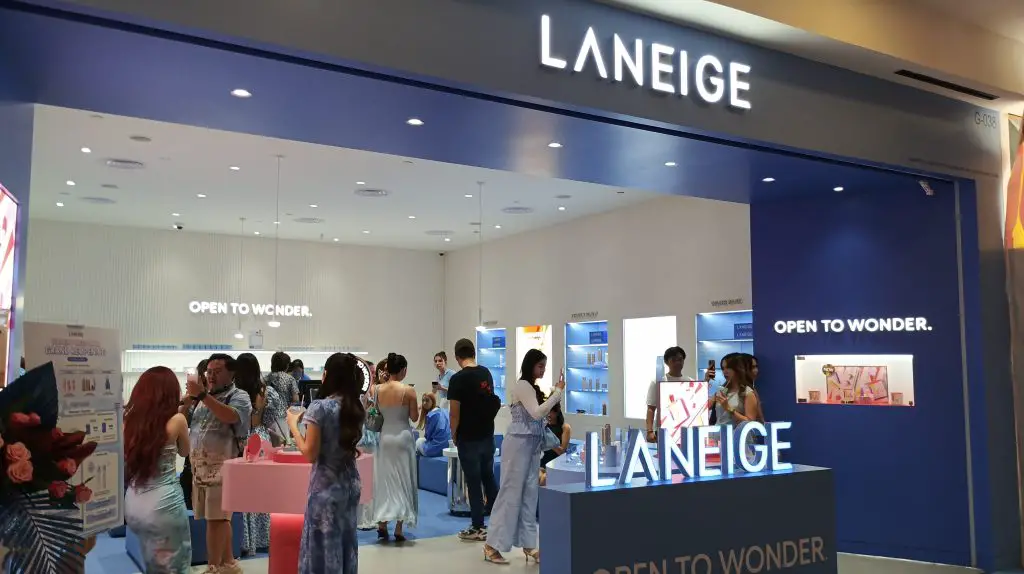
Global K-beauty brand Laneige has officially unveiled its newest boutique concept at Vivacity Megamall, Kuching, redefining how beauty lovers experience skincare shopping in Malaysia.

Experience Laneige’s one-of-a-kind boutique concept for beauty lovers
Laneige’s new store concept in Vivacity Megamall gives beauty lovers a space that inspires play, exploration, and connection.

A New Beauty Playground Arrives in Kuching

Far more than just a skincare store, the new Laneige boutique is designed as a beauty playground where visitors can explore, play, and discover their ideal skincare routine in a luxurious yet welcoming environment.

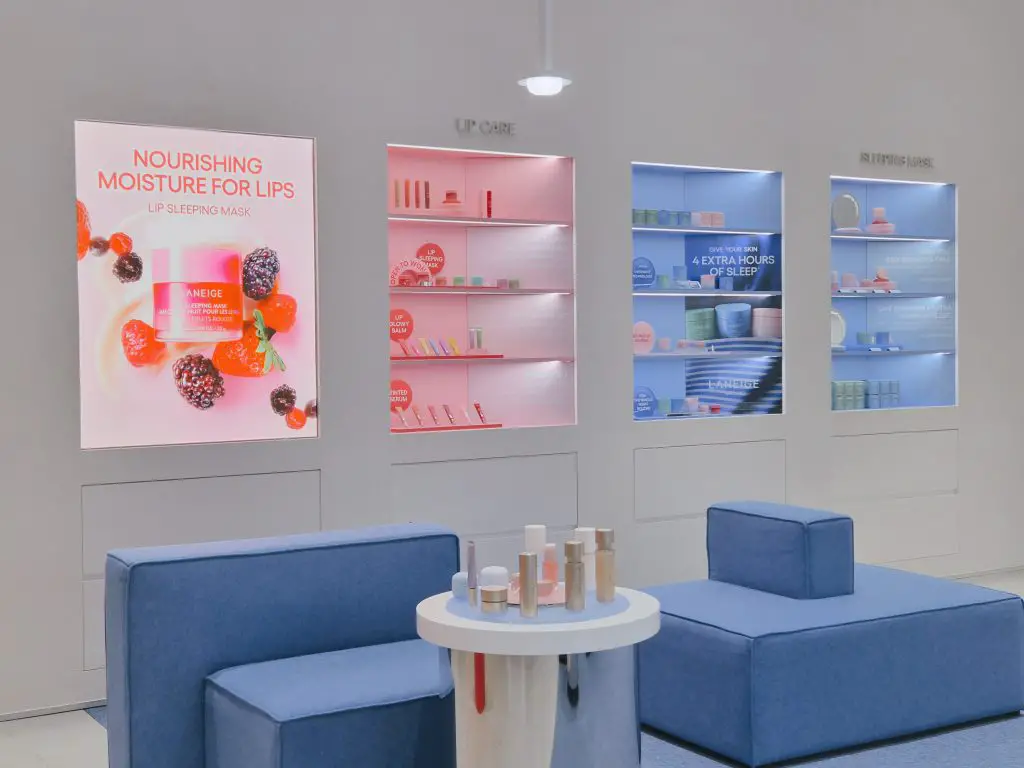
This exclusive global concept store features a lounge-style consultation area, inviting customers to relax, receive personalized skincare advice, and enjoy Laneige’s best-selling innovations. Every corner reflects Laneige’s philosophy of making beauty both inspiring and approachable, blending modern elegance with comfort.

Experience Laneige’s one-of-a-kind boutique concept for beauty lovers
Laneige’s refreshed outlet at Vivacity Megamall boasts an Instagram-worthy lounge vibe, perfect for your skincare routine snaps.

Grand Opening Celebration

The boutique’s grand opening was officiated by Ailin Chan, Brand General Manager of Laneige Malaysia in an event which brought together local media, beauty influencers, and skincare enthusiasts to celebrate this exciting milestone for the brand in East Malaysia.

To coincide with the launch, Laneige introduced its 2025 Holiday Campaign called “Play With Wonders”, featuring limited-edition gift sets perfect for festive self-care and gifting. Visitors can also enjoy exclusive opening promotions available only at this new store.

“With this new store concept, we’re giving beauty lovers more than just products – we’re creating a space that inspires play, exploration, and connection. Vivacity is the perfect place to debut this first-of-its-kind concept, and we can’t wait for everyone to experience it,” said Chan.

Experience Laneige’s one-of-a-kind boutique concept for beauty lovers
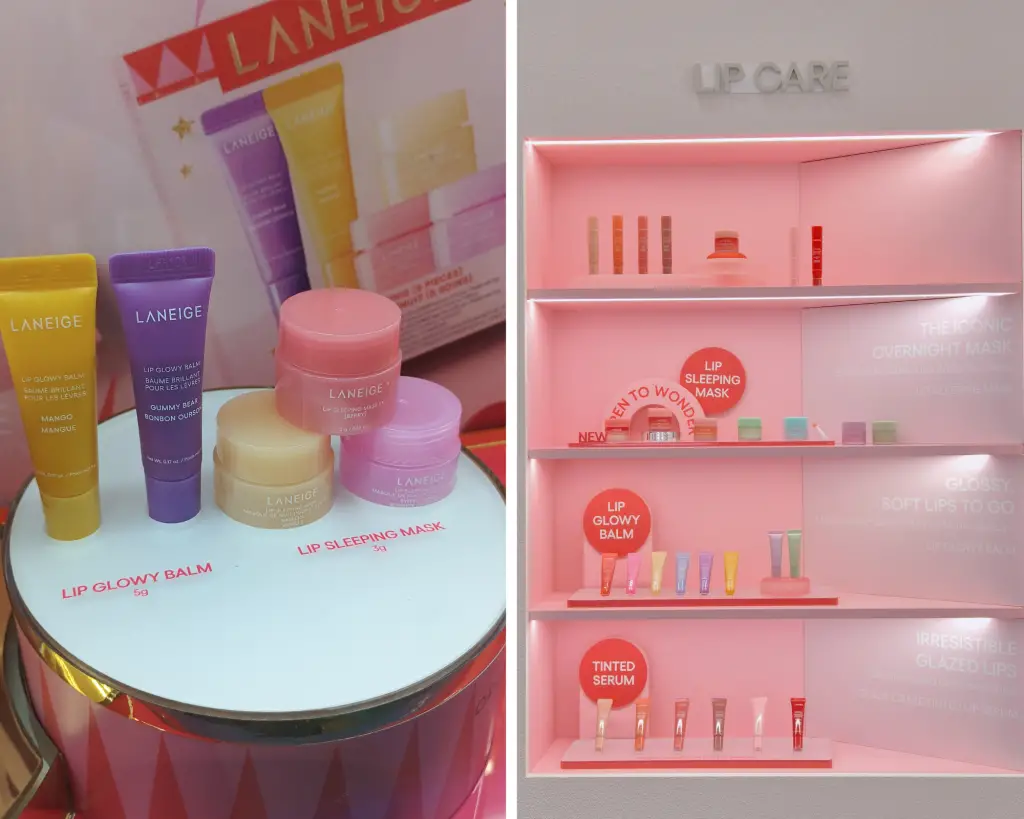
From lip care essentials to hydrating sleeping masks, discover which Laneige product deserves a spot in your routine.

Why You Should Visit

  • 🌸 First-of-its-kind Laneige boutique in Kuching
  • 📸 Instagram-worthy lounge design perfect for #skincareroutine snaps
  • 🎁 Exclusive 2025 Holiday Gift Sets for beauty lovers and gift seekers
  • 💧 Special opening promotions available for a limited time

Whether you’re a longtime Laneige fan or new to the world of K-beauty, the Laneige Vivacity boutique is your must-visit destination this festive season. Come explore, celebrate, and be #OPENTOWONDER.

Join the PLAY WITH WONDER Movement

LANEIGE Malaysia invites media, creators, and beauty enthusiasts to be part of this festive celebration by sharing their own #OPENTOWONDER moments.

To explore the full collection, visit https://my.laneige.com/ or follow @laneige_my on Instagram, Facebook, and TikTok.

6 essential handbags for the everyday influential fashionista

Tennis player Maria Sharapova once said, “I want my handbags and my shoes to be stylish but I want to make sure that they’re versatile. I travel and I have to make sure the pieces I put into my bag can go with a dress or with shorts or jeans.”

Surely, there are many women out there who can relate with Sharapova when it comes to handbags. We’re not just carrying small everyday items anymore, we’re carrying our work essentials like our smartphones, our tablets, our notebooks, and even our power banks!

Nowadays, a handbag needs to be practical without sacrificing fashion.

Choose the perfect handbags for your needs. Credit: Pixabay.
Choose the perfect handbag for your needs. Credit: Pixabay.

If you are stuck when it comes to choosing a handbag, here is a guideline of what types of handbags out there will suit all your uses.

1. Tote bag

handbags
A good old tote bag is definitely one of the must-have handbags. Photo by Sueda Dilli:

If it is a large bag with a wide mouth which usually comes unfastened or at least with a single magnetic closure, that is what they call a tote bag.

The word ‘tote’ means ‘to carry’ and can be traced back to the 17th century, but it wasn’t until the 19th century when the tote bag itself became a thing.

Tote bags can look totes sleek (think the Birkin bag), smart casual (like the slouchy tote bag) or great for a day-trip at the beach.

Apart from being widely used as a day bag for work, a tote bag is also the best on-the-go bag for a shopping trip.

It is simply because you can stuff everything inside.

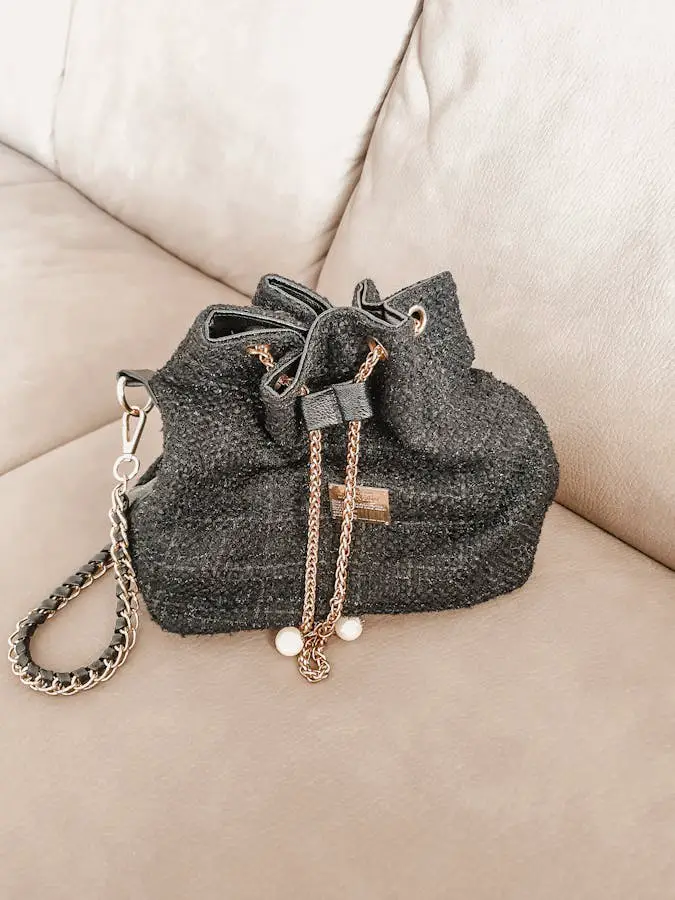
2. Bucket bag

essential handbags
According to us, one of the must-have handbags is definitely a bucket bag. Photo by Tal Gold

As the name goes, a bucket bag is shaped like a bucket with a stretchable opening. It’s usually fastened with a tie and makes quick work of opening and closing instead of a zip.

If you are opting for more of a casual look, the bucket bag is perfect for you.

It looks less polished than the formal-looking tote bag but it’s single compartment and its barrel-shape makes it easy for you to toss in a lot of things, including odd-shaped objects like a water bottle.

3. Cross-body bag

handbags
You can never go wrong with a crossbody bag. Photo by Berna:

This bag comes with a long, sturdy strap that enables it to be worn across the body.

The perfect cross-body bag should be able to fit your necessities such as your wallet, smartphone and some makeup essentials such as compact powder and lipstick.

This is perfect for the girl who wants some freedom of movement and needs to keep their important things close.

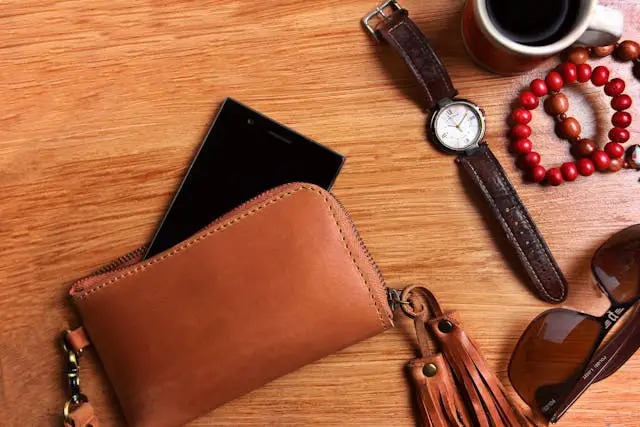
4. Wristlet

A wristlet is an upgraded version of a clutch which allows you to keep strictly to your essentials.

It comes with a straplet for you to loop around your wrist and is perfect for you to bring out for a night on the town and dance freely.

5. Hobo

A hobo bag is a crescent-shaped handbag made from soft, slouchy materials and a single strap.

It’s called a hobo bag because it looks like the shape of the bundle on a stick that you see hobos in cartoons carry over their shoulder.

It is perfect for those who are not fans of rectangular or squarish-looking bags and prefer something with softer material.

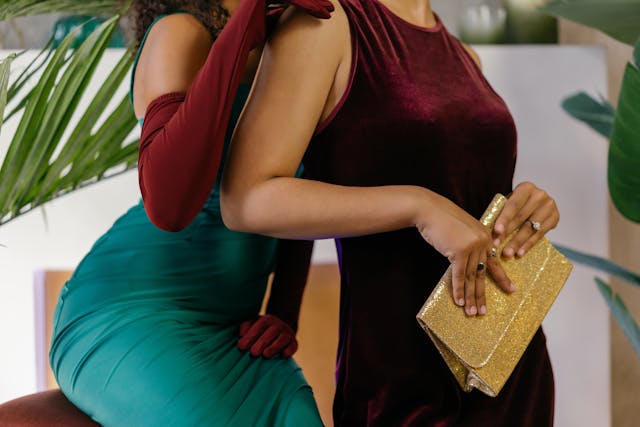
6. Evening clutch

A clutch is what you need to complete your evening look. It is a bag that you simply need to ‘clutch’ onto during a formal dinner.

Pick a simple black or gold clutch for a timeless style or go wild with a pop of colour.

Invest in a good quality clutch because this is one fashion item we could use over and over again.

How many times do we get to wear our evening gowns anyway?

Are you looking for more fashion inspiration? Here are 10 K-dramas to watch for some fashion-inspo.

Discover 8 types of delectable Kuching foods to eat in Cat City

Kuching is known for its incredible variety of food, and locals don’t hesitate to defend their favourite food stalls. Ask any Kuchingite where to eat and you’ll get passionate, detailed recommendations because good food is part of the city’s identity.

Whether it’s breakfast, lunch, dinner or just a mid-day snack, everyone has their go-to spots and personal must-try dishes.

For first-timers here to the Cat City, here is our list of must-try, affordable Kuching food when you are in town.

1. Kolo mee

9WhatsApp Image 2017-03-24 at 10.29.35
Kolo mee can be found at just about any coffeeshop here.

Considered by many as Kuching’s poster-child for noodle dishes, kolo mee is an all time favourite among Kuchingites.

Though traditionally a breakfast staple, you’ll find it served well into lunch, dinner… and even as a post-clubbing comfort meal.

A classic bowl features springy yellow noodles tossed in a light seasoning, then topped with char siew, minced meat and chopped scallions.

Simple, comforting and endlessly satisfying, a bowl of kolo mee typically costs around RM5, depending on the toppings you choose.

2. Laksa

9WhatsApp Image 2017-03-23 at 11.34.43
This bowl of sumptuous, fiery goodness has an international appeal – even Anthony Bourdain couldn’t resist it.

I may be biased, but I find Sarawak laksa is the best kind compared to other varieties of laksas around Malaysia, from the tangy Penang Assam Laksa to the rich Johor Laksa.

Even the late Anthony Bourdain sang its praises, calling it the ‘Breakfast of the Gods’ during his second visit here to Kuching in 2016, a visit that helped cement Sarawak Laksa’s reputation as the undisputed Queen of Malaysian laksas.

A typical bowl features bee hoon (rice vermicelli) layered with prawns, shredded chicken, omelette strips and crunchy bean sprouts, all submerged in its star component: a deeply aromatic, spicy broth. The dish is finished with a sprinkle of fresh coriander.

If you’re tasting Sarawak Laksa for the first time, take a moment to savour the fragrance of the broth, a complex blend of chilli, coconut milk, lemongrass, galangal, aniseed, cumin and a medley of other spices that give it its signature depth.

3. Mee hijau/Spinach noodles

9WhatsApp Image 2017-03-23 at 11.34.25
Light and savoury Mee Hijau.

As its name suggests, Mee Hijau features vibrant green spinach noodles, often served with either char siew or roasted chicken depending on the stall’s style.

Spinach is blended directly into the noodle dough to create its signature colour, giving the noodles a naturally earthy aroma. At Chong Chon, the green noodles are delightfully chewy and springy, soaking up the savoury richness of the beef broth they’re served in.

Simply delicious, spinach noodles are also a great option for those who may not love vegetables but still want a tasty, fibre-rich meal. Bon appétit!

Chong Chon Green Noodle at 3rd Mile, Kuching
The iconic Chong Chon Green Noodle at 3rd Mile, Kuching

4. Mee sapi/Beef noodles

920170317_100423
One of the most popular places to get Mee Sapi is at Green Hill, Kuching

If kolo mee is the loud, attention-seeking sibling, then mee sapi, or beef noodles, is the calmer one of the two.

This simple yet hearty noodle dish is often overlooked when non-Kuchingites ask which local specialties they should try while in town.

Although it looks similar to kolo mee, mee sapi comes topped with tender slices of beef, bean sprouts and chopped scallions. It’s the perfect noodle dish for breakfast as it can be comforting, warm and satisfying.

You can enjoy it “dry,” with the noodles served separately alongside a bowl of steaming hot beef broth, or as Mee Sapi Sup, where everything comes together in one bowl.

Mee sapi is widely available across Kuching, but my favourite spot for a freshly prepared bowl is Green Hill (non-halal) in downtown Kuching.

5. Cha Kueh

9DSC_0108
One of the best snack foods to be eaten with friends.

Cha Kueh – white radish typically fried with egg and sweet soy sauce – is usually served in a generous portion, often as a shared side dish while everyone waits for their main orders to arrive.

(Or am I the only one who does that?)

Compared to the other dishes on this list, Cha Kueh is usually the fastest to reach your table, often taking just about five minutes depending on the queue at the stall.

6. Kueh Chap

9WhatsApp Image 2017-03-24 at 10.47.13
Kueh Chap, the ultimate Kuching food for those who love pork.

If you love pork, you will love this classic Kuching comfort food.

Kueh Chap is a Teochew dish made up of a whole variety of piggy parts – pork belly, pork intestines, pork meat – served with a boiled egg and wide, flat rice noodle sheets, all drenched in a rich, aromatic herbal broth.

It’s the kind of dish that warms you from the inside out, perfect for a slow morning or a rainy Kuching afternoon.

7. Mani Chai Bee Hoon

9IMG_20170114_210204
Mani Chai Bee Hoon.

Depending on which stall you visit, you’ll find a local vegetable called Mani Chai in Chinese, or cangkuk manis in Malay. This dark, leafy green is a Sarawak favourite, and Mani Chai Bee Hoon is one of the simplest yet most beloved ways to enjoy it.

In Sarawak, Mani Chai Bee Hoon is a rice vermicelli dish stir-fried with egg and Mani Chai. Since it’s practically a household staple, some places even serve it with sliced meat or fish cakes for extra flavour.

You can find this comforting Kuching dish in almost any coffeeshop across the city.

8. Nasi Goreng Dabai

9DSC_0116
Nasi Goreng Dabai.

Dabai (Canarium odontophyllum) is a local fruit unique to Sarawak. Its outer skin is glossy black, while the bright yellow flesh surrounds a single elongated seed.

Preparing dabai is surprisingly easy – simply soak the fruit in hot water for about 15 minutes until they soften. Once tender, pull the flesh from the seed and enjoy it with a little soy sauce and salt.

9. Mee Tomato

9WhatsApp Image 2017-04-03 at 12.53.02
Mee Tomato at Open Air Market, Kuching.

Tomato noodles, or Mee Tomato, was my absolute favourite noodle dish when I was growing up.

Mee Tomato is typically made with either yellow noodles or crispy noodles, topped with chicken or char siew and drenched in a thick, tangy tomato sauce.

A plate of this reddish-orange goodness is pure comfort – sweet, savoury and nostalgic in every bite.

If you are looking for a more comprehensive list of Kuching food, check out this article.

10 non-spicy Korean dishes you should try before you die

Non-spicy Korean dishes do exists, despite the fact that they are known for its spiciness.

The best part is that they are equally delicious.

If you feel like eating Korean cuisine but could not handle the heat, try these non-spicy Korean dishes dishes instead.

1. Jajangmyeon

If you are a fan of K-dramas or Korean variety shows, you must be familiar with this food.

The main component of this Korean noodle dish is its sauce, made of chunjang or black bean sauce, ground pork and vegetables.

The sauce is thick and served hot over thick noodles made from white wheat flour.

For those who prefer rice instead of noodles, the rice variation of this dish is jajangbap made with the same sauce but served with rice.

Imagine a heavier taste of soy sauce with a thicker texture – that is what jajang sauce tastes like.

If you are not a fan of soy sauce however, you might not like jajangmyeon either.

non-spicy Korean dishes
Jajang Rice, one of many non-spicy Korean dishes that you must try. 

2. Sujebi

Sujebi or hand-pulled dough soup is one of my personal favourite non-spicy Korean dishes.

It has a refreshing broth with noodles roughly torn by hand served with vegetables.

Malaysians can compare sujebi to local pan mian with kelp instead of mani chai.

Once you’ve tried it, you might start craving for sujebi especially during the rainy season.

sujebi-726026_1280
One of the non-spicy food to try, Sujebi! Photo credits: Pixabay.

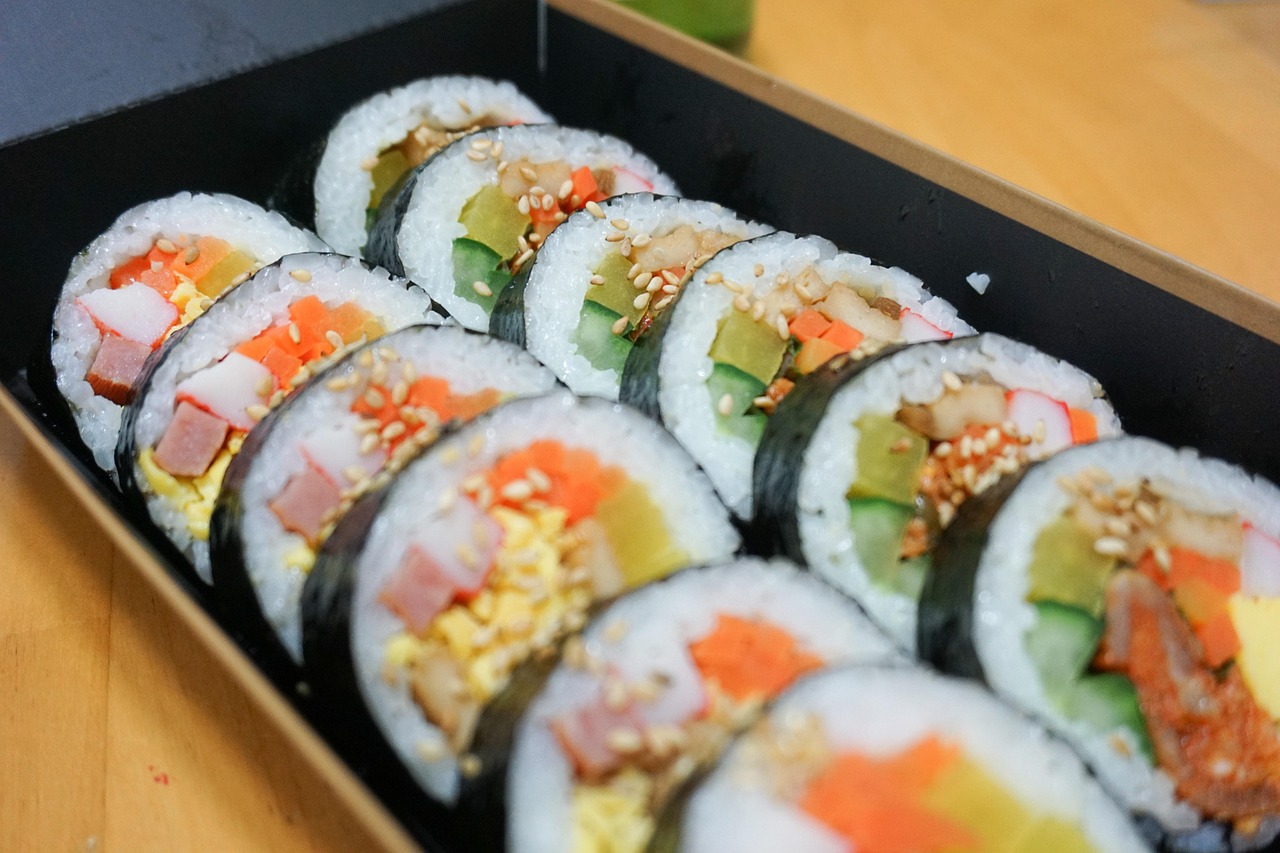
3. Kimbap

10 non-spicy Korean dishes you should try before you die
Image by jinsoo jang from Pixabay

This rice-roll wrapped in seaweed is so irresistible and perfect for light lunches.

There are varieties of fillings of kimbap including cheese, egg strips, carrot, cucumber, kimchi, ham, tuna, stir-fried beef and spicy cooked squid.

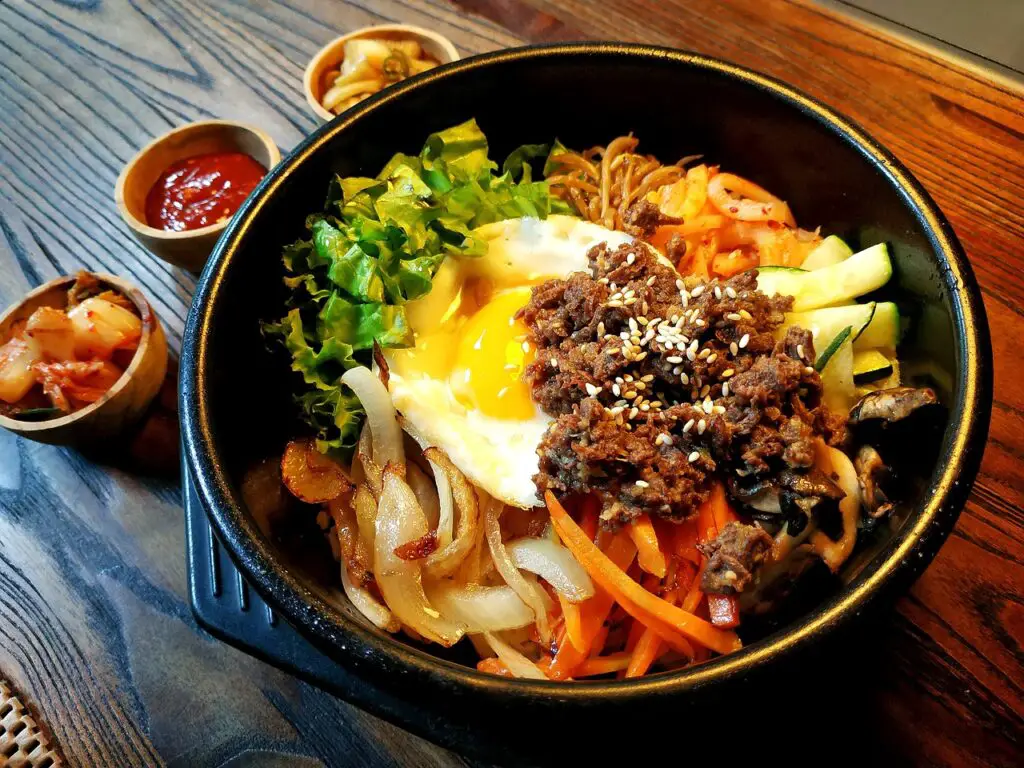
4. Bibimbap

This dish was listed at number 40 on the World’s 50 most delicious foods reads’ poll compiled by CNN Travel.

Bibimbap literally translates to “mixed rice”. It is usually a bowl of rice topped with sauteed and seasoned vegetables and gochujang (chilli pepper paste).

To make the non-spicy version of this dish – just replace gochujang with doenjang (soybean paste).

Vegetables commonly used are cucumber, radish, mushroom, soybean sprouts and seaweed.

Historically, bibimbap was served to the king for lunch or a between-meals snack. However, nowadays it is a perfect dish for any time of the day.

10 non-spicy Korean dishes you should try before you die
Image by Nikki from Pixabay

5.Doenjang jjigae or doenjang guk

Doenjang or soybean paste is used by Koreans as a seasoning or as a dipping condiment.

This paste can be used to make doenjang jjigae (soybean stew) and doenjang guk (soybean soup).

Other ingredients usually added to both these dishes are mushrooms, tofu, potatoes, radishes, seafood and meat.

The difference is that doenjang jjigae is heartier, thicker compared to doenjang guk.

6.Bulgogi

If you love meat, this is the dish for you.

To make bulgogi, one can either grill thinly cut slices of meat (pork or beef) or stir-fry them.

What makes the meat flavourful is all thanks to its seasoning which is a mixture of soy sauce, sugar, garlic, sesame oil, black pepper, onions and interestingly enough, pureed pears.

Bulgogi rice

7. Japchae

If the Thais have their pad thai, the Koreans have their japchae to brag about.

The star of this dish is dangmyeon, a type of cellophane noodle made from sweet potato starch.

It is cooked with various ingredients such as carrots, spinach, and onions.

Every ingredient is stir fried separately before being mixed together and season with soy sauce and sesame oil.

8.Galbitang

This non-spicy dish is usually served at wedding receptions.

Galbitang literally means “short ribs soup”. It is a clear dish made by slowly simmering galbi for hours.

It is fits for the royals as there were records of galbitang to be served in Korean royal banquets in the 1890s.

9. Kalguksu

Similar to sujebe, this dish is made of handmade, knife-cut wheat flour noodles served in a hearty broth.

The broth is commonly made with dried anchovies and kelp or chicken.

There are various types of kalguksu including snail kalguksu, perilla seed kalguksu and millet kalguksu.

noodles-709609_1280
A bowl of hearty kalguksu. Photo credits: Pixabay.

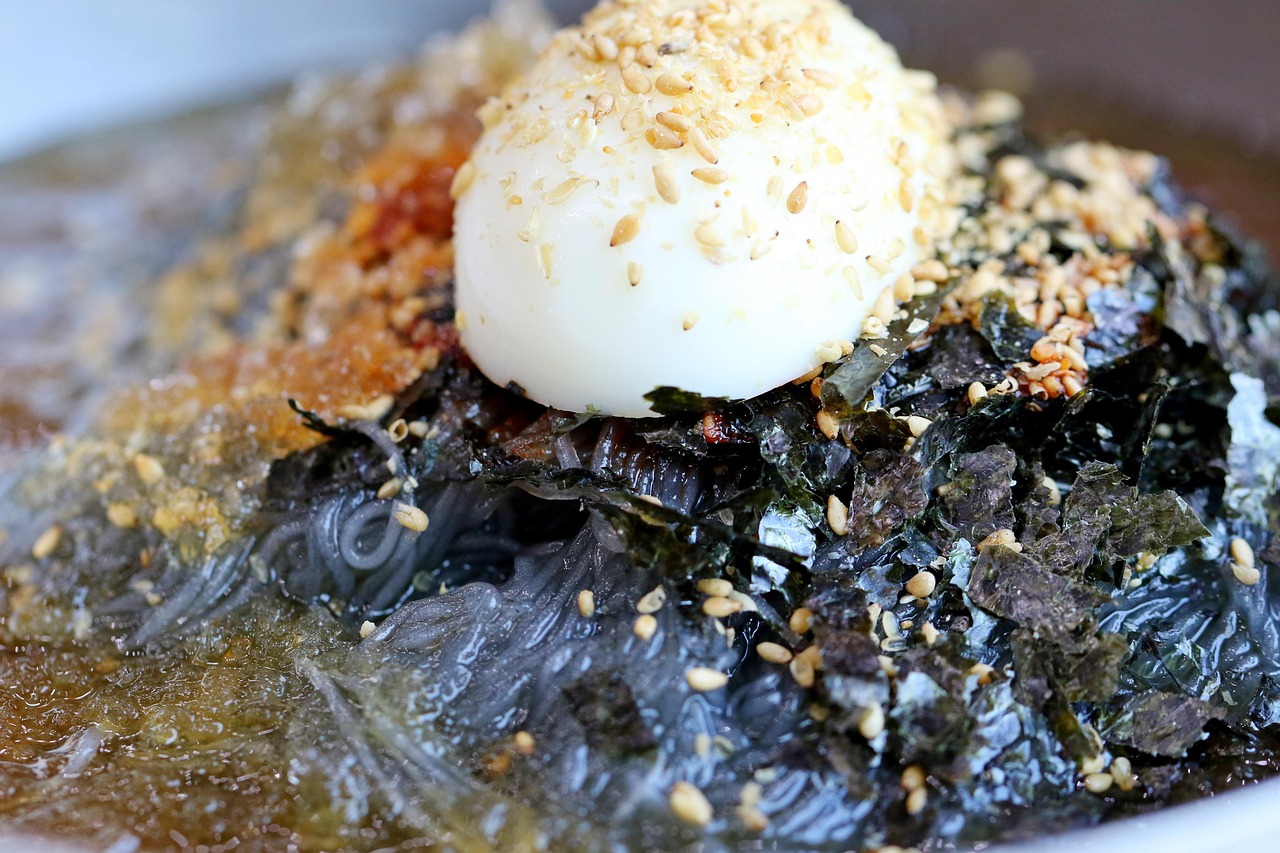
10. Naengmyeon

10 non-spicy Korean dishes you should try before you die
Image by manseok Kim from Pixabay

The Japanese are not the only who are known for its cold noodle.

In South Korea, naengmyeon is long, thin noodle served with iced broth, cucumbers, pears and radish.

Because its served cold, the dish is a famous dish during the summer season.

Sometimes the dish is served with gochujang but the non-spicy version of this is made with beef and radish broth.

8 fascinating pecies of hornbills you can spot in Sabah

Sarawak might be called the “Land of the Hornbills” but plenty of these birds also call neighbouring state – Sabah – home.

Nature lovers or avid bird watchers will find this Sabah Tourism Board infographic handy as it details the types of hornbills which can be found there along with their measurements from head to tail.

hornbills

Check out how else these hornbills differ from each other:

1. Bushy-crested hornbill (Anorrhinus galeritus)

Bushy-crested hornbills prefer roaming around subtropical and tropical lowland areas.

It is a dark-coloured bird and its tail is grey-brown with a broad black tip.

Its diet include figs, fruits, cockroaches, mantis and millipedes.

2. Asian black hornbill (Anthracoceros malayanus)

We would not be able to enjoy durian if it were not for this particular hornbill.

Asian black hornbill is known to be a major durian seeds disperser.

The bird is black overall except for its broad white-banded outer tail and its pale yellow casque.

3. Oriental-pied hornbill (Anthracoceros albirostris)

The oriental-pied hornbill is a black and white bird with a white belly and thighs. The casque, however is yellowish.

The male has a larger casque with few black marks while the female has a smaller casque with more black marks.

This hornbill is considered more common among the Asian hornbill.

4. Wrinkled hornbill (Rhabdotorrhinus corrugatus)

One characteristic of the wrinkled hornbill which stands out are its blue eye rings.

Plus, the males and females of the species look like they come from different families altogether.

The male’s bill is yellow with a red base and its casque is brown on the lower mandible while the bill and casque of the females are almost completely yellow.

Males have bright yellow feathers on the neck, chest and cheeks, but they are black in the females.

5. White-crowned hornbill (Berenicornis cormatus)

With white crown feathers on its crest, this particular hornbill is like the Andy Warhol of its kind.

It can be easily distinguished by its white head, neck, breast and tail while the remaining plumage is black.

It is also known as the long-crested hornbill or white-crested hornbill.

6. Wreathed hornbill (Rhyticeros undulatus)

Also known as the bar-pouched wreathed hornbill, you can recognise it by its yellow inflatable pouch on its throat

The casque is corrugated and it has overall black plumage with short white tail.

Males and females of wreathed hornbills look similar but the females weigh averagely lighter than the males

7. Rhinoceros hornbill (Buceros rhinoceros)

Like the rhinoceros, this hornbill has a huge bill and casque which come in orange and red.

The males’ eyes are red with black rims while the females have white with red rims.

The plumage is mostly black with white legs and its white tail has a black band.

It enjoys mostly fruit but will eat insects, rodents, small reptiles too.

8. Helmeted hornbill (Rhinoplax vigil)

First of all, this hornbill has a very heavy head. Its casque accounts up to 11 per cent of its 3kg weight.

It has mostly blackish plumage, except that the belly and legs are white.

The throat is wrinkly; pale blue to greenish in colour in females and red in males.

Where to find them?

Now that you can roughly tell these hornbills apart, where can you find them in Sabah?

According to Sabah Tourism Board website, all eight species can be spotted in one place- the Kinabatangan River – the second longest river in Malaysia and renowned for its diverse ecosystem.

Besides hornbills, the river also plays home to proboscis monkeys, orangutan and Asian elephants.

Time to pack the binoculars and a field guide book and head to Kinabatangan!

Charles Hose and his love affair with Sarawak

Fort Hose Marudi 1
A plaque at Fort Hose marking the date it was opened in Marudi.

Fort Hose in Marudi was named after Charles Hose, the then Resident of Baram.

Born in 1863 in Hertfordshire, he was the son of clergyman Thomas Charles Hose.

As a young man, he continued his study at Cambridge University but never completed his degree.

With the help of his uncle, George Frederick Hose, the bishop of Singapore, Sarawak and Labuan, Hose landed a job in the Sarawak civil service.

The fort – now officially renamed and repurposed as the Baram Regional Museum –  is a significant remnant of the Brooke era in Sarawak which ended about 80 years ago.

Apart from his work as a British administrator, Hose contributed a great deal to Sarawak as a zoologist and ethnologist.

Charles Hose and his love for nature

Hose lived in Sarawak for 24 years and spent his free time researching natural history and ethnography.

He enjoyed exploring the rainforest and became an avid collector of plants and animals.

His collection can be found in the British Museum and the Museum of Archaeology and Anthropology in Cambridge.

An amateur photographer, Hose also captured photos showcasing people and scenery of Sarawak.

To commemorate his work as a zoologist, several species were named after him including Hose’s frog (Odorrana hosii), Hose’s tree frog (Philautus hosii), Hose’s palm civet (Diplogale hosei) and many more.

Fort Hose Marudi 2
Some of the photographs taken by Charles Hose himself displayed at Baram Regional Museum.

Charles Hose and the birth of Baram Regatta

During the Brooke administration, fights among tribes were rampant in the Baram region.

Hose decided to hold a peace conferenceat his fort in April 1899 which led to the birth of the first Baram Regatta.

The regatta, a longboat competition among the tribes, is still continued to this day. Only now it includes other activities such as cultural performances, beauty pageants and so much more.

After his 18-year service in Marudi, he was promoted to serve the supreme council of Sibu.

There, he also helped in peace negotiations between Iban rebels in 1904 and warring Ibans from the Rajang and Batang Lupar in 1907.

Charles Hose and the Kelabit people

According to former headmaster and author Sagau Batubala, the name Kelabit was a misnomer Hose had given to the people living in the highlands south of Mount Murud.

As Resident, part of his responsibilities included listing down all the races living in Baram.

When a group of villagers paid a courtesy call to the newly appointed Resident in his office at Fort Hose in 1901, Hose asked them where they were from, which leader of the group answered “Pa’ Labid”, the name of their village.

Dutifully, he then asked them what their races were, to which the leader answered “Orang Pa’ Labid.”

Hose was believed to have misheard the word ‘Pa’ Labid’, writing it down in his record book as ‘Kalabit’.

From that moment on, Kalabit became the race name for the ethnic community we now know as Kelabit.

A side view of Fort Hose.
After being razed to the ground, Fort Hose was rebuilt according its original dimensions. The fortress as it stands today.

Charles Hose and the discovery of oil in Miri

Hose is cited by Rasoul Sorkhabi in GEOExpro, a petroleum geoscience magazine, to have played a significant role in the discovery of oil in Miri.

After his appointment as the Resident of Baram, Hose started mapping oil seeps in and around Miri.

He reportedly gave his findings to the Brooke government, but an English consultant geologist said an oil exploration in Sarawak was a no-go because of its poor logistical conditions.

Hose then retired and returned to England where he whosed his map of oil seeps to Charles Brooke.

The late Rajah gave his permission to continue the exploration, so Hose went to discuss the idea with Anglo-Saxon Petroleum, a part of the Royal Dutch/Shell Group.

The meeting was a success and Charles later signed the first Sarawak Oil Mining Lease in 1909.

Eventually due to the rapid oil discovery activity, the Resident’s Office was moved from Marudi to Miri in 1912.

A portrait sketch of Charles Hose. Credit: Public Domain.
A sketch portrait of Charles Hose. Credit: Public Domain.

Charles Hose and his many publications

Hose spent his retirement in Norfolk writing about Sarawak and its people.

Some of his significant publications are ‘The Pagan Tribes of Borneo’ (1912), ‘Natural Man’ (1926), and his memoir ‘Fifty Years of Romance and Research, or, a Jungle-Wallah at Large’ (1927).

He died at the Hutton Nursing Home in 1929.

1 2 3 4 5 6 15