Browse Category

Lifestyle - Page 3

10 easy and amazing ways to use frozen puff pastry

If you love baked goods, one of the most important ingredients to have in your fridge is frozen puff pastry.

Unless you are a culinary expert and you know how to make your own puff pastry, then you might not need this ingredient.

Also known as pate feuilletee, it is a flaky light pastry made from laminated dough composed of dough and butter or other solid fat.

The butter is put inside the dough, making what they called a paton which is repeatedly folded and rolled out before baking.

Making your own puff pastry is a long, tedious work. Nowadays thanks to culinary innovation, we can easily buy the instant version of puff pastry.

Once you have this in your fridge, here are 10 easy ways to your frozen puff pastry:

1.Sardine puff

Malaysians love having sardine puff for their afternoon tea.

To make the filling, you need a can of sardines in tomato sauce. Drain the sardines, and let your creativity flow. Do you like spicy food? Add in some chili powder or ground chilli. Need extra taste and texture? Add in diced onion or carrots.

After you prepare your filling, make your sardine puff with the frozen puff pastry in mold it into whatever shape you want.

Check out the recipes here, here and here.

2.Tuna puff

Instead of canned sardine, how about using canned tuna?

There are so many varieties of canned tuna out there.

Choose your favourite and flavour it according to your taste.

Then, make your own tuna puff using frozen puff pastry.

Check out the recipes here, here and here.

3.Curry Puff

Do you have leftover curry from last night’s dinner?

Or do you have a canned curry sitting around in the pantry?

What better way to use it besides making curry puff using frozen puff pastry?

4.Pigs in a Blanket

In the United States, the term ‘pigs in a blanket’ commonly refers to hot dogs in croissant dough.

Instead of croissant dough, how about using frozen puff pastry?

The idea is still the same; to roll cocktail sausages using the dough and bake them to perfection.

You can also use normal sized sausages and cut them into pieces.

Check out the recipes here, here and here.

5.Pot Pie

To make pot pie using frozen puff pastry, you need to some cooking.

You need boneless chicken, mixed vegetables as well as ingredients such as cream, flour and butter to thicken the filling.

With this recipe, you are ready to have a hearty meal instead of dessert.

Check out the recipes here, here and here.

6.Puff pastry pizza

Speaking of a hearty meal, use frozen puff pastry as a pizza base and you will have a puff pastry pizza.

As for the toppings, you can go for simple ingredients such as tomato puree and mozzarella cheese or you can go crazy with it.

Check out the recipes here, here and here.

7.Chocolate Puff

Are you a fan of chocolate? How about making chocolate puff?

The easiest way to make one is to sprinkle chocolate chips on your dough and roll it like a croissant.

After baking, the chocolate chips will melt and you have a nice layer of chocolate in your puff pastry.

Check out the recipes here, here and here.

8.Fruit tart

Here is another super easy recipe to use frozen puff pastry.

Basically, you need cream cheese and fruits of your choice.

Spread cream cheese on top of the dough, top it with fruits and sprinkle some icing sugar on top.

Bake it until your pastry is cooked.

Check out the recipes here, here and here.

9.Palmier

A palmier is a French pastry that known for its many names including pig’s ear, palm heart and elephant heart.

Using only three ingredients including puff pastry, butter and sugar, you can make a palmier at the comfort of your home.

Check out the recipe here.

10.Baked Apple Roses

10 easy and amazing ways to use frozen puff pastry
Image by Unsplash.com

This puff pastry dessert is not only delicious but also pretty to look at.

Besides frozen puff pastry, you need thinly sliced apple, sugar, butter and cinnamon powder.

The idea is to place apple slices along one long edge of dough with the slices overlapped slightly.

Then fold bottom half of the dough over the apple slices to form a shape that looks like a rose.

Check out the recipes here, here and here.

Salak fruit: 5 things you might not know about this unique fruit

Some people call salak fruit ‘snake fruit’ because of its reddish brown scaly skin which reminds one of snakeskin.

However, the salak tree belong to the palm tree family and is native to Malaysia and Indonesia.

The fruit can be peeled by first pinching the pointed tip of the fruit, and then peeling the skin away to reveal pearly edible cloves which closely resemble a peeled garlic.

As for the flavour, it tastes acidic and sweet with an apple-like texture.

Here are five things you might not know about the salak fruit:

1.It has been featured on the Malaysian stamp

On Feb 27, 1999, a Malaysian stamp was issued featuring the salak fruit.

It was under the rare fruits series of stamps.

The species that was featured on the stamp was Salacca grabrecens.

2.There are many types of salak cultivar out there

Overall, there are at least 30 salak cultivars (which is short for ‘cultivated varieties’) out there.

Some of the popular cultivars are salak pondoh and salak Bali.

In Indonesia, salak Bali is the most expensive type: It is smaller than the normal salak and apparently the sweetest of its kind.

Meanwhile in Malaysia, the most famous type is salak madu (honey).

3.The health benefits of salak fruit

Many studies have been done on the nutritional values of salak fruit.

A study by Thai researchers published in 2013 for instance, showed that salak plum possessed antioxidant properties.

Other studies showed that the tropical fruit contains vital nutrients such as calcium, iron, potassium, vitamin C and beta caroteene.

It is estimated that 100gm of salak fruit can provide approximately 82 calories and contains 4 per cent fat and 1 per cent protein.

4.Place that is named after the salak tree

Pasir Salak is a riverside town located in Perak, Malaysia.

Legend has that the town was named after the sandy riverbank that was once covered by salak fruit skins.

Hence the name ‘Pasir Salak’, ‘Pasir’ as in sand in Malay.

Some history buffs would recognise the place as where British colonial official J.W.W. Birch was assassinated in 1875, and event which would later caused British intervention in local conflicts leading to the outbreak of the Perak War.

Meanwhile, in Malaysia’s neighbouring country of Indonesia in West Java, there is an eroded volcano called Mount Salak.

Contrary to popular belief that the name is derived from the salak tree, Mount Salak’s name actually comes from a Sanskrit word.

According to Sundanese tradition, the name comes from the Sanskrit word ‘Salaka’ which means ‘silver’.

Hence, Mount Salak can also be referred to as Silver Mountain.

5.Some of the salak products you should try

Salak fruit: 5 things you might not know about this unique fruit
Image by Pixabay.

Salak candies, salak juice and pickled (jeruk) salak are some of the yummy delicacies made from this fruit.

Thanks to modern technology, you can order these products through online shopping if you cannot find them in your local stores.

An exclusive guide to start your very own home cafe

During this time of the Covid-19 pandemic, it is safer to stay at home at all cost, especially when you are able to.

But what happens when you have a strong craving for a specialised coffee?

We are not talking about instant coffee powder or 3-in-1 coffee, we are referring to the aromatic taste of americano, the creamy taste of cafe latte or the foamy texture of cappuccino.

Nowadays, it is possible to have a cafe-like experience even at home.

Using the right equipment and ingredients, you can have that glass of iced cafe latte at the comfort of your home.

Your home cafe starts with a shot of espresso.

If you have the money to buy a coffee machine, go ahead.

However if you don’t, there are other more affordable replacements.

How do you start your home cafe without a coffee machine?

An exclusive guide to start your very own home cafe
Moka Pot

Kicking off the list is a Moka pot. It is a stove top or electric coffee maker that brews coffee by passing boiling water pressurised by steam through ground coffee.

Invented by Italian engineer Alfonso Bialetti in 1933, it is named after the Yemeni city of Mocha.

There are plenty of tutorials available on Youtube on how to use a Moka pot.

The basic ratio for coffee to water is 1:2.

Since the pressure of a Moka pot is five to 10 times less than that of an espresso machine, the coffee brewed using the pot is not exactly an espresso by definition.

However as far as taste goes, it is as strong as close to you can get to espresso without buying a fancy machine.

Another affordable replacement for an espresso machine is the French press.

An exclusive guide to start your very own home cafe
French press

Similar to a Moka pot, a French press does not produce as much pressure as an espresso machine.

Nevertheless, it is still good enough to make an espresso-like coffee.

While you need to boil the Moka pot to let the steam brew the coffee, you only need boiling water with a French press.

The idea of a French press is to slowly press the plunger down with even pressure after allowing your coffee to steep.

The perfect time to brew a French press is about three to four minutes. If it exceeds this time, you may find yourself with a bitter over-extracted coffee.

Lastly, if you can get a hand of a ‘Kompresso’ or a portable espresso maker then that is the easiest way to make an espresso.

Starbucks Korea for instance offers a limited edition Picnic Series which include a Picnic Kompresso.

Along with one of these replacements, it is a good to have a liquid thermometer, a small electric whisk and a kitchen timer to help you to brew the perfect shot of espresso.

Arabica, Robusta or Liberica

To make that shot of espresso, of course you need ground coffee.

If you are a coffee enthusiast, then you probably already have your personal preferences of java beans.

When you search ‘ground coffee’ on online shopping platform such as Shopee, you are dumped with different kinds of choices.

So how to choose?

The most common type of ground coffee that are easily available is arabica coffee, also known as Arabian coffee.

The label on the packaging usually states ‘100% Arabica’ which means the coffee ground is made only using arabica beans.

This species of coffee tree Coffee arabica is believed to be the first species of coffee to be cultivated and made up about 60 per cent of global production.

Meanwhile, the second most cultivated types of coffee is robusta coffee.

Widely known as Coffee robusta, the plant is scientifically as Coffea canephora.

The third choice is Liberian coffee or Coffea liberica.

It is more common species in the Philippines, Indonesia as well as in Malaysia. Here in Sarawak, we have our very own Sarawak Liberica.

So how do you choose your java beans?

Firstly, let us talk about the most important factor which is the caffeine concentration because a decaf coffee is just a sacrilege.

The caffeine concentration of Liberica beans is the lowest of the three with 1.23g/100g.

Arabica has 1.61g/100g and Robusta has 2.26/100g. Hence, choose one that suits your caffeine expectations.

As for the taste, every blend has a specific sensation on its own.

Overall, arabica is known for its smoother taste often with hints of fruits or sourish aftertaste.

If Robusta is an occupation, then it would be a strong, six-packed construction worker. It has harsher, stronger and bitter taste compared to Arabica.

Last but not least is the Liberica beans. The feedback for this bean is varies. Some said it is the most aromatic beans compared to Arabica and Robusta beans.

It is also known for its woody and smokey taste.

When choosing your coffee grounds, you can also choose mixed blends between different kinds of coffee beans. The most common blend is a combination of Arabica and Robusta beans.

Now that you have chosen your beans, next is to choose the type of grind.

There are ‘extra course’, ‘course’, ‘medium’, ‘fine’ and ‘extra fine’.

If you are using French press, choose ‘extra course’ or ‘course’ or ‘medium’. For a Moka pot, opt for ‘fine’ grind.

Other ingredients for your home cafe

Besides coffee beans, you must have milk in your home cafe. It is recommended to use skim milk for frothing since it is the lightest.

You can use whole milk but the froth will be creamier in taste.

Speaking of frothed milk, you can make one without a machine.

The steps include heating the milk and using a hand mixer to whisk the milk until it reaches the desired frothiness.

Don’t have any hand mixer or a whisk? Make full use of your biceps and triceps by shaking a jar filled with warmed milk.

To make more home cafe recipes, get ready other ingredients such as whipping cream, flavoured syrup such as vanilla and hazelnut as well as cocoa powder.

Your home cafe recipes

Once you have that particular shot of espresso perfects to your taste, you are ready to have your own home cafe.

The easiest thing to make is americano. Take your shot of espresso and add into 100-150ml of hot water.

Do not go the other way round because the water being flowed through the coffee can lead it to be over extracted.

For a cup of cafe latte, have an espresso with 150-300ml steamed milk poured over it. Feel free to add your own flavour with vanilla or hazelnut syrup.

An exclusive guide to start your very own home cafe
Iced latte

You can make own cappuccino by adding 160-240ml milk foam into your espresso.

A flat white is made with a double espresso and about 150-240ml light frothy milk.

Not feeling like too much dairy? Make yourself an espresso macchiato with as shot of espresso and about 50ml of milk froth.

An espresso macchiato is a single shot of espresso with a dollop of milk froth on top.

Another way to make full use of frothed milk is by making latte macchiato.

Unlike a cafe latte whereby the milk is poured into the espresso, a latte macchiato is made by adding a single shot of espresso slowly onto a big glass of steamed and frothed milk.

If you have whipped cream laying around the kitchen, top your espresso with it to make espresso con panna.

Finally for a dessert at your very own home cafe, pour a shot of espresso over a scoop of vanilla ice-cream to make an affogato.

An exclusive guide to start your very own home cafe
Make your very own affogato.

Setting the ambience for your home cafe

An exclusive guide to start your very own home cafe

Clear the clutter and sit on the most comfy couch in your living room. Light a scented candle if you have one, have a book ready at your side and put up some music.

There is a wide range of playlist of ‘coffee shop music’ to choose from especially on Youtube.

From ‘Korean coffee shop playlist’ to ‘Starbucks-inspired playlist’, pick your choice.

With the perfect cup of java poured into your favourite cup, you are now ready to have a cafe experience at home.

All images are stocks photos from Unsplash.com and Pexels.com

Know the legends behind these 5 famous Chinese desserts

Behind every traditional food, there is always a story. It should not be surprising that traditional Chinese food such as mantou, Dragon’s beard candy, Wife Cake, doufufa and even guilinggao will have it’s own lore and background story.

Here are the legends behind these five famous Chinese desserts:

1.Guilinggao

You have seen this jelly-like Chinese dessert being sold at the supermarket.

Did you know that it is traditionally made from ‘gao’ or a paste of the under shell of the turtle such as the Chinese three-striped box turtle (Cuora trifasciata)?

It is traditionally prepared by boiling turtle shells for hours before adding in a variety of herbs.

After the water is thickened to form a jelly-like residue, rice flour and corn starch are added to make guilinggao.

There are guillinggao brands which use commercially farmed three-lined box turtles. As such, the traditional guilinggao is quite expensive. For those that use turtle shell in their ingredients, typically other species of turtles such as soft-shelled turtle are used.

However to make guilinggao at home, there is no need for you to catch a turtle, take off the shell and boil it.

Most commercially available guilinggao products today do not contain turtle shell powder.

Today, guilinggao powder is easily available in stores and supermarkets. Follow the instructions and add in as much sugar as your heart desires.

While it has never been proven, like many traditional Chinese desserts, gulinggao is believed to be medicinal to improve circulation, healthier complexion and good for the kidney.

Legend has it that the Tongzhi Emperor who reigned from 1861 to 1875 nearly cured his smallpox by taking guilinggao.

His mother, the Empress Dowager Cixi, on the other hand believed that his smallpox could be cured by worshipping a smallpox god.

After convincing the emperor not to take guilinggao anymore, the Tongzhi Emperor passed away soon after.

Was it because he stopped taking guilinggao or is there another reason for his death? We might never know.

2.Doufufa

The origins of doufufa can be traced back to as early as the Han Dynasty (202BC-220AD).

According to legend, Emperor Gaozu of Han who reigned from 202-195AD had a grandson named Liu An.

He wanted to create something that would help him achieve immortality and Liu An thought the answer could be found in soybean.

After few attempts, he managed to create soft tofu. People of the Han Dynasty started to call it tofu brains because of its softness.

While Liu An did not get to live forever, his recipe has survived to this day.

Today, there are so many version of doufufa. Some have it with something sweet like sweet ginger soup while others tend to make it savoury by adding in soy sauce.

Meanwhile, Sarawakians love to have it with gula apong (palm sugar).

3.Dragon’s Beard Candy

Here is another Chinese dessert that originated during the Han Dynasty.
With no internet or TV, the Emperor found himself being entertained by an imperial court chef who performed complicated steps to make a new confection.

After stretching the dough into small, thin strands, a new recipe was created in front of the Emperor.

These strands reminded the Emperor of a dragon’s beard hence the name that we all know now.

Fast forward to the Chinese Cultural Revolution from 1966 to 1976, the Communist Party of China banned any activities connected to the Han Dynasty – including Dragon’s Beard Candy.

People in China actually stopped making it for some time until recently with the new generation picking up the craft to make this traditional sweet again.

4.Wife Cake

Sometimes you can roughly guess there must be a legend behind some Chinese desserts according to their names.

Lo Po Beng – or its English translation Wife Cake – is actually a Chinese pastry made with winter melon, almond paste and sesame.

Long time ago, there was a poor couple who loved each other dearly. One day, the husband’s father fell sick.

The couple spent all their money to cure the poor old man but he was still not cured.

Without her husband’s knowledge, the wife sold herself as a slave for money to buy medicine for her father in-law.

Once the husband found out what his wife did, he created this pastry filled with winter melon and almond.

The husband sold the pastry which he dedicated to his wife. Thankfully, the cake was a hit and the poor man managed to buy back his wife using the money that he earned.

5.Mantou

Know the legends behind these 5 famous Chinese desserts
Some Chinese desserts like this mantou can be served as part of main course. Credit: Pixabay.

The Chinese mantou is a soft, white steamed bun. It is a popular side that can even be found in the frozen section at the supermarket.

The most famous legend behind mantou is related to human sacrifice.

During the Three Kingdoms period of ancient China (220-280AD), the Chancellor of Shu Han state Zhuge Liang led the Shu army on a campaign against Nanman forces or the Southern Barbarians.

After capturing the Nanman king Meng Hua, Zhuge Liang brought his army back to Shu Han.

The troops suddenly came across a very fast flowing river that could not be crossed.

One of the barbarian lords told Zhuge Liang that in the olden days the barbarians would sacrifice 50 men and throw their heads into the river to appease the river deity and allow them to cross.

Zhuge Liang did not want any of his men to lose their heads. Instead, he ordered them to slaughter the livestock and fill their meat into buns shaped roughly like human heads.

The men then threw these buns into the river.

Somehow, Zhuge Liang and his men managed to cross the river and he named the bun ‘mantou’ or barbarian’s head.

5 Italian deep-fried pastries you should try to make at home

Just because international travelling is impossible right now, you can always have a taste of another country through food.

How about ‘travel’ to Italy and try their deep-fried pastries by making them yourself?

Unlike French pastries which require a lot of time and work, Italian deep-fried pastries are comparatively easy to make.

Here are five Italian deep-fried pastries you should try to make at home:

1.Bombolone
5 Italian deep-fried pastries you should try to make at home

Many refer bombolone as the Italian version of the doughnut but it is also similar to German berliner pfannkuchen.

It is basically round fried dough, either empty or filled with creme patissiere, chocolate, Nutella or jam and topped with icing sugar.

The basic ingredients are flour, yeast, salt, sugar, egg, water and butter as well as oil for frying. Some variation of bombolone does not include eggs.

Plus, the original version of bombolone actually uses lard for both the dough (instead of butter) and for frying the pastry.

To add an extra kick in flavour, the modern version of the recipe even uses a bit vanilla and rum in the dough.

Give these recipes a try here, here and here.

2.Zeppole

Zeppole is another Italian deep-fried pastry topped with powdered sugar.

Traditionally, it is eaten to celebrate Saint Joseph’s Day on Mar 19 every year.

As for the filling, the common ingredients are custard, jelly, cannoli-style pastry cream or butter and honey mixture.

To make the dough, you need flour, eggs, salt, sugar, butter, water and milk.

So what are the differences between zeppole and bombolone?

Unlike bombolone which is rolled into shape from a dough, zeppole is almost a batter. To fry zeppole, you need to spoon them into the oil.

Zeppole is practically more like a fritter, hence it is less chewy than bombolone.

While bombolone is filled with flavoured ingredients such as cream and chocolate, zeppoli has its added flavour on top of the pastry.

Here are some of the recipes for zeppole; here, here, here.

3.Frittelle

Known as Venetian doughnuts, this Italian deep-fried pastry is commonly served during carnivals.

It is more similar to bombolone compared to zeppole as they are yeast-risen fried pastries.

There are many variations of frittelle, both filled and unfilled version.

The unfilled version have raisins mixed into the dough while the filled version has fillings such as pastry cream.

If you like your deep-fried pastry without extra calories of fillings, you can definitely give frittelle a try.

Here are the recipes; here, here, here.

4.Castagnole

Speaking of Italian deep-fried pastry without any filling, here is an easy pastry to make at home.

Castagnole are soft on the inside and crunchy on the outside that are best eaten while they are still warm.

The common ingredients are flour, baking powder, salt, sugar, eggs and butter.

The key to make the perfect castagnole is to fry them at the right temperature.

Cook them in a too high temperature then the pastry is cook on the outside but not on the inside.

However, fry them in a too low temperature the pastry would become soggy.

The perfect temperature is between 170-175 degree Celsius.

Here are the recipes; here, here, here.

5.Crostoli/Sfrappe/Chiacchiere

This Italian deep-fried pastry is known by many names according to the different regions in Italy but they all refer to the same sweet dough which has been rolled out, cut-up and then fried.

They all made from flour, sugar, baking powder, eggs, oil, liquor or wine, citrus zest and icing sugar.

Unlike other pastries on this list, chiacchiere is more on the crunchy side.

For Malaysians, imagine kuih lidah buaya or kuih tiram.

Traditionally, they are eaten in the period before Lent season according to Christian calendar.

Here are the recipes: this, this and this.

Nuns or concubines: Who invented Italian pastry, cannoli?

Cannoli is an Italian pastry which has recently made its way to Malaysia. It is a tube-shaped shell made of fried pastry dough, filled with a sweet, creamy filling. Yum.

In Italian, cannoli is plural and its corresponding singular is cannolo. However in English, cannoli is usually used as a singular.

The shells are made basically from flour, sugar, butter, egg and oil. Meanwhile, the ingredients for the fillings are ricotta, powdered sugar, ground cinnamon and chocolate chips.

What makes this pastry more interesting besides its crispy shell and creamy filling is the legend behind its origin.

Nuns or concubines: Who invented Italian pastry, cannoli?

From a harem to a convent, here are some theories behind who invented the cannoli:

1.Concubines made cannoli in order to capture the prince’s attention

Between 827 and 1091 AD, the city of Caltanissetta in Sicily was under Arab domination.

During the time, the city was known for its large number of harems. Even its name back then was ‘Kalt El Nissa’ which meant ‘women’s castle’.

With so many harems, then there must be many concubines. Usually, these concubines served only one prince.

The women of Caltanisseta reportedly were inspired by their prince’s ‘body part’ that they created a pastry shaped like it with a creamy filling in the middle. Ahem. Nudge nudge wink wink.

If it is true that the concubines in Caltanissetta created the cannoli just to impress their prince, the effort is nothing compared to the concubines in the Turkish drama The Magnificent Century, who resorted to poisoning and framing each other just to be the Sultan’s favourite.

Based on the life of Ottoman Sultan Suleyman the Magnificent and his wife Hurrem Sultan, a slave girl who (of course) rises through the ranks of the harem’s hierarchy to become Sultana, the drama can be a guilty pleasure as you watch the concubines pulling all kinds of moves just to gain the Sultan’s attention.

Nuns or concubines: Who invented Italian pastry, cannoli?
Credit to Pixabay.com.

2. The Christian nuns were trying to have fun

The Carnevale season, a celebration which started during the Middle Ages and is still being celebrated today in some part of the world, usually takes place before the liturgical season of Lent. It was celebration involved a lot of food, alcohol and meat before the abstinence of them during Lent.

Some historians believed that the nuns of Caltanissetta were being playful and wanted to join the festivities of Carnavale.

They came up with this brilliant idea of making a fountain with edible faucets where ricotta cream came out instead of water. Patrons would then fill the cannoli shell with cream.

The dessert was a hit and eventually became a year-round staple pastry in Sicily.

3.Former concubines who later became nuns were responsible for passing down the recipe

By 1086, when Arab rule in Sicily came to an end, the harems also started to disappear.

Some of the concubines decided to remain in Sicily and convert to Christianity.

A number of them is believed to have become nuns and resided in the monasteries.

They brought along with them food they cooked as concubines, including the cannoli.

Some historians believed that it was possible that the nuns who brought cannoli to the Carnevale were former concubines themselves or learned the recipes from their sisters who used to live in the harem.

While you might not look at cannoli the same way after knowing the ‘inspiration’ behind it, still we all need to thank these women. If it weren’t for them, we might never indulge in this crispy, sweet, creamy pastry.

Click here, here and here for the recipe.

This popular drink was once banned and called the ‘Satan’s drink’

For coffee lovers out there, one cannot imagine starting your day without coffee.

However, do you know that coffee was once banned by the Catholic Church as well as the Ottoman Empire?

Pope Clement VIII and his first cup of ‘Satan’s drink’

It is believed that coffee arrived in Italy in the second half of the 16th century through the commercial routes of the Mediterranean Sea.

When it was first introduced to the Vatican, a number of Catholic Church clergy strongly believed that the drink would do nothing but corrupt the congregation.

Some called the beverage Satan’s drink or the bitter invention of Satan.

The reason behind this opposition against coffee was mainly because the beans were brought over by Muslim merchants with whom Christians had been at war for centuries.

The priests then pressured the then Pope Clement VIII to officially denounce the drink.

However, after tasting coffee, the pope was rumoured to have said, “Why, this Satan’s drink is so delicious that it would be a pity to let the infidels have exclusive use of it.”

With that, Pope Clement continued to bless coffee beans, declaring that Catholics around the world can drink coffee freely.

This popular drink was once banned and called the ‘Satan’s drink’
Photo by Pixabay.

Drinking coffee was punishable by death during the Ottoman Empire

Christianity was not the only religion that had a problem with coffee.

Due to its stimulating effect, coffee was forbidden in Mecca in 1511. Then, the ban was overturned when a fatwa was issued allowing the consumption of coffee in 1524.

Fast forward to 1633, the Ottoman Empire’s Sultan Murad IV decided to execute those who were seen drinking coffee in Istanbul.

Actually, he was not against coffee per se. The sultan nevertheless, believed that coffeehouses in Istanbul were the place where seditious plots started.

The leader of the Ottoman Empire even took his hatred for coffee drinking a little step further.

Murad would disguise himself as a commoner and roam the streets of Istanbul with his broadsword.

The moment he came across a coffee drinker, the sultan swung his sword to decapitate him while the poor man was enjoying his drink.

When King Charles II tries to outlaw coffee

If you think Murad IV was absurd and ridiculous for banning coffee just because he did not want his subjects to ‘gossip’ about him at the coffeehouse, he was not alone.

In England, King Charles II attempted to shut down all coffeehouses in 1675.

He claimed that coffee houses “have produced very evil and dangerous effects” as well as “disturbance of the peace and quiet realm”.

The truth is that the king traced some seditious poetry written about him to coffeehouses.

Charles later learned however, that it was best to leave coffee drinkers alone with their favourite drink.

It took only 11 days for Charles to reverse his ban because the backlash was simply throne-shaking.

Today, can we take a moment and be grateful that we can drink our coffee without losing our heads?

HSL defines modern living with Precinct Grande

Greenscapes, spaciousness and life quality are a rare combination to find in a housing development in Kuching, but Precinct Grande by Hock Seng Lee paves the way for the future of urban housing developments with its carefully crafted architectural designs.

Nestled in La Promenade, a 200-acre mixed development along the Kuching-Samarahan Expressway, Precinct Grande is a low-density housing development defined by green principles. Comprising bungalows and duplexes stretched out over 20 acres, the precinct is made up of 18% open spaces, spread out to benefit each housing plot.

While Grande’s masterplanner and green architect specialist David Ong mapped out the Green Building Index framework as well as the precinct’s back-to-back duplexes, MNSC Architects designed the precinct’s uber-luxurious bungalows – Designer Bungalow, Bungalow Majestic and Bungalow Elegant.

Bungalow Majestic

Hock Seng Lee Precinct Grande Bungalow Majestic
Bungalow Majestic

The three-storey Bungalow Majestic is perhaps every modern parent’s dream house. Designed with growing families in mind, the master bedroom occupies half of the top floor, allowing flexibility and added comfort for parents co-sleeping with their young children. Three spacious bedrooms opposite the master bedroom sees that parents share the same floor with their children, allowing parents to sleep better with family safety in mind.

Double-volume dining and living rooms (think high ceilings, lofty and open atmospheres) allow for more natural light, enhancing the cosiness and spaciousness of the family ‘nest’ as you enter the main door.

Bungalow Designer

Hock Seng Lee Precinct Grande Designer Bungalow
Bungalow Designer

A retro-futuristic house design like the Bungalow Designer deserves to be shown off with an equally unique method of construction. The off-form building technique which sees concrete being fabricated on site demands absolute precision and quality, adding prestige for any house-proud owner.

Bungalow Elegant

Hock Seng Lee Precinct Grande Bungalow Elegant
Bungalow Elegant

Designed along more traditional lines, Bungalow Elegant’s Master Room on the first floor allows homeowners easier access from the ground floor. With bedrooms on multi-levels of the three-storey house, an attached study and entertainment room on the first floor with the master room affords the homeowner more privacy, while allowing their children more independence on the top floor.

Green habitat

Designed using sun path models and cross ventilation as priorities – two core principles in green buildings – HSL aims to attain the first Green Building Index for housing in East Malaysia. The feat would mark another milestone for the developer which has already achieved twin GBI certifications for HSL Tower and its three-storey La Promenade Mall.

In addition, Precinct Grande has double the industry norm’s landscaped areas. Three types of linear parks have been designed for the precinct by Intodesign Labs, each catering to a different theme. Tunnels and hills in the specially created natural playscapes offer children the perfect outdoor playground, while the sights and smells from the edible landscape in another linear park provides older residents a natural space to reflect. Meanwhile, visitors and residents alike can meet at an external meeting point along La Promenade’s main boulevard.

‘You Complete Me’

Hock Seng Lee Precinct Grande Duplex Modern
Duplex Modern

Precinct Grande’s duplexes – Duplex Classic and Duplex Modern – go the extra mile in creating homes that address the concerns of many of Sarawak’s multigenerational family households. Its elderly-friendly floor plan and facilities on the ground floor ensures that the family’s oldest members live out their years in comfort and safety. In addition, a maid’s room on the ground floor affords homeowners the option of a live-in nurse or caregiver.

Meanwhile, the roof terrace on the second floor will be a breath of fresh air for residents to take in the sunshine as they look out over the neighbourhood where tree cover has been maximised to ensure a healthy urban space.

Hock Seng Lee Precinct Grande Duplex Classic
Duplex Classic

Duplex Classic’s pitched roofing will appeal to homeowners who are nostalgic for traditional styles of architecture while being able to enjoy the house’s more contemporary features.

For those prioritising green living, the Duplex Modern shares the same layout as Duplex Classic but with emphasis on wide roofs for extra shade from the elements.

About La Promenade

La Promenade, currently comprising Precinct Luxe, Precinct Premiere, Precinct Grande, as well as the newly launched onsite La Promenade Mall, is not a typical housing estate. In 2018, the mixed development won the Malaysian Landscape Architecture Awards for the master planning category, and emerged as a top winner in the SHEDA Excellence Awards in 2019 with the master planning prize and Precinct Premiere in the residential category.

#KajoTries ordering Nyems Sekal Cafeteria with Foodpanda

Are you scrolling through Foodpanda and undecided about what you want to eat? If you feel like local cuisine for lunch or dinner, you could try Nyems Sekal Cafeteria.

Their menu selection on Foodpanda offers diverse types of dishes served with your choice of Nasi Kukus, Nasi Putih, Mee/Kuey Teow or Nasi Goreng, and even Western, making Nyems Sekal a perfect choice if you can’t decide what you want to eat or are ordering in for yourself and family or colleagues.

On top of that, each category of dishes has interesting variations. If you pick Nasi Putih as your carb of choice, you will have so many styles and combos to choose, whether you feel like something simple like Nasi Putih Black Pepper or unusual like Nasi Putih Paprik Seafood.

The Nasi Kukus Ayam Berempah (RM13.70) and Nasi Kukus Ikan Bawal Goreng (RM18.00) are among Nyems Sekal’s popular orders.

Nyems Sekal Cafeteria Foodpanda Nasi Kukus Ayam Berempah
Nasi Kukus Ayam Berempah

Bundled up oldschool style in paper wrapping, the dishes delivered by Foodpanda came accompanied with a really tasty Indian-style curry and a side of their house blend sambal with slices of cucumber and pineapple. The sambal has the great combination of spice from the chilli and saltiness from the belacan, you’ll want to have even more sliced cucumbers or whatever you usually want on the side to finish it off.

The Ayam Berempah was cooked just right. Many ayam penyet-style dishes run the risk of cooking their chicken too dry but Nyems Sekal’s ayam berempah was moist and flavourful all the way down to the bone. Dip it into the accompanying curry or belacan and you’ll wish you ordered another one.

Nyems Sekal Cafeteria Foodpanda Nasi Kukus Ikan Bawal Goreng
Nasi Kukus Ikan Bawal Goreng

Meanwhile, the Ikan Bawal was soft, moist, and tasty from head to tail. Roughly the size of one’s hand, the fish is just between crispy and pan-fried, you’ll want to take it apart and eat it with your fingers.

For those who like their curries, Nyems Sekal offered a generous serving of curry in their delivery.

If you want to give your dish some extra oomph, you can add the telur dadar (omelette) and telur mata (fried egg sunny-side-up).

There is a huge range of hot and cold drinks available, whether you like local style cold drinks like Asam Boi or Jagung Susu, or coffee and tea drinks like Kopi Cincau and Teh Tarik Dangdut.

Prices (not including drinks) on their Foodpanda menu range from RM9.00 to RM18.90, making Nyems Sekal an affordable choice, especially for those working from home.

Customers can enjoy an automatic 30% discount menu wide across 13,600 restaurants from now until March 29 when you order RM20 and above from Foodpanda within the specific locations.

Nyems Sekal Cafeteria Foodpanda
Time to eat!

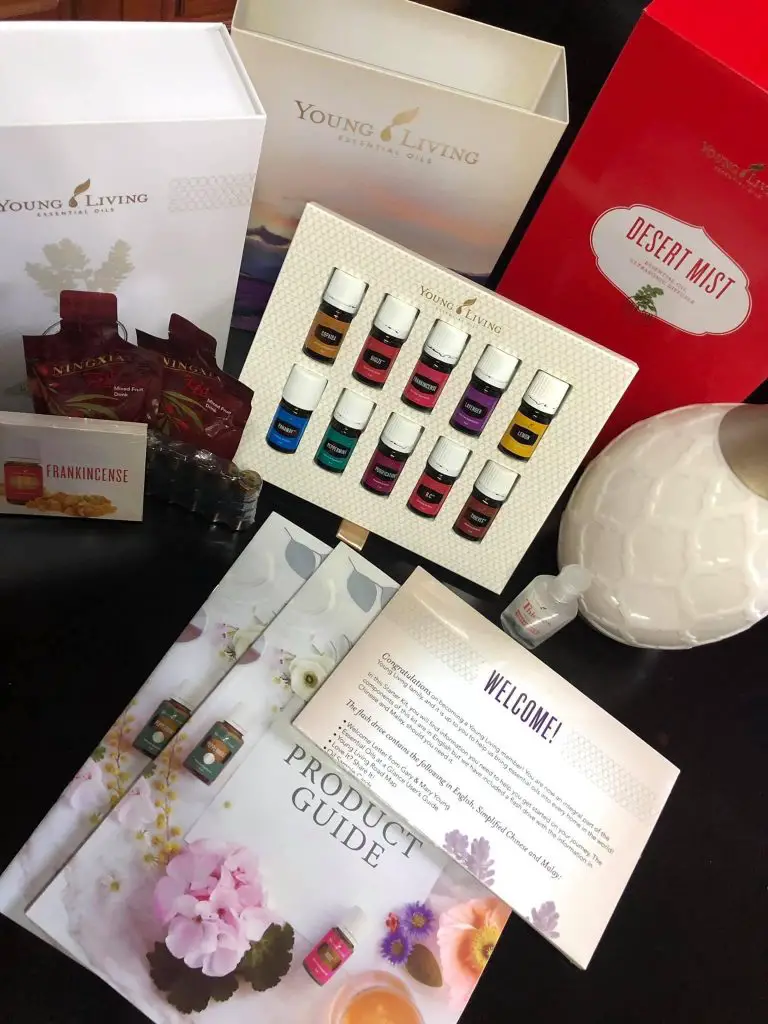
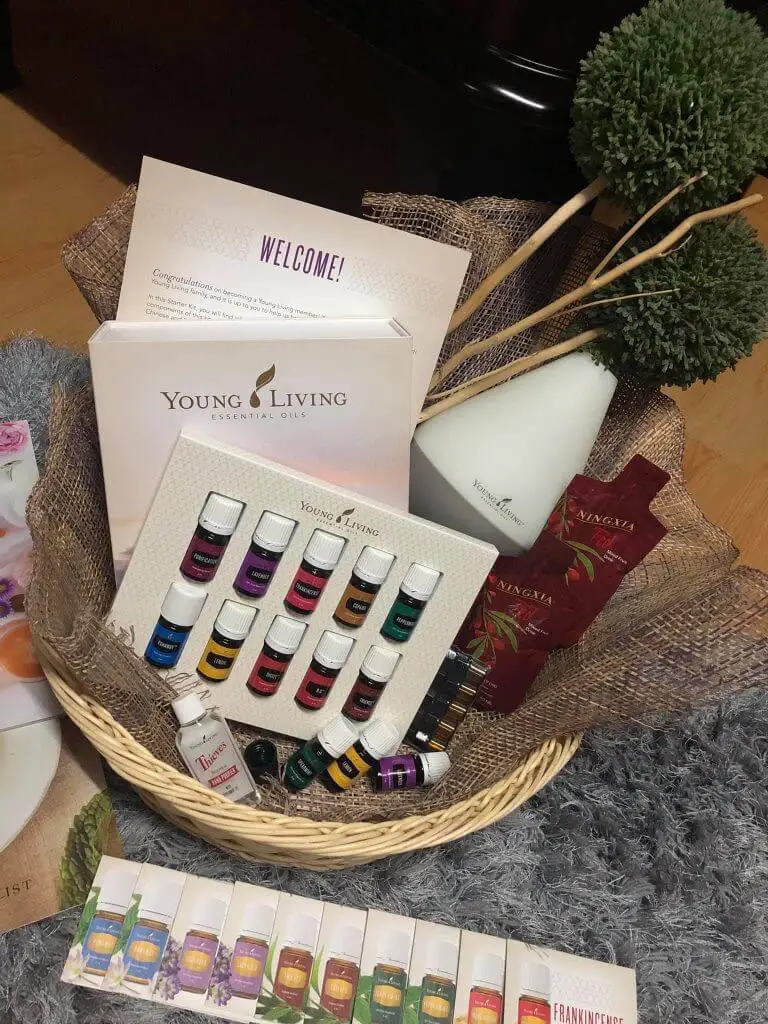
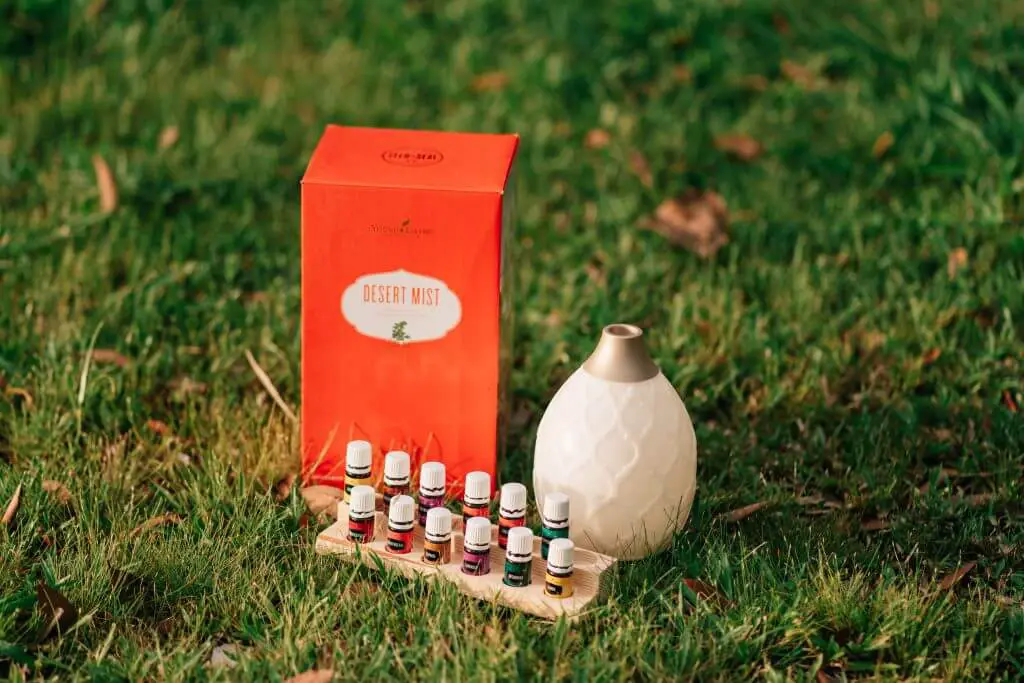
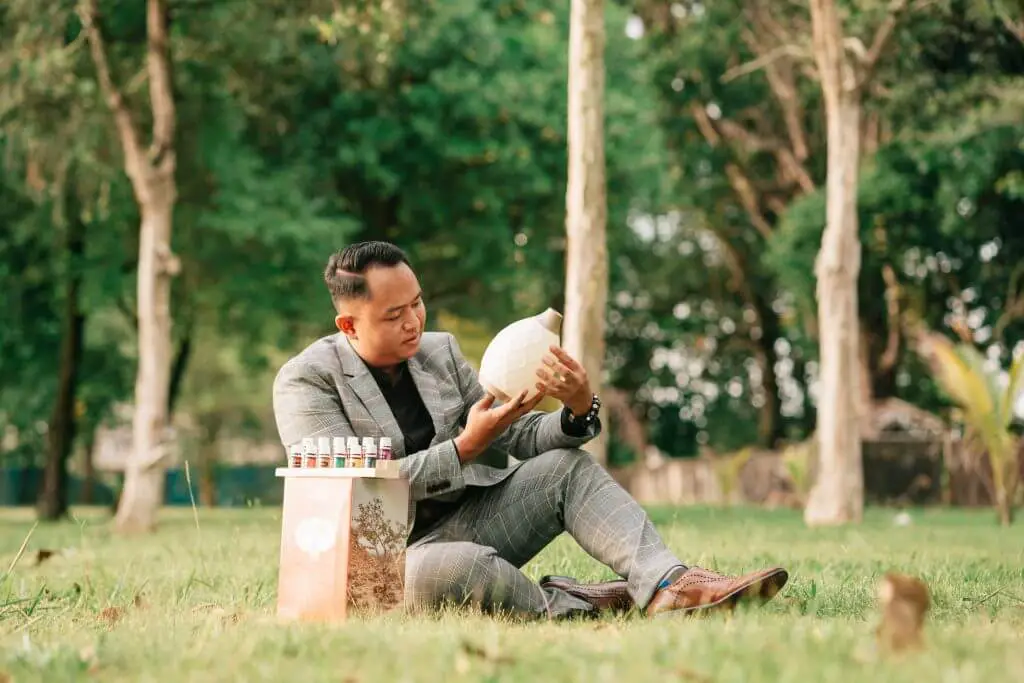
Grab your Young Living Essential Oils at Eky Oils Shop YL

Essential oils have been used in traditional medicine around the world for hundreds of years.

With the popularity of aromatherapy in recent years, essential oils have once again regained in popularity.

Made from parts of certain plants such as leaves, bark and rind, the oils are concentrated hydrophobic liquid containing volatile chemical compounds from plants.

It is called ‘essential’ oil because the compound contains the ‘essence’ of the plant’s fragrance.

The benefits of using essential oils

When it comes to essential oils, it is important not to believe their ‘over-claimed’ benefits. Scientific research indicates that essential oil cannot treat cure chronic disease and illnesses.

However, it has proven that the use of essential oils in aromatherapy does improve mood and offer a calming effect.

According to WebMD, simple smells such as lavender, chamomile and rosewater may help keep you calm.

You can breathe the scent in or rub diluted versions of these oils on your skin.

While these scents won’t take all your stress away, the aroma may help you relax.

Unfortunately, there are many fake or unsafe brands of essential oils out there. Hence, it is best to choose a trusted brand.

If you are looking to enhance your well-being through essential oils, look no further than Young Living Essential Oils.

Young Living Essential Oils

Grab your Young Living Essential Oils at Eky Oils Shop YL

Founded by D. Gary Young and Mary Young in 1993, the brand is focused on selling essential oils and other related products.

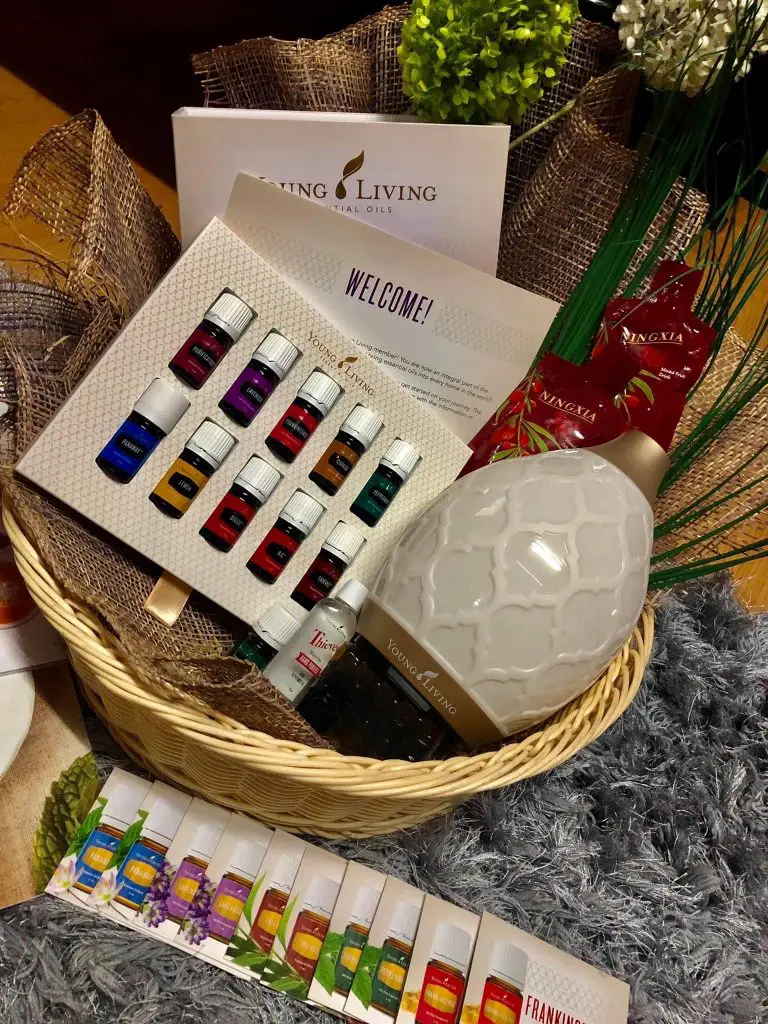
Their essential oil products can be divided into Essential Oils Singles, Essential Oils Blends, Essential Oil Flavouring, Roll-ons and Massage Oils.

Along with these are diffusers and accessories to complement the products.

Young Living offers a long list of essential oils for their customers. The list includes cinnamon bark, cistus, clary sage, eucalyptus, frankincense, hinoki, lemon, oregano, thyme and many more.

If you are looking for a blend of essential oils, this American brand also offers a series of essential oil blends, each comes with a specific need.

‘Peace & Calming’ for instance, is a gentle blend of Ylang Ylang, Orange, Tangerine, Patchouli and Blue Tansy. It is one of Young Living’s most popular essential oil blends. Use it after the chaos at your home has settled down and let the sweet aroma of this blend gives you your much needed calming effect.

Grab your Young Living Essential Oils at Eky Oils Shop YL

Young Living Diffusers

Plus, the best way to harvest the goodness from these essential oils is to use Young Living’s very own diffusers.

Their Feather the Owl Kids Ultrasonic Diffuser for instance, comes with multiple diffusion modes and 10 LED light options to suit any mood.

It also comes with five white-noise variations; rain, birds, ocean waves, fan and lullaby so you can set your home for play or relaxation.

Do you need a diffuser that complemenst your house deco? Use Young Living’s Lantern Diffuser.

Grab your Young Living Essential Oils at Eky Oils Shop YL
Lantern Diffuser

Besides permeating your room with the aroma of your favourite essential oils, it comes with 11 different light features including a candle-flicker mode. Moreover, the Lantern Diffuser functions as a humidifer and atomizer.

What are you waiting for? Grab your first products from Young Living Essential Oils at Eky Oils Shop YL today.

Grab your Young Living Essential Oils at Eky Oils Shop YL

If you need more information on Young Living Essential Oils, do contact Ricky Enchirong at 019-8386032 and his Facebook account.

1 2 3 4 5 16