Terong Dayak

My mother loves to remind me that I used to hate eating vegetables growing up every dinner time. Please follow KajoMag on facebook, Twitter and Instagram.

Datu Patinggi Abdul Gapor: 5 interesting things to know about this historical figure

If you paid attention to your history lessons in school, you might remember who Datu Patinggi Abdul Gapor is… but if you’re like the rest of us, you might only recognise his name on a school in Kuching.

As there is only a bit info on him in our history books, KajoMag decided to dig up more about this historical figure.

1. Who is Datu Patinggi Abdul Gapor?

Before James Brooke came to Sarawak, Datu Patinggi Abdul Gapor was a powerful and influential man.

He was once appointed as the Governor of Sarawak. He was also the first imam of the Masjid Besar (the State Mosque) in Kuching from 1851 to 1854.

Abdul Gapor was married to Dayang Inda. She was the daughter of Datu Patinggi Abang Ali, who fought for the independence of Sarawak from Brunei.

It was said that Abang Ali’s family was responsible for building the state mosque. The construction took place from 1848 to 1852.

2. Datu Patinggi Abdul Gapor had his title stripped by James Brooke

Abdul Gapor was awarded the title ‘Datu Patinggi’  after his father-in-law (Abang Ali) was murdered alongside George Stewart (a European officer) in 1844 when fighting a rebellion in Skrang.

In 1854, however, Abdul Gapor’s title was stripped by James Brooke because it was said that he imposed a very high tax upon the people under him.

Angered by this, he no longer had the privilege he used to before and demanded compensation.

3. He planned a revolt with another Sarawakian historical figure

Datu Patinggi Abdul Gapor: 5 interesting things to know about this historical figure
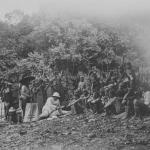
Datu Patinggi Abdul Gapor planned a revolt with Sharif Masahor (picture) against the British (Image source Sejarah Melayu Sarawak)

In 1860, Abdul Gapor planned a revolt with Sharif Masahor, a leader from Sarikei, against James Brooke.

This happened when Brooke took control over the Rajang River in 1857 and stripped Sharif Masahor and several powerful men of their titles.

This resulted in them losing power to collect tax and influence the locals.

The revolt that took place in Kuching, however, failed.

Sharif Masahor managed to escape to Mukah but was handed over to the British by the Sultan of Brunei in 1861. He was later banished to Singapore.

Abdul Gapor escaped to Betawi, Jawa in 1860 but was captured by the Dutch and handed over to James Brooke.

He was later imprisoned in Betawi until he passed away after a few years.

4. Guess who his descendants are

Did you know that Abdul Gapor is Sarawak Premier Datuk Patinggi Abang Johari Tun Openg’s direct ancestor?

Datu Patinggi Abdul Gapor: 5 interesting things to know about this historical figure
Tun Haji Openg bin Abang Sapi’ee (left) and Datuk Amar Abang Abdul Rahman Zohari Abang Openg  (Image source: Wikipedia)

According to a book compiled by Ho Ah Chon on his father Tun Haji Openg bin Abang Sapi’ee,  Abdul Gapor turns out to be his great-great-grandfather.

The brief genealogy reads like a who’s who of Sarawak Malay history, which also outlines how through Abdul Gapor, Abang Johari can also trace his ancestry back to Menteri Hussin, the grandson of Raja Minangkabau, who was also an ancestor of Their  Highnesses the Sultans Mohammad Tajuddin, Hashim, Mohamad Jumalul Alam and Omar Ali Saifuddin III of Brunei.

Interestingly, Openg was also Sarawak’s first governor upon the independence of Sarawak from Great Britain and the formation of Malaysia until his death on March 28, 1969 at the age of 63.

Meanwhile, Abang Johari became Sarawak’s sixth Sarawak premier in 2017 following the death of Pehin Sri Adenan Satem.

5. A school was named after Datu Patinggi Abdul Gapor

Datu Patinggi Abdul Gapor: 5 interesting things to know about this historical figure
SMK Datuk Patinggi Haji Abdul Gapor (DPHAG), Stampin (Image source: Alumni SMK DPHA Gapor Website)

A public secondary school, SMK Datuk Patinggi Haji Abdul Gapor (DPHAG), Stampin in Kuching was named after him.

SMK Datuk DPHAG was established in 1974 by the Sarawak State Education Department.

At that time, there were only 182 students and four teachers teaching in the school.

It was the first school in Sarawak to use Malay as the primary language for communication. These days however, students and teachers use Malay, English and Chinese for communication purposes.

#KajoAsks: UINAH Ginger Beer, the beer that won’t get you drunk

With just 1.1% alcohol content, UINAH Ginger Beer does not qualify as an alcoholic beverage, according to the Non-Alcoholic Beverages regulations 362 to 384, 386 and 386A under the Food Regulations 1985.

So, this beverage is the perfect drink to be enjoyed in copious amounts especially now when the weather’s slightly warmer.

‘Uinah’ is Sabahan slang for ‘wow’. UINAH Ginger Beer was first launched in 2018 at Jesselton Artisan Market in Sabah.

It is made from ginger from Tambunan valley in Sabah and its other key ingredients include filtered water, citrus lemon, sugar, probiotic yeast and carbonation.

This ginger beer does not contain artificial flavouring or chemicals and has probiotic properties – which means it is good for digestive system.

KajoMag got in touch with UINAH Ginger Beer as we are curious about this thirst-quenching product.

KajoMag: When and how did your interest in brewing ginger beer start?

Uinah Ginger Beer
UINAH Roselle Paradise (Picture source: UINAH Ginger Beer)

UINAH: Our founders, James Wong and Matthias Liew, are Sabahan boys with a love for quality craft beverages. A few years ago, they started brewing ginger beer as a hobby and found they had a knack for it; wherever they went, people loved it!

So, in 2018, they started UINAH Premium Craft Beverages, and we offer two products: UINAH Ginger Beer and UINAH Roselle Paradise.

KajoMag: Can you tell us what makes UINAH Ginger Beer different from other ginger beers?

#KajoAsks: UINAH Ginger Beer, the beer that won't get you drunk
The ginger is from Tambunan, Sabah (Picture source: Uinah Ginger Beer)

UINAH: Our flagship beverage, UINAH Ginger Beer, is unique because we use some of the spiciest gingers in the region found in Tambunan, Sabah. This gives our ginger beer a spicy zing with a Bornean twist that sets it apart from other brews.

KajoMag: For those who have never tasted it, how would you describe UINAH Ginger Beer?

Uinah Ginger Beer
Enjoy the beverage on a sunny hot day! (Picture source: Uinah Ginger Beer)

UINAH: Our ginger beer is spicily refreshing! With a crisp and cool finish, it’s not overly sweet and the tartness of lemon balances well with our ginger’s strong kick, making it a great choice for Borneo’s sunny days. What may surprise you, though, is that our ginger beer is also sought after on cold, rainy days because ginger warms the body.

 KajoMag: What was the most memorable comment you received when you first launched?

UINAH: James remembers a time back when we first began. We had run out of stock when he received a phone call from a lady who was in confinement after having delivered her child.

“Where’s my ginger beer? I need my ginger beer,” she was saying, because apparently our ginger beer had been keeping her body warm and she was relying on it. Of course, it is a tasty drink too. That opened our eyes to the fact that there were other markets we could reach out to, like mums in confinement!

KajoMag: What dishes or flavours would you recommend to pair with UINAH Ginger Beer?

#KajoAsks: UINAH Ginger Beer, the beer that won't get you drunk
The ginger beer can be paired with a variety of delicious food (Picture source: Uinah Ginger Beer)

UINAH: UINAH Ginger Beer pairs extremely well with what we call pusas in Sabah: finger foods such as barbecued chicken wings, fried dumplings, satay, roasted wild boar (sinalau bakas) and grilled fish (ikan bakar).

We’d recommend it with some of Sarawak’s favourite dishes such as ayam pansuh or tomato mee. Our Ginger Beer goes well with Asian flavours, so wok-fried noodles with all the finishings or a hearty curry would be yums. For a Western palate, we’d recommend pub grub like burgers and fries, crispy-skin fried chicken and good ol’ fish and chips.

KajoMag: Where can one find Uinah Ginger Beer?

UINAH: You can find UINAH Ginger Beer at most supermarkets as well as at select cafes, restaurants and hotels in Sabah. We’ve also expanded to West Malaysia, so you’ll be able to find us in Kuala Lumpur, Ipoh, Penang or Malacca.

KajoMag: Will we get to see Uinah Ginger Beer in Sarawak?

UINAH: Yes, we’re definitely hoping to bring UINAH to Sarawak. We’ve got our eye on Kuching, Miri, Bintulu and Sibu in 2020, so stay on the lookout for both Ginger Beer and Roselle Paradise.

Fingers crossed, we’ll be hitting your shelves soon. And who knows, maybe one day we’ll even be available at your Rainforest World Music Festival!

#KajoAsks: Ropuhan Di Tanak Wagu, the online cooking class for those who struggle in the kitchen

When it comes to cooking traditional dishes, for most millennials, the struggle is real.

From struggling to identify the right ingredients and cooking traditional dishes a certain way, when cooking in the kitchen, there seems to be a lot going on when preparing food.

But for Sabahan Pison Jaujip, it is his love for his homeland and traditional food that first got him started on his own online cooking channel, “Ropuhan Di Tanak Wagu” on YouTube.

Ropuhan Di Tanah Wagu
(Image source: Ropuhan Di Tanak Wagu)

Pison started posting traditional and exotic local dishes on his channel, “Ropuhan Di Tanak Wagu” in 2016 as an homage to his homeland and traditional Sabahan food.

Ropuhan Di Tanah Wagu
(Image source: Ropuhan Di Tanak Wagu)

“Ropuhan Di Tanak Wagu” means “kitchen for young men” in the Kadazandusun language.

Among his recipes are ‘ikan liking lada putih’, ‘ayam goreng tuhau’ and durian petal with losun (local spring onion).

At times, some of his recipes incorporate traditional ingredients with well-known – if not western recipes – thus creating fusion recipes which perfectly blend unique elements of both Asian and Western ingredients.

Examples include Sabahan Sago Crepe with pisang Sabah and melted Chocolate and omelette.

https://www.youtube.com/watch?v=_CK36rIczTk

Apart from traditional Sabahan cuisine, Pison also his own delicious line of premium traditional jams (buga kantan jam, bambangan jam and tuhau jam) as well as non-alcoholic drinks (sparkling tarap, sparkling bunga kantan, sparkling tuhau and sparkling bambangan).

And since we at KajoMag love food, we managed to get in touch with Pison of “Ropuhan Di Tanak Wagu” and ask him what happens behind the scenes.

Q: What inspired you to start Ropuhan Di Tanak Wagu?

Pison: I wanted to reintroduce the food our ancestors used to eat to the modern Sabahan. It bothers me that there are so many youngsters that have no clue about our local traditional cuisine and how to prepare it. It also bothers me that our food scene in Sabah is pretty much influenced by other prominent community style of cooking.

I also wanted to share new and improved local tradition recipes with my fellow Sabahan and to convince them that our produce are on par with imported goods.  It is to let people see that Malaysian food is not just about the Malays, Chinese and Indians.

Our local food deserves equal attention and exposure too.

Q: Where do you learn all the recipes from?

Pison: Most of the traditional recipes I learnt from my late grandma, while the fusion recipes are from me.

Q: What was the first recipe that you made for your video channel?

Pison: Kinahut Sangop / Cucumber salad

Q: When filming your videos, did you first practise the steps in preparing your dishes or were they all done spontaneously?

A: They were done spontaneously because I’m very familiar with these dishes.

https://www.youtube.com/watch?v=GiqbDhs5HTY

Q: To date, how many recipes have you posted online and do you have any personal favourite recipe or videos? If yes, why?

Pison: I think I’ve made more than 30 videos so far and my personal favourite is Pinarasakan Koruk because I grew up eating this dish. I remembered catching this koruk fish in the paddy field with my late grandma when I was a little boy. It was fun catching the fish in the mud. 

Q: What was the most difficult recipe to prepare and film?

Pison: The most difficult recipe is Butterfly pea chicken ceviche; I had to find the freshest of chicken in the market. I also shot this video handheld while my other hand was preparing the ceviche.

Q: I am curious about you ‘mayonnaise tuhau’. To those who only watch your videos (but haven’t tried cooking your dishes), how would you describe the taste and what were people’s reaction when you first posted about it?

Pison: It actually tasted like normal mayonnaise, sweet, creamy and sour but a little bit spicy with tuhau flavour. Many people were shocked at first with the tuhau mayonnaise video. Most of them were curious with the taste.

Q: Are there any traditional recipes that you want to try but yet to post online?

Pison: I wanted to try making smoked meat using traditional methods.

Q: If you have the opportunity, is there any local Sarawakian dishes that you would like to learn how to cook one day?

Pison: I would like to try cooking Kelabit nuba’ Sepi-ung (rice cooked inside pitcher plants) and Kiran Pinidang or Narar (sundried Bua’ Kiran)

If you want to learn more about traditional Sabahan dishes, check out his Facebook, Instagram or Youtube channel.

KajoAsks: Pops and Pints, your not-so-typical everyday ice-cream

Instead of vanilla or strawberry, would you try Terung Dayak flavoured ice-cream or even a sago smoothie if you had the choice?

While this may sound a bit far-fetched for you, for Sabah-based ice-cream creator, Pops and Pints, they thrive on creating a list of intriguing and bizarre flavours.

KajoAsks: Pops and Pints, your not-so-typical everyday ice-cream
Image source: Pops and Pints

For Pops and Pints, conventional flavoured ice-cream like vanilla and chocolate weren’t interesting enough, they chose to infuse their ice creams with local flavours instead.

KajoAsks: Pops and Pints, your not-so-typical everyday ice-cream
Image source: Pops and Pints

And that is why dessert enthusiasts will enjoy their exciting new flavours.

Based in Kota Kinabalu, Pops and Pints was co-founded by siblings Yapp Khin Enn and Yapp Shin Enn and their friend Jude Limus in 2017.

KajoAsks: Pops and Pints, your not-so-typical everyday ice-cream
Image source: Pops and Pints

The idea of Pops and Pints first started when Kihn Enn was previously studying in Australia when she began experimenting with cooking different food.

For Khin Enn there were so many things that she wanted to eat, but it was too expensive to eat out and so she started experimenting and making her own food.

And when she got back home, the weather was so hot that she tried turning all those ideas into cold food.

As of now, Pops and Pints specialiseS in providing delivery of their products to events and local shops.

For the love of quirky food, KajoMag managed to get in touch with Pops and Pints to ask about their creative confections.

Q: How many flavours has Pops and Pints created and could you give us some examples?

KajoAsks: Pops and Pints, your not-so-typical everyday ice-cream
The Asian Flush – strawberry and bunga kantan with ginger biscuit crumbles

We have about 40-50 flavours to date. Some of the famous ones are Asian Flush (strawberries with bunga kantan), Asam Laksa (this needs no explanation and is very familiar to Malaysians), Culture Shock (yoghurt with granola), just to name a few.

Q: What was the initial reaction when you first came up with the idea of launching Pops and Pints? Were people sceptical or open to the idea of unconventional ice-cream flavours?

KajoAsks: Pops and Pints, your not-so-typical everyday ice-cream
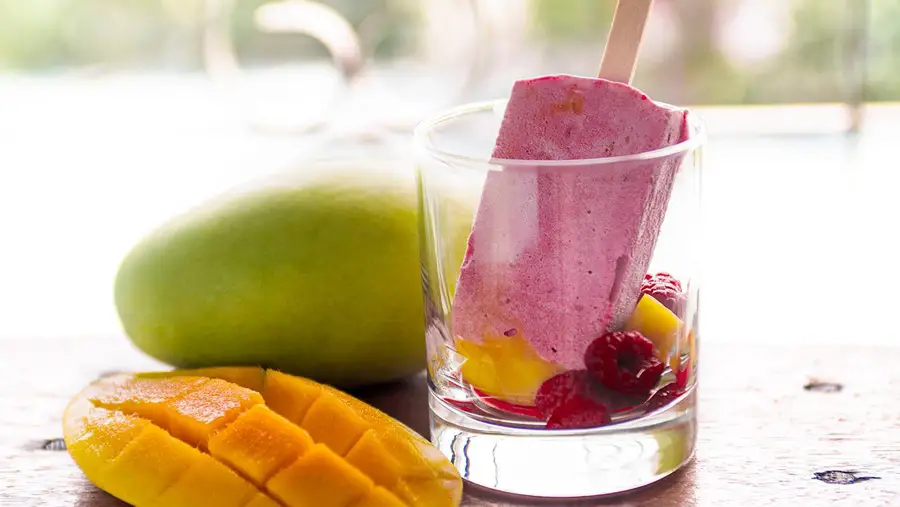
The M.O.B. – Mango on Berries

There was a mix of reactions. Generally, people know ice cream as something sweet, so when we introduced flavours less known to the public, some were sceptical but some were adventurous. Some enjoyed, some gave it a try, some did not like it. It’s fine because everyone has their own preference.

Q: What is the most peculiar ice-cream flavour that you has come up with and how would you describe the taste?

KajoAsks: Pops and Pints, your not-so-typical everyday ice-cream
Asam laksa flavour ice-cream

Asam Laksa is definitely one of them. It’s an eye catcher. Sweet, savoury and a little spicy.

Q: What is the most memorable comment that anybody has made about your ice-cream flavours?

KajoAsks: Pops and Pints, your not-so-typical everyday ice-cream
The Smokehouse, topped with beef brisket, infused with French ice cream

The genuine reaction of people who tried some of our more interesting flavours and really liking them. Especially the flavours that they never thought they’d see in the form of ice cream.

Q: Will we ever get to see Pops and Pints in Sarawak?

KajoAsks: Pops and Pints, your not-so-typical everyday ice-cream
Surprise Paradise – pineapple with Sichuan pepper and Uinah Ginger Beer

Hopefully.

Q: If you have the chance to open a Pops and Pints in Sarawak, what flavours would you consider creating for local customers?

KajoAsks: Pops and Pints, your not-so-typical everyday ice-cream
Bambangan coconut ice cream with tuhau serunding sprinkled over

We would definitely love to work with local ingredients that are familiar to the locals. For instance, we made a Bambangan flavoured ice cream, which we believe is called asam embang/ buah mawang in Sarawak, and that drew some attention with the locals here.

To know more, check out their Facebook and Instagram page.

Local Vegetables in Sarawak You Should Know

Because kolo mee and laksa are not the only things that taste good in Sarawak…..

terung pipit ikan pusu anchovies

Often times, when we talk about Sarawak cuisine we do not give enough credit to the local vegetables in Sarawak.

While some (most?) might consider vegetables their kryptonite, Sarawak vegetables are far more interesting than the supermarket variety of carrots and cabbages.

In Sarawak, we have a variety of local vegetables that not only taste delicious, but they have different texture, taste and even colour.

Here are some of local vegetables in Sarawak that you might have seen in the local markets.  

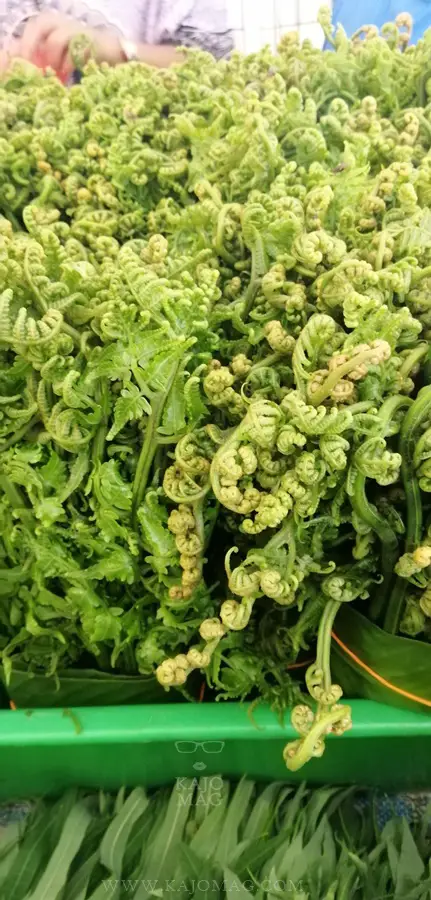
Midin

fresh green jungle produce midin bracken fern

Midin or bracken fern (Stenochlaena palustris) is basically the ‘Beyonce’ of local vegetables in Sarawak. Even though it’s supposedly only found here, everybody across Malaysia (and those who have eaten here) knows about it.

It has a beautiful spiral shaped tip that is softer than its crunchy bottom half.

It is a wild vegetable that typically grows in open spaces, usually in peat soil.

As a wild vegetable, it is said that midin is resistant towards pesticides.  

When visiting here, it is typically recommended to try midin cooked with belacan (shrimp paste). However, some people might opt to have it cooked with just garlic. These days however, you can see some local restaurants serving it as a cold salad with shrimp, slices of shallots, vinegar and chillies.

Paku-pakis

fresh green jungle produce wild fern paku pakis

This wild fern is similar to midin as you can normally find it growing in the wild.

However, unlike midin, it has a different appearance. The fronds of the wild fern is a bit looser and more elongated.

And much similar to midin, this vegetable is normally stir-fried with belacan. It has a crunchy texture.

Paku kubuk 

fresh green jungle produce paku kubuk wild fern

Paku kubuk might look almost similar to midin and paku pakis. However, unlike the other two, its distinguished feature is its hairy white stem.

Like the other two ferns, paku kubuk is a wild vegetable that grows alongside paku pakis. It can be easily be found on the roadside.

To prepare this dish, most would cook as a soup with garlic clove and ginger. Some even prefer to blanch it and eat it with sambal.

However, unlike the other two, paku kubuk has a slightly bitter taste and a softer, spongier texture.

Daun timun (cucumber leaves)

Next on our list of local vegetables in Sarawak is daun timun. It is pretty easy to distinguish due to the triangular shape of its leaf and squishy velvety texture.

Typically, this vegetable is best prepared as a soup. Generally, some would prefer adding other vegetables such as baby corn or cucumber.

Daun ensabi (mustard greens)

mustard greens sarawak

For those who might not enjoy bitter flavours, then daun ensabi or Sarawak mustard green might not be the one for you.

Typically, this local vegetable is cooked with belacan and garlic or simply made into soup.

In Sarawak, sometimes kasam ensabi or pickled mustard green is also another way to enjoy this vegetable.

To prepare kasam ensabi, the leaves are rubbed together with coarse salt until they are completely wilted.

Once wilted, the vegetable is squeezed until all the moisture is pressed out and later kept in a container.

Borneo sour brinjal or Terong Dayak

  • Local Vegetables in Sarawak You Should Know
  • Local Vegetables in Sarawak You Should Know

Terong Dayak or terong assam (Solanum ferox) is another popular choice of local vegetables in Sarawak.

One surprising fact about this round orange vegetable is that it is part of the Protected Geographic Indication in Sarawak even though it can be found all over Borneo.

Typically, Terong Dayak is prepared in various ways. However, most would probably agree that the best way it prepared is as a soup since it has a natural tangy taste.

Daun ubi (cassava leaves)

Local Vegetables in Sarawak You Should Know
A local favourite, the cassava leaf or ‘daun ubi’.

Daun ubi or cassava leaves is a common vegetable dish in Sarawak. Typically, you can find them already finely grounded and packed in local markets.

While some may prefer the simple method of stir frying daun ubi tumbuk, it is a versatile vegetable that can prepared in various ways.

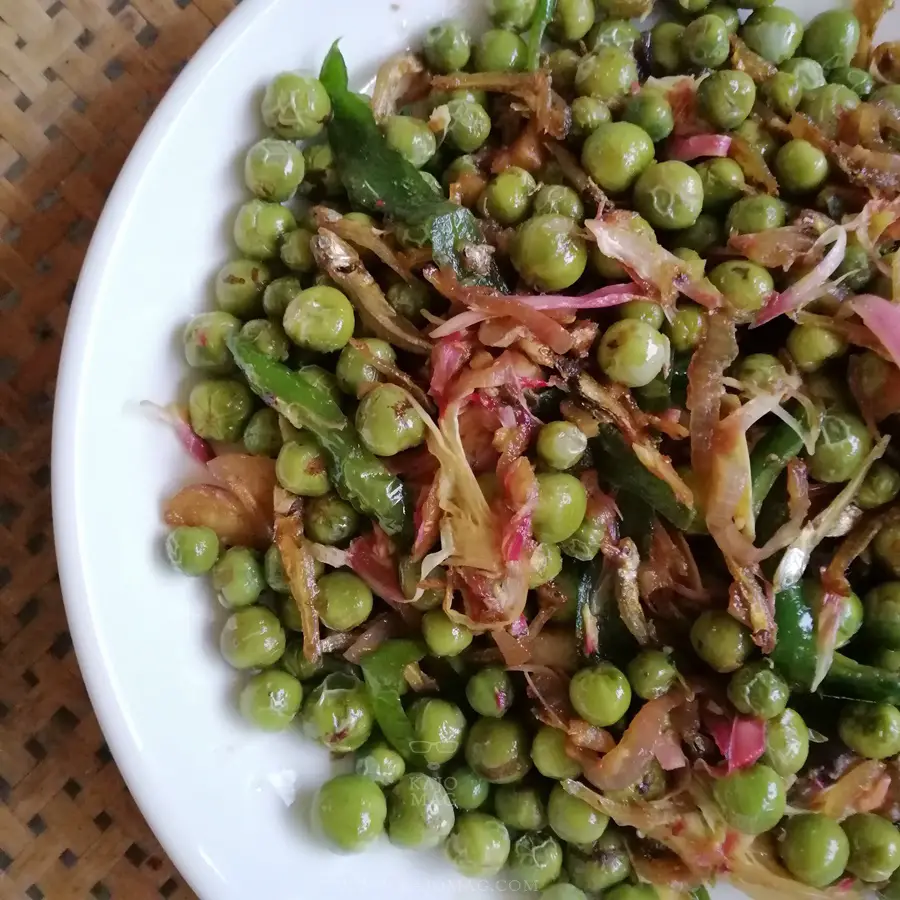
Terung pipit

Local Vegetables in Sarawak You Should Know

Terung pipit or Solanum torvum is another local vegetable in Sarawak that you should know.

As the name might have suggested it, it is a cousin of the Terong Dayak.

Also known as turkey berry, terung pipit looks almost similar to green peas. It has a bitter taste and a slighty squishy texture when cooked.

Typically, terung pipit is an added ingredient to various dishes. For instance, in Sarawak, terung pipit is goes well with daun ubi tumbuk.

Other than that, it can also be added to fish curry dishes or even beef stew.

KajoPick: Top 5 K-dramas about time travel to watch

Too many dramas, too little time….

KajoPick: Top 5 K-dramas about time travel to watch
(Picture source: Pixabay)

The concept of time has always been an interesting theme to watch.

And the good thing about time-travel stories is that, Korean series seems to never be short of them.

Here are some of KajoPicks top five time-travel K-dramas to binge-watch over the weekend.

Signal

This time-travel K-drama does not actually involve people travelling between time.

It does however, reconnect two strangers from two different periods of time through a walkie-talkie. (This might sound familiar to those who’ve watched Jim Caviezel and Dennis Quaid in Frequency).

Signal focuses on a young detective, Park Hae-young from the year 2015 who discovers an old walkie talkie.

He later finds out that he can communicate with another detective from the other end, Lee Jae-han from the year 2000.

While at first neither could believe that they each come from a different time period, they work together to investigate unsolved cases in the present while also solving cases from the past.

One of those cases also involves the disappearance of Lee Jae-han 15 years prior.

Working together with Park Hae-young in solving the case of the missing detective is Cha Soo-hyun who once had a crush on Lee Jae-han.

Total episodes: 16

Tomorrow With You

Yo So-joo is a CEO of a real estate company who has the ability to time travel through the subway.

During one of his trips to the future, he foresees that his future self will die.

So, to prevent it from happening, he marries Song Ma-rin, a photographer to help him evade his death.

This time-travel K-drama sort of reminds me of The Time Traveler’s Wife.

However, unlike the movie, (spoiler alert) you can expect a happy ending from this one.

Total episodes: 16

Tunnel

In 1986, a detective named Park Kwang Ho, finds himself transported 30 years into the future when he chases a criminal through a tunnel.

Confused, he tries to get back to the past to his wife and daughter. Helping him is a detective with the same name as him.

Meanwhile in the future, Park Kwang Ho helps solve a cold case that he was working on in the past.

Total episode: 16

Moon Lovers: Scarlet Heart Ryo

I am not going to lie. I’m going to spoil this drama for everyone.

If you are the type who does not like sad endings, then don’t bother watching this drama.

This time-travel K-drama revolves around a young woman from the 21st century being transported back to the Goryeo period.

She wakes up in the body of Hae-soo and encounters 14 princes of the royal family.

She falls in love with the brooding fourth prince, but it does not end happily for the tragic couple.

What I thought initially would be a comedic time-travel K-drama series, Moon Lovers quickly turns darker in the second half.

When the series ended, some fans felt that the ending of the series was left hanging and demanded a second season.

I thought the ending was fine the way it is. Not to spoil the romance for everyone, but she deserved better.

Total episodes: 20

Go back Couple

This time-travel K-drama asks the question, what would you change if you could go back in time?

Go Back Couple focuses on married couple Choi Ban-do and Ma Jin-joo would were once head over heels with each other.

But after a decade of marriage and a baby, now they just cannot stand each other.

Their relationship reaches a boiling point after a quarrel one night when Jin-joo accuses her husband of cheating on her.

But the truth is, Ban-do who was a medical sales representative was working late every night trying to provide for his family.

After quarrelling one night, they both find themselves waking up in their past as 20-year-old university students.

Neither were able to figure out how it happened or when they would get back to the future again.

But as they were both given the chance to go back to the past again, they were conflicted on whether they would change the past for a better future.  

Total episodes: 12

KajoPicks: Five K-Dramas about journalism

Compared to medical or law dramas, journalism might is a fairly under-represented career field to feature in TV.

A brief google search will show a lot of English-language TV shows about journalism that just couldn’t last or make it on the international market (except Murphy Brown).

Often, in movies or drama, journalists are sometimes depicted as desperate fact twisters lurking in the sidelines.

Apart from that, the lifestyle as a journalist is usually portrayed in a negative light.

From low payment, to being overworked and underappreciated, it is still considered a noble profession if you are keen in revealing the truth.

There are a lot of great K-drama about journalism. But here are our top five picks for Kajo readers.

Argon

The reason why I got hooked on Argon is because of the realistic way the K-drama depicts the life of a journalist.

Talented but underappreciated, underpaid, overworked and always on the verge of tears as the deadline approaches.

In the world of twisted facts and information overload, Argon highlights the importance of being ethical as a journalist and the dedication put in delivering the truth.

Watch the trailer here.

Pinocchio

The media is a powerful force and this K-drama about journalism highlights it.

The conflict in the drama started due to a simple fact twisted by a famous reporter, thus changing the life of a person dramatically.

And due to the choice of words used to report the news, the drama shows that the influence of the media is powerful in changing people’s lives, which is why it is held in awe and revulsion.

In Pinocchio, it highlights the profession of a reporter and the importance of integrity in journalism.

When faced with the choice of sensationalizing a story or telling the truth, Pinocchio highlights how important it is to stay truthful while on the job.

Watch the trailer here.

Healer

Healer is a spy thriller that involving a mysterious spy, a reckless reporter and a famous veteran journalist.

Due to an event that happened years ago, the trio collaborate to unveil the truth while dealing with the conflicts happening around them.

While the plot of the drama might be a bit too predictable, the action scenes in this drama are satisfying to watch.

Misty

KajoPicks: Five K-Dramas about journalism

The lead character Go Hye-ran is the type of woman that everyone will openly hate but secretly admire.

As a famous news anchor, she seems to have it all. Fame, career, a loving husband and a stable home. But underneath all that glam, she is hiding a dark secret about her past.

Misty is a crime thriller K-drama about journalism as the main character struggles to unveil the truth when she is accused of her lover’s death.

The drama follows Go Hye-ran in how she still manages to stay professional as a news anchor while uncovering the truth about her deceased lover.

Watch the trailer here.

All About Eve

If you are into plot twist and drama, then All About Eve is for you.

It revolves around the lives of two TV news reporters competing for top position at the network that they work for.

Aired in 2000, this K-drama about journalism might be almost 20 years old, but it is still a good drama for you to binge-watch.

Watch the trailer here.

BIBCo 2019: Bead-azzling Night of Fashion and Glamour

BIBCo 2019: Bead-azzling Night of Fashion and Glamour

Every fashion lover would know that accessories such as a statement necklace or earrings would elevate their overall look.

In Sarawak, we have an affinity for our Borneo beads as the choice of fashion accessories.

The Borneo International Beads Conference 2019 (BIBCo 2019) promised everything any bead and fashion lovers would adore; fashion, glamour, opulent looks and of course, extravagant beads.

Held for the sixth time, BIBCo 2019 took place from 4th to 6th October in Kuching.

It featured Kuala Lumpur designer Bill Keith and Sarawak contemporary bead designers Lucille Awen Jon and Juliana Ambrose.

Also making an appearance on the runway was Livan Gallery.

The 6th edition of BIBCO also featured international bead and costumes designers; Chris Lim Zamora (Philippines), Floor Kaspers (Netherlands), Elaine Robnett Moore (USA) and Florence Wee (Australia).

The Gala Nite also showcased traditional Laos weaving in Luang Prabang by The Weaving Sisters from Laos.

BIBCo 2019 Gala Nite was officiated by Minister of Tourism, Arts and Culture Sarawak, YB Datuk Abdul Karim Rahman Hamzah.

Here are some of the memorable looks showcased during BIBCo 2019:

BIBCo 2019: Bead-azzling Night of Fashion and Glamour
A model wearing ‘marik empang’, a traditional Iban outer garment worn around the shoulder made out of beads and cotton strings
  • BIBCo 2019: Bead-azzling Night of Fashion and Glamour
  • BIBCo 2019: Bead-azzling Night of Fashion and Glamour
BIBCo 2019: Bead-azzling Night of Fashion and Glamour
A cardigan with beautiful patterns by the Weaving Sisters from Laos
  • BIBCo 2019: Bead-azzling Night of Fashion and Glamour
  • BIBCo 2019: Bead-azzling Night of Fashion and Glamour
BIBCo 2019: Bead-azzling Night of Fashion and Glamour
Fabulous multi strand opera beaded necklace paired with an extravagant black dress and magnificent headpiece
BIBCo 2019: Bead-azzling Night of Fashion and Glamour
A statement beaded matinee necklace to elevate your look
BIBCo 2019: Bead-azzling Night of Fashion and Glamour
An interesting golden beaded multi strand opera necklace/earrings served with an equally elaborate headpiece to complete the look
BIBCo 2019: Bead-azzling Night of Fashion and Glamour
A beaded choker necklace for a classic-modern look
BIBCo 2019: Bead-azzling Night of Fashion and Glamour
A whimsical yet elegant choker necklace for a more boho chic look
BIBCo 2019: Bead-azzling Night of Fashion and Glamour
For those who are feeling adventurous and over the top, they might appreciate this one-of-a-kind multi strand elongate opera necklace
BIBCo 2019: Bead-azzling Night of Fashion and Glamour
A bold sunshine yellow beaded choker that is sure to demand attention
BIBCo 2019: Bead-azzling Night of Fashion and Glamour
A elongated chunky beaded choker l nicely paired with a halter dress to emphasize its intricate details
BIBCo 2019: Bead-azzling Night of Fashion and Glamour
A carefully tangled multi strand black and white necklace to elevate any look

Enjoying the Traditional Food Festival in Lanjak, West Kalimantan

/

Food has always been the best way to become familiar with a place, culture and its people, so I tried to sample every dish during the Traditional Food Festival held in Lanjak, West Kalimantan.

Enjoying the Traditional Food Festival in Lanjak, West Kalimantan

From 14 to 15 September, an Indonesian community-based natural resource management (CBNRM) NGO, Riak Bumi organised a traditional food festival in Lanjak.

Enjoying the Traditional Food Festival in Lanjak, West Kalimantan

This year marked the sixth year the food festival had been organised for the community of Lanjak by Riak Bumi.  

The two-day festival saw 23 groups participating in the cooking competition as they competed to prepare the best traditional dishes on the first day.

Enjoying the Traditional Food Festival in Lanjak, West Kalimantan

During the cooking competition, the participants were required to cook traditional food without using artificial flavouring. This included commercial sugar and even regular cooking oil.

Instead, they used natural flavouring and ingredients such as palm sugar and tengkawang oil for their cooking.

As Lanjak is located about 40 minutes drive from the Lubok Antu border, some of the dishes in our neighboring country bore some similarities to Sarawakian cuisine as well.

With a smorgasbord of food laid out, here are some of the dishes that I managed to sample that everyone should try when visiting Lanjak.

Wajit
Enjoying the Traditional Food Festival in Lanjak, West Kalimantan
This sweet sticky rice snack seems too pretty to be eaten.

Wajit is a popular traditional Indonesian sticky sweet rice snack. It is made of glutinous rice, regular rice, palm sugar, coconut milk and pandan leaves. Typically, after wajit is cooked, it will be spread onto a baking tray and cut into diamond shapes. However, wajit can be molded into any shape that you fancy!

Grilled venison
Enjoying the Traditional Food Festival in Lanjak, West Kalimantan
Grilled venison

In Lanjak, the local communities still hunt for food. This includes fish, toads and even deer. During the traditional food festival, I had the opportunity to try venison straight off the grill. Yum!

Ants
Enjoying the Traditional Food Festival in Lanjak, West Kalimantan
‘Kesa’ is the local name for these ants.

In Southeast Asian countries, eating insects is a norm and Borneo is no exception. At the traditional food festival in Lanjak, one of the most fascinating dishes to be served were fried fire ants (kesa). For those who have never had them before, fried ants have a sour and tangy taste and not surprisingly, a crunchy texture.

Lakum
  • Enjoying the Traditional Food Festival in Lanjak, West Kalimantan
  • Enjoying the Traditional Food Festival in Lanjak, West Kalimantan

This sweet purple beverage is made up of lakum fruit mixed with honey. Lakum fruits looks like exactly like a blueberry.

Rice cooked in pitcher plant
  • Enjoying the Traditional Food Festival in Lanjak, West Kalimantan
  • Enjoying the Traditional Food Festival in Lanjak, West Kalimantan

Nasi pok yok is rice cooked in pitcher plants. When steaming the rice, no artificial flavouring is added as natural flavour from the pitcher plant will seep to the rice. This dish is prepared by stuffing rice and some water into the pitcher plant and steaming it until the rice is fluffy.

Kolak
Enjoying the Traditional Food Festival in Lanjak, West Kalimantan
Sweet and milky tapioca pearls kolak dessert

Tapioca kolak (kolak ubi) is a type of Indonesian dessert made with coconut milk, palm sugar and pandan leaf. Generally, kolak comes in different variations such as banana, pumpkin, sweet potatoes and jackfruits. It is said that kolak is a popular sweet during Ramadan.

Lulun Kucai
Enjoying the Traditional Food Festival in Lanjak, West Kalimantan
Chives cooked in bamboo

In Sarawak, kucai (or chives) is usually cooked with egg or chopped garlic. However, during the traditional food festival in Lanjak, I discovered an interesting way of cooking them – inside a bamboo.

Dishes cooked in bamboo
  • Enjoying the Traditional Food Festival in Lanjak, West Kalimantan
  • Enjoying the Traditional Food Festival in Lanjak, West Kalimantan
  • Enjoying the Traditional Food Festival in Lanjak, West Kalimantan

Speaking of bamboo, the traditional food festival in Lanjak would not be complete without “pansuh”. “Pansuh” means cooked in bamboo. From chicken to fish and even deer, any type of meat will taste great cooked in bamboo.

Fish umai
  • Enjoying the Traditional Food Festival in Lanjak, West Kalimantan
  • Enjoying the Traditional Food Festival in Lanjak, West Kalimantan

The fish umai in West Kalimantan is also similar to those enjoyed in Sarawak. Generally, the ingredients used for this dish are mostly similar, only instead of lime, they substitute it witha a citrus fruit called ‘buah kandi’ for its acidic and sour taste.

Jarete
  • Enjoying the Traditional Food Festival in Lanjak, West Kalimantan
  • Enjoying the Traditional Food Festival in Lanjak, West Kalimantan

This rice dish is a mixture of glutinous rice with regular rice. To prepare this dish, the rice is mixed and soaked in water. They are then ground with palm sugar and fry in a pan until they turn reddish brown. After that, the rice can easily be shaped into a cylindrical form using hand. It has a mild roasted rice scent to it and a hard, brittle texture.

Labu srikaya  
Enjoying the Traditional Food Festival in Lanjak, West Kalimantan
Labu srikaya is a sweet and savoury dish

This Instagram-worthy dish has a savoury, sweet and milky taste. This dish is prepared by cutting a hole on top of a whole pumpkin and scoop out the flesh. To prepare this dish, a mixture of coconut milk, pandan leaves, palm sugar and eggs are poured into the pumpkin mould and steamed.

Selukung
Enjoying the Traditional Food Festival in Lanjak, West Kalimantan
Selukung is prepared by inserting rice into palm leaves shaped into triangle

This dish is a traditional Kenyah dish. It is basically glutinous rice cooked in wild palm leaves and folded into triangles.

Tengkawang Oil, the Butter from Nature

During a traditional food festival in Lanjak in West Kalimantan, Indonesia, no preservative or artificial flavouring such as MSG was used in any of the dishes. This also includes the oil they used for cooking which was substituted with tengkawang oil.

  • The traditional food festival was held at Lanjak, West Kalimantan from September 14-15 and was organised by Indonesian community-based natural resource management (CBNRM) NGO, Riak Bumi
  • The traditional food festival was held at Lanjak, West Kalimantan from September 14-15 and was organised by Indonesian Indonesian community-based natural resource management (CBNRM) NGO, Riak Bumi
  • The traditional food festival was held at Lanjak, West Kalimantan from September 14-15 and was organised by Indonesian community-based natural resource management (CBNRM) NGO, Riak Bumi
  • The traditional food festival was held at Lanjak, West Kalimantan from September 14-15 and was organised by Indonesian Indonesian community-based natural resource management (CBNRM) NGO, Riak Bumi

Known to many as the butter from nature or green butter, tengkawang oil is extracted from the fruit of tengkawang trees.

Tengkawang fruit or the Borneo shallow nut is a native fruit species that can be found in the jungles of Borneo.

However, West Kalimantan, Indonesia is particularly known for its tengkawang oil as it is still widely used by the locals.

Tengkawang Oil, the Butter from Nature
Tengkawang oil, also known as green butter, is made from the fruit of the tengkawang tree which can be commonly found in the tropical jungles of Borneo.

In both Sarawak and Kalimantan, tengkawang fruits are collected by the locals where it will then be processed into oil.

While tengkawang can be found in the jungle, there are some people who actually grow the trees at their farm.

Tengkawang is known as “engkabang” among the Iban people, and “kakawang” among the Embaloh people.

The tree will usually bear fruit once every five years, although there are places in Kalimantan that bear fruits once a year.

In Lanjak, the locals will usually collect tengkawang fruit sometime around February.

According to the locals, the trees will usually bear fruits at the beginning of the year during the rainy season. The trees are typically found near water sources such as the river.  

Usually locals will collect and process it for their own household consumption, although now most have began to commercialize the oil.

However, when picking these fruits, those that have fallen off the tree and started sprouting should not be used.

This is because when processed, they will taste differently. Apart from that, the oil will also be green instead of the usual bright yellow hue.

To process the fruits into oil, the fruits are first separated from the shell and dried under the sun.

Tengkawang Oil, the Butter from Nature
The dried tengkawang fruits before being ground into powder

This process might take up to a few days to a week before they are ground into powder.

  • Dried tengkawang fruit being ground into powder.
  • The ground tengkawang fruit.

After that, the powder is then placed in a steamer filled with water for about an hour.

However, the time may vary, depending on the amount of tengkawang powder being steamed at a time.

The lesser the amount of tengkawang powder being steamed at a time, the less time is spent steaming it.

Tengkawang Oil, the Butter from Nature
The tengkawang powder is placed in a steamer for about an hour

Then, after some time, the steamed powder is taken out to be pressed by a manual oil press machine expeller to produce a glossy, pale yellow liquid.

  • The oil is extracted from the powder by hand through an oil press machine expeller.
  • What comes out from the extractor is a glossy, pale yellow fluid.

Before the machine, the locals would extract the oil using a wooden device called an “apit”.

The dregs or the remains of the tengkawang powder is not discarded but used as fodder and fertilizer.

Tengkawang Oil, the Butter from Nature
The remains can be used as fodder or fertilizer

At room temperature, it will take about three days for the tengkawang oil to solidify, although it will be much quicker using a refrigerator.

Once solidified, tengkawang oil can be stored in containers and be kept for up to more than a year.

However, according to locals, the oil can also be stored in bamboo to ensure a longer storage period.

Tengkawang Oil, the Butter from Nature
Tengkawang oil is usually stored in bamboo to ensure longer storage period

Local people will usually use tengkawang oil for cooking and baking.  

So instead of the usual cooking vegetable or palm oil that we use for cooking, you might consider substituting it with tengkawang oil. You can even substitute butter with tengkawang oil when baking.

Tengkawang Oil, the Butter from Nature
Tengkawang oil used for cooking

On warm rice, the locals will usually press tengkawang to give the rice an aromatic nutty flavour and scent.

It is said that tengkawang oil is preferred over liquid oil when cooking in the jungle as it is more convenient.

Unlike typical oil, tengkawang oil is easier to carry and you would not have to worry about it spilling.

Tengkawang Oil, the Butter from Nature
Example of commercial products using tengkawang oil

Apart from that, tengkawang oil has also been used in cosmetic products such as lipstick and make up foundation due to it moisturising properties. It has also been used to make chocolate, bar soap, medicine, cream, lotion, hair conditioner, sunscreen and as a margarine substitute.

1 2 3 4