Patricia Hului

Patricia Hului is a Kayan who wants to live in a world where you can eat whatever you want and not gain weight.

She grew up in Bintulu, Sarawak and graduated from the University Malaysia Sabah with a degree in Marine Science.

She is currently obsessed with silent vlogs during this Covid-19 pandemic.

Due to her obsession, she started her Youtube channel of slient vlogs.

Follow her on Instagram at @patriciahului, Facebook at Patricia Hului at Kajomag.com or Twitter at @patriciahului.

10 interesting facts about Indonesia’s Kapuas River

Borneo has often been referred to as the Amazon of Asia thanks to its high density biodiversity. So if Borneo is the Asian Amazon, the ‘Amazon river’ of this island is none other than the Kapuas river.

Here are 10 interesting facts you need to know about Kapuas River, Indonesia

1.It is the longest river in Indonesia

At 1,143 kilometers in length, it is the longest river of Indonesia and the island of Borneo.

It is also the world’s longest river. The delta of Kapuas river is at Pontianak, the capital of West Kalimantan Province.

10 interesting facts about Indonesia's Kapuas River
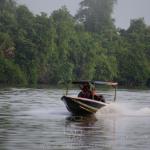
An early morning view of Kapuas river from Semitau.

2.Wait, there are two Kapuas riverS?

There are actually two Kapuas rivers flowing from the same mountain range. One Kapuas river flows west into the South China Sea. Meanwhile, the other Kapuas river flows to the south, merging with the Barito Sea and ends at Java Sea.

3. Kapuas river originates from the Muller mountain range

Both Kapuas rivers originate from the Muller Mountain Range, located south of the Indonesian-Malaysian border.

The mountain range was named after Major Georg Muller. He was a soldier and even fought for Napolean Bonaparte when France attacked Russia.

So how did a European army end up in the middle of Borneo in the 19th century?

Born in Mainz, Germany in 1790, Muller joined the Royal Netherlands East Indies Army in 1817.

He took part in the Dutch attack against the Sambas kingdom in 1818.

In 1825, he led an expedition to cross Borneo inland via Mahakam and Kapuas rivers. However, the expedition ended in tragedy when he and his party were killed by the local Dayak tribe.

4.There are two national parks on its river banks

Betung Kerihun and Danau Sentarum are the two national parks located at Kapuas river banks.

Together with Lanjak Entimau Wildlife Sanctuary in Malaysia, Betung Kerihun has been proposed as a World Heritage site.

Meanwhile, Danau Sentarum National Park lies in the upper Kapuas river tectonic basin some 700 kilometers from its delta.

5. It is an important source of water and mode of transport

If you spend an early morning in any town located next to the river, you can catch some of the local people doing their daily chores.

You can see young children in large groups before going to school while the women do their washing on the wooden jetties.

Although roads are available to connect most parts of West Kalimantan, the Kapuas river is still the major waterway connecting the centre of Borneo with its western coast.

6.The Kapuas river and its flora and fauna are any researchers’ dream subject

Many researchers believe there are still many new species to discover in Borneo, especially small creatures

The most recent fascinating species found in the river is the Kapuas mud snake back in 2005. German and American researchers discovered it accidentally when it was put in a dark bucket and changed colour 20 minutes later.

The snake has chameleon-like behaviour which allows it to change its epidermal colour spontaneously.

In addition to that, tropical rivers are unlike rivers in temperate zones. To this day, researchers are still gathering more information on hydrology and geomorphology of tropical river system.

7. It has a high density of fish species

There are about 300 fish species recorded in the river basin. The most iconic one is none other the super red arowana fish. It is only found in Kapuas river and is a famous species in the aquarium trade.

Sadly, the species is continuously decreasing because of wild poachers and low productive rates.

8. There are other remarkable species too

Apart from the super red arowana fish, there is one striking fish species found in Kapuas river.

Only officially described in 2008, the eight-banded barb (Eirmotus insignis) is a small zebra-striped fish which measures about 3.6cm in length.

It was found between the towns of Sanggau and Putussibau, among overhanging tree roots and aquatic vegetation.

Where can you find the world’s first lungless frog? In Kapuas river, of course! The Bornean flat-headed frog breathes entirely through its skin.

Scientists first discovered the frog in the middle of Kapuas river basin back in 1978.

9.The longest bridge in Borneo crosses this river

The Tayan Bridge is the longest bridge in Borneo spreading over 1,975 meters. It crosses the Kapuas River in Sanggau, West Kalimantan to connect West Borneo with Central Borneo in Indonesia.

10.You can take a tour upriver from Pontianak

It takes up to two days on the deck to travel up Kapuas river from Pontianak depending on your mode of transportation. In Pontianak, there are travel agencies which can help you to plan a trip upriver if you are feeling adventurous. Plus, there are plenty to see along the river from local villages with different architecture to wildlife that might pass your way.

Go to the furthest upstream and you would find yourself in Tanjung Lokang. Located about 13 hours from Putussibau town by speedboat through Kapuas river, the village belongs to the Dayak Punan.

It is the last village in the Borneo jungle when you are heading east across the island.

5 things to do at Buntal Esplanade, Kuching

Located about 30km from Kuching city, Buntal Esplanade is a hidden gem waiting to be explored more by the locals and tourists alike.

5 things to do at Buntal Esplanade, Kuching
The road into Kampung Buntal, a local fishing village located between Kuching city and Santubong.

The esplanade is inside Kampung Buntal, a traditional Malay fishing village situated at the mouth of Sarawak river leading to South China Sea.

The village is named after ikan buntal or the puffer fish which commonly found near the area.

If you are looking for fresh air on a Saturday afternoon, here are five things to do at Buntal Esplanade:

5 things to do at Buntal Esplanade, Kuching
Welcome to Buntal Esplanade!
1.Enjoy the beach view

First of all, just enjoy the view of South China Sea at Buntal Esplanade. Do you know that Buntal beach offers a mesmerising scenic view of the sunrise? (Just make sure you’re there before 6 am).

Plus, the best part is that the walkway of Buntal Esplanade is wheelchair-friendly.

5 things to do at Buntal Esplanade, Kuching
The esplanade was designed to be wheelchair-friendly.
2.Buy some seafood

Being a fishing village right next to the ocean, it is no surprise that Buntal provides a variety of fresh marine resources at its market.

Some of their seafood on offer are seasonal catch, so you only get to buy them during certain periods of the year.

These include jelly fish (March-April), swimmer crab (July-August), eng-ngoyang (October-February), sea anemone (December-January) and ambal (December-January).

Additionally, the non-seasonal catches are hard clams, mangrove clams, cockles, mud crabs and obtuse horn shell.

5 things to do at Buntal Esplanade, Kuching
Support the local communities by buying their products.
3. Do some bird-watching activities
5 things to do at Buntal Esplanade, Kuching
The observation point of Buntal Esplanade.

Did you know that Bako Buntal Bay is the wandering site for 27 migratory bird species in their annual migration between Southeast Asia and Australasia?

Completed on March 2015, Buntal Esplanade was designed as a walkaway with an observation point for bird-watching activities.

According to the East Asian-Australasian Flyway Partnership, the Bako Buntal Bay area welcomes more 25,000 migratory birds between October and April every year.

Most of them are threatened species such as Nordmann’s Greenshank, Asian Dowitcher and Far Eastern Curlew.

Meanwhile in 2009, two rare birds – the Pied Avocet and Eurasian Oystercatcher were caught  on sight near the bay.

The habitat in the coastal area is mud and mangrove forest, making it attractive for migratory birds in search of food.

If you notice unique wooden structure near the beach while bird-watching, it could be an engian. It is a traditional trapping method used by the local fishermen to catch anchovies and small shrimps.

5 things to do at Buntal Esplanade, Kuching
Take an evening walk at the esplanade to escape the hustle and bustle of Kuching city.
4.Taste the local food
5 things to do at Buntal Esplanade, Kuching
Try some of these local delicacies such as pais.

Visitors should not miss the chance to buy local delicacies. These include kuih keria (fried dough similar to doughnuts but covered in palm sugar or gula apong), pais ikan (grilled smashed fish) and bahulu.

Other local favourite are belacan (shrimp paste), madu kelulut (stingless bee honey), jeruk buah (pickled fruits) and cencaluk (preserved shrimp).

5 things to do at Buntal Esplanade, Kuching
Kuih Keria.
5.Eat some seafood

Kampung Buntal is one of the favourite local places for Kuchingites to go to enjoy some seafood.

While visiting Buntal Esplanade, why not drop by one of the seafood restaurants like Teo Seafood?

Besides Kampung Buntal, other famous local seafood cuisine spots are at Telaga Air and Muara Tebas.

5 things to do at Buntal Esplanade, Kuching
Kampung Buntal is one of the popular places for local people to enjoy seafood cuisine.
5 things to do at Buntal Esplanade, Kuching
The view of Mount Santubong from Kampung Buntal.

World Press Photo Exhibition shows in Kuching, Sarawak for the first time

World Press Photo Exhibition shows in Kuching, Sarawak for the first time
The exhibition showcased the winners of the annual World Press Photo Contest.

In 1955, a group of Dutch photographers organised an international contest to showcase their works to the world. They called it ‘World Press Photo’ and now it has become one of the most esteemed photography competitions in the world.

Fast forward to today, the exhibition has toured more than 100 cities in 45 countries, including Kuching.

For the first time ever, the exhibition is being held in Kuching in conjunction with What About Kuching (WAK) 2018, showcasing the winners of the annual World Press Photo Contest of which 4,548 photographers from 125 countries sent in a total 73,044 entries.

True to its name, the winning photos gave fair and compelling insights about what happening in and around the world.

Apart from the winning photos, the exhibition also showed stories from six Southeast Asia and Oceania Talents of the World Press Photo Foundation.

Installed on the ground of Padang Merdeka, the exhibition is open for the public from Sept 29 to Oct 27.

World Press Photo Exhibition: Giving glimpses to the outside world

World Press Photo Exhibition shows in Kuching, Sarawak for the first time
A series of nature-themed photos on display.

The series of photos displayed were featured various themes such as environment, nature, people, sports and world issues.

Some of the photos were explicit and powerful, showcasing serious human rights issues such as sex workers in Russia.

For those who are avid fans of National Geographic, some of the photographers might be familiar such as Ami Vitale who is widely known for her work capturing photos of wild pandas and rhinos.

This exhibition also allowed visitors who follow prominent photographers like Vitale on social media the opportunity to appreciate their images in sizes larger than cellphones’ screens.

In addition to that, there were also well-known photos which have been circulated on international news.

The most famous one displayed was the image of 28-year-old student Victor Salazar whose clothes caught on fire after a motorcycle exploded during a street protest in Venezuela against its president Nicolas Maduro.

The exhibition also managed to open up any visitors’ eyes to world issues such as the stateless case of Rohingya Muslims in Myanmar and the deforestation in Brazilian Amazon.

World Press Photo Exhibition shows in Kuching, Sarawak for the first time
A man vapes thoughtfully as he studies a panel of photos in a set which also features an image of Victor Salazar caught on fire during street protests in (right).
World Press Photo Exhibition shows in Kuching, Sarawak for the first time
A series of photos featuring two sisters living in a bioenergy village in Austria.
World Press Photo Exhibition shows in Kuching, Sarawak for the first time
Some of the works by Italian photographer Fausto Podavini.
World Press Photo Exhibition shows in Kuching, Sarawak for the first time
A man viewing the images by National Geographic photographer Ami Vitale.
World Press Photo Exhibition shows in Kuching, Sarawak for the first time
The exhibition is also part of an effort to reactivate spaces in Kuching such as Padang Merdeka.
World Press Photo Exhibition shows in Kuching, Sarawak for the first time
World Press Photo exhibition has toured to more than 100 cities in 45 countries and now is in Kuching.

About WAK World Press Photo exhibition

What About Kuching (WAK) city festival together with Sarawak Museum Department co-organised the exhibition sponsored by the Netherlands Embassy and Swinburne University of Technology Sarawak. The Limkokwing Institute of Creative Technology Kuching supported the event through its design and installation.

How the tikung beekeeping tradition is supporting life for man and bee in Danau Sentarum

How the tikung beekeeping tradition is supporting life for man and bee in Danau Sentarum
A bottle of APDS (Association of Periaus of Danau Sentarum) honey.

Where the locals farm their own honey

How the tikung beekeeping tradition is supporting life for man and bee in Danau Sentarum
Honey coming in from different periau ready to be dehumidified and packaged at APDS.

At Danau Sentarum National Park, the local communities manage their honey production in groups called periau made up of traditional forest honey farmers.

Each periau belongs to a village, which will see their respective honey farmers collecting and harvesting their own honey from the tikung, an artificial branch the villagers of the national park use in their traditional honey farming.

Thanks to this traditional way of producing honey, the Board of Indonesian Organic Certification (BioCert) certified it organic in 2007.

There are at least 15 periau located in the area with the oldest group being periau Semangit.

After harvest, the honey will be sent to APDS (Association of Periaus of Danau Sentarum) located at Dusun Semangit (Semangit village).

From APDS, the honey is packaged and sent to Jakarta. According to APDS product manager Abang Muhammad Erwanto, APDS managed to export 7 tonnes of honey to Jakarta this year alone.

Even so, the association is still able to keep up to 3 tonnes for their own stock.

“This stock is for us to sell to any visitors who come to visit Danau Sentarum,” Erwanto said.

The income from the honey provides an alternative income for the these communities who rely heavily on their fishing industry.

How the tikung beekeeping tradition is supporting life for man and bee in Danau Sentarum
APDS office at Semangit village, West Kalimantan in Indonesia.
How the tikung beekeeping tradition is supporting life for man and bee in Danau Sentarum
The honey that comes in from the local villages is dehumidified for up to 48 hours before being packaged.

The legend behind the tikung method

How the tikung, or the rafter, method came about is an interesting story on its own. According to Erwanto, the tikung has been used by the local communities for generations.

“Once upon a time, flood hit our villages. Boats drifted away and one of the boats got stuck to a tree. As time passed, a colony of bees came and built their hives in that small boat.”

Inspired by this, the local Malay community of Danau Sentarum started to put up their own artificial branches which they called the tikung.

Tikung is usually made from tembesu (Fagraea fragrans) wood. It is cut into a board about 1.5m in length and hung at an angle from a tree. The bees will come and make their nests on the tikung when the trees begin to bloom. The size of the tikung allows the bees to make bigger hives.

Erwanto pointed out there are no specific kinds of tree to hang the tikung. As for the location of the trees, there is no preference either.

How the tikung beekeeping tradition is supporting life for man and bee in Danau Sentarum
Erwanto says the honey farming provides an extra income for the people of Danau Sentarum.

A song to call the bees

How the tikung beekeeping tradition is supporting life for man and bee in Danau Sentarum
Muhammad Wasir is one of the few who can sing the timang before a tikung is put up on the tree.

Interestingly, one of the most important parts of setting up a tikung requires some singing skill. Before a honey farmer climbs up a tree to hang a tikung, one of the villagers would sing a special song called timang.

Muhammad Wasir, 63, is one of the few who can chant the timang song. He remembers how as a young child he used to follow his grandparents to harvest honey. It was then that he first heard the song.

Wasir explained that they believed every tree had a ‘penunggu’ (spirit) who guarded the tree. By singing the timang, the farmers were asking permission from the penunggu to set up the tikung against the tree trunk.

They were also calling upon the bees, imploring them to set up their hives on the tikung and to call more of their friends to the tree.

He has taught his children the song, so he believes that the timang tradition will continue on.

Watch Wasir singing the timang song down below. Take note that every time he claps, those present during the setting up of the tikung also have to clap their hands too.

https://youtu.be/ZoEnEi0j1Qw

The importance of honey production to Danau Sentarum

The forest honey bee (Apis dorsata) is indirectly a bio-indicator of Danau Sentarum.

According to Erwanto, this is because the bees are sensitive to any changes of environmental factors such as temperature.

“If there is any forest fire, the bees will not return to make any hives the subsequent year. This happened once in 2005 when open burning took place near here.”

Erwanto explained that knowing the importance of the forest to these bees made the local communities more protective of the environment.

How the tikung beekeeping tradition is supporting life for man and bee in Danau Sentarum
A tikung hanging on a tree without its bee’s hive.

A partnership to make Heart of Borneo initiative successful

Located in West Kalimantan, Indonesia, Danau Sentarum National Park falls under the area of Heart of Borneo (HoB).
HoB is a conservation agreement initiated by WWF to protect a 220,000km2 forested region right in the middle of Borneo island.

As part as the HoB initiative, WWF-Indonesia has been supporting APDS through product marketing activities. WWF-Indonesia also been assisting APDS members in Internal Control System (ICS). This is to ensure the farmers maintain the hygiene of their products.

How the tikung beekeeping tradition is supporting life for man and bee in Danau Sentarum
APDS honey in stock at Semangit.

5 things I learned through my gastronomic experience at Kapuas Hulu

As a Kayan from the Malaysian state of Sarawak, Kapuas Hulu is a place that feels familiar and foreign at the same time.

First of all, the Kapuas Hulu region in West Kalimantan is home to a wide diversity of indigenous communities such as the Iban, Silat, Sejiram, Seberaung and Kayan.

Hence, some of the dialects, architecture and of course, food are so familiar making a Sarawakian like me almost forget  that I was in another country.

It seems only natural since the north of Kapuas Hulu borders Sarawak. The differences in Malay dialect and vocabulary as well as infrastructure, however, did remind me that I was no longer in Malaysia.

Thanks to World Wide Fund for Nature (WWF) Indonesia, I got to visit several districts (kecamatan) under Kapuas Hulu  such as Putussibau, Semitau, Suhaid, Badau and Batang Lupar from Sept 25 till 28, giving me the opportunity to explore what made us similar yet different.

5 things I learned through my gastronomic experience at Kapuas Hulu
Indonesian nasi goreng.

Here are five things I learned from a Sarawakian perspective through my culinary experience at Kapuas Hulu, Indonesia:

1. You can take the girl out of the village, but you sure can’t take the village out of the girl
5 things I learned through my gastronomic experience at Kapuas Hulu
You can pick which side dish to go with your rice. 

Terserah kedayakanmu, asyik-asyik makan daun ubi, (You are obviously a Dayak since you keep on eating cassava leaves).”

This was what one of my travelling companions, a local reporter from Pontianak said to me.

Malaysian-style ‘nasi campur’ is also common in neighbouring Indonesia. It is our local buffet style where you pick two or three mains – vegetable or protein – to go with your white rice. The price of your meal will be based on your dish types and portions.

While other types of vegetables such as long beans, bean sprout, cabbage and cangkuk manis (Sauropus androgynus) are available, I guess the Kayan blood flowing through my veins led me to pick out the cassava leaves over the rest.

Locally known as daun ubi or sometimes daun bandung in Sambas regency, the leaves are pounded and stir-fried to perfection, just how Sarawakians would enjoy it.

5 things I learned through my gastronomic experience at Kapuas Hulu
Instead of the stainless steel canteen style setup we have in Malaysia, the nasi campur stalls across the border lay out their food in this attractive and ingenious way.
2. Chicken rice is called ‘ayam goreng’, not nasi ayam.
5 things I learned through my gastronomic experience at Kapuas Hulu
How an ‘ayam goreng’ would look like in Indonesia.

Ayam goreng means fried chicken in Malay. To order ayam goreng in Malaysia will bring you a piece of fried chicken. Meanwhile in Indonesia, ayam goreng comes with a bowl of rice and other side vegetables.

3. Tea is life, not coffee
5 things I learned through my gastronomic experience at Kapuas Hulu
Try es jeruk tambah susu which is lime juice with condensed milk.

Most of us in Malaysia love Indonesia’s famous and iconic beverage Teh Botol. Unsurprisingly, tea is a more preferred beverage in the country, compared to coffee.

Indonesia is just like Malaysia where ordering drinks can be tricky and different depending on which state you are in.

But here are key points to remember; it is called ‘es’ not ‘ais’ if you want to order an iced drink. Jeruk in Malaysia means pickled while in Indonesia, you can order ‘air jeruk’ which basically is a lime drink.

Interestingly, you can also order a cup of cappuccino in any common eatery. However do not expect it to come as a double espresso with steamed milk foam. It is equivalent to premixed Malaysian white coffee.

4. The fish is delicious in Kapuas Hulu!
5 things I learned through my gastronomic experience at Kapuas Hulu
Fish cooked with asam pedas (spicy tamarind).
5 things I learned through my gastronomic experience at Kapuas Hulu
Salted fish roe.

My visit to Kapuas Hulu revolved around Danau Sentarum. It is a magnificent-looking floodplain with plenty of  biodiversity treasures and resources especially fish. Hence, the star of my gastronomic experience is none other than the fish. At one point, it was hard to keep up with the types of fish I tried or which is which but I remember I have tried toman and biawan.

The only type of fish I tasted before during my trip was baung fish. It is a type of catfish which can also be found in Sarawak such as in Bakun or Belaga. In Kapuas Hulu, it is more common to cook these kinds of fish with asam pedas (spicy tamarind).

Fish may not be everybody’s favourite kind of protein, but in Kapuas Hulu,  you might find yourself enjoying it as the freshness adds to its tastiness.

5. Kerupuk basah is a must-try snack
5 things I learned through my gastronomic experience at Kapuas Hulu
You must dip the kerupuk basah in the accompanying peanut sauce to enjoy it completely.

Kapuas Hulu’s kerupuk basah is reportedly Indonesian President Jokowi’s favourite food in West Kalimantan and I have to agree with the president because it was delicious. To this day I regret not buying some to bring home.

What might come to mind when you see kerupuk basah is how much it looks like the Malaysian keropok lekor, a traditional fish snack originally from Malaysian state of Terengganu.

The main similarity between kerupuk basah and keropok lekor is that both of them are made of fish but that’s where it ends.

5 things I learned through my gastronomic experience at Kapuas Hulu
Freshly cooked kerupuk basah in a steamer.

Kerupuk basah has a spongy and smooth texture, almost like a crossover of textures between siu mai and fish cake.

Apparently the most delicious type of kerupuk basah is made from belidak fish. The one I tried was made from toman fish, but it is still tasty.

Most of the time, the kerupuk is served straight from a steamer, although some people prefer it fried.

What makes kerupuk basah extra tasty though, is the peanut sauce that comes with it. Made from fried peanuts, salt, chilli and sugar, the peanut sauce that goes with kerupuk basah is sweeter than our typical peanut sauce here in Malaysia.

So if you ever make your way to Kapuas Hulu, especially its administrative centre Putussibau, do not leave the regency without trying this iconic snack.

5 things I learned through my gastronomic experience at Kapuas Hulu
Kerupuk basah.
5 things I learned through my gastronomic experience at Kapuas Hulu
A view of Kapuas river from Semitau.
5 things I learned through my gastronomic experience at Kapuas Hulu
A view of Kapuas river from Suhaid.
5 things I learned through my gastronomic experience at Kapuas Hulu
Danau Sentarum of Kapuas Hulu.

5 things to do at Danau Sentarum Festival in West Kalimantan this October

Danau Sentarum Festival is an annual event organised in Kapuas Hulu District which was started in 2012.

The festival is aimed to promoted the rich culture of people in Kapuas Hulu, West Kalimantan particularly around Danau Sentarum.

This year, Danau Sentarum Festival will be held on Oct 25 to 28 at three different locations including Lanjak, Batang Lupar and Putussibau.

With the theme “Stimulate Cross-Border Ecotourism in the Heart of Borneo”, the festival was launched as part of 100 Wonderful Events Indonesia by Ministry of Tourism of the Republic of Indonesia.

5 things to do at Danau Sentarum Festival in West Kalimantan this October
The Danau Sentarum Festival will spread out in different locations including Putussibau.

If you are heading to Danau Sentarum Festival this year, here are five things to expect during the event:

1. Join in the Danau Sentarum Cruise

During the festival, visitors are more than welcomed to join the Danau Sentarum Cruise which they will be taken on board Bandong boats to explore the lake.

It is a unique boat with the bottom designed by the Malays and the top designed by the Dayaks. The boat is used as both transportation and accommodation.

There will be two trips daily; one in the morning and another in the afternoon. Visitors should take this opportunity to observe the daily activities of people living in Danau Sentarum.

Plus, do not forget to bring your binocular just in case you can spot any birds along the way.

2. Watch traditional boat parade

Boats are important assets for the local communities of Danau Sentarum. Each tribes living in their area has its own unique traditional boats.

This year, the Dayak Tamambaloh tribe’s Parau Tambe boat by will lead the Traditional Boat Parade. The event will start from Lanjak town to Kedungkang, Melayu Island and Sepandan island, all around Danau Sentarum. 

It is definitely a sight to see with each boat will feature its own traditional music and dances. This activity will be held on Oct 27.

5 things to do at Danau Sentarum Festival in West Kalimantan this October
An example of a Malay village at Danau Sentarum.
3. Enjoy the music of Sentarum Ethnic Music Festival
5 things to do at Danau Sentarum Festival in West Kalimantan this October
Dusun Kedungkang, an Iban longhouse of Batang Lupar district, West Kalimantan.

What do Kalimantan and its Malaysian neighbour, Sarawak have in common when it comes to music? The sape.

This Dayak traditional lute will be featured together with rebana, sitar, gambus with other musical instrument at the Sentarum Ethnic Music Festival (Lanjak, Oct 26).

This is a golden opportunity to hear and compare the different sounds of various tribes in Kapuas Hulu regency, West Kalimantan.

4. Watch the one-of-a-kind Arwana Super Red Contest

Heading over to Putussibau, the contest to be held over the course of the festival aims to promote the conservation of the ‘dragon fish’, the Arwana Super Red (Scleropages formosus). Also called Ikan Siluk Merah in Indonesia, this fish in its vibrant colours ranging from red to chili ted is endemic to Danau Sentarum and has a reputation as one of the most expensive fishes in the world.

5. Have some honey at Culture and Honey Festival
5 things to do at Danau Sentarum Festival in West Kalimantan this October
An example of traditional tattoo of a Kayan Mendalam woman.

Beside arwana fish, another special commodity from Danau Sentarum is its honey. The honey is traditionally farmed and harvested by the Malay communities of Danau Sentarum.

The event will see a parade of 2,000 people drinking honey from bamboo cups.

And the best part is the local people will be donning their traditional attires during this festival. The Culture and Honey Festival will be held at Lanjak on Oct 25.

5 things to do at Danau Sentarum Festival in West Kalimantan this October
Are you up for a blowpipe challenge this coming Danau Sentarum Festival?

Other activities include a blowpipe competition, carving contest, traditional tattoo demonstration, dragon boat and bidar boat races and many more.

For more information on Danau Sentarum Festival, contact the organiser here or here or download the booklet here.

What we know about the sequel for Train to Busan so far

Train to Busan (2016) literally became a runaway success when it became the highest-grossing Korean film in Malaysia, Hong Kong and Singapore, earning a gross of USD93.1 million worldwide.

The South Korean zombie apocalypse thriller action starring Gong Yoo, Jung Yu-mi and Ma Dong-seok was applauded for providing a great social commentary on current Korean society.

Powerful people are disgustingly selfish; big corporate companies and government are responsible for a lot of death and destruction in the movie-world of Busan.

Now, a sequel to Train to Busan is on it way and here are five things we know about it so far:

1.The same director will return to direct the sequel

Yeon Sang-ho the director of Train to Busan is confirmed to direct the sequel. He also directed animation movie The King of Pigs (2011) and it went became the first Korean animated film to be screened at the Cannes Film Festival.

2.It follows the events after the train have reached Busan

Yeon has confirmed that setting for the sequel will not be on a train but in a city instead (most probably in Busan). Many entertainment portals have speculated the plot will be centred around finding the source of the zombie virus. A wild speculation is the storyline will be based on the zombies’ perspective.

3.Few A-list Korean actors have been rumoured to star in it including Kang Dong-wan.

When the rumours of a sequel first spread, many fans voiced out their expectations of seeing Descendants of the Sun actor Song Joong-ki in the movie. Some fans even wanted to see Song Joong-ki and his wife Song Hye Kyo starring together in the movie. However, what we know so far is that Kang Dong-wan has been offered a role in Train to Busan 2.

4.The cast of Train to Busan will not return
What we know about the sequel for Train to Busan so far
Gong Yoo is confirmed not returning to act in Train to Busan’s sequel. Credits: IMDB

Sadly, the director confirmed that the original cast of Train to Busan will not return to act in the sequel. The only survivors of the first movie are Seong-kyeong (Jung Yu-mi) and Su-an (Kim Su-an) while the rest are dead or turned into zombies. Although many fans wanted Gong Yoo to come back as a zombie.

5.The name of the sequel

The sequel is under the working title Bando which means ‘Peninsula’ in Korean. This implies that we will see the virus spreading all over the Korean peninsular. Filming for Bando is expected to start early 2019.

5 reasons to visit Danau Sentarum National Park, Indonesia

Danau Sentarum National Park is a unique seasonal wetland where the water levels can rise up to 12m during raining season.

Together with Betung Kerihun National Park and Kapuas Hulu District, the whole area was awarded the biosphere reserve certificate from Man and Biosphere UNESCO last July 2018.

Located in Kapuas Hulu Regency, West Kalimantan Province, Indonesia, the park lies at the upper Kapuas River vasin.

It is a vast floodplain with 20 seasonal lakes, complete with picturesque freshwater swamp forest and peat swamp forest.

Here are five reasons why you should make your way to Danau Sentarum National Park:

1. Explore a maze-like peat land like no other

Travelling over the blackish water of Danau Sentarum is something that needs to be experienced at least once in your lifetime.

When dry season comes (June till September) and the water recedes, some of the lakes turn into narrowing channels while the channels turn into grasslands.

With all the trees that look almost alike and its winding channels, cruising through Danau Sentarum feels like going through a maze.

Plus, the vast floodplain leaves visitors wondering if there is something beyond the horizon of the lake.

5 reasons to visit Danau Sentarum National Park, Indonesia
The national park covers 127,393.4 hectares whereby half of the area are lakes while the other half is swamp forest.
2. Do some birding activities

Pack your binocular and telephoto lenses to engage in birding activities at Danau Sentarum National Park.

About 240 bird species have been sighted at Danau Sentarum which include  the black hornbill (Anthracoceros malayanus), great argus (Argusianus argus), Storm’s stork (Ciconia stormi) and crested gowshawk (Accipter trivirgatus).

5 reasons to visit Danau Sentarum National Park, Indonesia
Catch some birds on binoculars at Danau Sentarum.
3.Observe the trees and wildlife (on camera) along the way
5 reasons to visit Danau Sentarum National Park, Indonesia
Like any other national park, do not litter at Danau Sentarum.

Danau Sentarum National Park is located at the Heart of Borneo (HoB) initiative area. It is a government-led and NGO-supported programme that was initiated by a joint declaration by the governments of Brunei, Indonesia and Malaysia in 2007.

Today, it is one of the largest transboundary rainforests remaining in the world.

The whole island of Borneo is home to 6% of the global biodiversity though it only covers 1% of the world’s land area.

One of the areas which contribute to the high biodiversity of Borneo is Danau Sentarum.

It is home to 675 species of plants of which 13 are endemic to Borneo. Additionally, the park provides a natural habitat for orangutans, proboscis monkey, sun bears and arowana fish.

5 reasons to visit Danau Sentarum National Park, Indonesia
If you are lucky, you will catch a stork landing on one these village jetties.
4.Watch sunrise and sunset over a floodplain
5 reasons to visit Danau Sentarum National Park, Indonesia
A cloudy sunset view of Danau Sentarum from Bukit Tekenang.

Thanks to its flat geographical feature, Danau Sentarum National Park gives picturesque views during sunrise and sunset.

And the best place to catch this view is at Bukit Tekenang.

Lonely Planet called Danau Sentarum a “photographers haven”,advising visitors to bring that extra memory card during your visit.

5. Learn about the Malay and Dayak cultures of Danau Sentarum
5 reasons to visit Danau Sentarum National Park, Indonesia
Dusun Kedungkang, an Iban longhouse located near Danau Sentarum.

What makes Danau Sentarum National Park a unique place to visit is the people living in its area.

There are about 3,000 people living in the 20 villages enclaves within the park. About 90% of them are Malay while the rest are Dayak Iban people.

The Malays live in high-stilt houses connected by bridges while the Ibans live in traditional longhouses.

The residents are very welcoming and visitors should fully utilise their visit to Danau Sentarum by visiting at least one of these traditional villages.

5 reasons to visit Danau Sentarum National Park, Indonesia
A Malay village at Danau Sentarum.

3 reasons why you should buy secondhand clothes

Not everyone is a fan of secondhand clothes. Here in Malaysia, there are plenty of bad impressions about them, even with the cuddly label of ‘pre-loved’.

“They are dead people’s clothes.”

“You will never find something fashionable.”

“They are all outdated.”

Secondhand clothes are usually called ‘baju bundle’ or bundle clothes because they are sold in bundles or bulk.

3 reasons why you should buy secondhand clothes
Secondhand clothes are usually called as baju bundle in Malaysia. Credits: Pexels.      

Lay your bad impressions of baju bundle aside and consider these three reasons why you should buy secondhand clothes:

1. It saves money

Buying pre-loved clothes is undeniably way cheaper than the original price. If you are the fashionable type who likes to curate your outfit of the day daily, with secondhand clothes you can do that without burning burning holes in your pocket.

There are few instances in life that perhaps will make you change your whole wardrobe – losing a lot of weight in a short amount of time is one of them.

Recreating a whole new look and buying a new range of outfits for your wardrobe is affordable with secondhand clothes.

Additionally, it frees up money for other things like vacations or emergency funds.

3 reasons why you should buy secondhand clothes
You will never know what you find when shop for secondhand clothes. Credits: Pexels.

2.You are helping the environment

Do you know that it takes 700 gallons of water to make a cotton shirt? Do you know that clothes can take up to 40 years to decompose?

There are people out there who throw out clothes after wearing them only a few times. Imagine if everybody was doing the same thing; the amount of clothes piling up in our landfills would be unbelievable.

It is best for all and Mother Nature if everybody would wear their clothes till they are completely worn out. Then it could take decades before our clothes reach the landfill.

Hence, wearing secondhand clothes allows you to do your part for the environment.

3 reasons why you should buy secondhand clothes
You are reducing waste when you buy pre-loved clothes. Credits: Pexels.

3.The closest you can get to a treasure hunt

You will never know what you will get when you are looking for pre-loved clothes.

Based on my personal experience, I’ve found items from GAP, Banana Republic, Armani Exchange, Forever 21 at one of the thrift shops in Kuching.

The best thing about buying these branded secondhand clothes? They only cost as low as one tenth of the original price.

3 reasons why you should buy secondhand clothes
AB Bundle Matang, one of the chain thrift shops in Sarawak.

Where to buy your beading supplies in Kuching?

Searching for beading supplies in Kuching can be a headache especially when you do not know where to start.

When it comes to beading, there are so many things that crafters need and it is not just beads alone.

Even for its stringing, beaders need to decide to use beading thread, wire, leather or elastic cords.

Plus, there are other supplies such as headpins, split rings, clasps, earring findings and many more.

Fret not because here at KajoMag we narrowed it down for you where to stock up your beading supplies in Kuching, Sarawak.

1.Beads Story By Xing Ya Enterprise

This is the Mecca for all the beading supplies in Kuching. Located at Kota Sentosa, it is the best place in town to buy Toho and Miyuki beads. Both brands are high quality Japan-made glass seed beads.

There are other types of bead being sold there too including tube, acrylic, wooden, faux pearls and many more.
Even for other supplies such as stringing materials, pliers, beading boards and even accessories displays are readily available.

Where to buy your beading supplies in Kuching?
Beads Story by Xing Ya also offers semi-precious beads such as amethyst, quartz and agate.
Where to buy your beading supplies in Kuching?
This store is the best place all the beading supplies one go in Kuching.
2. F.A.H

Fabric Accessories House or commonly known as FAH is the place to be to buy fabric in Kuching.
However, the store also has a good selection of beads for sell.

On top of the beads and fabric, the choices of ribbons, laces and rhinestones would give any crafters a glimpse of heaven. It is the best place for crafters to get buy their fabric and beading supplies in one place.

The store has few outlets all over the city but perhaps the most-visited one is at Gambier Street.

Where to buy your beading supplies in Kuching?
The FAH branch located at Gambier Street has two floors; the ground floor is dedicated to all the fabric while the first floor is all about beading and sewing supplies.
Where to buy your beading supplies in Kuching?
The variety of laces and ribbons at FAH.
3. Jing Lee Travel Souvenier Wholesale

Located at Ewe Hai Street, it is also selling souvenirs to tourists apart from beading supplies. The best part of this store, sometimes you can find old Orang Ulu beads in its collection. You might be feeling the pinch but it is definitely worth it.

4. Satex at Kuching Sentral

Similar to F.A.H., Satex at Kuching Sentral is also selling beading supplies on top of its fabrics. But, their beading collection is limited to seed beads only.

Where to buy your beading supplies in Kuching?
If you are running out seed beads, Satex is another option for you to restock your supply.
5. SL FLowers and Handicraft Shop
Where to buy your beading supplies in Kuching?
Fancy anything from SL FLowers and Handicraft Shop?

Every year during Chinese New Year, Kenyalang Park Commercial Centre would come alive with people busy looking for house decoration.

The whole commercial area is known for affordable food and beauty supplies. But at SL FLowers and Handicraft Shop, crafters can also stock up their beading as well as embroidery and crochet supplies.


1 62 63 64 65 66 75