Browse Tag

Malaysia - Page 7

KajoAsks: What drives Sabah-based skincare brand The Borneo Scrub

What is it like to start a fully online skincare endeavor in Sabah? KajoMag asked Casandra Timothy the ups and downs of running The Borneo Scrub, a 100 per cent natural skincare solutions and cosmetics brand.

Established in 2015, the brand focuses on using locally sourced ingredients in Sabah. Their signature – and most sought after -item is the Coffee Face & Body Scrub.

KajoAsks: What drives Sabah-based skincare brand The Borneo Scrub
Casandra Timothy
KajoMag: What sparked your interest in starting The Borneo Scrub?

Casandra: My husband, Azel, is a typical caffeine and coffee addict, he can’t live without his coffee and his multiple caffeine boosts. So one day out of the blue I joked about making a skincare product with the coffee he usually drinks (Ground Tenom Coffee). He said why not, I went ahead and made some scrub with ingredients we had on hand and the husband was also the first human guinea pig for the product.

The results were impressive even for the early unrefined batch. His skin, which was always dry and flaky had instantly transformed into baby skin after washing off the scrub. The rest of the family members became additional guinea pigs, then friends. They then started asking whether I was selling it and the rest is history.

KajoMag: What is the best part of running The Borneo Scrub?

Casandra: The best part about running The Borneo Scrub is seeing the reaction of people when they have tried your product. Seeing actual validation and approval of your handmade product, seeing how it amazes people is an indescribably good feeling and it still feels the same even now.

Another equally great part is meeting other entrepreneurs, business owners, all these people and social connections that would have never existed for us if The Borneo Scrub didn’t exist.

I know it should be one thing only but I have to say, if The Borneo Scrub did not exist we also wouldn’t have tried participating in business pitch competitions. It was a whole new level of learning and experiencing. My husband in particular really enjoyed this.

KajoMag: There is a rise of local SMEs using locally sourced ingredients to make skincare products in Malaysia. How do you deal with the competition?
KajoAsks: What drives Sabah-based skincare brand The Borneo Scrub
Coffee Face and Body Scrub


Casandra: Competition is very normal. We honestly don’t worry about it a whole lot because we believe the customers can tell the difference. Furthermore, word of mouth and actual reviews tell the best story.

When we started to be more commercially active within Sabah, and Kota Kinabalu particularly, there were about 3-4 local home made businesses selling the exact same type of products e.g. natural body scrubs.

We all did our own thing, focused on quality and customer service. We never had any issues (that we personally experienced) with competition. The way we see it, as long as it can help the market grow and get the public more interested in home made products with local ingredients, no one really loses out on anything. Plus, we elevate the whole supply chain.

KajoMag: Can you name a moment of failure in your business experience that you learned from or that helped you improve your business or the way you work?

Casandra: For us, we don’t consider it moments of failure. This was because when everything is done and settled, and we look back and reflect it’s actually just ill made decisions that didn’t work out very well. One particular situation was acquiring a commercial property as a specialized production and retail HQ.

Seeing that we are a home based enterprise, after some months we realised we were losing money to a place that we rarely even used. Having your own store or place to sell your stuff is great and everything but it’s arguably not the most effective way, depending on your product and customers.

So after a few months we decided to let the place go. We lost a moderate amount of money due to renovation costs, tenancy contract etc. But looking back now we really did learn a lot from there.

KajoAsks: What drives Sabah-based skincare brand The Borneo Scrub
The Borneo Scrub’s Cazel’s Face Oil
KajoMag: Care to share any long-term goals for The Borneo Scrub?

Casandra: One of our targets is to be one of the must-have souvenir products for tourists to try, to buy and to gift to friends back home.

We’re currently supplying our products to Kadaiku (under Sabah Tourism Board) and souvenir chain stores in KK. We also have agents servicing various states. Currently it is going very well and next step is to partner and collaborate with beauty spas.

We also plan to diversify products, we had a few different products in the past. Unfortunately, the amount produced was not much due to high cost. Nonetheless, we have received great feedback on them. So we plan to pursue this option when we are able to.

In addition, at times we aren’t able to cope with the demand from souvenir stores since our products aren’t made in factories in large batches. Thus, we also hope to solve this problem (good problem to have) when we are able to.

KajoAsks: What drives Sabah-based skincare brand The Borneo Scrub
The Borneo Scrub’s Lip Care Line

Why is there a badger on the old Sarawak coat of arms?

If you have never seen the old Sarawak coat of arms, you can spot it on the pediment above the pillars of the Kuching General Post Office on Jalan Tun Haji Openg.

There you will see the shape of an animal on top of a shield and the words “Dum Spiro Spero”.

Now comes the question what is that animal? It is actually a European badger, an animal that cannot be found in Sarawak.

If you are not familiar with a badger, remember Trufflehunter from The Chronicles of Narnia, one of Aslan’s followers?

Why is there a European badger on the old Sarawak coat of arms?

The White Rajahs were a dynastic monarchy of the British Brooke family. With the first ruler James, they founded and ruled the Kingdom of Sarawak from 1841 to 1946.

The heraldic arms of the Brooke dynasty were based on the emblem used by James. It consisted of a red and black cross on a yellow shield, crested by a badger.

This animal, in Middle English, was known as a “brock” and was also a nickname for people named “Brook” or “Brooke”. Hence the animal refers to the dynastic surname.

There are different kinds of badgers out there such as honey badger, American badger, European badger, Asian badger and Japanese badger.

The closest thing we have to the European badger (Meles meles) on the coat of arms is the Bornean ferret-badger (Melogale everetti). Although its only known certainty of location is on Mount Kinabalu and nearby regions in Sabah, it is suspected it can be found in Kalimantan and Sarawak too.

Why is there a badger on the old Sarawak coat of arms?
Sarawak’s old coat of arms (left) beside the one used today.
The current Sarawak coat of arms

Instead of a badger, we have our own Rhinoceros hornbill befitting the state’s nickname ‘Land of Hornbills’. The bird itself wears a shield on our current coat of arms. This design was established in 1988. The hornbill’s wings have 13 feathers representing all the Malaysian states.

It also features Malaysia’s national flower, the hibiscus.

Right below the hornbill is a banner bearing Sarawak’s motto “Bersatu, Berusaha, Berbakti” which means ‘Unity, Effort, Service’.

This motto was to replace Kingdom of Sarawak’s Dum Spiro Spero.

The non-Malaysian’s guide to economy rice

Economy rice is a Malaysian favourite when it comes to lunch. It is a type of food stall usually found in hawker centres or food courts across the country.

Recently, a Malaysian even went viral for his Instagram account dedicated only to this rice dish.

Also known as nasi campur or mixed rice, chap fan or chap chye ping, economy rice is quick to have, affordable and reminds us of mom’s cooking.

Here is your guideline if you are a foreigner visiting Malaysia for the first time and wondering what this ‘economy rice’ is:
1.It might look like a buffet, but it is not a buffet.

The first thought if you see an economy rice stall for the first time is “Oh look, it is a buffet!”

No, it is not. I have too often seen foreign tourists take too many dishes and be surprised at the exorbitant price afterwards.

There are four factors contributing to the cost of your nasi campur; the number of dishes you take, the types of dishes (meat costs more than vegetables), the portion amount per dish and your location.

Most of the time your economy rice in a fully air-conditioned shopping mall costs more than the one at an open-air coffeeshop. Additionally, some states in Malaysia offer cheaper nasi campur than others. For example, generally the price of a plate of nasi campur in Kota Kinabalu is more expensive than in Kuching.

2.In Malaysia, there are Chinese, Indian, Malay, vegetarian and Dayak types of economy rice.

Here in Malaysia, thanks to our multi-cultural society we are blessed with so much good food. So you can choose the different kinds of nasi campur from Chinese to vegetarian.

For Chinese economy rice stalls, the most common dishes are sweet and sour pork, braised tofu, stir-fried Chinese vegetables, and deep fried food.

Meanwhile, Malay and Indian stalls will typically serve up curry dishes, and more spicy fare.

Specifically in Sarawak, you can even find Dayak cuisine among the economy rice.

The concept of picking your own dishes is similar to Nasi Padang or Nasi Campur in Indonesia. Singapore and Thailand also have the same concept.

The non-Malaysian's guide to economy rice
A nasi campur stall in Kalimantan
3.Some Malaysian economy rice stalls only open during lunch hour.

Lunch time is the favourite meal of the day to have economy rice. Since most of them cater to office workers, they only open during lunch hour from 12pm to 2pm.

With that in mind, some of the best and affordable stalls are located near office areas.

But how to choose which economy rice stall to go to? First of all, make sure it is clean. Plus, the better quality nasi campur stalls have warmers beneath the food. Then you can ensure your food is served hot.

4.Come with a group of friends if you want to taste more dishes

An economy rice stall can consist up to 30 different type of dishes including meat, vegetables, eggs and tofu. You can select any combination of these dishes together with a bowl of steamed white rice.

Here is a trick; if you want to taste more dishes, bring a group of friends. Each and every one takes a different kind of dish so that everyone can have a taste.

Bon Appetit!

10 reasons why Malaysians should be talking about gum health

Systema recently launched a free gum health check website as part of “Systema Gumbatte Towards 1 Million Gum Health Checks” awareness campaign 2019.

With the collaboration of the Malaysian Dental Association, the campaign aims to help Malaysians achieve better oral health outcomes with the ultimate goal of motivating more people to retain 20 of their natural teeth when they are 60 years and older. (The average person has 32 teeth in total.)

On March 19, Systema organised the “Gum Health Forum for Sarawak” at Pullman Kuching to introduce the campaign as well as their Advance Anti-Plaque Toothpaste for Sarawak.

Here are 10 important things KajoMag learned about gum health from the forum:

1.Gum disease has overtaken cavities as the leading cause of tooth loss in adults.

This is due to prolonged plaque build-up in between teeth, along the gum lines and in gum pockets due to poor brushing habits and usually remains undetected for long periods of time.

2. 9 out of 10 Malaysian adults suffer from gum disease.

A 2010 study conducted by Lion Corporation on 450 Malaysian adults revealed that 80% of respondents had at least one visible sign and symptom of gum disease, the most common symptoms being bleeding and swollen gums. Only 1% realise that they have gum disease.

3. The main cause of gum disease is plaque

Plaque is the soft sticky film that covers your teeth after you have food or drink. It also contains billions of bacteria. When plaque builds up in between teeth, along the gum line and inside gum pockets, the toxin from the bacteria will damage gum tissues.

4. Periodontal disease can affect the health of the whole body

Studies have shown that your poor oral health can increase chances of cardiac disease, pneumonia, diabetes, and premature birth.

5. How do you know that you have a good gum health?

Your gums should be pink in colour, not red. Healthy gums also leads to healthy bones.

6. There are two types of gum disease

The two types of gum disease are called gingivitis and periodontitis. The good news is gingivitis is reversible by brushing your teeth while periodontitis is irreversible.

Periodontitis is when your gums become inflamed, turn red and your gums bleed easily when you brush. If left unchecked, it can then spread into the gums and into the bones and ligaments supporting your teeth, loosening them.

How to take care of your gums?
10 reasons why Malaysians should be talking about gum health
You can get rid of gingivitis by brushing your teeth. Credits: Pexels.

7. Mouthwash is not essential to gum health

According to Dr Tie Sing Fong from Sarawak Health Department who spoke during the forum, mouthwash was invented for people who were not able to brush their teeth, such as people who suffer from Parkinson’s disease.

Corporate companies have turned them into commercial products which Dr Tie believed were not necessary to use.

8. Flossing is an important part of your oral health care

Dr Tie stressed that flossing was important to do every day, if not every alternate day.

9. It is not necessary to brush your teeth after every meal.

The main cause of gum disease is plaque. According to Dr Tie, plaque is only formed between two to four hours after you eat something. Hence, brushing your teeth twice a day is sufficient enough.

10. Should you rinse your mouth after brushing or keep the toothpaste in?

There is a belief that you should not rinse your mouth after brushing your teeth. It is believed to be better for overall dental health to leave some toothpaste in your mouth for better oral care. Once again, Dr Tie debunked this myth, citing a study that there was not much difference if you rinsed or not after brushing your teeth.

Why rainbows are formed according to Dusun legend

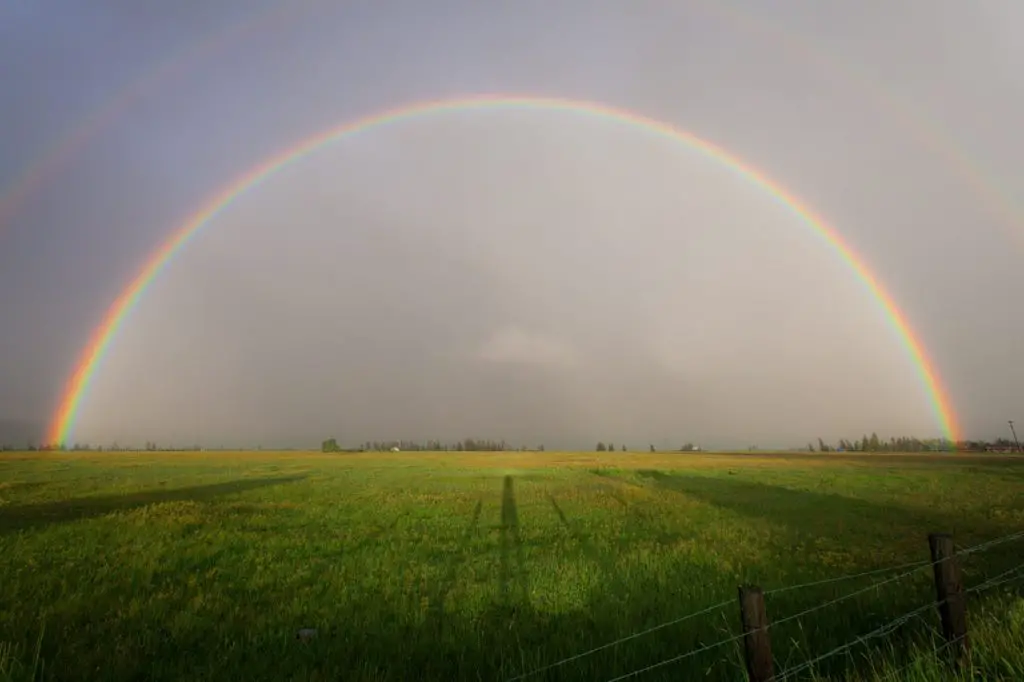
A rainbow is a natural weather phenomenon caused by reflection, refraction and dispersion of light in water droplets, resulting in a spectrum of light appearing in the sky.

Due to its beautiful and mystical appearance, it has been a subject of mythology and superstition from different cultures across the world.

In Hawaiian legends, the rainbow maiden Avuenue is believed to be the messenger for her brothers, the gods Tane and Kanaloa.

Meanwhile, the rainbow is depicted as an archer’s bow in Hindu mythology.

In the bible, rainbows are a sign of God’s promise. After the Great Flood in the book of Genesis killing all living things excepts those on Noah’s ark, a rainbow appears to symbolise God will never send another flood to destroy the earth.

Though it can be a full circle, we usually see an arch formed by illuminated droplets above the ground.

This archIng shape of the rainbow has also inspired many myths to see it as a bridge.

Why rainbows are formed according to Dusun legend

A rainbow is a meteorological phenomenon that is caused by reflection, refraction and dispersion of light in water droplets resulting in a spectrum of light appearing in the sky.  Credits: Pexels
The rainbow as a bridge in various cultures

If you are a big fan of Marvel Cinematic Universe (MCU), then you have watched all three Thor films. In the films there is a rainbow bridge called the Bifrost that is guarded by Heimdall (played by ultimate gentleman, Idris Elba).

According to Norse religion, the Bifrost connects Midgard (earth) with Asgard, home of the gods. It can be only used by gods and those who are killed in battle.

Similarly in ancient Japanese beliefs, rainbows served as a bridge to enable their ancestors to descend to earth.

Meanwhile, the Maori has a tale of Hina (moon) who caused a rainbow to span the heavens and down to the earth to allow her mortal husband to return to earth to end his days since there is no death in her celestial home.

Rainbow as a bridge in a Dusun legend

A mystical bridge to connect two lovers is something that the Dusun people of Sabah can relate to.

According to a legend recorded by Ivor Evans in Among Primitive Peoples in Borneo, a rainbow was a path for men long time ago.

“Those who lived up-country used the rainbow as a bridge when they wished to go down-country in search of wives,” he wrote.

When they first made the rainbow, the men would walk directly to the women’s houses.

After the women served them food, they followed the men back to their homes over the rainbow.

Once they arrived back up-country, their marriages were celebrated with a great feast.

Then came an old man from another village asking the men what they did with the rainbow, now that they had their wives with them.

The men simply replied, “When we want to go down-country with our wives we will put it in place, but when do no want it we will take it away.”

Certainly, this legend makes you wonder if this is how people in the olden days deal with LDR.

Three legends of the orangutan you’ve probably never heard of

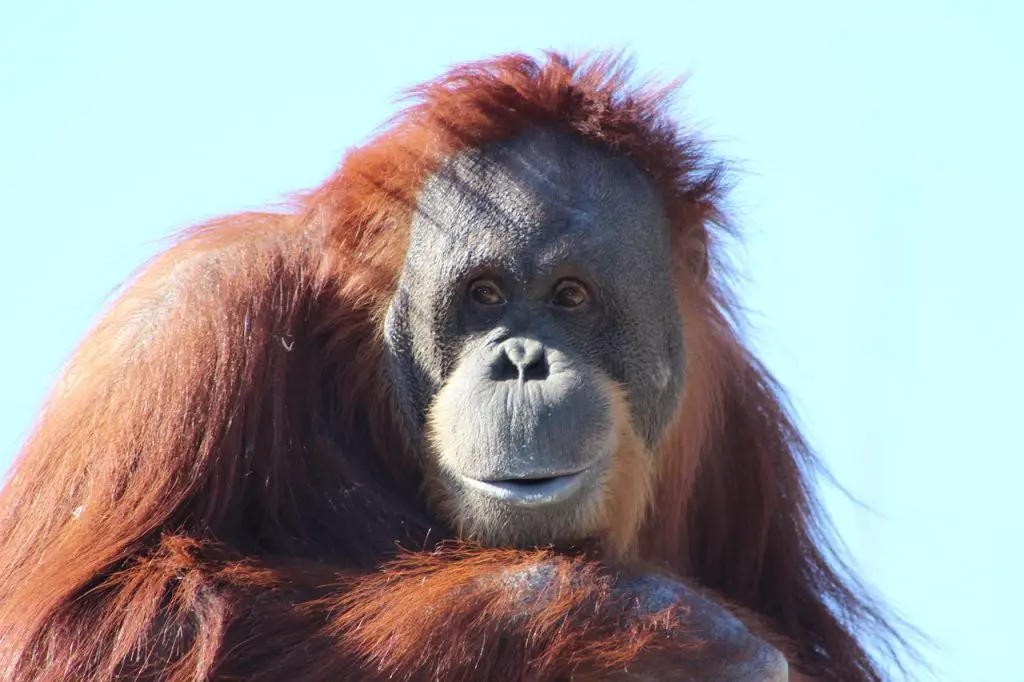
The orangutan is the only genus of great apes native to Asia. Like other great apes, they are highly intelligent.

Furthermore, they share approximately 97% of their DNA with humans.

Due to their similarities with humans, it comes as no surprise that this ape has become the subject of some local legends.

Here are three legends of the orangutan you’ve probably never heard of:
Three legends of the orangutan you've probably never heard of
1.The man who refused to work and became an orangutan

The commonly known legend in Indonesia about the orangutan is that they were once able to speak like humans.

But then they decided to become silent after humans entered the forest. Why? They feared that if people knew that they could speak, they would be harassed or enslaved by humans.

Another legend has it that if an extremely lazy or mean person were to be punished, their would be changed into an orangutan.

2. The female orangutan who kidnapped a human male

Carl Sofus Lumholtz recorded this particular legend when he stayed at Central Kalimantan, Indonesia.

There was a man who just lost his wife and children. Out of grief, he took a walk into the forest.

After awhile, he felt exhausted so he took a nap underneath a tree. He must have been so exhausted because he did not realise a female orangutan carried him up to her nest far up on a tree.

The man woke up and to his surprise, he was already high up in the tree, unable to come down.

He was left with no choice but to stay up in that tree. For his survival, the female orangutan brought him fruits and even rice stolen from people’s homes.

One day, the orangutan tried to make her moves on him but the man resisted. The animal was so angry that it bit him on the shoulder. Unwillingly, the man surrendered.

After some times, the orangutan gave birth to child. It was a boy but he was covered with long hair.

The man stayed there up on the tree out of fear for his life until one day when he saw an opportunity to escape.

He saw a ship along the coast putting out a boat for hauling water from the river nearby.

Thankfully, the orangutan was away looking for food. So the man made a rope from his clothes and began climbing down from the tree.

Though the rope was not long enough, he successfully jumped into the river.

With all his might, he swam to the boat. The people of the boat saw him and came to his rescue.

When the orangutan did not find the man at their nest, she was angry. Then, she saw the ship from a distance. She tried to catch up to the ship but failed.

Here comes the gruesome part; she returned to her nest in anger, took their son and tore him in half.

3.The orangutan who was a healer

The particular legend came from Kampung Kiau at the foothill of Mount Kinabalu, Malaysian state of Sabah.

Long time ago, a group of men went into the jungle carrying blowpipes.

Suddenly, they heard someone singing among the trees. They looked and saw an orangutan singing on the ground.

Ivan Evans wrote in his book Among Primitive Peoples in Borneo the song that orangutan sang,

“First of all I lived at the River Makadau, but I went to the River Serinsin. From there I went to the River Wariu; from the Wariu to the Penataran. From Penataran to the Kilambun; from Kilambun to the Obang, and from the Obang to the Tenokop.

I cannot go up into the trees again for I am old and must die upon the ground. I can no longer get fresh young leaves to eat from the trees; I have to eat young grass.”

Then the men who heard the song, said to one another: “This orangutan is clever at verses, let us shoot him with our blowpipes.”

When one of the men was about to shoot him, the orangutan pleaded for his life.

“Do not shoot me, but make me a hut and let me live here till I die. When you have made my hut, bring your sisters here and I will teach them magic, for I am skilled in it.”

So the men agreed; they built him a hut and brought their sisters to him.

In return, he taught the women how each sickness had its own magical ceremony. He also taught them the spells for snake bites and fevers.

Then they went home, a journey which took them about three days, to get rice for the orangutan.

But when they came back to the hut, he was already dead.

From there on, whenever there was sickness in Kampung Kiau, the women who were taught by the orangutan would serve as their healers.

KajoAsks: Making a social impact through art with Mary Anne Vaz

/

Self-taught artist Mary Anne Vaz was born in Penang, but she has called Sarawak home since she married her Kelabit husband.

She uses various mediums in her art including batik, acrylic, water colour and pastels.

A prolific painter like one of her idols Vincent Van Gogh, her work has been exhibited in various places such as Lingnan Museum of Art in China, Pustaka Miri and Saradise Gallery, Kuching.

She now teaches both young and old from an art center at her home.

Not content to just paint, she, together with her art students, have started a social project whereby proceeds from sales of their paintings will go to buying story books for Penan children in Ulu Baram.

Recently, KajoMag had the opportunity to learn more about the artist behind the paintings and her inspirations.
KajoAsks: Making a social impact through art with Mary Anne Vaz
Vaz and some of her paintings.
KajoMag: I understand that you started your journey in art as early as six years old. What do you remember about your paintings as a kid and what made you want to paint?

Mary Anne Vaz: I attended kindergarten where my teacher, a Chinese man gave me a chance to paint. I painted myself climbing a tree. Then I watched my brother paint big canvases with oil paints. I developed a style that was similar to oil painting in that I used very thick paints.

One day my dad told me, “You won a gold medal.” The concept of winning was not in my experience and I replied “ I don’t want a gold medal.” Then, it appeared on TV and in the news. It was the Queens Gold Medal. 
       
I didn’t have any art books or art teachers. All I had was paint, brushes and paper. But there was a book on the human anatomy. From there, I became interested in painting human figures. So, most of my artwork features human figures.              

I am fascinated with the hornbill dances of the Orang Ulu. Several of my paintings are on the dances, tribal attire, and everyday life of the Kelabits. I have also painted the legends of the Kelabits.

Then, I met the famous tattoo artist Ernesto Kalum. I became fascinated with his tattoos and have painted three paintings featuring him, one of them being “Warrior of Peace”.

KajoMag: How would you describe your style as an artist? Are there any painters that you particularly look up to?

Mary Anne Vaz: I am a symbolic artist. My paintings all carry deep messages. For example “ Warrior of Peace” which features Ernesto without his tattoos, without the sword, conveys the message that a leader must lay down his weapons and be vulnerable in order to lead his people to peace and face a brighter future.

I painted this after the summit between Trump and Kim Jong Un. The USA and North Korea meeting was to me a step towards disarmament. This is true courage. A warrior with no weapon is a truly brave warrior. 

I look up to several artists. The first one was Chuah Thean Teng, the Father of Batik, who showed that this traditional style of fabric painting could be fine art. I studied his techniques and created a style of contemporary batik with traditional processes.

The second one is Vincent Van Gogh. I collected books on him. He was a prolific painter and I identify with him as I am also a prolific painter.

The third one is Raphael Scott Abeng from Kuching. He inspired me as a friend and I find his paintings unique and witty social commentary.

The fourth one is Tan Wei Kheng. He is a dear friend; he stretched my first canvas and has always been supportive.

Pustaka produced an e-book on Tan Wei Kheng called Discover Sarawak and I was the researcher and writer of his art. He is also a symbolic artist; his paintings being social commentary and social documentation.

KajoMag: Are there certain places you feel most inspired to paint? If so, where?

Mary Anne Vaz: The place that most inspired me to paint was Bario. Twenty-nine years ago when my eldest son was born , my husband and I walked 12 hours through the jungle from Bario to Pa’ Mada to have the traditional name changing ceremony.

I remember the trees being tall and the floor of the jungle covered with a carpet of leaves. Later, I made a sketch of my father-in-law’s parang and its tree bark sheath.

I then painted it in contemporary batik style. It is now in the Sarawakiana collection of Pustaka Sarawak. I painted the fireplace in “Kelabit Lady” which was exhibited in China in the Lingnam Museum of Art in Foshan in October 2018. 

KajoMag: Can you name the biggest lesson you’ve learnt from being a part of the Sarawak art industry?

Mary Anne Vaz: The biggest lesson I have learned in being part of the Sarawak Art industry is that an artist must be dynamic, keep learning and growing. No doubt skills with brushes are important, but digital skills are vital to share our art and connect across nations.

Being multilingual is also important. When I went to China I prepared myself by learning to speak Mandarin.

Alta Moda Sarawak is a good example of how artists are being dynamic. Coming together to move forward. The leaders in Alta Moda Sarawak have created a bridge to tomorrow.

KajoMag: Care to share your hope for young artists in Sarawak?

Mary Anne Vaz: My art studio in Miri grooms young artists from as young as six years old. So, my hope is that parents take art seriously.

Give your child a chance to use the correct tools to paint. Give your child a good art tutor to mentor his growth. Let young artists develop their own style. I am happy that in my studio there are several young artists with very high potential.

I share my own techniques with them and encourage them to have their own vision. Parents have been very supportive in giving them time and resources to grow. What we need is more opportunities to exhibit the work of young artists.

KajoMag: Tell us more about your social project to buy books and reference books for the Penan children in Ulu Baram.

Mary Anne Vaz: My students and I started sending books to schools in Ulu Baram with the help of a friend who travels there regularly.

Each time my students sell a painting for RM50, they voluntarily donate RM10 to buy a story book. I also buy books that promote early reading such as books using phonics.

I will put about 20 books in a bag and give to my friend who takes them to the teachers there.

When I sell my paintings. I also buy some books for this purpose. I am thinking that story books are a source of joy, different from school books.
The Penan children and other children who live far from town may not have a chance to enjoy story books. Besides these, I have also bought encyclopedias for them.

About Alta Moda Sarawak

Interested viewers can catch Vaz and her works during this upcoming Alta Moda Sarawak.

To be held from March 7-9 at the old State Legislative Assembly (DUN) Building in Kuching, 24 designers and brands will be taking part in this event which aims to highlight the many colours of Sarawak’s cultures and diversities.

Check more of Vaz’s works on her website or follow her on Instagram.

Silat, pantun and many more at Kuching Heritage Race 2019

There were a lot of things going on other than racing at the fourth edition of Kuching Heritage Race (KHR).

Themed ‘Darul Hana Revisited’, the one-of-a-kind race kicked off at Chung Hua Middle School No 4 last Saturday on Feb 16.

About Kuching Heritage Race 2019

Almost like a small-scale Amazing Race, the race had a treasure hunt and maps were provided for participants to find stations or control points.

Every team made up of two to five people was given a ‘passport’ with clues for the location of each station. (About 60 teams took part, making this treasure hunt really competitive 😄)

At each station or checkpoint, the participants had to complete missions related to local culture and heritage.

Some of these tasks included performing the Malay martial art of silat, playing the kompang, making roti canai, completing a pantun and making air mawar.

Additionally, there were ‘brainy quizzes’ on the history and heritage of Kuching at some stations. Teams with the correct answers had a few minutes taken off their running time.

For the first time, this year’s Kuching Heritage Race took the participants through residential areas such as Kampung Muda Hashim, Kampung Dagok Timur, Kampung No. 4 and others.

With that, the race was able to introduce participants, both local and non-local, to Kuching’s heritage sites.

The team that was able locate all the stations and complete all the tasks in the shortest time was the winner.

Last year’s champion, the Sarawak Convention Bureau, was able to hold on to their title and become the overall winner once again.

Kuching Heritage Run is also aimed to raise money for deserving underfunded projects.

Proceeds from this year’s race were channeled to several organisations including Single Mothers Association, Kuching Parkinson Society, Sarawak Society for The Prevention of Cruelty to Animals (SSPCA).

Kuching Heritage Race was listed on Sarawak Tourism Board (STB)’s calendar of events.

Also present during the event were permanent secretary to Kuching North City Hall (DBKU) Mayor Datuk Abang Abdul Wahab Abang Julai, Ministry of Tourism, Arts, Culture, Youth and Sports permanent secretary Hii Chang Kee and Brooke Trust director Jason Brooke.

KajoPicks: Check out these four coffee places in Bintulu

Apart from shopping complex, Bintulu is currently witnessing the rising number of different kind of eateries.

These include coffee places offering good coffee from dirty coffee to nitrogen-infused java and relaxing ambience for patrons to just hang out.

Here are four coffee places in Bintulu, Sarawak you need to check out:
1.Coffee Dream

Located at Parkcity Commerce Square, this coffee place has been operating since 2014.

Besides coffee, Coffee Dream is famous among the locals for its western food.

Omelette sandwich, spaghetti bolognese, mushroom soup, cheesy beef balls, mushroom cheese omelette, eggs Benedict, chicken Caesar salad are just the tip of their wide range of menu items.

For rice eaters out there, don’t worry because Coffee Dream has a selection of Asian favourites to choose from such as the typical nasi lemak.

While you are at it, might as well end your meal with one of their freshly baked cakes for dessert.

2.The Coffee Code Bintulu
KajoPicks: Check out these four coffee places in Bintulu
Do you like it dirty? Dirty Code from The Coffee Code.

The Coffee Code is Sarawak’s very own cafe chains. The first one was opened in Sibu, then Bintulu at Ibraco Town Square and the latest was in Kuching at Saradise, BDC.

When you’re at Coffee Code, how about giving the Dirty Code a try? It is their in-house version of dirty coffee. It is one of the best coffee places in town to spend your tea time because it serves wide range desserts.

Their specialty is perhaps waffles which come with different kind of toppings.

KajoPicks: Check out these four coffee places in Bintulu
Waffles at The Coffee Code Bintulu.
3.Escape Coffee


You can’t satisfy your coffee craving early in the morning at Escape Coffee. But you can satisfy your coffee craving late at night here because it opens from 12pm till 12am.

It is perfect for the late night work hustle since it provides free wifi.

Feeling hungry? They have good options of food on their menu such as beef sirloin steak, mixed grill, lamb chop, butter chicken waffle and chicken macaroni fruit salad.

4.Melt Cafe

The current star of Melt Cafe Bintulu, no, not its famed grilled cheese sandwich but its Nitro Coffee.

If you have not tried Nitro Coffee before, just imagine Guinness draft beer, only it’s coffee! Since the drink is infused with nitrogen, it has this rich, creamy head similar to Guinness.

So if you are a big fan of coffee, this beverage is definitely worth a try.

Longing for dessert? Give Melt Cafe’s Burnt Cheesecake a try. Some described Burnt Cheesecake as the alter ego to the classic New York cheesecake. The differences are this cake is burnt outside with toasty edges and without the usual pressed cookie base.

Of course you cannot leave Melt Cafe without trying its signature grilled cheese sandwich.

KajoPicks: Check out these four coffee places in Bintulu
Nitro Brew Coffee at Melt Cafe. Look at its creamy head on top of the glass!
KajoPicks: Check out these four coffee places in Bintulu
How the Nitro Brew Coffee looks like after few minutes.

Rajah Vyner Brooke’s message to Sarawak on Cession Day

After the end of World War II, Sarawak was briefly administered by the British Military Administration.

On July 1, 1946, the third White Rajah Vyner Brooke ceded the kingdom to the British Government.

So Sarawak became a British Crown Colony with Sir Charles Arden Clarke becoming the first British Crown Colonial Governor.

Sarawakians were conflicted and largely divided over the cession. Some felt betrayed because Sarawakians were promised self-rule according to the Nine Cardinal Principles of the rule of the English Rajah.

Rajah Vyner Brooke’s message to Sarawak on Cession Day
Sarawak anti-cession demonstration. Borneo Asian Reports [Public domain], via Wikimedia Commons

Meanwhile, the last Ranee of Sarawak, Sylvia blamed Brooke’s officer over the cession in her book stating “I think it can safely be said if there had been no Gerard MacBryan there would have been no cession of Sarawak at that time – July 1946.”

Nonetheless, Sarawak was a British Crown Colony from 1946 to 1963.

On the first anniversary of Sarawak’s Cession Day, the last Brooke ruler sent his message to the people of Sarawak in four languages; English, Malay, Iban and Chinese.
Here is the transcript of his message in English:

“On this day July 1st, I send warm greetings to all my friends in Sarawak. A year has passed since Sarawak was ceded to His Majesty the King.

I have deep thought to his proposal for cession before making it to the British Government and placing it before the Councils in Kuching. I knew that it meant the end of Brooke rule, an event which, I was proud to realise, would be matter of sorrow to very many of you. Nevertheless I took the decision because I knew that it was the best interests of the people of Sarawak and that in the turmoil of the modern world they would benefit greatly from the experience, strength and wisdom of British rule.

I have followed very closely the events of the last year and I am more than ever convinced that the decision taken was the right one. The assurances given at the time of cession that there would be no interference with your ancient customs are being scrupulously observed. At the same time large schemes for the welfare and betterment of the people have been worked out and will be put into force with the aid of funds provided by the King’s Government in Britain. I am glad that all these plans adhere to the main principles of the policy of the three Rajahs in the past, that the interests of the local population shall be paramount and that the development shall be undertaken by the people by the people and for the benefit of the people of Sarawak.

I know that there are still some in Sarawak, encouraged by persons living outside the country, who maintain their opposition to what has been done. Their cry is that they have lost their “independence” and wish to recover it. What in fact is the position? You have transferred your loyalty from the Rajah who was like your father to a greater father, the King, who has for so long been our Protector. Your feet are firmly set on the road which lead to true independence. Your local institutions are being developed, your power to express your views on laws and forms of Government is being increased, and your will gradually approach that goal, already reached by so many peoples who have had the privilege of Britain’s guidance, where you will be completely self-governing.

The length of time which must elapse before your arrive at that goal will depend largely on the willingness with which your grasp the hand of friendship and support held out to you by His Majesty’s Government. This is the greatest opportunity for progress that Sarawak has ever had. With unaltered devotion for your interests and well-being I say, “Long Live the people of Sarawak. Long Live the King.”


C. V. Brooke
1 5 6 7 8 9 13