Browse Category

Culture - Page 34

The history of James Brooke’s schooner, the ‘Royalist’

If Sarawakians were to name one 19th century schooner that they may know, the answer would most probably be the Royalist.

(For Pirates of the Caribbean fans who said The Black Pearl, you’d be off by a century as the trilogy was set roughly in the mid-1700s.)

The Royalist itself was famously known to have played an important role in establishing British adventurer James Brooke’s foothold in Sarawak.

He bought the vessel in 1836 with money he had inherited from his father.

The Findlay

That being said, did you know that the Royalist was not Brooke’s first vessel?

Brooke always wanted to sail to this part of the globe. He was reportedly inspired by the book The Eastern Seas written by George Windsor Earl. According to Robert Payne in The White Rajahs of Sarawak, Brooke begged his father for a ship – any ship.

“At last, in February 1834, his father relented and promised to buy a ship for him and to furnish it with merchandise.”

Finally, he saw a ship he wanted in Liverpool. It was black, with a black hull and black mast.

Like any young man excited over a new ride, Brooke got excited and told his friend about it.

In a letter to Cruikshank, he wrote: “Me voila done! I have a vessel afloat, and nearly ready for sea- a rakish slaver brig, 290 tons burden- one that would fight or fly as occasion demanded, and made to pay her expenses The Indian Archipelago, the northeast coast of China, Japan, New Guinea and the Pacific is the unlimited sphere of our adventure.”

So, the ship (which was called The Findlay) sailed from England on May 6, 1834.

Unfortunately for Brooke, his captain (a friend named Kennedy) and first mate (Harry Wright) did not see eye to eye with each other.

Kennedy and Wright were constantly quarreling along the journey. Brooke then abruptly decided to sell The Findlay and its cargo.

The history of James Brooke’s schooner, the 'Royalist'
The Eastern Seas by George Windsor Earl.
The Royalist

Frustrated, Brooke returned to Bath, England where he spent his time fox-hunting and yachting. At this time, Payne stated that he “seemed to have no purpose in life.”

Finally, his purpose in life came in the form of a 142-ton topsail schooner.

When Brooke’s father died in December 1835, he inherited £30,000 (about £3,780,000 in 2019). He immediately bought a yacht, The Royalist. She was believed to be built in Cowes in 1834 as a gentleman’s yacht for Rev T.L Lane.

It was “armed with six six-pounders, a number of swivel guns, and every kind of small arms.”

The Royalist was a vessel of the Royal Yacht Squadron, one of the most prestigious yacht clubs in the world that still exists to this day.

Due to this, she could fly The White Ensign. This was a flag flown on British Royal Navy ships and shore establishments.

In other words, the Royalist was accorded the same right as ships of the Royal Navy.

This time, Brooke had learned his lesson from The Findlay, so he chose his officers wisely. For his first journey on the Royalist, he took some of his relatives and friends to the Mediterranean.

During this journey, he even brought along his nephew John Brooke Johnson Brooke who later became Rajah Muda, his heir to the Kingdom of Sarawak. This was before Brooke disinherited him in favour of his younger brother, Charles.

They travelled to Malta, Bosporus, Halicarnassus (now Bodrum) and Rhodes. Then, they returned home in June, 1837.

For 18 months, Brooke studied where he was going and charted his journey.

In fact, his initial plan was to establish a settlement at Malludu Bay (now Kota Marudu, Sabah).

The Royalist sets sail to the Far East

After that long and studious period of planning, he was ready to sail the Royalist by the end of 1838.

He was famously quoted from his diary stating, “Could I carry my vessel to places where the keel of European ship never before played the waters, could I plant my foot where white man’s foot has never been before – could I gaze upon scenes which educated eyes have never looked on – see man in the rudest state of nature – I should be content without looking to further rewards.”

Finally, the Royalist sailed from Devonport on Dec 16, 1838 with 19 crew members.

On June 1, 1839, Brooke arrived in Singapore where he remained for a few weeks. It was here that Brooke finally heard about Sarawak.

Payne wrote, “He learned that the antimony ore, which gleamed with a dull silvery gleam and which he could see being unloaded in Singapore harbour, came from Sarawak. He learned, too, that the Rajah (Pangeran Muda Hashim) was fighting some obscure rebels in the interior. There had been no mention of Sarawak in his prospectus. Now he was on fire to enter Sarawak.”

At that time, the future king never thought he would became the first White Rajah of Sarawak.

The Royalist arrives in Sarawak

So Brooke made his preparation, readying gifts such as silk, cloth, sweets, preserved ginger, gunpowder to present to Pangeran Muda Hashim.

Even during the 19th century Made-in-China items were famous as Brooke prepared a huge box of toys from China for Pangeran’s children.

On July 27, the Royalist left Singapore and heading toward Borneo. Then on Aug 11, they laid eyes on Mount Santubong for the first time.

Three days later on Aug 14, the Royalist sailed slowly up Sarawak river passing through mangroves and nipah palms along the riverbank.

“At night, less than two miles from Kuching, he dropped anchor. At first dawn the Royalist rounded a bend in the river, and at seven o’clock came in sight of Kuching,” Payne wrote.

And the rest is history.

The history of James Brooke’s schooner, the 'Royalist'
A small replica of The Royalist on display at The Brooke Gallery at Fort Margherita.
The royal shipwreck

Two years after Brooke became the first White Rajah of Sarawak on September, 1843, the Royalist was recorded in Brunei.

Then, it was reported that the Royalist was sold as a trading vessel early in 1844 but still retained her name.

On Dec 11, 1854, the schooner was wrecked near Kawhia, New Zealand. Her captain then, a man named Tavernor wrote a letter on Dec 12, 1854 to Charles Davis reporting on the wreck.

“I had done my best to save the vessel from destruction; but afterwards my whole thought was how to save our own lives, but fortunately the tide and serf left us sufficiently for us to get onshore safe. We then commenced to get everything from the wreck that we possibly could, it then being 6 o’clock, and the tide making fast, this morning we cut her fore-mast and main-mast away, saved them with sails and yards, and a little timber, whether we shall save more I cannot say all the timber and most part of the wheat, the vessel is now a total wreck.

The Royalist was 86 tons register, and had on board 1,700 bushels wheat, and 14,000 feet sawn timber, at the time she went ashore.”

Captain Tavernor (Dec 12, 1854)
The Resurrection of the Royalist

In September 2018, the Royalist made headlines as it would make a return to Kuching after 180 years.

Sarawak Chief Minister Datuk Patinggi Abang Johari Tun Openg announced that the replica of the Royalist, with the exact scale of the original vessel will be placed at the Brooke Dockyard.

This would be after The Brooke Trust and Hollywood were done using it for their shoot in the upcoming White Rajah film.

5 inspiring looks from the Alta Moda Sarawak runway

Fashion has come a long way in Sarawak. With Alta Moda Sarawak, we could be looking at Kuching becoming a fashion hub over the next few years as the three-day fashion show which ran from March 7-9 at the Old DUN Building showcased the best Sarawak designers had to offer when it came to creativity, passion and an eye for beauty.

What separates Sarawak fashion designers from the rest of the world is their commitment to showcasing Sarawak’s heritage, whether it’s in fabric print or clothing designs. Here are some key looks which rocked the AMS runway!

  1. Go tribal with ethnic print

Nothing says ‘Sarawak’ more than Orang Ulu tree of life patterns, bunga terung motifs and the Melanau terindak designs. Borneonative, Lentera Astana, Latip’s Collections, Najla Shoes cleverly combined these patterns with modern styles, giving these traditional motifs a fresh and unique look as well as celebrating Sarawak’s unique culture and heritage.   

2. Tropicana

One of the most fashionable ways to deal with the tropical heat is in a light flowy dress or a kaftan. Langkawi Hub, Kaftan by IndiaX Tanoti, Anannasa by Sher Lo and Sab2 by Sabrina Bujang made loose-flowing gowns and shifts fashionable and timeless with their cheerful patterns and bright colours.

3. Mix up your fabrics and colours!

Have fun with your eclectic wardrobe – mix stripes with floral patterns, brocade with chiffon! Tom Abang Saufi, Anna Sue and Melor by Melinda Omar layered their beautiful and contrasting fabrics together, creating elegant outfits perfect for high-tea with friends or a Saturday afternoon out.

4. Embrace your uber-feminine self!

Von Jolly Couture, Paul Carling and Erwan Asbor celebrated the feminine body with their elegant, form-fitting gowns. True to the fashion house’s style, Von Jolly Couture combined traditional motifs in their contemporary, head-turning gowns while Paul Carling’s designs celebrated the female form with its form flattering gowns and sexy slits. Erwan Asbor’s collection created drama and flair with its form-fitting, mermaid gowns.

5. Update your kebayas

Tom Abang Saufi’s updated kebaya designs referenced the simple kimono, creating a lighter more casual look for one of Malaysia’s iconic traditional outfits. Teamed with obi-style belts, punchy fabric prints and a loose-fitting style, these kebayas look elegant yet relaxed at the same time.

Why rainbows are formed according to Dusun legend

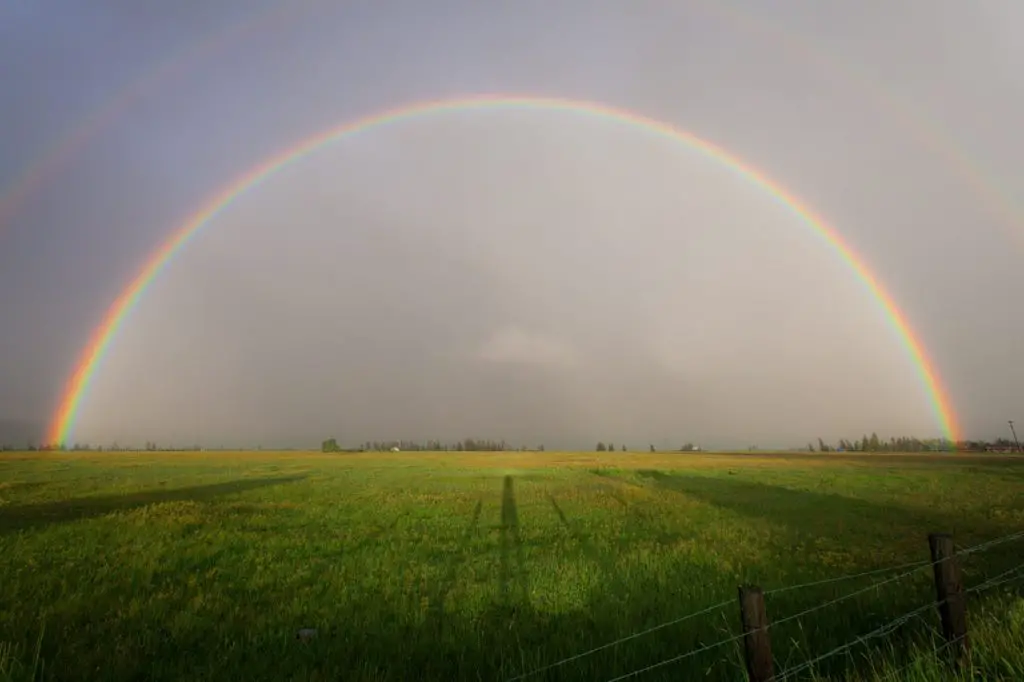
A rainbow is a natural weather phenomenon caused by reflection, refraction and dispersion of light in water droplets, resulting in a spectrum of light appearing in the sky.

Due to its beautiful and mystical appearance, it has been a subject of mythology and superstition from different cultures across the world.

In Hawaiian legends, the rainbow maiden Avuenue is believed to be the messenger for her brothers, the gods Tane and Kanaloa.

Meanwhile, the rainbow is depicted as an archer’s bow in Hindu mythology.

In the bible, rainbows are a sign of God’s promise. After the Great Flood in the book of Genesis killing all living things excepts those on Noah’s ark, a rainbow appears to symbolise God will never send another flood to destroy the earth.

Though it can be a full circle, we usually see an arch formed by illuminated droplets above the ground.

This archIng shape of the rainbow has also inspired many myths to see it as a bridge.

Why rainbows are formed according to Dusun legend

A rainbow is a meteorological phenomenon that is caused by reflection, refraction and dispersion of light in water droplets resulting in a spectrum of light appearing in the sky.  Credits: Pexels
The rainbow as a bridge in various cultures

If you are a big fan of Marvel Cinematic Universe (MCU), then you have watched all three Thor films. In the films there is a rainbow bridge called the Bifrost that is guarded by Heimdall (played by ultimate gentleman, Idris Elba).

According to Norse religion, the Bifrost connects Midgard (earth) with Asgard, home of the gods. It can be only used by gods and those who are killed in battle.

Similarly in ancient Japanese beliefs, rainbows served as a bridge to enable their ancestors to descend to earth.

Meanwhile, the Maori has a tale of Hina (moon) who caused a rainbow to span the heavens and down to the earth to allow her mortal husband to return to earth to end his days since there is no death in her celestial home.

Rainbow as a bridge in a Dusun legend

A mystical bridge to connect two lovers is something that the Dusun people of Sabah can relate to.

According to a legend recorded by Ivor Evans in Among Primitive Peoples in Borneo, a rainbow was a path for men long time ago.

“Those who lived up-country used the rainbow as a bridge when they wished to go down-country in search of wives,” he wrote.

When they first made the rainbow, the men would walk directly to the women’s houses.

After the women served them food, they followed the men back to their homes over the rainbow.

Once they arrived back up-country, their marriages were celebrated with a great feast.

Then came an old man from another village asking the men what they did with the rainbow, now that they had their wives with them.

The men simply replied, “When we want to go down-country with our wives we will put it in place, but when do no want it we will take it away.”

Certainly, this legend makes you wonder if this is how people in the olden days deal with LDR.

Three legends of the orangutan you’ve probably never heard of

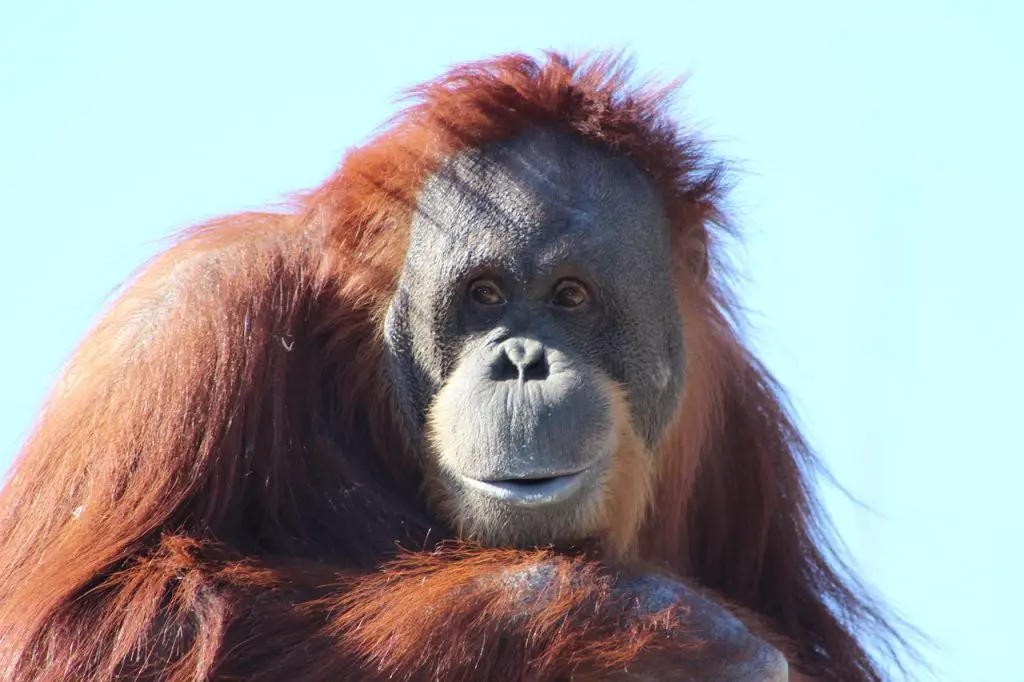
The orangutan is the only genus of great apes native to Asia. Like other great apes, they are highly intelligent.

Furthermore, they share approximately 97% of their DNA with humans.

Due to their similarities with humans, it comes as no surprise that this ape has become the subject of some local legends.

Here are three legends of the orangutan you’ve probably never heard of:
Three legends of the orangutan you've probably never heard of
1.The man who refused to work and became an orangutan

The commonly known legend in Indonesia about the orangutan is that they were once able to speak like humans.

But then they decided to become silent after humans entered the forest. Why? They feared that if people knew that they could speak, they would be harassed or enslaved by humans.

Another legend has it that if an extremely lazy or mean person were to be punished, their would be changed into an orangutan.

2. The female orangutan who kidnapped a human male

Carl Sofus Lumholtz recorded this particular legend when he stayed at Central Kalimantan, Indonesia.

There was a man who just lost his wife and children. Out of grief, he took a walk into the forest.

After awhile, he felt exhausted so he took a nap underneath a tree. He must have been so exhausted because he did not realise a female orangutan carried him up to her nest far up on a tree.

The man woke up and to his surprise, he was already high up in the tree, unable to come down.

He was left with no choice but to stay up in that tree. For his survival, the female orangutan brought him fruits and even rice stolen from people’s homes.

One day, the orangutan tried to make her moves on him but the man resisted. The animal was so angry that it bit him on the shoulder. Unwillingly, the man surrendered.

After some times, the orangutan gave birth to child. It was a boy but he was covered with long hair.

The man stayed there up on the tree out of fear for his life until one day when he saw an opportunity to escape.

He saw a ship along the coast putting out a boat for hauling water from the river nearby.

Thankfully, the orangutan was away looking for food. So the man made a rope from his clothes and began climbing down from the tree.

Though the rope was not long enough, he successfully jumped into the river.

With all his might, he swam to the boat. The people of the boat saw him and came to his rescue.

When the orangutan did not find the man at their nest, she was angry. Then, she saw the ship from a distance. She tried to catch up to the ship but failed.

Here comes the gruesome part; she returned to her nest in anger, took their son and tore him in half.

3.The orangutan who was a healer

The particular legend came from Kampung Kiau at the foothill of Mount Kinabalu, Malaysian state of Sabah.

Long time ago, a group of men went into the jungle carrying blowpipes.

Suddenly, they heard someone singing among the trees. They looked and saw an orangutan singing on the ground.

Ivan Evans wrote in his book Among Primitive Peoples in Borneo the song that orangutan sang,

“First of all I lived at the River Makadau, but I went to the River Serinsin. From there I went to the River Wariu; from the Wariu to the Penataran. From Penataran to the Kilambun; from Kilambun to the Obang, and from the Obang to the Tenokop.

I cannot go up into the trees again for I am old and must die upon the ground. I can no longer get fresh young leaves to eat from the trees; I have to eat young grass.”

Then the men who heard the song, said to one another: “This orangutan is clever at verses, let us shoot him with our blowpipes.”

When one of the men was about to shoot him, the orangutan pleaded for his life.

“Do not shoot me, but make me a hut and let me live here till I die. When you have made my hut, bring your sisters here and I will teach them magic, for I am skilled in it.”

So the men agreed; they built him a hut and brought their sisters to him.

In return, he taught the women how each sickness had its own magical ceremony. He also taught them the spells for snake bites and fevers.

Then they went home, a journey which took them about three days, to get rice for the orangutan.

But when they came back to the hut, he was already dead.

From there on, whenever there was sickness in Kampung Kiau, the women who were taught by the orangutan would serve as their healers.

Penghulu Asun and the last revolt against the Brooke government

Back in the day, there were plenty of rebellions set against the Brooke government in Sarawak.

The major ones were led by Rentap (1853), Liu Shan Bang (1857) and Syarif Masahor (1860).

Would it surprise you to know that the last revolt against the White Rajah happened only less than a century ago?

Penghulu Asun’s economical reasons to revolt
Penghulu Asun and the last revolt against the Brooke government
A screenshot from Alaistair Morrison’s memoir Fair Land Sarawak: Some Recollections of an Expatriate Official showcasing a photo of Asun.

In 1931, a former Penghulu named Asun led the Ibans of Kanowit, Entabai and Julau along the Rajang river in a revolt against the White Rajah.

Chang Pat Foh in Legends and History Sarawak stated the cause of the revolt was economic rather than tribal.

He wrote, “Because of the World Economic Slump, the prices of rubber and jungle produce dropped and the Ibans could not pay their taxes.

“Besides, the government insisted on carrying out all regulations causing much discontentment among the people who blame the government for their hardships, resulting in the revolt.”

At first, the Brooke government tried to negotiate with Asun. The last White Rajah, Vyner even went to Kanowit to meet him.

But according to Steven Runciman in The White Rajah: A History of Sarawak from 1841 to 1946, Asun was truculent and decided to continue the revolt.

Vyner reported that the difficulties faced by Asun and his peoples were largely due to the shortage of responsible European officers in the outstation.

Furthermore, there were too many clerks who insisted on all regulations being strictly carried out.

Runciman wrote, “With little or no money coming to them from the sale of their crops, the tribesmen found it hard to pay their taxes; and the clerks were not empowered to offer them a respite, nor were they people who could talk with friendly authority to them and explain matters with the easy good manners and jokes that the Dyaks loved.”

Penghulu Asun and the last revolt against the Brooke government
Kanowit bazaar.
The real reasons behind the revolt

George Washington once said, “Serious misfortunes, originating in misrepresentation, frequently flow and spread before they can be dissipated by truth.”

This might be the reason why Pengulu Asun’s revolt started in the first place. According to Dr Bob Reece in The Name of Brooke, the rubber price had caused some trouble among the Ibans in the upper Rajang district.

However, Reece added that “The more systematic collection of the annual door tax, together with the imposition of gun registration fees, had led to wild rumours of further taxes among these volatile upriver people.

“At the same time, the newly-created Forests Department had been establishing reserves where Ibans were not allowed to farm, hunt, or collect jungle produce. The issue of inland passes was tightened up, limits on up-stream settlement were enforced and a minimum size for longhouse was introduced in order to reduce mobility.”

Hence, these enforcement affected the Iban communities who were already short of virgin land for the cultivation of paddy hills.

Adding to the problem, the Brooke government was going through growing systemisation and centralisation in its administration affecting the personal relationship between the communities and the District Officers.

Besides the rumour of increased taxes, there was a rumour of seizure of land by the government.

However, Reece believed that Asun and his followers never constituted a proto-nationalist, anti-Brooke movement, and hostility was directed rather towards particular Brooke officers.

Pacifying the rebellion

Regardless of the reasons, Vyner sent the Sarawak Rangers on an expedition to put down the revolt.

Finally in December 1932, Asun, after reportedly failing to persuade the Iban from Batang Lupar to join him, surrendered and was exiled to Lundu.

After World War II, he was allowed to spend his last years in his home area on the Entabai tributary of Kanowit.

According to former Sarawak Information Services director Alaistair Morrison in his 1993 memoir Fair Land Sarawak, even in old age, Asun struck Morrison as being a formidable personality.

The aftereffect of Asun’s rebellion

Runciman pointed out the aftereffect of Asun’s revolt was a series of headhunting cases by a group of less than 30 young Ibans.

There were some recorded and isolated cases. In 1934, there were three Chinese killed on upper Rajang river and a group of Malays and Kayans attacked on the Pelagus with some of their heads taken.

The Brooke government managed to capture and sentence a handful of the headhunters to death over the years while a few of these rebels hid in the jungle.

“The last four gave themselves in the autumn of 1940, trusting in the Rajah’s clemency. To the irritation of his law officers, he pardoned them, delighted that headhunting should have ceased before the centenary of Brooke rule should be celebrated.

“By 1940, anyone could wander through Sarawak with no fear that his head would soon adorn a longhouse. It was no mean achievement to have eliminated a custom so deeply ingrained in the Borneo Peoples,” Runciman wrote.

No tigers in Borneo? Thank the smart-ass kancil

Everybody knows what a tiger looks like; it is known for its one-of-a-kind fur pattern of dark stripes against reddish-orange fur.

Besides Malaysia, it is also the national animal of India, Bangladesh and South Korea.

Although Borneo is home to around 222 mammals, 44 of them being native to this island, no tiger has been officially recorded here.

It is believed that there used to be a Bornean tiger, which could possibly have been from an extinct tiger population thought to have lived in the Sunda island of Borneo in prehistoric times.

Archaeological excavations in Malaysian Borneo found an upper canine tooth and bones that were identified as belonging to a tiger.

However, some believed that these items had been obtained through trade.

No tigers in Borneo? Thank the smart-ass kancil
It has been assumed that the Bornean tiger might have been rather small in size, similar to the Sumatran tiger. Credits: Pixabay
The legend behind why there are no tigers in Borneo

According to a legend recorded by Harold Courlander, we can put the blame on the kancil, or lesser mousedeer (Tragulus kanchil).

Kancil, or Sang Kancil, is a popular character in Indonesian and Malaysian folktales and is widely known for its wit and cunning.

Long ago, when tigers were rulers of Java island, a great famine broke out.

The tigers came together to discuss how to overcome the famine. They came to the decision that the only way out was to take over Borneo island. There, they hoped to find food and force the inhabitants to pay them tribute.

So the tiger king appointed three messengers to meet the King of Borneo and deliver an ultimatum: “Send us food and gold, or we shall came with an army to conquer you!”

To ensure the threats were real, the tiger king even plucked his largest whisker to show the King of Borneo as proof of his strength.

The three tiger messengers crossed the Java sea and landed on Borneo. There, they began their mission to look for the King of Borneo.

They searched high and low but could not find anybody. (This is because the creatures had heard about the tigers and went into hiding.)

Unexpectedly, the messengers came across Kancil, who had heard of their arrival and been waiting for them. The tigers demanded he bring them to the King of Borneo so they could deliver the message and the whisker.

Just like our modern day version of “Please leave a message after the beep”, Kancil replied that his king was busy hunting, but promised to convey the message and return with the king’s own whisker in answer.

The role of a porcupine

Instead of looking for the ‘king’, Kancil went to the cave of the thick-spined porcupine (Thecurus crassispinis). It is one of the three species of porcupines that can be found in Borneo.

Kancil asked the porcupine to pull one of its quills from his back. Then, he returned to the tigers with the quill.

Besides his cunning and wit, Kancil is known to trick his opponents with falsehoods and exaggerations. He then told the tigers that he found his king resting while his servants sharpened his claws by grinding them between two mountains.

He related that the King of Borneo’s message to the tiger king was that his soldiers were tired of their peaceful existence and burned to go to war.

To show his readiness to go to war, the king of Borneo had plucked a whisker from his face.

With that he produced the porcupine quill and gave it to the tiger messengers.

When the messengers returned to Java with the quill, the tiger king was surprised to see the so called “whisker”, as it was 20 times thicker than his.

Imagining defeat at the hands of a giant adversary, the tigers were quick to abandon their plans to Borneo, and that is why there are no tigers on Borneo today.

How were jar burials carried out in Borneo?

A jar burial is where one’s remains are placed into a large earthenware jar and then placed in a grave or a tomb.

The custom of jar burials can be found all over the world including India, Taiwan, Japan, Iran, Syria, Egypt, the Philippines, Thailand, Vietnam and Malaysia.

How were jar burials carried out in Borneo?
Clay jars on display at Sabah Museum.
Where did these jars come from?

First of all, where did all of these jars come from? In Malaysian Borneo where jars – commonly known as tajau – were widely used in the past, these jars came from China through traders and merchants.

Zhao Rukuo or Chau Ju-kua was a Song dynasty official who wrote the book titled Zhu Fan Zhi. Although he himself never travelled outside of China, the book contained information on China’s trading records with the outside world. He also wrote a list of foreign places with descriptions of each place and their local customs.

Gaining his information from foreign merchants, Zhao recorded a wide range of countries including Japan, Srivijaya, Brunei, India, Mecca, Africa, Spain and Borneo.

From Zhao’s writing we know that China was exporting pottery to Borneo at the beginning of the 13th century. But it is also possible the trade started at a much earlier date.

In Borneo, this pottery was traditionally used for many purposes; as a sign of wealth, as a currency and to bury their loved ones.

Jar burials found in Niah Caves, Sarawak

One good example of jar burials in Borneo can be found in Niah Caves, Miri. The oldest jar burials found intact in the archipelago were excavated from the Neolithic cemetery found there.

How did the archaeologists determine that it was a Neolithic cemetery? They found three small bronze items; two from inside the jar burials. They dated all three bronzes items to a time earlier than 500 cal BC.

However, only 5-10% of the burials in Niah were placed in a jar. Some were buried in wooden coffins or bamboo caskets.

The dead who came back to life after being stuffed in a jar

Even so, British administrator and Sarawak ethnologist Charles Hose (1863-1929) explained that old jars were more valuable than the newer ones.

Additionally, not all could afford the luxury of a jar, especially a big one that could fit a dead body. Those who could not afford it had to make do with a wooden coffin.

The same thing applied in North Borneo back then. Museum curator and archaeologist Ivor Evans (I886-1957) recorded in his book Among Primitive Peoples in Borneo wrote:

“All good Dusuns wish to be buried in a jar; but a jar is expensive, and so the bodies of poor people are buried in a rough wooden coffin or wrapped up in mats. If the deceased is sufficiently well off to afford a jar, the body is slipped into it legs first and pushed, or even stamped, down till it does not protrude.”

He also recorded an interesting story of a man who came back to life after being buried in jar.

Evans had a Dusun servant named Omboi. There was a bad epidemic of smallpox in the Tuaran district which killed off many people, including Omboi’s father.

So they decided to bury him in a jar. Evans wrote, “The neck of the jar was, however, rather narrow, and when the mourners began to stamp the body home with the flat of their feet, the “corpse” got up and objected to the process in forcible language. The patient had merely been in a state of coma, and he eventually recovered.”

How could a body fit into a jar?

So what happens if the mouth of a jar is too narrow to fit the body through? According to Evans, in Tuaran, Sabah, the vessel was cut in two horizontally at its largest circumference. Then the body packed into the lower portion and the top replaced and fastened down with some kind of resin.

But then how did they actually cut it? Is it possible to cut it into two without breaking the pottery into pieces? Hose might have had the answer.

In Pagan Tribes of Borneo, Hose explained that the jar was sunk in the water of the river until it was full of water and wholly submerged.

It was held horizontally by two men, one at either end, just beneath the surface of the water.

Then, a third man struck the widest circumference of the jar with an axe. They turned the jar over and the man struck the jar at the opposite side of the first strike.

Hose wrote, “At the second stroke the jar falls in two, sometimes as cleanly and nicely broken as though cut with a saw.”

Jars as a secondary burial

Not all jar burials in Borneo were practiced as a primary burial in which the body was placed immediately after death.

According to Hose, a jar burial was also practiced as a secondary burial. For example, the usual practice of the Kenyah group back then was to keep the coffin containing the corpse until the end of the mourning period.

“A bamboo tube carried down through the floor to the ground permits the escape of fluids resulting from decomposition. The coffin itself is sealed closely with wax, and elaborately decorated with carved and painted wood-work.”

After several months or even years, a feast was held to open up the coffin. Then the bones were taken out, cleaned, packed into smaller coffin or large jar before carried to the cemetery.

“There it is placed either in the hollowed upper end of massive post, or into a large wooden chamber containing, or to contain, the remains of several persons, generally near relatives. These tombs are in many cases very elaborately decorated with painted woodwork,” Hose wrote.

Today, the act of putting several family members in a large tomb is still practiced by some of the Kayan and Kenyah communities in Sarawak. Except that these large wooden chambers are now made of bricks and look like small, well-decorated houses.

However, the custom of jar burial in Borneo is no longer practiced and have been replaced by the more conventional wooden casket.

How to cure cholera according to old Sarawakian traditions

Cholera is a disease which results from colonisation of the small bowel by the Vibrio cholerae bacterium.

It is caused by lack of clean water supply, improper sewage disposal, poor personal hygiene and unsatisfactory environmental sanitation.

The classic symptoms include watery diarrhea that lasts a few days, as well as muscle cramps and vomiting.

How to cure cholera according to old Sarawakian traditions
One of the symptoms for cholera is vomiting.

For Hematram Yadav and Chai Meng Chee who did research on the historical perspective of cholera in Sarawak, they stated that the disease has been here since 1873.

A number of epidemics have been recorded since then, the major ones taking place in 1873, 1888, 1902, 1910 and 1911.

The worst of all outbreaks were recorded in 1902 with over 1,500 recorded deaths and the actual number of cases being unknown.

At this time, there was a punitive expedition to punish the alleged Iban rebels in Simanggang district and the mission ended catastrophically due to cholera.

Lack of awareness of the causes and methods of prevention for cholera were the main causes of these outbreaks, but the late 19th and early 20th century Sarawakians did try to find our own cures for the disease.

From Iron Throne-looking chairs to manang , here are the traditional ways Sarawakians tried to cure cholera:
1.A Chinese possession

Many of the outbreaks in Sarawak occurred during the reign of the Second White Rajah, Charles Brooke.

The Rajah and his wife, Margaret tried to relieve the panic among Sarawakians during these epidemics by riding every morning through the bazaar where cholera was rife.

There, according to the Ranee, the atmosphere was impregnated with the smell of incense and joss sticks. The Chinese burnt them in order to mitigate the plague.

Margaret wrote in My Life in Sarawak (1923), “ I remember one magnificent junk, built regardless of expense, the Chinese merchants and their humbler and poorer brethren giving their dollars and cents ungrudgingly to make this vessel glorious, as a sop to stay the ravages of the infuriated god. The junk was placed on wheels and dragged for three miles down a bad road to a place called Pinding where it was launched on the waters of the river, to be borne by the tide – it was hoped – to the sea.”

She added the procession accompanying the vessel was extremely picturesque. There were great banners in scarlet, green and blue with embroidered golden dragons.

How to cure cholera according to old Sarawakian traditions

Cholera is a disease caused by bacterium called Vibrio cholerae.

While we can imagine how exciting and colourful this procession must have been because of our own experiences today, this ‘cholera-curing’ procession was even more fearsome.

The procession was led by a man seated on a chair that looked more dire than the Iron Throne in Games of Thrones. The chair was an arm-chair formed entirely of swords, their sharp edges forming the back, the seat and the arms.

A man, clothed only in a loincloth and a handkerchief on his head, sat on the sword chair. “His head rolled from side to side, his tongue protruded, and only the whites of his eyes could be seen. I thought he must be mad or in a fit, but one of our Syces told me that was trying to allay the cholera,” Margaret wrote.

Meanwhile, the crowd that followed him was screeching, yelling, beating gongs and making a terrific noise.

The gruesome procession took place morning and evening during the first weeks of the epidemic. But according to the Ranee, instead of allaying the scourge it appeared to have the effect of increasing it.

After awhile, the Rajah had to give an order to suppress the procession.

2.A Muhammadan rosary

There was an old lady named Dayang Kho who lived in Kampung Gerisek, (Kampung Gersik today). She was a well-respected figure among the Malay communities back then.

And she had her own ways to cure the disease. Margaret state, “Daiang Kho had brought with her from Mecca a Muhammadan rosary, and this was made great use of in cases of illness in Kuching. The rosary was placed in a tumbler of cold water over night, and the liquid poured into various bottles the next morning to be used as medicine.”

3.Manang and pelian

The concept of illness and injury among the olden Iban communities was closely linked to religion and magic.

For them, cholera was the coming of a great sea to kill and devour. The traditional way of curing was also used to cure other diseases such as smallpox; by healing (pelian) offered by the manangs (healers).

Do you know other traditional ways to cure this disease? Let us know in the comments box.

Featured image is the “War Dance of the Lundu Dyaks” from The Expedition to Borneo of H.M.S. Dido for the suppression of Piracy; with extracts from the Journal of J. Brooke Esq., of Sarawak, The British Library.

Six places in Sarawak where you can find rock art

In archaeology, rock art or cave paintings are man-made markings drawn on natural stone.

Unbeknownst to many, there are at least six interesting historical rock art sites found in Sarawak. Each holds a piece of its own unique history that has not yet been fully uncovered.

Here are six places of rock arts in the Land of Hornbills where you can find them:
1.Santubong Village
Six places in Sarawak where you can find rock art
The boulders at the beach of Kampung Santubong.

According to Sarawak Museum Journal published in December 2010, a total of 11 boulders were found on the edge of a curving portion of the beach of Santubong village (Kampung Santubong).

These boulders display at least 22 pieces of rock art with most of them facing the water.

Some of them have facial features while others come with geometric designs.

Still little is known about these rock arts at Santubong village.

2.Jaong River

Located about 2km from Kampung Santubong, there is a small tributary river of the Santubong river called Sungai Jaong.

There lies the famous ‘Batu Bergambar’ or carved boulder which is at least 1,000 years old.

This particular rock art looks like a kind of headdress. In addition to that, there are about 10 rock arts spread across the Sungai Jaong area.

Besides rock art, Sungai Jaong was also the site of an ancient iron smelter.

There were crucibles used in smelting iron as well as porcelain, earthenware and glass beads.

While the exact age of the rock arts are unknown, the iron smelter is believed to be from the 10th century.

3.Sireh Cave

Located at Serian district, this cave site is mainly associated with burials and rock arts of charcoal paintings.

Found at the cave entrance, the wall paintings depict mainly human and animal motifs.

Besides that, the cave entrance is also where earlier settlers cremated their warrior’s bodies.

During an excavation led by Ipoi Datan in 1989, they found a sequence of pre-pottery layers with stone tools at least 20,000 years old.

4.Sorang Caves

The rock arts found at Sorang Cave, Tatau are believed to be closely related to the Pre-Neolithic stone tools discovered there.

Not much has been reported about Sorang Cave, except that the paintings found there are different from Sireh and Niah caves.

5.Niah Great Cave

The most famous rock arts on this list are none other than the ones found in Niah Great Cave at its Gua Kain Hitam (also nicknamed The Painted Cave).

Discovered in 1958 by an archaeological team led by Tom Harrisson, some of the paintings were found up to 15 feet above the cave floor and extending over 200 feet in width.

Archaeologists believed the rock arts were associated with funeral burials in boat-like coffins.

Apart from the longboats/coffins, there were also paintings of humans and animals.

6.Long Semadoh

According to Sarawak Museum, there are five ancient burial sites around Long Semadoh. Each of them was found with Ming ceramics and lidded jars from the 18th-19th century.

As for rock arts, there are two stone carvings of human figurine which probably go back as far as the 17th to 18th century.

Read also:

Six archaeological sites in Sabah that you need to know

The 1880 advertisement inviting Chinese settlers to Sibu

Advertising has been around since people created the written word. In this 21st century, we are constantly bombarded with advertisements, whether it’s in newspapers, websites, social media, billboards or signage.

Today’s advertisements usually sell different types of products and services.

But we at KajoMag bet that you have never seen an advertisement by a government inviting immigrants to settle in their respective regions in exchange for land and rice.

Building a kingdom

During the reign of second White Rajah, Charles Brooke, the Kingdom of Sarawak was slowly becoming politically stable.

Hence, the government started to draft development plans. One of the plans was to cultivate the land along the lower Rajang river.

In order to do so, the government needed a workforce. They had this action plan to invite Chinese immigrants to settle in the area and start cultivating.

At that time, there were already Chinese settlers in the area, but they were mainly traders and merchants.

The 1880 advertisement inviting Chinese settlers to Sibu
(Left) Sibu_Bazaar_(1900-1930) Credits: The National Archives UK headquartered in Kew, Richmond, Greater London. [Public domain].
(Right) Arrival of Chinese immigrants in 1900 at Sibu. Credits: http://www.intimes.com.my/write-html/06bau12.htm [Public domain]
So Charles put out an advertisement in the Sarawak Gazette which was printed on Nov 29, 1880:

I, Charles Brooke, Rajah make known the following terms which the Government of Sarawak hereby agrees to fulfill with any Company of Chinese who will engage to bring the Rajang River Chinese Settlers with wives and families numbering not less than three hundred souls, who will employ themselves in gardening and farming paddy or in other cultivation;-

1st – The Government will provide land sufficient for their requirements free of charge.

2nd – The Government on first starting will build them temporary houses, and make a good path to their landing place.

3rd – The Government will give them one Pasu (14.4 kg) of rice per man or woman a month and little salt and half the amount to every child for the first 12 months.

4th- The Government engage to keep upstream communication with Kuching and carry any necessaries for these settlers on the most reasonable terms.

5th – The Government will build a Police Stations near them to protect them and assist in making themselves understood in the native language and generally look after them.

6th – In carrying out the above engagements the Government expect the said will permanently settle in the territory of Sarawak.

Kuching, 11 November, 1880

Thanks to this advertisement, there were about 500 Chinese who came over to cultivate the land along the Lower Rajang area.

Later on, according to local historian Chang Pat Foh, many of them moved to Sibu area. Nonetheless, the large scale Chinese immigration did not happen until the early 20th century.

This was when the government directly sponsored the entry of three different Chinese groups: Foochows (1900), Cantonese (1901) and Henghuas (1911).

1 32 33 34 35 36 40