Patricia Hului

Patricia Hului is a Kayan who wants to live in a world where you can eat whatever you want and not gain weight.

She grew up in Bintulu, Sarawak and graduated from the University Malaysia Sabah with a degree in Marine Science.

She is currently obsessed with silent vlogs during this Covid-19 pandemic.

Due to her obsession, she started her Youtube channel of slient vlogs.

Follow her on Instagram at @patriciahului, Facebook at Patricia Hului at Kajomag.com or Twitter at @patriciahului.

Penghulu Asun and the last revolt against the Brooke government

Back in the day, there were plenty of rebellions set against the Brooke government in Sarawak.

The major ones were led by Rentap (1853), Liu Shan Bang (1857) and Syarif Masahor (1860).

Would it surprise you to know that the last revolt against the White Rajah happened only less than a century ago?

Penghulu Asun’s economical reasons to revolt
Penghulu Asun and the last revolt against the Brooke government
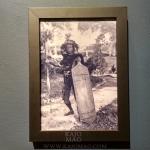
A screenshot from Alaistair Morrison’s memoir Fair Land Sarawak: Some Recollections of an Expatriate Official showcasing a photo of Asun.

In 1931, a former Penghulu named Asun led the Ibans of Kanowit, Entabai and Julau along the Rajang river in a revolt against the White Rajah.

Chang Pat Foh in Legends and History Sarawak stated the cause of the revolt was economic rather than tribal.

He wrote, “Because of the World Economic Slump, the prices of rubber and jungle produce dropped and the Ibans could not pay their taxes.

“Besides, the government insisted on carrying out all regulations causing much discontentment among the people who blame the government for their hardships, resulting in the revolt.”

At first, the Brooke government tried to negotiate with Asun. The last White Rajah, Vyner even went to Kanowit to meet him.

But according to Steven Runciman in The White Rajah: A History of Sarawak from 1841 to 1946, Asun was truculent and decided to continue the revolt.

Vyner reported that the difficulties faced by Asun and his peoples were largely due to the shortage of responsible European officers in the outstation.

Furthermore, there were too many clerks who insisted on all regulations being strictly carried out.

Runciman wrote, “With little or no money coming to them from the sale of their crops, the tribesmen found it hard to pay their taxes; and the clerks were not empowered to offer them a respite, nor were they people who could talk with friendly authority to them and explain matters with the easy good manners and jokes that the Dyaks loved.”

Penghulu Asun and the last revolt against the Brooke government
Kanowit bazaar.
The real reasons behind the revolt

George Washington once said, “Serious misfortunes, originating in misrepresentation, frequently flow and spread before they can be dissipated by truth.”

This might be the reason why Pengulu Asun’s revolt started in the first place. According to Dr Bob Reece in The Name of Brooke, the rubber price had caused some trouble among the Ibans in the upper Rajang district.

However, Reece added that “The more systematic collection of the annual door tax, together with the imposition of gun registration fees, had led to wild rumours of further taxes among these volatile upriver people.

“At the same time, the newly-created Forests Department had been establishing reserves where Ibans were not allowed to farm, hunt, or collect jungle produce. The issue of inland passes was tightened up, limits on up-stream settlement were enforced and a minimum size for longhouse was introduced in order to reduce mobility.”

Hence, these enforcement affected the Iban communities who were already short of virgin land for the cultivation of paddy hills.

Adding to the problem, the Brooke government was going through growing systemisation and centralisation in its administration affecting the personal relationship between the communities and the District Officers.

Besides the rumour of increased taxes, there was a rumour of seizure of land by the government.

However, Reece believed that Asun and his followers never constituted a proto-nationalist, anti-Brooke movement, and hostility was directed rather towards particular Brooke officers.

Pacifying the rebellion

Regardless of the reasons, Vyner sent the Sarawak Rangers on an expedition to put down the revolt.

Finally in December 1932, Asun, after reportedly failing to persuade the Iban from Batang Lupar to join him, surrendered and was exiled to Lundu.

After World War II, he was allowed to spend his last years in his home area on the Entabai tributary of Kanowit.

According to former Sarawak Information Services director Alaistair Morrison in his 1993 memoir Fair Land Sarawak, even in old age, Asun struck Morrison as being a formidable personality.

The aftereffect of Asun’s rebellion

Runciman pointed out the aftereffect of Asun’s revolt was a series of headhunting cases by a group of less than 30 young Ibans.

There were some recorded and isolated cases. In 1934, there were three Chinese killed on upper Rajang river and a group of Malays and Kayans attacked on the Pelagus with some of their heads taken.

The Brooke government managed to capture and sentence a handful of the headhunters to death over the years while a few of these rebels hid in the jungle.

“The last four gave themselves in the autumn of 1940, trusting in the Rajah’s clemency. To the irritation of his law officers, he pardoned them, delighted that headhunting should have ceased before the centenary of Brooke rule should be celebrated.

“By 1940, anyone could wander through Sarawak with no fear that his head would soon adorn a longhouse. It was no mean achievement to have eliminated a custom so deeply ingrained in the Borneo Peoples,” Runciman wrote.

10 South Korean gangster movies you need to watch

Just as Hollywood romanticizes pirates in its Pirates of the Caribbean movies, South Koreans have been doing the same thing to their gangsters.

In these movies, they popularise the idea and image of honourable criminal gang members, thus making them look so ‘cool’.

Not all of them have a happy ending, as some pay the price at the end of the movies.

If you are looking for South Korean gangster movies to binge-watch, here are 10 of KajoMag’s suggestions:
10 South Korean gangster movies you need to watch
1.A Bittersweet Life (2005)

Lee Byung-hun is perhaps one of the most recognised Korean actors, especially in Hollywood.

He is known for his role as Storm in the G.I. Joe movies and Billy Rocks in The Magnificent Seven alongside Denzel Washington, Chris Pratt and Ethan Hawke.

In A Bittersweet Life, Byung-hun plays Kim Sun-woo, a high-ranking enforcer/hotel manager owned by a crime boss.

He is instructed to shadow his boss’ lover Hee-soo (Shin Min-ah). He is also mandated to kill her if he discovers her cheating on him.

Well, things get complicated when Sun-woo decides to spare her life.

The critical reception for the movie was highly positive. British film magazine, Empire named it third in 20 greatest gangster movies you have probably never seen.

Byung-hun even won a handful of Best Actor awards for his performance .

Meanwhile, Hollywood announced in 2017 there will be a remake of it starring the ever-beautiful Michael B. Jordan.

Watch the trailer here.

2.The Man From Nowhere (2010)

Speaking of Denzel Washington, this South Korean gangster movie has an almost similar plot with Washington’s Man on Fire (2004).

South Korean heartthrob Won Bin plays Cha Tae-sik who goes on a blood rampage after his neighbour, a little girl, is kidnapped.

(Fans will not forget an iconic scene where Won Bin prepares to take some lives by cutting his hair – shirtless – in front of the mirror.)

On a serious note, the film showcases the darker side of organised crime such as drugs, organ harvesting and child slaves.

Watch the trailer here.

3.A Dirty Carnival (2006)

Maybe the reason why people are attracted to these gangster movies is because of their charismatic lead actors.

Just like A Dirty Carnival (2006) in which starring another South Korean heartthrob, Jo In-sung.

Who else would you need to consult with when making a gangster movie other than a gangster himself?

In-sung plays a small-time gangster who helps his film director friend as a consultant in a gangster movie.

Then, things get complicated when art starts to imitate life, especially in a life of organised crime.

Watch the trailer here.

4.Friend (2001)

Friendship is something all humans value, whether you are involved in an organised crime or not. Friend (2001) follows the story of four childhood friends with two of them working in rival gangs in their adult lives.

The leader of the group, Joon-seok (Yu Oh-seong) is a son of a powerful mob boss. During a confrontation with a teacher, the teacher asks the group “What does your father do?” and you can imagine the teacher (played Kim Kwang-kyu)’s face when Joon-seok answers the truth.

Although it was small, it has become one of Kwang-kyu’s most memorable roles. Plus, his line “What does your father do?” is still being parodied over the years.

This film is a semi-autobiography of director Kwak Kyung-taek’s experiences with his friends growing up in Busan.

Watch the trailer here.

5.New World (2013)

Speaking of memorable lines, this South Korean gangster movie probably has the most.

Each of the character has his own iconic line such as Hwang Jung-min “Hey brother” and Park Sung-woong’s “This is just the right weather to die.”

Full of action, the film is a melodrama circling around Lee Jung-jae as an undercover cop who finds it difficult to be both a policeman and a gangster.

Basically, the plot is a South Korean gangster version of Games of Thrones. The conflict starts when the chairman of South Korea’s largest corporate crime syndicate mysteriously dies and his successors subsequently start fighting for the crown.

Watch the trailer here.

6.Nameless Gangster: The Rules of Times (2012)

Besides being a gangster movie, what else do Nameless Gangster: The Rules of Time (2012) and New World (2013) have in common?

They both star veteran actor Choi Min-sik. The film is set in the 80s and 90s in Busan when corruption and organised crime were rampant in the country.

Time magazine even called it “the Korean mob film Martin Scorsese (who is known for his modern crime and gang conflict) would be proud of.”

In this movie, Min-sik plays a corrupt customs official who finds a haul of drugs. He then teams up with a notorious gangster to establish one of the most powerful crime organisations.

If you enjoyed John Grisham’s book, you most probably will enjoy this movie.

Watch the trailer here.

7.The Outlaws (2017)

Yanbian is an autonomous prefecture located in northeastern Jilin Province, China where a large number of ethnic Koreans call it home.

Unfortunately in Korean dramas and cinemas, Yanbian is always depicted as the place for Korean-Chinese mobsters including The Outlaws (2017).

Based on real events in 2007, the plot follows a turf war between a local gang in Seoul and the Heuksapa gang from Yanbian.

The movie stars Ma Dong-seok from the Train to Busan as a detective who tries to keep the peace in the midst of this gang war.

Watch the trailer here.

8.The Villainess (2017)

Finally, a female lead in a Korean gangster movie! Just imagine John Wick as a girl trained in Yanbian to be a highly skilled assassin, and that is pretty much what The Villainess (2017) is all about.

Watch Kim Ok-bin as the female John Wick, wearing a wedding gown while aiming a rifle and wiping out gang members in this movie.

The movie had its world premiere at the 70th Cannes Film Festival in May 2017. There, it received a four-minute standing ovation.

Watch the trailer here.

9.Breathless (2008)

This movie will leave you breathless, mainly because of its main actor Yang Ik-june’s raw performance. He also wrote, directed and edited the movie.

Perhaps the closest to reality in terms of gangster movies on this list, the plot revolves around child abuse and loan sharking.

Ik-june plays a loan shark named Sang-hoon who makes friend with a trouble schoolgirl named Yeon-hee.

While some of these gangster movies showcase established organised crime which usually hide behind big companies and spending money lavishly, this movie portrays the common gangsters that live among us.

Coming from broken homes, they are violent, foul-mouthed, working for Ah Long, far from luxurious lives and struggling to pay rent like the rest of us.

Watch the trailer here.

10.Asura: The City of Madness (2016)

One of the favourite themes for any gangster movies, regardless of language, is politics.

Asura: The City of Madness (2016) is a classic tale of corrupt administration and law enforcement in the city.

The story goes that Detective Han (Jung Woo-sung) has been secretly doing dirty work for the corrupt mayor Park Sung-bae (Hwang Jung-min).

Then, a ruthless prosecutor comes in played by Kwak Do-won pressuring Han to cooperate in an investigation against the mayor.

Haven’t these people ever heard the saying, “If you play with fire, you might get burned”?

Watch the trailer here.

10 cafés in Sydney to experience food with a twist!

If Sydney has one thing to boast about other than its sightseeing and adventure offerings, it’s that it sure knows how to dine – with a twist.

Much to the delight of foodies out there, there’s always a new café or restaurant swinging open its doors in Sydney, each with its own unique take on common dishes to stand out from the crowd.

Here are 10 cafés in Sydney to experience food with a twist!
1.Devon Café

Devon Café, known for serving tongue-in cheek comfort food take on café staples, has become a favorite with locals.

Though the café differs slightly from branches, this foodscape never fails to serve up a delightful assortment of Asian-fusion mains and seasonal desserts.

Mostly, it is famous for its Japanese-inspired Breakfast with the Sakumas, a dish made up of a miso king salmon sprinkled with a smoked eel croquette and mayonnaise.

For those with a permanent sweet tooth, you can opt for the ‘DD Special’, a matcha and hojicha soft serve topped with well-seasoned hot chips.

If the hot-cold pairing is too much for your taste buds to take in, there are always other novelty desserts to choose from – a flaky pork floss cronut or a milk tea soft serve topped with black tapioca pearls.

WHERE: Devon Café Barangaroo, 19/200 Barangaroo Avenue, Barangaroo, NSW 2000 | Open daily 7am – 4.30pm
Devon Café, 76 Devonshire St, Surry Hills, NSW 2010 | Open daily 7am – 3.30pm

2.Manly Wine

Craving mouth-watering and Instagram worthy food? Hit up Manly Wine this Spring with its recent menu additions, poké cones and kombucha cocktails (limited time only).

Wrap your hands around the Hawaiian-influenced poke cones filled with a choice of rice and salad and two available protein – salmon and crispy tofu – for a scrumptious snack.

Next, wash them down with three thirst-quenching and refreshing kombucha cocktails: Spring Sour, Cherry Pop and the Kombucha Mule.

Aside from their specials, hit up other menu items that are worth trying, such as their roasted Spanish mackerel with heirloom beets and goats curd. Don’t forget to stop by for a lazy stroll along Manly beach afterwards – voted one of the top 25 beaches in the world on Trip Advisor.

WHERE: 8/13 S Steyne, Manly, NSW 2095 | Open daily 7am – late

3.Maybe Sammy
10 cafés in Sydney to experience food with a twist!

Cue the newly opened Maybe Sammy, a classic cocktail bar with its interior screaming 1950s Hollywood and Vegas.

Though food is not the focus at Maybe Sammy, outshone by its extensive list of signature cocktails and a selection of spirits, wines and beers, it is certainly not an afterthought.

Helmed by Maybe Frank’s chefs, the kitchen whips up bar food offerings that complement perfectly with their drinks, such as a delicate paper-thin blue corn taco with lavender-marinated salmon, avocado, corn and coriander, or a bagel with chunk strips of Wagyu pastrami.

WHERE: 115 Harrington St, The Rocks, NSW 2000 | Open Tuesday to Sunday 4.30pm – 1am

4.Don Taco (Redfern Surf Club)

The owner-chef duo of Sydney’s Bar Ume and Ume Burger will be opening Don Taco inside the inner-city bar Redfern Surf Club, known for its laidback beach vibes and canned cocktails.

Here, the pair will be unveiling their take on a ‘Japi-Mexi’ taco rice bowl, an Okinawan specialty of koshihikari rice topped with Tex-Mex flavours, catered for both carnivores and veggie-lovers.

The chefs hope to roll out more funky assortments on their menu soon, but in the meantime, enjoy food from this holy union between the two cuisines. 

WHERE: 60 Botany Rd, Alexandria, NSW 2015 | Open Tuesday to Sunday 4pm – 12am

5.Sash

Yet another ‘Japi-Mexi’ food instalment, Sash focuses on eye-searing technicolor Japanese-style pizzas, tacos and sliders, most known for its “sashizza” – an award-winning sashimi pizza.

Built on either squid ink dough or oven baked rice, the toppings consist of raw fish, avocado, mango, strawberry and wasabi mayo.

Bite-sized chili mayo prawn sliders and spicy tuna tacos with avocado salsa are available for sharing as well. For the afters, head for their raspberry macaron ice-cream sandwich —a dessert that’s as pretty as it is tasty.

WHERE: 82 Wentworth Ave, Surry Hills, NSW 2010 | Open Monday 4.30pm – 11pm, Tuesday to Thursday 12pm – 11pm, Friday & Saturday 12pm – 12am, Sunday 1pm – 12am

6.Valet by V Lounge

Hopping on to the Butterfly Pea Flower trend is newcomer Valet by V Lounge, serving up their show-stopping Beach Balls – deep-fried sweet potato mochi balls paired with a blue butterfly pea flower custard as the dipping sauce – the embodiment of a summer beach on a plate.

To differentiate itself, this playful café is also introducing their liquid nitrogen infused Tiramisu bingsu and their udon topped with salted egg curry sauce that is both delicious and picture-perfect.

With that, this modern Pan-Asian cafe is not only bringing Cabramatta a wide array of decadent dishes, but also the new kid on the block for Instagram lovers.

WHERE: 38 Arthur Street, Cabramatta, NSW 2166 | Open daily 9am – 6pm

7.General Chao
10 cafés in Sydney to experience food with a twist!
Generla Chao

Located in Sydney’s suburb of Chatswood, the kitchen of General Chao is not only busy preparing decadent culinary creations such as their Jasmine tea smoked duck dumplings and crispy caramelised pork belly salad, but also focusing on perfecting their in-house XO sauces.

Featuring flavours such as black truffles, abalone, dried scallop and shrimp, jamón and gold leaf, the XO sauces are a perfect accompaniment to the dishes.

Not forgetting the dessert lovers, indulge in an intriguing Shanghai Banana – a fried banana wrapped in crispy egg noodles served with coffee caramel and stem ginger ice cream, blending the flavours of east and west.

For something quirky, knock yourself out with their Thai green curry ice cream. Taking inspiration from street food of pan-Asian countries and preparing it with Western techniques, General Chao is definitely a go-to on days that you would like to tantalise your taste buds.

WHERE: District Dining, 436 Victoria Avenue, Chatswood, NSW 2067 | Open Sunday to Wednesday 12pm – 10pm, Thursday to Saturday 12pm – 12am

8.Mark + Vinnys
10 cafés in Sydney to experience food with a twist!
Beetroot Spaghetteni

Just when you think you know all about your pastas, hold that thought because you haven’t visited Mark + Vinny’s.

This intimate restaurant has a menu full of surprises that will tantalise your senses – from a neon-blue spirulina tagliatelle made with a nutrient-dense powdered alga topped with blue swimmer crab, bottarga and pangrattato, to a ruby-red beetroot spaghettini paired with truffle and cashew crème faiche and a charcoal-black bucatini finished with a vegan sweet potato “egg yolk”.

With a full menu of over 50 spritzes to offer, wash your meal down with a drink, or two. Perfect for the adventurous health-conscious millennials, this gem is the place to be. 

WHERE: G08, 38-52 Waterloo Street, Surry Hills, NSW 2010 | Open Monday to Saturday from 6pm, Fridays for lunch from 12 – 3pm

9.Speedos

Over at Speedos, you’re certainly not short of Insta-worthy opportunities, but the one that takes the cake is their Caramelised Banana and Chia Vegan Pancakes – a mouthwatering stack of three fluffy pancakes, topped with poached berries, fig, pistachio crumble and maple syrup.

For a lighter but equally yummy option, try their Raspberry, Lime and Ricotta Hotcake, a drool-worthy combination of fig, semolina, strawberry, pistachio ice cream, rose and lime reduction.

Taking up residence in Bondi’s trendy north side, Speedos Café is a favourite among locals and those just visiting.

WHERE: 126 Ramsgate Ave, North Bondi, NSW 2026 | Open daily 6am – 5pm

10.Cuckoo Callay
10 cafés in Sydney to experience food with a twist!
‘Pimp Mi Goreng’

Cuckoo Callay has surely established a name for themselves with their very own Mi Goreng chicken thigh burger – packed with maple bacon, house-made kimchi, avocado and coriander aioli on a potato burger bun.

That’s definitely one way to do a burger right. This very café is the brainchild of two minds not content with providing a location for die-hard coffee lovers, nor subsidising Sydney’s impressive café eateries – but bringing together the perfection of both. You’ll find the ‘Pimp Mi Goreng’ at both outlets.

WHERE: 413-415 Crown Street, Surry Hills, NSW 2010 | Open Monday to Friday 7am – 4pm, Saturday 8am – 4pm, Sunday 8am – 3pm
BC1 Newtown Train Station, Newtown, NSW 2042 | Open Monday to Friday 6am – 4pm, Saturday 8am – 4pm, Sunday 8am – 3pm


This is a press release provided on behalf of Destination New South Wales.

Unimas and Limkokwing shine on first night of AMS 2019

/

The long-awaited Alta Moda Sarawak 2019 (AMS 2019) kicked off its first night on March 7 with designs by students from Universiti Malaysia Sarawak (Unimas) and Limkokwing University of Creative Technology.

Officiated by Sarawak Assistant Minister for Youth and Sports Datuk Snowdan Lawan, this inaugural fashion and lifestyle event saw three designers from each university pull off a dynamic runway show, showcasing diverse looks, from dramatic evening gowns to chic street styles.

AMS 2019: Bringing high-fashion to your doorstep

AMS chairperson Datin Esther Mujan Balan, who was regal in her canary yellow assymetrical evening gown, said that she looked forward to Alta Moda Sarawak being a successful annual event that can elevate Sarawak to a leading fashion hub in Southeast Asia, on top of attracting potential tourism.

Esther added, “We hope that events like these, our Sarawak designers and fashion model talents will not need to travel so far to showcase their amazing creations because Alta Moda Sarawak will be able to generate crowds and visitors to Sarawak ranging from among fashion enthusiast, the industry people, fashion magazines and medias, and retail buyers.”

Besides the 21 designers who will be showcasing among the best that Sarawak Malaysia has to offer, AMS 2019 also had international models striding around the runaway among the 24 models from Sarawak.

A boost for Sarawak tourism

Meanwhile, Snowdan, who graced the event in a striking suit with gold embroidered feather motifs, stated that the Sarawak government took pride in having Alta Moda Sarawak as another tourist attraction for the state.

“The organising of the three-day event will complement our efforts to boost tourists’ arrival in conjunction with the ‘Visit Sarawak Campaign’.”

He was also pleased to announce that the efforts in promoting the campaign had shown good results so far even though it was only entering its third month.

Snowdan added, “The number of visitors to Sarawak especially from other states in Semenanjung has dramatically increased to 68% as compared to January 2018. The overall arrivals itself have also increased by 10.72% with the total of 326, 347 visitors.”

About Alta Moda Sarawak

AMS 2019 is a brand platform for Sarawakian designers to come together showcase their talents and creations in the field of arts, culture and craft.

Besides the fashion show, the event also featured art exhibitions by The Accidental Artist, Hasbah Saufi, Mary Ann Vaz and 9-year-old artist Azaira Mohd Nizam from the Dyslexia Association.

In addition to that, there are diamond jewellery by Diamente, songket weaving by Tanoti, Sarawak Malay Keringkam embroidering by Sazalia Warisan Craft, handbags by Sarawak Penan Helping Hands and bead accessories by Punggu creations on display.

The foyer area opens daily from 4pm daily till the show’s closing time.

No tigers in Borneo? Thank the smart-ass kancil

Everybody knows what a tiger looks like; it is known for its one-of-a-kind fur pattern of dark stripes against reddish-orange fur.

Besides Malaysia, it is also the national animal of India, Bangladesh and South Korea.

Although Borneo is home to around 222 mammals, 44 of them being native to this island, no tiger has been officially recorded here.

It is believed that there used to be a Bornean tiger, which could possibly have been from an extinct tiger population thought to have lived in the Sunda island of Borneo in prehistoric times.

Archaeological excavations in Malaysian Borneo found an upper canine tooth and bones that were identified as belonging to a tiger.

However, some believed that these items had been obtained through trade.

No tigers in Borneo? Thank the smart-ass kancil
It has been assumed that the Bornean tiger might have been rather small in size, similar to the Sumatran tiger. Credits: Pixabay
The legend behind why there are no tigers in Borneo

According to a legend recorded by Harold Courlander, we can put the blame on the kancil, or lesser mousedeer (Tragulus kanchil).

Kancil, or Sang Kancil, is a popular character in Indonesian and Malaysian folktales and is widely known for its wit and cunning.

Long ago, when tigers were rulers of Java island, a great famine broke out.

The tigers came together to discuss how to overcome the famine. They came to the decision that the only way out was to take over Borneo island. There, they hoped to find food and force the inhabitants to pay them tribute.

So the tiger king appointed three messengers to meet the King of Borneo and deliver an ultimatum: “Send us food and gold, or we shall came with an army to conquer you!”

To ensure the threats were real, the tiger king even plucked his largest whisker to show the King of Borneo as proof of his strength.

The three tiger messengers crossed the Java sea and landed on Borneo. There, they began their mission to look for the King of Borneo.

They searched high and low but could not find anybody. (This is because the creatures had heard about the tigers and went into hiding.)

Unexpectedly, the messengers came across Kancil, who had heard of their arrival and been waiting for them. The tigers demanded he bring them to the King of Borneo so they could deliver the message and the whisker.

Just like our modern day version of “Please leave a message after the beep”, Kancil replied that his king was busy hunting, but promised to convey the message and return with the king’s own whisker in answer.

The role of a porcupine

Instead of looking for the ‘king’, Kancil went to the cave of the thick-spined porcupine (Thecurus crassispinis). It is one of the three species of porcupines that can be found in Borneo.

Kancil asked the porcupine to pull one of its quills from his back. Then, he returned to the tigers with the quill.

Besides his cunning and wit, Kancil is known to trick his opponents with falsehoods and exaggerations. He then told the tigers that he found his king resting while his servants sharpened his claws by grinding them between two mountains.

He related that the King of Borneo’s message to the tiger king was that his soldiers were tired of their peaceful existence and burned to go to war.

To show his readiness to go to war, the king of Borneo had plucked a whisker from his face.

With that he produced the porcupine quill and gave it to the tiger messengers.

When the messengers returned to Java with the quill, the tiger king was surprised to see the so called “whisker”, as it was 20 times thicker than his.

Imagining defeat at the hands of a giant adversary, the tigers were quick to abandon their plans to Borneo, and that is why there are no tigers on Borneo today.

How were jar burials carried out in Borneo?

A jar burial is where one’s remains are placed into a large earthenware jar and then placed in a grave or a tomb.

The custom of jar burials can be found all over the world including India, Taiwan, Japan, Iran, Syria, Egypt, the Philippines, Thailand, Vietnam and Malaysia.

How were jar burials carried out in Borneo?
Clay jars on display at Sabah Museum.
Where did these jars come from?

First of all, where did all of these jars come from? In Malaysian Borneo where jars – commonly known as tajau – were widely used in the past, these jars came from China through traders and merchants.

Zhao Rukuo or Chau Ju-kua was a Song dynasty official who wrote the book titled Zhu Fan Zhi. Although he himself never travelled outside of China, the book contained information on China’s trading records with the outside world. He also wrote a list of foreign places with descriptions of each place and their local customs.

Gaining his information from foreign merchants, Zhao recorded a wide range of countries including Japan, Srivijaya, Brunei, India, Mecca, Africa, Spain and Borneo.

From Zhao’s writing we know that China was exporting pottery to Borneo at the beginning of the 13th century. But it is also possible the trade started at a much earlier date.

In Borneo, this pottery was traditionally used for many purposes; as a sign of wealth, as a currency and to bury their loved ones.

Jar burials found in Niah Caves, Sarawak

One good example of jar burials in Borneo can be found in Niah Caves, Miri. The oldest jar burials found intact in the archipelago were excavated from the Neolithic cemetery found there.

How did the archaeologists determine that it was a Neolithic cemetery? They found three small bronze items; two from inside the jar burials. They dated all three bronzes items to a time earlier than 500 cal BC.

However, only 5-10% of the burials in Niah were placed in a jar. Some were buried in wooden coffins or bamboo caskets.

The dead who came back to life after being stuffed in a jar

Even so, British administrator and Sarawak ethnologist Charles Hose (1863-1929) explained that old jars were more valuable than the newer ones.

Additionally, not all could afford the luxury of a jar, especially a big one that could fit a dead body. Those who could not afford it had to make do with a wooden coffin.

The same thing applied in North Borneo back then. Museum curator and archaeologist Ivor Evans (I886-1957) recorded in his book Among Primitive Peoples in Borneo wrote:

“All good Dusuns wish to be buried in a jar; but a jar is expensive, and so the bodies of poor people are buried in a rough wooden coffin or wrapped up in mats. If the deceased is sufficiently well off to afford a jar, the body is slipped into it legs first and pushed, or even stamped, down till it does not protrude.”

He also recorded an interesting story of a man who came back to life after being buried in jar.

Evans had a Dusun servant named Omboi. There was a bad epidemic of smallpox in the Tuaran district which killed off many people, including Omboi’s father.

So they decided to bury him in a jar. Evans wrote, “The neck of the jar was, however, rather narrow, and when the mourners began to stamp the body home with the flat of their feet, the “corpse” got up and objected to the process in forcible language. The patient had merely been in a state of coma, and he eventually recovered.”

How could a body fit into a jar?

So what happens if the mouth of a jar is too narrow to fit the body through? According to Evans, in Tuaran, Sabah, the vessel was cut in two horizontally at its largest circumference. Then the body packed into the lower portion and the top replaced and fastened down with some kind of resin.

But then how did they actually cut it? Is it possible to cut it into two without breaking the pottery into pieces? Hose might have had the answer.

In Pagan Tribes of Borneo, Hose explained that the jar was sunk in the water of the river until it was full of water and wholly submerged.

It was held horizontally by two men, one at either end, just beneath the surface of the water.

Then, a third man struck the widest circumference of the jar with an axe. They turned the jar over and the man struck the jar at the opposite side of the first strike.

Hose wrote, “At the second stroke the jar falls in two, sometimes as cleanly and nicely broken as though cut with a saw.”

Jars as a secondary burial

Not all jar burials in Borneo were practiced as a primary burial in which the body was placed immediately after death.

According to Hose, a jar burial was also practiced as a secondary burial. For example, the usual practice of the Kenyah group back then was to keep the coffin containing the corpse until the end of the mourning period.

“A bamboo tube carried down through the floor to the ground permits the escape of fluids resulting from decomposition. The coffin itself is sealed closely with wax, and elaborately decorated with carved and painted wood-work.”

After several months or even years, a feast was held to open up the coffin. Then the bones were taken out, cleaned, packed into smaller coffin or large jar before carried to the cemetery.

“There it is placed either in the hollowed upper end of massive post, or into a large wooden chamber containing, or to contain, the remains of several persons, generally near relatives. These tombs are in many cases very elaborately decorated with painted woodwork,” Hose wrote.

Today, the act of putting several family members in a large tomb is still practiced by some of the Kayan and Kenyah communities in Sarawak. Except that these large wooden chambers are now made of bricks and look like small, well-decorated houses.

However, the custom of jar burial in Borneo is no longer practiced and have been replaced by the more conventional wooden casket.

How to cure cholera according to old Sarawakian traditions

Cholera is a disease which results from colonisation of the small bowel by the Vibrio cholerae bacterium.

It is caused by lack of clean water supply, improper sewage disposal, poor personal hygiene and unsatisfactory environmental sanitation.

The classic symptoms include watery diarrhea that lasts a few days, as well as muscle cramps and vomiting.

How to cure cholera according to old Sarawakian traditions
One of the symptoms for cholera is vomiting.

For Hematram Yadav and Chai Meng Chee who did research on the historical perspective of cholera in Sarawak, they stated that the disease has been here since 1873.

A number of epidemics have been recorded since then, the major ones taking place in 1873, 1888, 1902, 1910 and 1911.

The worst of all outbreaks were recorded in 1902 with over 1,500 recorded deaths and the actual number of cases being unknown.

At this time, there was a punitive expedition to punish the alleged Iban rebels in Simanggang district and the mission ended catastrophically due to cholera.

Lack of awareness of the causes and methods of prevention for cholera were the main causes of these outbreaks, but the late 19th and early 20th century Sarawakians did try to find our own cures for the disease.

From Iron Throne-looking chairs to manang , here are the traditional ways Sarawakians tried to cure cholera:
1.A Chinese possession

Many of the outbreaks in Sarawak occurred during the reign of the Second White Rajah, Charles Brooke.

The Rajah and his wife, Margaret tried to relieve the panic among Sarawakians during these epidemics by riding every morning through the bazaar where cholera was rife.

There, according to the Ranee, the atmosphere was impregnated with the smell of incense and joss sticks. The Chinese burnt them in order to mitigate the plague.

Margaret wrote in My Life in Sarawak (1923), “ I remember one magnificent junk, built regardless of expense, the Chinese merchants and their humbler and poorer brethren giving their dollars and cents ungrudgingly to make this vessel glorious, as a sop to stay the ravages of the infuriated god. The junk was placed on wheels and dragged for three miles down a bad road to a place called Pinding where it was launched on the waters of the river, to be borne by the tide – it was hoped – to the sea.”

She added the procession accompanying the vessel was extremely picturesque. There were great banners in scarlet, green and blue with embroidered golden dragons.

How to cure cholera according to old Sarawakian traditions

Cholera is a disease caused by bacterium called Vibrio cholerae.

While we can imagine how exciting and colourful this procession must have been because of our own experiences today, this ‘cholera-curing’ procession was even more fearsome.

The procession was led by a man seated on a chair that looked more dire than the Iron Throne in Games of Thrones. The chair was an arm-chair formed entirely of swords, their sharp edges forming the back, the seat and the arms.

A man, clothed only in a loincloth and a handkerchief on his head, sat on the sword chair. “His head rolled from side to side, his tongue protruded, and only the whites of his eyes could be seen. I thought he must be mad or in a fit, but one of our Syces told me that was trying to allay the cholera,” Margaret wrote.

Meanwhile, the crowd that followed him was screeching, yelling, beating gongs and making a terrific noise.

The gruesome procession took place morning and evening during the first weeks of the epidemic. But according to the Ranee, instead of allaying the scourge it appeared to have the effect of increasing it.

After awhile, the Rajah had to give an order to suppress the procession.

2.A Muhammadan rosary

There was an old lady named Dayang Kho who lived in Kampung Gerisek, (Kampung Gersik today). She was a well-respected figure among the Malay communities back then.

And she had her own ways to cure the disease. Margaret state, “Daiang Kho had brought with her from Mecca a Muhammadan rosary, and this was made great use of in cases of illness in Kuching. The rosary was placed in a tumbler of cold water over night, and the liquid poured into various bottles the next morning to be used as medicine.”

3.Manang and pelian

The concept of illness and injury among the olden Iban communities was closely linked to religion and magic.

For them, cholera was the coming of a great sea to kill and devour. The traditional way of curing was also used to cure other diseases such as smallpox; by healing (pelian) offered by the manangs (healers).

Do you know other traditional ways to cure this disease? Let us know in the comments box.

Featured image is the “War Dance of the Lundu Dyaks” from The Expedition to Borneo of H.M.S. Dido for the suppression of Piracy; with extracts from the Journal of J. Brooke Esq., of Sarawak, The British Library.

NAMA, girl group with hijab wow the judges on Asia’s Got Talent

NAMA, girl group with hijab wow the judges on Asia’s Got Talent

There have been many singers in this season of Asia’s Got Talent but there’s not one like NAMA, an all-girl group from Malaysia.

Decked out in hijab, the four ladies gave the performance of their lives as they sang Lady Gaga’s Bad Romance and received a standing ovation from the audience.

“I have never seen a group of four beautiful women in hajib performing like this. We need a group like you and I love the song choice,” Anggun praised.

“You guys are like the modern-day Malaysian version of The Supremes!” Jay Park said.

The members, Nur Fazrina, Noor Syamimi, Norfazira and Nur Farahida met in 2016 when they were studying in the University of Malaya in Kuala Lumpur.

They bonded over their love for music and started performing to prove that strong women can have ambitions.

While David Foster was not impressed by their singing abilities, NAMA received two yeses from Jay Park and Anggun and they will be in the running to appear in the semi-finals.

Watch the encore telecast of this episode on Sunday at 9.05pm (8.05PM JKT/BKK) on AXN. New episode of Asia’s Got Talent airs every Thursday at 8.30pm (7:30pm JKT/BKK) on AXN. To follow the journey of this season’s acts, check out #AXNAsia and #AsiasGotTalent.

About Asia’s Got Talent

To watch extended highlights of Asia’s Got Talent and exclusive behind-the-scenes footage, fans can subscribe to the official AXN Asia YouTube Channel at www.YouTube.com/AXNAsia.

AXN has also teamed up with Google to add a Google Assistant Action of the show experience,  the acts on their mobile devices. Fans can activate the Google Assistant and simply say “Talk to Asia’s Got Talent” to get the conversation started.

Asia’s Got Talent is the 67th adaptation of the Guinness-World-Record-breaking hit “Got Talent” format, which was created by Simon Cowell’s Syco Entertainment and is co-produced by FremantleMedia.

The “Got Talent” format is officially the most successful reality TV format in history and currently airs in 186 countries.

NAMA, girl group with hijab wow the judges on Asia’s Got Talent

Six places in Sarawak where you can find rock art

In archaeology, rock art or cave paintings are man-made markings drawn on natural stone.

Unbeknownst to many, there are at least six interesting historical rock art sites found in Sarawak. Each holds a piece of its own unique history that has not yet been fully uncovered.

Here are six places of rock arts in the Land of Hornbills where you can find them:
1.Santubong Village
Six places in Sarawak where you can find rock art
The boulders at the beach of Kampung Santubong.

According to Sarawak Museum Journal published in December 2010, a total of 11 boulders were found on the edge of a curving portion of the beach of Santubong village (Kampung Santubong).

These boulders display at least 22 pieces of rock art with most of them facing the water.

Some of them have facial features while others come with geometric designs.

Still little is known about these rock arts at Santubong village.

2.Jaong River

Located about 2km from Kampung Santubong, there is a small tributary river of the Santubong river called Sungai Jaong.

There lies the famous ‘Batu Bergambar’ or carved boulder which is at least 1,000 years old.

This particular rock art looks like a kind of headdress. In addition to that, there are about 10 rock arts spread across the Sungai Jaong area.

Besides rock art, Sungai Jaong was also the site of an ancient iron smelter.

There were crucibles used in smelting iron as well as porcelain, earthenware and glass beads.

While the exact age of the rock arts are unknown, the iron smelter is believed to be from the 10th century.

3.Sireh Cave

Located at Serian district, this cave site is mainly associated with burials and rock arts of charcoal paintings.

Found at the cave entrance, the wall paintings depict mainly human and animal motifs.

Besides that, the cave entrance is also where earlier settlers cremated their warrior’s bodies.

During an excavation led by Ipoi Datan in 1989, they found a sequence of pre-pottery layers with stone tools at least 20,000 years old.

4.Sorang Caves

The rock arts found at Sorang Cave, Tatau are believed to be closely related to the Pre-Neolithic stone tools discovered there.

Not much has been reported about Sorang Cave, except that the paintings found there are different from Sireh and Niah caves.

5.Niah Great Cave

The most famous rock arts on this list are none other than the ones found in Niah Great Cave at its Gua Kain Hitam (also nicknamed The Painted Cave).

Discovered in 1958 by an archaeological team led by Tom Harrisson, some of the paintings were found up to 15 feet above the cave floor and extending over 200 feet in width.

Archaeologists believed the rock arts were associated with funeral burials in boat-like coffins.

Apart from the longboats/coffins, there were also paintings of humans and animals.

6.Long Semadoh

According to Sarawak Museum, there are five ancient burial sites around Long Semadoh. Each of them was found with Ming ceramics and lidded jars from the 18th-19th century.

As for rock arts, there are two stone carvings of human figurine which probably go back as far as the 17th to 18th century.

Read also:

Six archaeological sites in Sabah that you need to know

KajoAsks: Making a social impact through art with Mary Anne Vaz

/

Self-taught artist Mary Anne Vaz was born in Penang, but she has called Sarawak home since she married her Kelabit husband.

She uses various mediums in her art including batik, acrylic, water colour and pastels.

A prolific painter like one of her idols Vincent Van Gogh, her work has been exhibited in various places such as Lingnan Museum of Art in China, Pustaka Miri and Saradise Gallery, Kuching.

She now teaches both young and old from an art center at her home.

Not content to just paint, she, together with her art students, have started a social project whereby proceeds from sales of their paintings will go to buying story books for Penan children in Ulu Baram.

Recently, KajoMag had the opportunity to learn more about the artist behind the paintings and her inspirations.
KajoAsks: Making a social impact through art with Mary Anne Vaz
Vaz and some of her paintings.
KajoMag: I understand that you started your journey in art as early as six years old. What do you remember about your paintings as a kid and what made you want to paint?

Mary Anne Vaz: I attended kindergarten where my teacher, a Chinese man gave me a chance to paint. I painted myself climbing a tree. Then I watched my brother paint big canvases with oil paints. I developed a style that was similar to oil painting in that I used very thick paints.

One day my dad told me, “You won a gold medal.” The concept of winning was not in my experience and I replied “ I don’t want a gold medal.” Then, it appeared on TV and in the news. It was the Queens Gold Medal. 
       
I didn’t have any art books or art teachers. All I had was paint, brushes and paper. But there was a book on the human anatomy. From there, I became interested in painting human figures. So, most of my artwork features human figures.              

I am fascinated with the hornbill dances of the Orang Ulu. Several of my paintings are on the dances, tribal attire, and everyday life of the Kelabits. I have also painted the legends of the Kelabits.

Then, I met the famous tattoo artist Ernesto Kalum. I became fascinated with his tattoos and have painted three paintings featuring him, one of them being “Warrior of Peace”.

KajoMag: How would you describe your style as an artist? Are there any painters that you particularly look up to?

Mary Anne Vaz: I am a symbolic artist. My paintings all carry deep messages. For example “ Warrior of Peace” which features Ernesto without his tattoos, without the sword, conveys the message that a leader must lay down his weapons and be vulnerable in order to lead his people to peace and face a brighter future.

I painted this after the summit between Trump and Kim Jong Un. The USA and North Korea meeting was to me a step towards disarmament. This is true courage. A warrior with no weapon is a truly brave warrior. 

I look up to several artists. The first one was Chuah Thean Teng, the Father of Batik, who showed that this traditional style of fabric painting could be fine art. I studied his techniques and created a style of contemporary batik with traditional processes.

The second one is Vincent Van Gogh. I collected books on him. He was a prolific painter and I identify with him as I am also a prolific painter.

The third one is Raphael Scott Abeng from Kuching. He inspired me as a friend and I find his paintings unique and witty social commentary.

The fourth one is Tan Wei Kheng. He is a dear friend; he stretched my first canvas and has always been supportive.

Pustaka produced an e-book on Tan Wei Kheng called Discover Sarawak and I was the researcher and writer of his art. He is also a symbolic artist; his paintings being social commentary and social documentation.

KajoMag: Are there certain places you feel most inspired to paint? If so, where?

Mary Anne Vaz: The place that most inspired me to paint was Bario. Twenty-nine years ago when my eldest son was born , my husband and I walked 12 hours through the jungle from Bario to Pa’ Mada to have the traditional name changing ceremony.

I remember the trees being tall and the floor of the jungle covered with a carpet of leaves. Later, I made a sketch of my father-in-law’s parang and its tree bark sheath.

I then painted it in contemporary batik style. It is now in the Sarawakiana collection of Pustaka Sarawak. I painted the fireplace in “Kelabit Lady” which was exhibited in China in the Lingnam Museum of Art in Foshan in October 2018. 

KajoMag: Can you name the biggest lesson you’ve learnt from being a part of the Sarawak art industry?

Mary Anne Vaz: The biggest lesson I have learned in being part of the Sarawak Art industry is that an artist must be dynamic, keep learning and growing. No doubt skills with brushes are important, but digital skills are vital to share our art and connect across nations.

Being multilingual is also important. When I went to China I prepared myself by learning to speak Mandarin.

Alta Moda Sarawak is a good example of how artists are being dynamic. Coming together to move forward. The leaders in Alta Moda Sarawak have created a bridge to tomorrow.

KajoMag: Care to share your hope for young artists in Sarawak?

Mary Anne Vaz: My art studio in Miri grooms young artists from as young as six years old. So, my hope is that parents take art seriously.

Give your child a chance to use the correct tools to paint. Give your child a good art tutor to mentor his growth. Let young artists develop their own style. I am happy that in my studio there are several young artists with very high potential.

I share my own techniques with them and encourage them to have their own vision. Parents have been very supportive in giving them time and resources to grow. What we need is more opportunities to exhibit the work of young artists.

KajoMag: Tell us more about your social project to buy books and reference books for the Penan children in Ulu Baram.

Mary Anne Vaz: My students and I started sending books to schools in Ulu Baram with the help of a friend who travels there regularly.

Each time my students sell a painting for RM50, they voluntarily donate RM10 to buy a story book. I also buy books that promote early reading such as books using phonics.

I will put about 20 books in a bag and give to my friend who takes them to the teachers there.

When I sell my paintings. I also buy some books for this purpose. I am thinking that story books are a source of joy, different from school books.
The Penan children and other children who live far from town may not have a chance to enjoy story books. Besides these, I have also bought encyclopedias for them.

About Alta Moda Sarawak

Interested viewers can catch Vaz and her works during this upcoming Alta Moda Sarawak.

To be held from March 7-9 at the old State Legislative Assembly (DUN) Building in Kuching, 24 designers and brands will be taking part in this event which aims to highlight the many colours of Sarawak’s cultures and diversities.

Check more of Vaz’s works on her website or follow her on Instagram.

1 54 55 56 57 58 75