Browse Tag

Things To Do - Page 4

10 pit stops you can make when driving from Kuching to Bintulu

Driving from Kuching to Bintulu takes about nine to 10 hours depending on your speed and the road conditions.

Although the scenery from Kuching to Bintulu may not be as breathtaking compared to the road from Kota Kinabalu to Ranau or Tambunan, there are still a few attractions along the way.

The journey can be exhausting, so you need to stop few times along the way to refuel, refresh yourself and refill your stomach.

Here 10 pit stops you can make when driving from Kuching to Bintulu:

1.Serian

After driving about 60km from Kuching, the first pit stop you can make is at Serian town. There is a petrol station, public toilet and lots of eateries.

You should also have a walk through the local wet market to buy some jungle produce, vegetables and even handicraft.

10 pit stops you can make when driving from Kuching to Bintulu
One of the famous hotspots in Serian, Ranchan waterfall.
2.Balai Ringin

If you are planning to skip Serian, you can drive another 30km to reach Balai Ringin.

Here, the public toilet is relatively clean and there is a small market selling vegetables and fruits in the morning. In the evening, there are stalls selling traditional cakes.

10 pit stops you can make when driving from Kuching to Bintulu
The public toilet at Balai Ringin.
3.Lachau

Lachau is one of the famous pit stops along the Kuching-Sri Aman route. It is famous as a selling hub for preserved fish.

Lachau is usually packed during breakfast and lunch times so parking might be a little bit difficult. This slowly growing town is about 50 minutes away from Balai Ringin.

10 pit stops you can make when driving from Kuching to Bintulu
Buy some preserved fish at Lachau market.
4.Sri Aman Junction

Before you make a right turn into Kuching-Bintulu route, another well-known pit stop is at the Sri Aman junction. There is a food court serving Malay and Chinese cuisine, a grocery store and a public toilet.

Here you can also find traditional cakes and fruits.

5.Mid-Layar Resting Center

After leaving Sri Aman, drive another one hour to reach Mid-Layar Resting Centre.

If you have the time, you can a make a stop at Engkilili town which is about 6km from the main road or you can save that town for another trip.

10 pit stops you can make when driving from Kuching to Bintulu
You can make swing by at small town of Engkilili to visit this mythical rock called Batu Nabau.

At Mid-Layar Resting Center is the most decorated public toilet in Sarawak. So even if you do not need a toilet break, it is still worth making a pit stop here.

The toilet is decorated with fake flowers, posters and funny Malay quotes and reminders. There are photo booths right outside the toilet to make your visit an Insta-worthy moment.

Other public amenities here are the surau, grocery store, food court and a petrol station.

10 pit stops you can make when driving from Kuching to Bintulu
The most decorated public toilet in Sarawak that comes with a photo booth at its doorstep.
10 pit stops you can make when driving from Kuching to Bintulu
Mid-Layar Resting Center near Betong, Sarawak, one of the must-stop pit stop from Kuching to Bintulu.
6.Jakar

Jakar can be considered the middle part of your journey from Kuching to Bintulu. Thus, it makes the famous pit stop to refuel. The public toilet at the petrol station is small but considerably clean.

This famous stopping point is also known for its prawn noodle at Peking Restaurant.

It is cooked in Foochow style with dark broth made of soy sauce. Additionally, the whole area makes a perfect place for a caffeine fix. This is because most of the eateries serve coffee using Jakar’s very own java beans.

10 pit stops you can make when driving from Kuching to Bintulu
Stop by at Peking Restaurant, Jakar and have a bowl of prawn noodle.
7.Sibu

From Jakar, there are two ways to reach Sibu town; it’s either using the Lanang or Durin bridge.
Turn to Waze or Google navigation to decide your route.

Making a pit stop at Sibu would take a lot of time from your journey because of the traffic jam heading to the town centre.

However if it is during dabai (Sarawak black olive) season, a pit stop at this Swan town is definitely a must.
Sibu is famous for the best quality with the most reasonable price for dabai in Sarawak.

8.Stapang

From Sibu drive another 46km to reach the small town of Stapang.

There is not much going on at this pit stop although you will find a market, public toilet and a petrol kiosk. The town is like most small towns in rural Sarawak where it becomes quiet after lunch time.

9.Restaurant Impian Selangau

This halal restaurant is famous among bus drivers so it is hard to miss with rows of buses parked outside.
Located at Selangau-Mukah junction, it is another busy pit stop along the Kuching-Bintulu road.The restaurant is open 24 hours and there is a grocery store, a free entry public toilet and a surau.

10.Tatau

About 55km before reaching Bintulu, the final pit stop you can make is at Tatau town.

If you make a visit to its market, you might find some local traders selling tuak (Iban rice wine). Why not buy a bottle to celebrate your long journey once you arrive in Bintulu?

5 accessible mountain peaks to conquer near Kuching

For climbers living or visiting Kuching, there are five accessible mountain peaks to conquer here.

Each mountain has its own charm and difficulties as well as legends and stories.

But all of them offer the best of what Sarawak has; rich biodiversity and luscious greenery.

If you are making a list of mountain peaks to climb, perhaps you can start from this list:

1.Mount Santubong
5 accessible mountain peaks to conquer near Kuching
The view that greets you from the top of Mount Santubong.

Located about 35km from the capital of Sarawak, Mount Santubong has been gazetted as a national park.

It takes up to 4 hours to reach to the top and up to 3 hours to hike down depending on your stamina.

There are some steep climbs which come with rope ladders but the view that greets you is worth the sweat.

Unlike other Sarawak national parks, there is no entry fee to Santubong. So you can climb this mountain for free.

Read what else you can do at Santubong here.

2.Mount Serapi
5 accessible mountain peaks to conquer near Kuching
The view from the viewing platform of Mount Serapi.

Mount Serapi is located at Kubah National Park which is about 20km from Kuching city.

The best part of this climb is the path is tarred all the way to the top!

Read five reasons to climb Mount Serapi at least once in your life here.

3.Mount Gading
5 accessible mountain peaks to conquer near Kuching
You can swing by to this waterfall no 7 while on your way to the top of Mount Gading.

This mountain is a little bit far from Kuching, about 80km near Lundu town.

Sadly, this mountain does not offer much a view, just a sign implying, “Yay, you have arrived at the peak!”

The climb takes about 8 hours up and down so for a physical activity, why not give it a go.

While you are there, here are things to do at Gunung Gading National Park.

4.Mount Singai
5 accessible mountain peaks to conquer near Kuching
The view from Mount Singai.

If you are a practicing Catholic and a climber, this mount makes the top of the list you have to ascend near Kuching.

The faithfuls usually say the Stations of the Cross while visiting Mount Singai.

There is no Instagram-worthy view from the mountain peak but there is one viewing point three-quarter along the way.

Here are KajoMag’s six reasons for you to climb up this mountain.

5.Mount Jagoi

Located about 45 minutes from Kuching, Mount Jagoi is conserved by Jagoi Area Development Committee.

For beginners, this is the perfect mountain for you as it only takes one to two hours to reach to the top.

Once you are up there, the view of nearby mountains and Kampung Serasot.

Contact the committee to know more about Mount Jagoi.

10 things to know before driving from Kota Kinabalu to Kundasang for the first time

Even if you are visiting Sabah for the first time, driving from its capital Kota Kinabalu to Kundasang is possible to make on your own.

By making the journey yourself without hiring a cab or paying for a tour package, you can save more money and enjoy the trip at your own pace.

10 things to know before driving from Kota Kinabalu to Kundasang for the first time
Sunflowers growing at Kundasang.

Kundasang is the highest settlement in Malaysia, standing at an elevation of 1,900m.

It is the closest town to Mount Kinabalu, the highest peak in the country.

The average temperature at Kundasang is about 20oC so you might want to pack a jumper or sweatshirt.

Here are 10 things to know before starting your engine from Kota Kinabalu to Kundasang:

1. Take an early flight in

Try to arrive in Kota Kinabalu early in the morning. You can either rent a car at the airport or you can arrange your rental service to send the car there.

2. Have breakfast in Kota Kinabalu

Fill yourself up before starting your journey. Kota Kinabalu has plenty to offer when it comes to food, from Sang Nyuk Mee (pork noodle), Tuaran Mee(wok-fried handmade noodles) to Ngiu Chap (beef broth served with noodles).

10 things to know before driving from Kota Kinabalu to Kundasang for the first time
This is another choice for breakfast in Kota Kinabalu, Fook Yuen cafe is famous for its fresh baked breads.
3. Fill up your gas tank in Kota Kinabalu

After filling your belly, it’s time to fill the fuel up before your ride. It takes about two hours to drive from Kota Kinabalu to Kundasang.

What’s so fun about it, you ask? As the saying goes, “It’s not about the destination but about the journey itself.” So grab some snacks and plain water, and let the journey begin!

4. Stop by at Chanteek Borneo Indigenous Museum

About 45 minutes into your journey depending on the traffic, make the first stop at Chanteek Borneo Indigenous Museum.

Located at Telibong-Tamparuli road, the museum is Sabah’s first miniature doll gallery. Truly one-of-a-kind, the museum aims to replicate all the traditional costumes from 300 ethnicities and and sub-ethnicities in Borneo into a miniature size.

You can also show your support to the local community by shopping at its souvenir shop where 70% of the products are made by women of Borneo.

Read more about Chanteek Borneo Indigenous Museum here.

5. Have fun at rumah Terbalik and the 3D Wonders Museum

After learning more about indigenous cultures, now it’s time for a quirky and fun experience.

Rumah Terbalik (‘upside-down house’ in Malay) and 3D Museum offers visitors an experience to visit a house where everything is flipped upside down. From its furniture and cars, visitors can now know how it feels to walk on the ceiling.

There is a 3D Wonders Museum on the same compound where visitors can learn about biodiversity and the ecosystem.

6.Take a photo at Tamparuli bridge

Before going straight to Kundasang, make a short detour into Tamparuli town to visit its famous suspension bridge.

It is so famous that there is even a song about it.

7.Have a taste of Sinalau Bakas

During your journey from Kota Kinabalu to Kundasang, you will see signs selling ‘sinalau bakas’. The highway stretch from Tamparuli to Kundasang is reportedly most famous for this unique Kadazandusun dish.

Make a pit stop at any of these stalls and give sinalau bakas a try. It is basically smoked wild boar.

8.Shop at Nabalu for souvenir

After driving for about 40km from Tamparuli, make another pit stop at Nabalu town.

Apart from taking a toilet break, here you can take a view of the majestic Mount Kinabalu. You can also contribute to the local economy by purchasing some souvenirs and snacks at the local market.

9.Buy some Sabahan preserved food

If you are feeling a little gastronomically adventurous while at Nabalu, buy some of their preserved foods.

Read more about the top three Sabah fermented foods you must try before you die here.

10. Explore Kundasang
10 things to know before driving from Kota Kinabalu to Kundasang for the first time
Make a visit to Kundasang War Memorial.

From Nabalu, there are 20km left till you arrive Kundasang. There are so many things to do here even if you are not intending on climbing to the top of Mount Kinabalu.

Pay your respects to British and Australian soldiers who died in the Sandakan Prisoners of War camp at Kundasang War Memorial.

Hike or soak in at Poring Hot Spring or shop for snacks, fresh flowers, fruits and vegetables at Kundasang market. We suggest trying their keropok bayam (spinach crackers).

Experiencea  little bit of New Zealand by visiting the Desa Dairy Farm where the cows flourish and fresh milk as well as gelato are aplenty.

As for accommodations, there are plenty to choose from depending on your budget. However, the best is to pick a room with a window overlooking the peak of Mount Kinabalu. Waking up to the view of this mountain early in the morning is something one must experience at least once in their lifetime.

Take in the view of Padas river from Fatt Choi Coffee Cabin

If you are looking for the perfect view of Padas river, look no further than Fatt Choi Coffee Cabin in Tenom, Sabah. Padas river which flows past Tenom from Long Pasia, south of Sabah, is famous for white water rafting.

The rafting route is 30km long, making it the longest rafting route in East Malaysia to date. It has also been recognised as one of the best and safest rapids in Southeast Asia.

Take in the view of Padas river from Fatt Choi Coffee Cabin
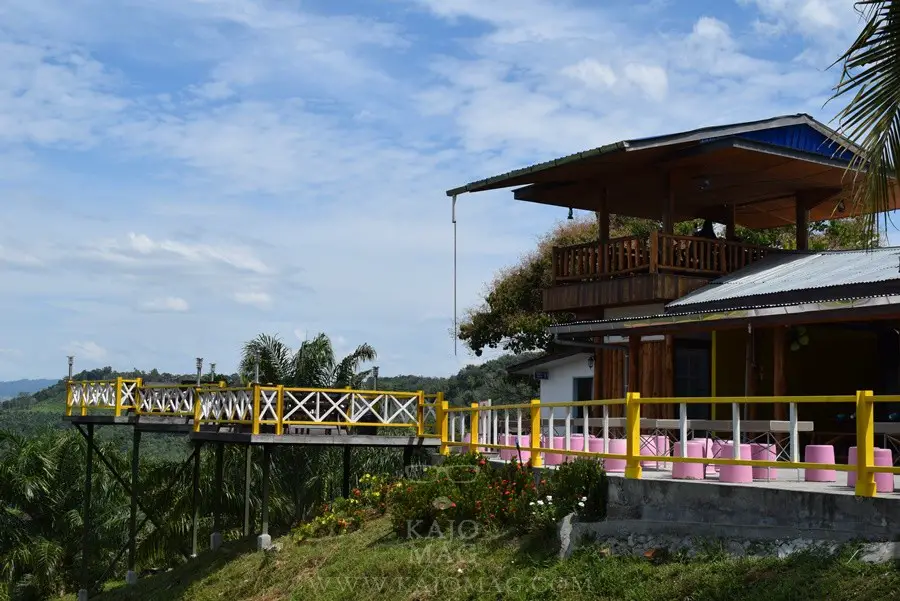
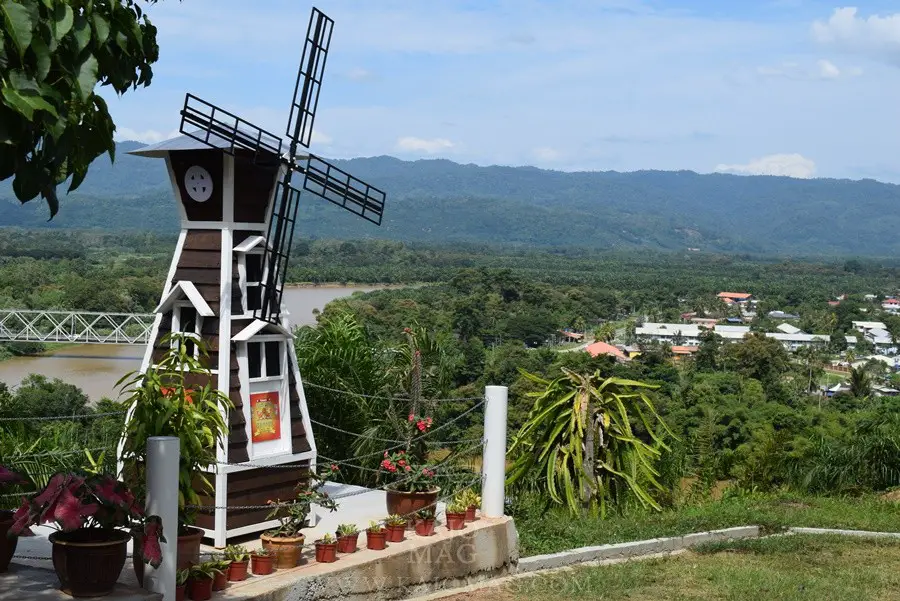
A view of Padas river from the highest viewing point of Fatt Choi Coffee Cabin.

No rafting, only Fatt Choi Coffee

At Fatt Choi Coffee Cabin, you may not  get the thrills of the Padas river but you can experience the beauty of its view.

Beside Yit Foh, Fatt Choi is one of the famous brands of Tenom coffee.

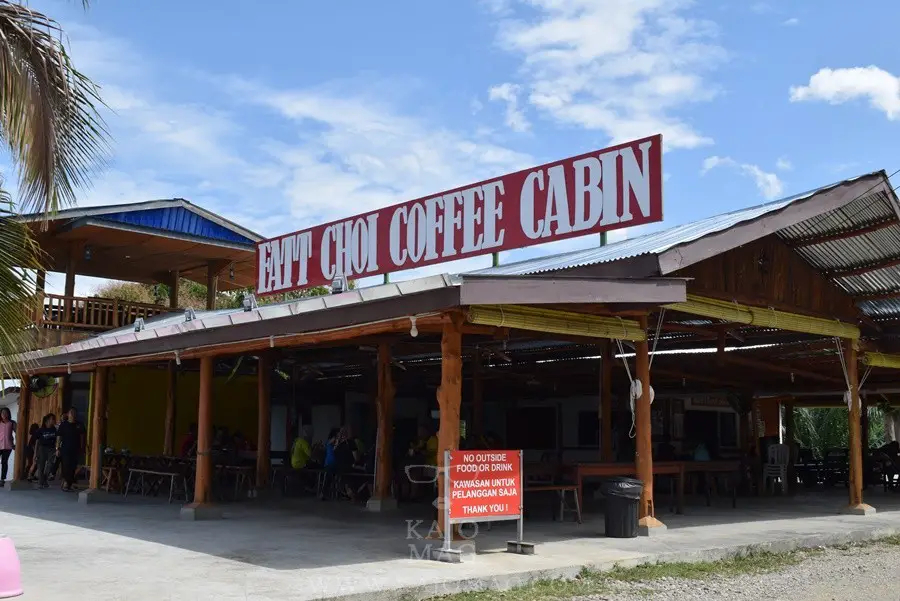
The coffee cabin is located not far from its factory at Jalan Tenom Lama which comes with affordable lodging, eatery and viewing platform.

Take in the view of Padas river from Fatt Choi Coffee Cabin
It is the highest place in town to have a drink of Tenom coffee.

It makes the perfect spot to hang out with friends, drinking a cup of local java while enjoying the view for Padas river.

The place might be too hot and humid for a visit during the noon and it is not air-conditioned but visitors can always cool themselves down with a cup of cold coffee.

Take in the view of Padas river from Fatt Choi Coffee Cabin
Visitors can stay, eat or just drink at Fatt Choi Coffee Cabin.

Established in 1987, this brand of Tenom coffee products include white coffee, cinnamon coffee, black coffee and many more.

The best part of Fatt Choi brand is it has a cafe located at Tenom town offering freshly brewed coffee.

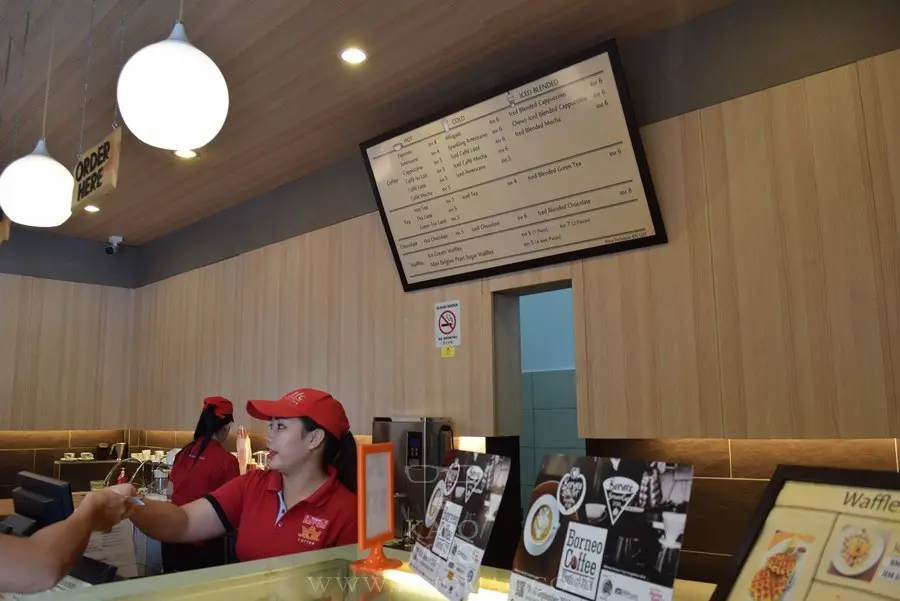
So if you are looking for westernised coffee drinks such as Americano, cappuccino, latte and mocha in Tenom, you can find them at TFC Coffee.

The cafe also serves cakes, waffles and sandwiches as well as cozy environment to relax.

Take in the view of Padas river from Fatt Choi Coffee Cabin
Here is an Instagram-worthy spot in Tenom, a miniature windmill with a view of Padas river at the back.
Take in the view of Padas river from Fatt Choi Coffee Cabin
Pick your type of coffee drinks at TFC coffee.
Take in the view of Padas river from Fatt Choi Coffee Cabin
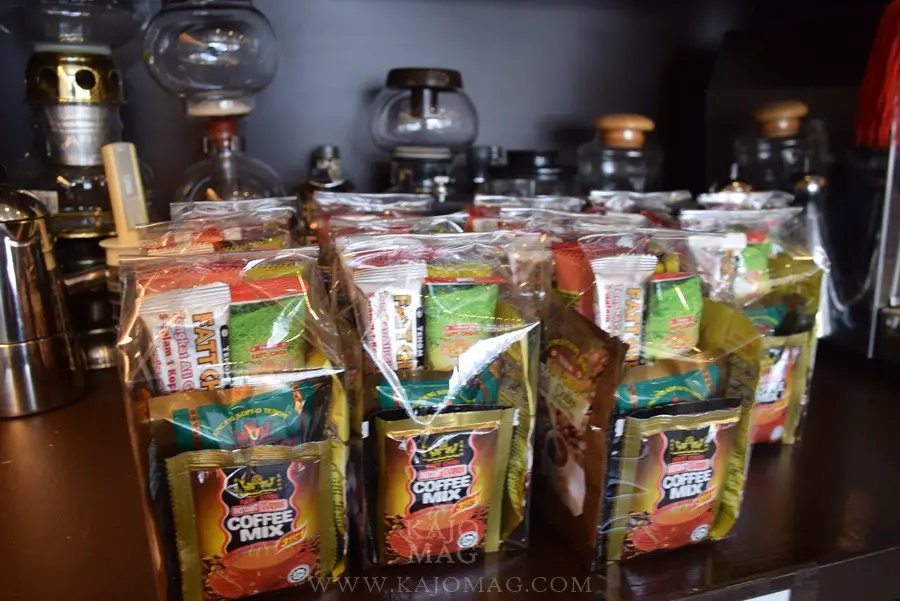
Visitors can also purchase Fatt Choi coffee products at TFC Coffee.


Take a ride to the past at Sabah Museum’s Railway Gallery

Before cars were the thing, transportation in Sabah – formerly known as North Borneo – relied heavily on trains.

In recognition of the historical significance of the railway system in Sabah, the Sabah State Museum opened up a gallery in 2017 dedicated to its locomotive industry.

Located in Sabah’s capital of Kota Kinabalu, the Railway Gallery offers a glimpse of the past through photographs and machines.

Take a ride to the past at Sabah Museum's Railway Gallery
Welcome to the Railway Gallery!

The history of Sabah Railways

In 1896, the British North Borneo Chartered Company introduced the first railway service in Sabah.

The first part of the construction was to the north heading to Beaufort at the bank of Padas river. Then, the track was extended to the south to Weston, about 100km from Kota Kinabalu.

After the Beaufort-Weston railway was completed in 1900, the construction continued from Beaufort to Jesselton (now Kota Kinabalu).

Take a ride to the past at Sabah Museum's Railway Gallery
How the train tickets looked like.

Around the same time, the construction of 48km Beaufort-Tenom railways started in 1903 and completed in 1905.

A year later, the Tenom-Melalap railway was completed.

Starting 1912, the railways worked as the main transportation for the country’s most important crop, rubber.

Due to high maintenance cost, the existence of road transportation and the failure of Weston town becoming a harbour, the Beaufort-Weston and Tenom-Melalap railways were forced to close in 1963 and 1970.

A few years later, the Tanjung Aru-Jesselton railway was also closed down.

Take a ride to the past at Sabah Museum's Railway Gallery
There were plenty of old photographs to browse through.

A walk through Sabah Railway Gallery

Visitors who make their way to Sabah State Museum must drop by its Railway Gallery located right behind the museum.

The gallery gives not only the historical timeline of the locomotive industry but also technical information of the old railway technology.

Take a ride to the past at Sabah Museum's Railway Gallery
You can sit at the passenger car and imagine it is early 1900s.

Putting aside the tonnes of typos, it was still fascinating to read through the descriptions on each panel.

The display of black and white photographs of now long gone railway stations and tracks give visitors a glimpse of how important this mode of transportation was back then.

There are plenty of things to see as well such as the tickets they used at the time, a weighing scale they used for parcels and telephones for station to station communication.

Plus, visitors can also sit and pose inside the passenger car imagining it’s the 1920s all over again.

If history or locomotives is your thing, the Sabah Railway Gallery is definitely a must-visit place in Kota Kinabalu.

For a real-life adventure, you can also take the North Borneo Railway which takes you from Tanjung Aru to Papar. Meanwhile, the Sabah State Railway – formerly the North Borneo Railway – still operates from Tanjung Aru to Tenom.


6 Reasons Why You Should Visit Mount Singai

If you have not visited Mount Singai before, now is the best time to do so. Due to our love of being outdoors, KajoMag has listed six reasons why it should be on everyone’s bucket list to visit.

6 Reasons Why You Should Visit Mount Singai

1. Close to town

Located in Bau District, Mount Singai takes only 30 to 40 minutes’ drive from Kuching City.

As it does not take a lot of time to reach there, you do not have to worry about getting up early or using a lot of gas.

2. Good spot for beginner’s training

If you are not particularly athletic but still want to be active, then Mount Singai is perfect for you.

6 Reasons Why You Should Visit Mount Singai

Mount Singai hiking area can be split into two sections. The first half is a set of stairs leading to the Catholic Memorial and Pilgrimage Centre (CMPC) while the second half is the hiking trail leading to the summit.

Typically, an average hiker can reach the pilgrimage centre within 20 to 30 minutes while the hiking ground can take about an hour to reach.

Visitors might find Mount Singai relaxing and enjoyable as the hiking terrain is not as hard and challenging as most hiking spots around Kuching.

Also, due to the steps and the inclining nature of Mount Singai, it is the best spot to pump up your cardio and enjoy nature.

3. Friendly hikers

On average, Mount Singai can have a few hundred visitors in one weekend.

And due to that, you will always bump into other fellow hikers along the way.

At Mount Singai, the hikers will typically greet you and some will even give words of encouragement  to reach the summit.

When meeting these friendly and supportive hikers of Mount Singai, it makes the hiking trip even more memorable.

4. Spiritual experience

6 Reasons Why You Should Visit Mount Singai

On your trek up to the retreat centre, you will notice there are monuments stationed along the way up.

They are the 14 stations of the Cross which represent Christ’s last day on earth as a man.

Mount Singai has long been a pilgrimage destination for devoted Catholics, with the earliest converts to Catholicism in the area among the Bisingai people dating as far back as 1885.

5. Help the community build their church

6 Reasons Why You Should Visit Mount Singai

Upon reaching the entrance point of Mount Singai, you may find a heap of bags containing pebbles and sand.

These are to build a new church hall at the pilgrimage centre.

As there are no access roads for vehicles leading towards the centre, the only way to bring these building materials up is on foot.

6 Reasons Why You Should Visit Mount Singai

While there are no entrance fees for Mount Singai, visitors can do their part for the kampong community by helping them carry the bags up to the construction site.

Consider it your personal Rocky or Shaolin monk challenge by carrying a bag up. You can also help trick your mind into thinking you have some extra weight to lose.

6. Instagrammable view

6 Reasons Why You Should Visit Mount Singai

Millennials with an active Instagram account would understand the novelty of having awesome pictures in their IG account.

6 Reasons Why You Should Visit Mount Singai

When you reach the top of the steps, Mount Singai offers a rest stop with one of the best viewing spots.

Apart from that, the summit also offers an equally breath-taking view for visitors to take picture.

10 adult art projects to try for non-creative people

Italian poet Eugenio Montale once said, “In reality art is always for everyone and for no one.”

As comforting as it might sound to non-creative people that art is for everyone, the reality is there are people out there who are just not artistic at all.

Having said that, non-creative people sometimes find ways to channel their inner creativity and craftiness.

Of course, the results might not be as good as those who are artistically-inclined and sometimes even far from being sell-able.

If you are looking for adult art projects to try own especially when you are feeling crafty, here are few suggestions:

1.Collage

To make collage art, you can use everything under the sun, from magazine and newspaper clippings to photographs and old postcards.

You can even recreate a famous art piece such as Van Gogh’s Sunflowers.

Watch the video here.

2.Hand lettering

If you love quotes and poems, this is an adult art project for you. Pick up a brush or a calligraphy pen to practice your hand lettering.

Once you get the hang of it, move on to create a homemade card or a quote display as a gift or just hang it in your room.

Watch the video here.

3.Photo embroidery

Forget about conventional embroidery, embroidered photographs is the in thing now.

Take your favourite photos and embroider something on it. Maybe put a pair of wings on the photo of your mum or a pair of horns on your least favourite teacher.

4.Origami
10 adult art projects to try for non-creative people
How about giving origami a try? Credits: Unsplash.

All you need for origami is origami paper and of course tutorials which can be easily found online.

Once you master the art of origami you can turn them into wall decorations or simply as a gift.

Watch the video here.

5.Mod podge craft

The art of decoupage was originated in France in the 17th century. Now with the existence of mod podge, the craft of decoupaging has never been this easy.

Known for its fine finish and strong adhesiveness, you can use mod podge on flip flops, coasters, wooden boxes, cake stands and even table tops.

Watch the video here.

6.Tie-dye

If someone told you that tie-dye was for hippies, don’t believe them.

Widen your imagination and you can tie-dye almost everything, from a bag to a curtain and your short jeans.

Watch the video here.

7.Fabric Marker

Unleash your inner craftiness by drawing on a plain T-shirt with a fabric marker.

Draw a random asymmetrical design or write your favourite quote. You can also use fabric marker to personalise your own shoes, tote bag and cushion cover.

Watch the video here.

8.Vegetable printing

Vegetable printing are not just for kids. With the right materials, you can make your own cushion covers, coffee mug, paper wrappings and gift tags.

As for what vegetables you can try, see if you can use potato, carrot, celery and winged beans.

Watch the video here.

9.Washi tape

The Japanese people are a source of tons of brilliant ideas, one of those ideas including washi tape.

This decorative tape can be used for anything you can imagine.

You can decorate your book, table, computer keyboard, plastic cups for a party, even use it as wallpaper.

Watch the video here.

10.Beading

Beadwork can be easy if you stick to the basic of stringing beads together with a thread to produce a necklace, lanyard, or bracelet.

If you want to challenge yourself, you can also move on to harder beadwork skills such as bead crocheting or 3D beading.

Watch the video here.

Five exhibitions you missed at the Old Courthouse during Rainforest Fringe Festival 2018

The recently ended Rainforest Fringe Festival (RFF) was a celebration of music, art, crafts, film, photography, food and culture.

The 10-day event from July 6 to 15 was a prelude to the world renowned Rainforest World Music Festival (RWMF).

This year, RFF organised activities at several venues around Kuching city including Malaysia’s first Blue Ocean Entrepreneurs Township (BOET)  Borneo744, the 144-year-old Old Courthouse and local hotels Pullman Kuching as well as Waterfront Hotel.

Local and foreign visitors alike were treated to a wide range events, from a food fair at India Street, a book fair by Big Bad Wolf and music performances by At Adau, Electric Fields and Pete Kallang during the First People Party.

On top of the food, music and a series of talks curated by local NGO Friends of Sarawak Museum and Sarawak Museum Department, there were also art installations displayed in several locations.

At Borneo744, there was an installation of woven objects called Forbidden Fruits. Another breathtaking art installation was a root sculpture combining the technology of video mapping presented at the Old Courthouse.

If you missed out on the exhibitions, here are a rundown of what happened at the Old Courthouse during Rainforest Fringe Festival:

Five exhibitions you missed at the Old Courthouse during Rainforest Fringe Festival 2018
Some of the hyper-realistc artworks by Tan Wei Kheng, a self-taught artist from Marudi.
1.Tattoos

National Geographic Society documentary photographer Chris Rainier presented his photography collection circling on tribal tattoos.

His works on documenting indigenous cultures are highly respected and you could see the great length of his efforts through this exhibition.

You can still see some of his work on tattoos on his website here.

2.Men: Women & Symbols

Speaking of tattoos, Men: Women & Symbols is a photography exhibition focusing on Sarawak tribal tattoos in its own unique way.

Hasse Sode Hamid took photos of Sarawak household names such as At Adau’s Ezra Tekola Samuel and national diver Bryan Nickson Lomas to create a series of extraordinary prints.

He collaborated with tattoo artist Jeremy Lo and has various tattoo designs printed on to the photographs.

Five exhibitions you missed at the Old Courthouse during Rainforest Fringe Festival 2018
A visitor browsing through the Men: Women & Symbols exhibition.
3.Forgotten Beauty

“When I went to tribal villages in the interior long ago, everyone was so warm. They invited me to their homes, even though they did not know me. They cooked for me. These are the old folks I want to paint. Their beauty is something I want the whole world to see.”

These were the words of Sarawakian artist from Marudi, Tan Wei Kheng explaining about his artworks displayed at the Rainforest Fringe Festival.

True to his words, Tan managed to capture the beauty of rural old folks from different tribes in Sarawak including the Kayan, Kenyah, Penan, Kelabit and Iban.

The details on his works are remarkable as you can see every wrinkle, grey hair, and eye expressions of each portrait painting.

You can see some of his works here.

Five exhibitions you missed at the Old Courthouse during Rainforest Fringe Festival 2018
A captivating portrait painting by Tan Wei Kheng.
4.Borneo People: A Photographic Journey

Just like Tan, Dennis Lau is another fellow Sarawakian who appreciates the beauty of rural folks.

Lau, one of the best ethnographic photographers in Malaysia documented the lifestyle of Sarawak tribes through his lenses for the last 40 years.

This exhibition showcased different activities of the locals such as a group of Penans making their ways through the jungle and a group of Kayans from Tubau enjoying their ice-cream.

Five exhibitions you missed at the Old Courthouse during Rainforest Fringe Festival 2018
Kuching Old courthouse works as a venue for five exhibitions during Rainforest Fringe Festival 2018.
5.An introduction to the White Ranee

We have heard so much of all three White Rajahs, but what about the women who stood by them?

An Introduction to the White Ranee gave a glimpse of the life of Margaret De Windt, the wife of the Second Rajah of Sarawak Charles Brooke.

It showed various personal items including childhood photo of her three sons Vyner, Bertram and Harry as well as a silver handheld mirror belonged to the late Ranee.

Forbidden Fruits: The most Instagram-worthy spot of Rainforest Fringe 2018

Forbidden Fruits: The most Instagram-worthy spot of Rainforest Fringe 2018
What can you make out of this surreal art installation?

The Forbidden Fruits, an art installation of large woven fruits exhibited at Borneo744 as part of the Rainforest Fringe have been making the rounds on the Internet, especially Instagram.

Thanks to surreal lighting effects and creative application of different Sarawakian ethnic weaving styles and skills, the installation has been receiving many visitors since it was first opened to the public on July 7.

Forbidden Fruits, an art installation like no other

Forbidden Fruits: The most Instagram-worthy spot of Rainforest Fringe 2018
Adults and children alike taking photos at the art installation.

Looking at the project as a whole, it is a narration of the life-cycle of fruits from seeds to germination, from propagation to decay.

Each art piece was actually a woven craft made by several of Sarawak’s indigenous communities.

Altogether there were 60 uniquely woven ‘fruits’ making up the ensemble of Forbidden Fruits, a project which seeks to investigate the possibilities of expression through traditional rattan weaving, in order to restore that sense of meaningful in the modern context.

It is also set out to navigate the social acceptability and taboos as fruits when ripe is suitable for consumption but forbidden to consume almost at other stages.

This serves the question of why sex is still uncomfortable conversation to be had in public.

Forbidden Fruits: The most Instagram-worthy spot of Rainforest Fringe 2018
An art piece inspired by Iban’s ketapu tunjang.

For non-artistic people who might not understand the poetic message behind the installment, the lighting and beautiful hand-crafted pieces make great background for photo-op.

Upon closer inspection, visitors might recognise some of Sarawak’s woven crafts such as the Iban ketapu tunjang (a hand woven rattan headgear with several pointed tops), an Orang Ulu ajat (rattan basket) and bubu (woven fish trap).

Forbidden Fruits: The most Instagram-worthy spot of Rainforest Fringe 2018
Several half-finished rattan baskets dangling from the ceiling as part of the Forbidden Fruits art installment.

Ropes to give the impression of hanging roots, dried leaves and sawdust on the floor add to the feel that you’re stepping through the rainforest.

The Forbidden Fruits is a collaboration between Tanoti Crafts, Ranee Gift Gallery, Edric Ong, Keynote.Co, Justlight Enterprise and IDC Architects.

Rainforest Fringe Festival (RFF) visitors will be able to enjoy this installation for free till July 15 before it makes its Penang debut at George Town Festival this coming August.

About Rainforest Fringe Festival

Returning for the second time, Rainforest Fringe Festival aims to bring the best of Sarawak’s music, art, craft, film, photography, food and culture.

Held from July 6 to 15, the festival is held at different venues in Kuching including the Old Courthouse, Carpenter Street and Pullman Hotel.

Forbidden Fruits: The most Instagram-worthy spot of Rainforest Fringe 2018
The floor is covered with wood-dust and dried leaves.
Forbidden Fruits: The most Instagram-worthy spot of Rainforest Fringe 2018
The Forbidden Fruits art installation is definitely an Instagram-worthy spot.

Celebrating food, craft and arts with Sarawak Culinary Adventure

Celebrating food, craft and arts with Sarawak Culinary Adventure
A visitor trying to capture a serunding-making demonstration on video.

India Street Pedestrian Mall, which is usually quiet at night came alive during the recent Sarawak Culinary Adventure from July 6 to 8.

Themed “A Celebration of Food. Craft. Arts.”, the event was organised by the Sarawak Culinary Heritage and Arts Committee.

The committee is a nonprofit group aiming to introduce Sarawak’s rich and diverse cuisines as a platform to promote tourism.

A celebration of food, craft and arts with Sarawak Culinary Adventure

Celebrating food, craft and arts with Sarawak Culinary Adventure
India Street Pedestrian Mall came alive at night during the Sarawak Culinary Adventure festival.

More than 50 stalls selling about 120 dishes from the Iban, Kayan, Kenyah, Bidayuh, Melanau, Malay, Punjabi, North Indian, Kelabit and Chinese communities.

For three nights, foreign and local visitors alike flocking more than 150-year-old street for to taste the various culinary heritage of Sarawak.

Guests were able to choose from Foochow’s Mee Sua, to Kayan’s dinu (rice fritters) and Iban’s ayam pansoh (chicken cooked in bamboo).

Celebrating food, craft and arts with Sarawak Culinary Adventure
Sape player Danison Manium giving a live demonstration of sape music.

During the event, patrons were also treated to different Sarawak musical heritage such as Orang Ulu’s Sape, Indian dhol and Bollywood dancing, Chinese opera as well as Melanau bamboo dance.

Hyped with the great food and exciting music, the street was turned into a dance floor at some points with visitors from different age and races dancing together.

Another highlight of the event was the KINO Heritage Live Kitchen, a free workshop and live demonstration to give visitors a hands-on experience of preparing some of Sarawak signature cuisine.

Celebrating food, craft and arts with Sarawak Culinary Adventure
All business in the chapati-making competition.

These workshops include how to make Melanau linut, Malay serunding, ketupat weaving and even Chinese mooncake.

On top of the food, music and dancing, Sarawak Culinary Adventure gave local crafters a platform to promote their crafts such as bead necklaces, handmade soaps and sape.

Celebrating food, craft and arts with Sarawak Culinary Adventure
There were plenty of Sarawak crafts on sale too.

The culinary event kept the environment in mind by preparing bins for proper food waste disposal.

Local social enterprise WormingUp was there to collect the waste and also educate the visitors on food waste dilemma.

The Sarawak Culinary Adventure festival was also held in conjunction with the Rainforest Fringe Festival from July 6 to 15 in Kuching.

Celebrating food, craft and arts with Sarawak Culinary Adventure
Erhu and ruan players performing on stage during Sarawak Culinary Adventure.
Celebrating food, craft and arts with Sarawak Culinary Adventure
A dancer in Orang Ulu warrior attire performing at India Street.
Celebrating food, craft and arts with Sarawak Culinary Adventure
A vendor making oyster omelette.
Celebrating food, craft and arts with Sarawak Culinary Adventure
The Chinese Opera troupe performing a traditional piece.
Celebrating food, craft and arts with Sarawak Culinary Adventure
Get to know Sarawak’s unique edible jungle seeds and fruits.
Celebrating food, craft and arts with Sarawak Culinary Adventure
Barbecued goodies anyone?
Celebrating food, craft and arts with Sarawak Culinary Adventure
A stall selling books by Sarawak authors.
Celebrating food, craft and arts with Sarawak Culinary Adventure
A festival goer browsing through the array of bead jewellery.
Celebrating food, craft and arts with Sarawak Culinary Adventure
Did somebody call me? Sarawak Culinary Heritage and Arts Committee president Datin Dona Drury Wee enjoying the festivities.
Celebrating food, craft and arts with Sarawak Culinary Adventure
Sarawak Culinary Adventure was a place to enjoy good food make toasts to new and old friends.
Celebrating food, craft and arts with Sarawak Culinary Adventure
A festival is not a festival until there’s dancing!
Celebrating food, craft and arts with Sarawak Culinary Adventure
A demonstration on how to make Malay ginger serunding.
1 2 3 4 5 6 8