Browse Tag

Culture - Page 2

#KajoReviews: Sarawak by Hedda Morrison, a coffee table book must-have

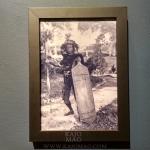
Sarawak by Hedda Morrison is a photography book published in 1957.

The book features photographs taken by the author during the 8 years she spent in Sarawak.

Morrison was married to Alastair Morrison, a district officer when Sarawak was under the British Crown Colony.

Overall, the Morrisons stayed for over 20 years in Sarawak. During this time, she produced two books: Sarawak (1957) and Life in a Longhouse (1962).

She accompanied her husband for his work allowing her to photograph the people she met and the places she visited.

Morrison reportedly used two car batteries to power her portable darkroom enlarger while without power for six years in Sarawak.

On top of that, she stored her negatives in an airtight chest using silica gel as a drying agent to overcome the perils of a tropical climate.

The outcome; her photographs of Sarawak are undoubtedly magnificent and the descriptions that came with them are insightful.

Her texts are mostly based on her personal experiences and opinions.

#KajoReviews: Sarawak by Hedda Morrison, a coffee table book must-have

Sarawak by Hedda Morrison

When Westerners publish something about Sarawak, they usually go into two different directions; romanticizing or condescending.

Morrison definitely belongs to the first category.

Commenting on the Iban people, Morrison stated, “The Ibans are an independent, brace, good-humoured, generous, open-handed people. They are also excitable and emotional. Their personal honesty and innate sense of hospitality are outstanding. There are no locked doors in longhouses. Theft is very rare and intensely despised.”

As for the Kayans and Kenyahs, she opined “In general Kayans and Kenyahs are progressive and exceptionally school conscious. They are quiet and reserved; slow and rather phlegmatic.”

While observing the Bidayuh, Morrison concluded, “The Land Dayaks are very conservative and singularly lacking in the way of wander-lust. There is a good deal of land hunger in the hill areas where they reside and where they cultivate paddy by the usual wasteful system of shifting cultivation. The land has been overworked and much of its fertility has been lost but despite this they are, as a people, very reluctant to migrate to other areas of Sarawak. A curious feature of their paddy cultivation is that they do not head of paddy with a small knife like the other peoples of Sarawak but pluck it off between their fingers.”

The rare photos of Sarawak by Hedda Morrison

Going through Hedda Morrison’s Sarawak is like going through a time portal back to Crown Colony of Sarawak.

She documented some of rare sights of Sarawak that we no longer could see today.

One example is how the Malays in Lundu prepared traditional medicine for pregnant women.

This particular medicine is made from bud of Rafflesia which was sliced up finely and mixed with various spice.

We will never see this sight again because the Rafflesia is now a totally protected plant.

Another sight that we no longer see but can be found in the book is the photo of boat-hawkers.

These were floating shops which travel from one village to another.

Moreover, there are photos of no-longer existing buildings.

For instance, there is a photo of Kampung Pichin’s longhouse in Serian. Today, the villagers no longer live in longhouses but in individuals houses instead.

There is also a photo of a Kenyah longhouse Long Selaan in the upper Baram. However, this particular building no longer exists.

We need a new version of Sarawak by Hedda Morrisson

Her photographs are all undoubtedly magnificent. However, it is possible that they were also not captured in the moment but staged for the photographer.

In a photo taken at Long Buroi in the upper Tinjar, Morrison took photo of a former spirit medium conducting a healing session through spirit invocation.

She honestly shared that despite the subjects being Christians, they all agreed to reenact the session for the photographer.

Another unfortunate fact about the book is the lack of names of the subjects.

Morrison offered a great deal of portraits but their names were not included.

Regardless, we wish that there would be a new generation of local photographers who will document Sarawak like Morrison did, because Sarawak definitely needs an upgraded version of this book.

8 things the Timugon Murut believe about Nabalu, or the afterlife

8 things the Timugon Murut believe about Nabalu, or the afterlife

Different beliefs offer different views of the afterlife. In some views, the afterlife takes place in a spiritual realm. Another popular view is reincarnation. It is where the individual may be reborn into this world with no memory of his past life.

Meanwhile in Sabah, the Timugon Murut people have their own perception of the afterlife.

According to Kielo A. Brewis in his paper The Death of a Timugon Murut (1987), nabalu is what the Timugon Murut people believe to be their afterworld.

So here are what you should know about the traditional belief of the Timugon Murut when comes to nabalu:

1.After a person dies, their soul is said to leave the body and continue to float around the house until a chicken is sacrificed on the morning of the burial day. That is when the soul goes to nabalu.
At that time, the soul is believed to not take any special form, but is merely invisible.

2.Souls of good people can straightaway go to Nabalu. Although there is no mention of an escort like the grim reaper, some said that the souls flew to Nabalu while others said angels (masundu) came to get them.

3.If there is a rainbow during the wake or on the day of the burial, it means the dead person is present to take part in the sorrow of the villagers. Beside that, it means that the soul will get to Nabalu very quickly.

4.Souls that are barred or delayed from entering Nabalu will turn into a ghost (timbunus). It is a Timugon Murut version of vampire with a particular preference for pregnant women. It likes to lurk around at the time of childbirth on lonely stretches of road causing accidents so that they can suck the blood of the victims.

5.If the deceased had cursed or poisoned someone, they may turn into a snake or a black cat at death. The soul will probably never reach Nabalu, and is destined to roam and haunt people.

6.Speaking of haunting people, the same fate goes to the soul of a person who died a violent death. His soul will not go to Nabalu immediately but will have to stay around for some time to frighten people.

7.Meanwhile, a soul who has gone to Nabalu can occasionally come down and visit people. He flies down in the form of a bird and watches the people on earth.

8.As for the location of Nabalu, those who believe in it said that it is “up there”, on top of a great mountain facing the sunrise. Brewis opined that the mountain his informants referred to could not be Mount Kinabalu since the mountain could not be seen from Tenom valley where the Timugon Murut lived. One thing for sure is that Nabalu is a good place where there is no sickness and people probably are of the age they were when they died.

Early records of inoculation and smallpox vaccination in Sarawak

If you are not familiar with inoculation or variolation (deliberately introducing the pathogen into an uninfected person), it is the method first used to immunize an individual against smallpox with material taken from a patient or a recently variolated individual, in the hopes that a mild, but protective infection would result.

The procedure was most commonly carried out by rubbing powdered smallpox scabs of fluid pustules (an inflamed blister containing pus) into superficial scratches made on the skin.

Then the patient would develop pustules identical to those caused by naturally occurring smallpox. This would lead them to develop a less severe disease than naturally acquired smallpox.

Slowly after two to four weeks, these symptoms would slow down indicating successful recovery and immunity.

According to historian Loh Chee Yin, vaccination against smallpox was introduced into Sarawak in the 1960s. However, inoculation was already practiced in the 1850s.

Early records of inoculation and smallpox vaccination in Sarawak
Drawing accompanying text in Book XII of the 16th-century Florentine Codex (compiled 1555–1576), showing Nahuas of conquest-era central Mexico with smallpox. Credit: Creative Common

Early records of smallpox inoculation in Sarawak

One of the early records of inoculation in Sarawak was recorded by Brooke Hugh Low in 1876. At that time, he was holding the post of Assistant Resident of Sibu. When he was travelling up the Baram river which was still under Brunei territory (Baram was ceded to Sarawak in June 1882).

He recorded about a smallpox epidemic which decimated the Kayan population in the area.

“I next proceeded up the Baram as far as Long Lusan, where Oyong Ngau now lives. He abandoned Batu Gadin on account of the smallpox which carried of 200 persons in his own house; 1,333 Kayans are estimated to have fallen victims to this epidemic, and 3000 Kenyahs. Although I did not ascend the river above this point I met several of the upriver chiefs, both Kayans and Kenyahs, and among the latter, Paran Libut’s brother, Tama Peng Wang, who assured me that his tribe had been decimated and that the Upper Baram, which before was populous, is now a mere waste. Houses which a year ago could boast of 100 fighting men can now scarcely muster 10. Fortunately for the Kayans there was a Selimbu Malay, one Haji Unus, at Batu Gadin who understood inoculation and inoculated some 3,600 persons of both sexes, and though many died, many also were saved.”

A record of Ibans practicing inoculation

Bishop Walter Chambers once wrote in 1857 about how inoculation saved a community of Ibans in Lingga.

“The smallpox attacked six months ago (1856) the people up the main river, the Batang Lupar. In some of the Dyak houses it made frightful ravages, chiefly through the panic fear into which it threw the occupants, who in some cases, fled into the jungles, abandoning their sick friends and carrying the infection in their own bodies. It is said there are longhouses, whose occupants having thus rushed away, not one of them has since made his appearance.

The Dyaks regard the smallpox as an evil spirit, with the notion which induced our English peasantry to use the same caution to fairies- they never venture to name the smallpox, but designate it politely by the titles Rajah and Buah-kagu. I heard an old woman yesterday, telling how that, during the time she was nursing her grandson, she was continually begging, ‘Rajah have compassion on him, and on me, and spare his life- my only child.’

In the neighbourhood of Sakarran, the Malays inoculated with success both their own people and the Dyaks. By inoculation the disease was gradually drawing near to Lingga.

I wished the Dyaks not to inoculate until the appearance of the disease in the country, but they had an idea that the ‘Rajah’ was more mild to those who thus made submission to him. Out of hundreds who have been inoculated, only three have died under the operations.”

The Kayans’ knowledge of smallpox

Loh believed that the Kayans in those days were aware of the infectious nature of smallpox long before the introduction of inoculation and vaccination. They knew that immunity could be secured by complete isolation from affected villages.

He cited an example from Charles Hose’s The Pagan Tribes of Borneo (1912). This is what Hose wrote:

“With this object the people of tributary stream will fell trees across its mouth or lower reaches so as to block it completely to the passage of boats, or a less drastic measure, will stretch a rope of rattan from a bank as a sign that no one may enter. Such a sign is generally respected by the inhabitants of other parts of the river basin. They are aware also of the risk of infection that attends the handling of a corpse of one who has died of epidemic disease, and they attempt to minimise it by throwing a rope aorund it and dragging it to the graveyard, and there burying it in a shallow grave in the earth, without touching it with the hands.”

As for the Ibans, it was a normal practice for the unaffected members of a longhouse to run away into the jungle to avoid smallpox infection.

Here is an example of how the Ibans who refused to be inoculated reacted to the epidemic according to Spenser St. John:

“When the smallpox was committing sad havoc among those Sea Dyak villagers who would not allow themselves to be inoculated, they ran into the jungle in every direction, caring for no one but themselves, leaving the house empty, and dwelling far away in the most silent spots, in parties of two and three, and sheltered only by a few leaves. When these calamities come upon them, they utterly lose all command over themselves, and become as almost timid children. Those seized with the complaint are abandoned; all they do is to take care that a bundle of firewood, a cooking pot, and some rice, are placed within their reach. On account of this practice, few recover, as in the delirium they roll on the ground and die.

When the fugitives become short of provisions, a few of the old men who have already had the complaint creep back to the houses at night and take a supply of rice. In the daytime, they do not dare to stir or to speak above a whisper for fear the spirits should see or hear them. They do not call the smallpox by its name, but are in the habit of saying, “Has he yet left you? At other times, they call it jungle leaves or fruits; and at other places the datu or the chief. Those tribes who inoculate suffer very little.”

Other records of inoculations and vaccination in Sarawak

In those days when a smallpox epidemic attacked Sarawak, the news was usually reported in the Sarawak Gazette.

In 1868 for example, Sibu had a mild attack of smallpox. The gazette reported as the people failed to receive vaccine from Kuching, they were inoculating themselves.

On Apr 29, 1874, the gazette reported a smallpox epidemic was raging along the Batang Lupar and Rajang rivers.

The then principal medical officer-in-charge Dr. E. P. Houghton investigated the epidemic in person and found the disease to be measles and chickenpox.

Dr Houghton wrote in his report, “I vaccinated some children at Simanggang, which was successful and left a public vaccinator there to carry on the vaccination. I also started vaccination at Sibu in Rajang which was successful, and left two public vaccinators to vaccinate the people.”

Two years later in June 1876, Dr Houghton wrote this in the Sarawak Gazette; “Smallpox occasionally visits us but only in a sporadic form, and since vaccination has been so successfully carried on, there is every reason to hope this scourge will eventually be stamped out.”

Looking back at Sarawak history, smallpox epidemica appeared periodically affecting selected communities in the state.

These epidemics not only affected the Sarawak populations back in those days, it also caused the early migration of Sarawakians leading them to move from one place to another to flee from the disease.

If you’re freaking out about smallpox on top of your fears of the Covid-19 outbreak, don’t worry; smallpox was eradicated globally in 1980.

The story of Apai Saloi being a glutton over smoked deer meat

Here is an Iban legend of comedic hero Apai Saloi being a glutton over smoked deer meat:

The story of Apai Saloi being a glutton over smoked deer meat

One day, Apai Saloi took his wife and children to stay at their farm hut.

There, he went to the edge of his paddy field to catch a deer for its meat. After they caught the deer, they cut up its meat.

He then salted and smoked most of the meat while giving the rest to his wife to cook for dinner.

The salted and smoked deer meat were then preserved in dried telak or bamboos.

Later that night, Apai Saloi took the meat in which he already stored in the bamboo into his mosquito net.

He did this so that the rats would not eat it. Apai Saloi also used the bamboo as his pillow.

The next morning, Indai Saloi asked Apai Saloi to send some of the smoked deer meat to her parents.

Before he went out, Indai Saloi told Apai Saloi what to say if her mother asked where he got the deer meat from.

This was what he was supposed to answer,

“The meat of a deer,
Killed by Apai Saloi,
Because it had eaten the tapioca leaves,
In his paddy field.”

After receiving the instruction from his wife, Apai Saloi went to his in-law’s house. As he handed the deer meat to his mother in-law, he told her as his wife instructed.

Apai Saloi and his midnight snack

He then returned home to his family. During the following night, Apai Saloi went early to bed.

Before he slept, he secretly took the bamboo which contained the deer meat.

Apai Saloi munched on the meat in between his sleep throughout the night. Immediately after midnight, Apai Saloi woke up and began to eat the meat again.

This time, the meat inside the bamboo was almost finished. Determined to have some more, Apai Saloi slipped his hand into the bamboo to take the meat.

Because he had to reach farther in to take the meat, his hand got stuck. Despite all his efforts, he could not free himself of the bamboo.

He had to wake his wife up to help him. Indai Saloi was nothing but furious and scolded Apai Saloi for being greedy.

While scolding her husband, Indai Saloi broke the bamboo into halves releasing Apai Saloi from his agony.

How were executions carried out during Brooke’s time in Sarawak?

Execution of criminals has been used by almost all societies in the world.

If you’ve watched Braveheart you’ll know that there were many painful and cruel methods of carrying out an execution throughout history. One example is keel hauling. This form of execution was carried out on sailors at sea and was usually a torture technique used by pirates as early as 700BC.

They would tie the condemned to a rope line looped beneath the vessel, thrown overboard on one side of the ship. Then they would dragged the poor man under the ship’s keel, either from one side of the ship to the other or the length of the ship from bow to stern.

The persecuted man would die either from drowning or head trauma from colliding against the ship, especially if the vessel was moving.

Death by Malay dagger, the keris

When Sarawak came under the first Rajah, James Brooke in 1841, executions were carried out using a Malay dagger called keris. He also elected a man named Subu as the Public Executioner.

The first Ranee of Sarawak, Margaret Brooke described how executions were first carried out in her book My Life in Sarawak.

“A kris is a curious-looking dagger, straight and flat, the blade double-edged, eighteen inches long, with a sharp point. It is inserted in the cavity of the condemned man’s right shoulder, and thrust diagonally across the body through the heart, causing instantaneous death. “Do they never tremble?” I would ask Subu. “No,” he said, “they do not tremble. They smoke cigarettes while their grave is being dug, and sometimes they eat betel nut and sirih. Then, when I tell them, they sit on the brink of their grave as though they were sitting on the edge of their bed, prepared to take their afternoon sleep. We always parted good friends,” said Subu, “and very often we talked all the way to the place of execution.”

The condemned men never quite knew when their last moment had come, for they sat placidly smoking until Subu approached from behind them, and with one blow of the kris sent them into eternity. “You white people fret too much about trifles, and that makes you frightened of death,” Subu would say. “We take it just as it comes, and consider that Allah has chosen the best moment to end our lives. Many such murderers have I sent to their peace,” he often said to me.

W.J. Chater wrote in the Sarawak Gazette on May 31, 1964 that executions by Subu used to be carried out near the Batu Kinyang rock at the second mile of Rock Road, Kuching.

At that time, the area was still considered to be deep in the jungle.

Execution by shooting

Subu held the post as Sarawak Public Executioner from 1841 until his death in 1873. Then his son Tomah took over the post until 1889. This was the year execution by shooting was first introduced.

Charles Brooke, the second Rajah wrote a letter on Aug 12 that year to Major Irvin Day, the Commandant of Sarawak Rangers, ordering an execution of six prisoners.

Here is the content of the letter:

“I hereby direct that you will take command of a guard of twenty Rangers and proceed at half past six o’clock tomorrow morning to receive at the prison entrance the six prisoners to be shot. Then take them on board the “Young Harry” and proceed to the execution ground, accompanied by Dr Rolph and a guide which Mr Daubeny can furnish.

You will then have these six men shot as mercifully as lays in your power and buried on the spot, and return.”

These six men became the first prisoners to be executed by shooting in Sarawak.

According to Chater, the prison referred in Charles’ letter was at the Pangkalan Batu Police Post.

It was built as a prison in 1879, the same year as Fort Margherita and contained the prisoners’ cells on the ground flood and the Police Officer’s quarters above. Back then, C. W. Daubeny held the post of Inspector of Police and Prison. As for the execution ground, it was located on the riverside somewhere near Santubong.

“Young Harry” was a vessel named after Charles’ youngest son, Harry Keppel Brooke. He was born in 1879 and given the title of Tuan Bunsu or the Youngest Lord.

The Rajahs’ perceptions on death penalty

Chater reported, “The second and third Rajahs held an intense dislike for executions. The third Rajah in particular was definitely against capital punishments; and whenever there was a death penalty to be signed he would usually be conveniently away in an outstation and the senior government officer in Kuching would have to do the signing.”

For this reason, the third Rajah Vyner Brooke was reportedly extremely merciful about the way executions were carried out.

The condemned was always given an injection. In the days when executions were carried out downriver, there was always a bottle of brandy in the boat for the prisoner.

“I have heard it said that sometimes by the time the party reached the execution ground the condemned man was feeling fine and would help to beach the boat before standing up to be shot,” Chater wrote.

Execution by hanging

When Sarawak became a British colony, hanging was introduced for the first time in Sarawak.

As for the keris that was once used by Subu, it had been handed to the Sarawak Museum by Bertram Brooke (Vyner’s brother) in the 1960s with the tip broken. The second White Rajah broke the tip off to prevent it being used again.

How were executions carried out during Brooke's time in Sarawak?
Execution by hanging was only introduced when Sarawak became part of British colony.

How did the name of Sarawak’s capital get changed to Kuching?

In the olden days, Sarawak’s capital was also known as ‘Sarawak’.

How did the name of Sarawak's capital get changed to Kuching?
Kuching view. Credits: Pixabay.
Why did the second White Rajah, Charles Brooke decide to change Sarawak’s capital name to Kuching on Aug 12, 1872?

Abang Othman Datu Haji Moasili wrote in The Sarawak Gazette on Aug 31, 1964 that explained the reason behind it.

“The story, according to the old Malays and as related to me by my father, the late Datu Hakim, goes that the second Rajah who spent most of his time as Tuan Muda and later as Rajah Muda and Rajah among the Sea Dayaks in the Second Division used continually to be asked, as is the Iban custom not what town he came from but which river he came from?” he wrote.

Abang Othman described a small rivulet called the Sungei Sarawak located about 16 miles above Kuching from which the capital originally derived its name.

He continued, “But much closer to his residence, the Astana and only a short distance down the river, near the present Chinese General Chamber of Commerce, there used to be another rivulet, the Sungei Kuching, until it was filled in, in 1928.”

This rivulet was the river nearest to the Astana. Plus, it was well known to the Ibans, as they used to put up there for shelter during the night on their visits to the capital.

How did the name of Sarawak's capital get changed to Kuching?
The Chinese General Chamber of Commerce is now the Chinese History Museum.

Kuching river

Hence, when people used to ask the Rajah where he came from he would say “Kuching river”.

Over time, the word ‘river’ was dropped and he was known among the Dayaks as “coming from Kuching”.

As the territory of Sarawak expanded, it caused some confusion to call the country and the capital by the same name. This led to the necessity for a distinction to be made between them.

Abang Othman stated, “At first, the difficulty was overcome by calling the capital ‘Sarawak Proper’. But as it had now become known to the Sea Dayaks, who formed the largest number of the population as Kuching, the Rajah decided officially to change the name from Sarawak to Kuching.”

Read more:

How Sarawak, Land of Hornbills, got its name?

Tungu Rubi, a Bidayuh reconciliation ceremony

Tungu Rubi is a traditional ceremony organised to reconcile two parties who are in dispute.

Here is an example of how a Tungu Rubi took place in 1953 at Kampung Tapuh in Serian as recorded by R. Nyandoh:

The story went that some women of Tapuh village considered they had been insulted by a group of men.

Hence, the village planned a meeting where the elders would decide whether the men – Ayih, Raseh, Laha, Lunge, Janggi, Kayei and Kihing (aged from 24 to 33) – were guilty, and instructed them to prepare the food fines.

They made a bench to support two large plates of salted pig and fish.

They also hung meat and fish at the side of the bench and carried it to the longhouse veranda. As they carried the bench, the children accompanied them while beating the drums.

Seven elders from Tapuh village and other nearby villages watched while these food fines were hung on a long pole.

R.Nyandoh wrote, “These foods were arranged in order; one whole salted Sirungos fish, salted wild pig with skin and fat intact, more salted pork, one whole salted Semah fish, two complete wild pig skins, another salted Semah fish, some slices of wild boar, and two whole salted Bantah fish.

“The village elders, representing the accused men, discussed the case and decided the case and decided they should first feign ignorance of the whole affair. But if the case went overwhelmingly against the men, they would agree to punishment by fine.”

Preparing for Tungu Rubi on the the women’s side

Meanwhile, the women, whose names were Kujin, Lain, Luwai, Rantai, Jai, Kuna and Bareng, were also preparing their fines for the Tungu Rubi.

They arranged 18 sticks of pankang (glutinous rice) in three bundles with two more sticks supported on top.

A 5-foot long twist of tobacco was draped over this arrangement. In between the men and women, there were plates of cooked eggs and rice, three kettles of tuak, three jars of tuak and a large dish of pangkang pieces. Additionally, there was a big cockerel which the women had killed and dried.

Six priestesses came to represent the women.

The cause of the conflict

So what did the men do that upset the women?

“Ayih hand made an image of female genitals on the local plank bridge. He later made another image and painted it red with lime and betel nut water. The seven men together had rudely suggested that the concrete block at the bathing place had been broken by female genitals. Also that the water had dried up in summer, the women’s genital organs having drunk it,” R. Nyandoh stated.

Despite the insults, the women had not retaliated. However, they still believed the men should be punished according to the traditional law.

The men tried to defend themselves but everyone present believed they were guilty as sin. Hence, the men agreed to accept the punishment.

The Tungu Rubi ceremony proceeded with the salted pig and fish handed to the women and special rites were observed to show that no bad feeling remained.

It’s unfortunate that the writer did not detail on how the special rites were conducted. All we know is that the ceremony continued with the men and women dancing together, passing the food back and forth between them while drums and gongs were beaten. This lasted an hour.

Then, the women distributed the men’s food gifts among themselves. Meanwhile, the accused men settled to eating and drinking.

The merrymaking continued with dancing and singing throughout the night.

After the Tungu Rubi ceremony had ended, a taboo on all work and indulgence (including sex) were imposed for four straight nights.

Tungu Rubi, a Bidayuh reconciliation ceremony
Tungu Rubi, a reconciliation ceremony which ends with a merrymaking feast.

Do you know more about Tungu Rubi or have you witnessed it before? Let us know in the comment box.

The Brooke battle against the Iban from Gaat river at Nanga Pila in 1916

About a century ago, the Iban from Gaat river, a tributary of the Baleh river, had been a cause of serious concern for the Brooke government.

They caused mayhem in the area with their headhunting attacks on their neighbouring tribes living upstream of Kapit.

What’s more, this group of Iban headhunters were often helped by their fellow Dayaks of Emperan from the Dutch border (Kalimantan).

In 1915, the government issued a warning to the surrounding longhouses especially at Baleh and Mujong rivers not to go to above Kapit unless in large parties.

Unfortunately, these warnings were not always heeded and the Iban headhunters from Gaat and Emperan continued to cause trouble.

In November that year, the Iban Gaat killed two Tanjung people near the mouth of the Baleh river.

A month later, they attacked a group of Ukits, killing three people. But the Ukits put up a good fight and caused considerable amount of losses on the Iban Gaat.

Charles Brooke’s intervention

The Brooke battle against the Iban from Gaat river at Nanga Pila in 1916
According to S. Baring-Gould and C.A. Bampfylde in their book “A History of Sarawak under its Two White Rajahs”, the Sarawak Rangers battalion pictured here was composed of some 275 Iban, 100 Sepoys, 50 Malays, 25 Javanese, and 20 Philippine bandsmen, under an English Commandant and an Instructor. The force was established in 1846 under a native officer of the Ceylon Rifles. Photo credit: Lambert and Co.

The second White Rajah of Sarawak Charles Brooke decided to step in. In January 1916, he ordered an extra guard of Sarawak Rangers to be posted at Kapit.

He himself even visited in March that year to discuss the problem with people from Baleh and Mujong rivers.

These people had moved downstream of Kapit due to the conflict. Charles decided that they should remain below Kapit for three years until 1919 before he would allow them to farm on the land above Kapit. This was only, however, provided that the Iban Gaat ceased to cause trouble.

In the same month, news came that the Ibans Gaat had attacked the Punan Bunuts and taken 14 heads, although they had lost four of their own men.

Toward the end of March, the then resident of Kapit G.M. Gifford received information that a party of Iban Gaat and Emperan was about to attack the Punan Bah. The force was reportedly to be 400 strong.

Gifford immediately went to Sibu to recruit 50 well-armed Malays and some Sarawak rangers. To make up his 200-man force, he also recruited the Kayans to help him in his mission.

The resident was planning either to give warning to the Punan Bahs or to meet the enemy party on its way back.

The Battle of Nanga Pila

The Iban from Gaat and Emperan had an ill-fated encounter with the Brooke force which was led by Gifford on April 1 at Nanga Pila, a tributary of Rajang river.

The government force destroyed many of their boats. The battle continued on the next day where the Ibans Gaat and Emperan tried to ambush the government party.

The attempt failed with large numbers of them shot down. Those who tried to escape were killed in the water or drowned.

All of their 15 war boats were taken by the Brooke force and it was estimated 200 of them died.

Meanwhile, the government reportedly only suffered one injury, a Kapit fortman named Impin who was wounded in the arm.

The aftermath of Nanga Pila battle

Even though the Iban from Gaat river suffered a tremendous loss during their battle with the Brooke government at Nanga Pila that fateful day, it somehow made them even more resilient.

They continued to attack their neighbouring tribes over the next few years.

So in 1919, the Brooke government sent out a punitive expedition against the Ibans from Gaat once again led by Gifford.

He was joined by Bertram Brooke, Charles’ son and the brother of third Rajah Vyner.

The Gaat expedition was one of last few punitive expeditions which took place before the peacekeeping ceremony on Nov 16, 1924 at Fort Sylvia, Kapit.

The Brooke battle against the Iban from Gaat river at Nanga Pila in 1916
A memorial stone to commemorate the 1924 peace-making ceremony.

The legend of Batu Puyang in Batang Ai you probably never heard

The story of petrification is common around the world, the oldest in Western literature probably being the tale of Medusa. Even here in Sarawak, many have heard stories and folktales of how people or buildings have turned into stone.

Here is one story of that is actually very similar to the legend of petrification in Fairy Caves, Bau, but this legend comes from the Batang Ai area:
The legend of Batu Puyang in Batang Ai you probably never heard
Batang Ai Dam lake.

In the olden days, there were certain things which one was forbidden to laugh at, for fear of incurring ‘kudi’, a state of flood and disaster brought on by the wrath of the spirits.

Anybody to have committed these taboos were believed to have suffered from dreadful punishment.

According to Iban traditional belief, the virgin forests in those days were inhabited by all kinds of spirits such as Antu Babas and Antu Keranggas.

These spirits did not like to hear words being said in arrogance or see men doing taboo things.

Legend has it that in Batang Ai, not far from a place called Rantau Panjai, there was a limestone hill called Batu Puyang.

Long time ago, this hill was the site of a longhouse under the tuai rumah (headman) named Puyang.

How the name Batu Puyang came about

About four centuries ago, the headman held a Gawai Burong (Bird Festival) at his longhouse.

He invited many people to join in the celebration. During the festival, a young boy went out to examine the catch in his grandmother’s fish trap.

After checking and finding that the trap was empty, a funny thought occurred to him and he thought it would be funny to play a trick on his grandmother.

He took a poo, and wrapped it up carefully in a leaf. He then brought it home and handed it to his grandmother. Expecting to see the day’s fresh catch, the grandmother was angry to find his fresh, steaming poop instead.

She vowed revenge. Later that evening, she put a cat in a dress belonging to a girl and released it in the middle of the Gawai Burong celebration.

As the cat walked among the celebrants, they laughed to see it.

Apparently, this was a big no-no to the greater spirits. Suddenly, the sky became dark and the wind blew so hard that everybody became alarmed.

Rain began to fall in torrents and the sound of thunder became deafening. As the rain fell onto the longhouse, the building and its people (including her grandson) were transformed into stone, which are now known as Batu Puyang.

Similar legend to Fairy Caves Bau
The legend of Batu Puyang in Batang Ai you probably never heard
Fairy Caves.

The legend of Batu Puyang has a lot of similarities with Fairy Caves, Bau. For the one in Bau, the story started from a poor boy and his mother who lived at a big Bidayuh Kampung known as Kampung Kapur near Fairy Cave,

Similarly, a Gawai celebration was held at one of the kampung houses.

The boy came and peeped in on their celebration, making the homeowner unhappy. To cast the boy away, the homeowner gave the boy some sugarcane waster wrapped in a leaf, telling him there was pork inside.

The boy happily went home to give the wrapped ‘pork’ to share with his mother. After finding out it was just waste inside, the mother sought out revenge against the people of the kampung.

Similar to the legend of Batu Puyang, she took a cat and dressed it in a beautiful outfit. She threw the cat in the middle of the Gawai celebration. As they began to laugh at the sight of a cat in a dress, the sky also roared with thunder and lightning.

When the storm eventually stopped, all the villagers had turned into stone, making up the stalagmites and stalactites inside Fairy Cave.

How the two legends from two different races and parts of Sarawak had so much similarities, we may never find out.

Legend of a two-tailed monster and how poison came about in Borneo

Poison always plays a role in a legend or fairy tale. The most famous example is in Snow White where the evil queen gave the princess a poisoned apple.

Legend of a two-tailed monster and how poison came about in Borneo
Here in Borneo, we have our own version of how poison came about and it came from the mountainous part of this island.

According to Gallih Balang from Pa Longan who wrote to the Sarawak Gazette on July 31, 1965, the legend starts with a hunter named Parang.

One day, while he was out on a hunt, he walked and crossed many streams and mountains. On his way to the top of a hill, he saw a cleared field.

Parang was interested to examine the field and wanted to know what kind of creature could be there. He then decided to sit and watch.

The appearance of a monster

After some time, there came a strange monster. At first, Parang thought it was a crocodile. Unlike a crocodile, however, the creature had two tails.

The appearance of the crocodile amazed Parang as he never seen such a creature.

When Parang returned home, he told his fellow villagers what he had seen. They all gathered together and decided to kill the monster.

Gathering all kinds of weapon such as blowpipes, knives, spears and shields, they all went ahead to find the monster.

When they reached the field, the two-tailed monster was not there. So they decided to wait until the creature came back.

The moment the monster appeared, the villagers killed it. They then discovered that the name of the monster was Ale, the eater, and were relieved with its death.

About three months after they killed Ale, the villagers returned to the site where they killed it.

They found the body had rotted away but only its tails were still fresh as if still alive.

They took the tails home and used it to poison animals and people(!). That was how poison was discovered in Borneo. At the time of Gallih’s account in the 1960s, it was believed that the Bisayas in the interior and along the coast still used the poison.

According to Gallih, the people named the place where the monster was killed Budok Ale, and it is actually not far from Long Bawan, Kalimantan.

Legend of a two-tailed monster and how poison came about in Borneo
A view of Long Bawan in 2019.