Browse Category

Travel - Page 6

5 places to be awed by the night sky and Southern Lights

Sometimes, all we have to do to see magic is look up.

Catching the Northern Lights – a transfixing display of lights caused by charged particles entering the atmosphere – is one of the most sought-after experiences of all time.

Lucky for us, we don’t have to travel all the way to Iceland – their counterpart, the Southern Lights, is just right around the corner! There are so many places in Asia where we can chase after the beauty of the night sky and go star-gazing.

Here are five of them to get you started.

1.Lake Tekapo (South Island), New Zealand

In the day, Lake Tekapo offers a picturesque view of the dramatic Southern Alps – by night, it transforms into a whole new destination.

Part of the UNESCO Dark Sky Reserve, the lake has some of the darkest skies in the world, forming the perfect viewing spot for the Southern Lights. Seize the winter season (June to August) to catch the illuminating lights display, with a full array of colorful lights dancing in the night sky.

You can also head to Mount John Observatory, which houses some of New Zealand’s largest telescopes, to get up close and personal with millions of stars.

New Zealand Southern Lights Lake Tekapo
Lake Tekapo during the day offers a picturesque view of the dramatic Southern Alps.

2.Flinders, Australia

There’s no doubt that the Melbourne city center has a lot to offer, but by nightfall, seek new attractions elsewhere. Make your way to the unassuming town of Flinders, a 90-minute drive away from the city.

Located on the southern coast of the Mornington Peninsula, the beaches of Flinders offer an uninterrupted view of the night sky and its magnificent lights. With an absence of noisy tourist crowds or sounds of the city, you can marvel at the other-worldly Southern Lights in complete serenity and peace.

Southern Lights Australia Flinders
The beaches of Flinders offer an uninterrupted view of the night sky and its magnificent lights.

Stay: DoubleTree by Hilton Melbourne Flinders Street

Strategically located just steps away from the arts and entertainment district, DoubleTree by Hilton Melbourne Flinders Street is a choice location for when you do spend time in the city. Start your trip with a warm DoubleTree welcome with their signature chocolate chip cookie, and take full advantage of the proximity to attractions like Federation Square and the historic Flinders Street Station.

3. Halong Bay, Vietnam

With its pristine emerald waters and towering limestone islands, Halong Bay has long become a fan-favorite among those looking to take a day trip out of central Hanoi.

The experience here gets even better at night! Get aboard an overnight cruise and set sail on a journey off into the starry, starry night. Without the smog and light pollution from the city, you’d have full view of the clear skies and constellations. The universe has never felt so vast.

5 places to be awed by the night sky and Southern Lights
Get aboard an overnight cruise and set sail on a journey off into the starry, starry night.

Stay: Hilton Opera Hanoi

When back in the city, head to Hilton Opera Hanoi to continue the rest of your travel adventures in style and comfort. This iconic landmark is situated in the historic French Quarter of Hanoi, and offers locally-styled rooms and traditional Vietnamese cuisine for the full Vietnamese experience.

4. Doi Chiang Dao, Thailand

If you are up for some adventure, look no further than Doi Chiang Dao, Thailand’s third highest peak! No matter how difficult the hike, it’ll certainly be worth it in the end. Literally translating to the “City of Stars”, Doi Chiang Dao offers ethereal views of star trails, and takes you so high up, the stars are almost within your grasp. If you are keen to sleep among the stars, overnight camping is available, but be sure to get a permit in advance.

Twilight at third hightest peak in Thailand
Twilight at third hightest peak in Thailand, Doi Luang Chiang Dao

5. The Maldives

The Maldives is often considered to be paradise on Earth, and for good reason – from untouched white-sand beaches, exhilarating sea-sport activities to the ultimate in resort-styled luxury, you’re sure to have the getaway of your dreams. By day, bask in the sunlight and soak up your fair share of Vitamin D; by night, kick back with a cocktail and take in the mesmerizing view of the sea of stars. With these clear Maldivian nights, you’re almost guaranteed to catch a shooting star. Time to make your wish!

Southern Lights Rangali Island
Catch a shooting star!

Stay: Conrad Maldives Rangali Island

Set on Rangali Island, Conrad Maldives Rangali Island is one of the Top 100 Greatest Destinations in 2018, and home to the world’s first undersea residence, THE MURAKA. With its distinctive design and focus on personalized experiences, you can even star-gaze from the luxury of your own living room.

5 things you need to know about the black orchid

The black orchid (Coelogyne pandurata) is such a unique plant that it is the official mascot for East Kalimantan province.

Also known as anggrek hitam in the Indonesian language, this orchid can be found in all three countries on Borneo; Malaysia, Indonesia and Brunei.

Unlike popular belief, it is not endemic to Borneo. It is also found in Sumatra, Peninsular Malaysia and the Philippines.

The orchid is an epiphyte found on large trees located usually near rivers.

Here are five things you need to know about the black orchid:
5 things you need to know about the black orchid
Coelogyne pandurata
1.It is called black orchid but it is not entirely black

According to the book Orchids of Sarawak, stories of a mysterious black orchid from deepest Borneo has been told for years and people ask if such a plant really exists.

So you can only see the black coloured part of the flower for a short period of time because it blooms only five to six days.

“Although the flowers are predominantly a most striking lime-green, large areas of the lip are stained with a truly black pigment as though black ink had been splashed upon it.”

If you smell it closely, the bloom emits a honey-like fragrance.

2.It is first described by John Lindley way back in 1853

The flower might be rare to see, especially in bloom, but it is not new. English botanist John Lindley (1799-1865) was the first one to have described the black orchid, publishing about it in the Gardener’s Chronicle in 1853.

He wrote, “We are indebted for this striking species to Mr Loddiges, who informs us that it was imported from Borneo by Mr Low. The lip, although really oblong, yet in consequence of the manner in which the sides are bent down, has much the form of a violin.”

However, Lindley never commented about the black markings on the orchid.

3. Its alleged medicinal purposes

In some parts of rural Kalimantan, the black orchid is boiled and used as herbal medicines.

The flower is believed to have many medicinal purposes including for heartburn, diarrhea, stomach ulcers and even tuberculosis.

However, none of these have been scientifically proven.

5 things you need to know about the black orchid
The mascot of East Kalimantan province.
4.The myth behind the black orchid

While some believed that it can be a cure for various diseases, it is also believed that the flower can be a curse.

Legend in Indonesia has it that anyone who is in possession of the black orchid or even attempts to culture it will obtain bad luck.

Perhaps the myth spread to prevent people from harvesting the flower and subsequently reducing its population in the wild.

5.Some of the environmental threats against the black orchid

Speaking of its population, according to World Wide Fund for Nature (WWF) Indonesia, some of the threats this orchid faces are forest burning and land clearing due to agriculture activities.

Since this plant is an epiphyte relying on large trees to grow, loss of jungle could immediately affect the population of black orchid.

Here in Sarawak, all orchids are listed as ‘protected plants’ under the Wildlife Protection Ordinance 1998.

According to the law: “Any person who collects, cultivates, cuts, trims, removes, burns, poisons, in any way injures, sells, offers for sale, imports, exports or is in possession of any protected plant or any recognizable part or derivative thereof, except under and in accordance with the terms and conditions of a licence issued under this Ordinance, shall be guilty of an offence: Penalty, imprisonment for one year and a fine of RM10,000.”

Get to know these 12 animal species named after Charles Hose

Charles Hose was not just a British colonial administrator, he was a prominent zoologist and ethnologist. He also contributed to the discovery of oil in Sarawak.

Hose first arrived in Sarawak in April 1884 when he was first posted in the Baram area. He was then made the Resident of Sibu on June 1, 1904.

Between April and June 1904, Hose led a force of 200 Kayans in Belaga on an expedition to attack the Dayaks on Bukit Batu.

This group of Dayak allegedly had committed murders against other tribes for three years.

During his tenure in Sarawak, he had explored most of Sarawak’s mountainous districts, especially in the far interior of Baram area.

He collected many species of flora and fauna and then presented them to the British and other museums.

Thanks to his contribution to science, he was conferred an honorary degree by the University of Cambridge.

Get to know these 12 animal species named after Charles Hose
A fort in Marudi named after Hose.
As for his work as a zoologist, several of these animals species were named after Hose:
1.Hose’s langur (Presbytis hosei)

In Sarawak, it lives in the lowlands and hill ranges, including the Dulit range and Usun Apau plateau.

According to Hans P. Hazebroek and Abang Kashim bin Abang Morshidi in National Parks of Sarawak, there were reports of sightings of Hose’s langur at Similajau National Park in Bintulu.

However, this might be an isolated population.

As for Niah’s lowland forest, Hose’s langur has no longer been seen where it was previously known to occur.

This animal is most often found in groups of six to eight animals. Additionally, each of this group comprises of one male, several females and their offspring.

They feed on seeds and leaves. It has four species namely Miller’s grizzled langur (Presbytis hosei canicrus), Everett’s grizzled langur (Presbytis hosei everetti), Hose’s grizzled langur (Presbytis hosei hosei) and Saban grizzled langur (Presbytis hose sabana).

2.Hose’s shrew or Bornean pygmy shrew (Suncus hosei)

This poor animal is often listed as the Etruscan shrew (Suncus etruscus) but they are actually a distinctly different species.

This species of shrew is endemic in Borneo particularly in northern Sarawak and northeastern Sabah.

Since there is little information about this animal, it has been listed as a Data Deficient species by IUCN in 2008.

3.Hose’s pygmy flying squirrel (Petaurillus hosei)

This nocturnal animal can be spotted in a nest hole in a dead tree of dipterocarp forest. Here in Borneo, Hose’s pygmy flying squirrel has been spotted in Sepilok in Sabah, Baram and Niah in Sarawak as well as in Brunei.

It is similar to the lesser pygmy flying squirrel but smaller in size and has totally pale checks.

4.Hose’s palm civet (Diplogale hosei)
Get to know these 12 animal species named after Charles Hose
An illustration by Joseph Smit. Credits: Public Domain.

Oildfield Thomas was a British zoologist who worked at the Natural History Museum. There he described over 2,000 new species and subspecies including Hose’s palm civet.

Thomas described it in 1892 a year after Hose collected the first specimen in Sarawak.

The interesting part is the first living specimen was only collected in 1997 and released after two months. That is almost a century after Hose collected it!

Besides Sarawak, Hose’s palm civet can also be found in Sabah, Brunei and Kalimantan.

5.Four-striped ground squirrel (Lariscus hosei)

Here is another species discovered by Hose that is completely endemic to Borneo. It is scattered around Sabah at Mount Kinabalu as well as mountains in northern Sarawak. This include Mount Dulit, Kalulung, Batu Song and the Kelabit highlands.

Just like Hose’s palm civet, it was Thomas who first described this species in 1892.

6.Fraser’s dolphin (Lagenodelphis hosei)

In 1895, Hose found a skull on a beach in Sarawak that he donated to the British Museum. Many years later in 1956, an expert in cetacean Francis Fraser examined the skull.

His discovered that it was a new genus of a dolphin. So the common name of the dolphin was named after Fraser while the specific name was given in Hose’s honour.

As it turned out, this dolphin can be found in the deep waters of the Pacific Ocean.

How about heading to the beach and collecting some bones or skulls? Who knows you could end up like Hose and have a species named after you years after your death?

7.Hose’s frog (Odorrana hosii)

While most of the animal species named after Hose were endemic to Borneo and rare, this one is more common than the rest.

It is a species that can be found in Southeast Asia including the Malay peninsular, Borneo, Tioman, Phuket, Bangka, Belitung and Java.

Perhaps the facts that it is more tolerant of pollution and more adaptable to secondary forest makes this frog plentiful in our environment.

8.Hose’s tree frog (Philautus hosii)

Also known as Hose’s bush frog, this species lives at the lowlands and hilly regions of Indonesia, Malaysia and possibly Brunei.

Get to know these 12 animal species named after Charles Hose
A portrait sketch of Charles Hose. Credit: Public Domain.
9.Hose’s toad (Pedostibes hosii)

This toad is distributed in Brunei, Indonesia, Malaysia and southern Thailand. It habitats subtropical or tropical moist lowlands forests and rivers.

Its more known common names are Asian yellow spotted climbing toad and Boulenger’s Asian tree toad.

10.Hose’s broadbill (Calyptomena hosii)

Unlike other birds in the genus Calyptomena, Hose’s broadbill is known for its distinct blue belly.

It is endemic to highland forests in northern Borneo.

11.Black oriole (Oriolus hosii)

In September 2011, photographer Tony Sawbridge visited Paya Maga in Ulu Trusan, Lawas. There he was able to catch the Black oriole in a photo.

Sharing his experience of capturing the Black oriole, Sawbridge told The Guardian, “It required a 4-wheel drive trip to see it, followed by a hike into site known to some local people, then two nights camping in the rainforest. We were told that were the first Westerners to see the bird in over ten years.”

This bird is one of the least known of the orioles and can only be found in Sarawak.

Hose was the one who collected the first specimen of this bird on Mount Dulit, at the head of Baram river.

Get to know these 12 animal species named after Charles Hose
Joseph Gerrald Keulemans illustrated this image of Black Oriole in 1893. Credits: Public Domain.
12.Hose’s Mongoose (Herpestes hosei)

Hose’s Mongoose is a subspecies of the short-tailed mongoose (Herpestes brachyurus) but it is sometimes considered a separate species instead.

This mongoose is similar to the short-tailed mongoose but with more reddish-brown and short hair.

Furthermore, the claws are straighter and more slender compared to Herpestes brachyurus.

The only known specimen of this species was collected in Baram way back in 1893.

5 Eco-Friendly Destinations for the Green Minded Traveler

Traveling is one of life’s greatest pleasures, and definitely a luxury we should not take for granted. As we embark on our adventures around the world, we should make an effort to make responsible decisions that are sustainable to minimize our carbon footprint, and preserve our natural and cultural landscapes for many more years to come.

While it may be hard to cut down on our travels altogether, we can take the first step and practice being a more green, conscious traveler.

Here are some eco-friendly destinations and activities you can consider for your next trip! Not only do these locations offer initiatives for guests to actively take part in, but they also play a big role behind-the-scenes in contributing to a healthier, greener earth.

1. Take an eco-friendly bath at Hilton Lake Taupo, New Zealand

At Hilton Lake Taupo, one can experience nature at its best. Nestled amidst picturesque rolling mountains, the hotel not only boasts breathtaking views of New Zealand’s largest lake, but also keeps its carbon footprint low by leveraging natural resources around it.

 Hilton Lake Taupo Pool View Eco Green Travel

The neighboring Onekenek Thermal Valley is an excellent source of natural gases, and is exactly what the property harnesses to heat up its pool, showers and spa in their Heritage Wing. Be sure to take a dip, and pamper yourself in this man-made hot spring!

2. Cut down on your food waste at Hilton Sydney, Australia

Located in the heart of the bustling metropolis, Hilton Sydney introduced biodegradable cutlery and the installation of LED lights in the lobby and ballroom to its establishment.

They are also a champion in food waste minimization – having partnered with World Wildlife Fund (WWF) to track their food waste and adopt new methods to reduce it further. In addition, they regularly donate food surplus to charity organizations, so these high-nutrient, quality foods don’t go to waste.

Hilton Sydney Breakfast Spread Eco Green Travel Food

3. Keep the beaches clean with Conrad Bali Resort and Spa & Hilton Bali Resort, Indonesia

Honestly, who doesn’t love Bali? With its endless coasts, sunny weather and relaxed atmosphere, there’s no doubt it’s the perfect beach destination. However, even this paradise can get sullied, with tourists leaving behind plastic waste that ends up washed up on the beachfront.

To combat this and prevent further pollution, eco-friendly Conrad Bali Resort and Spa, alongside Hilton Bali Resort, took part in an island-wide clean up initiative which cleared over 30 tons of plastic waste!

 Hilton Bali Resort Eco Green Travel

If you are lucky, you may be able to take part in one of these clean ups on your next trip, and play your part for the environment as well.  Of course, be sure not to leave your own trash behind!

4. Support sustainable dining at Hilton Singapore, Singapore

Foodies unite! We all know that food is a big part of the travel experience, but it can be difficult to find quality dishes that are sourced and produced sustainably. In the food haven of Singapore, head right on down to eco-friendly Verde Kitchen at Hilton Singapore for an authentic farm-to-table experience. All ingredients have been certified sustainable, and some are even grown at the property’s very own vertical garden!

Hilton Singapore Vertical Garden Eco Green Travel Food
Hilton Singapore’s very own vertical garden.

In conjunction with World Oceans Day, the Verde Kitchen is running a special “Pick the Right Catch” promotion from now till 30 September. It promotes sustainable seafood dining that is full of natural flavors – featuring refreshing options like sesame crusted, MSC-certified U.S. scallops, almond-crusted ASC-certified salmon, and MSC-certified nonya-style New Zealand rockling fish, among others.  You definitely won’t be disappointed.

5. Go #plasticfree at Hilton Manila, Philippines

The #nostraws movement is going strong, but Hilton Manila has taken it one step further with its mission to cut down on all plastic! Aside from eliminating all plastic straws, complimentary drinking water in guest rooms is packaged in reusable glass bottles, and there are no plastic wrappings on slippers and laundry, among others. It’s certainly a good step forward, and a sobering reminder that we really don’t need to use that much plastic in our daily lives.

Hilton Manila #nostraws

The next time you plan a trip, be sure to do your research and pick destinations that align with your values. You can definitely have the holiday of your dreams, while still being responsible and sustainable at the same time. Have a great, green trip!

Have a taste of Sabahan cuisine at Little Sulap

Delicious local food, excellent service, environmentally conscious, Insta-worthy setting and accessible location; these are all traits that describe Little Sulap in Kota Kinabalu.

Located at Jalan Dewan, the cafe is accessible even for tourists staying in the city centre area.

Have a taste of Sabahan cuisine at Little Sulap
A view of Little Sulap from its mezzanine floor.
Little Sulap’s unique menu

Firstly, thumbs up to Little Sulap for unique and creative names for its menu items.

One dish which consists of locally grown brown rice, fried crispy basung fish and turmeric sour soup is called Sumandak Godoot. “Sumandak” means young lady while “godoot” usually refers to someone who is a glutton in local Kadazandusun language. It’s great for those who get ‘hangry’ around mealtimes.

Have a taste of Sabahan cuisine at Little Sulap
Teruna Kesepian.

Another dish with an interesting name is Teruna Kesepian, which literally translates to ‘lonely young man’. The dish is similar to Sumandak Godoot except that it is served with fried chicken wings instead of fish.

So imagine telling the server, “I would like to have one Teruna Kesepian and two Sumandak Godoot, please.”

Both the fish and chicken are fried to perfection and the rice has a wonderful aroma. The turmeric soup might be a shocker for those who are not used to sourish food, but it is still palatable.

Have a taste of Sabahan cuisine at Little Sulap
The Original Sabahan.

But the must-try dish for KajoMag at Little Sulap is a dish that befits its name, Original Sabahan. On top of the brown rice and fried chicken, you can enjoy a selection of two local veggies and tuhau. You cannot not have tuhau when it comes to trying out local Sabahan cuisine.

Don’t feel like having rice? Then try their ambuyat set. Similar to Sarawak’s linut, it is a porridge-like type of food made from sago.

If you don’t feel like eating local cuisine, tell them that you want “OhMyBalls!” It is a dish made of homemade meatballs topped with creamy black pepper gravy.

An environmentally conscious eatery
Have a taste of Sabahan cuisine at Little Sulap
Your cold drink with metal straw at Little Sulap.

While the food is worth trying when visiting Kota Kinabalu, Little Sulap deserves another thumbs up for being environmentally conscious.

It does not use plastic straws but metal straws. Plus if you are looking for environmental-friendly straws, they also offer bamboo straws for sale. Buy and use them during your visit at Kota Kinabalu.

Have a taste of Sabahan cuisine at Little Sulap
Don’t forget to give Little Sulap a try when you are in town.

Before you leave Little Sulap, do not forget to strike a pose in front of Little Sulap. Its bright pink door definitely makes a good background for your Instagram photos.

5 things to know about Kayan river, North Kalimantan

While in Sarawak we have Batang Kayan river in Lundu, in North Kalimantan they have their own Kayan river too.

North Kalimantan borders the Malaysian states of Sabah to the north and Sarawak to the west, and by the Indonesian province of East Kalimantan to the south.

Although they both flow on the same island of Borneo, both rivers are located at the opposite sides of each other.

Malaysia’s Batang Kayan is at the western tip of Sarawak while Indonesia’s Kayan river flows in the north eastern side of Kalimantan.

Here are 5 things to know about North Kalimantan’s Kayan river:
5 things to know about Kayan river, North Kalimantan
The view of Kayan river during sunrise.
1.Kayan river stretches for 576km.

Sarawak’s Batang Kayan is 125km long while the one in North Kalimantan province is way longer at 576km. It flows from Mount Ukeng, passing Tanjung Selor city and discharges into Sulawesi Sea.

Tanjung Selor city is the capital of North Kalimantan province and also the capital of Bulungan regency.

2.It is the main transportation route for the peoples in inland regions of North Kalimantan.
5 things to know about Kayan river, North Kalimantan
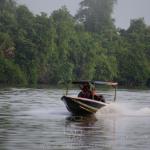
River transportations such as this speed boat plays an important role for the people who lived along Kayan river.

Most of the settlements in North Kalimantan are not well connected with road networks. So the communities living particularly in Malinau and Bulungan regencies use river transportation such as traditional boats and speedboats to commute.

The ports in Tarakan offer ferry transportation services to Tanjung Selor around the clock from morning to evening via Kayan river.

Plus, it is the main route for goods and other supplies to enter this inland regions of North Kalimantan.

Otherwise, most of North Kalimantan residents, especially those who live at the Sabah-Sarawak border may rely on trading with Malaysia for supplies.

3.It was named after the Kayan people who live along the river.
5 things to know about Kayan river, North Kalimantan
The river was named after the Kayan people who lived along the river.

In Kalimantan, the Kayan people live along the upper Kayan and the middle Kapuas and Mahakam rivers.

Meanwhile in Sarawak, they settled along the Baram, Balui, Belaga, Tubau rivers.

4.Along the Kayan river was where the Sultanate of Bulungan reigned.

Speaking of the Kayan people, here comes an interesting story of how the ethnogenesis of Bulungan people was formed.

Long time ago, there was a group of Kayan people from Uma Apan in the interior region of Apo Kayan highlands.

They expanded their territory and then settled down near the east coast of Kalimantan.

Around 1650, a princess of the group married a man from Brunei. The marriage founded a Hindu lineage which settled in Tanjung Selor.
About a century later, the dynasty converted to Islam and the rulers took the title of Sultan.

The last Sultan Jalaluddin passed away in 1958 and the Sultanate was subsequently abolished in 1959. Now the territory is a kabupaten or regency.

5. It is one of the main rivers flowing through Kayan Mentarang National Park
5 things to know about Kayan river, North Kalimantan
Kayan Mentarang National Park is accessible by longboats via Kayan river.

Located at the border between Indonesia and Malaysia, Kayan Mentarang National Park is one of the few places in Borneo which is densely forested.

It is also a fundamental site to the WWF Heart of Borneo. It is an initiative which aims to protect the transboundary biodiversity of Borneo.

Animals found in the park include Malayan pangolin, long-tailed macaque, Bornean gibbon, clouded leopard, different kinds of hornbills and many more.

So if you are heading to the park via Kayan river, you might be lucky to appreciate some of these endangered species along the way.

5 Stops for an Epic Road Trip to the Great South West Edge of Western Australia

road trip australia
4WD Driving near Walpole.

Have you ever dreamed of going on a road trip but not sure where to go? Well, guess what – Western Australia‘s Great South West Edge offers a host of routes for a self-drive trip across its five main regions that are bound to be relaxing for a road trip for families, friends or couples.

With Perth only being a five-hour flight away from Malaysia, your adventure begins the moment you get past the arrival hall at the airport. With so many affordable car rental services available at Perth airport, you’ll be on your way to an epic road trip in no time!

Take a trip down to the Great South West Edge; the 11-day drive offers multiple scenic stops that begins and ends in Perth, with a great number of beautiful sights of nature that are sure to rejuvenate your spirits and give a memorable holiday experience.

Check out some of these must see-places on your epic road trip to the Great South West Edge.

1.Get up close and personal with friendly dolphins at Bunbury

dolphin watching australia
Group swimming with wild dolphins in their natural environment in Koombana Bay. ‘Swim with the Dolphins’ tour is operated by the Dolphin Discovery Centre, Bunbury.

We may have dugongs and Irrawaddy dolphins in Malaysia, but seeing a dolphin up close is still a pretty rare occurrence for us.

If you’re headed to Bunbury along your road trip, you are in luck. Bunbury, a city famed for its wild but friendly bottlenose dolphins, is located just a two-hour drive away from Perth and is the perfect spot where you can swim alongside these playful mammals, among other fun activities suitable for the whole family.

To meet with these friendly locals, head to the Dolphin Discovery Centre, where you can learn all about dolphins and other local marine life.

If you are feeling a little more adventurous, then try heading to the shores of Koombana Bay, which has a dedicated interpretive centre and interaction zone that lets visitors get up close with the bottlenose dolphins that frequent its calm waters. Alternatively, if you want to swim with the dolphins, join a tour for a viewing and swimming activities for a completely out-of-this-world experience!

2. Drink in the best of what Margaret River has to offer

wine drinking australia
Couple walking through the vines at Wills Domain, Margaret River

Located a little over an hour away from Bunbury is Margaret River that has evolved from a chilled-out surfer’s town to a popular spot that lets visitors enjoy the region’s spectacular sights and flavours. Blessed with mild weather and abundant sunshine, there is something for everyone to enjoy during your stop here.

For wine aficionados, you’ll be happy to know that Margaret River is the producer of over 15% of Australia’s premium wine and offers a whole array of wine-tasting experiences. With over 100 wineries, boutique breweries and produce such as exquisite cheeses, we can guarantee that you’ll be spoilt for choice.

If you’re looking for an adventure, it will be hard to miss the 40 top spots along the coast of Margaret River to catch the best big-wave surfing opportunity. These spots offer waves suitable for all levels, from powerful reef breaks to fun beach surfs. For an activity the whole family can enjoy, take a relaxing stroll along the sandy beaches and take in the remarkable view of the sunset.

After a stop at the beach, take a scenic 30-minute drive inland and surround yourself with the world’s tallest hardwood trees at Boranup Karri Forest. It is also the perfect spot for a romantic picnic under the canopy of majestic 60-metre timber giants. You can also explore one of the many captivating caves in the forest with a guided tour to Jewel Cave where you’ll find the world’s longest straw stalactite.

The fun doesn’t stop there. Margaret River also offers rock climbing, abseiling, mountain biking, canoeing and whale watching tours. You might even want to try your hand at fishing at one the many designated fishing spots as well. Now that’s what we call an adventure.

3. Go on a Tree top walk at Walpole

5 Stops for an Epic Road Trip to the Great South West Edge of Western Australia
Valley of the Giants, Tree Top Walk

Walpole is a charming town located just three hours away from Margaret River and is a must-see stop for nature lovers. It is an adventure waiting to happen with its expansive national parks, state forests, wide sandy beaches, pretty picnic spots and tranquil rivers that offer more than a day’s worth of exciting activities. From bushwalking to white water rafting to four-wheel driving on the beach, there’s something for nature lovers of all ages.

The real beauty of Walpole lies when you take a gentle 600 metre stroll through the canopy of 400-year-old tingle tress on The Valley of the Giants Treetop Walk in the Walpole-Nornalup National Park. During the walk, take in the spectacular views of the tallest timber trees on Earth while having a relaxing lunch under the trees. 

4. Take a refreshing dip in Greens Pool

snorkeling australia
Couple snorkelling at Greens Pool

Described as Mother Nature’s most inviting swimming pools, Greens Bay is located in William Bay National Park and is just under an hour’s drive away from Walpole. Once you arrive, you’ll be greeted by a perfect view of clear emerald waters and pure white sand, perfect for swimming, snorkelling and diving.

Once you’re out of the water, take a short stroll on foot to Elephant Rocks, where you can find natural elephant-like sculptures bathing in the clear waters. Take a peaceful walk along the stunning coastline to admire the breath-taking views of Madfish Bay, Waterfall Beach and if you are travelling during the spring, an abundance of beautiful wildflowers.

5. Enjoy Nature’s Best at Porongurup National Park

5 Stops for an Epic Road Trip to the Great South West Edge of Western Australia
Hikers on the Wansborough Walk and Bolganup Trail, located in the Porongurup National Park

Porongurup National Park is a haven for Australia’s most unique flora and fauna, including more than 100 species of birds and 750 varieties of plants. The park is located just over an hour away from Greens Pool and is home to the amazing Castle Rock Granite Skywalk – a walkway situated at the heart of Porongurup National Park that offer visitors affording breath taking views of the park below.

With over 1,100 million years in the making, it features a unique granite range of 12 peaks. For the more adventurous, there is also the option of scaling the last few metres via a short rock climb to reach the summit.

The park is also one of the best spots in the South West region to see wildflowers. Make sure to visit during spring or early summer to enjoy the colourful displays of Bluebells, Wattles, Hoveas, Banksia, Dryandras, Hakeas, Hrevilleas and Orchids.

With these top nature spots on your relaxing road trip, we’re sure you will be recharged and ready to come home rejuvenated and ready to face another day at work in the big city!

For a full itinerary of the Great South West Edge self-drive trip, head over to Tourism Western Australia’s website at https://www.westernaustralia.com.

How Rumah Sri Aman Got Its Name

Due to its almost hidden location, most would probably not notice a big white house called Rumah Sri Aman located on top of a hill in the quiet town.

Rumah Sri Aman KajoMag
Rumah Sri Aman is located on top of a hill in the quiet town

Before it was called Sri Aman, the quiet town was once known as Simanggang.

Situated high on a hill, the white house was formerly known as the Government Rest House.

Before that, the double storey house served as the official bungalow of the Resident of Simanggang.

Rumah Sri Aman KajoMag
Rumah Sri Aman was once used as a government rest house and official bungalow for the Resident of Simanggang

Due to its unique structure, the rest house is also known as the octagon building as it was designed with eight walls.

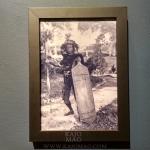
Perhaps one of the most famous photos ever taken at this house was a black and white photo snapped on 21st October 1973.

The event on that date also led to the town’s name being changed to what it has become known as today – Sri Aman.

What happened back then?

In the early 60s, Sarawak was exposed to a communist insurgency as there were various parties that were opposed to the formation of Malaysia.

Initially, the formation of Malaysia involved bringing in Malaya, Sarawak, British North Borneo (Sabah), Brunei and Singapore to form a country.

One of the groups opposing this formation was the North Kalimantan Communist Party (NKCP) and its military formation, the North Kalimantan People’s Army (NKPA) or Pasukan Rakyat Kalimantan Utara (PARAKU).

It was a communist political party based in Sarawak.

NKCP was also known as the Sarawak Communist Organisation (SCO) or the Clandestine Communist Organisation (CCO).  

It was formed by Bong Kee Chok who was the commander and Commissar of NKCP.

He was arrested on 22nd June 1962 for protesting. After his release, he formed the NKCP in 1965 in Pontianak, West Kalimantan of Indonesia.

Sri Aman Operation

To put an end to the communist movement, Sri Aman Operation, a peace movement was formed.

The Sarawak Government’s effort in setting up the Rajang Security Command (RASCOM) in 1972 slowly gained control of the situation as well as the setting up of armed Vigilante Corps (RELA) by local residents.

Initially, NKCP received support from then President of Indonesia, Sukarno and Sarawak-based party, the Sarawak United People’s Party (SUPP).

But slowly through several counter insurgency operations, the Sarawak government began to take control of the situation.

Both Indonesian and Malaysian military forces began to collaborate in joint operations against the Sarawak communists, weakening the North Kalimantan Liberation Army.

In 1970 after elections, SUPP entered into a coalition with the Alliance Party’s Sarawak partners in the Sarawak State Legislative Assembly. 

Realising that they were on the losing side, Bong realised that they needed to surrender.

Bong Kee Chok’s surrender

In his letter dated 10th October 1973, Bong wrote to the then Sarawak Chief Minister Datuk Patinggi Haji Abdul Rahman Yakub indicating his willingness to surrender.

Under the Sri Aman Operation, formal negotiations were made on 20th October.

The next day, Rahman Yakub signed a Memorandum of Understanding (MoU) at the government rest house in Simanggang.

Following the event, the first batch of Sarawak armed communists surrendered their weapons and were allowed to return to society.

The terrorists who surrendered were temporarily placed at the Protection Detention Centre for rehabilitation so that they could assimilate into the community.  

On 19th March 1974, Rahman Yakub announced the success of the Sri Aman Operation at the Tun Abdul Razak Development Hall in Kuching.

After the announcement of the success of the Sri Aman Operation, a parade was held around the city of Kuching.

Rahman Yakub declared that the curfew over the entire state of Sarawak which had lasted more than 11 years was to be lifted.

The communist insurgency was finally ended in 1990 following the surrender of the remaining NKCP members under the leadership of Bong Kee Hiu, the military commander of the First Division Military Unit and Hung Chu Ting, the deputy director of PARAKU and leader of the Second Bureau Third Division Unit.

Rumah Sri Aman

After the incident, the rest house was renamed Rumah Sri Aman which means House of Peace, to commemorate the event.

Rumah Sri Aman KajoMag
Chief Minister Tun Abdul Rahman Yakub (left) and Bong Kee Chok signing the MoU at the rest house in Simanggang

It was here that a Memorandum of Understanding (MoU) was signed on 21st October 1973 by Rahman Yakub and Bong Kee Chok.

They signed in their capacities as Chief Minister of Sarawak, and Director and Political Commissar of PARAKU, respectively.

The table which was used to sign the MoU has been moved to Fort Alice for visitors to see as Rumah Sri Aman is not open to the public.

Saying hello to the proboscis monkey in Tarakan’s Bekantan and Mangrove Conservation Park

While we call it’ ‘monyet belanda’ in Malaysia, in Indonesia it is called ‘bekantan’. The proboscis monkey (Nasalis larvatus) is endemic to Borneo and can be found in all three countries on the island.

But it can also be found on the island of Tarakan, in the eastern part of Borneo in North Kalimantan province of Indonesia.  

Here visitors can see them at the Bekantan and Mangrove Conservation Park, about 1km from the city center of Tarakan.

The Bekantan and Mangrove Conservation Park

The park is a conservation effort led by Tarakan city’s local government. In the beginning, the area only spanned three hectares, now it has increased to 22 hectares.

It was officially opened on June 5, 2003. Besides a conservation place for proboscis monkeys, it also served as the green lung for Tarakan city.

At first there were only two proboscis monkeys living in the park, now they have about 35 individuals.

Over the years, these proboscis monkeys have become used to human visitors, so it is easier to spot them and catch them on camera.

Plus, their reddish brown fur and unusually large noses make them easier to spot among the mangrove trees.

The best times to visit the Bekantan and Mangrove Conservation Park are between 11am to 2pm. This is because these are the extra feeding times for these bekantan.

Being seasonal eaters, these animals eat mostly fruit from January to May and leaves, especially mangrove leaves during June to December.

But the park rangers still feed them fruit with extra nutrients like bananas.

What to bring to the park

Visitors can walk around the park along its walkways that make it convenient to bring young families around.

Besides proboscis monkeys, visitors can also watch out for other animals such as crabs, birds, monitor lizards, squirrels, and mud fish. During high tide, you might even spot see snakes swimming through these mangrove roots.

Since the park is located near the city, visitors cannot escape from urban noise pollution, especially with noises coming in from a nearby school.

But with plenty of mangrove trees around, it is still a good place to see some greenery.

Although you can take photos of proboscis monkeys from a distance of 5m, it is still best to bring long-focus lenses to take their photographs.

Be respectful toward these animals and do not provoke them. Ever.

In Indonesia, proboscis monkeys are protected by Law Number 5 of 1990, Article 21, paragraph 2, which states that it is prohibited from capturing, injuring, killing, storing, possessing, maintaining, transporting and trading protected animals in living conditions. Anyone who intentionally violates the provisions of Article 21 paragraph 2 can be punished with a maximum imprisonment of 5 years and a maximum fine of Rp100 million (about RM28,000 or USD 7,000).

Besides Bekantan and Mangrove Conservation Park, proboscis monkeys can also be found in 16 protected areas in Indonesia.

These include Danau Sentarum National Park, Gunung Palung National Park, Kendawangan Nature Reserve, Kutai National Park, Lesan Protection Forest, Muara Kama Nature Reserve, Mandor Reserve and Tanjung Puting National Park.

Discover The Peranakan Gallery at Orchard Road, Singapore

Phoenix in flight, dancing dragons and peonies in full bloom; visitors to The Peranakan Gallery at Orchard Road will be enthralled by artful depictions of these colourful and iconic Peranakan symbols throughout a gallery space that focuses on tracing the 500-year-old story of the Straits Chinese population in Southeast Asia.

Beginning from the arrival of Chinese Admiral Cheng Ho’s fleet in the early 15th Century, the Peranakans embraced cultural practices and aesthetics from local Malays and occupying Europeans over 300 years to shape a hybrid culture rich in its own tapestry of traditions.

Discover The Peranakan Gallery at Orchard Road, Singapore

The Peranakan Gallery brings to life this remarkable heritage within a setting that is accessible and intriguing to visitors with all levels of understanding of the Straits Chinese culture.

At the entrance, guests are greeted by a typical Peranakan shophouse facade complete with an ornately-carved Pintu Pagar (fence door). It is a traditional privacy screen placed in front of the home’s main entrance.

Furthermore, there is a table set-up for a game of Cherki (a olden card game similar to gin rummy) beckons within. Meanwhile, another large section is dedicated to the art of embroidering and wearing the iconic Sarong Kebaya and Kasut Manek (beaded slippers) traditionally worn by Peranakan women.

Authentic Peranakan Flavour The Peranakan Gallery’s main exhibit centers around an elaborate 20-seater Tok Panjang table set. On the table, there are exquisitely-crafted Nyonya ceramics, Chinese porcelain and Waterford crystalware. This a nod to the Malay, Mandarin and European influences beloved by the Peranakans and assimilated into their aesthetic.

Tok Panjang is a grand spread of dishes laid out with great care upon a table, in celebration of special occasions such as weddings, anniversaries and hallmark birthdays.

Centering this table at the heart of The Peranakan Gallery spotlights the importance that Babas (men) and Nyonyas (women) place on their distinct culinary heritage.

Visitors will be heartened to know that this Tok Panjang table isn’t merely a museum display. The gallery’s adjoining restaurant, The Peranakan, is able to serve up an authentic Tok Panjang feast comprising over 12 signature items at the table.

Encircling this centerpiece are displays of items and furnishings typical to Straits Chinese homes of yesteryear. From black and white family portraits, treasured and antique Kam Cheng, there is even a collection of vintage tiffin carriers and even enamel chamber pots.

Discover The Peranakan Gallery at Orchard Road, Singapore
The gallery is a celebration of life

Baba Raymond Khoo, founder of The Peranakan Gallery and also executive chef of The Peranakan shares, “The Peranakan Gallery is a celebration of our Straits Chinese way of life, created to transport visitors to the golden age of Peranakan heritage through an experience that is visually captivating and highly-immersive. We hope the gallery inspires each visitor to discover more about our unique hybrid culture that embraces East and West, and to be an active advocate for all things Peranakan. Our efforts in encouraging people to participate in and promote Singapore’s Peranakan culture stems from a passion to preserve our ancestral heritage for generations to come.”

Sharing more on the Orchard district’s Peranakan history, Baba Raymond explains, “Orchard Road was home to one of Singapore’s original Peranakan enclaves in the 1800s. We hope this exciting project both celebrates the heritage of Orchard Road whilst transforming the typical mall visit with an enriching insight into Peranakan culture.”

Discover The Peranakan Gallery at Orchard Road, Singapore

The Peranakan Gallery is opened in collaboration with Claymore Connect, a mall by CDL Hospitality Trusts (CDLHT).

The Peranakan Gallery is open daily from 11am to 10pm and is conveniently located at Level 2 of Claymore Connect Mall, 442 Orchard Road Singapore 238879.

The admission fee of S$15nett per person is waived for all visitors who present a hotel key card or a receipt from any outlet located at Claymore Connect.

1 4 5 6 7 8 15