Browse Category

Travel - Page 14

A Saturday morning at Bakun wharf cum trading post

If you are one of those impulsive, adventurous travellers seeking for a new place for a random tour, here is a KajoMag-worthy suggestion.

Why not make a quick trip to Bakun wharf on a Saturday morning?

Bakun wharf is located at Bakun dam’s reservoir lake, about a three-and-a-half hour drive from Bintulu town.

It is actually not a public jetty but belongs to Sarawak Energy (SEB) which is within the security area of the power station.

A Saturday morning at Bakun wharf cum trading post
Bakun wharf turns into a trading post every Wednesday and Saturday morning.

Every Wednesday and Saturday morning, however, the wharf turns into a trading post attracting buyers from Bintulu, Sibu, Miri and even Kuching.

Here you can find various types of freshwater fish including Mengalan, Semah, Tengadak, Baung, Labang and even the famous Empurau.

A Saturday morning at Bakun wharf cum trading post
Mengalan fish.
A Saturday morning at Bakun wharf cum trading post
Baong fish, which is a type of cat fish.

While most of the fish buyers are restaurant owners and middlemen, a number of visitors also buy these fish for personal consumption.

Prices usually range from RM15 onwards per kg.

A Saturday morning at Bakun wharf cum trading post
A market with a beautiful lake in the background.

According to some of the traders, the bigger the fish, the tastier its meat.

And if you were to pick a size, choose one which weighs at least 1kg.


A Saturday morning at Bakun wharf cum trading post
A trader carrying meat to trade.

There are also other traders selling their jungle produce such as paku (a type of local fern) and rebung (bamboo sprouts).

In the midst of hustle and bustle of the market, take in the beauty of Bakun lake. Do you know the man-made lake is about the same size as Singapore?

A Saturday morning at Bakun wharf cum trading post
A view of Bakun lake which is about the same size as Singapore.

Where to go after Bakun wharf?

A Saturday morning at Bakun wharf cum trading post
Bakun wharf.

After a visit to the wharf, you can go to nearby Bakun restaurant about 10 minutes’ drive away and let the professionals do their magic on these fishes.

They can cook the fish according to your preference and usually charge the price by weight.

Since the fish are so fresh, the best way to enjoy them is to steam them. Then you can taste the tenderness of the meat minus the fishy smell.

There are other ways to cook them too such as asam pedas (Malay-style sour and spicy dish) or the Teochew style of steaming with Chinese salted vegetables.

Spending a morning on the wharf and having a scrumptious lunch at a restaurant later… isn’t this is one of most authentic ways to spend your Saturday in Sarawak?

A Saturday morning at Bakun wharf cum trading post
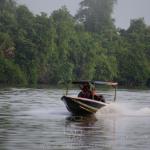
Longboats are the best vessels to traverse Sarawak’s winding rivers which can be both shallow and deep in some places.
A Saturday morning at Bakun wharf cum trading post
A stray dog watches the buyers and sellers closely, waiting for some food scraps.

The Frog Pond of Kubah National Park

Most visitors to Kubah National Park would put Mount Serapi or its waterfall on the itinerary but only a few would stop and appreciate the frog pond located there.

Situated about a half-hour walk from the park HQ, this pool is the breeding ground for numerous frog species.

There are a few signs provided at the frog pond to educate the public more about this amphibian.

The Frog Pond of Kubah National Park
Kubah National Park prides itself as “The Home of Palms and Frogs”.

If you are visiting the frog pond during the day, you might miss them. They hide among the leaf litter away from the hot sun and predators.

You can enjoy more of these amphibians if you are staying overnight at the national park.

This is because the frogs only come out at night. Furthermore, they are most active an hour after sunset.

The Frog Pond of Kubah National Park
Most visitors tend to skip this small frog pond.

Have you heard a frog’s call before? Male frogs call to attract females.

Unlike catcalling among humans which usually repel the females, the louder the frog’s call, the better their chances of getting a mate.

Every species has its own distinctive call.

The Frog Pond of Kubah National Park
A visitor walking pass the natural frog pond of Kubah National Park.

Some of the factors reportedly affecting the frog’s mating rituals are humidity, rainfall, temperature and even the phases of the moon.

After choosing a mate, the female expels its eggs into the water while the male releases its sperms to fertilise the eggs.

The eggs will later hatch into tadpoles and live like a fish for about 11 weeks.

Some tree frogs lay their eggs in the trees to avoid egg raptors.

When the eggs hatch, the tadpoles will fall into the pond.

The Frog Pond of Kubah National Park
After choosing a mate, the female expels its eggs into this pond while the male releases its sperms to fertilise the eggs.

The importance of frogs

Frogs and their tadpoles hunt mostly insects allowing them to control the insect population. Hence, this helps to balance the ecosystem. Similarly, snakes, birds, bats and other frogs also prey on these frogs, continuing this important predator-prey cycle.

Did you know that having lots of frogs in the forest tells us that the area is still healthy?

They can be used as bio-indicator for pollution. This is because frogs have permeable skin which can be sensitive to any disease, pollution and changes in the environment.

If the number of frogs decline, it’s safe to say that it’s a warning sign that something is wrong with the environment.

The Frog Pond of Kubah National Park
If the number of frogs decline, it’s a warning sign that something is wrong with the environment.

Frog species found at Kubah National Park

According to Sarawak Tourism Board website, some frogs that can be spotted here are Grass Frog, Common Asian Toad, Brookes’s Burrowing, Kerangas Bush Frog, Harlequin Tree Frog, Four-line Tree Frog, White-lipped frog and File-eared Tree Frog.

Apart from these, Hans P. Hazebroek and Abang Kashim Abang Morshidi listed more frog species in National Parks of Sarawak.

These include Kuhl’s Creek Frog, Black-spotted Rock Frog, Sarawak Slender Litter Frog, Abott’s Litter Frog, Giant River Toad and Brown Slender Toad.

The perks of travelling to Krabi during low season

The perks of travelling to Krabi during low season
Swimming in small area such as Piley Cove is much more comfortable during low season due to a lesser crowd.

While most vacationers would pick December till April to take a trip to Krabi in southern Thailand for the warm seawater and tanning, some visitors might prefer otherwise.

The low season in Krabi season is from May to October when the monsoon winds bring cooler temperature and more rains in the area.

You would be surprised how many visitors are still willing to flock to this tourist spot even during low season.

Here are some of the reasons why travelling to Krabi during low season is a good idea:

The perks of travelling to Krabi during low season
Even the monkey looks relaxed during low season at Maya Bay.

1. Escape the crowd

Practically, it is less crowded on the beaches and islands.

A tour operator told me that if it was during high season, the streets in Ao Nang would be crawling with tourists.

Additionally, you can hardly see any long stretches of sand on favourite tourist sites such as Maya Bay from ashore, only a sea of humans during high season.

The perks of travelling to Krabi during low season
Just a dog relaxing at a beach in Ao Nang.

 2. Cheap, cheap cheap

Unsurprisingly, food and accommodation are cheaper during low season compared to high season.

You could get up to 20% discounts off your bill dining at some of the restaurants in Ao Nang.

A bed at a hostel could go as low as 250 baht per night.

Some tour operators even offer half price discount for their travel packages.

The perks of travelling to Krabi during low season
Tour operators sometimes offer up to 50% discounts for their travel packages.

The downside?

However, the biggest disadvantage of travelling during low season is you are the mercy of Mother Nature.

Pick a wrong day, and you could spend time in your hotel room doing nothing if it rains the whole day.

Nonetheless, if you enjoy drinking, might as well spend your time sipping on cocktails and local beers at the bar while watching the rain drop.

The perks of travelling to Krabi during low season
Just enjoy your lattes during the rainy season at The Coffee Club in Ao Nang.

One cocktail could cost you 90 to 100 baht during low season – about half the price compared to high season.

There are several local coffee joints such as The Coffee Club in Ao Nang which offers a good caffeine fix on top of great ambiance for you to enjoy a moment alone with your book.

You could also spend your day at any of the spas for a massage or manicure.

All of these make vacationing in Krabi during low season a risk worth taking after all.

The perks of travelling to Krabi during low season
A glass of cocktail such as Mai Tai and Magherita can go as low as 90 baht.

Read more:

How to travel ethically in Thailand

Top five things to buy at Krabi Weekend Night Market

Visiting Krabi’s Emerald Pool and Hotspring

Touring Thailand’s Phi Phi Islands

Iconic Landmarks in Pontianak That You Should Visit

If you just happen to find yourself having to spend only a day in Pontianak, which of its iconic landmarks would you visit?

For those who might have a hard time deciding where to go, just follow this Kajo-worthy list on where to go in Pontianak so that you don’t miss out a lot on its history and culture.

  1. Visit Rumah Radakng

    Iconic Landmarks in Pontianak That You Should Visit
    Rumah Radakng is the largest replica house of the Dayak Kanayatn community in Kalimantan. (Photo credit www.flickr.com/baka_neko_baka)

Rumah Radakng is one of the top iconic landmarks in Pontianak. Constructed by the city government from ironwood, Rumah Radakng is a replica of the traditional house of the Kanayatn Dayak community in Kalimantan.

Standing at 7 meters in height, 8 meters in width and 138 meters long, Rumah Radakng is the biggest traditional house in Indonesia.

  1. Try coffee at Warung Kopi Asiang

Iconic Landmarks in Pontianak That You Should Visit
Coffee lovers would appreciate this humble yet vibrant local cafe that serves good coffee (Picture source from Kompas.com)

This local cafe deserves a spot in this list of iconic landmarks to visit in Pontianak due to its humble yet vibrant atmosphere.

According to locals, Warung Kopi Asiang at Jalan Merapi is the best place to get your daily caffeine intake. Open since 1958, the cafe is a popular hangout spot especially during breakfast.

While there, you can order coffee with milk and sugar, or only with sugar or just plain black. Aside from that, you may also order food to go along with your coffee such as half boiled eggs or an assortment of buns and cakes.

  1. Visit the Equator Monument

    Iconic Landmarks in Pontianak That You Should Visit
    The Equator Monument in Pontianak built to mark the division between the North and South hemispheres. (Photo credit www.flickr.com/Stefan Krasowski.)

The Equator Monument is next on the list of iconic landmarks to visit in Pontianak because it is the only city that sits on the equator.

According to the Wonderful Indonesia website, the shadowless sunlight occurs here twice a year as the sun reaches its zenith on the Vernal Equinox (March 21st-23rd), and the Autumnal Equinox (September 21st-23rd).

  1. Visit Singkawang

Iconic Landmarks in Pontianak That You Should Visit
The parade of Tatung occurs during Chap Goh Meh month.

While Singkawang is not exactly a landmark in Pontianak, it would be a shame not to visit this unique town.

A peaceful town, another top thing to do while in Pontianak is to visit Singkawang. It is best visited during the Chap Gog Meh celebration.

Singkawang is located about 150 km from Pontianak and you may reach there in just under four hours by bus. When approaching the town, you will notice a lot of small temples along the road.

Typically, local Buddhist residents will pray at their respective temples before Chap Goh Meh.

On the day itself, a Tatung parade will take place.

  1. St Joseph Cathedral

Iconic Landmarks in Pontianak That You Should Visit
St Joseph Cathedral is the largest church in Pontianak

Currently the biggest Catholic cathedral in Pontianak, the beautiful interior of the cathedral is really a sight to see.

The original cathedral was said to be built in 1908 but was demolished in 2011 to build a bigger one to accommodate more people.

  1. Mujahidin Grand Mosque

Iconic Landmarks in Pontianak That You Should Visit
Located at Jalan Ahmand Yani, the mosque is quite visible from the main road

Built in 1974, this recently renovated mosque is the largest in West Kalimantan as it can hold up to 1,000 people.

Located at Jalan Ahmand Yani main road, the mosque is pretty accessible and easy to spot due to its grand architecture.

The mosque’s distinct features are its four minarets covered with gold on top, so it is easy to spot from the main road.

  1. State Museum of Pontianak

This should be on the list of iconic landmark to visit in Pontianak because where else could you know everything about the city if not the museum?

  1. Pusat Souvenir Pontianak


    A visit to Pontianak would not be complete if you are to end your trip without making a stop at Jalan Pattimura.

    As one of the list of iconic landmarks in Pontianak, the souvenir centre is a pit stop for those who want to buy gifts such as traditional costumes, snacks and even accessories.

3 easy trails in Bako National Park you must visit

The oldest national park in Sarawak, Bako National Park is a tourist favourite in the state.

Located about 30km north of Kuching city, the park was established back in 1957 before Sarawak became part of the Malaysian federation.

Bako National Park is a great place to escape from the hustle and bustle of city life especially if you are living in Kuching.

Unlike other national parks near Kuching such as Santubong National Park, Kubah National Park and Matang Wildlife Centre where you can still hear faint sounds of vehicles, you are completely immersed in the silence which nature offers at Bako National Park.

Most of the time, you can only hear the sound of the waves crashing, the trees rustling, and the pigs snorting.

And yes, it is pretty hard to ignore the park’s residents. Beside the bearded pigs, you will also get acquainted with other residents including silvered-leaf monkeys and long-tailed macaques.

However, the star of Bako National Park is none other than the proboscis monkey.

Some say that the proboscis monkey is one of the most unusual animals in the world.

It has reddish-brown fur with greyish limbs and its long tail and lower back are white.

Adult males have a huge, distinguising red nose and a pot belly.

Although they can be easily spotted near the headquarters in the evening, when you explore the trails you might find more of them.

Bako National Park (2)
Bako National Park is one of the few rocky shores found in Sarawak.

With so many trails to choose from in Bako National Park and so little time, these are the three easy trails you can visit:

1.Teluk Paku

Bako National Park (4)
A view of secluded beach of Teluk Paku.

Proboscis monkey, check. Doable trail, check. Secluded beach, check.

It takes about one-hour to hike to this small secluded beach called Teluk Paku.

If you are taking the trail early or late in the day, you might spot a proboscis monkey at close range.

2. Lintang

Bako National Park (3)
A female proboscis monkey spotted at Bako National Park.

This is a good trail for botanists or plant lovers out there.

Lintang trail makes a great introduction to the plants of Sarawak with many trees labeled with their botanical names.

It is a loop trail which takes up to 4 hours to complete.

3.Teluk Pandan Kecil and Teluk Pandan Besar

Bako National Park
A view from the top of the cliff at the end of Teluk Pandan Kecil trail.

It takes one hour to Teluk Pandan Besar and other half an hour to Teluk Pandan Kecil.

Pitcher plants can be found along the sandy paths of this trail. The trail ends with a breathtaking viewpoint overlooking the South China Sea. After which, you can descend to Telok Pandan Kecil beach to enjoy the seaside.

Always be aware of your surroundings, as there have been many reports of crocodile sightings in the area.

Read more:

What to do at Santubong, Sarawak?

5 Reasons to climb Mount Serapi at least once in your life

Top 8 Penan handwoven items that everyone should have

Why Explore Parts Unknown is the travel site to follow

Forget Lonely Planet or The Guardian Travel, celebrity chef Anthony Bourdain’s travel site Explore Parts Unknown is the one to read.

The site is inspired by CNN travel show Anthony Bourdain: Parts Unknown where it explores Bourdain’s journey and people he encountered.

It gives in-depth stories of places he visited, food he tasted and people he talked to.

Explore Parts Unknown

As for us at KajoMag, here are our reasons why we love Explore Parts Unknown:

1. First of all, it has recipes!


What is travelling without enjoying the local food? One of the saddest parts for some of us coming home is that we start craving the food we relished while we were travelling.

The website offers not only the local recipes from these exotic countries but adds some background story too.

For example, did you know that green seasoning – a mixture of fresh herbs – is unique to the Caribbean and it tastes slightly different from island to island?

Or how about trying your hand at making a Zanzibari dish called Wali Na Mchuzi Wa Mbogamboga? With Explore Parts Unknown, you can travel to another country for one evening without leaving the house.

2. It tells you what you can do in one day in a foreign town!


If you are too lazy to plan out your travel itinerary, Explore Parts Unknown has you covered for a day.

So far, it has the perfect itinerary  for a day in Mexico City, Budapest, Stone Town, Tbilisi, San Francisco, Puglia, Seattle, Colombo, Pittsburgh, Lagos, Chamonix, Singapore, Tehran, Okinawa, Marseille, Nashville, Beirut, Port Antonio, Oxford, The Bronx, Kuching, Honolulu, Chiang Mai, Cologne, Porto, Port of Spain, Muscat, Lemaire Channel, Queens, Bilbao and many more.

From your typical tourist destinations to unconventional cities to visit, the website covers almost everything.

3. And more food guides and travel tips


Food guides are essential for foodies during travelling and this website has tonnes of it.

They tell you what to eat in every state in Mexico. (Just in case you didn’t know, there are 31 states in that country. Imagine the variety!)

No idea what to eat in Tanzania or Hungary? No worries! They have you covered.

For music lovers out there, they’ll guide you on where to find Seattle’s best music.

4. There are some history lessons too!


History is edible when dishes can tell more stories about the past.

Learn more about Sri Lankan history through lamprais, a dish of savoury rice and mixed meat baked in a banana leaf, or how Taco Rice became a signature dish of Okinawa.

For those of us who like reading about home in international circles, you can also read how midin, paku, dabai and engkala make up the riches of the jungle in Borneo.

Much like Bourdain himself, the website gives a fresh angle to stories that you wish you had learnt in school about countries like Puerto Rico, South Africa, and Nigeria.

5. Enlightening and intriguing stories of places and people from parts unknown


Who -or what – are the spiderwomen of Puglia? What would you need to know before you go to Tbilisi? How did Morrisania, a part of the Bronx become the birthplace of hip hop?

Every destination has its own story to tell, it is only up to us to look for it. Often, visiting new places always turn us into storytellers when we return home.

And here at this website, we find stories that we never had the chance to hear.

Read more:

8 Korean food blogs to follow for home cooked recipes

Kajo-worthy Festivals to look forward to in Sarawak

Depending on which part of Sarawak you visit, no trip is complete without catching one or all of its many festivals that show what a truly diverse place the Land of the Hornbills is.

If you are planning a trip to any part of Sarawak, just follow this Kajo-worthy check list on upcoming festivals.

  1. Kuching

One of the main highlight during the RWMF is the drum circle
RWMF is one of the most iconic festivals in Sarawak where the drum circle is among the event highlights.

As the capital city of Kuching, visitors can expect to see lots of festivals happening all year round there.

However, one of the most talked about festivals in Sarawak is the Rainforest World Music Festival (RWMF) taking place annually at the Sarawak Cultural Village (SCV).

During the three-day festival, you will be surrounded by heaps of world music in the Borneo rain forest as you can attend music workshops during the day and the full on concert at night.

This year’s RWMF will take place from July 13th to 15th.

Other annual festivals in Sarawak happening in Kuching include the Sarawak Regatta, World Harvest Festival and the Blue Lake Festival in Bau.

  1. Serian

When participating in the Padawan Raftt Safari, participants are required to build their own bamboo raft
Participants are required to build their own bamboo rafts in the Padawan Raft Safari.

If you love rafting, then the Padawan Raft Safari is perfect for you to show off your rowing (and building) skills.

Held in Padawan since 2004, the bamboo rafting competition typically takes about three-and-a-half hours to complete.

During the competition, competitors cruise down the river from Kampong Annah Rais, Kampong Temurang and Kampong Danu.

Expect to be mesmerized by the surrounding lush green scenery while rowing down the crystal clear river.

  1. Sri Aman

Many would gather near the Lupar River to witness the occurrence of tidal waves during Benak Festival
Many would gather near the Lupar River to witness the occurrence of tidal waves during the Tidal Bore Festival.

Taking place at the Batang Lupar River, the Tidal Bore Festival or Pesta Benak is an annual event in Sri Aman.

It is a natural occurrence due to the shallow river bed causing water levels to form strong waves heading upstream during high tide.

Held since 2001,  highlights during the three-day festival include longboat paddling competitions, tidal bore surfing and water sports.

  1. Sarikei

The iconic pineapple statue in Sarikei

It seems fitting that Sarikei would host an annual Pineapple Festival, considering it is the main supplier of pineapples in Sarawak.

Dubbed the ‘fruit basket’ for Sarawak’s central region, Sarikei town is renowned for its diverse agricultural products, especially its pineapple, which is why it was appointed the town’s fruit icon in 1998.

Besides, the pineapple themed competitions and displays you’ll see at the festival, you can also top off your visit by taking a selfie by the huge pineapple statue standing at the waterfront.

First held in 2003, you can expect to see a variety of other local fruits on display such as durians, a local olive called dabai, bananas, pepper and even livestock.

  1. Sibu

Largest mural in Sibu located at the LHDN building (Photo credit: Sibu Street Art facebook page)
The largest mural in Sibu is located at the LHDN building (Photo credit: Sibu Street Art facebook page)

The hometown of kampua and kompia does not disappoint when among the artwork featured along Sibu Town Square during the Sibu Street Art Festival are these iconic dishes.

The festival features murals and graffiti art depicting the typical livelihood of Sibu people.

This year, the festival will be held from May 5th to 12th    

Other festivals worth mentioning in Sibu is the Borneo Cultural Festival.

  1. Mukah

Kaul Festival is a traditional festival of the Melanau people

Kaul Festival is celebrated by the Melanau community in Mukah. It is a religious ceremony traditionally held to appease the gods of the sea, land and forest.

While the majority of modern day Melanaus are either Christians or Muslim, it is still celebrated as a social-cultural festival rather than a religious one.

Among the main highlights of the Kaul Festival is the Tibou ceremony, a 20-foot swing where young men wait on makeshift ladders to grab on to the swing and hold on for dear life as more and more people pile on.

  1. Bintulu

"<yoastmark

The windy nature of the seaside town of Bintulu provides the perfect venue to host the Borneo International Kite Festival.

Held the first time in 2005, the annual kite fest will be held from September 28 to October 2 this year.

  1. Miri

Kelabit women donning traditional Kelabit costume and headgear
Kelabit women donning traditional Kelabit costumes and headgear.

For food lovers, Pesta Nukenen or the Bario Food Festival is one of the most anticipated festival in Sarawak.

Celebrated in the Bario Highlands, the three-day food festival showcases everything unique about the Kelabit people and their traditions.

Other festivals in Sarawak worth visiting in Miri include Borneo Jazz Festival, Miri Country Music Festival and Miri May Fest.

  1. Limbang

Buffalo race (Photo credit: Joan Blandoi)
The buffalo race festival is an iconic festival in Limbang

Apart from ikan tahai, Limbang is also famous for its buffaloes.

The Pesta Babulang festival is held annually by the Bisaya community in Kampung Danu and Limbang.

Highlight of this festival includes the buffalo race between teams from Sarawak, Sabah and Brunei and its beauty pageant.

Other note-worthy festivals in Limbang include the Lun Bawang Festival or Irau Aco.

6 gorgeous Hollywood filming locations you can visit in Southeast Asia

Have you planned out your 2018 travel destinations yet?

If not, how about walking the paths of Hollywood stars by visiting beautiful filming locations in Southeast Asia?

Here are the top six scenic Hollywood filming locations to visit in 2018:

1. Palawan, Philippines – The Bourne Legacy

One of the best beaches in the world is located in Palawan.

One of the best beaches in the world is located in Palawan. Credit: Pixabay.

El Nido in Palawan served as one of the filming locations for 2012 American film The Bourne Legacy.

Aaron Cross (Jeremy Renner) and Dr Marta Shearing (Rachel Weisz) were shot riding a boat to El Nido.

It is currently ranked number 4 in Conde Nast Traveller’s list of “20 Most Beautiful Beaches in the World”.

With its white sandy beaches and limestone cliff, that is not a surprise.

Some of it’s best places of interest are Seven Commandos Beach, Simizu Island, Bacuit Bay and Cadlao Island.

2. Khao Phing Kan, Thailand – The Man with the Golden Gun

James Bond Island
Khao Phing Kan is mostly known to many as “James Bond Island”. Credit to Pixabay.

The names Khao Phing Kan and Ko Ta Pu might not be familiar to most tourists visiting Thailand as most may know them as James Bond Island.

Ko Ta Pu is a 20 metre tall islet located about 40 metres away from Khao Phing Kan.

Before the 1974 James Bond film The Man with the Golden Gun where it served as a hideout for Bond’s antagonist Francisco Scaramanga played by Christopher Lee, the island was relatively unknown.

The island became part of Ao Phang Nga Marine National Park in 1981. Since 1998, tourist boats have not been allowed to get too close to Ko Ta Pu to prevent any more erosion of the base of the limestone islet.

But that doesn’t mean you can’t see it at all: according to Phuket.com, the two best ways to view James Bond Island are from boats or from the small beach on Khao Phing Kan.

Thanks to various factors including shallow water depth, stable warm temperature and rich nutrient supply from mangrove forests; the area is abundant with marine life.

It plays home to organisms such as blue crabs, mud lobsters, black sea cucumbers, brain coral, and striated herons.

3. Angkor, Cambodia – Lara Croft: Tomb Raider

One of the filming locations for Lara Croft: Tomb Raider.
Ta Prohm, one of the filming locations for Lara Croft: Tomb Raider.

Despite the success of finding a real-life Lara Croft, Angelina Jolie’s 2001 action-adventure film received generally negative reviews.

Angkor may have become the winner in this scenario, however, as it left such a great impression on the screen that more than 2 million tourists visited it in 2013.

Ta Prohm, one of the temples in Angkor was widely associated with the movie. So much so, it was dubbed the ‘Tomb Raider temple’ among tourists.

These 12th century ruins were originally built as a monastery and university by Khmer King Jayavarman VII. Today, one of the distinct features of Ta Prohm that make it a photo-worthy destination are the trees growing out of its hallowed halls.

To top it off, the temple is almost in the same condition it was when it was rediscovered at the end of the 19th century.

Its solemn ambience, intricate wall carvings combined with its jungle surroundings make it one of the most visited temples in Angkor region.

4. Maya Bay, Thailand – The Beach

Maya Bay
The view of Maya Bay in low season.

Maya Bay is one of two shallow bays besides Loh Samah located at Ko Phi Phi Leh island surrounded by 100-metre high limestone rocks.  Besides it’s gorgeous beaches, it is also a protected nature reserve under Mu Ko Phi Phi National Park.

Being a protected nature reserve, however, didn’t protect Maya Bay during the filming of The Beach (2000). Although the world was introduced to one of southern Thailand‘s great beauties, filming a Hollywood movie there turned out to do more harm than good for Maya Bay.

In an effort to make Ko Phi Phi Leh more “paradise-like”, 20th Century Fox, the studio behind The Beach (2000) reportedly bulldozed and cleared some sand dunes of native vegetation.

A group of environmentalists filed lawsuits against 20th Century Fox, the forestry department and the Thai agricultural ministry  for damaging the ecosystem in the island which they won in 2006.

Regardless of the lawsuit, Maya Bay is still famous among tourists – perhaps too famous – that it has recorded 5,000 visitors taking up the 250 metre long beach in one day. And that was the number recorded during low season.

Maybe the pristine white beach and crystal clear water of Maya Bay are just too irresistible.

5. Bali, Indonesia – Eat Pray Love

Will ride a bicycle through terraces of rice field like Julia Roberts in Eat Pray Love?
Will you ride a bicycle through terraces of rice field like Julia Roberts in Eat Pray Love? Credit: Pixabay.

Eat Pray Love (2010) starring Julia Roberts was filmed over a number of locations which include New York, Rome, Naples, Delhi, Pataudi and Bali.

In Bali, the film was shot in Ubud, a town surrounded by rice paddies and in Pecatu, a resort popular for its beaches.

In the film, Roberts was shot riding a bicycle through rice fields and swimming in Padang-padang beach in Pecatu.

Although not many were happy with the film, from critics to media including a travel blogger who wrote ‘Avoiding Julia Roberts in Ubud, Bali’, the island is lovely to visit.

Many are sold for its lush green paddy fields, surf-worthy beaches, colourful corals and unique cultures.

6. Ha Long Bay, Vietnam – Kong: Skull Island

Ha Long Bay, Vietnam.
Ha Long Bay, Vietnam. Credit: Pixabay.

In 1898, a huge sea snake in Ha Long Bay in Quang Ninh Province was sighted by a ship’s sublieutenant named Lagredin and his crew.

The story was even reported on The Hai Phong News, a French newspaper.

One century later, another creature emerged in the bay, a 104-foot-tall ape named King Kong in the movie Kong: Skull Island (2017).

The film was also shot in two other provinces in northern Vietnam, namely Quang Binh and Ninh Binh provinces.

The bay has up to 2,000 islets, most of which are limestone.

You might not find a huge sea serpent or a giant ape but it is home to 14 endemic floral species and 60 faunal species.

Other movies that were shot here were Pan (2015) starring Hugh Jackman as Blackbeard and Life (2017) starring Jake Gyllenhaal.

How to travel ethically in Thailand

Ethical travel in Thailand requires a little bit of extra effort and awareness but it’s not impossible.

It’ll make you feel better about the impact you have on another country and who knows, you might inspire some travelling companions to be responsible travellers too.

Keep the street clean and do not litter.
Keep Thailand’s streets clean and do not litter.

Here are some simple ways you can be an ethical traveller while visiting Thailand.

1. Say no to elephant rides

In 2016, it was estimated that 13 million tourists had taken part in rides provided by the 4,000 captive elephants in the Thailand.

According to World Animal Protection (WAP), more than 3/4 of them live in cruel conditions.  Asian elephants are also considered endangered by the International Union for Conservation of Nature (IUCN).

If you really want to get close to these gentle giants, try helping out local NGOs such as Save Elephant Foundation instead.

This foundation’s aim is to care for mistreated elephants rescued from tourism.

They wont let you ride the elephants, but you can feed them fresh fruit or watch these intelligent animals at play.

2. Say no to fish pedicures

Fish spas – where tourists and locals alike come to have their feet nibbled on by supposedly eager Garra Rufa fish – are commonplace in Thailand.

In 2014, it was reported that there were 1,341 fish spas registered with Thailand’s Interior Ministry and an estimated 3,000 unregistered spas running.

Before you think of dipping your feet into a tank of friendly ‘Doctor Fish’, PETA claims that these fish are not nibbling on dead skin because it’s part of their normal diet; they do it because they are starving.

Even though it is hard to find corroborating evidence online, what has shown up repeatedly are reports of potential health risks and hygiene standards.

Consequently, fish spas have been banned in 15 states in the US, along with Canada and Europe.

So when you walk past a fish spa next time, consider how the fish may be suffering or whether you really want to risk your health. Choose a human pedicurist instead.

Do not go for fish pedicure while visiting any spa.
Give the fish pedicure a miss while visiting the local spa.

3. Bring your own shopping bags

Most of the time when you shop in Thailand, chances are your things will be packed into a plastic bag.

Do Mother Nature a favour and bring your own reusable shopping bag. Recycling bins are difficult to find so your trash will most likely end up in landfills.

What doesn’t may end up in the ocean.

According to a survey by nonprofit Ocean Conservancy, Thailand is one of the top five Southeast Asian countries responsible for more than half of the 8 million metric tonnes of plastic waste that ends up in the oceans annually.

So if you happen to be visiting any of Thailand’s islands, don’t leave your rubbish there; bring it back to the mainland for proper disposal.

Skip the plastic bags when shopping in Thailand.

4. Don’t use plastic bottles

Do bring your own water bottles when you’re island hopping or sight seeing.

Clean drinking water is usually available at hotels or hostels so fill your bottle up before start your day.

Not only are you reducing your plastic waste, you can save on your drinks budget as well.

Bring your own water bottle while travelling.

5. Watch what you eat

Support local farmers and eat locally sourced food.

Choose eateries which are likely using local produce.

Most importantly, say no to exotic meats. Pangolins,  rat snakes, and turtles are protected animals.

Eat locally-sourced food while in Thailand.

Read more about travelling in Thailand

Visiting Krabi’s Emerald Pool and Hot Spring

Touring Thailand’s Phi Phi Islands

Top Five Things to Buy at Krabi Weekend Night Market

What to do at Santubong, Sarawak?

Santubong Peninsula, with its rich history and great landscape is only a 35-minute drive from Kuching.

Behind its mountain peaks lies an age-old legend of jealousy and rage between Puteri Santubong and her sister Puteri Sejinjang.

Hailing from a celestial kingdom, the princesses were not above sibling rivalry. One fateful day, the princesses fought violently with each other over who was the more beautiful.

Sejinjang hit Santubong’s head, after which the latter fell to the earth, becoming Mount Santubong.

Before she fell, however, she managed to throw the beam of her weaving loom at Sejinjang. The impact broke Sejinjang’s body, and the pieces scattered into the ocean, forming nearby islands Pulau Satang, Pulau Talang-Talang and so on.

With the family feud in the mythical past, Santubong is a famous place for both locals and foreign tourists alike, the beauty of these two sisters still living on to this day through the scenic views of both the rainforest and the South China Sea.

Here are 10 things to do while visiting the Santubong Peninsula:

1. Climb Mount Santubong

A steep climb up to Mount Santubong.

The number one thing to do (provided you have the passion and stamina) is to climb to the Santubong summit.

It is moderately difficult since it has some steep climbs assisted by rope ladders.

The climb takes about 3 to 4 hours to the summit and up to 3 hours to hike down.

Do not take the climb lightly as there have been cases of climbers becoming stranded out of exhaustion.

It is advisable to depart from the park rangers’ office no later than 8am and take at least 3 litres of water for each person.

Nonetheless, the views from the top are definitely rewarding.

Santubong (15)
The view from the top of Mount Santubong.

2. No energy to climb to the top? Just hike around it.

If you don’t have the energy to climb to the top but still want to enjoy the rainforest, hike around it.

At Santubong National Park, you can either follow the red trail up to the summit or the blue trail for an easier alternative.

The blue trail takes around two hours to complete and will lead you to one of the waterfalls.

If you take the blue trail of Santubong National Park, you'll find yourself on this hanging bridge.
If you take the blue trail of Santubong National Park, you’ll find yourself traversing this hanging bridge.

3. Take a dip in one of the jungle pools

While you are paying Mother Nature a visit, you might at as well take a refreshing dip in  one of its jungle pools.

Both blue and red trails at the national park have waterfalls to offer.

The waters are relatively shallow at all the waterfalls and may be only waist-deep at most.

Take a relaxing dip at one of the waterfalls at Mount Santubong.

4. Explore the coastline, not just Damai Beach

Apart from Damai Beach, there is another less famous but equally beautiful beach located at Santubong Peninsula.

Situated at Kampung Santubong, Pantai Puteri offers a scenic view of its coast.

It is a great place for beach combing as you can walk as far as the mouth of Santubong River.

There are plenty of weird-looking rock formations to explore as you draw closer to the estuary.

Be alert to your surroundings because if you are lucky enough, you might spot a kingfisher or two.

Here are some photos taken at Pantai Puteri:

5. Kayak along the shoreline

Another way to enjoy the shoreline is to kayak along it.

Permai Beach Resort and Damai Beach Resort offer kayaks for rent at affordable prices.

There are other recreational activities as well such as scuba diving, snorkelling and stand up paddleboards.

Each of them allows visitors to look at Santubong from different perspectives.

Kayaking is a relaxing way to explore Santubong.

6. Have a taste of Sarawak culture

Visiting a new place would not be complete without having a taste of its culture.

Sarawak Cultural Village (SCV) is an award-winning living museum depicting the cultural heritage of major racial groups in Sarawak.

There are seven unique houses which invite visitors to have an insight of the traditional life: the Bidayuh longhouse, Iban longhouse, Orang Ulu longhouse, Chinese farmhouse, Melanau tall house, Malay house and Penan hut.

Do not miss their cultural performances held at its theater twice a day at 11.30 and 4pm.

Once a year, SCV also plays host to the world renowned Rainforest World Music Festival.

Santubong (12)
One of the performers from Kobagi Kecak (Indonesia) during Rainforest World Music Festival 2016.

7. Swim in the South China Sea

Put on your bikinis or swimming trunks and just have a swim – but don’t forget to put on some sunscreen first!

Santubong (9)
Just take a swim!

8. Visit historical sites

The history of Santubong can be traced as far back as the 7th century.

The artifacts found in the area shows that the peninsula was a trading port between Borneo and China.

One of the historical places to visit at Santubong is Sultan Tengah Mausoleum.

It is located right before the junction to Santubong village.

The first and only Sultan of Sarawak, Sultan Tengah died in 1641 and was buried together with his family members.

Other historical sites include Batu Bergambar near Sungai Jaong, Cursed Crocodile Stone in Santubong village and archaeological site of  Bongkisam.

Santubong (10)
Miss the crowd by visiting Santubong during weekdays.

9. Explore Damai Craftworld and Event Centre

It was formerly known and still preferably called Damai Central.

The place has wide variety of facilities and services to offer which include barbecue pits, camp ground, event venues, food courts and crafts bazaars.

Monkeys can easily be spotted even at Damai Central.

10. Sit back, have a beer and enjoy the sunset

This is perhaps the best thing to do at Santubong.

Plop down on one of the seats at Escobar at Damai Craftworld and Event Centre, have a sip of a cold beer and then simply enjoy the sunset.

Santubong (11)
The sun setting at Santubong.