Patricia Hului

Patricia Hului is a Kayan who wants to live in a world where you can eat whatever you want and not gain weight.

She grew up in Bintulu, Sarawak and graduated from the University Malaysia Sabah with a degree in Marine Science.

She is currently obsessed with silent vlogs during this Covid-19 pandemic.

Due to her obsession, she started her Youtube channel of slient vlogs.

Follow her on Instagram at @patriciahului, Facebook at Patricia Hului at Kajomag.com or Twitter at @patriciahului.

How to have your me time and why is it important?

Everybody needs ‘me’ time. Psychologists say having ‘me’ time helps reboot our brains, unwind, improve our concentration, and make us more productive.
Moreover, ‘me’ time gives us the space for self-discovery while allowing us to think deeply.

Here at KajoMag, we want you to have a meaningful and fruitful me time and these are how you can do it:

1. Unplug everything

How to have your me time and why is it important?
Unplug everything. Credit: Pexels.

Turn off your phone. Switch off your laptop. Break away from all the devices that connect you to the outside world.
Undeniably, our phones have become our lifelines to the world with the average person reportedly spending 90 minutes a day on them. That amount of time could have been spent recollecting ourselves and just enjoying the time being alone.

2. Craft something

How to have your me time and why is it important?
Turn to arts and crafts during your me time. Credits: Pexels.

Channel your inner creativity by crafting during your me time.
Paint a scenery, learn some pottery, bead a necklace.
You don’t have to be as good as Van Gogh, arts and crafts is supposed to help you unwind.
So just shut the world out and craft away.

3. Colour your stress away

How to have your me time and why is it important?
Colour your stress away. Credit: Pexels.

If you really have no idea what to craft, how about grabbing an adult colouring book and indulging in a favorite childhood pastime? A report states that psychologists and therapists prescribe adult coloring to their patients.
It has proven coloring are actually great for your mental and emotional health.

4. Try to journal

How to have your me time and why is it important?
Jot down your emotions in a journal. Credits: Pexels.

Sometimes when you are alone, that is when all the thoughts (good and/or bad) flood through your mind.
Writing in a journal is one the best ways to confront your problems and clear your mind.
Nowadays, there are so many types of journals to write in, and even bullet journal Facebook groups you can join.
If you’re looking for an out-of-the-box option for a journal, try Wreck This Journal by Keri Smith which encourages you basically to ‘destroy’ your journal in a variety of ways.

5. Take a walk. Alone.

How to have your me time and why is it important?
Go for stroll along the beach.

You probably have heard of this advice: just walk it off. And to take a walk in a less crowded place actually helps you to feel better.
Just drive to the nearest beach and stroll the length of it alone, feel the wind blowing against your skin and the sand between your toes.
Shut all the noise around you out except the sounds of waves crashing. This is a very simple thing to do at minimal cost to spend your time alone to unwind.
Plus, you can burn extra calories along the way.

6. Go for a drive

How to have your me time and why is it important?
Go for a drive. Credits: Pexels.

If walking is not your forte, how about going for a drive?
Blast the music in your car, sing your heart out and let the wheel to take you wherever you feel like going.
As long as the fuel tank is full, drive to the nearest town or explore unfamiliar neighbourhood in your city.
If a kid like Dora the Explorer can do it, you can do it too.

7. Watch a movie. Alone.

How to have your me time and why is it important?
Watch a movie all by yourself. Credits: Pexels.

Watching a movie alone in the cinema is not pathetic. Everybody’s done it at least once in their lives. If you haven’t, go give it a try.
Pick a movie at an odd hour when you know there will be less people and enjoy the movie.
This is great for movie buffs out there because having a fruitful me time is all about doing something you enjoy… just all by yourself.

8. Read a book

How to have your me time and why is it important?
Escape from your reality and find sanctuary in the pages of your book. Credits: Pexels.

Bookworms and bibliophiles often find peace and solitude in between the pages of a book.
When your daily commitments have distracted you from the love of books, it is time to go back to reading.
Choose a small cafe which offers great coffee/tea/cake but with less of a crowd and sit in a far corner.
Then take out your book and escape from your reality for awhile.

9. Take a staycation

How to have your me time and why is it important?
Take a long warm bath in your hotel room and don’t you care about everything else. Credits: Pexels.

If money is not a problem, take a staycation in town.
Unlike a vacation, you don’t have to worry about catching flights or following an itinerary.
Check yourself into a cozy hotel and relax.
Take a swim in the hotel pool or binge eat in bed in front of the TV.
Fill the tub and take a long warm bath.

10. Let Mother Nature take you in

How to have your me time and why is it important?
Just go back to nature. Credits: Pexels.

Give yourself over to Mother Nature and let her help you relieve your stress.
Climb a mountain, take a hike or swim in the waterfall at any of these nearest national parks.
Scientists found that hiking yields measurable mental benefits and may reduce risk of depression.
But if you are hiking alone, let somebody know where you are going, be prepared before your hike and always stay on the trail.

10 unique wedding cakes for your non-typical brides

Wedding cakes have managed to transcend across different cultures that now it can be found in almost every wedding.

Who doesn’t love cake right?

While the traditional wedding cakes come with white frosting or covered in white fondant, there are plenty of unique wedding cakes to choose from.

Here are just some of the beautiful yet unique wedding cakes for the non-typical brides:

1. Nearly Naked Wedding Cakes

10 unique wedding cakes for your non-typical brides
Photos by Lanty
Some call it a ‘naked cake’, while others a ‘nearly naked cake’.

The idea of a naked cake is minimal frosting or no frosting at all. Even without the traditional frosting, it gives the cake a sophisticated rustic look, perfect for a rustic, countryside wedding.

Furthermore, without the frosting and icing, this cake is perfect for those who are keeping an eye on their their glucose levels.

2. Marbled Wedding Cakes

If there is a word to sum up marbled wedding cakes, the word would be ‘luxurious’. A marbled wedding cake looks like it is covered with, well marble.

It is made by kneading different shades of fondant together.

3. Ombre Wedding Cakes

Ombre cakes are not just popular for birthdays but it is gaining attention among couples on wedding days as well.
If you love subtle or even pastel tones, ombre wedding cake is just perfect for you.

It also makes the perfect wedding cake for those who want the traditional white tiered cake but at the same time want to put their own colours in it.

4. Inside Out Wedding Cakes

An inside out wedding cake can possibly steal the thunder from the bride herself on the wedding day.

The cake is like any other traditional wedding cake except it is cut in half. Then the inner part of the cake is covered with beautiful flowers.

When you love somebody inside and out, you might as well have an inside out cake for your wedding.

5. Two-toned Wedding Cakes

He wants a traditional white frosting wedding cake but you want chocolate frosting. How about coming together and have a two-toned wedding cake? A two-toned cake is a cake with two different kind of frosting covering it.

6. Geode Cakes

A geode cake makes the perfect centerpiece for your dream fairy tale wedding because it looks like its been inspired by a cave full of wonders. A sliver of the cake is carved out and filled with sugar rock candy made to look like crystal.

7. Story-telling Wedding Cakes

Tell your love story with your wedding cake. Literally. You can print any photos which tells your love story onto your cake.

If your bakers are skillful, they can also paint your story on the cake.

8. Watercolour wedding cakes

A post shared by Lipstickbaker (@lipstickbaker) on

With this cake, brushstrokes are no longer only meant for canvas and paper. Now you can have a watercolour-themed wedding cake to light up the most important day of your life.

Moreover, it looks dreamy and perfect for your whimsical wedding.

9. Drippy Cakes

This cake trend is famous for birthday cakes. But when you add an elegant touch, it is also great for weddings.
Imagine a smooth-finished white cake with chocolate dripping on top.

10. Stained Glass Wedding Cakes

Impress your guests with this elegant stained-glass wedding cake. The inspiration behind this cake is most probably from a church glass mural or an antique glass lamp, either way it makes an impressive wedding cake.

All Sarawakian breakfast at Woon Lam Cafe 1999 in one sitting

When it comes to must-try Sarawakian food, there is a long list that will be hard to complete if you don’t have much time. So why not try to cover the most food in one sitting?

One of the best places to try *almost* all the essentials in Sarawakian goodness in Kuching is at Woon Lam Cafe 1999.

All the breakfast essentials at Woon Lam Cafe 1999

All Sarawakian breakfast at Woon Lam Cafe 1999 in one sitting
Woon Lam Cafe 1999 is famous among locals but not so much among tourists.

Located at Jalan Song Thian Cheok, this eatery is widely famous for its kueh chap.

This dish features flat and square noodles served in a soy sauce-based broth with pork meat and innards.

The kueh chap stall at Woon Lam Cafe 1999 has apparently been selling this dish since 1985.

All Sarawakian breakfast at Woon Lam Cafe 1999 in one sitting
Kueh Chap

If kueh chap is not your cup of tea, however, why not have the evergreen classic kolo mee?

The kolo mee here may not be the most raved about in town but they do serve a decent bowl of Sarawak’s signature noodles.

All Sarawakian breakfast at Woon Lam Cafe 1999 in one sitting
Kolo mee at Woon Lam Cafe 1999.

This kopitiam also has a Sarawak laksa stall, offering what celebrity chef Anthony Bourdain called the breakfast of the gods.

In fact, Woon Lam Cafe 1999 is a walking distance from Bourdain’s favourite laksa place at Choon Hui Kopitiam.

Now that you have kueh chap, kolo mee and Sarawak laksa as your main dishes, how about some side dishes to complement them?

All Sarawakian breakfast at Woon Lam Cafe 1999 in one sitting
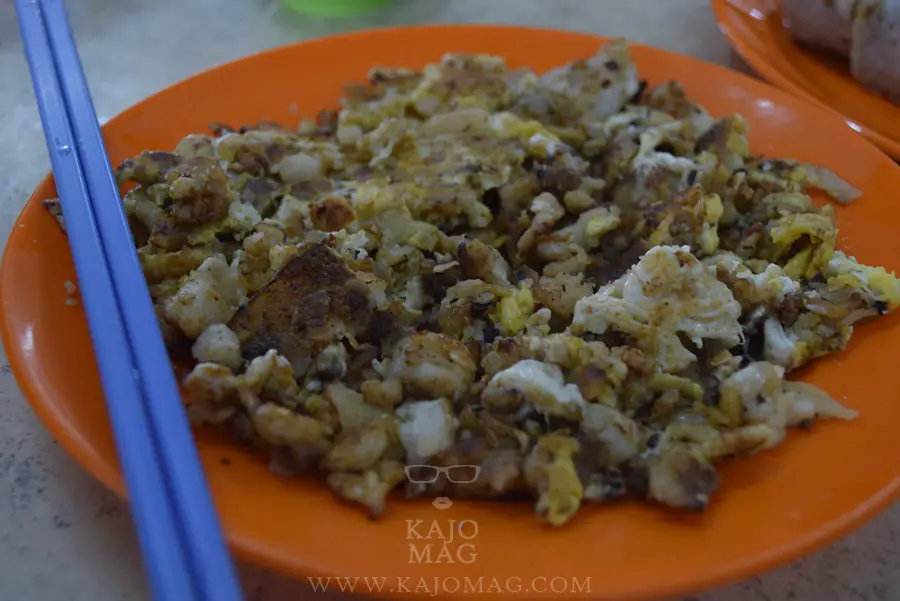
Char kueh.

Although fried carrot cake or char kueh is famous as midnight snack, you can order it at Woon Lam Cafe 1999 for breakfast.

Like most char kueh found in Sarawak, this dish is fried with light soy sauce and a heavy load of eggs.

Besides char kueh, Sarawak popiah makes a good side dish for breakfast too.

All Sarawakian breakfast at Woon Lam Cafe 1999 in one sitting
Sarawak popiah.

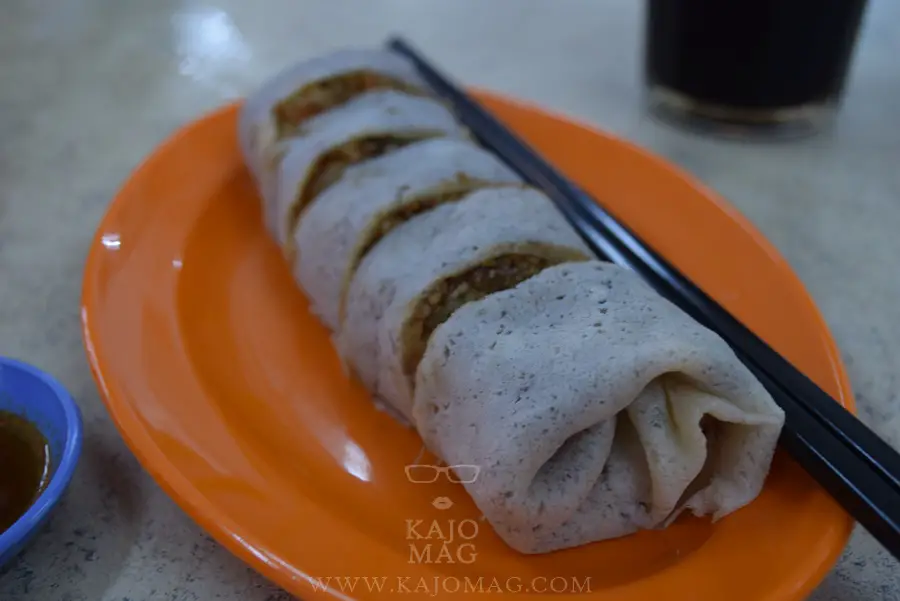
Sarawak popiah is mainly made of jicama, ground peanuts, bean sprouts wrapped in popiah skin and served with a sweet sauce.

One bite into it and you can taste the different textures of the various ingredients from the softness of the popiah skin to the crunchiness of ground peanuts.

A place worth trying

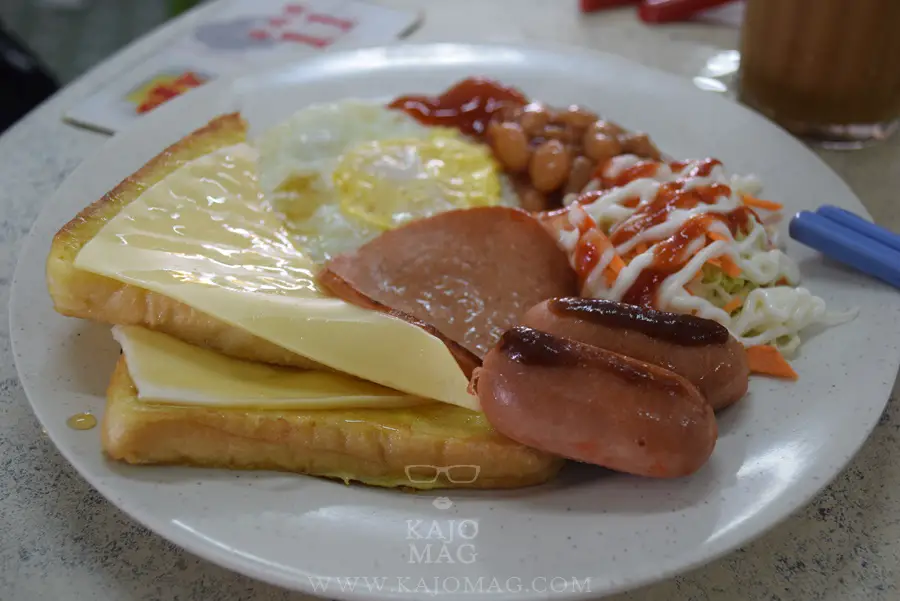
There are other main dishes offered at Woon Lam Cafe 1999 too. These include yong tau fu, Teo Chew Porridge and a Western breakfast of toast, eggs and sausages.

All Sarawakian breakfast at Woon Lam Cafe 1999 in one sitting
Egg, sausages and toasts for a Western breakfast.

This eatery may not be as famous as other Kuching favourite breakfast places such as Choon Hui or Chong Choon, but it is a good place for large groups coming together for breakfast looking to taste different Sarawakian foods in one sitting.

Moreover, it is strategically located in downtown Kuching. It is a walking distance from famous commendations such as Pullman, Grand Continental Hotel and Grand Margherita.

All Sarawakian breakfast at Woon Lam Cafe 1999 in one sitting
Going with a large group of friends is key to trying a lot of food in one sitting.

Muara Tebas temple, where the Chinese pray in a Malay village

A couple years ago, a clip of a group of Malay boys performing the lion dance went viral on social media.

They used a cardboard box as the lion’s costume and wooden sticks as well as empty cans for their instruments.

The boys credited their interest in this particular Chinese culture after watching lion dance performances at Ching San Yan temple.

This Buddhist place of worship is also widely known as Muara Tebas temple and has a history spanning over 200 years.

It is oddly located in Kampung Muara Tebas which is a Malay village.

Muara Tebas temple, where the Chinese pray in a Malay village
The staircase leading to Ching San Yan which means Green Hill Temple.

The history of Muara Tebas temple

According to legend, seafarers built the temple there after safely arriving in Kuching after crossing the South China Sea from China.

Here, devotees pray and extend their thanksgiving to Buddha Shakyamuni and Chinese sea goddess Mazu.

She is believed to roam the seas protecting her believers from harm.

The temple underwent renovation back in 1903. Since then, it was given a major facelift from 1994 to 2000.

Now, the Muara Tebas temple has exquisite wall paintings and elaborate sculptures, complete with a landscape garden.

Muara Tebas temple, where the Chinese pray in a Malay village
What you will see from the top of the staircase – an overview of the kampung and the Sarawak River.

It has a typical Chinese Buddhist architecture and layout. The grand mountain gate (front gate) is the entrance to welcome the visitors.

Two Imperial Guardian Lion statues stand at the entrance, ready to protect the temple.

Since it is built on a hill 120 feet above sea level, the temple offers a picturesque view over Sarawak river.

The colourful pavilion also offers a good place to enjoy the view.

Muara Tebas temple, where the Chinese pray in a Malay village
Visitors can sit at this pavilion and enjoy the view of the Sarawak River.

Once inside, you’ll discover that the main building has a courtyard, a  regular feature in most Chinese Buddhist temples.

And of course, there are plenty of statues of the Chinese Buddhist pantheon.

Kuching Hokkien Association has been responsible over the management of the temple since 1984.

Muara Tebas temple, where the Chinese pray in a Malay village
Some of the wall paintings found at the ceiling of the pavilion.

Muara Tebas temple during Chinese New Year

Muara Tebas temple, where the Chinese pray in a Malay village
The temple went through several major renovation before it became what it is today.

The temple is usually flooded with devotees during Chinese New Year.

However, the busiest day of the year would be on the fourth day of the Lunar New Year as devotees believe their deities return to Earth from heaven.

They would pray to and welcome the gods who went to heaven on the 24th day of the twelfth month to report on human deeds.

After visiting Muara Tebas temple, some faithfuls rent a boat to visit nearby island Pulau Lakei to visit ‘batu singa’ (lion rock).

The island is located near the northern part of Bako National Park, another tourist hotspot in the Muara Tebas peninsula.

The peninsula is situated about 30km from Kuching town and is also famous for its seafood restaurants.

For those who are travelling by car to visit the temple or enjoy the seafood, there is a small parking fee charged by the villagers.

Muara Tebas temple, where the Chinese pray in a Malay village
The temple is a fine example of Chinese Buddhist architecture.
Muara Tebas temple, where the Chinese pray in a Malay village
A landscape garden flanks one of the walkways up to the temple.
Muara Tebas temple, where the Chinese pray in a Malay village
The temple overlooks Kampung Muara Tebas.

Asian female ghosts who made it to the big screen

Some say anything men can do, women can do better, which is probably applicable in the case of haunting people as well.

Asia being the Earth’s largest continent, is rich with legends, folktales, myths and of course ghost stories.

And the main characters of these haunting stories are mainly women. (The idea of a woman with long unruly hair appearing out of nowhere in the middle of the night does seem scarier than a short-haired man with a potbelly.)

Asian female ghosts have always been the central plot in many famous movies including Japanese film The Ring (1998) and Thai flick Nang Nak (1999).

Asian female ghosts who made it to the big screen

Here are just some of the Asian female ghosts who are the subject matters of many horror movies:

1.Mae Nak Phra Khanong (Thailand)

Mae Nak Phra Khanong or Mae Nak is one of the most famous Thai female ghost. According to local legend, her story took place during the reign of King Rama IV (1851-1868).

Nak was a young woman married to Mak. When Mak was sent to war, Nak and their child died in childbirth. When Mak returns home, however, he finds her there with their child waiting for him.

Those who dare to warn Mak that he is living with a ghost are all killed.

Mae Nak appears in a long list of films from the 1950s including Nang Nak (1999), Ghost of Mae Nak (2005), Pee Mak (2013) and Make Me Shudder 2 (2014).

2.Krasue (Thailand)

Krasue is a young and beautiful female ghost with her internal organs dangling down from the neck (perhaps not so beautiful after all).

She has been making movie appearances since the 70s with film like Krasue Sao (1973) where she fights with a fellow krasue.

Showing her versatility, she also appears in erotic movies like Wan Krasue Sao (2013) and Krasue Rak Krasue Sawat (2014).

3.Nang Tani (Thailand)

Nang Tani is of the few Asian female ghosts who happens to be a tree-hugger.

She haunts wild banana trees and only becomes visible during the full moon.

Men who have wronged women, beware! They usually become her victims. But most of the time, she is reportedly benevolent.

Nang Tani’s earliest appearanceon the big screen is in Thai classic Nang Phrai Tani (1967).

4.Nang Ta-khian (Thailand)

Just like Nang Tani, Nang Ta-khian is another tree-hugger.

Her choice of wood is the Ta-khian tree or Hopea odorata.

She usually appears in reddish or brownish traditional Thai attire.

This spirit was featured in self-titled films, Ta-khian (2003) and Nang Ta-khian (2010).

Asian female ghosts who made it to the big screen
Nang Ta-khian is believed to always haunt Ta-Khian trees. Credit: Pixabay.
5.Pop (Thailand)

Here comes a more malevolent female ghost. Pop is a cannibalistic spirit in Thai folklore who has a distinct taste for human viscera, or their internal organs.

There are plenty of movie appearances of Pop. One movie worth mentioning is Krasue Fat Pop (1999) where she had a girl fight with Krasue.

6.Pontianak (Malaysia)

If you are in Malaysia and you see a female ghost with long hair, chances are high it is a pontianak.

Similar to the Indonesian kuntilanak, she is a spirit of a woman who died while pregnant.

The most famous pontianak film in Malaysia is none other than Pontianak Harum Sundal Malam (2004).

Directed and written by Shuhaimi Baba, the film was a major box office success in Malaysia.

7.Sundel Bolong (Indonesia)

Another ill-fated female ghost, Sundel Bolong is the soul of a woman who died when she was pregnant but against all odds gave birth in her grave.

Some said she died during childbirth and curiously the baby came out from her back.

Legend has it she does not handle rejection gracefully. If a man rejects her, she castrates him.

Sundel Bolong appeared in her self-titled 1981 adult horror film and Legenda Sundel Bolong (2007).

8.Wewe Gombel (Indonesia)

This female ghost embraces the body-positivity movement. Clearly in need of a nip-tuck, Wewe Gombel has long, hanging breasts and kidnaps children.

Wewe Gombel was once a barren wife who caught her husband cheating on her. When she killed her adulterous husband,  the villagers went after her.

She eventually committed suicide but her spirit lingers on.

Wewe Gombel kidnaps mistreated or neglected children and takes care of them.

In movies, she has appeared in Wewe Gombel (1988) and Legenda Wewe Gombel (2012).

9.Kuchisake-onna (Japan)

After being mutilated by her husband for an alleged affair with a samurai, Kuchisake-onna (which means ‘slit-mouth woman’) like many Asian female ghosts, returns as a vengeful spirit.

She is known to give trick questions to her victims. According to modern legend, if she asks a potential victim, “Am I pretty?” and the answer is “no”, she kills them with a pair of scissors.

If the potential victim answers “Yes”, she takes off her mask revealing her husband’s handiwork and then asks again, “How about now?”

A no will lead you to be cut in half, a yes will leave you with a slit mouth like hers. It seems like a no-win situation, but local lore suggests that there is a method to elude her which is asking her back whether you are pretty, or answering ‘so-so’ which will make her stop and think, thus giving you time to escape.

In Japan, she has appeared in movies such as Slit Mouth Woman in LA (2014) and even in manga and anime.

10.Manananggal (Philippines)

Manananggal is a hideous, blood-sucking female vampire or monster which can split from her lower torso before flying into the night looking for victim.

Her choice of victims are sleeping, pregnant women (or simply those who are asleep… comforting thought, isn’t it?).

She spearheaded the Filipino horror movie industry with her silent movie aptly named Manananggal (1927).

Besides that, she also appears in Shake, Rattle & Roll (1984), Impaktita (1989) and Manananggal in Manila (1997).

Miss Korea Kim Jinsol shares her beauty secrets

When it comes to health and beauty, everybody agrees Korean women have most of the know-how.

They know plenty of sometimes unheard of tips; from taking traditional herbs to performing modern exercise for the wellness of the body and mind.

Miss Korea Kim Jinsol shares her beauty secrets
Kim Jinsol, Miss Korea 2016.

During an episode of KBS’ Beauty Bible, Miss Korea 2016 titleholder Kim Jinsol impressed the viewers with her unfamiliar beauty tips.

1. Kickstart your day with juice

This 24-year-old beauty queen starts her day by drinking a glass of juice.

She blended various leaves vegetable including lettuce, perilla leaves, avocado and one glass of non-fat milk, one spoon of green apple powder and half a spoon of honey.

But her key ingredient is Angelica gigas also called Korean angelica.

It is traditionally used in Korean medicine to improve gynecological health. This herb is also used to improve cardiovascular and immune system.

Miss Korea Kim Jinsol shares her beauty secrets
Make your own juice to-go in the morning.

2. Nail art stickers
Famous fashion designer Prabal Gurung once said, “Nails are the period at the end of the sentence. They complete the look.”

Same goes for Kim who believes the finishing touch of fashion are her nails.

Instead of opting for nail polish, Kim preferred to use breathable nail art stickers.

This way she can change her manicure to complement her makeup and outfit.

Miss Korea Kim Jinsol shares her beauty secrets
Use a nail art sticker for a quick manicure.

3.Da Vinci Bodyboard yoga
Kim’s third beauty secret is something that has yet to catch on here in Malaysia.

It is called Da Vinci Bodyboard yoga. Kim touts it as “a type of interval training which is famous around the world.”

The board has elastic bands attached to it for users to exercise and do their yoga moves.

Known to be an effective system which builds strength, it also works as a cardio exercise.

She added, “It creates a beautiful silhouette for your body. It also works out your thighs and bottom.”

Watch the full episode of Kim Jinsol in KBS’s Beauty Bible here:

Belaga bazaar: A visit to the heart of Sarawak

Belaga bazaar: A visit to the heart of Sarawak
Jalan Teo Tua Kheng is a street named after one of the early Chinese settlers in Belaga.

If you look at Belaga town on the map, you will definitely notice that it is slapped roughly in the middle of Sarawak.

According to historian Chang Pat Foh, the name Belaga actually derives from a type of fish – the Betta splendens – otherwise known as the Siamese fighting fish.

Others, however, say the name comes from the word ‘Berlaga’ which means ‘fighting’ because the local communities were always fighting against each other for survival.

The whole Belaga district is located on the upper reaches of the Rajang river, about 120km of Kapit.

As for Belaga bazaar, it is situated at the confluence of Belaga and Balui rivers, tributary of Rajang river.

There are many ethnic groups living along the Belaga and Balui rivers such as the Kayan, Kenyah, Penan, Punan, Sekapan, Ukit, and Tanjung.

These people of Belaga are connected to Kapit via river about 4.5 hours away by boat.

The town can be reached by car in 4 hours from Bintulu using the Bintulu-Bakun road and the infamous uneven, roller coaster-like 34 km Mejawah-Belaga road.

Back in 1893, Sarawak Gazette reported that there were 14 shophouses in the bazaar with 15 more under construction.

Belaga bazaar: A visit to the heart of Sarawak
District office cum public library in Belaga.

Why Fort Vyner was built

Though its history can be traced back to the 19th century, there is no tangible remnant of its past found at the bazaar.

This is because the oldest government building – Fort Vyner in Belaga – was burned down on March 23, 2015.

Fort Vyner held many stories little known by most Sarawakians.

One of those stories is of how the fort came to be built.

According to an associate research fellow at Universiti Malaysia Sarawak Jayl Langub, the deaths of two Brooke officers triggered the need to build Fort Vyner.

It was in 1859, when those two Brooke officers – Fox and Steele – were murdered. They were actually manning Fort Emma in Kanowit.

The two main suspects, Sawing and Sekalai, fled up the Rajang river to take refuge at the Kejaman longhouse at Tuju Matahap, just above the confluence of Belaga and Balui.

The then Resident of Third Division Sibu, Hugh Brooke Low was then assigned to build a fort in Belaga.

He jotted down in his journal how he put together a team of 869 people from various ethnic groups including Iban, Malay and Sihan to build the fort.

The fort was finally completed on January 13, 1884 and was named after the third White Rajah, Charles Vyner Brooke.

Over the years, the building housed a number of government agencies including the district office, post office, police department and Sarawak River Board (SRB).

One of the more modern shophouses in Belaga.

An antique shop in the middle of Sarawak

Although the fort is gone, one of the few early shophouses in town still stands to this day.

There, visitors will find an antique shop like no other.

Owned by Teo Hee Tong, the shop houses more than indigenous artifacts but also memories.

According to Teo, he bought the antiques from local people who sometimes were in need of fast cash, whether it was to pay for funerals or to foot medical bills.

From antique brass boxes to Orang Ulu beads, Teo’s shop can easily mistaken for a mini museum.

While some who sold their family heirlooms to him were fortunate enough to be able to repurchase the items, others never returned, leaving Teo with a handsome collection in his shop.

A visit to Belaga

Belaga is often marketed as the heartland of Sarawak, and a good place to start exploring the Sarawak interior.

Unfortunately, the reality is that not many are willing to go that distance.

With a few shophouses, the town is considerably small with less than 40,000 people spread out over 19,400km2 area of Belaga district.

The population also decreased significantly since the building of the Bakun dam in the 1990s with more than 10,000 local people living along the Balui river uprooted and resettled in Sungai Asap Resettlement Scheme.

The longhouses not affected by the dam are located nearer to the bazaar.

Undeniably, the bazaar is no longer as merry or as busy compared to days prior to Bakun dam.

But once every two years since four years ago, the town comes alive during the Belaga Regatta.

The biennial programme will be held this year from September 27-30.

Some of the other activities are a decorated boat contest, Belaga Rainforest Challenge trail, decorated cottage show and cultural night.

This is the perfect time to plan a trip to this interior town. While you’re in Belaga, don’t forget to try the town’s food specialty – Mee Sup Ikan Labang (Labang fish soup noodle).

Belaga bazaar: A visit to the heart of Sarawak
The only gas station in town.

Asian horror movies based on real haunted places

Art imitates life, even in Asian horror movies, which shows how movie-makers draw their inspirations from their surroundings when making a film. And what more inspiration for a horror movie other than an actual haunted place?

Here are some Asian horror movies inspired by places with supernatural and unexplained histories:

1.Gonjiam: Haunted Asylum (2018)

The Movie: The crew of a horror web series go to an abandoned asylum for a live broadcast. In true horror flick fashion, the whole trip becomes their worst nightmare.

Watch the trailer here.

The Haunted Place: This South Korean movie is based on one of the freakiest places on the planet according to CNN.

Gonjiam Psychiatric Hospital in Gwangju was once a fully operational medical centre when suddenly, according to local legend, patients started dying mysteriously.

Now, it is an abandoned building filled with urban legends and ghost stories.

Urban legends vary, some claim there was a mad doctor who tormented patients and one of the more famous versions is that the owner himself was insane. He was said to be keeping his patients incarcerated until he fled to the US in 1996.

The hospital was forced to close seemingly in hurry because medical records, patients’ private possessions were still there.

A less exciting, yet equally grisly explanation for the condition of Gonjiam Psychiatric hospital is that it closed due to unsanitary living conditions along with a malfunctioning sewage disposal system and that its owner just fled the country instead.

2. Lawang Sewu: Dendam Kuntilanak (2007)

The Movie: A group of high school students from Jakarta are trapped in Lawang Sewu in Semarang, Indonesia. After one of them urinates in the complex but does not reappear, the rest come to look for her. One of them also happens to be menstruating when she enters the complex, which incurs the additional wrath of the ghosts and spirits within Lawang Sewu.

To their horror, they are haunted by several ghosts and angry spirits which include that of a Dutch woman, a man who had a ball and chain wrapped around his leg, and of course a Kuntilanak (an Indonesian version of a vampire).

Watch the trailer here.

The Haunted Place: According to urban legend, a Dutch woman is believed to have committed suicide in Lawang Sewu. On top of that, when the Japanese invaded in the 1940s during World War II, they used part of the building as a prison where apparently some executions took place. Five employees working there and Indonesian fighters also died when Dutch forces attempted to retake Semarang by sneaking back into the city through the building’s tunnel systems.

So if you’re the superstitious type, there’s a lot of potentially unsettled spirits in this building.

Despite its haunted reputation, Lawang Sewu is actually an intricate, colonial era building. Lawang Sewu itself means ‘thousand doors’ in Javanese which derived from the building’s numerous doors and about 600 large windows.

Construction started in 1904 and was used by the first Dutch East Indies railway company Nederlandsch-Indische Maatshappij in the Dutch East Indies in 1907.

Although renovations over the years have not returned the building to its full glory, the Semarang city government is still working on shedding Lawang Sewu’s supernatural reputation by repurposing it into an active social space.

3. Highland Tower (2013)

The Movie: Highland Tower (2013) is a Malay-language film directed by Pierre Andre. It follows a TV host named Shima working on a documentary based on the 1993 Highland Towers collapse.

Watch the trailer here.

The Haunted Place: The Highland Towers were three similar 13-storey apartment buildings in Ulu Klang, in Selangor, Malaysia.

Sadly on Dec 11, 1993, Block 1 of the Highland Towers collapsed resulting in the deaths of 48 people. The remaining two blocks were evacuated due to safety reasons.

This led to the two remaining buildings becoming a hideout for criminals and drug addicts.

4.Villa Nabila (2015)

The Movie: The film starts with a disappearance of a teenager at an abandoned house called Villa Nabila in Johor.

It is presented in documentary style in which a few people who claim to experience the supernatural were interviewed.

Watch the trailer here.

The Haunted place: Villa Nabila is an abandoned house in Johor Bahru, Malaysia overlooking the Straits of Johor.

According to local legend, there was once a wealthy Caucasian family that lived there. Tragically, somebody murdered the whole family.

Another tale shares a story of wealthy parents who died leaving a daughter named Nabila.

Allegedly, the maid killed Nabila and cemented her body in one of the walls of the house.

5.Karak (2011)

The Movie: Asian horror movies love to revolve around horrified students just like those in Karak (2011).

This film tells the story of four students heading back to their college in Kuantan after a night out in Kuala Lumpur, Malaysia.

They encounter a massive traffic jam on the Karak highway and decide to use an alternative route.

And that is when the horror begins.

Watch the trailer here.

The Haunted Place: Karak Highway was built in 1970 and was opened to the public in 1977. One of the famous tragedies that took place there was a road accident in 1990 which saw 17 people killed.

The death toll includes 11 Federal Reserve Unit (FRU) police personnel during a collision involving more than 10 vehicles.

This 60km highway also carries a number of other ghost stories such as a yellow Volkswagen which disrupts road users and a wandering school boy looking for his mother.

6.Haunted Changi (2010)

The Movie: Asian horror movies, like their western counterparts, like to explore the terrifying experience of fimmakers or TV crew with behind-the-scenes or found footage concepts.

This is what you’ll find with Singaporean movie Haunted Changi (2010) which follows a group of local filmmakers investigating Old Changi Hospital.

Watch the trailer here.

The Haunted Place: The British government built this hospital in 1935. It was used as a military hospital during Japanese occupation in World War II.

Unsurprisingly, some said the souls of Japanese occupation victims roam this site.

Moreover, there have been reported sightings of homeless ghosts, patients who died in the hospital and a nurse carrying a baby.

Retelling the legend of Rentap at Sarawak Harvest and Folklore Festival

Sarawak Cultural Village (SCV) rebranded its annual World Harvest Festival to Sarawak Harvest and Folklore Festival this year.

Regardless of the rebranding, the highlight of the event remains its signature musical theme play which tells the tales and folklore of one of Sarawak’s many ethnic groups every year.

On April 28 the Iban community was this year’s featured ethnic group as they paid tribute to famous Iban warrior Rentap in a play called Rentap: The Untold Story.

Retelling the legend of Rentap at Sarawak Harvest and Folklore FestivalEach year, the act takes on a different ethnic group’s folk tales or stories and this year they featured the Iban community.


Although it did not present an exactly “untold” story of Rentap, the musical did highlight a number of important yet little known facts about him and his life.

Sarawak Harvest and Folklore Festival theme play

Born Libau anak Ningkan, Rentap was a great war chief who led a rebellion against the Brooke administration during the 19th century.

The tale of this fierce warrior took a romantic detour by showing the courtship and marriage between Rentap and his wife Sawai.

Besides Sawai, the musical introduced another important key person in Rentap’s life – Chief Orang Kaya Pemanca Dana Bayang.

Retelling the legend of Rentap at Sarawak Harvest and Folklore Festival
Rentap and Sawai courting under the moonlight during the musical act set on the SCV’s lake.

He was Rentap’s mentor who accompanied him on ngayau (ngayo) expeditions into West Kalimantan.

Of the numerous battles Rentap fought against the Brooke administration (spanning from James Brooke’s reign to Charles Brooke), the play featured a few important ones like the battle of Kerangan Peris in 1844 (which caused the death of a British officer known only as Mr Stewart) and the battle of Lintang Batang in 1853. The latter was a bloodbath which saw Alan Lee, another British officer beheaded by Rentap’s son in-law Layang.

The final battle was at Bukit Sadok, Rentap’s fort. It was during this battle Rentap suffered a great loss, marking the end of his war against the White Rajah.

The battle at Bukit Sadok also introduces ‘Bujang Sadok’, a 12-pounder brass cannon used by Charles Brooke as they attacked his fort. Historically, the shot from Bujang Sadok penetrated Rentap’s fort, killing the gunner operating his own cannon named ‘Bujang Timpang Berang’.

Bujang Sadok is now on display at The Brooke Gallery at Fort Margherita while Bujang Timpang Berang is at the Betong District Office.

Retelling the legend of Rentap at Sarawak Harvest and Folklore Festival
Watch out for the gunshots (fireworks)!
Retelling the legend of Rentap at Sarawak Harvest and Folklore Festival
A temporary wooden hut was set on fire during the play.

The verdict on Rentap: The Untold Story

Although most history purists would agree that the storyline of this Rentap musical was over-fictionalised, the play did capture Rentap’s famed courage and the essence of the Iban community in the olden days.

With fireworks depicting cannon ball explosions and gunfire, the musical act delivered an impressive array of special effects to the whole performance.


A scene showcasing the Battle of Beting Maru, where Brooke troops ambushed the Ibans was equally impressive. A wooden hut suddenly shot up in flames during the battle leaving the audience gasped in awe.

Retelling the legend of Rentap at Sarawak Harvest and Folklore Festival
Rentap and his army fleeing from an ambush by Brooke troops.


Retelling the legend of Rentap at Sarawak Harvest and Folklore Festival
The Brooke troop celebrating their victory on Bukit Sadok.

Sarawak Harvest and Folklore Festival events

Apart from the musical theme play, Sarawak Harvest and Folklore Festival featured other events including Miss Cultural Festival 2018 and Sape World Concert.

Held from Apr 17 to 28, visitors also got to enjoy the Tribal Ironman Challenge and Sarawak Kitchen Food Culinary Competition.

Going into its 11th year, the festival is a prelude to the statewide Gawai Dayak celebration.

The Ministry of Tourism, Arts, Culture, Youth and Sports together with Sarawak Economic Development Corporation supported the event.

5 viral dance moves which took Malaysia by storm

Nothing brings people together better than viral dance moves. Generally Malaysians have accepted viral dance moves with open arms and sometimes with a lot of sense of humour.

But of course, some of the viral dance moves that came were not without controversy. That being said, here are five viral dance moves which took Malaysia by storm over the past couple of decades:

1. Panama

2018 became the year for the Panama Dance Challenge. “Panama” is a catchy 2013 Romanian pop song by Matteo.

The basic moves include drawing a ‘Z’ in the air, doing the hula twice and then a twerk. (Can you tell I’ve tried it?)

Various Malaysian agencies created their own videos including Perlis Road Transport Department, Selayang Hospital and Hulu Selangor Health Department, showing a lighthearted side to these government departments.

Some religious leaders came out against the dance, however, citing the mixing between the sexes and the dance moves were against Islamic teachings.

2.Harlem Shake

Harlem Shake is more of an Internet move rather than a dance move.

The remakes of Harlem Shake videos usually consist of costumed people dancing to Baauer’s “Harlem Shake”.

The original Harlem Shake dance comes from Harlem, New York in the 1980s involving a street and hip hop dance.

As for this viral Harlem Shake, it starts with one costumed person dancing alone to the obliviousness of a whole room full of people. When the bass drops, the entire group starts shaking throughout the rest of the video.

In Malaysia, NuffNang group, Hong Leong Bank, the hitz.fm teams all posted their own versions back in 2013.

3.Gangnam Style

The horse dance of “Gangnam Style” by Psy took the world by storm back in 2012.

This viral dance move even had world leaders such as the former British Prime Minister David Cameron, US President Barack Obama and United Nations Secretary-General Ban Ki Moon jumping on their feet.

Jumping on the bandwagon, Malaysian Prime Minister Najib Razak even invited Psy to perform in Penang back in February 2013.

4.Asereje

Before there was Despacito, the most famous Spanish song in Malaysia was “The Ketchup Song” or “Asereje” (2002).

Who can forget the signature dance move which consisted of waving your hand over the other, then tossing the thumb over the shoulder?

After the dance went viral, the song became controversial with rumours stating it had references to Satanism.

5.Macarena

The trailblazer of all famous Spanish songs in Malaysia is none other than “Macarena” (1993) by Los del Rio. (And this is without the help of the Internet.)

If you have lived through the 90s, your body will automatically remember this dance move which involves alot of criss-crossing of arms from your head to your hips, ending with a hip shake and a “Hey” before you turn to face another direction. It’s easy, and the steps are slow enough for people of all ages to learn and follow.

“Macarena” is the name of a woman, which in Spanish means ‘Mother of God’. The song itself describes how Macarena was heartbroken when her boyfriend left to join the army. So in retaliation she went out to dance with other soldiers, which is why everybody in the song is dancing.

Cover photo: “Gangnam Style” literally put this district on the map for the global audience. You’ll find this statue at the East Gate of Starfield COEX Mall in Gangnam, Seoul. Not only that, when you stand below the hands, “Gangnam Style” will be played. -Photo credit Gangnam Tourist Information Center