Patricia Hului

Patricia Hului is a Kayan who wants to live in a world where you can eat whatever you want and not gain weight.

She grew up in Bintulu, Sarawak and graduated from the University Malaysia Sabah with a degree in Marine Science.

She is currently obsessed with silent vlogs during this Covid-19 pandemic.

Due to her obsession, she started her Youtube channel of slient vlogs.

Follow her on Instagram at @patriciahului, Facebook at Patricia Hului at Kajomag.com or Twitter at @patriciahului.

Escaping POW camps during WWII under Japanese occupation

The Geneva Conventions are four treaties and three additional protocols which establish international legal standards for humanitarian treatment in war.

Basically, the treaties define the basic rights of wartime prisoners for both civilians and military personnel.

In other words, just because you have conquered a country, it doesn’t mean that you can do whatever you want to the people who live there.

The first treaty was signed by international committees in 1864.

For the next century, the Geneva Conventions are negotiated over and over again.

In 1907 for instance, the convention added the standards for the ‘humane treatment’ of Prisoners-of-Wars (POWs).

Then in 1929, the Geneva Conventions Relative to the Treatment of Prisoners of War was signed by 47 governments including Japan.

But then why did so many POWs died during World War II (WWII) in the hands of Japanese forces?

This was because the Japanese government never ratified the 1929 treaty.

In 1942, the Japanese government stated it would follow the terms of the Convention mutatis mutandis (changing what has to be changed).

Escaping POW camps according to the Geneva Conventions

The Convention recognised that a POW may have the duty to attempt escape.

In fact the Geneva Convention prohibits a captor nation from executing a POW simply for attempting escape.

Under the authority of the senior official, a POW must be prepared to escape whenever the opportunity present itself.

In a POW compound, the senior POW must consider the welfare of those remaining behind after an escape.

However, as a matter of conscious determination, a POW must plan to escape, try to escape and assist others to escape.

During WWII, the POWs died in Germany at a rate 1.2 per cent. Meanwhile in the Pacific theatre, the rate was 37 per cent. In the Philippines alone, the death rate of POWs was 40 per cent.

One of the many motives contributing to these death rates was execution for escaping POW camps.

Escaping POW camps during WWII under Japanese occupation
Photograph taken during the Selarang Barracks Square Incident when Japanese General Fukuye concentrated 13350 British and 2050 Australian prisoners of war because of their refusal to sign a promise not to escape. The picture shows external excavations for latrines made necessary because of overcrowding in the barracks. Courtesy of Australian War Memorial (Copyright expired-Public Domain).

The Selarang Barracks Incident

In August 1942, four POWs escaped from the Selarang Barracks in Singapore. The barracks was used to house a British Army infantry regiment.

After the British surrender of Singapore on Feb 15, 1942, one of the places used by the Japanese as Allied POWs for internment was the Selarang Barracks.

The four escapees Australian Corporal Rodney Breavington and Private Victor Gale and British soldiers Private Harold Waters and Private Eric Fletcher were recaptured.

The newly arrived Japanese Commander General Shimpei Fukuye wanted every POWs intered at Selarang Barracks to sign a pledge to prevent any escaping attempts.

The pledge stated, “I the undersigned, hereby solemnly swear on my honour that I will not, under circumstances attempt to escape”

Only three agreed to sign while the rest refused to since it clearly against the Geneva Convention which stated the POWs had the right to attempt to escape.

General Fukuye then ordered all prisoners except the three who signed to gather at the parade square in Selarang Barracks.

The result? Almost 17,000 men had to cram themselves into the square which was designed to hold 800. (Some reports stated 15,000 men cramped into a space for 1,200).

Meanwhile, the four escapees were executed on Sept 2 with rifles. The initial shots were non-fatal and the poor men had to beg the Japanese to be finished off.

Despite the execution, the rest of the POWs stood firm and did not sign the oath.

However without food and little water available, and cramping under the hot sun, dysentery broke out among the POWs.

Slowly, those who were already sick before began to perish.

Before more men would die, Lieutenant Colonel Holmes ordered his men to sign the oath.

Taking advantage that the Japanese were not familiar with British names, the POWs signed them using false or meaningless names.

Finally on Sept 5, the Japanese allowed the prisoners to disperse and went back into the barrack buildings.

Escaping POW camps in Sandakan

Escaping POW camps during WWII under Japanese occupation
The cemetery at Sandakan POW Camp after the war.

Among the first to escape from Sandakan POW camp in Sabah were Herb Trackson and Matt Carr.

However, they were recaptured six weeks after their escape at the end of August 1942.

When being interrogated, they told that their commanding officer Major G.N. Campbell and Captain J.G. Scribner had ordered them to take any opportunity to escape.

The two officers then were also arrested. Due to this, the commandant in-charge Captain Susumi Hoshijima gathered all POWs to sign a contract.

The contract contained three demands; ‘we will attempt to accomplish any order given the Japanese, we will not attempt to escape and we are aware that we will be shot if we we attempt to escape.’

After back and forth debate between Hoshijima and the POWs about how the contract was not in line with the Geneva Convention, the POWs finally did signed the contracts.

However just like in Singapore, the Allied POWs signed them using fake names and even actors’ names.

Escaping POW camps – success stories

So did any of these POWs manage to escape Japanese POW camps without being captured?

The only successful mass escape from a Japanese camp during WWII was not as massive as 400 POWs that were rescued by Steve Rogers in Captain America (2011).

On April 4, 1943, US Air Force pilot Samuel Grashio, US Air Force Lieutenant William Dyess, US Marines Austin Shofner and Jack Hawkins, six other Americans and two Filipinos escaped from a camp in Davao, the Philippines.

Before their historical escape, they spent two months smuggling food and equipment to a jungle cache.

After wandering for three days in the swamp, they made contact with a group of Filipino guerrillas.

Over the course of the few months, seven of the men were transported using a submarine to Australia while three stayed behind with the guerrillas to fight.

Unfortunately, one of the three was killed by the Japanese.

The Berhala Eight

Escaping POW camps during WWII under Japanese occupation
One of the Berhala Eight, Jock McLaren (at left) returning to Berhala Island in October 1945. Awm121749. Credit: Public Domain (Copyright Expired).

Another group of POWs that managed to escape from Japanese camp was the Berhala Eight.

The Berhala island in Sandakan was made a temporary camp before the POWs were sent to a more permanent camp at Sandakan.

Eight men realised that it would be harder to escape from the permanent camp so they decided to escape from the island before they were to be transferred.

They managed to steal a boat and set off to the Tawi-tawi islands in the Philippines.

Their escape from Berhala Island save their lives as they then missed the infamous Sandakan Death Marches.

Speaking of Sandakan Death Marches, these were a series of forced marches from Sandakan to Ranau which resulted in the deaths of 2,434 Allied POWs.

There were only six survivors and they survived because they managed to escape.

The last POW to be alive at Sandakan camp was Australian John Skinner.

He was executed five hours before Emperor Hirohito announced Japan’s unconditional surrender marking the end of WWII.

Understanding the Japanese laws behind escaping POWs

Whether in it Singapore or Sandakan, what was with the Japanese obsession to have the POWs sign contracts stating that they would not escape?

Japanese historian Yuki Tanaka did some explanation in his book Hidden Horrors: Japanese War Crimes in World War II.

Generally, the contract incident was an example the distinction between Japanese and Western attitudes to law and the contradictions between the Geneva Convention and the principles of Japanese military law.

Tanaka stated,

“The seventh article of the Japanese law on punishment of prisoners states that the leader of a group of prisoners who had been captured while attempting to escape would be punished by death or between ten years and life imprisonment and all other members of the group would be imprisoned for a minimum of one year.

“The regulation on the treatment of POWs stipulates that POWs must sign a contract promising not to escape and that any prisoner who did not sign a contract would have thereby expressed an intention to attempt to escape and therefore be subject to heavier surveillance.

“If a prisoner did sign such an oath and subsequently attempted to escape, he would also be subject to a minimum sentence of one year’s imprisonment.”

Plus, a Japanese law dating from 1904 gave Japanese prison guards the right to shoot at escaping prisoners when such action was necessary to prevent a prisoner from successfully escaping.

Since their law did not define ‘when such action was necessary’, the Japanese guards would just shoot anybody who tried to escape.

The Japanese and Geneva Convention

The truth was actually simple; many of these Japanese commandants and POW camp guards were unaware of the contents or even the mere existence of the Geneva Convention and if their country had anything to do with it.

The commandant of Java POW camp Major General Saito Masazumi testified to the Tokyo War Crimes Tribunal after the war that and issue of international law in relation to POWs was never raised in a meeting.

Furthermore, he himself had no knowledge of any international law regarding to POWs and so he did not ask about it.

The same thing with Lieutenant Colonel Yanagida Shoichi, the commandant of a POW camp on the Burma-Thailand Railway. He testified that he never heard of the Geneva Convention.

Thus, just about all Japanese POW guards at every camp would shoot prisoners who made unsuccessful escape attempts.

Escaping POW camps under the Japanese was a gamble of life.

If they didn’t died being shot during the recapture, they were either executed later or died while being tortured.

Were there any justice for these men who were executed because they tried to escape after the war?

Generally, yes. For instance, General Fukuye who was responsible for the Selarang Barrack Incident was sentenced to death during the Singapore War Crimes Trial in 1946.

He was executed by firing squad on April 27, 1946 on the same spot where the four escapees were shot three years earlier.

Fortunately for the general, he died instantly and did not need to plead to be killed off.

Captain Lionel Matthews, the hero of Sandakan POW Camp

Captain Lionel Matthews might not be a familiar name for Sarawakians but during World War II (WWII) he was executed by a firing squad on Mar 2, 1944 in Kuching.

After the war, he was posthumously awarded the George Cross. It is the highest award for heroism or courage in the face of the enemy that could be awarded to the Australian armed forces at the time.

Captain Lionel Matthews, the hero of Sandakan POW Camp
Captain Lionel Colin Matthews. Credit: Public Domain.

Captain Lionel Matthews and the beginning of World War II

Matthews arrived in Singapore on Feb 18, 1941. In August, he arrived in Malaya and wqs posted as the signals officer there.

He served during the Malayan campaign and the Battle of Singapore.

After the Fall of Singapore on Feb 15, 1942, Matthews, like many other prisoners-of-war (POWs) was initially interned in the Changi POW camp, Singapore.

Then in July, ‘B’ Force which consisted nearly 1,500 Australian POWs including Matthews was sent to the Sandakan POW Camp, in then occupied British North Borneo.

Captain Lionel Matthews and the Sandakan Underground

Once in Sandakan, Matthews managed to set up a complex intelligence-gathering network.

This is because during the early days of the internment, the security at the POW camp was fairly lax and no guards accompanied the officers who worked outside in the garden.

Matthews first succeed in making contact with a Malay man who went by the name Dick Maginal while he was out in the garden.

Through Maginal, Matthews made contact with local constabulary Sergeant Ahbin.

Subsequently, Ahbin managed to organise communication between Sandakan Camp and another camp at the nearby Berhala Island as well as Dr James Taylor in Sandakan town.

Matthews and a number of Australian soldiers would go out in the garden. There, they would leave messages for Dr Taylor in some trees and would collect replies and small quantities of medicine from him in the same way.

Dr Taylor also supplied information on Japanese movements through the same method.

At the same time, Matthews made contact with a local Eurasian family, the Funk brothers. The three brothers Alex, Johnny and Paddy (Patrick) Funk served as the eyes and ears in what was later known as the Sandakan Underground.

Alex even provided Matthews with important maps of the Sandakan area, pinpointing the Japanese barracks, machine-gun posts and communication posts.

Through Alex, Matthews also made contact with anti-Japanese guerrillas operating in the southern Philippines.

These guerrillas then arranged for the supply of two machine guns, 27 rifles and 25 hundred rounds of ammunition to the POWs.

In May 1943, the Matthews group decided to build a radio transmitter. They received some radio parts that had been smuggled in by ‘E’ Force which had arrived the previous month.

Their plan was to obtain the remainder of the radio parts from the Sandakan Underground members outside of the camp.

This time, things did not go the way that they had planned.

Betraying Captain Lionel Matthews and the rest of Sandakan Underground

The Sandakan Underground group was betrayed. The motive behind the betrayal was “banal” according to Paul Ham in his book Sandakan.

“Neither fear or nor loyalty to the Japanese inspires the betrayal, just money. It is a tawdry act of extortion,” Ham wrote.

A member of the Sandakan intelligence group Heng Joo Ming had an argument with a sweeper named Dominic Koh at the airfield over illegal dealing of rice on the black market.

In anger, Koh told another friend named Bah Chik about Heng’s involvement with the POWs.

Koh and Bah Chik took this opportunity to blackmail Heng for a little money. Bah Chik who was a close friend of a local Japanese spy named Jackie Lo Ah Fok, threatened to betray Heng to the Japanese unless he paid him money.

Heng called Bah Chik’s bluff and paid nothing.

Breaking down under the kempeitai

However, the price was heavy for his actions. Bah Chick told Lo about Heng and soon enough the Kempeitai came for Heng.

Heng and his father were arrested before dawn on July 18, 1943 and were taken to a bungalow.

There, a guard who was skilled at jujitsu threw the father and son pair around the room. Still, Heng revealed no names.

They were then subjected to the ‘water torture’.

A large amounts of water were forced down into their throats. When their stomachs were bulging full of water, the interrogator jumped from a chair onto their stomachs.

Hearing the sounds of his father wailing in pain, Heng broke down and admitted his involvement with the Sandakan Underground.

He also spilled some names including the Funks, Dr Taylor and Matthews.

Captain Lionel Matthews and his Sandakan Underground members arrested

Captain Lionel Matthews, the hero of Sandakan POW Camp
The ruins of huts in the prisoner of war camp, Sandakan, North Borneo, October 1945. Those who were too ill for the march were eventually murdered here. Courtesy Australian War Memorial: 120457

All members of the Matthews intelligence group as well as Dr Taylor and police officer Ahbin were subsequently arrested.

On July 22, the camp was searched and they found two pistols and some maps. The Japanese did not find the radio.

Then on July 24, another search was made and this time they found a list of the radio parts smuggled into the camp.

The Japanese continued to arrest anybody who they suspected had been involved throughout August and September.

A total of 65 men were captured, all subjected to interrogation and torture by the kempeitai.

The interrogation and Morse Codes conversation

The means of interrogation were brutal and extreme. Matthews and his friends endured vicious beatings and the water tortures.

Still, they all refused to talk.

Lieutenant Gordon Weynton described the scene,

“We were placed in a triangular formation, all facing the sentry whose instructions were to watch and make sure there was no talking. Matthews communicated using Morse. He would come back from interrogation, sit down, cross his legs as we were instructed to and tap his fingers. He would go through the topic of which he’d been interrogated that morning and the answers he’d delivered.”

These messages that Matthews tapped, for the prisoners, “not only enabled prisoners to avoid accidental incrimination but they boosted confidence.”

The trial and execution in Kuching

On Oct 25, 1943, after more than three months of torture, the twenty or so members of the Matthews group were taken to Kuching, Sarawak.

There, the Japanese held a military trial to prosecuted the members.

In his book Hidden Horrors: Japanese War Crimes in World War II, Japanese historian Yuki Tanaka pointed out a very unlikely event that happened during the trial.

He stated,

Colonel Suga, commandant of the Borneo POW camp system, was present at the trial and made an open plea to the judges in the courtroom. He asked them to give the accused prisoners and civilians in trial in accordance with international law and to be merciful in their sentencing.

“This would have been an uncommon act even in a court-martial of Japanese soldiers; in a trial of enemy prisoners it was extremely unusual and courageous. Clearly Suga was aware that the trial of POWs by a Japanese military court was, to say the least, in potential conflict with the rules of international law.”

Regardless of Suga’s plea, Matthews, Ahbin, Alex Funk, Heng Joo Ming and five others were sentenced to death by firing squad and executed immediately after the trial on Mar 2, 1944.

Meanwhile, Dr Taylor was sentenced to 15 years’ imprisonment in Singapore’s Outram Road prison and the remainder were sentenced to prison terms ranging from six months to 15 years.

The funeral of Captain Lionel Matthews

Captain Lionel Matthews, the hero of Sandakan POW Camp
Flying over the prisoner of war camp (POW) in Batu Lintang at a low height, RAAF Beaufighter pilots reported sighting white POWs, clad in khaki shorts, who excitedly waved as the RAAF aircraft flew over to drop leaflets announcing Japan’s surrender. Credits: Public Domain (Copyright expired). https://www.awm.gov.au/collection/C242106

On the same day of the execution, the Australian POWS in Batu Lintang Camp, Kuching found out that one of their officers had been executed.

Lieutenant Jim Fraser remembered that he was standing near the gate of their compound when Colonel Suga passed by.

Looking very depressed, he reportedly said with a tear in his eyes, “I have just executed the bravest man I ever met.”

A small number of Australians were allowed to attend the funeral. Those who attended the funeral remembered that the coffin was oozing blood as it arrived at the cemetery.

Afterward, Suga gave permission to make a wooden cross for Matthews. They made one, inscribing his name and unit.

Then a day or two later, Suga drove one of the Australian officers out to the cemetery where they planted the cross at the head of the grave.

According to author Charlotte Nash, this event surely bolstered the determination of the rest of the Australians to survive their ordeal.

Remembering Captain Lionel Matthews

Dr Taylor survived the war and he remembered the day when Matthews was executed.

“I had never met Captain Matthews until we lay side by side in the hands of the kempeitai. Tall and thin and bearded, his appearance was – there is no other word for it but Christ-like.

“He knew he was going to be killed, yet even when he was racked with pain from the fearful beatings and tortures, his constant thoughts was for others. No man ever wore the uniform of an Australian officer more honourably.

“I remember him, on the morning he was to die, calmly dividing his food with his prisoners and he called back to them as he was taken out to be shot: ‘Keep your chins up, boys. What the Japs do to me doesn’t matter – they can’t win!’

“He faced a Japanese firing squad with eight of my loyal Asiatic helpers, they were buried in a common grave and I believe that he tore the handkerchief from his eyes and went to his death unflinchingly. I should call Captain Matthews the hero of Sandakan Camp. I have never met a man so unselfish and so unafraid.”

On Nov 22, 1950, Australian newspaper The Advertiser reported on the union between Johnny Funk and Captain Matthews’ widow.

In the meeting, Johnny shared to the attendees, “I was sitting next to Captain Matthews at the trial and we are not allowed to speak to each other. But he tapped with his feet in Morse code: ‘Johnny if you ever get to Australia, please tell my wife that I have died for my country.’

He also told Mrs Matthews, “I feel happy I have seen you, although it is a little sad. I would like to tell you what a brave man your husband was. He inspired the local boys to have no fear.”

The aftermath

After the war, Lieutenant Rod Wells, who had been sentenced to 12 years’ imprisonment for his part in the Sandakan Underground, filed a report of the trial to the Australian War Crimes Section.

He argued that the trial was clearly in breach of international law, as the accused had had no intention of starting a revolt in the prison.

Moreover, Wells claimed that the evidence had been distorted by prosecutors, that the defendants had no opportunity for legal representation.

This caused nine people including Matthews to have been unjustly executed.

According to Tanaka, the War Crimes Section did not prosecute the one surviving judge, Captain Tsutsui Yoichi (the other two had died during the war).

Meanwhile, the prosecutor Captain Watanabe Haruo, and the officer who authorised the executions, Lieutenant General Yamawaki Masataka, were tried but acquitted.

So was Matthews’ trial legal and in accordance with International Law or not?

Michelle Cunningham in her book Hell on Earth: Sandakan-Australia’s Greatest War Tragedy stated, “The court ruled that even though Japan had not signed the Geneva Convention the trial had been conducted according to Japanese military law, which was recognised under International Law.”

While the fact was hard to accept, Captain Matthews and others were trialed legally and they had received punishments according to the law, at least in the eyes of the Japanese.

After the war, Matthews’ body was exhumed and reinterred in the Labuan War Cemetery.

KajoPicks: 5 South Korean dark comedy dramas to watch

Also known as black comedy, dark humour, morbid humour, a dark comedy is a style of comedy that makes light of serious subjects.

Unlike other genre such as romance and thriller, South Korean dark comedy dramas are quite rare.

But it doesn’t mean that they are not unpopular.

The common themes in Korean dark comedy series are crime, wealth, power, poverty, violence and death.

Regardless of the storyline, they all have one thing in common.

They managed to provoke discomfort but serious thought among their audience particularly in South Korean society.

Here are five KajoMag’s suggestions of South Korea dark comedy to watch:

1.Sky Castle (2018)

KajoPicks: 5 South Korean dark comedy dramas to watch

This South Korean dark comedy drama is the second highest rated drama in Korean cable television history.

The mothers in Sky Castle (2018) are the worst kind of helicopter mums in televisions.

They are housewives residing in a luxurious residential area called SKY Castle.

However, they are not like your ordinary housewives.

These women are using every possible mean to make sure their husbands becomes more successful and their children to be the best students going into South Korea’s Ivy League.

Overall, it casts light on South Korea’s extremely competitive education system.

In a way, the series also pokes fun at parents’ obsession over their children’s education.

From making sure they have the perfect results to ensuring their paths at the best universities, the parents in Sky Castle are just relentless in this story.

For example, the overzealous mother Han Seo-jin (Yum Jung-ah) under the suggestion of her daughter’s tutor, purchases a desk similar the one in school and set her daughter’s room in the precise temperature so it ‘recreates the examination atmosphere’ at home.

Thanks to the similar issues of competitive education system and the glory of entering a prestigious university, the drama also gained a lot of attention in China.

The series stars Yun Jung-ah, Lee Tae-ran, Yoon Se-ah, Oh Na-ra and Kim Seo-hyung.

Watch the trailer here.

2.Prison Playbook (2017)

Just like Sky Castle, this series was also one of the highest rated Korean series on cable television history.

It tackles social issues such as male friendship, toxic masculinity as well as the lives around correctional facilities.

The plot starts with Kim Je-hyuk (Park Hae-soo), a star baseball player who is going to sign with a major league team in the US.

Unfortunately, his life turns upside down when he saves his sister from a sexual attack and assaulting the attacker in the process.

The incident lands Je-hyuk with a one-year prison sentence and that is when his life behind bars begins.

What makes the drama so hard to let go from the first episode is the background story of each character in the series.

The prison guard for instance is Je-hyuk’s best friend who used to play baseball with him in high school.

He had to quit the sport due to an injury he sustained in a car accident.

Every character is well put together and portrayed perfectly by the talented casts.

They managed to show the viewers that these convicts in a correctional facility have more stories to tell than what being reported on the news.

3.Heard it Through Grapevine (2015)

Here is another South Korean dark comedy series that makes fun of the ultra-rich or the chaebols in the country.

Han Jeong-ho (Yoo Jun-sang) comes from a prestigious and wealthy family who known to produce successful lawyers.

Meanwhile, her wife Choi Yeon-hee (Yoo Ho-jeong) is perfect looking without a single hair strand out of place socialite life.

Their family life turns upside down when their teenage son Han In-sang (Lee Joon) impregnates a girl.

For the wealthy couple, it is a double-blow because the girl is considered a ‘nobody’ who comes from an ordinary family living in a neighbourhood.

Unlike other Korean dramas, this series focuses on more realistic situation when a rich boy falls for a poor girl.

4.Psychopath Diary (2019)

Can a person’s character change completely after suffering a memory loss?

Yook Dong-sik (Yoon Shi-yoon) has a timid character who cannot even express anger toward those who look down upon him.

This causes him to be depressed and suffers suicidal thoughts.

After failing a suicide attempt, Dong-sik accidentally witnesses an ongoing murder.

He also unintentionally picks up a diary belonging to the murderer… who also happens to be a serial killer.

The killer has actually detailed all his crimes in the diary.

While Dong-sik runs away with the diary, he is accidentally hit by a police patrol car which causes him to suffer retrograde amnesia.

After waking up with the diary in his possession, Dong-sik believes that he himself is a psychopathic serial killer.

In the meantime, the real serial killer is feeling anxious.

Watch the trailer here.

5.Vincenzo (2021)

KajoPicks: 5 South Korean dark comedy dramas to watch

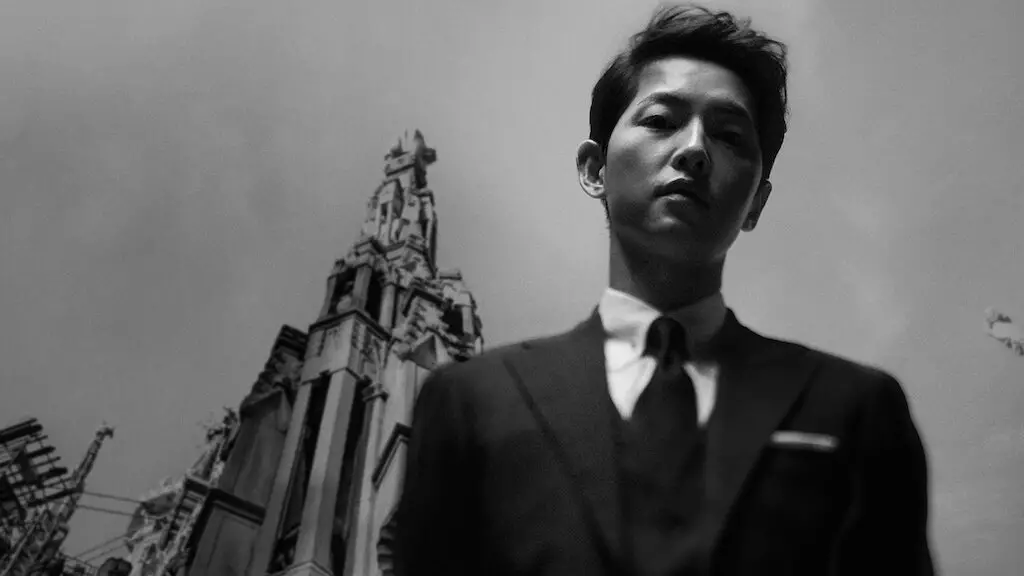
Another Korean dark comedy drama that made it into one of the highest-rated dramas in Korean cable television history is Vincenzo (2021) starring Song Joong-ki.

It follows the story of Park Joo-hyung (Song Joong-ki) who was adopted by an Italian family and lived in Italy at the age of eight.

He is then adopted by Don Fabio, the head of the Cassano mafia family.

Under his new name ‘Vincenzo Cassano’, he becomes the mafia’s Iawyer and Don Fabio’s right-hand man.

After Fabio dies, his biological son Paolo becomes the new head of the Cassano family and tries to get rid of Vincenzo.

Vincenzo then runs for his life to Seoul and to recover 1.5 tonnes of gold that he helped to secretly stash in the basement of Geumga Plaza.

Here comes another problem; the Babel Group has illegally taken ownership of the building and Vincenzo has no access into it.

The drama plays around corruption and murders particularly in the real estate world.

Besides Song Joong-ki, the casts include Jeon Yeo-been, Ok Taec-yeon, Kim Yeo-jin and Kwak Dong-yeon.

Watch the trailer here.

What causes the lunar eclipse, according to Dusun mythology

According to Dusun mythology, Kinharingan is a creator deity who came from a rock in the middle of the sea with his sister/wife Munsumundok.

In one version of the legend, Kinharingan and Munsumundok walked across the water, perhaps like Jesus in the Bible, until they arrived to the house of the god Bisagit.

Bisagit gave the pair earth and there, Kinharingan created the Dusuns.

The Dusun legend of Kinharingan and the snake

Kinharingan once pounded rice and made flour from it. After he made the flour, he called all the animals in the world together and ordered them to eat it.

When their mouths were so full they could not speak, Kinharingan asked them, “Who can cast off his skin?”

The snake, who had only been putting his mouth into the flour and pretending to eat, was the only one able to answer because his mouth was not full.

The snake answered, “I can.”

“Very well,” said Kinharingan, “if that is so, you shall not die.”

That is how a legend started that the snake would not die unless a man killed it.

The Tarob and the Lunar Eclipse

What causes the lunar eclipse, according to Dusun mythology

Here is a Dusun legend of how the lunar eclipse came about.

The children of Kinharingan were pounding rice when a spirit called Tarob came and ate it all up.

It became so that very time they pounded rice, the Tarob would come and eat it again.

Finally, they had enough and went to complain to their father.

Then Kinharingan told them, “If he comes again order him to eat the moon.”

When the Tarob came over wanting to steal the pounded rice again, Kinharingan’s children told him the exact thing that their father told them to.

Sure enough, the Tarob went to eat the moon, swallowing it and making it disappear from the night sky.

And that was how the lunar eclipse came to happen, accordin to Dusun mythology.

5 Asian foods created during World War II

World War Two (WWII) brought a lot of changes into the world including the food that we eat.

During the war, food supply was low in Japanese-occupied Asian countries because priority was given to the military.

There were even incidents of animal captives in zoos being sacrificed for Japanese military food.

When people are pushed into desperation, they tend to get creative.

Here are five Asian foods invented during WWII:

1.Nasi rames of Bandung (Indonesia)

When the Japanese occupied Dutch East Indies (now Indonesia) during WWII, food was scarce.

In order to help the Dutch community in Bandung, a Eurasian cook named Truus van der Capellan or Tante Truus ran a soup kitchen there.

She put together a balanced meal of rice, vegetable and meat onto a plate and called it nasi rames.

Other people in other places also had the same idea like Tante Truus but they mostly called it nasi campur.

2.Banana ketchup or banana sauce (Philippines)

During WWII, tomatoes were rare in the Philippines.

Food technologist Maria Y. Orasa (1893-1945) then invented the banana ketchup using bananas instead of tomato.

It is made using banana, sugar, vinegar and spices.

To make it looks like tomato ketchup, its original brownish-yellow colour was dyed with red colouring.

3.Darak (Philippines)

Orasa was also responsible for creating Filipino superfood during the war: the Darak.

It is a rice bran powder rich in thiamine and other vitamins which could treat beriberi.

Moreover, she created a Darak cookies recipes which saved many civilians.

Orasa’s original recipe was quite simple.

It needs 1/2 cup of rice bran powder, 1/2 cup of all-purpose flour, 1/3 cup of sugar, 1 teaspoon of lime zest, 1 egg, 1/2 cup of butter and oil for lining the sheets.

First of all, beat the eggs and set it aside. Preheat the oven to 180 degrees Celsius.

Then beat the butter until it turns creamy. Mix in sugar, rice bran powder, flour egg and lime zest gradually to make the dough.

After that, drop cookie dough using teaspoon and flatten them so that they can cook evenly.

Make sure the cookies are about two inches apart. Finally bake them until they turn golden brown.

4.Soyalac (Philippines)

Along with Darak, Orosa also invented the Soyalac (a protein-rich soybean powder) to help in the war.

In order to fight the Japanese, she joined Marking’s Guerrillas and became a captain.

The guerrillas hired carpenters to insert Soyalac and Darak into hollow bamboo sticks.

These sticks were then smuggled into prisoner-of-war camps.

These wartime foods saved the lives of many POWs who were starving during the war.

Unfortunately, Orosa died on Feb 13, 1945 after being hit in a bombing raid.

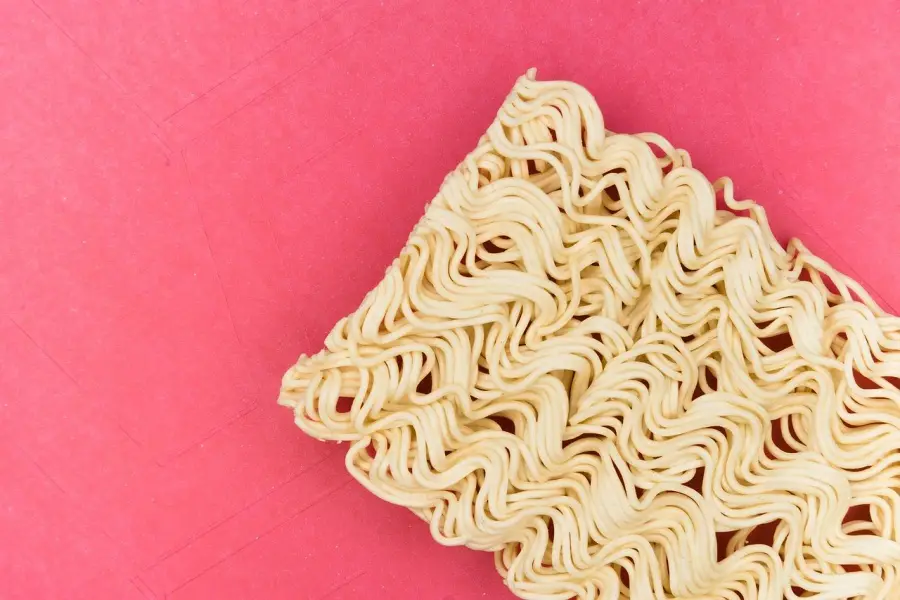
5.Instant noodles (Japan)

5 Asian foods created during World War II

While this food is not exactly a wartime food, it was created as a subsequent effect of WWII.

After the war ended, Japan was still suffering from a shortage of food.

The United States was supplying wheat flour to the Japanese people so the Ministry of Health encouraged their people to eat bread made from this flour.

Momofuku Ando then had the idea to make instant noodles. After many trials and errors, he succeeded and introduced it to the world on Aug 25, 1958.

Since the first original flavour chicken, Ando called it ‘Chikin Ramen’.

Besides being known as the inventor of instant noodles, Ando is also known for creating the world’s first cup noodle.

KajoPicks: 6 Chinese esports dramas you need to watch

Do you know that in China more than half a billion people play video games? This explains why the obsession over esports even transcends to the fictional world of dramas.

If you are into video games and drama series, here are six Chinese esports dramas you need to watch:

1.Go Go Squid! (2019)

Based on the novel ‘Stewed Squid with Honey’ by Mo Bao Fei Bao, Go Go Squid (2019) is a romantic comedy drama circles around an esports celebrity player.

20 years ago, nobody would believe that one could earn fame and fortune from playing video games.

Han Shangyan (Li Xian) is a legend in the world of esports but he is lacking in his people skills.

Meanwhile, Tong Nian (Yang Zi) is a brilliant IT programming student with a large social media following thanks to her covers of Japanese songs.

When Shangyan walks into her life, Tong Nian falls for him head over heels.

But can she attract the attention of the Shangyan who is famously known for his cold personality?

Putting aside the romance, the drama focuses on what it takes to prepare for a world-class esports competition.

Watch the drama Go Go Squid (2019) on Youtube here.

2.Love O2O (2016)

Basically, this drama is a romance story between the most popular boy and the most beautiful girl on campus.

In this story, the most popular boy Xiao Nai (Yang Yang) is the CEO of gaming company Zhi Yi Technology.

He meets computer science major Bei Weiwei (Zheng Shuang) through online game A Chinese Ghost Story.

They form an in-game ‘marriage’ with Bei Weiwei not knowing the real identity of her online husband.

Apart from the romance plot going on between Weiwei and Xiao Nai, the drama also focuses on all the hard work goes behind developing a game.

For examples are the details of NPC (Non-player Character) in a video game and the programming work to make the game to load smoother and faster.

Based on the novel of ‘Just One Smile is Very Alluring’ written by Gu Man, the drama is one of the most watched Chinese modern dramas.

The game featured in this drama is ‘A Chinese Ghost Story’. It is a massively multiplayer online role-playing game (MMORPG) famous in China.

Watch the drama Love 020 here on Youtube.

3.The King’s Avatar (2019)

Here is another Chinese esports drama starring Yang Yang as the main character.

This time he plays the role of professional gamer Ye Xiu.

He is kicked out from his own team and becomes a manager of an Internet cafe.

After awhile, Ye Xiu slowly works his way up again to regain his spot as the number one gamer.
The plot circles around the conflicts and incidents happening within professional gamer teams.

This is quite close to reality as even here in Malaysia, we have seen numerous times professional gamer teams breaking up and moving on to new groups.

It is based on the web novel of the same name by Hu Dielan.

The game featured in the King’s Avatar is a MMORPG called Glory.

Watch the trailer here.

4.Gank My Heart (2019)

Today, there is a rising number of internet broadcasters who specialised in esports commentary.

Just like the traditional sports commentator, these broadcasters would live-stream an online game, watching them while commenting about the move.

In Gank Your Heart (2019), Qiu Ying (Wang Zi Xuan) is the noob internet broadcaster who aims to be a professional e-sports commentator.

She falls for Ji Xiangkong (Wang Yibo), a professional gamer whose nicknames are ‘Battle Swindler’ and ‘Hand Remnant’.

It is based on the novel Dian Jing Lian Ren by Nanye Lin’er.

While most Chinese esports dramas are based on real-life games, Gank My Heart (2019) centers around iConquer, a fictional multi-player fantasy game similar to World of Warcraft.

Watch the first episode of Gank Your Heart (2019) here.

5.Cross Fire (2020)

This Chinese esports drama shows how much the gaming industry changed in less than fifteen years.

In 2008 when the money is little to earn while playing game, Xiao Feng (Lu Han) is an e-sports team leader who barely keeping his team together.

Meanwhile in 2019, Lu Xiao Bei (Leo Wu) is a wheelchair-bound gamer who’s trying to make it as a professional.

Something happens and the two gamers from two different times finding themselves playing in the same game.

They find friendship in each other and continuously growing together in the gaming world.

As you can tell by the title of this drama, the series circles around the video game CrossFire.

6.Falling into Your Smile (2021)

KajoPicks: 6 Chinese esports dramas you need to watch

When professional gamers are treated like internet celebrities, it bound to have gossip columns and obsessed fans following these gamers around.

In the drama Falling into Your Smile (2021), the all-male ZGDX OPL team has a large following of die-hard fans.

All eyes are watching the team when one of their star players suffers from a hand injury and they need of a replacement.

What they do not expect is that the replacement is a girl named Tong Yao (Cheng Xiao).

With this, she becomes China’s first female profession esports athlete.

In a male-predominated industry, the Chinese esports drama highlights the scepticism and prejudice suffered by female players as well as fans.

One of our favourite quotes in this drama is, “If a woman can be your mother, why can’t a woman be an esports professional gamer?”

Overall, the storyline does a great job in portraying the struggles faced by these athletes for choosing this unconventional profession.

If you are a fan of the game Onmyoji Arena, this is definitely a must watched drama.

Watch the drama Falling into Your Smile (2021) here.

Special mention

You are My Glory (2021)

Besides Love 020 (2016), Chinese novelist Gu Man wrote You Are My Glory which inspired another Chinese esports drama of the same name.

Again, she collaborated with Yang Yang as her main lead actor who plays the role of an aerospace engineer/expert gamer named Yu Tu.

In this currently ongoing drama, celebrity Qiao Jing Jing (Dilraba Dilmurat) is about to lose her endorsement for an online game.

Someone leaks a video of her sucking at playing an online game, which is the complete opposite of her public image.

In order to prove herself and not lose the endorsement, Jing Jing’s agent suggests that she join a gaming competition.

While trying to improve her gaming skill, Jing Jing encounters her old classmate Yu Tu and eventually asking him to become her gaming couch.

Unlike other Chinese esports dramas which circle around role-playing video game on PC, this drama centers around mobile gaming.

KajoPicks: 6 Chinese esports dramas you need to watch

Watch the trailer here.

Do you have any favourite Chinese esports dramas? Let us know in the comment box.

An exclusive guide to start your very own home cafe

During this time of the Covid-19 pandemic, it is safer to stay at home at all cost, especially when you are able to.

But what happens when you have a strong craving for a specialised coffee?

We are not talking about instant coffee powder or 3-in-1 coffee, we are referring to the aromatic taste of americano, the creamy taste of cafe latte or the foamy texture of cappuccino.

Nowadays, it is possible to have a cafe-like experience even at home.

Using the right equipment and ingredients, you can have that glass of iced cafe latte at the comfort of your home.

Your home cafe starts with a shot of espresso.

If you have the money to buy a coffee machine, go ahead.

However if you don’t, there are other more affordable replacements.

How do you start your home cafe without a coffee machine?

An exclusive guide to start your very own home cafe
Moka Pot

Kicking off the list is a Moka pot. It is a stove top or electric coffee maker that brews coffee by passing boiling water pressurised by steam through ground coffee.

Invented by Italian engineer Alfonso Bialetti in 1933, it is named after the Yemeni city of Mocha.

There are plenty of tutorials available on Youtube on how to use a Moka pot.

The basic ratio for coffee to water is 1:2.

Since the pressure of a Moka pot is five to 10 times less than that of an espresso machine, the coffee brewed using the pot is not exactly an espresso by definition.

However as far as taste goes, it is as strong as close to you can get to espresso without buying a fancy machine.

Another affordable replacement for an espresso machine is the French press.

An exclusive guide to start your very own home cafe
French press

Similar to a Moka pot, a French press does not produce as much pressure as an espresso machine.

Nevertheless, it is still good enough to make an espresso-like coffee.

While you need to boil the Moka pot to let the steam brew the coffee, you only need boiling water with a French press.

The idea of a French press is to slowly press the plunger down with even pressure after allowing your coffee to steep.

The perfect time to brew a French press is about three to four minutes. If it exceeds this time, you may find yourself with a bitter over-extracted coffee.

Lastly, if you can get a hand of a ‘Kompresso’ or a portable espresso maker then that is the easiest way to make an espresso.

Starbucks Korea for instance offers a limited edition Picnic Series which include a Picnic Kompresso.

Along with one of these replacements, it is a good to have a liquid thermometer, a small electric whisk and a kitchen timer to help you to brew the perfect shot of espresso.

Arabica, Robusta or Liberica

To make that shot of espresso, of course you need ground coffee.

If you are a coffee enthusiast, then you probably already have your personal preferences of java beans.

When you search ‘ground coffee’ on online shopping platform such as Shopee, you are dumped with different kinds of choices.

So how to choose?

The most common type of ground coffee that are easily available is arabica coffee, also known as Arabian coffee.

The label on the packaging usually states ‘100% Arabica’ which means the coffee ground is made only using arabica beans.

This species of coffee tree Coffee arabica is believed to be the first species of coffee to be cultivated and made up about 60 per cent of global production.

Meanwhile, the second most cultivated types of coffee is robusta coffee.

Widely known as Coffee robusta, the plant is scientifically as Coffea canephora.

The third choice is Liberian coffee or Coffea liberica.

It is more common species in the Philippines, Indonesia as well as in Malaysia. Here in Sarawak, we have our very own Sarawak Liberica.

So how do you choose your java beans?

Firstly, let us talk about the most important factor which is the caffeine concentration because a decaf coffee is just a sacrilege.

The caffeine concentration of Liberica beans is the lowest of the three with 1.23g/100g.

Arabica has 1.61g/100g and Robusta has 2.26/100g. Hence, choose one that suits your caffeine expectations.

As for the taste, every blend has a specific sensation on its own.

Overall, arabica is known for its smoother taste often with hints of fruits or sourish aftertaste.

If Robusta is an occupation, then it would be a strong, six-packed construction worker. It has harsher, stronger and bitter taste compared to Arabica.

Last but not least is the Liberica beans. The feedback for this bean is varies. Some said it is the most aromatic beans compared to Arabica and Robusta beans.

It is also known for its woody and smokey taste.

When choosing your coffee grounds, you can also choose mixed blends between different kinds of coffee beans. The most common blend is a combination of Arabica and Robusta beans.

Now that you have chosen your beans, next is to choose the type of grind.

There are ‘extra course’, ‘course’, ‘medium’, ‘fine’ and ‘extra fine’.

If you are using French press, choose ‘extra course’ or ‘course’ or ‘medium’. For a Moka pot, opt for ‘fine’ grind.

Other ingredients for your home cafe

Besides coffee beans, you must have milk in your home cafe. It is recommended to use skim milk for frothing since it is the lightest.

You can use whole milk but the froth will be creamier in taste.

Speaking of frothed milk, you can make one without a machine.

The steps include heating the milk and using a hand mixer to whisk the milk until it reaches the desired frothiness.

Don’t have any hand mixer or a whisk? Make full use of your biceps and triceps by shaking a jar filled with warmed milk.

To make more home cafe recipes, get ready other ingredients such as whipping cream, flavoured syrup such as vanilla and hazelnut as well as cocoa powder.

Your home cafe recipes

Once you have that particular shot of espresso perfects to your taste, you are ready to have your own home cafe.

The easiest thing to make is americano. Take your shot of espresso and add into 100-150ml of hot water.

Do not go the other way round because the water being flowed through the coffee can lead it to be over extracted.

For a cup of cafe latte, have an espresso with 150-300ml steamed milk poured over it. Feel free to add your own flavour with vanilla or hazelnut syrup.

An exclusive guide to start your very own home cafe
Iced latte

You can make own cappuccino by adding 160-240ml milk foam into your espresso.

A flat white is made with a double espresso and about 150-240ml light frothy milk.

Not feeling like too much dairy? Make yourself an espresso macchiato with as shot of espresso and about 50ml of milk froth.

An espresso macchiato is a single shot of espresso with a dollop of milk froth on top.

Another way to make full use of frothed milk is by making latte macchiato.

Unlike a cafe latte whereby the milk is poured into the espresso, a latte macchiato is made by adding a single shot of espresso slowly onto a big glass of steamed and frothed milk.

If you have whipped cream laying around the kitchen, top your espresso with it to make espresso con panna.

Finally for a dessert at your very own home cafe, pour a shot of espresso over a scoop of vanilla ice-cream to make an affogato.

An exclusive guide to start your very own home cafe
Make your very own affogato.

Setting the ambience for your home cafe

An exclusive guide to start your very own home cafe

Clear the clutter and sit on the most comfy couch in your living room. Light a scented candle if you have one, have a book ready at your side and put up some music.

There is a wide range of playlist of ‘coffee shop music’ to choose from especially on Youtube.

From ‘Korean coffee shop playlist’ to ‘Starbucks-inspired playlist’, pick your choice.

With the perfect cup of java poured into your favourite cup, you are now ready to have a cafe experience at home.

All images are stocks photos from Unsplash.com and Pexels.com

KajoPicks: 10 K-dramas to watch for Korean fashion inspiration

With K-pop music and K-dramas making waves around the world, it makes sense that Korean fashion is also gaining its own attention.

Korean fashion brands are riding the wave of the K-wave phenomenon through product placements in K-dramas.

For instance, any hardcore K-drama fans would recognise Korean jewellery brand J.Estina because it occasionally pops up as product placements.

Fashion enthusiasts can always turn to K-dramas for styles and outfits to steal.

So, here are 10 K-dramas you need to watch for some Korean fashion inspo:

1.My Love From The Star (2013)

Kicking off this list is none the most iconic K-drama known for its Korean fashion raze when it was aired, My Love from the Star (2013).

It is a romantic fantasy drama starring Jun Ji-hyun, Kim So-hyun, Park Hae-jin, Yoo In-na, Shin Sung-rok and Ahn Jae-hyun.

The story follows Do Min-joon (Kim Soo-hyun), an alien who landed on Earth in 1609 during the Joseon Dynasty.

400 years later, he falls in love with famous actress Cheon Song-yi (Jun Ji-hyun).

Besides introducing the world to ‘chimaek’ (a combination of fried chicken and beer), the series was also responsible for bringing Korean fashion to the world, especially into the China market.

Since Song-yi is a celebrity in the drama, it is natural for the character to wear high branded clothes. She is spotted wearing Chanel, Gucci, Dior, Paul Smith, Didier Dubot, Alexander Wang, Belgian designer Diane von Furstenberg and many more.

I mean, who wears Givenchy sweaters at home unless you are mega rich right? It certainly helps that the actress Jun Ji-hyun did do some commercial model while juggling with acting when she first started.

It is no surprise how she is able to pull off every look in the drama. Commoners like us might not able to afford Song-yi’s wardrobe but it does not mean we cannot copy her looks.

She is known for wearing thick headbands to accessorise her simple and straight hair. Sometimes, Song-yi pins her bangs with a colourful hair clip.

2.Search: WWW (2019)

KajoPicks: 10 K-dramas to watch for Korean fashion inspiration
(From left to right) Cha Hyeon, Bae Ta-mi and Song Ga-kyeong.

If it is a K-drama about three different career women, it bound to have some Korean fashion moments.

Search: WWW (2019) is about three women – Bae Ta-mi, Cha Hyeon and Song Ga-kyeong.

They work in top competitive web portal companies Unicon and Barro.

Each female character portrays distinctly different fashion styles which also fits their characters.

Bae Ta-mi (Im Soo-jung) is obviously in love with stripes.

She proves that it is okay to be obsessed with a one particular pattern as long as you know how to style it.

Her fashion is inspiring for career women out there who are in their 30s, especially if you have preference for buttoned up shirt.

Meanwhile, Cha Hyun or Scarlett (Lee Da-hee)’s style is as strong and fierce as her character in the drama.

She diversifies her outfits and makeup depending on the occasion throughout the drama.

Cha Hyun is not afraid of patterns or colours and viewers can see her rocking incredible accessories to compliment her outfits.

Lastly, Song Ga-kyung (Jeon Hye-jin) always means business every time she shows up wearing a pantsuit in the drama.

To accentuate her waistline, she sometimes wears a skinny belt on top of her blazer.

Another important accessory in Ga-kyung’s signature style is her statement earrings.

With either one or both sides of her short hair always tuck behind her ears, Ga-kyung never fails to match her earrings with her outfits.

Watch the trailer here.

3.What’s Wrong with Secretary Kim? (2018)

KajoPicks: 10 K-dramas to watch for Korean fashion inspiration
Park Min-young as Kim Mi-so’s style in What’s Wrong Secretary Kim is one of the easiest to copy. She likes it simple and neutral but still look very put together.

Nobody can rock high neck blouse and pencil skirt in K-dramaland like Kim Mi-so (Park Min-young) in this drama.

Since Kim Mi-so works as a secretary, not a female CEO in the drama, she does not have many clothes (just like the rest of us).

For her office look, she always don a form-fitting, high waist pencil skirt in neutral tone to match with different style of blouses.

Mi-so’s blouses range from simple collar style to statement ribbon around the neck. Despite the different types of collar, her blouses are mostly long sleeves in one tone of colour without any pattern.

With this timeless and classy choices, Mi-so can pull off different kinds of looks with less fashion items.

Meanwhile, her fashion outside the office is equally inspiring as she always opts for comfortable, feminine dresses or simple t-shirt and jeans.

KajoPicks: 10 K-dramas to watch for Korean fashion inspiration
Park Min-young as Kim Mi-so when she is not working in casual style.

Watch the trailer here.

4.Hotel Del Luna (2019)

KajoPicks: 10 K-dramas to watch for Korean fashion inspiration
Do you notice the brooch that IU wears as Jang Man-wol in this still cut? It is one of the most affordable piece of Korean fashion you can copy.

Lee Ji-eun (or better known as IU)’s character Jang Man-wol in this romantic-fantasy drama is nothing but perfection.

From her hairstyle to accessories are all on point.

Since Man-wol is a 1000-year-old hotelier, her style seems to carry a little bit of timeless fashionable items from different eras.

For her outfits, she is not afraid of wearing puffy sleeves and high collars as well as matching jeans jacket and skirts.

To top of her classic look, there is always vintage-looking accessories such as brooch, hairpin and satin gloves.

Moreover, Man-wol’s feminine dress is often paired with matching statement hats.

KajoPicks: 10 K-dramas to watch for Korean fashion inspiration
Jang Man-wol and her matching hat.

Watch the trailer here.

5.Black Knight: The Man Who Guards Me (2017)

If the character plays the role of a fashion designer, he/she is bound to be stylish and fashionable.

In Black Knight: The Man Who Guards Me (2017), So Ji-hye plays a fashion designer named Choi Seo-rin who is cursed with immortality.

She runs Sharon’ Boutique where every fashionable piece is made to measure.

While each piece of clothing she designs is a masterpiece – especially for the main character Jung Hae-ra (Shin Se-kyung) – the clothes that Seo-rin wears in the drama is well put together.

Her coats in particular, are all elegant and luxurious.

Plus, her statement earrings are always on point and compliment her outfit.

KajoPicks: 10 K-dramas to watch for Korean fashion inspiration
Shin Se-kyung’s character Jung Hae-ra i

Unlike Seo-rin, Se-kyung’s character Jung Hae-ra is an ordinary office worker in a travel agency so her outfits are less extravagant.

However, it doesn’t mean that she is less stylish.

While she is commonly seen wearing only one overcoat which is her purple cashmere coat, the colour and cut of Hae-ra’s coat suits her skin tone and body type.

As for her accessories, Hae-ra switches between two different statement earrings when she goes to work.

It is a good lesson for those who do not have much to spend but still want to appear stylish.

Invest in one or two classic and quality pieces to complement your daily looks.

Watch the trailer here.

6.The King: Eternal Monarch (2020)

KajoPicks: 10 K-dramas to watch for Korean fashion inspiration
Jung Eun-chae as Goo Seo-ryung in The King: Eternal Monarch official still cut.

There are so many fashionable moments we love from this drama by Kim Eun-sook.

Many of these moments come from Goo Seo-ryung (Jung Eun-chae), who is the prime minister in the fictional kingdom of Coryea. In one scene, she tells off her staff who shows her a rack of women tuxedos to wear.

She says, “Just because I work surrounded by men, it doesn’t mean I have to dress like one.”

Throughout the series, you can see her rocking mostly dresses as well as skirts and blazers.

Moreover, Seo-ryung is not afraid of colours and patterns that even her heels have animal prints.

Taking a closer look to her accessories, her earrings, necklaces and rings are often in a matching set.

They are mostly in minimalist design and not chunky so she still looks professional with her accessories.

Since the female lead character Jeong Tae-eul (Kim Go-eun) is a police detective, her style is more on the practical and comfortable side.

Her go-to fashion items are jeans and sneakers as well as dark-toned blazer or coat.

The brands of her sneakers include Adidas, Converse, Vans and New Balance.

Watch the trailer here.

7.Tomorrow With You (2017)

KajoPicks: 10 K-dramas to watch for Korean fashion inspiration
Shin Min-ah as Song Ma-rin in Tomorrow With You’s official still cut.

How about some Korean fashion from K-dramas that we actually can afford to copy?

Playing the role of a photographer Song Ma-rin, Shin Min-ah’s style in the drama Tomorrow With You is more chic and casual.

Overall, her style in the series is an embodiment of the term ‘effortlessly stylish’.

Sometimes, she pairs an oversized jacket with black top and pencil skirt. She also like to match boyfriend jeans with casual top.

If you think wearing a white button-up shirt with a pair of blue jeans might be too simple for your taste, take a note from Ma-rin’s style.

She adds an extra oomph to her white shirt-blue jeans outfit by tying a scarf around her neck.

We believe that your wedding dress should be showcasing your personal style and Ma-rin agrees with us.

Ma-rin has been chic and casual in her daily looks so her wedding dress also screams her personality.

Instead of the usual ballroom gown and mermaid dress, Ma-rin opts for a white two-piece of crop top and fitted long skirt for her wedding look.

Watch the trailer here.

8.Her Private Life (2019)

KajoPicks: 10 K-dramas to watch for Korean fashion inspiration
Park Min-young as Song Duk-mi in an official still cut of Her Private Life.

If you are working in a corporate company, here is K-drama style icon for your fashion inspiration.

Playing the role of an art curator Sung Duk-mi, Park Min-young is always on the move in the drama Her Private Life (2019).

Her works include running the art gallery, organising events, meeting artists and going to art auctions.

In order for her to look professional but be practical in the same time, Duk-mi chooses to wear suits for her office looks.

Since she is a young working adult, Duk-mi is not afraid of vibrant colours when comes to her suits. She is as comfortable wearing suits in neutral colours as in vibrant colours such as purple and bright orange.

As for accessories, Duk-mi tones it down with simple stud earring and thin chain necklace.

Duk-mi’s style is perfect for those who wants to stick with only one signature style with only room for different colours.

Watch the trailer here.

9.The Bride of Habaek (2017)

KajoPicks: 10 K-dramas to watch for Korean fashion inspiration
Shin Se-kyung as Yoon So-ah taking off her jacket in this official still cut of The Bride of Habaek.

While Duk-mi carries her suit in more formal way, Yoon So-ah (Shin Se-kyung) in The Bride of Habaek in a more casual wear.

As a neuron-psychiatrist, she shows up at work usually in jacket with a white tee and a matching tapered or cropped pants.

Instead of a pair of heels, So-ah prefers white sneakers to complete her look.

Overwhelmed with financial problems in the beginning of the drama, So-ah’s outfits are mostly dull grey and white colours at first.

As her character grows throughout the story and her mood becomes brighter, the colours of her outfits become more vibrant.

While she still maintains her usual jacket and pants, So-ah wears them in soft colours like baby blue and light green.

On her off-days, So-ah likes to keep it casual with jeans and layering cute strappy blouse on top of white tees.

Meanwhile, another fashionable character in the drama is Moo-ra which played by Krystal Jung.

Moo-ra is a water goddess who has been living in the human realm as an actress.

Since she is a goddess, Moo-ra really dresses up like a goddess in every scene.

Her outfits are all in striking colours coming from high-end brands such as Gucci, Valentino and Isabel Marant.

For her hairdo, Moo-ra keeps in simple by keeping it sleek and straight.

Watch the trailer here.

10.Find Me in Your Memory (2020)

KajoPicks: 10 K-dramas to watch for Korean fashion inspiration
Moon Ga-young playing the role of Yeo Ha-jin.

Even if there is a role of an actress in Korean drama, it doesn’t mean that the character would be stylish or fashionable.

Sometimes the style is too cliche in depicting an actress wardrobe.

However, here is a fictional actress that we love.

Moon Ga-young plays the role of Yeo Ha-jin, an actress who lost her past memories due to a traumatic incident.

The outfits she wears vary according to the places she goes or events she attends.

For a radio interview, Ha-jin wears pastel purple tweed fringe jacket to appear professional.

When going for a date strolling in a park, Ha-jin keeps it feminine and simple with a light yellow ruffle wrap dress.

At home, she likes her outfits to be comfy and cute with bright coloured sweatshirts.

The takeaway tip here is to always dress according to occasion and event but in the same time never forget to bring your own personal style.

Watch the trailer here.

KajoPicks: 10 South Korean romantic melodramas to watch

It is easy to identify whether a South Korean drama belongs to the romantic melodrama category by looking at the official poster.

It would have the two main characters looking off in two different directions with somber and melancholy expressions.

A melodrama commonly features one sad event after another and the characters’ emotions are often exaggerated.

If this genre is your cup of tea, here are 10 South Korean romantic melodramas you need to watch:

1.Autumn in My Heart (2000)

A list of Korean melodramas to watch is incomplete without Autumn in My Heart (2000).

It is a story about two girls being switched at birth by mistake. One grows up to have a happy life with loving parents and a brother while the other by a single parent in poverty.

When the truth comes out after a traffic accident, the two girls are already in their teenage years.

Both parents decide to switch the girls back to their biological families.

After being separated for 10 years, the girls are reunited as adults.

What happens when the loving brother suddenly falls in love with the woman who was once raised as his sister?

Like any Korean melodramas, one of the main characters is struck with a deadly sickness and the never-ending conflicts begin.

This drama is a classic responsible for kicking off the careers of many big names in Korean entertainment we know now such as Song Hye-kyo, Moon Geun-young, Won Bin and Song Seung-heon.

2.That Winter, the Wind Blows (2013)

KajoPicks: 10 South Korean romantic melodramas to watch

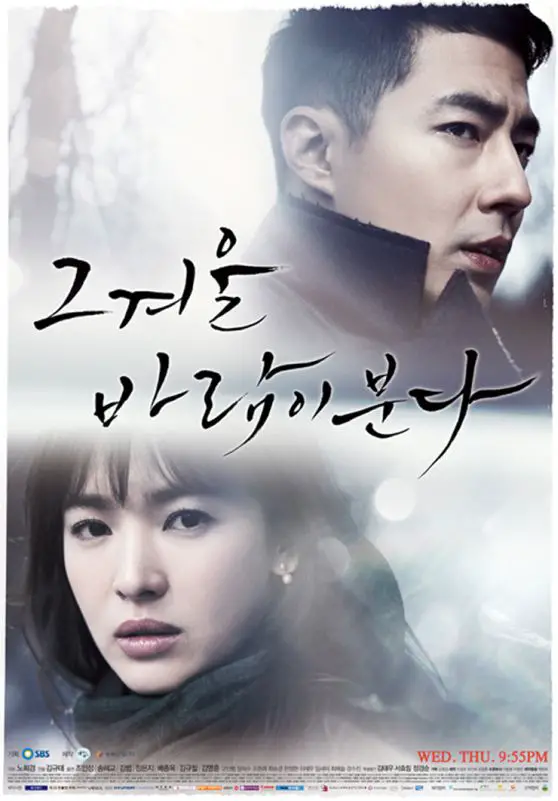
Speaking of Song Hye-kyo, she plays the role of a blind heiress in the Korean romantic melodrama That Winter, the Wind Blows (2013).

It is based on the Japanese drama I Don’t Need Love, Summer (2002) which was also adapted into Korean film Love Me Not (2006).

The story is about Oh Soo (Jo In-sung), an orphan who becomes a gambler, conman and playboy.

His latest scam target is Oh Young (Song Hye-kyo), a blind heiress who lives alone.

Oh Soo pretends to be Oh Young’s long lost brother in order pay his debt.

The duo who thought that they were used to being alone, eventually find love and comfort in each other.

Watch the trailer here.

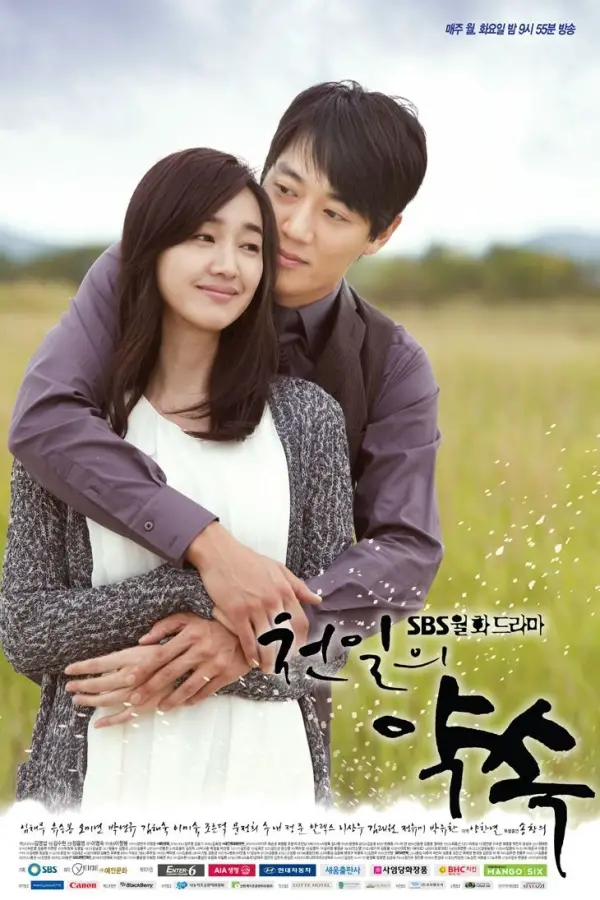
3.A Thousand Days’ Promise (2011)

KajoPicks: 10 South Korean romantic melodramas to watch

Lee Seo-yeon (Soo Ae) is having an affair with engaged architect Park Ji-hyung (Kim Rae-won).

After finding out that Ji-hyung has finalised his wedding date, Seo-yeon breaks up with him.

At the same time, Seo-yeon is diagnosed with early on-set Alzheimer’s.

When Ji-hyung finds out about it, he cancels his engagement two days before the wedding despite opposition from his parents.

Seo-yeon is reluctant to accept Ji-hyung back to her side but eventually caves in.

The drama continues with the couple trying to live the best of their lives while dealing with Seo-yeon’s illness.

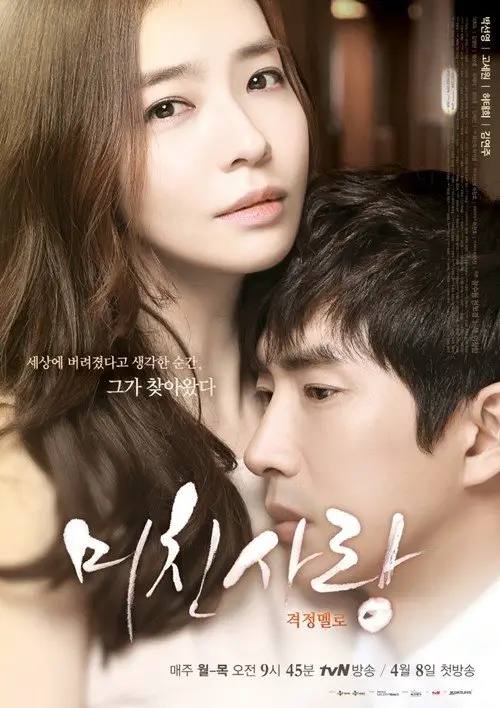
4.Crazy Love (2013)

KajoPicks: 10 South Korean romantic melodramas to watch

Yoon Mi-so (Parjk Sun-young) is an orphan who is adopted at the age of 7.

As an adult, Mi-so finds love in a rich man named Lee Min-jae (Heo Tae-hee) and eventually marries him.

They have a daughter named Hae-ram. The only drawback in her almost perfect life is her mother in-law who always gives her a hard time.

Then, Han Na-young (Kim Youn-ju) comes into their lives, ruining Mi-so’s life.

After being divorced by Min-jae, Mi-so finds love again in Seo Kyung-soo (Go Se-won).

But there is a problem, Kyung-soo is stuck in an unhappy marriage.

Will they find happiness together in the end?

5.The Innocent Man (2012)

KajoPicks: 10 South Korean romantic melodramas to watch

Before Song Joong-ki played charismatic roles like in Descendant of the Sun and Vicenzo, he starred in a melodrama series The Innocent Man (2012).

His character Kang Ma-ru is a smart but poor medical student. His girlfriend Jae-hee dumps him for a rich CEO.

Six years later, he is no longer the nice guy but an arrogant bartender/gigolo.

Ma-ru decides to take revenge on his ex after his sister is rushed to the hospital because of Jae-hee.

In order to do so, he approaches rich heiress Eun-gi as part of his revenge plan.

While plotting for his revenge, Ma-ru finds himself falling in love with Eun-gi.

Watch the trailer here.

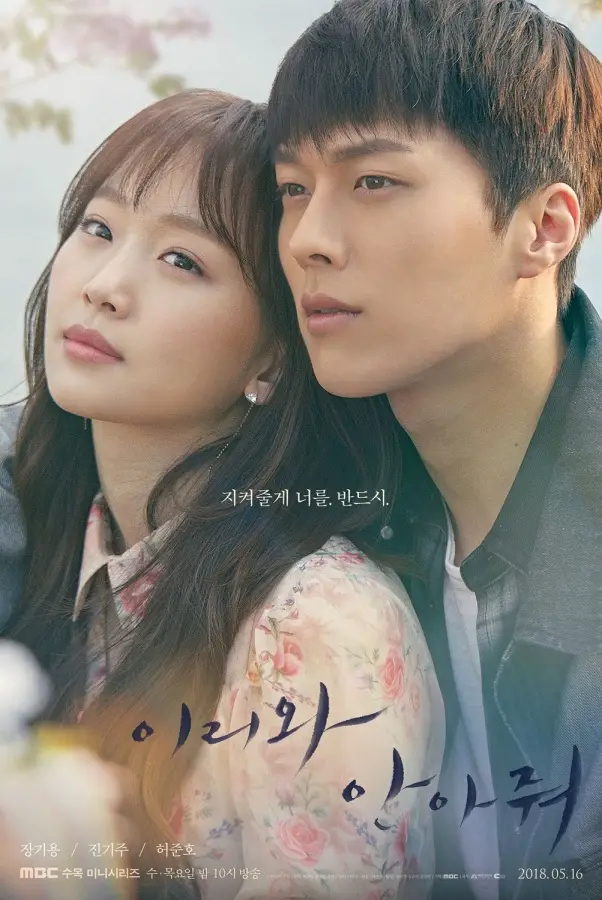
6.Come and Hug Me (2018)

KajoPicks: 10 South Korean romantic melodramas to watch

All Korean romantic melodramas have one thing in common; out of the world conflict between two lovers.

In this drama Yoon Na-moo (Jang Ki-yong) and Gil Nak-won (Jin Ki-joo) are any two young lovebirds out there.

Everything seems to be normal at first until Na-moo’s serial killer father kills Nak-won’s parents.

The two reunite again as adults with Na-moo now being a police detective and Nak-won suffering from post-traumatic stress disorder after her parents’ deaths.

Watch the trailer here.

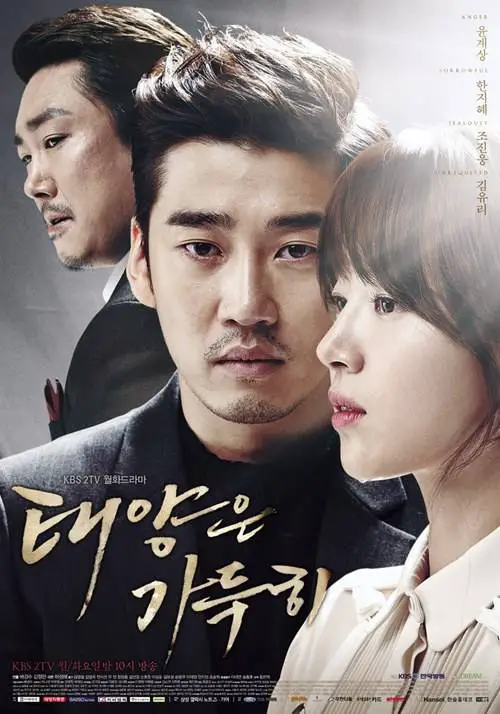
7.Beyond the Clouds (2014)

KajoPicks: 10 South Korean romantic melodramas to watch

Jung Se-ro (Yoon Kye-sang) is the son of a petty criminal and a conman.

Despite that, he still wants to live an honest life and enter the civil service.

Everything changes when a robbery takes place in a jewel exhibition.

His father dies and Se-ro himself is accused of murder of another man.

After spending five years in jail, Se-ro takes up a new identity and becomes a conman like his late father.

Then he meets Han Young-won (Han Ji-hye), a heiress who is still in love with her dead fiance.

After spending some time, they both fall in love with each other.

In a classic K-drama plot twist, the man Se-ro was accused of killing had been Young-won’s fiance.

Watch the trailer here.

8.Uncontrollably Fond (2016)

KajoPicks: 10 South Korean romantic melodramas to watch

Starring Kim Woo-bin and Bae Suzy, this Korean romantic melodrama follows two lovers from their teenage years into adulthood.

Shin Joon-young (Woo-bin) and No Eul (Suzy) were very much in love when they were young.

However, circumstances led them to go separate ways.

When they meet again as adults, both of them have changed. Joon-young is now a top celebrity while Noh Eul becomes a documentary producer.

Noh Eul is tasked to film Joon-young’s documentary and the former lovers are now forced to work together.

9.The Wind Blows (2019)

KajoPicks: 10 South Korean romantic melodramas to watch

Speaking about lovers’ reunion, here is a story of a second chance romance when a divorced couple rekindles their love.

Kwon Do-hoon (Kam Woo-sung) divorced his wife Lee Soo-jin (Kim Ha-neul) after he learned that he had Alzheimer’s.

Korean romantic melodramas sure love illnesses like Alzheimer’s.

Five years later, the couple reunites.

Soo-jin belatedly finds out the reason behind her divorce but this time, she decides to stay by Do-hoon’s side.

Watch the trailer here.

10.When My Love Blooms (2020)

KajoPicks: 10 South Korean romantic melodramas to watch

Han Jae-hyun (Yoo Ji-tae) is a man in his 40s. He is handsome, ambitious, and a successful man who works for vice-president of Hyung Sung Corporation.

In secret, he is plotting against the company for framing his father which led to his suicide.

One day, Jae-hyun comes across Yoon Ji-soo (Lee Bo-young) for the first time in many years.

She was his first love when they were still in university.

What changes would Ji-soo bring into Jae-hyun’s life now that they have reunited?

The drama also stars Park Jin-young and Jeon So-nee who play younger Jae-hyun and Ji-soo respectively.

Watch the trailer here.

The influence of Catholicism on Flores island during WWII

If you are not familiar with Flores island, Indonesia, it was the home of Homo floresiensis, a species of small archaic human.

This species of human was nicknamed ‘Hobbit’ by its discoverers, after the fictional race popularised in J.R.R. Tolkien’s book The Hobbit.

It is believed that the Homo floresiensis lived on Flores island until the arrival of modern humans about 50,000 years ago.

Scientists dated the Homo floresiensis skeletal material to about 60,000 to 100,000 years ago.

The remains of the individual discovered in 2003 would have stood about 1.1m in height, hence the nickname ‘The Hobbit’.

Flores island is one of the Lesser Sunda islands, a group of islands in the eastern half of Indonesia.

The largest towns on the island are Maumere and Ende.

The name Flores came from the Portuguese word for ‘flowers’.

The History of Flores island

This comes as no surprise because Portuguese traders and missionaries were the first foreigners who came in contact with the natives of the island.

The first group of Portuguese arrived in 1511 through the expedition of naval officer Antonio de Abreu and his vice-captain Francisco Serrao.

In 1613, the Dutch attacked the nearby island of Solor where there was a Portuguese settlement.

Fleeing the attack, the Portuguese moved to Larantuka town of Flores. There, they formed a mixed population of Portuguese Jewish merchants and local islanders descents called the Topasses.

The group spoke Portuguese when they prayed, Malay when they traded and a mixed dialect as their mother tongue.

The Topasses continued to dominate the region economically for the next 200 years.

In the same time, the Portuguese and the Dutch continued to fight for the sovereignty of island.

Until in 1854 when Portugal ceded all its historical claims on Flores and leaving the island became part of territory of the Dutch East Indies.

The Japanese occupation of Flores Island

After World War Two (WWII) broke out, the Japanese first arrived at Reo on the northwest coast of Flores on May 13, 1942.

Two days later, a few ships of the Japanese Imperial Navy anchored off Ende, the capital of Flores.

There was a huge difference in how the Japanese treated the Europeans on Flores compared to the rest of the world.

Although Germany was an ally of Japan, the Japanese saw all Europeans in an unfavourable light and interned them .

Batu Lintang Camp in Sarawak and Sandakan Camp in Sabah for example, were occupied by European internees and Allied Prisoners-of-Wars (POWs).

Paul Webb in ‘Too Many to Ignore’: Flores under the Japanese Occupation 1942-1945’ explained the reasons behind the differences in treatment.

He wrote,

“Compared with the excesses of the Japanese administration and military forces on the neighbouring islands of Sumba and Timor, where churches were used as brothels, vestments and sacred vessles thrown around carelessly, girls sought for Japanese army brothels, where Christians were killed as suspected Dutch sympathizers and were life under the Japanese was harsh in all respects – compared with all this the Florenese were being treated with ‘kids gloves’. So why were the Japanese so polite and courteous to the Catholics in Flores? Why did they allow European priests and sisters stay at their posts instead of interning them?

Perhaps the reason is that Flores was a strategically placed island for the possible defence of Balikpapan, the great oil town in Dutch Borneo.”

The influence of Catholicism on Flores island during WWII
Flores Island, Netherland East Indies. Aug 11, 1945. Aerial photo of a bombing run on four Japanese motor sail ships located near the shore of the island during shipping search ‘able’. Copyright expired- Public Domain. Courtesy of Australia War Memorial.

The influence of Catholicism on Flores island

The Japanese was informed that the Catholic religion was crucial to the people of Flores and there were too many of them to ignore.

Meanwhile, the Japanese forces were small and that if there were no priest left in the island it might become necessary to increase the occupation forces to ‘quieten an enraged population’.

Webb theorised that the Japanese was afraid that history might repeat themselves.

Between 1637 and 1638, the Shimabara rebellion took place near the city of Nagasaki.

It is said that 40,000 Catholic into an old castle on the Shimabara peninsula and held out against 120,000 Japanese soldiers for some four months.

In the end, all the Catholics were put to death after they had surrendered.

Whether the Japanese was afraid that a quarter of a million Catholics from a population of 580,000 would rebel against them or whatever other reason was, the Japanese knew that they could not take their clerics away from the Florenese.

In the end, the European priests and nun managed to stay in Flores without being interned throughout the occupation.

Comfort Women and Military Brothels on Flores island

While the clergy in Flores might escape from Japanese oppression, the rest of Indonesians and other Europeans, especially POWs, did not.

Like many Japanese-occupied territories during WWII, Flores had military brothels set up on the island to ‘cater’ for the Japanese forces.

Yuki Tanaka in his book Japan’s Comfort Women highlighted one of the many victims who were sent to Flores.

“According to a Javanese woman, Siti Fatimah, a daughter of Singadikarto, the sub-district head of Subang in west Java, she was told that she would be sent to Japan to study in Tokyo. In 1943, when she was 16 years old, she and four other girls from her home sub-district were put on a a ship at Tanjung Priok.

They joined a few hundred Indonesian girls who had been deceived by Japanese and believed that they were going to Tokyo. The ship went instead to Flores Island. As soon as they arrived, the Japanese attitude towards the girls suddenly changed. They were out into a camp and were forced to render sexual services to the Japanese soldiers. Each girl had to serve at least two soldiers every day. Three months later they were transported to the north of Buru Island, where they were put into a military compound. Here too, they were sexually abused every day until the end of the war.”

Both in Flores and Buru islands, many women died due to the maltreatment by the Japanese. Those who survived, suffered from psychological trauma from their abuse.

After the war, a military court report revealed that each woman was given a daily quota; twenty enlisted men in the morning, two NCOs in the afternoon and the senior officers at night.

Prisoners-of-war (POWs) and labour camps in Flores

By April 1943, more than 2,000 Dutch and other Europeans POWs arrived in Flores from Java in three ships.

They were brought in to build airfields on the island.

The first group of POWs built three camps near Maumere; two labour camp and another as a hospital camp.

Then by August 1943, another 300 POWs were stationed in a labour camp near Talibura about 60 kilometers east of Maumere.

The airfield in east of Maumere was completed in early November, 1943 so the POWs were sent to work elsewhere on the island.

Some were sent to work on the harbour and others were sent to build another two smaller airfields.

In 1944, these POWs were sent back to Java in batches with the last group left Flores on Sept 12, 1944.

The Japanese made sure there was no contact between the priests and these prisoners.

However, many Florenese helped the prisoners with gifts of food and little packets of fruits.

After the war, the missionaries in Flores received a letter from one of the former POWs.

The letter stated,

“In May 1943 we arrived in Maurmere – 1,200 POWs. Because there were many sick, two camps were built, one in Maumere and one a few kilometeres away. The population was friendly and because were sick they offered us coconuts, fish, meat and fruit. We could buy these cheaply at first but later on the Japanese raised the prices so that after a while the sale of food ceased.

“We often saw the natives being brutally beaten by the solders but we always had some contact with the people. Later on we worked at getting sand for the airstrip and whenever we saw the natives we were impressed by their expressions of loyalty to the Dutch. I remember that on August 31st, the Queen’s birthday, we found a little basket of food on the road, and in it a note which said that it hoped the Queen would receive blessings and a request that everyone in the camp would pray for the priests in Flores.

“When some of the prisoners were working on a new airstrip some Florenese girls were nearby and there are pleasant memories of all kinds of little gifts of sugar, fruit and so on which they passed to us. Some of the prisoners still have rosaries slipped to them by these girls.”

In the end, a total of 214 POWs in Flores did not make out from the island alive.

Flores after the war

The influence of Catholicism on Flores island during WWII
Maumere, Flores. Oct 23, 1945. The Bishop of Flores, Reverend H. Levem greeted Major John M. Baillieu and Lieutenant Colonel Whitehouse on their arrival. Copyright expired – public domain. Courtesy of Australia War Memorial.

After the war ended, Flores achieved its independence by being part of Indonesia.

Meanwhile, the Catholic community continued to grow in the island even after the European missionaries left.

On May 26, 2019, the Indonesian government officiated Flores’ St Paul Catholic University of Indonesia.

It is now the first Catholic University in Flores, Indonesia.

Read more:

The mystery behind eight missing priests in Sabah during WWII

The intriguing military history of Rabaul during WWII

Atrocities aboard Japanese destroyer Akikaze during WWII

1 12 13 14 15 16 75