Browse Tag

Malaysia - Page 2

Sultan Tengah: 3 significant things to know about Sarawak’s first and only sultan

Sultan Tengah
Sultan Tengah mausoleum of Sarawak’s first and only sultan

The story started of how Sarawak got a sultan begins with Sultan Muhammad Hassan, the 9th sultan who ruled the Bruneian Empire from 1582 to 1598.

He succeeded the throne from Shah Berunai, his older brother who died without an heir.

When Sultan Muhammad Hassan himself died in 1598, his eldest son Abdul Jalilul Akbar ascended the throne.

Abdul Jalilul Akbar’s younger brother Pengiran Muda Tengah, however, also wanted to become the Sultan.

He claimed that his elder brother’s ascension to the throne was invalid as he was born when their father was still crown prince.

Therefore Pengiran Muda, who was born when their father was already king, claimed he had the right to succeed the throne.

In response, the newly crowned Sultan appointed his brother Pengiran Muda Tengah to be the Sultan of Sarawak which comprises present day Kuching division.

Here are 3 things to know about Sarawak’s first and only Sultan, Sultan Tengah:

1. Sultan Tengah’s reign in Sarawak

Sultan Tengah: 3 significant things to know about Sarawak's first and only sultan
Sultan Tengah’s tomb was rediscovered in 1993, more than 300 years after his death.

According to historian Chang Pat Foh in The Land of Freedom Fighters, Sultan Tengah came to Sarawak in 1599.

He brought along an entourage of a few nobles and over 1,000 warriors to help him to govern the new country.

As the Sultan of Sarawak, he carried the name Ibrahim Ali Omar Shah of Sarawak.

Before he set sail to Johor and Pahang, he established four ministers to administer his new kingdom.

They were Datu Patinggi Seri Setia, Datu Shahbandar Indera Wangsa, Datu Amar Seri Diraja and Datu Temenggong Laila Wangsa.

On his way back from Johor, Sultan Tengah was shipwrecked near the coast of Sukadana which is now the capital city of North Kayong Regency of West Kalimantan, Indonesia.

There he married Puteri Suria Kesuma, the younger sister of Sultan of Sukadana, Sultan Muhammad Saifuddin.

By 1600, he left Sukadana to Sambas where they built settlement in Kuala Bangun, near the Sambas river.

2. His issue

Sultan Tengah: 3 significant things to know about Sarawak's first and only sultan
Opening hours to visit Sultan Tengah’s tomb.

It was during their stay in Sambas when the late Sultan had three sons with Puteri Suria: Radin Sulaiman, Pengiran Badaruddin and Pengiran Abdul Wahab.

Radin Sulaiman later married Puteri Mas Ayu Bongsu, the princess of Sambas.

In 1631, Radin became the first Muslim ruler of the Sambas Kingdom bearing the name of Sri Paduka al-Sultan Tuanku Muhammad Safiuddin 1.

By that time, in 1630, Sultan Tengah had already departed to Matan, an ancient kingdom located in the Ketapang Regency of West Kalimantan, Indonesia.

There in Matan, he married a local princess and had a son. They named him Pengiran Mangku Negara who later become the Sultan of Matan.

Sultan Tengah: 3 significant things to know about Sarawak's first and only sultan
A brief history of Sultan Tengah written on a plague near his tomb.

3. His death

After staying a few years in Matan, the wayward sultan decided to return to Sarawak.

By 1641, he arrived home and made a temporary settlement at Batu Buaya near the coast of Santubong.

It was there that Sultan Tengah was assassinated by one of his followers.

His wife decided to return home to the Kingdom of Sukananda after his death.

No records show that the Sultan of Brunei sent a replacement for Sultan Tengah, and Sarawak was reunified with Brunei.

The tale of Sultan Tengah is one of a prince who was not supposed to be, but wanted to be king. And when he finally became one, he hardly spent any time in his kingdom.

It is unsurprising that none of his princes came to claim the throne of Sarawak as they themselves were not born or raised in the kingdom.

Nonetheless, Sultan Tengah did establish his capital along the bank of Sungai Bedil which slowly expanded into what we know today as Kuching.

Thanks to Sultan Tengah, the once Hindu royal houses of Sambas and Matan both turned into Muslim Sultanates and his descendants became the rulers for both kingdoms.

Sultan Tengah’s tomb was lost over the centuries and finally found again in 1993. Subsequently, the Sarawak Government commenced the construction of Sultan Tengah Mausoleum in 1994. The mausoleum was completed in May 1995 at the cost of RM546,000.

Sarawak’s first and only Sultan is now laid in his final resting place at the junction of Jalan Damai and Jalan Kampung Santubong.

Sultan Tengah: 3 significant things to know about Sarawak's first and only sultan
His tomb is now overlooking the junction of Jalan Damai and Jalan Kampung Santubong.

10 island hopping essentials for your perfect vacation

Look no further as these are the island hopping essentials that you have been looking for!

Packing for your vacation can be stressful at times. Even more so if you have no idea what to expect.

On one hand, you do not want to pack too much that you look like you’re moving to another country.

On the other hand, you don’t want to end up saying, “Shoot, I forgot to bring this!”

Even after you reach your tropical destination, another dilemma which comes to mind is what to pack for a day out in the sun island-hopping.

island hopping essentials
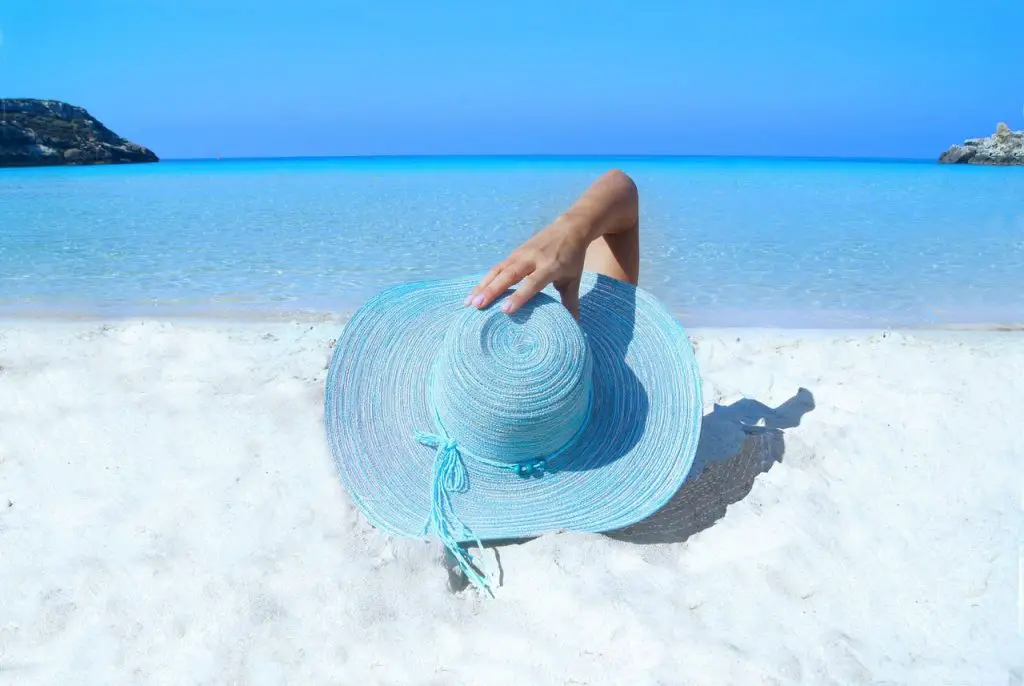
Take out your beach hat as it is one of your island hopping essentials and just relax. Credit: Pexels.

Fret not, here are your ultimate island hopping essentials for your vacation in any tropical countries:

1. Drybag

Your important stuff like your wallet and smartphone will thank you for this.

There is a wide range of sizes available. But small drybag that is large enough for your wallet and smartphone is good enough.

Fold the top closure at least three times to ensure your bag is watertight.

2. Beach hat

Besides a fashion item, a hat is essential for sun protection.

For ladies, the best one out there must be a wide brimmed beach hat.

Not only does it block out more sun, it also gives off a more elegant vibe than your usual beach hat.

3.Sunscreen

Do you know that according to American Academy of Dermatology Association, sunscreen use can help prevent skin cancer by protecting you from the sun’s harmful ultraviolet (UV) rays?

Hence, sunscreen or sunblock is definitely a must for your island hopping essentials.

It does not matter if it is a lotion, spray or gel, as long as it is able to reflects ultraviolet radiation and protect your skin from sunburn. Don’t forget to reapply every two hours.

4. Spare towel

A small spare towel comes handy when you need to quick dry your body in between island visits.

10 island hopping essentials for your perfect vacation
A pair of sunglasses is definitely a must bring for island hopping. Credit: Pexels.

5. Mat

While some of the islands you visit might offer lounging chairs for you to relax, they are always limited in numbers.

So the best is to bring your own mat and lie down on the beach while feeling the sand between your toes.

6. Water/ Snacks

10 island hopping essentials for your perfect vacation
Photo by Alexandra Tran on Unsplash

The tropical sun has no mercy when comes to dehydration. You will enjoy your island hopping trip even more if you stay hydrated.

Pack some even when you sign up for a tour package which include drinking water.

There is no such thing as too much when comes to drinking water.

Just in case you are starving after all those swimming, pack up some snacks too.

7. Insect repellent

Shoo away those nasty bloodsucking sandflies and mosquitoes with insect repellent.

The best trick is one of those waterproof insect-repelling bracelets which means you won’t have to keep reapplying repellent between your swims.

8. Shades

Apart from protecting your skin with sunscreen, don’t forget to protect your eyes too.

Do not just pick a pair of sunglasses because you like how the glasses look on you. Opt for the one comes with polarised lenses.

It can help to eliminate sun glare and subsequently reduce eye fatigue.

9. Swimming gear

If you are not keen to rent swimming gear, you can always bring your own.

Pack up a pair of swimming goggles, snorkeling mask or even a pair of swimfins.

When it comes to safety, most water transport providers or tour operators should provide you a life jacket by law.

10. Waterproof Cellphone Case

The best part of having a waterproof cellphone case is you can take photos while swimming at the beach.

There is no need for one of those expensive sports cameras, and of course, it cuts out the added worry.

No matter where you go; be it in Thailand or the Caribbean, make sure you don’t forget these island hopping essentials!

negaraku II: Exploring unique Malaysian Identity at Hin Bus Depot

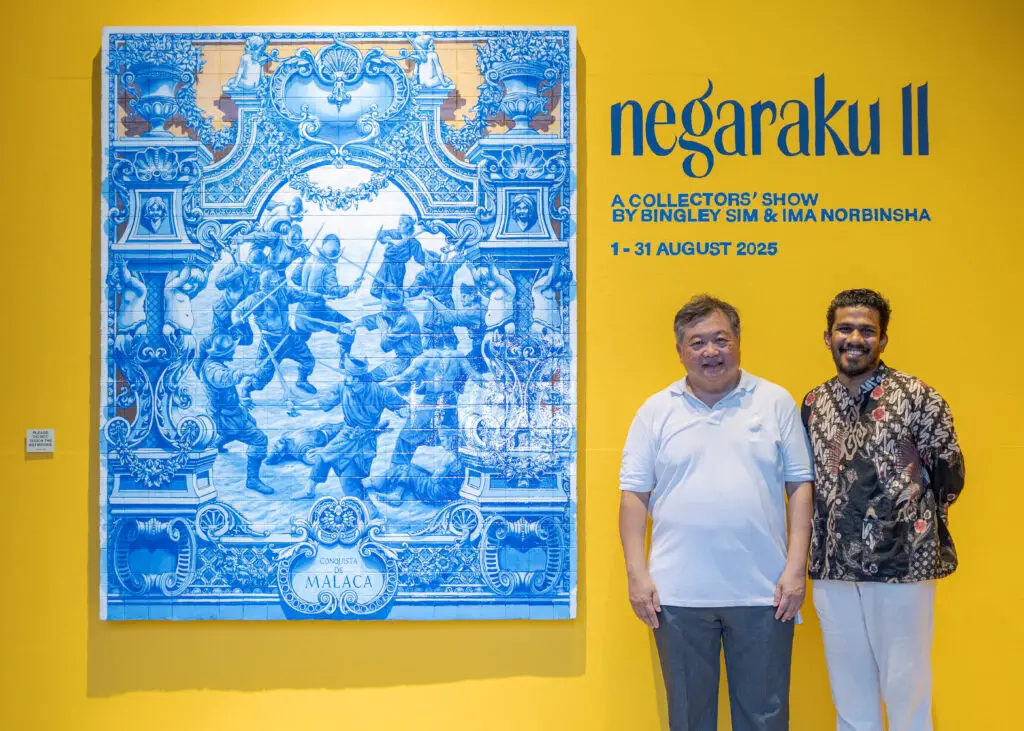
negaraku II: A collectors’ showcase by Bingley Sim and Ima Norbinsha, curated by Ivan Gabriel

What does it mean to call yourself a Malaysian today? This August, negaraku II invites everyone to explore this question at the vibrant Hin Bus Depot in George Town, Penang.

Building on the momentum of the first negaraku last August, this anthology deepens the conversation around identity, belonging, and the many stories that make Malaysia what it is today.

Curated by Ivan Gabriel and produced by Hin Bus Depot, negaraku II brings together compelling pieces from the private collections of Bingley Sim and Ima Norbinsha, two passionate champions of socially conscious Malaysian contemporary art.

The exhibition features around 35 curated works, with some shown as thematic sets — bringing the total number of individual pieces to roughly 60.

negaraku II
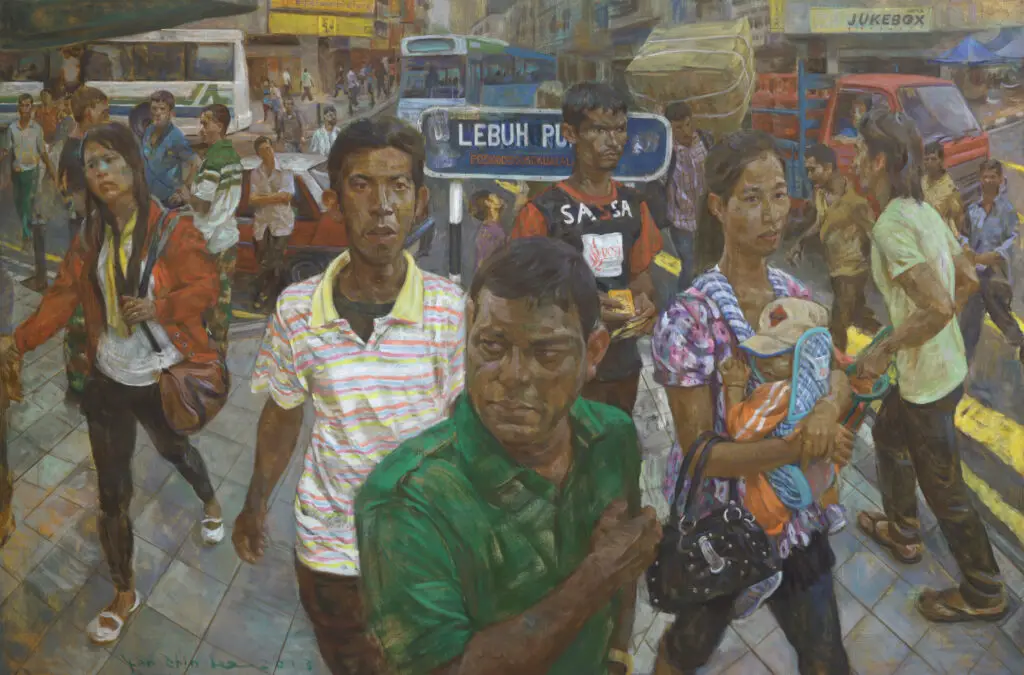
Lebuh Pudu by Gan Chin Lee

Their collections reflect decades of dedication to works that do-not-just depict Malaysia but ask us to confront its complexities.

While the original negaraku sparked discussions about nationhood through powerful visual storytelling, negaraku II widens the lens to include the diverse voices of citizens, migrants, and everyone in between; recognising that Malaysia’s identity is a constantly evolving mosaic of cultures and experiences.

The exhibition creates space for often-overlooked narratives, reminding us that our national story is far from one-dimensional.

“negaraku II is a call to re-examine what it means to belong,” says curator Ivan Gabriel at the opening day of negaraku II exhibition at Hin Bus Depot, “It’s about honouring every face and every untold story that breathes life into this land.

The works we’ve gathered are living reflections of the people and everyday realities that shape Malaysia. By organising the exhibition into bab, or thematic chapters, we wanted to guide visitors through stories that touch on pride, migration, food, and shared aspirations — while still leaving room for the public to bring their own meaning to the journey.”

“Our theme, Rakyat Hidup, Bersatu dan Maju, is a reflection of how Malaysians live — not just side by side, but truly together,” says collector Bingley Sim.

“In every piece, you’ll find glimpses of everyday harmony, whether it’s a neighbour’s kindness, a shared meal, or the resilience of those who came from elsewhere and now call this home.

These quiet, powerful gestures echo across the bab in the exhibition, reminds us that unity isn’t about being the same, but about choosing to see and support each other, again and again.”

This year’s edition also features new artworks by selected artists, offering fresh perspectives on the urgent social and political issues of our time.

Beyond the artworks themselves, negaraku II comes alive through a dynamic public programme that includes multilingual guided tours in English, Bahasa Malaysia, Mandarin, and Sign Language, ensuring that everyone, regardless of background or ability, feels welcome.

But negaraku II doesn’t stop at the gallery door. Embracing the simple joys that bind Malaysians together, the exhibition introduces live food demonstrations, where visitors can savour the making of classics like Roti Jala and Nasi Ulam.

These communal moments of tasting and storytelling transform the space into a living, breathing celebration of shared memory and connection.

negaraku II challenges us to imagine a Malaysia that is big enough for all its people, however they arrived and however they find home. It invites us to see, taste, and feel the many threads that weave together our national identity, and to celebrate the beauty of a country always in the making.

Supported by Yayasan Mr. D.I.Y. and Henry Butcher Art Auctioneers, the exhibition is free to the public and runs from 1 August to 31 August 2025 at Hin Bus Depot.

negaraku II

For more information visit www.hinbusdepot.com.

Tasik Biru: Legends and conspiracy theories behind this mesmerizing lake

Tasik Biru (which means “blue lake” in Malay because of its colour); what stories have you heard about this lake in Bau?

All over the world, lakes have been the subject of folklore and legend. There is Loch Ness in Scotland and Danau Toba in Indonesia as well as Malaysia’s very own Tasik Dayang Bunting  in Langkawi and Tasik Chini in Kuantan.

Sarawak has her own fair share of mythical lakes and one of them can be found about one hour from its capital city of Kuching.

Located in Bau, Tasik Biru (which means “blue lake” in Malay because of its colour) is not a natural lake but an open pit gold mine.

Its original name was Tai Parit or “big drain” in the Hakka dialect.

According to history, the gold mine was operated by the Borneo Company from 1898 until it was flooded in 1921.

Since it was flooded in 1921, many rumours and legends have been floating around about the lake.

Tasik Biru: Legends and conspiracy theories behind this mesmerizing lake
Tasik Biru is not a natural lake but a mining pit

The legends from underneath the lake

Chang Pat Foh wrote in The Land of Freedom Fighters that an old miner told a story about a human-shaped stone removed from the bottom of the lake.

Some believed that the stone was a deity named the King of Stone. The deity was angry that he was removed from the lake so he decided to flood the lake until it overflowed.

There were also rumours of three monsters appearing in Tasik Biru back in 1988. The large figures were reportedly about 3m long!

Tasik Biru: Legends and conspiracy theories behind this mesmerizing lake
There were also rumours of three monsters appearing in Tasik Biru.

The tragedy long forgotten

Besides myths and legends, the lake was also witness to an awful tragedy.

On June 7, 1979, a bus carrying students and teachers from SMK Lake, Bau plunged into the lake in an accident.

The tragedy took the lives of one trainee teacher and 29 students.

A monument is planned to be erected near the lake in remembrance of the 30 victims.

Tasik Biru: Legends and conspiracy theories behind this mesmerizing lake
The lake was the site of a tragedy in 1979.

Conspiracy theory about Tasik Biru

There is a signboard warning the public against swimming, fishing and bathing in Tasik Biru.

This is due to the fact that Tasik Biru has high levels of arsenic.

A local Chinese daily once reported a conspiracy theory about the arsenic warning. Apparently, there were people who believed that the lake was not actually polluted with arsenic and that the warning was made up to stop miners from excavating the large quantities of gold underneath.

Another piece of hearsay was that the state government was planning to dry up the lake to mine the gold.

Additionally, it was rumoured that people had discovered Japanese samurai swords and cannonballs from World War II, said to be thrown into the lake by the Japanese forces themselves during their occupation.

Tasik Biru: Legends and conspiracy theories behind this mesmerizing lake
Some people believed that the lake buried ammunition from World War II.

A home to Jong Regatta

Putting aside the legends and conspiracy theories surrounding the lake, one thing for sure is that visitors still make their way to Tasik Biru for the Bau Jong Regatta.

Jong is a miniature sailing boat some believe was inspired by the Royalist, a schooner owned by the first White Rajah of Sarawak, James Brooke.

The regatta, however, was first started by a colonial officer named A.J.N. Richards in the 1950s.

It was held several times over the past few decades until it was revived as an annual event in 2009.

The event is usually organised in the last quarter of the year so watch out for the this year’s date to visit this scenic (yet) arsenic lake.

Tasik Biru: Legends and conspiracy theories behind this mesmerizing lake
Head to Tasik Biru for Bau Jong Regatta.

Gerard MacBryan, the most eccentric Sarawak officer exposed

Gerard MacBryan
Gerard MacBryan after his pilgrimage to Mecca.

“There came out to Sarawak at about this time a young man who was destined to play a sinister part in the history of the Sarawak Raj.”

This is how Sylvia Brett, the last Ranee of Sarawak introduces Gerald MacBryan in her book Queen of the Headhunters.

The Brooke family governed Sarawak between 1841 and 1946. James Brooke ruled the area until his death in 1868. He was succeeded by his nephew Charles who in turn was succeeded by his son Vyner.

During the Brooke family’s reign, many British citizens were employed into Sarawak service.

One of them being Gerard MacBryan or his full name was Truman Magill MacBryan, whom some historians believed was Sarawak’s equivalent to Rasputin.

The story of Gerard MacBryan

Gerard MacBryan was the son of a doctor who owned a mental hospital near Bath, England. He was described as tall, graceful with bright eyes and ivory-white skin.

MacBryan was only 18 when he entered the Sarawak government service in 1920. Soon after MacBryan arrived in Sarawak for duty, however, rumours already began spreading about him.

According to Sylvia, “MacBryan, it was said, suffered from hallucinations that his bungalow was being attacked, and would start shooting wildly into the darkness.”

Sylvia was not the only one who recorded MacBryan’s lunacy.

Robert Payne in The White Rajahs of Sarawak stated that most of the white Sarawak officers during the Brooke reign were too busy to indulge in complicated pleasures.

“With Malays, Dyaks, Chinese, and Indians, all around them, and with a growing country to serve, they were kept occupied. Only one went mad, but he had a streak of madness in him long before he came to Sarawak.”

And of course the madman Payne referred to in his book was none other than MacBryan himself who was reported to have had a series of manic episodes.

Once in South Africa, he appeared naked at a party, and afterwards explained that he thought he was invisible. Sometimes he thought he was a dog, and would walk on all fours, barking at the top of his voice.

MacBryan also allegedly stole from shops and alms-boxes.

Gerard MacBryan and Vyner Brooke

Even so, with all the manic incidents, how MacBryan would continue to stay and serve in Sarawak was due to his relationship with the third white rajah, Vyner Brooke.

Of his first impression, Vyner told his wife, Sylvia that he thought MacBryan was “wonderful, but nuts”.

Putting aside the nuisance he presented to some of his fellow white officers, the Malay and Dayak people reportedly loved him.

MacBryan spoke fluent Malay and had even delivered a speech in Kenyah.

He also proved himself helpful by negotiating the peace-making ceremony between the Ibans and Kayans in Kapit in 1924.

Vyner nicknamed MacBryan the “Baron”, after Baron von Munchausen, the German cavalry officer who had been renowned for his fantastic and irresponsible antics.

According to historian Dr Bob Reece in The Name of Brooke, MacBryan was a man of considerable talent with an intelligence superior to that of most officers.

Reece wrote,

“More importantly, he was a skillful politician and a shrewd judge of character. He seems to have had the knack of knowing how the Rajah’s mind worked and of suggesting courses of action which would fulfil his wishes. In other words, MacBryan was capable of doing the Rajah’s thinking and decision making for him, something Vyner Brooke found very useful sometimes.”

Gerard MacBryan interfering with the succession to the throne

Vyner and Sylvia had no sons, so MacBryan began courting their young daughters. He even openly talked about becoming the next Rajah.

At one point Vyner had enough of the ‘Baron’ and fired him. MacBryan was subsequently banished from Sarawak for about four years.

During this time, he married a Malay lady, announced his conversion to Islam and even made a pilgrimage to Mecca. He had planned to make himself the Muslim ruler of the east.

MacBryan did not manage to do that but he did successfully make a return to Sarawak. By 1927, he was put in charge of Sarawak Gazette and eventually became Vyner’s secretary again.

Despite his best efforts, however, MacBryan was unable to seduce his way to the White Rajah’s throne.

But some reports claimed that he made sure the next heir apparent, Vyner’s nephew Anthony, would not make it to the throne either.

Another popular opinion was that the last Ranee was trying to push her eldest daughter, Leonora or her grandson Simon MacKay, to succeed the throne.

At the time, it was believed that Sylvia was plotting with MacBryan.

But on July 8, 1940, Sylvia wrote a letter to her brother in-law Captain Bertram Willes Dayrell Brooke (Anthony’s father) claiming her innocence.

“I happen to know more about the MacBryan plot than anyone. It began with MacBryan making violent love to Didi (Elizabeth, Vyner’s second daughter). I don’t think that Didi was more than fourteen at the time. But as you know MacBryan was determined to get into the family somehow. The whole thing has really grown from the evil seeds in MacBryan’s brain.”

Gerard MacBryan’s role in Sarawak’s cession to the British

But MacBryan’s biggest role yet in influencing Sarawak’s history was when Vyner appointed him to negotiate the terms of cession between Sarawak and the British government.

Local historian Ho Ah Chon stated in Sarawak Historical Events 1941-1945 that:

“After the war, Vyner sent out his private secretary to induce the leading Kuching Datus to sign letters in which they agreed to support any moves Vyner might think fit to make ‘in the interest of Sarawak’.”

According to reports, the letter never mentioned cession .

The community leaders signed the letters, not knowing the truth till few days later.

“One of the Datus, Datu Patinggi Abdillah, was furious when he discovered that they had been tricked, and he returned the $12,000 (all those who signed were given a large sum)- saying it was a bribe.”

And that private secretary was MacBryan.

Sylvia also wrote,“I think it can safely be said that if there had been no Gerard MacBryan there would have been no cession of Sarawak at that time — July 1946.”

When Vyner and Sylvia returned to Sarawak in 1946 to say their final farewell, the Baron was not there with them.
Sylvia stated,

“He had sworn he would see Vyner through the difficult period of Cession. After all, it was he who set the machinery in motion; who had coerced and corrupted the Malay Datus into signing papers they did not understand. And then he had simply vanished, leaving Vyner to face the music alone, to withstand the disapproval of his brother, and the shocked fury of his nephew.”

However according to Reece, this claim might not be true.

Reece stated,

“There is no way of verifying later accusations that MacBryan used trickery and even force to obtain the necessary signatures. But it is clear that he deliberately misrepresented Bertram and Anthony as having agreed to the cession.”

Nonetheless, the information retained and reproduced in a Malaysian secondary school History textbook for Form 3 was that of Gerard T. MacBryan using trickery to gain signatures from Council Negri members.

The Brooke family ceded Sarawak to the British government as a crown colony on July, 1 1946.

Life after Sarawak for Gerard MacBryan

By late 1949, there were reports of him losing his sanity. He was arrested for stealing peaches from a fruit barrow in London eventhough he had more than £40 in his pocket.

At one point, he also carried with him everywhere a mysterious black box which he said could blow up the world.

He occasionally checked himself into a mental institution in London.

Towards the end of his life, he was living in a cheap hotel in Hong Kong until he died in 1953.

Vyner believed MacBryan hanged himself although Sylvia believed MacBryan starved himself to death.

In her final mention of Gerard MacBryan in her book, the former Ranee stated, “…although he had thousands of dollars in the bank, the ‘Baron’, with his charmed and twisted dreams of powers, looked down-and-out, filthy and in rags. I never dared ask Vyner what he thought about the downfall of his friend.”

Fort Alice: 10 things you might not know about this important historical landmark

Located in Sri Aman, Fort Alice is a building constructed entirely of belian timber overlooking the famous Batang Lupar River.

It was built after the victory of second White Rajah of Sarawak Charles Brooke over Iban warrior and chieftain, Rentap.

The historical building was abandoned for a few years until it was restored and reopened as the Sri Aman Heritage Museum on Apr 18, 2015.

Named after Margaret Alice Lili de Windt, Charles’s wife, the rectangular building is equipped with cannons, open courtyard, drawbridge and lookout tower.

Here are 10 things you might not know about For Alice and its colourful history:

1. The original structure was made from materials of another fort.

It is widely understood that the fort was originally built in 1864. However, most of its structure came from Fort James that was built in 1849 further upriver at Skrang.

In 1864, Fort James was dismantled and a good deal of the materials was transferred to Sri Aman where it was re-erected.

At first, people just referred it as Simanggang Fort, until Ranee Margaret came to Sarawak in 1870 and then it was named Fort Alice after her middle name.

2. The reasons why Fort James was dismantled and Fort Alice was built.

After Fort James was built at Skrang, the Brooke government thought that a town would in time develop around it.

However, they found that the site was unsuitable since it was at lowland and liable to flood.

Hence, they decided to move the fort to Simanggang where it was re-erected on a small hill.

Plus the new location was located next to a river, an important factor for a fort site in the olden days.

Fort Alice: 10 things you might not know about this important historical landmark
Scenic view from the fort overlooking the Lupar River
3.Ranee Margaret’s unforgettable first visit to Fort Alice.

The late ranee had an unforgettable experience when she first visited Fort Alice. To welcome her, the local Ibans performed the ngajat dance in her honour.

But they used real heads as part of their performance. Margaret reportedly rushed to her room where she fainted and had to be excused for the rest of the evening.

4. James Brooke’s godson was Simanggang’s first resident, stationed at Fort Alice.

Known as Tuan Bongsu (because he was the youngest of Charles’ siblings), Henry Stuart Johnson was the first one to be in charge of Fort Alice from 1864 to 1869.

Then the first White Rajah’s godson James Brooke Cruikshank was appointed as the first Resident of Simanggang in 1869.

According to W.J. Chater in The Sarawak Gazette (January 31, 1965), Cruikshank created a great impression among the Ibans in the area when he was the resident.

After he was transferred to Sibu, many of the locals even tried to take their court cases to him there.

5. Vyner Brooke was first stationed at Fort Alice when he first started working in Sarawak.

Besides that, the fort was also where the third White Rajah Vyner Brooke first served as a cadet government officer.

He was just 17 when he first started working there under Demetrius James Sandford Bailey in 1891.

6. The disastrous Cholera Expedition started at Fort Alice.

Fort Alice was the starting point where the infamous Cholera Expedition happened in June, 1902.

The punitive expedition down the Batang Lupar had one-fifth of the 10,000 recruited men to fight against Iban rebels died of Cholera.

Fort Alice: 10 things you might not know about this important historical landmark
The fort was refurbished in 2015 and turned into a heritage museum
7. The second White Rajah Charles Brooke actually wanted to be buried there.

It is said that Charles had a soft spot for Simanggang and used to send all his best officers there.

Chater wrote, “He directed it personally from 1854 to 1904 when he handed over its affairs to his son who later became the third Rajah. For this reason, there were no First Class Residents in the Second Division during the time of the second Rajah. On his rare visits to Simanggang in later years he loved nothing better than to sit on a bench on the hill near the fort and admire the scenery. ‘This’, he would say, ‘is the real Sarawak.’ He had, also always expressed a wish to be buried there as he died in England during first World War (1917) this which could not be fulfilled.”

8. Famous writer W. Somerset Maugham spent some times in Fort Alice way back in 1921.

Maugham stayed for a few days at Fort Alice in 1921 and it became his muse for some of the scenes in his short stories.

Rumours had it at the fort that those who were mentioned in Maugham’s stories pretended to be angry while those who were not mentioned were jealous.

When Maugham wanted to visit Sarawak for the second time in 1930, however, the Rajah politely declined his request telling him that it would not be convenient.

9. The fort had many functions in the olden days.

In the fort’s early days, the building was used as the officer’s quarters, government offices, courthouse and police station all at the same time.

When new building started to be constructed, these departments started to move out from the fort leaving it empty.

Fort Alice: 10 things you might not know about this important historical landmark
Fort Alice
10. There was an old tradition at the fort which is now no longer exists and was forgotten for a time.

When it was still used as a police station and Resident’s quarters, there was an interesting old tradition being practised there.

Every day at 8 pm when the Resident would have his dinner, there would be an evening call. Then, the drawbridge or steps were drawn up for the night.

After the policeman on duty struck up the eight o’clock gong, he would call out in Iban:

“Oh Hai! Oh Hai! Oh Hai!
Jam diatu pukul lapan,
Tangga udah ditarit,
Pintu udah ditambit,
Orang ari ulu,
Orang ari ili, nadai tau niki kubu lagi.”

The English translation is,

“Oh Hai! Oh Hai! Oh Hai!
The time is now 8 o’clock,
The steps have been drawn up,
The door is closed,
People from upriver,
People from downriver,
Are not allowed to come up to the fort anymore.”

It would be interesting that this tradition is continued to today with a loudspeaker announcing this call every 8 pm from the museum.

The British Council announces RM4.2 million arts grants

New support for artistic collaborations: The British Council announces Connections Through Culture arts grants supporting new cultural projects between UK and Malaysia

KUALA LUMPUR: The British Council is thrilled to announce the opening of applications for its Connections Through Culture arts grants, a RM4.2 million grant programme designed to foster artistic and cultural collaborations between the UK and Asia-Pacific countries.

The Connections Through Culture grants support new international collaborations between the UK and Malaysia, offering grant support to organisations and artists in the development of their creative projects.

Applicants in Malaysia can apply for grants of up to RM60,000, for projects from all artforms.

However, proposals responding to Climate Change, and Diversity and Inclusion may be prioritised during final decision making.

The British Council announces RM4.2 million arts grants

Projects supported by the Connections Through Culture Grants are required to include at least one UK-based applicant and one applicant based in Malaysia.

“We’re proud to be supporting new creative collaborations between the United Kingdom and Malaysia through our Connections Through Culture grants”, said Jazreel Goh, Director Malaysia, British Council.

“These grants can spark big ideas and major collaborations. We’re proud to be providing this support, keeping the doors open for artists in both countries to make connections and showcase their talents on the international stage. Connections Through Culture grants not only create meaningful artistic exchanges but help to bring greater understanding that will enrich the global creative landscape.”

Application process

The British Council is inviting applications that showcase new artistic collaborations between the UK and Asia-Pacific.

To support applicants, the British Council is offering a comprehensive set of resources to assist potential applicants, including an application toolkit with valuable tips and detailed insights into the programme’s context.

Potential applicants can find more information on the British Council website, including a toolkit, frequently asked questions, and information sessions to support organisations and artists through the application process.

Key Dates:

Applications Open: 9 July 2024

Register on our website for an Information Session:

• Information Session 1, 8:00 GMT, 17 July 2024

• Information Session 2, 9:00 GMT, 18 July 2024

• Information Session 3, 9:00 GMT, 23 July 2024

• Information Session 4, 10:00 GMT, 25 July 2024

Applications Deadline: 2 September 2024

Click here to apply

Discover Eric Mjöberg’s Curious Animal Descriptions as Sarawak Museum Curator

In 2004, a former Sarawak Museum curator made controversial headlines across the globe thanks to what he did 90 years earlier.

Eric Mjöberg served two years as a curator for the Sarawak Museum from 1922 until 1924.

Before he found himself in Borneo, he had made various expeditions to Australia during the early 1900s to prove his Darwinian human evolution theory.

A zoologist and ethnographer trying to do his job… how controversial could his work be?

In Western Australia, Mjöberg who started off by collecting plant and animal specimens for research purposes, had also desecrated the sacred burial grounds of the Aboriginal people.

After stealing their human remains, he then passed them off as kangaroo bones and smuggled them back to his home country Sweden.

He did this reportedly over the course of two expeditions between 1910 and 1916, collecting parts from 12 deceased individuals.

After suffering from an extended, undiagnosed illness, Mjöberg passed away in Stockholm in 1938, living in poverty. Throughout this period, he endured recurring nightmares that mirrored his encounters in the Kimberleys. These haunting dreams involved a feeling of being chased by Aboriginal individuals and interactions with the Dreamtime’s creation spirits called the Wondjina.

In September 2004, Lotte Mjöberg, his great-niece, took the initiative to return the skeletons to the Aboriginal people.

Interestingly, Mjöberg actually exposed his own unethical practices through his 1915 publication of his diaries ‘Among Wild Animals and People in Australia’.

Apart from this book, he also published another book Forest Life and Adventures in the Malay Archipelago (1930).

In the book, he wrote mainly brief descriptions of the rich fauna and flora in the region while giving more attention to Borneo.

Although he was described by historians as aggressive, arrogant and devious, his descriptions and observations of nature are interesting and detailed.

We might never see this type of explanation in a formal zoology textbook again, so here are some of examples of Mjoberg’s curious descriptions:

1. Mjöberg called the pangolin ‘stupid and obstinate’.

“Our ant-eater is stupid and obstinate, two attributes no doubt inherited from the dim past. When in danger he rolls himself up into a ball, and no power on earth can induce him to unroll until he wishes, which in other words, is not until all danger is over.”

2.The proboscis monkey is ‘a human caricature in flesh and blood’

Discover Eric Mjöberg's Curious Animal Descriptions as Sarawak Museum Curator
A proboscis monkey spotted at Tarakan’s Bekantan and Mangrove Conservation Park

“Sometimes a man may be as ugly as a monkey, and a monkey may have something very human about it; indeed, it is quite customary to call monkeys humanity’s caricatures. Of none can this be said with such truth of the Borneo proboscis monkey.

“The Malay natives in Sarawak call them ‘orang belanda’ which is a contraction of orang hollanda or hollandare (Dutchmen). Not a great compliment, this, to Queen Wilhelmina’s representatives in the Tropics!”

3.Banded archerfish or squirting fish is one of the shrewdest of fish and ‘the most economical marksman’ in the world.

“One of the shrewdest of fish is the little squirting fish (Toxotes jaculator). The struggle for existence and one’s daily bread is not hard on dry land only, but the under the water as well. It is essential before all else to satisfy the strongest and most primitive of impulses, the desire for food, the first essential of any individual’s existence.

“He is generally seen patrolling in the water along the river banks, carefully inspecting the leaves of the water plants. As soon as he discovers a suitable victim he backs, takes in more copious supply than usual, and with soldierly precision shoots a stream of water at his prey. Taken aback by the sudden cold douche, the insect loses its self-possession, and tumbles down into the water, where he is speedily dispatched by our ingenious little shot. Inspired by his success, he continues this pastime until he has satisfied his appetite.

“Since he only uses water, the squirting fish is undoubtedly the most economical marksman in the world.”

4.The most pugnacious bird in the Malay Archipelago is the Argus pheasant

Discover Eric Mjöberg's Curious Animal Descriptions as Sarawak Museum Curator
“Argus Pheasant” drawn by T. W. Wood for Charles Darwin‘s 1874 book, Descent of Man

“The Argus pheasant is very defiant and suffers from a hot and choleric temperament: an affliction of which the clever Malays take the utmost advantage.

“They plant in his dancing ground some dozens of yard-long pointed bamboo sticks, in such a way that the sharp points stick up a little more than a foot – the height of the dancer’s breast – out of the ground. When he arrives at break of day to give proof to the fair sex of his superabundant vitality, he flies into a towering rage at these unexpected hindrances to love’s measure, and at first makes disdainful attempts to kick away the sticks.

“But this is no easy matter, for they are firmly fixed. His undisguised wrath flares up and he attacks them with tooth and claw. His fury – violent as it is – reaches boiling point, and he slashes round fiercely in every direction, with the final result that he wounds himself mortally on the little stakes planted at fixed distances. There have been birds that in blind frenzy have literally beheaded themselves, or have hung dead with pierced throats, transfixed by the pointed bamboos.”

5.The flying frog inventive for being the only flying expert amongst thousands of his tribe.

Discover Eric Mjöberg's Curious Animal Descriptions as Sarawak Museum Curator
Illustration from Wallace’s 1869 The Malay Archipelago by J. G. Keulemans

“There is only one single specimen of earth’s multifarious frogs – wellnigh a thousand in all – that has climbed to heights beyond the commonplace and sails above his four-footed clumsy relatives. This fellow with the black feet goes by the name of Rhacophorus nigropalmatus, and lives on a high, moss-covered height, Mount Dulit in Northeast Borneo.

“When he feels like flying, or is very much disturbed by the neighbourhood of green tree snake, who is too evidently anxious to have him for breakfast, our sticky aviator climbs up the mossy trunk to get a good start and a better view of the country.

“His greatly elongated phalanxes are quite joined by a web for swimming or as might be more correctly said in this special case for flying.

“When the psychological moment arrives, he fills his lungs with air to their utmost capacity and takes the daring leap, drawing his feet aside so that the wide flying-webs become one with his body, and this begins his flight in long bold curves, taking intelligent advantage of any local puffs of wind. The whole proceeding is so grateful as to fill us with amazement that an awkward frog can manage anything of the kind.”

Discover Sarawak’s Must-See Animals: A Guide for Wildlife Enthusiasts

For first time visitors discovering Sarawak, we are sure you have planned alot of things to do in your itinerary.

If you are a nature lover, your visit to the Land of Hornbills would not be complete without getting close to some animals.

Here are five must-see animals in Sarawak when you are in town:

1.Bornean orangutan

Discover Sarawak's Must-See Animals: A Guide for Wildlife Enthusiasts

Did you know that orangutans share approximately 97 per cent of their DNA with humans? They are practically our cousins.

There are two species of orangutan. The Bornean orangutan and Sumatran orangutan are two different species that diverged about 400,000 years ago.

The species that is endemic to the island of Borneo is Pongo pygmaeus or the Bornean orangutan.

One of the many differences between the Bornean orangutan and its Sumatran brother is that the former travels on the ground more than its Sumatran counterpart.

Many believe this is due to no large terrestrial predators that could attack an orangutan in Borneo.

However in Sumatra, this great ape sometimes come in contact with the Sumatran tiger.

Thanks to this trait, you can find these must see animals in Sarawak walking around the Semenggoh Nature Reserve if you are lucky.

Located 20km from Kuching city, Semenggoh Nature Reserve is home to semi-wild orangutans.

They spend most of their time in the forest (especially during the fruiting season) but some get back to the centre during feeding time.

So if you are making a visit, make sure you are there during their feeding times at 9am to 10am or 3pm to 4pm.

2.Proboscis monkey

Discover Sarawak's Must-See Animals: A Guide for Wildlife Enthusiasts

Another mammal that is endemic to Borneo is the proboscis monkey or long-nosed monkey (Nasalis larvatus).

It is known for its distinguished large nose. Proboscis monkeys live commonly in the mangrove forests and on the coastal areas.

Being accustomed to its natural habitats, these primates are known to swim across rivers and are even able to dive underwater.

While the largest remaining populations can be found in Kalimantan, there are a few found in Sarawak.

In Sarawak, one of the best places to see proboscis monkeys in the wild is Bako National Park.

There, you might catch these must -ee animals in Sarawak jumping from one tree to another or munching on fruits or leaves.

3.Saltwater crocodiles

Discover Sarawak's Must-See Animals: A Guide for Wildlife Enthusiasts

There are two species of crocodiles found in Sarawak: the saltwater crocodile (Crocodylus porosus) and the Malayan gharial (Tomistoma shlegii).

However, the one you really catch a glimpse of while in Sarawak is none other than what the Australians call the ‘saltie’.

It is the largest living reptile in the world.

If you are in Kuching, make a trip to Jong’s Crocodile Farm and Zoo in Siburan. It is one of seven crocodile farms in Malaysia that is registered under the Convention on International Trade in Endangered Species of Wild Fauna and Flora (CITES).

Another place to see a saltwater crocodile is at Matang Wildlife Centre.

It is not a zoo but a centre dedicated to the rehabilitation of endangered animals before being released back into the wild.

The crocodiles sent to the centre are usually the ones caught intruding human settlements.

4.Hornbills

Discover Sarawak's Must-See Animals: A Guide for Wildlife Enthusiasts
Press Photos: (All Credit: Julie Larsen Maher © WCS)

Unless you are an avid bird watcher, you are considered one of the lucky ones if you are able to see hornbills fly freely in the sky.

Despite the name ‘Land of the Hornbills’, don’t expect these birds to be easily spotted unless you head over the the Piasau Nature Reserve in Miri.

There are eight species of hornbill found in Sarawak including White Crested Hornbill, Wrinkled Hornbill, Wreathed Hornbill, Black Hornbill, Bushy Crested Hornbill, Pied Hornbill, Helmeted Hornbill and Rhinoceros Hornbill.

The Rhinoceros Hornbill is not only the state bird of Sarawak but Malaysia’s national bird.

To see this iconic bird, Santubong National Park reportedly is the closest site to Kuching which offers a chance to see the Rhinoceros Hornbill.

5.Bornean bearded pig

Discover Sarawak's Must-See Animals: A Guide for Wildlife Enthusiasts

You might think, “Why would I want to see a pig when I come to Sarawak?” This is not any pig, this is the Borneo bearded pig.

Putting aside its name, the Bornean bearded pig (Sus barbatus) can also be found in Sumatra, the Malay Peninsula as well as some small islands in Sulu archipelago.

This pig can be recognised by its prominent beard which is more pronounced in males.

Make a trip to Bako National Park and you can find them around the park HQ or along the beach.

If you are staying over at the park, don’t be surprised if you hear snorting sounds in the middle of the nights. Sometimes, these pigs would hover around the accommodation area scavenging for food.

Discover Kuching’s Culinary Delights: A Comprehensive A-Z Guide!

If you web-searched ‘ Food to eat in Kuching’ or ‘Kuching Food Guide’ or ‘Food to Try in Kuching’ or ‘What food is famous in Kuching’, honestly the results are pretty much the same.

Here at KajoMag, we want you to take your gastronomic adventure in Kuching (Unesco Creative City of Gastronomy since 2021!) to another level and not just go through the food list halfheartedly.

So how about enjoying the best food that Kuching has to offer alphabetically?

This is our pick of what to eat in Kuching from A to Z (a non-halal version):

A is for ABC

ABC, also known as ais kacang, is one of the many ways Kuchingites use to escape from the tropical heat.

It traditionally consists of shaved ice, red beans, cendol, grass jelly with evaporated milk or coconut milk drizzled on top.

If you have no idea where to have one, here are some of KajoMag’s suggestions.

B is for Beef Noodle

Kuching is known for its own version of beef noodle or mee sapi.

This noodle dish is served with been sprouts and beef slices on top as well as a bowl of hearty beef-based soup.

Some of the best places to have that satisfying bowl of beef noodle are Ah Mui Beef Noodle and Green Hill Corner Hawker Centre.

C is for (Salad) Chicken Rice

Do not be fooled by the name of this dish and expect a bowl full of greens.

Sarawak’s version of salad chicken rice is rice served with fried chicken.

The ‘salad’ part is the pink-coloured dressing made from mayonnaise mixed with tomato sauce.

The original version of this dish also came with baked beans.

Nowadays, the common version of salad chicken rice is with mayonnaise drizzled on top of the fried chicken and tomato sauce on the side.

The most popular place to have a plate of this is none other than KEN Salad Chicken Rice on Jalan Pending.

D is for Dabai

Dabai (Canarium odontophyllum) is an indigenous seasonal fruit that can only be found in Sarawak.

Many call it the Sarawak olive because they look similar.

If you are not in town during dabai season, no worries. You can still enjoy this fruit but in another form.

Nasi goreng dabai or dabai fried rice is one of the ways to enjoy the fruit all year round since it is made from salted dabai.

E is for Ensabi

Ensabi is a local mustard green which is known for its distinct bitter taste.

It is commonly prepared by stir-frying it with garlic and anchovies with salt to taste.

Sarawakians love the preserved version of it called kasam ensabi.

From a simple dish that the folks at the longhouse enjoy, now it has found its way to Kuching hawker stalls selling indigenous food.

One of these stall is as at Langkau Arau Rumah Asap Dayak.

F is for Fried Midin

Discover Kuching's Culinary Delights: A Comprehensive A-Z Guide!

Another must-try vegetable is Sarawak is midin (Stenochlaena palustris).

It is a type of fern usually prepared by frying with garlic or shrimp paste (belacan).

Have it with rice and some protein such as chicken or pork, and voila! You will have the perfect plate for lunch.

G is for Gula Apong Ice-cream

Do not think about leaving Kuching without giving this a try.

Gula Apong Ice-cream is one of many must-try desserts when you are in town.

It is basically vanilla ice-cream topped with gula apong, a Sarawak palm sugar.

H is for Hot bowl of Terung Dayak Soup

Discover Kuching's Culinary Delights: A Comprehensive A-Z Guide!
One of many ways to cook this local eggplant, Terong Dayak Asam Pedas

Terung Dayak or terung asam is a type of eggplant which is commonly found in Sarawakian cuisine.

They are usually cut into quarters and cooked with or without their seeds.

Most people do not remove the skin because it comes off easily when cooked.

One of the best ways to have it is to cook the eggplant in soup with pork or smoked fish.

I is for Ikan Terubuk Masin

Ikan terubuk masin is salted toli shad or Chinese herring.

It is one of highly prized fish among Sarawakians.

Nowadays it has become one of the must-buy food souvenirs among tourists who came to Sarawak.

Whether you have it here right on site in Sarawak or bring it back home to savour, this fish is one of many Sarawakian foods you must eat in Kuching.

J is for Jani

You cannot come to Sarawak and not pick some of the local languages. This largest state of Malaysia has more than 40 sub-ethnic group, each with its own distinct language.

Here at KajoMag, we want to teach you the Iban word ‘jani’ which means pig.

While the African Americans are known to have their cookouts featuring a menu of soul food, the Iban people have always love to gather among family and friends to barbeque and drinking some beers.

And a typical Iban or even Dayak barbecue is incomplete without jani or pork.

You can have the barbecued pork with rice or on its own, it doesn’t matter as long as you have a can of cold beer to wash it down.

No invites to a BBQ? No worries, you still can have it in Kuching.

The best places to have Dayak-style barbecued pork are at Rumah Asap Tabuan Dayak and Langkau Arau Rumah Asap Dayak.

While you are there, don’t forget to order some barbecued pork intestines.

K is for Kueh chap

Discover Kuching's Culinary Delights: A Comprehensive A-Z Guide!
Kueh Chap

Speaking of pork intestines, here is a dish you must have in Kuching if you love having some pig’s innards.

Originating from Teochew cuisine, this dish consists of flat, broad rice sheets served in a soup made with dark soy sauce along with an assortment of pork cuts.

You can have early in the morning for breakfast or late at night for supper, it doesn’t matter.

Some of the places that served best kueh chap in town are Lao Ya Keng Food Court at Carpenter Street and 3rd Mile Wet Market Food Court.

L is for Laksa Sarawak

A Twitter user in 2012 once asked the late celebrity chef Anthony Bourdain to settle the score on who has the best laksa? Penang, Sarawak, Johore or Singapore?

Bourdain tweeted back only one word ‘Sarawak’ so sorry not sorry Penangites, Johoreans and Singaporeans.

A classic bowl of Laksa Sarawak is made of rice vermicelli served in spiced coconut broth with shredded chicken, shredded omelette, bean sprouts, prawns and coriander.

Some of the famous places in Kuching to have a taste of this dish are Choon Hui Cafe and Golden Arch Cafe.

M is for Mee Kolo

Discover Kuching's Culinary Delights: A Comprehensive A-Z Guide!
Kolo mee at Woon Lam Cafe 1999.

Never ever ask a group of Kuchingites on where is the best Mee Kolo or Kolo Mee especially on social media platforms, you might accidentally trigger a debate as heated as the Taiwan parliament.

A kolo mee is springy egg noodles tossed in a sweet and savoury shallot, lard and vinegar dressing. Kuching’s most popular variant is the kolo mee merah (red). It uses oil from cooking char siu for that extra flavour as well as the red colouring.

Kuchingites are proud of their kolo mee and sometimes can be very defensive on which stall offers the best.

Most of the time, nostalgia is a powerful ingredient and Kuchingites tend to pick the best based on where they had it as a child.

For instance, someone who grew up in the 3rd Mile area would probably choose the stall on the first floor of 3rd Mile Wet Market to have the best kolo mee.

Regardless, there is one thing for sure. A first-time visitor to Kuching cannot leave the city without having this bowl of springy noodles.

N is for Nasi Aruk

For a dose of traditional Sarawakian Malay food in your gastronomic adventure in Kuching, do give nasi aruk a try.

Basic nasi aruk is made from rice, garlic, onion and anchovies.

What makes it different from the typical fried rice, nasi aruk does not use any oil to fry the rice and it requires a longer frying time resulting in a more smoky flavour in the rice.

O is for Oyster Pancake

Sometimes also known as oyster omellete, this dish is best to have while it is still hot and crispy.

It is one of the must-ordered dishes at any seafood or Chinese restaurants in Kuching.

But you can still have it as a snack on a late night out with friends.

The dish is round and crispy pancake with oysters cooked with it.

P is for Pansuh

Discover Kuching's Culinary Delights: A Comprehensive A-Z Guide!
Manok pansuh (chicken cooked in bamboo)

Originally an Iban dish, pansuh is food that is cooked in bamboo.

Manok pansuh is chicken cooked in bamboo with ginger, lemongrass and tapioca leaves. The bamboo is then roasted over a fire.

A dish that was common in the longhouses where bamboo is easily found, has now made its way to food courts and restaurants.

Q is for Qing Mian or Green Noodle

Qing Mian is green noodle in Mandarin. This noodle dish is more widely known as spinach noodle in which the noodle gained its colour from.

The unique thing about this noodle dish is that every stall that sells it has its own recipe.

Some serve the noodle with pork and others with beef.

Chong Chon Green Noodle for instance is served with beef while the one at ABC Food Centre comes with minced pork.

R is for Roti Kompia

Roti means bread in Malay and this is the only bread on the list.

It is made with lard, salt and flour.

One can enjoy it just like that or with savoury minced pork as its filling; either way is equally delicious.

S is for Sarawak Three Layer Tea

Discover Kuching's Culinary Delights: A Comprehensive A-Z Guide!

Widely known as Teh C Peng Special, this is perhaps the most popular tea beverage in Sarawak.

The three layers part of the drink come from tea, evaporated milk and gula apong (palm sugar).

This is one of many prides of Kuching since it is originally invented right here in this city.

T is for Tomato Crispy Mee

Here is another unique Sarawak dish for you to try in Kuching.

It is deep-fried noodle served with sweet and sour tomato gravy with vegetables and sliced chicken or pork on top.

U is for Umai

Discover Kuching's Culinary Delights: A Comprehensive A-Z Guide!
Umai made from raw fish, citrus fruit and bunga kecala

This popular traditional dish is a traditional food of the Melanau people.

It is consists of sliced raw fish mixed with onions, chillies, vinegar, salt and lime juice.

The dish is similar to Latin American ceviche and the Filipino kinilaw.

V is for Vermicelli Noodle With Shrimp Paste aka Belacan Beehoon

The list of ingredients that make up of this dish doesn’t make sense if you just go through it one by one.

But if you actually sit down and enjoy it, this dish does make sense.

Imagine rice vermicelli served in a dressing made from belacan (shrimp paste), chilli, tamarind and dried shrimp.

On top of it, there are cuttlefish, cucumber, bean sprouts and century egg.

W is for White Lady

Here is another source of pride of Kuchingites, the White Lady.

It is a dessert-like beverage made from evaporated milk, mango juice, longan and pineapple.

Some of the places where you can have a glass of the White Lady are Old Rex Cucur Udang Cafe and Swee Kang Ais Kacang.

X is for Xiu Mai Kuching style, Sio bee

Sio bee is Kuching’s interpretation of xiu mai or siu mai.

Unlike siu mai that contains both pork and shrimp, sio bee contains only pork inside.

Y is for Yong Tao Foo

Yong tao foo is a Hakka dish consisting of tofu filled with ground meat mixture.

The term ‘yong tao foo’ is also used to describe a clear soup dish with various forms of tofu stuffed ingredients such as bittergourd and ladies fingers.

The soup can include other ingredients such as fish balls, crab sticks and vegetables like bak choy and white Chinese cabbage.

Here in Kuching, a yong tao foo stall sometimes comes in a buffet-style where you can pick your ingredients to make up your soup.

Z is for Zao Cai Fen Gan and other Foochow foods

While Foochow food is more associated with Sibu town, you can find them here in Kuching city.

One of them is definitely Zao Cai Fen Gan or Zao Cai Hong Ngan. It is rice noodle cooked with preserved mustard greens.

The best part is you can have either dry or soup version of this dish. Both versions are equally delicious.

KajoMag’s recommended place to have this is at Mee Kwong Cafe.

Other Foochow dishes that can be found in Kuching are kampua, ding bian hu and mee sua.