Browse Category

Culture - Page 6

Are ‘Kelabit’ and ‘Melanau’ results of a misspelling?

These authors claim that the names for ethnic groups – Kelabit and Melanau – were unexpected results from misspellings.

The Melanau people

Are ‘Kelabit’ and ‘Melanau’ results of a misspelling?
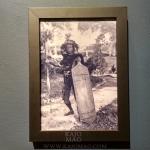
In the olden days, when a Melanau child was about a month old, its head would be placed in a wooden device called the Tadal, the objective of which was to flatten the forehead and make the face as near the shape of a full moon as possible. The pressure would only be applied while the child was asleep. Credit: Creative Commons

The Melanau people are an ethnic group indigenous to Sarawak. During the 19th century, they settled dominantly along the main tributaries of the Rajang River in central part of Sarawak.

John Beville Archer, the former chief secretary of Sarawak claimed in his autobiography Glimpses of Sarawak between 1912 and 1946 that the word ‘Melanau’ was a result of misspelling.

“I see that I have been rather dictatorial about the spelling of the world Melanau. As a matter of fact the correct word should be ‘Lemanau’. It is said the spelling of the word ‘Melanau’ is a hundred year old mistake. Apparently an old writer had such an illegible hand that the mistake occurred and has never been put right. In any case, the name as applying to the whole race is merely a modern idea. It is not used by the people themselves except when dealing with Government Officials and Chinese.”

The Kelabit people

Meanwhile, Sagau Batu Bala in his book Kelabits’ Story the Great Transition (2012) claimed that British zoologist and ethnologist Charles Hose was responsible for the misspelling.

The Kelabit people are the indigenous people of Borneo highlands. They have close ties to the Lun Bawang people.

According to Sagau, the mistake could be traced back to the early 20th century.

“In 1901, a group of Pa’ Labid people went down to Marudi on business. This was one of the first groups of people from the Highlands who went to Marudi after Baram became part of Sarawak. This group of Kelabits wanted to show that they were responsible subjects of the Rajah of Sarawak. They went to identify themselves and, at the same time, pay courtesy call on the newly appointed resident in his office in Fort Hose. The building of Fort Hose had just been completed in 1901 on the bank of Baram River at Marudi. When they met Charles Hose in his office, he wanted to know what race they were, as he had been instructed by the Raja of Sarawak earlier.

“He asked them, ‘Kamu dari mana?’ It means, ‘Where are you from?’ Because they were from their village called Pa’ Labid, the leader of the group answered and said, ‘Pa’ Labid.’ Charles Hose asked them again, ‘Apa bangsa kamu?’ It means, ‘What is your race?’ The leader answered and said, ‘Orang Pa’ Labid’ because they were Lun Pa’ Labid or the people of Pa’ Labid. He was right in saying that because there was no single race name for all the people who lived in the Highlands at the source of Baram River. It was Charles Hose who misheard the word Pa’ Labid, when he wrote the first letter ‘P’ became ‘K’ and the last letter ‘d’ became ‘t’, and he wrote down in his record book ‘Kalabit’.

“He accepted it to mean a race for all the people who lived in the Highlands south of all the people who lived in the Highlands south of Mount Murud. From that time onwards, Kalabit became officially the race of the people who occupied the Highlands at the source of Baram River the border of Forth and Fifth Divisions and right along the border of Sarawak and Kalimantan until today.”

What do you think of these misspellings KajoReaders?

The first submarines that entered Sarawak waters

Do you know that about a century ago three submarines actually made their ways into Sarawak waters?

On Mar 1, 1922, The Sarawak Gazette reported that HM Submarines L1, L2 and L3 arrived in Kuching on Feb 24 under the command of Lieutenant-Commander A.B Greig of L3.

The first submarines that entered Sarawak waters
HMS L1

“They berthed alongside the Ban Hok Wharf and through the courtesy of the officers, a number of people including the Datus and other natives, were enabled to go over the ships during their stay,” the report stated.

Rajah Vyner Brooke even organised a ‘most enjoyable dance’ at the Astana in honour of their visit on Feb 25.

The locals also managed to get in few rounds of football matches with the visiting submarine crew.

During their stay in Kuching, the Hockien School at the head of Jalan Tabuan was converted into shore quarters for them.

These submarines were bound for Jesselton (present-day Kota Kinabalu) before making their ways to Manila.

The submarine L2 left Sarawak on Feb 28 while the other two submarines on Mar 1, 1922.

If camera phones were exist back then, we bet there would be tonnes of photos coming out from this historical visit.

So what happened to these submarines in the end?

The first submarines that entered Sarawak waters
Hm Submarine L2 image: a seascape with a submarine on the surface, firing its deck gun. In a large skyscape, two aircraft are seen in the distance. This is photograph Art.IWM ART 1108 from the collections of the Imperial War Museums.

HMS L1, L2 and L3 were L-class submarines built for the Royal Navy during World War I. All three survived the war.

By 1923, all of the three submarines placed in the reserve flotilla in Hong Kong.

In March 1930, HMS L1 was stranded at Penanwell Cove in Cornwell England while being towed to Newport.

She was scrapped where she lay and some of her metal remains can still be seen there today on low spring tides.

Meanwhile, HMS L2 was also sold for scrapping in March 1930. About a year later, HMS L3 found herself in similar fate being sold for scrapping in February 1931.

The first submarines that entered Sarawak waters
Photograph of British submarine L3 and some crewmembers, at Plymouth

All images are under public domain.

The sad life of Dr Zo, the Jewish government dentist during Brooke’s time

The sad life of Dr Zo, the Jewish government dentist during Brooke's time

As we go through old memoirs written by those who had served in Sarawak, be it during the Brooke administration or the British colony, there are indeed countless fascinating stories.

And what makes these old stories more fascinating are the people behind them.

Naturally, these people don’t feature in our textbooks because of the minor roles they played in our history, but that doesn’t make their life stories less interesting to learn or read about.

Kenelm Hubert Digby published his memoir Lawyer in the Wilderness about his life in Sarawak in 1980.

In his book, he told us plenty of stories that took place from the middle of 1934 to the end of 1951.

One of those stories was about the first medical officer appointed at Batu Lintang Camp during the Japanese occupation of Sarawak.

According to Digby, the doctor was a Jewish refugee from Germany who had served in the Prussian cavalry in the First World War.

“He was primarily a dentist by profession, but he was also qualified to practice as a doctor in Germany. This qualification was not recognized in Sarawak, but in 1939 he had obtained a contract as Government Dentist,” Digby wrote.

On how he ended up in Sarawak and became a dentist here, Digby did not explain.

Digby didn’t even share the dentist’s real name other than stating that he was generally known as ‘Zo’ due to his frequent use of that German exclamation.

Apart from that, Digby shared that Dr Zo was a very amiable man whose principal interest was music.

Dr Zo, the Jewish doctor in a Japanese POW camp

The sad life of Dr Zo, the Jewish government dentist during Brooke's time
Flying over the prisoner of war camp (POW) in Batu Lintang at a low height, RAAF Beaufighter pilots reported sighting white POWs, clad in khaki shorts, who excitedly waved as the RAAF aircraft flew over to drop leaflets announcing Japan’s surrender. Credits: Public Domain (Copyright expired). https://www.awm.gov.au/collection/C242106

When the Japanese landed in Kuching on Christmas Eve in 1941. Dr Zo was quickly interned at Batu Lintang Camp along with the rest of the Europeans.

Digby narrated, “In the early days of the occupation was detained with the other European members of the Medical Department in the General Hospital. He was sent to the police station to tend the wounds of the “Astana Party,” and thereafter he stayed with us and acted as our medical officer, until the other doctors were brought to Lintang in or about August 1943. Zo did great and good work amongst us, with the very minimum of medicines and equipment and in the face of a barrage of unreasoning hostility.”

Since Dr Zo had served in the German Army before, Digby claimed his military training was ‘always coming to the fore’.

He wrote, “Most of us were satisfied with our status as civilians and did our best to offer moderate passive resistance to the military discipline which was imposed upon use. Many of us had never been soldiers and with the best will in the world, which we by no means possessed, we would have had great difficulty in comprehending the working of the military mind. When it was a Japanese mind as well our difficulty was greater still, Zo ,however, had no such worries. His background and upbringing had made him extremely receptive to military command, and it was in his nature to obey without question any instruction emanating from a gentleman of sufficiently martial appearance. He seemed to realise what our masters were doing and why they did it. One obtained the impression that, their cruelty apart, he would have given the same sort of orders if he had been in their place.”

During his interment at Batu Lintang Camp, Dr Zo volunteered his service at the camp ‘hospital’.

Digby pointed out that Dr Zo did excellent work there in spite the filthy conditions in which the patients were housed and the almost total absence of medicine.

“He pulled several teeth out without any sort of anesthetic,” he stated.

Dr Zo and his life after the war

According to Digby, Dr Zo’s services to His Majesty’s subjects received poor recognition.

After the war, he returned to England on the same boat with most of the Europeans from Sarawak.

Unfortunately for Dr Zo, he was arrested at London and once again repeated his WWII nightmare of being placed behind barbed wire.

Digby wrote, “Only the valiant efforts of the Sarawak Government Agent secured his release after three weeks. Even then he was not given his full ration of clothing coupons and turned up to dine with me at a Piccadilly restaurant in curious and borrowed apparel. He was not permitted to travel more than five miles from his residence without police permission, and so, since he was far too proud to seek such permission, he was debarred from visiting his friends who lived outside London.”

Dr Zo and his sad life ending

The depressing part of Dr Zo’s story is where he ended up after the war.

When he was living in Kuching, Zo had a wife and a seven-year-old son.

Shortly before the Japanese landed, he managed to evacuate his family through Kalimantan.

The mother and son somehow managed to reach Java.

Sadly, Zo’s wife committed suicide in Java and later his son was adopted by a Dutch couple.

Zo’s unfortunate fate did not stop there as his son was killed by Indonesian insurgents soon after that.

At the last part about Zo in his book, Digby wrote, “Like the rest of us, Zo had come home immensely looking forward to reunion with his family, and, when the sad story was told to him after his release from the British internment camp, he was a broken man. He resented bitterly the treatment which England was according to him and went to Sweden, where he died at the end of 1949. I was invited to write an obituary for the Sarawak Gazette, but my account of his persecution was deemed to be unprintable, and so my contribution was rejected.”

Since what Digby wrote for his obituary never saw light of day, we can only imagine what the content was.

A quirky story of Bishop Francis Hollis being interrogated during WWII

Bishop Francis Hollis (1884-1955) was a British clergyman in the Anglican church.

He first came to Sarawak in 1916 to serve as assistant priest at the St. Thomas Cathedral at Kuching until 1923.

Hollis then served among the Bidayuh at St James Church Quop for five years. In 1928, Hollis was appointed as the Principal of St Thomas’ School where he held the position for the next five years.

Then in 1934, he was made Archdeacon of Sarawak before his consecration as Bishop of Labuan and Sarawak in 1938.

During World War II (WWII), he was interned at Batu Lintang Camp by the Japanese. After the war ended, a series of internment stories were published at The Sarawak Gazette monthly. One of the stories was of Hollis’ experience being interrogated by the Japanese.

A quirky story of Bishop Francis Hollis being interrogated during WWII

Bishop Francis Hollis of Sarawak addressing the congregation at a thanksgiving day service held in Batu Lintang Camp. Civilians are seated in the foreground most of whom had been internees under the Japanese (Taken by Photographer Lieutenant A. W. Horner on Sept 12, 1945). Copyright -Public Domain.

Bishop Francis Hollis being called out for questioning during his internment at Batu Lintang Camp published in The Sarawak Gazette:

His Lordship the Bishop of Labuan and Sarawak is called out for questioning.

“You, you’re a priest?” says the Japanese officer by way of beginning the interview.

“Well, no, no, not exactly,” replies His Lordship with his customary diffidence, “you see I’m the bishop,”

“Oh! (pause) Roman Catholic bishop?”

“No, I’m not a Roman Catholic bishop?”

“Roman Catholic priest, then?”

“No, you see I am not a Roman Catholic.”

This is a little too much for the military mind.

“You are bishop, but you are not priest and not Roman Catholic. Then what are you?”

“Well, you see, the fact is, that is to say that the fact is, that I am a bishop of the Church of England.”

“Church of England? Church of England? Roman Catholic Church of England.”

“No, no, just Church of England. The Church of England is not Roman Catholic.”

Light dawns. With a smile of relief at his success in at last unraveling so untangled a mystery the officer heaves in his breath and blows it out again.

“Ah-ah-ah! Now I understood. Henry Eight!”

#KajoReviews: Sarawak by Hedda Morrison, a coffee table book must-have

Sarawak by Hedda Morrison is a photography book published in 1957.

The book features photographs taken by the author during the 8 years she spent in Sarawak.

Morrison was married to Alastair Morrison, a district officer when Sarawak was under the British Crown Colony.

Overall, the Morrisons stayed for over 20 years in Sarawak. During this time, she produced two books: Sarawak (1957) and Life in a Longhouse (1962).

She accompanied her husband for his work allowing her to photograph the people she met and the places she visited.

Morrison reportedly used two car batteries to power her portable darkroom enlarger while without power for six years in Sarawak.

On top of that, she stored her negatives in an airtight chest using silica gel as a drying agent to overcome the perils of a tropical climate.

The outcome; her photographs of Sarawak are undoubtedly magnificent and the descriptions that came with them are insightful.

Her texts are mostly based on her personal experiences and opinions.

#KajoReviews: Sarawak by Hedda Morrison, a coffee table book must-have

Sarawak by Hedda Morrison

When Westerners publish something about Sarawak, they usually go into two different directions; romanticizing or condescending.

Morrison definitely belongs to the first category.

Commenting on the Iban people, Morrison stated, “The Ibans are an independent, brace, good-humoured, generous, open-handed people. They are also excitable and emotional. Their personal honesty and innate sense of hospitality are outstanding. There are no locked doors in longhouses. Theft is very rare and intensely despised.”

As for the Kayans and Kenyahs, she opined “In general Kayans and Kenyahs are progressive and exceptionally school conscious. They are quiet and reserved; slow and rather phlegmatic.”

While observing the Bidayuh, Morrison concluded, “The Land Dayaks are very conservative and singularly lacking in the way of wander-lust. There is a good deal of land hunger in the hill areas where they reside and where they cultivate paddy by the usual wasteful system of shifting cultivation. The land has been overworked and much of its fertility has been lost but despite this they are, as a people, very reluctant to migrate to other areas of Sarawak. A curious feature of their paddy cultivation is that they do not head of paddy with a small knife like the other peoples of Sarawak but pluck it off between their fingers.”

The rare photos of Sarawak by Hedda Morrison

Going through Hedda Morrison’s Sarawak is like going through a time portal back to Crown Colony of Sarawak.

She documented some of rare sights of Sarawak that we no longer could see today.

One example is how the Malays in Lundu prepared traditional medicine for pregnant women.

This particular medicine is made from bud of Rafflesia which was sliced up finely and mixed with various spice.

We will never see this sight again because the Rafflesia is now a totally protected plant.

Another sight that we no longer see but can be found in the book is the photo of boat-hawkers.

These were floating shops which travel from one village to another.

Moreover, there are photos of no-longer existing buildings.

For instance, there is a photo of Kampung Pichin’s longhouse in Serian. Today, the villagers no longer live in longhouses but in individuals houses instead.

There is also a photo of a Kenyah longhouse Long Selaan in the upper Baram. However, this particular building no longer exists.

We need a new version of Sarawak by Hedda Morrisson

Her photographs are all undoubtedly magnificent. However, it is possible that they were also not captured in the moment but staged for the photographer.

In a photo taken at Long Buroi in the upper Tinjar, Morrison took photo of a former spirit medium conducting a healing session through spirit invocation.

She honestly shared that despite the subjects being Christians, they all agreed to reenact the session for the photographer.

Another unfortunate fact about the book is the lack of names of the subjects.

Morrison offered a great deal of portraits but their names were not included.

Regardless, we wish that there would be a new generation of local photographers who will document Sarawak like Morrison did, because Sarawak definitely needs an upgraded version of this book.

Stories from the past about crocodiles in Sarawak

If Sarawak were not already nicknamed the Land of Hornbills, the next best nickname for our state should definitely be Land of the Crocodiles.

One of the two crocodile species that can be found here is Crocodylus porosus or the saltwater crocodile.

It is the largest living reptile and crocodilian known. The locals call it ‘buaya katak’, which literally translates to ‘crocodile frog’ due to its ability to jump out of the water and attack its prey by the shore and even up a tree.

Stories from the past about crocodiles in Sarawak
Saltwater crocodile is called buaya katak in Malay due to its ability to jump out of water like this. Credit: Pixabay.

The second crocodile species is the false gharial (Tomistoma schlegelii) or Malayan gharial.

Sarawakians might know it as buaya jujulong or baya kenyulong.

Crocodiles in Sarawak have a centuries-long reputation for their ferocity and attacks against humans.

They also became a source of legend among the natives.

Stories from the past about crocodiles in Sarawak
Do you have any personal experiences with crocodiles in Sarawak? Let us know in the comment box. Credit: Pixabay.

Here are some stories about crocodiles in Sarawak from the past that you might never heard of:

1.James Brooke narrated about the capture of a crocodile with remains found in its stomach in his journal.

This was what the first White Rajah wrote in his journal on Nov 25, 1845.

“A male crocodile was caught this morning, measuring fifteen feet four inches in length; and it is astonishing how quiescent these animals are when taken, allowing their feet to be fastened over their back, and a strong lashing put round the mouth without any resistance, and then brought down, floated between two small canoes. When dragged out of the water to be killed, the monster only moved his tail gently backwards and forwards.

Yet when hungry, it is evident that he would attack both men and boats, for the bones of a poor fellow found in his stomach. It is probable that these cold-blooded reptiles digest their food very slowly and that one meal, which is a gorge, lasts them for some time, as is the case with the larger serpents; otherwise, if, like the dragon of all, he required a man or maid for breakfast, the demand would be a heavy drain on a small population.

The thigh and leg bones of the Malay were perfect, and the feet had some portion of the flesh adhering to them, and were crushed into a roundish form, whilst the head was found separated at the joinings or process. The poor man’s jacket and trousers were also found which enabled the relatives to recognise his remains, and, from his having been a fisherman, it was probable that he was attacked whilst occupied with his lines.”

2.The Brooke government once paid Sarawakians for every crocodile brought in dead.

Robert Taylor Pritchett (1828-1907) was a well-known artist and illustrator.

He visited both North Borneo (present-day Sabah) and Sarawak. Pritchett then wrote a paper about his journey.

The paper was published in Journal of the Society of Arts on Mar 29, 1889.

About the crocodiles in Sarawak, Pritchett stated, “The river leading up to the capital, Kuchin (Kuching), was some years ago, rather a good place for crocodiles, and you will agree with me, I think, when I tell you that Rajah Brooke decided to give one rupee per foot for every crocodile brought in dead, and Mr. Crocker told me that during the year 1881 he paid 2000 rupees, which showed 2,000 feet of crocodiles varying from 4 to 18 feet.”

Mr. Crocker here is most probably William Maunder Crocker. He joined the Sarawak civil service from 1864 until 1886.

Unfortunately, there is no official record found on the number of dead crocodiles that the Brooke government had paid for.

3.How a 12-year-old girl rescued her brother from a crocodile attack

It is possible to survive from a crocodile attack as well as to rescue someone who is being attacked by a crocodile.

These testimonies which were recorded in A History of Sarawak under its Two White Rajahs 1839-1908 (1909) by Sabine Baring-Gould and Charles Agar Bampfylde have proven so.

“A little Malay boy, just able to toddle, was larking in the mud at low water when he was seized by a crocodile, which was making for the water with its screaming little victim in its jaws, when the child’s sister, a girl of twelve, and his brother of eight, rushed to his assistance. The boy hopelessly tried to stop the crocodile by clinging to one of its fore-paws but the girl jumped upon the brute’s back, and gradually working her way to its eyes which were then just above water, succeeded in gouging out one with her fingers. This caused the crocodile promptly to drop its prey, but only just in time, as it was on the point of gliding into deep water. By the girl’s vigorous intervention it not only lost its prey but also its life, for two men coming up hacked the brute to pieces. The little heroine had remembered the story of how her grandfather saved his life in the same way. To scoop out the eyes is the only chance of escape for one taken, and it must be done promptly. The little boy was scarcely hurt. The girl’s courageous deed duly received a graceful recognition from the Ranee.

“Another girl, a Dayak girl this time, rescued her mother, who was dragged out of a boat, in which they were together, by a large crocodile. She threw herself upon the monster, and by thrusting her fingers into its eyes compelled the brute, after a short but sharp struggle, to release its prey.”

4.“May I be killed by a crocodile if I am guilty”

In the same book, Baring-Gould and Bampfylde explained a common phrase among Sarawakians in those days.

“Death caused by a crocodile is one of the most horrible of deaths, and it is often a protracted one, as the victim is borne along above water for some distance, then taken down, based against some sunken log, and brought up again. “May I be killed by a crocodile if I am guilty” is a common invocation made by Malays in protestation of their innocence; in other words, they invoke the most deadful death that comes within their ken. So did once a young Malay woman in the Simanggang Court on being convicted of a serious crime. That evening, whist she was bathing, a smothered cry, that she had barely time to utter, announced that her prayer had been heard.”

5.The duality when speaking to a crocodile

Edwin H. Gomes was an Anglican missionary who spent 17 years in Sarawak.

One of the books he wrote about his life here is Seventeen Years Among the Sea Dyaks of Borneo (1911).

In one part of the book, Gomes narrated on how a crocodile was caught by professional hunters.

According to him, professional crocodile catchers are supposed to possess some wonderful power over the animals which enables them to land them and handle them without trouble.

Once the crocodile was caught using a bait tied on a rattan line, the next step was to tie the reptile up.

In order to do this, the hunters started to talk to the creature.

Gomes observed,

“The animal is addressed in eulogistic language and beguiled, so the natives say, into offering no resistance. He is called a ‘rajah amongst animals’, and he is told that he has come on a friendly visit and must behave accordingly. First the trapper ties up its jaws – not a very difficult thing to do.

“The next thing he does appears to me not very safe. Still speaking as before in high-flown languagae, he tells the crocodile that he has brought rings for his fingers, and he binds the hind-legs fast behind the beast’s back, so taking away from him his grip on the ground, and consequently his ability to use his tail.

“Though the animal is spoken to in such flattering terms before he is secured, the moment his arms and legs are bound across his back and his powerless for evil, they howl at him and deride him for his stupidity.”

After the poor animal was derogated, according to Gomes, ‘he is taken to the nearest government station, the reward is claimed, and he is afterward cut open, and the contents of his stomach examined.’

Looking back at 5 old amok cases in Sarawak

Sir Frank Swettenham (1850-1946), who was responsible for bringing Selangor, Perak, Negeri Sembilan and Pahang together under the Federated Malay states, once called Malaya the ‘land of pirates and the amok’.

This is because the amok syndrome is believed to have derived from Malaya, eventually leading to the English phrase of ‘running amok’.

Even the word ‘amok’ came from the Malay word ‘mengamuk’, meaning ‘to make a furious charge’.

It is basically an aggressive dissociative behavioral pattern which was once considered as a culture-bound syndrome.

Looking back at 5 old amok cases in Sarawak

Here at KajoMag, we take a look on some of the amok cases that happened in the olden days of Sarawak:

1.When a policeman went amok in Sibu

Here is an undated case recorded by John Beville Archer in his memoir Glimpses of Sarawak between 1912 and 1946:

“The amok was unpleasant. A policeman suddenly went wild in Sibu bazaar and before we could stop him he killed five persons and wounded twenty-five. As it all took place in semi-darkness there was a certain amount of panic among the inhabitants of the packed bazaar. All I know is that I tumbled over a corpse in the dark and found myself entangled up in yards of intestines. There is a bit of humour in everything; hearing someone running towards me through the darkness I had to think quickly. I did so and brought crashing down one of my own policemen. However, we got our man at last and spent all night helping the doctor to patch up the wounded. It was here I saw a miracle – or thought I did – a severed ear just clapped on again and it stuck.”

2.Kuching Police in 1889: No ammunition to stop an amok? It is okay, use some spears instead.

On Aug 30, 1889, The Singapore Free Press and Mercantile Advertiser reported a terrible amok that took place in Sarawak.

What intrigued us is how the police handled it.

“The S.S Normanby arrived from Sarawak yesterday and we have been enabled to obtain particulars of a very tragic occurrence which took place there on Sunday last 25th, at about half-past six. When the Normanby left here about a week ago for Sarawak she took over four Dyaks who were returning to their country. One of these men on Sunday morning ran amok and dashed along the whole length of the bazaar cutting and slashing at each person he met with a huge parang.

“The amok went into several shops and cut at the occupiers. The Chinamen seemed perfectly paralyzed and did not try to arrest the murderer. At the corner of Rock Road the Dyak met an old Chinaman; he made a cut at him and inflicted a terrible wound, drawing his knife across the man’s stomach disemboweling and killing him instantly. He went along in his mad career and passed the Police Station where although the constables had rifles they had no ammunition.

“They however took up spears and after a hot chase of about one mile captured the amok who was nearly exhausted and had been wounded by a brick flung at him by some one trying to arrest him. When quiet was restored and the Dyak was safely lodged in jail enquiry was made and it was found that fifteen men had been wounded, four of them so dangerously that their life is despaired of and that one man had been killed outright. Through the courtesy of Mr Daubeny, Inspector of Prisons, our informant was enabled, with several other gentlemen, to see the amok in jail. He seemed quite sensible and only complained of pain from a cut over his eye caused by the brick thrown at him.”

3.When a policeman went amok in Kuching bazaar in 1925

According to this news report by The Singapore Free Press on Oct 14, 1925, an amok was a rare case and even considered ‘almost unprecedented’ if it was committed by a Dayak back then.

“An unusually tragic and disturbing incident occurred in Kuching on Sept 17, about 1.45pm, when Panggi, a Dyak policeman, who had been queer in his behaviour for some days, suddenly seized his parang, in the bachelors’ barracks, slashed at two fellow constables and then ran amok into the most densely crowded thoroughfare of the bazaar, Carpenter street. An immediate pandemonium ensued while Panggi rushed hither and thither, in and out of shops, hacking at anyone within reach, killing outright one man and two children, and seriously wounding twenty-eight others including three women, mostly Chinese. Another victim succumbed in hospital.

“An amok is not common even amongst Malays in Sarawak, and almost unprecedented for a Dyak, and we tender our deep sympathy to the relatives of the unfortunate victims, and to those now in hospital.”

4.A cured leper went amok in Simanggang in 1935.

On Oct 1, 1935, the Sarawak Gazette reported an amok case which took place in Simanggang bazaar.

A man confronted the perpetrator in order to stop him attacking more people. The courageous man was later deservedly rewarded by the government with a medal and a monetary reward for his bravery.

Here is how the report goes,

“On August 20th an amok occurred in Simangang Bazaar. The man responsible was a Dayak named Tingkay, a discharged leper who had apparently been brooding over the fact that his relatives refused to consider him cured of his disease in spite of ample proof too the contrary. He attacked and severely wounded a Dayak and a Chinese, and then chased a Malay woman, who took refuge in a shop. The owner of the shop, a Chinese Named Ong Kee Poh, was having his midday meal with his family when he heard someone shouting – ‘Dayak bunoh China!’ He immediately sent his family into the back premises and arming himself with a carrying pole, waited behind the door. The Malay woman rushed in screaming, closely followed by a Tingkau, who had parang in his head. The woman fell down, and Ong Kee Poh hit the Dayak on the head with the pole. The Dayak then turned on him but Ong Kee Poh hit him on the hand and disarmed him, after which he struck the man until he collapsed. He then called the police, who took him into custody.”

5.A prisoner went amok in a gaol and attacked fellow inmates in Saratok.

The then Acting District Officer of Kalaka, H. E. Cutfield reported on the Sarawak Gazette about an amok that happened on May 3, 1927.

The man responsible for the case was an Iban named Ubam who was sentenced to a term of three years in prison for stealing $553.

On his first night in the prison, Ubam went amok.

“The gaol was only inhabited by two female prisoners and one other man who was lame. Ubam had evidently thought out his actions and after braking his way on his own cell, bolted the main doors from the inside, to prevent interruption, and first wounded the other male prisoner very seriously with a 6-inch wound in the stomach and then broke into the female cell and attacked the women. One was seriously wounded with eight stabs with a knife and the other woman I regret to say died soon after my arrival.”

Sarawak courtroom stories from the olden days

If courtroom battles were all boring, there would be no legal dramas like Suits or The Practice.

The truth is, anything can happen during a legal proceeding or else no one will make movies or television series out of it.

In Sarawak, our courtroom dramas are even more colourful due to our multi-ethnic communities and various cultural practices.

Here are some Sarawak courtroom stories from the past which you might find intriguing today:

Sarawak courtroom stories from the olden days
Image by Carrie Z from Pixabay

1.A court interpreter delivered the most straightforward translation ever.

“There is the story of the Justice in Kuching who delivered a death sentence of unusual length upon a Chinese. He had no knowledge of anything but English and at the end said to the interpreter, ‘Tell the prisoner what the learned judge has said’. The interpreter turned to the unfortunate man and said in a loud voice, “Lu mati!” (which translates to ‘You gonna die!’)

This story was shared John Beville Archer in his book, Glimpses of Sarawak between 1912 and 1946.

Sarawak courtroom stories from the olden days
Kuching Old Courthouse

2.A magistrate who ran around the court fleeing an attacker

In the same book, Archer talked about a norm no longer practiced in the Sarawak courtroom and how the practice came about.

“The people rather liked coming to Court. It was held with very little pomp and much friendliness. One thing which is missing nowadays are the Policemen sitting in a row behind the principals – these were always armed with native swords, with colourful corded belts and the senior N.C.O, similarly armed sat behind the magistrate. This, they say, became the practice after an attempt many years before to attack the magistrate who was run around the Bench by an aggrieved suitor.”

3. The difference between ‘Butang’ versus ‘Butang Rangkai’

Kenelm Hubert Digby was a district officer, judge and eventually the Attorney General in Sarawak.

Around 1934 in Limbang, he tried his first case under the native customary law.

“Clad in sarong I sat on a mat on the ruai, the long communal verandah, with the Native Officer and the penghulu on either side of me, and the hundred or so inhabitants of the longhouse gathered around us. The case was concerned with a complaint of a married woman that a man had committed butang rangkai (literally ‘dry adultery’) with her. Her story was that, during the absence of her husband, the accused had entered her mosquito net, but had been virtuously and successfully repulsed by her before any damage had been done.

“The accused hotly denied this allegation. He admitted that he had formed the intention of having intercourse with the complainant and that he had entered her mosquito net in pursuance of his enterprise. On the contrary he said, the woman had welcomed him and he had entirely achieved his purpose. This case had been brought only because the woman’s husband had come to hear the incident.

“The Sea Dayak fine for butang (adultery) was fifteen dollars, while butang rangkai the fine was only twelve dollars. Gathering together all the shreds of my English legal training I informed the accused that since his defence amounted to a confession of the completed offence and since every willful act must include an attempt to commit the act, he could have no reasonable objection to being convicted in accordance with the complainant’s allegations, and required to pay twelve dollars instead of the fifteen for which according to his own story, he was really liable. I was surprised at the fuss which he made.

“I turned for enlightenment to the Native Officer, who explained to me that the accused did not mind paying the extra three dollars but he did object very strongly to the suggestion that, having made advances to the woman, he had been rejected by her. If this allegation received the stamp of truth from the court it might be a considerable time before the accused managed to live it down.”

4.Using a cane to summon a Dayak to court

Have you ever wondered how court summons were delivered?

Arthur Bartlett Ward who once a Sarawak Resident and member of Council Negri in his memoir, Rajah’s Servant (1966) explained,

“The method of summoning Dyaks to Court was peculiar. Paper documents would have been useless, so a ‘tongkat’ or a Malacca cane walking stick with a brass head and a government mark, was sent abroad from village to village with a verbal message, until it reached the person named who forthwith hurried to Simanggang. The system was effective and I never heard of a ‘tongkat’ going astray or being abused.”

5.The two historical Singaporean politicians who had appeared as lawyers in Sarawak courtroom.

Peter Mooney was Sarawak Crown Counsel in Sarawak in the 1950s. In his memoir A Servant of Sarawak (2011), Mooney named two formidable opponents he had encountered in Sarawak courtroom.

The first one was the former Chief Minister of Singapore, David Marshall.

About Marshall, Mooney narrated, “I encountered him in many criminal trials and appeals in Sarawak. He fully deserved his reputation. He prepared his cases meticulously. Every fact was at his fingertips and he had thoroughly mastered the relevant law. He was flamboyant in nature and given to rhetoric. I remember him saying in an appear, ‘…and suspicion settles, like a cloud of atomic dust, over the prosecution witness!’ He could have made a name as an actor.”

Beside Marshall, Mooney also had faced Lee Kuan Yew in Sarawak courtroom battles.

“Like David Marshall, as counsel he was always thoroughly prepared. Unlike David he was never histrionic but presented his client’s case most persuasively with cool and inexorable logic. Had he not abandoned the Bar for politics he would undoubtedly have made a great name for himself as an advocate. He had brilliant intellect and his presentation was quite flawless.”

How Rajah Brooke’s secretary is related to Johor royalty through Mads Lange

This is a story of two siblings; half-siblings to be precise, how they lost their family fortune and how one of them became a wife to a Sultan and the other worked as a private secretary to a Rajah.

And it all started from their father, Mads Lange.

Mads Lange and how he became the King of Bali

How Rajah Brooke’s secretary is related to Johor royalty through Mads Lange
Mads Lange Painted by unknown Chinese painter on Bali. Credit: Public Domain.

Mads Lange was a trader and entrepreneur who made his fortune in Bali so much so that he was nicknamed the ‘King of Bali’.

According to Henk Schulte Nordhort in his paper The Mads Lange Connection (1981), Mads Johansen Lange (Sept 18, 1806 – May 13, 1856) was born on the island of Langeland, Denmark.

He grew up in a merchant family and in 1824, when he was eighteen, he went to sea as a crew member on one of the ships of the Danish Asiatic company.

Nordhort wrote in his paper, “In the 1830s the Danish Company sold many of its ships, and one of them, the Syden, was brought by Captain John Burd, who planned to trade along the China coast. He left Denmark in 1833 and his second-in-command was Mads Lange. Three brothers of Mads- Hans, Karl Emillius and Hans Henrik – were also members of the crew.”

Lange eventually made his way to Dutch East Indies and subsequently settled on Bali.

There, he built a thriving commercial enterprise, exporting rice, spices and beef and importing weapons and textiles.

At one point of his career, Lange owned as many as fifteen ships that travelled and traded among ports in the East Indies, the West Indies and Europe.

He also built a factorij at Kuta, Bali. (A factorij is the common name during the medieval and early modern eras for an entrepot which was essentially a free-trade zone.)

Apart from his business, Lange was historically known as the mediator between the local Rajahs and the Dutch colonists.

As for his personal life, Lange was never officially married but he fathered three children with his mistresses.

With a local Balinese woman named Nyai Kenyer, he had two sons – William Peter who was born in 1843 and Andreas Emil born in 1850.

His second known mistress was the daughter of a wealthy Chinese merchant, a woman who Lange called ‘Nonna Sangnio’.

Sangnio gave birth to a daughter in 1848 and Lange named her Cecilia Catharina Lange.

Sadly, William died at the age of 12 in Singapore reportedly due to dysentery.

Mads Lange’s daughter Cecilia Lange

Lange died on May 13, 1856. While there was no officially inquiry made into his death, it is widely rumoured that he had been poisoned either by the local Rajah or by the Dutch.

Just like the story of Sara Crewe in the children’s novel A Little Princess (1888) by Frances Hodgson Burnett, Cecilia learned about her father’s death when she was in school in Singapore.

Unlike Sara, Cecilia was adopted by a British family and continued to be schooled in Singapore.

“She traveled with them to India, France and England before returning to Singapore. In 1869 she went to Bali to visit her father’s grave, the only time back there since she left as a child,” Peter Bloch in his book Mads Lange’ Forgotten Treasures.

She then returned to Singapore where she met her future husband. In 1870, Cecilia married Sultan Abu Bakar of Johor and converted to Islam taking the name Zubaidah binti Abdullah.

Mads Lange’s son Andreas Emil Lange

While Cecilia had her life transitioned from the daughter of the ‘King of Bali’ to the wife of the Sultan of Johor, her half-brother Andreas found his way to the shores of Sarawak.

After his father died, Andreas continued his education at Singapore’s Raffles Institution.

It is unclear on how exactly Andreas joined the Sarawak civil service but it is believed through Ludvig Verner Helms.

Helms (1825-1918) was a trader who later became the manager of the Borneo Company when it was first formed in 1856.

Before Helms came to Sarawak, he worked under Mads Lange for two years from 1847 till 1849.

After leaving Bali, Helms returned to the island only once in September 1858 to visit Lange only to find out about his death.

“He died, still in the vigour of manhood, and I returned only to find his lonely grave, instead of the friendship I had hoped one day to know,” Helms wrote in his book Pioneering in the Far East and Journeys to California in 1849 and the White Sea in 1878 (1882).

In Sarawak, Helms worked and lived here from 1852 until 1872.

A year before Helms’ departure, Andreas came to Sarawak to work. Looking at how the timeline fit, it is safe to say that Helms introduced the son of his old friend for a job in Sarawak.

Andreas brought along his wife who was originally from Pahang to Sarawak. Together, they had seven sons and five daughters, raising them in Kuching.

Fast forward to October 1909, the Sarawak Gazette published Andreas’ obituary which in the same time detailed his career in Sarawak.

“It was with a surprise and regret that we heard of the death of Mr. A. E. Lange who up to few years ago, was a well-known figure in Kuching. Mr Lange, whose death occurred in Singapore on Sept 12th from dysentery, entered the Government Service as a Clerk in the Shipping Office in 1871. In May 1872 he was appointed Court Writer and Storekeeper and in 1875 Storekeeper and Resident’s Clerk, being finally promoted Secretary to His Highness The Rajah in 1879 still keeping the office of Storekeeper, and this post he held until his retirement in 1905. By his death His Highness loses a trustworthy servant who spent the best years of his life in his Service and much sympathy will be felt with his family in their bereavement.”

After Andreas retired from Sarawak, he moved his large family back to Singapore.

Mads Lange and what is left of his fortune

Lange in fact left a will before he died in which he planned to divide his property among his children, his cousins, two nephews as well as Cecilia’s mother. At that time Andreas’ mother, Nyai Kenyer had already died most probably due to cholera.

Talking to her father’s biographer Aage Krarup Nielson, Cecilia accused Lange’s nephew Peter Christian Lange of ‘stealing everything’.

The biographer quoted Cecilia telling him, “He was a robber who left for home in Denmark with all that was left of my fathers’ riches, without leaving us two children a single penny.”

After Lange died, his business in Bali was left to his brother Hans and nephew Peter Christian.

Then in 1860, Hans died leaving Peter to keep the business going. Lange’s business however, had already been going downhill before his untimely death.

Peter eventually sold the business to a Chinese merchant and returned to Denmark where he died in 1869 at the age of 42.

Did Peter leave anything for his cousins after selling everything? Looking at how Cecilia called Peter a ‘robber’, the answer is most probably no.

The only thing Peter did not sell was a house in Banjuwangi which was supposed to pass down to Cecilia as per Lange’s will.

Unfortunately, Cecilia was unable to claim that house because she did not have the proper documentation to prove that Lange was her father.

If only Lange left not only a will but birth certificates for his children. Hence Cecilia never recovered his father’s wealth like Sara did.

Mads Lange and his legacy

Although his fortune did not survive through his lineage, Lange’s descendants are still thriving to this day especially through Cecilia.

Cecilia was the only one of Abu Bakar’s four wives who bore him a son. This grandson of Mads Lange later became widely known as Sultan Ibrahim of Johor, the 22nd Sultan of Johor who reigned from 1895 till 1959.

With that said, the current Raja Permaisuri Agong of Malaysia, Her Majesty Tunku Azizah Aminah Maimunah Iskandariah is a great-great-great-granddaughter of Mads Lange.

Additionally, the current sultan of Johor, Sultan Ibrahim Ismail is Lange’s great-great-great-grandson.

Just like his half-sister, Andreas tried to claim back his inheritance left from their father.

His first attempt was in 1872 when he asked the Dutch Indies government to investigate what happened to his father’s assets.

But at that time Andreas found there was nothing left of value. After his retirement from Sarawak, he tried again.

“He went to Bali in late 1906 after the massacres of royal families of Depasar and Pemecutan in September, which led to the Dutch taking over Badung and the surrender of Tabanan. It was Andreas’ only visit back since he left as a child. He tried to claim the land of his late father but the colonial court ruled against him and left empty-ended,” Bloch wrote.

Andreas passed away three years after his last visit to Bali. The street that his family lived on in Singapore now became known as Lange Road.

Ludvig Verner Helms, the unwilling candidate for Rajah of Sarawak

During the Chinese Insurrection against James Brooke in 1857, the insurgents proposed making Ludvig Verner Helms the next Rajah.

In the end, however, Helms played a huge role in helping Brooke to fight the insurgents.

So how important was Helms that the Chinese insurgents wanted him to replace Brooke as Rajah?

Ludvig Verner Helms and his life before Sarawak

Ludvig Verner Helms, the unwilling candidate for Rajah of Sarawak
Ludvig Verner Helms Daguerrotype taken in 1846.

Born in Varde, Denmark in 1825, Helms was a son of a pharmacist and the 13th of 16 children.

He was basically a merchant and a trader. Helms was influenced by his fellow countryman, Mads Lange who made his fortune in Bali, Indonesia.

Although he had never met or corresponded with Lange, he had letters of introduction from others.

Armed with those letters, Helms arrived in Bali sometimes in 1847.

With no knowledge of the local language, Helms continuously repeated Lange’s name to the locals until one of them showed him where Lange lived.

Lange welcomed him and Helms worked in Bali for the next two years.

In 1849, Helms left Bali to find work in Singapore and eventually arrived in Sarawak in 1852.

Ludvig Verner Helms and the Borneo Company

Ludvig Verner Helms, the unwilling candidate for Rajah of Sarawak
Kuching, Sarawak: the Borneo Company’s building. Photograph. Credit: Wellcome Library, London. Wellcome Images images@wellcome.ac.uk Photograph c. 1896 By: Charles Hose Published: – Copyrighted work available under Creative Commons Attribution

When Helms first lived in Sarawak, he worked mainly in trading antimony. Then when the Borneo Company was formed in 1856, Helms became its local manager.

The company was given the mandate to ‘take over and work Mines, Ores, Veins or Seams of all descriptions of Minerals in the island of Borneo, and to barter or sell the produce of such workings; at the cost of royalty payments to the Sarawak government treasury in a 1857 agreement’.

According to Steven Runciman in his book The White Rajah: A History of Sarawak from 1841 to 1946, the Board of Company wanted a trained businessman as its local director and Helms fitted the role perfectly.

The first White Rajah of Sarawak, James Brooke however had his own thought.

“Helms was a capable if somewhat complacent man; the Rajah could never bring himself to like him, largely because he had had no say in the appointment. But any annoyance that he felt began to be dissipated when the Company bought a steamer to ply regularly between Kuching and Singapore and named her Sir James Brooke,” Runciman wrote.

Ludvig Verner Helms during the Chinese Insurrection

On Feb 18, 1857, a group of 600 Chinese made their way to the Sarawak River to attack Brooke.

At that time, Brooke managed to flee from his home and look for safety.

That did not stop the rebels from attacking Kuching causing the deaths of five Europeans and the fire that consumed several buildings, including Brooke’s house.

Ludvig Verner Helms, the unwilling candidate for Rajah of Sarawak
The Chinese Rebellion Illustration from Sketches of Our Life at Sarawak by Harriette McDougall

After the attack, the Chinese insurgents however did not want to take over the Sarawak government, offering the seat to Helms instead.

Even though Helms found himself unwillingly caught in the middle of the chaos, he refused to tell his side of the story in his book Pioneering in the Far East and Journeys to California in 1849 and the White Sea in 1878 (1882).

He wrote, “I gave thought it better, instead of giving my own account of the Chinese Insurrection, to insert the diary my friend, who was in its midst, and who made notes of the incidents as they occurred. His account is so vivid, and as I can attest, so truthful, that I feel no apology is need for presenting it to the reader.”

From the diary, we know that Helms was missing for awhile during the insurrection with many assuming that he had died, only to reappear two days later at a meeting held at the Old Courthouse.

The diary narrated, “The whole of the Court was filled with scowling Chinese faces, who thoroughly enjoyed their short triumph. The Kungsi then stated their grievances, said that they did not wish to interfere with the Europeans in Sarawak, claimed immunity from taxes and concluded by electing Helms Rajah. He was the popular man, and stood a fair chance of being made a monarch; but he continued respectfully to decline the honour.”

The Borneo Company helps in retaking Kuching town

After the meeting, Helms returned to Brooke’s side. In retaliation, the Rajah enlisted the help of the Malays and the Ibans from Lingga to take over Kuching from the rebels.

The Borneo Company also provided a steamer to help in the attack.

On Feb 23, the diary owner gave a glimpse on what went down on that day.

“Once on board, we started all with our intelligence. Helms who was now Rajah nolens volens decided on going up to the town at once, and the ladies were brought on board. Now came an exciting scene-the guns were got out, the rifles, cutlasses, all piled, and the decks cleared, but while this was being done we saw a large boat making for the river, which turned out to carry the Rajah, who had seen the smoke of the steamer far out at sea. The gloom and depression had passed away from the Rajah now, and everyone was in tearing spirits.

“The moment we opened the town, we were exposed to the fort, and the guns from the old fort opened on us with grape of original composition – balls, nails, scraps of rusty iron, came whizzing round, many of which were picked up afterwards as souvenirs; two of the boats were struck, and the keel of the one above me was splintered in all directions.

“The next instant our long eighteen-pounder forward spoke his mind. Firing almost simultaneously with another gun of same caliber the roar was a good one, and then came the sharper notes of the swivels and rifles. The shot from the gun forward, which was manned by the mate, went slap into the fort and create a scare. Out scoured the Chinese like wild hares in March, some dashing up the road leading to the Channons, while many ran through the bazaar, affording practice for the riflemen on board. The new fort was quickly cleared, and two or three more rounds completed the action. We steamed slowly up the river, on the sides of which the Malay kampong was still burning and then coming back again anchored off the bazaar. And thus the Company’s steamer retook the town of Sarawak.”

Ludvig Verner Helms on the dispute between James Brooke and Captain Brooke

As we dig deeper into Sarawak history under the White Rajahs, we know that Captain John Brooke Johnson Brooke was James Brooke’s first choice to inherit his position in Sarawak. He was Charles Brooke, the second Rajah’s older brother.

He preferred to be known as Brooke and after he left the British Army as a Captain in 1848, he adopted the surname of Brooke.

Ludvig Verner Helms, the unwilling candidate for Rajah of Sarawak
Captain Brooke

Captain Brooke first joined his uncle in Labuan when James was the first governor there then later to Sarawak.

A fallout with his uncle James Brooke caused Captain Brooke to lose his title as the Rajah Muda.

Since then, he was practically wiped out from Sarawak history despite his contribution to the country including during the Battle off Mukah in 1862.

Touching on the family conflict which later influenced Sarawak history, Helms explained on the preface his book, “The references to the dispute between two men, both of whom I knew and admired – Rajah Brooke and his nephew, Captain Brooke – will be uninteresting to many and displeasing to some, but there are also those who will remember and who were interested in their careers and who will see that I have attempted, though somewhat late, to do an act of justice.”

True to his words, Helms’ book Pioneering in the Far East and Journeys to California in 1849 and the White Sea in 1878 (1882) is highly recommendable for those who are looking for an unbiased account of what happened between the uncle and the nephew.

Ludvig Verner Helms, the Rajah nolens volens of Sarawak

Going back to the diary, Helms was referred to as the Rajah nolens volens. It is a Latin phrase for ‘like it or not’.

As to why the Chinese chose Helms to be the next Rajah, we are not entirely sure, perhaps due to the trust he built as the manager of The Borneo Company with the Chinese who were mainly miners from Bau.

Regardless, Helms in the end picked a side and went against those who chose him to be a monarch.

Helms lived and started his family here with his wife Anne Amelia Bruce whom he married in London in 1859.

They stayed in Sarawak until 1872 when a lawsuit terminated employment with the Borneo Company.

He reportedly returned to Sarawak around 1890 to prospect various ores but did not stay long. Helms spent the rest of his life in London and passed away on July 26, 1918.

Helms’ book is available for online reading here.

1 4 5 6 7 8 40