Patricia Hului

Patricia Hului is a Kayan who wants to live in a world where you can eat whatever you want and not gain weight.

She grew up in Bintulu, Sarawak and graduated from the University Malaysia Sabah with a degree in Marine Science.

She is currently obsessed with silent vlogs during this Covid-19 pandemic.

Due to her obsession, she started her Youtube channel of slient vlogs.

Follow her on Instagram at @patriciahului, Facebook at Patricia Hului at Kajomag.com or Twitter at @patriciahului.

15 poets you should follow on Instagram

Whether you like it or not, social media has been redefining a lot of things including the world of poets.

Social media apps such as Instagram has become a platform for poets to freely share their rhymes and verses to an audience.

And if they are good enough, they can even score a book deal or two for making their works accessible to the world.

So if you are looking for sincere, relatable words to soothe your poetic soul in the midst of the viral craziness of social media, here are 15 poets you should follow on Instagram:
1.Lang Leav

Love & Misadventure, Lullabies, Memories, The Universe of Us and Sea of Strangers; these are published poetry and prose books written by Lang Leav.

Taking matter into her own hands, Lang self-published her first book Love & Misadventure. When the book started to top best-seller charts, publishers began calling her for book deals and now she signed up with Writers House.

Apart from her books, you can find some of her works on her Instagram account where she also shared about her future events.

2.Michael Faudet

And we cannot talk about Lang Leav, without talking about Michael Faudet. Faudet is Lang’s partner and perhaps the only one who knows how Faudet looks like in real life.

Unlike Lang’s work, Faudet is known for his erotic writing style, which you can tell even by the title of his books such as ‘Dirty Pretty Things’.

3.Rupi Kaur

Before this poet shared her work on Instagram, she started to share them on Tumblr back in 2013.

Rupi Kaur’s Instagram feed of poetry and illustrations started in 2014. Then, she published her first book, milk and honey on Nov 4, 2014.

The book sold more than 2.5 million copies and was on The New York Times Best Seller list for over 77 weeks.

The success of Kaur’s book is indeed a far cry from her days writing poems on Tumblr account.

4.Atticus

What does Atticus looks like? No one knows (or at least none of his followers do, anyway). The poet always wears a mask even during his public readings of his book and on TV.

Is he a good poet? His 1 million followers on Instagram think so.

His Instagram feed is carefully curated in monochrome mostly with one-liners that hit straight to your heart.

5.Nikita Gill

The scariest thing about putting your work online is to have people sharing them without crediting you. And no one knows this better than Nikita Gill.

A couple years ago, Khloe Kardashian shared one of her poems without credit. Even after people tried to inform her, Kardashian refused to respond.

The poet shared her thought about it during an interview with Fashion Magazine, “The longer it’s been out on the Internet, the longer the Internet seems to think that it belongs to them. It’s scary being a creative person sharing their work online.”

So, if you are reposting any poems from these poets on Instagram, do not forget to give them proper credit!

6.Najwa Zebian

In 2016, Najwa Zebian self-published her first collection of poetry and prose. And she continued to publish her works in books like The Nectar of Pain and Mind Platter.

Her upcoming book Sparks of Phoenix is set to release this coming Mar 5.

Meanwhile, she continued to share some her lines on Instagram.

7.Alison Malee

Malee is a poet/author/artist. This New York-based poet has been featured in The Huffington Post, Bustle, Thought Catalog.

You can find her poems, quotes and prose on her Instagram, mostly posted with flowers as her background.

8.Amanda Lovelace

She is the winner of 2016 Goodreads Choice Award-winning poet. Her first published book has a title which screams feminism, The Princess Saves Herself In This One.

The titles of her books are always intriguing; The Witch Doesn’t Burn In This One, To Make Monsters Out Of Girls, The Mermaid’s Voice Returns In This One.

Recently, Lovelace joined power with two other bestselling authors Nikita Gill and Trista Mateer to publish Dragonhearts.

9.Tyler Knott Gregson

What is the best part about following Tyler Knott Gregson on Instagram? He currently publishes a raw poem from his “Typewriter Series” every day!

And he wrote “Daily Haiku on Love” on a piece of paper and posted it daily too! Wait, we are not done yet. Gregson is also a professional photographer so he posted his photo on his Instagram.

Combining these three kind of photos on his Instagram feed; we have his typewriter-written poems on the left column, a handwritten note in the middle column and a photograph on the right column.

There you have it; one of the most perfectly curated Instagram account and it comes with poems.

10.Nayyirah Waheed

The first word to describe Nayyirah Waheed’s style of poetry is unconventional. Let just say that, she is not a fan of capital letters and traditional punctuation.

Nonetheless, her short lines and few words style of poems manage to draw about 700 000 followers on Instagram.

11.Christopher Poindexter

How to get Christopher Poindexter’s attention on Instagram? Get a tattoo of his poems on your body, post it on Instagram, do not forget to tag his account and he might repost your photo!

Poindexter started to write poems when he was 18. Since then, he had published three books; Naked Human, Lavender (Remastered) and Old Soul Love.

12.Robert M. Drake

With 1.9 million followers on Instagram, it is no surprise that Robert M. Drake is also the author of several best-selling books.

Like some of the poets on this list, Drake is also a popular street artist which you can see his work in all major cities in the US.

13.Marisa Crane

Like many other poets, Marisa Crane also write her non-poetical poems such as fiction and non-fiction pieces.

And the coolest thing about Crane? She is also the co-founder and editor of Collective Unrest, an undergound resistance magazine to promote social unity and political unrest.

14.Pavana Reddy

Most poets write because they found peace and serenity in the rhythmic and metaphoric words of poetry. The same thing can be said about Pavana Reddy who found solace in poetry after losing her sister at a very young age.

You feel how she talked about her pain, love and loses though her poems on Instagram.

15.Amanda Torroni

This author of Stargazing at Noon and Poetic Conversation is currently based in Summerville, South Carolina, US.

Her Instagram profile shows a mixture of poems and prose as well as some glimpse of her personal life.

Occasionally, she posted videos of her reciting her poems.

Do you have any favourite poets on Instagrams which are not on this list? Let us know on the comment box.

Read also: 15 Wildlife Photographers You Should Follow on Instagram

5 reasons why you should follow Dianxi Xiaoge on YouTube

If you have not heard of Dianxi Xiaoge, then you have missed out on something really awesome on the Internet, especially if you’re a foodie!

One of the trends on YouTube is making videos of cooking traditional food in the most realistic, authentic way.

These YouTubers show you how they live their daily lives in the countryside, farming, harvesting, collecting plants in the jungle and cooking dishes using ingredients fresh off the farm.

Imagine if we had a Sarawakian who documented their lives at the longhouse, working on the farm, making burak (Kayan rice wine) and pounding on cassava leaves for dinner.

Interestingly, these videos have gathered a lot of subscribers and views on YouTube. Though Dianxi Xiaoge’s videos are loosely translated, non-Mandarin speakers can still understand the gist of this interesting show.

5 reasons why you should follow Dianxi Xiaoge on YouTube
Dianxi Xiaoge. Credits: YouTube

Here are five reasons why you should follow Dianxi Xiaoge on YouTube:

1.She introduces you to new dishes, particularly from Yunnan province

Dianxi Xiaoge prides herself on being a local Yunnan girl. She films seasonal ingredients, special local products and everything which reflects the uniqueness of Yunnan cuisine.

Yunnan is a province located in south-central China. It is known for its rich resources as well as being one of the most ethnically diverse provinces of China.

Watch the video here.

That being said, it is no surprise that Yunnan is home to a variety of unique dishes. Being proud of her roots, Dianxi Xiaoge shares plenty of Yunnan traditional dishes. Most of these dishes are unheard of especially in Malaysia.

One of Yunnan dishes which Dianxi Xiaoge introduced to her subscribers is the Zianyi Chilli Chicken. The dish has a history spanning over 100 years. It is cooked differently from the more famous Sichuan Chilli Chicken. The chili is first boiled before being pounded to cook with the chicken while Sichuan uses chili oil.

Another unique Yunan dishes are Bamboo Pipe Cakes. (Yes, it is exactly what you expect it to be.) It is a dessert made in bamboo. The snack is more popular in western Yunnan province.

Other Yunnan dishes featured on her channel are Pig’s head with Dried Daikon, Yunnan-style Grilled Lemongrass Pork Rib and Yunnan Red Bean and Ham Rice.

2.You will never take your food and farmers for granted after watching Dianxi Xiaoge

Besides cooking, Dianxi Xiaoge also shows the sweat and blood that goes into her farms. From pumpkin to soybean, she shares what she farms according to different seasons.

Watch the video here.

Not all of her ingredients are planted on her farms. She also harvests some crops from her relatives’ farm or picks them up straight from the jungle.

3.She makes you want to hug your grannies!

This YouTuber speaks fondly of her grandparents in her videos, especially her grandpa who works hard on the farm to make a living. So, some of the videos dedicated to her grandpa are those which she cooks his favourite dishes such as Brown Sugar Sweet Bean Curd Jelly.

Watch the video here.

Additionally, Dianxi Xiaoge inspires viewers to learn from the elders on traditional recipes and methods before it is too late. In some of her videos, she showcases how she learns how to cook certain recipes from her grandma.

4.Dianxi Xiaoge teaches you to make things from scratch

Speaking of grandparents, Dianxi Xiaoge also gets them to try food they had never eaten before such as hamburgers. Her grandparents had only seen hamburgers on TV.

She lives 20km away from the nearest town and even in town, they only sell traditional food.

Watch the video here.

So what Dianxi Xiaoge did was beyond amazing: She made hamburgers from scratch. Can you imagine whipping out tomato sauce from wild tomatoes?

Watch the video here.

Apart from that, she also educates her viewers on traditional cooking methods and it is her way of documenting this traditional knowledge.

While factory-processed sausages are common today, she shows how to make sausages the traditional way which she calls a genius idea from their ancestors which allows for long-term storage of meat.

5.She might turn you into home-based distiller or vintner

What makes Dianxi Xiaoge more impressive is that she is also a distiller and vintner. In one of the videos, she makes her grandfather’s favourite corn liquor.

She also shows how she makes her own wine and mulberry wine.

Watch the video here.

The Iban woman who does Malay keringkam embroidery

Keringkam embroidery is a significant artistic heritage for the Sarawak Malay community.

The word ‘keringkam’ comes from the gold or silver thread called clinquant thread used to embroider motifs on shawls and headscarves.

With traditional Sarawak Malay attire, there are two types of scarves; the shorter ones called selayah and the longer types called selendang.

In the olden days, the women would wear these keringkam embroidered scarves for special occasions such as weddings.

Charles Brooke’s wife, Margaret, was known to have loved these fine traditional embroidery, as she had several in her keeping and had also taken portraits of herself wearing the selayah keringkam.

Depending on the size of the fabric and the detail of the motifs, a piece can take up to three months to complete.

The Iban woman who does Malay keringkam embroidery
There are several types of flower motifs in traditional keringkam embroidery. The one pictured above is the ‘motif rose mekar’, or ‘blooming rose motif’.

Nowadays, only a handful of artisans know how to do keringkam embroidery. One of them is a 41-year-old Iban lady, Doris Hilda Reji, who fell in love with this Malay traditional craft.

She also happens to be the only non-Malay keringkam embroiderer in Sarawak.

Hailing from Lundu, she currently lives in Kampung Siol Kandis, and first began keringkam embroidery in 2003.

She was part of Skim Inkubator Kraf, an incubator scheme to start handicraft businesses under Malaysian Handicraft Development Corporation. She still does custom orders today.

When KajoMag met her, she was working from home embroidering keringkam as per customers’ orders.

The Iban woman who does Malay keringkam embroidery
Doris showing her first keringkam embroidering work.
KajoMag: How did you first learn how to embroider keringkam?

Doris: I was a single mother trying to learn extra skills to make a living. Back then, I took some courses at Sarawak’s Women and Family Department (JWKS) and they started to offer a keringkam embroidery class.

I was among the youngest in the group so some of the officers suggested that I sign up for it. They said since I was still in my 20s, my eyesight was still good; perfect to do intricate work of keringkam embroidery. Before taking the class, I had never heard of keringkam before.

When I first saw a selendang with keringkam embroidery, I told myself I had to learn and finish one myself. It took me about three months and I still have my first ever keringkam embroidering work.

Since I started, I did keringkam embroidery on not just scarves but clothes and decorations to put in a frame.

There were some people looking for unique souvenirs, so I turned keringkam embroidery into small bookmarks to cater for their requests.

KajoMag: How does it feel being the only non-Malay in this artistry?

Doris: I have always liked anything that is handmade so I was not choosy on what to do; as long as the finished product is something made by hand. Since there was an opportunity for me to learn, I took it without thinking about it.

KajoMag: Do you have any plans on teaching your children how to embroider keringkam?

Doris: I taught my daughter how to embroider over the three months as we waited for her SPM results. She did that before she went off to further her studies. Even now, she occasionally sits next to me and helps embroider with me.

I don’t think she would take it seriously as a career, but at least she has some basic skills on how to do it. I always welcome those who are willing to learn from me at an affordable fee.

KajoMag: What is your hope for the future of keringkam embroidery in Sarawak?

Doris: As far as I’m concerned, pua kumbu is still widely known among the Iban community because we still use it to this day, so the younger generation knows about pua kumbu.

For keringkam, however, perhaps there are not many who are familiar with this art.

There is always room to promote more about keringkam among the younger generation. If they do not learn about it, then they would have no interest in wearing anything with keringkam embroidery on it.

The Iban woman who does Malay keringkam embroidery
A closer look at Doris’ keringkam embroidery work.

How a father’s rage led to the origin of oil in Miri

British Charles Hose was the one responsible for the discovery of oil in Miri, Sarawak.

After his appointment as the Resident of Baram in 1890, Hose started mapping oil seeps in and around Miri.

He reportedly gave his findings to the Sarawak government but an oil exploration was an impossible mission back then due to its poor logistic conditions.

No one pursued the idea again until Hose retired and returned to England. There, he showed his map of oil seeps to Charles Brooke, the second White Rajah of Sarawak.

After a series of meetings, Sarawak signed the first Sarawak Oil Mining Lease in 1909, allowing the oil in Miri to be exploited.

However, according to legend there was another man who not only discovered oil, but was responsible for the origin of oil in this northern city of Sarawak.

How does the legend of the origin of oil in Miri go?
How a father’s rage led to the origin of oil in Miri

History writer Lee Fook Onn wrote in Miri Legends and Historical Stories about a family that lived in the middle course of Baram river many years ago. They came down to live there from Usun Apau highlands.

The family consisted of Balai and his wife, their son and their two daughters, Miri and Seria.

They were a happy family, with Usung famous for his hunting skills as well as Miri and Seria for their beauty.

The family owned a mortar from which black-coloured fluid would continuously flow but would never overflow.

Balai and his family would dip a piece of wood or leaf into the fluid to light a fire. This made their life easy and convenient as they saved a lot on firewood.

Time passed and the two daughters married, going off to live with their own families. Their only son Usung had died a while ago in a hunting mishap, and so Balai and his wife began to feel lonely in their own home.

The good thing was that Miri and Seria both lived nearby, so they often came back to visit their parents.

Every time they returned to their own homes, however, they brought the black fluid back with them.

Balai was not happy with that. However, their mother was more than willing to give and even used bamboo pipes to store the black fluid for her daughters.

One day, Balai caught his wife pouring the black fluid into the pipes. This time, he was so furious that he took a knife to cut the pipes. In his rage, he broke the mortar as well.

In the midst of his temper tantrum, Balai lost his balance and fell. As he struggled to get up, according to legend, he stamped the ground so hard that a heap of soil was formed. The black fluid then seeped through the ground and flowed into the sea.

This heap of soil is what Sarawakians recognise as Canada Hill today. Baram river, Sungai Melayu and several other rivers separating Miri and Seria towns (named after Balai’s daughters) are the ‘cuts’ made by Balai.

And the black fluid is the oil which now can be found in Miri and Seria.

Since Balai’s tantrum, oil has not been found in the middle course of Baram river to this day.

At Adau releases second album, ‘Oba’

After the release of Journey (2016), Sarawak’s very own experimental world music band has returned with a new album called Oba.

In this album, At Adau fuses different kinds of musical styles and instruments, even inserting new sounds like electronic, pop rock and samba.

Oba which means love in the Kenyah language, has nine tracks to offer that will make fans dance or relax.

Apart from their usual music instruments such as sape, serutong, guitar, and all kinds of traditional drums and percussion, the band brought in new instruments such as the Penan nose flute and hulusi (Chinese cucurbit flute) in Oba.

At Adau releases second album, ‘Oba’
Fans had the chance to win At Adau’s latest album ‘Oba’ during the launching party at Rumah Asap Tabuan Dayak.

The six-member band has been busy promoting their album around Kuching.

Together with their partners Sarawak Tourism Board (STB) and Malaysia Airlines (MAS), At Adau had a launching event with the press at Plaza Aurora on Jan 30.

Then on Feb 2, they had a launching party together with their fans at Rumah Asap Tabuan Dayak.

The party had special appearances by Swaiv, Automatic The Remote and master sape player Mathew Ngau Jau.

Though it was just released, Oba was already making waves in the world music industry. By February 2019, the album ranked at number 35 on the Transglobal World Music Chart (TWMC)

In addition to that, At Adau was the first Malaysian act to be on the chart.

Co-founded by Angel Romero from WorldMusicCentral.Org, TWMC’s songs are selected by renowned world music specialists from all over the world.

At Adau releases second album, ‘Oba’
The launcing party of Oba on last Saturday’s night attracts both the young and old.
About At Adau

The band was founded in June 2014 as a traditional contemporary music act. Their music is mainly driven by the sounds of the sape. Plus, it blends the different beats of traditional drums and percussion of Borneo tribes.

The name At Adau is a combination of the word ‘At’ which means ‘root’ in Bidayuh. Meanwhile, ‘Adau’ refers to the preferred tree used to make the sape in Kenyah.

Since their debut, they have performed all over Sarawak as well as Thailand, South Korea, Australia and Singapore.

Oba is now available for purchase through At Adau’s official Facebook page. Or you can head over to Sape Gallery Riverside Shopping Complex, Skrang Tattoo Studio or Blackout Tattoo Studio.

Here are some throwback photos of At Adau performing at Rainforest World Music Festival 2017 and 2018:

A night of storytelling and poems at Nusi Poetry

Nusi Poetry was back for its second edition last Feb 2 in conjunction with the UNESCO International Year of Indigenous Languages 2019.

Initiated by Nading Rhapsody, an Avant-Garde Borneo ethnic world music ensemble, vocalist Opah Aspa explained that Nusi Poetry was an inter-ethnic and inter-language event.

“In each edition, we will show a different mosaic. This edition, we are presenting Nusi Poetry: Mosaic -Ngebat Mimpi which means ‘weaving dreams’ in Iban.”

She added, “Each and everyone of us we all have our own dreams. We spend our lives riding our own journey, weaving our way to our own dreams.”

During the event, 12 presenters from different walks of life shared their stories about achieving their dreams through poetry, chants and lyrics.

A night of storytelling and poems at Nusi Poetry

Teacher Philomina Wilson for instance, shared her story by reciting a poem called ‘Heaven’s Very Special Child’ by Edna Massimilla.

As a mother to an autistic son, she related with Massimilla who wrote the poem for her daughter who had Down syndrome.

Meanwhile, Dr Deborah Chong gave a glimpse of her life as a successful fitness athlete through a poem she wrote called ‘Dare to Dream’.

Sharing how she lived her life as a dream chaser, Chong attributed her success to her seven-year-old son who was born prematurely.

As for Raziv from local metal band Myopia, it was the first time he would actually read the lyrics of his song to his audienxe, instead of singing and yelling them out as he normally would.

He shared about the scepticism he faced in his life for being passionate about metal music, something he experienced since he first discovered his passion at 9 years old.

Sticking true to the spirit of being an inter ethnic and inter language event, the presentations were done in different languages such as Iban, Sarawak Malay, English and Melanau.

Other poets and presenters were Gabriel Fairuz Louis, Opah Aspa, Kulleh Grasi, Ronney Bukong. Calvin Mikeng, Raygyna Hayden, Neyna Radzuan, Dauz Iezara, Zakaria Hassan and Venu K Puthankatil.

The audience was also entertained by the band Imaginasi founded in 2013 by Shahrol, Naz, Zair and Zul.

How Betong town in Sarawak got its name

If you look up ‘Betong’ on Google, more often than not you will probably end up with Betong, Thailand.

The Thai town of Betong is located in southern Thailand, near the Malaysian border. It is the capital of Betong District, the southernmost district of Yala province.

Meanwhile, there is another town named Betong in Sarawak, Malaysia which falls under the Betong Division.

Both these two Betong towns not only share the same names but the origins of its name…and it all comes from a plant.

How Betong town in Sarawak got its name
One of the monuments in Sarawak’s Betong town.
The origins of the name of Betong

Just like the town in Thailand, Betong derives its name from a type of bamboo called ‘buluh Betong’ in Malay.

It is also known as giant bamboo and it is a type of species native to Southeast Asia.

According to Legends and History of Sarawak by Chang Pat Foh, the scientific name of the bamboo is Dendrocalamus asper. He wrote, “In the olden days, there were plenty of buluh Betong widely grown in the vicinity of Betong area.”

In those days the area was mostly known as Saribas after the river that flows through the area.

There was no mention of ‘Betong’ in some of the books written about Brooke’s administration in Sarawak such as The White Rajahs of Sarawak by Robert Payne, Twenty Years in Sarawak by Max Saint and My Life in Sarawak by Margaret Brooke.

Due to its colourful history of anti-Brooke movement in the 19th century, there are plenty of references to Saribas.

According to Betong District Council’s website, the name ‘Betong’ was chosen collectively by both the Iban and Malay communities in the area after the abundance of bamboos there.

How Betong town in Sarawak got its name
St. Augustine Church, Betong.

The history of the bazaar can be traced back to the 1890s. Back then there were only 16 attap shophouses.

A huge fire broke out in 1915, razing the bazaar to the ground. Then, the town was rebuilt but was destroyed another fire in 1925.

Betong town and anti-Brooke movement

In 1855, a fort was built by the Brooke government in Betong. It was named Fort Lily, after Charles Brooke’s wife – Margaret Alice Lili de Windt.

The purpose of the fort was to keep the alleged Iban rebels in check.

At that time, there was an Iban leader from Padeh river called Aji. Son to Orang Kaya Pemanca Dana Bayang who led the Saribas Ibans, Aji and his followers challenged Brooke’s authority in the area, refusing to have a foreign power ruling over the Ibans.

The Brookes sent out an expedition in April 1858 to pacify the rebellion.

Fortunately, Aji survived the attack. Unwilling to give up, the Brookes ordered another attack against Aji. This time they were successful, and he was killed near Kuala Langit by Brooke’s forces.

Later, Fort Lily became the fortress from which they defended themselves against another famous Iban warrior named Rentap.

How Betong town in Sarawak got its name
The locked gate to Fort Lily.
Betong town and its agricultural history

Although the town was named after a bamboo, the symbol of Betong is a rubber tree. This is because the area was among the first in Sarawak to plant the lucrative rubber trees in the early 20th century.

As such, a monument of a rubber tree was built in 1996 and is located right in the middle of Betong town.

Besides rubber, other major crops planted here in Betong division are pepper, paddy, coconuts and oil palm.

While bamboo is not widely grown as it used to be, the agriculture industry still remains a significant economic sector for Betong to this day. Together with Sarikei, Betong division aims to be Sarawak’s food basket by 2030.

How Betong town in Sarawak got its name
The monument of a rubber tree in the town square.

Read about how other towns in Sarawak got their names:

Marudi, when it was called Claudetown

How Lubok Antu got its name

How Limbang, Sarawak town of buffaloes got its name

KajoPicks: Check out these four coffee places in Bintulu

Apart from shopping complex, Bintulu is currently witnessing the rising number of different kind of eateries.

These include coffee places offering good coffee from dirty coffee to nitrogen-infused java and relaxing ambience for patrons to just hang out.

Here are four coffee places in Bintulu, Sarawak you need to check out:
1.Coffee Dream

Located at Parkcity Commerce Square, this coffee place has been operating since 2014.

Besides coffee, Coffee Dream is famous among the locals for its western food.

Omelette sandwich, spaghetti bolognese, mushroom soup, cheesy beef balls, mushroom cheese omelette, eggs Benedict, chicken Caesar salad are just the tip of their wide range of menu items.

For rice eaters out there, don’t worry because Coffee Dream has a selection of Asian favourites to choose from such as the typical nasi lemak.

While you are at it, might as well end your meal with one of their freshly baked cakes for dessert.

2.The Coffee Code Bintulu
KajoPicks: Check out these four coffee places in Bintulu
Do you like it dirty? Dirty Code from The Coffee Code.

The Coffee Code is Sarawak’s very own cafe chains. The first one was opened in Sibu, then Bintulu at Ibraco Town Square and the latest was in Kuching at Saradise, BDC.

When you’re at Coffee Code, how about giving the Dirty Code a try? It is their in-house version of dirty coffee. It is one of the best coffee places in town to spend your tea time because it serves wide range desserts.

Their specialty is perhaps waffles which come with different kind of toppings.

KajoPicks: Check out these four coffee places in Bintulu
Waffles at The Coffee Code Bintulu.
3.Escape Coffee


You can’t satisfy your coffee craving early in the morning at Escape Coffee. But you can satisfy your coffee craving late at night here because it opens from 12pm till 12am.

It is perfect for the late night work hustle since it provides free wifi.

Feeling hungry? They have good options of food on their menu such as beef sirloin steak, mixed grill, lamb chop, butter chicken waffle and chicken macaroni fruit salad.

4.Melt Cafe

The current star of Melt Cafe Bintulu, no, not its famed grilled cheese sandwich but its Nitro Coffee.

If you have not tried Nitro Coffee before, just imagine Guinness draft beer, only it’s coffee! Since the drink is infused with nitrogen, it has this rich, creamy head similar to Guinness.

So if you are a big fan of coffee, this beverage is definitely worth a try.

Longing for dessert? Give Melt Cafe’s Burnt Cheesecake a try. Some described Burnt Cheesecake as the alter ego to the classic New York cheesecake. The differences are this cake is burnt outside with toasty edges and without the usual pressed cookie base.

Of course you cannot leave Melt Cafe without trying its signature grilled cheese sandwich.

KajoPicks: Check out these four coffee places in Bintulu
Nitro Brew Coffee at Melt Cafe. Look at its creamy head on top of the glass!
KajoPicks: Check out these four coffee places in Bintulu
How the Nitro Brew Coffee looks like after few minutes.

How the world began according to Tuaran Dusun legend

Most cultures in the world have their own unique creation myths. It is a symbolic narrative of how the world began and how people first came to live in it.

In Malaysian Borneo state of Sabah, the Tuaran Dusun people have a unique legend on how the world began.

Ivar Evans recorded in his 1922 book Among Primitive Peoples in Borneo this creation myth after an interview with the headman of Timpalang, a Dusun from Tuaran, located along the west coast of Sabah.

Interestingly, the myth supports the long debated theory that life began at sea.

Kedharingan, Munsumundok and the spirit of smallpox

“At first there was a great stone in the middle of the sea. At that time there was no earth, only water. The rock was large and it opened its mouth, and out of it came a man and a woman.

“Then, they both looked around them but they could only see water. So the woman asked the man, ‘How can we walk for there is no land?'”

They came down from the rock and tried to walk on water. To their surprise, they could! But they returned to the rock and sat down to think.

Then, they decided to walk again. After walking on water for some time, they arrived at the house of Bisagit (the spirit of smallpox). They found out that Bisagit had made land but it was very far away.

According to Tuaran Dusun legend, the man and his wife were the chief gods named Kenharingan and Munsumondok. They asked for earth from Bisagit and he agreed.

The duo returned to their rock. There they pounded the rock together with the earth Bisagit gave them. From the mixture, it became land.

Then Kenharingan made the Dusun people while Munsumondok made the sky. As it was not good for men to walk in darkness, they both created the sun.

Munsumundok then said, “There is no light at night, let us make the moon.” Hence, they created not only the moons but also the seven stars (Pleiades) as well as the kukurian (constellations).

Here comes the unexpected twist of this Tuaran Dusun legend

The couple had a son and a daughter. Now Kenharingan’s people cried because there was no food.

“So Kenharingan and Munsumundok killed their girl child and cut it up, and from the different portions of its body grew all things good to eat: its head gave rise to the coconut, and you can see the marks of its eyes and mouth on the coconut till this day; from its arm bones arose sugarcane; its fingers bananas and its blood rise.”

All the animals also arose from pieces of the child.

After Kenharingan had made everything, he said: “Who is able to cast off his skin? If anyone can do so, he shall not die.”

The snake then said, “I can.” According to the legend, this is why the snake will not die unless killed by man.

Then Kenharingan placed the Dusuns in a basket to wash them in the river. However, one of the men fell out of the basket and drifted away by the river ended up at the sea. This man, according to legend, gave rise to the Bajaus. That is why the Bajau people live by the sea and are skillful with boats.

After Kenharingan had washed the Dusuns in the river, he performed a religious ceremony over them in his house.

But one of them left the house to the jungle before Kenharingan managed to do the ceremony. When he came back, he could not enter the house because he become a monkey. So the legend has it that this man was the father of the monkeys.

Understanding the creation myth of Tuaran Dusun

Mythologists have tried to categorise the different kinds of creation myths around the world.

Romanian historian Mircea Eliade came up with the most common classifications, namely ex nihilo, creation from chaos, world parent, earth-diver and emergence.

In this creation myth from the Tuaran Dusun people, it is a mixture of earth-diver and world parent.

Both Kenharingan and Munsumundok are the earth-divers in this myth where they are sent into the primal waters to find bits of sand or mud with which to build habitable land.

Earth-divers myths are also common in Native American folklore.

Meanwhile in world parent myth, creation itself comes out from dismembered parts of the body of the primeval being.

Most of these stories have the limbs, hair, blood, bones or organs of the primeval being are somehow cut to transform into sky, earth, animal or plant.

In this case is Kenharingan and Munsumundok’s daughter in which she gives her body to create other plants.

Style Series teams up with Miss World Malaysia 2018 for a good cause

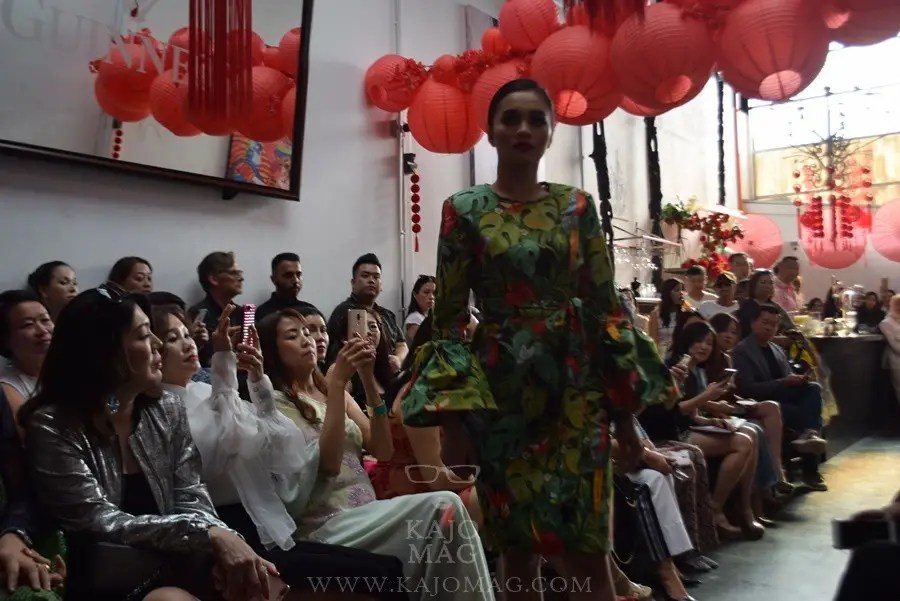
Style Series is a series of events organised to share fashion concepts and empower emerging new talents in Southeast Asia and Europe.

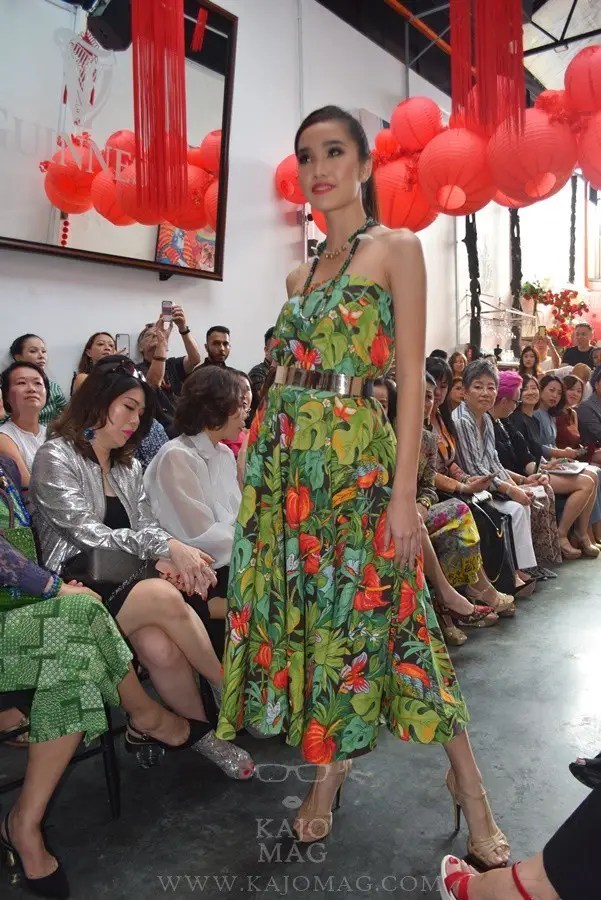
The first of its event, Style Series Episode 1: China Rouge was held on Jan 27 at Chabo Dine and Bar.

And this time, the fashion event showcased a spectacular Chinese New Year Collection to raise funds for Miss World Malaysia’s Indigenous Digital Outreach Program (IDOP).

The Miss World Malaysia 2019 titleholder, Larissa Ping Liew explained that she collaborated with Kuching-based community building organisation to start IDOP.

She said, “One of the main reasons why I joined Miss World was because Miss World focuses so much on reaching out to people, especially underprivileged children around the world. Hence, I’ve collaborated with the Champions to run programs around the rural areas of Sarawak called the IDOP.”

IDOP’s first project was held in October 2018 where Liew and her team reached out to the Penan community nearby Long Seridan. There, they brought in computers, painted murals around the school, fixed their fans and lights as well as organised motivational sessions for the students.

“Why children in the rural areas?” Liew said, “We realised that there is a major education gap between the rural community and urban folk.”

According to the 20-year-old beauty queen, not many rural youth enjoy good quality education or have the opportunity to further their tertiary studies and change their status quo.

She continued, “Being there to experience the lifestyle of the children has motivated my team and I to do more this year.”

With funds raised from Style Series Episode 1, Liew and her team are hoping to reach out to ten different villages this year around Sarawak.

About Style Series

Style Series was founded by Geraldine Sim, Wong Kai Lee and Roselyn Ling.

The main aim of Style Series events is to connect designers through fashion, while fostering a community of collaboration and inspiration.

For its debut, the events featured collection from Yacutha Borneo, Romyda KL, TeeCode, Wynka, Rozie Khan, Mastuli Khalid, Emil Hamlyn and Melor.

There were 40 looks featured on the runaway with celebrity model Amber Chia took the closing spot for the fashion show.

1 56 57 58 59 60 75