Patricia Hului

Patricia Hului is a Kayan who wants to live in a world where you can eat whatever you want and not gain weight.

She grew up in Bintulu, Sarawak and graduated from the University Malaysia Sabah with a degree in Marine Science.

She is currently obsessed with silent vlogs during this Covid-19 pandemic.

Due to her obsession, she started her Youtube channel of slient vlogs.

Follow her on Instagram at @patriciahului, Facebook at Patricia Hului at Kajomag.com or Twitter at @patriciahului.

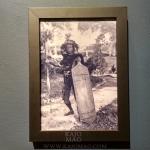
The attack on Captain de Fontaine in British North Borneo

Somewhere in a village called Kawang in Sabah, stands an obelisk called the De Fontaine Memorial.

It was built by the British North Borneo Company (BNBC) to remember what took place on that spot on May 12, 1885.

On that day, a group of British officials from the BNBC and members of the North Borneo Armed Constabulary were attacked by the local Bajau people while they were on an expedition to search for a Murut chief called Kandurong.

The memorial was named after Captain de Fontaine. He was a member of the Singapore Police Force prior to taking up his career as the Chief Inspector of North Borneo Armed Constabulary.

What better way to know what took place on that day other than reading the news report on the incident?

On June 5, 1885, The Straits Times published the news “Amok in the Kawang river”.

News reporting the death of Captain de Fontaine

“The government launch ‘Kimanis’ arrived at Sandakan before daybreak on the 15th May, from the West Coast, bringing the most sad and unexpected intelligence of an emeute on the Kawang river, in the vicinity of Papar resulting in the loss of valuable lives.

“It appears that on the 10th instant, Resident Davies, Captain de Fontaine, Dr Fraser, Assistant Resident Little, and Mr J.E.J. Wheatley, with a party of Constabulary, arrived at Kawang, which was selected as the most direct and convenient point of departure for an expedition to the village of a Murut chief, one Bandurong.”

Before they started their punitive expedition, the company’s entourage realised they did not have enough Dusun baggage carriers.

They needed 50 baggage carriers to carry their items into the mountainous jungle of Crocker Range.

However, they only had 20. The British then asked the Bajau headmen of Kawang village to provide the remaining 30 baggage carriers.

When the Bajaus refused to do so, the British resident warned them that their village would be fined.

The tension between the British officials and Kawang villagers became more intense when they discovered a stolen water buffalo at the village.

Even after the Bajaus had returned the stolen water buffalo, they still refused to provide them with more porters.

Since the company did not have enough porters, they started to discuss postponing the punitive expedition.

The incident becomes bloody

The attack on Captain de Fontaine in British North Borneo

And that was when things turned bloody – even before the BNBC had to face the famous Murut chief, Kandurong.

“The Europeans and the Officers of the Constabulary were standing about under a tree in a large plain near the village, when two men came up with muskets in their lands and entered into an apparently friendly conversation with Dr Fraser. Without any warning, one of the men suddenly discharged his musket, killing the doctor instantaneously.”

After that, the killers tried to escape.

The news stated, “they then endeavored to escape by rushing across the plain towards the jungle when Captain de Fontaine, in the most plucky manner, pursued them.

All this happened in the space of a few minutes only, and no one had time to support Captain de Fontaine before he tripped and fell on the ground, when the Bajows turned on him and inflicted no less than nine spear wounds on different parts of his body, three of his assailants falling, however to his revolver.”

The news report further stated, “Until further intelligence is received, it is impossible to say whether the treacherous attack was premeditated or whether, as some think, the first gun went off by accident, giving rise to the panic which has had such results. Under the circumstance, therefore, we deem it right to refrain from comment.”

Was the attack premeditated?

However in British North Borneo: An Account of its History, Resources and Native Tribes (1922), Owen Rutter stated that there is no doubt that this outrage was premeditated.

He believed that the Bajaus had prepared the previous day for almost certain death.

“In his description of the attack Mr Whitehead (who was not actually present) offers excuses for the Bajaus, indeed from the way in which he writes one might suppose that they were defending their lives, their women and their property, whereas nothing was further from the case, and their onslaught was a unprovoked as it was treacherous. With the exception of the nine Bajaus (all of whom were either killed and wounded) none of the community took part in the disturbance and consequently no fine was imposed upon the village.

As for Rutter’s thought of what prompted the attack, he opined that the locals were worked up by Orang Kaya Awang who then lived in Kinarut. He was there when the attack took place.

At that time, Kinarut was not yet under the company but still under the Brunei sultanate. Orang Kaya Awang was believed to be against the company and a strong supporter of the sultanate.

The de Fontaine Memorial

Besides Captain de Fontaine, the incident also took the lives of Dr Fraser, Jemadhar Asa Singh and two more Sikh officers.

Meanwhile, Little and eight other policeman were wounded.

On Nov 20, 1911, The Strait Times reported that a memorial would be built in memory of the incident.

“The tree under which they were standing, an isolated tree in the midst of a plain, has ever since been regarded as a memorial, and was known as the “Government Tree.”

After the tree had fallen, a small pillar was built on the site.

Finally, an obelisk was built in September 1912 which is still standing to this day.

The price to pay for a punitive expedition

It was irony for the forces of North Borneo Armed Constabulary who found deaths even before going to a war with the local people.

Like many punitive expeditions held against alleged rebels in Borneo, many could not proceed without the help of the local people as part of the armed forces or even porters.

The company had to abandon their punitive expedition against Kandurong due to the Kawang incident.

But the BNBC did not forget about him as they sent another expedition against Kandurong in 1888. The war between Kandurong and the company did not end until January 1892 when a peace agreement was achieved between both parties.

Operation Kingfisher, the rescue mission that never took place

Do you know that there was a so-called rescue plan for the Sandakan Death Marches code-named Operation Kingfisher?

The death march was a series of forced marches in Borneo from Sandakan to Ranau which resulted to the deaths of 1,047 prisoners-of-war (POWs). Meanwhile, the remaining 1,381 never left the Sandakan camp and died there.

If there was a rescue plan, how come the prisoners were never rescued?

Operation Kingfisher and Operation Agas

The Allied forces reportedly knew there was a POW camp at Sandakan thanks to Operation Agas.

The operation was a series of reconnaissance operations carried out by Z Special Unit in 1945.

Overall, the operation was executed in 5 parts. It commenced in March 1945, continuing up to September and October 1945.

In Operation Agas 1, Major F.G.L Chester landed at Sandakan along with six other personnel in early March 1945.

They managed to gather information such as the train schedule to and from Beaufort, cargo movements, and details of local timber mining.

Additionally, the operatives found out that there were Allied POWs being held at Sandakan.

Unfortunately, they were unable to get close enough to the camp to investigate.

They ultimately reported in error that the Sandakan camp had been abandoned. They reportedly didn’t know that there were 800 POWs were still alive at that time.

Many reports suggested due to the error in intelligence that the rescue mission was called off.

Or did the Allied forces know there were hundreds of men still alive yet chose not to rescue them?

Operation Kingfisher never takes place because there was no plane available?

The person who might have the answer for this was Field Marshal Sir Thomas Albert Blamey.

He was the commander-in-chief of the Australian Military Forces. Blamey was also the commander of Allied Land Forces in the South West Pacific Area under the command of American General Douglas MacArthur during WWII.

Blamey’s speech at the Second Annual Conference of the Australian Armoured Corps on Nov 19, 1947 somewhat addressed the reason why Operation Kingfisher never took place.

He declared, “We had high hopes of being able to use Australian parachute troops. We had complete plans for them. Our spies were in Japanese-held territory. We had established the necessary contacts with prisoners at Sandakan, and our parachute troops were going to relieve them. The parachute regiment didn’t know what was planned, of course. But at the moment we wanted to act, we couldn’t get the necessary aircraft to take them in. The operation would certainly have saved that death march of Sandakan. Destiny didn’t permit us to carry it out.”

His speech naturally caused a stir in the media and public back then as he was suggesting the American did not provide the necessary aircraft for the rescue mission.

Moreover, imagine the family members of the victims knowing the fact that their loved ones could have been saved.

Was it a cover up?

Mark Felton in his book The Final Betrayal: Mac Arthur and the Tragedy of Japanese POWs shared there is more than just no ‘airplane available’ for Operation Kingfisher.

“It has been suggested that there was a cover-up at the highest levels of government over the failure to launch Operation Kingfisher, especially when it became widely known after the war how many prisoners had been murdered by the Japanese on the death marches. The fiction that General MacArthur sealed the fate of the starving prisoners at Sandakan and rubbished Kingfisher by refusing to provide material support for the mission is not correct.”

Operation Kingfisher never get off the drawing board

Australian Jurist Athol Moffitt informed the National Conference of the Veterans’ Review Board that the truth was the Allied forces never even planned to execute the rescue mission.

Moffitt stated, “Rescuing the prisoners would have required a major offensive and it probably would have only resulted in the prisoners being shot anyhow … it was decided nothing could be done”.

According to Paul Ham in the book Sandakan, the Allied forces deduced that the rescue plan was ‘impractical’ and ‘unacceptable’.

It would require carrier-born combat aircraft (no carriers were operating south of the Philippines in 1945), a 600-bed hospital ship and a large task force to pull the rescue mission.

Ham stated, “All this shows that MacArthur was not the only commander dismissive of the rescue proposal. Perhaps it is consoling to feed families the myth that Kingfisher was close to being realised, the hard truth is that top brass had no intention of approving the project.”

So why did Blamey blame MacArthur for not providing the so-called airplanes?

Some historians believed that Blamey accusing MacArthur was to cover up his men’s bungle in gathering intelligence.

If Blamey really did that, it wouldn’t be the first time. Before the war when he was the Chief Commissioner of the Victoria Police, his attempt to cover up the shooting of a police officer led to his forced resignation in 1936.

Many historians managed to refute Blamey’s reason. The declassification of the Kingfisher files in the 1970s revealed that the Royal Australian Air Force in fact had enough aircraft.

Felton pointed out in his book that “The Australians had absolutely no reason to ask MacArthur to divert some of his aircraft to support Kingfisher because they already had more than enough themselves, something that Blamey conveniently forgot.”

The lives of hundreds of POWs versus of the lives of people in Borneo

This might sound cruel but some historians believed that Operation Kingfisher was considered a low priority for the Allied forces. Since it was a low priority, the mission was subsequently aborted.

The Allied forces, mainly the Australians were reportedly looking at the bigger picture at that time, the Operation Oboe.

It was the last major Allied campaign to liberate Japanese-held British Borneo (Sabah and Sarawak) and Dutch Borneo (Kalimantan).

Dr Ooi Keat Gin in his paper Prelude to Invasion: Covert Operations Before the Reoccupation of Northwest Borneo, 1944-1945 stated, “Preparations were in earnest for the launching of the Oboe operations, and it would have been a diversion of effort to mount a rescue attempt in the midst of the overall invasion plan. There was a genuine fear that an attempted rescue operation might effectively sign the death warrant for all POWs and civilian internees.”

“As for the sad ending of the Sandakan POWs, their rescue took a backseat to the execution of the principal object, namely the reoccupation of Borneo and the defeat of Japan.”

Basically, the Allied forces were busy planning to free a whole island so the lives of less than 800 sick and malnourished men were not high on their priority’s list.

And their intention was clear since during the Borneo Campaign made their first landings in Tarakan, Balikpapan, Labuan and Beaufort in Borneo but did not land in Kuching, Sandakan or Ranau where the Allied POWs located.

The mystery remains

But the one mystery remains, why did Blamey said there were no aircraft available if they never wanted to rescue them in the first place?

Perhaps telling the public that they almost rescue the POWS and blaming the Americans for not providing aircraft was more comforting for the families, rather than telling them “We did not rescue your husbands and sons because they were not our priority. And we did not actually believed the Japanese would kill them”.

Nonetheless one thing for sure, if Operation Kingfisher actually took place against all odds, hundreds of men would have been given a chance to go back to their families.

Operation Kingfisher, the rescue mission that never took place
Some of the Sandakan POWs who were commemorated at Kundasang War Memorial.

5 things you need to know about Korean dish buldak

Have you had buldak before? Buldak, or literally translated to “fire chicken” (bul means fire and dak translates as chicken) is a heavily spiced, barbecued chicken dish.

Unlike other Korean dishes like kimbap whose history can be traced back a hundred years, buldak is relatively new in the Korean cuisine.

Famous Korean food blogger Maangchi only came across it a few years ago when she found a truck on the street selling barbecued chicken.

The owner set up a homemade grill and barbecued huge chunks of chicken covered in a thick, spicy paste. Next to his truck, he put up a banner that said “buldak” and that was the first time Maangchi heard of the name.

So what is so interesting about buldak? Here are five things you should know about this Korean chicken dish.

5 things you need to know about Korean dish buldak
Buldak topped with cheese.

1.It was a stress reliever during the economic downturn

Buldak became popular in South Korea reportedly during 2004. At that time, the country was going through long-term recession and economic downturn.

The people started to seek out spicy food in order to release their stress.

Since then, the dish gained in popularity and the country saw a rise in buldak franchise restaurants.

But is it true? Does spicy food helps to relieve stress? Apparently true. Spicy food boosts production of feel-good hormones such as serotonin. This can help to reduce stress and anger.

2.The patent dispute over the name

In April 2001, a company called Buwon Food filed a patent on ‘buldak’ claiming copyright to the name.

However, many opposed the move claiming the term is a general noun.

On Apr 30, 2008, the Korean patent court declared the term buldak is free for public use.

3.The ingredients

The general ingredients to make buldak are bite-sized chicken meat, gochujang (Korean chilli paste), gochutgaru (chili powder), soy sauce, jocheong (Korean starch syrup), garlic and ginger.

Maangchi suggested to use corn syrup, sugar or honey if there was no jocheong.

Other additional ingredients that can be added are sliced rice cake, mozzarella cheese and green onion.

4.It is the inspiration behind the famous buldak-inspired Korean ramen

5 things you need to know about Korean dish buldak
Hot Chicken Flavour Ramen

The dish is the inspiration behind one of the most famous Korean instant noodles or ramyeon, Hot Chicken Flavour Ramen (buldak-bokkeum-myeon).

In 2014, the noodle became instantly viral when the main host of YouTube Channel “Korean Englishman”, Josh Carrott challenged his friends in the UK on who could finish the noodles. And they had to do it as fast as possible without drinking any water or beverages to fight the spiciness.

After that, many YouTubers took up the challenge, posting their videos attempting it in what mostly became known as The Fire Noodle Challenge.

The noodle is also became a hit among Muslim consumers after it obtained a halal certificate from the Korea Muslim Federation Halal Committee.

According to Korea Times in 2019, China is the biggest exporter of buldak ramyeon, accounting up to 50 per cent. This is followed by Southeast Asia, which accounts for about 35 per cent of the overseas market.

5.There is a buldak-inspired make up and toothpaste?

As this spicy ramyeon is inspired by buldak, this spicy ramyeon then inspired more unconventional products.

In 2018, South Korean cosmetic company Tonymoly launched a limited edition makeup line. And it was inspired by the famous ramyeon!

In collaboration with Samyang Food’s Buldak Spicy Chicken Ramen, the makeup line is based on the instant noodle’s packaging and the character.

The line includes the Hot Coverdak Cushion, a cushion-compact foundation that comes with a refill made to look like a sauce packet. A blusher called Noodle Blusher, which comes in a bright red called Bad Red and a super-pale pink called Carbolighter. Then, a lip balm called the Lip Care Stick as well as Lip Sauce Tint, which comes in Spicy Red and Cheese Red.

Everyone has to give it up to Samyang Food as they know how to constantly reinvent their products. Besides a makeup line, the company also released toothpaste and chewing gum inspired by their buldak ramyeon.

Watch where KajoMag team had their buldak in Kuching:

KajoPicks: 10 Korean series to watch if you love ‘chaebol’ dramas

If you are not familiar with the term chaebol, in South Korea, it means a large industrial conglomerate which is run by a family.

In some cases, they have been criticised for itheir monopolistic behaviour such as favour controlling shareholders and government corruption.

Outside their high-rise offices, their antics have often made headlines around the world. The perfect example is the ‘nut rage’ incident.

It took place on Dec 5, 2014 at John F. Kennedy International Airport in New York city.

The daughter of Cho Yang-ho, the Korean Air chairman, Cho Hyun-ah was so unhappy that the flight attendant served nuts on a plate that she ordered the aircraft to return to the gate before takeoff.

Hyun-ah was also the airline’s vice president. In 2018, Hyun-ah’s younger sister Cho Hyun-min allegedly did a classic K-drama move by hurling a cup of water at the face of a manager of an advertising agency during a business meeting.

Meanwhile their brother, Cho Won-tae made headlines in 2005 for assaulting a 77-year-old woman in the street. She was reportedly scolding him over his reckless driving.

In another case of chaebol tantrum, there was a case of then 10-year-old daughter of Bang Jung-oh who is the president of the cable channel TV Chosun in 2018.

She was caught on camera verbally abusing her driver. Some of the things she said included, “You are crippled. You are crippled without arms, face, legs, ears and mouth”.

Another time, the daughter said, “Your parents raised you wrong. Your parents taught all of your family members wrong. Because they were too poor, they didn’t even take you to hospital or dental clinic.”

No wonder the Korean entertainment scene loves to depict lives of chaebol families in their dramas.

If you are into Korean series depiction of chaebol dramas; from sibling rivalry, inheritance dispute to good-old water-splashing scenes, here are ten series you should watch:

1.Elegant/Graceful Family (2019)

How rich is the chaebol family in this drama? They are so rich that they even have a funeral for their pet fish. If you don’t think that is not wild and juicy enough for you? There is a scene where a violinist is hired to play while standing barefoot in the ice so that she could “express her music better”.

Overall, this drama has it all when it comes to chaebol dramas. Secret love child? Mysterious murder case? Fighting over company shares? Check, check and check. Manipulation over the media, loveless marriage and embezzlement? It has them all.

The storyline circles around Mo Seok-hee (Im Soo-hyang), the only daughter of the MC Group.

After her mother was mysteriously murdered, she was forced to go to the US.

15 years later, she returns to South Korea vowing to find her mother’s killer.

Besides her own family, another thing that stands in her way is the TOP Team of MC Group. It is a team which manages the Mo family affair. Their job includes covering up illegal activities committed by the family.

It is fun to watch especially because the protagonist, Seok-hee is feisty and definitely not a damsel in distress.

2.Secret Garden (2010)

What happens when Cinderella and Prince Charming switch bodies? Written by Kim Eun-sook, in this modern-day Cinderella story, Gil Ra-im (Ha Ji-won) is a poor stuntwoman. Through a misunderstanding, she comes across Kim Joo-won (Hyun Bin), a high-end department store CEO.

As their fates continuously collide, they find themselves in a mysterious secret garden where they are offered mysterious drinks. (I guess they never heard about Snow White and what happens to her after accepting an apple from a stranger in the woods.)

Anyhoo, they take the drinks and wake up in each other’s bodies the next morning.

It is amusing and interesting to watch as they navigate their lives after the body swaps.

As expected when a rich boy falls in love with a poor girl, the boy’s family is not entirely happy with it. So expect scenes like “I’ll pay you to leave my son alone!” kind of thing.

This drama was so famous when it first came out it created ‘Hyun Bin Syndrome’. After recorded its highest viewership ratings of 35 per cent, Hyun Bin was seen everywhere through advertisement, from newspaper to television.

3.Boys over Flowers (2009)

This drama is based on manga series “Hana Yori Dango” by Yoko Kamio. Most people do not know that the original Japanese title “Hana Yori Dango” (Boys over flowers) is actually a pun on the Japanese old saying ‘Dumplings over flowers’.

It refers to people who attend Hanami (flower festival) who focus on the materialistic side of the event such as buying food instead of enjoying the flowers.

As for the drama, it is set at a school for the super famous, centering on a poor girl and the richest boy in campus.

Gu Jun-pyo (Lee Min-ho) is the leader of a group called F4, the most popular gang in school of four good looking, who also happen to be the richest, boys in school.

He is also the spoilt heir to a wealthy conglomerate Shinhwa who owns the school.

Meanwhile, Gu Hye-seon (Guem Jan-di) is the daughter of a dry cleaner who attend the Shinhwa High School on a scholarship.

Is it fun to watch? Yes. Is it realistic? Of course not! There is no way that your rich teenage boyfriend will whisk you away to a tropical island on a private jet along with your best friend and brand new wardrobe of outfits right? Commoners like us will never know.

4.Cheongdam-dong Alice (2012)

Don’t you hate it when you work hard so in life but in the end the day you get surpassed by someone who has less talent and does nothing but using their money and connections?

This drama follows Han Se-kyung (Moon Geun-young) who at first believes she can achieve anything in life with the belief that ‘hard work is my strength’.

After numerous job interviews, she finally gets hired by an apparel company. Although she is a talented designer, she is hired as an errand girl for the president’s wife. The wife turns out to be Se-kyung’s her high school classmate and rival Seo Yoon-joo (So Yi-hyun).

Believing that the only way for her to succeed is to marry rich, she embarks on a quest to become a “Cheongdam-dong daughter in-law”.

It is a term referring to young married women who live in that wealthy neighbourhood. Cheongdam-dong refers to Cheongdam neighbourhood in Gangnam, Seoul which is famous for its high-end fashion shops.

5.The Heirs (2013)

After starring as the heir of Korean conglomerate Shinhwa in Boys Over Flowers, Lee Min-ho becomes the wealthy heir of another chaebol called Jeguk Group in The Heirs.

Similarly, The Heirs is set in a high school populated by the privileged and rich. Then comes another poor girl Cha Eun-sang (Park Shin-hye) who is on scholarship to the school.

Choi Young-do (Kim Woo-bin), Kim Tan’s former best friend turned enemy begins bullying Eun-Sang just to irritate Tan. Thing gets hotter when Young-do also falls in love with Eun-sang.

Underneath the rich boy-poor girl romance storyline, the drama also addresses important issues such mental health among high school students, the impact of parents’ divorce on children and pressure from parents to achieve excellency in school.

6.Monster (2016)

What would a greedy person do to the only heir to a chaebol cooperation who happens to be blind? In a classic story of a Korean drama-land, you would try to kill him and take away his inheritance.

In Monster (2016) Lee Guk-cheol (Kang Ji-hwan) lost his wealth and inheritance to his greedy uncle.

From being a spoilt rich heir with an army of maids serving him, he become a poor, blind beggar overnight.

One day, he is given an opportunity to use a new identity, Kang Ki-tan. Using his new connection and identity, Guk-cheol slowly plans for his revenge and trying to earn back what is truly his in the first place.

With 50 episodes, brace yourself for a lot of corporate drama with buying and selling stock company just to gain control.

7.Crash Landing on You (2019)

KajoPicks: 10 Korean series to watch if you love 'chaebol' dramas

Not all chaebol heirs or heiress are incompetent, some (unfairly) beautiful, successful and intelligent like Yoon Se-ri (Son Ye-jin) in Crash Landing On You (2019).

While she is a chaebol heiress, she is also an illegitimate daughter to her wealthy father. Despite being the target of resentment from her stepmother, half-brothers and their wives, Se-ri run her own successful fashion company, Seri’s Choice.

She is also known for her publicity stunts that she pulled just to publicise her brand. During one of her stunt, she accidentally crash-landing in North Korea when paragliding.

With her family and company all assuming her to be dead, the most satisfying part is to watch their reactions when Se-ri returns to South Korea.

To date, it is the highest rate tvN drama and the third highest-rated South Korean TV drama in cable television history.

The drama also features Hyun Bin who charms viewers in his North Korean accent portraying a captain in the Korean People’s Army.

Watch the trailer here.

8.High Society (2015)

Jang Yoon-ha (Uee) is the youngest daughter of a chaebol family. Instead of living the life of a typical upper class, she takes part-time job in a supermarket to run away from her family problem.

It is also a chance for her to live a normal, ordinary life. While hiding her identity, she makes friends with poor girl Lee Ji-yi (Lim Ji-yeon) and dates Choi Joon-ki (Sung Joon).

Things change when her brother dies in a flight crash and friend as well as boyfriend find out her true identity. She finds herself joining the family business handling the cosmetic department. Meanwhile, Yoon-ha’s sister her sister who wanted to kick her out from the company.

When rich siblings fight, they don’t fight over the last piece of pizza or what to watch on TV, they fight over who owns the company.

9.My Fair Lady (2009)

Kang Hye-na (Yoon Eun-hye) is a rich heiress who lost her parents in a plane crash.

Due to her lonely upbringing while living under her strict grandfather, Hye-na becomes a self-centred and indifferent as an adult.

She finally meets her match when she comes across Seo Dang-chan (Yoon Sang-hyun), a former gigolo.

Ultimately, Hye-na’s life turns upside down when Dang-chan shows up at her home as her new household manager.

10.Secret Love (2013)

When a second-generation chaebol heir Jo Min-hyuk (Ji Sung) lost his girlfriend in a hit and run accident, he vows for revenge.

He believed that Kang Yoo-jung (Hwang Jung-eum) who was responsible for her girlfriend’s death.

Little does she know that Yoo-jung sacrifices her future by going to prison in place of her then-boyfriend Ahn Do-hoon (Bae Soo-bin).

Do-hoon is the jerk in the story, a prosecutor who is hungry for power.

The story circles around revenge, family dramas, and toxic relationships.

The cession of Sipitang by Brunei Sultanate to British North Borneo

Just like Sarawak, many of North Borneo (present-day Sabah)’s territories were part of the Brunei Sultanate.

These territories were slowly annexed by the British North Borneo Chartered Company (BNBC) into the British North Borneo including Sipitang.

The people of Sipitang (Sepitong, Sipitong or Si Pitong)

So what is it like in Sipitang during those days? Owen Rutter in his book British North Borneo: an account of its history, resources and native tribes (1922) had some answers.

Describing the little town, Rutter wrote, “Sipitong, the headquarters of the district, is near the mouth of the Sipitong river, which flows into Brunei Bay. It is a lonely little station; although the district is the centre of the native sago industry it has never been developed by European enterprise, chiefly owing to the transport difficulties, an although it has been partially opened up with bridle-paths it is one of the least-known districts in the country.”

Rutter also pointed out there was Bruneians settlement found in Sipitang. While they were mainly farmers, the Bruneians were more known as boat builders. He wrote, “The Sipitong Bruneis being especially famous. They are of course immigrants pure and simple, but have firmly established themselves in the country of their adoption.”

“… they are noted in particular for the pakerangan, a canoe-shaped boat, but wide of beam and about thirty feet long, with a single square sail, or paddles for river work.”

The treaty to cede Sipitang to North Borneo Chartered Company

The annex took place on Nov 5, 1884 through an agreement between the Sultan of Brunei and BNBC.

Here are some of the contents of the treaty:

“His Highness Abdul Mumin, Sultan of Brunei and the Pangeran Bandhara and the Pangeran di Gadong for themselves, their heirs, successors and assigns hereby certify that the whole country from and including Si Pitong (Sipitang) and the whole country from and including Si Pitong and the country drained by it, on the South, to and including Kwala Paniow (Kuala Penyu) and the country drained by it, on the North, is hereby ceded to the British North Borneo Company, its successors and assigns, for so long as they choose to hold the same, as also the rivers Bangawan and Tawaran and the districts drained by them. Padas Damit is not included.”

The treaty which was signed by British North Borneo first governor William Hood Treacher from BNBC, also stated its terms.

“The Company and its representatives to pay annually to the Sultan or his heirs of $3,000 – five years’ cession money viz- fifteen thousand dollars ($15,000) being paid in advance on the completion, of this agreement of which seven thousand dollars ($7,000) shall be received in copper coin at par.”

Governor Treacher also shared about the annex in his book British Borneo: Sketches of Brunai, Sarawak, Labuan and North Borneo (1891).

“In 1884, after prolonged negotiations, I was also enable to obtain the cession of an important province on the West Coast, to the South of the original boundary, to which the name of Dent Province has been given, and which includes the Padas and Kalias rivers, and in the same deed of cession were also included two rivers which had been excepted in the first grant – the Tawaran and the Bangawan. The annual tribute under this cession is $3,100.”

BNBC’s expansion in North Borneo

While there is a little detail on what were the reasons Brunei Sultanate was willing to cede her territories to the company (besides the annual tribute paid to the Sultanate), one thing for sure; Sipitang was not the last area annexed by the BNBC.

After Sipitang, the company also acquired Mantanani (1885), Padas (1889) and Mengalong as well as Merantaman areas in 1901.

By 1901, an administrative office was set up in Sipitang called the Province Clarke, named after Lieutenant General Sir Andrew Clarke.

The cession of Sipitang by Brunei Sultanate to British North Borneo
Sipitang Esplanade in 2016.

Today, Sipitang town is known to be the closest town in Sabah to the Sarawak border.

How the human races were formed according to a Sihan legend

The Sihan people are among the few tribes in Sarawak that are vulnerable to extinction along with smaller tribes such as the Ukit and Kejaman peoples.

According to the Borneo Post in 2012, there are less than 300 Sihan people left in Sarawak.

Unfortunately, they have been assimilated into other Orang Ulu groups such as the Kayans and Kenyahs.

Their only unique legacy now is their own language and mythology which are different from other tribes.

Here is a folklore on how human races were formed according to a Sihan legend:

Long time ago, all human beings came from only one race.

At Ulu Kajang river, many groups of people wished to cross the river.

However, none of them were able to swim.

Therefore, they decided to build a huge bridge out of rattan.

How the human races were formed according to a Sihan legend
The groups of people started to build a bridge in order to get to the other side of the Ulu Kajang river. Credits: Pixabay.

After they built it, each group of people began to walk across the bridge.

The Punan, Kayan, Kejaman, Sekapan, Lahanan and the Sihan walked first.

After too many people crossing the river, the bridge broke.

The rest of these people such as the Iban, Malay, Chinese and the Europeans flowed down the river instead of using a bridge.

The Sihan people believed that the European who flowed furthest down the river became white, their hair silvery and their eyes blushed due to the coldness of the water.

The Sihan and the other groups who walked first who had already reached the other side of the river before the bridge was broken, remained in the upper part of the river to this day.

The source of this Sihan legend

The late Iban ethnologist Benedict Sandin recorded this particular legend on Feb 27, 1961 when he was working as the Sarawak Museum’s Research Assistant.

His informant for this legend was Salik Gawit, a Sihan headman from Menamang stream. Salik was 56 years-old when he was interviewed by Sandin.

According to Salik, he is not sure why his race is called Sihan (sometimes spelled as Sian).

He told Sandin, “There is no river of that name that had been inhabited by our ancestors. I can assure that my race are not foreigners. We are the people who are the origins of this place.”

How a magic mushroom caused people to speak in different languages

How everyone began speaking in different languages according to a Taman legend.

Have you heard of Psilocybin mushroom? Widely known as ‘magic mushroom’, this type of fungi is usually consumed for its hallucinogenic effects.

Once consumed, the person may experience euphoria and change in consciousness, mood and even perception.

They may even experience visual and auditory hallucinations.

As fascinating as this magic mushroom may sound, it is not as interesting as a type of mushroom found in a Taman legend.

The Taman people belong to the Dayak group of Kalimantan.

Though they are few in number (estimated at about 30,000 people), their culture and mythology are colourful.

How a magic mushroom caused people to speak in different languages

How a magic mushroom caused people to speak in different languages
An illustration by pixabay.com

Long time ago, the descendants of the first man and woman were numerous and they all spoke the same language.

Then one day, one of them came across some magic mushrooms. Everyone ate them and instantly fell into a drunken stupor.

When they woke up, they started to ask each other what had happened.

Oddly, nobody really understood each other.

They began to seek those who spoke the same language and started to form groups with them.

The dispersal

Not long after this happened, a great flood inundated the land.

The whole island of Borneo was covered by water except Mount Cemaru. It is a mountain located at Long Apari district of Mahakam Ulu at East Kalimantan, Indonesia. Standing at 1681m high, the mountain is the source of Mahakam river.

Many Dayak people took refuge there during the flood.

However, most people built rafts, sampans and other larger boats which took them to the four corners of the earth.

With these people migrating to the different parts of the world, that was how these languages became dispersed.

University of Hull researcher Victor T. King collected this legend during his trip to West Kalimantan from July 1972 to Sept 1973 and recorded it in his paper “Main Outlines of Taman Oral Tradition”.

Japanese immigrants in North Borneo before World War II

Somewhere near the Tanjung Batu Street of Tawau, Sabah there is an old cemetery site. There, Japanese people were laid to rest.

One might assume that they died during World War II (WWII) when Sabah was under Japanese occupation.

However, a vast majority of them died way before the Second World War.

Who were these Japanese immigrants and why were they buried so far from their home?

The four stages of Japanese immigrants entering North Borneo

According to Hara Fujio in his paper Japanese activities in North Borneo before World War II: Focus on Labour Immigrants, the Japanese penetration into North Borneo (present day – Sabah) can be divided into four phases.

The first stage took place from 1884 to 1910 when the British North Borneo Company (BNBC) who administered North Borneo needed cheap labour.

At the same time, the Japanese government wanted to push out the surplus population who mainly consisted of poor peasants.

Hence, more than a few hundred Japanese peasants entered North Borneo during this first phase.

Unfortunately for them, the harsh tropical climate was too much to handle. Moreover, their welfare were not well taken care of and many died from sickness. Due to this, the Japanese immigration into North Borneo came to a standstill from 1896 to 1910.

Then, the second phase of immigration started from 1911 to 1920. During this time, many large scale concessions were granted to Japanese plantation companies.

However, the British government began opposing the immigration of Japanese into her territories including British North Borneo. The British suspected the Japanese had an ulterior motive for willing to ship out their citizens as labourers.

Regardless, the BNBC was in need of labourers and was reluctant to refuse the entry of the Japanese immigrants.

From 1921 to 1936, a new type of immigration was introduced to those who came to North Borneo.

The labour immigrants were allowed to invest in projects , subsidised by the Japanese government. Meanwhile, the hard work of manual jobs were given to the Chinese or local Sabahans.

The secret Japanese state scheme in North Borneo

Finally, the final phase of Japanese settlement scheme in North Borneo started from 1937 till 1941 in Tawau

Hara pointed out, “The fundamental difference from former Japanese immigration schemes was that it was secretly initiated and subsidized by the Ministry of Colonisation (MC). In other words, it was a secret state project under the disguise of a private project by Nissan (a Japanese company). This was because the Japanese authorities thought that of the government’s involvement was known to the British or the Sabah government, the project would not have been approved in the first place.”

Under this secret scheme, the MC’s subsidy was used for the construction of a hospital and a school for settler families and the passage fees. On top of that, the MC also provided low interest-rate loans for constructions in North Borneo.

They were more than labourers, they were spies for the Japanese empire?

If you have never watched The Americans (2013), it is period spy thriller television series.

It is about two Soviet KGB officers posing as an American married couple living in the suburbs of Washington DC.

Similarly, the British government began to suspect that the labourers sent to North Borneo at that time were spies.

In the book British Intelligence and the Japanese Challenge in Asia, 1914-1941, its author A. Best noted that there was a spate of reports of Japanese land purchases in Malaysia, the Dutch East Indies, the Philippines and North Borneo.

“To those in the intelligence community it appeared that all too often the Japanese bought plantation land in areas of strategic importance,” Best stated.

Outside of North Borneo, there were reports Japanese nationals involved in the distribution of pan-Asian propaganda to the indigenous people in Dutch Indies. Even in Malaya, there were Japanese planes flying their flags in a manner designed to impress Japanese power on the Malays.

“Watching these activities from London, MI2c, the branch of the Military Intelligence Directorate (MID) that dealt with East Asia, noted in July 1917 that the Japanese, utilising their ‘intricate and highly organised system of secret service’, were extending their influence into every corner of the region, and that it was possible that they would be willing to support rebellions against European colonial rule.”

Espionage activities in North Borneo by Japanese immigrants

Meanwhile in North Borneo, there were some incidents which were considered as proof of Japanese espionage.

In the paper Anti-Japanese Activities in North Borneo before World War Two 1937-1941, Danny Wong Tze-ken gave several evidence which ‘lend credence to the theory that intelligence networks operated in North Borneo prior to the war.

Giving one of the proofs, Wong stated, “One example is the sudden expansion of Nomura and Company after August 1940, when it opened a rubber estate near Sandakan. Thai authorities arrested one of the managers at its Sungai Golok office (in the Malay Peninsula) for making a map of the surrounding country and police buildings, strengthening the view that the firm acted as a course of intelligence.”

Then in October 1940, the consul at Sandakan Taku Taniguchi, made an extensive tour of North Borneo, Sarawak and Brunei. Some said the tour was a thinly disguised exercise to select suitable landing sites for an invading force.

Looking back, was it just coincidence that the reports of espionage coincides with Japanese government’s secret settlement scheme in Sabah?

Life as Japanese immigrants in North Borneo

The Japanese community in North Borneo numbered 1,737 in 1941. 84 per cent of them were living in Tawau or on Si Amil island. Many of them had been living there since the 1890s.

In North Borneo, these Japanese immigrants took up all kinds of professions, apart from labourer in fishing and plantation companies.

For the young female Japanese immigrants, they were working as hairdressers and masseurs and even as prostitutes in Japanese-owned brothels.

The book Sandakan Brothel No.8: Journey into the History of Lower-class Japanese Women by Tomoka Yamazaki offered a glimpse of how a teenager named Osaki was forced to work as a prostitute. She came to Sandakan thinking that she was working as a cleaner.

Others came here working as barbers, dentists, physicians and traders.

Overall, according to Ooi Keat Gin in Rising Sun over Borneo, the Japanese communities in North Borneo kept a low profile, living their lives inconspicuously.

“The Japanese as a whole, maintained a cordial and hospitable attitude towards the local government and population, particularly the indigenous peoples,” Ooi stated.

Repatriation of Japanese immigrants

Japanese immigrants in North Borneo before World War II
Japanese civilians leaving North Borneo after the surrender of the Japanese. Credit: Public Domain due to copyright expired.

Things changed drastically for the Japanese immigrants in North Borneo after WWII ended.

The Japanese companies which invested in North Borneo lost their investment immediately after the Japanese surrendered.

All Japanese citizens (military and civilians alike) were repatriated back to Japan.

Shigeru Sato in his paper More Bitter Than Sweet: Reflecting on the Japanese Community in British North Borneo 1885-1946 stated that about 2600 Japanese were shipped from Tawau to Jesselton (Kota Kinabalu) after the war.

There, they waited for several months in an internment camp. Altogether the civilians consisted of 720 men, 505 women and 608 children.

They even formed temporarily school in the camp which enrolled 250 primary school pupils and 30 high school students.

Finally, the repatriation ship for civilians left Jesselton on Mar 25, 1946 and arrived a week later in Hiroshima Bay.

Japanese immigrants in North Borneo before World War II
Japanese troops disarmed, Jesselton, North Borneo. Credits: Public Domain due to copyright expired.

Life back in Japan

Those who came from mainland Japan were allowed to proceed to their home villages.

However, those who were from Okinawa’s fishing villages were made to wait in Kagoshima. They waited there until mid-August in makeshift shelters in the cold weather.

For the children who were born in the tropical climate of Borneo, they could not stand the harsh cold conditions. Furthermore, they did not have access to warm clothes, medicine and food.

Sadly, more than half of the children died while awaiting repatriation.

As for the Japanese military men from British Borneo, many of them were civilians before they conscripted into army in the late 1944. More than 10 per cent of them died while working during the war and waiting for their repatriation ship.

Explaining about their situations, Shigeru stated, “In prewar Japan, primogeniture was widely practiced, and eldest sons inherited most of the family property, if the family had any. There was pressure on the other children to leave and find a livelihood elsewhere, like Borneo. When they left for Borneo, they had little to to lose in Japan.”

Nonetheless, how these people re-adapted to postwar Japan is poorly studied and information is hard to obtain.

One thing for sure, Shigeru claimed, some repatriates were eager to return to Borneo.

7 things Kayan women were forbidden to do when the men left for headhunting trips

In the olden days, Kayan men were renowned as notorious headhunters. Their reputation as fierce warriors spread so wide and wild that they were often mistaken as cannibals.

Whenever the men went for headhunting trips, the women were left in the longhouses fending for themselves.

These headhunting trips usually took months before they could return to their loved ones.

In the meantime, the Kayan women would take care of the household and their farms, making sure their families had enough to eat.

Back in those days, the Kayan people also had their own traditional beliefs and shamanism.

Besides commencing their usual chores, the Kayan women were forbidden to do certain things due to their beliefs.

7 things Kayan women were forbidden to do when the men left for headhunting trips:

Ethnologist Benedict Sandin published his paper The Traditional Folklore of the Kayan of Upper Rajang when he was a Senior Fellow in Universiti Sains Malaysia.

From his interviews with the elders of Kayan from Upper Rajang river, he recorded seven things wives, sisters, mothers and close female relatives were not allowed to do.

  1. Eat the meat of barking deer, as this animal was believed to produce bad luck.

2. Eat the dongan fish (a type of freshwater fish) as the stripes on its body also could mirror the marks the warriors would receive on their bodies made by the enemy on their warrior son or husband.

3. Eat the cabbage of palm of any kind, in order not to blind the warrior’s eyes while fighting against his foe.

4. Hold a needle, so that the legs of the warriors were prevented from being pricked by thorns and spikes made by the enemy.

5. Have sexual intercourse with another man, in order that the warrior or husband mat not fall down under the body of his foe. Besides this, it was believed that the warrior would act as if he was having sexual intercourse in front of his foe.

6. Eat mekai leaves (Albertisia papuana), to prevent the eyes of the warrior from being unclear when drawing out his sword from its scabbard and thus give a chance to the enemy to cut him.

7. Wake up late in the morning, so that the warrior husband will not be slow to fight while on the warpath.

Henry Ling Roth in The Natives of Sarawak and British North Borneo

Anthropologist Henry Ling Roth recorded similar dos and donts for women in his book The Natives of Sarawak and British North Borneo.

However, he did not point out which tribe that practiced them and generalized them as Dayak women.

Regardless of what happened during the headhunting trip, the women would continue their daily activities as usual. Roth noted, “As long the men are away their fires are lighted on the stones or small just as if they were at home.”

Apart from carrying on with their daily jobs, the women carried out a couple of tasks symbolically to protect their men from afar.

For example, the women spread mats and kept the fires up till late in the evening and lit them again before dawn.

This was to ensure men during the war expeditions would not get cold.

Roth added, “The roofing of the house is opened before dawn, so that the men may not lie too long and fall into the enemies’ hands.”

It is good to know that women had their own roles when it came to headhunting and warfare.

Fighting for Japan: The Korean and Formosan soldiers during WWII

When a soldier serves in a war for his country, it is out of patriotism. But what happens when soldiers fight in a war for a country that colonised them?

After World War II (WWII), many Korean and Taiwanese (Formosan) soldiers were convicted for war crimes alongside Japanese troops.

How did they end up fighting for a nation who conquered their home countries in the first place? Was it voluntary? What happen to them after the war has ended?

The recruitment of Taiwanese Imperial Japan Service

Taiwan and the Penghu Islands were under the Japanese empire between 1895 and 1945.

It started when China’s Qing dynasty ceded Taiwan province in the Treaty of Shimonoseki after Japanese victory in the First Sino-Japanese War.

At first under Japanese rule, the Taiwanese were not allowed to serve in combat and they were working mostly as translators for the Japanese army operating in China.

When the United States joined the war in 1942, Japan started to recruit Taiwanese in combat capacities.

Many Taiwanese joined the service for the sake of their families. Those who served were given extra food for their loved ones.

Meanwhile, the Republic of Formosa was a short-lived republic that existed in Taiwan from May 23 to Oct 21, 1895.

Even though the republic only lasted a few months, many Taiwanese who served during WWII were called Formosan soldiers.

Officially, they were Taiwanese Imperial Japan Servicemen referring to any Taiwanese person who served in the Imperial Japanese Army or Navy during WWII.

Overall, it is estimated a total of 207,182 Taiwanese served in the military of Imperial Japan in both the Second Sino-Japanese War and WWII.

Fighting for Japan: The Korean and Formosan soldiers during WWII
Taiwanese servicemen in the Imperial Japanese Army. Credits: Public Domain.

The recruitment of Korean Voluntary Unit

Meanwhile, Korea was officially under the Japanese empire when Japan formally annexed the Korean empire in 1910 in the Japan-Korea Treaty of 1910.

Starting from 1938, Japan started to enlist Koreans into the Japanese military as the first Korean Voluntary unit.

By 1944, all Korean males were drafted to either join the Imperial Japanese army or work in military-related industry.

According to Utsumi Aiko of Keisen University, many of these men feared they would be shipped to Japan as indentured servants if they did not join the army.

Others were perhaps attracted by the high pay rates offered, about 50 yen per month, an amount that was considered a large amount at that time.

Korean and Formosan soldiers as Prisoners-of-wars (POWs) camp guards

According to Yuki Tanaka in his book Hidden Horrors: Japanese War Crimes in World War II, after the Japanese army decided to employ Korean and Formosan soldiers as POW camp guards, they came up with a set of instructions.

Entitled “Outline for Dealing with POWs”, the instruction detailed two principal reasons for the use of non-Japanese guards in prison camps.

Yuki stated:

“One reason was to destroy the lingering sense of superiority attached to white people by many Asian societies that had been colonised and consequently to elevate the Japanese as ‘white substitutes’. By having Koreans and Formosans guard white prisoners under Japanese command, the Japanese military hoped that the old ‘pecking order’ would be reversed- that non-Japanese Asians would come to see whites as inferior, subjugated people and the Japanese as the ‘natural’ leaders of Asia. The other, more mundane purpose was to free up more Japanese men to be sent to the front line. On May 15, 1942, 10 days after the outline had been distributed, the recruitment of Korean and Formosan guards began.”

These non-Japanese soldiers were trained in Japanese and forbidden to use their native language. They were also given Japanese names.

The Formosan guards were sent mostly to Southeast Asia including Borneo while the Koreans were scattered around the world including the Central Pacific.

The cruelty of Korean and Formosan soldiers

POWs who survived the war claimed that the troops from Japan’s colonies such as Korea and Taiwan were the most vicious abusers of prisoners.

One of them, Arthur Lane told The Telegraph in 2014, “ The Japanese guards were bad, but the Koreans and the Formosans were the worst. These were men who the Japanese looked down on as colonials, so they needed to show they were as good as the Japanese. And they had no one else to take it out on other than us POWs.”

Lane was one of the 180,000 to 250,000 Allied POWs who was sent to work on the infamous Death Railway. In the end, about 102,000 Allied prisoners died.

In another example case of mistreatment of POWs by Korean guards took place in North Sumatra.

Around February 1945, there were 12 Korean guards assigned for approximately 1,500 t o 1,600 prisoners as they were tasked to build a military road.

While it was fortunate that there were no deaths reported during the construction, the guards frequently beat the prisoners who fell out of line to make them keep walking.

This is not the only example of Korean and Formosan soldier’s brutality. Survivors of Batu Lintang POWs camp as well as Sandakan POWs camp had all claimed Formosan soldiers were worse than the Japanese.

Justice Bert Rolling who represented the Netherlands at the Tokyo War Crimes Tribunal once stated, “Many of the commanders and guards in POW camps were Koreans and it is said that they were sometimes far more cruel than the Japanese.”

Explaining the cruelty of Korean and Formosan soldiers

So why were the Korean and Formosan soldiers cruel towards the POWs?

In the book The Routledge History of Genocide, Cathie Carmichael and Richard C. Maguire stated that the Germans did the much the same in the death camp system, where brutal Ukrainian auxiliaries worked under SS supervision.

“Japanese officers and soldiers routinely treated Korean and Formosan soldiers with utter contempt, beating and humiliating them even though they were ostensibly allies. In turn, Allied POWs consistently noted that Korean and Formosan guards were among the most brutal of their captors as these humiliated underdogs of the Japanese war machine worked off their shame and loss of face on POWS,” they stated.

Carmichael and Maguire gave an example of Sandakan POW Camp in North Borneo (present-day Sabah). The Australian POWs noticed a dramatic changed in the level of brutality once a large party of Formosan guards arrived in April 1943.

They noted, “The Japanese treated the Formosans as their inferiors and the Formosans took to delivering mass beatings of POW work details under the flimsiest of pretext.”

Meanwhile, Yuki explained there is no coincidence that was why the Korean guards on the Burma-Thailand railway and the Formosan guards in Borneo were capable of great cruelty.

“It was an effect of the power structure that operated within the prison camp system.”

The retaliation of Korean and Formosan guards

There were many instances when these Korean and Formosan guards went against the Japanese soldiers.

In Sandakan, there was a Japanese officer who was murdered by a Formosan guard. According to Michele Cunningham in Hell on Earth: Sandakan-Australia’s greatest war tragedy, the guard was angry because Captain Takakuwa and Lieutenant Suzuki had beaten him for having a dirty rifle.

The beating was a trigger point for him as he was also discontent generally with the way the Japanese treated the non-Japanese guard.

The guard took a rifle and fired at Takakuwa, wounding him in the soldier and then killed Suzuki with a shot right in the head.

He also wounded a couple more soldiers before throwing a grenade that failed to explode. The Formosan guard then committed suicide by shooting himself.

There were cases of Korean and Formosan soldiers, however, who did not abuse the POWs over whom they were left in-charge.

One guard, who went by the name Toyoda Kokichi, would reportedly cook chicken, rice and fish for the POWs with supplies he had bought from local villagers using his own money. Moreover, he would allow the POWs under him to take it easy and work at their own pace.

In most cases, retaliating against the Japanese resulted in severe punishments (sometimes execution) upon the Korean and Formosan soldiers themselves.

Fighting for Japan: The Korean and Formosan soldiers during WWII
Military police guard four Japanese officers of the Borneo Prisoners of War and Internees Guard Unit, outside the Australian 9th Division Headquarters where they were to appear at a war crimes trial, Labuan Island, December 1945. AWM 123170

What happened to the Korean and Formosan soldiers after World War II?

After the Japanese surrendered marking the end of WWII, it also marked the end of Japanese rule over Korea on Aug 15, 1945 as well as over Taiwan.

In total, there were 5,379 Japanese, 173 Formosans and 148 Koreans who were tried.

Of these number, 984 were sentenced to death, 476 to life imprisonment and 2,944 to some of punishments.

As for the Korean and Formosan soldiers, 23 Korean and 26 Formosan were sentenced to death.

Those who went home alive did not carry on living a normal life.

In 1995, Joan Kwek the daughter of Hugh Waring, one of the Australian officers in Sandakan and Kuching came across a Japanese language book in the National Library of Australia.

The book, the title of which was translated as Cry of the Colonial Soldiers Imprisoned as War Criminals, was written by a former Formosan guard in Kuching named Okabayashi Takemitsu.

Kwek, who was proficient in the Japanese language stated, “The book was a cry of resentment against the Japanese who taught him to be a guard, the Australians who convicted him as a war criminal with a sentence of 15 years, the Australians who mistreated him while a prisoner himself for ten years on remote island prisons near Borneo and New Guinea, the Japanese who said he was no longer Japanese after he finally finished his sentence (Taiwan was by then no longer a Japanese colony), and the Japanese who continue to deny him any form of compensation or pension for his sacrifice in the name of the Emperor.”

Like Okabayashi Takemitsu, many non-Japanese soldiers sought for pension and compensation from the Japanese government after the war.

Some were granted some kind of compensation after battling their pleas in courts, but in most cases the amount was much less than what the Japanese soldiers received.

Fighting for Japan: The Korean and Formosan soldiers during WWII

Not all were happy with the Korean and Formosan soldiers seeking for compensation

Of course, not everyone was happy with the fact that these veterans were seeking for Japanese compensation after the war.

Lane, who had witnessed many atrocities as an Allied POW, was one of them.

Speaking to The Telegraph, Lane said, “These men volunteered and they all knew exactly what they were doing. And they mistreated us because they wanted to please their masters and knew they could get away with it. They joined up for kicks, when Japan was winning the war, and they took advantage of that for their own enjoyment.”

For Lane, instead of getting compensation or apology from the Japanese government, he believed a more fitting result would be to have them taken out and whipped for what they did to the POWs.

In the end, a total of 207,183 Taiwanese served in the Imperial Japanese Army and 30,304 of them were declared killed or missing in action.

It is unsure how many Koreans were missing or killed in action during WWII as they fought for the Japanese. However in 1944, the total number of Korean military personnel was estimated at 242,341.

What do you think KajoReaders? Do you think the Korean and Formosan soldiers deserve apology or compensation from the Japanese government? Let us know in the comment box.

1 25 26 27 28 29 75