Patricia Hului

Patricia Hului is a Kayan who wants to live in a world where you can eat whatever you want and not gain weight.

She grew up in Bintulu, Sarawak and graduated from the University Malaysia Sabah with a degree in Marine Science.

She is currently obsessed with silent vlogs during this Covid-19 pandemic.

Due to her obsession, she started her Youtube channel of slient vlogs.

Follow her on Instagram at @patriciahului, Facebook at Patricia Hului at Kajomag.com or Twitter at @patriciahului.

5 amusing Sarawak stories as recorded by colonial officer Ian Urquhart

The Crown Colony of Sarawak was established in 1946 right after the dissolution of the British Military Administration.

On Sept 16, 1963, it was succeeded as the state of Sarawak through the formation of the Malaysian federation.

Unlike other Crown colonies, Sarawak was perhaps the most unique one. Sarawak continued its pre-existing institution of government with minor changes.

The Council Negri which was established under the Rajah Brooke’s 1941 constitution, retained its functions with the rajah being replaced by a British governor. As for the governor, he was required to consult with the council to exercise his power.

In the meantime, Sarawak was divided into five divisions with each overseen by a resident. Each division was then divided into districts which were overseen by district officers.

While a number of Brooke officers remained at their posts, the Colonial office in London also sent officers to serve in Sarawak administration.

One of the first batch British officers arrived in Kuching to work as Colonial Service Administration Cadet was Ian Urquhart.

During his retirement in the mid-1990s, he started to write his memoirs, finally completing them shortly before he died in June 2012.

Urquhart always hoped that his memoirs would be freely available for those who shared his love for Sarawak and its people.

Thus, his family published it on the internet making it available for everyone to read.

Amusing, funny and downright entertaining, the book offers a rare view of Sarawak during its colonial days.

For instance there was one Penghulu Puso from Belaga who had the opportunity to meet Lord Louis and Lady Mountbatten in 1946.

“Looking at her many medal ribbons he had exclaimed ‘What a brave woman. She must have taken many heads’. It was a remark that pleased her greatly,” Urquhart wrote.

He also shared how much the then Governor-General of British territories of Southeast Asia Malcolm MacDonald loved Kapit and its people.

5 amusing Sarawak stories as recorded by colonial officer Ian Urquhart
Urquhart once called Fort Sylvia his home/office when he was posted in Kapit.

Urquhart once overheard MacDonald say to Anthony Abell (the third British governor of Sarawak), that “If I could lead my life over again, I would have liked to be District Officer of Kapit.”

What makes his memoirs endearing is his observation of the commonplace things we see in everyday life, for example, “In my opinion, two of the most unpleasant sounds in this world are those of an Iban or Foochow woman who has a grievance and intends to express it long and loud, as I have known to my cost when hearing court cases.”

On a serious note, Urquhart also shared some behind-the-scene stories of Sarawak historical incidents such as the assassination of Sarawak governor Duncan Stewart and anti-cession movement.

5 amusing Sarawak stories as recorded by colonial officer Ian Urquhart
Sarawak anti-cession demonstration. Borneo Asian Reports [Public domain], via Wikimedia Commons

For KajoMag, here are at least 5 stories that we find entertaining in Ian Urquhart’s memoir entitled Sarawak Anecdotes (2012):

1.The Brooke officer who was almost executed.

Since Urquhart came to Sarawak after World War II (WWII) ended, there was a handful of Japanese occupation stories he collected, especially from those who have interned.

Here is an interesting story of how a Brooke officer escaped execution:

“Willie Tait, the Rajah’s Postmaster-General of Sarawak, was a genial Yorkshireman. On leave once, he has picked up after an enjoyable party by a policeman in London late at night as he leaned on a lamp post for support. The copper asked him who he was and thought he was joking when he said ‘The Postmaster-General of Sarawak’ and carted him off to gaol for the night to sober up. As the Japanese were invading Kuching and most of his staff had fled. Willie bravely took over the wireless and continued tapping out news to the British forces in Singapore of what was happening in Kuching until he was found by the Japanese. With some other British, he was taken to the Astana and locked up there.

Because of his activities with the wireless, Willie was then taken out onto the lawn to be shot. Being a practicing Roman Catholic, he turned to his executioners and requested that he be allowed to make his peace with his God before he was despatched. His request was granted and he took as long as he possibly could in kneeling down and confessing his sins and praying many prayers to the Lord to save him, failing which that his soul be kindly dealt with, until eventually the Japanese interrupted him saying he had had long enough.

The Postmaster-General regretted that the Lord had apparently ignored his prayers to save him but them said to the Japanese that surely they could not expect him to die with a full bladder. This request was also agreed to, and he wandered over to a tree and took as long as he could over this important performance. At last it seemed that the Lord must have heard his prayers, for a lone British plane appeared over Kuching and the Japanese hastily returned their prisoner to his prison after which, apparently, they had so many other matters to think about that they forgot to execute Willie! Interestingly, no one has been able to identify which plane it was that saved Willie or why it was there.”

2.The haunted hill of 10th Mile Kuching

This is a story Urquhart’s brother in-law R.W. (Bill) Large told him. He was a police officer in the Sarawak Constabulary during Brooke administration.

During the war, he joined the 2/15th Punjab Regiment and posted in Sarawak. However, he was captured and held as prisoner-of-war (POW) in Java.

After the war ended, he returned to the Sarawak Constabulary and eventually married Urquhart’s sister.

Here is the story Bill told Urquhart about the haunted hill at Kuching-Serian Road:

“Before the war, the Serian Road from Kuching was being maintained and the Public Works Department (PWD) engineer in charge told some of his local labour force, mostly Land Dayaks, to go up one of the many small hills near the 10th Mile, but they refused saying the hill was ‘hantu’, i.e a spirit haunted it.

To show them that this was nonsense, he himself went up the hill and, after a long time, several of the men, tremblingly and keeping close together, decided to look for him. They found him with a high fever and brought him down near death’s door. As a result, an RC (Roman Catholic) priest found some of his flock were wavering and so he went up the hill, with the same result as the P.W.D engineer.

During the war, a company of the 2/15th Punjabs under a British officer (none of whom had heard the story of haunted hill) sent a patrol up it. In no time, they returned down again helter skelter as stones from no visible source were being hurled at them.

It took a big party with beating gongs to go up and recover the arms which some of the soldiers had dropped in their panic.”

It would be interesting to know the exact location of this haunted hill.

3.The prison break that went wrong.

Urquhart also made friend with J.B. Archer, the Chief Secretary for the third Rajah Vyner Brooke.

According to Urquhart, he learned a lot about Sarawak from Archer. Over a drink in the Sarawak Club, he shared a story that took place at Kuching Round Tower which was used as the Rajah’s gaol.

“A Chinese was incarcerated in this building. He worked out to this satisfaction that, if he made a hole in the roof of his cell, he would be able to escape. Eventually, he somehow acquired a suitable tool and working at night, he started to carry out his plan. The trouble was that he had misestimated where to make his escape hole. Above him was a cell with three Chinese women prisoners in it.

They were surprised to hear noises under the floor even more surprised when a small hole appeared in their floor, which was widened and a man’s head then appeared.

He was disappointed at what he found but made the hole big enough to get his body through, and then started to investigate whether there was any chance of escaping from women’s room.

But having been starved of male company for a long time, they had other ideas and drew lots. The winner insisted that the mad had sex with her which he did. Then lady no. 2 said it was now her turn. This started him, but he managed to satisfy her. However, when it came to no 3’s turn, he was unable to perform and in a dudgeon she ungallantly shrieked out loud enough to be heard by the gaolers that she was being raped!”

4.Mrs Hoover’s soup

Reverend James Matthew Hoover was an American missionary in-charge of Foochow immigrants during Brooke’s time.

With his fluency in the Foochow dialect, he was the official representative in all dealings with the government.

He married his wife Mary Young in 1904, a British teacher in Penang who later joined him in Sibu.

Here is a story about Mrs Hoover’s soup:

The Chinese in Sibu were very hospitable and those that were well off would give quite large dinner parties, consisting of anything from eight to 24 courses.

Usually the food was presented in a bowl or on a dish, placed on the table and then each guest used his chopsticks or spoon to remove from it what took his fancy and put it in his own bowl or direct into his mouth.

Most of these dishes were soupy or savoury and after a bit one’s spoon would inevitably be coated with a layer of fat, however much one had licked it.

In Sibu the habit was that the last dish of the meal would consist of something sweet such as a large bowl of tinned peach slices or of litchis (lychees) in syrup. Before the final dish was put on the table, a bowl of very hot water was placed there in which the guests could rinse their spoons or chop sticks.

I soon learnt to watch out for the arrival of this bowl and be amongst the first to clean my spoon, as after several people had done so, there was a nice layer of fat on the surface of the water.

Pre-war, Mrs Hoover, the wife of the American Methodist bishop, was intently engaged in talking to her neighbour and so failed to note the arrival of the bowl of hot water.

Eventually she turned round, dipped her spoon several times into the bowl, which had been well used for the cleansing of spoons, and, watched by the startled Chinese, took several spoonfuls of semi congealed fat in, by now, warm water and poured them into her bowl, whose contents she proceeded to consume, saying, as she finished the last spoonful, how much she enjoyed Chinese soups.

With carefully concealed regret, the polite Chinese then felt obliged to do as she had done and from then on in Sibu the bowl of hot water was known as ‘Mrs Hoover’s soup’.

5.His Excellency Anthony Abell and his Special Branch man.

After Duncan Stewart’s assassination, security was predictably tight around the next governor Anthony Abell.

In his memoir, Urquhart shared one incident when he had to accompany the governor.

“I was accompanying the Governor, Sir Anthony Abell, who was sitting on a longhouse floor in my district. He got to his feet, picked up a toilet roll and said “I’m off. Please ensure no-one follows me.”

When he returned he was laughing and told me what had happened.

He had found a nice little area of bushes close to one another that gave him some privacy and was squatting down and starting to commune happily with nature, when, to his annoyance, he heard the mistakable grunting of a pig that had realised that a choice meal might soon be available.

The pig came indecently close so as to catch His Excellency’s droppings before any rival pig could do so. This, H.E. found inhibiting.

He looked around for a suitable stick within reach with which to whack the pig on its snout, but to his annoyance could not find one. At that moment, a nearby bush quivered, and a length of arm emerged with a suitable stick for His Excellency.

It was the arm of the Special Branch man, whose instructions had been always to keep within sight of the Governor but to do so inconspicuously.

Until that moment the Governor had not realised that each time previously that he had left a longhouse with his toilet roll, the Special Branch man had also been there.”

Besides his experiences and stories as well as gossips he heard during his service in Sarawak, Urquhart also recorded his comments on Brooke’s administration and his observance of the local people.

For Sarawakians and history enthusiasts, the book is definitely a must-read.

You can read Sarawak Anecdotes: A Personal Memoir of Service 1947-1964 here.

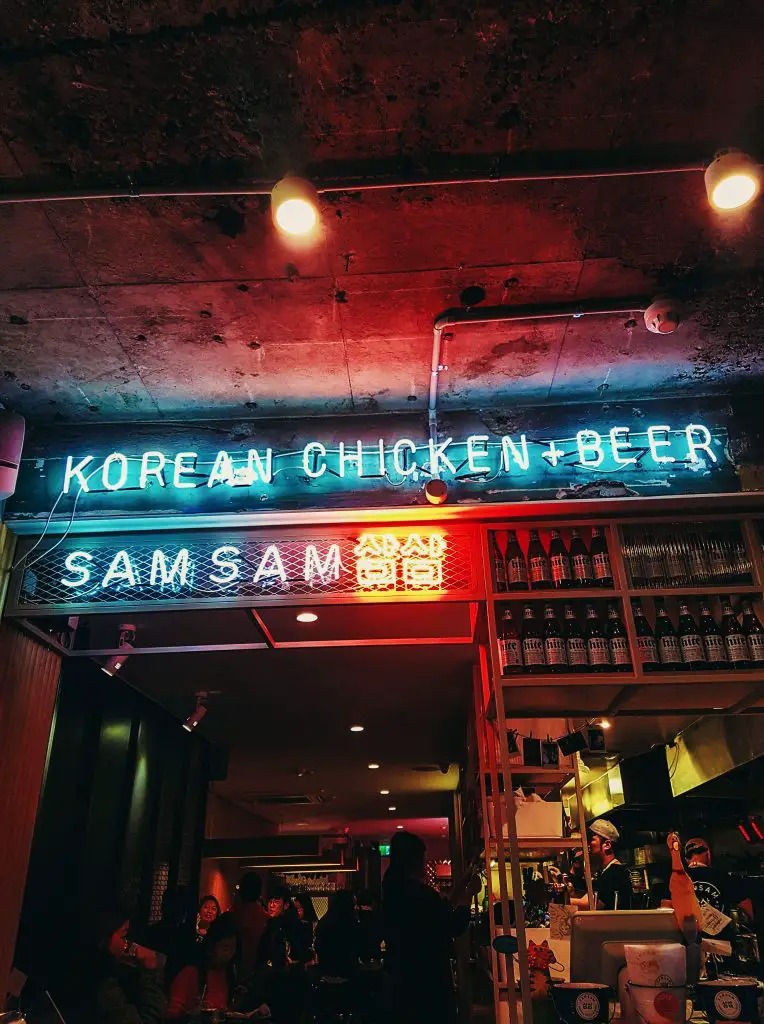
How Korean dramas introduced the world to ‘chimaek’

How Korean dramas introduced the world to ‘chimaek’
Photo by Unsplash.

If you are a K-drama fan, you must know about ‘chimaek’. It is a Korean slang word which mashes up chikin (fried chicken) and maekju (beer).

For Sarawakians, the last thing you would imagine to pair your beer with is fried chicken. However, South Korean have introduced the world that the pairing of Korean fried chicken and draft beer is actually a match made in heaven.

The history of ‘chimaek’

The origin story of ‘chimaek’ can be traced back to the time when South Koreans were introduced to fried chicken.

For that, the Koreans had to thank the Americans. It is believed that US troops during the Korean War stationed in South Korea introduced to the country the concept of frying chicken.

Before that, it was healthy food with the Koreans mainly cooking their chicken in broth and soup.

When cooking oil was introduced in South Korea in 1971, there was a rise of fried chicken consumption.

To chomp down the fried chicken, the Koreans opted for refreshing, cold beer. More stalls and restaurants started to sell beer alongside fried chicken.

While the world saw the rise of disco in the 70s, South Korea saw the birth of ‘chimaek’.

‘Chimaek’ from K-drama and beyond

The craze over ‘chimaek’ among Korean drama fans all started from the romantic comedy My Love from The Star.

Cheon Song-yi (Jun Ji-hyun), the heroine in the drama, casually commented, “A snowy day is just perfect for our chimaek time”.

From there, fans went nuts over the pairing of fried chicken and beer.

Striking while the iron is hot, Korea’s major fried chicken restaurant Pelicana opened its first restaurant in Guangzhou barely months after the airing of My Love from the Star.

Chinese consumers were reportedly waiting an average of three hours in front of a Korean-brand chicken shop just to have their chicken fix.

If you are not a Korean drama fan, you might not understand the fuss. It was a just a scene from a drama of a beautiful actress craving for fried chicken and beer.

These fans nonetheless, contributed to their country’s economy.

For instance, Xinhua reported that China’s poultry industry which was weakened after the H7N9 avian flu pandemic was revived in 2014 following the chimaek trend.

The rave over ‘chimaek’ back then also caught the attention of politicians.

During the annual China-South Korea business forum in 2015, South Korean the president Park Geun-hye noted that the Chinese taste for fried chicken and beer-stemming from the airing of Korean drama, was a sign of cultural and economic integration between the two countries.

Since My Love from the Star, other dramas such as Crash Landing on You and The King: Eternal Monarch also featured salivating chimaek session in their plots.

The obsession over chimaek

Unlike the American fried chicken, Korean fried chicken is fried twice. Hence, they are crispier.

Additionally, there are all kinds of different sauces and toppings of Korean fried chicken. Each Korean fried chicken food chain even has its own signature taste and flavour.

According to CNN Travel, chimaek fanatics call themselves “chideokhu”. It is a combination of the words “chicken” and “deokhu,” which means “maniac.”

Meanwhile, connoisseurs who can differentiate fried chicken between brands without consulting the delivery box are chimmeliers, a mishmash of “chimaek” and “sommelier.”

There is even a chicken-specific hallelujah: chillelujah!

It doesn’t matter if you are a Korean drama fan or not, if you love beer, a ‘chimaek’ session is definitely worth a try.

If you have given it a try, chillelujah!

How Korean dramas introduced the world to ‘chimaek’
Draft beer goes really well with these tender and crispy fried chicken.

Mangkok Merah 1967, the Dayak-Chinese conflict in Kalimantan

Mangkok Merah 1967, the conflict between the Dayak and Chinese in West Kalimantan

Mangkok Merah 1967, the Dayak-Chinese conflict in Kalimantan
Slogan proclaiming that Chinese and Indonesians stand together. Circa 1946. Credit: Berita Film Indonesia / Public domain

The New Order in Indonesia is the term coined by the second Indonesian President Suharto to describe his administrative era when he came to power in 1966.

In the beginning of this New Order, one incident left a bloody mark in Indonesian history and it is called Mangkuk Merah.

The background factors of the conflict between the Dayak and Chinese

Suharto’s predecessor Sukarno denounced the new nation Malaysia back then, calling it a form of neo-colonialism.

He then secretly trained rebel communist troops from Sarawak known as the Sarawak People’s Guerrilla Army (Pasukan Guerrilla Rakyat Sarawak or PGRS).

They set up camps along the Kalimantan-Sarawak border with many Sarawakian Chinese crossing over to be part of the communist movement.

When Suharto rose to power, he ended the Indonesian-Malaysian confrontation and focused on fighting against communism.

By January 1967, the Indonesian military began to resettle 5,000 Chinese away from the Sarawak border.

The Chinese were no longer allowed to live within five miles of the border.

At that time, the Chinese, especially from West Kalimantan, were believed to be communist sympathisers. The military also believed that a number of them living near the border were from Sarawak not Kalimantan.

In Sarawak, a similar resettlement scheme was carried out in 1965 called Operation Hammer. The Chinese were resettled away from the Sarawak border in order to cut off the Communist rebels’ food and supplies.

The rumours that sparked the conflict between the Dayak and Chinese

In the book Malay and Chinese Indonesian, Dwi Surya Atmaja and Fazhurozi stated the anti-communism movement that began to take a bloody turn.

“A string of murders of Dayak people with unknown perpetrator happened in Ledo, Seluas and Pahauman, Bengkayang and almost all areas with sizable ethnic Chinese communities. This situation was used by the military to scapegoat PGRS as perpetrators of the murders,” they stated.

On top of that, the military allegedly spread rumours that the Chinese were anti-Dayak and all Chinese communists.

The military reportedly used the categories ‘Dayak’ and ‘Chinese’ to indicate loyal citizens and communists, respectively during this time.

Manipulated by the military and enraged by the murders, the Dayak asked for support from the former governor of West Kalimantan and a respected Dayak figure, Johanes Christomus Oevaang Oeray.

Then through a Radio Republik Indonesia (RRI) Pontianak broadcast on Sept 21, 1967, Oeray allegedly threatened the Chinese people to leave their areas and move to nearest district town.

Later, on Oct 11, 1967, the Dayak villagers attended a meeting to prepare for what was called a ‘Gerakan Demonstrasi’.

Some historians do not believe that it was Oeray who made the broadcast, but somebody using his name.

However, some believed that Oeray purposely cooperated with the Indonesian military to regain his political footing after he lost his influence over the Dayak community when Suharto came into power.

Regardless, the Dayaks took the broadcast as the announcement of Mangkok Merah.

What is Mangkok Merah?

Dwi Surya Atmaja and Fazhurozi explained in their book what Mangkok Merah meant in the culture of the Dayak of Kalimantan.

Basically, it is the traditional symbol of starting a war.

“Mangkok Merah was used to unite the Dayak tribes if they felt their sovereignty was in great danger. The tribal chiefs usually sent a red bowl (mangkok merah) filled with charcoal, chicken feather, pig blood, and juang leaves, to be passed around from one village to another quickly. A Dayak figure explained that Mangkok Merah was used to call for people, as a communication symbol used in emergencies. When someone brought it from one tribe to the other, it means: come and help us.”

The violence

Following the announcement, a string of massacres took place in West Kalimantan. The peak of violence happened in November 1967.

The attackers started to murder Chinese people using hunting weapons and burning their belongings.

Chinese shops were vandalised and the bodies were lined up on the streets.

Describing the violence in one of her papers, Nancy Lee Peluso stated, “Some Chinese turned their homes and possessions over the Dayak or other Indonesian neighbours for safe-keeping, not knowing they would not be allowed to return. Others ran into the forests and plantations, fearful but hoping to maintain a watch on their land, homes and possessions. From November to January, crowds of Dayak men and boys, wearing red headbands and carrying elongated bush knives (mandau), homemade hunting guns and military-issue firearms, violently evicted all remaining Chinese from the rural areas.”

Most historians estimated the deaths ranged from 300 to 500 with thousands more becoming refugees. The highest estimated number of refugees is 117,000.

By early 1968, the violence finally subsided.

How the Dayak and Chinese conflict lead to Dayak and Madurese conflict

With thousands of Chinese removed from rural areas in 1967, you might think that there would be more lands for the Dayak occupied.

Writing in the book Golddiggers, Farmers and Traders in the Chinese Districts of West Kalimantan, Mary F Somers Heidues stated, “The New Order actively encouraged migration of settlers from crowded areas of Java, Madura and Bali to less-populated spaces in the Outer Islands.”

She added if the Dayaks who participated in the 1967 Raids hoped that the emptied lands and properties would fall into their hands after the Chinese fled, they were to be disappointed.

“Although Dayaks moved into the area, Dayak hegemony did not last long,” Heidues stated.

Many settlers relocated from Java-Madura, Bugis and Bali into the area in stages. Heidues, further stated, “In the end, the Madurese were to become a focus of resentment in 1997.”

As for the Chinese refugees, many of them resettled in towns such as Pontianak and Singkawang.

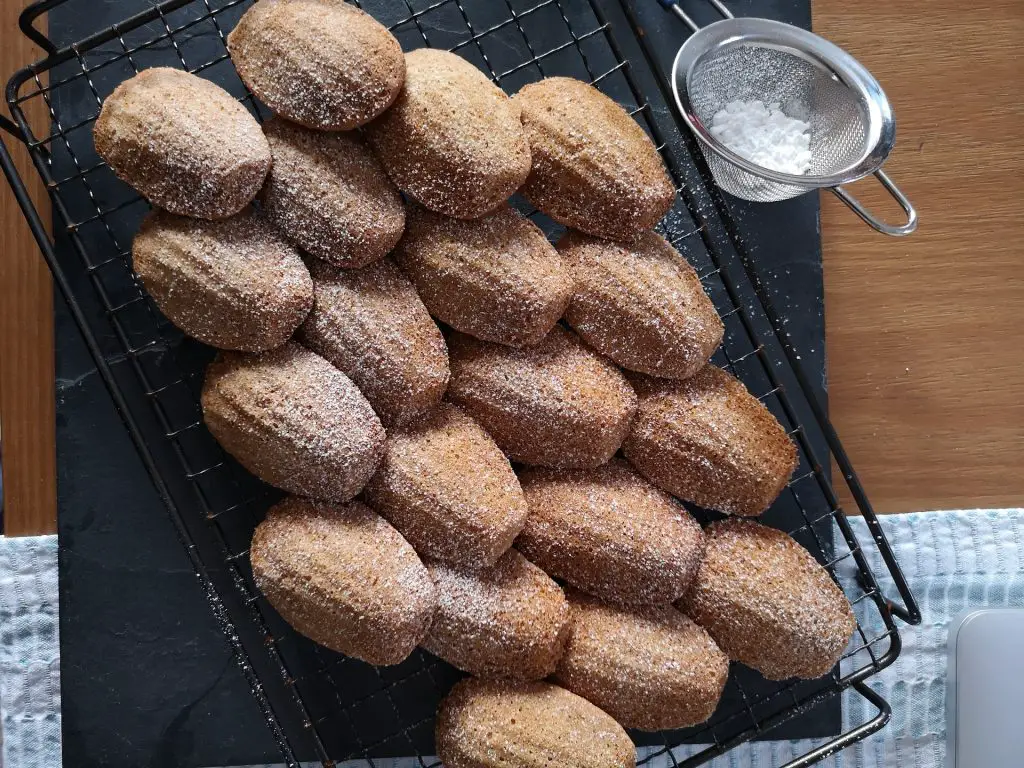
What you should know about French cake, madeleine

Madeleine, also known as petite madeleine, is a traditional cake from France.

It is known for its distinctive shell-like shape. There are just four main ingredients in a basic madeleine recipe; eggs, sugar, flour and unsalted butter.

As for the flavouring, some recipes include ground almonds for the nutty taste or lemon zest for the lemony taste.

What you should know about French cake, madeleine

Even though the ingredients are simple, the different ratios, technique and process can result in different result.

If you love this small sponge cake, this is what you should know about madeleine:

1.The history of madeleine

Like many famous recipes out there, the origin story of madeleine is a subject of dispute.

Larousse Gastronomique is an encyclopedia of gastronomy which was published in Paris in 1938.

It states that the madeleine was invented by a pastry chef named Jean Avice who is known to be the master of choux pastry.

He used to work for Prince Talleyrand (1754-1838), a French clergyman and diplomat.

Reportedly, Avice invented the madeleine in the 19th century by baking small cakes in aspic molds.

Another origin story is contributed to 17th-century cardinal and rebel Paul de Gondi. He owned a castle in Commercy in northeastern France which is also known to be the origin place of madeleine.

Others believed the cake was named after its inventor. The most famous assumed inventor is Madeleine Paulmier. She is believed to be a cook for Stanislaus I, duke of Lorraine and the exiled King of Poland.

The duke fell ill one day and asked his cook to make small cakes. Madeleine made them and when the duke asked for the name of the cake, she said she did not have a name for it yet. Hence, the duke decided to name it after the cook.

Legend has it that Stanislaus I’s son in-law, Louis XV loved it so much that him and his family introduced it his royal court in Versailles. It is believed that was when the cake became a hit among the French.

Lastly, some historians say that a convent of Catholic nuns in Commercy invented the recipe. They baked and sold them to support their abbey which was named Marie-Madeleine.

2.How to make the perfect madeleines

Many have come up with fool-proof recipes in making the perfect madeleines. The New York Times pointed out in their 2019 article that the key to obtaining a sublime sponge is patience and precision since madeleines are essentially spongecakes.

“It’s most important that none of the ingredients be cold; the eggs must be room temperature and the butter-honey mixture and the milk must be warm. The fact that the butter is stirred into the batter at the end is unusual but vital,” New York Times writes.

Meanwhile, The Guardian in 2015 went into great details on how to make the perfect madeleine.

For example, the traditional madeleines of Commercy are made with beurre noisette which is butter that has been browned to give it a nutty flavour.

Another tip is to brush pan with thin layer of soft butter then place the tin in the freezer for less than 20 minutes. This will avoid the case of sticking madeleines. Remember not to use any flour dusting. The additional flour will affect of your madeleines.

It is advisable to give the batter a rest before baking. The resting time varies from minimum 30 minutes to overnight. The idea here is to thicken the batter and give the cakes their little ‘bumps’.

This step is similar with Malaysian cake, kuih penyaram. It is best to leave the batter for kuih penyaram overnight in the fridge in order to give its signature hat-like shape.

What you should know about French cake, madeleine
Do you know any more tips to make the perfect madelines? Photo by Pixabay.

3.Other cakes that are almost similar to madeleines

Speaking of Malaysian cakes, the most similar to madeleines found in the country is kuih bahulu, which is most commonly made in star shapes.

However, unlike madeleine, kuih bahulu does not contain butter.

In the meantime, madeleine shares some similarities with another French cake called financier.

It is small almond cake made with egg whites, flour and powdered sugar and flavoured with beurre noisette.

Originally made by the Visitandine order of nuns during the Middle Ages, the cake is light and moist with a crisp exterior. Thanks to its outer appearance which many described as egg-like, financier can be easily be stored in the pocket without being damaged.

Today, there are many variations of madeleines such as earl grey madeleines, orange and thyme madeleines as well as gingerbread madelelines.

What you should know about French cake, madeleine
Chocolate madelines. Photo by Pixabay.

If you are looking for traditional madeleine recipes, here are ones from Allrecipes, Entertaining with Beth and Sallys Baking Addiction.

KajoPicks: 8 Korean dramas about second chance romance to watch

One commonly seen theme in South Korean dramas is second chance romance. It is when a divorced couple gives their relationship a second chance and finding themselves falling in love all over again.

While in reality, most divorced couples do not rekindle their relationship. These South Korean dramas offers hope in second chance romance.

Here are our picks for 8 South Korean dramas about second chance romance you need to watch:

1.Alone in Love (2006)

Kicking off the list is a Korean series that won critically acclaim for its subtle and realistic portrayal of love, marriage and divorce.

Eun-ho (Son Ye-jin) and Dong-jin (Kam Woo-sung) meet one day at the bookstore where Dong-jin works.

Sparks fly between them and they immediately fall in love after a series of dates.

They eventually married but two years later are divorced.

Even so, the divorced couple still meet up for breakfast and have dinner on their wedding anniversary.

This makes them wonder if the fingering feelings they have are love. They both are too afraid to start over and even more afraid to get their hearts broken for the second time.

2.Go Back Couple (2017)

To all married couples out there, if you had the chance to go back in time, would you marry the same person all over again?

Go Back Couple or also known asConfession Couple explores the possibility of this question in which the two main characters have the opportunity to go back in time when they first met after their nasty divorce.

Based on the Naver Webtoon called Do it One More Time, the drama stars Son Ho-jun and Jang Na-ra.

Choi Ban-do (Ho-jun) and Ma Jin-joo (Jang Na-ra) are both 38 years old, married with a young son.

Their daily lives leave them both unhappy and exhausted. After a series of fights and argument, the couple decides to get a divorce.

On the day after their official divorce, they wake up to find themselves as 20 year old university students.

They then decide to make different choices than they did the first time around by firstly trying not to fall in love with each other.

While it has a tiny dose of fantasy in it, the drama successfully portrays the reality of some marriages.

The couple were head over heels with each other in the beginning of their marriage. They began to drift apart as they slowly not communicate with each other and taking each other for granted.

Anyway, how much changes could they make in their pasts that could impact on their futures? Or everything was meant to be in the first place?

Watch the trailer here.

3.Cunning Single Lady (2014)

Na Ae-ra (Lee Min-jung) grew up believing she was born to be only pretty and not smart.

While working at her family’s restaurant, she falls in love with Cha Jung-woo (Joo Sang-wook).
After her marriage to Jung-woo, she thought she finally achieved her dreams of becoming a housewife.

Suddenly Jung-woo announced that he wanted to quit his job and start his own company.

Although she disagrees with her husband’s decision, she still supports him with by taking odd jobs.

After suffering from the stress of being the sole breadwinner, Ae-ra divorces Jung-woo four years into their marriage.

Three years after their divorce, Jung-woo is now a wealthy CEO while Aera is still paying for the debt she took during their marriage.

Ae-ra takes up an intern job at her ex-husband’s company. Jung-woo believes that Ae-ra wants him back for his money but all she wants from his a belated apology.

Beside the classic old flame being fanned all over again, the drama also touches on the stigma a woman has to go through after a divorce. In one scene, Ae-ra is harassed and referred as ‘used good’ just because she is a divorcee.

4.Emergency Couple (2014)

This medical drama circles about divorced couple who rekindled their love when they become reunited years later as interns at the same hospital.

Oh Jin-hee (Song Ji-hyo), a dietitian falls in love and marries Oh Chang-min (Choi Jin-hyuk) despite his family’s opposition.

This results to Chang-min being cut off financially by his family after his marriage.

He also gives up his dream of becoming a doctor and becomes a pharmaceutical salesman instead.

The couple begins to fight constantly and eventually get a divorce.

Six years later, they both find themselves as interns at the same hospital where they will have to work in the emergency room together for three months.

Although it was initially set for 20 episodes, it was extended by one episode due to its popularity.

Watch the trailer here.

5.18 vs 29 (2005)

What happen if you ended up losing 11 years of your memories inconveniently on the day you supposed to file for divorce?

Park Sun-young plays Yoo Hye-chan a 29-year-old housewife who is unhappily married to a famous actor Kang Sang-young (Ryu Soo-young).

While on her way to court to file for divorce, a car accident drastically changes her life. It causes her to mentally revert to her 18-year-old self.

Sang-young wants to reconcile and tries to help her recover her memory. Meanwhile, Hye-chan finds herself falling in love with her husband all over again.

6.Can’t Lose (2011)

This Korean second chance romance drama is a remake of the 2008 Japanese drama The Sasaki Couple’s Merciless Battle.

It is circles around two bickering, married divorce lawyers who lash out on each other in and out of the courtroom.

The drama stars Choi Ji-woo, Yoon Sang-hyun and Kim Jung-tae.

7.Single Wife (2017)

When Ra-hee (Uhm Hyun-kyung) is about to marry Jae-min (Kwak Hee-sung), she finds out that her divorce with her ex-husband Min-hong (Sung Hyuk) has not been finalised by law.

Ra-hee tries to fix the hiccup so that she can marry again.

‘Conveniently’, Min-hong gets into an accident and develops amnesia, forgetting that he and Ra-hee are already divorced.

What would Ra-hee do now?

KajoPicks: 8 Korean dramas about second chance romance to watch

8.My Secret Hotel (2005)

Nam Sang-hyo (Yoo In-na) is the head of the wedding planning division of The Secret Hotel.

Everything seems go smoothly until she finds out her next client is Gu Hae-young (Jin Yi-han), her ex-husband.

Meanwhile, Sang-hyo has caught the eye of her boss Jo Sung-gyeom (Min Nam-koong Min), the hotel managing director who has all the female employees swooning.

To make things interesting between the former couple, a murder takes place in the hotel.

The forgotten Malayan labourers of Burma Railway during WWII

The Burma Railway is infamously known as the Death Railway. It is because thousands of people died building it during World War II (WWII).

The Empire of Japan built it from 1940-1944 to supply troops and weapons in the Burma campaign.

The railway is 415-kilometres long connecting Ban Pong, Thailand and Thanbuzayat, Burma.

It is understood that between 180,000 and 250,000 Allied prisoners of war (POWs) were forced to build the railway.

However, not many remember that there were civilians working along the railway sacrificing their lives along the way.

It is estimated that there must have been more than 180,000 civilian labourers working on the railway.

They were mostly Javanese from Indonesia, Thai, Burmese as well as Chinese, Malay and Tamil from Malaya.

Sometimes referred to as romusha (the Japanese language word for labourer) in writing, they were also known as ‘the coolies’ by the Allied POWs.

The forgotten Malayan labourers of Burma Railway during WWII
Bridge over the River Kwai by Leo Rawlings, a POW who was involved in the line’s construction (sketch dated to 1943). It depicts four POWs, waist-deep in the water, carrying a large log during the first bridge’s construction. Credits: Rawlings, Leo – http://media.iwm.org.uk/iwm/mediaLib//150/media-150071/large.jpg This is photograph Art.IWM ART LD 6035 from the collections of the Imperial War Museums.

The recruitment of Malayan labourers

Speaking of Allied POWs, Australian POW Hugh Clarke described on how these civilian labourers were recruited in his work “A Life For Every Sleeper, A Pictorial Record of the Burma-Thailand Railway.”

He wrote, “The Japanese at the end of 1942 resorted to many ruses to recruit an additional labour pool of over 270,000 civilian labourers. They included Chinese, Burmese, Thais, Indians, Malays and Eurasians. As POWs began moving north the Japanese placed advertisements in Malayan newspapers seeking labourers for work periods of up to three months in Thailand. Free rail travel, housing, food and medical services were offered together with pay at a rate of one dollar a day. The response was negligible so the Japanese resorted to press-gang methods. Free pictures shows were advertised at various theatre around Malaya and when full, the doors were locked and all males in the audiences put abroad trains and railed to Thailand.”

However, could the civilians escape from being recruited? There were reports of locals agreed to become spies for the military police or Kenpeitai in order to avoid being sent to work on Burma Railway.

Dr Robert Hardie’s accounts on Malayan labourers on Burma Railway

Dr Robert was a British medical officer serving with the Federated Malay States Volunteer Force and a plantation manager in Malaya.

After the fall of Singapore, he became one of thousands of POWs forced to work on the railway.

Throughout this period, he managed to keep a diary despite the numerous searches. His diary entries were later published in a book entitled The Burma-Siam Railway: The Secret Diary of Dr Robert Hardie 1942-45.

He was reportedly an admirer of Malay culture.

On Aug 4, 1943, he wrote,

“When one hears of these widespread barbarities, one can only feel that we prisoners of war, in spite of all the deaths and permanent disabilities which result, are being treated with comparative consideration.”

Then on July 6, 1943, Hardie stated,

“A lot of Tamil, Chinese and Malay labourers from Malaya have been brought up forcibly to work on the railway. They were told that they were going to Alor Setar in northern Malaya; that conditions would be good – light work, good food and good quarters. Once on the train, however, they were kept under guard and brought right up to Siam and marched in droves up to the camps on the river. There must be many thousands of these unfortunates all along the railway course. We hear of the frightful casualties from cholera and other diseases among these people and of the brutality with which they are treated by the Japanese. People who have been near the camps speak with bated breath of the state of affairs-corpses rotting unburied in the jungle, almost complete lack of sanitation, frightful stench, overcrowding, swarms of flies. There is no medical attention in these camps, and the wretched natives are of course unable to organise any communal sanitation.”

Again on July 21, 1943, Dr Hardie wrote,

“The conditions in the coolie camps down river are terrible, Basil says. They are kept isolated from Japanese and British camps. They have no latrines. Special British prisoners parties at Kinsaiyok bury about 20 coolies a day. These coolies have been brought from Malaya under false pretence – ‘easy work, good pay, good houses!’ Some have even brought wives and children. Now they find themselves dumped in these charnel houses, driven and brutally knocked about by the Jap and Korean guards, unable to buy extra food, bewildered, sick, frightened. Yet many of them have shown extraordinary kindness to sick British prisoners passing down the river, giving them sugar and helping them into the railway trucks at Tarsao.”

What happened to the Malayan labourers when the war ended?

If you think that the suffering of Malayan labourers would end when the Japanese surrendered and the war finally ended, well, it’s usually not that clean-cut.

According to Anzac Portal, these civilians had no expectation of being rescued by military authorities when the war ended.

In other Japanese-occupied territories romusha were given supplies of food and medical attention by American troops arriving from August-September 1945 on.

Unfortunately, Allied authorities in Thailand and Burma prioritised their own military personnel leaving the romushas including the Malayan forced labourers perhaps last in line for help and supplies.

As for the repatriation of Romusha, it was managed by different authorities. The British Military Administration in Malaya sent missions to Thailand in November 1945 to aid the repatriation of Malayan laborers.

Overall for those who returned alive to their homes, no compensation were given to them. In Malaya, nonetheless, some received some clothing and a small amount of money… but many received nothing.

The unmarked and unknown graves of civilians of Burma-Thai Railway

After the war, the remains of the dead were relocated from former POW camps, burial graves along the railroad to official war cemeteries.

Overall, there were three war cemeteries which are maintained by the Commonwealth War Graves Commission.

According to Paul H. Kratoska in Asian Labor in the Wartime Japanese Empire: Unknown Histories, there are 12,043 Allied soldiers are buried in cemeteries in Kanchanaburi, Thailand. Their gravestones seem to stretch on forever.

He further stated, “However, there are no cemeteries, and no individual gravestones, for the Asian labourers who died building the railway. They were buried if they were fortunate, or else abandoned in the jungle, or thrown into the river or into a common grave. In 1988, the site of a mass grave was found in Kanchanaburi by accident, and the bones of more than 700 bones were excavated. Villagers said it was a burial site used for the Asian railway construction labourers.”

According to Anzac portal, since they were not military personal they were not interred in the Commonwealth War Graves Commission.

Furthermore, the identification of their bodies would be extremely difficult given the lack of records of where they buried.

To this day, there is no official record of how many civilian labourers died building the Burma railway.

Why were the Asian workers of Burma Railway, including the Malayan labourers, forgotten?

According to David Boggett in his paper Notes on the Thai-Burma Railway, while dead men can tell no tales, so the illiterate can write no diaries.

He stated, “Many of the Asian romusha were illiterate; poor, helpless peasants most forcibly conscripted or callously lured by false promises of riches and unaware of their ultimate destinations. While it is a matter of dispute as to whether Japan ever made any efforts to observe the Geneva convention (certainly the experiences of the POWs led them to believe that the Conventions were being deliberately ignored), the records kept of POWs movements for example from Singapore’s Changi prison to Thailand or from Thailand to Japan proper – suggest that at some perhaps higher levels, the intention of Japanese bureaucrats (as opposed to military staff on the ground) was, indeed accurate records of the POWs’ fate as obligated under the conventions.”

Boggett also added, “However, no such Geneva Conventions existed to govern the impressing or treatment of civilian labour; few official attempts were made to record the fate of Asian romusha. This lack of official Japanese documentation, coupled with the absence of almost any written records by the survivors themselves, has allowed the situation of Asian romusha to be minimise or even ignored.”

With no marked graves and no official records of their existence, it is no surprise why the civilian labourers of the Burma Railway including those from Malaya had been forgotten, even if their number could be way higher than of Allied POWs.

KajoPicks: 10 South Korean mystery movies you need to watch

If you need a dose of whodunit or what-on-earth-is-going-on type of entertainment, here are 10 South Korean mystery movies to watch:

1.Helpless (2012)

Imagine David Fincher’s Gone Girl (2014) but with an even darker approach.

Based on the bestselling novel All She Was Worth by Japanese writer Miyabe Miyuki, this South Korean mystery/psychological thriller is written and directed by Byun Young-joo.

One month before their wedding, Moon-ho (Lee Sun-kyun) and Sun-young (Kim Min-hee) decides to take a road trip to Andong.

Moon-ho plans to formally introduce his fiancee to his parents.

On their way to Andong, they pull over at a highway rest stop.

While Moon-ho goes inside the rest stop to get coffee, Sun-young stays in the car.

But when Moon-ho returns, he is shocked to discover that his fiancée is missing.

After looking all over the rest stop, Moon-ho file a police report. One thing after one another, Moon-ho begins to realise that his fiancée is not the person he thinks she is.

For starters, her name is not even Sun-young.

Helpless (2012) was the twelfth most-watched Korean film in 2012.

Watch the trailer here.

2.Moss (2010)

A remote village with villagers acting all suspicious always makes a good background story for a mystery movie.

Ryu Hae-kook (Park Hae-il) arrives at a village to attend his father’s funeral.

After the funeral, Hae-kook decides to stay to investigate as he suspects his father is a murder victim.

From there, Hae-kook finds himself entangled in murder attempt, arson, real estate fraud and corruption.

Can he discover the truth behind his father’s death?

This Korean mystery movie is based on the popular webtoon of the same title by Yoon Tae-ho.

Watch the trailer here.

3.The Wailing (2016)

Speaking of remote villages, here is a Korean horror film centering around mysterious killings and illnesses.

In the small village of Goksung, police officer Jong-goo (Kwak Do-won) investigates a series of bizarre murders allegedly caused by a mysterious disease.

Rumour has it that a Japanese stranger, who lives in a secluded house in the mountains, is responsible for the illness.

Additionally, the stranger is reportedly to be a spirit.

Jong-goo decides to visit the stranger along with his partner and a young priest who speaks Japanese.

There, they find an altar with a goat head, pictures on the walls of the infected people that died.

Among the items, Jong-goo finds his daughter Hyo-jin’s shoe. Soon after that, she becomes sick.

Is the stranger really responsible for the illness falls upon Gokseong?

The film was both a commercial and critical success.

Watch the trailer here.

4.The Silenced (2015)

Set in Gyeongseong in 1938 during the Japanese occupation, the film centers on Ju-ran/Shizuko (Park Bo-young).

She is a sickly young girl who gets transferred to a sanatorium to recover her health.

Her physical condition improves thanks to her new friend Yeon-deok (Park So-dam) and the headmistress (Uhm Ji-won)’s special treatment program.

However, she soon notices that students are disappearing one by one.

Adding on the weird thing around her, her own body is undergoing abnormal changes.

Determined to uncover the truth, Ju-ran starts to investigate the mysterious happenings around her.

Where do her schoolmates go? Who is behind it? Additonally, what is happening to her body?

5.M (2007)

After the success of his first novel, the pressure is high on young author Min-woo (Kang Dong-won) to write another best-selling book.

He is struggle with writer’s block, nightmares and hallucinations. Hence, all of these end up affecting his career and personal life.

Slowly, Min-woo finds himself unable to differentiate between fantasy and reality.

In the meantime, a charming young woman named Mimi (Lee Yeon-hee) shows up. He seems to have a history with her, but what?

The movie had its premiere at the Toronto International Film Festival and Pusan International Film Festival.

6.White Night (2009)

When a pawnbroker is found dead in a remote town in a derelict building, the police are divided on whether it was a murder or a suicide.

Detective Han Dong-su (Han Suk-kyu) investigates the case and it leads him to a homicide case that took place 14 years ago.

The prime suspect of that case, is a woman who suspected to be the dead man’s lover. Soon afterwards, the woman is also found dead leaving behind her daughter Lee Ji-ah (Son Ye-jin).

After the death of her mother, Lee Ji-ah changes her name to Yoo Mi-ho.

Now, fourteen years later, Mi-ho is set to marry a rich CEO. Is there any connection between Mi-ho and these deaths?

White Night (2009) is based on the Japanese novel Journey Under the Midnight Sun by Keigo Higashino, who is mainly known for his mystery novels.

Watch the trailer here.

7.Forgotten (2017)

Jin-seok (Kang Ha-neul) moves into a new home with his older brother Yoo-seok (Kim Moo-yul), mother (Na Young-hee) and father (Moon Sung-geun).

One rainy evening, Jin-seok sees Yoo-seok being thrown into a van by a group of men.

After 19 days, Yoo-seok returns home but he doesn’t remember anything from his disappearance.

Jin-seok though notices enough changes in his older brother’s personality and behavior that he begins to suspect that the person who has returned is not Yoo-seok.

What if the one who lost his memories is Jin-seok and not Yoo-seok? And that even his memory fools him of what happened.

The director Jang Hang-jun said he is inspired from a story told to him by a friend whose cousin left home for about a month and returned with a drastic changes in personality.

8.Perfect Number (2012)

Here is another Korean film based on the work of mystery writer Keigo Higashino’s 2005 novel Yogisha X no Kenshin.

Kim Seok-go (Ryoo Seung-bum) is an ordinary high school math teacher who was a brilliant mathematician as a child.

He lives a normal, introverted life which includes a morning exchange with Baek Hwa-sun (Lee Yo-won).

She is a cafe employee with whom he buys lunch from.

When Hwa-sun’s ex-husband mercilessly beats Hwa-sun and her niece, Hwa-sun kills him.

Meanwhile, Seok-go overhears the fight from his house next door and decides to cover up the killing and protect her from the police.

He uses his genius in meticulously planning the perfect alibi for her, and thanks to his efforts, Hwa-sun is cleared in the case.

But is she completely cleared from the murder?

Watch the trailer here.

9.Blood Rain (2005)

This Korean mystery movie is set in 1808, touching on historical discrimination against the Roman Catholics during the Joseon dynasty.

On Donghwa Island, there is technologically advanced paper mill allowing its townspeople a certain degree of wealth.

Suddenly, this peaceful and isolated island is shaken by a string of gruesome murders.

Even more, the victims were killed the most sadistic way.

With the killer still on the loose, the government sends in special investigator Wonkyu (Cha Seung-won) to crack the case.

His investigation leads him to an incident that takes place seven years earlier, in which the former owner of the paper mill was executed for practicing Catholicism.

In the meantime, the residents are convinced that the dead man’s is back for revenge.

Can the ghost of a dead man bring so much trouble into the land of the living?

10.Intruder (2020)

After the lost of his wife in a hit and run accident, architect Kang Seo-jin (Kim Mu-yeol) is a mess.

He is struggles to manage his work and taking care of his daughter as well as finding the driver who kills his wife.

One day, he receives a call from an orphanage claiming that his long lost sister was found.

Kang Yoo-jin (Song Ji-hyo) was abducted 25 years ago and now she finally comes home.

Soon, Yoo-jin gets close to the whole family including with Seo-jin’s daughter who follows everything her aunt tells her to do.

After a series on incident, Seo-jin begins to realise that Yoo-jin might not be his sister but an intruder.

Although the film was originally scheduled for a release in March 2020, its premiere was postponed due to the Covid-19 pandemic.

After its premiere on June 5, it breaks the records of highest number of first-day moviegoers achieved by any film in South Korea since the pandemic.

Watch the trailer here.

KajoPicks: 10 South Korean mystery movies you need to watch
Watch Song Ji-hyo’s unbelievable acting in this Korean mystery movie called Intruder (2020). Credit: Youtube.

KajoPicks: 10 juicy Korean dramas about adultery to watch

Do you know that committing adultery was a crime up until a few years ago in South Korea?

This law was overturned in 2015 by South Korea’s Constitutional Court.

The court ruled that one’s sex life was private and it was the right of an individual ‘to pursue happiness’.

Before that, anyone who cheated on their spouse could be charged and if convicted, could spend up to two years in prison.

In Korean drama-land, having the main characters as cheaters or being cheated on is a juicy, salacious plot idea.

And viewers actually enjoy these blood-boiling dramas circling around adultery.

So here are KajoMag’s favourite Korean dramas about adultery that you should watch:

1.World of the Married (2020)

KajoPicks: 10 juicy Korean dramas about adultery to watch
Would you kill your spouse for committing adultery? Credits: Youtube

This list of dramas about adultery can never be complete without World of the Married (2020).

It created so much hype and invoked so much hatred that the actress who played as the mistress in the drama received hateful comments on her Instagram.

Some viewers could not even differentiate between reality and fantasy in this drama because that is how good the acting was.

Based on BBC One’s drama series Doctor Foster, it tells the story of a married couple whose betrayal leads to a back-and-forth revenge.

To date, it is the highest-rated drama in Korean cable television history.

The story focuses on Ji Sun-woo (Kim Hee-ae), a respected doctor and the associate director of a hospital.

She has been married to Lee Tae-oh (Park Hae-joon) for more than a decade.

Tae-oh works as a struggling film director who is feeling insecure and inferior for having a successful wife.

So what does an insecure man do? They got into affairs with much younger women who think highly of them.

Tae-oh’s mistress Han So-hee (Yeo Da-kyung) is the only child of rich parents and used to getting what she wants.

And of all the things she could have, she wants another woman’s husband.

While most viewers are drawn to the juicy revenge and scandalous plots of this drama, the story’s actual message the impact of divorce on children.

Watch the trailer here.

2.Secret Affair (2014)

Oh yes, you can tell this drama is about adultery and infidelity based on the title itself.

While Kim Hee-ae gets cheated on in World of the Married (2020), here is Secret Affair (2014) where she does all the cheating as Oh Hye-won.

At the age 40, she seems like a woman who is living a fulfilling life. She carries herself elegantly and full of sophistication as the director of planning for the Seohan Arts Foundation.

One day, she comes across Lee Sun-jae (Yoo Ah-in). A genius pianist, Sun-jae is 20 years Hye-won’s junior.

They begin a scandalous, passionate affair together which they have to keep as a secret no matter what.

3.VIP (2019)

Jung-sun (Jang Na-ra) comes from an affluent family and graduated from a prestigious university. She lands a high-level job at Sung Un Department Store without much difficulty.

Her work as the department store’s VIP management team is to serve their top one percent of customers who are special VIPs and VVIPs.

Her husband Park Seong-joon (Lee Sang-yoon) is her team leader at work.

One day, she receives an anonymous text telling her about Seong-joon’s adultery.

Jeong-soon begins to dig up the truth about her husband and ends up finding out more than she can bargain for.

Watch the trailer here.

4.Temptation of Wife (2008)

In this revenge thriller drama, the husband Jung Kyo-bin (Byeon Woo-min) is a world-class jackass.

He cheats on his wife Goo Eun-jae (Jang Seo-hee), divorces her, forces her to abort their baby and leaves her to die.

Eun-jae then suddenly makes a surprise comeback from the dead showing up with a complete different attitude, a mole and brand new identity as So-hee.

Due to this, the drama gained much criticism when nobody seemed to recognise Eun-jae just by virtue of a single mole on her cheek.

Ridiculous? Maybe. The drama, however, remains one of the most viewed dramas of all time. It even had two remakes in China and the Philippines.

5.I Have a Lover (2015)

Speaking of two people who look alike, I Have a Lover (2015) is about a pair of twins Hae-kang and Yong-ki (Kim Hyun-joo) who were separated 30 years ago.

Hae-kang is living her life as an ambitious and successful lawyer with her husband Choi Jin-eon (Ji Jin-hee).

After they lose their daughter, their marriage is pretty much loveless and dysfunctional.

Jin-eon goes on to start an affair with a younger girl Seol-ri (Park Han-byul). Later on, the couple divorces.

Hae-kang gets into a mysterious car accident and loses her memory. Baek-seok (Lee Kyu-han) mistaking Hae-kang as Yong-gi and saves her life.

From there, Hae-kang continues her life believing herself to be Yong-gi and falls in love with Bae-seok.

But what happen when her adulterous former husband shows up? Will she falls for him all over again?

6.My Wife’s Having An Affair This Week (2016)

Also known as Listen to Love, this Korean drama is based on the 2007 Japanese series by the same title.

What if you find you find out your wife is having an affair? Who do you turn to?

Hyun-woo (Lee Sun-kyun) fell in love with Soo-yeon (Song Ji-hyo) when they were in college.

After eight years of marriage, he thought he had the perfect family. His wife is beautiful and devoted to their son.

His world comes crashing down on him when he sees a hotel reservation message sent by a male stranger on Soo-yeon’s phone.

At first, he does not think much about it. However, Hyun-woo slowly start to realise that his wife is having an affair.

He starts to question everything in his life including how he is like as a husband and father. To seek advice, he begins to talk to strangers online to figure out how to save his marriage.

7.My Husband’s Woman (2007)

Before Kim Hee-ae played the dutiful wife in World of the Married (2020), she was the mistress Hwa-young in My Husband’s Woman (2007).

After graduating from college, she meets a Korean-American man whom she later marries. She then moved to the US to live with her husband.

Years of marriage, Hwa-young and her husband are unable to conceive. Later due to a failed business, her husband falls into deep depression and commits suicide.

After the loss of her husband Hwa-young returns to South Korea.

There, her best friend Ji-soo (Bae Chong-ok) helps her build a new life.

She also meets Joon-pyo (Kim Sang-joong), Ji-soo’s husband.

So how does Hwa-young repay her best-friend’s kindness after all she has done? She falls in love with Joon-pyo and starts an affair with him.

In the meantime, Ji-soo eventually finds out and the psychological warfare begins.

8.Misty (2018)

Twisted, intense and a very intriguing whodunnit storyline; Misty (2018) marks Kim Nam-joo’s return to the small screen after six years.

She plays the role of Go Hye-ran, an ambitious anchorwoman for the popular news show News 9.

One day, she needs to interview a famous golfer named Kevin. As it turns out, the man is her former lover.

The sexual tension between them is high and both of them have various rendezvous together. It should not been a problem if they both were not married.

Hye-ran’s husband is Kang Tae-wook (Ji Jin-hee), a public defender whom she married for his powerful family background.

Kevin is married to Hye-ran’s friend from school Eun-joo (Jeon Hye-jin). The affair turns deadly as Kevin is found dead and Hye-ran is the prime suspect.

For some unknown reason, Hye-ran’s estranged husband steps in to be her lawyer. Is it out of love and their marriage or is there something else going on?

The first four episodes are rated 19 by the Korea Communications Commission due to violence and sexual content so you know things are steamy in the beginning.

Watch the trailer here.

9.Woman of Dignity (2017)

What is worse than a woman who is proud of ruining someone else’s marriage? A mother who encourages her daughter to do so.

Woo Ah-jin (Kim Hee-sun) is an elegant and charismatic woman who marries into a rich family.

Thanks to her character and wisdom, she gains the favour of her father-in-law and a president of a multi-millionaire company.

Ah-jin is entrusted to find a caregiver for her father-in-law. She find Bok-ja (Kim Sun-ah) whom she thought was a simple woman from the village.

Things turn upside down in that household when Bok-ja manages to convince the president to transfer his money and company to her.

Making it worse for Ah-jin, she finds out her husband is cheating on her.

The story continues with Ah-jin trying to gain back her father-in-law’s wealth as well as making the unapologetic mistress and husband pay for their betrayals.

10.The Hymn of Death (2018)

Here is a Korean drama based on a real-life adultery.

Yun Sim-deok (1897-1926) is Korea’s first professional soprano. In 1921, she met Kim U-jin, an English literature student.

They both fell in love with each other but there are two problems, U-jin is married and divorce is out of the question.

Starring Lee Jong-suk and Shin Hye-sun, the drama is based on the real-life romance of U-jin and Sim-deok.

Since it is based on true story, viewers who know the story beforehand can already predict the ending.

Watch the trailer here.

KajoPicks: 10 Korean thriller dramas from OCN you should watch

Orion Cinema Network (OCN) is a movie channel on basic cable in South Korea. It is one of the cable channels in the country besides Joongang Tongyang Broadcasting Company (jTBC), Channel A and Total Variety Network (TvN).

Among Korean drama fans, OCN channel is known to air the best thriller dramas.

If you are looking for thriller dramas, here are 10 of them you should watch from OCN:

1.Voice (2017)

After his wife is murdered while he is at work, Moo Jin-hyuk (Jang Hyuk) is crippled with guilt. The successful detective’s life spirals out of control after her death.

In the meantime, Kang Kwon-joo (Lee Ha-na) is a driven rookie officer working at the emergency 112 call center.

While working there, a brutal murder takes place and her police father was the first to arrive. Unfortunately, her father is killed by the killer and Kwon-joo hears everything over the phone.

After the incident, she goes to the US to further her studies and returns to Korea as a voice profiler.

Together with Jin-hyuk, the duo go on a hunt for the serial killer who is responsible for the deaths of their loved ones.

All thanks to its popularity, OCN renewed the series for the second season in 2018 and the third season in 2019.

Watch the trailer here.

2.Tunnel (2017)

We listed this drama as one of our favourite Korean time-travel series as well as series inspired by the Hwaseong serial murders.

Starring Choi Jin-hyuk, Yoon Hyun-min and Lee Yoo-young, the drama first sets in 1986.

Park Gwang-ho is a successful detective assigned to a series of killings. One day, something mysterious happens when he passes through a tunnel while pursuing a suspect. He finds himself time-travelling 30 years into the future.

There he meet Kim Seon-jae, an elite but eccentric detective. As it turns out, the serial murders in the 80s continue to happen in the present.

The duo works with psychology professor Shin Jae-yi to solve these unsolved murders.

Watch the trailer here.

3.Missing Noir M (2015)

In this police procedural-thriller drama, Missing Noir M circles around the special missing persons task force.

This task force only takes 1 per cent of the toughest unsolved cases. Its leader Gil Soo-hyun (Kim Kang-woo) is a genius who worked for the FBI.

His partner is Oh Dae-young (Park Hee-soon), a senior detective with a strong sense of justice.

Soo-hyun goes by the book and is very analytical while Dae-young is the I-have-a-hunch kind of detective.

Can they put aside their different working styles and solve cases together?

Watch the trailer here.

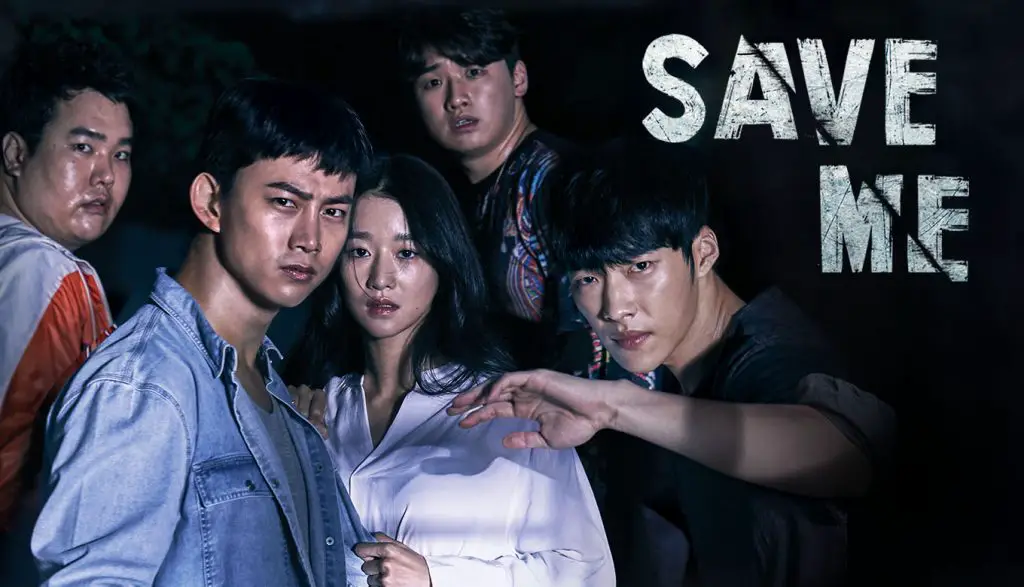
4.Save Me (2017)

Based on the webtoon Out of the World by Jo Geum-san, this drama airs on OCN from Aug 5 to Sept 24 in 2017.

After her father’s business fails, Sang-mi and her family move from Seoul to the suburb of Muji County.

On the surface, there is peaceful church in the county. Behind closed doors, the church is the religious cult Goseonwon.

In their new school, Sang-mi’s brother Sang-jin is being bullied. Due to this, he commits suicide, leaving his family falling apart.

The cult leader then takes this chance to lure Sang-mi’s parents into Goseonwon.

Trapped by the cult, Sang-mi has nowhere to go and her parents are completely brainwashed.

Three years later, her classmate Han Sang-hwan, the son of the county chief who is now a law student, and his two friends Jung-hoon and Man-hee have a chance encounter with Sang-mi.

She whispers to them, “Save me.”

Watch the trailer here.

5.Trap (2019)

Kang Woo-hyun (Lee Seo-jin) is a respected anchor at a broadcasting station. He has a lovely family and his life seems perfect.

One day, he goes on a trip with his family and a tragic situation occurs.

Meanwhile, Ko Dong-kook (Sung Dong-il) is a veteran detective with uncanny instinct.

He takes Kang Woo-hyun’s case and starts to investigate about his family.

Watch the trailer here.

6.Hell is Other People (2019)

Yoon Jong-woo is a handsome writer who comes from the countryside. After landing a new job in a new city, he moves in room 303 at Eden Dormitory.

His next door neighbour in room 304 is Seo Moon-jo, a mysterious dentist.

At first, Jong-woo is willing to cope with the almost rundown place until he saves enough money to move out.

Then mysterious things start to happen around the dormitory, making him wanting to stay in order to investigate these occurrences.

Watch the trailer here.

7.Watcher (2019)

Fifteen years ago, a murder took place which turned the lives of three people upside down. Perhaps by fate (or Korean drama logic), these three people were brought together to search for answers.

Do Chi-Gwang (Han Suk-kyu) is an elite detective. But after awhile working in the force, he realises that all the important tasks are handed to the corrupt police. Hence, he decides to join the internal affairs investigation team.

In the meantime, Kim Young-koon (Seo Kang-joon) is another police officer who is affected by the murder case 15 years ago. At first glance, he seems to be uncaring and have a cold personality .

Actually, it is just a facade to hide himself and his struggle with the past. He too, joins Chi-gwang and his internal affairs investigation team.

The final member of the group is Han Tae-joo (Kim Hyun-joo). She used to be a prosecutor before quitting to become a lawyer. Together, they slowly begin to unravel what actually happened 15 years ago.

With 16 episodes, the drama manages to keep the suspense throughout the series. Many viewers praised it for being able to keep them in its grips until the very end.

Watcher (2019) is directed by Ahn Gil-ho who is known for his works Stranger (2017) and Memories of the Alhambra (2018).

Watch the trailer here.

8.The Lies Within (2019)

Dead body? Check. Missing person? Check. A conspiracy theory? Check. The Lies Within (2019) has all the above components which make the basics of a thriller drama.

It circles around Jo Tae-sik (Lee Min-ki), a detective who moved to a police station in a small country village.

Thinking that he could get away from the nasty crimes of big city, a dead body shows up in his area.

It belongs to Lawmaker Kim Seung-cheol. At first, his death looks like a car accident but his hunch tells Tae-sik there is more than meets the eye.

His suspicion grows when he finds out that Seung-cheol’s son in-law goes missing.

In the mean time Kim Seo-hui (Lee Yoo-young) is the youngest daughter of Seung-cheol. Together with Tae-sik, she aims to find out what happen to her father and missing husband.

Developed and produced by Studio Dragon for OCN, this thriller drama is based on a novel by Joo Won-gyu.

Watch the trailer here.

9.Bad Guys (2014)

This answers the question, what if the Suicide Squad was made up of a bunch of South Korean inmates.

Detective Oh Gu-tak (Kim Sang-joong) comes up with a brilliant plan; to use criminals to investigates and hunt down other criminals. Who know the minds of criminals than the criminals themselves right?

So he releases three convicts from jail to form his team.

Lee Jung-moon (Park Hae-jin) is a psychopath serial killer. Putting that aside, he is the youngest member of Mensa with an IQ of 165 and doctorate degrees in Math and Philosophy. (Of course.)

The second convict is a mob boss, Park Un-cheol (Ma Dong-seok).

Lastly, Jung Tae-soo (Jo Dong-hyuk) a professional killer who never been caught but suddenly turned himself in one day.

10.Tell Me What You Saw (2020)

KajoPicks: 10 Korean thriller dramas from OCN you should watch

Oh Hyun-jae (Jang Hyuk) was once a top criminal profiler. Everything crumbles around him when he loses his fiance in an explosion caused by a serial killer. The serial killer is never caught.

Since then, he gave up his career and live in seclusion.

Five years later, a new murder case happens using the same method as that serial killer.

This prompts Hyun-jae to return to his field in order to catch the killer. He is joined by Cha Soo-young (Soo-young), a rookie detective who has a photographic memory.

Produced by Studio Dragon, this drama is one of the high-rated series from OCN in 2020.

Numbul and Bedukun, the Bisaya traditional healing ceremonies

Before there were doctors and nurses, the people of Sarawak relied on traditional healing ceremonies to cure sickness.

Every ethnic group has its own healing ceremony, for example the Ibans have their pelian and the Melanau turn to berayun and berbayoh to heal the sick.

For the Bisaya people in the Sarawak, their traditional healing ceremonies are called numbul and bedukun.

The numbul ceremony

It is the custom of the Bisaya that if a woman is sick, a numbul ceremony is held in order to cure her.

According to Benedict Sandin in his paper The Bisaya of Borneo and the Philippines, the word numbul means a curing ceremony for a sick woman officiated by a female shaman.

Benedict wrote, “To carry out the ceremony, a female shaman wears a petticoat, sarong, cloak and bracelets. From the wrist to the elbow of her silver are nine silver buttons.”

As she starts her invocation chants, the shaman sits at the centre of the gathering of people who beat the gongs at the open veranda of the house.

The invocation chants last from dusk till dawn. As she chants her songs, she summons the soul of the patient to return quickly from where it has wandered away.

If the patient can be cured, her soul will come back as summoned by the shaman.

What happens if she cannot be cured? Then her soul will never again come back to her.

The moment the soul comes back, the shaman catches it with her hand and places it carefully on a white piece of calico cloth. Then she places it on the head of the patient.

Numbul and Bedukun, the Bisaya traditional healing ceremonies

What happens if the numbul ceremony fails?

After the shaman has successfully performed her numbul over the patient, the latter and her family are assured that she will be cured from her current illness.

If her soul did not return to her, another numbul ceremony can be officiated by the same shaman.

The shaman before this can still perform the numbul over the same patient up to three times.

If the patient still cannot be cured, another female shaman should be called upon to perform the numbul ceremony for her.

In the meantime, many people are invited to attend the numbul ceremony. The whole night they will partake in food and drink at the house of the patient’s family.

At the end of the ceremony, the shaman declares that every member of the patient’s family and those who stay in the same house must not do any outdoor work for three days.

Besides this, the shaman also strictly prevents any visitor who come to the house to bring with him a knife which has resin (malau) in its handle.

Any visitor found bringing such weapon will be fined according to the customary rules of the numbul ceremony.

Bedukun ceremony for a sick man

If a man is sick, the Bisaya family usually calls for a dukun (medicine man) to come to cure him.

For this ceremony, the dukun does not necessarily wear ceremonial dress as does the female shaman and he recites no long chants for the patient.

The dukun performs the ceremony only for about one hour. During this time he only blows (taurik) the air to the painful spot of the sick man’s body. Additionally, he recites a special spell (puchau) over the place of the patient’s pain.

Just like the numbul ceremony, the dukun declares that all members of the patient’s family must not do outdoor work for three days.

At the same time, he forbids all visitors to the family’s house to bring with them a knife which has resin in its handle.

Although we may not practice Sarawakian traditional healing ceremonies, it is always important to at least remember them.

1 22 23 24 25 26 75