Patricia Hului

Patricia Hului is a Kayan who wants to live in a world where you can eat whatever you want and not gain weight.

She grew up in Bintulu, Sarawak and graduated from the University Malaysia Sabah with a degree in Marine Science.

She is currently obsessed with silent vlogs during this Covid-19 pandemic.

Due to her obsession, she started her Youtube channel of slient vlogs.

Follow her on Instagram at @patriciahului, Facebook at Patricia Hului at Kajomag.com or Twitter at @patriciahului.

What to know about Asian fox spirits; huli jing, kumiho and kitsune

What to know about Asian fox spirits; huli jing, kumiho and kitsune
Asian fox spirit is often depicted as having nine tails. Credits: Pixabay

Different cultures have their own versions of almost the same mythical creature, which is almost always inspired by the same animal. Take the fox, for example. Although there are some variations in their depictions, the fox often appears in the folklore of many cultures.

Typically, they are known as symbols of cunning and trickery, especially in Western and Persian folklore. Perhaps this reputation derived from fox’s ability to evade hunters.

Similarly in Asian folklore, they appear as fox spirits with the ability to disguise themselves as beautiful women. The widely known Asian fox spirits are huli jing, kumiho and kitsune which comes from Chinese, Korean and Japanese cultures respectively.

Here are some interesting facts and stories about these three Asian fox spirits:

1. Chinese fox spirit, Huli jing

Overall in Chinese mythology, all things are capable of acquiring human forms, magical powers and immortality.

The ideas of species being able to transform, especially from non-human to human, started during the Han Dynasty.

Since then, the idea of the fox being able to form itself into human started to take shape.

The Huli jing walks on its four legs but has nine tails, which is why it is also known as the nine-tailed fox. As for how they are able to transform into a human? A fox needs to find a skull that fits on its head to be able to transform into a human being.

Chinese fox spirits often appear as young, beautiful but dangerous women.

There are several early accounts depicting the physical appearance and capability of huli jing.

Chinese historian Guo Pu wrote in Records from Within the Recondite, “When a fox is fifty years old, it can transform itself into a woman. When it is one hundred, it becomes a beautiful woman or a shaman; some become men and have sex with women. They can know events from more than a thousand li (miles) away and good at witchcraft, beguiling people and making them lose their senses. When they are a thousand years old, they can commune with the heavens and become heavenly foxes.”

Apparently, it is not pleasant to bump into one of these huli jing especially if you are a woman.

Qian Xiyan in the book The Garden of Cleverness (1613) said: “Foxes hide all day and run around all night. Foxes love women’s chambers, and when women in the capital have their period, they throw their dirty rags in the gutter, and the foxes come and lick up all the menstrual blood. No one sees them. This is probably the reasons they turn into monsters.”

2.Korean fox spirit, Kumiho

As all nine-tailed foxes come from China, the Korean counterpart of huli jing is a kumiho. If you are a huge Korean drama fan, you might be familiar with this fox spirit.

In 2010 My Girlfriend is a Gumiho, Shin Min-ah plays the role of a kumiho. In that version of kumiho, she has superhuman strength, is exceptionally fast and can identify people and objects from far.

On the downside, she has a fear of water. This is due to her fox bead, which stores her life energy, and is made from goblin fire.

Meanwhile in Tale of the Nine-Tailed (2020), Lee Dong-wook is a kumiho named Lee Yeon who abdicated his position as the mountain spirit of Baekdudaegan to search the reincarnation of his mortal love. He follows her soul into the afterlife to give her the fox bead as her mark when she is reborn again.

Unlike other Asian fox spirits, kumiho is known to have a fox bead or yeowoo guseul.

According to Korean mythology, the fox bead provides power and intelligence to kumiho as well as absorb a human’s energy with it.

Furthermore, kumiho is often depicted as evil entities, compared to other fox spirits who have at least some moral compass and can therfore be either good or bad.

Just like the kumiho in Tale of the Nine Tailed, they are known for their capability to change their appearances. In most tales, they change into a beautiful woman who aims to seduce men in order to eat their livers or hearts.

In other versions of the folklore, if a kumiho abstains from killing and eating humans for a thousand days, it can be a true human and lose its evil character.

3.Japanese fox spirit, Kitsune

Just like kumiho, Japanese fox legends had their origins in Chinese huli jing. Similar to other fox spirits, kitsune is known to have shape-shifting ability.

However, they have to live a life of a normal fox for a hundred years before it can transform into a human. They can be male or female at any age but like other Asian fox spirits, kitsune’s preference is to be a young beautiful woman.

It was believed that any woman encountered alone, at dusk or night, could be kitsune. Kitsune’s other powers include fire breathing, being able to create lightning like Thor and enter people’s dreams as they please.

As for kitsune’s tails, it can have from one to nine of them. The only way to kill a kitsune is to cut off all of its tails. While only one of the tails is believed to be the source of its power, it is better to cut them all since you might not which tail is the main one.

Kitsune can be good or bad. The zenko kitsune is a follower of Inari, the Shinto deity of agriculture, harvest and fertility. Meeting a zenko kitsune is definitely a good sign.

On the contrary, the yako kitsune is not only mischievous but evil too.

According to Japanese mythology, a fox can possess a human and the victim is always a young woman.

The method of possession? The fox may enter beneath her fingernails or through her breasts. In order to get rid the fox spirit, an exorcism should be performed on that person, preferably at an Inari shrine.

Once the victim is freed from possession, he or she would never be able to eat food favoured by kitsune such as tofu or adzuki beans.

Special mentions: Ho Tinh

The least famous among these Asian fox spirits is the Vietnamese ho tinh.

Legend has it that ho tinh is a huge nine-tailed fox that inhabited a deep cave in Long Bien.

In a typical Asian fox spirits’ move, ho tinh would disguise itself as a beautiful woman. Then she would trick its victims into following it back to the mountains.

Somewhere in the mountains is ho tinh’s cave where it would trap and feed on them.

Why do Malaysians call these stores ‘kedai berhantu’?

Malaysians are talented in making up trendy phrases and urban slang. Makcik bawang (literally means ‘onion aunties’) for instance, refers to women who like to gossip.

Why the onions? The gossiping usually happens while they are in the kitchen chopping onions, hence the name ‘makcik bawang’.

Another common lingo among Malaysian netizens is ‘kedai berhantu’ or ‘haunted store’. Despite what it sounds like, there is no supernatural activity going on at the so-called haunted store.

Let say you go into a store wanting to buy a chopping board. A couple hours later you come out with not only a chopping board but also a laundry basket, a notebook, a tablecloth, a screwdriver and a pet collar (although you don’t own a pet)… then that store is referred to as kedai berhantu.

Basically, a kedai berhantu is a shop that will make you lose your self-control and any self-discipline you may have had in managing your finances as you suddenly indulg in some retail therapy that you didn’t really need. While we cannot attest to the quality of items bought in these ‘kedai berhantu’, we can confirm the variety of items offered there.

Why do Malaysians call these stores ‘kedai berhantu’?

So here are the famous ‘kedai berhantu’ that can be found throughout Malaysia:

1.Mr DIY

The first branch of Mr DIY was first opened in July 2005 and now it has claimed to be the largest home improvement retailer in Malaysia.

While the name said ‘DIY’, most of the items offered are ready made with 16,600 types of products.

Unless you want to do some repair works DIY, then this is the place to be. You can get everything you need to fix your plumbing, electrical appliances and sew your clothes here.

You can also get your car accessories, toys and furnishing items at Mr DIY.

If you are organising a kid’s party, this is also the place to be. You can get everything from party decoration, party favour to presents for kids here.

Mr DIY’s most underrated category is in fact its stationary section. If you are into bullet journals or book decorating, there are so many kinds of affordable stickers, sticky notes and notebooks to choose from.

2. The ‘kedai berhantu’ from Japan, Daiso

This 100-yen shops franchise was founded in Japan way back in 1977.

Now, it has more than 2,800 stores in Japan and 700 stores outside of Japan such as in Malaysia, Australia and Oman.

With more than 100,000 products to offer, these items are actually made in Japan, China and South Korea.

Since the Japanese are renowned for their creativity and innovativeness, you can expect out-of-the-ordinary items from Daiso.

They have products that you never thought you might need but they are undeniably useful.

For example, have you ever thought you might need a cover for your table or standing fan? After using this fan cover, you might not need to disassemble your fan every time you clean it.

How about special powder to get rid of stray cats from your compound? We cannot guarantee it would work but it is worth giving it a try.

If you are into mini block puzzle or 3D puzzle, it is definitely worth to buy one from Daiso because of its affordable price.

Trying to make cute bento for yourself or your children? Daiso is a starter place for you to buy the essentials to make cute bento.

In Malaysia, all products are priced RM5.90.

3.ECO Shop

In West Malaysia, every item costs RM2.10 while it is priced RM2.30 in East Malaysia. Nonetheless, every item from ECO Shop is still worth the money.

Besides the usual kitchenware, gardening tools and household items, ECO Shop offers a great variety of food and drinks.

You can splurge on junk food and soft drinks here. Other supply such as spices, instant food can be found here too.

Let say if you are craving for a 3-in-1 Milo drink but you don’t want to spend a lot of money to buy the whole packet, you can buy a few sticks of it for RM2.30 or less.

Or you want to make a pancake at home and you don’t want to make a large batch, you can find a small packet of instant pancake at ECO Shop.

Overall, it is a perfect place for someone who lives alone or has a small family.

4.Ninso

If you are strongly convinced that your home does not have enough containers or hangers, Ninso is the place to be.

How about more baskets or water bottles at your home?

Like other ‘kedai berhantu’ on this list, Ninso is a store where you think one more item wouldn’t hurt your pocket.

And in the end, you walk out telling yourself that you might not need it today but you will need it one day.

You can also find products from famous brands such as 100Plus, Pantene, Colgate and Julie’s.

5. The ‘kedai berhantu’ for interior design enthusiasts, Kaison

If you are into interior design, Kaison might be considered as ‘kedai berhantu’ for you.

There are many decorative items such as plastic plants and flowers as well as wall decoration at Kaison.

Their rugs, throw pillows, fancy decorative lights are perfect for those who want to touch up their homes.

For those who are looking into wedding planning or event management business, Kaison is a great place to get your items to decorate your events.

Besides that, other items that worth buying from Kaison are fluffy toys, tote bags, toiletries bag and notebooks.

It is the place to be if you ever need to buy a housewarming gift or present for a friend who just started a new job.

Do you have other Malaysian stores that you consider ‘kedai berhantu’? Let us know in the comment box. If you are visiting Malaysia for the first time, make sure to visit one of these ‘kedai berhantu’. Do not be surprised how many random things you can get in a trip.

MV Krait, the Japanese fishing ship that was used against the Japanese

If you want to raid the enemy’s harbour and blow up their ships without getting caught, what better way to do it than using one of the enemy’s own vessels?

MV Krait is a wooden-hulled vessel that was used in a raid against Japanese ships anchored in Singapore Harbour during the Second World War (WWII).

Codenamed Operation Jaywick, the mission was carried out by a special task forced called Z Special Unit.

They are mainly made of British and Australian soldiers who had escaped Singapore before its surrender.

The history of MV Krait

After the Fall of Singapore in 1942, civilians made their escape from the island on all kinds of boats and ships.

In the middle of the chaotic scene, an Australian master mariner named Bill Reynolds managed to salvage a little Japanese fishing boat.

The ship’s name was Kofuku Maru. Reynolds used her to rescue civilians fleeing the island and at one point evacuating over 1,100 people from ships sunk along the east coast of Sumatra.

Kofuku Maru eventually reached Australia and was handed over to the Australian military. The Allied forces then renamed her Krait after the small but deadly snake.

MV Krait and Operation Jaywick

Major Ivan Lyon, whom Reynolds came across with during his rescue work, became very interested in the Japanese vessel.

He conceived the idea of raiding Singapore Harbour using Kofuku Maru. Both Lyon and Reynolds realised that if the vessel could get out of Singapore unnoticed then she could get in unnoticed as well.

On Sept 2, 1943, eleven Australian and four British army and navy personnel as part of the Z Special Force went on board MV Krait left Exmouth Gulf, Western Australia heading to Singapore.

Today, blackface is considered rude and offensive since it was used to mock enslaved Africans. However, these operatives dyed not only their hair black but their skins as well for their disguise. The skin dye later caused many skin problems for them causing irritation and reactions to sunlight.

The crew even flew a Japanese flag and wore sarongs to look like the local fishermen.

MV Krait finally arrived off Singapore on Sept 24. There, six of them left the boat to paddle 50km to a small island near the harbour.

Then on the night of Sept 26, the men used folboats to paddle into the harbour and placed limpet mines on several Japanese ships.

The mission was successful, sinking six of the Japanese ships. The raiders waited until the commotion to die down before returning to Krait on Oct 2.

In the meantime, MV Krait spent two weeks circling in the South China Sea to avoid suspicion and waiting to return for the pre-arranged pickup.

On their way back to Australia, MV Krait was almost approached by a Japanese auxiliary minesweeper who was on patrol. Lucky for them, nothing happened and the Japanese did not suspect a thing. On Oct 19, the Krait arrived safely back at Exmouth Gulf.

MV Krait, the Japanese fishing ship that was used against the Japanese
Crew of the MV Krait during Operation Jaywick, 1943. Credit: Public Domain

The price of Operation Jaywick

The raid had caught the Japanese with their pants down. They never thought the Allied forces would attack Singapore.

Hence, their suspicion laid on the locals. The price for the successful Operation Jaywick was unfortunately paid by the blood of civilians and civilian internees who were captured and tortured by Kenpeitai (Japanese military police).

It went down in history as the Double Tenth Incident or Double Tenth Massacre since it occurred on Oct 10, 1943.

The Kenpeitai arrested altogether 57 civilians and civilians internees suspecting them to be involved in a raid on Singapore Harbour.

However, none of them had participated in the raid or even had any knowledge of it. In the end, 15 of them died in Singapore’s Changi Prison.

MV Krait after Operation Jaywick

After the success of Operation Jaywick, MV Krait was used continuously by the Australian military throughout WWII.

When the Japanese official surrendered on Ambon, Indonesia in September 1945, she was there to witness the historical event.

After her service, she was sold to the British Borneo Company at Labuan and operated off Borneo for few years.

In 1964, MV Krait was purchased as an Australian Royal Volunteer Coastal Patrol vessel. In the same year, she was dedicated as a war memorial.

Since 1988, she has been displayed to the public at the Australian National Maritime Museum, Sydney.

Since the success of MV Krait on Operation Jaywick, the Australian Commando Unit traditionally used the names of venomous snakes for their vessels.

Beautiful Korean drama filming locations in Slovenia you must visit

Slovenia, or officially known as the Republic of Slovenia, is a beautiful country located in southern central Europe.

Thanks to few Korean dramas being filmed in this mountainous country, it has catapulted itself as a tourist hotspot among Asian travellers, especially South Koreans.

Reports show that tour operators saw anincrease in the number of South Korean visitors after K-drama Dear My Friends used Slovenia a filming location in 2016.
This number was further increased thanks to the hit drama Black Knight (2017) which was shot around the country.

The drama follows the story of self-made CEO Moon Soo-ho (Kim Rae-won) who is in love with his childhood crush Jung Hae-ra (Shin Se-kyung) even after they had been separated for years.

In the meantime, Hae-ra is a travel agent who ironically has never travelled outside of South Korea. When they finally reunite as adults, their reunion takes place in Slovenia.

Looking through these breathtaking locations in Slovenia, it is understandable why they are irresistible to visit for both filming crew and tourists alike.

Even though the Covid-19 pandemic is still raging around the world, it does not mean you cannot plan for your future vacation.

Here are five beautiful Korean drama filming locations in Slovenia you must visit one day:

1.Predjama Castle

Beautiful Korean drama filming locations in Slovenia you must visit
Predjama Castle. This is where Hae-ra accidentally falls and rolls down the hill while Soo-ho with the perfect sun rays behind him come to the rescue.

In Black Knight, Soo-ho and Hae-ra were seen taking photos in front of this majestic castle.

The place is a Renaissance castle built within a cave mouth located about 11km from the town Postojna.

The Patriarch of Aquileia built the castle in Gothic style sometime during the 13th century, It was purposely built under a natural rocky arch high in the stone wall to make it difficult to access.

Legend has it that in the 15th century, there was a robber baron named Erasmus of Lueg.

He came into conflict with the Habsburgs. They are one of the royal families of Europe who sat on the throne of the Holy Roman Empire. Erasmus killed Habsburgs’ commander of the imperial army Marshal Pappenheim.

The then Holy Roman Emperor Frederick III was angry with Erasmus so he sent his force to seek vengeance.

This forced Erasmus to hide at Predjama Castle. Despite the Emperor’s powerful force, Erasmus managed to survive and protect himself from the attack thanks to the secret tunnel between the castle and nearby Postojna Cave.

According to one popular belief is that Erasmus was betrayed by one of his servants and was killed in his lavatory by a shot from a cannon. Not a pleasant way to die is it?

Since then, the ownership of the castle has changed hands numerous times. After World War II, the Yugoslav Communist authorities confiscated the castle and turned it into a museum.

Pledjama Castle was also one of the filming locations for Jackie Chan’s Armour of God (1986).

2.Ljubljana city

Beautiful Korean drama filming locations in Slovenia you must visit
Ljubljana river.

Ljubljana is not only the capital city of Slovenia, it is also the largest.

The history of this city can be traced back to the 12th century. It was the capital of Carniola, a historical region that comprised parts of present day Slovenia.

One of the filming locations in the city for Black Knight is Butcher’s Bridge. It is where Soo-ho and Hae-ra meet again as adults for the first time.

Opened to the public in 2010, the bridge is a footbridge which crosses the Ljubljana river. Shortly after the opening, couples started to put on padlocks on its steel wires to declare eternal love for each other. It is a phenomenon similar to the one on the Parisian Pont dest Arts.

If you are feeling hungry, head to Sorbora Steak House for some proteins.

In the drama Memories of the Alhambra (2018), the main characters Jung Hee-joo (Park Shin-hye) and Yoo Jin-woo (Hyun Bin) meet up for lunch supposedly at Granada, Spain. The steak house where they filmed that scene is in fact at a whole different country at Ljubljana.

Speaking of Memories of the Alhambra, other shooting sites for the drama at Ljubljana include Cobblers’ Bridge and Hercules Fountain.

Overall, the city has so much to offer for tourists especially museums, art galleries and castles.

Beautiful Korean drama filming locations in Slovenia you must visit
Ljubljana. at night.

3.Otočec Castle

Do you know there are approximately 500 fortresses, castles and manor houses scattered across Slovenia?

They have a variety of medieval, Renaissance and Baroque architecture so visitors can explore them to their hearts content.

However, there is only one water castle in Slovenia and it is actually hotel. Located on a small island in the middle of the Krka River in Otočec.

In the drama Black Knight, the entrance and the courtyard of Otočec Castle appear as the vacation home owned by Soo-hoo.

Meanwhile in reality, the castle is a small luxury hotel with a world-class restaurant on site.

Tracing back its history, the castle was once owned by Ivan Lenkovic , the chief commander of the Croatia-Slavonia March which used to be part of Habsburg Monarchy.

It was built some time in the middle of 13th century. While it is almost impossible to own a castle like a Korean drama character in real life, you can still stay at this castle hotel for around RM1300 per night.

4.Bled

Beautiful Korean drama filming locations in Slovenia you must visit
Bled Castle

While you might not be able to ride around Bled town on a convertable like Soo-ho and Hae-ra did in the drama, it does not mean you should skip this town when visiting Slovenia.

The town is located near the border with Australia, about 50km northwest of Ljublijana.

Its biggest tourist attractions are glacial Lake Bled and the iconic Bled Castle.

According to earliest records, Bled Castle is the oldest Slovenian castle dating back as early as 1011.

Emperor Henry II donated the castle to the Bishops of Brixen and it became their residence for eight long centuries.

Today, the castle has turned into a museum with exhibitions focusing on Lake Bled’s history.

Beautiful Korean drama filming locations in Slovenia you must visit
Lake Bled

5.Piran

Beautiful Korean drama filming locations in Slovenia you must visit

Piran is another picturesque town featured in the drama Black Knight where Soo-ho and Hae-ra enjoyed ice-creams together. If you noticed in the series, Piran is actually a coastal town.

The town is located in the southwestern Slovenia on the Gulf of Piran on the Adiratic Sea.

Piran is known for its medieval architecture with narrow streets and compact houses.

Before it was incorporated into the Roman Empire in 178 BC, the hills area of Piran was occupied by the Illyrians ( a group of Indo-European tribes).

The name of the town most probably originates from the Greek word for red ‘pyrrhos’. It most probably due to the reddish flysch stones commonly found in the town’s areas.

Like the other locations on this list, Piran is also one of Slovenia’s major tourist attractions.

All photos are under courtesy of Pixabay.com

Refresh your Work From Home experience with Heineken 0.0

/

Now you can enjoy the same great taste of Heineken® by inviting Heineken 0.0 into your virtual meeting

KUALA LUMPUR – Heineken 0.0 is now available in new cans for Malaysians to enjoy, anytime, anywhere!

Boasting a slimmer, more stylish and premium look, Heineken® 0.0 was launched following the rise in in-home consumption occasions amidst the new normal.

Heineken® 0.0 serves as the perfect partner to help refresh the work from home experience, which now plays a major role in our everyday lives.

The current pandemic has forced a shift in the workforce as more businesses are adopting the work from home approach.

However, it’s rather easy for the 9-5 grind to become dull and repetitive. Days are filled with back-to-back meetings that possibly eat into break time and lunch hours.

In some cases, people might be overworked, as working and leisure hours are blurred.

This ultimately results in a rather mundane work from home experience, but with Heineken 0.0, your work hours are now happy hours!

Starting from 23 November to 31 December, now you can enjoy a beer while you work from home by simply inviting admin@heineken.com.my to your virtual meetings, at least three days in advance.

Once your calendar invite has been accepted by Heineken® 0.0, you and your meeting attendees can look forward to 4 free cans of Heineken 0.0 delivered right to your doorsteps!

Refresh your Work From Home experience with Heineken 0.0

Heineken 0.0 with brand new look

“We decided to launch Heineken 0.0 in new cans as we saw that more consumers preferred to enjoy a beer or two at home. This also goes hand in hand with our aim to open up new drinking occasions with Heineken 0.0, especially as working from home is now a new normal for many of us. So what better way to refresh your work from home experience than to kick back with a beer in hand by inviting Heineken 0.0 to your virtual meetings,” said Pablo Chabot, Marketing Director of Heineken Malaysia Berhad.

Defined by its refreshing fruity notes and soft malty body, Heineken 0.0 provides a perfectly balanced taste.

It is double brewed like Heineken® with the alcohol being gently removed and blended with natural flavours.

This provides a choice for non-Muslim consumers, aged 21 and above, who enjoy the taste of beer but not necessarily the effects of alcohol, to enjoy the same great Heineken® taste anytime, anywhere!

Taking cues from the growing cultural trend around moderate alcohol consumption and living a more balanced lifestyle, it was first introduced in 2017 in the Netherlands, Spain and Germany, followed by the UK and France.

Heineken 0.0 then made its debut in Asia in 2018, by launching in Singapore, followed by Thailand in early 2019 and Malaysia in June last year.

The drink is now serving it’s same great taste in 39 countries worldwide, including Europe, North America, and Australia.

Ready to refresh your work from home experience? Now you can relax and sip through your virtual meetings with an ice cold Heineken 0.0, in a new 330ml can that contains only 69 calories per serve. Find out more about T&C and delivery on the Heineken® website.

The all-new Heineken 0.0 can is also available nationwide, in selected hyper/supermarkets and convenience stores.

For more information and updates, log on to the Heineken® website or follow Heineken® on Instagram (@HeinekenMY) and Facebook.

5 strange epidemics you probably never heard of

An epidemic happens when there is a rapid spread of disease to a large of number of people under a short period of time.

When the disease is spread to other countries or continents and affects a large number of people, then it is called a pandemic, just like what the world is going through in 2020.

However, these epidemics are restricted to influenza. There are many strange and unheard of epidemics that baffle scientists to this day.

Here are five strange epidemics you probably never heard of:

1.The Dancing Epidemics of 1518

5 strange epidemics you probably never heard of
Engraving of Hendrik Hondius portrays three women affected by the plague. Work based on original drawing by Pieter Brueghel, who supposedly witnessed a subsequent outbreak in 1564 in Flanders. Credit: Public Domain.

Also known as the dancing plague , this epidemic took place in Strasbourg, Alsace (present-day France) in July 1518.

The account vary but reportedly between 50 and 400 people danced for days.

The outbreak started when a woman referred to as Frau Troffea started to dance with no signs of stopping in a street in Strasbourg.

By end of the week, 34 others joined her. Then within a month, the dancing crowd grew to 400.

Looking back at official records such as cathedral sermons, local and regional chronicles, city council reports as well as physician notes, mass dancing was clearly mentioned. However, there were no reasons given.

While some sources reported that the unique plague cost the lives of up to 15 people a day, there were no official records stating the number of fatalities.

Death is, nonetheless, possible. Imagine dancing for days without stopping, one could easily collapse due to dehydration and exhaustion. Moreover, there is no evidence that the dancers got jiggy with it out of their own free will. In fact, they reportedly looked afraid and desperate.

But what could lead these people to groove it unwillingly till they kicked the bucket?

Like many unexplained things in the world (such as the King Tut Curse), blame it on mold.

Some experts believed that ergot, a mold that grows on the stalks of damp rye could be the culprit. But there is one problem. When consumed, the mold (which can be found in bread), will cause violent convulsion and delusion, not dancing that lasts for days.

Meanwhile, another theory suggested it was due to stress-induced psychosis. It happened when people were starving and suffering from disease. The psychosis might have created a chorea, causing the body to move in random and intricate movements that looked like dancing.

The dancing plague is one of the strange epidemics ever occurred.

2.Tanganyika Laughter Epidemic

While it is called a laughter epidemic, this disease is no laughing matter.

It started on Jan 30, 1962 at a mission-run boarding girl school in Kashasha, Tanganyika (now Tanzania after being united with Zanzibar).

Three girls started to laugh and eventually the laughter spread throughout the school.

Eventually, the uncontrollable laughter affected roughly 1000 people lasting several months, causing the temporary closure of schools.

The laughing fits could last from a few hours up to 16 days.

Those affected also showed other symptoms such as crying, fainting, problem with breathing, and in some cases, rashes.

According to researcher Christian Hempelmann, the laughter epidemic could be described as a case of mass psychogenic illness (MPI).

It happens when there is a variety of high-stress settings. Hempelmann wrote, “The local situation in the school setting can also increase as it is a point of friction and transition where the students from the traditional tribal society are confronted with Western methods of instruction, educational expectations, and religious-moral values. In addition, the transition of students through adolescence takes place while they are separated from their families.”

Basically, the laughing fits were symptoms to anxiety and stress. Just like you would feel dizziness and headaches due to stress, these young girls were laughing instead.

Furthermore, Hempelmann pointed out that MPI a last a resort for people of a low status. For them, it is an easy way for them to express that something is wrong.

3.Kalachi Sleep Hollow

Sleep hollow is considered a possible medical disease causing patients to sleep for days or weeks at a time.

So far, this disease has only been reported in a remote village of Kalachi in Kazakhstan.

It was first reported in March 2013 and it has affected at least 152 people.

Villagers would fall asleep suddenly even while walking. They then woke up with memory loss, grogginess, weakness and headaches. Some of them even slept for up to six days at a time.

The sickness would affect both the young and the old. In some cases, the patients suffered from hallucinations.

At first, experts diagnosed the epidemic as “encephalopathy of unknown origin” or a generic term for brain illnesses.

They also suspected the nearby uranium mines that were closed after the fall of the Soviet Union as the root cause of the strange epidemic.

However, authorities did not detect significant amount of radiation or heavy metals to cause the phenomenon.

Eventually in 2015, the government announced they finally solved the mystery behind the strange epidemic.

The uranium mines were indeed the cause but not the way the experts imagined at first.

After the mines were closed, there was a high concentration of carbon monoxide in the area. This caused the oxygen in the air to be reduced accordingly, causing people to fall asleep.

A sleepy hollow, one of the strange epidemics that took place recently.

4.The meowing nuns epidemic hysteria

This event which took place in the early 14th century in northern France, is considered a mass hysteria or epidemic hysteria.

A nun at a secluded Catholic convent began meowing like a cat. Within one week, all the nuns at the convent started to meow and purr.

The bizarre meowing session even lasted for hours. Since the Catholic Church at the time considered cats to be the devil’s animals, the soldiers were employed to whip the nuns and the meowing ceased.

This was not the only bizarre mass hysteria that took place among nuns during the Middle Ages.

In the 1400s, a nun in a German convent began to bite her fellow nuns. This strange behaviour soon spread through other convents in Germany, Holland and Italy.

They eventually stoped biting when they were exhausted.

One theory is that many of these nuns were forced into convents by their parents. They were forced to a lifestyle of celibacy, poverty and manual labour. Plus, combined with the fact it was during the Middle Ages when people believed in supernatural things, these might be the cause of nuns meowing and biting.

5 strange epidemics you probably never heard of
Can you imagine a group of nuns meowing non-stop? It is definitely one of the stranger epidemics to have ever happened. Credits: Pixabay.

5.West Bank Fainting Epidemic

Occurring in late March and early April 1983, the 1983 West Bank fainting epidemic affected large numbers of Palestinians, resulting in 943 people being hospitalised.

The symptoms were headaches, dizziness, blurred vision, abdominal pain, weakness and fainting.

About 70% of them were teenage schoolgirls.

At first, authorities suspected mass chemical poisoning. However, there was no solid proof to this claim.

After schools were closed in the area, there were no additional illnesses reported. The most possible reason is psychological factors that the students were suffering from stress and anxiety.

Due to the conflict at West Bank between the Israelis and Palestinians, many of the reports surrounding the fainting epidemic were biased and some were even exaggerated.

A curious case of sleep hollow in Bintangor in 1937

The Sarawak Gazette has published many eyebrow-raising stories since its first publication in 1870.

Most of these incidents took place in Sarawak while others happened in other countries.

One of the strange incidents that was reported in the gazette took place in May 1937.

The headline of the report was “Asleep for a Week”. Is it possible for a person to sleep for one whole week?

Under certain circumstances, it is possible. The medical term for it is sleep hollow, not Sleepy Hollow (Tim Burton’s gothic supernatural horror).

The only known case of sleep hollow was reported in the remote village of Kalachi in Kazakhstan. The first case was reported in March 2013, after which the disease disappeared for some time before re-emerging in mid-2015.

Kazakh officials later discovered the disease was caused by carbon monoxide, along with other hydrocarbons as a result of flooding of an abandoned Soviet-era uranium mine nearby. These gases spread into the village air, causing sleep hollow among the villagers.

Kazakhstan may not have been the only place where sleep hollow has occurred.

Here is the report about a possible case of sleep hollow published in the Sarawak Gazette in July, 1937:

On May 1st, it was reported in Binatang (today Bintangor) that Sa’at bin Taha, master of the sailing vessel Mas Melayu, had mysteriously disappeared and his ship left Binatang for the coast without him.

An intensive search was made but no trace of him could be found, and it was generally agreed that he had tired of a seafaring life and had decided to retire into solitude on shore.

Great was the astonishment of the people of Binatang, therefore, when on May 7, Sa’at was found asleep in a sago godown.

After some minutes of strenuous effort the manager of the sago factory succeeded in awaking him. When he had been revived by copious draught of milk and broth, he immediately demonstrated a creditable sense of duty by enquiring where his ship was.

He was told that it had sailed a week ago, but he patiently explained to his dull-witted audience that this was impossible, as he had disembarked and visited the bazaar with one of the sailors on the previous evening.

It is firmly believed in Binatang, that Sa’at bin Taha had been asleep for a week.

A curious case of sleep hollow in Bintangor in 1937

Can Sa’at be considered suffering from sleep hollow? Is it possible that the sailor accidentally inhaled some carbon monoxide? We might never know.

KajoPicks: 10 serial killers from Korean dramas who terrify us

There is one thing you should know about serial killers in Korean dramas; they do not usually appear in thrillers or crime dramas.

Sometimes, they appear in romance or even comedy dramas.

Regardless of which genre they appear in, some of these serial killers from Korean dramas are terrifying to watch.

Here are 10 serial killers from Korean dramas who terrify us:

1. The Painter Killer in Born Again (2020)

The main theme of this drama is reincarnation; about three people who remain entangled in a love triangle and murder even after being reincarnated.

In the 1980s, Gong Ji-chul (Jang Ki-young) was a lone wolf living under a controlling father.

Meanwhile, Jung Ha-eun (Jin Se-yeon) and Cha Hyung-bin (Lee Soo-hyuk) are a couple very much in love with each other.

Ha-eun is the owner of a secondhand bookstore called ‘Old Future’ and Hyung-bin works as a detective.

While chasing the true perpetrator behind a string of murders, the three of them get caught in between the cases and eventually died.

30 years later, the three of them are reincarnated. Gong Ji-chul becomes Cheon Jong-bum, a medical student. Hae-eun is reborn as an archaeologist named Jung Sa-bin while Hyung-bin is a prosecutor named Kim Soo-hyuk.

What happens when the string of murders that took place in the 80s repeat themselves? Did the original killer die, get reincarnated and start murdering again? Was the real killer never caught in the first place? Or did the murderer find a protege to carry on the murderous torch?

As for the terrifying serial killer in this drama, the culprit kills in the name of ‘art’. He paints his victims after laying them down in their graves the way he wants.

While this serial killer is terrifying, what is more disgusting are his cult followers who love his ‘works’. They even have secret chat group to talk about their ‘fandom’.

This reminds of us serial killers such as Ted Bundy, Jeffery Dahmer and Aileen Wuornos who have secret online groups for fans on social media platforms such as Facebook.

Watch the trailer here.

2. The Genius Killer in Gap-dong (2014)

Speaking of real-life serial killers, here is a drama inspired by one.

Set in 1986 in fictional Iltan city, a young girl is found brutally murdered. Since then, a series of murders has been found committed in the area.

The police nicknamed the suspect “Gap-dong”. The authorities also mistakenly identify the killer, causing the wrong suspect to commit suicide to prove his innocence. His death inspires his son Moo-yeom to become a police officer to clear his father’s name.

Seventeen years later, a new victim shows up sharing a similar pattern with the victims of Gap-dong. Are they the works of Gap-dong or a copycat killer?

These cases were evoked by the Hwaseong serial murders, a series of rapes and murders that occurred in the rural city of Hwaseong in Geonggi Province between Sept 15, 1986 and Apr 3, 1991.

The victims – all women – were found bound, gagged raped, and strangled to death with their own clothes.

The cases remained unsolved for 30 years until Lee Choon-jae was identified as the suspect in 2019.

Watch the trailer here.

KajoPicks: 10 serial killers from Korean dramas who terrify us
Lee Joon in Gap-dong (2014)

3. The Psychopath Killer in Hello Monster (2015)

The drama circles around genius profiler Lee Hyun (Seo In-guk) who returns home to South Korea after receiving an anonymous email.

The email comes from a serial killer who purposely sends him clues about a series of murders targeting women with similar appearances.

Apparently, it is somehow related to Lee Hyun as his father was murdered and his brother disappeared.

The culprit behind the past is a teenage serial killer named Lee Joon-young, perfectly played by Do Kyung-so.

Working with him on these cases is Cha Ji-an (Jang Na-ra), a police officer whose father mysteriously disappeared together with Lee Joon-young.

This drama gained wide praise for its performance particularly Park Bo-gum’s performance.

4. The sexy CEO Killer in Voice Season 1 (2017)

While Kim Jae-wook’s portrayal in this drama is sexy and dangerous, it also took a toll on the actor’s mental and physical health.

He plays the role of Mo Tae-goo, a CEO by day, and a serial killer by night. Tae-goo not only enjoys killing people, but also flaunting the bodies of his victims.

In an interview, Jae-wook revealed “After shooting the gory scenes in which I had to torture and murder a person, I had breathing problems and I couldn’t stop shaking.” He also couldn’t bear to look himself in the mirror after shooting this drama.

This police procedural series centers around Kang Kwon-jo (Lee Ha-na) who works at an emergency 112 call center. Together with police detective Moo Jin-Hyuk (Jang Hyuk), the duo try to catch Tae-goo.

“Merciless” is the perfect word to describe Jae-wook’s portrayals of Tae-goo in the drama. Imagine a killer who treats his victim like a cat playing with a barely alive rat – that is how Tae-goo kills his victims.  

Watch the trailer here.

5. The manipulative killer in Voice Season 2 (2018)

Voice was so good that it was renewed for a second season. In the second season, Kwon Yul appears as Bang Je-soo who is a serial killer that goes around collecting body parts of his dead victims.

Using his intelligence, Je-soo manipulated others to kill too.

Overall, the drama sets record for the highest premiere rating of an OCN drama.

It also surpassed the first season’s ratings.

The drama has Lee Ha-na reprise her role as Kang Kwon-jo while Lee Jin-woo plays the role of a new team leader Do Kang-woo.

Watch the trailer here.

6. The Don’t-Act-Up Killer in When The Camellia Blooms (2019)

The main focus of this drama is Oh Dong-baek (Gong Hyo-jin), a single mother who moves to the fictional town of Ongsan and opens a bar named Camellia.

She captured the heart of a young, playful detective named Hwang Yong-sik (Kang Ha-neul).

In the same time, Kang Jong-ryul (Kim Ji-seok) who is the father of Dong-baek’s son is trying to win her back.

This seems to be a normal love triangle until it is interrupted by a serial killer targeting Dong-baek.

His signature move? Writing the word ‘Don’t Act Up’ on a wall to scare his victim.

Putting aside the dead bodies lying around in the drama, When the Camellia Blooms is one of funniest and highest rated dramas in 2019.

Watch the trailer here.

7. The bar code killer in A Girl Who Can See Smells (2015)

Adapted from the webtoon of the same title, this drama stars Park Yoo-chun, Shin Se-kyung, Min Nam-goong and Yoon Jin-seo.

When Choi Eun-seol (Shin Se-kyung) arrives home, she finds her parents murdered.

They are found with a bar code carved into their skin, all indicative of the work of the ‘bar code’ serial killer.

On the same night, Choi Moo-gak (Park Yoo-chun) is at the hospital visiting his younger sister. To his horror, he finds her dead with her throat slit.

How are these murders connected?

As for the title, it refers to Choi Eun-seol who wake up with the ability to see smells as visible colours and shapes after the deaths of her parents.

Using her unique ability, Eun-seol tries to find the bar code killer.

8. The serial killer who still kills after his death in Possessed (2019)

How committed are you to your job? Would you possess someone just to continue your ‘life’s work’ even after death?

The serial killer in Possessed (2019) is so committed to killing people that he even possessed others to kill after he died.

The story focuses on Kang Pil-sung (Song Sae-byeok), a police officer who was abandoned by his family.

Just like Pil-sung, Hong Seo-jung (Go Joon-hee) was also abandoned by her mother at a young age.

Besides their sad past, the duo also shares a supernatural ability. Seo-jung is able to read people’s minds and see ghosts while Pil-sung can see ghosts too.

Using their supernatural traits, they try to catch the serial killer who possessed others to kill.

9. The Evil Twin Killer in Innocent Defendant (2017)

First of all, all applause to Uhm Ki-joon who plays two complete characters in this legal drama. He takes up the role as Cha Sun-ho and Cha Min-ho, identical twins who are heads to a major company.

Min-ho is the evil one who suffered from abuse as a child and constantly being compared to his twin.

The end result is he becomes a psychopathic maniac who kills people without mercy.

Overall, the drama is about a prosecutor who is wrongly convicted for murder and now is on death row.

Despite his knowledge in laws and prosecution, Park Jung-woo (Ji Sung) is having a hard time proving his innocence because he is inconveniently suffering from amnesia.

The story continues as he struggles to clear his name and catch the real killer.

Watch the trailer here.

10. The Masked Kidnapper in Strong Woman Do Bong Soon (2017)

Althoufh this drama is not about a serial killer per se, the villain in this series is just pure creepy.

Strong Woman is inspired by a French folktale about Bluebeard and his seven wives, a wealthy man who has the habit of murdering his wives and the attempts of one wife to avoid the fate of her predecessors.

In this drama, Kim Jang-hyun (Jang Mi-kwan) is the psychotic kidnapper who keeps on targeting young women.

Mi-kwan revealed in an interview that he was inspired by Christian Bale in the movie American Psycho for his role as Jang-hyun.

After capturing a number of helpless women, Jang-hyun finally meets his match in Do Bong-soon (Park Bo-young) who was born with superhuman strength.  

Watch the trailer here.

Rowan Waddy and his experience as a Semut Operative in Sarawak

Operation Semut was a series of reconnaissance operations that took place in Sarawak.

It was carried out by Australia’s Z Special Unit in 1945 during the final days of World War II (WWII).

Altogether, there were four operations were undertaken under Operation Semut.

Their main objectives? To gather intelligence and to train the indigenous people in launching guerrilla warfare against the Japanese.

Commando! The M/Z Unit’s Secret War Against Japan (1996) is a book compiled and edited by A.B. Feuer.

The book is a compilation of stories from Australian commandos who fought against the Japanese in Borneo during WW2.

In it, readers can find an interesting story of Australian Lieutenant Rowan Waddy and his experience in Sarawak. He was a part of Operation Semut IVB.

From Aug 13 to 23, 1945, Semut IVB sailed out of Labuan via HMAS Tigersnake and moored at Mukah. Together with Lieutenant Ron Hoey, Waddy paddled Hoehn folboats (collapsible canoes) journeyed along the Mukah river to engage any remaining hostile Japanese groups.

They continued to work in Sarawak until October 1945 to secure the surrender of remaining Japanese troops.

Rowan Waddy and his experience as a Semut Operative in Sarawak
HMAS Tiger Snake. Public Domain.

Rowan Waddy on working with local guerrillas

Here, Waddy had the opportunity to work with the locals, especially the Ibans.

Commenting about them, Waddy stated, “The Ibans are a paradox. Despite their warrior reputation, they are a happy, fun-loving people- highly superstitious and tattooed – with long black hair and cut-extended earlobes. The Ibans are also loyal, brave and love to fight. Their weapon is the blowpipe (sumpit) using poisoned darts. The dart is about 20cm long and perforated near the point. After the dart enters the skin, the shaft easily breaks off, leaving the poisoned tip embedded in the flesh. It can take from 20 minutes to 24 hours of agonizing suffering to kill a person. There is no doubt that the Japanese feared the Ibans more than they did the Australians.”

Waddy also commented on how the Ibans were always in the lead while on patrol, always moving without caution and always looking for action. Waddy often was forced to hold them back.

Additionally, the Ibans had great eyesight, even working in the dark jungle. In one of the nights which Waddy described as ‘so dark that it was impossible to see one’s own foot’, an Iban man who carried spare magazines for his gun stayed closed by.

Waddy shared, “He constantly made slight physical contact, which was indeed reassuring. If the Iban wanted me to stop, he would give a gentle tug on my sleeve, slide his arm over my shoulder, and point in the direction he wanted to look, but I could not see or hear anything unusual.”

The importance of local cooperation

It was crucial for these soldiers to work closely with the locals. According to Waddy, agents inserted into enemy-occupied Europe did not have the problems of colour or stature.

There, they blended in with the local population but not in Borneo or throughout the Southwest Pacific.

“White Europeans, with large builds, attracted a lot of unwelcome attention. Therefore, to ensure success, it was essential that the local population was friendly and cooperative,” Waddy noted.

Thankfully for Waddy and most Semut operatives, the locals were being cooperative to them.

Although the Ibans in particular never heard of Australia before, and thought the Semut operatives were British.

Rowan Waddy and his Japanese head

During one of the combats under the Semut Operation, Waddy successfully killed a Japanese soldier.

He described what happened after the battle when he returned to his boat, “The Ibans followed after burying the body. I had no sooner taken my seat in the perahu than a thin, torn burlap bag was dropped at my feet. To my horror it contained the bloody head of the soldier I had killed.”

The Iban guerillas had cut off the soldier’s head, extracted the brain and brought it back with them.

From there, Waddy managed to witness Iban traditions no longer practiced to this day.

According to Iban tradition, the head officially belonged to Waddy. For the next couple of weeks, the head was always hung where he slept.

Describing the smoking process, Waddy wrote, “The head was positioned above a slow fire that was covered with thatching, allowing the smoke to continuously encircle the head. The heat caused the fat, especially from around the cheeks, to slowly drip and sizzle in the fire – not unlike sausage a barbecue grill. At all times there were Ibans squatting and gazing longingly, with admiring smiles, at the head and the sizzling.”

Waddy goes on to describe the rest of the effects of the smoking process, and how the smoking drew the skin taut across the face, and the skin split down one side, revealing the teeth, and “leaving the head with a permanent grin.”

Celebrating the head and its owner, Rowan Waddy

After the skin on the head was dried, it was now the time for the Feast and Dance of the Enemy Head.

According to Waddy, it was an amazing experience.

The event lasted two days and nights which began outside the longhouse before moving inside the long communal room in from of the fifteen doors.

As the “owner” of the head, Waddy was one of very few white men who had ever witnessed and participated in the head dance.

There were dancing and chanting as well as beating of the gongs and drums. While Waddy described the atmosphere and excitement as electric, he said that the ceremonies were sparse compared to what they normally would have been.

This was due to the food shortages forced upon the locals by the Japanese.

Rowan Waddy on the tension between the Chinese and the Iban

Speaking about the locals, Waddy could not help but notice the tension between the Iban and the Chinese during the war.

He noted, “There is no love lost between the Chinese and the Ibans. The Chinese are traders, and comparatively wealthy. On the other hand, the Ibans are simple, communal jungle people who love to hunt heads including Chinese collaborators. The Ibans look down upon the Chinese – the Chinese fear the Ibans.”

Waddy related a story on how he received an unconfirmed report that a small party of Japanese were hiding out in a nearby village when he was in Bintulu.

Since he was busy at the time, his fellow companion Penghulu Blaja from Kanowit volunteered himself to go have a look.

He agreed but he instructed them not to attack or kill any Japanese soldiers, only to observe.

The next day, a group of Chinese showed up wanting to see the Military Governor.

Apparently, there was a loud argument between the Chinese and Iban the previous night and several Chinese were killed.

Waddy immediately sent for Blaja. As it turned out, the penghulu was behind the attack.

After sending the Chinese with Malay police escort, Waddy asked the penghulu why he disobeyed his order.

To that Blaja insisted that he had not disobeyed Waddy’s order as the order was not to kill any Japanese. Blaja argued however that Waddy never told him not to kill Chinese, especially those who had collaborated with the enemy.

Waddy eventually was forced to admit that Blaja had a point.

Rowan Waddy and his experience as a Semut Operative in Sarawak
Lieutenant Rowan Waddy and Penghulu Blaja in an undated photo. Credit: Australian War Memorial

Rowan Waddy’s final goodbye to Sarawak

Not long after that, the operatives received orders that all special operations in Sarawak were to cease and members of Z unit were to be out of the field by Oct 15, 1945.

On Oct 11, Waddy handed over command of his district to Major Futter of the British Borneo Civil Affairs Unit (BBCAU).

Waddy wrote, “The night before we left Bintulu, Les Royle, Max Newton and I were treated to a memorable farewell party – an unforgettable feast with ample supplies of rice wine. We played many games with Penghulu Blaja and the happy Ibans. The festivities went on until the early hours of the morning.”

The Australian commandos reportedly taught the Ibans how to play musical chairs and how to dance the Hokey Pokey.

On his final thoughts about leaving Sarawak, Waddy stated, “I had mixed feelings when our Catalina took off later in the day. I had left many friends behind. But, for the first time, I realised that the war was finally over, and I had survived. Still feeling the effects of our emotional farewell, I did not remember much at all about that flight.”

A Bidayuh legend of seven blind brothers and the origin story of Gawai Timpijog

Here at KajoMag, we love folklore and legends that people hardly ever heard of. Here is one about the story from the Bidayuh community about seven blind brothers:

Once upon a time there were seven brothers named Patu, Laja, Rangan, Tungulino, Bunga Nuing, Buku Tabu, and Mamang, the eldest.

They were all born blind, and to poor parents who found it a problem to provide for them.

Much of the time, they had nothing to eat. However, despite these hardships, they grew up fit and strong.

When the brothers felt able to start working, they each made a string, then joined the pieces together, coming up with a string that stretched up to more than 1 km. This they used as a guide-line to help them find their way back after going out into old jungle.

The seven blind brothers and an orangutan

A Bidayuh legend of seven blind brothers and the origin story of Gawai Timpijog
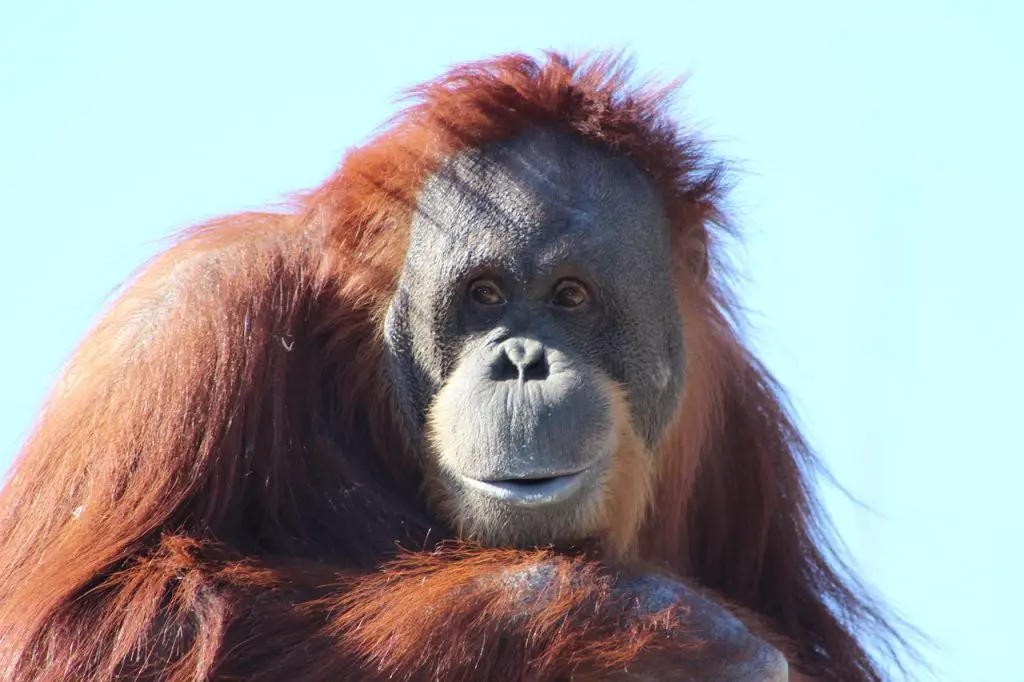
Orangutan. Credit: Pixabay

One day, they decided to go on a ‘tuba’ fishing expedition (tuba the plant with poisonous roots, not the brass instrument).

They tied the end of the string to their house and set off with their tuba roots, reeling out the string as they went. Upon reaching a stream, they threw in the roots, waited for the fish to die, and later gathered and cooked their catch.

Unbeknownst to them, an orangutan joined in their feast, eating the fish as it was served. The brothers, being unable to see, blamed each other for stealing the fish but could not decide who was the culprit.

Eventually one brother grabbed the orangutan’s hands.

Figuring out what had actually happened, with the help of his other brothers the orangutan was squeezed to death.

The brothers then prepped the orangutan for cooking and it was thoroughly enjoyed by them all.

The blind brothers gain their eyesight

At the end of the meal, one brother accidentally swallowed a bone which stuck in his throat. He gave a hard gulp, and to his surprise, his eyes opened and he could see. He told his brothers to swallow the bones too; to their delight they also were able to see.

The brothers decided to go on a wild boar hunt now that their sight was restored. They went into old jungle and killed many boars, which they smoked over a fire. Some of the meat was preserved.

Each day one brother in charge of the cooking would stay by the camp, but was frightened by daily visits from a huge wild man.

The brother would run into the jungle as soon as the visitor appeared, abandoning the smoked and preserved boar to the wild man.

The other brothers got very angry on returning to the camp and finding their meat already eaten.

Each declared he would fight and kill the wild man if he appeared again. So they took turns at guarding the camp. But all felt afraid at the visitor’s approach and ran away.

Mamang and the wildman

Then it came to Mamang’s turn to be on guard. He collected plenty of rattan vines and began to plait them in preparation for making a trap.

When the wild man appeared, he asked for some smoked pig but was diverted by the sight of Mamang plaiting his rattan. He sat close to Mamang and asked what he was doing.

Mamang replied he was tired from boar hunting and hoped the plaited rattan tied around his knees and elbows would cure him. (It was common in those days for aching knees and elbows, even wounds, to be covered with plaited rattan.)

He explained he had often used this treatment and found it most effective.

The wild man said he too was tired and asked to be treated. Mamang replied that such treatment deserved a good reward or the cure would not be a complete success.

Hence, the wild man offered the choice of one of his granddaughters in marriage.

Not wanting to be cheated, Mamang wisely said he must see the girls first before treatment started, so they together went to the wild man’s house.

Mamang’s choice for marriage was the youngest girl, whom he marked and covered in soot and charcoal.

The ‘treatment’ on the wild man

Back at the camp, treatment commenced with plaited rattans being fixed around the wild man’s knees and elbows. Mamang then put pieces of wood across the knots, and when the wild man complained of being hurt, he said this was part of the treatment.

The patient was eventually tied so thoroughly that he lay immobile on his back. Mamang then searched for a wooden club and used this to beat the man.

After a short struggle, the wild man lay dead. With the corpse pulled behind the camp, Mamang went to rest.

Later that evening the brothers returned with two pigs. They saw Mamang fast asleep, but as the smoked boar was safe, they could not accuse him of lazing around.

The pigs were cleaned and some were smoked over a large wood fire. When the fire burned low, Mamang told his brothers to fetch more logs from behind the camp. They were horrified to find the wild man’s corpse there, and ran back to ask him how it had been done.

Meanwhile, Mamang did not bother to tell them of the killing. Instead, he told them about the granddaughters they had been promised as wives.

He said they were all beautiful, except the youngest whom he described as filthy and ugly.

The last one to claim his bride would end up with this girl, he warned.

Seven brothers taking new wives

Next morning they set off to the wild man’s house, Mamang at first taking the lead but later falling back.

The brothers rushed into the house to take their choice. Mamang, being last, found only the blackened one left for him.

Before long they all had a wash, and then it was revealed that Mamang’s girl was the most beautiful after the charcoal was washed off.

Her name was Dayang Nion. The two were married and lived in the wild man’s house, while the rest of the couples made their homes nearby. Later the parents and then the whole village moved to the new site, and found life very pleasant there.

Patu lusting over his brother’s wife

Several months passed before Patu, who dearly loved Mamang’s wife, Dayang Nion, said he wished to make an exchange. She did not agree with this so Patu decided to kill Mamang.

Patu told the people he was sick and asked Mamang to go out and get certain pig and fish delicacies for him to be found only in very dangerous country.

Thankfully, Mamang survived the dangers. But when the cooked foods were offered, Patu said he had no appetite.

Next Patu asked his brother to trap pheasant, again in dangerous jungle, and once more refused to eat the birds when they were served. Finally he asked Mamang to collect mushrooms from a certain tree which he pointed to.

Dayang Nion knew of Patu’s evil intentions and warned her husband that the tree was old and unsafe.

However, he went ahead; the tree gave away under the man’s weight and Mamang soon lay dead on the ground. The body was buried and Dayang Nion mourned her husband for the customary five days.

Dayang Nion searching for her husband Mamang in the afterlife

When the five-day no-work taboo and grieving period was over, the widow set out from her home through old jungle determined to follow Mamang into Sibayan, the underworld, despite her mother in-law’s advice to the contrary.

She walked for several days and nights, and met eight kinds of freshwater fish. There were ikan bantah, ikat pait, ikan dungan, ikan puteh mpahat, ikan siluang, ikan buhing, ikan toman and ikan limpasih.

From these fish, Dayang Nion asked news of Mamang. Each said they had seen him pass, the ikan limpasih saying he had just gone by.

Dayang Nion quickened her pace and suddenly came upon Mamang watching a cockfight with people of the underworld.

Dayang Nion brings her husband back

Wanting to get her husband back from the underworld, she asked Tayung Kamayuh’s advice. She was an old woman who always helped those in need.

Unfortunately, Tayung Kamayuh said nothing could be done.

Dayang Nion went back to the place where she had last seen Mamang and called for him to return with her to the real world. He replied that he did not wish to return; people living on earth were bad, and anyway he was enjoying himself.

Tayung Kamayuh took pity on Dayang Nion in her sorrow and suggested she make several kinds of cake from rice flour. These were to be put on the roof of the old women’s outer verandah and would look like starlight. She said Mamang usually came to rest on the outer verandah, and if he saw the cakes, he would stop to count them.

Dayang Nion was told to seize Mamang while he counted and not be frightened if he transformed into a snake, centipede, dragon or other animal. Only if he changed into an egg was she to show fear.

Dayang Nion tried to remember the instructions most carefully as she was anxious to rescue her husband.

Next evening, Mamang came as expected to shelter on Tayung Kamayuh’s outer veranda, being tired after cockfighting.

He saw the cakes shining on the roof and began counting them, unaware of Dayang Nion until she seized him.

Mamang changed in turn into various animals as the old woman had warned, but Dayang Nion held tight. Only when Mamang finally turned into an egg did she show fear. She took the egg to Tayung Kamayuh.

Mamang coming back from the dead

On the following day, the old woman asked Dayang Nion to kill a young chicken and together they held a small ‘makan selamat’ (thanksgiving) dinner.

Dayang Nion’s next instruction were to fall six times on her way home, taking care not to break the egg as it now held her husband.

On the seventh fall, she was to put her full weight on the egg and Mamang would appear, although he would be unconscious. She was to bless him with a live chicken, at the same time saying this prayer:

Indi, duwuh, taruh, mpat, rimuh, inum, ijuh, tampa sua, tampa basa. Aku itih masi ihang Mamang massu tanah samar tanah dakus, tanah Sibayan mada nuh maring asla maring indih, mada nun marui missia lagi.

This means:

One, two, three, four, five, six, seven,

Oh! God Almighty, God of the religious,

I here bless Mamang’s soul,

Let it return to the beginning from the wasted and dirty places,

From the spirits of the underworld,

And become man again.

These instructions were to be remembered carefully. Dayang Nion then set off homeward with the egg and did exactly as she had been told.

After the seventh fall and recital of the prayer, Mamang did indeed come to life. Dayang Nion told him their adventures, for he thought he had been merely deeply asleep.

Mamang returns from the dead

They continued homeward together to be met at the village by overjoyed parents. A special feast was celebrated for Mamang’s return from the underworld, called the Gawai Timpijog.

Everyone in the longhouse had a good time dancing, singing and eating. Patu persuaded Mamang to dance with him but Mamang had planned revenge. While dancing, he pierced his brother’s throat with a bamboo tuak wine container and Patu fell down dead.

Nonetheless, this incident did not deter the party as they continued to enjoy themselves. The Gawai Timpijog lasted for three days.

When it was over, Patu was buried with respect. People suggested his wife should try to regain her husband from the underworld, as Dayang Nion had. However, she declined saying he had been killed with good reason.

Thus was the Gawai Timpijog inaugurated and it is to celebrate the passing of a person’s spirit to the underworld.

This legend was recorded by R. Naen and R. Nyandoh and was published in the Sarawak Gazette on Jan 31, 1965.

1 20 21 22 23 24 75