Patricia Hului

Patricia Hului is a Kayan who wants to live in a world where you can eat whatever you want and not gain weight.

She grew up in Bintulu, Sarawak and graduated from the University Malaysia Sabah with a degree in Marine Science.

She is currently obsessed with silent vlogs during this Covid-19 pandemic.

Due to her obsession, she started her Youtube channel of slient vlogs.

Follow her on Instagram at @patriciahului, Facebook at Patricia Hului at Kajomag.com or Twitter at @patriciahului.

Remembering the attack on Semporna town in 1954

The attack on Semporna town in March 1954 is considered one of the major incidences of Sabah cross-border crimes.

A group of 30 armed Filipino pirates with two policemen and four others were killed.

The news of the attack travelled fast, especially among European communities.

In a news report by Reuters published on Mar 31, 1954, stated that, “One European, one police sergeant and two constables were killed when an unknown number of men in two boats, believed to be Filipino pirates from the South Philippines, raided the small town of Semporna, on the east coast of North Borneo, last night.

“The pirates, who were well armed with automatic weapons, tried to rob the town but were opposed by the small police force of 14 men.

“The European killed in the exchange of fire was the Assistant Conservator of Forests of Tawau (Mr Barnard).

“The North Borneo police, headed by residents of the east coasts, are scouring surrounding waters for the pirates.

“Semporna has been raided a few times by pirates in the past but last night’s raid was the most serious.

“Nearby waters are haunts of murderous Sulu and Moro pirates who find protection in the multitude of islands.”

Remembering the attack on Semporna town in 1954

The beginning of the attack on Semporna town

So what actually happened on that fateful day? How did the European Mr Barnard get caught in the fire between the police and the pirates?

The answer lies in a special report by Sabah Forestry Department.

Mr Barnard or Thomas Robert Barnard, to be precise, was the District Forestry Officer (DFO) of Lahad Datu.

He was in Semporna to carry out grading work at a log pond, about half a mile from town, owned by a prominent timber merchant Pua Din Kok.

Barnard went there with Timber Inspector Ahmad Nawi, along with boatman Damsik and his assistant.

They arrived at 5.30pm and they moored their boat at the Customs jetty where the Police Station and the Forestry Checking Station were also located.

While Ahmad was securing the boat to the jetty, he suddenly noticed two suspicious boats.

As the boats came closer, Ahmad realised the men on board were armed with automatic firearms and parangs.

Realising that the men were Filipino pirates, Ahmad immediately warned Barnard and the others.

Together with the boatmen, Ahmad jumped into sea and swam towards the mangrove trees nearby to hide.

Barnard, however, took out his shotgun to fire at the pirates, who at this moment already started to shoot at the police station.

While he managed to kill a pirate and wound another, Barnard was unfortunately shot in the back and died on the boat.

The shootout at Semporna Police Station

The pirates then proceeded to attack Semporna police station with intent to take control of it.

At the same time, the police who had heard the gunshots from the jetty were returning fire.

During the attack, the officer in-charge, Sergeant Sagar Singh was slashed in the neck. In other reports, it was stated that he was shot.

Regardless, Sergeant Singh was attacked while trying to unlock the firearms safe to retrieve more weapons and ammunition.

With the attack on the sergeant, the pirates got hold of the weapons and ammunition in the safe.

For the next three hours, the pirates looted the town, robbing the locals at gunpoint.

They finally left at about 8.45pm that same evening.

Besides Barnard and Sergeant Singh, the attack took the lives of a Chinese tailor, a 12-year-old Bajau boy and another two police constables.

The aftermath of the attack on Semporna town

After the bloody incident, BNBC set up an armed force of marine police in North Borneo.

They proved themselves to be an efficient organisation as they successfully patrolled and kept order in North Borneo waters in subsequent years.

Meanwhile, Barnard’s courageous and selfless act was posthumously awarded the Queen’s Commendation for Bravery.

3 things we learn from W.H. Treacher’s British Borneo: Sketches of Brunai, Sarawak, Labuan and North Borneo (1891)

Sir William Hood Treacher (1849-1919) was a British colonial administrator in Borneo and the Straits Settlements.

In Selangor, he was at the Anglo Chinese School in Klang on Mar 10, 1893.

His career in Borneo started in 1871 when he arrived in Labuan to be the acting Police Magistrate.

In 1873, Treacher became Colonial Secretary of Labuan before going on to be the first Governor of North Borneo (1881-1887).

Based on his career in Borneo, Treacher wrote a book ‘British Borneo: Sketches of Brunai, Sarawak, Labuan and North Borneo’.

His writings circled around his own experience as a colonial officer as well as the books and research that had been previously written about Borneo.

However, Treacher’s spellings for Malay words might take a second or two to understand.

For example, ‘chukei basoh batis’ is actually ‘cukai basuh betis’ or ‘the tax of washing feet’. Similarly, ‘mantri’ is menteri (minister).

3 things we learn from W.H. Treacher’s British Borneo: Sketches of Brunai, Sarawak, Labuan and North Borneo (1891)

Here are three things we learn from British Borneo: Sketches of Brunai, Sarawak, Labuan and North Borneo (1891) by William Hood Treacher:

1.The important role of Chinese immigrants in British Borneo

In 1881, the British North Borneo Company (BNBC) ran a census on North Borneo and found the native population was considered to be unsuited to meet the requirements of modern development.

They estimated the number of indigenous people to be 60,000 to 100,000.

In order to increase the population, the government realised they needed to push on immigration, particularly from China.

Noting the importance of Chinese immigrants, Treacher stated,

“The frugal, patient, industrious, go-ahead, money-making Chinaman is undoubtedly the colonist for the sparsely inhabited islands of the Malay archipelago. Where, as in Java, there is a large native population and the struggle for existence has compelled the natives to adopt habits of industry, the presence of the Chinaman is not a necessity, but in a country like Borneo, where the inhabitants, from time immemorial, except during unusual periods of drought or epidemic sickness, have never found the problem of existence bear hard upon them, it is impossible to impress upon the natives that they ought to have “wants,” whether they feel them or not, and that the pursuit of the dollar for the sake of mere possession is an ennobling object, differentiating the simple savage from the complicated product of the higher civilization.

[…]“The Chinaman, too, in addition to his valuable properties as a keen trader and a man of business, collecting from the natives the products of the country, which he passes on to the European merchant, from whom he obtains the European fabrics and American “notions” to barter with the natives, is also a good agriculturist, whether on a large or small scale; he is muscular and can endure both heat and cold, and so is, at any rate in the tropics, far and away a superior animal to the white labourer, whether for agricultural or mining work, as an artizan, or as a hewer of wood and drawer of water, as a cook, a housemaid or a washerwoman.

“He can learn any trade that a white man can teach him, from ship-building to watchmaking, and he does not drink and requires scarcely any holidays or Sundays, occasionally only a day to worship his ancestors.

2.How famous Hugh Low was among the locals

Sir Hugh Low (1824-1905) was another British colonial administrator and naturalist.

From 1848-1850, he was the Colonial Secretary of Labuan.

Then in 1851, Low made the first documented ascent of Mount Kinabalu.

For Treacher, being associated with Low was a life-saving thing.

“His (Sir Hugh Low) name was known far and wide in Northern Borneo and in the Sulu Archipelago. As an instance, I was once proceeding up a river in the island of Basilan, to the North of Sulu, with Captain C. E. Buckle, in two boats of H. M. S. Frolic, when the natives, whom we could not see, opened fire on us from the banks.

I at once jumped up and shouted out that we were Mr. Low’s friends from Labuan, and in a very short time we were on friendly terms with the natives, who conducted us to their village.

They had thought we might be Spaniards, and did not think it worth while to enquire before tiring.”

Read about Hugh Low here.

3.The origin of the name ‘Sabah’?

How the name ‘Sabah’ remains uncertain to this day. Some believe it came from a type of banana called ‘pisang saba’.

Treacher may not provide the definitive answer either, but he worked hard to explore the possibilities.

“Some explanation of the term “Sabah” as applied to the territory—a term which appears in the Prayer Book version of the 72nd Psalm, verse 10, “The kings of Arabia and Sabah shall bring gifts”—seems called for, but I regret to say I have not been able to obtain a satisfactory one from the Brunai people, who use it in connection only with a small portion of the West Coast of Borneo, North of the Brunai river.

“Perhaps the following note, which I take from Mr. W. E. Maxwell’s “Manual of the Malay Language,” may have some slight bearing on the point:—”Sawa, Jawa, Saba, Jaba, Zaba, etc., has evidently in all times been the capital local name in Indonesia. The whole archipelago was pressed into an island of that name by the Hindus and Romans.

Even in the time of Marco Polo we have only a Java Major and a Java Minor. The Bugis apply the name of Jawa, jawaka (comp. the Polynesian Sawaiki, Ceramese Sawai) to the Moluccas. One of the principal divisions of Battaland in Sumatra is called Tanah Jawa. 

Ptolomy has both Jaba and Saba.”—”Logan, Journ. Ind. Arch., iv, 338.”

“In the Brunai use of the term, there is always some idea of a Northerly direction; for instance, I have heard a Brunai man who was passing from the South to the Northern side of his river, say he was going Saba.

“When the Company’s Government was first inaugurated, the territory was, in official documents, mentioned as Sabah, a name which is still current amongst the natives, to whom the now officially accepted designation of North Borneo is meaningless and difficult of pronunciation.”

#KajoPicks: Mothers from Korean drama-land we love

This Mother’s Day, we are giving tributes to mothers who exist in Korean drama-land. These mothers have the advantage over real mothers by being able to say and do the right thing at the right time, creating some perfect heartwarming moments.

So here are mothers from 10 Korean dramas we love :

1.Jo Kang-ja (Kim Hee-sun) in Angry Mom (2015)

How far would you go to protect your child from bullying? Are you willing to go as far as disguising yourself as a high school student because that was Jo Kang-ja did in Angry Mom (2015).

Kang-ja (Kim Hee-sun) was once the most feared troublemaker at her high school.

However due to her unexpected pregnancy, she had to drop out of school to raise her child.

In the present day, Kang-ja is now a 34-year-old woman with a teenage daughter Oh Ah-ran (Kim Yoo-jung).

They do not have the perfect mother-daughter relationship but Kang-ja really loves her daughter, like any mothers out there.

One day, Ah-ran was admitted to the hospital due to extreme bullying. This leads Kang-ja to do something that most conventional mothers would never do.

She enrolls in the same high school as her daughter under the false identity ‘Jang Bang-wool’.

At first, Kang-ja wanted to teach the bullies a lesson. Instead, she comes across the darker, corrupted side of the school.

This high school drama offers a bit of ‘noona’ romance with one of the boys falling in love with Kang-ja.

Watch the trailer here.

2.Kang Soo-jin (Lee Bo-young) in Mother (2018)

Just because a woman gives birth, it does not mean she deserves to be called a mother, especially if she abuses her own child.

This drama let viewers define what is the meaning of being a ‘mother’.

Kang Soo-jin (Lee Bo-young) works as a temporary teacher at an elementary school.

She realises one of her students is a victim of domestic abuse.

Soo-jin decides to do the craziest thing; she kidnaps her student and raises her as her own.

This award-winning drama is a remake of a popular Japanese drama Mother (2010).

Watch the trailer here.

3.Kim Soo-hyun (Lee Bo-young) in God’s Gift: 14 Days (2014)

Speaking of Lee Bo-young, she plays the another role of a strong-willed mother Kim Soo-hyun in God’s Gift: 14 Days.

In the drama, she works as a successful TV writer for a current affairs program.

One day, her young daughter Han Saet-byul is kidnapped and murdered.

After her daughter’s death, she comes across a miracle; a chance to go back in time exactly two weeks before the event.

No mothers who have lost their children would pass this chance, Soo-hyun goes back in time to save her daughter.

Can she save Saet-byul before she dies all over again?

4.Oh Dong-baek (Gong Hyo-jin) in When the Camellia Blooms (2019)

Over the years, we have seen more and more Korean dramas exploring the idea of a single parent or divorcee finding love all over again.

This type of storyline is more relatable because you see, romance does not happen only between two single people with no past at all.

When the Camellia Blooms follows the story of Oh Dong-baek (Gong Hyo-jin), a single mother who moves to the fictional town of Ongsan.

There, she opens a bar named Camellia while raising her son Kang Pil-gu (Kim Kang-hoon).

Six years later, policeman Hwang Yong-sik (Kang Ha-neul) moves back to his hometown Ongsan.

He meets and falls for Dong-baek. Despite his own mother’s disapproval, Yong-sik continuously pursue Dong-baek and protect her son Pil-gu.

Not long after that, Dong-baek’s peaceful life in Ongsan is interrupted with the presence of a serial killer.

The worst part is the serial killer’s next target is none other than Dong-baek.

In the meantime, her love life gets complicated when her ex-boyfriend and the father of her child Kang Jong-ryul (Kim Ji-seok) shows up wanting her back.

When the Camellia Blooms (2019) was second highest rated drama in 2019 with many critics praised it for its realistic storyline and a nice blend of romantic-comedy and thriller.

Watch the trailer here.

5.Kang Hye-soo (Uee) in Marriage Contract (2016)

Speaking of single mother, here is another Korean drama about the struggle of being a single parent.

Kang Hye-soo is a single mother who is left to raise her daughter while paying off her late husband’s debts.

As if her life is not difficult enough, she is diagnosed with an inoperable brain tumour.

When all things seem to be in despair, Hye-soo is given a rare opportunity.

Marry the son of a chaebol and donate part of her liver to his mother, in exchange for enough money for her daughter until she becomes an adult.

What would a dying mother do? Understandably, she agrees for the contract marriage.

However in a classic tale of Korean drama, Hye-soo and the rich man start to have feeling for each other.

Watch the trailer here.

6.Lee Soo-im (Lee Tae-ran) in Sky Castle (2018)

First of all, all of the mothers except for Lee Soo-im in Sky Castle are crazy or abnormal.

Other mothers in the drama would definitely put real life helicopter mums to shame.

Soo-im on the other hand, is the most humble of all the mothers in the complex called Sky Castle. It is where wealthy doctors and professors live.

Unlike other mothers, she is the only mother who is a stepmother. However, it does not make her less of a mother.

For example when her stepson Hwang Woo-joo wants to take a time off from studying, she understands and supports his decision.

Overall, the drama is actually mocking the competitiveness of South Korean education system and parents who dictate their children’s study.

Watch the trailer here.

7.Cha Yu-ri (Kim Tae-hee) in Hi Bye Mama (2020)

When a surgery goes wrong, Cha Yu-ri (Kim Tae-hee) dies unexpectedly.

That was five years ago, through a reincarnation project, she is offered a chance to become human again if she succeeds in going back to her place within 49 days.

However, her husband Cho Gang-hwa (Lee Kyu-hyung) has now remarried with Oh Min-jung (Go Bo-gyeol).

Nonetheless, Yu-ri’s real reason wanting to be incarnated is for the sake of her daughter Cho Seo-woo who grew up the last five years without her.

Sometimes being a mother is not just about what you want for your child but what is the best for your child.

Watch the trailer here.

8.Ma Jin-joo and Kim Mi-kyung in Go Back Couple (2017)

Let’s say you are given a chance to go back in time to spend time with your dead mother to whom you were unable to say your last goodbye.

The price for the chance is that you need to leave your own child in the present. Would you give up your child for your mother?

Ma Jin-joo (Jang Na-ra) wishes to go back in time before she met her ex-husband Choi Ban-do.

Somehow the wish comes true and both of them are transported back to their college days.

They are both delighted, thinking that they now can change their lives, including not getting married to each other.

Furthermore, Jin-joo now can spend more time with her mother Go Eun-sook (Kim Mi-kyung) before her demise.

The more time they spend in the past, however, the more Jin-joo and Ban-do miss their son.

In the meantime, a mother’s instinct tells Eun-sook that there is something going on with her daughter.

Go Back Couple (2017) is one of those dramas that will make you want to hug your mother a little tighter tonight.

Watch the trailer here.

9.Park Hee-nam and Han Ki-ae in The Heirs (2013)

Set in a high school populated by the privileged and super rich, The Heir (2013) circles around students as they are about to take over their families’ business empires.

There are two mothers in the drama that we love.

First is Park Hee-nam (Kim Mi-kyung) who is the female lead Cha Eun-sang (Park Shin-hye)’s mother.

Putting aside her disability as a mute, she is kind and always wants the best for her daughter.

Then we have Han Ki-ae (Kim Sung-ryung) who is the male lead Kim Tan (Lee Min-ho)’s mother.

Though she seems to be self-absorbed at first, she actually cares for her son and put her son’s happiness first.

The two mothers also have great comedic timing and an adorable relationship with each other in the series.

Watch the trailer here.

10.All the Mothers in Reply 1988 (2015)

Reply 1988 revolves around five friends and their families living in the same neighbourhood in Seoul.

It is the fourth highest rated drama in Korean cable television history to date.

Interestingly, all the mothers in the main cast used their real names in the drama. For example, Lee Ill-hwa plays the role of Lee Il-hwa, a mother who loves to cook a huge amount of food.

Meanwhile, Ra Mi-ran is Ra Mi-ran, a hot-tempered mother who is always anxious over her family.

Then, Kim Sun-young’s character also goes by her real name. She is a widow who tries her best to make up for their father’s absence.

Overall, the drama focuses more on the filial bond in family. It is one of the most recommended series to watch with your family.

Watch the trailer here.

5 important lessons every startup needs from The Intern (2015)

First of all, not everybody is a fan of Nancy Meyer’s movie The Intern (2015).

The Guardian described it as “The bulk of The Intern is a morass of wackiness, a chain of sequences shot in a flat and predictable manner that range from tedious to idiotic,” while New Yorker said it was a very strange workplace fantasy.

Putting aside the critical reviews, there is plenty of good career advice to ponder over from the movie.

Starring Robert De Niro, Anne Hathaway and Rene Russo, the storyline follows a 70-year-old widower who becomes a senior intern at an online fashion website.

If you are running a startup company, here are some good lessons to learn from The Intern (2015):

1.Have self-initiative

In the movie, De Niro plays widower and retiree named Ben Whittaker who interns with About The Fit, an e-commerce fashion startup founded by Jules Ostin played by Hathaway.

There is a table covered with junk at the office that keeps on piling up. It is a constant bother for Ostin as she cannot find the time or a person to clear the table.

Noticing this, Whittaker takes his own initiative to clear the table, much to the relief of Ostin.

Instead of waiting for instructions, if you see there is a problem that needs to be solved, just solve it. Do not wait for your superior to give an order.

Sometimes you might not get recognition for the things you do on your own initiative and that is okay. As author Paulo Coelho once said, “The world is changed by your example not by your opinion.”

Just set a good example in your working environment; you might see the small changes that come along with it.

2.Learn from other generations

There is a Chinese proverb that goes “huo dao lao, xue dao lao(活到老学到老)”. It can be roughly translated to “one is never too old to learn”.

In the movie, Whittaker is open to learning something new, including having a Facebook account.

In the meantime, Ostin listens to Whittaker’s wisdom he gained from years of experience in business and marriage.

3.Celebrate little things

Whenever Ostin’s company achieveS a new goal, they would ring a bell in the office.

There is no success too small to be celebrated.

This work culture can keep a constant positive outlook in the company.

Imagine having a bad day in the office and suddenly the bell rings.

It can give the much needed push for everyone by celebrating every achievement no matter how small it is.

4.Working environment is very important

The working environment in The Intern might be too good to be true in reality.

For example, Hathaway’s character Ostin is always visible.

She has no office and sits in an open space with her employees.

When she is not happy with how the merchandise should be boxed and packaged, Ostin shows up at the warehouse showing her employees the right way.

Instead of sending a text or a memo or make a phone call, Ostin shows up in person.

5.Never lose your vision

It is easy to lose your aims or goals especially when you get caught up with the moment when working.

Whether you are working for someone else or on your own startup, never ever lose your ambition.

Keep working on your goals despite what other people are saying.

In the movie, Ostin is under pressure to give up her position as a CEO to someone outside of the company because her investors think that she is unable to cope with the work.

While others think that it is a good idea, she listens to her own instinct and sticks to her vision of the company.

Ostin started a company from her kitchen and in 18 months her employees grew from 25 to 220.

Nobody knows the company better than she does and for startup founders out there, nobody knows your company like you do.

5 Korean libraries and bookstores from K-dramas to visit

Just because international traveling is impossible right now, doesn’t mean you cannot plan for the Covid-19 free future.

If you have been binging on Korean dramas during this pandemic, you might notice a commonly seen filming location is either the library or the bookstore.

Instead of a place for reading and to buy books, these libraries and bookstores are usually the meeting places for the characters. Sometimes, it is also a place for them to ‘accidentally’ bump into each other.

If South Korea is in your itinerary post Covid-19 pandemic, and you love reading, try to visit these five Korean libraries and bookstores.

Who knows? You can recreate the Korean drama scenes and capture them in photos for memories.

Here are five Korean libraries and bookstores from your favourite K-dramas that you might want to visit:

1.CGV Cine Library

This library is the shooting locations of Chicago Typewriter (2017), Black Knight (2017), You Drive Me Crazy! (2018), Are You Human? (2018), Find Me in Your Memory (2020) and Alice (2020).

In Korean drama-land, it is a place where press conferences take place such as Find Me in Your Memory and Chicago Typewriter.

Besides that, it is also a place to hold a talk such as in Black Knight (2017), this library was where Jang Baek-hee (Jang Mi-hee) gives her talk about her blog and in Are You Human? (2018) where scientist Oh Ro-ra (Kim Sung-ryoung) talks about artificial intelligence.

CGV Cine Library is the first cinema library and art house in South Korea. Located at Jung-gu, Seoul, it is known to have over 10,600 books on various movies.

2.Seoul Book Repository

https://www.youtube.com/watch?v=OqAon2CLpl0

The hotel in Korean drama Hotel del Luna (2019) is nothing like your normal hotel. It is where all dead people coming to terms with their unfinished business in their former lives.

One of them was a ghost who wanted to read all the books in the world. Surrounded with books, the ghost who seem to enjoy reading.

This particular scene is shot at Seoul Book Repository, the city’s first public secondhand bookstore.

The building is in fact an old warehouse that was used previously for storing Amway’s products.

There are about 120,000 secondhand books in the 1400 square-meter store. All the books are supplied by 25 secondhand bookstores from around Seoul city.

While in the drama the place is a place of refuge for the afterlife, in the real world Seoul Book Repository aims to provide small secondhand bookstores with an effective sales platform.

3.Uijeongbu Art Library

Do you know that there are different kinds of specialised libraries in South Korea? The Soriul Library for example, is specialised in musical instruments. Located in Osan city, the library has 20,000 books and 180 kinds of musical instruments.

Meanwhile, Yeokgok Library which is located in Bucheon, focuses on forest and environment. It offers visitors at least 21,000 books on nature alone.

Uijeongbu Art Library is South Korea’s first library that works as an art gallery as well. It was officially opened to public in December 2019.

In one of the episode of It’s Okay to Not Be Okay (2020), the main characters Moon Gang-tae (Kim Soo-hyun), Sang-tae (Oh Jung-se) and Ko Mun-yeong (Seo Ye-jin) go to this library to research on children books.

4.Forest of Wisdom

What makes Forest of Wisdom an interesting place is that it is neither a library or bookshop.

Yes, it is home to over 200,000 books and has space for 100,000 more.

However, the books are not for sale or to be loaned out.

In fact, it is a place for people to read, have a cup of coffee, hold events such as classes and orchestra and film some Korean dramas.

There is a long list of K-dramas that were filmed here. The list include Record of Youth (2020), The World of the Married (2020), The King: Eternal Monarch (2020), She Was Pretty (2015), Search: WWW (2019) and many more.

Forest of Wisdom is located in Paju, a city dedicated especially for books.

5.Arc N Book

This unique cultural space is not just a bookstore but a lifestyle store.

Located in the basement of Buyong Eulji Building, Seoul, Arc N Book is famous for its ‘book tunnel’ display.

Imagine walking through a space with books above your head.

In the drama Start-Up (2020), it is where Seo Dal-mi (Bae Suzy) comes to pick up a book but ends up running into Nam Do-an (Nam Joo-hyuk) and his co-founders.

Other K-dramas that were filmed here were Run On (2020), Mother of Mine (2019) and Romance is a Bonus Book (2019).

Do you have other South Korean libraries to visit on your bucket list? Let us know in the comment box.

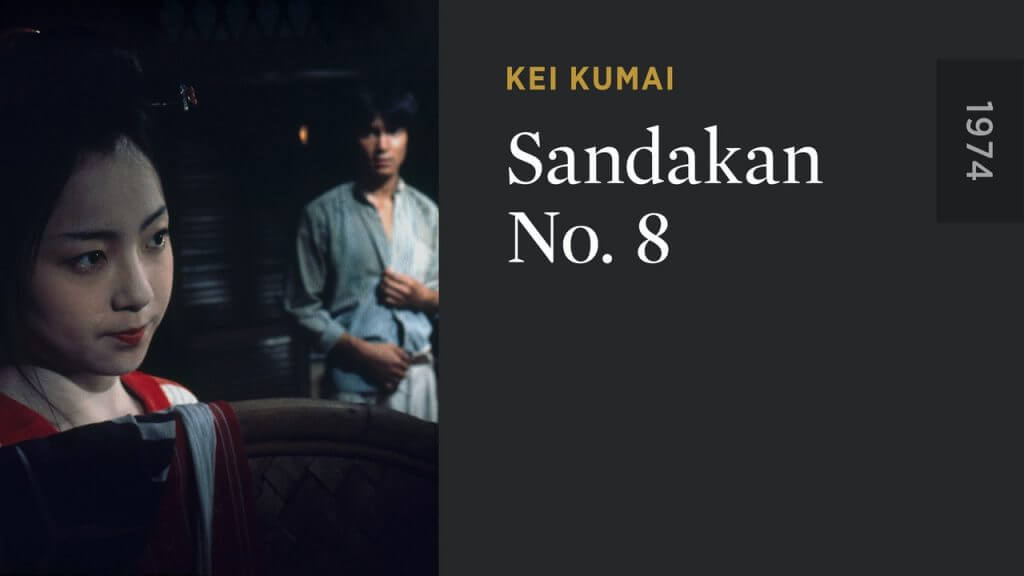
Know the true story behind Oscar-nominated film Sandakan No. 8 (1974)

Sandakan No. 8 (1974) is a Japanese film directed by Kei Kumai which focused on the ‘karayuki-san’.

‘Karayuki-san’ is the Japanese term for young women forced into sexual slavery in the 19th and early 20th century. Directly translated, it means ‘Ms. Gone-To-China’, although it was expanded to ‘Ms. Gone-Abroad’ as it saw these young women being trafficked to Southeast Asia, Manchuria and even as far as San Francisco.

The movie was nominated for the Academy Award for Best Foreign Language Film in 1975. (It lost to Akira Kurosawa’s Dersu Uzala.) 

Know the true story behind Oscar-nominated film Sandakan No. 8 (1974)

The plot of Sandakan No.8

The film starts with journalist Keiko Mitani (Komaki Kurihara) who is researching the history of Japanese women who were sex slaves in Asian brothels during the early 20th century.

While researching, she finds Osaki (Kinuyo Tanaka), a former karayuki-san who lives in a shack in a rural village.

Osaki agrees to tell her life as the film goes into a flashback to the 1920s.

Poverty-stricken circumstances led to a young Osaki (Yoko Takashi) being sold by her family to work as a maid.

The location? Thousands of miles away in Sandakan, British North Borneo (present-day Sabah).

Osaki thought she was going to work in a hotel. As it turns out, the establishment was actually a brothel called Sandakan No.8.

She is forced to work as a prostitute at Sandakan No.8 until World War II. During her stay at the brothel, she has a short-lived romance with a poor farmer.

When Osaki finally returns to Japan, her brother and his wife who have bought a house using the money she sent them, turns her away. Osaki’s life can never be normal again due to her past at Sandakan No.8.

In the epilogue, Osaki tells Keiko about a graveyard established for prostitutes who died in Sandakan.

Later, Keiko makes her way to Borneo looking for the cemetery. When she finds the graveyard, Keiko realises that all of them were buried with their feet pointing in the direction of Japan.

It is a gesture to condemn their ancestral home for abandoning them.

Sandakan No. 8 is based on the book “Sandakan Brothel No. 8: An Episode in the History of Lower Class”

When author Yamazaki Tomoko interviewed a former karayuki-san, she gave her the pseudonym – Yamakawa Saki – to protect her identity.

Yamazaki met her by accident during a trip to Amakusa in 1968 while researching on karayuki-san. After a series of interviews with Osaki and her friend Ofumi, Yamazaki wrote the book “Sandakan Brothel No. 8: An Episode in the History of Lower Class” (1972).

Although it was Yamazaki’s first book, it instantly became a national best-seller, with her work considered as a pioneer work on karayuki-san. It was later followed by “The graves of Sandakan 1964” and “The Song of a Woman Bound for America 1981”.

The real-life Osaki was born around 1900. Shortly after her birth, her father died leaving her mother struggling to feed three children.

Osaki’s mother then remarried, this time to her own brother-in-law, moving in with her new husband and his six children. For the most part, however, her mother left Osaki and her siblings to fend for themselves.

In order to survive, Osaki’s brother sold her to a procurer for 300 yen. Osaki had also agreed to go because her best friend was going too. She was only 10 years old.

When Osaki first arrived at Sandakan, she worked as a cleaner in the brothel on Lebuh Tiga in Sandakan.

After she turned 13, she was forced to take on customers.

Osaki’s life at Sandakan No.8

Later, she moved to Sandakan No. 8, also known as Brothel No.8, which was unusually owned by a woman named Kinoshita Okuni. She was also known as Okuni of Sandakan who treated her girls well.

Before coming to Sandakan, Okuni was a live-in mistress to an Englishman back in Yokohama. After he left Japan for good, she moved to Sandakan to open a general store and a brothel.

Osaki became a live-in mistress to an Englishman in Sandakan after seven years working at the brothel.

Interestingly, the arrangement was a facade to hide the fact that the Englishman was having an affair with another Englishman’s wife.

Little is known about the Englishman. Osaki called him “Mister Home” and he worked at Dalby Company which owned a shipyard in Sandakan back then. Mister Home also had a wife and children back in England.

Nonetheless, Osaki was happy with the arrangement. She still received money from Mister Home to send it back to Japan and she no longer took customers at the brothel.

Unfortunately, just like the film, Osaki was rejected by her elder brother and the rest of her family upon her return to Japan.

So where is Sandakan No.8?

Just like Keiko in the movie, Yamazaki made her way to Sandakan in the 1970s.

To her disappointment, there were no traces left from Sandakan No.8 or any other brothels.

However, she did find an old graveyard which is now called Sandakan Japanese Cemetery.

It was founded in 1890 by Osaki’s boss, Okuni. She built it to pray for the souls of Japanese who died in Sandakan.

And just like in the movie Sandakan No.8, they were all buried with their feet pointed in Japan’s direction.

Remembering one of Rentap’s men, Uyu Apai Ikum

In 2014, former Social Development Minister Tan Sri William Mawan urged the Sarawak State Museum to research more on the history of the late Uyu Chandi.

Also known as Uyu Apai Ikum, he was one of the frontline warriors of Iban hero Rentap Libau.

According to Mawan, the late Uyu was considered a ‘Raja Berani’ by the Ibans.

Remembering one of Rentap’s men, Uyu Apai Ikum

Uyu and his fight against the White Rajah

Little is known about this Iban warrior except that as Mawan had stated, Uyu was one of the brave ones who had risen up against the Brooke government.

The war between the White Rajah and the Ibans of Saribas started in June 1843 and it continued on for the next two decades.

Finally in October 1861, Charles Brooke summoned two Iban leaders, Orang Kaya Pemancha (OKP) Nanang and his brother Luyoh to a meeting.

The Ibans were asked to pledge 400 tajau rusa (jars) as proof of their surrender.

If they did not cause any trouble within the next three years, these jars would be refunded to them upon the expiration of the agreement.

OKP Nanang and Luyoh as well as their followers agreed with the proposal. On their behalf, they sent one of their loyal old warriors, Uyu Apai Ikum to pay the fine.

After the fine was paid, OKP Nanang and his followers moved away, leaving Rentap to continue with the war.

Instead of surrendering, Rentap and his warriors retreated elsewhere until they finally settled down in Ulu Wak, Pakan. There, Rentap died of old age in 1870.

Uyu’s lumbong

More than a century after Uyu’s death, his grave or lumbong in Iban became a subject of study for a Japanese researcher. A lumbong is a grave site on stilts.

Motomitsu Uchibori gathered some oral history about Uyu for his paper ‘The Enshrinement of the Dead Among the Iban’.

After his surrender to Brooke, Uyu migrated to Julau and established a longhouse near a hill called Bukit Bulie. He later died of old age and was buried in a lumbong on the summit of Bukit Bulie.

Uchibori stated, “Uyu is said to have been a brave man, having taken five enemy heads and being capable of assuming the leadership of a small headhunting party (kayau anak).”

There were five others buried near Uyu due to their relationships with him. One of them was Uyu’s brother named Linggang.

Although he is said to have taken enemy heads, Linggang was not a leader like Uyu.

Hence, he was not ‘qualified’ enough to have his own lumbong. Meanwhile, the identities of the rest of the bodies remain unknown.

They were either brothers, sons or relatives of Uyu who wanted to follow this Iban warrior even after death.  

As for Uyu’s lumbong, it is an important historical site that must be preserved for future generations.

KajoPicks: 10 K-dramas based on real-life historical figures of the Joseon era

The Joseon dynasty was the last dynasty of Korea which lasted for about five centuries.

It was founded by Yi Seong-gye in July 1392 until it was replaced by the Korean Empire in October 1897.

The dynasty started after the fall of 500-year-old Goryeo dynasty. Yi was a Goryeo soldier who slowly rose through the ranks until he initiated a coup d’etat against King U of Goryeo.

He later killed King U and his son, who were then replaced by another royal – King Gongyang of Goryeo – on the throne.

Gongyang’s reign only lasted for three years. In 1392, Yi dethroned King Gongyang and exiled him.

Then Yi Seonggye put himself on the throne, using the name Taejo.

At first, Taejo wanted to continue to use the name Goryeo for his country and simply change the royal line of descent to his own.

However, his royal court convinced him to give a new name to the dynasty to signify a change in the country.

After much deliberation, Taejo declared the new kingdom as Joseon. It was a tribute to the ancient Korean state of Gojoseon.

With a dynasty that spanned over five centuries, Joseon was rich with historical figures.

Hence, it is no surprise that the Korean entertainment industry has taken much inspirations for their dramas from this period in history.

While some of these Korean historical dramas (or better known as saeguk) have taken more entertaining and fun approaches to retell the history of Joseon, other dramas tried to give justice to the original stories.

Fun or serious, these saeguk dramas are still entertaining to watch. So here are 10 K-dramas based on real-life historical figures of Joseon dynasty:

1.Warrior Baek Dong-soo (2011)

Baek Dong-soo (1743-1816) was a swordsman and martial artist.

He became a folk hero when his group protected King Jeongjo from numerous assassination attempts.

His story inspired Lee Jae-heon’s manhwa entitled “Honorable Baek Dong-soo”.

This comic was later adapted into Korean television series Warrior Baek Dong-soo.

In this drama, Dong-soo is played by Ji Chang-wook. He started as a carefree swordsman who later became a member of the royal guard.

The plot is set against the political struggles between different factions including those led by King Jeonjo, by the Qing ambassador to Joseon, by the Japanese swordsman and by the assassin’s guild.

Overall, the series showcases intense political intrigue with a tale of how a best friend can turn into an arch-nemesis.

Warrior Baek Dong-soo was a hit when it aired and Ji won the received a ‘New Star Award’ at the SBS Drama Awards for his role.

2.Dae Jang Geum (2003)

Today, Dae Jang Geum (2003) is still holds the honour of bein one of the tenth highest rated Korean dramas of all time.

Directed by Lee Byung-hoon who is known for his historical dramas, the series was later exported to 91 countries.

Based on the life of Lady Jang-geum, it tells the story of an orphaned kitchen cook who went to become the first royal female physician.

According to history, King Jungjong was so impressed with Jang-geum’s medical knowledge that he trusted her with the health of the royal family.

Jang-geum eventually became the third highest-ranking officer in the royal. Additionally, she was granted the use ‘Dae’ before her first name which means ‘great’ in Korean.

She was that impressive for a woman during her time (sometimes during 16th century) that some historians believed that she was just a fictional character.

However, we bet our money the historians who did not believe her existence are men.

Nonetheless, the series was praised for its highlights on Korean royal cuisines, traditional medicine and culture.

3.The King’s Doctor (2012)

Here is another saeguk drama directed by Lee Byung-hoon.

This time, it is based on the real-life historical figure Baek Gwang-hyeon (1625-1697).

He was just a low-class veterinarian specialised in treating horses.

Thanks to his knowledge and hardwork, Gwang-hyeon worked his way up to become the royal physician who is in charge of the king’s health.

The series marks actor Cho Seung-woo’s television debut, playing the role of Gwang-yeon.

Before this, Gwang-hyeon was know for his works in film and theatre.

4.Painter of the Wind (2008)

Shin Yun-bok (1758-1813) was a Korean painter of the Joseon dynasty. His paintings were considered erotic.

One of his paintings called ‘Scenery on Dano Day’ depicts a group of women entertainers bathing in a stream and two young monks spying on them in the background.

In a historical fiction novel by Korean author Lee Jung-myung, the story explores the possibility of Shin Yun-bok actually being a woman.

Yun-bok disguises herself as a boy to search for her father’s murderer.

She then meets Kim Hong-do, another real-life historical figure, who guides her into becoming a great artist.

The drama Painter of the Wind is based on Lee Jung-myung’s novel and the role of Yun-bok is portrayed by Moon Geun-young.

5.Goddess of Fire (2013)

Speaking of Moon Geun-young, she plays the role of Yoo Jung in Goddess of Fire (2013).

Her character is based on real-life historical figure Baek Pa-sun during the 16th century.

Pa-sun was renowned as the first female potter and porcelain artist in the Joseon Dynasty.

Her talent was so famous that she was among the Korean artisans captured and forcibly taken to Japan during the Japanese invasion in 1592.

In the drama, Jung falls in love with Prince Gwanghae.

She eventually needs to choose between love or her country.

Watch the trailer here.

6.Six Flying Dragons (2015)

KajoPicks: 10 K-dramas based on real-life historical figures of the Joseon era

The main characters of this historical drama are a mixture of real-life historical figures and fictional characters.

Among the six dragons, Lee Bang-won (Yoo Ah-in), Jeong Do-jeon (Kim Myung-min) and Lee Seong-gye (Cheon Ho-jin) are real-life historical figures.

Meanwhile, Boon Yi (Shin Se-kyun), Ddang-sae (Byun Yo-han) and Moo-hyul (Yoon Gyun-sang) are all fictional characters.

It follows the story of Lee Bang-won who helped his father King Taejo to establish the Joseon Dynasty.

He later became the third king of the Joseon dynasty known as King Taejong.

7.Jeong Do-jeon (2014)

KajoPicks: 10 K-dramas based on real-life historical figures of the Joseon era

Another popular real-life historical figure during the Joseon Dynasty is Jeong Do-jeon (1342-1398).

He is known as one of the most powerful politicians and a close ally of King Taejo.

In this period drama, the story follows how Do-jeon help in founding the Joseon dynasty and the hardship he faced in the process.

Critics praised Jeong Do-jeon (2014) as one of the most ‘authentic and realistic’ Korean historical dramas in the new millennium.

So this drama is definitely worth your time to watch especially if you love history.

8.Saimdang, Memories of Colours (2017)

14 years after her successful portrayal of Jang Geum in Dae Jang Geum (2003), Lee Young-ae returns to small screen in Saimdang, Memories of Colours (2017).

In this series, Young-ae portrays real-life historical figure Shin Saimdang (1504-1551).

She was a popular artist, writer, calligraphist and poet.

The plot follows a Korean university art history lecturer Seo Ji-yoon also played by Lee Young-ae who discovers a long lost diary.

Through the diary, Ji-yoon uncovers the extraordinary life of Shin Saimdang and a mysterious ancient painting.

Saimdang’s birth home, Ojukheon is well-preserved to this day.

Watch the trailer here:

9.Queen for Seven Days (2017)

This historical drama follows the real-life story of a queen who only held the title for seven days. She has been known as the shortest time a person to have reigned as a queen in Korean history.

Queen Dangyeong (1487-1557) was the first queen consort of King Jungjong, the eleventh Joseon King.

In September 1506, she became Queen consort of Joseon only for seven days.

She was disposed and expelled from the palace because her own father led a coup against her husband.

The disposed queen continued to live in exile until she died childless in 1557.

In the fictional version of Queen Dangyeong, the king and queen still long for each other even after she was dethroned and abandoned.

Overall, the drama focuses on the struggle of a woman who was unwillingly thrown into the political royal court in the 16th century.

Watch the trailer here:

10.The Crowned Clown (2019)

Prince Gwanghae (1575-1641) was the fifteenth king of the Joseon dynasty. He is perhaps one of the most famous historical figures with fifteen appearances in films and television series.

Even though he is one of only two deposed kings who were not restored and given a temple name, Prince Gwanghae is now considered one of the wiser kings in Korean history.

Unfortunately during his reign, the king was a victim of conflicts between political factions.

The Crowned Clown (2019) is based on stories of many assassination attempts carried out to kill Gwanghae during his reign.

To avoid assassination, Gwanghae or better known as King Lee Hun (Yeo Jin-goo) hired a clown named Ha Sun (Yeo Jin-goo) who looks identical to the king.

While impersonating the king, the clown later proved himself that he is a wise king on his own merits.

The drama is a remake of the 2012 film Masquerade.

Watch the trailer here:

KajoPicks: 5 Japanese silent vloggers you should watch on YouTube

If you are not familiar with silent vloggers, they are the ones who do not talk to the camera but communicate via subtitles.

They film themselves doing their normal daily activities such as cooking and cleaning.

Over the years, many silent vloggers have started to pop up on YouTube especially from South Korea and Japan.

While these Japanese silent vlogs are equally aesthetic and calming to watch like the Korean silent vlogs, there is one small difference.

The Japanese silent vlogs circle mainly around the life of salarywomen.

In Japan, a salaryman refers to a salaried Japanese white-collar worker who shows immense loyalty and commitment to the corporation where he works.

They are expected to work long hours and participate in after-work leisure activities such as drinking and singing karaoke.

Typically, these workers enter a company after college graduation and remain with the same company for the rest of their careers.

KajoPicks: 5 Japanese silent vloggers you should watch on YouTube

So here are five Japanese silent vloggers you should watch on YouTube:

1.Rhea Y.

This YouTube vlogger is not a Japanese citizen, but a Filipino who is now living in Japan.

She starts her video from vlogging her life living alone, to living with her husband and now being a housewife.

Her most popular video is ‘Day in the life of Salary Woman in Japan/Winter Time’.

This 22 minute and 28 second long video has 2.6 million views to date.

Besides her main channel, Rhea also runs another YouTube channel called RareRoom. In this channel, she shares her life managing her small online business, packing crafting and more.

Meanwhile, her husband just started his own YouTube channel James P. which features cooking videos.

Watch her video here.

2.Nami’s Life

Nami describes herself as just an office lady who lives alone in Tokyo without special skills or interesting hobbies.

Still, she managed to gather a massive 348,000 subscribers on her channel with 36 millions views to date.

Her silent vlogs circle around how she spends her time at home, everyday routine and how she spends her weekends.

10 years ago, we bet no one would ever thought that filming yourself living on your own would make you famous across the internet.

And the best part is, no one would recognise you on the street because you do not film your face.

3.Miku

Most of these silent vloggers might be amateur videographer but they are undeniably talented.

They have the knowledge of composition and storytelling when comes to producing a video.
Hence, it is not a surprise for Japanese silent vlogger such as Miku who already gathered 228,000 subscribers although she just started her YouTube channel in February 2020.

Imagine this; 3.7 million viewers have watched Miku’s 5-minute video of her morning routine.

Yes, 3.7 million people watched her putting her skincare and make up, eating cereal and packing her handbag for work.

Watch her video here.

4.Choki

Choki and Korean silent vlogger Nyangsoop seem to have a lot of similarities. Both have more than 600,000 subscribers on their channels.

Plus, they both divide their videos into playlist according to the four seasons; summer, winter, autumn and spring.

On top of that, Choki and Nyangsoop’s videos have them both cooking just like how you imagine a fairy tale character would cook; very calming to watch with a pet cat lounging around.

Lastly, the two vloggers seem to be the masters of hyge living and meditative type of videos.

For Choki, she shares many of her own recipes such as cinnamon rolls and Japanese milk bread.

5.Snow

Last but not least, we have a Japanese silent vlogger who is also a mother on this list.

Snow shares what a mother would usually do such as cooking, doing chores and cleaning except that she has thousands of viewers watching her.

Apart from showing her routine, this YouTuber also shares her cleaning tips and recipes.

Watch her video here.

Beriberi, the deadly disease among Allied POWs during WWII

Do you know that a severe chronic form of thiamine (vitamin B1) is known as beriberi?

The term ‘beriberi’ is believed to come from a Sinhalese phrase for ‘weak, weak’ or ‘I cannot, I cannot’.

There are two main types in adults; wet beriberi and dry beriberi. Wet beriberi affects the cardiovascular system while the dry beriberi affects the nervous system.

During World War II, beriberi was widespread among Allied prisoners of war (POWs) captured by the Japanese.

This is due to they were fed only with a diet of rice which did not contain adequate quantities of most vitamins.

Beriberi, the deadly disease among Allied POWs during WWII
Four prisoners of war (POWs) with beriberi at Burma-Thai Railway. Copyright expired – public domain

Beriberi’s symptoms among POWs

When suffering from dry beriberi, the victims would experience tingling in their hands and feet, loss of muscle function, vomiting and mental confusion.

Meanwhile, suffering from wet beriberi commonly can cause oedema or severe swelling. Another Australian POW Stan Arneil recalled what was it like to suffer from oedema due to beriberi.

“The symptoms were swollen feet and legs as the moisture contained in the body flowed down towards the feet. Ankles disappeared altogether and left two large feet almost like loaves of bread from which sprouted legs like small tree trunks, in bad cases the neck swelled also so that the head seemed to be part of the shoulders.”

Despite this, the Japanese continued to force the POWs to work through their sickness as no medical care was given.

During the Sandakan Death Marches for instance, POWs were forced to march from Sandakan to Ranau, of a distance of approximately 260km long through thick tropical jungle.

Those who too weak to walk due to exhaustion or sickness, were shot by Japanese guard.

“Death had slippers” when it came to beriberi

Speaking of Sandakan Death Marches, an Australian POW who had a very narrow escape from the deadly march witnessed first hand how a victim of beriberi perished.

Billy Young was among the soldiers who was imprisoned at Sandakan POW Camp.

After a failed escape from the camp, he was sent to Outram Road Jail in Singapore. This turned out to be a blessing in disguise for Young as those who stayed at Sandakan camp all died during the war (except for six Australians who managed to escape).

Still, Young went through hell on earth where he spent six months in solitary confinement and was forced to sit cross legged for hours at a time.

Since food rations were scarce, everyone including Young became skeletal. One time, one of Young’s inmates, a Dutch, died in his arms due to beriberi.

“I put his head on my lap. I chatted to him and I pushed his chest and felt it. And you could feel it going up and down as he was panting for breath. But death must have had slippers because he died and I didn’t know so I waited.

“I put him down and I didn’t tell the guard, and I waited till his box of rice came and I put Peter’s bowl by him. And I got mine, I ate mine, and then I ate Peter’s. And that’s the only banquet we ever had between us you know.”

Similarly, many of the surviving POWs described the deaths of the fellow comrades due to beriberi as ‘wasting away’.

Beriberi, a ‘norm’ for Prisoners of War

Ian Duncan was one of thousands Australian POWs who were send to work at Burma-Thai Railway.

He once shared this to journalist Tim Bowden during an interview, “At the end of the war, I interviewed every Australian and English soldier in my camp. I was the only medical officer in the camp. And I though it was duty to record their disabilities. And you’d say to them, what diseases did you have as a prisoner of war? Nothing much, Doc, nothing much at all. Did you have malaria? Oh yes, I had malaria. Did you have dysentery? Oh yes, I had dysentery. Did you have beriberi? Yes, I had beriberi. Did you have pellagra? Yes, I had pellagra but nothing very much. These are lethal diseases. But that was the norm, you see, everyone had them. Therefore they accepted them as normal.”

Burma-Thai POW camp was not the only one which was suffering from this disease. Another infamous Japanese internment camp is Batu Lintang Camp in Kuching which had similar conditions.

After the camp was liberated on Aug 30, 1945, a female civilian internee who was also a nurse named Hilda Bates went to visit the sick POWs.

She recounted, “I was horrified to see the condition of some of the men. I was pretty well hardened to sickness, dirt and disease, but never had I seen anything like this in all my years of nursing. Pictures of hospital during the Crimean War showed terrible conditions, but even those could not compare with the dreadful sights I met on this visit. Shells of men lay on the floor sunken-eyed and helpless; some were swollen with hunger, oedema and beriberi, others in the last stages of dysentery, lay unconscious and dying.”

Meanwhile in Indonesia, it was reported the disease affected nearly one hundred percent of Bataan POWs. It was considered as the most ubiquitous disease among the POWs.

Experiments on POWs to cure beriberi

A Japanese doctor army named Masao Mizuno described experiments he conducted in a report he submitted in October 1943.

He wrote in the report, “In South Sea operations, such conditions as the lack of materials, the difficulty in sending war materials, the heat and moisture, increase the occurrence of beriberi patients. For this reasons, attention must be given to the use of local products. Favourable results in the prevention of beriberi have been noticed by the usage of coconut milk, coconut meat and the yeast from corn.”

Mizuno continued to describe an experimental treatment he did on 16 POWs who were suffering from beriberi in an unknown location.

He gave them hypodermic injections of 30ml of sterilized coconut milk. (Yes, you read that right – sterilized coconut milk.)

According to Mizuno, most patients felt a slight prickling pressure pain at the site of the first injection and one felt a slight headache.

Later, the condition of most patients improved with the second, third and fourth injections. They showed ‘satisfactory pulse, refreshing sensation and increased appetite.’

However, it is not known whether these experiments were continued or if the procedure was ever used as a treatment.

The death tolls caused by beriberi among Allied POWs remain unknown

Through survivors’ testimonies, we might know which perished Allied POWs had the disease but we will never if the disease was the leading cause of death.

Just like Dr Duncan had testified, these poor men had other diseases such as pellagra, malaria, dysentery on top of beriberi.

For the fortunate POWs who were freed after the war had ended, sickness including beriberi followed them into their liberation.

It was reported that some deaths due to wet beriberi did occur soon after their release but the number was small and did not continue.

One unusual case, however, did happened on a British POW who died of cardiac failure 31 years after his release.

As a POW, he suffered very severe beriberi. After autopsy, it was found that he had extensive myocardial fibrosis considered due to the effects of severe wet beriberi.

Unfortunately until today, it is difficult to know how many Allied POWs suffered or died due to beriberi during and after the war.

1 15 16 17 18 19 75