Patricia Hului

Patricia Hului is a Kayan who wants to live in a world where you can eat whatever you want and not gain weight.

She grew up in Bintulu, Sarawak and graduated from the University Malaysia Sabah with a degree in Marine Science.

She is currently obsessed with silent vlogs during this Covid-19 pandemic.

Due to her obsession, she started her Youtube channel of slient vlogs.

Follow her on Instagram at @patriciahului, Facebook at Patricia Hului at Kajomag.com or Twitter at @patriciahului.

How an Indonesian folk song became the center of communism propaganda

“Genjer-genjer” is an Indonesian folk song written in the Osing language about a plant called genjer.

Also known as yellow velvetleaf, genjer (Limnocharis flava) can be found in countries such as Indonesia, South America, Sri Lanka, India, Cambodia and Malaysia.

When the songwriter came up with “Genjer-genjer” it would later became one of the most taboo songs in Indonesian history.

An Indonesian folk song written during the Japanese occupation

Muhammad Arief first recorded the song during the Japanese occupation of the Dutch East Indies in 1942.

The musician who was from Banyuwangi town in East Java, musically arranged it for the angklung, a Sundanese musical instrument made of a varying number of bamboo tubes.

Since genjer was considered a poor man’s food and would usually be eaten when there was no other food left, Arief used it as the inspiration for his song.

He wanted to tell the story of the people of his town who had to depend on genjer for food due to Japanese oppression during World War 2(WWII).

However, the Japanese occupation government used the song as propaganda to encourage the Indonesians to sacrifice their food as crops were given to the soldiers.

“Genjer-genjer”, an Indonesian folk song continued to be used for propaganda

Fast forward to post independent Indonesia, “Genjer-genjer” became well known in mainstream music.

Fueling on the fame, the song was covered by famous artists such as Bing Slamet and Lilis Suryani.

Watch Lilis Suryani’s version of the song here.

At first, the song was used by some political movements to criticise President Sukarno’s Guided Democracy.

It was a political system in place in Indonesia from 1957 until 1966 based on the traditional village system of discussion and consensus, instead of the normal democracy.

With the support of military, Sukarno proposed a cabinet representing all major political parties including the Communist Party of Indonesia (PKI).

Due to the popularity of “Genjer-genjer”, PKI also used this song to promote communism.

Since then, a simple folk song to reflect the state of poverty became a major tool in communism propaganda.

The peak of propaganda

The infamous 30 September Movement was a major turning point in Indonesian history.

It took place on the evening of Sept 30, 1965 when a group of militants captured and executed six of Indonesia’s top military generals.

The movement proclaimed itself as Sukarno’s protectors, punishing those who were planning a coup against the president.

Even to this day, the true motive behind 30 September Movement is still unknown.

The first and most famous group to be blamed behind the massacre was the PKI.

PKI, however, claimed that it had nothing to do with them but was entirely an internal army affair.

Later in 1971, political analysts Benedict Anderson and Ruth McVley in their article widely known as
the Cornell Paper also believed the killing of six Indonesian generals was due to internal military issue.

Regardless of who mastermind the killing, there was one thing for sure, the public believed that the communists to be specific, PKI was behind it.

But what did “Genjer-genjer” have anything to do with the killings?

Genjer-genjer and the Lubang Buaya myth

Lubang Buaya is a suburb located in Cipayung district, East Jakarta. It is infamously known as the murder site of six generals.

There were plenty of myths and false reports surrounding the deaths of the six generals.

One of the most popular was that Gerwani members were using the “Genjer-genjer” song to train to kill the generals.

Gerwani or Gerakan Wanita Indonesia (Indonesian Women’s Movement) was a woman organisation affiliated with PKI.

It was started aiming to fight women issues such as gender equality and labour rights but shifted toward communism in 1960s.

This led some of the founding members such as prominent journalist S.K. Trimurti to leave Gerwani.

Soon enough, stories of how Gerwani women had been engaged in orgy with their victims and then torturing, mutilating and fondling the generals’ genitals before killing them circulated.

And they did this allegedly while singing the song “Genjer-genjer”.

Nevertheless, some believed the alleged killings by the Gerwani was a deliberate sensation orchestrated by the Indonesian army to depict communist women were immoral.

Furthermore, autopsy reports stated the generals had died due to a gunshot wounds with no signs of mutilation or torture.

The ban on the Indonesian folk song, genjer-genjer

Another rumour has it that a musical sheet for the song “Genjer-genjer” but with different lyrics from the original was found at the murder scene.

Regardless of whether this was the truth or not, “Genjer-genjer” became a taboo song.

After the Sept 30 Movement, the new Indonesian government banned the song.

The ban ended in 1998 with President Suharto’s resignation.

Muhammad Arief and TikTok

Perhaps the reason behind “Genjer-genjer” being closely associated with communism lies on Muhammad Arief, the original songwriter.

He was allegedly connected to Lekra (Lembaga Kebudayaan Rakyat), a cultural organisation affiliated with PKI.

After 30 September Movement tragedy, anti-communism sentiment was on the rise resulting in what we now know as the Indonesian Communist Purge.

From 1965 to 1966, thousands of people were captured and killed including PKI members, Gerwani women, communist sympathisers and alleged leftists.

One of them was “Genjer-genjer”’s songwriter, Muhammad Arief.

According to his son, he was taken by police military in 1965. The last the family heard was that Arief was imprisoned in Malang city.

Till today , nobody knows what actually happened to “Genjer-genjer”’s songwriter.

In 2021, the song made waves among younger generation but not because of any propaganda.

Thanks to TikTok, the Indonesian folk song became popular again as users played “Genjer-genjer” in front of their grandparents to see their reactions.

Most of the TikTok videos showed how the elders glared or scolded the TikTokers for playing the song.

If Arief was still alive, what would he think about his song today?

The rise and fall of Bulungan sultanate, a Muslim kingdom with Kayan roots

Today, the Kayan people of Borneo are known to practice mainly Christianity. Most of them have left their traditional belief called bungan and shamanism.

However, did you know that hundreds of years ago, a Muslim sultanate called the Bulungan sultanate was allegedly founded by a Kayan princess from Apau Kayan who had married a Bruneian?

Centuries ago, a great number of Kayans moved to east Borneo. There, they began the ethnogenesis of the Bulungan people when they converted to Islam.

The sultanate is located in the existing Bulungan Regency in the North Kalimantan province of Indonesia.

The center of the sultanate is today’s Tanjung Selor town which is the capital of both the North Kalimantan province and Bulungan regency.

During the peak of its reign, the sultanate territory spanned the eastern shores of North Kalimantan up to Tawau, now Malaysian Borneo.

The history of Bulungan sultanate

According to Bernard Sellato in his paper Forest, Resources and People in Bulungan, the history of the kingdom started from a group of Kayans who settled near the coast.

He stated, “This Dayak group, the Kayan Uma’ Apan, moved from Apo Kayan in the 17th century down the Kayan river, settled near Long Peleban (middle Kayan river), and then moved farther downstream to the Binai river, near the coast.

“There, a Kayan princess, marrying a visiting nobleman, Lancang, allegedly from Brunei (c.1650), started a dynasty of Indianised kings, which later was centered near Tanjung Selor. A century later (c.1750), this dynasty converted to Islam, and a long line of sultans, vassals to the sultan of Berau (himself a vassal to Kutai), followed until the 1850s, when the Dutch began interfering in local affairs, trying to eradicate piracy and the slave trade.”

Another account of the founding of Bulungan kingdom stated that it was founded by Kuwanyi, a Kayan aristocrat from Uma Apan of Usun Apau.

He was known for his leadership and bravery. Kuwanyi had a daughter named Asung Lawan. She then married a Brunei prince named Datu Mencang. It was under the reign of Asung Lawan and Datu Mencang, the kingdom became a Muslim sultanate.

Meanwhile, another origin story behind the Bulungan sultanate is more on the fantasy side.

Long time ago, there was a childless Kayan leader who found an egg and a bamboo.

He brought both home and the the egg and bamboo turned into a baby girl and and a baby boy respectively.

According to this legend, the boy and girl later founded the Bulungan kingdom.

Either way, it is widely understood that Bulungan sultanate is rooted from the Kayan people.

The rise and fall of Bulungan sultanate, a Muslim kingdom with Kayan roots
Kayan river in North Kalimantan.

A Norwegian’s visit to Sultanate of Bulungan

Carl Sofus Lumholtz (1851-1922) was a Norwegian explorer and ethnographer.

In 1913, he started an expedition to explore Dutch Central Borneo to learn about the culture in the area.

One of the few accounts about Sultan of Bulungan back then can be found in Lumholtz’s book, Through Central Borneo; an account of two years’ travel in the land of the headhunters between the years 1913 and 1917 (1920).

He wrote:

“Two days later, among mighty forests of nipa-palms, we sailed up the Kayan or Bulungan river and arrived at Tandjong Selor, a small town populated by Malays and Chinese, the number of Europeans being usually limited to two, the controleur and the custom house manager. It lies in a flat swampy country and on the opposite side of the river, which here is 600 metres wide, lives the Sultan of Bulungan.

I secured a large room in a house which had just been rented by two Japanese who were representatives of a lumber company, and had come to arrange for the export of hardwood from this part of Borneo.

Accompanied by the controleur, Mr. R. Schreuder, I went to call on the Sultan. He was a man of about thirty-five years, rather prepossessing in appearance, and proud of his ancestry, although time has so effaced his Dayak characteristic that he looks like a Malay. Dato Mansur, his executive, met us at the landing and escorted us into the presence of the Sultan and his wife, where were offered soda water and whiskey, and we were remained an hour. They are both likeable, but the Sultan appears rather nervous and frail, and it is rumoured that his health has suffered as a result of overindulgence in spiritualistic seances.

He gave an entertaining account of natives living in the trees on the Malinau river. As it had been impossible for me to obtain cartridges for my Winchester rifle, the Sultan was kind enough to lend me one of his before we parted, as well as two hundred cartridges.”

Lumholtz’s visit to the Sultanate of Bulungan took place sometimes in December 1913.

Sultanate of Bulungan under Dutch colonisation

The Dutch signed with the Sultan of Bulungan a Politiek Contract to impose their sovereignty over the kingdom in 1850.

By 1893, there was a Dutch government post set up in Tanjung Selor.

Under the Dutch control, the sultan was forced to hand over control of the remoter regions of the Bahau river, Pujungan river, and Apo Kayan.

Then in 1881, the British North Borneo Chartered Company (BNBC) was formed, placing North Borneo (present-day Sabah) under British jurisdiction.

Tawau, which was previously reigned over by Sultan of Bulungan, was claimed by BNBC.

After long negotiation with the British, the Dutch finally recognised the British borders in 1915 which is basically the border between Sabah and North Kalimantan now.

The rise and fall of Bulungan sultanate, a Muslim kingdom with Kayan roots
The rulling class of the Bulungan Sultanate (taken c. 1925-1935). Credit: Creative Common

Bulungan sultanate during Indonesia-Malaysia confrontation

Ultimately, the connection between the kingdom and Malaysia played a role in the fall of Bulungan.

After World War II had ended and many countries were freed from Japanese occupation, Indonesia gained its independence from the Dutch.

Unlike many sultanates in Borneo which were abolished after independence partly due to many sultans and their families being executed by the Japanese, the Sultanate of Bulungan retained its power.

Then Indonesia-Malaysia confrontation took place in 1963 because Indonesia opposed the creation of Malaysia.

During this time, the Sultanate of Bulungan was accused of being supportive toward Malaysia.

In April 1964, it was reported that a document was found proving the ties between Bulungan aristocracy and Malaysia.

It stated that the Bulungan royal family would proclaim a merger with Sabah and subsequently Malaysia.

Furthermore, the aristocrats were seen to be visiting Sabah frequently. However, many believed the visits were just because they had relatives in Tawau.

In the same month, the Indonesian army allegedly found arms in the former palace of the sultan. By now, they strongly believed that sultan and his followers would take part in the Confrontation but would lean on the Malaysian side.

The rise and fall of Bulungan sultanate, a Muslim kingdom with Kayan roots
Abdul Jalil of Bulungan with the Queen consort (1940). Credit: Creative Common

The massacre of Bulungan royal family

Later, an order came out to arrest all members of the Bulungan royal family.

When the army arrived at the Bulungan palace on July 2, 1964, they came under the pretense of just an ordinary official visit.

Naturally, the royal family provided a feast for the army that night to welcome their visit. The Sultan had no idea what the army had planned.

In the dawn of July 3 while the family and their servants were sleeping, the army surrounded the palace.

They then proceeded to capture everyone in the palace including the sultan.

Burhan Djabler Magenda in his book East Kalimantan: The Decline of a commercial Aristocracy narrated the fate of this aristocracy.

“The aristocrats were separated into several groups. All the male members were put into one group and into one boat, while the women and children were placed in a separate boat. They were supposed to be transported first to Tarakan and from there taken to Balikpapan. This plan never materialised,” he wrote.

Instead, off the shore of Tarakan, all about 30 of them in total were gunned down by their own guards.

There, their bodies were thrown into the sea. The soldiers also burned the palace to the ground and the fire lasted for two days and two nights.

The rise and fall of Bulungan sultanate, a Muslim kingdom with Kayan roots
Amal Beach of Tarakan

The end of the Sultanate of Bulungan

While there were many different accounts about the massacre, one thing for sure was that many members of the Bulungan royal family were executed in July 1964.

Among the immediate family of Sultan Bulungan, one son was in school in Malang during the incident.

However, he was later arrested in Balikpapan and was never heard of again.

Another two sons were able to survive because they managed to escape in time. They fled to Tawau and became Malaysian nationals.

In 2017, the descendants of the Sultan revealed to an Indonesian newspaper their intentions to return to their homeland by giving up their Malaysian nationalities and become Indonesian.

As dead men cannot speak, there was no definite proof that the Bulungan royal family was supportive of Malaysia to this day which cost their lives.

Even if they were, many agreed that killing the whole family including women and children was an extreme move by the army.

Regardless, the massacre of Bulungan royal family marked the end of the sultanate.

5 South Korean series that are remakes of BBC dramas to watch

Do you know that the first piece of television drama ever produced in Britain was screened by the British Broadcasting Corporation (BBC) in 1930?

The drama was an adaptation of the play The Man with the Flower in His Mouth by Italian playwright Luigi Pirandello.

Due to the primitive camera technology, only one figure could be shown on screen at a time.

In the end, it had only three characters who were filmed in a confined setting.

Since then, BBC dramas have progressed tremendously, producing series from science fiction to costume dramas.

Today, we can even find many remakes of BBC dramas including from South Korea.

Furthermore, the remakes of these series have been received well by the South Korean audience.

Here are five South Korean series that are remakes of BBC dramas to watch:

1.Less than Evil (2018)

If you loved Idris Elba in BBC drama Luther, this is the Korean remake of it.

Less than Evil (2018) is a crime-thriller drama centers around Woo Tae-suk (Shin Ha-kyun), a character based on Elba’s character John Luther.

Woo is a tough, justice-driven detective with the highest arrest rate.

In his pursue for justice, Woo comes across a psychopath named Eun Sun-jae (Lee Seol).

She is the Korean counterpart of Luther’s Alice Morgan played by British actress Ruth Wilson.

Watch the trailer here.

2.Mistress (2018)

Mistresses is a British drama that follows the lives of four friends and their illicit and complex relationships.

The drama has three remakes namely from South Korea, Japan and the United States.

The Korean remake of the series is entitled Mistress (2018).

It stars Han Ga-in, Shin Hyun-bin, Choi Hee-seo and Goo Jae-yee.

Han plays the role of Jang Se-yeon, a cafe shop owner and widow who lives alone with her daughter. Her husband died two years earlier but his body was never found.

Meanwhile, Kim Eun-soo (Shin Hyun-bin) is a psychiatrist who holds a secret. One day, his patient reveals that he wanted to kill his dead father’s mistress. Little that he knows, Eun-soo is the mistress.

The third member of the group of friends is Han Jung-won (Choi Hee-seo). She is a high school teacher who is stressed over her pregnancy issues.

Lastly, Da Hwa-young (Goo Jae-yee) is the carefree one of the group. She determines to live her live without a man while working as a secretary.

In the drama, everyone has a secret to hide or a past that keeps on haunting them.

Watch the trailer here

3.Life on Mars (2018)

When a science fiction story combined with a police procedural plot, here we have Life on Mars.

The original BBC drama features police officer Sam Tyler from the Greater Manchester Police (played by John Simm).

After being hit by a car in 2006, Tyler miraculously wakes up in 1973.

Meanwhile, the Korean remake features Han Tae-joo (Jung Kyung-ho). He is a modern-day forensics scientist who travels to 1988 after running into an accident.

He believes that he must solve a series of murder cases in order to go back to the present day.

Watch the trailer here

4.World of the Married (2020)

This blood-boiling, popular K-drama about adultery was originally based on BBC One’s series Doctor Foster written by Mike Bartlett.

It follows the story of Ji Sun-woo (Kim Hee-ae), a doctor who is married to an aspiring director Lee Tae-oh (Park Hae-joon).

Together with their son, Sun-woo believes that her family is prefect.

Her world collapses when she finds out that Tae-oh is having an affair with a younger woman.

Today, the series is the highest-rated drama in Korean cable television history.

Watch the trailer here

5.One Ordinary Day (2021)

Here is an upcoming Korean drama based on BBC series Criminal Justice that is scheduled to air in November 2021.

It follows the story of Kim Hyun-soo (Kim Soo-hyun) whose life turns upside down when he becomes a murder suspect.

And the only one who reaches out to help him is Shin Joong-had (Cha Seung-won).

He is a lawyer who barely passed the bar exam.

In the original BBC version, the story follows Ben Coulter (Ben Whishaw). He is a young man who is accused of murder after a drunken and drug-filled night out.

KajoPicks: 10 Korean actresses you should subscribe to on YouTube

Today, the world of YouTube is no longer just a place for non-celebrities to be in front of the camera.

Even famous celebrities such as popular Korean actresses are opening up their YouTube channels to connect with their fans.

The advantage of having their own video platform is that they can have creative power on what to show.

They can promote their K-dramas or movies that they are starring in, become their own talk show hosts or just turn into vloggers.

If you are looking for more content to watch on YouTube, here are ten famous South Korean actresses you should subscribe to:

1.Park Min-young

Park Min-young is one of those Korean actresses who focuses mainly on drama series.

She has only one film under her belt, The Cat (2011) which is a horror story about claustrophobia and cats.

For Park’s appearances on the small screen, she is best known for City Hunter (2011), Queen for Seven Days (2017), What’s Wrong with Secretary Kim (2018) and When the Weather is Fine (2020).

She started YouTube channel Just Parkminyoung in June 2020.

Park’s video ‘What’s in my bag?’ has gathered at least 4.4 million views. I guess people are curious what is the content of a celebrity’s bag.

Subscribe to her channel here.

KajoPicks: 10 Korean actresses you should subscribe to on YouTube

2.Shin Se-kyung

With 1.24 million subscribers on YouTube, Shin Se-kyung uses her YouTube channel sjkuksee to give fans an insight of her personal life.

Her channel features mainly vlogs of her daily life when she is not acting. Moreover, Shin can be considered as one of those silent vloggers because she sometimes just inserts subtitles instead of talking to the camera directly.

She really shows that Korean actresses, although they are famous, are just normal human beings who cook and walk their dogs.

After her breakthrough in 2019, she has starred in dramas such as The Girl Who Sees Smells (2015), Six Flying Dragons (2015), The Bride of Habaek (2017) and The Black Knight: The Man Who Guards Me (2017).

Subscribe to her channel here.

3.Han Ye-seul

She is known for her roles in Couple or Trouble (2006), Birth of a Beauty (2014) and Penny Pinchers (2011).

However, Han Ye-seul last TV role is in controversial drama Big Issue (2019). Two episodes of the drama was broadcast with incomplete editing and visible production notes.

Today, Han seems to focus more on her YouTube channel instead.

She shares to her 818,000 subscribers her diet, recipe, closet and her favourite things.

Watch her channel here.

4.Jung So-min

You might have watched Jung So-min in Playful Kiss (2010), D-Day (2015), My Father is Strange (2017), Because This is My First Life (2017) and The Smile Has Left Your Eyes (2018).

But do you know she has a YouTube channel where she posts vlogs about her personal life?

Her channel ssomday circles around her life activities such as eating out, going to concert, hanging out with her friends and playing with her nephew.

Watch her vlogs here.

5.IU

As a singer and an actress, IU is making full use of her YouTube platform.

On top of releasing her music videos, IU or Lee Ji-eun uploads vlogs and behind the scene videos on to her channel.

Moreover, she recently started a playlist on her channel called IU’s Palette.

It features videos of IU interviewing famous celebrities namely Gong Yoo, Shinee, Loco and ITZY.

As a singer, IU is famous for her song such as Good Day, Palette which featured G-Dragon from Big Bang and Eight which featured and produced by BTS’s Suga.

Her acting skill is widely recognised through dramas like The Producers (2015), Moon Lovers: Scarlet Heart Ryeo (2016) and Hotel Del Luna (2019).

Subscribe to her channel here.

6.Lee Yuri

Among South Korean actresses, Lee Yuri is widely known for her flexibility to carry both leading and villainous roles in dramas.

She received the nickname ‘Nation’s Villain’ after her role in Jang Bo-ri is Here! (2014).

Then her most recent drama Lie After Lie (2020) is one of the most highest rated dramas in Korean cable television.

Yet, her quirky and fun attitude as one of the cast members in Korean variety show Stars’ Top Recipe at Fun-Staurant made her gain a whole new fandom.

If you are not familiar with the show, it is the cooking show responsible for discovering the viral Dalgona coffee.

On the show, Lee is known for ‘Queen of Bulk’ or ‘Bulk Queen’ because she always cooks in huge bulks.

In fact, Lee even shows some of the behind scenes videos of the shows on her YouTube channel Leeyuri TV.

And guess what? Lee also sings cover songs on her YouTube channel.

Here is her channel.

7.Oh Yoon-ah

Speaking of Stars’ Top Recipe at Fun-Staurant, here is another Korean actress who made an impact through the show.
Oh Yoon-ah was featured on the show along with her son Song Min who has autism.

Her life as a single mother raising a child with autism has gained a lot of attention and support from the audience of the show.

The cooking show was also praised because it showcased both the beautiful and ugly sides of raising children with autism.

Oh continues to show glimpses of her life with Song Min through her YouTube channel, Oh YoonaTV.

This is her channel.

8.Yuri

Honestly, there are not many K-pop idols who have successfully made their transition from singers to actors.

But Yuri from Girl’s Generation is definitely one of those exceptional ones. Her roles in Fashion King (2012), Gogh, The Starry Night (2016), Innocent Defendant (2017) and Bossam: Steal the Fate (2021) are surely buzz-worthy.

She even invites her leading co-star in Bossam Jung Il-woo to feature in her YouTube channel.

Since both Yuri and Jung love to cook, the video is a cooking battle between the two actors.

Watch the video here.

9.Sooyoung

Here is another member of Girl’s Generation who is a famous actress and YouTuber.

Sooyoung has starred in Man in the Kitchen (2017), Tell Me What You Saw (2020), Run On (2021) and most recently So I Married the Anti-fan (2021),

She named her YouTube channel ‘the sootory’ and it is basically a vlog of her life and behind the scene footage.

Just like Yuri’s channel, you can find other members of Girls’ Generation in Sooyoung’s vlogs too.

Here is her vlog

10.Hyeri

K-pop singer Hyeri is best known for her leading role in drama Reply 1988 (2015) which was the highest-rated drama in Korean cable television history.

On her YouTube channel, she is just any other women in 20s who goes to work and hangs out with her friends.

However unlike other vloggers who film about their daily lives, Hyeri’s best friend is Rose from the famous girl group Blackpink.

Hence, it is no surprise the vlog of Hyeri having a dinner date with Rose has at least 7.9 million views to date.

Here comes the most interesting part; it is believed due to Blackpink’s company policy, the vlog does not even features Rose’s face and only her voice.

Watch the vlog here.

KajoPicks: 10 Korean dramas that will remind you of your first love

There is something about first love that it has always been romanticised about in movies and dramas.

South Korean movie A Millionaire’s First Love (2006) for instance, is a story about how a millionaire gives up his inheritance for his dying first love.

At the same time, these fiction stories show that not everyone ends up with their first love.

Bollywood film Kal Ho Naa Ho (2003) tells the story of Naina Kapur (played by Preity Zinta) who falls in love for the first time with Aman Mathur (Shah Rukh Khan).

Sorry to spoil it to you but Naina ends up marrying her best friend, Rohit (Saif Ali Khan).

In reality, perhaps half of people out there carry a lot of baggage from their previous relationship when it comes to their new romances.

That being said, dramas and movies love to capture the warm, fuzzy feeling of being in relationship for the first time. From the first time holding hands to the first kiss, it is just the perfect plot buildup for any romance story.

If you are looking for Korean dramas about first love, here are 10 of them to watch:

1.My First First Love (2019)

The drama follows the story of Yun Tae-o (Ji Soo) who has been best friends with Han Song-yi (Jung Chae-yeon) since they were in elementary school.

Despite his growing feelings toward her, Tae-o pursues a relationship with another woman.

At the same time, Song-yi has feelings for her childhood best friend.

However, she develops a relationship with another man.

Things get messy and complicated when Song-yi moves into Tae-o’s house together with three other friends.

The five of them now must learn how to live in the same house while relying on each other during difficult time.

Watch the trailer here.

2.I’ll Go to You When the Weather is Nice (2020)

A man’s simple life running a bookstore and blogging in the rural area gets interrupted in a good way when his first love returns from the big city.

Hye-won (Park Min-young) gets tired of her life in Seoul and decides to move back to her hometown Bookhyun village.

There, she reconnects with her old classmates including Eun-seob (Seo Kang-joon).

Hye-won has never known that Eun-seob has been harbouring feelings toward her since high school.

As they spend time with each other, Hye-won slowly opens up with Eun-seob and subsequently falls in love.

Watch the trailer here.

3.Come & Hug Me (2018)

KajoPicks: 10 Korean dramas that will remind you of your first love

Let’s say you meet this girl and fall in love with her. When the girl reciprocates your feelings, you feel that heaven must be on your side.

Suddenly, the same heavenly feeling turns to hell when your psychopathic serial killer father kills the girl’s parents, turning your first love into an orphan.

This dramatic turn of events could only happen in Korean dramas.

Do-jin (Jang Ki-yong) and Jae-yi (Jin Ki-joo) were high school sweethearts. Unfortunately, their romance was cut short when Do-jin’s father killed Jae-yi’s parents.

From there, they both went into their separate ways.

Fast forward to present time, Do-jin is now a police detective as his way to atone for his father’s cruel actions.

In the meantime, Jae-yi becomes an actress. Ever since her parents’ deaths, she suffers from post-traumatic stress disorder.

What happen when Do-jin and Jae-yi reunite again? Will the old flame reignite?

Watch the trailer here.

4.She was Pretty (2015)

Growing up, Kim Hye-jin was the pretty girl from a rich family. Meanwhile, Ji Sung-joon was the unattractive, chubby boy with low self-esteem.

Sung-joon then moves to the US but Hye-jin and Sung-joon keep in touch as friends.

Even though they never actually confess their feelings, they both consider each other as their first loves.

After they became adults, Sung-joon moves back to South Korea. The two decide to meet again.

However, Sung-joon does not recognise Hye-jin. She has become ‘ugly’ by Korean standards with her curly hair and dark skin.

Sung-joon on the other hand grows up to be a handsome and successful editor.

After Sung-joon couldn’t recognise her, Hye-jin becomes despondent and ashamed. She instead asks her attractive best friend Ha-ri to be ‘Hye-jin’ in front of Sung-joon.

And you guess it, that is when the drama and conflicts begin.

Watch the trailer here.

5.Love Rain (2012)

The truth is, not everyone marries their first love and this drama shows it.

Set in the seventies and the present day, Love Rain (2012) is a love story which spans over two generations with Jang Keun-suk and Im Yoon-ah playing dual roles.

Seo In-ha and Kim Yoon-hee fall in love with each other during their university days in the seventies.

However, circumstances led the two to go their separate ways.

Fast forward to 2012, In-ha’s son Seo Joon coincidentally bumps into Yoon-hee’s daughter Jung Ha-na.

Despite their differences, the two gradually falls in love with each other.

Meanwhile, In-ha reunites with Yoon-hee and they decide to rekindle their old loves.

They announce that they are getting married, unaware that their children are dating each other.

6.When My Love Blooms (2020)

Speaking of reuniting with your first love, here is another K-drama based on this type of plot.

Han Jae-hyun and Yoon Ji-soo first met when they were still university students and fall in love with each other.

Twenty years later, the two reunite. Jae-hyun is now a successful businessman while Ji-soo is struggling with motherhood and putting food on the table.

Despite how much has changed in their lives, Jae-hyun and Ji-soo both realise that the feelings between them have not changed at all.

Watch the trailer here.

7.More Than Friends (2020)

At 18 years old, Woo-yeon (Shin Ye-eun) and her friend Lee Soo (Ong Seung-wu) are having the time of their lives.

They had dreams and ambitions as well as crushes on each other.

And they continue to fall in and out of love for each other for the next 10 years without having a proper chance to confess their feelings.

If you enjoyed American film When Harry Met Sally… (1989), you might love this drama.

Watch the trailer here.

8.My First Love (2018)

This romance fantasy Korean drama is based on the webtoon by the same title.

It follows the story of a man who cannot forget his first love.

When he is given the chance to return to 10 years in the past, he takes it in order to pursue his unrequited love.

The drama marks rock band CNBLUE bassist Lee Jung-shin’s first lead role in a drama.

If you are in need of a quick fix of K-drama, this one is for you because it has only 10 episodes.

9.Moments of 18 (2019)

A lot of things can happen when you are 18; school life, overbearing parents, great friends as well as first love.

The plot of Moments of 18 (2019) follows Choi Joon-woo who was forced to transfer to a new school as a punishment for something he did not commit.

In the new school, he becomes the subject of prejudice of his new classmates.

Thankfully, his school life improves when he becomes friend with Yoo Soo-bin (Kim Hyang-gi) who is the top student in class.

Soo-bin herself has her own issues with her life being controlled by her helicopter mother.

Besides the fuzzy feeling of first love, the drama is also a coming-of-age story of a group of high school students.

Watch the trailer here.

10.My ID is Gangnam Beauty (2018)

Raise your hand if you met your first love during your college days. Unlike dating as an adult where you have to juggle between working and your love life, dating in campus is more carefree.

During your college days, you have your boyfriend waiting for you after class or even better, taking the same class as you.

Based on the webtoon of the same name, this drama centers on the life of a college student Kang Mi-rae (Im Soo-hyang) who did plastic surgery after being bullied for her appearance.

Her plans did not go as well as she planned because after the surgery, she is ridiculed for her ‘artificial’ look and Mi-rae is still insecure of herself.

The one who helps her to regain her self-esteem is her classmate Do Kyung-seok (Cha Eun-woo) who happens to be her schoolmate in middle school.

Kyung-seok knows how Mi-rae looked before her surgery and it never changed the way he sees her.

This is because, miraculously, the male lead of this drama is unfazed by the superficial world so he never cares about physical appearances.

Watch the trailer here.

Nuns or concubines: Who invented Italian pastry, cannoli?

Cannoli is an Italian pastry which has recently made its way to Malaysia. It is a tube-shaped shell made of fried pastry dough, filled with a sweet, creamy filling. Yum.

In Italian, cannoli is plural and its corresponding singular is cannolo. However in English, cannoli is usually used as a singular.

The shells are made basically from flour, sugar, butter, egg and oil. Meanwhile, the ingredients for the fillings are ricotta, powdered sugar, ground cinnamon and chocolate chips.

What makes this pastry more interesting besides its crispy shell and creamy filling is the legend behind its origin.

Nuns or concubines: Who invented Italian pastry, cannoli?

From a harem to a convent, here are some theories behind who invented the cannoli:

1.Concubines made cannoli in order to capture the prince’s attention

Between 827 and 1091 AD, the city of Caltanissetta in Sicily was under Arab domination.

During the time, the city was known for its large number of harems. Even its name back then was ‘Kalt El Nissa’ which meant ‘women’s castle’.

With so many harems, then there must be many concubines. Usually, these concubines served only one prince.

The women of Caltanisseta reportedly were inspired by their prince’s ‘body part’ that they created a pastry shaped like it with a creamy filling in the middle. Ahem. Nudge nudge wink wink.

If it is true that the concubines in Caltanissetta created the cannoli just to impress their prince, the effort is nothing compared to the concubines in the Turkish drama The Magnificent Century, who resorted to poisoning and framing each other just to be the Sultan’s favourite.

Based on the life of Ottoman Sultan Suleyman the Magnificent and his wife Hurrem Sultan, a slave girl who (of course) rises through the ranks of the harem’s hierarchy to become Sultana, the drama can be a guilty pleasure as you watch the concubines pulling all kinds of moves just to gain the Sultan’s attention.

Nuns or concubines: Who invented Italian pastry, cannoli?
Credit to Pixabay.com.

2. The Christian nuns were trying to have fun

The Carnevale season, a celebration which started during the Middle Ages and is still being celebrated today in some part of the world, usually takes place before the liturgical season of Lent. It was celebration involved a lot of food, alcohol and meat before the abstinence of them during Lent.

Some historians believed that the nuns of Caltanissetta were being playful and wanted to join the festivities of Carnavale.

They came up with this brilliant idea of making a fountain with edible faucets where ricotta cream came out instead of water. Patrons would then fill the cannoli shell with cream.

The dessert was a hit and eventually became a year-round staple pastry in Sicily.

3.Former concubines who later became nuns were responsible for passing down the recipe

By 1086, when Arab rule in Sicily came to an end, the harems also started to disappear.

Some of the concubines decided to remain in Sicily and convert to Christianity.

A number of them is believed to have become nuns and resided in the monasteries.

They brought along with them food they cooked as concubines, including the cannoli.

Some historians believed that it was possible that the nuns who brought cannoli to the Carnevale were former concubines themselves or learned the recipes from their sisters who used to live in the harem.

While you might not look at cannoli the same way after knowing the ‘inspiration’ behind it, still we all need to thank these women. If it weren’t for them, we might never indulge in this crispy, sweet, creamy pastry.

Click here, here and here for the recipe.

5 female journalists that everyone should know about

Today, the journalism industry is tainted by the wild spread of fake news and the oppression against the media.

Plus, the digital age of information has not been entirely favourable towards journalism.

On the good side, news and information are easier and faster to dispense to the wider crowd.

At the same time, plagiarism and infringement of ideas take place faster and in a larger scale than we have ever imagined before.

While a good number of journalists are still taking pride in pursuing original stories, other so-called digital content creators are taking pleasure in rewording others’ articles.

Moreover, the online violence female journalists has increased ‘significantly’ according to UNESCO’s latest findings.

The UNESCO report carried out by the International Center for Journalists surveyed more than 900 female journalists from 125 countries. It found that nearly three-quarters of these female journalists had experienced online abuse.

The study also found that a quarter of those surveyed had been physically threatened. The reasons behind these threats include covering elections or conflicts, women’s rights or for reporting stories that identified as ‘male coverage’ such as sports. These reasons mostly are not the same reasons behind threats against male journalists.

Additionally, the contribution of female journalists have been always overshadowed by their male colleagues.

5 female journalists that everyone should know about

With that, let us remember these five female journalists whose writings have contributed to society and even influenced the course of history:

1.S.K. Trimuti

5 female journalists that everyone should know about

Indonesian journalist Soerastri Karma Trimurti (1912-2008) was also known as S. K. Trimuti.

She started her career as an elementary school teacher during the 1930s.

In 1936, the Dutch authorities arrested her for distributing anti-colonial leaflets.

Trimuti later was imprisoned for nine months at Bulu Prison in Semarang, Central Java.

Her arrest became a turning point in her life. Upon her release from prison, Trimurti quit her job as a teacher and became a journalist.

In order to avoid being arrested by the Dutch, Trimurti used different pseudonyms in her articles.

When World War II (WWII) broke out, the Japanese took control of her country.

During this time, Pesat, a newspaper she published together with her husband, was banned by the Japanese.

Unfortunately, Trimurti was also arrested and tortured by the Japanese.

After Indonesia achieved its independence, Trimurti ventured into politics.

She became Indonesia’s first Minister of Labour.

Today, there is a journalism award named after her called the SK Trimurti Award. The award is to recognise journalists’ efforts in fighting for gender equality in Indonesia.

2.Chit Estella

Today, Chit Estella is known for playing crucial part in the founding of the Philippine Center for Investigative Journalism and of Vera Files.

These two are Philippines’ most prominent independent investigative journalism organisations.

Her work circled mostly on writing on government corruption and human rights violations.

At one point of her career, Estella was the editor in-chief of Pinoy Times. It was a Filipino tabloid that catalysed the ousting of Philippine President Joseph Estrada.

Sadly on May 13, 2011, the veteran journalist was killed after a bus slammed into the taxi that she was riding in Quezon City.

Her name is now among the 19 inscribed on the Monument of the Heroes Memorial Wall in Quezon City. The memorial is dedicated to those ‘who defied risks and dedicated their lives for the cause of truth, justice, peace and freedom of the Filipino people’ during Ferdinand Marcos’ regime.

This was in recognition of Estella’s early work as a journalist during the Martial Law period, a stunning 14-year period of one-man rule under Marcos spanning 1972 to 1986.

3.Daphne Caruana Galiza

This Maltese writer, journalist and blogger was a well-known figure for her works in investigative journalism.

Daphne Caruana Galizia’s reports focused on government corruption, organised crime, nepotism and money laundering.

Due to her writings, she was threatened and intimidated almost on adaily basis.

On Oct 16, 2017, a bomb which was placed in her car exploded, killing her immediately while she was driving.

As of November 2019, four men were arrested in connection of Galizia’s murder including Maltese businessman Yorgen Fenech.

He was the owner of 17 Black Limited, a mysterious shell company Galizia had been looking into just before her untimely death.

In honour of Galizia, the European United Left-Nordic Green Left (GUE/NGL) Award for Journalists, Whistleblowers & Defenders of the Right to Information was established in 2018.

4.Lin Zongsu

5 female journalists that everyone should know about

Lin Zongsu was born in Fujian Province in 1878, she was tutored by her mother at home as a child.

In 1902, she began her studies at the Patriotic Girls School of Shanghai.

As a student, she co-founded the first women student’s association called the Mutual Love Society.

The organisation published their views in the journal Jiangsu. It was through this journal Lin began her writing career, advocating for women’s rights.

After finishing her study, she started to work at her brother’s newspaper called the Chinese Vernacular News.

Lin also became an associate editor for the Daily Alarm. She wrote mostly about women’s rights during her career as a journalist.

In the end, both of the newspapers were forced to shut down in 1905.

After that, Lin went into politics, founding the Women’s Suffrage Comrades Alliance in 1911.

Her advocacy might be taken for granted today, but it was a significant move for women’s rights as Lin and other women in her organisation were fighting for women’s right to vote.

In 1913, democracy was suppressed under the Yuan Shikai regime in China.

Lin decided to leave the political world as well as China and moved to Singapore where she became teacher and ran a boating business. The money she earned was used to finance her brother’s newspaper in China.

After a decade in Singapore, Lin moved back to China where she passed away in 1944.

Today, she is remembered as one of China’s first female journalists and newspaper editors as well as a notable feminist activist.

5.Na Hye-sook

She was considered the first professional female painter and the first feminist writer in Korea.

Na Hye-sok published Korea’s first feminist short story, Kyonghui in 1918 at the age of 22.

It was about a woman who returns home to Korea from Japanese university to be confronted by people around her who do not believe in female education.

The short story resonated with Na’s life because at that time she was still studying at Tokyo Women’s College of Arts. She was taking a Bachelor of Arts in Western Painting, the first Korean woman to do so.

Na returned to Korea a year after she published Kyonghui.

Upon her return together with four other women, Na launched the first issue of Sinyoja or New Woman.

It was the first ever magazine for Korean women.

Na herself wrote several articles arguing about the practicality of Korean female dresses.

Japanese authority who ruled Korea at that time, shut down Sinyoja after only four issues.

The writer continued to write ‘controversial’ articles while juggling her career as a painter.

In the end, her article in the Samcheolli magazine in 1934 called ‘A Divorce Confession’ became Na’s most controversial write-up.

She openly talked about her sex life, pointing out that her former husband had not sexually satisfied her.

The painter also criticized male-dominance in Korean society in the article.

Her most eyebrow-raising statement was that she advocated domestic partnership before real marriage to take place.

After her article was published, the conservative Korean society was not having it. From then, nobody wanted to hire her to write, or buy her paintings.

Despite her wealthy upbringing, Na ended up living in poverty and spending her last years on charity.

She passed away alone on Dec 10, 1948 in a hospital. To this day, no one knows the location of her grave.

Her name became a phrase to reprimand young girls interested in literary or artistic aspirations as the scolding “Do you want to become another Na Hye-sok?” became widely used.

Thankfully, since then Na has been acknowledged in South Korea for her painting and writing with a retrospective featured at the Seoul Arts Centre in 2000. Even Google celebrated her 123rd birthday in 2019 with a doodle.

This popular drink was once banned and called the ‘Satan’s drink’

For coffee lovers out there, one cannot imagine starting your day without coffee.

However, do you know that coffee was once banned by the Catholic Church as well as the Ottoman Empire?

Pope Clement VIII and his first cup of ‘Satan’s drink’

It is believed that coffee arrived in Italy in the second half of the 16th century through the commercial routes of the Mediterranean Sea.

When it was first introduced to the Vatican, a number of Catholic Church clergy strongly believed that the drink would do nothing but corrupt the congregation.

Some called the beverage Satan’s drink or the bitter invention of Satan.

The reason behind this opposition against coffee was mainly because the beans were brought over by Muslim merchants with whom Christians had been at war for centuries.

The priests then pressured the then Pope Clement VIII to officially denounce the drink.

However, after tasting coffee, the pope was rumoured to have said, “Why, this Satan’s drink is so delicious that it would be a pity to let the infidels have exclusive use of it.”

With that, Pope Clement continued to bless coffee beans, declaring that Catholics around the world can drink coffee freely.

This popular drink was once banned and called the ‘Satan’s drink’
Photo by Pixabay.

Drinking coffee was punishable by death during the Ottoman Empire

Christianity was not the only religion that had a problem with coffee.

Due to its stimulating effect, coffee was forbidden in Mecca in 1511. Then, the ban was overturned when a fatwa was issued allowing the consumption of coffee in 1524.

Fast forward to 1633, the Ottoman Empire’s Sultan Murad IV decided to execute those who were seen drinking coffee in Istanbul.

Actually, he was not against coffee per se. The sultan nevertheless, believed that coffeehouses in Istanbul were the place where seditious plots started.

The leader of the Ottoman Empire even took his hatred for coffee drinking a little step further.

Murad would disguise himself as a commoner and roam the streets of Istanbul with his broadsword.

The moment he came across a coffee drinker, the sultan swung his sword to decapitate him while the poor man was enjoying his drink.

When King Charles II tries to outlaw coffee

If you think Murad IV was absurd and ridiculous for banning coffee just because he did not want his subjects to ‘gossip’ about him at the coffeehouse, he was not alone.

In England, King Charles II attempted to shut down all coffeehouses in 1675.

He claimed that coffee houses “have produced very evil and dangerous effects” as well as “disturbance of the peace and quiet realm”.

The truth is that the king traced some seditious poetry written about him to coffeehouses.

Charles later learned however, that it was best to leave coffee drinkers alone with their favourite drink.

It took only 11 days for Charles to reverse his ban because the backlash was simply throne-shaking.

Today, can we take a moment and be grateful that we can drink our coffee without losing our heads?

Pipe smoking in the olden days of Borneo

When it comes to traditional or the ‘old school’ way of smoking in Borneo, most people are familiar with the technique of wrapping the tobacco in a dried banana leaf before lighting up.

However, the oldest traditional form of smoking in the world is actually pipe smoking.

Even though pipe smoking in Borneo was less practiced compared to the traditional cigarette, it doesn’t mean it was not there.

Here are some descriptions of pipe smoking in the olden days of Borneo:

1.Alfred Russel Wallace (1823-1913)

When British naturalist Wallace was 31, he travelled through the Malay Archipelago including Borneo from 1854 to 1862.

Besides collecting specimens for his work on natural history, Wallace also observed the local culture.

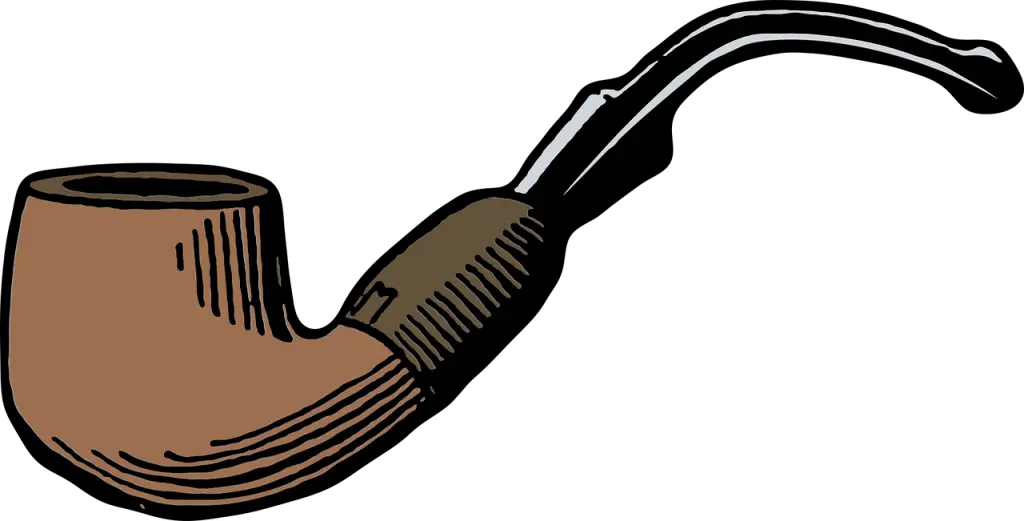
Wallace once wrote in his book about pipe smoking, stating, “The Dyaks’ favourite pipe is a huge hubble-bubble, which he will construct in a few minutes, by inserting a small piece of bamboo for a bowl obliquely into a large cylinder, about six inches from the bottom, containing water, through which the smoke passes to long slender bamboo tube.”

2.Dayak smoking pipe in the Mahakam

Carl Alfred Bock (1849-1932) was a Norwegian author and explorer.

From 1878 to 1879, he travelled from Sumatra to Dutch Borneo under the authority of the then governor-general of the Dutch East Indies.

Based on his exploration, Bock wrote the book The Headhunters of Borneo; A Narrative of Travel Up the Mahakkam and Down the Barito, Journeyings in Sumatra (1882).

In the book, he described what a Dayak aasmoking pipe looked like.

“The Dyak pipe is a very peculiarly constructed instrument, consisting of a stout bamboo cylinder, about twenty-two inches long and one and a half inches in diameter, which contains water to cool the smoke ; inside this tube is placed a piece of split rattan filled with fibre, which absorbs the nicotine ; about one inch from the end of this tube is inserted, at right angles, a slender carved piece of ironwood, about eight inches in length, and bored with a hole rather more than a quarter of an inch in diameter ; this constitutes the bowl, which contains only a very small quantity of tobacco. The Dyak, however, never takes more than half-a-dozen puffs at a time, as the Java tobacco which is generally used is very strong, and the smoke is always swallowed. Cigarettes, made of a little tobacco rolled up in a small piece of banana leaf, are largely used. The use of opium is, in some districts, rapidly extending among the rich Dyaks.”

3.Owen Rutter

Speaking of a travel writer, Owen Rutter (1889-1944) was one of the prominent ones during the early 20th century,

From 1910 to 1915, Rutter was serving with the North Borneo Civil Service. After serving in the army during World War I, he travelled extensively around the world including Borneo, Hong Kong, Taiwan, Japan, Canada and the United States.
Describing about smoking pipe of a Murut in his book British North Borneo: an account of its history, resources and native tribes (1922), Rutter stated:

“The pipe is a fearful contrivance, and is guaranteed to turn the most hardened European smoker green. It consists of a cylinder of bamboo twelve to eighteen inches long with a small brass or wooden bowl about an inch from one end. Into this bowl, which is about a quarter the size of an ordinary pipe, the Murut crams his tobacco, lights it, and then, having taken one or two enormous puffs down the bamboo mouthpiece, inhales violently.

“The air is choked with the reek of native tobacco and there arise great clouds of smoke, followed by a sound of coughing and expectoration. Immediately after all this you notice that he lays the pipe aside. The smoke is over. Mercifully so, for no pipe and a few smokers could endure so drastic a performance for very long.”

4. Did pipe smoking indicate a Chinese-occupied Borneo?

William Maunder Crocker was the Governor of British North Borneo from 1887 to 1888.

Unlike other Europeans who had observed pipe smoking among the locals, Crocker claimed, “I have never seen nor heard of any Bornean tribes who smoke pipes.”

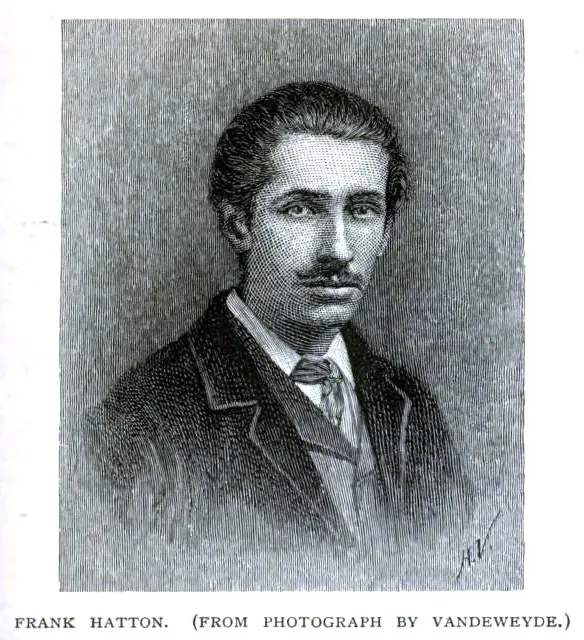
However, English geologist Frank Hatton who worked in British North Borneo had two pipes in his possession before he died on Mar 1, 1883.

Pipe smoking in the olden days of Borneo

Commenting on the Hatton’s pipes, Crocker wrote, “They must be peculiar to that one tribe, the Tungara people. All the natives of Borneo smoke, almost from the moment they leave their mothers’ arms. They roll the tobacco in a palm leaf to smoke it and it has a very fine flavour. But pipes, this is the first time anybody has ever heard of pipes in Borneo.

“These two pipe-relics of Frank’s last expedition, are made of hard red wood, and have bamboo stems. They are much the same kind of pipe as that used by the Chinese, who only put in a pinch of tobacco.

“The discovery of these pipes suggests another piece of evidence favourable to the belief that at some very remote period Borneo was partially settled and occupied by China.”

5.The law against taking away a pipe

Whether part of Borneo was ever occupied by China is a story for another day.

One thing for sure is that there is a native law that still exists to this day regarding the Bidayuh traditional bamboo water pipe, sirubok.

According to Sarawak native law Adat Bidayuh 1994 Section No 56, whoever damages, contaminates or takes a away a sirubok from a pingudung (rest stop) shall provide one hundred fruit as pingasung, or some form of restitution for a breach of the adat.

So if you see a sirubok lying around, be a model citizen and treat it like you would any piece of public property – with respect.

#KajoPicks: 3 C-drama romances featuring traditional Chinese art to watch

Chinese art is arguably the oldest continuous tradition in the world dating back to 10,000 BC.

The earliest form of Chinese art discovered may have only been simple pottery and sculptures, but since then, the Chinese have developed and introduced to the world their iconic paintings, sculptures, ceramics and chinoiserie.

Even to this day, China continuously introduces to the wider audience their traditional Chinese art.

One of the most subtle but effective ways taken to promote traditional Chinese art has been through Chinese dramas.

It is reported that China produces more television dramas than any other country.

So how do these television dramas raise awareness on their culture? Easy, one or both of the main characters usually happens to be the prodigy or master of some kind of traditional Chinese art.

While watching these characters falling in or out of love through the story, viewers receive ‘unplanned’ lessons on Chinese art.

So imagine a Malay drama telling the story of how a sape player falls in love with a songket weaver. Isn’t that an infectious way to indirectly promote Malaysian culture?

If you are a fan of traditional Chinese art and romance dramas, here are three C-dramas you should watch:

1.Sunshine of My Life (2021)

Watch this drama on Kukan Drama Youtube Channel

Have you heard of Suzhou embroidery? With a history spanning over 2000 years, it is one of the oldest embroidery techniques in the world and was designated an Intangible Cultural Heritage by Unesco in 2006.

In the drama Sunshine of My Life (2021), Tang Fei (Xu Lu) is a lively woman with a passion for Suzhou embroidery.

During a fashion show, she comes across Tang Ming Xuan (Zhang Han), the general manager Ming Yuan Fashion Group.

Unlike Tang Fei, Ming Xuan sees traditional embroidery as just a business venture.

When their paths collide, Ming Xuan begins to see the importance of traditional art like Suzhou embroidery.

In one scene, Tang Fei explains hand embroidery is a way that gives ‘warmth’ to fabric and is something that can never be replicated by a machine.

The drama also shows that with the support of big corporations who can provide huge funding, it is easier for traditional craft to survive.

2.Because of You (2017)

Speaking of embroidery, here is a romance drama set in an embroidery shop.

Guo Guo (Sun Yi), the real granddaughter of a master embroiderer. She loses her memory after a car accident as a child but was saved by the driver who then raised her in a wonton shop.

As she grows up, Guo Guo’s talent in embroidery begins to reveal itself.

The production team really shows off how much research they put into the drama.

It showcases the various technique of traditional Chinese embroidery including the double-sided embroidery, feather embroidery and golden thread embroidery.

Most people do not know that this Chinese drama is actually based on Korean drama Jang Bong-ri is Here! (2014).

Instead of embroidery, the Korean drama focuses on hanbok or Korean traditional dress making. It highlights the traditional way of making hanbok; from hand-dyeing to hand-sewing every piece.

3.Mountains and Ocean (2019)

Watch this drama on Youtube

Restoring ancient painting requires a lot of effort and intricate work and this Chinese drama really shows that.

Xia Rui Ning (Zhuang Da Fei) is a student at the Cultural Institute of Xiling University who is passionate about ancient Chinese art.

It has been her dream to make a full-time career out of ancient painting.

During her art history class, Rui Ning encounters Ye Lin (Huang Sheng Chi) and Ye Miao (Fan Zhi Xin).

These two brothers have ancient scrolls, painting and artifacts that have been passed down for generations.

With Shen Zhen, the daughter of Rui Ning’s former nanny, the four of them are assigned to restore ancient painting that they accidentally found.

In between sessions restoring an ancient painting, romance and feelings begin to blossom and entangle the four of them.

1 14 15 16 17 18 75