Patricia Hului

Patricia Hului is a Kayan who wants to live in a world where you can eat whatever you want and not gain weight.

She grew up in Bintulu, Sarawak and graduated from the University Malaysia Sabah with a degree in Marine Science.

She is currently obsessed with silent vlogs during this Covid-19 pandemic.

Due to her obsession, she started her Youtube channel of slient vlogs.

Follow her on Instagram at @patriciahului, Facebook at Patricia Hului at Kajomag.com or Twitter at @patriciahului.

Alexander Hare, the first ‘White Rajah’ in Borneo

James Brooke might be widely known as the first ‘White Rajah’ of Sarawak. However, did you know that he was not the first man to be known as the first ‘White Rajah’ in Borneo?

About 30 years before Brooke established his dynasty in Sarawak, British merchant and adventurer Alexander Hare founded an independent fiefdom in the south of Borneo called Maluka.

It was located around the Maluka river, southeast Banjarmasin on the Borneo island.

With the title of Rajah of Maluka, Hare’s kingdom even had a flag, coinage and custom duties.

Alexander Hare, the Merchant

Born in 1775 in London, Hare was the son of a watchmaker.

He joined a trading company in Portugal around 1800 and moved to Calcutta, India.

In 1807, he settled as a merchant in Malacca. During his stay in Malacca, Hare made acquaintance with Stamford Raffles of the British East India Company (EIC).

From 1811 till 1816, the Dutch briefly passed the control over Dutch Indies to Britain with Raffles as the newly appointed Lieutenant-Governor of Java.

Raffles, in turn appointed Hare as the Resident of Banjarmasin and Commissioner of the Islands of Borneo.

Alexander Hare, the first ‘White Rajah’ in Borneo
Indiae Orientalis, 17th century map of Southeast Asia. Credit: Public Domain.

Alexander Hare, the Rajah of Maluka

As for Hare, he was already familiar with Banjarmasin as he visited the place as a merchant.

On behalf of EIC, Hare arrived in Banjarmasin in 1812 to negotiate a treaty with the Sultan.

Somehow during the negotiation, the Sultan granted Hare a present.

According to Tim Hannigan in his book Raffles and the British Invasion of Java, a resident was not supposed to receive any kind of gift from a king.

But Hare accepted a gift from the Sultan of Banjarmasin – 1,400 square miles of territory, six times the size of Singapore.

He received it not as an accession to British domains but as a personal fiefdom in his own name.

By right, Raffles should have demanded Hares return the territory to the Sultan.

Instead, Raffles developed an even closer relationship with Hare as he hoped that an English fiefdom in the south of Borneo might provide a strong British foundation against the Dutch one day.

Hannigan stated, “The land that Alexander Hare ruled was swampy morass. It never had many native inhabitants and Hare’s habits seem to have scared off the last of the locals as soon as he moved in.”

Alexander Hare and his harem

So Hare was in need of ‘subjects’ in order his kingdom to flourish.

He turned to Raffles asking for ‘people’. Raffles being a good friend, provided Hare the people he needed.

“In early 1813, Raffles had signed an order that all convicts could legitimately be sentenced to transportation in Java were to be shipped to Banjarmasin for Alexander Hare to do with them as he saw fit. Hare even received a subsidy of 25 rupees a head for every criminal he received,” Hannigan stated.

Although Hare minted his own coins, he didn’t pay a single cent to his labourers, making them nothing more than unpaid slaves.

On top of the male convicts that were sent to Maluka, Hare demanded women so that he could breed more settlers.

He preferred women “of loose morals”, he said.

And again Raffles sent ‘women of loose morals’ to Hare. They were homeless women on the streets of Batavia or women who were caught for petty theft.

As it turned out, the women’s first duty was to satisfy the huge sexual appetite of the ‘White Rajah’.

Today, a handful of Indonesian web portals today refer to him as the man who owned a harem in Banjarmasin.

Alexander Hare and the Banjarmasin Enormity

Author Ferdinand Mount in his book The Tears of the Rajas: Mutiny, Money and Marriage in India 1805-1905 called Hare ‘the dissolute wanderer’ who ‘might have stumbled out of a Conrad novel’.

Mount added, “He was a Lord Jim without the good intentions.”

Lord Jim is a character in Joseph Conrad’s 1900 novel. The novel was inspired by English mariner Austin Podmore Williams and Sarawak’s first rajah, James Brooke.

Unlike Brooke, Hare’s dream of an independent state started to crash after the signing of the Anglo-Dutch Treaty of 1814.

After rounds of negotiations between EIC and the Dutch, Hare was at first allowed to keep his little kingdom in Banjarmasin.

However, Hare reportedly antagonised the Dutch. They believed that Hare was planning to use Maluka to enhance British intrusions in the region.

In the end, the Dutch government declared that Hare had no legal right in Borneo and the Rajah of Maluka was no longer a king.

Mount pointed out, “When Hare was finally kicked out by the returning Dutch, they forced him to total up the number of his wretched slaves. There were 907 men, 462 women and 123 children crouching in his filthy huts.”

These numbers did not include the possibly hundreds of others who died or were lucky to have fled into the jungle.

Making another reference to Conrad’s work, Mount stated, “If Hare had not yet plunged as deep into evil as Conrad’s Mr Kurtz, it was only because he did not stay there long enough.”

Kurtz is a character in Conrad’s 1899 novella Heart of Darkness. He is an ivory trader and commander of a trading post in Africa. The book was inspired by Congo Free State, a territory personally owned by Belgium’s King Leopold II from 1885 to 1908. It is also known for its brutal history; losing up to 50 per cent of its population due to forced labour system.

Hare’s four-year reign as the first White Rajah in Borneo came to be known to Dutch historians as ‘De Bandjermasinche Afschuwelijkheid’ or ‘The Banjarmasin Enormity’.

Life after Maluka

After being kicked out of Banjarmasin, Hare drifted around the archipelago bringing along some of his slaves and women while trying to get back to his properties in Java.

However, the Dutch banned him from entering the island. He then shipped around and found himself in Cape Town, South Africa.

According to Hannigan, what Hare really wanted was a desert island on which to live out his dreams of debauched despotism undisturbed.

Then in 1826, he brought his household to an uninhabited coral atolls called the Cocos Islands.

Located a thousand miles west of Java in the middle of the Indian Ocean, Hare first found out about the place from one of his former employees John Clunies-Ross.

Clunies-Ross eventually also moved to Cocos Islands bringing his family and workers.

The two did not see eye to eye with each other.

After five years in Cocos Islands, Hare left again and now headed to Bengkulu.

Some reports stated that most of his slaves left Hare to join Clunies-Ross, while others said it was because Hare’s money was dwindling and he could not afford to bring everyone to Bengkulu.

Either way, the former Rajah of Maluku died in Bengkulu in 1835 after falling off his horse.

Reportedly, his remaining estate went to a woman named Dishta – a dancing girl whom Hare picked up from Calcutta.

How French colonisation of Vietnam led to the birth of banh mi

Sometimes when you eat a certain food, you are eating a piece of history.

Take banh mi, for instance. It is a type of Vietnamese sandwich made up of an airy baguette with a cirspy, thin crust filled with various ingredients like cilantro, pork sausage, pickled carrots along with chilli and mayonnaise.

While the Southern Vietnamese call it banh mi or wheat banh (bread), the Northern Vietnamese call it banh tay or western-style bread.

This sandwich would not have come into existence in the first place if Catholic evangelisation and eventually French colonisation did not take place in Vietnam.

How French colonisation of Vietnam led to the birth of banh mi
Image by Unsplash.com

The arrival of Catholic missionaries in Vietnam

To know the origin story of banh mi, one must understand how Catholicism arrived in the country.

One of the first missionaries to arrive in Vietnam was the Jesuit priest Alexandre de Rhodes, who arrived there in 1624.

In 1650, he returned to Europe to advocate more bishops and priests to be sent to Vietnam as about that time there were already 100,000 converts.

At first, there was little to no resistance from the local government against Catholic missionaries.

Until in 1825, emperor Ming Mang of the Nguyen dynasty banned foreign missionaries from entering Vietnam.

The emperor subsequently banned Roman Catholicism. During this time, many French missionaries were persecuted, especially after the Le Van Khoi revolt (1833-1835).

The revolt had southern Vietnamese, Vietnamese Catholics, French Catholic Missionaries and Chinese settlers under the leadership of Le Van Khoi rising up to oppose the imperial rule of Emperor Minh Mang.

It took three years for Minh Mang to suppress the rebellion. Eventually, 1,831 people were executed and buried in a mass grave.

Minh Mang’s successor Thieu Tri also upheld the anti-Catholic policy, although his approach was not as aggressive as Minh Mang.

It is believed that the Vietnamese sandwich had already existed by that time since the word ‘banh mi’ was found in Jean-Louis Taberd’ 1830s dictionary Dictionarium Latino-Annamiticum.

With the news of the deaths of their citizens reached France, the French Foreign Minister Francois Guizot sent a fleet to Southeast Asia in 1843.

The aim was to support British efforts in China and at the same time fight the persecution of French missionaries in Vietnam.

Since then, the French conquest begun until they finally took complete control of Vietnam in 1887 with the formation of La Federation Indochinnoise.

Banh mi during French-colonised Vietnam

How French colonisation of Vietnam led to the birth of banh mi
Banh mi and beer. Image by Pexels.com

The French colonists brought along their language and food such as coffee, baguette and pate chaud during the colonisation of Vietnam.

At first, the locals could not enjoy French cuisine as they were too expensive.

French baguette in particular was a luxury due to the imported wheat at that time.

However during this period, the local Chinese were hired as chefs and cooked for the French.

They learned the skills to make French cuisine including the art of making bread.

Eventually, the Vietnamese twerked the recipe a bit by putting more yeast and water to make it lighter.

When the wheat import was interrupted during World War I, the local bakers started to be creative.

They began mixing cheap rice flour when making the bread.

Unexpectedly, the move made the bread fluffier, allowing the locals to afford to buy bread.

While the French loved to eat their baguettes with chicken liver or goose liver pate, the Vietnamese were not a big fan of these combos.

Thus, they started to make their own fillings.

The banh mi that we now know of today was founded some time in the 1950s.

With pickled carrot, radish, cucumber and cilantro as well as source of protein such as ham, pork, chicken or fried egg, it is now a whole new dish, different from its French origin.

Today, different eateries and stalls have their own version of banh mi.

Customers can even customise their own by requesting which ingredients they preferred to put into their bread.

It is definitely a must-try food when visiting The Land of Blue Dragon.

As author Mina Holland stated in her book The Edible Atlas: Around the World In Thirty-Nine Cuisines, “Banh mi are something of an edible reminder of Vietnam’s imperial past, fusing the bread of coloniser and fillings of the colonised. A banh mi sandwich is a fantastic route into Vietnamese food. It is both an introduction to the crisp acid flavours and a morsel of edible history.”

KajoPicks: 8 K-dramas based on Korean novels to watch

These days, there are so many Korean dramas that are inspired by manhwa and webtoon.

Even though the number is not as huge as K-dramas based on webtoons, there is still a handful of television series which have gained their inspiration from Korean novels.

So here are eight K-dramas based on South Korean novels to watch:

1.Painter of the Wind (2008)

Based on the bestselling historical fiction novel of the same name by Lee Jung-myung, this series stars Moon Geun-young and Park Shin-yang.

It circles around the idea of ‘what if’ real-life Joseon painter Shin Yun-bok had really been a woman.

Shin Yun-bok was known for his realistic depictions of daily life in his time.

In the drama, Yun-bok is a talented young painter who disguises herself as a man to search for her father’s murderer.

She meets Kim Hong-do, a master painter who later becomes her mentor.

The novel also inspired 2008 Korean film Portrait of a Beauty starring Kim Min-sun.

2.The King in Love (2017)

This Korean series is one of the few youth historical dramas out there.

It is based on the novel of the same name by Kim Yi-ryung.

Starring Im Si-wan, Im Yoon-ah and Hong Jong-hyun, it is a story of a love triangle set in the Goryeo dynasty.

Won is a young and ambitious crown prince who falls in love with a young woman named San.

At the same time, his best friend Wang Rin is also in love with San.

But who does San love between the two?

Watch the trailer here.

3.Top Management (2018)

Top Management (2018) is a YouTube original production based on a novel by Jang Woo-san.

It is a romance-fantasy story which centers around Eun-sung.

She is a former idol trainee and has special power that allows her to see the future.

The storyline focuses on her life as the manager of the aspiring but struggling male idol group ‘S.O.U.L’.

Watch the trailer here.

4.Ms Hammurabi (2018)

What makes this drama different from other K-dramas adapted from Korean novels is that the novelist wrote the script himself.

Judge Moon Yoo-seok wrote the novel The Hankyoreh which was first serialised in a local newspaper back in 2015.

To bring his work to the TV screen, he wrote the script of the drama series Ms Hammurabi which was based on his book.

It was the first time Moon tried his hand at script writing.

In an interview, he revealed that he was surprised that the production company suggested to go with his script without the help of a co-writer or a sub-writer.

It turned out to be an excellent decision as the series was well-received by viewers for its fresh perspective on judges.

This Korean legal drama tells the story of the life of judges and the various challenges that they have to face.

It stars Go Ara, Kim Myung-soo, Sung Dong-il and Ryu Deok-hwan.

Watch the trailer here.

5.Girl’s Generation 1979 (2017)

Based on the novel Lingerie Girls’ Generation by Kim Yong-hee, the series is set during the 1970s in Daegu city.

It circles around Lee Jung-hee whose father owns a lingerie factory. Jung-hee like other girls at her age, loves to listen to pop music.

Instead of concentrating on schoolwork, she focuses more on boys.

Besides the teenage drama, there is a dark mystery going on in the story.

There is an increasing number of sexual assaults in the city and one by one, the female workers in the factory go missing.

Watch the trailer here.

6.Kingmaker: The Change of Destiny (2020)

This historical romance drama is based on Lee Byung-joo’s novel Wind, Clouds and Tombstone.

It stars Park Si-hoo, Ko Sung-hee, Sung Hyuk and Jun Kwang-ryul.

The story follows the fierce struggle for the throne during Joseon dynasty.

Choi Chun-joong is the best face reader in the country who eventually becomes the most powerful person of the era.

Meanwhile, Lee Bong-ryeon is a royal princess who has a special ability to see the fate of people.

Together with Chun-joong, the duo tries to change the fate of their country for the better.

Watch the trailer here.

7.Sungkyunkwan Scandal (2010)

Most people do not know that this famous historical drama is based on Jung Eun-gwol’s bestselling 2007 novel The Lives of Sungkyunkwan Confucian Scholars.

Starring Park Min-young, Park Yoo-chun, Yoo Ah-in and Song Joong-ki, the story follows a girl who disguises herself as a man to make ends meet.

When Kim Yoon-hee enrolls in the prestigious Sungkyunkwan, the Josean Dynasty’s university, she becomes close with three men.

The first man is Lee Sun-joon, who known for his upright and cold demeanour.

Then the mischievous Gu Yong-ha (Song Joong-ki) and the moody Moon Jae-shin (Yoo Ah-in).

The four of them called their little group the ‘Jalgeum Quartet’.

8.Moon Embracing the Sun (2012)

Sungkyunkwan Scandal (2010) is not the only Jung Eun-gwol’s novel that materialised into a television series.

Her 2005 novel The Moon that Embraces the Sun is adapted into drama in 2012.

It is a love story between a king during Joseon Dynasty and a female shaman.

In the same time, it shows the power struggles and conflicts that take place in the royal court.

The highly-rated drama stars Kim Soo-hyun, Han Ga-in, Jung Il-woo and Kim Min-seo.

Special mention
Lovers of the Red Sky (2021)

KajoPicks: 8 K-dramas based on Korean novels to watch

Proving that she is the queen of Korean historical romance novels, Lovers of the Red Sky (2021) is Jung Eun-gwol’s third book to be adapted into a television drama.

With a dose of fantasy, the story sets during the Dan dynasty when Ghost, Demons and God are heavily involved in human lives.

This ongoing drama follows the story of a genius female painter who was born blind due to the curse of the Demon King.

However, she miraculously can see, thanks to God’s blessing.

Meanwhile, Ha-ram is a red-eyed man who lost his sight as child. Despite being blind, he can still read the future by tracing the movement of the sky at night.

It stars Kim Yoo-jung, Ahn Hyo-seop, Gong Myung and Kwak Si-yang.

Watch the trailer here.

10 easy and amazing ways to use frozen puff pastry

If you love baked goods, one of the most important ingredients to have in your fridge is frozen puff pastry.

Unless you are a culinary expert and you know how to make your own puff pastry, then you might not need this ingredient.

Also known as pate feuilletee, it is a flaky light pastry made from laminated dough composed of dough and butter or other solid fat.

The butter is put inside the dough, making what they called a paton which is repeatedly folded and rolled out before baking.

Making your own puff pastry is a long, tedious work. Nowadays thanks to culinary innovation, we can easily buy the instant version of puff pastry.

Once you have this in your fridge, here are 10 easy ways to your frozen puff pastry:

1.Sardine puff

Malaysians love having sardine puff for their afternoon tea.

To make the filling, you need a can of sardines in tomato sauce. Drain the sardines, and let your creativity flow. Do you like spicy food? Add in some chili powder or ground chilli. Need extra taste and texture? Add in diced onion or carrots.

After you prepare your filling, make your sardine puff with the frozen puff pastry in mold it into whatever shape you want.

Check out the recipes here, here and here.

2.Tuna puff

Instead of canned sardine, how about using canned tuna?

There are so many varieties of canned tuna out there.

Choose your favourite and flavour it according to your taste.

Then, make your own tuna puff using frozen puff pastry.

Check out the recipes here, here and here.

3.Curry Puff

Do you have leftover curry from last night’s dinner?

Or do you have a canned curry sitting around in the pantry?

What better way to use it besides making curry puff using frozen puff pastry?

4.Pigs in a Blanket

In the United States, the term ‘pigs in a blanket’ commonly refers to hot dogs in croissant dough.

Instead of croissant dough, how about using frozen puff pastry?

The idea is still the same; to roll cocktail sausages using the dough and bake them to perfection.

You can also use normal sized sausages and cut them into pieces.

Check out the recipes here, here and here.

5.Pot Pie

To make pot pie using frozen puff pastry, you need to some cooking.

You need boneless chicken, mixed vegetables as well as ingredients such as cream, flour and butter to thicken the filling.

With this recipe, you are ready to have a hearty meal instead of dessert.

Check out the recipes here, here and here.

6.Puff pastry pizza

Speaking of a hearty meal, use frozen puff pastry as a pizza base and you will have a puff pastry pizza.

As for the toppings, you can go for simple ingredients such as tomato puree and mozzarella cheese or you can go crazy with it.

Check out the recipes here, here and here.

7.Chocolate Puff

Are you a fan of chocolate? How about making chocolate puff?

The easiest way to make one is to sprinkle chocolate chips on your dough and roll it like a croissant.

After baking, the chocolate chips will melt and you have a nice layer of chocolate in your puff pastry.

Check out the recipes here, here and here.

8.Fruit tart

Here is another super easy recipe to use frozen puff pastry.

Basically, you need cream cheese and fruits of your choice.

Spread cream cheese on top of the dough, top it with fruits and sprinkle some icing sugar on top.

Bake it until your pastry is cooked.

Check out the recipes here, here and here.

9.Palmier

A palmier is a French pastry that known for its many names including pig’s ear, palm heart and elephant heart.

Using only three ingredients including puff pastry, butter and sugar, you can make a palmier at the comfort of your home.

Check out the recipe here.

10.Baked Apple Roses

10 easy and amazing ways to use frozen puff pastry
Image by Unsplash.com

This puff pastry dessert is not only delicious but also pretty to look at.

Besides frozen puff pastry, you need thinly sliced apple, sugar, butter and cinnamon powder.

The idea is to place apple slices along one long edge of dough with the slices overlapped slightly.

Then fold bottom half of the dough over the apple slices to form a shape that looks like a rose.

Check out the recipes here, here and here.

Salak fruit: 5 things you might not know about this unique fruit

Some people call salak fruit ‘snake fruit’ because of its reddish brown scaly skin which reminds one of snakeskin.

However, the salak tree belong to the palm tree family and is native to Malaysia and Indonesia.

The fruit can be peeled by first pinching the pointed tip of the fruit, and then peeling the skin away to reveal pearly edible cloves which closely resemble a peeled garlic.

As for the flavour, it tastes acidic and sweet with an apple-like texture.

Here are five things you might not know about the salak fruit:

1.It has been featured on the Malaysian stamp

On Feb 27, 1999, a Malaysian stamp was issued featuring the salak fruit.

It was under the rare fruits series of stamps.

The species that was featured on the stamp was Salacca grabrecens.

2.There are many types of salak cultivar out there

Overall, there are at least 30 salak cultivars (which is short for ‘cultivated varieties’) out there.

Some of the popular cultivars are salak pondoh and salak Bali.

In Indonesia, salak Bali is the most expensive type: It is smaller than the normal salak and apparently the sweetest of its kind.

Meanwhile in Malaysia, the most famous type is salak madu (honey).

3.The health benefits of salak fruit

Many studies have been done on the nutritional values of salak fruit.

A study by Thai researchers published in 2013 for instance, showed that salak plum possessed antioxidant properties.

Other studies showed that the tropical fruit contains vital nutrients such as calcium, iron, potassium, vitamin C and beta caroteene.

It is estimated that 100gm of salak fruit can provide approximately 82 calories and contains 4 per cent fat and 1 per cent protein.

4.Place that is named after the salak tree

Pasir Salak is a riverside town located in Perak, Malaysia.

Legend has that the town was named after the sandy riverbank that was once covered by salak fruit skins.

Hence the name ‘Pasir Salak’, ‘Pasir’ as in sand in Malay.

Some history buffs would recognise the place as where British colonial official J.W.W. Birch was assassinated in 1875, and event which would later caused British intervention in local conflicts leading to the outbreak of the Perak War.

Meanwhile, in Malaysia’s neighbouring country of Indonesia in West Java, there is an eroded volcano called Mount Salak.

Contrary to popular belief that the name is derived from the salak tree, Mount Salak’s name actually comes from a Sanskrit word.

According to Sundanese tradition, the name comes from the Sanskrit word ‘Salaka’ which means ‘silver’.

Hence, Mount Salak can also be referred to as Silver Mountain.

5.Some of the salak products you should try

Salak fruit: 5 things you might not know about this unique fruit
Image by Pixabay.

Salak candies, salak juice and pickled (jeruk) salak are some of the yummy delicacies made from this fruit.

Thanks to modern technology, you can order these products through online shopping if you cannot find them in your local stores.

KajoPicks: 8 Korean sci-fi dramas you need to watch

The genre that has been gaining momentum in Korean television industry in recent years is none other than scientific fiction or sci-fi.

With bigger budgets as well as huge support from giant companies such as Netflix, advanced computer-generated imagery is no longer only be found in Hollywood.

These Korean sci-fi television series proved that everything is possible in TV production as long as fans are continuing to watch and money is continuing to be pumped in.

Here are eight South Korean sci-fi dramas you cannot miss out:

1.Circle: Two Worlds Connected (2017)

While sci-fi is already a rare genre in Korean dramas, this K-drama is even rare since it is a dystopian fiction story.

Circle: Two Worlds Connected (2017) is a Korean sci-fi television series starring Yeo Jin-goo, Kim Kang-woo, Gong Seung-yeon and Lee Gi-kwang.

It follows the story of two parallel plots set in the years 2017 and 2037.

The drama begins in 2007 when two fraternal twin brothers Kim Woo-jin and Kim Bum-gyun along with their neuroscientist father Dr Kim Kyu-chul (Kim Joong-ki) witness the arrival of a humanoid alien (Gong Seung-yeon).

The family brings the alien to live with them and the twins become attached to her, calling her ‘Byul’.

In the meantime, Dr Kim is secretly working on Byul, calling it the Beta Project.

One day, Dr Kim and Byul go missing, Bum-gyun believes Byul has taken their father captive while Woo-jin thinks their father has abandoned them.

In 2017, Woo-jin (Yeo Jin-goo) is a college student studying in neuroscience.

When a series of suicides takes place in his campus, Woo-jin believes it somehow linked to his twin Bum-gyun (An Woo-yeon).

As he investigates the case, Woo-jin comes across Han Jung-yeon who looks exactly like Byul.

Jung-yeon, who is a computer science student, is also investigating the multiple suicides.

In 2037, South Korea is now divided into Normal Earth and Smart Earth.

Normal Earth is where crimes are rampant and heavily polluted while Smart Earth is where the city is clean and free of crimes.

A crime detective in Normal Earth Kim Joon-hyuk (Kim Kang-woo) is investigating a pair of twin brothers who went missing in 2017.

Watch the trailer here.

2.My Holo Love (2020)

Go Nan-do (Yoon Hyun-min) is a genius inventor and the owner of an IT research company.

However, nobody knows that he is the real owner and all the projects were created by him except for his stepsister and the official CEO.

Meanwhile, Han So-yeon (Ko Sung-hee) is an assistant manager at a glasses company.

Due to her face blindness disorder, she decides to live a reclusive life.

Her lonesome life starts to get exciting when she starts to form a connection with a human-like hologram who looks exactly like his prickly creator Go Nan-do.

As many fiction stories are inspired by real-life events, the scriptwriter Ryu Yong-jae was inspired to write the script after watching the Google DeepMind Challenge Match in 2016.

It was a five-game Go match between 18-time world champion Lee Se-dol and AlphaGo, a computer Go program developed by Google DeepMind played in Seoul, South Korea.

In the historical match, AlphaGo won all but the fourth game.

Watch the trailer here.

3.Memories of the Alhambra (2018)

Speaking of gaining inspiration from real-life events, here is a Korean sci-fi drama that is inspired by Pokemon Go and tech mogul Elon Musk.

Memories of the Alhambra (2018) centers around on a company CEO Yoo Jin-woo (Hyun Bin) who get entangled in a series of mysterious incidents surrounding a new and intricate augmented reality game inspired by the stories of the real-life Alhambra Palace.

Together with Jung Hee-joo (Park Shin-hye) the sister of the creator of the game, the border between the real world and the AR world of the game becomes blur.

Today, it is one of the highest-rated Korean dramas in cable television history known gaining praises for its creative plot and its unexpected twists.

Moreover, this Korean sci-fi series is the first drama based on AR gaming.

Read more about Memories of the Alhambra here.

4.Are you Human? (2018)

Laura Oh (Kim Sung-ryung) is a scientist who is one of South Korea’s leading names in robotic and artificial intelligence.

She is also married into one of the richest families and her son Nam Shin (Seo Kang-joon) is expected to inherit the family business.

Things take a different turn when Nam Shin gets into accident and slips into coma.

To secure his position as the heir, Laura sends one of her creations Nam Shin III pose as Nam Shin.

The family also hires former mixed martial arts fighter Kang So-bong (Gong Seung-yeon) as his bodyguard.

So-bong, unknowingly falls in love with the lifelike robot.

Like many Korean sci-fi dramas that circle around artificial intelligence, the series highlights the main question, ‘Can an AI replaces human intelligence?’

Watch the trailer here.

5.Alice (2020)

In 2050, the organisation Alice is formed to send clients back through time to see deceased loved ones to find peace and closure.

In the same time, they also work as police time incursions.

Alice agents Yoon Tae-yi (Kim Hee-sun) and Yoo Min-hyuk (Kwak Si-yang) travelled to the year 1992 Seoul to search for The Book of Prophecy.

It is a book that predicts the fates of certain people and end of time travel.

However, a rogue group called Teacher that manipulates time found young Tae-yi and murdered her father for the book.

Right before he passed away, the father gives the final page to young Tae-yi before her adult counterpart arrived.

Later, Tae-yi find out that she is pregnant with Min-hyuk’s child. Min-hyuk asks her to abort the baby because the radiation caused by time traveling can cause serious defects to the child.

Tae-yi then disappears with her child. Under a new identity as Park Sun-young, she raises her son Park Jin-gyeom (Joo Won) as a single mother.

In 2010, the young Jin-gyeom find his mother murdered and vows to find her killer.

As an adult, he becomes a detective and slowly learns about time travelling, Alice, Teacher and the truth about his mother’s death.

Watch the trailer here.

6.Rugal (2020)

This drama follows the story of Kang Gi-beom (Choi Jin-hyuk).

He is an elite police officer who is trying to bring down one of South Korea’s largest criminal organisations, Argos.

Argos, instead sends a hitman to kill Gi-beom’s wife, blinds him and even frames him for the murder.

Later, South Korea’s National Intelligence Service (NIS) recruit Gi-beom to join a special task force called Rugal.

This special team consists of members who are equipped with biotechnology which give them superhuman abilities.

Gi-beom for instance, receives two artificial eyeballs to regain and enhance his sight.

Using his new identity, Gi-beom is set to clear his name and gains his revenge.

Watch the trailer here.

7.L.U.C.A The Beginning (2021)

Here is another Korean sci-fi drama circles around biotechnology.

Ji-oh (Kim Rae-won) has a secret. He has extraordinary power and fighting skills but he does not know who he really is and how he got his power.

While looking for answers about his identity, he is chased by mysterious figures.

He later learns about a mysterious group of scientists at an institution named Human Tech.

The group conducts a secretive genetics and biotech project codenamed L.U.C.A.

Ji-oh’s only ally is Ha Neul-ae-goo-reum. She is a police detective who is searching for her missing parents.

Watch the trailer here.

8.Sisyphus: The Myth (2021)

This time travel story centers around a genius engineer Han Tae-sul (Cho Seung-woo) and his saviour from the future Gang Seo-Hae (Park Shin-hye).

Tae-sul is the CEO of Quantum and Time Company. After his older brother dies, he tries to uncover the truth behind his death.

His journey leads him to come across a time-traveler Seo-hae.

Seo-hae, in the mean time is an elite warrior and skillful sharpshooter from the future.

Her mission to travel back to the past is to save Tae-sul and prevent him from inventing the Uploader, a time machine which is capable of sending both human and objects including a nuclear weapon to the past.

Watch the trailer here.

KajoPicks: 8 Korean sci-fi dramas you need to watch
Special Mention
The Silent Sea (2021)

Here is an upcoming Korean sci-fi mystery thriller series that you need to watch out for.

It stars Gong Yoo, Bae Doona and Lee Joon.

It is an adaptation from the 2014 short film The Sea of Tranquility.

The story follows a special team sent to secure a mysterious sample from an abandoned research facility called Balhae Base which located on the moon.

Gong Yoo plays the role of Han Yoon-jae, the exploration team leader.

Bae Doona takes up the role of Dr Song Ji-an. She is an astrobiologist who wants to uncover the truth behind the accident that caused Balhae Base to be abandoned.

With only eight episodes, the series will air on Netflix in 2021.

10 things to know about the Japanese Army’s Unit 731

Unit 731’s official name was ‘Epidemic Prevention and Water Purification Department of the Kwantung Army’ but their actual work had nothing to do with safeguarding health and security.

This biological and chemical warfare research development unit of the Imperial Japanese Army actually started epidemics and polluted rivers with human remains.

Based at the Pingfang district of Harbin, Northeast China, the unit undertook deadly human experimentation during the Second Sino-Japanese War (1937-1945) of World War II (WWII).

Unit 731 was commanded by General Shiro Ishii, a combat medic officer in the Kwantung Army.

They routinely conducted tests on human beings who the members of Unit 731 referred to as ‘maruta’, or ‘logs’ in Japanese.

The majority of victims were Chinese with small percentage of Russian, Mongolian and Korean. They also did human experiments of European, American, Indian, Australian and New Zealander prisoners of war (POWs) who were imprisoned at Mukden camp.

It is estimated that up to half a million people were killed by Unit 731 and its related programs.

10 things to know about the Japanese Army's Unit 731
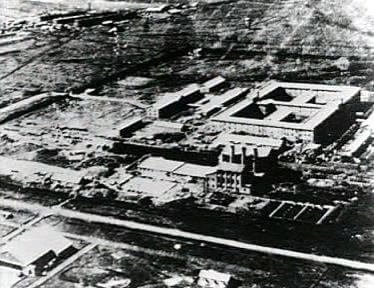
The Unit 731 complex. Two prisons are hidden in the center of the main building. Credit: Copyright expired

Here are 10 things to know about the Imperial Japanese Army’s notorious chemical warfare department Unit 731:

1.Frostbite experiments on victims including babies

Yoshimura Hisato was a lecturer at Kyota Imperial University Faculty of Medicine before he joined Unit 731 in 1938.

At the Khabarovsk War Trial in 1949, a sergeant major from Military Police at Unit 731 testified on Yoshimura’s experiments on frostbite.

He said, “When I walked into the prison laboratory, five Chinese experimentees were sitting on a long form [bench]; two of these Chinese had no fingers at all, their hands were black; in those of three others the bones were visible. They had fingers, but they were only bones. Yoshimura told me that this was the result of freezing experiments.”

After the war had ended, Yoshimura managed to escape from Manchuria, received war crime immunity, returned to university and finally became the president of Kyoto Prefectural University of Medicine.

Right up to the end, Yoshimura denied having performed these experiments although his own published scientific papers proved otherwise.

The papers revealed that not only male subjects were experimented on, but women, children and even a 3-day-old baby.

The frostbite experiment was done by chilling selected body parts to nearly 0 degrees Celsius with ice water.

2. How Unit 731 devised a method for transmission of syphilis between victims

The Japanese army wanted to develop a cure for syphilis since many of their soldiers had been infected through rape or intercourse with comfort women. But first, they wanted to study how syphilis was transmitted. Initial attempts to study the transmission of syphilis through injections were abandoned due to the absence of real results. The doctors of Unit 731 then orchestrated forced sex between infected and non infected prisoners to transmit the disease.

Nishino Rumiko, who interviewed former unit members of Unit 731, recounted during her lecture on “Unit 731 and Comfort Women”: “Infection of venereal disease by injection was abandoned, and the researchers started forcing the prisoners into sexual acts with each other. Four or five unit members, dressed in white laboratory clothing completely cover the body with only eyes and mouth visible, handled the tests. A male and female, on inflicted with syphilis, would be brought together in a cell and forced into sex with each others. It was made clear that anyone resisting would be shot.”

3.The testimony of a former medical assistant in Unit 731

Speaking to the New York Times in 1996, a former medical assistant in Unit 731 anonymously revealed what happened during his first vivisection.

“The fellow knew that it was over for him so he did not struggle when they led him into the room and tied him down. But when I picked up the scalpel that’s when he began screaming. I cut him open from the chest to the stomach, and he screamed terribly, and his face was all twisted in agony.

“He made this unimaginable sound, he was screaming so horribly. But then finally he stopped.

“This was all in a day’s work for the surgeons, but it really left an impression on me because it was my first time.”

4.A doctor of Unit 731 described his first vivisection in a 2007 interview with The Japan Times

Dr Ken Yuasa (1916-2010), a wartime surgeon, was one of at least 1,000 other doctors and nurses who conducted vivisections – surgeries conducted for experimental purposes on live organisms – under Unit 731.

In his interview with The Japan Times, he describes how took part in his first vivisection in March 1942 at an army hospital in Changzhi (formerly Luan) in Shanxi Province, China.

He tells that there were two operating tables surrounded by some 20 people, including medics, surgeons and hospital directors.

The victims were Chinese prisoners; one tall, brawny young man and an older man who may have been a farmer. Both the victims were handcuffed and waiting beside the tables.

The doctors started the vivisection with an appendectomy. Yuasa revealed that it took the doctors three incisions to locate and cut out the organ because it was ‘perfectly healthy’.

He then proceeded to perform a tracheotomy which caused bright red blood to gush out and spill on the floor.

Yuasa admitted that he was ‘impelled by interest’ so he amputated the prisoner’s right forearm.

The older patient was dead by the end of the procedures but the young prisoner was still breathing. Yuasa then injected anesthetic into his vein and executed him. Later, the victims were dumped in a hole near the hospital.

Yuasa had not realised the depth of his atrocious acts under Unit 731 until much later when he became a prisoner of the People’s Liberation Army of China, and was instructed to confess his acts in writing. After receiving a letter from the vivisection victim’s mother sometime later, reality struck. Once he returned to Japan, he went on to disclose and reveal these gruesome wartime acts until his death in 2010 so that these kinds of atrocities would never happen again.

5.Cruel experiment on mother-child relationship

In order to test the bonds between mother and her child, the doctors of Unit 731 implemented a cruel deadly experiment on the pair.

One of the experiments had a Russian mother and daughter left in a gas chamber.

Then the doctors peered through the thick glass and timed their convulsions, watching as the woman sprawled over her child in a futile effort to save her from the gas.

6.Experimenting on American Prisoners of War (POWs)

American POWs were not exempt from these cruel and harsh experiments. Besides live vivisections, American PoWs had to endure having parts of the livers removed to see if they could survive. Another experiment saw a prisoner getting drilled through his skull see if epilepsy could be cured by the removal of part of the brain. Yet another testimony told the story of how they injected one anesthetised prisoner with seawater to see if it could replace sterile saline solution.

7.Victims were exposed to bacteria through deliberate bombing

Speaking of American POWs, the survivors and their families used the Freedom of Information Act to extract from the Pentagon formerly top secret documents on Mukden POW camp.

One of the documents recounted how 20 Manchurians were tied to poles or forced to sit on the ground near a bomb filled with bacteria.

Then, the bomb exploded sending plague bacilli and anthrax bacilli into their bodies through wounds.

The document stated, “The wounded were kept in the laboratory until the symptoms of the disease appeared and when they were taken ill, they were given medical treatment and their cases were studied but most of them died in agony.”

8.The attack on civilians through germ warfare

One of the survivors of the germ warfare, Wang Juhua revealed in a 2005 interview how the attack impacted her life.

Recalling the time when she first realised that her village was attacked, she said, “I went out to feed the cattle, and I walked through the grassland. When I came back, I felt my legs itching and I scratched them. Small red dots appeared on my legs and then became blisters.”

Wang was just 8 years old at the time.

It is estimated 250,000 people were killed when Japan launched its germ-warfare experiments during its military occupation of eastern and northern China.

The one responsible for these experiments was none other than Unit 731.

They created lethal packages of fleas, wheat grain, rice and beans, all infected with deadly pathogens such as anthrax, cholera, typhoid, dysentery and bubonic plaque.

After that, they dropped all these bags from airplanes over Chinese villages. Those who survived continued to live in miserable conditions like Wang who had to live with rotting legs.

9.There are active branches of Unit 731 throughout China and Southeast Asia including Malaysia

The breeding grounds of these deadly pathogens were at the branches of Unit 731 located throughout China and Southeast Asia.

Researcher Lim Shaobin learned from Japanese WWII documents that Singapore was serving as a base in order to transport rats and fleas to Malaya.

Then in Malaya, they were transferred to Tampoi Mental Hospital in Johor and a secondary school at Kuala Pisa near Kuala Lumpur. They were also sent to a facility in Bandung, Indonesia.

Little would Malaysians today know that Malaya was Unit 731’s largest breeding ground outside of Japan and China. The unit’s research found that rat fleas thrived in Malaysians’ temperature and humidity.

The fleas were made to feed on the blood and organs of rats that had died of bubonic plague. Then, millions of these fleas were taken in big glass jars to China.

Other units under the Epidemic Prevention and Water Purification Department like Unit 9420 even sent a supply of rodents from Tokyo to Singapore to supplement the local population of rats.

10.Wiping out the existence of Unit 731

Three days after Unit 731 members heard a broadcast newsflash about the Soviet invasion, they were all ordered to destroy the evidence of the existence of their unit.

A former Unit 731 personnel Naoji Uezono revealed, “First of all the marutas were killed. Then their bodies were put in the incinerator. The specimens taken from human bodies were also put in but there were so many that they just wouldn’t burn. So we took them down to the Sungari river and dumped them in.”

Some of the bodies were thrown into the courtyard pit, covered with heavy fuel oil and set alight.

The bones that remained were collected, put in straw bags and dumped in the river.

Originally, General Shiro Ishii ordered every member of Unit 731 along with the nearby villagers to commit suicide, to the extent of issuing everyone vials of poison.

However, his idea was strongly opposed by Unit 731’s research chief Major-General Hitoshi Kikuchi.

Finally, Ishii ordered them never speak of their military past for the rest of their lives and never contact each other again.

After the war, the researchers involved in Unit 731 were secretly given immunity by the US in exchange for the data they gathered through human experimentation.

KajoPicks: 10 South Korean dramas that suffer from Second Lead Syndrome

Second Lead Syndrome in Korean dramas are real guys.

It is a phrase coined by K-drama fans when the viewers like the second male lead character to end up with the female lead rather than the main male character.

In most cases, the first male character is always being portrayed as cold and very domineering.

Meanwhile, the second lead male character is the one we know who does everything for the girl but in the end will never have her heart.

Here are ten dramas, we believe that are suffering from a serious case of Second Lead Syndrome:

1.Sungkyunkwan Scandal (2010)

This historical drama follows the story of Kim Yoon-hee (Park Min Young) who disguises as her brother Kim Yoon-shik to earn money for the family.

It is set time during a period when females are not allowed to earn education or employment.

One day, she is offered a chance to make money by taking an entrance examination to Sungkyunkwan, a Joseon dynasty university.

Since her action is illegal, she gets caught by Lee Sun-joon (Park Yoo-chun).

After acknowledging Yoon-hee’s intelligence, Sun-joon encourages her to enroll in the university.

There, she gets to know her schoolmate including Gu Yong-ha (Song Joong-ki), Moon Jae-shin (Yoo Ah-in) and Ha In-soo (Jun Tae-soo).

Even though she is surrounded by these men, her heart still sets itself upon Sun-joon.

However, viewers are rooting for Yoon-hee to choose Jae-shin.

Unlike Sun-joon who is cold and arrogant, Jae-shin is Yoon-hee’s silent protector who hides his gentle heart behinds his gruffness and constant mood swings.

2.You’re Beautiful (2009)

The series You’re Beautiful (2009) in a lot of ways are similar to Sungkyunkwan Scandal (2010).

We have a female lead character who disguises as a boy, a cold, arrogant male lead character and lastly a warm-hearted, protective second male lead.

Ko Mi-nyeo (Park Shin-hye) wants to be a nun while her twin brother Ko Mi-nam wants to be a singer.

One day, Mi-nam must leave for the US to correct his botched plastic surgery.

Hence, Mi-nam’s manager Ma Hoon-yi (Kim In-kwon) approaches Mi-nyeo and asks her to disguise as Mi-nam for a month.

After much consideration, Mi-nyeo agrees and joins the band A.N.Jell whihc include Hwang Tae-kyung (Jang Keun-suk, Kang Shin-woo (Jung Yong-hwa) and Jeremy (Lee Hong-gi).

Shin-woo is the first to discover Mi-nyeo is actually a girl but he does not reveal it to anyone, including Mi-nyeo.

In fact, he continues to care for her while secretly protecting her.

Honestly, a normal woman would definitely go for Shin-woo instead Tae-kyung after watching this drama.

3.She Was Pretty (2015)

This drama will remind you of Selena Gomez’s song ‘The Heart Wants What it Wants’.

Kim Hye-jin (Hwang Jung-eum) has been in love with her childhood friend Ji Sung-joon (Park Seo-jeon) since they were children.

When they reunite as adults, Sung-joon does not recognise her and treats her coldly.

In the meantime, Hye-jin’s colleague/senior feature editor Kim Shin-hyuk (Choi Si-won) is the opposite of Sung-joon.

He helps Hye-jin in her work and likes the way her unique way of dressing up.

Sung-joon on the other hand, only starts to pay attention toward Hye-jin after she had a make-over and treats her differently after knowing she is her childhood friend.

Despite having a serious case of Second Lead Syndrome, the series was both a hit domestically and internationally especially in China.

Watch the trailer here.

4.Boys over Flower (2009)

First of all, why would you go for a guy who bullies you publicly in school? It is just wrong on so many levels.

Geum Jan-di (Ku Hye-sun) is the daughter of dry cleaner who is studying at the prestigious Shinhwa High School on a scholarship.

Unfortunately, she gets on the bad side of Gu Jun-pyo (Lee Min-ho) who is the richest kid in school known for his hot-temper.

Unlike others, Jan-di has the courage to fight back against Jun-pyo.

Even though Jun-pyo torments her at first, he eventually falls for her.

While Jun-pyo is busy tormenting Jan-di, the one who treats Jan-di well is Yoon Ji-hu (Kim Hyun-joong).

He is calm and gentle which is the opposite of Jun-pyo’s volatile and hot-tempered behaviour.

5.School 2015: Who Are You (2015)

Go Eun-byul and Lee Eun-bi (both played by Kim So-hyun) are identical twins who are separated when they were children.

Eun-bi lives in an orphanage while her twin is adopted and studying in a private school.

Due to intense bullying at school, Eun-bi decides to commit suicide but she is saved at the last moment by Eun-byul.

After the incident, Eun-bi loses her memory. Eun-byul goes missing while her adoptive mother takes Eun-bi in thinking she is Eun-byul.

When she is living as Eun-byul, Eun-bi gets to know Han Yi-an (Nam Joo-hyuk) Gong Tae-kwang (Yook Sung-jae).

Yi-an is the star swimmer while Tae-kwang is the troublemaker in school.

Behind his naughtiness, Tae-kwang is caring and thoughtful especially toward Eun-bi.

Throughout the series, Eun-bi seems to spend more times with Tae-kwang more than Yi-an making you wonder who is the main male character actually.

Watch the trailer here.

6.Love in the Moonlight (2016)

Based on the novel Moonlight Drawn by Clouds, this coming-of-age story is set during 19th century Joseon Dynasty.

It follows the story of Lee Yeong (Park Bo-gum), the only son of the king and heir to the throne.

He has a eunuch named Hong Sam-nom (Kim Yoo-jung) who is in fact a girl named Hong Ra-on.

Ra-on has to disguise herself as a male to make a living.

Meanwhile, Kim Yoon-sung (Jinyoung) is Lee Yeong’s childhood friend and a charismatic scholar.

Your heart cannot help but be softened watching Yoon-sung continue to love Ra-on from a distance throughout the story.

Watch the trailer here.

7.True Beauty (2020)

KajoPicks: 10 South Korean dramas that suffer from Second Lead Syndrome

This high school drama gives viewers major heartache thanks to its Second Lead Syndrome.

It centers around Lim Ju-kyung (Moon Ga-young), a girl who is constantly being bullied by her peers due to her appearance.

After learning how to use makeup, she transforms herself and becomes the ‘goddess’ in her new school.

However, her natural face is discovered by the school popular kid Lee Su-ho (Cha Eun-woo).

He couldn’t care less about how Ju-kyung looks with or without makeup.

Just like Su-ho, Han Seo-jun (Hwang In-youp) never shunned Ju-kyung regardless of her look.

Yes, Ju-kyung is in love with Su-ho from the beginning.

However, our hearts are stirred looking how much Seo-jun cares for Ju-kyung while being friend-zoned especially when Su-ho is not there for her.

Watch the trailer here.

8.Reply 1988 (2015)

Kim Jung-hwan (Ryu Jun-yeol) has been harbouring feelings for his childhood friend Sung Deok-seon (Lee Hye-ri) since they were kids.

He is reluctant to admit his feelings to Deok-sun. When he finds out that his best friend Choi Taek (Park Bo-gum), Jung-hwan takes a step back for the two.

The drama sets in the year 1988, revolving around five friends and their families living in the same neighbourhood of Ssangmun-dong, Dobong District, Northern Seoul.

However, the plot focuses mainly on the love in the families rather than the romance between the characters.

Watch the trailer here.

9.Cheese in The Trap (2016)

When the male lead character is problematic from the beginning of the story, the drama naturally will fall into Second Lead Syndrome.

The story follows Yoo Jung (Park Hae-jin), a handsome, intelligent and heir to a conglomerate company the Taerang Group.

Most people see him as this nice guy who is kind toward everyone. Little that they know, he is manipulative with tendency of destroying those who irritate him.

Hong Seol (Kim Go-eun) sees this dark side of Yoo Jung and her life starts to become miserable up to the point that she decides to take a break from school.

When she returns, Yoo Jung unexpectedly nice to her and even asks her on a date.

Even though she is confused with Yoo Jung, Hong Seol agrees and the two start an awkward relationship.

Then, Baek In-ho (Seo Kang-joon) comes into the picture and falls for Hong Seol too. He is Jung’s former childhood friend.

Unlike Yoo Jung’s manipulative and fake character, In-ho is sincere and earnest man who deserved Hong Seol’s attention.

Watch the trailer here.

10.Start-Up (2020)

Perhaps one of the most severe cases of Second Lead Syndrome is this drama Start-Up (2020).

It revolves around a woman who dreams to become South Korea’s Steve Jobs and her love triangle between a man who is secretly her first love and another man who is pretending to be her first love.

Seo Dal-mi (Bae Suzy) takes various part-time jobs while building her dream to become an IT entrepreneur.

Meanwhile, Nam Do-san (Nam Joo-hyuk) is a math genius who founded the Samsan Tech.

Dal-mi mistakes Do-san for her first love from her childhood who used to write her love letters.

In reality, the one who wrote the letters all this while was Han Ji-pyeong (Kim Seon-ho).

While writing all those letters, Ji-pyeong slowly falls for Dal-mi and even forming sweet relationship with Dal-mi’s grandmother.

Although viewers know who Dal-mi would choose in the end, it doesn’t mean this love triangle story is less painful to watch.

Watch the trailer here.

What to know about pig liver divination in Iban culture

If you are not familiar with the term ‘haruspex’, it is a term to describe one who is trained to practice a form of divination called ‘haruspicy’.

In ancient Rome, haruspicy involved the inspection of the entrails of sacrificed animals, especially the livers of sacrificed sheep and poultry, to divine omens and communicate with the gods.

The reading of omens specifically from the liver is also known by the Greek term hepatoscopy or hepatomancy.

However, the Greeks of ancient Romans were not the only one who practiced divination using animal livers.

The Iban people in Sarawak have also been known to practice liver divination, specifically from pigs.

What to know about pig liver divination in Iban culture
Photo from Pixabay.com

Pig liver divination in Iban culture

One of the earliest records of pig liver divination in Iban culture was recorded by Leo Nyuak in a paper called ‘Religious rites and customs of the Iban or Dyaks of Sarawak’ in 1906.

In the paper, Nyuak explained how the ceremony was performed more than 100 years ago.

“The pig is bound and placed on the open air platform that fronts the house. A portion of rice which has been offered to the spirits is given by the women to the animal to eat.

The women then wash it and rub its body over with aromatic herbs and comb its hair; it is then rubbed over with oil. Offerings to the spirits are then ranged near the pig and the owner of the sacrifice leads the chief or other important member of the village who is to perform the ceremony, to his place, having beforehand put on his wrist a brass ring, and in his hand a barbed spear, which are supposed to preserve him from any evil the awful rite might bring upon him.

White and yellow rice is then sprinkled over the pigs body with the following imprecation; ‘May the eyes of our enemies be blinded, and may they fall on easy prey into our hands.’

Whilst the offering and invocations are being made, the pig is killed, the liver and gall extracted and placed in a plate and covered with the red leaves of the Sabang plant.

If on examination the auspicium is not bad, but there is something wanting to it, a fowl is killed and it is sprinkled with the blood to make up for what is wanting. If the auspicium is bad, a second pig is killed, and that failing, also a third. If the third auspicium proves bad it is accepted as final.”

The interpretation of pig liver divination before headhunting trip

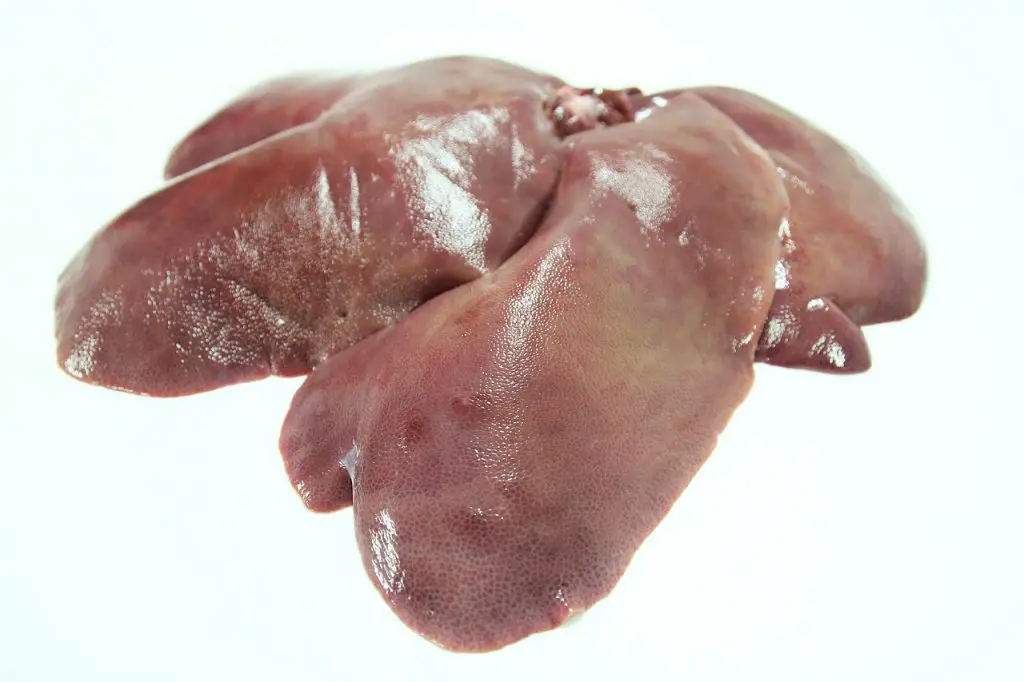
“If small excrescences or pimples are seen on the liver, these are called igi sabang and foretell that the heads of enemies will be obtained. If the folds of the liver have some resemblance to the barb of a spear, the owner of the sacrifice will become renowned for bravery.

Should any portion of the liver ulcerated, the sign is bad. If it exhibits blood spots, it foretells wounds on the war path.

A liver the appearance of which is not pronounced as good or bad, is a sign of cowardice, but as this words is honourable, this sign is called ‘far from the enemy’.

If the gall does not lie flat on the liver but that is somewhat turned up, this is a sign of deceit that the owner of the sacrifice falsely claims to have obtained heads of the enemy: but if his bravery is well known the above sign foretells that he will soon add to the number of his trophies.”

Pig liver divination performed on the sick

Apart from foretelling the outcome of headhunting trips, the Iban people performed pig liver divination on the sick to predict the outcome their health.

“When the auspicium is taken on behalf of the sick, the following are the signs.

If the veins of the liver are at right angles with the gall it is a bad sign.

If the lobes of the liver come very close to one another it is also a bad sign, for the spirit of disease who dwells in one of the lobes is then said to be very near its victim and will capture him.

If the liver is bright and healthy looking, it is a sign of returning health.

However, if the left lobe where the evil spirit is supposed to dwell, is higher than the right, this shows that the spirit is stronger than the sick man and the patient will die.”

As not many Iban people perform this ritual nowadays, reading omens using pig’s liver has now become a rare heritage or tradition of Iban culture.

5 reasons to watch C-drama Falling into Your Smile (2021)

One of the hottest Chinese dramas in 2021 is none other than romance esports series Falling into Your Smile (2021).

Directed by Qiu Zhong Wei and produced by Kelsey Yang, the story is based on Qing Mei’s webnovel “You’re Beautiful When You Smile”.

The series follows the story of Tong Yao (Cheng Xiao) who is scouted to be part of an esports team called ZGDX.

When she finally agrees to join the group and be a professional gamer, Tong Yao officially becomes the first female esport athlete in China.

Her new teammates include the leader Lu Si Cheng (Xu Kai), Xiao Pang (Sun Kai), Lao K (Gao Han) and Lao Mao (Kevin Xiao).

WeTV reported that Falling into Your Smile is the most watched Chinese drama in the month of July 2021 on its platform, beating out other on-air Chinese and Korean dramas.

So what is the buzz all about?

5 reasons to watch C-drama Falling into Your Smile (2021)

Here at KajoMag, we have watched all 31 episodes of the series so here are five reasons you should watch Chinese drama Falling into Your Smile (2021):

1.The buildup of the story and main characters

The plot builds around the journey of ZGDX playing through China’s Onmyoji Arena Pro League or OPL.

Like any other sports teams, ZGDX has ups and downs throughout the series.

Moreover like any other sports, they win and lose their matches in the story.

The storyline progresses steadily, focusing more on Tong Yao becoming a professional gamer, the teamwork of ZGDX as well as Tong Yao and Lu Si Cheng’s romantic relationship.

Tong Yao who is used to playing video games as a pastime has to learn how to play it professionally.

She also has to learn to deal with her new status as a ‘celebrity’ whose every move is being watched and posted online.

Other than that, we can see how ZGDX grows as a team and work out their differences whenever conflicts arise.

2.The chemistry among the characters

Speaking of ZGDX, their chemistry in the drama is undeniably good.

The team members Lu Si Cheng , Xiao Pang, Lao K and Lao Mao as well as their coach Yu Ming (Yalkun Merxat) and manager Xiao Rui (Cui Shao Yang) are like older brothers to Tong Yao.

Lao K, being portrayed as the metrosexual guy in the group, notices the little things happening around them.

In the meantime, Lao Mao is the fitness fanatic who is clueless of his surroundings.

Xiao Pang is like a human version of a teddy bear who always sticks by Tong Yao’s side.

The only one who always bickers with Tong Yao is Lu Yue (Yao Chi) but in more like sibling’s rivalry kind of bickering.

Last but not least is Chen Jin Yang (Rachel Wang), Tong Yao’s best friend.

Their friendship is just how you imagine it would be between two young women.

They spend time together, care for each other, are protective over one another and talk about work, love, men and even sex.

3.Healthy romantic relationship between the two main characters

Of course, the most interesting relationship to watch in the series is between Lu Si Cheng and Tong Yao.

Honestly, healthy romantic relationships are hard to find in C-dramas as well as K-dramas.

A cliched plot usually consists of an intelligent, handsome, cold and borderline God-like male lead falling in love with the damsel in distress.

Throw in insecurities, misunderstandings and some love rivals on either (or both) sides, and there you have it; a typical background love story in C-dramas and K-dramas. Sometimes, you don’t even know why the two main characters fall in love with each other in the first place.

Thankfully even from the beginning of Falling into your Smile, Lu Si Cheng and Tong Yao have something that you can rarely find in most fictional couples on TV, and that thing is growth.

First, they begin to trust each other as teammates and then slowly become friends.

From there, they start to show interest in each other with the little things they do for each other and some innocent flirting being thrown back and forth.

When they are finally sure about their feelings, they decide to pursue a romantic relationship together.

Even when they are dating, Lu and Tong are helping each other to be better people and esports athletes.

They do have issues… because which relationship doesn’t have problems, right?

However, they deal with it using very less dramatic way for a fictional couple, which is by communicating.

Don’t expect over-dramatic scenes like someone left crying in the rain after a fight or a love rival coming out of the blue to sway their feelings.

However, there is one thing that is very cliche and cringing to watch when comes to Lu and Tong’s relationship in the series; the slow-mo scenes of Lu catching Tong every time she falls and then them gazing into each others’ eyes.

These scenes are just unnecessary.

4.It addresses the social issues around esports industry

Most of the social issues addressed in Falling into Your Smile are about the esports industry.

With Tong Yao being the only female pro-gamer in the fictional story, it naturally highlights the sexism in the esports industry.

While her teammates are unfazed by her gender, the world seems to be more interested with the fact that she is a girl who plays video games.

Since the esports industry is relatively new, the series focuses on society’s general perception on professional gaming.

The general population deso not see gamers as a profession and there is no future in playing video games.

In the series, the parents of these professional gamers all have different reactions to their children’s choice of work.

Some are supportive while some even disowned their sons.

Their reactions portray the different opinions of society in professional gaming.

Apart from esports, the drama also highlights other social problems that are not just happening in China.

These issues include cyber-bullying, irresponsible journalism, obsessive fans and invasion of privacy for public figures.

Today, athletes are treated like celebrities whose private lives are being reported in the news.

Gone are the days when athletes’ names only appeared in the sports news section.

5.Thrilling fighting animation scenes

If you are not familiar with the game Onmyoji Arena, you might find all the talking about the game strategy and the animation scenes in the series are confusing.

You might even think ‘What on earth are these people talking about?’ or ‘What the hell is going on?’ or ‘Who is who again?’

Once you get familiar with the nature of the game and the game’s characters, the fighting scenes are very entertaining.

The fighting matches in the series are depicted through animation so it is like watching an anime in the same time.

Every fight is not the same as these players used various characters and strategies in different matches.

Moreover, the background music in the fighting scenes makes it more thrilling to watch.

5 reasons to watch C-drama Falling into Your Smile (2021)

So is Falling into Your Smile (2021) really worth watching?

Falling into Your Smile is Xu Kai’s first ‘modern’ role in a television series.

His previous roles are all in historical or periodic dramas such as Story of Yanxi Palace (2018), The Legends (2019) and Dance of the Sky Empire (2020).

Meanwhile, K-pop fans might recognise Cheng Xiao as one of the members of girl group WJSN.

Although she has been active as a K-pop idol since 2015, Cheng only made her first debut as an actress last year in the drama Detective Chinatown.

Speaking of K-pop, one of the drama soundtracks ‘Warrior’ is by Korean group SEVENTEEN.

Other artists who contributed to the impressive line of soundtracks are WayV, Angela Chang, Chen Zhuoxuan and even the two lead actors Xu Kai and Cheng Xiao.

Overall, Falling into Your Smile is story about a group of young adults who share the same dream and goal.

It is a still a romantic comedy so you will find yourself chuckling every now and then.

While international fans might enjoying the drama including Cheng’s performance as Tong Yao in the series, the esports community in China was not entirely thrilled.

Global Times reported that esports players in China were accusing her of being ‘unprofessional’ and ‘ruining the spirit of esports’.

This series of criticism led into an online uproar between esporting groups and Cheng’s fans.

The drama’s production company had to publish a statement urging the fans to “watch these episodes rationally, pass fair judgement and do not insult or target any actors.”

Perhaps Cheng’s performance was so good in Falling into Your Smile that some viewers could not differentiate between fiction and reality?

You have to watch the drama yourself to find out.

1 11 12 13 14 15 75