Browse Tag

Sabah - Page 7

Hunting for barbecued lokan and coconut in Tuaran, Sabah

If you are visiting Kota Kinabalu, make your way to its neighbouring small town of Tuaran.

Located just 35 kilometers from Sabah state capital, the small town is home to many good food including the famous Tuaran mee.

The Hakka Chinese community of Tuaran created the noodle from egg yolk and flour. It is then fried with vegetables and garnished with Chinese roasted pork.

However do not limit your gastronomic journey with this noodle, there are plenty other foods to try in Tuaran.

At Sulaman Road right near heavy traffic along Kota Kinabalu-Tuaran highway, the must-try foods there are barbecued lokan, grilled coconut and coconut pudding.

To get there, you can go by taxi or Grab car. If you are driving on your own, search for ‘lokan bakar Jalan Sulaman’ on your Google Maps or Waze.

Hunting for barbecued lokan and coconut in Tuaran, Sabah
The stalls along Sulaman Road.
Hunting for barbecued lokan
Hunting for barbecued lokan and coconut in Tuaran, Sabah
Lokan bakar

Lokan, or the scientific name Polymesoda expansa, is a type of marsh clam usually found near the tropical coastline and riverbank.

More than five years ago, there are perhaps only few stalls selling barbecued lokan along Sulaman Road.

Now, there are more than 20 wooden stalls lining up both sides of the road. Since almost every stall is selling the same barbecued lokan at about the same price, there are only two things that might set some stalls apart from each other; cleanliness and the sambal.

Choose a stall that practices better hygiene and with no flies flying around.

Plus, you can always ask the stall owners what kind of sambal they serve. Some stalls offer up to six different kinds of sambal.

In the end, the best kind of condiment which goes perfectly with barbecued lokan is the simple sauce made from chilli and lime.

The sour and slight spiciness of this kind of sauce could cleanse that seafood after-taste on your palate.

Hunting for barbecued lokan and coconut in Tuaran, Sabah
The lokan are usually marinated with ginger and a bit of turmeric powder.
The wondrous coconut
Hunting for barbecued lokan and coconut in Tuaran, Sabah
Kelapa bakar or barbecued coconut

A visit to any of these stalls at Sulaman Road is incomplete without having a coconut.

If you are a traditionalist, order the good old young coconut to quench your thirst. Or you can always give kelapa bakar or barbecued coconut a try.

The taste might be a shocker for those who are not familiar with it. It taste as if kerisik (grated and toasted coconut flesh) was turned into juice.

To end your gastronomic adventure at Sulaman Road, Tuaran, have some coconut pudding for dessert.

Although this dessert can be found in most restaurants in Kota Kinabalu, somehow the clear, sweet taste of the pudding goes well with the barbecued lokan.

Hunting for barbecued lokan and coconut in Tuaran, Sabah
Coconut pudding.

5 things about tarap fruit of Borneo you wouldn’t learn in the classroom

Tarap is always on the list when comes to types of fruits you should try in Borneo.

Sometimes known as the cempedak of Borneo, this fruit usually shares the same fate with durian. It is commonly being banned from entering most hotels for its strong smell.

If you are not familiar with this fruit, here are five things you should know about tarap:
5 things about tarap fruit of Borneo you wouldn't learn in the classroom
It is also known as marang in the Philippines.
1.It is also known by many names.

Does the tarap fruit seem familiar but you’re not sure if you’ve tried it before? You may have heard it called by any of these other names: terap, marang, johey oak, green pedalai, madang or timadang.

The scientific name of tarap is Actocarpus odoratissimus, and it is actually a tree in the mulberry and fig family Moraceae.

2.It is found in Borneo, Palawan and Mindanao islands.

While it is famously found on the island of Borneo, this fruit is also native to the Palawan and Mindanao islands.

In the Philippines, the locals call it marang.

3.There are two other species of fruit similar to tarap.

The first fruit species that is similar to Actocarpus odoratissimus is Artocarpus sericarpus. It is also known as pedalai, gumihan or terap bulu.

Terap bulu does not have strong odour like tarap. As for its outer appearance, terap bulu is hairy and looks like a giant rambutan.

The second one is Artocarpus sarawakensis (pingan or mountain tarap). It is the same shape as the Artocarpus odoratissimus but it is orange in colour and has smaller kernel sections.

4.Once you open it, you need to eat the fruit really fast

Unlike durian, it does not fall to the ground when it is overripe. So farmers can harvest tarap when they are deemed a mature size and leave it to ripen.

The flesh is sweet and has a creamy texture.

Once opened, you need to eat the fruit immediately because it oxidizes fast and loses its flavour quickly.

This is also the reason why the commercialisation of this tropical fruit is limited. It has a very low shelf life.

5.The many uses of tarap fruit.

If you have the chance to visit Tarakan in North Kalimantan, Indonesia, give the city’s signature tarap juice and tarap layered cake a try.

The tarap layered cake is one of the city’s own original products. As for tarap juice, it is one of the must-try drinks in Tarakan.

You can actually make it at home using tarap, sugar, ice, water and condensed milk.

Besides the fruit, the peels were reported to be useful material for the removal of colouring agents.

Even the seeds are edible; just like jackfruit seeds they can be boiled or roasted and then eaten as snacks. Just like Actocarpus odoratissimus, terap bulu’s seeds are edible after boiling or roasting.

How salt was obtained in the olden days of Borneo

Salt plays an important role in not just Sarawakian cuisine, but in Borneo overall.

Besides seasoning, every community, whether they were Iban, Bidayuh or Kadazandusun, used salt as a means to preserve their food.

How salt was obtained in the olden days of Borneo
Here are just five ways how salt was obtained in Borneo back when there were no supermarkets:

Salt is such an available commodity for us today; we can simply buy it from any grocery store or supermarket. Have you ever wondered how the olden communities of Borneo used to get it back in those days?

1.Nipah palm

Nipah salt or garam attap is salt processed from the mature leaves of the nipah palm, Nypa fruticans.

Here in Borneo, nipah palm grows wild and abundantly along coastal areas, especially in Borneo.

The palms are constantly washed by saltwater daily and this salt can be processed from the leaves.

Unlike conventional salt, it has a smoky flavour as well as the aroma of dried nipah leaves.  

Here is how Reverend Andrew Horsburgh in Sketches in Borneo described nipah salt processing:

”The chief condiment of the Dyaks is salt, which they procure from the nipah palm, and which they much prefer to that obtained by evaporation from seawater. The boughs of the nipa are cut, dried, and burnt, and their ashes washed in water, so as to dissolve the salt contained in them. This water being then allowed to run off clear is evaporated in pans, the salt remaining at the bottom of the vessel. It is a dirty grey and often black-looking substance, processing a slightly bitter taste, which is grateful to the palate of the Dyaks; and it is generally produced in a masses of considerable size and as hard as a stone, it has much the appearance of a mineral that has been dug out of the earth.”

2.Seaweed

According to Captain Thomas Forrest in A Voyage to New Guinea and the Moluccas from Balambangan (1780), the Bajau would gather seaweed, burn them, make a lye of the ashes, filter it and finally form a bitter kind of salt.

How salt was obtained in the olden days of Borneo
Salted fish, a common delicacy found in Sabah and Sarawak.
3.Mangrove roots and nipah palm

Meanwhile, Spenser St John recorded how salt was processed at the foot of Mount Kinabalu.

“They burnt the roots of the mangrove with those of the nipah palms as well as wood collected on the sea-beach and therefore impregnated with salt.

In one place, I noticed a heal, perhaps fifteen feet in height, sheltered by a rough covering of palm leaves, and several men were about checking all attempts of the flames to burst though by throwing saltwater over the pile. This doubtless, renders the process much more productive. In one very large shed, they had a kind of rough furnace, where they burnt the wood; and suspended around were many baskets in which the rough remains of the fire are placed, and the whole then soaked in water and stirred about till the salt is supposed to have been extracted from the charcoal and ashes. The liquid is the boiled, in large iron pans purchased from the Chinese.”

4.Seawater and ashes of driftwood

In The Gardens of the Sun, British explorer and tropical plant collector Frederick William Burbidge detailed how the Kedayans used a combination of seawater and ash to obtain their salts.

“The ashes of driftwood are placed in a tub and seawater poured over them. To evaporate the water, receptacles are neatly made from the sheaths of the Nibong palm, fastened into shape by slender wooden skewers. Two logs are then laid parallel to each other, and a foot or fifteen inches apart, and over these the pans are placed close together, so as to form a rude kind of flue, in the which a fire of light brushwood is lighted, and very soon afterwards the salt maybe observed falling to the bottom of the evaporators.”

5.Salt springs
How salt was obtained in the olden days of Borneo
Salt spring in the Krayan Highlands.

Even to this day, the people of Bario and Ba Kelalan Highlands (Malaysia) as well as Krayan Highlands in (Indonesia) still use salt springs to make salt.

The water from these natural springs is boiled and evaporated for an extended period of time before it is dried to form salt.

How salt was obtained in the olden days of Borneo
An example of how saltwater is processed traditionally these days.

Read how salt springs are processed in Long Midang, Krayan in Kalimantan, Indonesia.

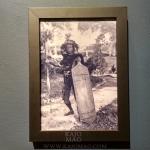
Tom Harrisson’s own account of The Airmen and the Headhunters incident

The Airmen and the Headhunters: A True Story of Lost Soldiers, Heroic Tribesmen and the Unlikeliest Rescue of World War II is a book written by Judith M. Heimann.

It tells the story of how a group of American airmen was rescued by the locals during the Japanese occupation of Borneo.

The event was also made into an episode of the PBS television series “Secrets of the Dead”.

One of the key players of the rescue was Major Tom Harrisson, a British polymath who later served as Sarawak museum curator after WWII.

During the war, he was attached to Z Special Unit, as part of the Service Reconnaissance Department (SRD).

On March 25, 1945, Harrisson parachuted with seven Z Force operatives into the Kelabit Highlands.

That was when he and his unit became credited for helping the stranded American airmen.

Tom Harrisson’s own account of The Airmen and the Headhunters incident
Airmen and the Headhunters was featured in PBS’s Secret of the Dead. Credits: Youtube
The Airmen and the Headhunters, according to Australian-British Reward Mission

After the war, Major R. K. Dyce who represented the British government in the Australian-British Reward Mission wrote an article “Heroism in the Limbang” for The Sarawak Gazette (June 2, 1947).

“About the end of January or in early February 1945, a US Liberator made a crash belly landing about a mile from Kampung Telahak on the Sungai Limbang in Sarawak. Nine of the crew survived the crash. One was dead.”

From there, the story continues on how these nine American airmen were harboured and escorted by different groups of different races in Sarawak, British North Borneo (now Sabah) and Dutch Borneo (now Kalimantan).

The first group of locals who rescued them was the residents of Kampung Telahak led by their village head (ketua kampung) Mohamed Dolamit.

“The kampung people led the Americans out of the sodden paddy field on which they had landed into the village; washed them, fed them, helped them bury their dead comrade, equipped them with parangs, and planned their escape.”

Tom Harrisson’s own account of The Airmen and the Headhunters incident
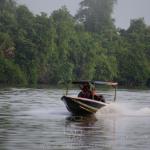
Today’s Limbang river.
The escape plan for the nine Americans

Then, Mohamed started to draft an escape plan for the nine Americans. His plan was to guide the Americans by paths which avoided Japanese-occupied localities to a wise and influential old Penghulu Masing to the southeast on the Pandaruan river.

“The practice is, in an operation of this kind, to hand on the “passengers” from longhouse to longhouse and kampung to kampung,” Major Dyce reported.

After being handed over from one community to another community, the nine airmen finally arrived in Ulu Matang, somewhere near Long Pa’ Sia, Sabah.

This was where they separated with the first party proceeded to Dutch Borneo where they met up with Harrisson’s SRD party. Meanwhile, the other four who headed north were killed by the locals.

Dyce reported in 1947, “The story of the episode and its aftermath is still alive in the kampungs and longhouses, but most of the helpers concerned looked for no material reward.”

Local administrations knew how much these heroic natives had helped the Americans.

However, Dyce explained that the shortage of staff and overwork by the then local administration back then delayed in giving them proper recognition.

Tom Harrisson’s article on The Airmen and the Headhunters incident

According to Harrisson, Major Dyce’s Heroism in Limbang did not quite “give a complete picture of the amazing Borneo careers of those American airmen and of other who were cared for and protected with the same extraordinary loyalty and self-sacrifice by the peoples of the Limbang, Trusan, Padas and Mentarang rivers.”

Harrisson clarified the exact date when the plane was shot down, stating that it was on Jan 12, 1945.

The crashed crew proceeded from Limbang to Padas where they split up just as Dyce reported. The pilot Lieutenant-Commander Smith heard that there were American guerrillas in Kudat, the northern side of Sabah.

He decided to head there and three of the crew agreed to follow him.

Unfortunately, the moment they reached Tomani near Tenom, the group was betrayed by the locals.

A Japanese unit which came from Beaufort via Tenom surprised them in a village at night.

One of them was speared by the locals while another one was shot by a British North Borneo constable officer.

Their bodies were decapitated and distributed among the locals. Meanwhile, Smith surrendered and the fourth man escaped into the jungle. They spent a week hunting him down, but in the end, he too was captured and taken to Beaufort together with Smith.

According to Harrisson, his unit was about to make a rescue mission and kidnap General Masao Baba when the war ended.

At the same time, the Japanese quietly executed the two American soldiers as they were dangerous witnesses.

What happened to the other five crew member?
Tom Harrisson’s own account of The Airmen and the Headhunters incident
A view of Padas river today.

The other five men, “not Kudat-Krazy” men as Harrisson described in his article, went up the Padas river.

From there, they then came over into Kemaloh river in Dutch Borneo. Here, they were looked after by the Pa Putuk people of the Krayan Highlands.

Harrisson stated, “They were also fortunate in meeting a remarkably fine native missionary, William Mohgan of Makassar who could speak some English (and a little American). The Japs, of course, knew these men were somewhere in the interior, but as in the Limbang the people did not betray them, often at grave risk or cost to themselves.”

Nevertheless, they were forced to hide in jungle shelters and suffered great impoverishment through lack of medical supplies, mosquito nets and footwear.

By that time, the five had reunited with six other Americans who were survivors from an American 13th Army Liberator shot down on the Dutch side.

The former museum curator pointed out, “One of this crew wandered alone through the jungle for fourteen days before reaching a lonely mountain village, where he was nursed back to life and became, in a few weeks, quite fluent at Potok (a Lundayeh dialect)- the others never even got beyond the bagus stage of Malay.”

Tom Harrisson’s own account of The Airmen and the Headhunters incident
Today’s Krayan HIghlands from on top of Yuvai Semaring hill.
Harrisson and his unit to the rescue

Harrisson added that he first heard of these airmen in March 1945, who were then about ten days’ walk eastward from Bario.

“Our only medical man at that time, Sergeant F. Sanderson, made a forced march to them, carrying all the stores we could possibly spare and all our comforts (at that time all supplies had to be dropped from Moratai, thirteen hours flying; so the lifeline was slender, with three out of six planes lost in the first weeks).”

Finally, the American airmen had the help they needed from the British soldiers. Harrisson continued: “When they were fit to walk by easy stages over the mountains -harder going in Dutch Borneo than in Sarawak – we brought them into better country, where we prepared an airfield. Some RAAF pilots came in without maps or radio signals to pick the Americans out.”

Harrisson stressed that the behaviour of the native people (except those who betrayed them in Tomani) is a lasting symbol of native morale in these lands.

“And I hope that if it comes to a question of rewards (of which the helpers had no thought at the time) the British North Borneo and Dutch helpers will not be forgotten. For it is sad to admit, but true, that from that day to this no one of any race has had a word of thank you (let alone a tin of peanuts) from those boys to whom they gave back life, liberty and Nashville, Tennessee.”

Sadly, KajoMag’s own digging so far has found no official recognition of the locals’ efforts and contributions (particularly in Pa Putuk and Kampung Telahak) to helping the American airmen evade capture.

Have a taste of Sabahan cuisine at Little Sulap

Delicious local food, excellent service, environmentally conscious, Insta-worthy setting and accessible location; these are all traits that describe Little Sulap in Kota Kinabalu.

Located at Jalan Dewan, the cafe is accessible even for tourists staying in the city centre area.

Have a taste of Sabahan cuisine at Little Sulap
A view of Little Sulap from its mezzanine floor.
Little Sulap’s unique menu

Firstly, thumbs up to Little Sulap for unique and creative names for its menu items.

One dish which consists of locally grown brown rice, fried crispy basung fish and turmeric sour soup is called Sumandak Godoot. “Sumandak” means young lady while “godoot” usually refers to someone who is a glutton in local Kadazandusun language. It’s great for those who get ‘hangry’ around mealtimes.

Have a taste of Sabahan cuisine at Little Sulap
Teruna Kesepian.

Another dish with an interesting name is Teruna Kesepian, which literally translates to ‘lonely young man’. The dish is similar to Sumandak Godoot except that it is served with fried chicken wings instead of fish.

So imagine telling the server, “I would like to have one Teruna Kesepian and two Sumandak Godoot, please.”

Both the fish and chicken are fried to perfection and the rice has a wonderful aroma. The turmeric soup might be a shocker for those who are not used to sourish food, but it is still palatable.

Have a taste of Sabahan cuisine at Little Sulap
The Original Sabahan.

But the must-try dish for KajoMag at Little Sulap is a dish that befits its name, Original Sabahan. On top of the brown rice and fried chicken, you can enjoy a selection of two local veggies and tuhau. You cannot not have tuhau when it comes to trying out local Sabahan cuisine.

Don’t feel like having rice? Then try their ambuyat set. Similar to Sarawak’s linut, it is a porridge-like type of food made from sago.

If you don’t feel like eating local cuisine, tell them that you want “OhMyBalls!” It is a dish made of homemade meatballs topped with creamy black pepper gravy.

An environmentally conscious eatery
Have a taste of Sabahan cuisine at Little Sulap
Your cold drink with metal straw at Little Sulap.

While the food is worth trying when visiting Kota Kinabalu, Little Sulap deserves another thumbs up for being environmentally conscious.

It does not use plastic straws but metal straws. Plus if you are looking for environmental-friendly straws, they also offer bamboo straws for sale. Buy and use them during your visit at Kota Kinabalu.

Have a taste of Sabahan cuisine at Little Sulap
Don’t forget to give Little Sulap a try when you are in town.

Before you leave Little Sulap, do not forget to strike a pose in front of Little Sulap. Its bright pink door definitely makes a good background for your Instagram photos.

What you should know about the Ligitan and Sipidan dispute

The Ligitan and Sipadan dispute was all over media headlines during the late 90s and early 00s in Malaysia.

It was a territorial dispute between Indonesia and Malaysia over islands in the Celebes Sea, namely Ligitan and Sipadan.

The location of Ligitan and Sipadan islands

Sipidan lies to the south of Mabul island and southeast of Kapalai island. While the distance from the Malaysian mainland at Tanjung Tutop on the southeastern coast of Sabah is 14 nautical miles, the nearest distance to Indonesian territory is 40 nautical miles.

The island overall is uninhabited, but it has a small reservoir of fresh water. Fishermen and turtle eggs collectors from nearby Dinawan island have visited this island on a regular basis.

Conservation-wise, Sipadan was declared a bird sanctuary by the colonial government of North Borneo in 1933. Then it was re-gazetted in 1963 by the Malaysian government after the formation of the Malaysian federation.

Since 1988, the Sabah Department for Tourism and Environment built a wildlife preservation office on the island and issued licenses to erect small chalets and beach huts for a scuba-diving resort.

Meanwhile, Ligitan island lies east of Sipadan island. To the west of Ligitan is the Indonesian part of Sebatik island at a distance of 55 nautical miles. Meanwhile, the nearest Malaysian territory is Pulau Dinawan at the northern tip of Ligitan reef with the distance of 8 1/2 nautical miles.

Just like Sipadan, Ligitan is also uninhabited with only a few low bushes growing on it.

The origin of the Ligitan and Sipadan dispute

The first publicly known Ligitan and Sipadan dispute happened in 1982 when an Indonesian naval patrol appeared near Sipadan island to investigate foreign troops. Both the Malaysian and Indonesian governments reportedly tried to play down the incident, discouraging press coverage.

Then in 1991, Indonesia discovered Malaysia had built some tourist facilities on Sipadan island. The Indonesian government claimed that it had made a verbal agreement with Malaysia in 1969 to discuss the sovereignty of the islands.

Indonesia argued based on the 1891 Convention Between Great Britain and the Netherlands Defining Their Boundaries in Borneo. This was when Sabah (then North Borneo) was under Great Britain while Kalimantan was part of Netherlands’ territory.

Based on this convention, both Ligitan and Sipidan islands would be considered within Indonesian waters.

Furthermore according to the Indonesian government, after the Indonesian-Malaysian Confrontation (1963-1966), both countries established their continental shelf boundaries in the Straits of Malacca and the South China Sea by treaty.

More evidence to support Indonesia’s case was a map in 1967 by the Indonesian Armed Forces showing both islands lying within the Indonesian claim.

Malaysia on the other hand denied the allegation of an agreement between the two countries, maintaining Ligitan and Sipidan had always been part of Sabah.

Finally on Nov 2, 1998, Indonesia and Malaysia agreed to bring the matter to the International Court of Justice (ICJ).

The court decision on the Ligitan and Sipidan dispute

What you should know about the Ligitan and Sipidan dispute
A map of British North Borneo in 1888 where Ligitan and Sipidan fell under Province Elphinstone. Credit: The British Empire

In the Ligitan and Sipidan dispute, ICJ ruled in Malaysia’s favour due to the country’s effective occupation over the islands.

Plus, it also noted that Indonesia or even the Netherlands previously, had never issued a formal protest with Malaysia (or Britain) when those activities, such as construction of the lighthouse at Ligitan or the declaration of Sipadan as a bird sanctuary – were carried out.

Additionally, the court acknowledged that both of the islands were much closer to Malaysia than Indonesia.

While the Indonesian claim was mostly based on the 1891 Boundary Treaty, there was earlier documentation which supported the Malaysian claim. It was the British 1878 Agreement with the Sultanate of Sulu during which time they acquired the Sultanate area as part of British North Borneo.

The 1994 failed British Army Expedition down Low’s Gully

There is an African proverb: “Do not call the forest that shelters you a jungle” unless you choose to dismiss it so casually.

The forest can offer solitude and a piece of heaven for adventurers, but when a group of unprepared soldiers tried to conquer one of Mother Nature’s deepest gullies in a badly-planned training exercise, the jungle was prepared to give anything but comfort for them.

Low’s Gully

Low’s Gully is located at Borneo’s Crocker Range and shares the same national park with Mount Kinabalu, the highest peak in Malaysia.

It was named after British administrator Hugh Low who first looked down it in 1851. The site is a 1,800m deep gorge carved out by glaciation on the north side of Mount Kinabalu.

The gully is one of the least explored and most inhospitable places on earth.

Nobody attempted to make a descent into the gully until 1994. On Feb 21 that year, seven British and three Hong Kong soldiers tried to abseil and climb down into the gully.

The team members going into Low’s Gully

The commander of the army that led the expedition was Lieutenant-Colonel Robert Neill. His second-in-command was Major Ron Foster.

Together, they both set up the 10-man team. Joining them, there were two corporals – Steve Page and Hugh Brittan from the Royal Logistics Corps – and Lance Corporal Richard Mayfield. Mayfield was also an expert survivalist and rock climber.

The other two British soldiers were a Territorial Army Sergeant Robert Mann and Corporal Pete Shearer.

Also with them were the three Chinese soldiers from Hong Kong, Lance Corporal Cheung Yiu Keuong and Privates Lam Wai Kee and Chan Wai Keung.

Why the expedition into Low’s Gully was a disaster from the beginning

Even before it started, the expedition seemed to be doomed anyway. The first mistake was not to equip themselves with a radio or flares.

On top of that , the three Hong Kong soldiers only learned how to abseil a few days before the expedition. And then, there was the language barrier among the soldiers.

Although some of the team members were familiar with each other, some of them only met weeks prior to the expedition. Hence, there was no teamwork or rapport right from the beginning.

The 1994 failed British Army Expedition down Low’s Gully
Low’s Gully is located at the north side of Mount Kinabalu, at Malaysian state of Sabah.

The mistakes along the way

The journey to Low’s Gully needed the team to climb to the summit of Mount Kinabalu first before making down on the north side of the mountain.

Even the tourist path to the summit was difficult for the Chinese soldiers in the beginning.

Plus with their backpacks weighing 35-40kg, the less fit soldiers found the climb exhausting and they felt overburdened.

This led to their first mistake during the expedition: the Chinese soldiers started to ditch their rations to lighten their loads.

Slowly, the team members were divided into two; the fitter five British soldiers against Lt. Col Neill, Major Foster and the unprepared, unfit Chinese soldiers.

So, the fitter party broke away from the group and made the first descent of the gully in three days. They reportedly even took the second group’s ropes and parangs.

After they made their descent, they waited for 12 hours for Lt Col Neill and the rest to descend…but they never came down.

Then they decided to set off through the jungle where they spent another two weeks making their way out to civilisation. Over this period, they swam through leech-infested pools, abseiled down waterfalls and survived through the Bornean rainforest.

The first team out

As the days went by, the five-man party also started to separate. Mayfield and Mann went their own way after being separated by the jungle’s thick undergrowth.

Finally after 18 days of what was meant to be a ten-day expedition, the pair found their way to civilisation. The locals who found them gave them food and even treated their wounds.

Upon their return, they found the other three had also made it safely back. Now they had to rescue Lt Col Neill and his four other team members.

They, however, found out that nobody had raised the alarm as nobody thought that they were missing. This was because Neill had not given a finishing date to the authorities.

The rescue from Low’s Gully

The rescue for the stranded soldiers was said to be one of the most expensive and embarrassing missions the British Ministry of Defence had ever taken.

International medias flew halfway around the world, setting up camps at Kinabalu Park as they covered the search and rescue.

The search operation involved up 1,000 people from various parties including the Malaysian Army. It took them 12 days until they finally spotted the stranded soldiers.

According to The Independent’s news report, the five-member party was spotted in a narrow ravine, trapped ‘like a spider in the bathtub’. The men were stuck between two giant waterfalls, in a place Malaysian soldiers called ‘a point of no return’.

Malaysian helicopter pilot, Captain Mohamed Izhar was the first one who saw the stranded soldiers.

He spotted ‘SOS’ written in pebbles on a boulder in a river. Then, they spotted three soldiers standing on rocks, waving and reflecting the sun at them with mirrors.

Niell and Lam were the first two soldiers rescued from the ravine and were flown to a hospital in Kota Kinabalu.

After several attempts, the final three were rescued from their misery.

The Aftermath

Brittan, Mayfield and Cheung all received commendations for their actions during the ordeal.

Mayfield sued the British Minister of Defence after suffering from dehydration, malnutrition and mental trauma after the expedition. He told the court that he warned his commanding officer Neill that the expedition should be aborted after he had abseiled down part of the gully ahead of the rest of the group.

Furthermore, Mayfield said he would only continue if it was an order. He won more than £100,000 in compensation. Apart from Mayfield, Mann also won compensation for his injuries.

Meanwhile, both Neill and Foster were severely criticised for their judgement and leadership. They knew the expedition was going to be difficult and proceeded to carry on anyway while bringing along the three inexperienced soldiers.

5 things you should know about the aftermath of the 13 May incident

The 13 May 1969 incident remains a dark mark in Malaysian history to this day. The racial riots which happened after the 1969 Malaysian general election led to a state of national emergency or “Darurat” by the Yang di-Pertuan Agong on May 15.

The events also caused significant changes in the country, which included the first Prime Minister Tunku Abdul Rahman stepping down.

In the wake of the 13 May riots, a caretaker government – the National Operations Council (NOC) – was formed and chaired by Tun Haji Abdul Razak bin Dato’ Hussein.

As George Santayana once said, “Those who do not remember the past are condemned to repeat it.” Here are five things every Malaysian should know about the aftermath of the 13 May incident.
1.The birth of Rukunegara

After the 13 May incident, Malaysian racial balance and interrelations were fragile.

So the Malaysian government sought ways to foster unity among its people, one of the ways was by introducing the Rukunegara, Malaysia’s declaration of national philosophy instituted by royal proclamation:

WHEREAS OUR COUNTRY, MALAYSIA nurtures the ambitions of:

– Achieving a more perfect unity amongst the whole of her society;
– Preserving a democratic way of life;
– Creating a just society where the prosperity of the country can be enjoyed together in a fair and equitable manner;
– Guaranteeing a liberal approach towards her rich and varied cultural traditions; and
– Building a progressive society that will make use of science and modern technology.

WE, HER PEOPLE, pledge our united efforts to attain these ends guided by these principles:
– BELIEF IN GOD
– LOYALTY TO KING AND COUNTRY
– THE SUPREMACY OF THE CONSTITUTION
– THE RULE OF LAW
– COURTESY AND MORALITY

2.The introduction of the New Economic Policy (NEP)

Following the 13 May incident, the new Economic Policy was announced in The Second Malaysia Plan. Over the years, many have criticised NEP as an inefficient system as it believed to be promoting a laid-back attitude among the Bumiputeras.

Apart from that, some of the policies in NEP such as Bumiputera quotas in ownership of public company stock and housing sold exclusively to Bumiputeras were viewed as discriminatory.

Nonetheless, NOC in the beginning had justified the need for NEP, especially after 13 May, stating, “National Unity is unattainable without greater equity and balance among Malaysia’s social and ethnic groups in their participation in the development of the country and in the sharing of the benefits from modernisation and economic growth. National Unity cannot be fostered if vast sections of the population remain poor and if sufficient productive employment opportunities are not created for the expanding labour force.”

3. The 13 May racial riots did not happen in Sabah and Sarawak, but some believed that these two Borneo states paid an even heftier price.

While Sabah and Sarawak did not see riots happening in their streets, the two East Malaysian states were nonetheless affected.

According to Zainnal Ajamain, political analyst and author of The Queen’s Obligation, many ordinances and gazettes were issued when Parliament was suspended during the state of emergency.

During this period, Zainnal believed the laws used to take the Bornean states’ wealth included the Emergency (Essential Powers) Ordinance No. 7, 1969, the Continental Shelf Act 1966, and the Petroleum Mining Act 1966.

He cited one example which was Sabah and Sarawak territorial waters being reduced from 350 miles to 3 nautical miles through the new ordinances and gazettes.

Explaining more on the matter, the political analyst stated: “By virtue of the Emergency (Essential Powers) Ordinance No. 7 1969, the Continental Shelf Act 1966 of Sabah and Sarawak was owned by the federal state. The emergency ordinance limited the territorial waters so that whatever was beyond three nautical miles now belonged to the federal government.”

Since it was in a state of emergency, nothing that the federal government does can be challenged as unconstitutional.

Parliament only reconvened on Feb 20, 1971.

5 things you should know about the aftermath of the 13 May incident
13 May remains a dark piece in Malaysian history. Credits: Pixabay.
4.The number of dead to this day are still in dispute

Malaysia records the official number of casualties during the 13 May riots as 196; with 143 Chinese, 25 Malay, 13 Indian and 15 undetermined.

But Western media and other observers estimated the number up to ten times as many people had died with three quarters of the casualties were Chinese.

John J. Helbie who was working as a political officer at the US Embassy in Kuala Lumpur during the 13 May riots said the government casualty figures had not been an accurate account.

In a 1996 interview, Helbie shared his experience saying, “There was an AP (Associated Press) stringer in Kuala Lumpur whom we knew. Of course, in the best of journalistic traditions, he was out in the streets. Within hours he knew enough, for example, to check several of the local hospitals and find out something about casualties. The casualty figure came in slowly. The government casualty figures were never honest. We knew that from the diverse reports we were receiving.”

He continued, “This is not uncommon in situations where governments don’t want to admit the degree of disorder that has occurred and their inability to handle the situation. It was clear that the government had lost control. The police were totally outnumbered and didn’t have the resources to deal with the situations.”

5.The cause behind the riots remain in debate

On Oct 9, 1969, the NOC released a report cited racial politics as the primary cause of the 13 May incident.

Additionally, the government pointed its finger at opposition parties for creating tensions after the 1969 elections.

The most controversial cause believed to be the reason behind the 13 May riots was based on declassified documents, which have become available at the Public Record Office at London.

Scholar Dr Kua Kia Soong even published a book May 13: Declassified Documents on the Malaysian Riots of 1969 based on these records.

He challenged the Malaysian government’s official cause of the 13 May incident.

Dr Kua stated that the “ascendant state capitalist class” in ruling party United Malays National Organisation (UMNO), had intentionally started the riot. This move, Kua stated, was backed by the police and army as a coup d’etat to topple the Prime Minister Tunku Abdul Rahman to implement the new Malay Agenda.

According to one British Foreign Office document dated May 15, 1969, it succinctly ‘concludes that the riots were organised to formalise Malay dominance, sideline the Chinese and shelve the Tunku government’.

Meanwhile Tunku Abdul Rahman blamed opposition parties for the violence. He also blamed the influence of Communists, believing the incidents were sparked off by Chinese Communist youths.

As for the Malays who engaged in the violence, Tunku Abdul Rahman said they were merely responding to intolerable provocations.

Meanwhile, current day Prime Minister Tun Dr Mahathir Mohamad on May 14 this year said that the government would study the request to declassify the official report on the May 13 1969 racial riots.

10 quotes by Tunku Abdul Rahman about raising living standards in Sabah and Sarawak through Malaysia in 1962

Before the federation of Malaysia was formed on Sept 16, 1963, there were meetings over meetings held attended by different delegates from Malaya, Singapore, Sarawak and North Borneo.

One of those meetings was held on Jan 6, 1962 in which the representatives met up in Kuala Lumpur. They touched upon different subjects including citizenship, transfer sovereignty, economy and special position of the indigenous peoples.

The meeting lasted for three days till Monday, Jan 8. During the closing session, Sabah’s Donald Stephens said that the pieces of Malaysia’s jigsaw puzzle had fallen into place and the picture it produced was that of a “new, vigorous and young nation in the making.”

Meanwhile, Sarawak delegation leader Yeo Cheng Hoe thanked the prime minister of Malayan federation Tunku Abdul Rahman for his desire to help Sarawak.

Singapore then president Lee Kuan Yew stated that with Malaysia there were no reasons why the standard of living of the people of the five territories should not reach that of more developed countries as we lack neither human or natural resources.

As for Tunku Abdul Rahman, he mainly talked about how Malaysia would raise the living standards of Borneo.

Here are 10 takeaway points from Tunku Abdul Rahman’s address during that meeting convincing Sabah and Sarawak to form the Federation of Malaysia:

1.“I am confident that the rate of development in the Borneo territories would be considerably increased after the merger, sufficient not only to offset or compensate for their loss of the Commonwealth Development and Welfare Funds, but to increase the tempo of their economic activities.”

2.“(About the plan to form a Federation of Borneo States) I reasoned to myself that if the people of Borneo themselves could wish to come together for their own good and well-being of their country in the form of a Federation, why then should we not join together?”

3.“The only difference would be that whereas in a Federation of Borneo States, as among themselves, the Borneo territories would continue for a long time to be colonies of Britain, in the Federation, with us they would lose the subject status immediately and would gain in stature, and which become independent territories enjoying equal rights and dignity with all other eleven states which now comprise the Federation of Malaya.”

4.“Please do not think that by embracing the territories of Borneo, Malaya is looking for territorial aggrandizement. We are linked by a common cultural heritage and historical background and financial and economic interests.”

10 quotes by Tunku Abdul Rahman about raising living standards in Sabah and Sarawak through Malaysia in 1962
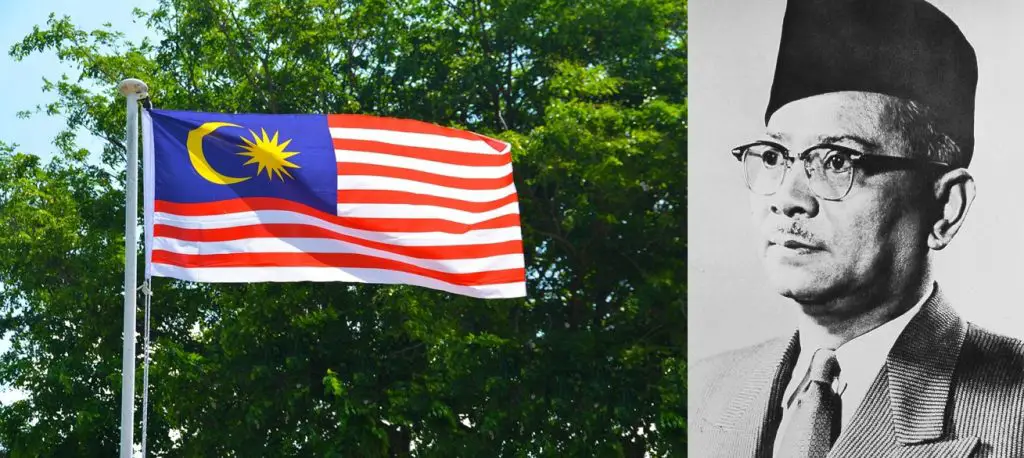
(Left) A photo of Malaysian flag and (right) Tunku Abdul Rahman.

5.“You might say that the British have promised you independence. The question is when will that come about? Should your independence depend on normal development, I do not think you will achieve it in the near future. And when your independence finally arrives, you will be exposed to a precarious existence as tiny and powerless preys to the hungry and rapacious powers of the world.”

6.“As for the poor people of the rural areas who had been neglected before (in Malaya), they are getting a better life and a better deal than they had ever had before. The same cannot be said for the people of Borneo.”

7.“There is no single railway track in the whole of mainland of Sarawak, not one road connecting one territory with another. So very little has been done to improve the lot of people living in Borneo today.”

8.“To suggest that by joining us in Malaysia the Borneo territories would not be our equals, and to suggest that by joining us they would lose their right to practice their own religion and culture to pursue their own customs and the right to study the languages of their forefathers is not true, and is a falsehood which had intentionally been spread by forces which hope to take control of these territories for themselves.”

9.“The Borneo territories too have their won aborigines who live in the most primitive way in the very deepest part of the country. But even the Ibans, Kayan, Kadazans and Melanaus – to mention a few of your indigenous peoples-suffer today such neglect as we Malays used to suffer. It sadden my heart every time I think of the fact and welfare of the sons of the soil of Sarawak and Sabah.”

10.“Therefore, it is only logical that if the Borneo territories want to secure strength through unity, they should unite with the (Malaya) Federation and Singapore which alone can give us all strength viability and unity.”

KajoAsks: What drives Sabah-based skincare brand The Borneo Scrub

What is it like to start a fully online skincare endeavor in Sabah? KajoMag asked Casandra Timothy the ups and downs of running The Borneo Scrub, a 100 per cent natural skincare solutions and cosmetics brand.

Established in 2015, the brand focuses on using locally sourced ingredients in Sabah. Their signature – and most sought after -item is the Coffee Face & Body Scrub.

KajoAsks: What drives Sabah-based skincare brand The Borneo Scrub
Casandra Timothy
KajoMag: What sparked your interest in starting The Borneo Scrub?

Casandra: My husband, Azel, is a typical caffeine and coffee addict, he can’t live without his coffee and his multiple caffeine boosts. So one day out of the blue I joked about making a skincare product with the coffee he usually drinks (Ground Tenom Coffee). He said why not, I went ahead and made some scrub with ingredients we had on hand and the husband was also the first human guinea pig for the product.

The results were impressive even for the early unrefined batch. His skin, which was always dry and flaky had instantly transformed into baby skin after washing off the scrub. The rest of the family members became additional guinea pigs, then friends. They then started asking whether I was selling it and the rest is history.

KajoMag: What is the best part of running The Borneo Scrub?

Casandra: The best part about running The Borneo Scrub is seeing the reaction of people when they have tried your product. Seeing actual validation and approval of your handmade product, seeing how it amazes people is an indescribably good feeling and it still feels the same even now.

Another equally great part is meeting other entrepreneurs, business owners, all these people and social connections that would have never existed for us if The Borneo Scrub didn’t exist.

I know it should be one thing only but I have to say, if The Borneo Scrub did not exist we also wouldn’t have tried participating in business pitch competitions. It was a whole new level of learning and experiencing. My husband in particular really enjoyed this.

KajoMag: There is a rise of local SMEs using locally sourced ingredients to make skincare products in Malaysia. How do you deal with the competition?
KajoAsks: What drives Sabah-based skincare brand The Borneo Scrub
Coffee Face and Body Scrub


Casandra: Competition is very normal. We honestly don’t worry about it a whole lot because we believe the customers can tell the difference. Furthermore, word of mouth and actual reviews tell the best story.

When we started to be more commercially active within Sabah, and Kota Kinabalu particularly, there were about 3-4 local home made businesses selling the exact same type of products e.g. natural body scrubs.

We all did our own thing, focused on quality and customer service. We never had any issues (that we personally experienced) with competition. The way we see it, as long as it can help the market grow and get the public more interested in home made products with local ingredients, no one really loses out on anything. Plus, we elevate the whole supply chain.

KajoMag: Can you name a moment of failure in your business experience that you learned from or that helped you improve your business or the way you work?

Casandra: For us, we don’t consider it moments of failure. This was because when everything is done and settled, and we look back and reflect it’s actually just ill made decisions that didn’t work out very well. One particular situation was acquiring a commercial property as a specialized production and retail HQ.

Seeing that we are a home based enterprise, after some months we realised we were losing money to a place that we rarely even used. Having your own store or place to sell your stuff is great and everything but it’s arguably not the most effective way, depending on your product and customers.

So after a few months we decided to let the place go. We lost a moderate amount of money due to renovation costs, tenancy contract etc. But looking back now we really did learn a lot from there.

KajoAsks: What drives Sabah-based skincare brand The Borneo Scrub
The Borneo Scrub’s Cazel’s Face Oil
KajoMag: Care to share any long-term goals for The Borneo Scrub?

Casandra: One of our targets is to be one of the must-have souvenir products for tourists to try, to buy and to gift to friends back home.

We’re currently supplying our products to Kadaiku (under Sabah Tourism Board) and souvenir chain stores in KK. We also have agents servicing various states. Currently it is going very well and next step is to partner and collaborate with beauty spas.

We also plan to diversify products, we had a few different products in the past. Unfortunately, the amount produced was not much due to high cost. Nonetheless, we have received great feedback on them. So we plan to pursue this option when we are able to.

In addition, at times we aren’t able to cope with the demand from souvenir stores since our products aren’t made in factories in large batches. Thus, we also hope to solve this problem (good problem to have) when we are able to.

KajoAsks: What drives Sabah-based skincare brand The Borneo Scrub
The Borneo Scrub’s Lip Care Line
1 5 6 7 8 9 10