Browse Tag

Malaysia - Page 9

What you should know about Operation Hammer 1965

Despite reports that Sarawakians and Sabahans were generally agreeable to becoming part of the Malaysian federation, then Indonesian president Sukarno was not happy.

He accused the federation of being a neo-colonial attempt by the British to maintain control over the area, a threat to Indonesia’s security and a block to the vision of a confederation of Malaysia, Indonesia and Philippines called Maphilindo.

The Indonesian government declared a policy of Konfrontasi in January 1963, and thus began the violent conflict from 1963-1966 called the Indonesian-Malaysian confrontation. Besides small trans-border raids, they attempted to exploit the ethnic and religious diversity in Sarawak and Sabah to unravel the foundations of the Malaysian federation.

The concept of Konfrontasi was introduced to Sukarno by the Communist Party of Indonesia (PKI), a party which was later banned by the Indonesian government in 1966.

The events leading up to Operation Hammer

The Indonesians also used the Sarawak Communist Organisation (SCO) for their operations in the confrontation.

They launched their first attack on Apr 12, 1963 at 2am on a police station in Tebedu which resulted in the death of one police corporal and two injured constables.

What you should know about Operation Hammer 1965
Tebedu

There were more than 150 attacks by Indonesian forces throughout Sarawak. The turning point came when they attacked the police station at 18th mile Kuching/Serian road on the night of June 26, 1965 which cost the lives of nine people.

That was when the new Malaysia had had enough. Three days later on June 29, key personnel in the defence and internal security departments met at Kuching.

According to author Vernon L. Porritt, the meeting was to discuss the communist conflict. The inspector general of the Royal Malaysian Police Force, Sir Claude Fenner at some point during the meeting pounded the table with his fist and reportedly said, “We’ll hammer them, let the operation be called Operation Hammer.”

The Goodsir Resettlement Plan

A day after the meeting on June 30, the Sarawak’s government’s Operations Sub-Committee of the State Security Executive Council (Ops SSEC) implemented the Goodsir Plan.

Named after David Goodsir the British acting commissioner of police in Sarawak, the plan was to resettle 7,500 people.

Historian Kee Howe Yong wrote that under Operation Hammer, the security forces would seal off an eighty-square-mile area, extending from the 15th to the 24th mile along the Kuching-Serian road.

Kee stated in his book The Hakkas of Sarawak: Sacrificial Gifts in Cold War Era Malaysia,

“Within a three-day period, some 1200 families, amounting to close to 8000 rural Hakkas living in the area, were forcibly relocated into three newly constructed barbed-wire-fenced new villages equipped with floodlit security fences and a twenty-four-hour curfew, with the explanation that this was the government’s gift to protect them from the communists.”

These were required to separate them from the communist influence and at the same time, protect them from communist threats.

In a story published in The Straits Times on July 8, 1965, Chew Loy Khoon wrote about his experience visiting this area or what he stated as the strongly guarded area on the Kuching-Serian road.

Chew followed the State Security Executive Secretary, D. Wilson where they visited 14th mile. There, they saw a group of children and adults bathing in a river under the watchful eyes of Police Field Force guards.

The entourage visited the 18th mile police station, the headquarters for Operation Hammer.

Chew also managed to interview some of the Goodsir Resettlement Plan resettlers. One of them – Chong Jan Moi – told Chew that like the rest, she accepted the stern resettlement measures stoically.

Chew stated, “Understandably, she was not enthusiastic about being uprooted from her rubber smallholding, ‘but I suppose it cannot be helped’ she said.”

Operation Harapan (which means ‘hope’), Operation Petek and the end of Operation Hammer

Regardless, Operation Hammer and Goodsir Plan succeeded in denying SCO access to food supplies, basic necessities and intelligence from their Chinese supporters.

By the end of 1965, the federal government built three permanent settlements at Siburan, Beratok and Tapah.

The 600 acres settlements were to replace the five temporary settlements.

By July 22, 1966, it was estimated that there were about 700 Communists in Indonesian Kalimantan and about 2,000 sympathisers.

So the Malaysian Prime Minister Tunku Abdul Rahman offered amnesty and safe-conduct passes to SCO guerrillas under Operation Harapan. However, only 41 guerrillas accepted the offer.

Subsequently in 1972 and 1973, Operation Petek was implemented to eradicate all the communists movement.

Sri Aman where peace was finally restored

What you should know about Operation Hammer 1965
Sri Aman.

On Oct 13, 1973, the top leader of the North Kalimantan People’s Guerrilla Forces Bong Kee Chok personally wrote to the Sarawak Chief Minister Abdul Rahman Yaakub expressing his desire to surrender.

Five days later, 585 communists fighters (about 85% of SCO members) emerged from the jungle and laid down their arms.

Then on Oct 21, Bong and Abdul Rahman signed a memorandum of understanding at Rumah Sri Aman in Simanggang (now Sri Aman).

The signing meant the voluntary surrender of SCO, signifying the end of communist conflict in Sarawak.

Nonetheless, the Malaysian government only approved the lifting of security restrictions in Operation Hammer areas along Kuching-Serian road on Mar 5, 1980.

A Sarawakian love story of a pirate and a slave

Owen Rutter (1889-1944) was one of the most celebrated English travel writers in the early 20th century.

He was also an English historian and novelist who travelled through Borneo, Hong Kong, Taiwan, Japan, Canada and the United States.

During his journey, he collected stories and legends for his long list of books.

One of those interesting stories Rutter recorded was a love story of a pirate and a slave published in his 1930 book The Pirate Wind: Tales of the Sea-Robbers of Malaya.

Daud, the Malay pirate and his slave girl

A Sarawakian love story of a pirate and a slave

There was a pirate – whom Rutter called Daud – who fell in love with one of the slave girls living on the Sarawak river.

Daud was so in love with her that he offered to buy her from her master but he was denied. (Slave women were often highly prized by their masters and more sought after compared to slave men.)

Since Daud could not get his woman through legal means, he began an affair with her instead. When night time fell, the slave woman would sneak out to the jungle into Daud’s arms.

Shortly after the affair started, her master found out. So the master sent word to Daud telling him to present himself at the court.

Obviously very much in love, Daud agreed to appear in court in order to free his lover and be with her.

On that day, Daud came to the court with his brother. After much discussion, those present in the court agreed that if Daud could produce a brass cannon, the girl could belong to him.

Rutter wrote, “The amount was enormous, even for a wealthy young pirate, but Daud agreed to the terms and he and his brother were allowed to depart.”

When the day of payment arrived, Daud showed up at the court without his brother. Unfortunately, he did not manage to raise the full amount, so he asked for more time to collect the money.

A Sarawakian love story of a pirate and a slave
Daud the pirate fell in love with a slave girl who lived on the Sarawak river.

The tragic end to a love story

The council then deliberated for a while. Finally, the court decided that Daud should leave his kris (a small Malay dagger) as a pledge.

Reluctantly, Daud agreed even though for him, his kris was his most precious belonging. But the thought of losing his woman was simply unbearable for Daud.

He then slowly unfastened the cord around his waist, bending down to lay his kris on the floor before the council.

It was the moment that the master waited for. Before Daud could even react, a group of men seized him from behind.

Then, one of the master’s men stabbed him with his own kris, as Rutter put it “into the hollow between Daud’s collar bone and neck – down to the heart that had beaten so wildly for the little slave girl.”

Unfortunately Rutter’s story ends there, and so we can only assume that the master went on his own merry way and that the slave girl mourned the loss of her lover and that of a happy ending.

But folk stories rarely have the happy ending so popularised by the Disney franchise. For more weird endings, check out these stories from Five interesting stories from Central Borneo.

That one time Sri Aman’s tidal bore almost killed author William Somerset Maugham

William Somerset Maugham (or better known as W. Somerset Maugham) was a famous British novelist and short story writer.

Although he was a practicing physician, the art of writing called to him after his first novel Liza of Lambeth sold out quickly.

During the first World War, Maugham served with the Red Cross before he was recruited into the British Secret Intelligence Service.

Maugham’s life as a travel writer

It was during this period when he travelled to India and Southeast Asia. Even after the war ended, Maugham continued to journey to India, Southeast Asia, China and the Pacific.

Instead of jotting down his account into a travel piece, Maugham observed people, collected stories and turned them into works of fiction.

The author travelled mostly with his secretary (and lover) Frederick Gerald Haxton. Maugham was known for his shyness and introversion but thanks to Haxton’s extrovert personality, he was able to gather material for his stories.

In 1921, Maugham and Haxton made their way to the Malay Peninsula, Singapore and Borneo, exploring this region for six months.

They returned again to Southeast Asia in 1925 where they travelled for another four months.

Loosely based on these trips, Maugham published two books of short stories namely The Casuarina Tree (1926) and Ah King (1933).

Two out of the six stories (“Before the Party” and “The Yellow Streak”) in The Casuarina Tree were based in Borneo.

While he mainly used imaginary characters in his stories, Maugham based some of the plots on his own personal experience, particularly in “The Yellow Streak” in which he described was “based on a misadventure” of his own in Simanggang (now Sri Aman).

That one time Sri Aman’s tidal bore almost killed author William Somerset Maugham
The narrower part of Batang Lupar river near Engkilili town where Maugham was travelling along this river and had his own misadventure.

Maugham’s “The Yellow Streak”

“The Yellow Streak” follows Izzart, a snobbish guy who is put in charge of the safety of a mining engineer named Campion hired by the fictional sultan of Sembulu to discover mineral possibilities in Borneo.

After a meeting upriver, their boat encounters an accident with a tidal bore:

“In a moment the waves were upon them. It was a great wall of water that seemed to tower over them, and it might have been ten or twelve feet high, but you could measure it only with your horror. It was quite plain that no boat could weather it. The first wave dashed over them, drenching them all, half filling the boat with water, and then immediately another wave struck them. The boatmen began to shout. They pulled madly at their oars and the steersman yelled an order. But in that surging torrent they were helpless, and it was frightening to see how soon they lost all control of the boat. The force of the water turned it broadside on and it was carried along, helter-skelter, upon the crest of the bore. Another great wave dashed over them and began to sink.”

The real-life tidal bore of Sri Aman

That one time Sri Aman’s tidal bore almost killed author William Somerset Maugham
Sri Aman, where famous British author William Somerset Maugham almost died in the 1920s.

Sri Aman is famous for its benak, which means tidal bore in Malay, of the Batang Lupar river. The bore comes in from the river mouth and fills up the river rapidly in approximately 10 minutes.

According to Department of Irrigation and Drainage Sarawak, the tidal bore can travel up to 45km passing Sri Aman until it ends at Berangan.

The wave crest in Batang Lupar can rise up to almost 10 feet high (or 3.04 metres). Unlike other places in the world, Sri Aman’s tidal bore is the only one that happens everyday. However, the really big ones happen only a couple of times a year.

Perhaps Maugham was unfortunate to face off with one of the big ones.

The Legends of Pelagus Rapids, Kapit

The Pelagus Rapids are infamously known as the ‘Rapids of Death’.

They have caused the deaths of many travellers who needed to travel from Kapit to Belaga.

The Legends of Pelagus Rapids, Kapit
A road in Belaga.

Located up the Rajang river, the ferocious rapids spanning 5km consist of at least seven dangerous sessions. The locals call some of them Lapoh, Sukat, Bidai, Tilan, Makup, Batu Nabau, Lungga and Mawang.

The rapids are particularly dangerous when the water level is low. When the narrow passage combines with fast flowing water, it is no surprise that the river has led to many accidents.

One of the most tragic events happened in 1973 when a longboat carrying teachers and students from SMK Kapit hit the rocks and sank. Sadly, 17 students died in that accident.

The Legends of Pelagus Rapids, Kapit
Fort Sylvia in Kapit,

As Sarawak is a land of endless mythical legends, there are several legends associated with Pelagus Rapids:

1. The rocks are pieces of a huge serpent

Once upon a time, there was a huge serpent that was captured and sliced into seven pieces.

The pieces of this serpent floated down the Rajang river and finally rested at Pelagus, forming the rapids.

When the water level is low, the rocks can be seen to be clean-cut rocks, just as if they had been sliced with a blade.

So some locals believe these rocks are pieces of the large serpent.

2.The other serpent-related legend is about a perverted one

Another version of this serpent legend of Pelagus is that it could turn into human form.

While in his human form, this mystical serpent tried to seduce another man’s wife.

It was not a good idea because the woman was married to a ferocious warrior. So the warrior caught the serpent and cut it into seven pieces. He threw the seven pieces into the water which now form the seven tiers of Pelagus rapids.

3. The apparitions of Antu Belang

According to historian Chang Pat Foh in Legends and History of Sarawak, if an apparition of ‘Antu Belang’ appears at the Pelagus rapids, a tragedy is likely to happen.

Another sign of danger is if there is an extra-loud noise of splashing water. The sounds sometimes seem like someone is reciting traditional rhymes or berpantun.

When these signs appear, the locals would normally avoid the rapids.

Pelagus Rapids today

The Sarawak government approved and implemented a RM9.8 mln project in 2012 to blast these rocks away for the safety of riverine travellers.

Although it has been reported that it was only the tops of these rocks that were blasted away and to exercise caution while navigating these waters, no boating mishaps have occurred since then.

Tebedu’s KLB Garden makes the perfect visit for families and couples alike

If you are running out of ideas on where to spend quality time with your families and partners, here is a KajoMag-approved suggestion: KLB Garden.

Located about one hour and thirty minutes from Kuching city in the sleepy town of Tebedu, the garden provides a variety of activities for you to spend with your loved ones.

This border town of Sarawak and Kalimantan is also a trading hub for both Malaysians and Indonesians.

Tebedu's KLB Garden makes the perfect visit for families and couples alike
Beginning to look alot like Christmas in KLB Garden.

A huge garden for families with small children to explore

Tebedu's KLB Garden makes the perfect visit for families and couples alike
Zodiac Kids Playground for children.
Tebedu's KLB Garden makes the perfect visit for families and couples alike
A kiddy pool for the children to play in.

Overall, the garden prides itself on being able to house more than 100 different species of birds, fishes and animals such as deer, cows and goats.

They also have other animals such as peacocks, porcupines and rare fowls too.

Visitors can also see more than 20 different kinds of tropical fruits like rambutan, jackfruit, and dragon fruits.

Unfortunately, there were no signs to mark these trees. Thus, it was not entirely educational for those who were unfamiliar with these tropical species.

However, KLB Garden’s patrons can always keep a watchful eye on their surroundings. When you sit in one of its swings, for example, just look up and you will find a bunch of jackfruit hanging right above you.

Tebedu's KLB Garden makes the perfect visit for families and couples alike
Swing underneath this jackfruit tree.

The wide variety of flora and fauna makes it an ideal place for young children to learn and explore their natural environment.

Plus, visitors are allowed to feed the cows, goats and rabbits. This gives young children first-hand experience with animals.

For those who are not thrilled with the idea of ‘caged animals’ or a zoo, KLB Garden might not be the place to visit.

Nonetheless, the animals all looked well taken care of and the cages were clean. Rest assured, all plants and animals were allowed in with permits from the Forest Department.

KLB Garden – a perfect place to go on a date

Additionally, the garden made a perfect date idea for couples looking for other options besides the usual movie and dinner dates.

There are 2-seater bicycles provided for rent, conveniently romantic for couples in love.

Take your sweet time to explore the area on your bicycle while enjoying your surroundings.

And if your partner is the Insta-boyfriend kind, there are a wide range of Insta-worthy spots inside the garden itself.

Social media enthusiasts can away pose to their hearts’ content on a covered walkaway with arches of greenery.

Then, there are two old buses refurbished into cute dining halls with colorful interiors.

If you have a keen eye, then you might notice the small details put into the garden.

For instance, there was a wishing well with statues of Snow White and Seven Dwarfs.

Disney fans would definitely be reminded of Snow White’s song ‘I’m Wishing’; the part when she is pulling a bucket of water out of the well and The Prince makes his sudden appearance.

Speaking of details, rubbish and recycle bins as well as washrooms were located almost at every corner. Hence, making it convenient for all visitors.

Tebedu's KLB Garden makes the perfect visit for families and couples alike
Sing ‘I’m Wishing’ with Snow White at KLB Garden’s wishing well.

Giving visitors a reason to visit Tebedu

KLB Garden was named after Kueh Lau Boo, a prominent Tebedu businessman. During the war against the communists, Kueh’s family was one of the four selected businessmen allowed to continue to do business in the town.

The 13-acre garden is expected to be a main tourism attraction for Tebedu. For local Kuchingites, the garden makes another perfect excuse to escape the city.

Read about other day trips you can make while in Kuching:

What to do in Gunung Gading National Park, Lundu?

What to at Santubong, Sarawak?

Kuching-Serian Itinerary: What can you do in one day?

Ranchan Recreational Park, Serian’s Famous Picnic Spot

Soak your body in Panchor Hot Spring

3 Easy Trails in Bako National Park you must visit

Rising Sun over the Land of Hornbills: Sarawak during the Japanese Occupation

After the attack on Pearl Harbor on Dec 8, 1941, US and Britain immediately declared war on Japan.

The result? The Pacific War spread over around Southeast Asia including Sarawak.

By Dec 16 that year, the Japanese force secured Miri and by Christmas eve, they took over Kuching.

About less than a month later, the Japanese conquered the whole island of Borneo. And it was the first time in modern history that all of Borneo was under a single rule.

For the next three years and eight months, the Japanese occupation did little for Sarawak development. There was a lack of food supply and other basic necessities.

Even so, the Japanese did  – in their own way –  try to govern Sarawak.

Sarawak Constabulary under the Japanese occupation

Just like in most civil sectors, many Malay policemen kept their jobs in Sarawak Constabulary during the occupation.

Before the Japanese arrived, there were only a few Dayaks in the force. During the occupation, the Japanese intensively recruited the Dayaks as they found them to be hardworking, honest and loyal.

Besides the infamous kempeitai, the Japanese also set up a couple other law enforcement groups.

There was a vigilante system comprised of about 30 houses under a local man called jikeidan.

Apart from that, there was a militia called kyodohei consisting mainly of Ibans but with Malay senior officers.

Even with a day job, the constabulary personnel overall suffered from malnutrition due to lack of food supply.

Both jikeidan and kyodohei were not that successfully implemented due to strong resistance from the local people.

Rising Sun over the Land of Hornbills: Sarawak during the Japanese Occupation
Japanese building of Kuching.

Land policies under the Japanese occupation

According to Vernon L. Porritt in British Colonial Rule in Sarawak, the Land Department reopened its office only few weeks after the Japanese arrived.

But with reduced staff and of course a Japanese officer in charge of the department. Then in 1942, the Japanese demanded that all land titles be confirmed and ratified, charging $2 for the service.

They also imposed special tax on transfers of land valued at more than $1,000.

Generally, the local staff handled the departmental affairs according to Brooke legislation and procedures.

Women under Japanese occupation

Ooi Keat Gin wrote in Rising Sun over Borneo that there was only one single case of rape reported during the occupation. It involved a 14-year-old European girl.

Five Japanese soldiers sexually assaulted her when she and her family were arrested. After the incident, she was treated at the hospital. Apparently, one of the rapists was later imprisoned and badly beaten by the Japanese police.

While the rest of Southeast Asia as well as Taiwan and South Korea had appalling cases of women being coerced or abducted to serve as ‘comfort women’ (the numbers have been reported to be as high as 200,000 women), surprisingly there were no official reports of sexual assaults even at Batu Lintang Prisoners of War (POW) Camp.

Historians contributed it the strict discipline enforced by the camp commander Lieutenant-Colonel Tatsuji Suga.

It was believed that Suga had a ‘soft spot’ for women and children, even allowing children to ride his car within the camp compound.

Rising Sun over the Land of Hornbills: Sarawak during the Japanese Occupation
A kempeitai (Japanese police) would wear this headgear and leggings during the World War II.

Education under the Japanese occupation

Speaking of Suga and Batu Lintang Camp, the Lt Col reportedly allowed books brought into the camp for the prisoners to read.

They were even given university certificates after the prisoners mastered various languages.

Meanwhile, the rest of education system in Sarawak suffered tremendously. The Japanese closed mission schools while allowing most government Malay schools to continue to function.

Only some Chinese schools were allowed to open. Regardless of these, attendance and enrolment decreased during the Japanese occupation.

In Kuching, St Thomas’ School was turned into a labour camp while the main building of St Mary’s School was used as an army mess and brothel.

Overall, 17 schools were completely destroyed and another 35 schools damaged.

After the Japanese occupation

On Sept 11, 1945, the Allied Force under Major General Wooten arrived in Kuching to receive the formal surrender of the Japanese Army.

After that, Australian Military Administration immediately took over Sarawak administration for about seven months until Apr 4, 1946.

Read more:

What you need to know about the Japanese Building of Kuching

Toshinari Maeda, the Japanese nobleman who died off the coast of Bintuly during WWII

Alber Kwok, the Kuchinite who led the Kinabalu Guerrillas during WWII

The Kayan man who danced so excitedly that he cut a head off while dancing

The first Ranee of Sarawak, Margaret Brooke showed great fascination towards Sarawakians in her book My Life in Sarawak.

She wrote about the people she met, stories she heard and some amusing encounters.

Perhaps the most amusing one was when a Kayan man performed in Bintulu in front of Margaret and her husband, Charles.

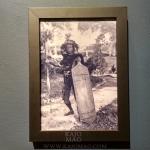
When it comes to dancing, the Kayan people have different kinds of dances to suit various purposes. The datud julud, or as some call it, the hornbill dance is a type of dance performed by women. They also have ngayo, a type of dance performed after a successful headhunting trip. A Kayan man usually performs the kajer lake’, a warrior dance which must be carried out with solemnity and complete seriousness.

A kajer lake’ would not be complete without a parang (a type of machete) and a shield.

A night at Fort Keppel

During their visit in Bintulu, Charles and Margaret along with their entourage stayed at Fort Keppel (which was bombed into inexistence in World War II).

There, they were visited by the natives who came from the far interior, including a group of Kayans.

The locals performed dances for the couple, entertaining them through the night.

Among the performers was a Kayan man, whom the Ranee described as a ‘small, rather plump individual’ who was ushered in, brandishing his parang.

According to the Ranee, at first he crouched down like an animated frog. Then he started to dance, jumping and spinning around on one leg while screaming his war-cry.

The Kayan man moved in agility, rapidly swinging his parang. Margaret wrote, “Once or twice he came so near to where we were sitting that I fancied the blade caused a draught over my head.”

Suddenly, three of his fellow Kayans sprang up and took him away, leaving his audience in puzzlement.

The Kayan man who danced too excitedly

Curious, the Rajah asked why the man had been taken away. Apparently, the Kayan man was a famous dancer from a longhouse outside the Rajah’s jurisdiction.

Back in his hometown, he once danced with so much excitement that he had actually swept the head off one of his audience members.

The three Kayan men who took him away halfway through his performance were there when the gruesome scene happened, so when they noticed the man was about to get carried away with his dance, they intervened quickly before anything irreversible happened.

Nonetheless, the evening ended very pleasantly according to the Ranee. “I thought a good deal about the little dancing man, and came to the conclusion that he must have been an artist in his way!”

I only spent RM10 at the Second Time Around Books Kuching

Kuchingites know it is the end of the year when the Second Time Around Books fair is in town.

The annual book fair is famous for offering up to 90% discounts on a wide range of books.

This year, the Second Time Around Books fair is being held at The Hills from Nov 3 till Dec 9. There are at least 100,000 used books for children and adults alike up for grabs.

And the fun part is it has a bargain section with up to 8,000 books for only RM1, RM2 and RM3.

Here at KajoMag, we want to make the most of our RM10 and these were the books we bought in the bargain section of Second Time Around Books:

1.Perfect Timing by Olga Bicos
I only spent RM10 at the Second Time Around Books Kuching
Perfect Timing by Olga Bicos for RM1.

Thanks to the magic of the Internet and the ever-ready smartphone, you can read the reviews first if you want to take a chance on an unknown writer.

Luckily for me, this 1998 book by Cuban author Olga Bicos had great reviews on Amazon. According to the reviewers, Perfect Timing is one of her best works. (Score!)

The story follows Cherish, Alec and Conor who survive a horrible airplane crash. A year after the incident, Cherish receives a strange message which unites her with Alec and Conor.

2.Home for Christmas by Anita Stansfield
I only spent RM10 at the Second Time Around Books Kuching
Home for Christmas by Anita Stansfield for RM1.

Since Christmas is around the corner, how about a book which complements the season? Home for Christmas by Anita Stansfield is a romance story. (Yes, there is a section on Romance at the Second Time Around Books fair for those who want to indulge that guilty pleasure.)

The reviews found online for Home for Christmas are mixed; some say it is a must-read during the holidays to get the Christmas mood going, while others found it too cheeky.

Nonetheless for that dose of Christmas spirit, perhaps this book is worth a try.

3.Sleepers by Lorenzo Carcaterra
I only spent RM10 at the Second Time Around Books Kuching
Sleepers by Lorenzo Carcaterra for RM1.

As you can see from the cover, Hollywood made a MAJOR MOTION PICTURE out of this book which is a nonfiction story about four friends who took the law into their own hands.

Set in the 60s, after a prank goes wrong and leaves a man seriously injured, the four friends are sent to a juvenile detention centre where they are sexually abused by the prison guards.

The story follows what happens years after their release.

4.Night by Elie Wiesel
I only spent RM10 at the Second Time Around Books Kuching
Night by Elie Wiesel only for RM1.

I first heard about this book when it was featured on Oprah’s Book Club in 2006. Then I tried to find it in nearby bookstores but failed. Back then there was no MPH Online or Book Depository and in the end the book slipped out of my mind.

So I actually gasped the moment I saw Night by Elie Wiesel which was selling at the price of RM1.

First published in 1960, the book is about Wiesel’s experience with his father in the Nazi German concentration camps at Auschwitz and Buchenwald in 1944-1945.

5.Vanity Fair by William Makepeace Thackeray
I only spent RM10 at the Second Time Around Books Kuching
A classic by William Thackery for RM2.

Here is another tip when it comes to choosing a book title; when in doubt, choose a classic because you can never go wrong with a classic. This classic English novel was first published as a 19-volume monthly serial from 1847-1848.

Vanity Fair follows the lives of Becky Sharp and Emily Sedly during and after the Napoleonic Wars.

6.Firefly Lane by Kristin Hannah
I only spent RM10 at the Second Time Around Books Kuching
Firefly Lane by Kristin Hannah only for RM2.

The first Kristin Hannah book I read was about 5 years ago. So I thought it was about time to break the long drought and pick – not so much of a favourite – but a familiar author.

Firefly Lane is about two friends Tully Hart and Kate Mularkey. One chose marriage and motherhood while the other opted for career and celebrity.

What I gained from my first impression was that it was a typical Hallmark friendship movie, making it a quick vacation read.

7.Hush, Hush by Becca Fitzpatrick
I only spent RM10 at the Second Time Around Books Kuching
Hush, Hush by Becca Fitzpatrick at RM2.

So far, we have picked up a Hallmark movie plot, a Christmas romance, a 19th century classic and even some true stories.

The last book which rounded up our RM10 total purchase at Second Time Around Books fair is an adult fantasy novel.

It focuses on Nora Grey, a teenager whose life is at risk after starting a romance with Patch. And in true adult fantasy fashion, Patch is actually a fallen angel with a dark connection to Nora.

With so many books to pick at Second Time Around Books, try to be a little bit more adventurous with your reading. Of course, there were more famous writers at the fair such as Sidney Sheldon, Mary Higgins Clark, Danielle Steele and so on.

Pick a new writer for yourself or try a different genre, you might be surprised what you can find at the Second Time Around Books even with only RM10.

Five Sarawak legends about people turning into stones

Petrification is found in many folklore and myths around the world. People are turned into stone for many reasons in these legends, but mostly as a punishment for their sins.

Here in Sarawak, there are five legends about people who were cursed and turned into stones:

1.Fairy Cave, Bau
Five Sarawak legends about people turning into stones
Fairy Cave, Bau.

The legend of Fairy Cave, Bau is quite popular among the locals. It tells of a poor boy who lived alone with his mother and is treated to a cruel trick by one of the villagers during one of their huge Gawai celebrations.

Infuriated, the mother plots her revenge against the whole village. Dressing a cat in a beautiful attire, she throws it into the middle of their Gawai celebration. The villagers laugh hysterically, bringing on a storm. The sky roars with thunder and blazes with lightning.

When the storm stops, it is discovered that all the villagers have turned into stone. These villagers are what make up the stalagmites and stalactites inside Fairy Cave.

2.The seven Seping longhouses that turned into stone
Five Sarawak legends about people turning into stones
Belaga town.

Legend has it that the Seping people slaughtered a dragon and ate it. As a result, their seven longhouses were turned into stone or swept away by flood.

Everybody was killed except for two siblings; a brother and a sister. They fled to Penyuan river, a tributary of the Belaga river.

The siblings grew up and (here it gets Game of Thrones-ish) eventually, they both marry each other and start a new Seping community.

The Seping people are believed to be the first tribe that settled around the Belaga river.

3.The legend of Ikan Pasit
Five Sarawak legends about people turning into stones
The cursed village of Marup was believed to be located not far from Lubok Antu.

This legend was found in My Life in Sarawak by Margaret Brooke, the first Ranee of Sarawak.

A long time ago, there was a village called Marup. One day there was a girl who went fishing and caught what the locals called ‘ikan pasit’. As she was preparing the fish, one of them jumped up and touched her breast.

“What are you doing? Do you imagine that you are my husband?” she said, laughing at her own joke.

The people who were there also laughed and those who heard the commotion came over and also laughed. Suddenly, the sky turned grey and a mighty wind blew accompanied by flashes of lightning.

Then a hail-storm began. Hail stones fell down non-stop and hitting everybody even their houses, turning them into stone.

Meanwhile, the girl who made fun of the ikan pasit was only partly petrified. Her head and neck were unchanged while the remaining part of her body was turned into stone.

Together with the rest of her village, the whole longhouse and its residents fell into the river. Sadly for the girl, she lived many years with a living head and stone as her body.

Many wanted to end her misery by striking her with a blade but nothing worked. Until one day, a man who heard her cries came. Like many who came before him, he tried to strike her head with an axe and a sword but neither worked.

Eventually he struck her with a spindle and her cries finally stopped while her head and neck slowly turned into stone. According to the Ranee, the group of rocks believed to be Marup village were not far from Lubok Antu.

4.The Sarawak version of Si Tanggang
Five Sarawak legends about people turning into stones
A bridge over Batang Lupar river.

Si Tanggang is a famous Southeast Asian folktale about an ungrateful son. It is about a poor boy who became a rich sailor and married a princess. Upon his return home, he was so ashamed of his poor origins and refused to recognise his elderly mother. So the mother cursed him, turning him and his ship into stone.

Margaret Brooke also recorded the Sarawak version of Si Tanggang in her book My Life in Sarawak.

The beginning of the legend is similar to Si Tanggang except it happened not far from the mouth of the Batang Lupar river. However, in this version the son came home unmarried and ashamed with his parents. He constantly berated his parents after his return.

“One day, after insulting them more than usual, a great storm arose, and father, mother, and son, together with the whole inhabitants of the village and their houses were tossed into the sea and turned into stone.”

5.The floating temple of Sebauh
Five Sarawak legends about people turning into stones
The Chinese temple of Sebauh.

If you have been to Sebauh town, then you have seen a Chinese temple right smack in the middle of Sebauh river.

There are different legends on how the island where the temple sits came about. Apparently, there was a group of sailors who anchored at Sebauh. The cook onboard made them linut or sago porridge known for its sticky texture.

The sailors played with the linut and teased each other. As you can expect from the other stories in this list, the sky suddenly turned dark and a storm thundered overhead.

Hail stones started to drop from the sky, turning everything the hail stones hit into rocks.

Hence, that was how the island of the floating temple in Sebauh was formed.

So the lesson here is that in Sarawak, you shouldn’t laugh at animals, eat a dragon or play with your food if you do not wish to be turned into stone.

Do you know about any other folktales about people being turned into stone in Sarawak? Let us know in the comment box!

How to avoid lightning strikes when you travel

Did you know that Malaysia has the third highest lightning activity in the world?

According to US National Lightning Safety Institute records, Malaysia recorded an average of 180 to 260 thunderstorm days a year, after Indonesia (322) and Columbia (275 to 320).

If you are living or travelling to these countries (or anywhere else), here are ways to avoid getting hit by lightning:

When you are indoors(!)
How to avoid lightning strikes when you travel
You still need to take precautions when you stay indoors when lightning strikes.


When a thunderstorm hits, get yourself under some shelter. Once inside, avoid using corded phones or electrical appliances.

Plus, the US National Weather Service urges the public to avoid showering during a lightning storm because a bolt might strike the water pipes and electrify your bathroom.

Even MythBusters, an Australian-American science television programme, proved that showering during a thunderstorm might not be a good idea.

So it doesn’t matter how filthy or stinky you are, do not wash your hands or take a shower.

The rainy weather might look beautiful for some but it is advisable to stay away from the windows.

When you are outdoors
How to avoid lightning strikes when you travel
Avoid the beach during thunderstorm. Credits: Pexels

Lightning can strike even when you think you are some distance away from the thunderstorm, so as soon as you hear a distant rumble, that’s when you should scramble for safety.

Even if there aren’t any in sight, never use a cliff or rocks for shelter. The same goes for trees.

What if you get caught in a thunderstorm while surrounded by trees? The best thing you can do is to get far from any trunks and avoid low-hanging branches.

Additionally, get as far as you can from street lamps, wire fences or power lines. These tall, metal objects attract lightnings like flies attracted to lights. You do not want to go near them.

When you are in open spaces
How to avoid lightning strikes when you travel
Check out the weather forecast before you go out. Credits: Pexels

In March 2018, it was reported that a lightning strike on a Penang beach instantly killed a man while injuring another. This is not an isolated case. There have been many reports of lightning strikes in open spaces like the beach all around the world.

Safety experts advise the public to stay away from water including ocean, lakes and rivers because water is a conductor of electricity.

If you’re in a group of people in an open space stuck in a thunderstorm during a futsal match for example, spread out so that everyone is at least three meters away from each other. This is to avoid any live currents travelling between you.

Three people were struck by lightning during in a futsal match in Kuala Lumpur earlier this month. Unfortunately one of the three died in the hospital a week after the incident.

For safety precaution, crouch down in a ball – low to the ground – but make sure to make as little contact with the ground as possible. (Which means no lying flat on the ground during a thunderstorm.)

When you are planning your travel itinerary

As much as you want to make full use of your time during travelling, always remember that safety comes first.

Check the weather forecast before making any plans. If a thunderstorm is on its way, ditch the park, beach, river, trekking trail, golf course and any sports in open fields.

Just relax and stay indoor with a good book, a cup of cocoa… or maybe a glass of wine.

1 7 8 9 10 11 14