Browse Tag

Indonesia - Page 3

The legend of how salt springs were discovered in Krayan Highlands

The legend of how salt springs were discovered in the Krayan Highlands according to the locals

Long time ago, the whole area of Krayan Highlands was a thick forest. Then came a man who saw that there were many pigeons (burung punai) in the area.

So the man took out his blowpipe and shot one of the birds. He quickly dressed the bird, plucking out its feathers. As he was looking for a water source to clean the bird, the man saw there was a spring nearby.

After washing the bird, he returned home, where he quickly roasted it.

Once the man tasted the bird, he was overwhelmed by its taste. He wondered what could have made the bird tast so delicious.

So the man returned to where he caught the bird, retracing his steps until he figured out that it must have been the water which made the bird tasty.

He dipped his finger into the spring and discovered that the water was actually salty. The man then told his fellow villagers about his find, and they started to cook their dishes using the saltwater from the spring.

At first, they just poured the saltwater into their dishes when they cooked.

Eventually, the villagers figured out how to process the saltwater into brine, and it has been practiced by the residents of Krayan Highlands for generations.

The legend of how salt springs were discovered in Krayan Highlands
A salt spring in Long Midang, Kalimantan.
The current salt springs of Krayan Highlands

Located in North Kalimantan, Indonesia, the Krayan Highlands at the Heart of Borneo have 33 known salt springs.

However, not all are fully operational these days. But how can these salt springs be found in the highlands of an altitude between 760 and 1,200 meters?

It is believed that the salt springs were formed by high salinity water flowing from deep in the soil strata where it was trapped million of years ago when the area was covered by seawater.

The local Lundayeh people call the mountain salt tucu’ and have traded it throughout the interior of Borneo.

Apart from salt springs, mineral licks or salts licks can also be found in the highlands. The locals them rupan where animals can go to lick essential mineral nutrients from it.

The legend of how salt springs were discovered in Krayan Highlands
Saltwater is boiled to turn into brine.

Read about how mountain salt is processed at Long Midang, Kalimantan here.

5 things you might not know about torch ginger or bunga kantan

Torch ginger (Etlingera elatior) is widely known as bunga kantan in Malaysia. It is also known as ginger flower, torch lily, Philippine wax flower, Indonesian tall ginger, rose de porcelaine and porcelain rose.

Here in Malaysia, the bud of the torch ginger makes an important ingredient in dishes such as laksa and nasi kerabu.

But did you know Malaysians are not the only ones who love this plant?

Here are 5 things you might not know about torch ginger or bunga kantan:
5 things you might not know about torch ginger or bunga kantan
Torch ginger’s flower.
1.The plant is used in different kind of cuisines throughout Southeast Asia.

In North Sumatra, Indonesia, the locals used the flower buds for a stewed fish dish called Arsik ikan mas.

Meanwhile in Bali, people use the white part of the bottom of the trunk for cooking chilli sauce called “Sambal Bongkot” and the flower buds to make chilli sauce “Sambal Kecicang.”

In Thailand, young shoots and flowers of the plants are served raw with nam phrik phao (a type of Thai spicy chilli sauce).

2.The leaves of the bunga kantan is commonly used as post-partum home treatment.

In Malaysia, the leaves of the bunga kantan is mixed with other traditional herbs such as ginger leaves, turmeric leaves and betel leaves in water. Then post-partum women would use it as bathwater to get rid any body odour.

5 things you might not know about torch ginger or bunga kantan
Thanks to its pretty and bright pink appearance, this plant is also used as decorative plant.
3.It is used to cure the symptoms of typhoid fever and other diseases.

A community in Porehu district of Southeast Sulawesi, Indonesia use the plant to cure symptoms of typhoid fever.

Apart from that, they also believe that consuming the plant could cure various kinds of diseases such as diarrhea, canker sores, cough and heartburn.

This traditional knowledge has been passed down for generations.

4.Essential oil from torch ginger could be used as an ingredient for sunscreen.

There have been a few studies done on the phytochemistry of this plant. For example, a study done by Royal College of Medicine Perak which was published in Journal of Applied Pharmaceutical Science in 2017 had proven that there were two benefits of torch ginger’s essential oil.

The researchers found that the torch ginger essential oil provided phytochemical screening, photo-protective as well as anti-oxidant properties.

Hence, the study suggested to use torch ginger as a new source of natural anti-oxidant ingredients that can be incorporated into sunscreen cosmetic products.

5 things you might not know about torch ginger or bunga kantan
Torch ginger tree.
5.The inflorescence of torch ginger is potentially used as a preservative.

Meanwhile, another research study done by Universiti Sains Malaysia had found the benefits of oil and extracts derived from the inflorescence of torch ginger.

They found that the oil and extracts had rich antibacterial activity and possessed great potential to be used as a preservative in the food and pharmaceutical industries.

5 things you might not know about torch ginger or bunga kantan
The essential oil of this plant is potentially be used as sunscreen.

The aftermath of the Indonesian-Malaysian confrontation at Long Bawan

Located at North Kalimantan, Indonesia, Long Bawan is a small town with a small airport which has become the only gateway via air to Krayan Highlands.

Looking back on its history, it was one of the combat operations sites between British Commonwealth forces and Indonesian armies during the Indonesian-Malaysian confrontation.

The confrontation which started in early 1963 was caused by Indonesia’s opposition to the creation of Malaysia.

By December 1964, there was a build-up of Indonesian forces on the Kalimantan border. This caused the British government to commit significant forces from the UK-based Army Strategic Command and Australia and New Zealand to Borneo in 1965-66.

On the Indonesian side, the fight was led by Indonesian Army special forces (Resimen Para Komando Angkatan Darat or RPKAD).

Additionally, they recruited the North Kalimantan National Army or Tentera Nasional Kalimantan Utara (TNKU).

During the confrontation, hundreds of Indonesian civilians had been loosely trained as part of TNKU.

Most of them were unemployed urban youth scrounged from cities in Kalimantan and Sulawesi.

Since the battles mostly happened at the Indonesian-Malaysian border in Kalimantan, some of them were posted in Long Bawan (Indonesia).

The aftermath of the Indonesian-Malaysian confrontation at Long Bawan
A view of Long Bawan paddy field. Perhaps this was where parachuters landed in 1968.
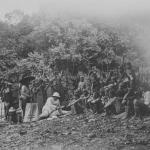
TNKU members who were left at Long Bawan

Although the confrontation had been officially declared over in August 1966, the mission was technically not over for Indonesian forces.

There were TNKU members abandoned and left behind at their border camps including in Long Bawan.

To make matter worse, the Indonesian government reportedly did not bother to disarm the army-volunteers, leaving them with weapons such as heavy machine guns and mortars.

Kenneth J. Conboy wrote in Kopasses: Inside Indonesia’s Special Forces that the ready supply of weapons and unemployed volunteers became a volatile combination.

Conboy wrote, “By late 1967, Jakarta had received reports that the former TNKU partisans were stealing food and raping women in the Long Bawan vicinity. Colonel Mung, the former RPKAD commander now serving as head of the military region, reported that the outgunned local government was screaming for help.”

Jakarta was reportedly in a fix when the government heard this news. In response, they sent out two groups from RPKAD which was led by Captain Alex Setiabudi and Captain Kentot Harseno.

Both captains had previously served at Long Bawan.

The aftermath of the Indonesian-Malaysian confrontation at Long Bawan
The small township of Long Bawan.

The two groups assembled at Cijantung during the first week of January 1968. Since there were no suitable runways, the units would be making a combat jump into paddies a half-hour trek east of Long Bawan.

“Although they would be parachuting with their weapons- including two rocket launchers – they were correctly concerned about opposition they might face. The ex-volunteers, after all, were better armed and knew the lay of the land after living there for almost four years,” Conboy wrote.

RPKAD came bearing gifts

Then Captain Kentot had an idea. Instead of going in with full force, they decided to go with gifts like food, writing pads and clothes.

His idea was adopted in and operation code-named Operation Linud X (“Airborne X”). On Jan 10, 1968, the groups made their jumps after light into Long Bawan.

The military units had expected to face difficulties from the former TNKU volunteers. However, it was the terrains of Krayan Highlands that gave them a hard time. Several of the commandos landed, drifting far from their marks, mostly in paddy fields and swamp.

Meanwhile, Captain Kentot landed in mud up to his armpits and nearly drowned. One of the pallets carrying a rocket launcher was even lost during the jump.

Nonetheless, the commandos managed to regroup at Long Bawan village where its chief greeted them like old friends.

After finding out their mission, the chief tasked some of his villagers to collect all weapons from nearby cache sites.

Surprisingly, the abandoned TNKU members were extremely tame. They took the gifts kindly and offered up their weapons without any resistance.

Four months later, all of the commandos were packing to leave. Due to some difficulties with their transport, they were forced to hike to the nearest river landing. According to Conboy, they were back on Java by June after a speedboat shuttle toward the coast.

“For once, what had the potential for being another festering security challenge had been resolved without firing a shot,” Conboy recorded.

The aftermath of the Indonesian-Malaysian confrontation at Long Bawan
The new building at Yuvai Semaring airport in construction.
The physical remnants of the Indonesian-Malaysian confrontation at Long Bawan

While confrontation now only remained in memories for the Krayan Highlands elders (which they refer to as ‘konfrontasi’), there are some physical remnants left behind at Long Bawan.

This small town was also the crash site of an Indonesian plane during Indonesian-Malaysian confrontation.

On Sept 26, 1965 during the confrontation, a C-130 plane was shot down near Long Bawan.

Ironically, the plane was shot down by Indonesian anti-craft fire, as it was mistaken for a Commonwealth aircraft.

It was carrying an RPKAD platoon from Java on orders to “neutralise” a gun position on the border ridge.

After the aircraft was hit, the RPKAD members parachuted out before it caught fire and crashed.

The wreckage of the plane is still at Long Bawan to this day.

Meanwhile, the locals also found the rocket launcher that was lost when Captain Kentot and his units parachuted in 1968.

It is now on display at Krayan’s Kepolisian Sektor or Polsek (Police District office).

The aftermath of the Indonesian-Malaysian confrontation at Long Bawan
Photocopying services at Long Bawan.

How salt was obtained in the olden days of Borneo

Salt plays an important role in not just Sarawakian cuisine, but in Borneo overall.

Besides seasoning, every community, whether they were Iban, Bidayuh or Kadazandusun, used salt as a means to preserve their food.

How salt was obtained in the olden days of Borneo
Here are just five ways how salt was obtained in Borneo back when there were no supermarkets:

Salt is such an available commodity for us today; we can simply buy it from any grocery store or supermarket. Have you ever wondered how the olden communities of Borneo used to get it back in those days?

1.Nipah palm

Nipah salt or garam attap is salt processed from the mature leaves of the nipah palm, Nypa fruticans.

Here in Borneo, nipah palm grows wild and abundantly along coastal areas, especially in Borneo.

The palms are constantly washed by saltwater daily and this salt can be processed from the leaves.

Unlike conventional salt, it has a smoky flavour as well as the aroma of dried nipah leaves.  

Here is how Reverend Andrew Horsburgh in Sketches in Borneo described nipah salt processing:

”The chief condiment of the Dyaks is salt, which they procure from the nipah palm, and which they much prefer to that obtained by evaporation from seawater. The boughs of the nipa are cut, dried, and burnt, and their ashes washed in water, so as to dissolve the salt contained in them. This water being then allowed to run off clear is evaporated in pans, the salt remaining at the bottom of the vessel. It is a dirty grey and often black-looking substance, processing a slightly bitter taste, which is grateful to the palate of the Dyaks; and it is generally produced in a masses of considerable size and as hard as a stone, it has much the appearance of a mineral that has been dug out of the earth.”

2.Seaweed

According to Captain Thomas Forrest in A Voyage to New Guinea and the Moluccas from Balambangan (1780), the Bajau would gather seaweed, burn them, make a lye of the ashes, filter it and finally form a bitter kind of salt.

How salt was obtained in the olden days of Borneo
Salted fish, a common delicacy found in Sabah and Sarawak.
3.Mangrove roots and nipah palm

Meanwhile, Spenser St John recorded how salt was processed at the foot of Mount Kinabalu.

“They burnt the roots of the mangrove with those of the nipah palms as well as wood collected on the sea-beach and therefore impregnated with salt.

In one place, I noticed a heal, perhaps fifteen feet in height, sheltered by a rough covering of palm leaves, and several men were about checking all attempts of the flames to burst though by throwing saltwater over the pile. This doubtless, renders the process much more productive. In one very large shed, they had a kind of rough furnace, where they burnt the wood; and suspended around were many baskets in which the rough remains of the fire are placed, and the whole then soaked in water and stirred about till the salt is supposed to have been extracted from the charcoal and ashes. The liquid is the boiled, in large iron pans purchased from the Chinese.”

4.Seawater and ashes of driftwood

In The Gardens of the Sun, British explorer and tropical plant collector Frederick William Burbidge detailed how the Kedayans used a combination of seawater and ash to obtain their salts.

“The ashes of driftwood are placed in a tub and seawater poured over them. To evaporate the water, receptacles are neatly made from the sheaths of the Nibong palm, fastened into shape by slender wooden skewers. Two logs are then laid parallel to each other, and a foot or fifteen inches apart, and over these the pans are placed close together, so as to form a rude kind of flue, in the which a fire of light brushwood is lighted, and very soon afterwards the salt maybe observed falling to the bottom of the evaporators.”

5.Salt springs
How salt was obtained in the olden days of Borneo
Salt spring in the Krayan Highlands.

Even to this day, the people of Bario and Ba Kelalan Highlands (Malaysia) as well as Krayan Highlands in (Indonesia) still use salt springs to make salt.

The water from these natural springs is boiled and evaporated for an extended period of time before it is dried to form salt.

How salt was obtained in the olden days of Borneo
An example of how saltwater is processed traditionally these days.

Read how salt springs are processed in Long Midang, Krayan in Kalimantan, Indonesia.

Air Bunga, the Fountain of Youth in the Krayan Highlands

Air Bunga, the Fountain of Youth in the Krayan Highlands
The Fountain of Youth for Krayan Highlands is rather accessible.

Tales of the fountain of youth have been recounted across the world for centuries. Supposedly, it is a spring that restores the youth of anyone who drinks or bathes in its water.

Up on the valley of Krayan Highlands in North Kalimantan, Indonesia, there is a small stream which might be the local equivalent of the fountain of youth.

Located at an altitude between 760m and 1200m, the Krayan Highlands in the Heart of Borneo is an important site to maintain the sustainability of Borneo’s last remaining of rainforests.

The Dayak Lundayeh people there call it Air Bunga (or flower water in Indonesian language).

It is water that flows from a small stream named Ba’ Sarang near the village of Tang Paye.

Air Bunga, the Fountain of Youth in the Krayan Highlands
Wash your face with Air Bunga and you might wash away some wrinkles.
Air Bunga, the healing water used for generations
Air Bunga, the Fountain of Youth in the Krayan Highlands
Besides washing your face, you can also drink the water straight from the bamboo pipes.

Located about 5-minutes walk from the village hall, the water has been used for generations by Lundayeh people living in the Krayan Highlands.

Just like the Fountain of Youth, the locals believe the water has anti-aging properties as well as healing powers.

According to local guide Alex Ballang, the locals would collect the water and keep some for storage at home.

Those who live in the surrounding villages besides Tang Payeh, would also come and take some Air Bunga for various reasons.

“If you have itchiness on your body or even your eyes, you can take a bath using this water or go to the stream to take a dip,” Alex said.

The locals also use it to clean their wounds, believing it would prevent infections.

Besides using Air Bunga externally, the locals also consume it believing it would cure minor sicknesses such as stomachache.

Some even use the water for daily activities such as cooking.

Another reason why the locals believe that Air Bunga is a miraculous source of water, is that it never run dries even during drought season.

Air Bunga, the Fountain of Youth in the Krayan Highlands
The water never run dries even during dry season.
Conserving Air Bunga
Air Bunga, the Fountain of Youth in the Krayan Highlands
The walk to Ba’ Sarang requires visitors to stroll through paddy fields.

Nobody really knows how Air Bunga was discovered. Regardless, this traditional knowledge has been passed down for so long that the current generation decided to conserve the miraculous stream.

They built a small concrete dam to collect the water and use two simple bamboo pipes for the water to flow.

To maintain the place, the villagers do not allow any clearing of the forest near the stream.

Additionally, they are looking forward to the area to becoming a tourist attraction site. The villagers strongly suggest those who visit the place for the first time to bathe or wash their faces there. With that, the visitors can experience first-hand the healing properties of Air Bunga.

It does not matter if the water of Ba’ Sarang is truly miraculous or not, Air Bunga is another reason why the Heart of Borneo initiative is an area like no places in the world.

This initiative of Brunei, Indonesia and Malaysia aims to improve management and governance of protected areas while documenting important biodiversity areas that are conserved by local communities.

While it is important to protect an forest area for its environmental value, it is equally important to conserve it for its cultural value just like this Krayan Highlands’ Fountain of Youth.

Air Bunga, the Fountain of Youth in the Krayan Highlands
Whether it is truly the Fountain of Youth, it is still nice and chilling to wash your face with Air Bunga.

5 things you need to know about the black orchid

The black orchid (Coelogyne pandurata) is such a unique plant that it is the official mascot for East Kalimantan province.

Also known as anggrek hitam in the Indonesian language, this orchid can be found in all three countries on Borneo; Malaysia, Indonesia and Brunei.

Unlike popular belief, it is not endemic to Borneo. It is also found in Sumatra, Peninsular Malaysia and the Philippines.

The orchid is an epiphyte found on large trees located usually near rivers.

Here are five things you need to know about the black orchid:
5 things you need to know about the black orchid
Coelogyne pandurata
1.It is called black orchid but it is not entirely black

According to the book Orchids of Sarawak, stories of a mysterious black orchid from deepest Borneo has been told for years and people ask if such a plant really exists.

So you can only see the black coloured part of the flower for a short period of time because it blooms only five to six days.

“Although the flowers are predominantly a most striking lime-green, large areas of the lip are stained with a truly black pigment as though black ink had been splashed upon it.”

If you smell it closely, the bloom emits a honey-like fragrance.

2.It is first described by John Lindley way back in 1853

The flower might be rare to see, especially in bloom, but it is not new. English botanist John Lindley (1799-1865) was the first one to have described the black orchid, publishing about it in the Gardener’s Chronicle in 1853.

He wrote, “We are indebted for this striking species to Mr Loddiges, who informs us that it was imported from Borneo by Mr Low. The lip, although really oblong, yet in consequence of the manner in which the sides are bent down, has much the form of a violin.”

However, Lindley never commented about the black markings on the orchid.

3. Its alleged medicinal purposes

In some parts of rural Kalimantan, the black orchid is boiled and used as herbal medicines.

The flower is believed to have many medicinal purposes including for heartburn, diarrhea, stomach ulcers and even tuberculosis.

However, none of these have been scientifically proven.

5 things you need to know about the black orchid
The mascot of East Kalimantan province.
4.The myth behind the black orchid

While some believed that it can be a cure for various diseases, it is also believed that the flower can be a curse.

Legend in Indonesia has it that anyone who is in possession of the black orchid or even attempts to culture it will obtain bad luck.

Perhaps the myth spread to prevent people from harvesting the flower and subsequently reducing its population in the wild.

5.Some of the environmental threats against the black orchid

Speaking of its population, according to World Wide Fund for Nature (WWF) Indonesia, some of the threats this orchid faces are forest burning and land clearing due to agriculture activities.

Since this plant is an epiphyte relying on large trees to grow, loss of jungle could immediately affect the population of black orchid.

Here in Sarawak, all orchids are listed as ‘protected plants’ under the Wildlife Protection Ordinance 1998.

According to the law: “Any person who collects, cultivates, cuts, trims, removes, burns, poisons, in any way injures, sells, offers for sale, imports, exports or is in possession of any protected plant or any recognizable part or derivative thereof, except under and in accordance with the terms and conditions of a licence issued under this Ordinance, shall be guilty of an offence: Penalty, imprisonment for one year and a fine of RM10,000.”

5 Eco-Friendly Destinations for the Green Minded Traveler

Traveling is one of life’s greatest pleasures, and definitely a luxury we should not take for granted. As we embark on our adventures around the world, we should make an effort to make responsible decisions that are sustainable to minimize our carbon footprint, and preserve our natural and cultural landscapes for many more years to come.

While it may be hard to cut down on our travels altogether, we can take the first step and practice being a more green, conscious traveler.

Here are some eco-friendly destinations and activities you can consider for your next trip! Not only do these locations offer initiatives for guests to actively take part in, but they also play a big role behind-the-scenes in contributing to a healthier, greener earth.

1. Take an eco-friendly bath at Hilton Lake Taupo, New Zealand

At Hilton Lake Taupo, one can experience nature at its best. Nestled amidst picturesque rolling mountains, the hotel not only boasts breathtaking views of New Zealand’s largest lake, but also keeps its carbon footprint low by leveraging natural resources around it.

 Hilton Lake Taupo Pool View Eco Green Travel

The neighboring Onekenek Thermal Valley is an excellent source of natural gases, and is exactly what the property harnesses to heat up its pool, showers and spa in their Heritage Wing. Be sure to take a dip, and pamper yourself in this man-made hot spring!

2. Cut down on your food waste at Hilton Sydney, Australia

Located in the heart of the bustling metropolis, Hilton Sydney introduced biodegradable cutlery and the installation of LED lights in the lobby and ballroom to its establishment.

They are also a champion in food waste minimization – having partnered with World Wildlife Fund (WWF) to track their food waste and adopt new methods to reduce it further. In addition, they regularly donate food surplus to charity organizations, so these high-nutrient, quality foods don’t go to waste.

Hilton Sydney Breakfast Spread Eco Green Travel Food

3. Keep the beaches clean with Conrad Bali Resort and Spa & Hilton Bali Resort, Indonesia

Honestly, who doesn’t love Bali? With its endless coasts, sunny weather and relaxed atmosphere, there’s no doubt it’s the perfect beach destination. However, even this paradise can get sullied, with tourists leaving behind plastic waste that ends up washed up on the beachfront.

To combat this and prevent further pollution, eco-friendly Conrad Bali Resort and Spa, alongside Hilton Bali Resort, took part in an island-wide clean up initiative which cleared over 30 tons of plastic waste!

 Hilton Bali Resort Eco Green Travel

If you are lucky, you may be able to take part in one of these clean ups on your next trip, and play your part for the environment as well.  Of course, be sure not to leave your own trash behind!

4. Support sustainable dining at Hilton Singapore, Singapore

Foodies unite! We all know that food is a big part of the travel experience, but it can be difficult to find quality dishes that are sourced and produced sustainably. In the food haven of Singapore, head right on down to eco-friendly Verde Kitchen at Hilton Singapore for an authentic farm-to-table experience. All ingredients have been certified sustainable, and some are even grown at the property’s very own vertical garden!

Hilton Singapore Vertical Garden Eco Green Travel Food
Hilton Singapore’s very own vertical garden.

In conjunction with World Oceans Day, the Verde Kitchen is running a special “Pick the Right Catch” promotion from now till 30 September. It promotes sustainable seafood dining that is full of natural flavors – featuring refreshing options like sesame crusted, MSC-certified U.S. scallops, almond-crusted ASC-certified salmon, and MSC-certified nonya-style New Zealand rockling fish, among others.  You definitely won’t be disappointed.

5. Go #plasticfree at Hilton Manila, Philippines

The #nostraws movement is going strong, but Hilton Manila has taken it one step further with its mission to cut down on all plastic! Aside from eliminating all plastic straws, complimentary drinking water in guest rooms is packaged in reusable glass bottles, and there are no plastic wrappings on slippers and laundry, among others. It’s certainly a good step forward, and a sobering reminder that we really don’t need to use that much plastic in our daily lives.

Hilton Manila #nostraws

The next time you plan a trip, be sure to do your research and pick destinations that align with your values. You can definitely have the holiday of your dreams, while still being responsible and sustainable at the same time. Have a great, green trip!

5 things to know about Kayan river, North Kalimantan

While in Sarawak we have Batang Kayan river in Lundu, in North Kalimantan they have their own Kayan river too.

North Kalimantan borders the Malaysian states of Sabah to the north and Sarawak to the west, and by the Indonesian province of East Kalimantan to the south.

Although they both flow on the same island of Borneo, both rivers are located at the opposite sides of each other.

Malaysia’s Batang Kayan is at the western tip of Sarawak while Indonesia’s Kayan river flows in the north eastern side of Kalimantan.

Here are 5 things to know about North Kalimantan’s Kayan river:
5 things to know about Kayan river, North Kalimantan
The view of Kayan river during sunrise.
1.Kayan river stretches for 576km.

Sarawak’s Batang Kayan is 125km long while the one in North Kalimantan province is way longer at 576km. It flows from Mount Ukeng, passing Tanjung Selor city and discharges into Sulawesi Sea.

Tanjung Selor city is the capital of North Kalimantan province and also the capital of Bulungan regency.

2.It is the main transportation route for the peoples in inland regions of North Kalimantan.
5 things to know about Kayan river, North Kalimantan
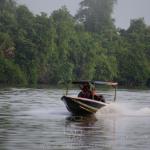
River transportations such as this speed boat plays an important role for the people who lived along Kayan river.

Most of the settlements in North Kalimantan are not well connected with road networks. So the communities living particularly in Malinau and Bulungan regencies use river transportation such as traditional boats and speedboats to commute.

The ports in Tarakan offer ferry transportation services to Tanjung Selor around the clock from morning to evening via Kayan river.

Plus, it is the main route for goods and other supplies to enter this inland regions of North Kalimantan.

Otherwise, most of North Kalimantan residents, especially those who live at the Sabah-Sarawak border may rely on trading with Malaysia for supplies.

3.It was named after the Kayan people who live along the river.
5 things to know about Kayan river, North Kalimantan
The river was named after the Kayan people who lived along the river.

In Kalimantan, the Kayan people live along the upper Kayan and the middle Kapuas and Mahakam rivers.

Meanwhile in Sarawak, they settled along the Baram, Balui, Belaga, Tubau rivers.

4.Along the Kayan river was where the Sultanate of Bulungan reigned.

Speaking of the Kayan people, here comes an interesting story of how the ethnogenesis of Bulungan people was formed.

Long time ago, there was a group of Kayan people from Uma Apan in the interior region of Apo Kayan highlands.

They expanded their territory and then settled down near the east coast of Kalimantan.

Around 1650, a princess of the group married a man from Brunei. The marriage founded a Hindu lineage which settled in Tanjung Selor.
About a century later, the dynasty converted to Islam and the rulers took the title of Sultan.

The last Sultan Jalaluddin passed away in 1958 and the Sultanate was subsequently abolished in 1959. Now the territory is a kabupaten or regency.

5. It is one of the main rivers flowing through Kayan Mentarang National Park
5 things to know about Kayan river, North Kalimantan
Kayan Mentarang National Park is accessible by longboats via Kayan river.

Located at the border between Indonesia and Malaysia, Kayan Mentarang National Park is one of the few places in Borneo which is densely forested.

It is also a fundamental site to the WWF Heart of Borneo. It is an initiative which aims to protect the transboundary biodiversity of Borneo.

Animals found in the park include Malayan pangolin, long-tailed macaque, Bornean gibbon, clouded leopard, different kinds of hornbills and many more.

So if you are heading to the park via Kayan river, you might be lucky to appreciate some of these endangered species along the way.

What you need to know about the Battle of Tarakan during World War II

The Battle of Tarakan refers to different actions which happened during World War II on Tarakan island, off the northeast coast of Borneo.

The first battle of Tarakan happened on Jan 11-12, 1942 when Japanese attacked the island, defeating Allied forces. Meanwhile the second battle of Tarakan took place on May 1-25, 1945 as the first phase of the Allied campaign to retake Borneo from the Japanese.

Battle of Tarakan (1942)
What you need to know about the Battle of Tarakan during World War II
A view of Amal Beach, east coast of Tarakan.

The Battle of Tarakan in 1942 began a day after the Empire of Japan declared war on the Netherlands.

Despite the fact that it is only a small island, Tarakan’s 700 oil wells, oil refinery and airfield put the island onto the Japanese forces must-conquer-list during the Pacific War.

Before the war, Tarakan was producing about 80,000 barrels of oil per month.

On Jan 10, 1942, a Dutch flying boat spotted an approaching Japanese invasion fleet. Knowing the Japanese army was coming, the commander of Tarakan’s garrison ordered the destruction of all oil installations on the island.

Today, one can only imagine the sounds and smells of these explosions as well as the anxiety waiting for your enemies to land.

By midnight of Jan 11, the Japanese forces landed on the east coast of Tarakan which today has become a tourist attraction called Amal Beach.

The troop was met with short but fierce resistance from the Royal Netherlands East Indies Army. The Dutch surrendered in the morning of Jan 12.

Instead of accepting their surrender, the Japanese executed the entire crew of coastal battery together with some 219 prisoners of wars (POWs) via drowning.

The island then remained under Japanese occupation until May 1945 when the Battle of Tarakan 1945 happened.

What you need to know about the Battle of Tarakan during World War II
Amal Beach, where the Japanese landed in 1942.
Tarakan under Japanese occupation

The Dutch thought they did a thorough job in destroying Tarakan’s oil fields. But the Japanese were able to recommission the first oil wells by August 1942. By early 1944, Tarakan was producing 350,000 barrels a month.

During the Japanese occupation, the locals of Tarakan suffered from malnutrition. The large number of Japanese troops on the island together with 600 Javanese labourers caused food shortage on the island.

Imagine that the oilfield in Tarakan alone was operated by 250 men from the Imperial Japanese Navy.

By late 1944, the Allied forces started to strike back, launchinf air raids destroying oil production and storage facilities on the island.

Unfortunately, hundreds of civilians were also killed during these air raids.

Comfort women in Tarakan during Japanese occupation

If you are not familiar with the term ‘comfort women’, they were women and girls forced into sexual slavery by the Imperial Japanese Army.

The Dutch government did a study in 1994 about comfort women during the time of the Dutch East Indies.

It concluded that about 200 to 300 European women had been taken to become comfort women.

Besides Dutch women, many Javanese and east Timorese women were also forced into prostitution.

They were usually sent to Burma, Thailand and eastern Indonesia, including Tarakan.

According to records, it is estimated about 300 women from Java were brought into Tarakan. A number of them were of other origins including Eurasians and Chinese.

Similar to many human trafficking cases today, they had been lured with the promise of jobs in clerical work and clothes making.

But in the end, they were actually forced into prostitution at Tarakan’s garrison and sometimes on visiting warships.

Battle of Tarakan (1945) was just a political act?

Many historians believed the decision by the Allies to retake Borneo from the Japanese in 1945 was mostly based on political reasons.

According to an article by Department of Veterans’ Affairs in Australia, the plan to invade Borneo had only marginal strategic value.

It stated, “General Douglas MacArthur, Commander-in-Chief of Allied forces in the Southwest Pacific Area, planned the operation to alleviate concerns of the Australian government that its forces were being relegated to operational backwaters as New Guinea had become.”

During the war, MacArthur left Australian forces out of most significant operations.

So, the idea of invading Borneo was intended to make Australian forces more visible again during the war against Japan.

General MacArthur chose to capture Tarakan in order for the island to be used to support an invasion of Java. It was crucial to recapture Java so that the Dutch could formally restore its power on the Netherlands East Indies.

Another reason was to capture the oilfields in Borneo. But this did little effect on the Japanese operation. Taking Tarakan, for example, the last Japanese oil tanker left the island in July 1944.

Meanwhile, the American air and naval troops had blockades around Japan. So there was no oil being shipped into Japan from Borneo.

What went down during the Battle of Tarakan 1945

Regardless of the reasons, the Battle of Tarakan was the first stage in the Borneo campaign of 1945.

In an operation code-named Operation Oboe One, the Australian forces landed on Tarakan on May 1.

The engineers went in first and cleared gaps through the beach defences with explosives before the main assault.

Then, naval and air bombardments also destroyed or damaged many Japanese positions.

Over the next seven weeks, there was fierce fighting as the Australians pushed inland to take the whole island.

One of the primary objectives to retake Tarakan island was to build airfields.

The airfield did open for fighter aircraft to land in late June 1945 but it was not used as much as it was intended for.

The Australians underestimated the work as they found the existing airfields were badly damaged. Meanwhile the site selected to build new airfields had excessive boggy ground.

The Aftermath of Battle of Tarakan

In the end, more than 200 Australians were killed before the last Japanese positions fell on June 20, 1945.

Although the Battle of Tarakan in 1945 was a success for Australia, Australian historian Gavin Long pointed out that the results achieved did not justify the entire cost of the Tarakan operation.

So was the battle for a sideshow? Or was it to make Australia look like they contributed something during the end of WWII? The Battle of Tarakan 1945 remains debatable among historians.

The massacre of Sarawak officers at Long Nawang during WWII

When news of Japanese troops coming to attack Sarawak broke out, the Chief Secretary put out instructions requiring all Brooke officers to remain at their stations.

However, a group of Sarawak officers decided to flee the kingdom and head to Dutch Borneo. Their decision to take refuge near the border of current day Kalimantan led to what most historians called the Long Nawang Massacre.

The journey to Long Nawang from Sibu

According to local historian Ooi Keat Gin, the Brooke officers in the Lower Rejang fled in a party of 26 men, three women and two children who were aged nine months and five years old.

The party was led by Andrew Macpherson, Resident of the Third Division. He brought along his wife who was then six-months pregnant. Other Brooke officers in the group included Sibu, Kanowit and Kapit district officers.

Ooi wrote, “Macpherson’s plan was to go up the Rajang, cross over into Dutch Borneo to Long Nawang, a Dutch military outpost.

“The party reached Kapit by motorboat, negotiated the Pelagus Rapids to arrive at Long Bahau above Belaga. They stayed at Kenyah longhouses along the way. After Belaga, smaller and lighter boats brought them through the shallower, rapid-infested headwaters of the Ulu Rejang.”

After 28 gruelling days of crossing treacherous mountains on Jan 22, 1942, the group finally arrived at Long Nawang, which was also a Kenyah settlement.

There, the party had the comfort of a four-bed hospital with an adequate supply of medicine. Furthermore, they had enough food supply to last for a year.

Macpherson and his team separate at Long Nawang

After arriving at Long Nawang, Macpherson who was suffering from malaria, decided to stay there. However, he allowed the rest to proceed and carry on their plans.

So four men – Jacks, Schotling, McKerracher and T.E Walter – decided to go to Long Iram and then Samarinda.

The men reached Samarinda and managed to board a plane to Bandung. Somehow Jacks and McKerracher eventually reached Perth while Walter and Schotling were captured and imprisoned by the Japanese.

Meanwhile another group of Brooke officers unfit to travel decided to return to Belaga. There, they were eventually taken into custody and interred at Batu Lintang POWs Camp. They may have had a better fate than those who stayed behind at Long Nawang.

The other refugees of Long Nawang

Besides Macpherson and his team, there was another group of Brooke officers and a missionary priest from Marudi who made their way to Long Nawang.

According to retired Mill Hill Missionary priest Theo M. Feldbrugge, he had a paternal uncle who was a Mill Hill priest during World War II.

The older Rev Feldbrugge was the parish priest of Marudi. Together with Resident of Marudi Mr Hudden and a few other British officers, they decided to go to Kalimantan to seek refuge.

“So they walked up to Baram and by boat and then they walked all the way to Long Sang, Long Nakang and across the mountains down the riverside till finally they ended up in Long Nawang.”

The arrival of Dutch and Indonesian soldiers

In April 1942, Lieutenant D.J.A Westerhuis arrived at Long Nawang along with 40 Dutch and Indonesian soldiers.

Four months later, two Kenyahs brought the news that more than 70 Japanese soldiers were on their way to Long Nawang.

But Westerhuis did not believe that the Japanese would ever discover their hideout.

Rev Feldbrugge pointed out that Long Nawang was at the very head of the Mahakam river in Indonesia which went to Balikpapan.

“And they thought the Japs would never come. But the Japs were in Balikpapan and they were told God knows by whom that Orang Putih were there in Long Nawang.”

So the Japanese came up to Long Nawang, trickling in via Mahakam river.

The massacre

On August 20, 1942, about 76 Japanese marines led by Captain Mora Shima arrived at Long Nawang attacking the border post with mortars, light machine guns and rifles.

Many were killed during the attack. The Japanese rounded up the surviving Europeans, imprisoning them while they allowed the Indonesian soldiers to return to their military post at Tarakan.

There were at least two eyewitnesses for what happened next; Corporal Tamburiang and Private Markus who were former native polices living in Long Nawang were executed on Aug 26 and buried in two graves.

Then a month later on Sept 23, the Japanese massacred all the women and children.

Another witness, Tusau Padan who was 11 years old at that time saw how the execution of the children took place.

The young children were forced to climb palm trees. Then they were impaled on the upraised bayonets when they slipped down in exhaustion.

All the women and children were buried in one grave.

After the war, the victims of Long Nawang massacre were exhumed and reburied on Tarakan island at Makam Pahlawan.

There have been requests by the descendants of the massacre victims to bring them home from Tarakan to Sarawak.

Among them were the grandchildren of Desmond Vernon Murphy, a British officer serving as Assistant Superintendent of the Sarawak constabulary and Sarawak Rangers.

Murphy was one of the officers who joined Macpherson to Long Nawang and later executed. His grandchildren wanted him to be buried in the Heroes Graves in Kuching so that it would be easier for them to visit to pay their respects.

The massacre of Sarawak officers at Long Nawang during WWII
Tarakan War Cemetery after the dedication on Oct 9, 1945. Photographer: Lt W. N. Prior.
Credit: Public Domain (Copyright expired).
Why did the Japanese massacre the refugees of Long Nawang?

It took the Japanese alone four weeks to reach Long Nawang. Having to travel out of the area with the more than 40 prisoners including women and children along would have taken them even longer.

For the Japanese troops at that moment, it was more expedient to kill the prisoners right there in that thick jungle.

Another reason why they were killed was because, for the Japanese, the refugees were considered enemy fugitives (even Macpherson’s newborn baby).

Ooi wrote in his book The Japanese Occupation of Borneo, “The fact that the refugees at Long Nawang did not voluntarily surrender themselves as was the expectation of the Japanese military authorities following the establishment of a new regime in Borneo made them, legally speaking, enemy fugitives.”

He added that from this perspective their execution was in line with wartime military requirements.

As for Captain Shima, the man who was responsible for the Long Nawang Massacre? There were no traces of him after WWII, and so he was never persecuted for his war crimes.