Browse Tag

Borneo - Page 7

Looking back at Labuan War Crimes Trials during World War II

After the Second World War (WWII) ended, Labuan became one of the locations where war crime trials took place.

From December 1945 and January 1946, 16 war crime trials took place at Labuan.

Some of the cases trialed at Labuan were the ill-treatment of prisoners of War (POW) at Batu Lintang Camp, the Sandakan Death Marches and the final executions of POWs at Ranau.

Looking back at Labuan War Crimes Trials during World War II
Two military policemen guard four Japanese officers outside the Labuan court. Courtesy of Australian War Memorial. Copyright expired-public domain.

Why hold the war crimes trials in Labuan?

According to Georgina Fitzpatrick in the book Australia’s War Crimes Trials 1945-51, Labuan was the location of Australia’s 9th Division headquarters.

“There was a large garrison of Australian soldiers there to guard a war criminal’s compound and to provide other ancillary staff needed for war crime trials. Labuan was also the location of an Australian General Hospital (AGH) where those liberated Allied prisoners of war who were not well enough to be evacuated to Morotai had been sent to recuperate from their ill-treatment in Kuching camp. This placed them in proximity to the Japanese war criminal compound, where they could assist in identifying war criminal suspect,” Fitzpatrick stated.

Bearing witness at Labuan War Crimes Trials

It was rare to have former POWs of the Japanese to be present in person at these trials as a witness.

However, it did happen in the Labuan War Crimes Trials.

One of the six survivors of Sandakan Death Marches Warrant Officer William Sticpewich appeared at three different trials at Labuan.

Athol Moffitt was the jurist who was involved with the Labuan War Crimes Trials.

After the war, Moffitt reveal in his diary that Sticpewich had been flown back to Labuan at the request of the Japanese defence team.

The Japanese thought that he might be a friendly witness.

Unfortunately for them, this particular move became the defense team’s ‘greatest mistake’.

According to Moffitt, Sticpewich ‘got on the right side of the Japs and can speak quite a lot of Japanese – being very handy as a carpenter and good at fixing machines he made himself invaluable to the Japs during his imprisonment.

“He had the run of the camp and got a little extra food from the Jap leavings. He also poked his nose into things and can now tell us all sorts of things as to what food they had and what medicines they had etc.”

During his return to Borneo, Sticpewich was not only providing evidence against the Japanese. He also retook the Sandakan Death Marches route to help locate the graves of Allied forces.

Interpreters of Labuan War Crime Trials

Since the Australian prosecuting team spoke in English and the Japanese military obviously spoke in Japanese, the court needed interpreters to carry on with the trials.

One of the interpreters at Labuan reportedly went an extra mile to do his job.

Lieutenant Joseph da Costa was considered one of the most fluent of the Allied Translator and Interpreter Service (ATIS) interpreters at Labuan.

Despite that, da Costa was still concerned that the suspects did not understand what was going on.

Before the war broke out, he was studying in Japan and later onboard one of the last ships to leave to Australia in 1941.

While his spoken Japanese was fluent enough, da Costa was not familiar with military or medical terms in Japanese.

He then started a practice of visiting the specific prisoner in the evening to go over the day’s proceedings to make sure the suspect knew what had been said during the day.

Sergeant Donald Mann was another interpreter provided by ATIS at the Labuan trials.

Born to English parents, Mann was a former resident of Kobe.

Like da Costa, he too had been evacuated from Japan in 1941.

Since these two interpreters provided by ATIS were actually living and studying in Japan, their Japanese language proficiency was considered at higher standard compared to at other trials.

The Japanese defence counsel in Ambon war crime trials Somiya Shinji for instance argued that the accused were ‘unable to defend themselves sufficiently’ because they could not express ‘in an exact and accurate manner what they wanted to state’.

Defending the war criminals at Labuan War Crimes Trials

Looking back at Labuan War Crimes Trials during World War II

Speaking of the defence counsel, their competence was an issue which was raised many times during the trials.

The defending officer in one of the Labuan trials actually said this during his closing statement:

“The only thing for which I should like to make an apology and to beg your understanding is the problem of language. My English knowledge is extremely limited. Besides that, I am not will informed in jurisprudence at large and am quite ignorant about the Australian laws and regulations which this case is charged with. I am afraid this weakness will let me feel not only inconvenient but also to feel a kind of irritation of not being able to express my mind fully, like to scratch an itchy spot from outsides shoes.”

One of the defending officers in Labuan was Colonel Yamada Setsuo.

Even though he had been the Chief Legal Officer at Kuching during the Japanese occupation, there are some doubts that Yamada actually had legal qualifications.

Reporting on Labuan War Crimes Trials

More than 75 years passed since the war ended and the current generation roughly know about the atrocities committed by the Japanese during WWII.

However when the war literally just ended, the public, particularly the families of war crimes victims, had no idea the heinousness that their loved ones went through.

Now came in the question of how much the public should know.

According to Fitzpatrick when the Labuan trials started, the press entered into ‘a gentleman’s agreement with the military authorities to reveal only general details of what had happened to and to refrain from publishing the names of victims’.

During that time, the readers were give some amount of detail about conditions of starvation and brutality in the camps as well as about the death marches and massacres.

By doing this, the Australian military believed that they were trying to protect the families.

On the contrary, they were accused of cover-up.

Still, some of the news reports published by the Argus and the Sydney Morning Herald gave more than enough details on the cases that they must have frightened any relatives of men missing in action.

Eric Thornton from the Argus for example reported, “Shots entered the house where sick POWs were lying, and they began to move out. Those too sick to walk started to crawl toward the grass, and all were slaughtered on the spot. When asked why he did not stop the slaughter, Sugino said he was so excited he did not think of it.”

Japanese Sergeant Major Tsurio Sugino was from the Borneo Prisoner of War and Internee Guard Unit.

He was charged with ‘having caused to be killed 46 Australian, British and Indian POWs (survivors from Labuan POW Camp) at Miri on Oct 6, 1945. Sugino was found guilty and sentenced to death.

Any convicted Japanese war criminals who received a death sentence and whose sentence was confirmed were executed where they had been tried.

Those who were sentenced to terms of imprisonment were initially held where that had been tried before they were moved to other places such as Rabaul.

The last trials

The last Australian-run trial held on Labuan was a mass trial of 45 guards.

These guards were suspected of ill-treating prisoners at the Batu Lintang Camp.

The trial was completed on Jan 31, 1946. After that, any other trials on Labuan were conducted by the 32nd Indian Brigade.

Overall, the Australians conducted 16 trials in Labuan between Dec 3, 1945 and Jan 31, 1946, in which 145 accused were involved, 17 were acquitted and 128 were found guilty.

In the end of the Australian trials, 39 Japanese had received death sentences, 36 by shooting and three by hanging.

So what the survivors thought of these results?

Victims’ Responses to the Trials’ Results

Looking back at Labuan War Crimes Trials during World War II
The Survivors of Batu Lintang Camp.

Michelle Cunningham in her book Defying the Odds: Surviving Sandakan and Kuching published some accounts on the victims’ point of view on the trials’ verdicts.

She wrote, “Some months after the war a British officer, Captain H.D.A. Yates, who had remained in the army in Borneo wrote to his former prison mates to update them on the war crimes trials and the questioning of the guards. He commented on the fate of several of the guards, suggesting that some sentences might be a bit harsh and lamenting that those for the most hated guards might not be harsh enough. He was pleased that Tadao Yoshimura, the assistant quartermaster at Batu Lintang, had escaped prosecution, for he had been one of the ‘good’ boys.”

The parting gift

While there were many horrific accounts that were revealed during the Labuan War Crimes Trial, there was one unexpected story that was disclosed many years after.

According to an article by the Journal of the New South Wales Bar Association, Russell Le Gay Brereton was the first investigate and prosecute Japanese guards during the Labuan trial.

An event that would stay with him forever was witnessing the formal surrender of General Masao Baba.

He formally turned over his sword to Australian Major General George Wootten at Labuan on Sept 10, 1945.

As part of his job as an investigator, Brereton flew to Kuching and stayed at The Astana. He found the Astana to be ‘the last word in luxury. Marble bathrooms and all’.

He also flew to Sandakan which for him the worst POW camp.

Brereton was then appointed as prosecutor in the first of the Labuan War Crimes Trials particularly the trial of Sgt Major Sugino.

During the trial, he impressed the Japanese defenders and officers with his concern for justice. The defending officer Yamada reportedly invited Brereton ‘to be his guest in Japan’ after things have settle down.

Brereton left Labuan on New Year’s Day in 1946 with a parting gift from General Baba.

The general presented him a Japanese calligraphy written in thick brush strokes on rice paper with translation and dedication on the reverse side read, “True heart is the core of everything.”

Baba was brought to Rabaul for trial and was found guilty with command responsibility for the Sandakan Death Marches.

He was executed by hanging on Aug 7, 1947.

Looking back at Labuan War Crimes Trials during World War II

What happens in the afterlife according to various Dayak traditional beliefs?

What happens in the afterlife? There are so many various ideas to explain what takes place in life after death.

One of the most common belief systems is that the dead go to a specific place or realm after death based on divine judgement based on their actions when they lived.

Another common belief is that the dead start a new life but in different forms after death. This concept is what we know as reincarnation.

As for the Dayak people of Borneo, what happens in the afterlife really varies according to each ethnic group.

Each Dayak community has its own interpretation of where the dead goes after the soul leaves the body.

What happens in the afterlife according to various Dayak traditional beliefs?

With that, here are some of the Dayak beliefs on what happens in the afterlife:

1.Iban

James Brooke in his diary stated that, “The Sea Dayaks in general have a distinct notion of a future state which is often mention in their conversation. There are different stages before reaching it – some agreeable, and others the contrary and their final abode, or as it appears dissolution, is a state of dew. Their burial rites all tend to support the idea of a future state; but oral traditions being so liable to alteration, there is now no very clearly defined account, as different people give different statements, but nevertheless agree in the main points, and fully expect to meet each other after death.”

2.Kayan

According to Spencer St John, the Kayans believe in a future state and in a supreme being -Laki Tengangang.

He stated, “When the soul separates from the body, it may take the form of an animal or a bird, and as an instance of this belief, should a deer be seen feeding near a man’s grave, his relatives would probably conclude that his soul had taken the form of a deer, and the whole family would abstain from eating venison for fear of annoying the deceased.”

Charles Hose in his paper Mount Dulit and the Highlands of Borneo (1893) explained even further about Kayan people and their afterlife.

“There is another strange ceremony at which I was once present, called ‘Dayang Janoi’, in which the dead are supposed to send messages to the living, but to describe it would take too much of this paper. It proves, however, that spiritualism is of very ancient practice among the Kayans, but it would perhaps be interesting to mention the various abodes of departed spirits, according to Kayan mythology. ‘Laki Tengangang’ is the supreme being who has the care of all souls. Those who die a natural death, of old age or sickness, are conveyed to ‘Apo Leggan’, and have much the lot as they had in this world.

‘Long Julan’ is the place assigned to those who die a violent death, e.g., those killed in battle or by accident, such as the falling of a tree, etc. Women who die in child-bed also go to ‘Long Julan’, and become the wives of those who are killed in battle. These people are well-off, have all their wants supplied; they do no work and all become rich. ‘Tan Tekkan’ is the place to which suicides are sent. They are very poor and wretched; their food consists of leaves, roots, or anything they can pick up in the forests. They are easily distinguished by their miserable appearance. ‘Tenyu Lallu’ is the place assigned to still born infants. The spirits of these children are believed to be very brave, and to require no weapon other than a stick to defend them against their enemies. The reason given for this idea is that the child has never felt pain in this world, and is therefore very daring in the other. ‘Ling Yang’ is the place where people go who are drowned. It is a land of plenty below the bed of the rivers, and these are the spirits upon whom riches are heaped in abundance, as all property lost in the waters is supposed to be appropriated by them.”

3.Melanau

Meanwhile, the former Baram resident Claude Champion de Crespigny (1829-1884) had this recorded about the Melanau people’s afterlife.

“The Melanaus believe in another world which is like this, having rivers, seas, mountains and sago plantations. There is one supreme deity named Ipu. All people who had met with a violent death, except those just alluded to, had their paradise in different place from that which constituted the abode of those dying naturally, a country further back. The Melanau believe that, after a long life in the next world, they again die but afterwards live as worms or caterpillars in the forest.”

4.Dayak Embaloh

According to Victor King, a professor in Borneo studies, the Embaloh people are a subdivision of that complex of peoples which their close neighbours the Iban and the Kantu call ‘Maloh’ or ‘Memaloh’ and ‘Maloh’ is derived from the word ‘Embaloh’.

They inhabited mostly the Upper Kapuas region of West Kalimantan, Indonesia.

As for their belief in the afterlife, King explained, “Embaloh believe that every human being has a main spirit or soul (sumangat) which is usually thought to reside in the head. People say that this spiritual essence cannot be seen, although they know it is there while a person is healthy, awake and working. A person becomes sick when the soul leaves the body and wanders abroad. If it should reach the Land of the Dead (Telung), then the person will almost certainly die.

“The soul leaves the body during dreams, and at this time it is very susceptible to being enticed away be evil spirits (antu ajau), which usually inhabit caves, uplands, tree-trunks and jungle. It is the task of the village medical expert to retrieve this lost soul in order to cure sickness.”

5.Dayak Modang

Modang is a generic term covering a complex of culturally related groups living in the Kutai Regency of Kalimantan Timur, Indonesia, along the Mahakam River and its tributaries.

They are comprised of five river-based groups including Long Gelat, Long Belah, Long Way, Wehea and Menggae.

When Norwegian explorer Carl Bock (1849-1932) visited Dutch Borneo from 1878-1879, he had the opportunity to visit the Dayak Long Way.

This is what he recorded about their afterlife in his book The Headhunters of Borneo.

“Immediately after death the spirit goes to a certain tree called Patoeng, or Wateng Ladji, resembling a carved idol, which lies in across his path. Going on further, the spirit comes to a kampung, the head of which is a woman named Dijon Ladji. Proceeding still further, the departed comes to another village, where the chief is also a woman, named Dikat Toewan Ballang. Still wandering, the dead arrives at the third village, the name of whose chief, also a female, is Longding Dakka Patai. On the spirit goes to another kampong, whose chief is named Kapung Lunding Dakago, and again to a fifth village, where another female chief is met, by name Longding Dahak.

“We have followed the departed through no less than five villages or kampungs. The scene now changes to a river running from a mountain called Long Mandin; this stream is of course sacred and is guarded by two women, one named Talik Bong Daong, the other Sasong Luing Daong. The country where the river runs, and wherein all these kampongs are situated, is known by the general name of Long Luing. As the confused story here ends, I presume the dead is now lodged in Paradise.”

How little we know about Joseph Middleton, Sarawak’s first police officer

Joseph Middleton might be an unfamiliar name to Sarawakians today, but he was actually the first police officer of Sarawak.

He was one of the two boys who departed England with James Brooke on the Royalist in 1838.

Unfortunately, there is a little we know about Middleton during his first arrival to Sarawak.

However, we do know that he was referred to in 1852 as ‘Constable’.

It is also known that he married a local woman. One record showed that he had a son named Peter who was baptised in Kuching on Dec 3, 1848.

Apart from this, we know that he was almost killed during the Bau rebellion.

Joseph Middleton was one of the three targets of the Bau Rebellion

On Feb 18, 1857, some 600 Chinese came down through the Sarawak River to attack the White Rajah in Kuching.

By the time the group had reached Kuching, Brooke already fled from his home.

This did not stop the rebels from burning down properties including Brooke’s house.

According to The Gospel Missionary issued in June 1884, the Chinese announced they did not want to make war on the English or the Malays, only on the Rajah’s government.

The report stated, “It did seem as if it was chiefly a rebellion of revenge, for the only three people they had been anxious to kill were the Rajah himself, and Mr Crookshank, and Mr Middleton, who were the chief constable and the magistrate who had sentenced the offending Kunsi and actually done the flogging. If they could kill these three they did not seem to care how many others they killed.”

Joseph Middleton during the Bau Rebellion

How little we know about Joseph Middleton, Sarawak’s first police officer
Illustration depicting the Chinese Insurrection from Harriette McDougall’s Sketches of Our Life at Sarawak. Credit: Public Domain.

The rebels certainly did not care how many they killed that fateful night as in the end, they took the lives of Middleton’s two young children.

The Sarawak Gazette revisited the event in an article published on Mar 1, 1929.

It stated, “Two little boys, John and Charles Middleton, aged six and four years, were killed and ‘the fiends kicked the little heads with loud laughter from one to another’. Richard Wellington, a clerk in the Borneo Company, lost his life in gallantly attempting to defend Mrs Middleton and her children.”

So where was Middleton when his house was attacked?

According to Brooke who published his own narrative of the event in the Wellington Independent on Sept 5, 1857, Middleton’s house was one of the earliest places where the attack took place.

The Rajah wrote, “He (Middleton) escaped with difficulty. His poor little wife hid in a bakery till the burning rafters fell about her, and from her concealment saw the assailants kicking about the head of her eldest child. The mother was paralyzed; she wished, she said, to rush out but could not move. The youngest child was murdered and thrown into the flames.”

Joseph Middleton and the second class Europeans in Sarawak

Other than the Middleton family’s tragic fate during the rebellion, there was no significant information about the constable.

According to archivist Loh Chee Yin who wrote for the Sarawak Gazette in 1960-70s, Middleton presumably still held the roll of Constable until his death in Kuching in 1866.

Middleton is unlike some of Brooke’s early officers whose names are immortalised through street names in Kuching such as Crookshank.

Hence, it is easy to forget there was a man named Middleton who came to Sarawak from England as a boy and lived here till his death.

Perhaps it was because Middleton was considered a “second-class European” in Sarawak at that time.

During the resistance led by Syarif Masahor in 1857, Bishop Francis McDougall wrote a letter to his brother in-law.

McDougall narrated in the letter, “I hear that there has been a regular panic at Sarawak among the wives of the second-class Europeans, who all packed up and wanted to start for Singapore, but their fears have been allayed, and only Mrs Middleton, who suffered so much in the insurrection, persists in going.”

The so-called ‘caste system’ among the Europeans in Sarawak is believed to have started due to the different systems of salutes during Brooke time.

At that time, there were three forms of salutes given. The first class was full arms salute, the second class was arm across body to rifle butt, and third class was simply attention.

Those who were entitled for the first class salute included the Bishop, the Commandant of Sarawak Rangers, the Treasurer and the Principal Medical Officer.

Posts such as Magistrates, Superintendent of Works and Surveys Department, Medical Officers, Inspector of Police and Prisons were given the second class salute.

Finally, the third class salute was given to the junior officers and cadets.

The Sarawak Gazette reported, “It is said that this system of salutes caused a sort of caste system among the Europeans since the local people began to refer to them as first, second and third class Europeans instead of officials.”

Middleton, who was sometimes referred to as the Police Inspector, fell into the second-class European category.

Regardless, as Loh pointed out, Middleton had “the distinction of being the first police officer in Sarawak.”

Kenelm Hubert Digby: The Attorney General of Sarawak Once Accused of being a ‘Communist’

One of the most interesting figures that ever graced Sarawak’s service during the reign of the Brooke family was none other than Kenelm Hubert Digby.

Digby first joined as a district officer under Rajah Charles Vyner Brooke in 1934 and returned to England in 1939 at the end of his contract.

Digby returned again to Sarawak as Legal Adviser to the Rajah in the spring of 1940.

When the Japanese invaded Sarawak during World War II, Digby was among the civilian internees held at the Batu Lintang camp.

After the war, Digby returned to Sarawak where he resumed the role of Legal Adviser under the Sarawak Civil Service.

From there, he rose to become the Attorney-General as well as the editor of the Sarawak Gazette.

His last post in Sarawak was as a circuit judge which ended in 1951.

Kenelm Hubert Digby and the MI5

So what made Digby ‘a colourful figure’ during his time in Sarawak?

It all started when Digby was still a student at St John’s College, Oxford.

During a debate in the Oxford Union in 1933, Digby proposed the motion “That this House would in no circumstances fight for its King and country.” The motion was passed with 275 votes for and 153 against it.

The ‘Oxford pledge’, as it became known, was controversial at the time, causing friction between older and younger generations, idealisms of pacifism and patriotism. The motion was passed and followed by a nationwide furore.

Thanks to the debate, Digby was a figure of interest for various security intelligence organisations.

In the book MI5, the Cold War and the Rule of Law by Keith Ewing, Joan Mahoney and Andrew Moretta, it is stated that MI5 ‘had scouts in both the Labour and Communist clubs at Oxford at the time, Digby appearing as a member of both’.

It is reported that his mail was routinely inspected in Singapore while en route to Kuching when he was working in Sarawak.

Digby’s move back to Sarawak in 1940 had also caused MI5 some anxiety.

“This anxiety was fuelled in part by the fact that Digby had joined the secret Communist Party Lawyer’s Group (CPLG),” wrote Ewing, Mahoney and Moretta.

After the war, Digby was still under surveillance even when he was working in the Colonial Office.

When the Sarawak colonial government was re-organising their judiciary system in 1951, it gave them the opportunity to get rid of Digby. The governor did not renew his service in Sarawak, obviously due to his political views.

Years later, Digby published an interesting memoir about his life in Sarawak entitled ‘Lawyer in the Wilderness’ (1980).

He shared some funny encounters he had, and his work life as well as getting caught in Sarawak political scene before and after the war – including getting sued by Anthony Brooke.

Was Digby’s service in Sarawak terminated because he was a suspected communist?

In the last part of his book ‘Lawyer in the Wilderness’ (1980), Digby told his part of the story in terms of his political views.

He stated, “Since the day I had first landed in 1934 , I had been notorious for my somewhat unorthodox views on public questions, but nobody had ever suggested that they unfitted me for the duties which were entrusted to me. The most stupid of the Residents, who ruled my early life, had once asked me seriously whether I was a ‘communist agent’, and the Rajah had on one occasion laughingly inquired whether I was a ‘communist.’

“Sir Charles Arden Clarke once kept the Chief Secretary and myself back from a Supreme Council meeting, and informed me that there was an unfortunate rumour in Sarawak that I was a communist, and that it would be so disagreeable if it should be breathed abroad that the Attorney-General of Sarawak was a ‘red’, that he would be obliged if I would refrain from airing my opinions publicly.”

Digby also revealed that Sir Clarke once called him an hour or two before he gave a talk at St. Thomas Secondary School on ‘The Meaning of Democracy’.

During the phone conversation, the governor reminded Digby to ‘not get too far away from the Government’s line’.

Ultimately, Digby wasn’t a communist, but he was a proud socialist. He believed that everyone should have the freedom to express their own views especially if their personal opinions didn’t affect their jobs.

He added, “… it is rubbish to pretend that judges and other civil servants are wholly at liberty to hold their own views so long as those views do not interfere with their duties. Judges and other civil servants are independent; they are free to form their own opinions and to indulge in discussions with their friends; but they are independent and free only so long as those opinions and discussions conform with the ‘Government line’.”

Even though his Oxford pledge past had haunted and dogged Digby, it’s important to remember how it is this same courage and belief in individual freedom that made him stand out for Vyner Brooke and his vision of empowering Sarawak with a constitution that promoted self-government. If it wasn’t for the Second World War, Sarawak may have seen the fruits of Vyner’s labour in the 1941 Sarawak Constitution which was drafted to realise the Nine Cardinal Principles.

Besides his political views, Digby shared a number of colourful stories in his memoir. Here are some of the tales from Kenelm Hubert Digby’s memoir:

1.When he confessed to pronouncing the bride’s name wrongly when officiating a marriage in Miri

“Towards the end of February 1935, I returned to Miri. Shortly after my arrival there it fell to my lot, in the temporary absence of the District Officer, to perform a civil marriage between two Indians. The prospective husband, with some such name as Govindasamy, was employed as a clerk in Seria by the oil company.

The prospective bride, Naoomal, hailed from some unpronounceable village in India. Strange though it may seem this was the first wedding which I had ever attended and I was naturally a little confused and embarrassed.

Influenced, I suppose, by the fact that Seria is obviously a more appropriate name for a girl than Naoomal, I misread the form in front of me by assuming that the names of the parties followed one another horizontally instead of vertically.

Consequently I married the bridegroom to the town in which he lived instead of to his bride. It was as if a registrar in England had said, “I declare you, Horatio Pifflington, and you, Stow-on-the-Wold, man and wife together.”

The mistake was pointed out to me after the ceremony was over. The marriage certificate did not repeat the error and I hope that it has continued to sanctify a union not nearly marred at its birth by a blunder of officialdom.”

2.On becoming a ‘real’ Sarawakian

“Some administrative officers never got tired of pointing out to me that Miri was not ‘the real Sarawak’ and that short visits to Sibuti, Niah, and the Limbang river did not compensate me for the degrading effect of the flesh-pots.

There was a horrible old saying that a man did not become ‘a real Sarawakian’ until he had “had the clap twice and been sick in his soup three times.”

That, of course, was a fantastic exaggeration of the attitude adopted by some of the older officers, but it cannot be disputed that that attitude, to a substantial degree, not only condoned but encouraged hard drinking and other minor vices, and, to some extent, despised the appearance in Sarawak of amenities imported from Europe.

In particular, a bachelor officer was considered to be a little queer if he did not ‘keep’ a native or Chinese mistress, but the critics were honest enough to admit that this omission was more excusable in Miri than in the lonelier out-stations.

A cadet, on his first arrival in Kuching, was interviewed by a doctor, who gave him a lecture on ‘tropical hygiene’ and presented him with a little box labeled “Outfit B,” the contents of which were designed to protect the user against incurring venereal disease.”

3.When Digby’s census in Sarawak didn’t quite add up

“There was the answer which the interpreter gave me on his own initiative, and without interpreting my question, when I attempted to ask a Chinese father, who reported six boys and no girls, what he had done with his daughters: ‘Sold them; I bought one myself, but as I didn’t really want it, I gave it away to a policeman.’

Lastly there was the other Chinese father, who, strangely enough, reported five daughters, and then chased me across ten acres to inform me that since my departure from his house he had lined the girls up and re-counted them and now made the total six.”

Can you imagine telling the officer from Department of Statistics today that you sold your daughter off or you miscalculated how many children you actually had?

4.Digby’s favourite prisoner in Simanggang

“My favourite prisoner was Benito Sosa, a Filipino, who was about half-way through a ten-year sentence, which was a commutation of the death penalty imposed on him for murdering a constabulary sergeant, who had been misconducting himself with Mrs. Benito Sosa, by thrusting the stem of an ordinary tobacco pipe through one of his eyes.

Benito was a skilled musician, who, prior to his misfortune, had played some instrument or other in the Constabulary Band. His official prison appointment was that of green-keeper on the golf-course , but he was seldom to be found on the job when I made my daily round of the gangs.

Faint, melodious sounds from the direction of the Resident’s stables would denote that Benito had once again rigged up a violin from a piece of wood and a few strands of wire, and was now sitting on a box beside the ponies entirely lost in his own musical dreams. He would grin cheerfully when reproached for his inattention to duty, and return temporarily to his greens.”

According to the Sarawak Gazette, Sosa’s sentence was commuted from death sentence to fifteen years’ imprisonment by the Rajah. He was found guilty for the murder of Delfin Arca, his fellow bandsman for the Sarawak Rangers.

5.How life as a civilian internee during the war had changed him

“Internment had by no means been pure loss. We had all of us learnt at least a little for our own good. It would be presumptuous to suggest to what extent others had improved themselves, but it was commonly agreed that three or four hard drinkers had been given a new lease of life.

I myself had learned how to count up to ten in Japanese, and a few Japanese military expressions; how to ‘Use an axe and a changkol; how to grow the easier kind of vegetables; how to play bridge; more chess openings than I had ever known before; a smattering of short hand; how to walk along stony roads in bare feet with a heavy load on my back; that I could perform hard manual labour, three-quarters naked, in the tropical sun, without any covering for the head even at noon; the dispensability of whisky and all other strong drink a few miles from the Equator; and how to walk warily before power and adapt myself to the military mind. I had read every play of Shakespeare’s once and most twice and I had studied many commentaries on them.

Above all, I had learned a great deal more about the behaviour of my fellow-men in adversity. My years of internment immensely improved my opinion of human nature.”

For his service in Sarawak, Digby was awarded the Companions of the Star of Sarawak in 1941.

In 1955, he migrated to New Zealand with his family. Digby passed away on Aug 5, 2001.

Kenelm Hubert Digby: The Attorney General of Sarawak Once Accused of being a 'Communist’
Digby’s relationship with his wife Mutal Fielding was the center of Derek Round’s book Barbed Wire Between Us (2002). While Digby was interned in Batu Lintang, Mutal was interned at the Stanley Internment Camp in Hong Kong.

What happened in January according to Sarawak history?

Did you know that the name January comes from the Roman god, Janus? He is always depicted with two heads with one head looking back on the year before and the other looking forward to the brand new year.

Let us look back into Sarawak history and see what happened in the month of January:

Jan 22, 1851: Consecration of St Thomas’s Church Kuching

What happened in January according to Sarawak history?
Bishop Daniel Wilson

The first Anglican missionary, Reverend Francis Thomas McDougall first arrived in Sarawak in 1848.

He came here on the invitation of the first White Rajah of Sarawak James Brooke.

Brooke gave the missionary a hill covered in dense jungle to build a church upon.

McDougall started the construction of a wooden church to accommodate up to 250 people.

On Jan 22, 1851, the Bishop of Calcutta, Daniel Wilson consecrated the church in honour of St Thomas the Apostle.

What happened in January according to Sarawak history?
Bishop Francis McDougall

Jan 4, 1856: Sarikei was burned down by the Ibans from Julau

The Ibans from Julau resisted the Brooke government and on Jan 4, 1856, the so-called rebels burnt down Sarikei bazaar.

In response, James Brooke set up a fort in Sarikei in the same month to suppress the upriver Iban people.

It was built to serve Brooke allies led by locals Abang Ali and Abang Asop.

Jan 19, 1864: Britain recognises Sarawak as an independent state

As part of Britain’s recognition of Sarawak as an independent state, the British appointed George Thorne Ricketts as the first consul.

Ricketts was a former soldier who served with the British army in India and Ceylon (now Sri Lanka) from 1849 until his retirement from the army in 1858.

Prior taking up the job as a consul in Sarawak in 1864, Ricketts worked in the consulate at Monastir (now Bitola in the Republic of Macedonia) and as the acting consul-general at Belgrade, Serbia.

He worked in Sarawak for two years before he was transferred to Manila in 1866.

Jan 3, 1876: Second Gambier and Pepper Proclamation issued

Chinese farmers had been planting pepper and gambier in west Sarawak way before 1870s.

To further encourage these agricultural activities, Charles Brooke issued a proclamation regarding the gambier and pepper plantation in January 1876.

The proclamation offered gambier and pepper planters 99 years leaseholds at nominal rentals.

The second White Rajah also waived export duty and on pepper and gambier for the following twelve years for those who brought their own capital to Sarawak.

Jan 13, 1884: Belaga Fort completed

On Jan 13, 1884, the Belaga Fort was officially declared completed by the Brooke government.

It was later named Fort Vyner after the third White Rajah Charles Vyner Brooke.

Jan 20, 1884: The Great Fire of Kuching

On Jan 20, 1884 at 1:05 am, a big fire started from the intersection between Attap Street (present day Carpenter Street) and China Street.

The fire continued to spread and consumed much of the shophouses.

Only at 6am, the fire was put out by rain.

In the end, a total of 160 shophouses were burnt.

Jan 3, 1885: Cession of Trusan to Sarawak

Trusan river was the first district within the Fifth Division to be acquired by the Brooke in early 1885.

Reportedly, 20 Sarawak produce collectors went to Trusan to buy some jungle produce a year earlier. They were killed by the Murut people there.

The Sarawak government complained to the Sultan of Brunei but the sultan said he could not do anything about it.

Instead, the Sultan ordered the holder of tulin (hereditary private property) rights in Trusan to surrender the area for an annual payment of $4,500.

Then in 1885, the Trusan river basin was officially ceded to Sarawak.

Jan 1, 1897: Dog licensing introduced in Kuching

Also in January 1897, Sarawak dollar was worth one shilling and eleven pence.

January 1899: Cambridge expedition to Torres Straits visits Limbang and Baram

What happened in January according to Sarawak history?
A portrait sketch of Charles Hose. Credit: Public Domain.

A small group of Cambridge scholars led by the anthropologist Alfred Cort Haddon arrived in Sarawak as guests of Charles Hose, the then resident of the Baram district.

During their expedition, they took hundreds of photos of the people and places of the Baram, Limbang, Brunei and Kuching.

They even caught the famous Marudi peace-making ceremony 1899 in photos.

It is reported these rare photos of Sarawak have remained in storage at the University of Cambridge Museum of Archaeology and Anthropology.

What happened in January according to Sarawak history?
Alfred Cort Haddon

January, 1901: Arrival of the first Foochow immigrants in Sibu

In May 1900, Christian scholar Wong Nai Siong acted as the harbour master to signed a resettlement contract with the Brooke government.

By September that year, he began recruiting villagers to immigrate to Sibu.

Then on Dec 23, 1900, the first batch of 91 Foochow immigrants departed for Sibu.

They arrive in January 1901. However, some of them changed their minds during the journey leaving only 72 people arrived in Sibu.

January, 1905: The cession of Lawas

Charles Brooke signed an agreement with British North Borneo Company (BNBC) which saw the official handover of Lawas river to the Brooke government in exchange of 5000 pounds and several administrative areas around Brunei Bay to BNBC.

BNBC had obtained the administrative rights of the Lawas river from Brunei Sultanate on Sept 7, 1901 in order to stop the smuggling of weapons against the BNBC government in North Borneo.

Jan 13, 1928: Simanggang bazaar destroyed by fire

Simanggang bazaar was destroyed by fire on Jan 13, 1928. Then, a new bazaar consisting of 48 shops was completed in December 1929.

Check out these photos of Batu Lintang Camp after liberation

Also known as Lintang Barracks and Kuching POW camp, the Batu Lintang camp was a Japanese internment camp during the Second World War (WWII).

Unlike other Japanese internment camps, the Lintang Barracks held both Prisoners of War (POWs) and civilian internees.

The camp was originally British Indian Army barracks. The Japanese took it over from March 1942 and extended the original area.

After the Japanese officially surrendered on Aug 15, 1945, the camp was liberated on Sept 11, 1945 by the Australian 9th division.

Check out these photos of Batu Lintang camp taken after the Japanese had surrendered:

Check out these photos of Batu Lintang Camp after liberation
Flying over the prisoner of war camp (POW) in Batu Lintang at a low height, Royal Australian Air Force (RAAF) Beaufighter pilots reported sighting white POWs, clad in khaki shorts, who excitedly waved as the RAAF aircraft flew over to drop leaflets announcing Japan’s surrender.

One pilot also reported having seen white women who could have been either nurses or nuns.

Reportedly, there were 160 nuns interned in Batu Lintang camp in March 1944. Of these nuns, a large majority of them were Dutch Roman Catholic sisters with a few English sisters.

This image is believed to have been taken by the navigator of a Beaufighter aircraft possibly of 30 Squadron RAAF, whilst on operations to drop leaflets and to investigate the POW camp on Aug 22, 1945.

The RAAF planes were sent to drop these leaflets all over Sarawak’s First Division.

The leaflet was a foolscap size with a broad orange border.

Read the content of the leaflet here.

Check out these photos of Batu Lintang Camp after liberation
A photo taken on Sept 12, 1945. A Japanese guard delivering a fowl to Mrs Iva Penlington of Yorks, England who was interned at the camp, in payment for the two years use of her typewriter.
Check out these photos of Batu Lintang Camp after liberation
A photo taken on Sept 11, 1945. After the surrender ceremony at Kuching, 9th Australian Division, Kuching Force Commander Brigadier Sir Thomas Charles Eastick, accompanied by Lieutenant Colonel A.W. Walsh, 8th Australian Division ( a POW) and Lieut-Col Tatsuji Suga, Commandant of all POW camps in Borneo, visited Batu Lintang Camp.

A parade was held at which the prisoners were informed of their liberation.

In this photo, a section of the parade sitting in front of Eastick are listening to the address.

After the liberation, Eastick oversaw the liberation and repatriation of Allied POWs and internees in Sarawak.

Subsequently, he became the military governor of Sarawak from Sept 10, 1945 until December.

The last White Rajah of Sarawak Vyner Brooke awarded him The Most Excellent Order of the Star of Sarawak.

It was the highest order of chivalry within the Kingdom of Sarawak.

Check out these photos of Batu Lintang Camp after liberation
A group of POWs leaving their compound to board the hospital ship Wanganella. The hut named ‘Australia House’ is in the background.

The camp was divided into different compounds with each person was allotted a very small space within a barrack building.

These compounds included British officers and non-commissioned officers (NCOs), Australian officers and NCOs, Dutch officers and NCOs, other ranks of British soldiers, British Indian Army, Royal Netherlands East Indies Army, Roman Catholic priest and religious men, male as well as female civilian internees.

Agnes Newton Keith, one of many civilian internees

Check out these photos of Batu Lintang Camp after liberation
Agnes Newton Keith (left) speaking to Major T.T. Johnson (centre) and Eastick (right) after the surrender ceremony,

Keith was an American author and wife to Harry G. Keith.

She arrived in Sandakan in 1934 where her husband was working as the Conservator of Forests and Director of Agriculture under North Borneo Chartered Company.

When Sandakan was first captured by the Japanese on Jan 19, 1942, the Keiths were allowed to stay at their own home.

However on May 12, the couple were imprisoned on Berhala island. They spent eight months there before they were transported to Batu Lintang Camp.

Under the encouragement of her husband, Keith wrote three autobiographical accounts of her life in North Borneo.

Her book Three Came Home (1948) is based on her experience during WW2 and was made into a film of the same name in 1950.

Check out these photos of Batu Lintang Camp after liberation
A photo taken on Sept 15, 1945. Internee children being taken for a ride in an Australian field ambulance soon after their release from the Japanese by members of the Kuching Force.

There were 34 children interned at the camp and all of them survived the war.

The women of the camp often went without provision to ensure the children’s survival.

During their internment, the children were taught by the nuns.

Check out these photos of Batu Lintang Camp after liberation
A former Japanese guard from Batu Lintang Camp handcuffed on the front of a jeep.
About 8000 captured Japanese soldiers were then held at the camp after they had surrendered.

Life at Batu Lintang Camp

Check out these photos of Batu Lintang Camp after liberation
Private J. M. Curry who was cook for Australian officers at the POW camp.

Curry is wearing the chawat (loin cloth) issued to him by the Japanese, his only clothing in two years.

The oven was improvised from an officer’s trunk packed round with clay. All the kitchen gear had to be improvised as the Japanese only provided them with two 44 gallon drums.

Check out these photos of Batu Lintang Camp after liberation
A typical POW’s bed in the interior of ‘Australia House’.
Check out these photos of Batu Lintang Camp after liberation
Former POWs standing around the coffin that has been used in for a burial conducted by a former internee, Father Brown.

Due to shortage of materials, coffins were constructed with a collapsible bottom so that they could be used again.

At first, the dead were buried in coffins but soon the number of fatalities increased.

Toward the end of the war, the bodies were buried in shrouds made from rice sacks or blankets.

Check out these photos of Batu Lintang Camp after liberation
The daily ration of boiled rice for 1200 men in the camp only half filled this pig trough which they used for mixing with sweet potato.

In a war crime trial held against the Japanese soldiers in-charge of Batu Lintang camp, it is revealed that the only meat the prisoners was pig’s heads.

Reportedly, about 400 Allied POWs died of malnutrition in the last 12 months of the war.

The prosecuting officer of the case claimed that the diet fed to the camp’s pigs was more nutritious than the food given to the prisoners.

Check out these photos of Batu Lintang Camp after liberation
The frightfulness of the treatment handed out by the Japanese to their POWs is shown by the emaciated condition of two British soldiers who were evacuated from Batu Lintang camp.

Like many Japanese POW and internee camps, the life in Batu Lintang was harsh.

Both POWs and civilians were suffering from malnutrition, diseases such as beriberi, malaria, dengue and scabies.

The mortality rate among the British soldiers was extremely high with two third of the POW population in the camp.

Check out these photos of Batu Lintang Camp after liberation
A photo taken on Sept 18, 1945. All Japanese soldiers of Batu Lintang camp, were ordered from their quarters, searched and placed in the former British officers compound.
Check out these photos of Batu Lintang Camp after liberation
Private H. J.P. Riseley, a former POW, holding his chicken pet as he stands on the verandah of ‘Australia House’.

Check out these photos of Batu Lintang Camp after liberation
The graves of British, Dutch and Australian POWs at Batu Lintang Camp.

By July 1946, all the bodies had been exhumed and reburied in Labuan War Cemetery.

The Labuan cemetery is also the final resting place of soldiers who died during the Japanese invasion of Borneo, the Borneo Campaign 1945 and POWs who perished in the horrific Sandakan Death marches.

Photos by Australian War Memorial. Copyright expired – All Images are under Public Domain.

Brooketon, the extraterritorial extension of Sarawak during Brooke dynasty

Many Sarawakians today might not be familiar with Brooketon but about a century ago, it was a mining settlement that was once under the Sarawak government.

What made this settlement special was that it was located in Brunei, not in Sarawak.

During the reign of second White Rajah of Sarawak Charles Brooke, Brooketon was considered an ‘extraterritorial extension’ of Sarawak.

William Cowie and the mine in Brunei

Brooketon, the extraterritorial extension of Sarawak during Brooke dynasty
Brooketon Colliery by the end of 1900. Credit: Public Domain/Copyright Expired.

Before going into how Brooke ‘acquired’ a territory outside of Sarawak, let us take a look into the history of William Cowie.

Cowie was a Scottish engineer, mariner and businessman born in 1849.

He was famously known for helping establish British North Borneo (present-day Sabah) and being the chairman of the British North Borneo Company.

In March 1882, Cowie purchased a 40-year concession for the exploitation of coal fields in Muara town in Brunei.

The Muara coalmine was first commercially mined in 1883.

At the same time, Cowie rented a shipyard in Labuan for 99 years from which he shipped his coal.

Some years later, he wanted to sell his concession rights in Muara and the person who bought the deal was Brooke.

On Sept 6, 1888, Cowie transferred his leases to Brooke for £25,000.

After the transfer, the coalmine in Muara incurred heavy losses from the outset and it was not until 1917 that even a minuscule surplus of $1,527 was shown on a year’s trading.

Rajah Charles Brooke, the de facto ruler of Brooketon

Brooketon, the extraterritorial extension of Sarawak during Brooke dynasty

So why keep a mine that isn’t making money? Charles Agar Bampfylde, the Resident of the First Division of Sarawak (1896-1903) once explained that Brooketon without its coalmine “would be but a small fishing hamlet, that the mine found employment for a great many people.

And that it was “entirely on that account” that Brooke kept the mine open.

Meanwhile, English historian Steven Runciman believed that the Rajah bought the mine “perhaps more from fear that otherwise on the North Borneo Company might take it over than from any great faith in its potentialities”.

There is another possible theory on why Brooke bought the mine.

After Sarawak had acquired Limbang in 1890 from the Brunei sultanate, the purchase of the coal mine and its strategic location near the sea would give the Rajah a stranglehold on Brunei and and bring him closer to fulfilling his ultimate ambition, which was to incorporate Brunei within Sarawak.

According to writer Rozan Yunus in his article Before the Oil, It was Coal, the colliery was strategic as it was very near to Muara town where then and as well as now here is a safe deep-water anchorage to which the mine was connected to rail.

By 1911, there was more than 1,447 people lived in the settlement with about 30 shops.

Rozan wrote, “Politically too, even though he only had economic rights, Rajah Charles became the ‘ruler’ of the area. The mine employed hundred of miners and that required him to introduce a police force, post office and roads transforming Muara into an ‘extraterritorial’ settlement – an extension of Sarawak”.

Thanks to the post office, Brooketon became the first place in Brunei where a postage stamp was issued.

Who came up with the name Brooketon?

While many records claimed that Brooke was the one who named the settlement Brooketon, researcher A.V.M Horton pointed out it was Cowie who came up with the name.

In his paper Rajah Charles Brooke and Mining Concessions in Brunei 1888-1924, Horton wrote, “Mr Cowie had renamed the colliery settlement ‘Brooketon’ in honour of Sir Charles. Subsequently the latter was most touchy on this point: in early 1907, after a British ‘resident’ had been appointed to administer Brunei, he detected a (non-existent) British plot to suppress the name and complained to the colonial office.

“It might be observed, however, that if Brunei Malays were as well disposed towards as some writers have claimed, then it is somewhat surprising that the name ‘Brooketon’ no longer survives.”

The colliery which was known as Muara Coal Mine, was renamed as Brooketon Colliery.

The history of the mining settlement inspired the card game ‘Letters to Brooketon’

Bruneian game creator company Comet Games was so inspired with the rich history of the mining settlement that they created a card game called ‘Letters to Brooketon’.

The imaginary scenario idea behind the game is ‘What if there were local Bruneians who were against Charles Brooke and wanted to sabotage the coal mines?’

In order to play the game, each player is secretly assigned a role as either a Miner or a Mole.

Thus, it is the job of each player to find out who is who as the game progresses, lest they want the opponent to win.

The highlight of the game is deception and how you twist and play against your opponents in every round.

What is left of Brooketon Colliery

The mine was closed in 1924 due to financial losses driven by the decreasing price of coal during the world economic recession.

By then, the mine and its settlement had already returned to Brunei in 1921.

When the Japanese occupied Brunei during the Second World War (WWII) and tried to reopen the mine, they failed.

At the end of the war, the Australian forces landed at Brooketon as part of the Borneo Campaign 1945.

Today, the former fishing/mining settlement has now become Brunei’s primary deep water port with a population of 2,102 in 2016.

As for Brooketon Colliery, all that remains is an overgrown railway, locomotives, mine entrances and an abandoned Morris Minor.

Thankfully, it is currently a protected site under the Antiquities and Treasure Trove Act of Brunei Darussalam.

5 European explorers and their horrific deaths in 19th century Borneo

Borneo in the 21st century is heaven for all adventurers out there. Here you can find a piece of everything, be it a sandy beach or chilly mountain, exotic animals or unique culture; we have it all.

Plus, the people of Borneo are known for their friendliness and generally being good hosts. It is a vast contrast from what it was like two centuries ago.

To be sure, 19th century Borneo would not have made it to any vacationer’s list of ‘places you must visit before you die’, because, well, there was a high chance that you could actually die.

Rampant headhunting, wild animals, tropical diseases, hostile locals and piracy were just some of the cause of deaths for many explorers.

Regardless, these factors did not stop many Europeans from coming to Borneo to explore the island.

Some survived their trips while others met their ends here in Borneo.

Here are five European explorers and their horrific deaths in 19th century Borneo:

1.Robert Burns

Who was he?

He was a Scottish trader and explorer who became the first European to visit Kayan territory in Borneo.

Burns left Glasgow for Singapore in the 1840s and worked on the island with a Scots-owned trading company, Hamilton Gray.

He then first sailed to Labuan where he sought permission to travel to Bintulu.

Burns reportedly set foot in Bintulu around 1847 before making his way to Rajang and Baram rivers to mingle with the Kayan people.

During this time, he learned about Kayan culture, jotting down their vocabulary all the while.

His paper about the Kayan was published in the Journal of the Indian Archipelago and Eastern Asia in February, 1849.

How did he die?

Burns died a horrific death – decapitated by pirates while sailing off the northeast coast of Borneo island.

Aboard the British registered schooner Dolphin, Burns planned to visit the Kinabatangan river to trade.

Somewhere at Maludu bay, a group of pirates managed to disguise themselves as traders and went onboard the Dolphin.

The pirates attacked Burns and his crew when they lowered down their guards as they thought their ‘guests’ were just wanting to trade.

According to the surviving crew, Burns’ head was severed from his shoulder in one blow.

Read more about Robert Burns here.

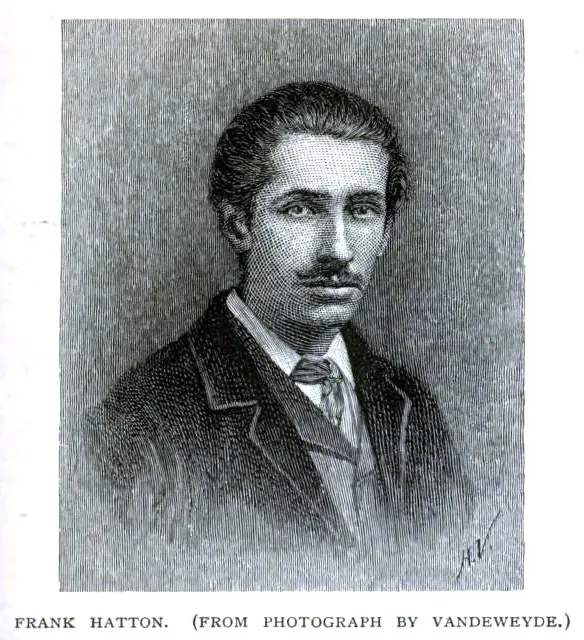
2.Frank Hatton

5 European explorers and their horrific deaths in 19th century Borneo

Who was he?

Born in 1861, Frank Hatton was an English geologist and explorer.

He joined the British North Borneo Company as a mineral explorer.

His job in British North Borneo (now Sabah) was to investigate the mineral resources in the country.

During his journey, Hatton became the first White man that ever made contact with some of the local tribes such as the Dusun.

How did he die?

Hatton died in 1883 due to accidental shooting from his own gun.

It is believed that his Winchester rifle got tangled in jungle creepers, went off and shot him in the chest.

His last words were in Malay saying to his servant Odeen, “Odeen, Odeen mati saya!” (Odeen, Odeen I am dead!) while resting his head on his servant’s shoulder.

Hatton’s last expedition was to find himself an elephant and acquire its tusks.

If he was to succeed in doing so, Hatton might have been the first European hunter to do so in North Borneo back then.

Read more about Frank Hatton here.

3.Franz Witti

5 European explorers and their horrific deaths in 19th century Borneo

Who was he?

He was a former navy officer in the Austro-Hungarian Empire and one of the first few Europeans to explore the northern part of Borneo.

Witti was hired by the British North Borneo Company in 1877 to make a survey of the natural resources in the area.

But before that he already conducted several surveys on his own.

Witti was also known to be the first person who discovered oil about 26km outside of present-day Kudat town in Sabah.

How did he die?

Witti got caught between a tribal feud of two different Murut groups.

During his last expedition which started in March 1882, Witti arrived in Limbawan somewhere near Keningau.

The local Murut chief named Jeludin warned him and his party not to travel to Peluan because there was a feud between Jeludin’s group of Nabai and Peluan.

However, Witti continued his journey and arrived in a village.

There, his group was ambushed by some hundreds of headhunters reportedly from the Murut Peluan group.

The Murut Peluan group attacked Witti and his party because they were friendly with their enemy, from the Murut Nabai group.

Some reports said that he was killed by a spear while others claimed it was a blowpipe that took his life.

Witti didn’t die without a fight as he killed two men using his revolver.

Read more about Franz Witti here.

4.James Motley

Who was he?

Had James Motley lived longer, it is arguable that he might have been comparable to his near contemporary in Borneo, Alfred Russell Wallace.

Born in 1822, Motley first came to Labuan in 1849 to pioneer coal mining for the Eastern Archipelago Company.

There, he did not have a good relationship with fellow naturalist Hugh Low at that time.

He then left Labuan and spent some time exploring the coast of Sumatra until he found his way in Banjarmasin in the south eastern part of Borneo.

Motley is credited with making the first list of Borneo birds and had collected over 2000 plants in Borneo.

How did he die?

Motley, his wife, two daughters and son were among the 100 Europeans killed during the Banjarmasin War.

The war was a power struggle between Sultan Hidayatullah II of Banjar and the illegitimate grandson of the former sultan Tamjied Illah.

During the war, all the Europeans – including the missionaries – were killed by rebels.

Prior to the massacre, on April 18, 1859, Motley had actually written a letter to his father on the Isle of Man assuring him that there was no need to worry.

A mere 12 days later, Motley and his family were found dead.

Read more about James Motley here.

5 European explorers and their horrific deaths in 19th century Borneo
W.A van Rees’ illustration of Banjarmasin War in 1865. Photo credit: Public Domain/Copyright Expired.

5.Georg Müller

Who was he?

Born in 1790, Georg Müller was a German-Dutch engineering officer who served in the French army during the Napoleonic Wars.

After the Battle of Waterloo, Müller became a civil servant under the Dutch Indies.

As part of his job, he represented the Dutch government to make official contact with the sultans of Borneo’s east coast.

How did he die?

The circumstances surrounding his death remain unconfirmed to this day.

In 1825, he visited the Sultan of Kutai requesting permission to explore the interior part of Borneo.

The sultan was reluctant to give his permission since the area was beyond his territories.

Nonetheless, Müller went up the Mahakam river with a dozen Javanese soldiers.

From here, the details of what happened get blurry.

It is understood that he managed to cross the watershed into the Kapuas basin.

He was killed possibly around mid-November, 1825 somewhere on the Bungan river, at the Bakang rapid.

The general understanding is that Müller and his party were killed by the local Dayak group.

As for which specific group, Dutch explorer Anton Willem Nieuwenheis believed that the Pnihing was responsible for Müller’s death. The Pnihing or Punan Aoheng of East Kalimantan belongs to the Punan Bah ethnic group.

The Müller Mountains, a mountain range in Central Borneo which extends along the northern border of Kalimantan were named after him.

The mountains are the source of the Kapuas watershed where Müller became the first European to visit the area.

James Erskine Murray and his tragic death in Borneo

Inspired by James Brooke’s success in founding the kingdom of Sarawak in 1841, another British adventurer James Erskine Murray wanted to establish his own fiefdom too.

While Murray might share the same first name and nationality with Brooke, he did not share the same fate with first White Rajah of Sarawak.

In his pursue to achieve his dream, Murray found himself dead in the hands of the locals and buried at sea off the coast of Borneo, thousands of miles from home.

So what went wrong?

James Erskine Murray and his journey to Borneo

Born in 1810, Murray was a lawyer and the author of a travel book on the Iberian Peninsula.

In 1841, he took his family including his wife, two sons and two daughters to Port Phillip, Australia.

Then in early 1843, he left Port Philip and headed to Hong Kong on a ship named Warlock.

In Hong Kong, he sold Warlock and bought a 90-tonne schooner Young Queen and a 200-tonne brig Anna.

After hiring enough crew, the two vessels set sail from Hong Kong on Nov 9, 1943.

James Erskine Murray and his tragic death in Borneo
A schooner. Image by Pixabay.com

James Erskine Murray at Tenggarong

A fortnight later, they arrived off the Sambas river in western Borneo. The Dutch did not think too much about it.

They spent the Christmas season in Banjarmasin.

By early February 1844, the expedition arrived at the mouth of Mahakam river.

The river is the most important river in southeast Borneo.

Murray’s plan was to visit Tenggarong, the capital city of Sultanate of Kutai which was located in the upper river of Mahakam.

When he arrived at Tenggarong, Murray expressed his desire to trade with Sultan Muhammad Salehuddin Aliuddin.

The sultan agreed but said he must consult his court of datu first.

Looking at how agreeable the sultan was, Murray proposed to the sultan should present him with a large tract of land for an independent settlement so that he himself or some other Englishman be allowed to reside at Tenggarong to protect any of his fellow countrymen who might come to trade

For his own record, he wrote that he had tried by all possible means to gain the friendship of the people so that “a vast field for English enterprise and manufactures” might be opened up in this part of Borneo.

The sultan declined his proposal politely.

While Murray and the Sultan were going back and forth with their proposals, Chinese traders came alongside Murray’s two ships.

The British learned from the Chinese that some Europeans – probably Englishmen – were being held prisoner in Kutai.

They were most probably captured when the sultan pirated an English ship recently.

Murray sent his men to investigate but the local people showed up and warned them away before they could find anything.

Meanwhile, tension was rising between Murray and the sultan with guns being stationed within a few hundred yards of the ships and many armed men began to assemble near the palace.

B.R. Pearn wrote in his paper “Erskine Murray’s Fatal Adventure in Borneo 1843-44” that Murray considered several solutions to get himself out of the sticky situation. In the end, he chose to withdraw but not without some extreme demands.

“The solution, in his view, was to obtain hostages from the Sultan to ensure a safe withdrawal downstream. He must also, as a matter of duty, seek the release of the European prisoners. He wanted as well recompense for the losses incurred through the treatment the expedition had received, probably meaning the lose imposed by the unprofitable trip to Tenggarong. He therefore proposed to address the Sultan, making these demands and saying that if the hostages were not sent aboard he would open fire.”

The battle between James Erskine Murray and Sultan of Kutai

On the morning of Feb 16, Murray sent the letter to the Sultan demanding that the hostages should be the prime minister, the Shahbandar (port officer) and the secretary.

Along with the European prisoners, these men should be sent aboard Murray’s ships within two hours.

The letter was sent to the palace at 8.30am. By 11 o’clock, there was no reply from the palace.

Murray then proceeded to fire a shot over the sultan’s palace.

Immediately, the batteries on shore and the war boats which had been hiding not far from the ships fired back.

The two ships began to retreat downstream after suffering damage and casualties.

As they made their way downstream, about 50 war boats pursued them.

Down the river, several hidden batteries opened fire on the two vessels.

The death of James Erskine Murray

The battle continued throughout afternoon.

At about 6pm as the sky started to get dark, the two vessels were now lashed together.

While the fires continued to exchange, men from both sides began to feel tired.

Murray himself then took over one of the guns and start to fire, while doing so he was fatally shot.

A bullet stuck him in the left breast and before he died, his last words were “My God”.

Besides Murray, two other men were killed and five other were wounded during the fight.

After nearly thirty-six hours of violence of battle, the locals abandoned their pursuit and the two ships made their escape.

Murray was buried at sea on Feb 18, 1844.

The aftermath

According to Pearn, Murray’s disaster evoked little sympathy from his contemporaries in Borneo waters.

Many criticised him for his “imprudence and unguarded conduct” which “brought upon himself the attack.”

Pearn stated, “It is evident that Murray acted on inadequate information and so was led to visit particularly dangerous area. His ignorance of local conditions thus caused him to commit himself to very unfriendly country.”

Murray’s tragic fate had an unexpected effect. The incident made the Dutch cautious over British presence in Kalimantan.

By 1845, the long-reigned Sultan Muhammad Salehuddin was obliged to sign a treaty with the Dutch, acknowledging their overall sovereignty over Kutai.

A year later, the first Dutch Resident was appointed for Eastern Borneo covering the Kutai region.

In 1883, the Sultan of Kutai formally conceded the absorption of his realm into the Dutch East Indies.

Alexander Hare, the first ‘White Rajah’ in Borneo

James Brooke might be widely known as the first ‘White Rajah’ of Sarawak. However, did you know that he was not the first man to be known as the first ‘White Rajah’ in Borneo?

About 30 years before Brooke established his dynasty in Sarawak, British merchant and adventurer Alexander Hare founded an independent fiefdom in the south of Borneo called Maluka.

It was located around the Maluka river, southeast Banjarmasin on the Borneo island.

With the title of Rajah of Maluka, Hare’s kingdom even had a flag, coinage and custom duties.

Alexander Hare, the Merchant

Born in 1775 in London, Hare was the son of a watchmaker.

He joined a trading company in Portugal around 1800 and moved to Calcutta, India.

In 1807, he settled as a merchant in Malacca. During his stay in Malacca, Hare made acquaintance with Stamford Raffles of the British East India Company (EIC).

From 1811 till 1816, the Dutch briefly passed the control over Dutch Indies to Britain with Raffles as the newly appointed Lieutenant-Governor of Java.

Raffles, in turn appointed Hare as the Resident of Banjarmasin and Commissioner of the Islands of Borneo.

Alexander Hare, the first ‘White Rajah’ in Borneo
Indiae Orientalis, 17th century map of Southeast Asia. Credit: Public Domain.

Alexander Hare, the Rajah of Maluka

As for Hare, he was already familiar with Banjarmasin as he visited the place as a merchant.

On behalf of EIC, Hare arrived in Banjarmasin in 1812 to negotiate a treaty with the Sultan.

Somehow during the negotiation, the Sultan granted Hare a present.

According to Tim Hannigan in his book Raffles and the British Invasion of Java, a resident was not supposed to receive any kind of gift from a king.

But Hare accepted a gift from the Sultan of Banjarmasin – 1,400 square miles of territory, six times the size of Singapore.

He received it not as an accession to British domains but as a personal fiefdom in his own name.

By right, Raffles should have demanded Hares return the territory to the Sultan.

Instead, Raffles developed an even closer relationship with Hare as he hoped that an English fiefdom in the south of Borneo might provide a strong British foundation against the Dutch one day.

Hannigan stated, “The land that Alexander Hare ruled was swampy morass. It never had many native inhabitants and Hare’s habits seem to have scared off the last of the locals as soon as he moved in.”

Alexander Hare and his harem

So Hare was in need of ‘subjects’ in order his kingdom to flourish.

He turned to Raffles asking for ‘people’. Raffles being a good friend, provided Hare the people he needed.

“In early 1813, Raffles had signed an order that all convicts could legitimately be sentenced to transportation in Java were to be shipped to Banjarmasin for Alexander Hare to do with them as he saw fit. Hare even received a subsidy of 25 rupees a head for every criminal he received,” Hannigan stated.

Although Hare minted his own coins, he didn’t pay a single cent to his labourers, making them nothing more than unpaid slaves.

On top of the male convicts that were sent to Maluka, Hare demanded women so that he could breed more settlers.

He preferred women “of loose morals”, he said.

And again Raffles sent ‘women of loose morals’ to Hare. They were homeless women on the streets of Batavia or women who were caught for petty theft.

As it turned out, the women’s first duty was to satisfy the huge sexual appetite of the ‘White Rajah’.

Today, a handful of Indonesian web portals today refer to him as the man who owned a harem in Banjarmasin.

Alexander Hare and the Banjarmasin Enormity

Author Ferdinand Mount in his book The Tears of the Rajas: Mutiny, Money and Marriage in India 1805-1905 called Hare ‘the dissolute wanderer’ who ‘might have stumbled out of a Conrad novel’.

Mount added, “He was a Lord Jim without the good intentions.”

Lord Jim is a character in Joseph Conrad’s 1900 novel. The novel was inspired by English mariner Austin Podmore Williams and Sarawak’s first rajah, James Brooke.

Unlike Brooke, Hare’s dream of an independent state started to crash after the signing of the Anglo-Dutch Treaty of 1814.

After rounds of negotiations between EIC and the Dutch, Hare was at first allowed to keep his little kingdom in Banjarmasin.

However, Hare reportedly antagonised the Dutch. They believed that Hare was planning to use Maluka to enhance British intrusions in the region.

In the end, the Dutch government declared that Hare had no legal right in Borneo and the Rajah of Maluka was no longer a king.

Mount pointed out, “When Hare was finally kicked out by the returning Dutch, they forced him to total up the number of his wretched slaves. There were 907 men, 462 women and 123 children crouching in his filthy huts.”

These numbers did not include the possibly hundreds of others who died or were lucky to have fled into the jungle.

Making another reference to Conrad’s work, Mount stated, “If Hare had not yet plunged as deep into evil as Conrad’s Mr Kurtz, it was only because he did not stay there long enough.”

Kurtz is a character in Conrad’s 1899 novella Heart of Darkness. He is an ivory trader and commander of a trading post in Africa. The book was inspired by Congo Free State, a territory personally owned by Belgium’s King Leopold II from 1885 to 1908. It is also known for its brutal history; losing up to 50 per cent of its population due to forced labour system.

Hare’s four-year reign as the first White Rajah in Borneo came to be known to Dutch historians as ‘De Bandjermasinche Afschuwelijkheid’ or ‘The Banjarmasin Enormity’.

Life after Maluka

After being kicked out of Banjarmasin, Hare drifted around the archipelago bringing along some of his slaves and women while trying to get back to his properties in Java.

However, the Dutch banned him from entering the island. He then shipped around and found himself in Cape Town, South Africa.

According to Hannigan, what Hare really wanted was a desert island on which to live out his dreams of debauched despotism undisturbed.

Then in 1826, he brought his household to an uninhabited coral atolls called the Cocos Islands.

Located a thousand miles west of Java in the middle of the Indian Ocean, Hare first found out about the place from one of his former employees John Clunies-Ross.

Clunies-Ross eventually also moved to Cocos Islands bringing his family and workers.

The two did not see eye to eye with each other.

After five years in Cocos Islands, Hare left again and now headed to Bengkulu.

Some reports stated that most of his slaves left Hare to join Clunies-Ross, while others said it was because Hare’s money was dwindling and he could not afford to bring everyone to Bengkulu.

Either way, the former Rajah of Maluku died in Bengkulu in 1835 after falling off his horse.

Reportedly, his remaining estate went to a woman named Dishta – a dancing girl whom Hare picked up from Calcutta.

1 5 6 7 8 9 36