When Merinsak (Hardship) won the film category at Starbucks Malaysia’s Kopi Creator Kolektif (KCK) 2026, it marked an important milestone for Sarawakian filmmaker Clayvert Unji.
Organised by Starbucks Malaysia to showcase emerging creative talent, the programme recognised the film teaser Merinsak for its heartfelt portrayal of a young Sarawakian determined to risk everything to return home for Gawai. For Clayvert, founder of Tanahliat Studios, the recognition was less the culmination of a career than an affirmation that he was on the right path.
Anyone discovering his work through Merinsak will soon realise that the project’s central themes did not emerge overnight.
Searching for Belonging
Long before Merinsak, Clayvert had already begun exploring migration, identity and belonging – subjects rooted as much in his own experiences as in those of the people around him.
Growing up in Bintulu after spending part of his childhood in Miri, he describes his childhood as much like that of many other young Sarawakians.
“I would say my childhood was pretty normal; like most Sarawakian kids were. Mom was working in the government sector, dad works in oil and gas, we had our weekend barbecues, family trips on the road, visiting other towns nearby, and two pet dogs that I love and cherish dearly.”
Although academically driven as a child, by secondary school he found himself increasingly drawn to creative pursuits – debate, theatre, poetry, broadcasting and youth programmes. While many of his classmates focused on academics, he immersed himself in activities that allowed him to tell stories, speak publicly and work with others.
Not everyone understood those choices. As his grades slipped, he recalls being sidelined and criticised by friends and family. The experience planted a desire to look beyond his small-town surroundings, searching for a place where his creative interests would be appreciated.
“I knew that somewhere out there, I would be valued. I would say that looking for the sense of belonging, the constant searching of what home means, that’s what inspires most of my stories, because even now, I am still looking for a place where I could call home.”
While studying IT in Kuching, Clayvert would spend much of the 2019 What About Kuching (WAK) festival attending talks, performances and exhibitions instead of thinking about programming. One event, however, would change the direction of his life.
“It was a poetry recital at a cafe right across St. Mary Secondary School Kuching that made me question what I actually wanted to do with my life. I was surrounded by so many creative people, from all forms and walks of life and career that I never knew existed, or possible. There, I decided to research what I actually wanted to do in life, and what I was actually passionate about.”
Within months, he made the difficult decision to leave IT behind, despite having no clear roadmap ahead.
“I was scared and afraid of what I didn’t know, because nobody in my family or friends ever stepped foot into a creative line of career. I simply had no one to look up to, and no sense of direction.”
He would enrol in a Diploma in Mass Communication in Shah Alam, choosing a course that exposed him to writing, animation, filmmaking and digital media before eventually continuing his film studies at Multimedia University (MMU).
“For the first time in my life, I actually enjoyed what I was learning. For two years, I was hyper focused on studying and gaining more knowledge from whatever the lecturer could teach me, and being open to unlearning and deconstructing whatever assumptions and prejudice I had when I came into the course.”
Finding a voice through film
Another encounter at MMU would further shape his direction.
Filmmaker and lecturer Zan Azlee screened the documentary Grey Gardens during one of his classes. While many of his classmates struggled to stay engaged, Clayvert found himself captivated. More importantly, he found a mentor willing to answer his questions about filmmaking, documentaries and storytelling.
“Mr. Zan Azlee opened up my views, my thoughts, and my mind when it comes to the world of filmmaking. He is the first person to have encouraged me to continue making films after university.”
His experience with Zan Azlee reinforced his decision to pursue filmmaking professionally – a medium that brought together his love for storytelling, narrative writing and visual arts.
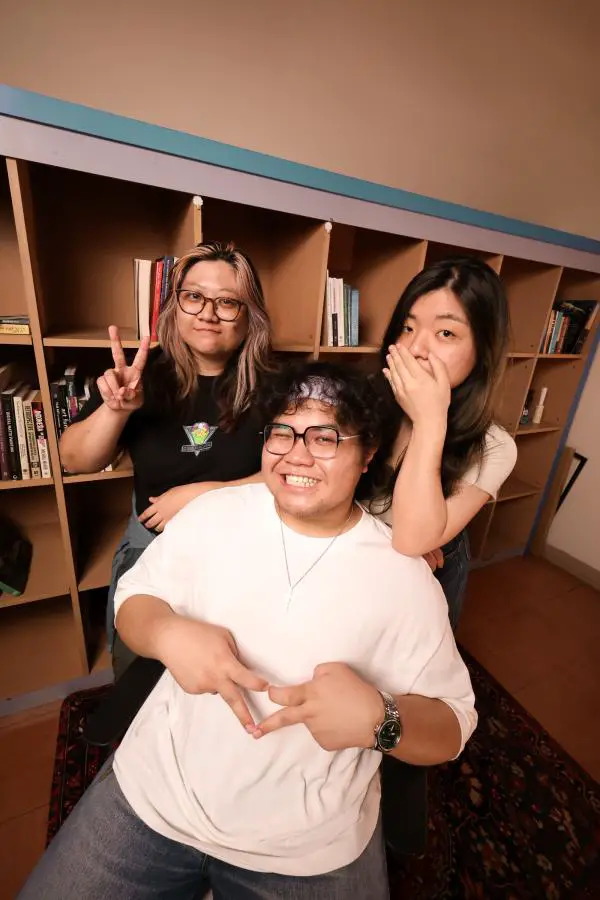
Tanahliat Studios began during Clayvert’s first year at MMU. As students were asked to create production house names for their films, he chose Tanahliat Studios as a play on his nickname, Clay. Although he expected it to exist only for the assignment, the name endured, becoming the banner under which he would continue making films.
Stories that lead home
His first short film, Pulai, remains especially personal. It was, he says, one of the few films in which an anak perantauan like himself could recognise his own experiences.
Released in 2023, Pulai follows someone who leaves home for the city, only to find that distance complicates rather than resolves their relationship with the place they left behind. As they juggle expectations and responsibilities from afar, the film asks a question that Clayvert himself was grappling with at the time: what does home mean when you no longer feel entirely part of it?
“It was a very vulnerable time for me, as I questioned what home is and what home meant. I have been jumping places trying to find my voice and reasoning, and being away from home, I feel more like a visitor than a resident. It feels surreal.”
The response at its screening confirmed he was not alone. Audience members from different parts of Malaysia – and beyond – who had left home to study or work recognised something of themselves in the story.
“It definitely became my aspiration to make more films that speak about our experiences.”
His next short film, Anak Jantan, explored similar questions from a different perspective.
Inspired by renewed discussions surrounding Malaysia’s National Service Training Programme (PLKN), the film imagines the friendships, anxieties and shared experiences that emerge when young people are brought together in unfamiliar surroundings. Although different in setting, it continued his interest in how people navigate change, relationships and belonging.
By the time he worked on the teaser for Merinsak, those recurring themes had become central to Clayvert’s early body of work.
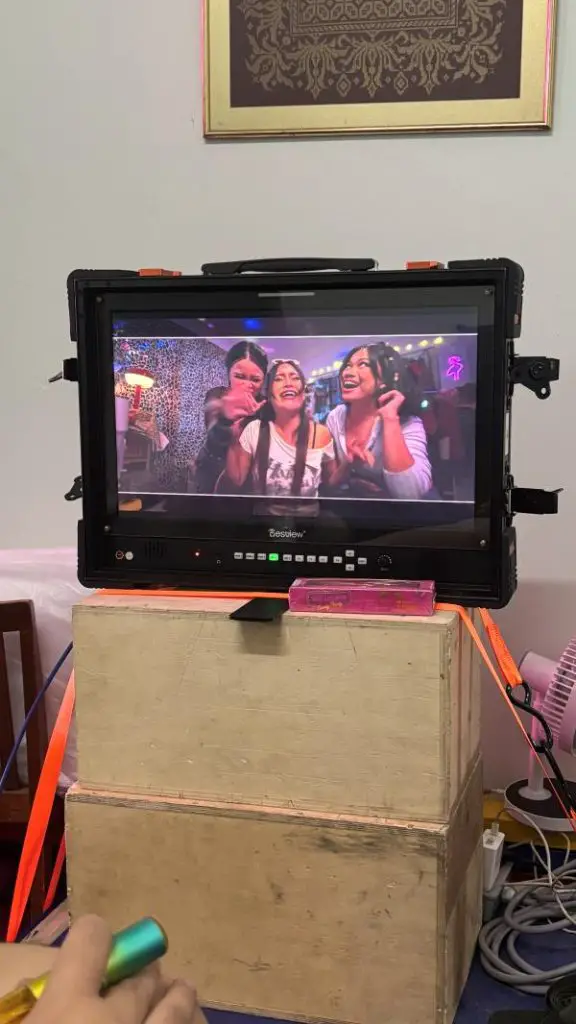
The short film follows Pam, a Sarawakian student studying in Kuala Lumpur who goes to extraordinary lengths to return home for Gawai. Clayvert describes Pam not as a single individual, but as a composite of people he knows – friends, cousins, his sister and even parts of himself – who have had to migrate for better opportunities.
Authenticity, however, extends beyond the story itself. While making Merinsak, Clayvert worked with collaborator Azura to ensure the dialogue reflected the characters’ backgrounds. Pam, for instance, grew up in Sibujaya while her family hails from Kapit, shaping both her accent and dialect.
“From there, we build the accent and dialect for her character, so it’s more realistic for the Iban speaking viewers. It might seem so minuscule, but representation still matters, and the correct representation is important.”
Telling East Malaysian Stories
That philosophy also shapes the stories he hopes to tell in the future.
Rather than limiting Iban representation to historical settings or familiar stereotypes, Clayvert wants to tell stories about contemporary Iban communities whose lives unfold across cities, campuses and workplaces. More broadly, he hopes to contribute stories about “my people back home”, introducing audiences across Malaysia to the diverse characters and experiences that shape East Malaysian life.
“Representation of our existence and livelihood is more important than ever. It is concerning how Sarawak has developed so much over the last few decades, and yet you still get the occasional ‘How do you live in a forest?’ question from people outside the state. I believe we need to have more visibility and awareness of a modern day metropolitan Iban representation on screen, not only to educate and spread awareness to the outside world; but also to have modern day Sarawakian relate to the characters, as it is their lived experience too!”
As a filmmaker at the beginning of his career, Clayvert is careful not to map out every step ahead. He hopes to one day direct more films in Sarawak and contribute to its growing creative community. For now, he is focused on learning, collaborating and gaining experience wherever opportunities arise.
That collaborative spirit also informs the advice he gives aspiring filmmakers from Borneo.
“The first step is always the hardest, but it is very important to take that first step, because that will open up more doors,” he says. “Connect with your communities, and always be open to make new connections, networks, and friends. At the end of the day, filmmaking is collaborative work, and it takes a village to create something spectacular.”
Asked what he hopes audiences will remember when they look back on his work years from now, Clayvert’s answer is not about awards or acclaim. Instead, he hopes his films leave behind two simple ideas: hope, and connection.
“Hope in a way where there is always hope for all of us in our journey,” he says. “Connected as in knowing that you are not alone in this journey, and my work is the reflection of it.”