Browse Category

Travel - Page 11

10 pit stops you can make when driving from Kuching to Bintulu

Driving from Kuching to Bintulu takes about nine to 10 hours depending on your speed and the road conditions.

Although the scenery from Kuching to Bintulu may not be as breathtaking compared to the road from Kota Kinabalu to Ranau or Tambunan, there are still a few attractions along the way.

The journey can be exhausting, so you need to stop few times along the way to refuel, refresh yourself and refill your stomach.

Here 10 pit stops you can make when driving from Kuching to Bintulu:

1.Serian

After driving about 60km from Kuching, the first pit stop you can make is at Serian town. There is a petrol station, public toilet and lots of eateries.

You should also have a walk through the local wet market to buy some jungle produce, vegetables and even handicraft.

10 pit stops you can make when driving from Kuching to Bintulu
One of the famous hotspots in Serian, Ranchan waterfall.
2.Balai Ringin

If you are planning to skip Serian, you can drive another 30km to reach Balai Ringin.

Here, the public toilet is relatively clean and there is a small market selling vegetables and fruits in the morning. In the evening, there are stalls selling traditional cakes.

10 pit stops you can make when driving from Kuching to Bintulu
The public toilet at Balai Ringin.
3.Lachau

Lachau is one of the famous pit stops along the Kuching-Sri Aman route. It is famous as a selling hub for preserved fish.

Lachau is usually packed during breakfast and lunch times so parking might be a little bit difficult. This slowly growing town is about 50 minutes away from Balai Ringin.

10 pit stops you can make when driving from Kuching to Bintulu
Buy some preserved fish at Lachau market.
4.Sri Aman Junction

Before you make a right turn into Kuching-Bintulu route, another well-known pit stop is at the Sri Aman junction. There is a food court serving Malay and Chinese cuisine, a grocery store and a public toilet.

Here you can also find traditional cakes and fruits.

5.Mid-Layar Resting Center

After leaving Sri Aman, drive another one hour to reach Mid-Layar Resting Centre.

If you have the time, you can a make a stop at Engkilili town which is about 6km from the main road or you can save that town for another trip.

10 pit stops you can make when driving from Kuching to Bintulu
You can make swing by at small town of Engkilili to visit this mythical rock called Batu Nabau.

At Mid-Layar Resting Center is the most decorated public toilet in Sarawak. So even if you do not need a toilet break, it is still worth making a pit stop here.

The toilet is decorated with fake flowers, posters and funny Malay quotes and reminders. There are photo booths right outside the toilet to make your visit an Insta-worthy moment.

Other public amenities here are the surau, grocery store, food court and a petrol station.

10 pit stops you can make when driving from Kuching to Bintulu
The most decorated public toilet in Sarawak that comes with a photo booth at its doorstep.
10 pit stops you can make when driving from Kuching to Bintulu
Mid-Layar Resting Center near Betong, Sarawak, one of the must-stop pit stop from Kuching to Bintulu.
6.Jakar

Jakar can be considered the middle part of your journey from Kuching to Bintulu. Thus, it makes the famous pit stop to refuel. The public toilet at the petrol station is small but considerably clean.

This famous stopping point is also known for its prawn noodle at Peking Restaurant.

It is cooked in Foochow style with dark broth made of soy sauce. Additionally, the whole area makes a perfect place for a caffeine fix. This is because most of the eateries serve coffee using Jakar’s very own java beans.

10 pit stops you can make when driving from Kuching to Bintulu
Stop by at Peking Restaurant, Jakar and have a bowl of prawn noodle.
7.Sibu

From Jakar, there are two ways to reach Sibu town; it’s either using the Lanang or Durin bridge.
Turn to Waze or Google navigation to decide your route.

Making a pit stop at Sibu would take a lot of time from your journey because of the traffic jam heading to the town centre.

However if it is during dabai (Sarawak black olive) season, a pit stop at this Swan town is definitely a must.
Sibu is famous for the best quality with the most reasonable price for dabai in Sarawak.

8.Stapang

From Sibu drive another 46km to reach the small town of Stapang.

There is not much going on at this pit stop although you will find a market, public toilet and a petrol kiosk. The town is like most small towns in rural Sarawak where it becomes quiet after lunch time.

9.Restaurant Impian Selangau

This halal restaurant is famous among bus drivers so it is hard to miss with rows of buses parked outside.
Located at Selangau-Mukah junction, it is another busy pit stop along the Kuching-Bintulu road.The restaurant is open 24 hours and there is a grocery store, a free entry public toilet and a surau.

10.Tatau

About 55km before reaching Bintulu, the final pit stop you can make is at Tatau town.

If you make a visit to its market, you might find some local traders selling tuak (Iban rice wine). Why not buy a bottle to celebrate your long journey once you arrive in Bintulu?

5 accessible mountain peaks to conquer near Kuching

For climbers living or visiting Kuching, there are five accessible mountain peaks to conquer here.

Each mountain has its own charm and difficulties as well as legends and stories.

But all of them offer the best of what Sarawak has; rich biodiversity and luscious greenery.

If you are making a list of mountain peaks to climb, perhaps you can start from this list:

1.Mount Santubong
5 accessible mountain peaks to conquer near Kuching
The view that greets you from the top of Mount Santubong.

Located about 35km from the capital of Sarawak, Mount Santubong has been gazetted as a national park.

It takes up to 4 hours to reach to the top and up to 3 hours to hike down depending on your stamina.

There are some steep climbs which come with rope ladders but the view that greets you is worth the sweat.

Unlike other Sarawak national parks, there is no entry fee to Santubong. So you can climb this mountain for free.

Read what else you can do at Santubong here.

2.Mount Serapi
5 accessible mountain peaks to conquer near Kuching
The view from the viewing platform of Mount Serapi.

Mount Serapi is located at Kubah National Park which is about 20km from Kuching city.

The best part of this climb is the path is tarred all the way to the top!

Read five reasons to climb Mount Serapi at least once in your life here.

3.Mount Gading
5 accessible mountain peaks to conquer near Kuching
You can swing by to this waterfall no 7 while on your way to the top of Mount Gading.

This mountain is a little bit far from Kuching, about 80km near Lundu town.

Sadly, this mountain does not offer much a view, just a sign implying, “Yay, you have arrived at the peak!”

The climb takes about 8 hours up and down so for a physical activity, why not give it a go.

While you are there, here are things to do at Gunung Gading National Park.

4.Mount Singai
5 accessible mountain peaks to conquer near Kuching
The view from Mount Singai.

If you are a practicing Catholic and a climber, this mount makes the top of the list you have to ascend near Kuching.

The faithfuls usually say the Stations of the Cross while visiting Mount Singai.

There is no Instagram-worthy view from the mountain peak but there is one viewing point three-quarter along the way.

Here are KajoMag’s six reasons for you to climb up this mountain.

5.Mount Jagoi

Located about 45 minutes from Kuching, Mount Jagoi is conserved by Jagoi Area Development Committee.

For beginners, this is the perfect mountain for you as it only takes one to two hours to reach to the top.

Once you are up there, the view of nearby mountains and Kampung Serasot.

Contact the committee to know more about Mount Jagoi.

10 things to know before driving from Kota Kinabalu to Kundasang for the first time

Even if you are visiting Sabah for the first time, driving from its capital Kota Kinabalu to Kundasang is possible to make on your own.

By making the journey yourself without hiring a cab or paying for a tour package, you can save more money and enjoy the trip at your own pace.

10 things to know before driving from Kota Kinabalu to Kundasang for the first time
Sunflowers growing at Kundasang.

Kundasang is the highest settlement in Malaysia, standing at an elevation of 1,900m.

It is the closest town to Mount Kinabalu, the highest peak in the country.

The average temperature at Kundasang is about 20oC so you might want to pack a jumper or sweatshirt.

Here are 10 things to know before starting your engine from Kota Kinabalu to Kundasang:

1. Take an early flight in

Try to arrive in Kota Kinabalu early in the morning. You can either rent a car at the airport or you can arrange your rental service to send the car there.

2. Have breakfast in Kota Kinabalu

Fill yourself up before starting your journey. Kota Kinabalu has plenty to offer when it comes to food, from Sang Nyuk Mee (pork noodle), Tuaran Mee(wok-fried handmade noodles) to Ngiu Chap (beef broth served with noodles).

10 things to know before driving from Kota Kinabalu to Kundasang for the first time
This is another choice for breakfast in Kota Kinabalu, Fook Yuen cafe is famous for its fresh baked breads.
3. Fill up your gas tank in Kota Kinabalu

After filling your belly, it’s time to fill the fuel up before your ride. It takes about two hours to drive from Kota Kinabalu to Kundasang.

What’s so fun about it, you ask? As the saying goes, “It’s not about the destination but about the journey itself.” So grab some snacks and plain water, and let the journey begin!

4. Stop by at Chanteek Borneo Indigenous Museum

About 45 minutes into your journey depending on the traffic, make the first stop at Chanteek Borneo Indigenous Museum.

Located at Telibong-Tamparuli road, the museum is Sabah’s first miniature doll gallery. Truly one-of-a-kind, the museum aims to replicate all the traditional costumes from 300 ethnicities and and sub-ethnicities in Borneo into a miniature size.

You can also show your support to the local community by shopping at its souvenir shop where 70% of the products are made by women of Borneo.

Read more about Chanteek Borneo Indigenous Museum here.

5. Have fun at rumah Terbalik and the 3D Wonders Museum

After learning more about indigenous cultures, now it’s time for a quirky and fun experience.

Rumah Terbalik (‘upside-down house’ in Malay) and 3D Museum offers visitors an experience to visit a house where everything is flipped upside down. From its furniture and cars, visitors can now know how it feels to walk on the ceiling.

There is a 3D Wonders Museum on the same compound where visitors can learn about biodiversity and the ecosystem.

6.Take a photo at Tamparuli bridge

Before going straight to Kundasang, make a short detour into Tamparuli town to visit its famous suspension bridge.

It is so famous that there is even a song about it.

7.Have a taste of Sinalau Bakas

During your journey from Kota Kinabalu to Kundasang, you will see signs selling ‘sinalau bakas’. The highway stretch from Tamparuli to Kundasang is reportedly most famous for this unique Kadazandusun dish.

Make a pit stop at any of these stalls and give sinalau bakas a try. It is basically smoked wild boar.

8.Shop at Nabalu for souvenir

After driving for about 40km from Tamparuli, make another pit stop at Nabalu town.

Apart from taking a toilet break, here you can take a view of the majestic Mount Kinabalu. You can also contribute to the local economy by purchasing some souvenirs and snacks at the local market.

9.Buy some Sabahan preserved food

If you are feeling a little gastronomically adventurous while at Nabalu, buy some of their preserved foods.

Read more about the top three Sabah fermented foods you must try before you die here.

10. Explore Kundasang
10 things to know before driving from Kota Kinabalu to Kundasang for the first time
Make a visit to Kundasang War Memorial.

From Nabalu, there are 20km left till you arrive Kundasang. There are so many things to do here even if you are not intending on climbing to the top of Mount Kinabalu.

Pay your respects to British and Australian soldiers who died in the Sandakan Prisoners of War camp at Kundasang War Memorial.

Hike or soak in at Poring Hot Spring or shop for snacks, fresh flowers, fruits and vegetables at Kundasang market. We suggest trying their keropok bayam (spinach crackers).

Experiencea  little bit of New Zealand by visiting the Desa Dairy Farm where the cows flourish and fresh milk as well as gelato are aplenty.

As for accommodations, there are plenty to choose from depending on your budget. However, the best is to pick a room with a window overlooking the peak of Mount Kinabalu. Waking up to the view of this mountain early in the morning is something one must experience at least once in their lifetime.

PHOTOS: Learn more about the Land Below the Wind at Sabah Museum

Art critic Jerry Saltz once said, “Don’t go to a museum with a destination. Museums are wormholes to other worlds. They are ecstasy machines.”

This is so true, especially if you are visiting Sabah Museum for the first time where each of the gallery inside the building will transport you to a different world.

Established in 1965, the museum was first housed at Gaya Street in Kota Kinabalu. It moved to its current location in 1984 at Bukit Istana Lama.

The main building of Sabah museum is designed after traditional Rungus Longhouse.

As you walk inside the museum, there is a huge 20m long whale skeleton to welcome you. There are galleries of ethnography, natural history, ceramics, history and archaeology.

Every gallery has so many things to see and learn about Sabah, from its rich culture to its abundant biodiversity.

There is a small section dedicating to ‘Budaya Mengayau’ or headhunting, which explains this old tradition of Sabah’s indigenous people.

For example, did you know that when headhunters came back from a raid, they were not allowed to bring the heads into the village?

So what did they do with the heads? For Kadazandusun of Tambunan and Tamparuli, they hung the head on a tree or bamboo and called it sogindai.

In other communities, the heads were kept in a temporary hut called sulap.

After several days or weeks, a Bobolian or Bobohizan (high priestess) would performed a ritual, after which the heads would be allowed to be brought into the village.

If history and ethnology are you preference, you could find yourself reading through each panel for hours.

Open daily from 9am to 5pm, the museum charges RM2 for Malaysians and RM15 for non-Malaysian.

Photography is allowed (no flash) for visitors to capture their experience.

Here are photos taken by KajoMag at Sabah Museum for visitors to learn more about the Land Below the Wind:

PHOTOS: Learn more about the Land Below the Wind at Sabah Museum
The traditional attire of a Lundayeh woman. This mannequin is wearing a white blouse and a black skirt, with alet birar (beaded headgear) and beret benging (beaded belt).
PHOTOS: Learn more about the Land Below the Wind at Sabah Museum
A Bajau rider and his decorated horse.
PHOTOS: Learn more about the Land Below the Wind at Sabah Museum
A winnowing mill used to separate rice from the chaff.
PHOTOS: Learn more about the Land Below the Wind at Sabah Museum
Bakul sabat was traditionally used to carry bridal gifts in the Kadazandusun community at Tambunan district.
PHOTOS: Learn more about the Land Below the Wind at Sabah Museum
Sabah Museum has a collection of woven items from different indigenous communities in the state. One of them is this Sosopilon, a backpack used by the Kadazandusun community in Tambunan.
PHOTOS: Learn more about the Land Below the Wind at Sabah Museum
This is an usunan. The Iranun nobility of Kota Belud used it to carry the groom to the bride’s house. it is also used to carry their dead.
PHOTOS: Learn more about the Land Below the Wind at Sabah Museum
This commemorative dinner set was made in conjunction with the coronation of Queen Elizabeth in 1953 and was used at Sabah governors’ residence.
PHOTOS: Learn more about the Land Below the Wind at Sabah Museum
Some of the items displayed at Sabah Museum are private items donated by generous members of the public such as this pith helmet.
PHOTOS: Learn more about the Land Below the Wind at Sabah Museum
The design of the main building of Sabah Museum is inspired by a Rungus longhouse.
PHOTOS: Learn more about the Land Below the Wind at Sabah Museum
A row of classic cars on display outside Sabah Museum.
PHOTOS: Learn more about the Land Below the Wind at Sabah Museum
A panel explaining the local plants used as traditional medicines in Sabah.
PHOTOS: Learn more about the Land Below the Wind at Sabah Museum
Some of the primates and mammals which can be found in Sabah.
PHOTOS: Learn more about the Land Below the Wind at Sabah Museum
A sun bear which is commonly found throughout Southeast Asia including Sabah.
PHOTOS: Learn more about the Land Below the Wind at Sabah Museum
The Sambar Deer of Sabah Museum.
PHOTOS: Learn more about the Land Below the Wind at Sabah Museum
A bay owl.
PHOTOS: Learn more about the Land Below the Wind at Sabah Museum
Clouded leopard.
PHOTOS: Learn more about the Land Below the Wind at Sabah Museum
Millipede.
PHOTOS: Learn more about the Land Below the Wind at Sabah Museum
A green turtle.
PHOTOS: Learn more about the Land Below the Wind at Sabah Museum
The different types of jars displayed at the Ceramic Gallery of Sabah Museum. These were used to store drinking water, rice food and also to make a local liquor called tapai.
PHOTOS: Learn more about the Land Below the Wind at Sabah Museum
Each of the ceramic ware has its own brief description allowing visitors to learn more about every artifact.
PHOTOS: Learn more about the Land Below the Wind at Sabah Museum
The ceramic collection at the Sabah Museum has different origins including China, Thailand, Vietnam, Cambodia, Japan and Europe. However, all of them were found in Sabah. It is believed that some of these ceramics were made as early as the 10th century.

Take in the view of Padas river from Fatt Choi Coffee Cabin

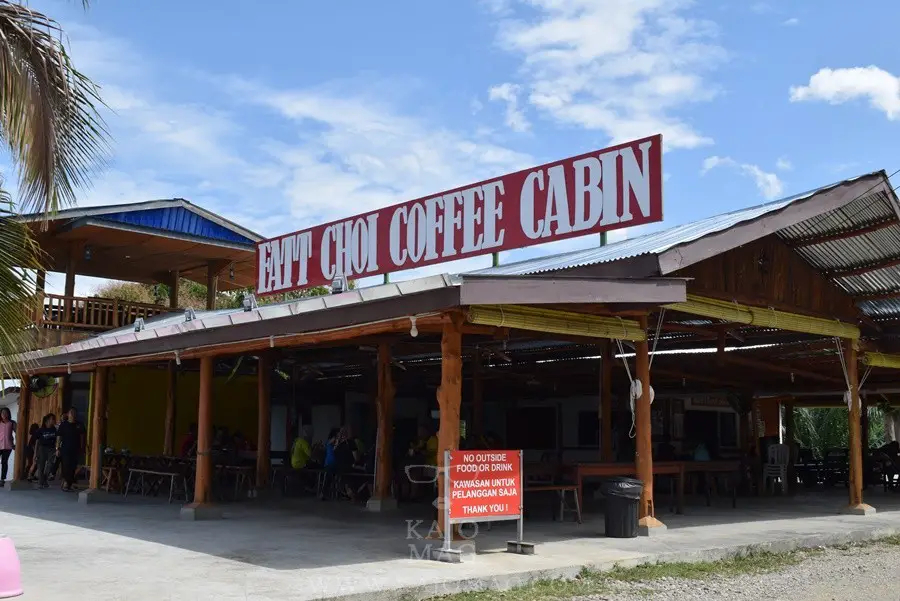
If you are looking for the perfect view of Padas river, look no further than Fatt Choi Coffee Cabin in Tenom, Sabah. Padas river which flows past Tenom from Long Pasia, south of Sabah, is famous for white water rafting.

The rafting route is 30km long, making it the longest rafting route in East Malaysia to date. It has also been recognised as one of the best and safest rapids in Southeast Asia.

Take in the view of Padas river from Fatt Choi Coffee Cabin
A view of Padas river from the highest viewing point of Fatt Choi Coffee Cabin.

No rafting, only Fatt Choi Coffee

At Fatt Choi Coffee Cabin, you may not  get the thrills of the Padas river but you can experience the beauty of its view.

Beside Yit Foh, Fatt Choi is one of the famous brands of Tenom coffee.

The coffee cabin is located not far from its factory at Jalan Tenom Lama which comes with affordable lodging, eatery and viewing platform.

Take in the view of Padas river from Fatt Choi Coffee Cabin
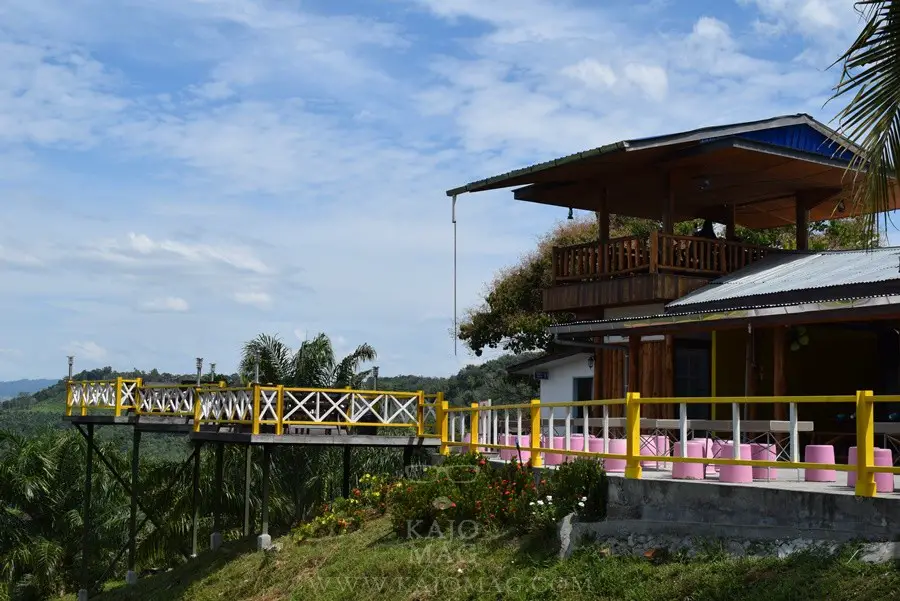
It is the highest place in town to have a drink of Tenom coffee.

It makes the perfect spot to hang out with friends, drinking a cup of local java while enjoying the view for Padas river.

The place might be too hot and humid for a visit during the noon and it is not air-conditioned but visitors can always cool themselves down with a cup of cold coffee.

Take in the view of Padas river from Fatt Choi Coffee Cabin
Visitors can stay, eat or just drink at Fatt Choi Coffee Cabin.

Established in 1987, this brand of Tenom coffee products include white coffee, cinnamon coffee, black coffee and many more.

The best part of Fatt Choi brand is it has a cafe located at Tenom town offering freshly brewed coffee.

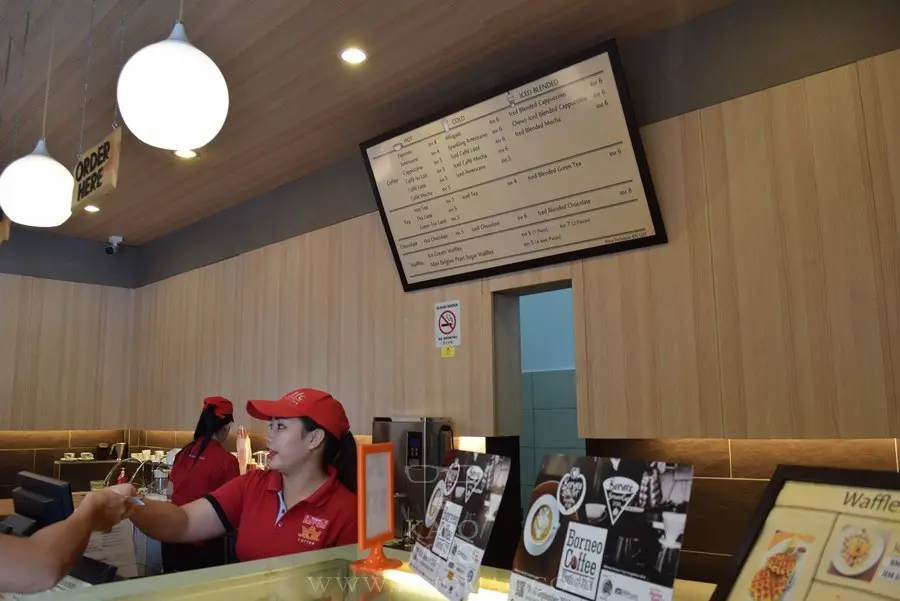
So if you are looking for westernised coffee drinks such as Americano, cappuccino, latte and mocha in Tenom, you can find them at TFC Coffee.

The cafe also serves cakes, waffles and sandwiches as well as cozy environment to relax.

Take in the view of Padas river from Fatt Choi Coffee Cabin
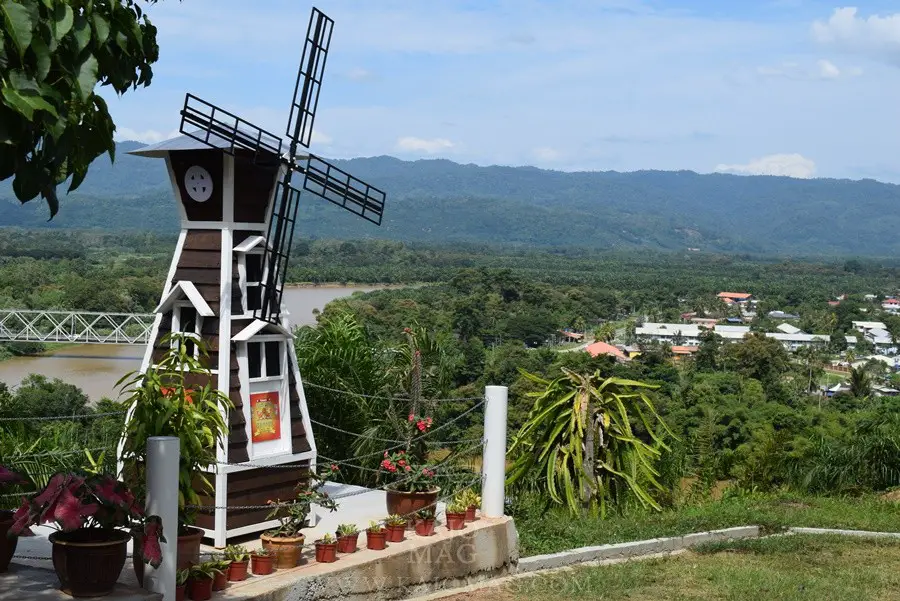
Here is an Instagram-worthy spot in Tenom, a miniature windmill with a view of Padas river at the back.
Take in the view of Padas river from Fatt Choi Coffee Cabin
Pick your type of coffee drinks at TFC coffee.
Take in the view of Padas river from Fatt Choi Coffee Cabin
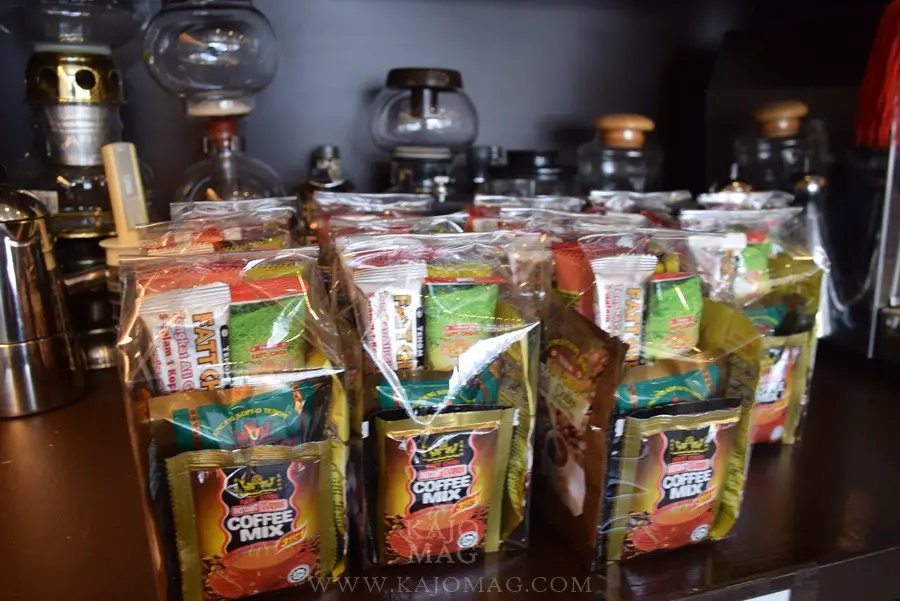
Visitors can also purchase Fatt Choi coffee products at TFC Coffee.


5 countries we want to visit after watching Korean dramas

Nowadays, more and more Korean dramas are being filmed in other countries.

Their production teams did an excellent job in looking for breathtaking locations that leave viewers wanting to be transported together with their favourite stars as well.

Here are five countries with scenic filming locations we want to visit after watching Korean dramas:

1.  Canada (Goblin)
5 countries we want to visit after watching Korean dramas
We’ve lost count how many times this building, the Chateau Frontenac, has appeared in the Goblin (2016). Credits: Pixabay.

Who can forget the scene in Goblin (2016) where Gong Yoo (Kim Shin) and Kim Go-eun (Ji Eun-tak) are walking in the park with maple leaves falling gracefully around them?

This particular scene was filmed at Parc Samuel-Hollande in Quebec, Canada.

After watching the goblin and his bride exploring Quebec city, we too want to shop for Christmas deco at La Boutique de Noel, sit at the green pasture of Parc du Bastion-de-la-Reine and stay a night at the Chateau Frontenac Hotel.

2. Slovenia (Black Knight)
5 countries we want to visit after watching Korean dramas
Remember the part in Black Knight when Shin Se-kyung’s character fell down the hill while taking a photo in front of this castle? We bet many viewers lost their minds the moment the camera zoomed in on Kim Rae-won’s expression with the glaring sunlight behind him while he comes to Shin’s rescue. Credits: Pixabay.

This is perhaps the most beautiful and picturesque country on this list.

After Dear My Friends (2016) and Black Knight (2017) were filmed in this country, reports showed that tourists -particularly from South Korea – had been flocking to this Central European country.

Can we blame them? While we would never be able to have Kim Rae-won drive us around Bled town and be our personal photographer like he did for Shin Se-kyung in Black Knight, we still want to follow in their footsteps and have an ice-cream in Piran, pose for a photo in front of Renaissance castle of Predjama and drink a cup of mulled wine in Ljubljana.

3. Macao (Boys over Flowers)
5 countries we want to visit after watching Korean dramas
St. Paul’s Ruins have starred in several Korean dramas including Boys over Flowers. Credits: Pixabay.

This Las Vegas of Asia is the filming location for many Korean dramas including Boys over Flowers, Neighbourhood Hero, Goong and Fated to Love You.

All of these dramas have inspired viewers to visit Macao’s tourist hotspots such as Senado Square, St. Paul’s Ruins and Coloane Island.

4. Hungary (Doctor Stranger)
5 countries we want to visit after watching Korean dramas
Walk on the footsteps of Lee Jong-suk by visiting this iconic landmark of Budapest, Chain Bridge. Credits: Pixabay

The architecture in Budapest, Hungary is insanely beautiful. Thus, it was no surprise Doctor Stranger (2014) chose this country as one of its filming locations.

In Doctor Stranger, Lee Jong-suk and Jin Se-yeon are riding a motorcycle in Budapest.

One of the iconic buildings you can spot in the background is the Hungarian National Gallery. It houses an extensive collection of Hungarian artworks since the 10th century.

5. Greece (Descendants of the Sun)
5 countries we want to visit after watching Korean dramas
This is perhaps the most famous shipwreck in Korean dramas, all thanks to the Song-Song couple. Credits: Pixabay.

Some parts of Descendants of the Sun was filmed in a fictional country called Uruk. Though Uruk doesn’t exist, the beautiful backgrounds actually do and they are found in Greece.

Remember the shipwreck where Song Joong-ki and Song Hye-kyo always had their romantic scenes? The shipwreck has been there at Navagio beach since 1982. It is a famous tourist destination so do not be surprised if you find yourself in a sea of tourists there.

Beside Navagio beach, the filming also took place in the Monastery of Panagia Skopiotissa, Gomati, Myrina and Arachova.

Kim Eun-sook wrote the scripts for Goblin and Descendants of the Sun. Read more about her award-winning dramas here. 

KajoMag picked Black Knight as one of the Korean dramas with a deeper meaning. Read more about other series that made the list. 

10 things you should know about the Bryde’s whale skeleton at Sabah Museum

When you step into the Sabah Museum, the first thing that greets you is a gigantic whale skeleton.

What type of whale is it? Where did they get it from? Are there alot of whale sightings off the coast of Sabah? Perhaps these are the questions that come to your mind as you look at this enormous skeleton.

10 things you should know about the Bryde’s whale skeleton at Sabah Museum
A closer look at the whale’s jaw bone.    

Here at KajoMag, we summarised 10 things you should know about the Bryde’s whale skeleton at Sabah Museum:

1. This whale was first found stranded on Dec 14, 2006.

On that day, a group of fishermen found this cetacean stranded near Kampung (village) Lok Urai, Gaya island around 11pm.

Within 12 hours after it was first spotted, a rescue mission was launched by teams from the Fisheries Department, Wildlife Department, Sabah Parks, Universiti Malaysia Sabah (UMS), NGOs and members of the public.

However, the tide was too low for the rescue team to pull the poor creature back to the ocean. Rescuers had to constantly pour seawater on its body to keep it hydrated.

2. The whale was back to the sea the next day.

By Dec 15 at 7.30pm, the team had succeeded in pulling the whale back into the sea. Nonetheless, the then Sabah Fishery Department director, Rayner Stuel Galid raised concerns that the whale might return to its stranding spot.

10 things you should know about the Bryde’s whale skeleton at Sabah Museum
A father pointing at the skeleton while his son looks on.
3. The marine mammal was found dead on Dec 17, 2006.

True enough, the animal was found dead near its stranding spot at Gaya Island. The initial plan was to bury it but there was no suitable location.

10 things you should know about the Bryde’s whale skeleton at Sabah Museum
A closer look at the whale’s backbone.
4. Its supposedly final resting place was decided.

The carcass was towed to Stomai Rock, somewhere between Pulau Tiga and Gaya Island. Then, it was anchored about 60 to 70m deep into the sea to allow it to decompose naturally.

5. The then Sabah chief minister wanted the whale to be preserved.

Later on Dec 19, then chief minister of Sabah, Musa Aman instructed the Fisheries Department to work together with Sabah Museum Department, Sabah Parks and UMS to conserve the whale’s bones.

6. The whale was back on land on Dec 20.

A team was deployed to bring back the carcass from where it was anchored. They put a giant fishing net to wrap the carcass so that the skeleton remained intact during the process.

10 things you should know about the Bryde’s whale skeleton at Sabah Museum
The 20m long skeleton attracts visitors the moment they stepped into the museum.
7. The ‘deboning’ process begins on Dec 21.

The tedious process of separating the bones from the carcass lasted a few days.

It took about 35 people to work round the clock on the carcass starting from its tail. They also dug three enormous holes at Fishery Station Menggatal to bury the whale’s flesh and organs.

8. The whale skeleton was handed to Sabah Museum on Christmas eve 2006.

The team officially handed the whale skeleton to Sabah Museum on Dec 24, just 10 days after it first found stranded.

10 things you should know about the Bryde’s whale skeleton at Sabah Museum
The whale skeleton takes up a huge space of Sabah Museum.
9. The identity of the whale is Bryde’s whale.

The whale was identified as Bryde’s whale (Balaenoptera edeni). It was 20.6m long and weighed around 22 to 26 tonnes.

The Kadazandusun people of Sabah call it luulumbo.

According to UMS researchers, approximately 20 species of marine mammals have been recorded in Sabah waters.

The state’s various ecosystems like its coral reefs, mangrove, estuaries and sea grass provides habitats and food resources for these animals, leading to a high number of species found in Sabah.

10. Sabah has the highest  number of whale stranding cases in Malaysia.

The Bryde’s whale at Sabah Museum was not the only stranded cetacean in the state.

In 2012, it was reported Sabah recorded the highest number of whale stranding cases as well as whale sightings compared to other states since the 1970s.

Additionally, Sabah also has the longest coastline in Malaysia. It is surrounded by the South China Sea on the west, Sulu Sea on the northeast and Celebes Sea on the southeast regions.

There are many factors that could contribute to whale stranding such as natural causes due to sickness or old age or military sonar.

However, the reason for this statistic in Sabah is still not scientifically known.

10 things you should know about the Bryde’s whale skeleton at Sabah Museum
The gigantic skeleton of Bryde’s whale.

It’s all about classic coffees and cute chalets at Yit Foh Factory, Tenom

The moment you step onto the grounds of Yit Foh Coffee Factory in Tenom, the smell of freshly roasted coffee immediately greets you.

Located about 170km from the Sabah capital of Kota Kinabalu, the town of Tenom is synonymous with coffee.

It’s all about classic coffees and cute chalets at Yit Foh Factory, Tenom
The town of Tenom is synonymous with coffee.

About Yit Foh Coffee Factory

Yit Foh Coffee Factory, also known as Yit Foh Tenom Coffee, is the oldest coffee manufacturer in Sabah.

Founded in 1960 by Yong Loong Vun, the factory still produces coffee grounds the traditional way by roasting the beans over a wood fire.

Visitors can visit the factory shop where you can look for various Yit Foh coffee products.

If you are a purist, you can purchase packages of coffee powder and make your own drinks.

But they also sell coffee sachets such as kopi O (black coffee with without sugar), kopi O 2 in 1 (black coffee with sugar), cafe latte 3 in 1 (coffee with sugar and creamer) and cafe latte 2 in 1 (coffee with creamer).

Other products are white coffee, cafe au lait, oat cereal, teh tarik kaw and three types of drip coffee; Americano coffee, Italiano and Java Mandheling.

It’s all about classic coffees and cute chalets at Yit Foh Factory, Tenom
Pick your choice of java.

When it comes to staying in Tenom town, however, there’s not much choice when it comes to accommodation.

But if you are willing to stay about five minutes outside the town, how about staying near a coffee factory at Yit Foh Coffee Cottage.

It has a longhouse style cabin, deluxe chalet and family hut and each room is named after a type of coffee beverage. How cute is that?

It’s all about classic coffees and cute chalets at Yit Foh Factory, Tenom
Do you want to stay in Kopi Susu or Mocha?
It’s all about classic coffees and cute chalets at Yit Foh Factory, Tenom
Imagine waking up in the morning from one of these cabins and immediately smelling the roasted fragrance of coffee.

Having a meal at Kafe Robusta

It’s all about classic coffees and cute chalets at Yit Foh Factory, Tenom
The outdoor sitting area of Kafe Robusta.

Even if you are not staying overnight, drop in on Kafe Robusta and have a meal.

They serve soto (chicken or beef soup), bakso (meatball served in soup with noodle), rojak (beef noodle in peanut gravy), laksa (spicy noodle soup) and other rice dishes at affordable prices.

Plus, you can order one of Yit Foh product to complement your meal.

If you are visiting Tenom for the first time, your visit to Sabah’s coffee capital is incomplete without a visit to the oldest coffee producer.

Take a ride to the past at Sabah Museum’s Railway Gallery

Before cars were the thing, transportation in Sabah – formerly known as North Borneo – relied heavily on trains.

In recognition of the historical significance of the railway system in Sabah, the Sabah State Museum opened up a gallery in 2017 dedicated to its locomotive industry.

Located in Sabah’s capital of Kota Kinabalu, the Railway Gallery offers a glimpse of the past through photographs and machines.

Take a ride to the past at Sabah Museum's Railway Gallery
Welcome to the Railway Gallery!

The history of Sabah Railways

In 1896, the British North Borneo Chartered Company introduced the first railway service in Sabah.

The first part of the construction was to the north heading to Beaufort at the bank of Padas river. Then, the track was extended to the south to Weston, about 100km from Kota Kinabalu.

After the Beaufort-Weston railway was completed in 1900, the construction continued from Beaufort to Jesselton (now Kota Kinabalu).

Take a ride to the past at Sabah Museum's Railway Gallery
How the train tickets looked like.

Around the same time, the construction of 48km Beaufort-Tenom railways started in 1903 and completed in 1905.

A year later, the Tenom-Melalap railway was completed.

Starting 1912, the railways worked as the main transportation for the country’s most important crop, rubber.
Due to high maintenance cost, the existence of road transportation and the failure of Weston town becoming a harbour, the Beaufort-Weston and Tenom-Melalap railways were forced to close in 1963 and 1970.

A few years later, the Tanjung Aru-Jesselton railway was also closed down.

Take a ride to the past at Sabah Museum's Railway Gallery
There were plenty of old photographs to browse through.

A walk through Sabah Railway Gallery

Visitors who make their way to Sabah State Museum must drop by its Railway Gallery located right behind the museum.

The gallery gives not only the historical timeline of the locomotive industry but also technical information of the old railway technology.

Take a ride to the past at Sabah Museum's Railway Gallery
You can sit at the passenger car and imagine it is early 1900s.

Putting aside the tonnes of typos, it was still fascinating to read through the descriptions on each panel.

The display of black and white photographs of now long gone railway stations and tracks give visitors a glimpse of how important this mode of transportation was back then.

There are plenty of things to see as well such as the tickets they used at the time, a weighing scale they used for parcels and telephones for station to station communication.

Plus, visitors can also sit and pose inside the passenger car imagining it’s the 1920s all over again.

If history or locomotives is your thing, the Sabah Railway Gallery is definitely a must-visit place in Kota Kinabalu.

For a real-life adventure, you can also take the North Borneo Railway which takes you from Tanjung Aru to Papar. Meanwhile, the Sabah State Railway – formerly the North Borneo Railway – still operates from Tanjung Aru to Tenom.


Top 3 Sabah fermented foods you must try before you die

Located in the northern part of Borneo island, the Malaysian state of Sabah has its own distinct cuisine different from other states in the country.

Thanks to its multiracial population just like its neighbouring state of Sarawak, Sabah offers various ingredients and style of food preparation.

One of the famous ways they have of preparing food is by fermenting with salt, a similar method to making pekasam (Malaysian fermented food).

When you take a walk through any of their local markets you will find fermented food sold in all sorts of different sizes.

Besides the local market, you can also find them at the roadside stalls along the road from Kota Kinabalu to Ranau or Keningau.

Top 3 Sabah fermented foods you must try before you die
Local sellers selling different kinds of Sabah preserved foods. The ones in red are pickled ‘tuhau’ while the ones in yellow are pickled ‘bambangan’.

If you are up for it, here are top 3 Sabah fermented foods you must try before you die. We warn you; they are not for the faint-hearted because of their strong smell and flavours.

1. Pickled Tuhau

https://www.youtube.com/watch?v=VmsM-7FEmp4

The least threatening of all three Sabah fermented foods is pickled tuhau. Tuhau is a type of wild ginger scientifically known as Etlingera coccinea.

The edible part of this ginger is the inner sheath of the shoot. Chop it up and mix it with chives, chilli peppers, salt, sugar and vinegar.

It is usually served as a side dish with hot rice. You can also whisk in some tuhau with eggs to make an omelette.

2. Pickeled bambangan

https://www.instagram.com/p/BlnEZz9nLyO/?utm_source=ig_web_copy_link

Bambangan (Mangnifera pajang) is an endemic fruit only found in Borneo. The fruit is considered a type of wild mango but unlike the common mango, it has thick brown skin.

It is usually harvested raw and cured with salt and chilies to make pickled bambangan. The locals enjoy it with plain white rice and fried fish.

3.Bosou

https://www.instagram.com/p/BSxdzk9j0SQ/?utm_source=ig_web_copy_link

Bosou is also called nonsom, sambaat, kinaraatan, gagau and tinamba in different Kadazandusun dialects. It is a preserved fish or meat made with biji kepayang in Malay (Pangium edule) or pangi in Dusun language. The most common main ingredient for bosou is river fish. Mix the fish together with rice, salt and pangi.

To spice it up a little bit, you can also add in pineapple or tuhau. It takes up five to seven days for it to be fully fermented. There are two ways to take bosou; you can have it as a condiment or cook it with onions and chilies.

1 9 10 11 12 13 15