Browse Category

Culture - Page 3

The Japanese Building of Kuching: What you need to know about this historical landmark

Do you know there is a Japanese building in Kuching?

When the Japanese forces first landed in Miri on Dec 16, 1941, they had successfully captured Kuching by Christmas day.

For over three years, the Japanese occupied Sarawak where the Imperial Forces introduced Japanisation, requiring the locals to learn Japanese language and customs.

Despite these efforts, only a few remnants of the Japanese occupation can still be seen to this day in Kuching.

One of them is Batu Lintang camp which was originally the British Indian Army barracks, while the other stands between India Street and Carpenter Street and was aptly named The Japanese Building.

The Japanese Building of Kuching: What you need to know about this historical landmark
Do you recognise it? The Japanese building is the only building built by the Imperial Army which exists to this day.

The Japanese Building, an administrative centre for Japanese forces

During World War II, Lieutenant General Marques Toshinari Maeda was elected the first commander of the Japanese forces for northern Borneo.

Initially, his headquarters were in Miri before he decided to move them to Kuching.

In Kuching, the Japanese used the Old Courthouse as their administrative centre. Then in 1941, they decided to build a building – The Japanese Building – to link the Old Courthouse and the Treasury Building.

The Treasury Building was built in 1929 purposefully for the offices of Treasury and Audit departments.

The Japanese Building of Kuching: What you need to know about this historical landmarkBefore this building existed, there was a road connecting Carpenter Street and Indian Street passing between the Old Courthouse and the Treasury Building.

The blood and sweat of Prisoners of War (POWs)

The Japanese Building was built with the blood and sweat of POWS who were interned at Batu Lintang Camp.

They had to walk 3 miles in the morning from the camp to the site and walk back again in the evening.

Besides building this administrative centre, POWs together with male civilian internees were also forced to work at Kuching harbour, 7th Mile landing ground and other sub-camps.

Most POWs were Brookes’ officers, officers from North Borneo, Royal Netherlands East Indies Army officers, British Indian Army personnel and Netherlands East Indies soldiers.

Meanwhile, the civilian internees were Roman Catholic priests and missionaries as well as British civilians.

The Japanese paid those who were part of the work party with “camp dollars”. There were also called “banana money” because the picture of banana trees printed on the notes.

Life after World War II
The Japanese Building of Kuching: What you need to know about this historical landmark
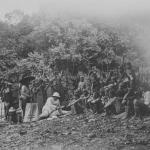
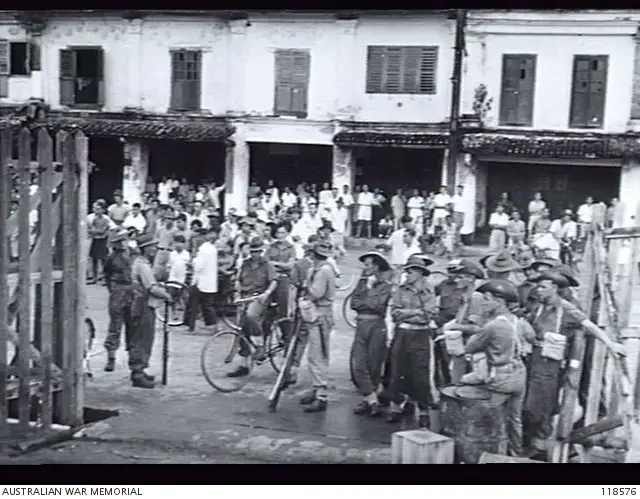
Photo taken in Kuching on 24 Sept, 1945-09-24. A party of Japanese arrived by barge at Kuching from Natoena Islands to surrender. They were disarmed and searched on the Borneo Wharf and later allowed to proceed upriver to Bau, the concentration area for all Japanese Prisoners of Wars (POWs). Australian troops and natives gatehred at wharf gate to watch the disarming and searching of Japanese POWs. Photographer Sergeant F. A. C. Burke. Courtesy of Australian War Memorial.

After the Japanese surrendered unconditionally on Aug 15, 1945, the building was first used as the court’s library.

Over the years, it has served different purposes by various parties. Although the inside of the building is inaccessible to the public on a daily basis, it still opens its doors occasionally.

Located awkwardly between two of Brooke’s buildings, the Japanese Building is the only construction built by the Japanese Army that still exists in Kuching.

The Japanese Building of Kuching: What you need to know about this historical landmark
The front alley of the Japanese Building.

Read more about Toshinari Maeda’s unfortunate fate here.

Albert Kwok, the courageous Kuchingite who led the Kinabalu Guerrillas during WWII

Although Albert Kwok was born in Kuching, Sarawak, the traces of his legacy lie 800km away in Kota Kinabalu, Sabah.

Described as “neat, clean shaven, a man of superabundant energy and made many friends” by Stephen R. Evans in his book Sabah (North Borneo) Under the Rising Sun Government, Kwok was the leader of Kinabalu Guerrillas, a group of resistance fighters during the Japanese occupation of Borneo.

Albert Kwok’s early life

Albert Kwok, the courageous Kuchingite who led the Kinabalu Guerrillas during WWII
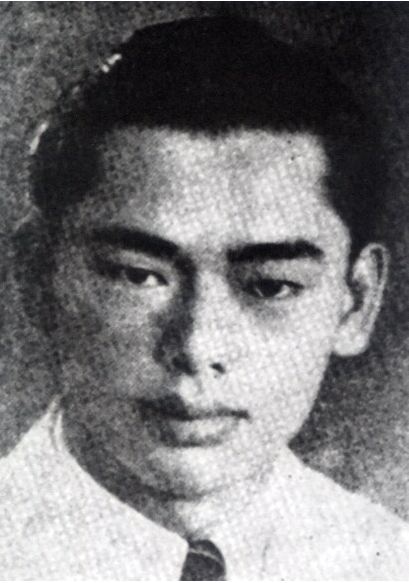
Albert Kwok’s portrait (top left) displayed together with the other freedom fighters at Sabah State Museum.

Born in Kuching in 1921 to a dentist father, Kwok was sent to China to study traditional Chinese medicine in the late 1930s.

He moved to Kota Kinabalu which was then known as Jesselton on May 15, 1941 where he lived with his sister and brother-in-law.

It is believed that Kwok’s mother, brother and his other sister were still living in Kuching during that time.

The birth of Kinabalu Guerrillas

When the Japanese force started its offence against Jesselton, the town was defended by only 650 men of the North Borneo Armed Constabulary.

By 9 Jan 1942, the whole town was occupied by the Japanese.

A month later, Kwok wanted to establish connections with the Allied movements particularly the United States Forces in the Philippines (USFIP).

USFIP was the only sole armed resistance movement in the region which had firearms.

He managed to make his way to Tawi-Tawi in the Philippines where he trained under the command of Filipino Lieutenant Colonel Alejandro Suarez.

A year later in May 1943, Kwok returned to Jesselton and tried to contact Overseas Chinese Defence Association (OCDA).

Then in June 1943, he was back in Philippines again where he was appointed Lieutenant on July 1 by the US Army.

Kwok returned to North Borneo again only with three pistols and a box of hand grenades.

With a limited supply of firearms, he started a resistance group on 21 Sept 1943.

The group initially called themselves the Chinese National Salvation Association (CNSA), a branch of the ODCA.

However with more members of indigenous peoples, Eurasians and Sikh Indians of Jesselton joining in, the group renamed themselves theKinabalu Guerrillas Defence Force.

"Kinabalu Guerrillas"
Albert Kwok, the leader of a resistance fighter known as the “Kinabalu Guerrillas”

The Double Tenth Revolt

Only armed with parangs, spears and kris, the Kinabalu Guerrillas launched their attacks from Oct 9, 1943.

With about 300 guerrilla fighters, the revolt was aided by the Bajau-Suluk leaders such as Panglima Ali (Sulug island), Jemalul (Mantanani islands), Arshad (Udar island) and Saruddin (Dinawan island) attacking from the sea.

The Kinabalu Guerrillas had the element of surprise: They temporarily succeeded reclaiming Jesselton, Tuaran and Kota Belud with 50 to 90 Japanese casualties.

Evans wrote, “The following morning, all the main buildings in Kota Kinabalu (Jesselton) right up to Tuaran, were fully decorated with flags to celebrate the Double Tenth (Oct 10). They were the Sabah Jack (North Borneo Union Jack), the Union Jack, the United States Of America and the Chinese flag.

“The people celebrated the feast in freedom.”

The aftermath

The celebration did not last long. The Japanese started to reinforce themselves with troops coming in from Kuching.

Kwok and his Kinabalu Guerrillas was forced to retreat but the fight continued for the next three months.

The Japanese launched a series of bombings from Kota Belud to Membakut, burning down villages and killing around 2000-4000 civilians.

After being threatened with the possibility that more civilians would be killed, the top members – including Kwok – surrendered themselves to the Japanese on 19 Dec 1943.

The execution of the Kinabalu Guerrillas

While in prison, Kwok was tortured and questioned. Survivors who were imprisoned with him said that he suffered quietly, taking the responsibility of the Double Tenth Revolt.

He reportedly tried to commit suicide but failed.

On 21 Jan 1944, 176 people were executed. Not all of them were members of the Kinabalu Guerrillas; some were just civilians deemed guilty by the Japanese.

Kwok, Charles Peter, Chen Chau Kong, Kong Tse Phui, and Li Tet Phui were among those who were beheaded that day.

Other members including Jules Stephens, Panglima Ali and Rajah George Sinnadurai were shot to death.

The site of their executions is where the Petagas War Memorial now stands.

Albert Kwok, the courageous Kuchingite who led the Kinabalu Guerrillas during WWII
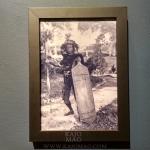
A kempeitai (Japanese police) would wear this headgear and leggings during World War II.

Read more:

Toshinari Maeda, the Japanese nobleman who died off the coast of Bintulu during WWII

Sabah chief minister Donald Stephens’ first Malaysia Day memorable message

Donald Stephens (later known as Tun Mohd. Fuad Stephens after his conversion to Islam in January 1971), was the first chief minister of Sabah in Malaysia.

After founding United National Kadazan Organisation (UNKO) in Aug 1961, Stephens helped to negotiate Sabah’s independence through the formation of a federation.

Donald Stephens
Donald Stephens. By Unknown author – Malaysian Archive, Public Domain

The federation now known as Malaysia was heavily opposed by its neighbouring countries Indonesia and the Philippines.

After Sabah held its first elections in April 1963, Mustapha Harun was installed as the first Head of State while Stephens its chief minister.

On Sept 16, 1963, Malaya, North Borneo (Sabah) and Sarawak joined together to form Malaysia.


That was the day Donald Stephens relayed his Malaysia day’s message in a special broadcast. His message was also published in local newspapers.

Donald Stephens
Donald Stephens’ message was published on Daily Express. 

Think as Malaysians

He first urged Sabahans to break all barriers which divide people in the different territories of Malaysia and instead to think and act as Malaysians.

“To begin this process of barrier-breaking, let us henceforth think of ourselves as Malaysians, not as Malays, Kadazans, Muruts, Chinese, Indians, Eurasians and so on.

“Let us not only learn to think as Malaysian, let us act and live according to Malaysian ideals.”

To Sabah’s first chief minister, Malaysia Day was the greatest day yet known to Sabah.

This was because it was the day he said, “Sabah emerges from its colonial cocoon into full nationhood, an independent state within the great new nation of Malaysia.”

Campaigning for racial harmony

Speaking at the time when unity was something that needed to be worked on, Stephens placed racial harmony as one of the major political objectives of his party.

He said, “There are still strong fences dividing many of us. I want to see these fences go down as quickly as possible, however it will not be easy.

“We must destroy these barriers if we are to bring into being a Malaysia where all the people are truly one in their loyalty and love for Malaysia.”

He added that his government would encourage the capital needed to come in and get the gold lying in Sabah’s unexplored land– of minerals, oil, rubber, coconut, timber, cocoas, oil, palm, sugar, rice or other crops.

Sabah chief minister Donald Stephens’ first Malaysia Day memorable message
A group photo of Sabah’s first state cabinet with Donald Stephens sitting on the third left.

How have Stephens’ high hopes for Sabah in Malaysia fared?

He was hopeful in his message on the Malaysian federation, promising that his government would do everything possible to improve the standard of living of the people of the kampongs.

“With the funds we need for development guaranteed, I have no doubt that within a matter of years, ours could be one of the richest states in Malaysia, if not the richest state in Southeast Asia.”

Stephens died in a plane crash – a subject of numerous conspiracy theories – on June 6, 1976.

The crash happened less than two months after Berjaya, Stephen’s party won the 1976 state election.

Less than two weeks after the crash, Stephen’s successor Harris Salleh signed what most considered a lopsided deal which led to a 95% loss in oil revenue for Sabah through the Petroleum Development Act.

In 2010, Sabah made headlines when the World Bank stated in a study that it was the poorest state in Malaysia.

However, the State Economic Planning Unit (EPU) of the Chief Minister’s Department was quick to refute the claim pointing the fact that its former chief minister Musa Aman had successfully reduced the incidence of household poverty in Sabah from 24.2% in 2004 to 16.4% in 2007.

Sabah chief minister Donald Stephens’ first Malaysia Day memorable message
A stone to commemorate Malaysia Day displayed in Sabah State Museum.

Japanese Surrender 1945 and the contents of leaflet announcing it

After the Japanese surrender in August 1945, Royal Australian Air Force planes dropped leaflets all over Sarawak’s First Division.

According to The Sarawak Gazette, the leaflet was foolscap size (a bit longer than A4) with a broad orange border and it was only available in English.

The content of the leaflet was about what to expect or do when the Japanese surrendered their power after the end of the war.

These leaflets were dropped all over Kuching, Batu Kawah, Bau, Lundu, Serian and Simunjan.

Japanese Surrender 1945 and the contents of leaflet announcing it
The day when the Japanese Surrender. Aboard HMAS Kapunda as the Japanese envoy’s interpreter reads the surrender terms to Major-General Yamamura, the Kuching Garrison Commander (right). Copyright expired-public domain.

Here is the text of of the leaflet announcing that the Japanese surrender:

To the people of the First and Second Division of Sarawak.

1.News of the Japanese surrender will already have reached you. In addition to the Australian troops who will be coming to remove the Japanese, three officers of the Sarawak government are coming to help you, they are Lieutenant Colonel W.P.N.L Ditmas, Lieutennat Colonel C.E. Gascoigne and Major G.T Myles. They belong to a military unit known as the British Borneo Civil Affairs Unit (BBCAU).

2.The following general instructions are issued for your help and guidance:

A)You are asked to conserve your stocks of food as carefully as possible and to continue planting food stuffs to your utmost ability, as shortage of shipping and food makes the supply problem difficult.


B)Persons living outside the Kuching Municipal Area are asked to stay where they are until called, this applies particularly to the Bau and Serian districts.


C)Looting or stealing of any property whatsoever is a very serious offence and is liable to severe punishment. This includes all Japanese owned property, also property taken from others by the Japanese but in the case of the latter, after investigation and in due course this property will be returned to the rightful owners.


D)In the event of the Japanese authorities relinquishing administrative control before the arrival of the Allied troops and until further orders are received from BBCAU, Native officers and other government servants at present in office should administer the areas under their control in accordance with the laws of Sarawak and of conditions existing in Sarawak immediately prior to the Japanese occupation in 1941. Their main duty is to ensure the protection of life and property. Ketua-ketua kampung and Kapitan-kapitan Cina and other chiefs will continue to exercise the powers they held prior to the Japanese occupation. Improper behavior during the period of enemy occupation will be investigated.

E)The native officer in-charge of Kuching district and the senior inspector in charge of Police in Kuching will report to BBCAU immediately on its arrival at Pending or Kuching.


F)It is possible that some stocks of food still exist in the First and Second divisions. All of these must be safeguarded and police guards put over the places in which they are stored. In cases of genuine need, issues of food may be made from any of such stores, but full details of total stocks, amounts of issues with names and dates must be recorded.


G)All government office buildings, including the Museum, the Power Station, Churches, the Mosque and Cinemas, and all stores of valuable commodities must be placed under Police guard to ensure their safety.


H)It should be be the immediate responsibility of all Native Officers assisted by their staffs to make reports on the availability of all food supplies and the location and quantity of all food in stores, and the condition and location of any former Government or Japanese vegetables gardens or rice plantations. These reports for the whole of the First and Second Divisions are to be handed to or sent to BBCAU as soon as possible after their arrival in Kuching. The Kuching Chinese Chamber of Commerce is requested to assist with this work.

Japanese surrender
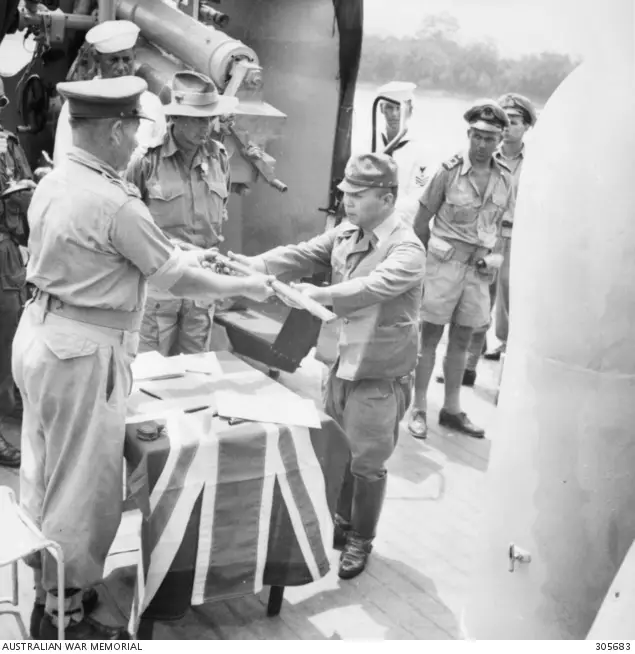
Aboard the corvette HMAS Kapunda, General Yamamura, commanding officer of Japanese forces in the Kuching area, hands his sword to Eastick, commanding officer of Kuching Force. This marks the Japanese surrender in Sarawak.

In the right background is Lieutenant A. J, Ford Ranr, commanding officer of the Kapunda. Copyrighted expired-public domain.

In the end, the surrender document was received by Australian Brigadier General Sir Thomas Eastick in the afternoon of September 11, 1945. 

Today, one can only imagine how Sarawakians felt when reading the leaflet, especially those who lived in fear during the Japanese occupation.

Avet, the beautiful Kayan traditional baby carrier

Avet is what the Kayan people in Borneo call their baby carriers.

Typically consisting of a rattan and wood frame and woven rattan straps to carry the baby, some wooden seats in an avet can be removed completely.

The most time-consuming part of an avet though, is the decorative beadwork. In the olden days, an avet was made by a family member – most likely a grandmother or an aunt.

Meanwhile, the Kenyah call it ba’ and it is more than just a baby carrier, it is also a status symbol. Other ethnic groups such as the Kajang, Punan, Berawan and Sebop also used the same style of baby carriers although they may use different motifs.

Although most Kayan mothers hardly use an avet today, you can still find one in some households being passed down from generation to generation as heirlooms.

Today, you can purchase them from local craftsmen or antique collectors online.

Here are some interesting facts about the avet or ba’:

1. It serves two roles: utilitarian and symbolic purposes

In terms of practical use, the avet or ba’ allows parents to carry their baby in an old-school backpack. It also serves as a symbol to indicate the baby’s social status.

For example, an avet with a human figure can only be used by the maren (aristocrat) of the Kayan people. Those who are not from maren status are prohibited from using this motif or illness will fall upon from them.

Avet
A baby carrier with a human figure or face by right can only be used by the maren (aristocrat) of the Kayan people.

2.The motifs have mystical roles

According to Robyn J. Maxwell in Life, Death and Years of Southeast Asian Ancestral Art, the avet is believed to be embedded with prayers.

This is to protect the souls of young children from wandering and coming into contact with disease and illness.

In addition to that, the dramatic demonic figure on some of the beadwork was designed to protect the child by scaring off offensive spirits.

Avet, the beautiful Kayan traditional baby carrier
How the lining of the baby carrier looks like.

3. An avet is not supposed to be sold or lent

In The Pagan Tribes of Borneo by Charles Hose and William McDougall, none of a child’s possessions, including the avet, should ever be sold or lent.

They may, however, be used by a younger sibling once the older one has outgrown them.

4. James Brooke’s secretary Spenser St. John once wrote about it

Spenser St. John was Brooke’s secretary and a British Consul General in Brunei in the mid 19th century.

St. John wrote in Life in the Forests of the Far East (1862) that at a Kayan village in the Baram river area, he saw a high-ranking woman carrying her baby in a “rattan seat covered with fine beadwork.”

5. The Metropolitan Museum of Arts have one on display.

The Met in New York features one avet which is believed to be from the late 19th to 20th century.

Made from fiber, wood, glass beads, cloth and shells, that avet is most probably by the Kenyah or Kayan people from Kalimantan, Indonesia.

It was a donation by the Ernest Erickson Foundation.

6. You can find one at Penn Museum, Philadelphia in US

According to Penn Museum records, there is a Kayan avet in their collection which is believed to have been made in 1890.

This avet has a wooden seat, is made with woven rattan and also has bunches of dangling charms made of seed pods and snail shells.

7. Another one is at the British Museum

Charles Hose, a British Resident during Brooke era reportedly sold one to the British Museum.

It is a simple one made by the Kayan in Baram of wood and shells.

The baby carrier dates back to 1905.

8. One avet is displayed at the Textile Museum of Canada

On top of that, the avet at the Textile Museum of Canada was collected from the Apo Kayan, Borneo perhaps from 1900-1930.

9. Another one is at Five Continents Museum in Munich, Germany

Dr. Friedrish Dalsheim found the baby carrier during his stay along the Kayan river in East Kalimantan in the early 1930s.

Dalsheim was a director and writer, known for The Wedding of Palo (1934), Black Magic (1933) and Menschen in Busch (1931).

His whole Borneo collection including an avet was given to the museum as a permanent loan in 1937 after he committed suicide in 1934 at 41.

Avet, the beautiful Kayan traditional baby carrier
An avet presumably made in the early 1980s.

Avet, the beautiful Kayan traditional baby carrier
This one was purchased from an Indonesian craftsman.

Sultan Tengah: 3 significant things to know about Sarawak’s first and only sultan

Sultan Tengah
Sultan Tengah mausoleum of Sarawak’s first and only sultan

The story started of how Sarawak got a sultan begins with Sultan Muhammad Hassan, the 9th sultan who ruled the Bruneian Empire from 1582 to 1598.

He succeeded the throne from Shah Berunai, his older brother who died without an heir.

When Sultan Muhammad Hassan himself died in 1598, his eldest son Abdul Jalilul Akbar ascended the throne.

Abdul Jalilul Akbar’s younger brother Pengiran Muda Tengah, however, also wanted to become the Sultan.

He claimed that his elder brother’s ascension to the throne was invalid as he was born when their father was still crown prince.

Therefore Pengiran Muda, who was born when their father was already king, claimed he had the right to succeed the throne.

In response, the newly crowned Sultan appointed his brother Pengiran Muda Tengah to be the Sultan of Sarawak which comprises present day Kuching division.

Here are 3 things to know about Sarawak’s first and only Sultan, Sultan Tengah:

1. Sultan Tengah’s reign in Sarawak

Sultan Tengah: 3 significant things to know about Sarawak's first and only sultan
Sultan Tengah’s tomb was rediscovered in 1993, more than 300 years after his death.

According to historian Chang Pat Foh in The Land of Freedom Fighters, Sultan Tengah came to Sarawak in 1599.

He brought along an entourage of a few nobles and over 1,000 warriors to help him to govern the new country.

As the Sultan of Sarawak, he carried the name Ibrahim Ali Omar Shah of Sarawak.

Before he set sail to Johor and Pahang, he established four ministers to administer his new kingdom.

They were Datu Patinggi Seri Setia, Datu Shahbandar Indera Wangsa, Datu Amar Seri Diraja and Datu Temenggong Laila Wangsa.

On his way back from Johor, Sultan Tengah was shipwrecked near the coast of Sukadana which is now the capital city of North Kayong Regency of West Kalimantan, Indonesia.

There he married Puteri Suria Kesuma, the younger sister of Sultan of Sukadana, Sultan Muhammad Saifuddin.

By 1600, he left Sukadana to Sambas where they built settlement in Kuala Bangun, near the Sambas river.

2. His issue

Sultan Tengah: 3 significant things to know about Sarawak's first and only sultan
Opening hours to visit Sultan Tengah’s tomb.

It was during their stay in Sambas when the late Sultan had three sons with Puteri Suria: Radin Sulaiman, Pengiran Badaruddin and Pengiran Abdul Wahab.

Radin Sulaiman later married Puteri Mas Ayu Bongsu, the princess of Sambas.

In 1631, Radin became the first Muslim ruler of the Sambas Kingdom bearing the name of Sri Paduka al-Sultan Tuanku Muhammad Safiuddin 1.

By that time, in 1630, Sultan Tengah had already departed to Matan, an ancient kingdom located in the Ketapang Regency of West Kalimantan, Indonesia.

There in Matan, he married a local princess and had a son. They named him Pengiran Mangku Negara who later become the Sultan of Matan.

Sultan Tengah: 3 significant things to know about Sarawak's first and only sultan
A brief history of Sultan Tengah written on a plague near his tomb.

3. His death

After staying a few years in Matan, the wayward sultan decided to return to Sarawak.

By 1641, he arrived home and made a temporary settlement at Batu Buaya near the coast of Santubong.

It was there that Sultan Tengah was assassinated by one of his followers.

His wife decided to return home to the Kingdom of Sukananda after his death.

No records show that the Sultan of Brunei sent a replacement for Sultan Tengah, and Sarawak was reunified with Brunei.

The tale of Sultan Tengah is one of a prince who was not supposed to be, but wanted to be king. And when he finally became one, he hardly spent any time in his kingdom.

It is unsurprising that none of his princes came to claim the throne of Sarawak as they themselves were not born or raised in the kingdom.

Nonetheless, Sultan Tengah did establish his capital along the bank of Sungai Bedil which slowly expanded into what we know today as Kuching.

Thanks to Sultan Tengah, the once Hindu royal houses of Sambas and Matan both turned into Muslim Sultanates and his descendants became the rulers for both kingdoms.

Sultan Tengah’s tomb was lost over the centuries and finally found again in 1993. Subsequently, the Sarawak Government commenced the construction of Sultan Tengah Mausoleum in 1994. The mausoleum was completed in May 1995 at the cost of RM546,000.

Sarawak’s first and only Sultan is now laid in his final resting place at the junction of Jalan Damai and Jalan Kampung Santubong.

Sultan Tengah: 3 significant things to know about Sarawak's first and only sultan
His tomb is now overlooking the junction of Jalan Damai and Jalan Kampung Santubong.

18 impressive forts in Sarawak built during the Brooke Era

The Kingdom of Sarawak was established from a series of land concessions by the Brooke family famously known as the White Rajahs.

In fact, it was even recognised as an independent state by the United States in 1850 and the United Kingdom in 1864.

The founder James Brooke and his successors Charles as well as Vyner built forts every time they acquired a territory from the Sultanate of Brunei.

As a result, forts mostly made of belian or ironwood can be found in almost every town in Sarawak.

Some of the forts in Sarawak were well-kept and turned into museums.

Another handful were abandoned, losing all trace of their former glory.

The rest were either destroyed, burnt down or bombed, leaving no physical evidence of their very existence.

Nonetheless, here is a brief guide on forts in Sarawak built during the reign of the White Rajahs:

1. Fort Emma in Kanowit (1859)

When it was first built in 1859, they only used timber and bamboo. It was named in honour of Emma Brooke, Charles’ sister.

2. Fort Brooke in Sibu (1862)

There was a fort built by the Brookes in 1862, believed to be located at present day Channel Road. However, the building was demolished in 1936.

3. Fort Alice in Sri Aman (1864)

Here is another fort named after the first Ranee whose full name was Margaret Alice Lili de Windt. The fort was built in 1864 with belian wood.

The oldest heritage building in Sri Aman, now it is also known as Heritage Sri Aman Museum.

4. Fort Keppel in Bintulu (1868)

The White Rajah started to build this wooden fort in Bintulu in 1862. They named it after Sir Henry Keppel who was a close friend of James and Charles.

Keppel was responsible for ending Dayak piracy in the Saribas between 1840 and 1850. The building was made of belian wood and had a cement floor.

Unfortunately, it was completely destroyed when it was hit by a bomb in 1942 during the Japanese occupation.

5. Fort Charles in Kabong (1878)

Fort Charles was first built by a Brooke officer named Maxwell in 1878.

Like most of the forts in Sarawak, it was used as an administration office and also to collect taxes.
In 1893, the fort collapsed due to soil erosion and was rebuilt further inland in 1895.

6. Fort Margherita in Kuching (1879)

Back in the olden days, a cannon shot was fired from this fort every evening to mark the end of the government work day.

Now, Fort Margherita plays home to the Brooke Gallery displaying historical documents and artifacts.  The fort was named in honour of Charles’s wife Ranee Margaret.

A night view of Fort Margherita, one of the forts in Sarawak
A night view of Fort Margherita, one of the forts in Sarawak.

7. Fort Sylvia in Kapit (1880)

This historical fort was built in 1880 and named after Ranee Sylvia, Vyner’s wife.

From May 1997 till now, the Sarawak state government authorised the Tun Jugah Foundation to set up a museum in this building.

Fort Sylvia Kapit (10)
The front door of Fort Sylvia.

8. Fort Vyner in Belaga (1884)

It was named after the third White Rajah Charles Vyner Brooke.

The fort was officially declared complete on Jan 13, 1884. Belaga’s oldest government building was burnt to ashes in May 2015.

9. Fort Lily in Betong (1885)

Fort Lily was built in 1885 right after the Saribas area was ceded to the Brookes.

It played a significant role as defence centre during the war against Iban warrior Rentap.

As of 2017, the fort has been locked up from public access and its grounds appear untended.

DSC_0039
A view of Fort Lily through its locked gates.

DSC_0041
Signage pointing to Fort Lily.

10.Fort Florence in Trusan (1887)

On Jan 3, 1885, Trusan river and its area were ceded to Kingdom of Sarawak.  A fort was quickly built in 1887.

According to reports, it was named Fort Florence after Mrs Maxwell, whose husband was one of Brooke’s officers then.

11. Fort Ranee in Saratok (1888)

Ten years after Fort Charles in Kabong was built, Fort Ranee was built in Saratok on top of Satagok hill.

Initially, it was built as an temporary building with attap roofing and timber. During its glory days, it was used as a district office.

12. Fort Limbang (1897)

This two-storey fort was built in 1897. The first storey was made of belian timber while the ground floor was concrete. Sadly in 1989, the original building was burnt to the ground.

But it was then rebuilt on the original site with the exact design. It was turned into Limbang Regional Museum on Aug 27, 1994.

13.Fort Hose in Marudi (1901)

The construction on this fort began in 1889 and were completed in 1901. It was named after Charles Hose, the then resident of the Fourth Division.

Currently, it is also  known as Baram Regional Museum.

Fort Hose

14. Fort Burdett in Mukah (1911)

Fort Burdett was named after 19th century philanthropist Angela Burdett-Coutts. She was a good friend of the first Rajah.

During WWII, the original building was burnt to the ground.

15. Fort Arundell in Lubok Antu (1912)

Fort Arundell was constructed in 1912. It was named after the then resident of Simanggang division, Gilbert Roger Harris Arundell.

Unfortunately, he was killed in 1942 when the Japanese attacked Sarawak during WWII.

16. Fort Leonora in Engkilili (1924)

This fort was built in 1924.

Unlike the rest of forts in Sarawak, this fort was not built to defend the kingdom from any attack.

It was built purposefully as an administration centre in Engkilili.  The fort was named after Vyner’s eldest daughter Dayang Leonara Margaret.

The original building was taken down to build the current district office.

17. Fort Long Akah (1929) and Fort Lio Mato in Baram

Fort Long Akah is located about 10-minute boat ride from Long San. The two-storey building was built as an administrative centre in 1929 using belian wood.

During WWII, it acted as a temporary headquarters for the British and Australian forces.

As of 2016, the building was reportedly still in a depleted state and overrun by jungle.

Apart from fort Long Akah, fort Lio Mato is another fort located along the Baram river.

Also neglected, this fort is located only 50km from the border with Kalimantan.

Historically, it was used during Sarawak-Indonesia confrontation in the 1960s.

18. Fort Brooke in Nanga Meluan, Julau (1935)

Asun Paing was a former penghulu born in the late 19th century in Julau.  He led a rebellion against the Brooke government over taxation.

To halt his revolt, the Brooke built a fort in Julau in 1935.

Over the years, it was used as a district council office and police station.

After years of neglect, it was repaired under a project funded by the Ministry of Tourism in 2012.

Do you know any forts in Sarawak which are not listed here?

Let us know in the comment box.

Lubok Antu and the mystery behind its name

Lubok Antu and the mystery behind its name
A small whirlpool or lubok was reported to be located at Batang Ai river.

Lubok Antu is a small district located in Sri Aman division of Sarawak.

The history of its bazaar dates back to 1872. Back then the bazaar was made of double-storey wooden shophouses, a market and a Chinese temple.

The name of this small town is interesting to the locals as the words lubok means ‘whirlpool’ and antu means ‘ghost’ in Iban language.

Lubok Antu and the mystery behind its name
A row of handicraft stalls found in Lubok Antu town.

Locals and historians have different accounts on how Lubok Antu got its name. So let us take a look of the various versions:

1. A fight between two brothers

The name Lubok Antu is believed to come from a local folklore based on two brothers named Chiri and Jampi.

One day, the two brothers went off to sharpen their parangs (machetes).

Upon their return, they came across Bunga Nuing (a mystical figure) who then challenged them both to a duel on the sharpness of their parangs.

It was during that duel when Bunga Nuing slashed a rock along a riverbank next to a lubok (whirlpool).

Ever since then, the locals believed the area was cursed and called it Lubok Antu.

2. The Cholera Expedition

Lubok Antu and the mystery behind its name
Thousand of dead bodies were reported floating around this area during the administration of Charles Brooke.

In June 1902, the-then Rajah Muda Vyner Brooke led an expedition to attack the Dayaks upriver at Batang Ai.

These Dayaks allegedly had been terrorising the neighbouring tribes.

By the time the troop had assembled in Simanggang (Sri Aman), two of their men suddenly dropped dead.

Vyner reportedly informed his father Charles that the two men might have died due to cholera.

To which the second White Rajah said, “Nonsense, the expedition must go on.”

They continued their journey upriver and eventually 2,000 men died of cholera out of the 10,000 strong force.

Their bodies were thrown into the river,  eventually floating downstream.

Because of the lubok (whirlpool), the bodies continued to circle the area.

The locals saw all the dead bodies at the lubok and called it Lubok Antu.

3. Same dead bodies but different COD (Cause of death)

Another version of the story behind the floating dead bodies is that they did not die due to cholera.

Instead, they were the casualties of the uprising against the Brooke government by the Iban of upriver Batang Ai.

In another account, the bodies were the casualties of the tribal wars which happened back then among the different tribes living upstream.

4. A haunted pool?

In the book Legends and History of Sarawak by Chang Pat Foh, the name ‘Lubok Antu’ comes from a pool located outside of Fort Arundell.

Back in the olden days, people bathing or swimming in the pool had a feeling that someone at the bottom of the pool was trying to pull them down into its depths.

Then people started to call it a ghostly pool or what the locals called ‘Lubok Antu’ to this day.

5. A Demon’s Pool

According to the book River of the White Lily by Peter Goullart, Lubok Antu was known as a demon’s pool.

An old and monstrously large crocodile apparently lurked at the bottom of the river, only surfacing to attack animals which came for a drink or any man unfortunate enough to have his boat overturn in the area.

The locals believed the crocodile was an evil spirit which made the place come to be called Lubok Antu.

6. The simplest version

The last version of the story is quite simple yet amusing.

There was a guy named Antu who loved to fish at a particular lubok or whirlpool at Batang Ai.

Sooner or later, people started to call it Lubok Antu, which means a whirlpool belonging to Antu.

Lubok Antu and the mystery behind its name
The town Lubok Antu was founded in the late 19th century.

Marianne North and her fascinating journey as botanical artist in Sarawak

While North America had the Klondike Gold Rush in the late 1800s, other people in the Victorian era were rushing to satisfy a scientific obsession – collecting natural specimens.

This obsession for new discoveries and adventure brought many collectors and explorers to Borneo’s door, including notable botanical artist Marianne North.

A life of travel

North was born in Hastings, England on Oct 24, 1830. Her father Frederick North was a member of parliament for Hastings and a deputy lieutenant as well as a Justice of the Peace.

After her mother Janet died in 1855, North travelled frequently with her father and sister. They visited Switzerland, Austria, Spain, Italy, Greece and the Bosporus in Turkey.

She received her first lessons in oil painting from renowned Australian colonial artist Robert Hawker Dowling in 1867.

She had been painting throughout her life, starting with flower painting to cope with the grief after her mother’s death and again after her father’s death in 1869.

With a large inheritance North received, she started to travel from 1871 to 1885. She visited 17 countries, painting 800 illustrations of their native plants and flowers.

And she did all of this while travelling alone, reportedly in Victorian dress.

Thanks to her influential family, North was able to visit countries all over the world and was welcomed by their respective ambassadors, ministers and governors.

One of those government administrators who hosted her was Sarawak’s second White Rajah, Charles Brooke.

Marianne North’s visit to Sarawak

Margherita
A visitor looking at a portrait of Ranee Margaret on display at The Brooke Gallery at Fort Margherita.

When she arrived in Sarawak in 1876, Charles was not in town to welcome her visit.  His wife, Ranee Margaret stepped in to host this Victorian painter instead.

The Ranee wrote about her guest in “My Life in Sarawak”.

“One morning, as I was watching the arrival of the mail-steamer from my verandah at Kuching, I noticed the figure of a tall European lady standing on deck.

“A few moments after, a messenger brought me a letter from Singapore from the Governor’s wife, Lady Jervois, introducing a traveller to Sarawak, whose name was Marianne North.”

“The first evening of her stay in Kuching we went for a row on the river, and the sunset behind Matang was, as she said, a revelation. That land of forests, mountains, and water, the wonderful effects of sunshine and cloud, the sudden storms, the soft mists at evening, the perfumed air brought through miles and miles of frost by the night breezes, were an endless source of delight to her.”

Her views on the Dayaks

Despite being extensively travelled, North had a strong opinion of the Dayaks who were still practicing head-hunting at the time.

Margaret wrote:

“(Marianne North) could not bear the thought of either Dyaks or Kayans. I could never eradicate from her mind the idea that they were savages. I used to try and interest her in these people, for I longed that she should accompany us in our journeys into the interior, but this she would never do.
“’Don’t talk to me of savages,’she would say; ‘I hate them.’ ‘But they are not savages,’ I would reply, ‘They are just like we are, only circumstances have made them different.’
‘They take heads; that is enough for me’, she would add severely.”

How Marianne North influenced the Ranee

North stayed with the Brookes for about six weeks.

During her short stay with the Ranee, North managed to open her eyes more to the beauty of Sarawak’s biodiversity.

Margaret stated, “… I felt that something new and delightful had come into my life, for she had not only introduced me to pitcher-plants, but to orchids, palms, ferns, and many other things of whose existence I had never dreamed. Miss North was the one person who made me realise the beauties of the world. She was noble, intelligent, and kind, and her friendship and the time we spent, together are amongst my happiest memories.”

The story of Nepenthes northiana

Marianne North
A copy of Marianne North’s Nepenthes northiana displayed at the Brooke Gallery at Fort Margherita.

Nepenthes northiana is an endemic pitcher plant found in Borneo. The species was named after North who was the first one to illustrate the species.

During her stay, North made friends with Herbert Everett who was working for the Borneo Company then.

Everett went up to the mountainous area in Bau to get her this plant.

North wrote about the discovery for The Gardeners’ Chronicle:

“The specimens grew on the branches of a tree about 1000 feet above the sea on the limestone mountains of Sarawak. When I received them I tied them in festoons all around the verandah, and grumbled at having only one small half-sheet of paper left to paint them on.”

Regardless of the size of the painting, thanks to North’s illustration, Sarawak became known as a land of exotic plants in the late 19th century.

The painting of Nepenthes northiana is now on display at the Marianne North Gallery at the Royal Botanic Gardens, Kew.

Read more:

Charles Hose and his love affair with Sarawak

The Eastern Seas, the book which inspired James Brooke to explore

For an idea of how Borneo looked like before the Brookes, have a read of The Eastern Seas written by George Windsor Earl.

An English navigator, Earl was the first one to provide a European account of north-west Borneo’s Chinese gold miners and the incredible wealth of Borneo which included gold, diamonds and other native resources like camphor and ebony.

His voyages took him around the world including India, Southeast Asia, Papua New Guinea and Australia.

Many were inspired by his expedition and followed suit including James Brooke himself, who eventually founded the Kingdom of Sarawak and ruled the country from 1841 until his death in 1868.


The Eastern Seas
The book, The Eastern Seas and a miniature of The Royalist on display at The Brooke Gallery at The Fort Margherita.

Getting to know the author of The Eastern Seas

Born on Feb 10, 1813 in Hampstead, London, Earl was very much influenced by the world of navigation from early on. His father, Percy was a sea captain working for the East India Company. He started his nautical career by travelling to India after becoming a midshipman at age 14.

Earl was already on his journey from Western Australia bound for Java by the year 1832. Over the next two years, until about Nov 1834, he journeyed through the area he knew as “the Eastern Seas.”

Subsequently in 1835, Earl returned to London to publish his account in a book he later named The Eastern Seas or Voyages and Adventures in the Indian Archipelago in 1832-1834.

It comprised a tour of Java, Borneo, Malay Peninsular, Thailand and Singapore and observations on the commercial resources of the archipelago.

The Eastern Seas is culturally important. Interested readers can read it online through various archives.

The Eastern Seas (2)
The Eastern Seas or Voyages and Adventures in the Indian Archipelago 1832-33-34

George Windsor Earl’s work inspired many

Apart from Brooke, Earl also inspired other established naturalists and explorers.

In 1845, Earl published a pamphlet On the Physical Geography of South-Eastern Asia and Australia.

He described how shallow seas connected islands on the west for example Sumatra and Java with the Asian continent.

Furthermore, Earl found the islands on the east such as New Guinea were related to the Australian continent and reportedly had the same type of marsupials.

British naturalist Alfred Russel Wallace used Earl’s deductions to propose the faunal boundary line now known as the Wallace Line.

Charles Darwin also reportedly used Earl’s observation on deep sea channels to study the bio-geographic distribution of the region.

Another of Earl’s works ‘The Native Races of the Indian Archipelago: Papuans’, was an important work of early New Guinea anthropology.

However, he did not actually visit the island or maybe he never officially recorded his visit.

He compiled the first hand accounts of other visitors for his works on the Papuan people.

In 1850, Earl proposed the term Indunesians or Malayunesians for the people living in the Indian Archipelago or Malayan Archipelago.

Earl’s student, James Richardson Logan later popularised the name Indonesia as synonym for Indian Archipelago.

But it was only after 1900 that the term Indonesia became more commonly used.

George Windsor Earl’s death

The Eastern Seas
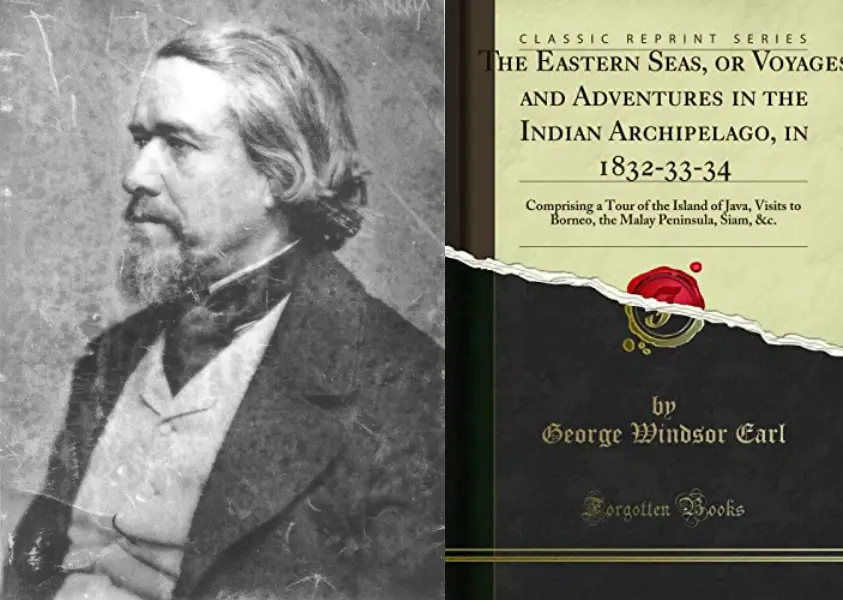
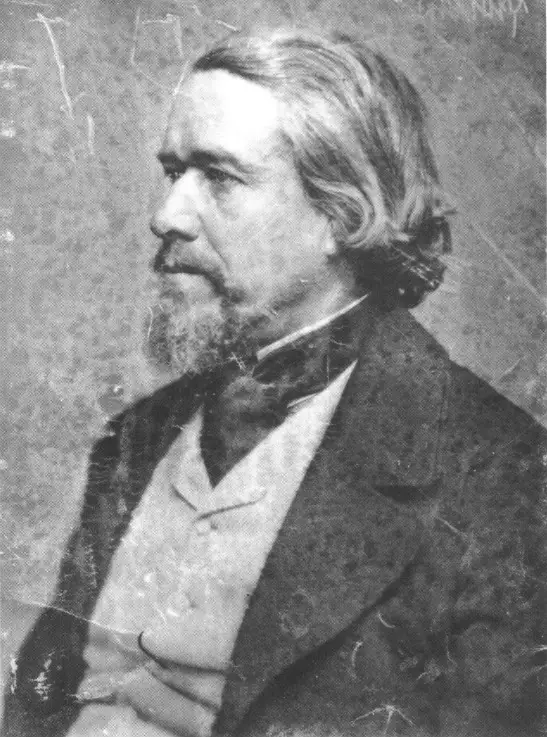
Portrait photo of George Samuel Windsor Earl (February 10, 1813 – August 9, 1865), colonial administrator, who coined the term “Indonesia”.

From 1855, he held various official administrative posts, his last one being Penang.

Earl died on his journey back to England in 1865. He was buried at the Old Protestant Cemetery, George Town in Penang.

Read more:

Toshinari Maeda, The Japanese Nobleman Who Died off the Coast of Bintulu During WWII

Charles Hose and His Love Affair With Sarawak

1 2 3 4 5 40