Browse Category

Culture - Page 21

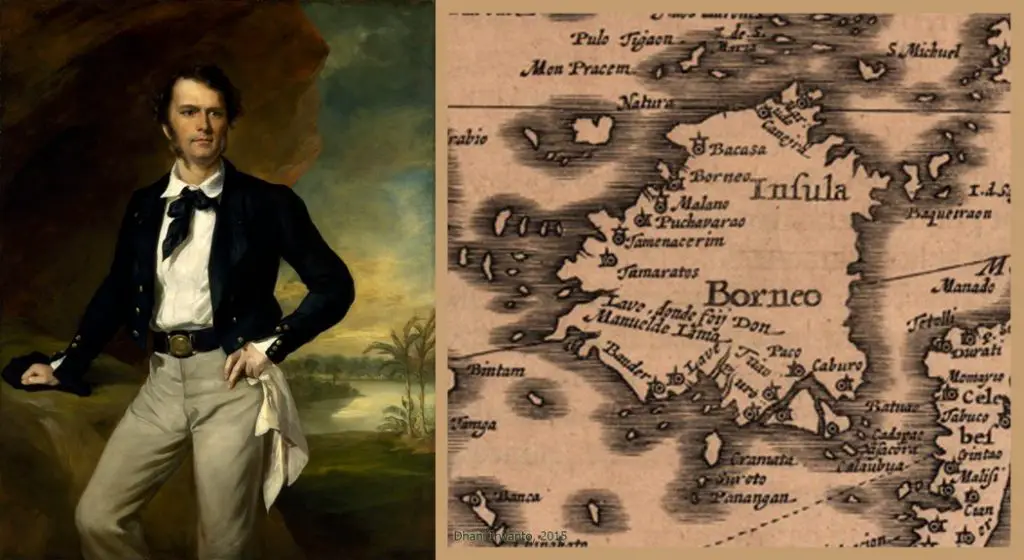
James Brooke’s role in the Battle of Marudu Bay 1845

“The Battle of Marudu Bay sees James Brooke enlisting the help of the British Royal Navy in Singapore to defeat Sherif Osman, a pirate leader from North Borneo, effectively ending his piracy,” this is what you will find on the Sarawak goverment’s official website of what happened in 1845.

But is there more to the story than the first White Rajah defeating a group of pirates?

Marudu Bay is located at the northern tip of Borneo where, in the 1840s, it was led by a man named by Syarif Usman (sometimes spelled as Sherif Osman).

According to Clifford Sather, Marudu Bay in particular, in the early 1800s served as a major staging point for slave-raiding operations.

“By the 1820s, the presence of Bajau and Ilanun settlements in coastal Sabah effectively eliminated Brunei’s political and commercial hold over the region,” Sather wrote.

In the meantime, Illanun slave trading activities allegedly sponsored by the Sulu was causing a blow to Brunei’s maritime commerce. These pirates disrupted sea routes and cut Brunei’s connections with the vital Chinese junk trade.

For a short period in the beginning, the northern Borneo settlement, particularly those of the Tempasuk Bajau was strong enough to ignore Sulu’s hegemony.

However in the 1830s, the Sulu reasserted its influence by recognising the powerful chief Syarif Usman as its regional governor in Marudu.

Believed to be a charismatic and a brave leader among the locals, the Westerners on the other hand, had a different perception of Syarif Usman.

James Brooke’s role in Battle of Marudu Bay 1845
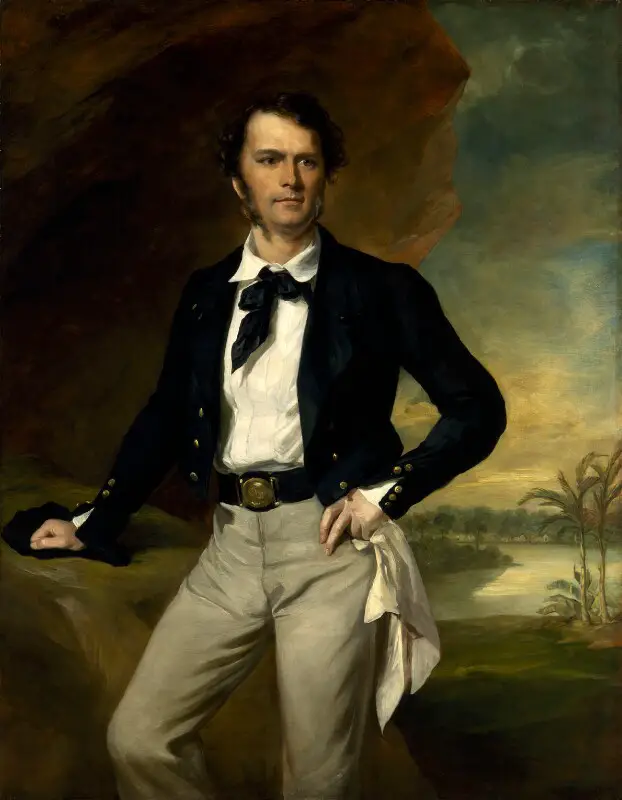
James Brooke’s role in the Battle of Marudu Bay 1845
James Brooke

Brooke at that time was seeking to consolidate his uncertain position in Borneo.

While he was already treated as the Rajah of Sarawak, Brooke was worried about his position with regards to Britain.

Steven Runciman in The White Rajah: A History of Sarawak from 1841 to 1946 wrote, “He wanted official support, some form of official rank and a guarantee that Britain would interest herself in Borneo.”

Brooke finally could sigh a relief in February 1845. At that time, Captain Charles Bethune arrived from London with a despatch appointing Brooke as Confidential Agent to Her Majesty in Borneo.

Runciman stated, “Bethum also brought a letter from the British Government to the Sultan of Brunei, expressing the intention of co-operating with him against the pirates.”

Brooke then accompanied Bethune to deliver this letter to Brunei to which the Sultan received the latter politely.

After his visit to Brunei, Brooke found out that Admiral Sir Thomas Cochrane commander of the Far East Fleet was at Malacca.

He hurried to see him. The admiral shared Brooke’s views about the pirates and promised to join him in expedition against Marudu Bay.

In order to strengthen his position in Borneo, Brooke’s alleged principle method was to campaign for the destruction of ‘pirate’ strongholds on the island including Marudu Bay.

How the Battle of Marudu Bay 1845 went down according to Captain Pascoe

Captain R.N. Pascoe who took part in the expedition to Marudu Bay 1845 recorded about the attack in his journal:

It was on the 18th of August 1845 that a British squadron, consisting of H.M.S. Agincourt, Vestal, Daedalus, Vaxen and the sloops Cruiser and Wolverine, under the command of Rear Admiral Sir Thomas Cochrane, anchored at the entrance of Marudu Bay, the expedition having for its object the destruction of a nest of pirates under a Serip Usman, an Illanun pirate chef.

The attacking force, which consisted of 530 seamen and marines, in 24 boats, of which nine were gunboats, took up station off the mouth of Tandik river, in the southeast corner of the Bay, at 3pm and at dawn next day proceeded up the river, the pinnace with guns leading. Two Malays from Sarawak accompanied the forces as guides.

About six miles from the entrance the advance was checked by a boom moored across the river by view of three batteries “about musket range from the boom;” the largest fort, mounting eight large pieces, stood on the right bank gaily decked with banners, stood at the junction of the river, which at this point divides into two branches, the third was a floating battery moored to the left bank.

A messenger “an Illanun from Mindanao in rich attire,” with a flag of truce came down to meet the force, with the request that the two senior Officers should proceed to the fort and negotiate, “but they were not thus to be trusted,” and a reply was sent back that unless Serip Usman (Syarif Osman) himself came down fire would at once be opened.

Immediately the messenger’s boat was clear of the boom, a galling fire was opened from the forts. Gibbard, mate of the Wolverine, fell mortally wounded, and a brisk fire was kept up from both sides.

The enemy’s guns being lad on the boom, caused fairly heavy loss amongst the attacking force, which was working hard to remove the obstacle. In about at hour an opening was effected; two cutters with marines instantly carried the three-gun battery, and the enemy, abandoning the forts, fled through the town in the rear and made for the jungle.

At 2pm the forts, towns, and enemy vessels being destroyed, the force reassembled to return to the ships, taking with them the hospital pinnace with the wounded. The casualties amounted to ten killed and fifteen wounded, three mortally. The number of the enemy slain is not computed, though it seems to have been very large, the carnage being described as frightful, and the destruction of the pirate’s stronghold was complete.”

The other side of the Battle of Marudu Bay’s story

Even so, not everyone believed that Syariff Osman was a pirate captain. Alternatively, the locals believed he was a leader who brought prosperity to Marudu Bay.

German author Bianca Maria Gerlich who wrote the book Marudu 1845 believed that not everything happened like in the Western records.

She told an audience during a talk on Syarif Osman in Kota Kinabalu in 2019 that James Brooke defamed Marudu as a pirate’s lair.

Moreover, Gerlich said that Brooke defamed Syarif Osman as a pirate chieftain.

Brooke did that to eliminate a possible rival for his influence over parts of Borneo, which were not yet occupied by other Western powers.

She stated, “Syarif Osman had not only built a strong, economically expanding and independent polity in Marudu Bay, but moreover was in contact with many important leader personalities of the region. His fair-reaching authority was considered too dangerous by James Brooke.”

Perhaps Colombian writer Nicolas Gomez Davila’s famous quote was right, “Truth is in history, but history is not the truth.”

With most records still written Syarif Osman as the pirates leader, the Battle of Marudu 1845 did not only destroy the town but also the memory of its development as a coastal state.

KajoMag readers, let us know in the comment box what do you think? Was Syarif Osman the leader of pirates? Was the Battle of Marudu Bay necessary>

Looking back at a punitive expedition to upper Batang Lupar in 1875

Headhunting was rampant in 19th century Sarawak. In an effort to control the death toll brought on by headhunting, the-then Brooke government sent out punitive expeditions to suppress this activity.

Here is an account of a punitive expedition that took place at upper Batang Lupar in 1875. It was written by an unnamed writer and published in the Sarawak Gazette on Nov 3, 1875.

Looking back at a punitive expedition to upper Batang Lupar in 1875
A bridge over Batang Lupar river.

The Sarawak Government, finding peaceable negotiation of no avail with the upper Batang Lupar tribes – who have for the last four years made frequent raids on the Lemanak and Skrang people, causing these rivers to be nearly depopulated- organised a force to attack the upper country, which left Simanggang on the 6th, and arrived at Delok on the 11th, after experiencing hard work, ascending the river and passing the rapids, where it had been expected the enemy would make some opposition, but the way was found clear so far.

The Delok stream is on the left bank, and after ascending three reaches, the river was found to be so small and shallow, that a halt was called and an encampment made at a sharp point.

The force then set to work at clearing the ground for a considerable distance to avoid any hidden surprise.

After throwing up a strong fence which served as a stockade, a council of war was held, in which future arrangements were made for a land force to march against the enemy who were living at the head of the stream and on some of the hills that were within sight of the encampment.

The land force started on the morning of the 13th a pathway having been constructed by a strong party the day before, leading into the Dyak main road.

The country is a succession of steep hills, varying from 400 to 700 feet in height; and the paths leading to them are often so steep; that it is necessary for hands to be used in both the ascent and descent in addition to carrying rifle, forty rounds of ammunition and four days’ provisions – or in the case of Dayaks, a shield, three spears and food – makes the journey no easy matter.

The guides expected the force to come into collision with the enemy, between 9 and 10am the same morning, which some of the leaders did, having been led into ambush by the tactics of the enemy, against which they were specially cautioned.

The ambush tactic during the expedition to Upper Batang Lupar

The mode of ambush with Dayaks is as follows: a few active fellows are sent on, who appear before the leaders of the advancing force, then turn round as if surprised and run for their lives, throwing spears and shields away. This was too much for the young aspirants to glory in the Sarawak force who are not so much used to war as those experienced headhunters.

They broke away and pursued the fugitives until they had separated themselves from the main body; and after passing a ridge the enemy came on them in force; and killed 19 in the course of a few minutes, fighting hand to hand.

The enemy, when the main force came up, retreated, and it was found they had left five dead bodies among the slain.

Meanwhile, the houses of the enemy were mostly deserted and although they were strongly situated, there were not defended and were mostly burnt by themselves on the approach of the force, which early in the afternoon were in the heart of the inhabited country and during four days laid the place waste.

The women and children fortunately had been removed to a distance, and judging by the tracks, they had gone in the direction of Batu Bangkai, which is in the Dutch territory.

Large bodies of the enemy were seen on hills in the distance, and it was reported that all the Dayak of Lanjak and the Seriang had collected to assist their relations in the tribe to oppose the advance of the force.

The Dayaks of the force finding the houses contained little property, or were burnt, now spread in small parties to search, and it was not long before they came on goods and chattels of every Dayak description, either buried or secreted in their farming lands, as well as their paddy, these were all taken or destroyed, and thirsty houses, averaging about ten families in each were burnt in the Delok.

The battle continues

Looking back at a punitive expedition to upper Batang Lupar in 1875
A Dayak Longhouse, known as Rumah Betang in Indonesia or Rumah Panjang in Malaysia, the traditional dwelling of many Dayak Tribes. Original watercolour painting by Carl Schwaner, 1853. Credits: Public Domain.

On the 15th, while a force of Dayaks were advancing to attack a village some distance off, under the chieftainship of a notorious enemy named Jumput, the leaders were surprised by a party of the enemy, and after a hand to hand encounter the Sarawak force lost 11 lives; the enemy suffered severely, but their loss was not known.

On the following day, the force was strengthened under the leadership of Minggat of Kalaka, who marched against the enemy and burnt down all the houses in the vicinity, the enemy did not make any opposition.

A good deal of plunder was brought in from Jumput’s country. A force was also sent from the main camp in Delok to the Menyang stream. And there, three houses and their property were destroyed.

This completed the work of the expedition which had encamped for nine days, had destroyed about 40 houses, and rendered the enemy houseless and foodless. The effect of the expedition remains to be seen. The only danger is that the Dayaks on the Dutch side will assist these rebels sufficiently to cause them to rise again to give trouble on some future day, unless an attack is made on the former also.

The expedition arrived at Simanggang on the 21st. It was under the command of H.H. the Rajah accompanied by Messrs T.S. Chapman and F.R.O Maxwell, and was composed of 300 Malays and 6000 Dayaks- who were raised and has started in boats with twenty days’ provisions, within six days from the time of the command being given. From first to last it has taken less than a month to complete the whole affair.

Where were these battles took place in upper Batang Lupar

The Delok River was where the government’s forces built their camp in 1875. Today, the river is part of Batang Ai National Park and Rimba Sarawak (Research for intensified Management of Bio-Rich Areas of Sarawak).

Meanwhile, Lanjak is a small town in West Kalimantan, Indonesia. Most of the Iban communities there migrated from Sarawak during the 19th century.

Seriang in the article refers to a river which is also located in West Kalimantan. As for the Menyang, the river was on the news for its orangutan population.

These places where heads were once hunted and villages were burnt are not only historically colourful but ecologically rich as well.

Looking back at a punitive expedition to upper Batang Lupar in 1875
Batang Ai lake today.

Remembering an old Iban ceremony called ‘Gawai padi datai’

The Iban community is known for having different kinds of gawai celebrations.

Even though we associate the word ‘gawai’ with partying today, the feasting and festivities are actually secondary to the main event of the gawai celebration which is the religious ritual.

Some of the examples of gawai rituals include Gawai Antu (rituals to invite dead souls to their final separation from the living), Gawai Ngar (to celebrate patrons of weaving) and Gawai Melah Pinang (for the deity of creation).

One of the rare gawai rituals that are perhaps no longer celebrated is Gawai Padi Datai.

Betong’s then acting district officer A.M. Phillips witnessed the ritual, writing about it in The Sarawak Gazette on Sept 30, 1955.

According to Phillips, Gawai Padi Datai is held when the harvest is low, and is a celebration for paddy which they believed fell from the sky.

He stated that most longhouses in the Layar, Padeh, Spak, Rimbas and Paku areas had either performed the Gawai Padi Datai themselves or had at least attended one or two of the ritual.

Remembering an old Iban ceremony called 'Gawai padi datai'
Gawai Padi Datai is celebrated when the harvest is low.

Here is Phillips’ account of Gawai Padi Datai:

A feature of this gawai is that paddy which alleged to have fallen from the sky is brought from other houses to the house which is about to celebrate.

On arrival at the foot of the ladder a babi bland and manok labang (white pig and spotted white chicken) are killed and an offering made at the bottom of the ladder.

From the landing stage (pendai) to the foot of the ladder, thence up the ladder on to the ruai, and from the tanju to the bilik and into a tajau lama run strings, either of decorated rattan or of red cotton threaded with hundreds of puffed rice grains (letup).

The whole house is spread out with mats covering all the ruai and the whole of the bilik.

The visitors with the padi datai sit on the ruai together with 11 or possibly 13 women dressed in white, as men, with feathered hats and parangs, who make the offerings etc.

What happened after the offerings?

After this, during the night, grains of paddy are found from time to time either on the mats or on the ground outside the house.

Stones and animals’ teeth are also found, sometimes on the mats, sometimes in the offerings, sometimes falling from the roof.

All these grains of paddy and pebbles are supposed to bring good luck.

Most of the paddy probably falls out of the paddy bins in the roof whence it is disturbed by the usual rats, cats, or shaking of the house caused by the crowd of visitors.

The stones and animals teeth could also be placed in situ by subterfuge. If it is a hoax it is a big one and is yet undiscovered by the locals. The house carrying out this gawai and who place not a little faith in its efficacy include houses with many Christians. This phenomenon impresses or seems to impress, much more quickly and effectively than such mundane benefits as local authorities, or indeed V.H.F. telephones.

So what do you think? How did the paddy grains, stones and animals’ teeth are found after the Gawai Padi Datai? Let us know what you think in the comment box.

5 things you should know about the old customs of Iban divorce

Many of Sarawakians’ old customs are no longer practiced mainly because they have been replaced with a more uniform judiciary laws.

Some proceedings in the olden days did not rely on justice or what is best for all parties. Sometimes, the old generations relied on omens and dreams to decide including divorce.

Here are 5 things you should know about the old customs of Iban divorce as recorded by Reverend William Howell in The Sarawak Gazette on Mar 16, 1909:

1.There were two kinds of Iban divorce.

In those days, there were two types of Iban divorce. According to Howell, a temporary divorce was effected through an ill omen or a bad dream. Meanwhile, a permanent divorce was brought about by incompatibility of temper, inhospitableness, ill-temper and adultery.

The Ibans called temporary divorce “belega'” or “beluit”. The marriage could be renewed again after a short interval.

As for a permanent divorce, it could be effected before it was brought in front of the chiefs and elders.

Howell stated, “The guilty part is amerced. The innocent party takes the fine and divides it with the chiefs or elders and friends who witness the settlement of the case.

If the husband is the guilty party he pays a fine not only to the woman but towards the upkeep of the children also if he has any. The woman’s fine is called “pekain” and the upkeep of the children is called “pelanja”. The man’s fine is called “pesirat”.

2.How the fine is imposed

The fine was imposed according to the offence. If both parties would not agreed to the settlements of the chiefs or elders or even if one of them disagreed, the case would be settled by a diving contest.

By doing so, not only the fine is settle but also the bet on who would win the contest.

In this case, the losing party would have to meet not only the loss by the shame also.

“A ring or a bracelet given by the party that brings about the divorce, if it is received by the other party, is an ample sign of divorce. Before a person can consider himself properly divorced according to the Dayak point of view such person takes away all his or her belongings from the room where they lived together,” Howell stated.

3.A temporary divorce could be brought to a permanent one.

If the temporary divorce was brought to a permanent divorce, there would be no fine.

Interestingly, the news or occurrence of death in the area of the newly married couple may result in a permanent or temporary divorce.

For an unknown reason, it was generally more taboo if a death occurred upriver.

4.Superstitions which lead to divorce.

Howell pointed out that the Iban superstition seemed to be an advantage to them in creating a plea or to exculpate them from punishment.

“If a man says he has had a very bad dream or an ill omen, with that plea he is justified putting away his wife. In view of such religion or superstition or a great many of them have simply invented a story and have had a divorces with impunity. The same thing has been also practiced by women,” he stated.

5.The children matters in an Iban’s divorce.

The binding nature of an Iban marriage seems to depend on the children. Howell gave an example of how the children influence their parents’ divorce proceeding:

The wife of a certain man had already misconducted herself three times but her husband forgave her. The fourth time she did so with a relation and her husband swore by the gods of his ancestors that he would put her away. The case was brought before the court of justice, the man divorced his wife and the wife was fined but the children all agreed and said to their father that unless he lived again with their mother they would have nothing to do with him. The father gave in and took his wife back and paid her fine for her.

5 things you should know about the old customs of Iban divorce

Early records of inoculation and smallpox vaccination in Sarawak

If you are not familiar with inoculation or variolation (deliberately introducing the pathogen into an uninfected person), it is the method first used to immunize an individual against smallpox with material taken from a patient or a recently variolated individual, in the hopes that a mild, but protective infection would result.

The procedure was most commonly carried out by rubbing powdered smallpox scabs of fluid pustules (an inflamed blister containing pus) into superficial scratches made on the skin.

Then the patient would develop pustules identical to those caused by naturally occurring smallpox. This would lead them to develop a less severe disease than naturally acquired smallpox.

Slowly after two to four weeks, these symptoms would slow down indicating successful recovery and immunity.

According to historian Loh Chee Yin, vaccination against smallpox was introduced into Sarawak in the 1960s. However, inoculation was already practiced in the 1850s.

Early records of inoculation and smallpox vaccination in Sarawak
Drawing accompanying text in Book XII of the 16th-century Florentine Codex (compiled 1555–1576), showing Nahuas of conquest-era central Mexico with smallpox. Credit: Creative Common

Early records of smallpox inoculation in Sarawak

One of the early records of inoculation in Sarawak was recorded by Brooke Hugh Low in 1876. At that time, he was holding the post of Assistant Resident of Sibu. When he was travelling up the Baram river which was still under Brunei territory (Baram was ceded to Sarawak in June 1882).

He recorded about a smallpox epidemic which decimated the Kayan population in the area.

“I next proceeded up the Baram as far as Long Lusan, where Oyong Ngau now lives. He abandoned Batu Gadin on account of the smallpox which carried of 200 persons in his own house; 1,333 Kayans are estimated to have fallen victims to this epidemic, and 3000 Kenyahs. Although I did not ascend the river above this point I met several of the upriver chiefs, both Kayans and Kenyahs, and among the latter, Paran Libut’s brother, Tama Peng Wang, who assured me that his tribe had been decimated and that the Upper Baram, which before was populous, is now a mere waste. Houses which a year ago could boast of 100 fighting men can now scarcely muster 10. Fortunately for the Kayans there was a Selimbu Malay, one Haji Unus, at Batu Gadin who understood inoculation and inoculated some 3,600 persons of both sexes, and though many died, many also were saved.”

A record of Ibans practicing inoculation

Bishop Walter Chambers once wrote in 1857 about how inoculation saved a community of Ibans in Lingga.

“The smallpox attacked six months ago (1856) the people up the main river, the Batang Lupar. In some of the Dyak houses it made frightful ravages, chiefly through the panic fear into which it threw the occupants, who in some cases, fled into the jungles, abandoning their sick friends and carrying the infection in their own bodies. It is said there are longhouses, whose occupants having thus rushed away, not one of them has since made his appearance.

The Dyaks regard the smallpox as an evil spirit, with the notion which induced our English peasantry to use the same caution to fairies- they never venture to name the smallpox, but designate it politely by the titles Rajah and Buah-kagu. I heard an old woman yesterday, telling how that, during the time she was nursing her grandson, she was continually begging, ‘Rajah have compassion on him, and on me, and spare his life- my only child.’

In the neighbourhood of Sakarran, the Malays inoculated with success both their own people and the Dyaks. By inoculation the disease was gradually drawing near to Lingga.

I wished the Dyaks not to inoculate until the appearance of the disease in the country, but they had an idea that the ‘Rajah’ was more mild to those who thus made submission to him. Out of hundreds who have been inoculated, only three have died under the operations.”

The Kayans’ knowledge of smallpox

Loh believed that the Kayans in those days were aware of the infectious nature of smallpox long before the introduction of inoculation and vaccination. They knew that immunity could be secured by complete isolation from affected villages.

He cited an example from Charles Hose’s The Pagan Tribes of Borneo (1912). This is what Hose wrote:

“With this object the people of tributary stream will fell trees across its mouth or lower reaches so as to block it completely to the passage of boats, or a less drastic measure, will stretch a rope of rattan from a bank as a sign that no one may enter. Such a sign is generally respected by the inhabitants of other parts of the river basin. They are aware also of the risk of infection that attends the handling of a corpse of one who has died of epidemic disease, and they attempt to minimise it by throwing a rope aorund it and dragging it to the graveyard, and there burying it in a shallow grave in the earth, without touching it with the hands.”

As for the Ibans, it was a normal practice for the unaffected members of a longhouse to run away into the jungle to avoid smallpox infection.

Here is an example of how the Ibans who refused to be inoculated reacted to the epidemic according to Spenser St. John:

“When the smallpox was committing sad havoc among those Sea Dyak villagers who would not allow themselves to be inoculated, they ran into the jungle in every direction, caring for no one but themselves, leaving the house empty, and dwelling far away in the most silent spots, in parties of two and three, and sheltered only by a few leaves. When these calamities come upon them, they utterly lose all command over themselves, and become as almost timid children. Those seized with the complaint are abandoned; all they do is to take care that a bundle of firewood, a cooking pot, and some rice, are placed within their reach. On account of this practice, few recover, as in the delirium they roll on the ground and die.

When the fugitives become short of provisions, a few of the old men who have already had the complaint creep back to the houses at night and take a supply of rice. In the daytime, they do not dare to stir or to speak above a whisper for fear the spirits should see or hear them. They do not call the smallpox by its name, but are in the habit of saying, “Has he yet left you? At other times, they call it jungle leaves or fruits; and at other places the datu or the chief. Those tribes who inoculate suffer very little.”

Other records of inoculations and vaccination in Sarawak

In those days when a smallpox epidemic attacked Sarawak, the news was usually reported in the Sarawak Gazette.

In 1868 for example, Sibu had a mild attack of smallpox. The gazette reported as the people failed to receive vaccine from Kuching, they were inoculating themselves.

On Apr 29, 1874, the gazette reported a smallpox epidemic was raging along the Batang Lupar and Rajang rivers.

The then principal medical officer-in-charge Dr. E. P. Houghton investigated the epidemic in person and found the disease to be measles and chickenpox.

Dr Houghton wrote in his report, “I vaccinated some children at Simanggang, which was successful and left a public vaccinator there to carry on the vaccination. I also started vaccination at Sibu in Rajang which was successful, and left two public vaccinators to vaccinate the people.”

Two years later in June 1876, Dr Houghton wrote this in the Sarawak Gazette; “Smallpox occasionally visits us but only in a sporadic form, and since vaccination has been so successfully carried on, there is every reason to hope this scourge will eventually be stamped out.”

Looking back at Sarawak history, smallpox epidemica appeared periodically affecting selected communities in the state.

These epidemics not only affected the Sarawak populations back in those days, it also caused the early migration of Sarawakians leading them to move from one place to another to flee from the disease.

If you’re freaking out about smallpox on top of your fears of the Covid-19 outbreak, don’t worry; smallpox was eradicated globally in 1980.

Cultural similarities between Naga people of India and Myanmar regions, and the people of Borneo

The Naga people are tribes who live in northeastern India and northwestern Myanmar. They make the majority of the population in the Indian state of Nagaland and Naga Self-Administered zone of Myanmar.

The Naga people are known for their strong warrior tradition. In the olden days, the Naga people practiced headhunting, as they took the heads of their enemies in the belief that they would also take their power.

Meanwhile, thousands of miles from India and Myanmar, the indigenous people of Borneo also had a culture of headhunting. But what do these two indigenous groups share besides cutting off the heads of their enemies?

Former Sarawak Museum curator Edward Banks explored this question in a paper published in The Sarawak Museum Journal in August 1983.

According to Banks, there were many other things the Naga and Borneo peoples did the same way because they lived under the same conditions, not because they are related.

Cultural similarities between Naga people of India and Myanmar regions, and the people of Borneo
The Naga people made an appearance during Rainforest World Music Festival in 2019 at Sarawak Cultural Village.

Here are some of the comparisons between the Naga people and the ethnic groups in Borneo according to Banks:

1.Clothing

The Naga people, like the tribes in Borneo, wore loin cloth in the olden days. In Assam, they called it lengta.

Cultural similarities between Naga people of India and Myanmar regions, and the people of Borneo

2.Slash and burn method of farming

“Both sides plant rice by first cutting down the jungle, burning it off and then planting hill rice in the clearings,” Banks wrote.

To celebrate bountiful harvest, both cultures also have festivals at the end of harvest season.

3.Rice Wine

Most societies that rely on rice as a staple food tend to use its surplus to brew rice wine.

Here in Sarawak, we are known for our tuak and burak. The Naga people also have their own version of rice wine.

Banks stated, “The brews seem to be very much the same, boiled rice fermented with the dust from the winnowing of the husked rice. The taste seems to be much the same and so does the result, not very intoxicating at the time you merely feel rather ill the next day.”

4. Knife and sword

Naga knives, known as “dao”, were made so that the hilt angled upwards from the blade to prevent the back of the hand being skinned against the tree trunk or log which was being cut.

The “dao” mostly resembles the Bidayuh people’s war sword called pandat as well as the parang latok or latok from Kalimantan.

5. How a woman was buried

Banks in his paper pointed out, “One of the oddest things common to Kayans and to Nagas was the hanging up of the departed lady’s sun hat beneath her tomb. I do not know anyone else does this and it is an extraordinary custom to crop up thousands of miles apart.”

6.Bachelor’s house or head house

A baruk (also known as pangah/baluh/balu/pangarah) is an important architectural feature in a traditional Bidayuh village.

It works as a meeting hall, shelter and where they used to keep the heads of their enemies.

Similarly, the Naga people have a bachelor’s house where they had meeting, welcomed strangers and kept the heads.

In the olden days, women were not allowed to enter this house.

7.Jar burials

Jar burials were common in many cultures throughout Southeast Asia. However, the manner of how a jar burial was conducted might differ.

According to Banks, the Kelabits used to cut a ridge in the jungle, dig a trench, put in the jar containing the bones of the deceased and erect an upright stone pillar with a large flat stone at its base.

“These menhirs are just the same as those used by some of the Nagas, the likeness is astonishing,” he stated.

8.The naming of a son

Banks also claimed there was a similarity in the ceremony for naming a son between the Naga people and the Kayans.

He stated, “A 100 foot jointed bamboo pole was placed in the ground and supported by a forked stick about one third of the way up so that the rest of the pole bent over in a graceful arc with the tip almost touching the ground. The pole was covered with bamboo leaves, gourds and flat pieces of bamboo were tied on near the tip and the whole thing clapped away merrily when the wind blew. You can see a picture of one in Hose’s book. In pre-war days, there were lots of these lovely things up and down the banks of the Baram river.”

Cultural similarities between Naga people of India and Myanmar regions, and the people of Borneo
Black and white photographs taken by R.G. Woodthorpe, c.1873-1875 Tangkhul Nagas photographs Tangkhul Woodthorpe/ R.G.(1873-1875). Pitt Rivers Museum Archive, Oxford AL.62.1.4 Credit: Public Domain.

Mandi Rumah, an old Iban housewarming ceremony

Mandi Rumah, an old Iban housewarming ceremony
An example of an Iban Longhouse. Dusun Kedungkang, an Iban longhouse located near Danau Sentarum, West Kalimantan.

Different cultures have different housewarming traditions as people embark on the next step of their lives, which is settling into their new homes.

While housewarming rituals can encompass religious blessings, other cultural traditions may include symbolic gestures like lighting a candle on the first night, or painting the front porch roof blue or ringing a bell around the house to create positive spaces.

For the Iban people of Sarawak in the olden days, their specific ceremony when they started to move into a new home was called mandi rumah.

One of the few testimonies of mandi rumah from back then was written by Reverend William Howell, who submitted an essay about the ceremony to Sarawak Gazette which was published on March 1, 1909.

Here is what Reverend Howell wrote about the Iban ceremony, mandi rumah:

When a new house has been taken possession of by its future occupants, there are few ceremonies that must be gone through in order to make it habitable, such as the rite of making it lawful for the house to receive food for its inhabitants.

But the rite of mandi rumah (house washing) may be deferred although the house must be under certain restrictions until it has been performed.

Mandi rumah literally translated is “to bathe the house”. Yet the term is more common than the more exact phrase masu rumah ‘to wash the house’.

Muai rumah (to abolish the house) is also used as the name of this feast, having reference to the abolishing of restrictions by its observance.

It is hard to say what was the original significance of this observance, for nothing but the name implies anything about washing, the ceremony as now performed having nothing to suggest it. Perhaps, however, there is a hint of the original idea remaining in the restriction that prevents anyone polluting the water of the bathing and watering place, by fishing with the aid of tuba (poisonous root) which is thrown into the water to stupefy the fish or kill them, before the masu rumah.

Again, if, as the name implies, a cleansing of the house is meant it is difficult to divine its purpose. The washing of an old house might signify the purging of some stain of guilt attaching to it or its inmates, but in the case of a new house it seems to imply a sort of consecration to good purposes, and the formal renunciation of all that is accounted by Dayak custom immoral.

The restrictions before mandi rumah

Iban ceremonies typically have a period of “fasting” before the actual event, where certain daily activities which could affect the outcome of said ceremony will be put on hold.

In the case of mandi rumah, that means that alot of the activities typically held in the longhouse veranda are prohibited. These include settlements of disputes; fines, if imposed may not be paid; wearing and the making of blankets from bark (tekalong) are also prohibited until the housewarming ceremony is held.

Anybody caught breaking these rules will have to pay a fine, which usually takes the form of sacrifice. It is believed that paying this penalty will prevent any misfortune from falling upon the residents of the longhouse as a result of their misstep.

Preparing for mandi rumah

The mandi rumah feast itself is generally held after a good harvest. According to Howell, preparation for the feast typically takes two to three months.

When the event, or “promise of three days” nears, invitations are sent out, and fighting cocks are prepared for the festivities.

Much like Gawai Dayak today, mandi rumah also takes place over the course of three days. Unlike Gawai Dayak, however, the main event – which is the feasting – is on the third day.

The first day is devoted to making the ladder for the house which will be used in a ritual called beban tangga. The second day to preparing cooking of piring i.e. offerings that are to be made to the gods at the feast.

Three rites properly belong to the feast; namely beban tangga, mangkong tiang (striking the post) and ngiga igi engkuni (seeking the seed of the engkuni tree) which is used as a charm.

The feast of mandi rumah

When all the guests, who include all the men of importance arrive, they are received with great ceremony and a pig is sacrificed for them, or a libation made of their tuak, or homemade drink.

This is by way of an offering to their patron saints or gods.

The opening ceremony is miring ka tangga (the offering of the ladder). As soon as the new ladder is placed in position, Pulang Gana and other gods are honoured with an offering, which is hung underneath the ladder, and the sacrifice of a pig.

Howell says a chanter (typically an old man) then recites as follows:

“But thou art the heart of iron wood,
Come up, and bring with them brassware,
As gongs, tetawak and bebendai,
Let their merchandise be cheap, etc.”

Mangkong tiang

The second ceremony is mangkong tiang. The same chanter enters the room of the tuai rumah, or head of the longhouse first, to perform this rite.

Another offering is prepared in the room, and is placed on the shelf of the kitchen for Pulang Gana, the god of the earth.

The old chanter then strikes a post of the house with a bamboo containing pulut while reciting this incantation:

“Thou art not a common bamboo,
Thou at the heart of iron wood,
Be thou a supporter to fill the paddy bin,
And cause the Malays, the Chinese, the Europeans,
To come and buy paddy, and help us, O Pulang Gana.”

The chanter must repeat the ceremony in every room. According to Howell, it can take a better part of the day, and the old man might feel very drowsy or fatigued by the whole thing.

Ngiga igi engkuni

Mandi Rumah, an old Iban housewarming ceremony
The ruai of Dusun Kedungkang, an Iban longhouse of Batang Lupar district, West Kalimantan.

In the ruai or reception room of the house, the professional reciters are deeply engaged with their incantation called “pengap” to look for igi engkuni.

It is a long recitation and it is done at the top of their voices to implore the father of Nendak to descend from above and give them the igi engkuni.

Apai or the father of Nendak, is believed to come down and put the igi engkuni in the engkuni post from where the longhouse people will pick it up.

The incantation begins in the afternoon and will continue until daylight the next day.

The feast itself lasts a day and a night and the house or village is generally quite full.

At the approach of daylight, the longhouse is a hive of activity again as Apai Nendak, Pulang Gana and the rest of the gods are believed to have arrived at the feast.

Offerings are made to them and musical instruments are struck louder and with more liveliness and energy.

“Shouting and laughter, the crowing of cocks and dogs fighting all about the place are enough to drive anyone mad. Such is this religious feast of the Dayaks.”

Have you witnessed this ceremony of mandi rumah in your own longhouse? Let us know in the comment box.

The story of Apai Saloi being a glutton over smoked deer meat

Here is an Iban legend of comedic hero Apai Saloi being a glutton over smoked deer meat:

The story of Apai Saloi being a glutton over smoked deer meat

One day, Apai Saloi took his wife and children to stay at their farm hut.

There, he went to the edge of his paddy field to catch a deer for its meat. After they caught the deer, they cut up its meat.

He then salted and smoked most of the meat while giving the rest to his wife to cook for dinner.

The salted and smoked deer meat were then preserved in dried telak or bamboos.

Later that night, Apai Saloi took the meat in which he already stored in the bamboo into his mosquito net.

He did this so that the rats would not eat it. Apai Saloi also used the bamboo as his pillow.

The next morning, Indai Saloi asked Apai Saloi to send some of the smoked deer meat to her parents.

Before he went out, Indai Saloi told Apai Saloi what to say if her mother asked where he got the deer meat from.

This was what he was supposed to answer,

“The meat of a deer,
Killed by Apai Saloi,
Because it had eaten the tapioca leaves,
In his paddy field.”

After receiving the instruction from his wife, Apai Saloi went to his in-law’s house. As he handed the deer meat to his mother in-law, he told her as his wife instructed.

Apai Saloi and his midnight snack

He then returned home to his family. During the following night, Apai Saloi went early to bed.

Before he slept, he secretly took the bamboo which contained the deer meat.

Apai Saloi munched on the meat in between his sleep throughout the night. Immediately after midnight, Apai Saloi woke up and began to eat the meat again.

This time, the meat inside the bamboo was almost finished. Determined to have some more, Apai Saloi slipped his hand into the bamboo to take the meat.

Because he had to reach farther in to take the meat, his hand got stuck. Despite all his efforts, he could not free himself of the bamboo.

He had to wake his wife up to help him. Indai Saloi was nothing but furious and scolded Apai Saloi for being greedy.

While scolding her husband, Indai Saloi broke the bamboo into halves releasing Apai Saloi from his agony.

How were executions carried out during Brooke’s time in Sarawak?

Execution of criminals has been used by almost all societies in the world.

If you’ve watched Braveheart you’ll know that there were many painful and cruel methods of carrying out an execution throughout history. One example is keel hauling. This form of execution was carried out on sailors at sea and was usually a torture technique used by pirates as early as 700BC.

They would tie the condemned to a rope line looped beneath the vessel, thrown overboard on one side of the ship. Then they would dragged the poor man under the ship’s keel, either from one side of the ship to the other or the length of the ship from bow to stern.

The persecuted man would die either from drowning or head trauma from colliding against the ship, especially if the vessel was moving.

Death by Malay dagger, the keris

When Sarawak came under the first Rajah, James Brooke in 1841, executions were carried out using a Malay dagger called keris. He also elected a man named Subu as the Public Executioner.

The first Ranee of Sarawak, Margaret Brooke described how executions were first carried out in her book My Life in Sarawak.

“A kris is a curious-looking dagger, straight and flat, the blade double-edged, eighteen inches long, with a sharp point. It is inserted in the cavity of the condemned man’s right shoulder, and thrust diagonally across the body through the heart, causing instantaneous death. “Do they never tremble?” I would ask Subu. “No,” he said, “they do not tremble. They smoke cigarettes while their grave is being dug, and sometimes they eat betel nut and sirih. Then, when I tell them, they sit on the brink of their grave as though they were sitting on the edge of their bed, prepared to take their afternoon sleep. We always parted good friends,” said Subu, “and very often we talked all the way to the place of execution.”

The condemned men never quite knew when their last moment had come, for they sat placidly smoking until Subu approached from behind them, and with one blow of the kris sent them into eternity. “You white people fret too much about trifles, and that makes you frightened of death,” Subu would say. “We take it just as it comes, and consider that Allah has chosen the best moment to end our lives. Many such murderers have I sent to their peace,” he often said to me.

W.J. Chater wrote in the Sarawak Gazette on May 31, 1964 that executions by Subu used to be carried out near the Batu Kinyang rock at the second mile of Rock Road, Kuching.

At that time, the area was still considered to be deep in the jungle.

Execution by shooting

Subu held the post as Sarawak Public Executioner from 1841 until his death in 1873. Then his son Tomah took over the post until 1889. This was the year execution by shooting was first introduced.

Charles Brooke, the second Rajah wrote a letter on Aug 12 that year to Major Irvin Day, the Commandant of Sarawak Rangers, ordering an execution of six prisoners.

Here is the content of the letter:

“I hereby direct that you will take command of a guard of twenty Rangers and proceed at half past six o’clock tomorrow morning to receive at the prison entrance the six prisoners to be shot. Then take them on board the “Young Harry” and proceed to the execution ground, accompanied by Dr Rolph and a guide which Mr Daubeny can furnish.

You will then have these six men shot as mercifully as lays in your power and buried on the spot, and return.”

These six men became the first prisoners to be executed by shooting in Sarawak.

According to Chater, the prison referred in Charles’ letter was at the Pangkalan Batu Police Post.

It was built as a prison in 1879, the same year as Fort Margherita and contained the prisoners’ cells on the ground flood and the Police Officer’s quarters above. Back then, C. W. Daubeny held the post of Inspector of Police and Prison. As for the execution ground, it was located on the riverside somewhere near Santubong.

“Young Harry” was a vessel named after Charles’ youngest son, Harry Keppel Brooke. He was born in 1879 and given the title of Tuan Bunsu or the Youngest Lord.

The Rajahs’ perceptions on death penalty

Chater reported, “The second and third Rajahs held an intense dislike for executions. The third Rajah in particular was definitely against capital punishments; and whenever there was a death penalty to be signed he would usually be conveniently away in an outstation and the senior government officer in Kuching would have to do the signing.”

For this reason, the third Rajah Vyner Brooke was reportedly extremely merciful about the way executions were carried out.

The condemned was always given an injection. In the days when executions were carried out downriver, there was always a bottle of brandy in the boat for the prisoner.

“I have heard it said that sometimes by the time the party reached the execution ground the condemned man was feeling fine and would help to beach the boat before standing up to be shot,” Chater wrote.

Execution by hanging

When Sarawak became a British colony, hanging was introduced for the first time in Sarawak.

As for the keris that was once used by Subu, it had been handed to the Sarawak Museum by Bertram Brooke (Vyner’s brother) in the 1960s with the tip broken. The second White Rajah broke the tip off to prevent it being used again.

How were executions carried out during Brooke's time in Sarawak?
Execution by hanging was only introduced when Sarawak became part of British colony.

What you need to know about the first Sarawak Chamber of Commerce

What you need to know about the first Sarawak Chamber of Commerce

This is part of Sarawak that no longer exists, which is the first Sarawak Chamber of Commerce:

After 30 years of Brooke rule in Sarawak, the end of 1871 saw how vastly the import and export trade of the country had increased.

The previous 10 years showcased a steady rise of $100,000 a year until it reached $1,680,000.

Trivia: Did you know the Sarawak Dollar (1858-1953), symbolised by $, was on par with the Straits Dollar? It was used by the Straits Settlements which included a number of territories including Singapore.

In October 1872, the second Rajah of Sarawak proposed to the Supreme Council to have a Mercantile Committee to deal with the increase in trade.

The committee consisted of leading merchants who worked as a consultative body. They met once a quarter year (once every four months) to discuss commercial affairs.

Additionally, they discussed if there were any reforms, improvements or suggestions for the government.

From Mercantile Committee to Sarawak Chamber of Commerce

In February 1873, the Rajah had already completed his plans and drawn up rules to set up the organisation. He eventually called it the Sarawak Chamber of Commerce.

Back in those days, the chamber was made up of European, Chinese, Indian and Malay merchants.

How did these merchants earn their wealth? They mostly owned large vessels that enabled them to trade in Brunei, Labuan, Sabah and even the Philippines.

The Dayaks at that time had not yet earned enough to enable them to join as a member.

In order to join, one had to have land, house or other property amounting up to $2000. If it was a company, the entity must be worth at least $10,000.

According to historian W.J. Chater, the chamber had several functions. “The objects of the Chamber, then laid down by the Rajah, were to facilitate all operations of trade, monetary transactions, traffic, freights, suggesting town and thoroughfare improvements from a commercial point of view; also in settling weights and measures and in giving opinions in matters relating to the Creditors and Debtors’ Court.”

The discussions took place in Malay but the records were kept in English.

The first meeting of Sarawak Chamber of Commerce

Sarawak Chamber of Commerce’s very first meeting was held on May 1, 1873 in a meeting room in the Government Offices.

The first major issue that the Chamber had to deal with was the fact that there were no vessels other than Government steamers to carry freights between Sarawak and Singapore.

Therefore, the Rajah urged members of the Chamber to persuade the leading businessmen to form a shipping company.

In order to avoid unfair competition, he even offered to sell the government steamer, Royalist.

Subsequently, the Singapore and Sarawak Steamship Co. was formed in July 1975. The company then changed its name to Sarawak Steamship Co., Limited. It first operated using the Royalist and a new steamer was built in England called the Rajah Brooke.

Chater stated, “Although the Chamber was expected to meet once a quarter, this was at first unnecessary and for some years they met only once in six months, when their main duty was to decide the value to be placed on rattans; apparently a very valuable item of export in those days.”

Later, the Chamber decided the value and export duty to be levied on other important exports of the time such as sago, gambier, birds’ nests and pepper.

Overall, there were little records of activities of Sarawak Chamber of Commerce.

The end of Sarawak Chamber of Commerce

According to Chater, the Sarawak Chamber of Commerce was shut down in January 1900 without any given reason.

Eventually, most of the chamber’s duties were taken over Kuching Municipal Office in 1906 as well as Chinese Chamber of Commerce a few years later.

What you need to know about the first Sarawak Chamber of Commerce
Chinese History Museum now which was used to be Chinese Chamber of Commerce.
1 19 20 21 22 23 40