Patricia Hului

Patricia Hului is a Kayan who wants to live in a world where you can eat whatever you want and not gain weight.

She grew up in Bintulu, Sarawak and graduated from the University Malaysia Sabah with a degree in Marine Science.

She is currently obsessed with silent vlogs during this Covid-19 pandemic.

Due to her obsession, she started her Youtube channel of slient vlogs.

Follow her on Instagram at @patriciahului, Facebook at Patricia Hului at Kajomag.com or Twitter at @patriciahului.

Take part in a gastronomic adventure at Pasar Malam Bintulu

One of the many things you should never miss during a trip to the ‘energy town’ of Sarawak is a visit to Pasar Malam Bintulu.

Pasar Malam Bintulu, or the Bintulu Night Market, operates daily from 5pm to 10pm near the town’s old airport.

Take part in a gastronomic adventure at Pasar Malam Bintulu
A signage leading you to Pasar Malam Bintulu.
Vegetables and fruits at Pasar Malam Bintulu

For the locals, Pasar Malam Bintulu is a place to buy local produce both seasonal and unseasonal.

If you are unfamiliar with Sarawak’s local fruits, you can start by giving engkala (Litsea garciae) a try.

It is a pink-coloured fruit with a green-cap on top. Do you know engkala and avocado shared the same family? With that in mind, you can imagine that it has that creamy, buttery taste like an avocado.

When it is the fruit season, the market turns into the place to be to buy your durian or dabai (Sarawak’s black olive).

Other fruit include mangosteen, sour sop, rambutan, langsat and many more.

As for vegetables, you can even watch the traders pounding cassava leaves right there at the market to sell.

Visitors can also pick different kind of shoots, spinach, brinjal and green vegetables.

Take part in a gastronomic adventure at Pasar Malam Bintulu
Local black fungus typically used in clear soups and broths.
Take part in a gastronomic adventure at Pasar Malam Bintulu
Mangosteens
Take part in a gastronomic adventure at Pasar Malam Bintulu
The market offers both unseasonal and seasonal fruits like durian.
Local delicacies from the Malay to the Chinese

Another reason why Pasar Malam Bintulu is a local and visitor’s favourite is the wide variety of local delicacies.

Here you can find both Malay and Chinese delicacies under one roof.

The Malay stalls offer various kuih such as ketayap, apam balik, doughnuts, pudding and many more.

Take part in a gastronomic adventure at Pasar Malam Bintulu
Choose any of these delicacies to satisfy your sugar cravings.

Meanwhile at the Chinese stalls, kompia, fried stuffed tofu, five spice meat roll are the highlights.

Take part in a gastronomic adventure at Pasar Malam Bintulu
Can you spot the fried stuffed tofu and the Chinese meat roll?

Even if you are not looking for snacks, you can find one whole meal for your dinner at the night market.

Meat lovers would absolutely enjoy their trips to Pasar Malam Bintulu because here you can find chicken, fish and even pork grilled or fried.

And for carbs, you have the choices of rice or noodle cooked in Malay or Chinese style.

So it doesn’t matter if you are a local looking for groceries or if you are a visitor looking for a gastronomic adventure, Pasar Malam Bintulu is definitely worth a visit.

Take part in a gastronomic adventure at Pasar Malam Bintulu
Visit the market during the evening when the food were freshly cooked.
Take part in a gastronomic adventure at Pasar Malam Bintulu
Fresh soya for sale.

Looking back at Lubok Antu-Nanga Badau border during Brooke time

In March 1824, the United Kingdom and the Netherlands signed a treaty called the Anglo-Dutch treaty.

The treaty divided the strait of Melaka and assign each side of strait to the Dutch and British respectively.

While in the southern part of Borneo, the Dutch then slowly and surely insert their influence in Kalimantan. And when British adventurer James Brooke arrived in Sarawak in 1841, the Dutch realised that they needed to have a clear border of their territory ASAP.

The importance of a boundary

Reed L. Wadley wrote in Trouble on the Frontier: Dutch-Brooke Relations and Iban Rebellion in the West Borneo Borderlands (1841-1886) these boundaries came to impose different symbols of formal status on people from the same ethnic groups.

He stated, “From the colonial perspective, boundaries were designed to function negatively, to restrict what was deemed illegal such as smuggling and migration, and positively, to promote legitimate activities like taxation and road construction. The usual colonial attitude was that borders should be precisely defined, clearly demarcated, jealously guarded, and exclusive.”

However, the Ibans people living at this borderline particularly at Lubok Antu-Nanga Badau area were not affected by this artificial borderline.

They continued their socio-economic relations with their families and friends across the border.

As for the Dutch, according to Michael Eilenberg in At the Edges of States, salt and firearms were among the illegal trade items of their most concern.

Eilenberg wrote, “Trade in firearms was a military threat, while the salt trade was an economic threat as it reduced local Dutch tax revenue. These two trade items could be purchased considerably more cheaply in Sarawak than through Dutch trade channels.”

The Dutch also claimed that the Brooke government has lax attitude its citizens. They were uneasy with the fact that Brooke officials often ignored that the Sarawak traders breaching the boundary line into what the Dutch claimed as part of the Netherlands East Indies territory.

Above all, they concerned over Brooke’s moral influence and authority over the border population living in Dutch territory.

The cross-border conflicts between Lubok Antu and Badau area

Along these borderline between the Dutch and Brooke territories, perhaps the most problematic area was at the upper Batang Ai, Batang Lupar and Kapuas Hulu regions.

Here, the two territories shared one common problem; Iban raiding parties. They attacked local communities in both side of Dutch and Brooke areas.

And these two administrations responded to these attacks the same way. They started to attack the rebellious Ibans.

They organised punitive expeditions against them by burning down longhouses and destroyed farms.

Meanwhile the Ibans took opportunity of the loose boundary. When the Brooke officials led a punitive expedition against them, they fled to the Dutch side. The same thing happened when the Dutch tried to pacify them and they retreated to Brooke’s territory.

In a monthly report by a Dutch resident on December 1872 stated that “Raiding (headhunting) was the order of the day. Although Iban on the Dutch side were active in raiding, the main Dutch frustration was a result of the more frequent raids conducted by the Sarawak Ibans.”

In addition to that, the Ibans on both side were also using the borderline to escape tax from both administrations.

Looking back at Lubok Antu-Nanga Badau border during Brooke time
The official border post of Badau, Kalimantan Indonesia.
The cross-border raid at Badaua started from a half-blind boy

In Wild People: Travels with Borneo’s Head Hunters, Andro Linklater shared a story of some of these Iban feuds built up from small beginnings.

Linklater recorded a story of how a half-blind man started a tribal war between Ibans at Badau border of the Dutch Indies and Batang Ai of Sarawak.

A half-blind boy from Batang Ai was sent to collect a basket from Badau.

While he was there, some girls started to tease him for his lack of sight. One girl even went overboard pulling her skirt up in front of the boy.

Meanwhile, the boy did not see anything. He did not even know what happened until he asked around why everybody was laughing.

Then, a group of youths bullied the boy over the incident. In frustration and confusion, the boy admitted he did saw the girl’s underpart.

This angered the youths who thought it was a mockery to their longhouse. They beat him up and challenged him to bring his father to fight.

So the poor boy went back to Batang Ai to inform his father and the longhouse’s elders.

They had a meeting and immediately decided to launch a headhunting raid against the longhouse in Badau.

The result? The longhouse in Badau was left with slaughtered livestock and destroyed farms.

To stop the attack, the Ibans of Badau offered peace offerings of two Chinese jars and two gongs as well as $50 from every family.

The birth of Nanga Badau’s border post

This is just one of the many conflicts occurred at this border. Finally around 1880, the Dutch set up a military border post at Nanga Badau border.

Eilenberg recorded that the post consisted of one first lieutenant as commander, one second lieutenant, one European Fourier, two European sergeants, two native sergeants, one European corporal, two native corporals, ten European fusiliers, 40 native fusiliers, and one European corpsman.

The main aims of this border patrol were to provide protection to the Dutch resident on his expeditions among the Batang Lupar, to force the submission of hostile Batang Lupars, and to retrieve severed heads.

At the other side of the border, the Brooke administration was not entirely pleased with the border post.

The second White Rajah of Sarawak, Charles Brooke wrote several letters to the Dutch. He complained about the ineffectiveness of such a military post.

Brooke stated that such a heavily armed border patrol might also be considered as somewhat a menace to Sarawak.

Pos Lintas Batas Negara (PLBN) Nanga Badau
Looking back at Lubok Antu-Nanga Badau border during Brooke time
The view of the border from Malaysia entry point.

Despite the complaints, the Nanga Badau military post continued to stay to guard the Dutch’s territory.

Even after, the Dutch East Indies was liberated from its colonial rule and became what we know now as Indonesia, the Nanga Badau border post is still exists (though the original building is no longer exists).

Now, it stands as Pos Lintas Batas Negara (PLBN) Nanga Badau of West Kalimantan regency.

Lubok Antu- Nanga Badau serves as one of the three official land border crossings between Sarawak and West Kalimantan. The other two cross border crossings are Tebedu (Malaysia)-Entikong (Indonesia) and Biawak (Malaysia)-Aruk (Indonesia).

Looking back at Lubok Antu-Nanga Badau border during Brooke time
Welcome to Indonesia!

Super Ono! Your answer to poke bowl in Kota Kinabalu

If you are craving for poke bowl in Kota Kinabalu, Super Ono is the place for you!

This trendy food store first opened up in Sabah’s capital on Nov 11, 2018.

Poke became a food trend in the United States since 2012 with many of these beautifully garnished poke bowls featured on Instagram.

And now the trend has officially arrived in the northern part of Borneo.

How to make your own poke bowl at Super Ono?

Poke (pronounced poh-keh) is basically diced raw fish served as either an appetiser or as a main course.

It is one of the main dishes of Native Hawaiian cuisine. Traditionally, it consists of fish served with traditional condiments such as sea salt, candle nuts, seaweed and limu (Hawaiian word for algae).

When you first arrive at Super Ono, take an ordering form and start to curate your own poke bowl.

First of all, pick your base. You can choose white rice, brown rice, Quinoa (pronounced keen-wah), green mix or seaweed rice.

Then pick your choice of protein. You can have either fresh salmon, fresh tuna, salmon tartar, baked chicken, baked salmon or shoyu tuna.

Are you a vegetarian? No worries because you can choose tofu as your protein too.

Here comes the fun part where you can choose four different kinds of toppings. The choices are Japanese cucumber, edamame, Pico De Galla (tomato salsa), pineapple, corn, boiled egg, tamago, carrot, kimchi, pomelo, crab meat and chuka wakame (Japanese seaweed).

After that, pick one ingredient as one of your unlimited toppings for that final crunch of your poke. You can pick sesame seed, spring onion, dry chili flakes, chia seed, walnuts, sunflower seeds or several other ingredients.

Finally, choose your dressing to seal the deal on your poke bowl. Super Ono offers Hawaiian Ka Lole, Flaming Sriracha, Super Ono Classic, Sesame Mayo or Japanese Shoyu.

According to experts, salty dressings such as shoyu sauce goes best with your poke bowl.

But why not take the chance to go crazy or experimental once in awhile since you can make your own poke bowl?

Even if you are not familiar with poke, Super Ono still makes a good pit stop for those who want to spice up their food crawl in Kota Kinabalu.

For more information on Super Ono, check out their Facebook page.

Super Ono! Your answer to poke bowl in Kota Kinabalu

6 archaeological sites in Sabah that you need to know

Sabah is not only blessed with amazing nature and high biodiversity, it also has colourful archaeological past.

Here are at least 6 archaeological sites for visitors to explore at the Land Below the Wind:
1.Pulau Balambangan

Pulau (island) Balambangan is an island located off the northern tip of Borneo. Situated at west of Banggi island, Balambangan is now part of Tun Mustapha Marine Park.

Although the park is widely known as Malaysia’s biggest marine park, many are not informed of its archaeological significance.

At the southern part of the island, there is a group of caves called Batu Sireh (sometimes also known as Batu Kapur).

During the late Miocene (about 10 million years ago), these caves were part of a shallow marine environment.

Over the million years, the coral reefs were slowly deposited. With the help of some rain and seawater, voila! What used to be the coral reef is now the limestone caves of Batu Sireh.

2. Timbang Dayang, Pulau Banggi

Moving on to 3km away from Pulau Balambangan at Pulau Banggi, a discovery was made about 25 years ago at Bukit (hill) Timbang Dayang of the island.

In 1994, a group of locals stumbled upon a bronze drum accidentally in a cave on a hill. The entrance was so narrow only one person could enter it at a time. They turned it over to the Sabah Museum and an excavation team was quickly deployed.

The drum was the first ever bronze drum ever found in Sabah. According to researchers from Universiti Malaysia Sabah, the finding had a significant impact on Dongson Age studies in Malaysia.

Before this discovery, bronze drums had been found in Peninsular Malaysia such as in Sungai Lang (Selangor), Batu Burok (Terengganu), Tembeling (Pahang) and Kuala Klang (Selangor).

Meanwhile in Borneo, another two bronze drums were found in Sambas, West Kalimantan.

3. Kinabatangan Valley

What makes Agop Batu Tulug an interesting archaeological site is that approximately 500 to 900 years ago, it used to be a burial site.

The site is a group of several caves located at Kinabatangan district. Inside, at least 125 carved wooden coffins were found made from belian hardwood.

These coffins were even decorated with carvings of buffalo heads, crocodiles, house lizards and snakes.

Some believed the coffins belonged to Chinese traders who once settled in the area as Chinese artefacts were found among the remains.
Other than Agop Batu Tulug, there were about 68 ancient wooden coffins found in Batu Supu of Kinabatangan.

In the book Wood Coffin Burial of Kinabatangan, Sabah by Stephen Chia, the Batu Supu limestone complex is believed to contain even more sites and coffins.

This is because there are still many parts of the complex still unexplored.

These coffins were dated back to the 10th to 13th century. Apart from the coffins, they also found remains of human skeletons, beads and ceramics near the burial place.

Besides these two locations at Kinabatangan, other wooden coffins in Sabah were found in Serupi (40), Tapadong (20), Miasias and Sipit (10), Sungai Kalisun (8), Danum Valley Research Centre and Segarong (5).

6 archaeological sites in Sabah that you need to know
Some of the wooden coffins made from belian wood on display at Sabah State Museum.
4. Tingkayu, Baturong and Madai of Kunak districts
6 archaeological sites in Sabah that you need to know
Some of the artifacts found at Kunak district archaeological sites on display at Sabah State Museum.

The Tingkayu area of Kunak district is one of the famous archaeological sites in Malaysia.

About 28,000 years ago, the area used to be a river until lava flow from the now extinct Mostyn volcano dammed it up, turning it into a lake.

Then somehow 17,000 years ago, the lake was drained. But going even further than that, simple stone tools were found in the area which are believed to have originated from about 31,000 years ago.

Prehistoric humans were believed to live around the shore of Lake Tingkayu. When the lake dried, they moved to limestone area of Baturong. Then they eventually moved to further east to Madai caves.

5. Bukit Tengkorak and Melanta Tutup, Semporna
6 archaeological sites in Sabah that you need to know
Some archaelogical samples displayed at Sabah State Museum’s prehistoric section.

Located at Jalan Tampi-tampi which is about 10km south of Semporna town, Bukit Tengkorak’s archaeological site is the largest pottery making factory in Southeast Asia during the Neolithic period.

The site is on a hill about 600 feet above sea level. Researchers found numerous pottery shards with various patterns dating 3,000 BP (or 1050 BC).

About 12km from Bukit Tengkorak lies Melanta Tutup, an archaeological site where traces human settlement could be traced back to Neolithic age.

Here, researchers found burial jars that yielded a date of 3,000 to 1,000 years ago.

6. Mansuli Valley, Lahad Datu

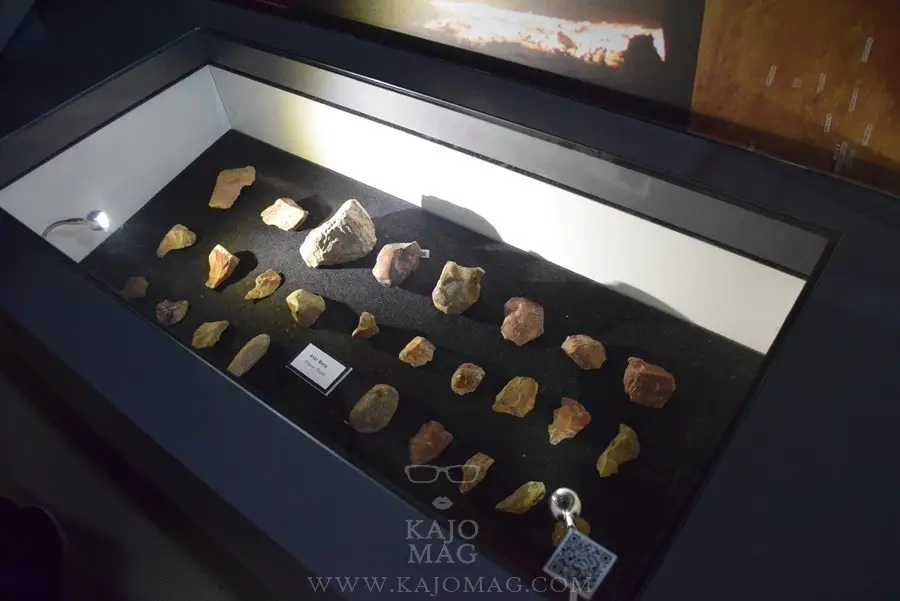
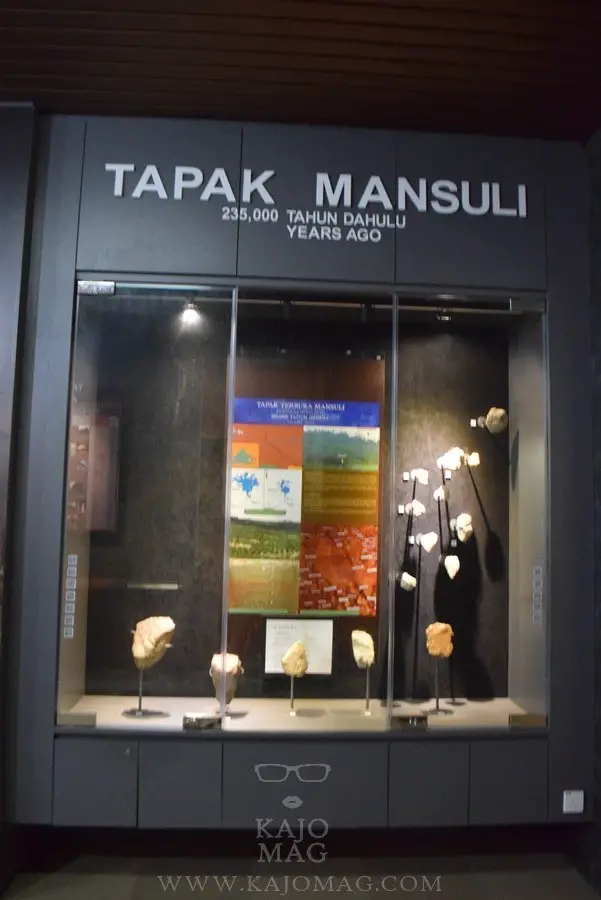
Back in 2012, researchers from Universiti Sains Malaysia and Sabah Museum found more than 1,000 stone tools believed to date back 235,000 years at Mansuli Valley.

Located about 30km from Lahad Datu town, there are two archaeological sites at Mansuli Valley namely Mansuli and Samang Buat Cave.

When Tom and Barbara Harrisson did a survey at Samang Buat Cave in 1964, they found four wooden coffins inside the cave. According to their reports, one of the coffins was “distinctly long”.

6 archaeological sites in Sabah that you need to know
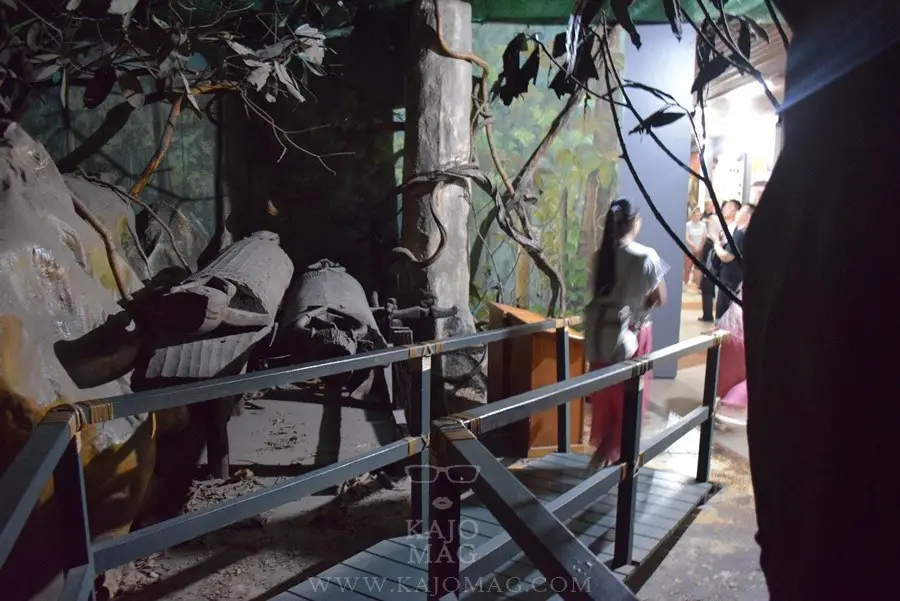
Even if you cannot make it to Lahad Datu archaeological sites, you can still catch of glimpse of Sabah prehistoric past at its state musuem.

You can read more about these archaeological sites from Mansuli Valley Lahad Datu, Sabah in the Prehistory of Southeast Asia by Jeffrey Abdullah and Wood Coffin Burial of Kinabatangan, Sabah by Stephen ChiaOr make your way to Sabah State Museum.

10 books being made into movies in 2019 you need to read

The trend of turning books into movies continues into this brand new year of 2019. While there seems to be too many books being turned into into dramas or Netflix original series to catch up with, here are 10 books you might want to read before they head to the cinema.

1.Pet Sematary by Stephen King (Apr 19)

Who doesn’t love it when Stephen King’s horror novels are turned into movies? Pet Sematary is a 1983 horror story by King which was nominated for a World Fantasy Award for Best Novel in 1986.

In the 2019 film adaptation of the book, Dr. Louis Creed (Jason Clarke) and his wife Rachel (Amy Seimetz) together with their two young children move from Boston to Maine.

There, the family discovers a mysterious burial ground near the family’s home.

With the successful film adaptation of King’s It in 2017, movie buffs definitely have high expectations for Pet Sematary.

2. Artemis Fowl by Eoin Colfer

This is a series of eight science fiction fantasy novels written by Irish author Eoin Colfer. Kenneth Branagh directed the movie adaptation of the film while Michael Goldenberg, Adam Kline and Connor McPherson wrote the screenplay.

In order to rescue his criminal father and restore the family fortune, Artemis Fowl II (Ferdia Shaw) and his servant and bodyguard Butler seek the existence of fairies in hopes of robbing them.

3. Little Women by Louisa May Alcott (Dec 25)

Louisa May Alcott’s Little Women has been adapted for cinema six times since it was published in two volumes in 1868 and 1869.

This American classic follows the lives of the four March sisters; Meg, Jo, Beth and Amy. It is loosely based on Alcott’s own life and her three sisters.

The movie stars Saoirse Ronan, Emma Watson, Florence Pugh, Eliza Scanlen, Meryl Streep, Laura Dern and many more.

4. A Dog’s Way Home (Feb 21)

Dogs are said to be a man’s best friend for many reasons. And one of it is because only a dog would travel more than 400 miles to find her owner.

A Dog’s Way Home is the film adaptation for W. Bruce Cameron’s A Dog’s Purpose.

Ashley Judd, Edward James Olmos, Alexandra Shipp, Wes Studi star in this family drama film.

5. The Rhythm Section by Mark Burnell (Feb 21)

How far would you go in search of the truth? Author Mark Burnell tells the story of a woman who seeks to uncover the truth behind a plane crash that killed her family.

Stephanie Patrick (Blake Lively) then discovers that the crash was not accidental so she embarks on a mission to track down those responsible by assuming the identity of an assassin.

6. The Knife of Never Letting Go by Patrick Ness (Feb 28)

After The Hunger Games, we clearly need another young adult dystopian movie so here comes Chaos Walking.

It is based on The Knife of Never Letting Go, the first book of the Chaos Walking series written by British novelist Patrick Ness.

The story is set in a world where all living creatures can hear each other’s thoughts in a stream of images, words and sounds called Noise.

7. Five Feet Apart by Rachael Lippincott

Five Feet Apart by Rachael Lippincott might remind you of John Green’s The Fault in Our Stars.

First-time author Lippincott tells the story of two sick teenagers who could never physically touch each other because of their sickness.

You might need to prepare some tissues both for the book and movie.

8. The Woman in the Window by A.J Finn

Dr. Anna Fox (Amy Adams) is an agoraphobic child psychologist who lives alone in a recluse New York city home.

So she spends her time like any woman would living alone; drinking wine, watching movies and spying on her neighbours.

Then moves in the Russells into the house across her home. While spying on her neighbours, she witnesses a crime and determines whether to call the police.

9. The Goldfinch by Donna Tartt (Oct 11)

This 2014 Pulitzer Prize for Fiction winner is told in the first person by Theodore Decker who survives a terrorist bombing at an art museum.

Then the story follows Theodore (played by Ansel Elgort) where he tumbles through a series of adventures that finds him living in Las Vegas with his deadbeat father and later involved in art forgeries.

10. The Sun is Also a Star by Nicola Yoon

If you loved Everything, Everything then you might also fall in love with The Sun is Also A Star.

It is Yoon’s second book after the success of Everything, Everything which was also turned into a movie in 2017.

The story follows a girl played by Yara Shahidi who falls in love in the midst of family conflict.

What are you waiting for? Read these books before they hit the cinema.

The meanings behind Dum Spiro Spero and Pergo et Perago

Long before there were Malaysian states of Sabah and Sarawak, there were North Borneo and the Kingdom of Sarawak.

Like many European administrations of the 19th century, these two regions adopted Latin phrases as their states’ mottos.

Sarawak’s motto was Dum spiro spero while North Borneo embodied the phrase Pergo et Perago.

Sarawak’s Dum Spiro Spero

Charles I of England was the monarch over the three kingdoms of England, Scotland and Ireland from 1625 until his execution in 1649.

During his final imprisonment, he wrote “Dum spiro Spero” on a copy of The Faerie Queene which was one of the books Charles I read before he died.

Historians believed it was his personal motto.

This Latin phrase means “While I breathe, I hope”. It is a modern paraphrase of ideas that comes from two ancient writers, Theocritus and Cicero.

It makes the perfect motto for those who refuse to quit until the very last breath, much like our own Sarawak phrase “Agi idup, agi ngelaban”.

After the Kingdom of Sarawak was established in 1841, the motto can be found on its Coat of Arms.

On Sept 26, 1928, the third Rajah of Sarawak Charles Vyner Brooke established The Most Excellent Order of the Star of Sarawak as the highest order of chivalry within the Kingdom of Sarawak.

The motto of this order was “Haraplah Salagi Bernafas”, which was the translation for Dum Spiro Spero.

Fast forward to 2019, the order no longer exists and Sarawak’s motto now is “Bersatu, Berusaha, Berbakti” (United, Striving, Serving).

Besides Kingdom of Sarawak, it was also the motto of South Carolina in US, St Andrews in Scotland and many others.

North Borneo’s Pergo et Perago

Meanwhile, the North Borneo Chartered Company (NBCC) was formed on Nov 1, 1881 to administer and exploit the resources of North Borneo.

The company motto was Pergo et Perago, which means “I persevere and I achieve” or “I undertake a thing and go through with it” in Latin. NBCC’s founder and first chairman was Alfred Dent.

Just like Sarawak, North Borneo’s motto was found on the first arms of North Borneo.

Besides that, Pergo et Perago was initially found on North Borneo’s one-cent and half-cent coins.

Nowadays, this Latin phrase becomes the motto of many educational institutions.

As for Sabah the present-day North Borneo, its motto has now changed to “Sabah Maju Jaya” or Let Sabah Prosper.

Follow these 5 YouTube channels if you love fun facts

Discovery, National Geographic and History are all television channels aiming to widen your general knowledge. And general knowledge is always entertaining if it is presented in fun facts.

However, most of the shows are long and time-consuming. Thanks to YouTube, now you can watch informative videos in a short amount time. Unlike conventional documentary shows, these shows give viewers a wide range of fun facts from educational to funny and scary.

For those who are with short attention span, here are five YouTube channels to widen your general knowledge and give you fun facts along the way:

1.The Infographic Show

Have you ever wondered what are the most painful things a human being can endure? Or how you can defeat Freddy Krueger and survive?

According to The Infographic Show, facts are fun but are usually presented in boring or badly edited videos. So this YouTube channel aims to bring facts in fun and entertaining animation.

It also gives you food facts, military unit comparisons, facts about money and more!

2. Vox

On a more serious note, Vox want to help viewers cut through the noise and understand what goes behind the headlines.

With Vox Borders, the producers show a glimpse of stories behind international borders and those living on these lines.

Additionally, check out its Earworm’s playlist in which Emmy-nominated producer Estelle Caswell explains the stories behind some of your favourite songs.

3. Origins Explained

Your general knowledge would not be complete without knowing cool stuff about the planet earth!

Get to know the most mysterious ocean facts or world’s most dangerous and dramatic sinkholes with Origins Explained.

This is the YouTube channel for you if you are looking for answers for mysterious events and unsolved mysteries.

4.Most Amazing Top 10

If it is straight-forward, informative fun facts that you need, then Most Amazing Top 10 is for you. What kind of facts do you need to know? Strange ones? Scary ones? Funny ones? Interesting ones? Or do you want to find educational or mind-blowing facts?

They have all the stories you could ever imagine, from “Top 10 Scary Holiday Urban Legends” to “Top 10 Scary Coco Cola Urban Legends”.

5.The Richest

Here comes a listicle video of weird, mind-blowing and fun facts. It likes to tap into topics you never thought of.

For instance 10 roads you would never want to drive on and 10 women in history who pretended to be men.

From Batang Lupar river in Sarawak to Batang Lupar district in Kalimantan

In Sarawak, Batang Lupar is famously known for its tidal bore phenomenon where waves of water goes against the direction of the current.

It is also one of the federal constituencies in Malaysia. Meanwhile on the other side of the international border, there is a district in Kapuas Hulu regency of West Kalimantan province in Indonesia which is also called Batang Lupar.

So, how did a district and a river, miles apart from each other divided by a border, share the same name?

From Batang Lupar river in Sarawak to Batang Lupar district in Kalimantan
Pak Lom, the head of village Dusun Kedungkang.
From Lanjak Entimau to Lanjak, Batang Lupar

“Our ancestors are originally from upper Batang Lupar and Batang Ai. They were at war with the Rajah many years ago and they came here to flee from their enemy,” Pak Lom, the head village of Dusun Kedungkang said.

He explained that Lanjak which is the nearest town to his longhouse was named after Lanjak Entimau. It is an area located between Batang Rajang in the north and Batang Lupar in the south of Sarawak.

From Batang Lupar river in Sarawak to Batang Lupar district in Kalimantan
Dusun Kedungkang during the evening.

This was because the Dayak Iban who live in Lanjak now were originally from Lanjak Entimau.

Lom said, “Of course back then, the border was not clearly defined. The border town of Badau which now falls in Indonesia territory was considered part of Sarawak kingdom back then.”

From Batang Lupar river in Sarawak to Batang Lupar district in Kalimantan
There are roughly 36 families living in Dusun Kedungkang.
Same culture but different countries

Despite the political border, the Iban culture in Kalimantan is not much different from Sarawakian Iban.

“We still practice our traditional arts. Here in Kedungkang, we still have our hand-tapping tattoo and pua kumbu weaving.” Lom added that he himself knew how to hand-tap traditional body ink.

Even when it came to their harvest or Gawai celebration, he explained their way of merry-making was no different from the Sarawakian Ibans.

From Batang Lupar river in Sarawak to Batang Lupar district in Kalimantan
Pak Lom’s wife, Ibu Pawa showing her hand-woven pua kumbu, Iban’s traditonal woven fabric.

Before settling back here as a farmer and carrying his duty as a village head, Lom was working for a timber company in different parts of Sarawak such as Tubau and Marudi for over 10 years. Thus making him familiar with his neighbouring country.

However, there is one celebration he pointed out that the Ibans in Batang Lupar district did not celebrate.

“We do not celebrate Gawai Antu (festival of the dead) here, I think you can only find that in Sarawak.”

Holding on to their traditional customs, the Iban community in Kedungkang also practices their ‘hukum adat’ (customary law).

If caught burning the forest in their areas, you could be fined 25,000 rupiah for each tree. Additionally if it was a durian tree, the fine could cost even more – up to millions of rupiah.

From Batang Lupar river in Sarawak to Batang Lupar district in Kalimantan
A traditional Iban longhouse in Kalimantan.
Living next to Danau Sentarum

Having this customary law to protect their environment surrounding their two-block longhouse was important, considering they are living right next to Danau Sentarum.

It is one of the world’s most biodiverse lake system located in the heart of Borneo island.

And just a few minutes’ walk from Kedungkang longhouse is Bukit Babi (Pig Hill in Malay).

According to Lom, it is one of the reasons why their longhouse is a tourist attraction. On average, there are at least two tourists visiting their longhouse daily.

He said, “Apart from coming to see our culture, tourists love to stop by to hike up the hill. They can see have a view of Danau Sentarum from up there.

Another main attraction of Kedungkang village is its 700m long plank walk from the longhouse to the lake.

From Batang Lupar river in Sarawak to Batang Lupar district in Kalimantan
The entrance to the 700m plank walk.

Just like Batang Lupar in Sarawak where its tidal bore attracts thousands of visitors during Pesta Benak (Tidal Bore Festival), one of the main tourists attractions in Batang Lupar district of West Kalimantan is the Danau Sentarum Festival.

From Batang Lupar river in Sarawak to Batang Lupar district in Kalimantan
This plank walk would turned into viewing point for tourist to watch boat parade and races when the water level is high at Danau Sentarum.

During this annual festival, the Kedungkang plank walk is turn into viewing point to watch the traditional boat parade, dragon boat and bidar races.

From Batang Lupar river in Sarawak to Batang Lupar district in Kalimantan
The ruai of an Iban longhouse in Kalimantan.

From Batang Lupar river in Sarawak to Batang Lupar district in Kalimantan
The entry point from Lubok Antu, Malaysia into Badau, Indonesia.

From Batang Lupar river in Sarawak to Batang Lupar district in Kalimantan
An inn in Lanjak, Batang Lupar. Both the names Lanjak town and Batang Lupar district in Kalimantan were named after places in Sarawak.

10 unexploded bombs found in Sabah and Sarawak over the past 10 years

What would you do if you stumbled upon unexploded bomb in your backyard? Well, the best and only thing to do is to call the police.

Here in East Malaysia, discoveries of unexploded bombs have been reported from time to time. In most cases, these unexploded bombs were discovered by construction workers.

Additionally, a number of them were from the World War II (WWII) era. Beyond this, there are little details on whose bombs they were. Did most of them belong to Japanese or Allied forces?

Nonetheless, here 10 reports of unexploded bombs found in Sabah and Sarawak over the past 10 years:

1.Sandakan (Mar 31, 2010)

A WWII bomb was found in the compound of a driving school in Sandakan, Sabah. An excavator operator found it accidentally when digging a drain.

The authority immediately cordoned off and a bomb disposal unit from Kota Kinabalu flew in to defuse it.

2.Kuching (Apr 26, 2018)

We bet that when this grass cutter showed up for work on the morning of Apr 26 this year, the last thing he thought he would find was an unexploded bomb.

He found it in a drain near Kampung Sungai Bedil Besar, Kuching. After examination, the bomb was reported to be an unexploded ordnance (UXO) which is used for training.

3.Lahad Datu (Aug 20, 2018)

Unlike most unexploded bombs on this list, this one was launched quite recently. It was used during Ops Daulat when the 2013 Lahad Datu military standoff occurred.

The bomb belonged to the Malaysian Armed Forces and was believed to have not exploded during the battle against the Royal Sulu Army.

A plantation worker found it in the early morn of Aug 20 at Ladang Sahabat 17 Plantation.

4. Tawau (June 23, 2014)

While carrying excavation work to build a specialist medical centre, a group of construction workers found a remnant of World War II at the site.

The police bomb unit then immediately detonated the bomb. Reportedly, it was the first time such unexploded bomb was found in Tawau. The authority believed there could still be many bombs that have yet to be found.

5.Sandakan (July 28, 2017)

Can you imagine stumbling upon a 250kg bomb in your daily work? That happened when a construction worker carrying out excavation work at the Road Transport Department building, Sandakan.

And the scariest part? The 130cm long bomb, a remnant from World War II, was still active.

Authorities believed that it was possible for bombs to be found in Sandakan as the area was attacked during WWII.

6.Sarikei (Apr 24, 2018)

There can be a lot of things you can find if you start to dig the earth for something. The most common thing you would find are earthworms.

Meanwhile in Sarikei a man dug up an exploded WWII bomb near Tanjung Manis Fisheries port when digging the ground for scrap metal.

7.Sibu (Dec 28, 2013)

How many bags of sand are used to detonate a bomb? In this case, it took 50 bags of sand piled over the bomb before it was detonated an hour later.

Oil palm plantation workers found the unexploded bomb in Sungai Assan on an afternoon while working at the site.

8.Miri (Dec 7, 2014)

Watch out when trying to dig a hole to plant something, you might find a bomb instead.

A man in Miri was digging a hole near his house to grow coconut trees. Instead, he found a 5kg bomb measuring 38cm long and 11cm in diameter from WWII.

9.Bau (Mar 9, 2013)

Here is a bomb used during the Indonesian-Malaysian Confrontation. A villager in Bau came across it near his farm.

According to authorities, the 65-mm gauge mortar remained active all this time.

And this was not the first time a bomb has been found in the district.

10.Sarikei (Dec 16, 2018)

This is the latest bomb finding incident in Sarawak. A WWII bomb which was still active was found in Ulu Kedup, Sarikei.

A man found it while cleaning up the river afterbridge repair work.

Do you have any old stories about finding relics from WWII? Let us know in the comment box. 

5 ways Sarawakians prepare for the Christmas season

Christmas is around the corner! How are your Christmas preparations going on?

In Sarawak, Christmas is not just about having dinner with your loved ones. There are a lot of activities going on around the state this month be it in town or the longhouses. However, lots of activities during this season of joy of means that there is a lot of work going into preparations as well.

So, here are five common ways Sarawakians are preparing for the Christmas season:

5 ways Sarawakians prepare for the Christmas season
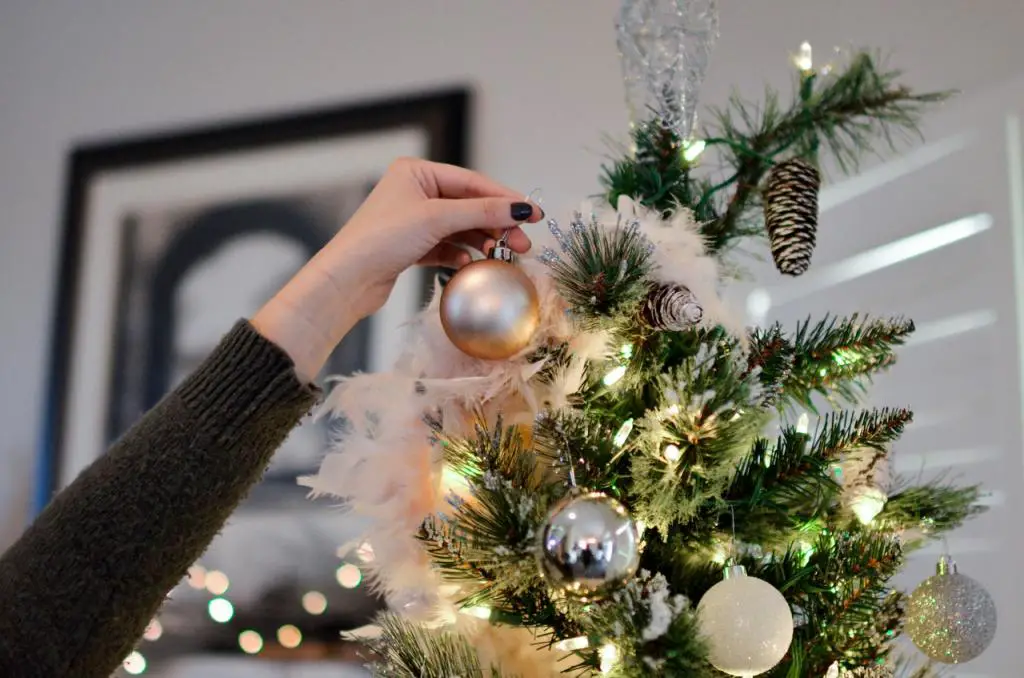
It is time to take out the faux Christmas tree to decorate. Credits: Pexels.

1.Cleaning and decorating

We may not have real pine trees to cut down, but we still follow this tradition as we take out the family Christmas tree and start decorating it. 

If you are expecting a lot of guests this holiday, that means this is the period to clean every nook and cranny of your house ahead of 2019.

For those planning to have an ‘open house’ (house visiting), preparing for Christmas also means cleaning, polishing, and counting out your special silverware.

2.Lots and lots of baking

5 ways Sarawakians prepare for the Christmas season
It is a time to bake those Christmas cookies!

Having an ‘open house’ is how Malaysians celebrate most holidays in the country. And this ‘open house’ culture would not be complete without cakes and cookies.

While cookies and cakes are easily available at bakeries and supermarkets, some families prefer to bake their own baked goods.

Being true to our Sarawakian identity, the selection of cakes must include the typical Sarawak layered cake or kek lapis, kek belacan, kek sarang semut and kek lumut.

Besides cakes and cookies, some even prepare snacks such as keropok and acar as well as peanuts to go with the alcohol.

Speaking of alcohol, some Sarawakians even make their own tuak or burak (rice wine) months prior to the celebration.

3.Organising and planning

If you are celebrating Christmas at the longhouse, then you would know this is the season full of activities.

Taking advantage of the long school holiday from Christmas till New Year, some longhouses would organise various kind of events for all ages.

The usual are sports matches such as futsal, volleyball and badminton. And the fun part? Some longhouses even take the sports up a notch by adding funny twist to it. For instance, men playing football while wearing sarongs.

Then for the children, the adults would organise games like telematches and treasure hunts.

When the night falls, the common activities are children’s beauty pageants, ngajat, karaoke competitions and lucky draw. Sometimes for the fun it, there is Ratu Pondan competition (men competing in cross-dressing to see who makes the most beautiful woman).

All these activities are planned by the longhouse committees weeks before Christmas.

4.Planning the perfect getaway

Meanwhile some families choose the Christmas season as the reason to have a vacation. Hence, preparing for Christmas means booking for flight tickets and accommodation as well as planning those travel itinerary.

5.Spiritual preparation

With about 44% of the Sarawakian population being Christians, preparing for Christmas can take more of a spiritual turn.

There are plenty of activities leading up to the day organised by various churches such as house to house caroling sessions and prayers.

In major towns in Sarawak like Kuching, Miri and Sibu, thousands of Christians will come together to join in Christmas parades.

The Miri Christmas Parade themed ‘Glory to God’ this year, for example, saw 40,000 people from 15 churches march around Miri city on Dec 8. Although it was the 11th edition, the parade made Sarawak stand out even more as a state that celebrated cultural and religious diversity while the Anti-Icerd rally was coincidentally being held in Kuala Lumpur.

As for the Catholics, they are encouraged to receive the Sacrament of Penitential to spiritually prepare themselves before celebrating Christ’s birth.

KajoMag readers, let us know how you prepare for your Christmas celebrations!

1 58 59 60 61 62 75