Patricia Hului

Patricia Hului is a Kayan who wants to live in a world where you can eat whatever you want and not gain weight.

She grew up in Bintulu, Sarawak and graduated from the University Malaysia Sabah with a degree in Marine Science.

She is currently obsessed with silent vlogs during this Covid-19 pandemic.

Due to her obsession, she started her Youtube channel of slient vlogs.

Follow her on Instagram at @patriciahului, Facebook at Patricia Hului at Kajomag.com or Twitter at @patriciahului.

Relying on the Ba Kelalan-Long Midang border route for a livelihood

Living near the border between Indonesia and Malaysia, the Krayan Highland communities have one famous saying among themselves: “Harimau di perut, Garuda di dada.” It means ‘tiger in my stomach, Garuda in my heart’, with the tiger referring to Malaysia, and the Garuda to Indonesia.

Although they are Indonesians by citizenship, they rely heavily on Malaysian supplies for their daily lives.

Since the Krayan Highlands are surrounded by mountain ranges and connected by rivers with high rapids, there is no river or land transportation to the rest of North Kalimantan.

Relying on the Ba Kelalan-Long Midang border route for a livelihood
Aircraft flying into Krayan Highlands are usually small models such as Cessna Grand Caravans, Twin Otter, or Pilatus aircraft.

The biggest township in Krayan, Long Bawan has an airport offering daily flights to coastal towns such as Nunukan and Tarakan.

But the air fare is expensive and not everyone can afford it. Furthermore, each passenger can only bring up to 10kg of goods.

The solution? They head over to Malaysia’s Ba Kelalan to buy their supply.

Relying on the Ba Kelalan-Long Midang border route for a livelihood
The flight from Nunukan to Long Bawan flies over a mountain valley.
Passing through the Ba Kelalan-Long Midang border for basic necessities

There is another famous saying in Krayan, “Everything here from Malaysia is enough, except for cigarettes.”

True enough, everything they use such as sugar, coffee, Milo, flour, cement, batteries, toothpaste, detergent, cooking gas, mineral water, biscuits are all sourced from Malaysia. Even the vehicles such as motorcycles and 4WD trucks there have Malaysian registration plates.

Most Krayan residents come to Malaysia to shop via the Ba Kelalan-Long Midang route. Recent statistics from the Malaysian Immigration Office showed that more than 2,000 visitors come in via the Ba Kelalan-Long Midang route every month.

Relying on the Ba Kelalan-Long Midang border route for a livelihood
A sign indicating the international border between Malaysia and Indonesia.

They used to shop at Ba Kelalan without going any further than that. For the past 15 years or so, the Krayan residents also drove directly to Lawas, bypassing Ba Kelalan.

Relying on the Ba Kelalan-Long Midang border route for a livelihood
See the difference in road condition between the two countries? The left side is Malaysia while the right side is Indonesia.
Crossing Ba Kelalan-Long Midang border for source of income

According to local guide Alex Ballang, the residents from Krayan also used the Ba Kelalan-Long Midang route to sell their products.

“Here in Krayan, we have three main products; mountain salt, adan rice and buffalo. We do not sell them solely to Malaysia but also to Brunei. Buffalo can be sold up to RM5,000 per head.

“Some might complain why we don’t sell our products such as salt and rice in Indonesia. But due to accessibility, it is easier and more convenient to trade across the border.”

Relying on the Ba Kelalan-Long Midang border route for a livelihood
The signage at Ba Kelalan-Long Midang border.

A visit to any sundry shop in Long Bawan and you will find the local traders selling more Malaysian products.

Living near the Indonesia-Malaysia border has been relatively peaceful for the people in Krayan. “We have families across the border and cross-border marriages are common here.”

Plus, the Lundayeh people in Krayan are considered ethnically the same group as the Lun Bawang people in Malaysia. Alex added, “We are from the same root. Even language-wise, we speak in a similar language.”

Relying on the Ba Kelalan-Long Midang border route for a livelihood
The road heading to Ba Kelalan.
Improving the livelihood of the Krayan people
Relying on the Ba Kelalan-Long Midang border route for a livelihood
The Krayan people sell one buffalo at about RM5,000 per head.

Perhaps because Indonesia is a large country, it has been difficult to provide basic infrastructure and supplies to the Krayan Highlands.

Besides public schools, other basic infrastructure provided for by the Indonesian government so far have been solar power and telecommunication towers in selected places.

However, not all villages in Krayan are able to enjoy the privileges. Some residents like Alex are still optimistic about the government’s latest effort.

“For starters, we had asphalt road for the first time here in Krayan. Plus, construction is still ongoing to improve the road condition here. Recently, we had diesel and petrol subsidies flying in three times a week from Tarakan so we no longer need to buy them in Malaysia.

“But we still need to rely on Malaysia to buy our basic food supply like sugar and other necessities. Will Jakarta remember us if we can no longer buy these items from Sarawak?”

Relying on the Ba Kelalan-Long Midang border route for a livelihood
A sundry shop like this in Long Bawan sells mostly Malaysian products.

Perupun, the mysterious Lundayeh ancient burial tombs of Krayan Highlands

Long time ago, the Egyptian pyramids were built as tombs for the country’s Pharaohs and their consorts.

Here in the central region of Borneo in the Krayan Highlands, the ancient Lundayeh community built perupun to bury their dead.

Both ancient burial tombs have one thing in common, nobody really knows how exactly they were built.

Perupun, the mysterious Lundayeh ancient burial tombs of Krayan Highlands
The journey to the ancient Lundayeh tomb in Pa Rupai requires a little bit of hiking.
Perupun in Pa Rupai village
Perupun, the mysterious Lundayeh ancient burial tombs of Krayan Highlands
The hole left by tomb raiders.

According to an elder from Pa Rupai village near Long Midang Murad Baru, 73, perupun means ‘batu yang dikumpul’ or piled up stones.

It takes about 20 minutes’ hike from the main road to reach the only perupun in his village.

Nobody knows whom the tomb belongs to, but as Murad said, “This man must be a man of wealth and most probably some sort of a leader or a nobleman.”

He further explained, “Since he was without an heir, nobody was allowed to take his wealth, and he was buried together with all his belongings.

“In order to protect his wealth from tomb raiders, or his enemies from taking his head off his body, they piled up all of these stones on top of his grave.”

Perupun, the mysterious Lundayeh ancient burial tombs of Krayan Highlands
Murad standing on top of the remnants of an ancient tomb.

Murad said his grandparents used to tell him that many noblemen back then did not have any heirs. It was believed they were cursed to die without children to carry on their line by others jealous of their courage and wealth.

Over the years, the stone mound at Pa Rupai has been heavily damaged by thieves. Today, there is still evidence of a gaping hole where thieves tried to dig up the tomb.

Accroding to Murad, the perupun was damaged even before his time but he believed that whoever the thieves might be, they must be living a cursed life.

“Anybody who tries to steal from the perupun will experience misfortune until his death. Back then when I was a child, it was even forbidden for us to visit this tomb. But we became lenient over the years, and now everybody can visit these ancient tombs.”

Perupun, the mysterious Lundayeh ancient burial tombs of Krayan Highlands
Tomb raiders left a big hole in this ancient tomb at Pa Rupai.
Building a perupun
Perupun, the mysterious Lundayeh ancient burial tombs of Krayan Highlands
One of the stone mounds in Terang Baru was located right next to paddy fields.

“Can you imagine how people in the olden days managed to collect all these more than 100 big stones to build this stone mound?” Murad asked.

They most probably carried these stones from the river about 10 meters away to build the tomb.

Judging by the hole left by the thieves, the perupun could be two meters deep and the stones piled up two meters up from the ground.

“Most probably they took up to two weeks to build it. According to my grandparents, the olden community would come together at this site, cooking here, eating here, while building it.”

Since nobody could inherit the nobleman’s wealth – including his livestock – the villagers would have slaughtered all his livestock and eaten them while building his tomb.

Perupun, the mysterious Lundayeh ancient burial tombs of Krayan Highlands
Ellias Yesaya
The perupun in Terang Baru village
Perupun, the mysterious Lundayeh ancient burial tombs of Krayan Highlands
What’s left of this ancient burial tomb are scattered rocks.

In Terang Baru village, there are two perupun. Just like the perupun in Pa Rupai, nobody knows whom these tombs belong to. All they know is that they belonged to noble people because perupun are not built for commoners.

It helps that they found beads in one of the two perupun. According to Krayan native Ellias Yesaya, this particular perupun most probably belonged to a noblewoman.

Unfortunately, time and the natural elements have left both perupun in bad condition. The stones have either rolled away or collapsed and are covered in weeds.

Perupun, the mysterious Lundayeh ancient burial tombs of Krayan Highlands
The locals found beads buried in this ancient tomb.

A fence surrounds one of the perupun to prevent wandering buffalo from damaging it any further while the other perupun (the one believed to belong to a noblewoman) is located on private property.

Besides Pa Rupai and Terang Baru, perupun can also be found in Long Umung, Pa Raye, Long Layu, Long Api and Pa Kebuan. There are also jar burial sites in the Krayan Highlands which most likely belong to the commoners.

Ellias had two theories on how people in the olden days managed to build these ancient tombs.

“I think our ancestors were way taller and stronger than us. I remember in the 60s when I was still in school, they found bones in old burial grounds. Their bones were very long,” Ellias said.

Another way was that they used their strength in numbers and simply did ‘gotong-royong’ (communal work).

“The community could have come together and built this perupun,” he added.

Perupun, the mysterious Lundayeh ancient burial tombs of Krayan Highlands
Nobody knows how the olden Lundayeh people managed to carry this stone.

Crocodile mounds, where the headhunting after-party took place in Krayan Highlands

The Lundayeh people of Indonesia had the same reasons to build crocodile mounds or effigies like the Lun Bawang people in Sarawak; to celebrate successful headhunting trips.

Crocodile mounds, where the headhunting after-party took place in Krayan Highlands
Melud leading the way to one of the two sites of crocodile mounds in his village of Pa Rupai.

In the olden days, it was considered a great achievement for a man to take an enemy’s head.

Upon returning home, they would raise a pole (called ulung) on an earthen mound shaped like a crocodile.

In Krayan Highlands of North Kalimantan province today, these crocodile mounds can be found in places like Long Midang, Tang Payeh, Trang Baru and Long Layu.

Each mound is maintained by the communities who live near the area. However over the years, the shape of the crocodile on these mounds are difficult to distinguish. This is due to several factors such as soil erosion as well as trampling by animals such as buffalo.

Crocodile mounds, where the headhunting after-party took place in Krayan Highlands
Melud standing on top of a crocodile mound.
Crocodile mounds as a symbol of bravery

According to Melud Baru, 73, from Pa Rupai village of Long Midang, the Lundayeh tribe picked the crocodile as a symbol of bravery.

“According to our ancestors long time ago when we still had lamin panjang (longhouse), they made this as a symbol of bravery. They picked a crocodile because it thrives both on land and in the river,” he said.

“My grandfather told us the crocodile was an unbeatable animal. Its scales are impenetrable, it has strong jaws and teeth to bite its opponent, its tail can be used to strike its enemies.”

No other animal could ever beat the crocodile before so their ancestors picked the crocodile as their symbol of bravery.

They are specific ways to build these crocodile mounds. Most of their heads face the river,to protect the community who built them from enemies coming for them from the river.

Crocodile mounds, where the headhunting after-party took place in Krayan Highlands
Melud showing where the head of the crocodle used to be.

A headhunting after-party on the crocodile mounds

Crocodile mounds, where the headhunting after-party took place in Krayan Highlands
This what was supposed to be the head of the crocodile.

The crocodile mounds were where the celebrations took place after the headhunters came back from a successful headhunting trip.

Melud said, “Back then during our ancestors time, if there was a conflict among them, they wouldn’t talk it out like they do nowadays. The young people just gathered and went headhunting to ‘solve’ the conflicts – less talk that way.

“For headhunters who just came back from the trip, they would ‘slash’ the body of the crocodile mound using their parang just to say, ‘We are home!’ Then, they would drink and celebrate.”

The celebrations at these mounds lasted for weeks, sometimes even months.

Crocodile mounds, where the headhunting after-party took place in Krayan Highlands
Due to soil erosion, the shape of the crocodile is no longer can be distinguished.

On top of these mounds, they would erect the ulung for them to hang the heads that they claimed from their enemies.

Before the celebration, they would prepare jars of rice wine or burak. The amount of jars prepared ranged from 10 and above depending on the amount of heads they achieved. Thus, the more heads, the more rice wine they prepared.

“The weird thing is that there are no crocodiles here in Krayan, so our ancestors may have never even seen a crocodile. But they managed to build a crocodile mound. Maybe some of them had travelled far enough to have seen a crocodile,” Melud said.

Crocodile mounds, where the headhunting after-party took place in Krayan Highlands
Melud standing on top of a crocodile mound.

10 quotes by Tunku Abdul Rahman about raising living standards in Sabah and Sarawak through Malaysia in 1962

Before the federation of Malaysia was formed on Sept 16, 1963, there were meetings over meetings held attended by different delegates from Malaya, Singapore, Sarawak and North Borneo.

One of those meetings was held on Jan 6, 1962 in which the representatives met up in Kuala Lumpur. They touched upon different subjects including citizenship, transfer sovereignty, economy and special position of the indigenous peoples.

The meeting lasted for three days till Monday, Jan 8. During the closing session, Sabah’s Donald Stephens said that the pieces of Malaysia’s jigsaw puzzle had fallen into place and the picture it produced was that of a “new, vigorous and young nation in the making.”

Meanwhile, Sarawak delegation leader Yeo Cheng Hoe thanked the prime minister of Malayan federation Tunku Abdul Rahman for his desire to help Sarawak.

Singapore then president Lee Kuan Yew stated that with Malaysia there were no reasons why the standard of living of the people of the five territories should not reach that of more developed countries as we lack neither human or natural resources.

As for Tunku Abdul Rahman, he mainly talked about how Malaysia would raise the living standards of Borneo.

Here are 10 takeaway points from Tunku Abdul Rahman’s address during that meeting convincing Sabah and Sarawak to form the Federation of Malaysia:

1.“I am confident that the rate of development in the Borneo territories would be considerably increased after the merger, sufficient not only to offset or compensate for their loss of the Commonwealth Development and Welfare Funds, but to increase the tempo of their economic activities.”

2.“(About the plan to form a Federation of Borneo States) I reasoned to myself that if the people of Borneo themselves could wish to come together for their own good and well-being of their country in the form of a Federation, why then should we not join together?”

3.“The only difference would be that whereas in a Federation of Borneo States, as among themselves, the Borneo territories would continue for a long time to be colonies of Britain, in the Federation, with us they would lose the subject status immediately and would gain in stature, and which become independent territories enjoying equal rights and dignity with all other eleven states which now comprise the Federation of Malaya.”

4.“Please do not think that by embracing the territories of Borneo, Malaya is looking for territorial aggrandizement. We are linked by a common cultural heritage and historical background and financial and economic interests.”

10 quotes by Tunku Abdul Rahman about raising living standards in Sabah and Sarawak through Malaysia in 1962
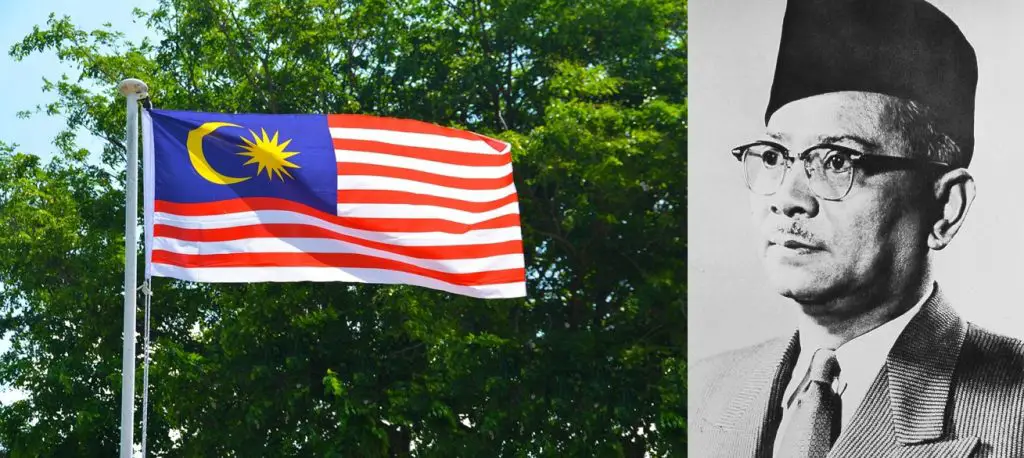
(Left) A photo of Malaysian flag and (right) Tunku Abdul Rahman.

5.“You might say that the British have promised you independence. The question is when will that come about? Should your independence depend on normal development, I do not think you will achieve it in the near future. And when your independence finally arrives, you will be exposed to a precarious existence as tiny and powerless preys to the hungry and rapacious powers of the world.”

6.“As for the poor people of the rural areas who had been neglected before (in Malaya), they are getting a better life and a better deal than they had ever had before. The same cannot be said for the people of Borneo.”

7.“There is no single railway track in the whole of mainland of Sarawak, not one road connecting one territory with another. So very little has been done to improve the lot of people living in Borneo today.”

8.“To suggest that by joining us in Malaysia the Borneo territories would not be our equals, and to suggest that by joining us they would lose their right to practice their own religion and culture to pursue their own customs and the right to study the languages of their forefathers is not true, and is a falsehood which had intentionally been spread by forces which hope to take control of these territories for themselves.”

9.“The Borneo territories too have their won aborigines who live in the most primitive way in the very deepest part of the country. But even the Ibans, Kayan, Kadazans and Melanaus – to mention a few of your indigenous peoples-suffer today such neglect as we Malays used to suffer. It sadden my heart every time I think of the fact and welfare of the sons of the soil of Sarawak and Sabah.”

10.“Therefore, it is only logical that if the Borneo territories want to secure strength through unity, they should unite with the (Malaya) Federation and Singapore which alone can give us all strength viability and unity.”

Pasar Batu Tarakan, where Indonesians shop for Malaysian products

When visiting Indonesians want to buy souvenirs at Tarakan island in North Kalimantan, the place most people suggest is Pasar Batu Tarakan.

But for Malaysians, it might not be the most ideal place. This was because Pasar Batu Trakan sells mostly Malaysian products.

Most of these products were brought in from Tawau, Sabah which is a 40-minute plane ride or four-hour boat ride from Tarakan island.

Malaysian Milo, the most sought after item at Pasar Batu Tarakan

If you ever take a flight from Kuching to Pontianak, you might notice many Indonesians carrying Milo as their hand-carry items.

They found Malaysian Milo to be more delicious than the Indonesian-made one. Plus, it is thicker, less sweet but richer in cocoa flavour than theirs.

So Malaysians, do not be surprised if you can find Milo at every stall at Pasar Batu Tarakan.

They are sold in different weights as well as 3-in-1 versions, just as you would find them in Malaysian supermarkets.

Other Malaysian beverages sold at Pasar Batu Tarakan were Nespray milk, Old Town Coffee, Ovaltine, Quaker Oat and children’s milk Lactogen.

Speaking of oats, one of the hottest items at Pasar Bayu Tarakan is made-in-China Twinfish Oat Choco. However be careful, as this is supposedly the most counterfeited item in Malaysia. Its distributor Jie Cheng Hang Sdn Bhd claimed that there are over 16 brands of the similar product in Malaysia. And the one found at this souvenir market came from Malaysia.

Apart from Twinfish Oat Choco, Indonesians also love Malaysian Apollo cakes. A Malaysian favourite childhood snack, the market also sold plenty variety of Apollo cakes there.

So what do Malaysians buy at Pasar Batu Tarakan?

Although Malaysian products made up 90% of the items being sold at Pasar Batu Tarakan, it does not mean Malaysians cannot buy anything interesting from there.

You can buy affordable crackers (kerupuk) made from locally caught fish like ikan tipis and ikan bulu ayam.

If you are a coffee lover, you must take one packet of Kopi Malinau Equato. It is one of North Kalimantan’s very own robusta available in dark and medium roasted variety.

A memorable dinner at Coffee Malabar Tarakan

During my recent trip to North Kalimantan organised by WWF-Indonesia, I had the opportunity to spend a night in Tarakan.

The island of Tarakan is located in northern Borneo, just across the border from Sabah, Malaysia.

After enjoying our evening view at Pantai Amal while devouring countless numbers of crunchy fried shrimp and hard clams, I thought I had enough.

However, my friends convinced me to eat something or at least try something new. How often do I get to visit Indonesia, let alone Tarakan right?

We were then brought to Coffee Malabar Tarakan at Pamusian, Tarakan Tengah.

At a glance, it looked like a typical hispterish, Insta-worthy dining place. They had funny and interesting quotes about coffee on the wall, antique decorations, unique lighting and old doors for the ceiling. The patrons all seemed to be relaxed and enjoying themselves.

A memorable dinner at Coffee Malabar Tarakan
Coffee Malabar Tarakan

There were plenty of choices of Indonesian, western and fusion cuisines. Too many for me that I couldn’t decide what to have.

After few suggestions from my friends, I decided to give nasi gudeg a try. Without even asking any more details, I just left my taste buds and gastronomic experience in the hands of my new friends.

My first nasi gudeg at Coffee Malabar Tarakan
A memorable dinner at Coffee Malabar Tarakan

When my order finally arrived, the first thing I tried was the gudeg. Originally from Yogyakarta and Central Java, gudeg is made from young unripe jackfruit stewed for several hours with palm sugar and coconut milk.

So you can imagine my first thought was that it was sweet.

Some of the additional spices for gudeg are galangal, bay leaves, garlic, shallot, coriander seed and teak leaves. Teak leaves give it its reddish-brown colour, making it looked like stewed beef.

The nasi gudeg was also served with other side dishes such as opor ayam, telur pindang and krechek – all of which were new for me.

Let me start with opor ayam; it is basically chicken cooked in coconut milk. For Malaysians, imagine ayam masak lemak but with less ‘lemak’ or coconut milk.

Telur pindang looked like my favourite Chinese tea egg (where a boiled egg is cracked and cooked again in tea) but without the herbal fragrance. The telur pindang is boiled slowly in water mixed with salt, soy sauce, shallot skins, teak leaf and other aromatic spices.

A memorable dinner at Coffee Malabar Tarakan
From left to right are telur pindang, gudeg and opor ayam.

Last but not least, my first ever nasi gudeg came with krechek. To be honest, I could finish all of my side dishes including the gudeg, but not the krechek.

When my friends asked what I thought about the taste? I honestly answered, “Unique.” For me, its almost-rubbery texture was unfamiliar hence making it unique. It is made from skin of a cattle, cooked in a coconut-milk based stew.

A memorable dinner at Coffee Malabar Tarakan
The krechek, which is made from the soft inner skin of cattle.

Glancing over at my friends’ orders, I thought ‘Dang, I should have ordered the Nasi Pecel’. It came with pecel, a salad dish made of cooked vegetables with peanut sauce, steamed rice and other side dishes.

A memorable dinner at Coffee Malabar Tarakan
Nasi pecel

There were other dishes on the menu as well such as Crispy Cheese Chicken Rice, sandwiches and burgers.

A memorable dinner at Coffee Malabar Tarakan
Crispy Cheese Chicken Rice
Sampling the different coffee beans from all over Indonesia at Coffee Malabar Tarakan

Coffee lovers would definitely love Coffee Malabar. You can choose your beans, which come from different parts of Indonesia.

Did you know that Indonesia was the fourth-largest coffee producer in the world in 2014? They have more than 20 varieties of arabica coffee being cultivated in the country.

Even if you are like me, who doesn’t like arabica in general due to its acidity, give Indonesian arabica a try. Their arabica coffee generally has low acidity compared to those from Central America and East Africa.

Coffee Malabar offered the choices of Luak, Bali Kintamani, Toraja Kalosi, Java, Aceh Gayo, Flores and Papua coffee beans.

Each came with descriptions of aftertaste, acidity, roasting and popularity levels.

I chose the Bali Kintamani; it was thick with a rich herbal aroma. It also had a slight citrus-y aftertaste.

There were plenty of other drinks as well and the one caught my attention was Iced-blended Avocado with Coffee.

As much as I wanted to be daring in my dining experience, I only had room for one and it was for nasi gudeg and its unique krechek.

A memorable dinner at Coffee Malabar Tarakan
Iced blended avocado with coffee.
A memorable dinner at Coffee Malabar Tarakan
Vietnamese coffee.

KajoAsks: What drives Sabah-based skincare brand The Borneo Scrub

What is it like to start a fully online skincare endeavor in Sabah? KajoMag asked Casandra Timothy the ups and downs of running The Borneo Scrub, a 100 per cent natural skincare solutions and cosmetics brand.

Established in 2015, the brand focuses on using locally sourced ingredients in Sabah. Their signature – and most sought after -item is the Coffee Face & Body Scrub.

KajoAsks: What drives Sabah-based skincare brand The Borneo Scrub
Casandra Timothy
KajoMag: What sparked your interest in starting The Borneo Scrub?

Casandra: My husband, Azel, is a typical caffeine and coffee addict, he can’t live without his coffee and his multiple caffeine boosts. So one day out of the blue I joked about making a skincare product with the coffee he usually drinks (Ground Tenom Coffee). He said why not, I went ahead and made some scrub with ingredients we had on hand and the husband was also the first human guinea pig for the product.

The results were impressive even for the early unrefined batch. His skin, which was always dry and flaky had instantly transformed into baby skin after washing off the scrub. The rest of the family members became additional guinea pigs, then friends. They then started asking whether I was selling it and the rest is history.

KajoMag: What is the best part of running The Borneo Scrub?

Casandra: The best part about running The Borneo Scrub is seeing the reaction of people when they have tried your product. Seeing actual validation and approval of your handmade product, seeing how it amazes people is an indescribably good feeling and it still feels the same even now.

Another equally great part is meeting other entrepreneurs, business owners, all these people and social connections that would have never existed for us if The Borneo Scrub didn’t exist.

I know it should be one thing only but I have to say, if The Borneo Scrub did not exist we also wouldn’t have tried participating in business pitch competitions. It was a whole new level of learning and experiencing. My husband in particular really enjoyed this.

KajoMag: There is a rise of local SMEs using locally sourced ingredients to make skincare products in Malaysia. How do you deal with the competition?
KajoAsks: What drives Sabah-based skincare brand The Borneo Scrub
Coffee Face and Body Scrub


Casandra: Competition is very normal. We honestly don’t worry about it a whole lot because we believe the customers can tell the difference. Furthermore, word of mouth and actual reviews tell the best story.

When we started to be more commercially active within Sabah, and Kota Kinabalu particularly, there were about 3-4 local home made businesses selling the exact same type of products e.g. natural body scrubs.

We all did our own thing, focused on quality and customer service. We never had any issues (that we personally experienced) with competition. The way we see it, as long as it can help the market grow and get the public more interested in home made products with local ingredients, no one really loses out on anything. Plus, we elevate the whole supply chain.

KajoMag: Can you name a moment of failure in your business experience that you learned from or that helped you improve your business or the way you work?

Casandra: For us, we don’t consider it moments of failure. This was because when everything is done and settled, and we look back and reflect it’s actually just ill made decisions that didn’t work out very well. One particular situation was acquiring a commercial property as a specialized production and retail HQ.

Seeing that we are a home based enterprise, after some months we realised we were losing money to a place that we rarely even used. Having your own store or place to sell your stuff is great and everything but it’s arguably not the most effective way, depending on your product and customers.

So after a few months we decided to let the place go. We lost a moderate amount of money due to renovation costs, tenancy contract etc. But looking back now we really did learn a lot from there.

KajoAsks: What drives Sabah-based skincare brand The Borneo Scrub
The Borneo Scrub’s Cazel’s Face Oil
KajoMag: Care to share any long-term goals for The Borneo Scrub?

Casandra: One of our targets is to be one of the must-have souvenir products for tourists to try, to buy and to gift to friends back home.

We’re currently supplying our products to Kadaiku (under Sabah Tourism Board) and souvenir chain stores in KK. We also have agents servicing various states. Currently it is going very well and next step is to partner and collaborate with beauty spas.

We also plan to diversify products, we had a few different products in the past. Unfortunately, the amount produced was not much due to high cost. Nonetheless, we have received great feedback on them. So we plan to pursue this option when we are able to.

In addition, at times we aren’t able to cope with the demand from souvenir stores since our products aren’t made in factories in large batches. Thus, we also hope to solve this problem (good problem to have) when we are able to.

KajoAsks: What drives Sabah-based skincare brand The Borneo Scrub
The Borneo Scrub’s Lip Care Line

Having a taste of adan rice from the Krayan Highlands

Fresh air, unpolluted environment, clear water from the mountain streams, cool temperatures; perhaps these were the combined factors that contributed to adan rice of Krayan Highlands being so delicious.

Famous for its fine and small grain with a unique texture, adan rice is in high demand not only in Indonesia but also in the Malaysian market.

Located at an altitude between 760 and 1,200 meters, the highlands are not well connected by road with the rest of the Indonesian lowlands in Kalimantan. In addition to that, river transportation is impossible due to high rapids. So, the main centre of Krayan, Long Bawan is only accessible by flight from Nunukan or Tarakan, North Kalimantan.

However, Long Bawan is connected by gravel road to Ba Kelalan in the Malaysian state of Sarawak.

Due to this, most farmers sell their adan rice to the Malaysian market after reserving some for personal consumption.

Having a taste of adan rice from the Krayan Highlands
A view of Krayan paddy fields from our plane.
Paddy farming in Krayan Highlands
Having a taste of adan rice from the Krayan Highlands
Farmers clearing the paddy field in April to get ready for the planting season in July.

The farmers in Krayan cultivate paddy according to traditional and organic practices. Every family farms between one to five hectares of rice fields.

Adan rice in particular takes about five to six months to mature. Hence, only one crop is planted every year.

Having a taste of adan rice from the Krayan Highlands
A farmer takes a break from working on the paddy field.

According to local guide Alex Ballang, some of the locals tried to plant the rice twice a year but the attempts were never successful.

“We are not sure why the attempts failed. Maybe because of the weather or temperature, so now we only plant them in one cycle a year.”

The locals start to prepare the rice seedlings in July and the planting begins. Then, they start to harvest the rice in late December until February.

Everything is organic when it comes to maintaining the paddy fields. The farmers use traditional irrigation techniques like bamboo pipes and canals to channel the clear water from the mountains surrounding the fields to their farms.

Having a taste of adan rice from the Krayan Highlands
Alex describing paddy farming in Krayan.

On top of that, although buffaloes can be seen almost everywhere in Krayan Highlands, they are not used for plowing; they let the buffaloes loose in the fields to trample the soil and eat the weeds.

Plus, what can be more organic than buffaloes’ dung to fertilise the rice fields?

Having a taste of adan rice from the Krayan Highlands
A buffalo takes a bath in the mud.
The nutritional value of adan rice

In 2012, the Indonesian government awarded the adan rice from Krayan highlands the certificate of Geographic Indication (GI). This was to acknowledge the unique characteristics of this rice.

Adan rice comes in a number of colour varieties – white, red and black.

Having a taste of adan rice from the Krayan Highlands
White adan rice.
Having a taste of adan rice from the Krayan Highlands
Red adan rice.
Having a taste of adan rice from the Krayan Highlands
Black adan rice.

The black adan rice in particular was included in the Slow Food Art of Taste products by Slow Food Foundation. Created by Slow Food International and Slow Food Italy, it is the operational body to protect food biodiversity.

According to the foundation, the black variety of the rice is rich in minerals such as iron, calcium and phosphorus.

Additionally, it has high protein content and relatively low fat and carbohydrate content compared to the white variety.

Having a taste of adan rice from the Krayan Highlands
Adan rice wrapped in leaves called isip.
Cooking adan rice

The Lundayeh people of Krayan have different ways to cook their rice.

Luba Laya is their soft rice wrapped in isip leaves. The Kelabit of Malaysia also have a similar dish. It has a soft, almost porridge-like texture. As for other Indonesian dishes, luba laya is most almost like the softer version of lontong.

Having a taste of adan rice from the Krayan Highlands
Luba Laya

Speaking of porridge, the locals have their own known as biter. Almost like risotto, but without the parmesan cheese, it is cooked with different kinds of wild vegetables such as cassava leaves and ginger flowers.

Having a taste of adan rice from the Krayan Highlands

Among the three varieties of adan rice, the crème de la crème of them is none other the black variety.

Traditionally, black adan rice is cooked together with other rice particular the white ones. Now, more and more people love to eat the black variety on its own.

When it cooks, the black adan rice gives out a sweet aroma distinctively different from other rice.

Even when you taste the black adan rice, you will notice that it is slightly sweeter than the others. It is flavourful enough that you can eat the rice on its own.

Having a taste of adan rice from the Krayan Highlands
Some traditional Lundayeh dishes.
Having a taste of adan rice from the Krayan Highlands
An empty paddy field.
Having a taste of adan rice from the Krayan Highlands
Most of Lundayeh desserts are made from rice.

10 more South Korean movies based on real-life events to watch

You have read our 10 South Korean movies based on true stories. Now, we have 10 more films inspired by real-life events that you need to watch while learning a bit about South Korean’s history:
1.71: Into the Fire (2010)

The Battle of P’ohang-dong which took place during the early Korean War was a fight was between the United Nations and North Korea from Aug 5-20, 1950 around the town of P’ohang-dong, South Korea.

71: Into the Fire (2010) is based on true story of a group of 71 under-trained, under-armed, and outgunned South Korean student-soldiers who took part in the battle.

For 11 hours, this group of students defended the local P’ohang-dong girls middle school from an attack by North Korean forces.

Unfortunately, most of the students died during the battle as they were unmatched against the North Korean’s special forces commando 766th Unit.

Watch the trailer here.

2. A Taxi Driver (2017)
10 more South Korean movies based on real-life events to watch
Five movies inspired by Gwangju Uprising here.

The Gwangju Uprising took place in Gwangju city from May 18 to 27, 1980.

After President Park Chung-hee was assassinated on Oct 26, 1979, Chun Doo-hwan, a former South Korean army general successfully led a military coup and became the de facto South Korean leader.

The uprising in Gwangju began when local Chonnam University students demonstrated against Chun’s martial law government.

In response, the South Korean army and police used firearms, violence and even sexual assault to suppress the protest.

Meanwhile, the Gwangju citizens stood up against the authority by robbing local armories and police stations.

This 2017 South Korean movie centers around Kim Man-seob (Song Kang-ho), a taxi driver who ferried a German journalist named Jurgen Hinzpeter (Thomas Kretschmann) around Gwangju and past military cordons.

Man-seob’s character in the movie is loosely based on real-life Kim Sa-bok while Hinzpeter (1937-2016) was the real-life German TV reporter who reported on the Gwangju massacre to the world.

Apart from A Taxi Driver, the real-life events which happened in Gwangju also inspired other movies such as May 18 (2007) and Peppermint Candy (1999).

Watch the trailer here.

3. The Attorney (2013)

Speaking of Chun Doo-hwan, another incident called the “Burim case” of 1981 happened during Doo-hwan regime.

The military government arrested 22 students, teachers and office workers who belonged to a book club without warrants and on fabricated charges that they were North Korea sympathizers.

The Attorney (2013) is loosely based on this event in which tax lawyer Roh Moo-hyun formed a legal team with Moon Jae-in and Kim Kwang-il to defend the group.

Today, the real-life Moo-hyun went on to become the 16th South Korean president while Jae-in is currently the South Korea president.

Watch the trailer here.

4. 1987: When The Days Come (2017)

Even after the Gwangju Uprising, university students continued to protest against Doo-hwan.

One of the students, Bak Jong-cheol was detained and interrogated for his role in the student protest. During the interrogation, the authorities used the infamous waterboarding technique to torture Jong-cheol which led to his death.

The movie is set in 1987, focusing on the real-life events that led up to the June Democratic Uprising including the death of a student protester during police interrogation.

Unlike the Gwangju Uprising which was limited to the city, the June Democratic Uprising was a nationwide democracy movement in the country that brought about mass protests from June 10 to June 29, 1987.

Watch the trailer here.

5. The Battleship Island (2017)

Hashima Island is commonly known as “Gunkanjima” meaning “Battleship Island”. This uninhabited island was where Korean civilians and Chinese prisoners of war were forced to work during the Second World War.

Sadly, it is estimated that about 1,300 labourers died on the island due to exhaustion, malnutrition and accidents from poor working conditions.

Inspired by the events on Hashima Island, The Battleship Island (2017) is about an attempted prison break from the forced labour camp.

Watch the trailer here.

6. Northern Limit Line (2015)

Starring Kim Mu-yeol, Jin Goo and Lee Hyun-woo, Northern Limit Line is a naval thriller film based on the real-life events of the Second Battle of Yeonpyeong.

The battle was a confrontation at sea between North Korean and South Korean patrol vessels near Yeonpyeong island in 2002.

During the real-life events, two North Korean patrol boats crossed the contested border and engaged with two South Korean patrol boats.

Subsequently, the North Koreans withdrew before South Korean reinforcements arrived.

Unsurprisingly, the North Korean state media outlet slammed the movie being distorted while conservative South Korean leaders recommended the film.

Watch the trailer here.

7. Sea Fog (2014)

Here is a movie based on the ugly side of real-life human trafficking cases. The islands of South Korea’s southwest coast have been used as routes for illegal Chinese immigrants to enter the country seeking for better life.

In 2001, 25 of these illegal immigrants were suffocated to death in the storage tank of a fishing vessels. Instead of giving them a proper burial, the boat crew dumped their bodies into the sea.

Sea Fog is a romanticized version of this real-life event with the youngest crew member Dong-sik (Park Yoo-chun) trying to protect a young female migrant.

Watch the trailer here.

8. Norigae (2013)

This year, the K-pop fandom was rocked by its biggest scandal in the industry ever. Big Bang’s youngest member Seungri was named a suspect for offering prostitutes to clients at his nightclub.

Before this scandal, there was the death of actress Jang Ja-yeon. In 2009, Ja-yeon killed herself, leaving behind a shocking suicide note.

She described how she was beaten and forced to entertain and have sex with program directors, CEOs and media executives.

Inspired by the events surrounding her death, Norigae (2013) follows a journalist in finding the truth behind a young actress’ suicide.

Watch the trailer here.

9. Another Family (2013)

Imagine a movie that was both invested in and produced solely by crowdfunding and all the actors in the cast worked in the film for free.

That was how much the South Korean public wanted this movie to happen. Another Family (2014) was based on the true story about the legal battle between Korean conglomerate Samsung and its employees who contracted leukemia.

Meanwhile, the movie was a fictionalised account of the real-life story of Hwang Sang-ki. Sang-ki was a taxi driver who waged a four-year legal battle against Samsung.

His daughter Yu-mi was diagnosed with advanced stage of leukemia two years after working at a Samsung semiconductor factory. Then in 2007, she lost her battle to cancer at the age of 23.

Watch the trailer here

10. Birthday (2019)

The world was shocked when the news of the Sewol Ferry Disaster broke out. On the morning of Apr 16, 2014, the ferry sank while carrying 476 people en route from Incheon towards Jeju.

Overall, 305 passengers and crew members died in the disaster. In addition to that, more than half were rescued by fishing boats and other commercial vessels.

Most of the victims were secondary students from Danwon High School, Ansan city.

Inspired by the incident, Birthday (2019) follows how a family copes with the grief from the loss of their son in a tragic accident.

Watch the trailer here.

Come for the view, stay for the seafood at Pantai Amal of Tarakan

Do you know that you can take a direct flight from Tawau to Tarakan? That is how accessible this largest city of the Indonesian province of North Kalimantan for Malaysians.

It is also reachable by flight from Balikpapan, Jakarta, Surabaya, Denpasar and Makassar.

Located in northern Borneo, the island is just across the border from the Malaysian state of Sabah.

Historians or World War II buffs would know about Tarakan. It was among the first Japanese targets early in the war.

Realising they were short of oil supply, Japan declared war on the Dutch East Indies (also known as Netherlands East Indies) on Jan 10, 1942 and their troops landed on Tarakan the very next day.

This was because it was one of the five largest petroleum processing centers in the East Indies way back in the 1940s.

The name Tarakan is believed to come from the Tidung language. “Tarak” means meeting place while “ngakan” is to eat.

Long time ago, Tarakan was a meeting place for sailors and traders to eat, rest and trade their catch.

Making a pit stop at Tarakan’s Pantai Amal (or Amal Beach)

If you find yourself in Tarakan someday, follow in the footsteps of the olden day sailors and have a munch and rest at Pantai Amal.

Popular among the locals, the beach is located on the eastern side of the city.

Visitors love to sit along the coastline and simply enjoy the view of Pantai Amal.

Instead of looking forward to the sunset view, the beach is a famous place to have a glance of the sunrise.

But it doesn’t mean you should not visit it during the evening. The place is the perfect hangout site to relax and eat.

There are huts built along Pantai Amal managed by different stall operators.

Just have a seat in one of the huts and someone will come and take your order.

What’s to eat at Pantai Amal?

There are two dishes you need to have at Pantai Amal; its fried shrimps and stir-fried kerang kapah (hard clams).

The fried shrimps are crunchy and tasty while the clams are chewy and juicy. Both are Pantai Amal’s specialties and both are equally addictive.

Come for the view, stay for the seafood at Pantai Amal of Tarakan
The crunchy fried shrimps.
Come for the view, stay for the seafood at Pantai Amal of Tarakan
Suck on these delicious clams, locally known as ‘kapah’.

You can skip the carbs if you want to but if you want to order rice, you have to order buras.

For Sabahans who live in Sandakan, Tawau, Kunak and Lahad Datu, they might be familiar with this. It is a traditional Bugis rice dish cooked in coconut milk and wrapped in banana leaves.

This sticky rice somehow complements the taste of seafood in your mouth. To take your gastronomic adventure even further, dip the fried shrimps and clams into the sambal (chilli paste) before digging them in.

Those who can’t stand the heat, you might want to skip the sambal. Unlike most Indonesian sambal which is sweet, the ones served at Pantai Amal is more on the sour side, making it perfect pairing with the seafood.

For desserts, order a plate of banana fritters. Don’t forget to order coconut too because a trip to a tropical beach like Pantai Amal would not be complete without sipping on a coconut drink.

Come for the view, stay for the seafood at Pantai Amal of Tarakan
Take off your shoes and have a sit at one of these huts.
1 51 52 53 54 55 75