Filmmakers out there! If you are running out of ideas to make a movie, here are five Sarawakian true stories that deserve their spots on the big screen!
1.The tragedy of Tanjung Jerijeh
This is a Sarawakian true story similar to James Cameron’s Titanic (1997).
On Dec 27, 1973 at around 2am, a ferry from Kuching heading to Sarikei met with tragedy at Tanjung Jerijeh.
The ferry MV Pulau Kidjang capsized at the mouth of Tanjung Jerijeh about 3.5 nautical miles from Sarikei town.
Widely considered one of the worst tragedies in Sarawak maritime history, the incident took the lives of 121 people, mostly women and children.
Reportedly only 41 bodies were found while the rest are still missing to this day.
2.Circular No. 9
How far would you go to defend your political beliefs? Would you be willing to quit your job for it?
The story starts with the anti-cession movement led by Datu Patinggi Abang Haji Abdillah and Datu Patinggi Haji Mohammad Kassim.
The anti-cessionists were fighting against Sarawak being given over to Great Britain to be ruled as a crown colony, pushing for the Brookes to rule as a protectorate instead.
When Charles Vyner Brooke ceded Sarawak to Britain as a crown colony on Feb 8, 1946, it was in violation of a provision in Sarawak’s 1941 constitution, which stipulated that he would grant Sarawak the right to self-rule.
There were demonstrations all over the country of Sarawak, most of them held by civil servants.
In response, the Governor of Sarawak issued Circular No. 9 warning civil servants that it was illegal to participate in political movements.
In protest, 338 civil servants – mostly made up of teachers – resigned on Apr 2, 1947.
These resignations caused the closure of more than 22 schools in Sarawak.
This Sarawakian true story is a tale of courage and patriotism, something that the current generation needs to be reminded of nowadays.
3.Raid on Limbang
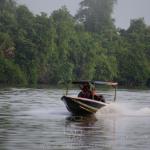
A boat cruising through Limbang river.
If West Malaysians have their Bukit Kepong incident, here in Sarawak we have the raid on Limbang.
When the idea of the Malaysian federation came out in the late 1950s, many disagreed, including a left-leaning Brunei politician-turned-rebel widely known as A.M. Azahari.
He led the group Brunei People’s Party and the North Kalimantan National Army (TNKU) with ideas for Brunei, North Borneo (Sabah) and Sarawak to form one country.
On Dec 8, 1962, TNKU militants led by Limbang native Salleh Sambas started their attacks on Limbang.
Their assault started at the local police station where they captured several rifles and machine guns.
The raid took the lives of four Sarawakian policemen. They were Corporal Kim Huat from Kuap, PC Wan Jamaluddin Tuanku Alek, PC Insoll Chundang from Saribas and PC Bujang Mohammed from Kuching.
A movie based on this true story would make a good reminder of how courageous our policemen were, even back then.
4.Tra Zehnder
A film based on the true story of Sergeant Kanang anak Langkau came out in 2017.
Kanang was an Iban warrior and one of Malaysia’s most decorated war heroes who fought bravely during the communist insurgency.
So how about a film on Sarawak women figures? Dato Sri Tra Zehnder was a female pioneer in Sarawak politics.
She held the record for being the first lady member of the State Legislative Assembly (DUN), the first woman to head the Majlis Adat Istiadat Sarawak and she even represented the Sarawak Dayak National Union (SDNU) at the Cobbold Commission meeting.
Furthermore if it weren’t for her, we would not be celebrating Gawai Dayak on June 1 today.
Tra was the one who championed the idea to have Gawai Dayak recognised as an official state holiday.
5.Sarawakian SWAT
For most people, SWAT means Special Weapons and Tactics, a paramilitary unit of law-enforcement agency.
Here in Sarawak, the acronym carries a different meaning.
With Sarawak being home to the saltwater crocodile (Crocodylus porosus), the largest riparian predator in the world, SWAT refers to Sarawak Forestry Corporation’s Swift Wildlife Action Team.
They are the unsung heroes solving human-crocodile conflict in the state.
This special unit was set up in 2013 and was put in charge of crocodile culling and removal all over Sarawak.
A movie inspired by Sarawakian SWAT could look like Black Water (2007), Rogue (2007) and Lake Placid (1999) only with more focus on the work of these brave SWAT officers.
Sarawak’s most famous saltwater crocodile, Bujang Senang or its descendants, can play the villains in the movie.
How about a movie on crocodiles in Sarawak?
Do you have any ideas on what Sarawakian true stories that should be made into films? Let us know in the comment box.
Located on the border between Indonesia and Malaysia, Serikin is famous among local Sarawakians for its affordable household items and batik-themed clothing.
The reason why prices at the market here are so cheap is due to the fact that the sellers come from neighbouring country Indonesia.
The market is located about 15km from Bau town and 80km from Sarawak’s capital, Kuching city.
It is held every weekend and has been around for more than 25 years since it was first erected in 1992.
Pick your rattan furniture at Serikin Weekend Market.
Is it worth the drive to Serikin?
For foreign tourists, driving for more than an hour to Serikin might not be worth the trip.
This is because most of the items sold are household items such as kitchenware, woven mats, woven food covers, mattresses, pillows and rattan furniture.
If you love woven items, Serikin is definitely a must-visit place.
Unless you are willing to pay for excess baggage fees or ship these items back home, these are not easy-to-carry items you want to haul across the airport.
If you are looking for a memento, you can find more compact souvenirs in more varieties at Kuching city centre than Serikin.
The Malaysian locals including West Malaysian visitors love the market as you can see them bargaining for items like woven mats and mattresses.
Woven mats of different sizes and patterns and rice winnowing baskets.Buyers browsing through a selection of woven mats to purchase.
But if you are a fashionista visiting Kuching, the drive to Serikin is definitely worth the trip.
Serikin offers a wide range of affordable fabrics with colourful and attractive designs.
You might find similar designs in and around Kuching and other major towns in Sarawak, but bear in mind that the prices offered in Serikin are slightly lower.
Hence, this makes Serikin also famous among wholesalers.
Channel your inner designer by turning these fabrics into your own style of clothing.
Most of the designs for fabrics and clothing are Sarawak motif-inspired or batik-themed, perfect for those who want a pop of colour or a tribal design for their wardrobe.
A range of batik-themed clothing on display at Serikin.
Some tips and tricks
If you are planning to do your shopping at Serikin, make sure you pack along some bargaining skills.
There is no guarantee bargaining will work in each stall, but it is worth a try.
Besides, the vendors tend to give some discounts if you purchase a large quantity.
Compare the price at different stalls before making your purchase.
Another shopping tip is to always compare prices. Some stalls sell the same item mostly for the same price but you can always ask to double check.
The market stretches over one kilometre so walking from one end to another can be tiring, especially under the hot sun.
Take your time to enjoy your stroll along the one-kilometre long market.
Plan your visit early in the morning or in the evening before it closes at 6pm to avoid the heat.
Even better, carry an umbrella and bring along a bottle of water for you to enjoy your shopping.
But if you forgot to bring your own umbrella or a cap, there are traditional woven hats easily available at the market.
There are grocery shops and small family-run cafes at the market just in case you need food and drinks.
After a visit to Serikin and on your way back to Kuching, you can always drop by to visit other Bau’s attractions such as Fairy Cave, Wind Cave and Tasik Biru.
There are local farmers trading their produce at Serikin.A visitor browsing through denim clothing.Visitors can also pots and other kitchenware at this border market.
Although their art cannot imitate life perfectly, some still manage to carry its essence and convey the message they wanted to.
Here in Malaysia, the movie industry still has lots of room for improvement.
But there are a few local filmmakers daring enough to create movies inspired by true stories. And here are the ones that are worth your time watching.
1.The Big Durian (2003)
This movie broke records by being the first and only Malaysian film to screen at the prestigious Sundance Film Festival.
The Big Durian’s director Amir Muhammad combined documentary and fiction to bring an event which occurred in October 1987 to the big screen.
On that day, a soldier named Adam Jaafar ran amok, shooting off an M16 rifle in the streets of Kuala Lumpur.
The shooting spree left one person dead when a bullet ricocheted and killed Che Soh Che Mahmud, while several others were wounded.
Apart from Sundance, The Big Durian was also screened at the Singapore International Film Festival, the Hong Kong International Film Festival and the Vancouver International Film Festival.
2.Ola Bola (2016)
Ola Bola.
Ola Bola was inspired by the true story of Malaysia’s football team scoring a place at the 1980 Summer Olympics in Russia.
Despite its commercial success, the film was disqualified from the 28th Malaysia Film Festival Best Film category because it contained less than 70% Malay language dialogue.
Following this controversy, all non-Malay categories were removed and made eligible to compete for Best Film.
3.Adiwiraku (2017)
When a group of schoolchildren in rural Peninsular Malaysia beat 20 elite schools in an English choral speaking competition, the story was destined to go viral on the internet.
For the students of SMK Pinang Tunggal in Baling, Kedah, participating in an English-speaking competition would have been impossible if it weren’t for their volunteer English teacher Cheryl Ann Fernando from Teach for Malaysia.
Against all odds and even to the team’s own surprise, they came out fifth place beating 20 other schools at the district level competition.
Inspired by this touching story, film director Eric Ong knew he had to make a movie of it.
Ong and his team’s work paid off when Adiwiraku bagged the Best Film Award at the 29th Malaysia Film Festival.
Originally slated for a 2007 release, all the red tape surrounding Dukun was finally cut and it premiered in 2018.
Until today, no official statements have been given on why the movie was postponed but most suspect it was due to the film being inspired by the real-life murder of Malaysian politician Mazlan Idris.
An ambitious politician, Mazlan’s murder in the 1990s gathered so much public attention not only because he was a public figure but because of the brutal (and supernatural) nature of the killing and the fact that a Malaysian female pop singer happened to be one of the prime suspects.
After leaving her not-so-successful music career, Mona Fandey (whose real name was Maznah Ismail) made a profession change to black magic, becoming a bomoh or a local shaman.
In July 1993, Mona Fandey together with her husband Mohamad Nor Affandi Abdul Rahman and assistant Juraimi Hassan were reportedly performing a cleansing ritual on Mazlan.
During the ritual, the trio asked Mazlan to lie down, close his eyes and wait for money to fall from the sky. Instead of money, an axe came down on Mazlan, chopping his head off.
He was reported missing on 2 July 1993, but by then his bank accounts were cleaned out of RM300,000. Mona was soon after spotted on a shopping spree and driving a Mercedes Benz.
Her high-spending life was cut short after Juraimi made a statement to the police disclosing the location of Mazlan’s remains, which were buried near Mona’s house in Pahang. He was found in 18 pieces.
The trio were found guilty of Mazlan’s murder and were executed on November 2, 2001 at Kajang Prison.
We cannot talk about Malaysian movies inspired by true stories without mentioning Bukit Kepong (1981).
The movie was based on an armed encounter which took place on Feb 23, 1950 between the Federation of Malaya Police and the gunmen of Malayan Communist Party during the Malayan Emergency.
The movie was directed by legendary Malaysian actor Jins Shamsuddin.
Over the years, it has become one of the must-feature films on national television channels especially during August, Malaysia’s National Month.
A special mention…
There is one upcoming Malaysian movie inspired by true events which might be worth the hype.
Director Adrian Teh (King of Mahjong, Hungry Ghost Ritual) is working on an action film highlighting the Royal Malaysian Navy’s Naval Special Warfare Forces, otherwise known as Pasukan Khas Laut or Paskal.
Scheduled for a 2019 release, Paskal is said to be a biopic of Lieutenant Commander Arman Anwar who, in 2011, led a Paskal team to rescue the crew of MV Bunga Laurel which was hijacked by Somalian pirates in the Gulf of Aden.
Filming locations include Kuala Lumpur, Lumut, Kota Kinabalu, Sandakan, Semporna in Malaysia as well as Morocco.
Ranchan Recreational Park in Serian might not be on top of everybody’s list of places to go for recreation but on weekends, the place is famous among local people as a favourite picnic spot.
About 10 years ago, the facilities in the park were run-down and in need of an upgrade.
Over recent years, however, Ranchan’s facilities have improved significantly. The park now has a canteen and small eatery, a public toilet, and the trails are properly maintained.
There is a viewing tower, a suspension bridge and huts for resting.
The park even has a hall which can accommodate up to 300 people at a time. It is available for rent to host official functions, dinners, charity exhibitions or even a concert.
For those who are looking for something small, the park has a lecture room to accommodate up to 60 people.
Otherwise if you’re looking for a place to stay in Serian, Ranchan Recreational Park also offers affordable chalets to rent.
When it comes to hot springs near Kuching, people automatically think of the Annah Rais Hot Springs.
For a lesser known, equally calming hot spring about 40km from Kuching city, there’s the Panchor Hot Spring located at Kampung Panchor Dayak which is accessible via Kuching-Serian Road.
It is famous among locals who believe a dip in the hot spring water will promote natural healing.
Welcome to Panchor Hot Spring!
Among the minerals which had been found in the water are calcium and sulfur.
According to the information displayed on the board at the hot spring, the Panchor Hot Spring haspositive therapeutic effects for skin ailments.
On top of that, it is also believed the minerals in the water can help to soothe arteriosclerosis, rheumatism and joint pains.
Some visitors have a dip in the hot spring for its detoxifying effects.
Visitors relaxing by the pool.
Firstly, here are the precautions visitors need to take when dipping at Panchor Hot Spring:
Dip your feet first in order for your body to fully adjust to the temperature. The average temperature of water at Panchor Hot Spring is 42oC. Then slowly submerge your whole body into the pool.
If you are not comfortable with the temperature, get out of the pool and take a rest. Visitors are advised to take cold water to alleviate any dizziness that might occur because of the hot temperature.
Never ever jump directly into the pool. After your dip in the hot spring, do not immediately take a shower. Let your body temperature cool down first.
Never ever jump directly into the pool.
Panchor Hot Spring Facilities
A visit to Panchor Hot Spring gives back to the local community.
The hot spring is currently managed by the village security and development committee.
Thus, a visit to Panchor Hot Spring gives back to the local community.
Its facilities were upgraded by the Tourism Ministry in 2013 with electricity provided to the site.
There are wooden planks surrounding the pools making it convenient for visitors to sit by the hot spring while soaking their feet.
Visitors do not have to worry the about the weather as the pool areas including the corridors leading to it are covered with roofing.
Other basic facilities include a resting hut complete with benches and tables, public toilet and changing room.
Almost every Malaysian has heard of ‘adidas kampungs’ – the generic name for probably the most handy yet cheap rubber shoes made in Malaysia.
They usually come in black, but sometimes you can find them in white too.
Besides adidas kampung, these rubber shoes are also known as adidas paya, kasut kebun and kasut motong. All of these unique and hyperlocalised names have to do with going out to the jungle, farming or trekking. Why?
Adidas kampung, a preferred footwear for Malaysian jungle.
The soles have strong grip on slippery rocks and muddy flats making them famous among farmers and rubber tappers.
This is because they are waterproof, easy to dry… and most of all cheap.
Sold mostly in sundry shops throughout Malaysia, they cost under RM10 a pair.
They are recognised for their strong grip on slippery rocks and muddy trails.
Adidas Kampung in the news
Adidas kampung have made headlines in the news several times over the years all thanks to their usefulness.
During the 21st Mount Kinabalu Climbathon in 2017, for instance, Safrey Sumping won fourth place in the men’s open event was wearing a pair of adidas kampung.
In 2011, it helped another Malaysian win a place in the Mount Kinabalu Climbathon.
Danny Kuilin Gongot wore them when she beat New Zealander Anna Frost and American Brandy Erhortz, clinching the women’s title in the climbathon.
Besides assisting Malaysians to win international athletic events, they have also been great help during hard times.
When flood hit Penang back in 2017, volunteers turned to these shoes to help with the cleanup as they were perfect for wading through floods.
In some local universities, lecturers for nature-oriented courses such as Environmental Science and Marine Science made adidas kampung must-have footwear for field-trips.
The flaws of Adidas Kampung
Adidas kampung is also famous among offroad enthusiasts seen here during Borneo Safari International Offroad Challenge.
How many adidas kampung can you spot?
Although adidas kampung might sound like the perfect shoes, they do have their own flaws.
First of all, they are not the most comfortable pair of footwear out there.
You need to wear adidas kampung with a pair of thick socks as they are also known for leaving its wearers with blisters.
Another thing is that although these pair of shoes are known for their waterproof ability, you can also get waterlogged.
A short walk in a stream will leave you walking around in tubs for shoes instead, making it a little inconvenient during your hike as you need to stop and pour the water out of your adidas kampungs.
Nonetheless, their extreme affordability still make these adidas kampungs one of the better choices of hiking shoes in Malaysia.
Plus, they work better than your normal running shoes when hiking through our muddy, slippery Malaysian jungle.
When it comes to must-try Sarawakian food, there is a long list that will be hard to complete if you don’t have much time. So why not try to cover the most food in one sitting?
One of the best places to try *almost* all the essentials in Sarawakian goodness in Kuching is at Woon Lam Cafe 1999.
All the breakfast essentials at Woon Lam Cafe 1999
Woon Lam Cafe 1999 is famous among locals but not so much among tourists.
Located at Jalan Song Thian Cheok, this eatery is widely famous for its kueh chap.
This dish features flat and square noodles served in a soy sauce-based broth with pork meat and innards.
The kueh chap stall at Woon Lam Cafe 1999 has apparently been selling this dish since 1985.
Kueh Chap
If kueh chap is not your cup of tea, however, why not have the evergreen classic kolo mee?
The kolo mee here may not be the most raved about in town but they do serve a decent bowl of Sarawak’s signature noodles.
Kolo mee at Woon Lam Cafe 1999.
This kopitiam also has a Sarawak laksa stall, offering what celebrity chef Anthony Bourdain called the breakfast of the gods.
In fact, Woon Lam Cafe 1999 is a walking distance from Bourdain’s favourite laksa place at Choon Hui Kopitiam.
Now that you have kueh chap, kolo mee and Sarawak laksa as your main dishes, how about some side dishes to complement them?
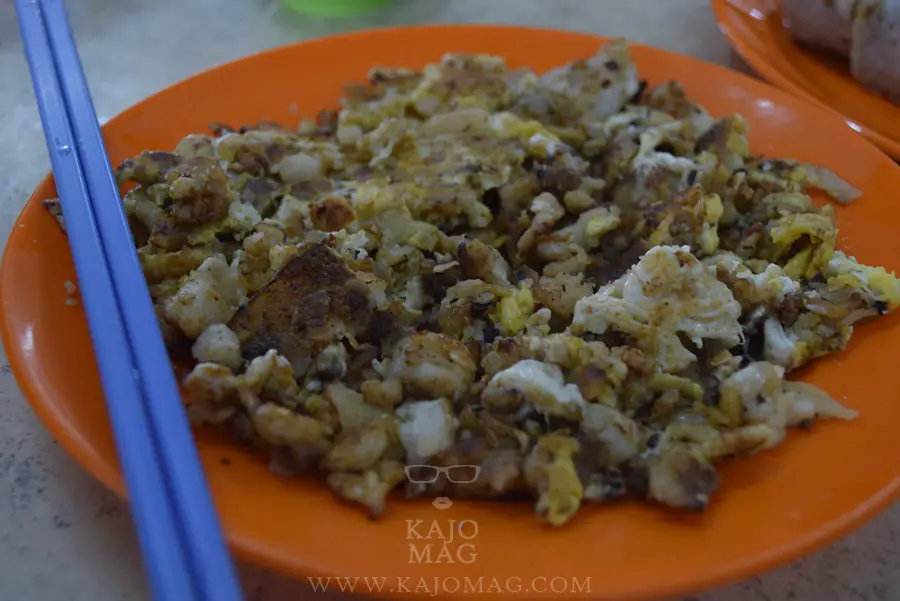
Char kueh.
Although fried carrot cake or char kueh is famous as midnight snack, you can order it at Woon Lam Cafe 1999 for breakfast.
Like most char kueh found in Sarawak, this dish is fried with light soy sauce and a heavy load of eggs.
Besides char kueh, Sarawak popiah makes a good side dish for breakfast too.
Sarawak popiah.
Sarawak popiah is mainly made of jicama, ground peanuts, bean sprouts wrapped in popiah skin and served with a sweet sauce.
One bite into it and you can taste the different textures of the various ingredients from the softness of the popiah skin to the crunchiness of ground peanuts.
A place worth trying
There are other main dishes offered at Woon Lam Cafe 1999 too. These include yong tau fu, Teo Chew Porridge and a Western breakfast of toast, eggs and sausages.
Egg, sausages and toasts for a Western breakfast.
This eatery may not be as famous as other Kuching favourite breakfast places such as Choon Hui or Chong Choon, but it is a good place for large groups coming together for breakfast looking to taste different Sarawakian foods in one sitting.
Moreover, it is strategically located in downtown Kuching. It is a walking distance from famous commendations such as Pullman, Grand Continental Hotel and Grand Margherita.
Going with a large group of friends is key to trying a lot of food in one sitting.
A couple years ago, a clip of a group of Malay boys performing the lion dance went viral on social media.
They used a cardboard box as the lion’s costume and wooden sticks as well as empty cans for their instruments.
The boys credited their interest in this particular Chinese culture after watching lion dance performances at Ching San Yan temple.
This Buddhist place of worship is also widely known as Muara Tebas temple and has a history spanning over 200 years.
It is oddly located in Kampung Muara Tebas which is a Malay village.
The staircase leading to Ching San Yan which means Green Hill Temple.
The history of Muara Tebas temple
According to legend, seafarers built the temple there after safely arriving in Kuching after crossing the South China Sea from China.
Here, devotees pray and extend their thanksgiving to Buddha Shakyamuni and Chinese sea goddess Mazu.
She is believed to roam the seas protecting her believers from harm.
The temple underwent renovation back in 1903. Since then, it was given a major facelift from 1994 to 2000.
Now, the Muara Tebas temple has exquisite wall paintings and elaborate sculptures, complete with a landscape garden.
What you will see from the top of the staircase – an overview of the kampung and the Sarawak River.
It has a typical Chinese Buddhist architecture and layout. The grand mountain gate (front gate) is the entrance to welcome the visitors.
Two Imperial Guardian Lion statues stand at the entrance, ready to protect the temple.
Since it is built on a hill 120 feet above sea level, the temple offers a picturesque view over Sarawak river.
The colourful pavilion also offers a good place to enjoy the view.
Visitors can sit at this pavilion and enjoy the view of the Sarawak River.
Once inside, you’ll discover that the main building has a courtyard, a regular feature in most Chinese Buddhist temples.
And of course, there are plenty of statues of the Chinese Buddhist pantheon.
Kuching Hokkien Association has been responsible over the management of the temple since 1984.
Some of the wall paintings found at the ceiling of the pavilion.
Muara Tebas temple during Chinese New Year
The temple went through several major renovation before it became what it is today.
The temple is usually flooded with devotees during Chinese New Year.
However, the busiest day of the year would be on the fourth day of the Lunar New Year as devotees believe their deities return to Earth from heaven.
They would pray to and welcome the gods who went to heaven on the 24th day of the twelfth month to report on human deeds.
After visiting Muara Tebas temple, some faithfuls rent a boat to visit nearby island Pulau Lakei to visit ‘batu singa’ (lion rock).
The island is located near the northern part of Bako National Park, another tourist hotspot in the Muara Tebas peninsula.
The peninsula is situated about 30km from Kuching town and is also famous for its seafood restaurants.
For those who are travelling by car to visit the temple or enjoy the seafood, there is a small parking fee charged by the villagers.
The temple is a fine example of Chinese Buddhist architecture.A landscape garden flanks one of the walkways up to the temple.The temple overlooks Kampung Muara Tebas.
Art imitates life, even in Asian horror movies, which shows how movie-makers draw their inspirations from their surroundings when making a film. And what more inspiration for a horror movie other than an actual haunted place?
Here are some Asian horror movies inspired by places with supernatural and unexplained histories:
1.Gonjiam: Haunted Asylum (2018)
The Movie: The crew of a horror web series go to an abandoned asylum for a live broadcast. In true horror flick fashion, the whole trip becomes their worst nightmare.
Gonjiam Psychiatric Hospital in Gwangju was once a fully operational medical centre when suddenly, according to local legend, patients started dying mysteriously.
Now, it is an abandoned building filled with urban legends and ghost stories.
Urban legends vary, some claim there was a mad doctor who tormented patients and one of the more famous versions is that the owner himself was insane. He was said to be keeping his patients incarcerated until he fled to the US in 1996.
The hospital was forced to close seemingly in hurry because medical records, patients’ private possessions were still there.
A less exciting, yet equally grisly explanation for the condition of Gonjiam Psychiatric hospital is that it closed due to unsanitary living conditions along with a malfunctioning sewage disposal system and that its owner just fled the country instead.
2. Lawang Sewu: Dendam Kuntilanak (2007)
The Movie: A group of high school students from Jakarta are trapped in Lawang Sewu in Semarang, Indonesia. After one of them urinates in the complex but does not reappear, the rest come to look for her. One of them also happens to be menstruating when she enters the complex, which incurs the additional wrath of the ghosts and spirits within Lawang Sewu.
To their horror, they are haunted by several ghosts and angry spirits which include that of a Dutch woman, a man who had a ball and chain wrapped around his leg, and of course a Kuntilanak (an Indonesian version of a vampire).
The Haunted Place: According to urban legend, a Dutch woman is believed to have committed suicide in Lawang Sewu. On top of that, when the Japanese invaded in the 1940s during World War II, they used part of the building as a prison where apparently some executions took place. Five employees working there and Indonesian fighters also died when Dutch forces attempted to retake Semarang by sneaking back into the city through the building’s tunnel systems.
So if you’re the superstitious type, there’s a lot of potentially unsettled spirits in this building.
Despite its haunted reputation, Lawang Sewu is actually an intricate, colonial era building. Lawang Sewu itself means ‘thousand doors’ in Javanese which derived from the building’s numerous doors and about 600 large windows.
Construction started in 1904 and was used by the first Dutch East Indies railway company Nederlandsch-Indische Maatshappij in the Dutch East Indies in 1907.
Although renovations over the years have not returned the building to its full glory, the Semarang city government is still working on shedding Lawang Sewu’s supernatural reputation by repurposing it into an active social space.
3. Highland Tower (2013)
The Movie: Highland Tower (2013) is a Malay-language film directed by Pierre Andre. It follows a TV host named Shima working on a documentary based on the 1993 Highland Towers collapse.
The Haunted Place: The Highland Towers were three similar 13-storey apartment buildings in Ulu Klang, in Selangor, Malaysia.
Sadly on Dec 11, 1993, Block 1 of the Highland Towers collapsed resulting in the deaths of 48 people. The remaining two blocks were evacuated due to safety reasons.
This led to the two remaining buildings becoming a hideout for criminals and drug addicts.
4.Villa Nabila (2015)
The Movie: The film starts with a disappearance of a teenager at an abandoned house called Villa Nabila in Johor.
It is presented in documentary style in which a few people who claim to experience the supernatural were interviewed.
The Haunted Place: Karak Highway was built in 1970 and was opened to the public in 1977. One of the famous tragedies that took place there was a road accident in 1990 which saw 17 people killed.
The death toll includes 11 Federal Reserve Unit (FRU) police personnel during a collision involving more than 10 vehicles.
This 60km highway also carries a number of other ghost stories such as a yellow Volkswagen which disrupts road users and a wandering school boy looking for his mother.
6.Haunted Changi (2010)
The Movie: Asian horror movies, like their western counterparts, like to explore the terrifying experience of fimmakers or TV crew with behind-the-scenes or found footage concepts.
This is what you’ll find with Singaporean movie Haunted Changi (2010) which follows a group of local filmmakers investigating Old Changi Hospital.
Nothing brings people together better than viral dance moves. Generally Malaysians have accepted viral dance moves with open arms and sometimes with a lot of sense of humour.
But of course, some of the viral dance moves that came were not without controversy. That being said, here are five viral dance moves which took Malaysia by storm over the past couple of decades:
1. Panama
2018 became the year for the Panama Dance Challenge. “Panama” is a catchy 2013 Romanian pop song by Matteo.
The basic moves include drawing a ‘Z’ in the air, doing the hula twice and then a twerk. (Can you tell I’ve tried it?)
Various Malaysian agencies created their own videos including Perlis Road Transport Department, Selayang Hospital and Hulu Selangor Health Department, showing a lighthearted side to these government departments.
Some religious leaders came out against the dance, however, citing the mixing between the sexes and the dance moves were against Islamic teachings.
2.Harlem Shake
Harlem Shake is more of an Internet move rather than a dance move.
The remakes of Harlem Shake videos usually consist of costumed people dancing to Baauer’s “Harlem Shake”.
The original Harlem Shake dance comes from Harlem, New York in the 1980s involving a street and hip hop dance.
As for this viral Harlem Shake, it starts with one costumed person dancing alone to the obliviousness of a whole room full of people. When the bass drops, the entire group starts shaking throughout the rest of the video.
In Malaysia, NuffNang group, Hong Leong Bank, the hitz.fm teams all posted their own versions back in 2013.
3.Gangnam Style
The horse dance of “Gangnam Style” by Psy took the world by storm back in 2012.
This viral dance move even had world leaders such as the former British Prime Minister David Cameron, US President Barack Obama and United Nations Secretary-General Ban Ki Moon jumping on their feet.
Jumping on the bandwagon, Malaysian Prime Minister Najib Razak even invited Psy to perform in Penang back in February 2013.
4.Asereje
Before there was Despacito, the most famous Spanish song in Malaysia was “The Ketchup Song” or “Asereje” (2002).
Who can forget the signature dance move which consisted of waving your hand over the other, then tossing the thumb over the shoulder?
After the dance went viral, the song became controversial with rumours stating it had references to Satanism.
5.Macarena
The trailblazer of all famous Spanish songs in Malaysia is none other than “Macarena” (1993) by Los del Rio. (And this is without the help of the Internet.)
If you have lived through the 90s, your body will automatically remember this dance move which involves alot of criss-crossing of arms from your head to your hips, ending with a hip shake and a “Hey” before you turn to face another direction. It’s easy, and the steps are slow enough for people of all ages to learn and follow.
“Macarena” is the name of a woman, which in Spanish means ‘Mother of God’. The song itself describes how Macarena was heartbroken when her boyfriend left to join the army. So in retaliation she went out to dance with other soldiers, which is why everybody in the song is dancing.
Cover photo: “Gangnam Style” literally put this district on the map for the global audience. You’ll find this statue at the East Gate of Starfield COEX Mall in Gangnam, Seoul. Not only that, when you stand below the hands, “Gangnam Style” will be played. -Photo credit Gangnam Tourist Information Center