Browse Tag

Kuching - Page 5

Descriptions of some races and towns in Sarawak according to Harry de Windt

Sarawakians might not be familiar with Captain Harry de Windt but his sister should be more familiar.

His sister Margaret was the wife of second White Rajah Charles Brooke.

Best known as a travel writer and explorer, de Windt at one point did work as the aide-de-camp for his brother in-law when he was only 16.

As for his writing career, de Windt’s first book On the Equator (1882) featured his travel stories in Sarawak, Dutch East Indies and Spain.

He shared his own perspectives and views of the people and the places he visited such as Santubong, Batang Sadong, Sibu, Kanowit and Kapit in 1880.

Descriptions of some races and towns in Sarawak according to Harry de Windt
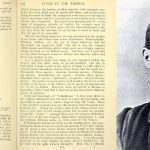
Harry de Windt pictured in his From Paris to New York by Land (Copyright expired-Public Domain).

Here is how Harry de Windt described some of the towns and races he encountered in his book On the Equator (1882):

1.Kuching

Descriptions of some races and towns in Sarawak according to Harry de Windt
The Astana from the book On the Equator.

“Kuching, the capital of Sarawak, although smaller than Pontianak and other Dutch settlements on the coast of Borneo, is generally acknowledged to be the first town in Borneo so far as civilisation and comfort are concerned, and is renowned for its Bazaar, which is the best-built and cleanest in the island. There are two good roads extending at right angles from the town to a distance of seven miles each, at which point they are united by a third. These form a pleasant drive or ride, an amusement unknown in most Bornean townships, where the jungle and undergrowth are usually so dense as to defy any attempts at walking, to say nothing of riding or driving.
The number of Europeans in Kuching, although limited, and consisting of but some twenty in all (five of whom are ladies), form a pleasant little coterie, and there is a marked absence of the scandal and squabbling which generally seems inseparable from any place wherein a limited number of our countrymen and women are assembled. The occasional presence of an English or Dutch man-of-war, also, breaks the monotony of life, and enlivens matters considerably.

The Club, a comfortable stone building, was founded by the Government a few years ago, and contains bedrooms for the use of out-station officers when on a visit to Kuching. A lawn-tennis ground and bowling alley are attached to it, and serve to kill the time, which, however, rarely hung heavily on our hands in this cheerful little place.
Riding and driving are but still in their infancy, and Kuching boasted of only some dozen horses and four carriages—including a sporting little tandem of Deli (Sumatra) ponies, owned by the Resident. The Deli pony is a rare-shaped little animal, standing from 13 hands to 13.2, with immense strength, and very fast. They would be worth their weight in gold in Europe, and an enterprising Dutch merchant lately shipped a cargo of them to Amsterdam from Singapore, via the Suez Canal, with what result I never ascertained. A new road was being cut when we were there from Kuching to Penrisen, a mountain some thirty miles off, which, when completed, may bring a few more horses here; but Borneo (except far north) can never become a riding or driving country.”

The Club de Windt referred to here is The Sarawak Club which was established in 1876, four years before the writer arrived in Kuching.

2.Sibu town


“Sibu is a clean-looking Malay town of some 30,000 inhabitants. All Malays living here are exempt from taxation on condition that they are liable to be called out by Government in the event of any disturbance among the up-river tribes. The Fort and Bazaar stand on an island in the centre of the river, which is here about one and a half miles broad, and are connected with the town on the right bank by a wooden bridge. “Fort Brooke,” as it is styled, is built in a pentagon of solid bilian (belian) planks, about 12 feet high; a sloping wooden roof reaching down to within 2½ feet of the plank wall. This interval is guarded by a strong trellis-work, so that when the fort door is shut the building is rendered perfectly secure against any native attack. The Resident’s and fortmen’s quarters are reached by a ladder inside the fort about eight feet high, while the ground floor is used as a kitchen, rice-store, &c. Fort Brooke is garrisoned by sixteen Malays, and armed with six nine-pounders. All forts in Sarawak are built of the same materials and on the same model as the above, excepting that at Kuching, which is of stone, and much larger.”


Fort Brooke was built in 1862, and believed to be located at present day Jalan Channel.
Unfortunately, the fort was demolished in 1936.

3.The Iban People

“The Sea Dyaks are so called from their inhabiting the sea-coast east of the Sadong district, as far as the Rejang river, though some are to be occasionally met with far inland. These, who are the most numerous of any Dyaks, are at the same time the bravest and most warlike, and in former days were greatly addicted to piracy and head hunting. They are of a dark copper colour, and although not tall men are wonderfully strong and well-built, and will endure a great amount of fatigue. They are also endowed with great courage, and are very skilful in the use of weapons, especially the Parang ilang and spear. This tribe has been found by missionaries to possess some small amount of religion, inasmuch as they believe in the existence of a Supreme Being, Batara (petara), who made this earth and now governs it. They believe, also, in good and evil spirits, who dwell in the jungles and mountains. Sickness, death, and every kind of misfortune, are attributed to the latter, while Batara is the accredited author of every blessing.”

Descriptions of some races and towns in Sarawak according to Harry de Windt
Batang Sadong from de Windt’s book.

4.The Kanowit People

“The Kanowits are a small tribe, numbering about 500, and are quite distinct and totally unlike any other race in Borneo. They have not unpleasant features, are of lighter complexion than the Dyaks, and, though not so warlike, are fine, strongly-built men. Nearly all were tattooed from head to foot with most intricate patterns, and others representing birds, beasts, fishes, &c., while round the face and throat the marks were made in imitation of a beard, an ornament which none of the tribes yet met with in Borneo possess.

“These (Kanowit) women were fair specimens, as we were afterwards informed, of the tribe, and were, like the men, tattooed from head to foot. But for the disgusting habit (which I shall mention anon) of blackening their teeth and disfiguring the lobes of their ears, they would not have been bad-looking. They wore a light brown petticoat of cloth woven by themselves, and reaching from the waist to just above the knee. Their hair was not left to fall loose, but tied tightly into a knot at the back of their heads, very much as it is worn in Europe at the present time. A few brass rings round their waists and arms completed their attire. Strangely enough, the Kanowit women are, as a rule, darker than the men.”

Today, the Kanowit people are mostly known as the Melanau Kanowit or Rejang people.

5.The Ukit People

“The Ukits are generally supposed to be the wildest specimens of the human race yet et with in Borneo. This tribe (which is the only one living at the head of Rejang not tattooed) has been occasionally but seldom seen in these regions by Europeans, as they shrink from all intercourse with mankind, and fly at the approach of any but their own race. They are described as being of a much lighter colour than the Poonans, possess no dwellings, and are totally unclothed..”


6.The Kayan People

“The Kayans, on the other hand, are the finest and most civilised aboriginal race in the island. Their men, who are of a splendid physique and considerably taller than any other tribe in Sarawak, are of a light copper colour. Their dress is nearly identical with the Kanowits, excepting that they wear many more ornaments, but no turbans. Their long, coarse, black hair streamed in some cases far below the waist, and they were not a little proud of this appendage, which was cut square over the forehead. The Kayans were not at all given to joking like the Kanowits, but all wore an appearance of suspicion and distrust on their faces, which even the genial influence of square face (“Hollands”) failed to banish, but which originated perhaps more from shyness than ill-temper. Their women wore more clothes than any other tribe, being clothed in a long and flowing “sarong,” a species of petticoat, reaching from the waist to the feet, and a white linen jacket.”

So what do you think about de Windt’s descriptions on Sarawak towns or its people? Let us know in the comment box.

#KajoPicks: Where to grab coffee-to-go in Kuching?

First of all, you can easily grab your coffee-to-go at any kopitiam (if you prefer good old local kopi) or even the typical choice of Starbucks. Plus, you can go visit any of Kuching’s dozens of cafes, but most of them are not open until late morning or noon.

So what do you do when you really need that quick dose of caffeine from a specialty coffee in the morning?

For KajoMag, here are our favourite places specifically to go and grab coffee-to-go in Kuching:

1.Black Bean Coffee & Tea

#KajoPicks: Where to grab coffee-to-go in Kuching?

This list is not complete without a Kuching must-have for coffee lovers – Black Bean Coffee & Tea. It is known for our very own Sarawak Liberica which is one of the best coffee beans in the world.

Located at Ewe Hai Street, Black Bean Coffee & Tea opens at 9 in the morning – perfect timing for those looking for another cup of coffee after their early breakfast.

Looking for coffee beans to brew your own drinks at home? This is also the place for you. The staff is willing to help you select the perfect beans according to your taste.

If Kuching city centre is too far for you, they have another branch at Hock Seng Lee’s (HSL) new La Promenade Mall.

2.Tealive

#KajoPicks: Where to grab coffee-to-go in Kuching?

You might think, “Why on earth is a bubble tea chain on this list?”

Honestly, the coffee range drink from this Malaysian boba chain is pretty underrated.

Their signature coffee, americano and latte drinks come hot or cold. Additionally, they offer seasonal promotions on their selected coffee beverages for only RM5 (without tax) from morning till 12pm daily.

However if you prefer Robusta or Liberica beans, this place is not for you. Tealive only offers 100 per cent Arabica beans.

3.Belalak Addicted Coffee

#KajoPicks: Where to grab coffee-to-go in Kuching?

Have you heard of the Turkish way of brewing coffee? It is done by boiling very finely ground coffee.

Traditionally, the grounds left after drinking Turkish coffee are used to tell fortunes. The cup is commonly turned over the saucer to cool, and the patterns of the coffee grounds are used for fortune telling. For Potterheads out there, it is similar to tea-leaf reading or scrying in Harry Potter’s Divination class.

The best place you can find this type of brewing in Kuching is at Belalak Addicted Coffee, The Hills.

No, they don’t offer you fortune telling at Belalak Addicted Coffee. But they do offer a variety of coffee drinks with cute names.

Kopi Let is basically mocha, Kopi Pong is black coffee with palm sugar, Kopi Sus is latte and Kopi Kos is americano.

Besides these, they also offer non-caffeinated and ice-blended drinks.

8 Taiwanese bubble tea franchises you can find in Kuching

Nowadays, you can find boba shops in almost every corner of Kuching. Did you know that there are at least eight Taiwanese bubble tea brands available here?

If bubble tea has its own capital country, there is no denying that Taiwan would be it.

So far, there are two origin stories on how this chewy, milky drink came around.

The first claim derives back to 1986 in Tainan, where the owner of The Hanlin Tea room, Tu Tsong-he allegedly was inspired by white tapioca balls he saw at the market.

He then made tea using the tapioca balls, creating what we now know as bubble tea or pearl tea today.

Meanwhile, Chun Shui Tang Tearoom in Taichung began serving cold Chinese tea after observing cold coffee being served cold in Japan.

This new style of serving tea was a hit in the 1980s. Then came in the teahouse’ product development manager, Lin Hsiu Hui who randomly poured tapioca balls into her iced tea drink in 1988. From there, a new drink was born and it became an instant hit.

Regardless of which teahouse created bubble tea, we can all agree that Taiwan is the birth place of this drink.

Today, other countries such as China and Malaysia have also started their own home-grown brands of bubble tea.

In the meantime, Taiwanese bubble tea brands are opening their branches in all over the world including Malaysia.

If you are looking for Taiwanese bubble tea franchises in Kuching, here are eight of them you can visit (or order through delivery apps since we are in the middle of a pandemic):

1.The Alley

8 Taiwanese bubble tea franchises you can find in Kuching
Crunchy Brown Sugar Milk Tea

How about a Taiwanese bubble tea chain that is worthy of Korean royals? Netflix’s The King: Eternal Monarch (2020) is a hit Korean drama about a king from a parallel universe. He comes to our world using his inherited magic flute, falls in love with a girl and proceeds to have a date with her at The Alley.

In conjunction with the collaboration between the bubble tea brand and the drama, The Alley released a new crunchy milk tea series.

It comes in three flavours; Crunchy Cocoa Milk Tea, Crunchy Brown Sugar Milk Tea and Crunchy Tiramisu Milk.

Besides their crunchy milk tea series,The Alley beverages also comes in milk tea series, latte series, coffee series and more.

The brand is proud of their tapioca pearls which they claimed were made from scratch.

Looking back on its history, The Alley was launched in Taipei in 2013 by Taiwanese graphic designer and entrepreneur Chiu Mao Ting.

Today, you can find this Taiwanese bubble tea brand in North America, Europe, Southeast Asian region such as Singapore and Indonesia.

Location in Kuching: Ground & First Floor, Milan Square, Jalan Wan Alwi.

2.Gong Cha

Speaking of royalty, here is a Taiwanese bubble tea brand whose name translates to ‘tribute tea for the emperor’.

Gong Cha was founded in 2006 in Kaohsiung, Taiwan and opened it first franchise in Malaysia in 2011.

Their drinks are grouped into several categories such as brewed tea, milk tea, health tea, creative mix, latte, coffee and house special.

Some of our personal favourites from Gong Cha are Longan Red Date Tea, Matcha Milk Red Bean and Earl Grey Milk Tea with Coffee Jelly.

Locations in Kuching: Plaza Merdeka and tHe Spring

3.Daboba

While The Alley is known for its deer logo, Daboba is known for its bear logo.

The two brands share another similarity, they are both known for their take on the popular brown sugar milk beverage.

Daboba is mostly known to create the Honey Golden Pearl Green Milk Tea. Instead of black pearls, the boba is yellow in colour with faintly taste of honey.

Locations in Kuching: Galacity Street Mall, Jalan Tun Jugah

4.Ding Tea

According to their website, Ding Tea keeps a close eye on their quality and never use an overnight tea.

Founded in 2007, the brand aims to promote Taiwanese tea culture to the world.

Their drinks can be divided into different range such as milk tea, fresh tea, latte, flavoured tea, fruit juice and others.

Locations in Kuching: Everrise BDC, Plaza Merdeka, CityOne Megamall, Boulevard Shopping Mall, Vivacity Megamall, AEON Mall Kuching, iCom Square, The Hills

5.ChaTime

ChaTime currently has the largest teahouse franchise in the world.

It was founded in 2005 in Zhubei, Hsinchu, Taiwan.

Their best selling drink is none other than ChaTime ‘Pearl’ Milk Tea. Our personal preferences are Earl Grey Pearl Milk and Hazelnut Chocolate.

Locations in Kuching:
1.Aeon Kuching
Ground floor, Aeon Mall Kuching, Jalan Datuk Patinggi Haji Ahmad Zaidi Adruce
2.Vivacity Megamall
Level 3, Vivacity Megamall, Jalan Wan Alwi
3.Metrocity,
Ground Floor, Lot 14011 (SL36), Metrocity, Jalan Matang

6.Sharetea

Do you know that one of the oldest Taiwanese bubble tea franchise have a couple of branches in Kuching?

Sharetea was founded in 1992 by Chong Kai Lung in Taipei, Taiwan.

In Malaysia, the franchise was first brought over Wong Tai Yong in 2009.

Meanwhile in Sarawak, there are around 30 Sharetea branches located all over the state.

Some of our personal favourite drinks are Strawberry Blended with Ice Cream, Matcha Red Bean Milk Tea and QQhappy Family Milk Tea.

Locations in Kuching:

1.Tabuan Tranquility
Ground Floor, Jalan Canna
2.Gala Street Mall
GalaCity, Jalan Tun Jugah

7.Chun Yang Tea

Chun Yang Tea was founded by former Taiwanese basketball players Wang Xinkai and Chen Jianzhou in 2017.

Since then, it had received celebrity endorsement such as Jay Chow and Barbie Hsu.

Instead of artificial flavouring or syrups, Chun Yang is proud to say that they only use real fruit in their drinks.

Apart from that, they do not use milk powders as part of their ingredients.

The brand Chun Yang, was named after a village in Taiwan which is known for their traditional tea making,

Location in Kuching: Ground Floor, Emporium Kuching, Jalan Tun Jugah

8.Xing Fu Tang

Xing Fu Tang is perhaps the ‘baby’ among these Taiwanese bubble tea franchises because it was founded only back in January 2018.

They claim to be Taiwan No. 1 in their logo. However, we let Kuchingites to judge for that.

Their signature drink is Brown Sugar Boba Milk.

Location in Kuching: GalaCity, Jalan Tun Jugah

Fancy designing a building in Kuching’s business district? ‘Langit’ is the limit

KUCHING: Hock Seng Lee (HSL), Next Phase and the Malaysian Institute of Architects (PAM) are inviting registered architects to challenge their creativity in an architectural design competition called ‘Langit’.

Targeted for a prime piece of land in Kuching’s central business district, the plot measures about an acre along Jalan Tabuan and is within 1 km radius of Kuching Waterfront, Padungan, and tHe Spring Shopping Mall.

Fancy designing a building in Kuching's business district? 'Langit' is the limit
The architectural competition for #LangitKch — a commercial high-rise — is on a small but prime piece of land in Kuching’s CBD. It is a matured site with commercial developments including offices, condominiums, shopping malls, hotels and schools, all within a kilometre’s radius.

The competition is open to all PAM-registered corporate members with prize monies totalling RM200,000.

PAM members may collaborate with foreign architects and there is no limit to the number of entries submitted by an architect.

The first prize is RM100,000, second prize RM50,000, third prize RM25,000, and two honourable mentions. Registration opens Feb 8 and the competition closes on Apr 19.

Results will be announced in late May.

What to know about the design competition?

Fancy designing a building in Kuching's business district? 'Langit' is the limit
HSL’s marketing team has tentatively named the project “Langit”, which in Bahasa Malaysia is “sky”, while in Bahasa Sarawak, “lang” is door.

Hailed as the first of its kind in Sarawak, the design brief for HSL, Next Phase and PAM Sarawak Chapter’s competition calls for a commercial development for a max gross floor area of 30,000sqm. The design can be for a mixed-use commercial development, except for a hotel.

“This competition is an ‘ideas competition’. A great piece of land, in such a good location, should have a great building on it. Any commercial development is also an opportunity to do public spaces,” HSL properties development general manager Tay Chiok Kee said.

Judges will focus on community engagement to enhance both the public and users of the building, optimum building orientation and economic viability. 

“We want the best ideas right from the start. Our judges will scrutinise all entries, and as the developer, we will build what is best for the location and for the people of Kuching.”

PAM Sarawak chairman Jong is thrilled with the design competition.

“This competition is forward-thinking and significant for property developers as well as architects. The industry I represent has long yearned for a competition. We want to be challenged and to be competitive,” Jong said.

“HSL will gain significantly from having the most innovative ideas and best designed plans. But, really, the ultimate beneficiary will be the public. The public stands to gain a new architectural icon, new business ventures, new job opportunities and a new public space — all at a location easily accessible to all.”

HSL’s marketing team has tentatively named the project “Langit”, which in Bahasa Malaysia is sky, while in Bahasa Sarawak, “lang” means door.

“This is an aspirational project,” said PAM Sarawak deputy chairman Chai Si Yong, who is director of PDC Design Group.

“We collaborate closely with HSL to make this skyscraper competition happen. It was over a year ago when HSL first spoke to us about a competition. As a developer, HSL is designer- and professional-led. We spoke a lot about challenges, goals and ideas. It only made sense for us to jointly organise a contest,” Chai said.

The judges include PAM Sarawak chairman Ar Ivy Jong, PAM Malaysia president Datuk Ar Ezumi Harzani Ismail, an eminent Sarawakian architect, an eminent Malaysian architect, and HSL representative.

Kuching is one of the best design cities in Malaysia. It is a city notable for many award-winning architects and unique buildings. Firms in Sarawak like Design Network Architects, Arkitek KDI, IDC Architects, Pu Architects and David Ong Architects have won national recognition for their designer mansions, hotels, convention centres and interior designs.

Kuching is also home to the iconic State Legislative building by Hijjas Kasturi, the restored Old Court House, Kuching Mosque, OCBC Building, Sarawak Syariah Court, Kuching South and North City Halls.

For the latest, visit langitkch.com and pamsc.org.my. Updates will also be available at hsl.com.my and @hslcn on social media. 


Shop, ‘ngupi’ at La Promenade Mall, Kota Samarahan

/

When you hear about another shopping mall like La Promenade Mall opening up in Kota Samarahan, those living closer to central Kuching may feel undecided about crossing the Kuching-Samarahan line. It sounds ‘far’ and you might have to deal with the legendary Samarahan traffic.

Sited along the Kuching-Samarahan Expressway comfortably between the established city centre and smart township of Samarahan, however, the newly-launched La Promenade Mall by Hock Seng Lee is neither too far nor out of the way.

It’s 20-25 minutes from Kuching’s golden triangle, and if you’re willing to head to Jalan Canna to wait in the drivethru for McDonald’s Prosperity Burger set, another 5 minutes’ drive to La Promenade Mall will be a cinch.

Shop, taste the difference

La Promenade Mall doesn’t aim to be just another retail-oriented shopping centre, but a neighbourhood community hub that supplies services to shoppers and residents working the daily commute that they can’t get online.

HSL’s ‘Support Local’ approach will see Sarawakian businesses like Black Bean Coffee and Tea, NOMS, Taka Patisserie, Hock King Authentic Chicken Rice, Rice King, and Mr Domus among the tenants livening up the four-storey commercial space, offering local foodies and coffee lovers a cosy retreat after the day’s work is done.

Shop, 'ngupi' at La Promenade Mall, Kota Samarahan
Indulge your sweet tooth with Taka Patisserie’s selection of freshly baked goodies.

For those who are looking to do some grocery shopping on their way home, browsing through the aisles of anchor tenant Choice Supermarket promises to provide shoppers a more enjoyable experience with their emphasis on fresh produce, leafy greens, imported meat, freshly baked bread and personal care section.

Designed by Australian firm BHO Interiors, Choice Supermarket’s contemporary layout will also include a food kiosk, as well as a combination of serviced cashiers and self-checkout aisles.

What’s more, if you’re looking to work out while relishing the sunrise and sunset views over Kuching, you’ll be able to check in at the Sweat Factory gym and enjoy a more holistic approach to wellbeing and fitness in addition to the gym machine with the availability of instructor-focused group classes and personal training.

On top of that, La Promenade Mall has provided special leases and subsidised rental to local non-governmental organisations such as Hope Place, Intellectually Disabled Adults Society, Bodhi Counselling Centre and Helping Hands, thus providing them space for workshops, offices and storefronts, truly making it a shopping center with public service and community focus at its core.

Currently, HSL is one of Hope Place’s biggest donors, which also includes the sponsoring of an animated short. Hand drawn painstakingly over a period of 7 months by the Sarawakian creatives behind Pixbugs Studio, Hope Place aims to raise RM100,000 through the fundraising video.

La Promenade Mall and the environment

If, at first glance, you had taken in La Promenade’s glass curtain walls and just thought it was an office building… well okay, you wouldn’t be completely wrong. La Promenade Mall is just one of the components within the 10-storey HSL Tower, which also happens to be the first privately owned Green Building Index-certified building in East Malaysia, with La Promenade Mall being its second.

What does it mean? With energy-saving features like it’s 3,700 custom made triple glazed glass panels it means more natural light, less heat and less air-con, resulting in an approximate 25% reduction in energy consumption. Light shafts going down into the basement carpark also helps reduce the need for underground electric lighting.

Impatient to see what else is going to be moving in to La Promenade Mall, Kota Samarahan? Watch this space or visit hsl.com.my and lapromenademall.com.my!

Pigs reared in Batu Lintang Camp had better food than the POWs

When Batu Lintang camp was liberated on Sept 11, 1945 by the Australian 9th Division, the camp population was 2,024.

Overall, there were 1,392 prisoners of wars (POWs), 395 were male civilian internees and 237 were civilian women and children.

There were two death orders found among the official Japanese papers at the Japanese-run internment camp. Both papers described how to execute every POW and internee in the camp.

For unknown reasons, the first death order which was scheduled on Aug 17 or 18 was not carried out.

Meanwhile, the second order was scheduled on Sept 15, four days after the camp was liberated.

While Batu Lintang POW Camp was able to escape mass executions, it does not change the fact that hundreds of POWs died there during World War II (WWII).

Pigs reared in Batu Lintang Camp had better food than the POWs
Flying over the prisoner of war camp (POW) in Batu Lintang at a low height, RAAF Beaufighter pilots reported sighting white POWs, clad in khaki shorts, who excitedly waved as the RAAF aircraft flew over to drop leaflets announcing Japan’s surrender. Credits: Public Domain (Copyright expired). https://www.awm.gov.au/collection/C242106

The war crime trials against the Japanese officers of Batu Lintang Camp

Pigs reared in Batu Lintang Camp had better food than the POWs
Th Sydney Morning Report’s headline on Batu Lintang POW Camp trial news.

On Dec 18, 1945, The Sydney Morning Herald reported on the war crime trial held against the Japanese soldiers in-charge of Batu Lintang Camp.

Lieutenant R. Balzer, the prosecuting officer, told the court that between 600 and 700 POWs including Australian officers of the Eight Division, died in Batu Lintang Camp.

The prisoners died due to starvation, brutal assaults, and denial of available medical supplies.

They were suffering from all kinds of diseases such as malaria, beriberi, dysentery, dengue fever, diphtheria, scabies and skin infections.

The four accused were Captain Takeo Nakato and Motoi Tokino and Lieutenants Ojima and Yamamoto.

The news report stated, “Lieutenant Isaki, giving evidence against his own countrymen, said the only meat the prisoners received was pig’s heads. All the prisoners were in bad condition, while the Japanese were in excellent condition. He admitted that 400 Allied prisoners had died of malnutrition in the last 12 months of the war.”

Meanwhile, Colonel W. Lempriere showed the court medical evidence stating that if 2,000 survivors, including 170 Australian officers, had not received medical attention and proper diet, the majority would have died within three months.

One victim had the incredible weight of 3st 4lb (about 20kg) when rescued, and was still in a dreadful condition.

Balzer accused the defendants of ‘unmitigated sadism’ and of making a carefully calculated plot slowly to kill off the prisoners.

Moreover, Balzer claimed that the diet fed to the camp’s pigs was more nutritious than the food given to the prisoners.

In the end, the four officers were found guilty on all charges and sentenced to deaths.

So how bad the was the condition on Batu Lintang Camp?

Fred Bindon was a private in the Australian Army when he was captured in Singapore. He was then sent to Batu Lintang camp.

There, he convinced the Japanese Army officers that he was a cook. He was then allowed to be a cook in the kitchen.

Taking this opportunity, he would steal food and give it to the other prisoners and internees.

His granddaughter, Paula Mcloughlin told the Borneo Post in 2017, “Sometimes he was caught for stealing food. He had some bamboo scars underneath his nails and he said that was very torturous.”

In the meantime, Eric Oliver was another POW imprisoned at Batu Lintang Camp. He was a warrant officer in the United Kingdom’s Royal Air Force (RAF).

He was forced to ditch his plane in the Sunda Strait between Java and Sumatra after being shot up by the Japanese.

Oliver was then captured and imprisoned in Changi Jail before he was sent to Kuching.

According to Lancashire Post, Oliver was on grave digging duty during his imprisonment.

He buried up to ten of his comrades every day towards the end of his incarceration.

Oliver’s misery did not end with the war, he went home suffering from post traumatic stress disorder (PTSD).

Sometimes, he woke up in the middle of the night crying telling his wife, “I keep thinking about the lads who died.”

By June-July 1946, the bodies in the cemetery at Batu Lintang camp had been exhumed. They were then reburied in the Labuan War Cemetery.

Besides the officers, the Australian war crime court also charged 45 guards (mostly Formosan), suspected of ill-treating prisoners at the Batu Lintang camp.

The court acquitted three of the guards and sentenced the remainder to terms of imprisonment ranging from one year to life.

What happened to the 300 prisoners of Labuan POW camp during WW2?

What happened to the 300 prisoners of Labuan POW camp during WW2?
Flying over the prisoner of war camp (POW) in Batu Lintang at a low height, RAAF Beaufighter pilots reported sighting white POWs, clad in khaki shorts, who excitedly waved as the RAAF aircraft flew over to drop leaflets announcing Japan’s surrender. Credits: Public Domain (Copyright expired). https://www.awm.gov.au/collection/C242106

When it comes to prisoner-of-war (POW) camps in Malaysian Borneo, most people immediately think of Batu Lintang in Kuching and Sandakan POW camps.

What is less known is that Labuan had a POW camp for some time during World War II (WWII).

The purpose of Labuan POW Camp

By 1944, the Japanese military decided to build an airstrip on Labuan to give additional air cover for Brunei Bay.

Captain Nagai Hirawa was appointed to command the Labuan POW Camp. He arrived in Labuan with 300 British POWs from Sandakan on June 16, 1944.

Another 200 POWs arrived from Kuching on Aug 15, 1944.

According to post-war investigation report, the camp was originally sited on the grounds of the Victoria Golf Club.

However due to the constant air raids by Allied forces over the waterfront area, the campsite was moved to a new compound 3 miles north of the harbour.

It was here that the POWs were kept until they departed for Brunei on Mar 7, 1945.

Tracing the steps of the prisoners

Agnes McEwan and Campbell Thompson summarised briefly the footsteps of POWS in Labuan.

“In August 1944, Tom Tadman, Charles Shun, John Parker and Frederick Wain were among a group of 300 sent to Labuan to construct an airfield intended for the defence of a fleet anchorage planned for Brunei Bay,” they stated.

Reportedly, life was not too bad for the POWs. Things changed in October that year when the Allies began bombing airfields in the region, including Labuan.

The Japanese started to reduce rations for the prisoners and then the death tolls began to increase significantly.

On Jan 23, 1945 Captain Nagai left for Ranau and his place was taken by Sergeant Major Sugino.

McEwan and Thompson wrote, “By March 1945, 188 of the prisoners taken to Labuan had died. Due to the proximity of Allied shipping, the remainder began the move back to Kuching.”

On their way to meet deaths

Captain Nagai claimed that POWs were given quinine for their malaria. Even so, with the lack of food combined with heavy labour that they were forced to do, it came as no surprise why many of them did not survive.

The group arrived in Brunei on Mar 8, 1945 and remained there until the beginning of May.

By this time, only 82 men arrived from the initial 300.

From there, the remaining 82 men were taken to Kuala Belait and on to Miri on May 28.

Then on June 8, the POWs had now been reduced to 46. The Japanese ordered them to make their way into the jungle along a rough track where they rested for two days.

McEwan and Thompson stated, “There the Japanese officer in charge, Sergeant Major Sugino, received news that the Australian 9th Division had landed at Brunei Bay, only 125 miles away. As a precaution against the prisoners being rescued, Sugino decided to put into operation the Final Disposition – the murder of all POWs.”

They were shot to death and their bodies buried by the guards.

In search of one of the soldiers continues

In 2017, the Telegraph reported on how a retiree living in London had spent much of the past 75 years looking for his brother’s grave.

Len Tadman talked about how he and his two sisters had visited Singapore and Borneo five times trying to retrace his brother’s steps.

So what happened to Len’s brother, Tom Tadman?

McEwan and Thompson in their book revealed some of the fates of these prisoners of Labuan POWs camp, including Tom’s.

Tom, or Lance Bombardier Thomas Tadman, died in Brunei on Apr 3, 1945. His cause of death is unknown.

Meanwhile, others who were part of the Labuan group like Gunner Charles Shun, Staff Sergeant John Parker and Gunner Frederick Wain who died in Labuan at different times throughout 1944 to 1945 were also never recovered.

What happened to Labuan POW camp?

What happened to the 300 prisoners of Labuan POW camp during WW2?
Military police guard four Japanese officers of the Borneo Prisoners of War and Internees Guard Unit, outside the Australian 9th Division Headquarters where they were to appear at a war crimes trial, Labuan Island, December 1945. AWM 123170

Soldiers of the Australian 24th Brigade landed in Labuan on June 10, 1945. They quickly captured the harbour and main airfield.

Meanwhile, the Japanese offered little resistance as they were greatly outnumbered.

When the Australian forces arrived at the abandoned Labuan POW camp in June, they only found unmarked graves.

After the Allied forces liberated POW camps in Batu Lintang and Sandakan, they started to round up the Japanese soldiers and their Formosan guards responsible for abuses and killings.

They housed them in the former Labuan POW camp site and turned the site into a military court.

Labuan became one of the 16 locations of the war crime trials held between December 1945 and January 1946.

During one of the trials, Sugino was charged with having ‘caused to be killed 46 POWs at Miri on June 10, 1945’. He was found guilty and sentenced to death.

Of the 300 POWs who had left for Labuan in 1944, not even one was left alive. Hence, none was left to tell their stories of what really happened at Labuan POW camp.

What happened to the 300 prisoners of Labuan POW camp during WW2?

Fighting for Japan: The Korean and Formosan soldiers during WWII

When a soldier serves in a war for his country, it is out of patriotism. But what happens when soldiers fight in a war for a country that colonised them?

After World War II (WWII), many Korean and Taiwanese (Formosan) soldiers were convicted for war crimes alongside Japanese troops.

How did they end up fighting for a nation who conquered their home countries in the first place? Was it voluntary? What happen to them after the war has ended?

The recruitment of Taiwanese Imperial Japan Service

Taiwan and the Penghu Islands were under the Japanese empire between 1895 and 1945.

It started when China’s Qing dynasty ceded Taiwan province in the Treaty of Shimonoseki after Japanese victory in the First Sino-Japanese War.

At first under Japanese rule, the Taiwanese were not allowed to serve in combat and they were working mostly as translators for the Japanese army operating in China.

When the United States joined the war in 1942, Japan started to recruit Taiwanese in combat capacities.

Many Taiwanese joined the service for the sake of their families. Those who served were given extra food for their loved ones.

Meanwhile, the Republic of Formosa was a short-lived republic that existed in Taiwan from May 23 to Oct 21, 1895.

Even though the republic only lasted a few months, many Taiwanese who served during WWII were called Formosan soldiers.

Officially, they were Taiwanese Imperial Japan Servicemen referring to any Taiwanese person who served in the Imperial Japanese Army or Navy during WWII.

Overall, it is estimated a total of 207,182 Taiwanese served in the military of Imperial Japan in both the Second Sino-Japanese War and WWII.

Fighting for Japan: The Korean and Formosan soldiers during WWII
Taiwanese servicemen in the Imperial Japanese Army. Credits: Public Domain.

The recruitment of Korean Voluntary Unit

Meanwhile, Korea was officially under the Japanese empire when Japan formally annexed the Korean empire in 1910 in the Japan-Korea Treaty of 1910.

Starting from 1938, Japan started to enlist Koreans into the Japanese military as the first Korean Voluntary unit.

By 1944, all Korean males were drafted to either join the Imperial Japanese army or work in military-related industry.

According to Utsumi Aiko of Keisen University, many of these men feared they would be shipped to Japan as indentured servants if they did not join the army.

Others were perhaps attracted by the high pay rates offered, about 50 yen per month, an amount that was considered a large amount at that time.

Korean and Formosan soldiers as Prisoners-of-wars (POWs) camp guards

According to Yuki Tanaka in his book Hidden Horrors: Japanese War Crimes in World War II, after the Japanese army decided to employ Korean and Formosan soldiers as POW camp guards, they came up with a set of instructions.

Entitled “Outline for Dealing with POWs”, the instruction detailed two principal reasons for the use of non-Japanese guards in prison camps.

Yuki stated:

“One reason was to destroy the lingering sense of superiority attached to white people by many Asian societies that had been colonised and consequently to elevate the Japanese as ‘white substitutes’. By having Koreans and Formosans guard white prisoners under Japanese command, the Japanese military hoped that the old ‘pecking order’ would be reversed- that non-Japanese Asians would come to see whites as inferior, subjugated people and the Japanese as the ‘natural’ leaders of Asia. The other, more mundane purpose was to free up more Japanese men to be sent to the front line. On May 15, 1942, 10 days after the outline had been distributed, the recruitment of Korean and Formosan guards began.”

These non-Japanese soldiers were trained in Japanese and forbidden to use their native language. They were also given Japanese names.

The Formosan guards were sent mostly to Southeast Asia including Borneo while the Koreans were scattered around the world including the Central Pacific.

The cruelty of Korean and Formosan soldiers

POWs who survived the war claimed that the troops from Japan’s colonies such as Korea and Taiwan were the most vicious abusers of prisoners.

One of them, Arthur Lane told The Telegraph in 2014, “ The Japanese guards were bad, but the Koreans and the Formosans were the worst. These were men who the Japanese looked down on as colonials, so they needed to show they were as good as the Japanese. And they had no one else to take it out on other than us POWs.”

Lane was one of the 180,000 to 250,000 Allied POWs who was sent to work on the infamous Death Railway. In the end, about 102,000 Allied prisoners died.

In another example case of mistreatment of POWs by Korean guards took place in North Sumatra.

Around February 1945, there were 12 Korean guards assigned for approximately 1,500 t o 1,600 prisoners as they were tasked to build a military road.

While it was fortunate that there were no deaths reported during the construction, the guards frequently beat the prisoners who fell out of line to make them keep walking.

This is not the only example of Korean and Formosan soldier’s brutality. Survivors of Batu Lintang POWs camp as well as Sandakan POWs camp had all claimed Formosan soldiers were worse than the Japanese.

Justice Bert Rolling who represented the Netherlands at the Tokyo War Crimes Tribunal once stated, “Many of the commanders and guards in POW camps were Koreans and it is said that they were sometimes far more cruel than the Japanese.”

Explaining the cruelty of Korean and Formosan soldiers

So why were the Korean and Formosan soldiers cruel towards the POWs?

In the book The Routledge History of Genocide, Cathie Carmichael and Richard C. Maguire stated that the Germans did the much the same in the death camp system, where brutal Ukrainian auxiliaries worked under SS supervision.

“Japanese officers and soldiers routinely treated Korean and Formosan soldiers with utter contempt, beating and humiliating them even though they were ostensibly allies. In turn, Allied POWs consistently noted that Korean and Formosan guards were among the most brutal of their captors as these humiliated underdogs of the Japanese war machine worked off their shame and loss of face on POWS,” they stated.

Carmichael and Maguire gave an example of Sandakan POW Camp in North Borneo (present-day Sabah). The Australian POWs noticed a dramatic changed in the level of brutality once a large party of Formosan guards arrived in April 1943.

They noted, “The Japanese treated the Formosans as their inferiors and the Formosans took to delivering mass beatings of POW work details under the flimsiest of pretext.”

Meanwhile, Yuki explained there is no coincidence that was why the Korean guards on the Burma-Thailand railway and the Formosan guards in Borneo were capable of great cruelty.

“It was an effect of the power structure that operated within the prison camp system.”

The retaliation of Korean and Formosan guards

There were many instances when these Korean and Formosan guards went against the Japanese soldiers.

In Sandakan, there was a Japanese officer who was murdered by a Formosan guard. According to Michele Cunningham in Hell on Earth: Sandakan-Australia’s greatest war tragedy, the guard was angry because Captain Takakuwa and Lieutenant Suzuki had beaten him for having a dirty rifle.

The beating was a trigger point for him as he was also discontent generally with the way the Japanese treated the non-Japanese guard.

The guard took a rifle and fired at Takakuwa, wounding him in the soldier and then killed Suzuki with a shot right in the head.

He also wounded a couple more soldiers before throwing a grenade that failed to explode. The Formosan guard then committed suicide by shooting himself.

There were cases of Korean and Formosan soldiers, however, who did not abuse the POWs over whom they were left in-charge.

One guard, who went by the name Toyoda Kokichi, would reportedly cook chicken, rice and fish for the POWs with supplies he had bought from local villagers using his own money. Moreover, he would allow the POWs under him to take it easy and work at their own pace.

In most cases, retaliating against the Japanese resulted in severe punishments (sometimes execution) upon the Korean and Formosan soldiers themselves.

Fighting for Japan: The Korean and Formosan soldiers during WWII
Military police guard four Japanese officers of the Borneo Prisoners of War and Internees Guard Unit, outside the Australian 9th Division Headquarters where they were to appear at a war crimes trial, Labuan Island, December 1945. AWM 123170

What happened to the Korean and Formosan soldiers after World War II?

After the Japanese surrendered marking the end of WWII, it also marked the end of Japanese rule over Korea on Aug 15, 1945 as well as over Taiwan.

In total, there were 5,379 Japanese, 173 Formosans and 148 Koreans who were tried.

Of these number, 984 were sentenced to death, 476 to life imprisonment and 2,944 to some of punishments.

As for the Korean and Formosan soldiers, 23 Korean and 26 Formosan were sentenced to death.

Those who went home alive did not carry on living a normal life.

In 1995, Joan Kwek the daughter of Hugh Waring, one of the Australian officers in Sandakan and Kuching came across a Japanese language book in the National Library of Australia.

The book, the title of which was translated as Cry of the Colonial Soldiers Imprisoned as War Criminals, was written by a former Formosan guard in Kuching named Okabayashi Takemitsu.

Kwek, who was proficient in the Japanese language stated, “The book was a cry of resentment against the Japanese who taught him to be a guard, the Australians who convicted him as a war criminal with a sentence of 15 years, the Australians who mistreated him while a prisoner himself for ten years on remote island prisons near Borneo and New Guinea, the Japanese who said he was no longer Japanese after he finally finished his sentence (Taiwan was by then no longer a Japanese colony), and the Japanese who continue to deny him any form of compensation or pension for his sacrifice in the name of the Emperor.”

Like Okabayashi Takemitsu, many non-Japanese soldiers sought for pension and compensation from the Japanese government after the war.

Some were granted some kind of compensation after battling their pleas in courts, but in most cases the amount was much less than what the Japanese soldiers received.

Fighting for Japan: The Korean and Formosan soldiers during WWII

Not all were happy with the Korean and Formosan soldiers seeking for compensation

Of course, not everyone was happy with the fact that these veterans were seeking for Japanese compensation after the war.

Lane, who had witnessed many atrocities as an Allied POW, was one of them.

Speaking to The Telegraph, Lane said, “These men volunteered and they all knew exactly what they were doing. And they mistreated us because they wanted to please their masters and knew they could get away with it. They joined up for kicks, when Japan was winning the war, and they took advantage of that for their own enjoyment.”

For Lane, instead of getting compensation or apology from the Japanese government, he believed a more fitting result would be to have them taken out and whipped for what they did to the POWs.

In the end, a total of 207,183 Taiwanese served in the Imperial Japanese Army and 30,304 of them were declared killed or missing in action.

It is unsure how many Koreans were missing or killed in action during WWII as they fought for the Japanese. However in 1944, the total number of Korean military personnel was estimated at 242,341.

What do you think KajoReaders? Do you think the Korean and Formosan soldiers deserve apology or compensation from the Japanese government? Let us know in the comment box.

Early records of inoculation and smallpox vaccination in Sarawak

If you are not familiar with inoculation or variolation (deliberately introducing the pathogen into an uninfected person), it is the method first used to immunize an individual against smallpox with material taken from a patient or a recently variolated individual, in the hopes that a mild, but protective infection would result.

The procedure was most commonly carried out by rubbing powdered smallpox scabs of fluid pustules (an inflamed blister containing pus) into superficial scratches made on the skin.

Then the patient would develop pustules identical to those caused by naturally occurring smallpox. This would lead them to develop a less severe disease than naturally acquired smallpox.

Slowly after two to four weeks, these symptoms would slow down indicating successful recovery and immunity.

According to historian Loh Chee Yin, vaccination against smallpox was introduced into Sarawak in the 1960s. However, inoculation was already practiced in the 1850s.

Early records of inoculation and smallpox vaccination in Sarawak
Drawing accompanying text in Book XII of the 16th-century Florentine Codex (compiled 1555–1576), showing Nahuas of conquest-era central Mexico with smallpox. Credit: Creative Common

Early records of smallpox inoculation in Sarawak

One of the early records of inoculation in Sarawak was recorded by Brooke Hugh Low in 1876. At that time, he was holding the post of Assistant Resident of Sibu. When he was travelling up the Baram river which was still under Brunei territory (Baram was ceded to Sarawak in June 1882).

He recorded about a smallpox epidemic which decimated the Kayan population in the area.

“I next proceeded up the Baram as far as Long Lusan, where Oyong Ngau now lives. He abandoned Batu Gadin on account of the smallpox which carried of 200 persons in his own house; 1,333 Kayans are estimated to have fallen victims to this epidemic, and 3000 Kenyahs. Although I did not ascend the river above this point I met several of the upriver chiefs, both Kayans and Kenyahs, and among the latter, Paran Libut’s brother, Tama Peng Wang, who assured me that his tribe had been decimated and that the Upper Baram, which before was populous, is now a mere waste. Houses which a year ago could boast of 100 fighting men can now scarcely muster 10. Fortunately for the Kayans there was a Selimbu Malay, one Haji Unus, at Batu Gadin who understood inoculation and inoculated some 3,600 persons of both sexes, and though many died, many also were saved.”

A record of Ibans practicing inoculation

Bishop Walter Chambers once wrote in 1857 about how inoculation saved a community of Ibans in Lingga.

“The smallpox attacked six months ago (1856) the people up the main river, the Batang Lupar. In some of the Dyak houses it made frightful ravages, chiefly through the panic fear into which it threw the occupants, who in some cases, fled into the jungles, abandoning their sick friends and carrying the infection in their own bodies. It is said there are longhouses, whose occupants having thus rushed away, not one of them has since made his appearance.

The Dyaks regard the smallpox as an evil spirit, with the notion which induced our English peasantry to use the same caution to fairies- they never venture to name the smallpox, but designate it politely by the titles Rajah and Buah-kagu. I heard an old woman yesterday, telling how that, during the time she was nursing her grandson, she was continually begging, ‘Rajah have compassion on him, and on me, and spare his life- my only child.’

In the neighbourhood of Sakarran, the Malays inoculated with success both their own people and the Dyaks. By inoculation the disease was gradually drawing near to Lingga.

I wished the Dyaks not to inoculate until the appearance of the disease in the country, but they had an idea that the ‘Rajah’ was more mild to those who thus made submission to him. Out of hundreds who have been inoculated, only three have died under the operations.”

The Kayans’ knowledge of smallpox

Loh believed that the Kayans in those days were aware of the infectious nature of smallpox long before the introduction of inoculation and vaccination. They knew that immunity could be secured by complete isolation from affected villages.

He cited an example from Charles Hose’s The Pagan Tribes of Borneo (1912). This is what Hose wrote:

“With this object the people of tributary stream will fell trees across its mouth or lower reaches so as to block it completely to the passage of boats, or a less drastic measure, will stretch a rope of rattan from a bank as a sign that no one may enter. Such a sign is generally respected by the inhabitants of other parts of the river basin. They are aware also of the risk of infection that attends the handling of a corpse of one who has died of epidemic disease, and they attempt to minimise it by throwing a rope aorund it and dragging it to the graveyard, and there burying it in a shallow grave in the earth, without touching it with the hands.”

As for the Ibans, it was a normal practice for the unaffected members of a longhouse to run away into the jungle to avoid smallpox infection.

Here is an example of how the Ibans who refused to be inoculated reacted to the epidemic according to Spenser St. John:

“When the smallpox was committing sad havoc among those Sea Dyak villagers who would not allow themselves to be inoculated, they ran into the jungle in every direction, caring for no one but themselves, leaving the house empty, and dwelling far away in the most silent spots, in parties of two and three, and sheltered only by a few leaves. When these calamities come upon them, they utterly lose all command over themselves, and become as almost timid children. Those seized with the complaint are abandoned; all they do is to take care that a bundle of firewood, a cooking pot, and some rice, are placed within their reach. On account of this practice, few recover, as in the delirium they roll on the ground and die.

When the fugitives become short of provisions, a few of the old men who have already had the complaint creep back to the houses at night and take a supply of rice. In the daytime, they do not dare to stir or to speak above a whisper for fear the spirits should see or hear them. They do not call the smallpox by its name, but are in the habit of saying, “Has he yet left you? At other times, they call it jungle leaves or fruits; and at other places the datu or the chief. Those tribes who inoculate suffer very little.”

Other records of inoculations and vaccination in Sarawak

In those days when a smallpox epidemic attacked Sarawak, the news was usually reported in the Sarawak Gazette.

In 1868 for example, Sibu had a mild attack of smallpox. The gazette reported as the people failed to receive vaccine from Kuching, they were inoculating themselves.

On Apr 29, 1874, the gazette reported a smallpox epidemic was raging along the Batang Lupar and Rajang rivers.

The then principal medical officer-in-charge Dr. E. P. Houghton investigated the epidemic in person and found the disease to be measles and chickenpox.

Dr Houghton wrote in his report, “I vaccinated some children at Simanggang, which was successful and left a public vaccinator there to carry on the vaccination. I also started vaccination at Sibu in Rajang which was successful, and left two public vaccinators to vaccinate the people.”

Two years later in June 1876, Dr Houghton wrote this in the Sarawak Gazette; “Smallpox occasionally visits us but only in a sporadic form, and since vaccination has been so successfully carried on, there is every reason to hope this scourge will eventually be stamped out.”

Looking back at Sarawak history, smallpox epidemica appeared periodically affecting selected communities in the state.

These epidemics not only affected the Sarawak populations back in those days, it also caused the early migration of Sarawakians leading them to move from one place to another to flee from the disease.

If you’re freaking out about smallpox on top of your fears of the Covid-19 outbreak, don’t worry; smallpox was eradicated globally in 1980.

What you need to know about the first Sarawak Chamber of Commerce

What you need to know about the first Sarawak Chamber of Commerce

This is part of Sarawak that no longer exists, which is the first Sarawak Chamber of Commerce:

After 30 years of Brooke rule in Sarawak, the end of 1871 saw how vastly the import and export trade of the country had increased.

The previous 10 years showcased a steady rise of $100,000 a year until it reached $1,680,000.

Trivia: Did you know the Sarawak Dollar (1858-1953), symbolised by $, was on par with the Straits Dollar? It was used by the Straits Settlements which included a number of territories including Singapore.

In October 1872, the second Rajah of Sarawak proposed to the Supreme Council to have a Mercantile Committee to deal with the increase in trade.

The committee consisted of leading merchants who worked as a consultative body. They met once a quarter year (once every four months) to discuss commercial affairs.

Additionally, they discussed if there were any reforms, improvements or suggestions for the government.

From Mercantile Committee to Sarawak Chamber of Commerce

In February 1873, the Rajah had already completed his plans and drawn up rules to set up the organisation. He eventually called it the Sarawak Chamber of Commerce.

Back in those days, the chamber was made up of European, Chinese, Indian and Malay merchants.

How did these merchants earn their wealth? They mostly owned large vessels that enabled them to trade in Brunei, Labuan, Sabah and even the Philippines.

The Dayaks at that time had not yet earned enough to enable them to join as a member.

In order to join, one had to have land, house or other property amounting up to $2000. If it was a company, the entity must be worth at least $10,000.

According to historian W.J. Chater, the chamber had several functions. “The objects of the Chamber, then laid down by the Rajah, were to facilitate all operations of trade, monetary transactions, traffic, freights, suggesting town and thoroughfare improvements from a commercial point of view; also in settling weights and measures and in giving opinions in matters relating to the Creditors and Debtors’ Court.”

The discussions took place in Malay but the records were kept in English.

The first meeting of Sarawak Chamber of Commerce

Sarawak Chamber of Commerce’s very first meeting was held on May 1, 1873 in a meeting room in the Government Offices.

The first major issue that the Chamber had to deal with was the fact that there were no vessels other than Government steamers to carry freights between Sarawak and Singapore.

Therefore, the Rajah urged members of the Chamber to persuade the leading businessmen to form a shipping company.

In order to avoid unfair competition, he even offered to sell the government steamer, Royalist.

Subsequently, the Singapore and Sarawak Steamship Co. was formed in July 1975. The company then changed its name to Sarawak Steamship Co., Limited. It first operated using the Royalist and a new steamer was built in England called the Rajah Brooke.

Chater stated, “Although the Chamber was expected to meet once a quarter, this was at first unnecessary and for some years they met only once in six months, when their main duty was to decide the value to be placed on rattans; apparently a very valuable item of export in those days.”

Later, the Chamber decided the value and export duty to be levied on other important exports of the time such as sago, gambier, birds’ nests and pepper.

Overall, there were little records of activities of Sarawak Chamber of Commerce.

The end of Sarawak Chamber of Commerce

According to Chater, the Sarawak Chamber of Commerce was shut down in January 1900 without any given reason.

Eventually, most of the chamber’s duties were taken over Kuching Municipal Office in 1906 as well as Chinese Chamber of Commerce a few years later.

What you need to know about the first Sarawak Chamber of Commerce
Chinese History Museum now which was used to be Chinese Chamber of Commerce.
1 3 4 5 6 7 13