Browse Tag

Kota Kinabalu

BTS and other K-pop artists who have visited Kota Kinabalu

After the ninth episode of South Korean hit dramaStart-up’ aired last November, Kota Kinabalu went trending online.

While bragging about the view of the sunset from his family’s holiday homes, the character Cheol-san mentions the sunsets at Santorini and Kota Kinabalu.

The capital state of Sabah is not that foreign to South Koreans. During the pre-Covid days, Koreans made up the second largest international arrivals in Sabah, second to China, with almost 30,000 South Koreans recorded in 2019 according to Sabah Tourism Board.

However, do you know that K-pop boy band BTS was one of the many South Koreans who had arrived in Sabah?

Apart from Jay Park and Hyuna who had performed here before and IN2IT’s Isaac Voo who is a Sabahan, here are some K-pop artists who have already set foot in Kota Kinabalu:

1.BTS

Today, even non K-pop fans recognise the name ‘BTS’.

When the seven-member K-pop idol visited Kota Kinabalu back some time in May 2015, it was just about two years after they debuted.

If they were to arrive in Kota Kinabalu today, Sabahans (and most likely the rest of Malaysia) would definitely go crazy.

During their visit, the members stayed at Pacific Sutera Hotel and visited Lok Kawi Wildlife Park.

It wasn’t just fun and fames for BTS when they were in Kota Kinabalu as they came to shoot the BTS Summer Package 2015 (a photobook and vlog released in conjunction of their debut anniversary).

2.Hyeri from Girls’ Day

Remember in 2017 when George R.R. Martin tweeted a picture of himself and Quentin Tarantino enjoying a cruise down the Kuching Waterfront? By the time he posted the photo, they both had long left the city.

The same thing goes for Hyeri from K-pop girl group Girl’s Day in 2019. When she posted a photo of herself in a dark dress with palm trees in the background, Malaysian fans quickly recognised that it was taken somewhere near Kota Kinabalu City Mosque.

The mosque is partially surrounded by a human-made lagoon, giving it the nickname “The Floating Mosque”.

While Hyeri never confirmed if she was really in the city, she was most probably back in South Korea when she posted the photo.

BTS and other K-pop artists who have visited Kota Kinabalu
“The Floating Mosque” Credit: Pixabay.

3.Ailee

On Apr 6, 2015, K-pop solo artist Ailee posted a photo of herself with a group of friends having a good time by a poolside on Instagram.

A photo of a celebrity having fun by the pool, no big deal right?

The photo, nonetheless, drew attention from her Malaysian fans thanks to her caption, “#kotakinabalu, #poolside and #welovesun”

In another photo of herself in a black bikini, she used the hashtags #goodbye, #timetowork and #backinseoul.

Obviously, she stayed under the radar as she flew in and out of the city.

Have you ever spotted any K-pop artists in Kota Kinabalu before? Let us know in the comment box.

Hunting for barbecued lokan and coconut in Tuaran, Sabah

If you are visiting Kota Kinabalu, make your way to its neighbouring small town of Tuaran.

Located just 35 kilometers from Sabah state capital, the small town is home to many good food including the famous Tuaran mee.

The Hakka Chinese community of Tuaran created the noodle from egg yolk and flour. It is then fried with vegetables and garnished with Chinese roasted pork.

However do not limit your gastronomic journey with this noodle, there are plenty other foods to try in Tuaran.

At Sulaman Road right near heavy traffic along Kota Kinabalu-Tuaran highway, the must-try foods there are barbecued lokan, grilled coconut and coconut pudding.

To get there, you can go by taxi or Grab car. If you are driving on your own, search for ‘lokan bakar Jalan Sulaman’ on your Google Maps or Waze.

Hunting for barbecued lokan and coconut in Tuaran, Sabah
The stalls along Sulaman Road.
Hunting for barbecued lokan
Hunting for barbecued lokan and coconut in Tuaran, Sabah
Lokan bakar

Lokan, or the scientific name Polymesoda expansa, is a type of marsh clam usually found near the tropical coastline and riverbank.

More than five years ago, there are perhaps only few stalls selling barbecued lokan along Sulaman Road.

Now, there are more than 20 wooden stalls lining up both sides of the road. Since almost every stall is selling the same barbecued lokan at about the same price, there are only two things that might set some stalls apart from each other; cleanliness and the sambal.

Choose a stall that practices better hygiene and with no flies flying around.

Plus, you can always ask the stall owners what kind of sambal they serve. Some stalls offer up to six different kinds of sambal.

In the end, the best kind of condiment which goes perfectly with barbecued lokan is the simple sauce made from chilli and lime.

The sour and slight spiciness of this kind of sauce could cleanse that seafood after-taste on your palate.

Hunting for barbecued lokan and coconut in Tuaran, Sabah
The lokan are usually marinated with ginger and a bit of turmeric powder.
The wondrous coconut
Hunting for barbecued lokan and coconut in Tuaran, Sabah
Kelapa bakar or barbecued coconut

A visit to any of these stalls at Sulaman Road is incomplete without having a coconut.

If you are a traditionalist, order the good old young coconut to quench your thirst. Or you can always give kelapa bakar or barbecued coconut a try.

The taste might be a shocker for those who are not familiar with it. It taste as if kerisik (grated and toasted coconut flesh) was turned into juice.

To end your gastronomic adventure at Sulaman Road, Tuaran, have some coconut pudding for dessert.

Although this dessert can be found in most restaurants in Kota Kinabalu, somehow the clear, sweet taste of the pudding goes well with the barbecued lokan.

Hunting for barbecued lokan and coconut in Tuaran, Sabah
Coconut pudding.

Borneo states favoured Malaysia, according to United Nations 1963 report

Sept 16, 1963 marks the day the Federation of Malaysia was established. But did you know that the United Nations only released its UN Malaysia Assessment Mission report two days before on Sept 14?

UN Secretary-General U Thant had sent nine men on a mission with the agreement of Britain, to satisfy Indonesia and the Philippines on whether the Borneo states (Sarawak and North Borneo) agreed on the setting up of Malaysia. The Philippines was laying territorial claim on a portion of North Borneo, while Indonesia under President Sukarno objected to the formation of Malaysia, calling Tunku Abdul Rahman’s plans ‘neo-colonialist’.

In the UN report, U Thant stated: “In response to the request made by the Governments of the Federation of Malaya, the Republic of Indonesia, and the Republic of the Philippines, on Aug 5, 1963, I agreed to ascertain, prior to the establishment of the Federation, the wishes of the people of Sabah (North Borneo) and Sarawak.

“As foreseen in my communication of Aug 8, 1963, a mission was established, comprising two teams, one for Sarawak and the other for Sabah, working under the supervision of my personal representative.”

Headed by Laurence Michemore and composed entirely of UN secretariat members, the mission eventually found that the great majority of the people of Sabah and Sarawak ‘strongly supported’ Malaysia.

Borneo states favoured Malaysia, according to United Nations 1963 report
Kuala Lumpur, the capital city of Malaysian Federation. Credit: Pixabay.
Here are principal findings by the UN Malaysia Mission on Borneo states’ stand on the federation:

1.Sarawak and North Borneo had reached a stage a self-government that would enable their people to make a responsible choice of their future.

2.Their decision to join Malaysia was the result of the freely expressed wishes of their peoples.

3.The great majority of the people of North Borneo had strongly supported the Malaysia proposals from the time of the elections to the present.

4.An analysis of the Sarawak election returns showed 61% in favour of Malaysia; 22.2% opposed and 16.8% neutral.

5.Of the 183,191 Sarawak citizens who took definitive stands on Malaysia, 73.3% were in favour and 26.7% opposed.

6.Sarawak’s elected representatives stood in favour of Malaysia, 284 to 123, or 66.2% to 28.7%. The other 22 could not be classified in either groups.

7.In North Borneo, doubts and reservations appeared to be limited to groups, largely in the interior and may have been attributed to satisfaction with the status quo, lack of information or lack of clear understanding of the proposal or suspicion of unfamiliar ideas.

8.Popular support for Malaysia in North Borneo had increased since the elections.

9.Malaysia was a major issue in recent elections in both Borneo states and the vast majority of the electorate understood the proposal to join Malaysia.

10.The actions of Sarawak’s Council Negri in welcoming the establishment of Malaysia could be regarded as the expression of the wish of the people through established legislative institutions.

U Thant’s statement on the report

Meanwhile, U Thant also concluded that the majority of the peoples of North Borneo and Sarawak wanted the idea of Malaysia.

“I have come to the conclusion that the majority of the peoples of Sabah and of Sarawak have given serious and thoughtful consideration to their future and to the implications for them of participation in a Federation of Malaysia.”

However, some argued that the UN could not carry out such a comprehensive survey in large territories like Sabah and and Sarawak in such a short amount of time when most parts were not even accessible back then.

Still, U Thant defended the team stating, “While more time might have enabled the mission to obtain more copious documentation and other evidence, it would not have affected the conclusions to any significant extent.”

KajoAsks: What drives Sabah-based skincare brand The Borneo Scrub

What is it like to start a fully online skincare endeavor in Sabah? KajoMag asked Casandra Timothy the ups and downs of running The Borneo Scrub, a 100 per cent natural skincare solutions and cosmetics brand.

Established in 2015, the brand focuses on using locally sourced ingredients in Sabah. Their signature – and most sought after -item is the Coffee Face & Body Scrub.

KajoAsks: What drives Sabah-based skincare brand The Borneo Scrub
Casandra Timothy
KajoMag: What sparked your interest in starting The Borneo Scrub?

Casandra: My husband, Azel, is a typical caffeine and coffee addict, he can’t live without his coffee and his multiple caffeine boosts. So one day out of the blue I joked about making a skincare product with the coffee he usually drinks (Ground Tenom Coffee). He said why not, I went ahead and made some scrub with ingredients we had on hand and the husband was also the first human guinea pig for the product.

The results were impressive even for the early unrefined batch. His skin, which was always dry and flaky had instantly transformed into baby skin after washing off the scrub. The rest of the family members became additional guinea pigs, then friends. They then started asking whether I was selling it and the rest is history.

KajoMag: What is the best part of running The Borneo Scrub?

Casandra: The best part about running The Borneo Scrub is seeing the reaction of people when they have tried your product. Seeing actual validation and approval of your handmade product, seeing how it amazes people is an indescribably good feeling and it still feels the same even now.

Another equally great part is meeting other entrepreneurs, business owners, all these people and social connections that would have never existed for us if The Borneo Scrub didn’t exist.

I know it should be one thing only but I have to say, if The Borneo Scrub did not exist we also wouldn’t have tried participating in business pitch competitions. It was a whole new level of learning and experiencing. My husband in particular really enjoyed this.

KajoMag: There is a rise of local SMEs using locally sourced ingredients to make skincare products in Malaysia. How do you deal with the competition?
KajoAsks: What drives Sabah-based skincare brand The Borneo Scrub
Coffee Face and Body Scrub


Casandra: Competition is very normal. We honestly don’t worry about it a whole lot because we believe the customers can tell the difference. Furthermore, word of mouth and actual reviews tell the best story.

When we started to be more commercially active within Sabah, and Kota Kinabalu particularly, there were about 3-4 local home made businesses selling the exact same type of products e.g. natural body scrubs.

We all did our own thing, focused on quality and customer service. We never had any issues (that we personally experienced) with competition. The way we see it, as long as it can help the market grow and get the public more interested in home made products with local ingredients, no one really loses out on anything. Plus, we elevate the whole supply chain.

KajoMag: Can you name a moment of failure in your business experience that you learned from or that helped you improve your business or the way you work?

Casandra: For us, we don’t consider it moments of failure. This was because when everything is done and settled, and we look back and reflect it’s actually just ill made decisions that didn’t work out very well. One particular situation was acquiring a commercial property as a specialized production and retail HQ.

Seeing that we are a home based enterprise, after some months we realised we were losing money to a place that we rarely even used. Having your own store or place to sell your stuff is great and everything but it’s arguably not the most effective way, depending on your product and customers.

So after a few months we decided to let the place go. We lost a moderate amount of money due to renovation costs, tenancy contract etc. But looking back now we really did learn a lot from there.

KajoAsks: What drives Sabah-based skincare brand The Borneo Scrub
The Borneo Scrub’s Cazel’s Face Oil
KajoMag: Care to share any long-term goals for The Borneo Scrub?

Casandra: One of our targets is to be one of the must-have souvenir products for tourists to try, to buy and to gift to friends back home.

We’re currently supplying our products to Kadaiku (under Sabah Tourism Board) and souvenir chain stores in KK. We also have agents servicing various states. Currently it is going very well and next step is to partner and collaborate with beauty spas.

We also plan to diversify products, we had a few different products in the past. Unfortunately, the amount produced was not much due to high cost. Nonetheless, we have received great feedback on them. So we plan to pursue this option when we are able to.

In addition, at times we aren’t able to cope with the demand from souvenir stores since our products aren’t made in factories in large batches. Thus, we also hope to solve this problem (good problem to have) when we are able to.

KajoAsks: What drives Sabah-based skincare brand The Borneo Scrub
The Borneo Scrub’s Lip Care Line

Super Ono! Your answer to poke bowl in Kota Kinabalu

If you are craving for poke bowl in Kota Kinabalu, Super Ono is the place for you!

This trendy food store first opened up in Sabah’s capital on Nov 11, 2018.

Poke became a food trend in the United States since 2012 with many of these beautifully garnished poke bowls featured on Instagram.

And now the trend has officially arrived in the northern part of Borneo.

How to make your own poke bowl at Super Ono?

Poke (pronounced poh-keh) is basically diced raw fish served as either an appetiser or as a main course.

It is one of the main dishes of Native Hawaiian cuisine. Traditionally, it consists of fish served with traditional condiments such as sea salt, candle nuts, seaweed and limu (Hawaiian word for algae).

When you first arrive at Super Ono, take an ordering form and start to curate your own poke bowl.

First of all, pick your base. You can choose white rice, brown rice, Quinoa (pronounced keen-wah), green mix or seaweed rice.

Then pick your choice of protein. You can have either fresh salmon, fresh tuna, salmon tartar, baked chicken, baked salmon or shoyu tuna.

Are you a vegetarian? No worries because you can choose tofu as your protein too.

Here comes the fun part where you can choose four different kinds of toppings. The choices are Japanese cucumber, edamame, Pico De Galla (tomato salsa), pineapple, corn, boiled egg, tamago, carrot, kimchi, pomelo, crab meat and chuka wakame (Japanese seaweed).

After that, pick one ingredient as one of your unlimited toppings for that final crunch of your poke. You can pick sesame seed, spring onion, dry chili flakes, chia seed, walnuts, sunflower seeds or several other ingredients.

Finally, choose your dressing to seal the deal on your poke bowl. Super Ono offers Hawaiian Ka Lole, Flaming Sriracha, Super Ono Classic, Sesame Mayo or Japanese Shoyu.

According to experts, salty dressings such as shoyu sauce goes best with your poke bowl.

But why not take the chance to go crazy or experimental once in awhile since you can make your own poke bowl?

Even if you are not familiar with poke, Super Ono still makes a good pit stop for those who want to spice up their food crawl in Kota Kinabalu.

For more information on Super Ono, check out their Facebook page.

Super Ono! Your answer to poke bowl in Kota Kinabalu

6 archaeological sites in Sabah that you need to know

Sabah is not only blessed with amazing nature and high biodiversity, it also has colourful archaeological past.

Here are at least 6 archaeological sites for visitors to explore at the Land Below the Wind:
1.Pulau Balambangan

Pulau (island) Balambangan is an island located off the northern tip of Borneo. Situated at west of Banggi island, Balambangan is now part of Tun Mustapha Marine Park.

Although the park is widely known as Malaysia’s biggest marine park, many are not informed of its archaeological significance.

At the southern part of the island, there is a group of caves called Batu Sireh (sometimes also known as Batu Kapur).

During the late Miocene (about 10 million years ago), these caves were part of a shallow marine environment.

Over the million years, the coral reefs were slowly deposited. With the help of some rain and seawater, voila! What used to be the coral reef is now the limestone caves of Batu Sireh.

2. Timbang Dayang, Pulau Banggi

Moving on to 3km away from Pulau Balambangan at Pulau Banggi, a discovery was made about 25 years ago at Bukit (hill) Timbang Dayang of the island.

In 1994, a group of locals stumbled upon a bronze drum accidentally in a cave on a hill. The entrance was so narrow only one person could enter it at a time. They turned it over to the Sabah Museum and an excavation team was quickly deployed.

The drum was the first ever bronze drum ever found in Sabah. According to researchers from Universiti Malaysia Sabah, the finding had a significant impact on Dongson Age studies in Malaysia.

Before this discovery, bronze drums had been found in Peninsular Malaysia such as in Sungai Lang (Selangor), Batu Burok (Terengganu), Tembeling (Pahang) and Kuala Klang (Selangor).

Meanwhile in Borneo, another two bronze drums were found in Sambas, West Kalimantan.

3. Kinabatangan Valley

What makes Agop Batu Tulug an interesting archaeological site is that approximately 500 to 900 years ago, it used to be a burial site.

The site is a group of several caves located at Kinabatangan district. Inside, at least 125 carved wooden coffins were found made from belian hardwood.

These coffins were even decorated with carvings of buffalo heads, crocodiles, house lizards and snakes.

Some believed the coffins belonged to Chinese traders who once settled in the area as Chinese artefacts were found among the remains.
Other than Agop Batu Tulug, there were about 68 ancient wooden coffins found in Batu Supu of Kinabatangan.

In the book Wood Coffin Burial of Kinabatangan, Sabah by Stephen Chia, the Batu Supu limestone complex is believed to contain even more sites and coffins.

This is because there are still many parts of the complex still unexplored.

These coffins were dated back to the 10th to 13th century. Apart from the coffins, they also found remains of human skeletons, beads and ceramics near the burial place.

Besides these two locations at Kinabatangan, other wooden coffins in Sabah were found in Serupi (40), Tapadong (20), Miasias and Sipit (10), Sungai Kalisun (8), Danum Valley Research Centre and Segarong (5).

6 archaeological sites in Sabah that you need to know
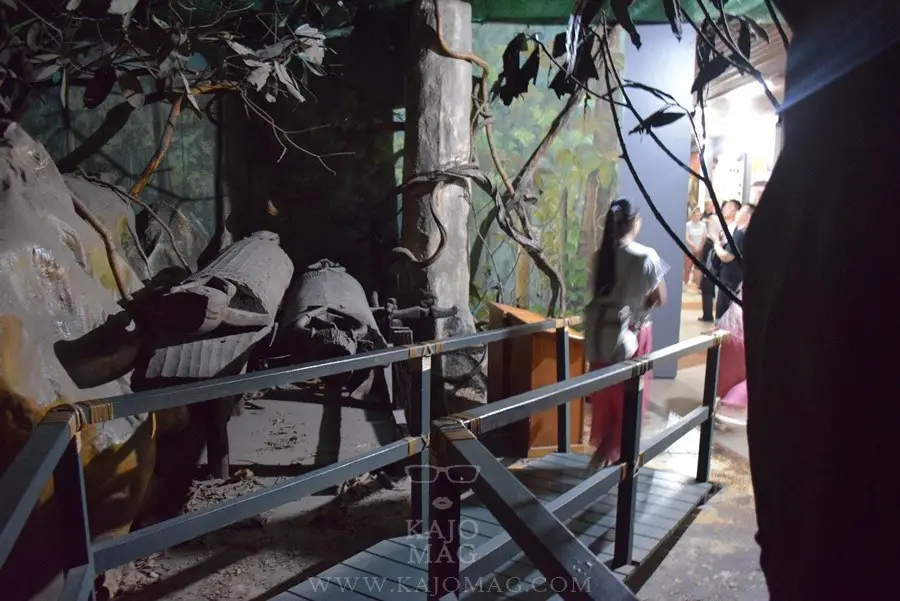
Some of the wooden coffins made from belian wood on display at Sabah State Museum.
4. Tingkayu, Baturong and Madai of Kunak districts
6 archaeological sites in Sabah that you need to know
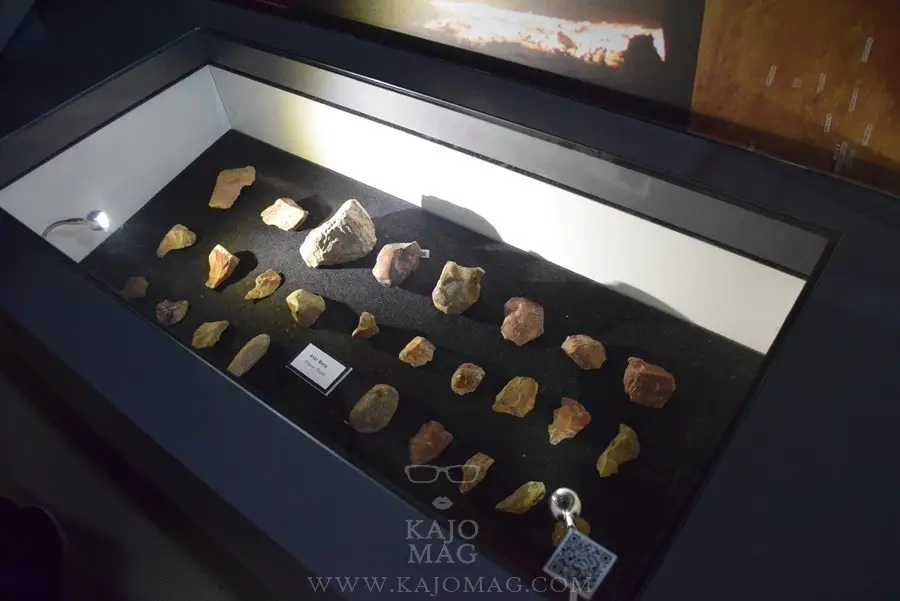
Some of the artifacts found at Kunak district archaeological sites on display at Sabah State Museum.

The Tingkayu area of Kunak district is one of the famous archaeological sites in Malaysia.

About 28,000 years ago, the area used to be a river until lava flow from the now extinct Mostyn volcano dammed it up, turning it into a lake.

Then somehow 17,000 years ago, the lake was drained. But going even further than that, simple stone tools were found in the area which are believed to have originated from about 31,000 years ago.

Prehistoric humans were believed to live around the shore of Lake Tingkayu. When the lake dried, they moved to limestone area of Baturong. Then they eventually moved to further east to Madai caves.

5. Bukit Tengkorak and Melanta Tutup, Semporna
6 archaeological sites in Sabah that you need to know
Some archaelogical samples displayed at Sabah State Museum’s prehistoric section.

Located at Jalan Tampi-tampi which is about 10km south of Semporna town, Bukit Tengkorak’s archaeological site is the largest pottery making factory in Southeast Asia during the Neolithic period.

The site is on a hill about 600 feet above sea level. Researchers found numerous pottery shards with various patterns dating 3,000 BP (or 1050 BC).

About 12km from Bukit Tengkorak lies Melanta Tutup, an archaeological site where traces human settlement could be traced back to Neolithic age.

Here, researchers found burial jars that yielded a date of 3,000 to 1,000 years ago.

6. Mansuli Valley, Lahad Datu

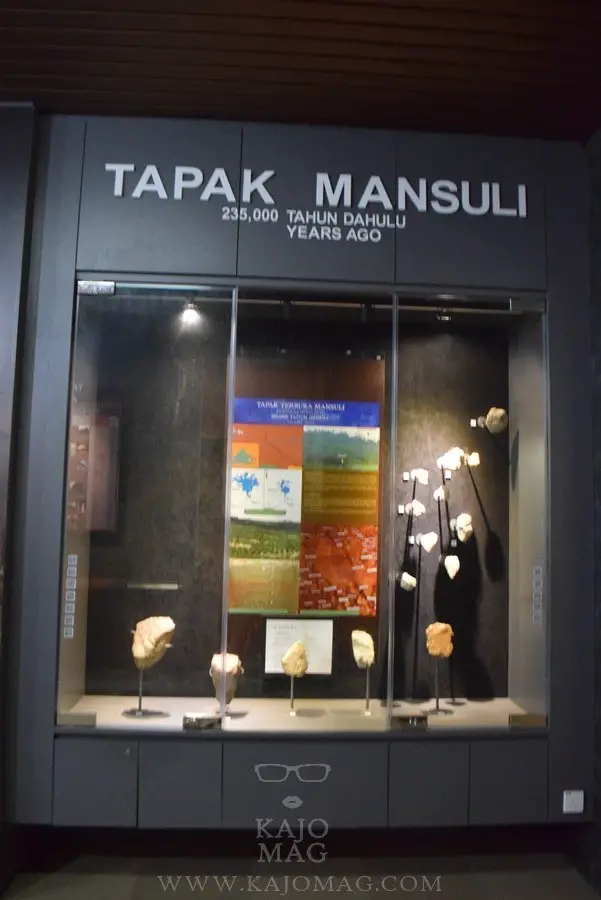
Back in 2012, researchers from Universiti Sains Malaysia and Sabah Museum found more than 1,000 stone tools believed to date back 235,000 years at Mansuli Valley.

Located about 30km from Lahad Datu town, there are two archaeological sites at Mansuli Valley namely Mansuli and Samang Buat Cave.

When Tom and Barbara Harrisson did a survey at Samang Buat Cave in 1964, they found four wooden coffins inside the cave. According to their reports, one of the coffins was “distinctly long”.

6 archaeological sites in Sabah that you need to know
Even if you cannot make it to Lahad Datu archaeological sites, you can still catch of glimpse of Sabah prehistoric past at its state musuem.

You can read more about these archaeological sites from Mansuli Valley Lahad Datu, Sabah in the Prehistory of Southeast Asia by Jeffrey Abdullah and Wood Coffin Burial of Kinabatangan, Sabah by Stephen ChiaOr make your way to Sabah State Museum.

Take a ride to the past at Sabah Museum’s Railway Gallery

Before cars were the thing, transportation in Sabah – formerly known as North Borneo – relied heavily on trains.

In recognition of the historical significance of the railway system in Sabah, the Sabah State Museum opened up a gallery in 2017 dedicated to its locomotive industry.

Located in Sabah’s capital of Kota Kinabalu, the Railway Gallery offers a glimpse of the past through photographs and machines.

Take a ride to the past at Sabah Museum's Railway Gallery
Welcome to the Railway Gallery!

The history of Sabah Railways

In 1896, the British North Borneo Chartered Company introduced the first railway service in Sabah.

The first part of the construction was to the north heading to Beaufort at the bank of Padas river. Then, the track was extended to the south to Weston, about 100km from Kota Kinabalu.

After the Beaufort-Weston railway was completed in 1900, the construction continued from Beaufort to Jesselton (now Kota Kinabalu).

Take a ride to the past at Sabah Museum's Railway Gallery
How the train tickets looked like.

Around the same time, the construction of 48km Beaufort-Tenom railways started in 1903 and completed in 1905.

A year later, the Tenom-Melalap railway was completed.

Starting 1912, the railways worked as the main transportation for the country’s most important crop, rubber.

Due to high maintenance cost, the existence of road transportation and the failure of Weston town becoming a harbour, the Beaufort-Weston and Tenom-Melalap railways were forced to close in 1963 and 1970.

A few years later, the Tanjung Aru-Jesselton railway was also closed down.

Take a ride to the past at Sabah Museum's Railway Gallery
There were plenty of old photographs to browse through.

A walk through Sabah Railway Gallery

Visitors who make their way to Sabah State Museum must drop by its Railway Gallery located right behind the museum.

The gallery gives not only the historical timeline of the locomotive industry but also technical information of the old railway technology.

Take a ride to the past at Sabah Museum's Railway Gallery
You can sit at the passenger car and imagine it is early 1900s.

Putting aside the tonnes of typos, it was still fascinating to read through the descriptions on each panel.

The display of black and white photographs of now long gone railway stations and tracks give visitors a glimpse of how important this mode of transportation was back then.

There are plenty of things to see as well such as the tickets they used at the time, a weighing scale they used for parcels and telephones for station to station communication.

Plus, visitors can also sit and pose inside the passenger car imagining it’s the 1920s all over again.

If history or locomotives is your thing, the Sabah Railway Gallery is definitely a must-visit place in Kota Kinabalu.

For a real-life adventure, you can also take the North Borneo Railway which takes you from Tanjung Aru to Papar. Meanwhile, the Sabah State Railway – formerly the North Borneo Railway – still operates from Tanjung Aru to Tenom.