By Ng Ai Fern
Did you know that 11 September 1945 marks Sarawak’s liberation in World War II?
Many Malaysians only became aware of Malaysia Day (16 September) after it was declared a public holiday in 2010. Likewise, Sarawak Day (22 July) only gained prominence after being gazetted by Sarawak’s late Chief Minister Adenan Satem in 2016.
So it is completely okay that many Sarawakians do not realise that 11 September (9.11) marks Sarawak Liberation Day – the day Sarawak was formally freed from Japanese occupation in 1945.
Here are 5 lesser known facts that you probably can’t find in a textbook.
- When the war ended – and communication failed
In Sarawak, Japanese forces first landed in Miri on 16 December 1941, targeting vital oil fields. Kuching fell shortly after, and Sarawak remained under Japanese rule for three years and nine months, from 1941 to 1945.
Globally, World War II caused an estimated 70–85 million deaths. In Sarawak, exact numbers are unknown, but thousands of civilians and prisoners of war suffered or lost their lives.
When Japan announced its surrender in August 1945, conditions on the ground in Borneo did not change immediately or uniformly. Japanese forces were spread across territories administered differently before the war, including Sarawak, North Borneo (now Sabah), and Kalimantan, and each area experienced the transition at a different pace.
Notably, many POWs in Borneo were not released immediately after Japan announed its surrender. Liberation only came once Allied forces could physically reach and secure the region.
For Sarawak, this process culminated on 11 September 1945, when Japanese authority formally ended following a surrender accepted by Allied forces.
- Why Are There So Many “Victory Days”?
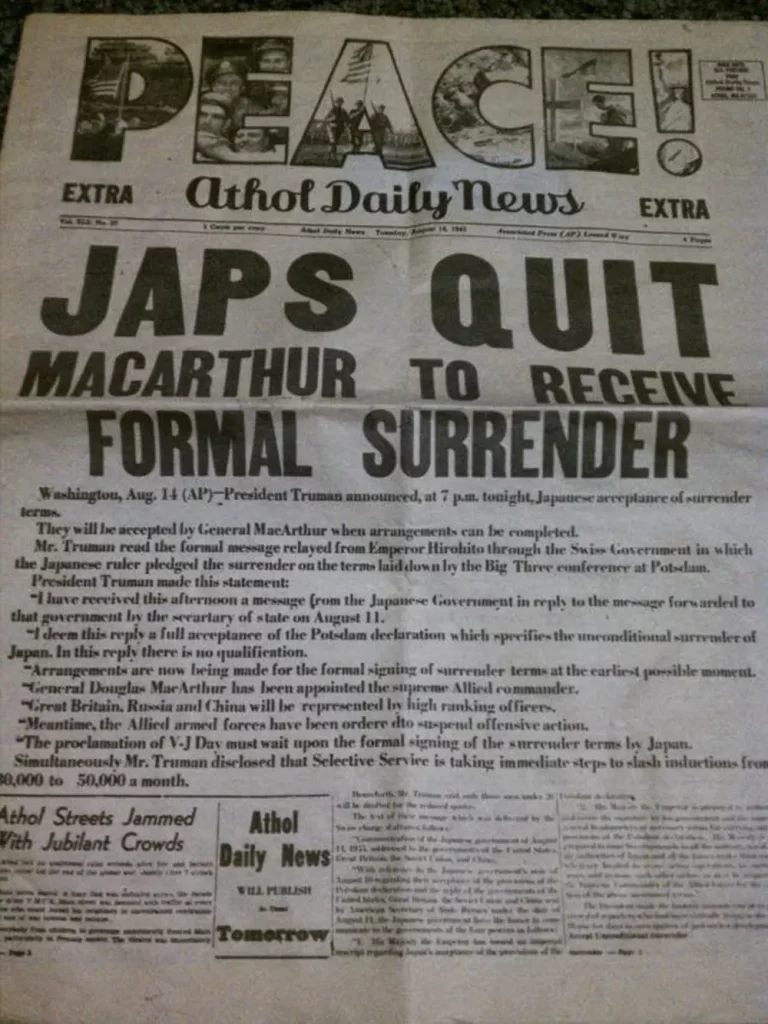
World War II is remembered through multiple Victory Days because surrender was announced, formalised, and enforced at different times in different places.
Key milestones in 1945 include:
- 6 August: Atomic bombing of Hiroshima
- 9 August: Atomic bombing of Nagasaki
- 15 August: Japan announces its surrender (Victory in the Pacific / VP Day in Australia)
- 2 September: Formal surrender signed aboard the USS Missouri in Tokyo Bay (Victory over Japan Day / V-J Day in the United States), officially marking the end of World War II.
In Sarawak, however, things moved more slowly. Allied forces could not immediately locate or contact Japanese commanders in Borneo. As a result, the surrender in Sarawak was delayed, even after Japan had officially lost the war.
- What Happened on 11 September 1945?
11 September 1945 was the day Sarawak was finally and formally liberated.
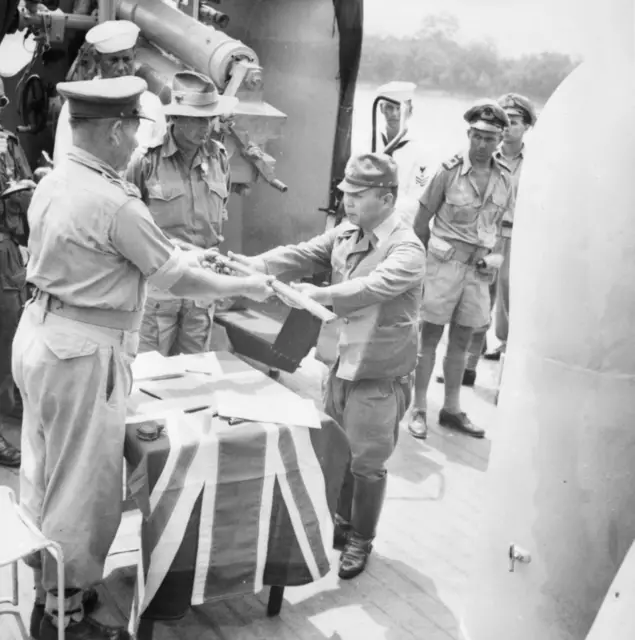
In Kuching, Major-General Yamamura Hiyoe signed the instrument of unconditional surrender and handed over his sword to Brigadier Thomas Charles Eastick of the Australian Imperial Force, symbolising the formal end of Japanese military authority in Sarawak.
For Sarawak, 9.11 is its true Victory Day.
- Why HMAS Kapunda?
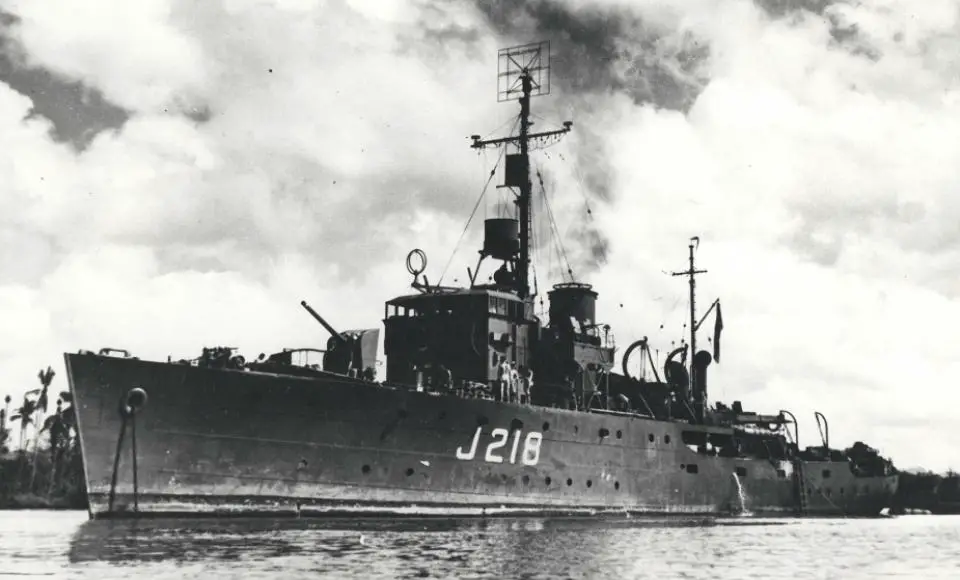
The surrender ceremony took place aboard HMAS Kapunda, an Australian naval vessel involved in post-war operations in Borneo.
After the surrender, HMAS Kapunda:
• Assisted in transporting liberated Allied POWs
• Supported the restoration of Allied control in the region
When its mission was complete, the ship returned to Sydney on 17 November 1945, was placed into reserve in January 1946, and eventually decommissioned and scrapped in 1960, ending a four-year wartime service that spanned more than 110,000 nautical miles.
- Why does it matter today?
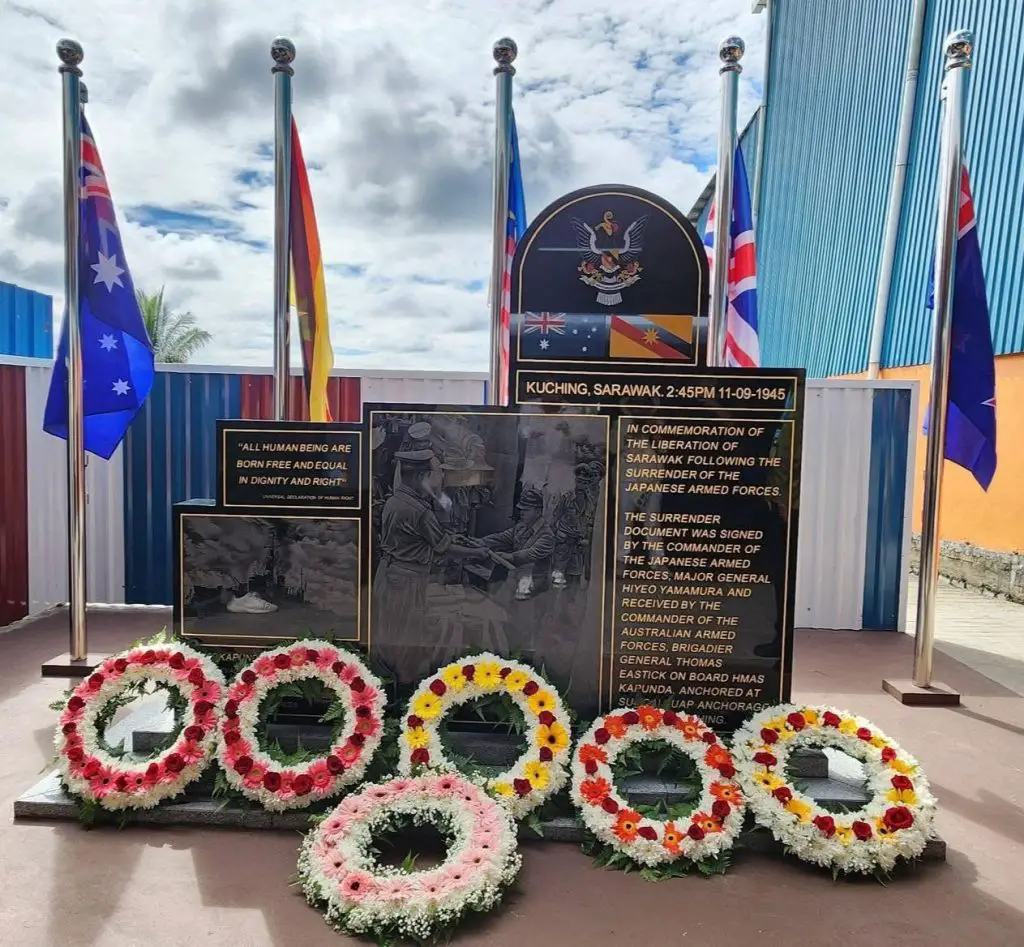
In 2025, Sarawak marked the 80th anniversary of its liberation.
A modern naval vessel was used to symbolically recreate the moment once witnessed aboard HMAS Kapunda, reconnecting the present with a long-forgotten chapter of history.
To commemorate the moment:
• The original Japanese surrender documents were formally presented to the Sarawak Governor (TYT) by Brigadier Eastick’s family
• A memorial monument was erected at Pending Point, Kuching
The whereabouts of the surrendered sword, however, remain undocumented in public records.
While less well known than other national commemorations, 11 September 1945 marks the day peace truly returned to Sarawak.
It is more than a date in history, it’s a reminder that freedom sometimes arrives quietly, delayed by distance, yet no less meaningful.