Browse Category

Travel - Page 13

Ranchan Recreational Park, Serian’s famous picnic spot

Ranchan Recreational Park in Serian might not be on top of everybody’s list of places to go for recreation but on weekends, the place is famous among local people as a favourite picnic spot.

It is accessible, located about 70km from Kuching and 5km from Serian offering waterfalls and pools surrounded by rainforest.

Ranchan Recreational Park and its facilities

Ranchan Recreational Park, Serian’s famous picnic spot

About 10 years ago, the facilities in the park were run-down and in need of an upgrade.

Over recent years, however, Ranchan’s facilities have improved significantly. The park now has a canteen and small eatery, a public toilet, and the trails are properly maintained.

There is a viewing tower, a suspension bridge and huts for resting.

Ranchan Recreational Park, Serian’s famous picnic spot

The park even has a hall which can accommodate up to 300 people at a time. It is available for rent to host official functions, dinners, charity exhibitions or even a concert.

For those who are looking for something small, the park has a lecture room to accommodate up to 60 people.

Otherwise if you’re looking for a place to stay in Serian, Ranchan Recreational Park also offers affordable chalets to rent.

Serian District Council is responsible for managing the park.

Ranchan Recreational Park, Serian’s famous picnic spot

There are several barbecue pits for visitors who are looking to roast their own food at the park.

However as the place is famous among locals and school kids, looking for nice private spots for a picnic might be difficult.

Visit this place during weekdays and you might have several pools to choose from all for yourself.

Beware of flash floods at Ranchan

Ranchan Recreational Park, Serian’s famous picnic spot

Besides being famous as a picnic spot, Ranchan is also infamously known for the ‘kepala air’ or the ‘water column’ phenomenon.

It is a natural phenomenon that occurs in the area when flash flood bursts down over the waterfall.

The management advises visitors to be cautious when taking a dip at Ranchan as this flash flood might occur anytime.

Make sure that you and your family members evacuate the area immediately when you see these signs:

  1. The first sign is the sky suddenly turns dark, especially in the hilly area and is accompanied by a the sound of thunder;
  2. The sound of falling rocks from the headwaters;
  3. Finally, water levels in the Ranchan pools will suddenly start to rise and bubble.

Here are some photos of Ranchan Recreational Park:

Legends and nature of Fairy Cave Bau

Fairy Caves is one of the main attractions in the Bau area located about 40km from Kuching city.

The cave was named after a stalagmite structure which is said to resemble a Chinese deity.

The site covers around 56 hectares and is popular among local climbers.

Overall, Fairy Cave has eight separate walls with over 80 climbs in different ranges of difficulties.

Of course, there are more beyond the walls of Fairy Cave – you’ll find legends and nature interlacing together making it popular among local and foreign visitors alike.

Legends and nature of Fairy Cave Bau
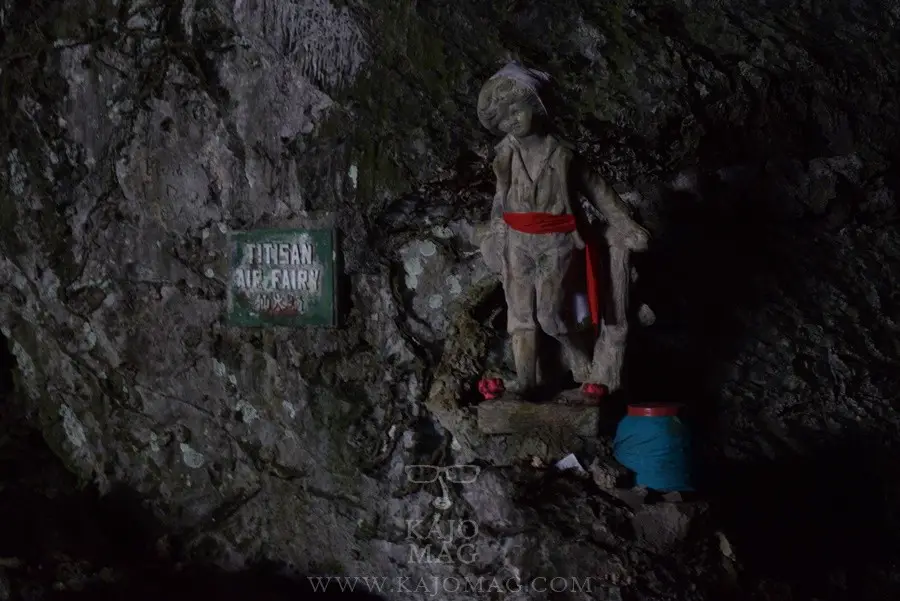
A man-made fountain called ‘Titisan Air Fairy’, which translates to ‘fairy water drops’ was erected in the cave. The fountain has long since dried up but the boy’s statue remains.

Legends of Bau’s Fairy Cave

According to historian Chang Pat Foh, the legends behind the stalactites and stalagmites lie in the story of a poor boy and his mother who lived at a big Bidayuh kampung known as Kampung Kapur located near Fairy Cave.

One day, a Gawai celebration was being held at one of the kampung houses.

Curious, the boy came and peeped in on their celebration, which made the homeowner unhappy.  Rather than simply chase the boy away, the mean-spirited homeowner collected some sugarcane waste and gave it to him, telling him there was pork inside.

Happily, the boy went home and presented what he thought was a gift to share with his mother. When his mother found nothing but sugarcane waste instead, she was humiliated and so began plotting her revenge on the proud village folk.

She took a cat, put it in a beautiful dress and threw the cat into the middle of her neighbour’s Gawai celebration to the surprise of its attendees.

They began to laugh at the sight of a cat in a dress. Their laughter brought on a storm, and the sky roared with thunder and lightning. When the storm eventually stopped, all the villagers had turned into stone.

They are what make up the stalagmites and stalactites inside Fairy Cave.

Another version of the legend is that it was the boy who threw the cat in the middle of celebration and that the mother had instructed him to cover his head with a chicken basket so that the curse would not touch him.

Besides the Bidayuh community, the Chinese have also their own interest in the Fairy cave as the cave is believed to be home for Chinese gods and goddesses.

Some of the rock formations were even named after Chinese deities such as Kuan Yin, the goddess of Mercy.

Browse through this photo gallery of Fairy Cave by KajoMag:

Apart from mystical legends, Fairy Cave is also believed to play a role in Sarawak history as members of Japanese forces used it for shelter during World War II.

Later, communist fighters used it for the same purpose in the ’60s.

Fairy Cave and its nature

Besides being rich in legends and tales, the cave is also rich in nature.

Fairy cave, along with Wind Cave is home to the slipper orchid Paphiopedilum stonei.

This species is one of the highly prized orchids according to Hans P Hazebroek and Abang Kashim Abang Morshidi in National Parks of Sarawak.

Sarawak government gazetted Wind Cave and Fairy Cave as a nature reserve to protect the caves and the biodiversity inside.

The reserve is home to palms such as Arenga pinnata and Arenga undulatifolia.

There are also up to 14 species of bats, 12 species of snails and black-nest swiftlets found in the reserve.

A visit to Fairy Cave

Legends and nature of Fairy Cave Bau
A fantastic view from inside the cave.

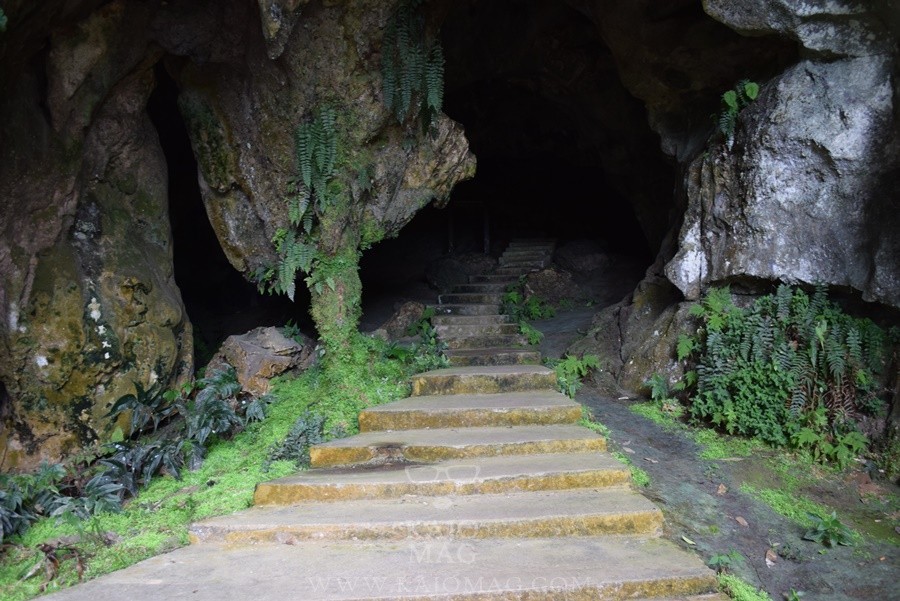
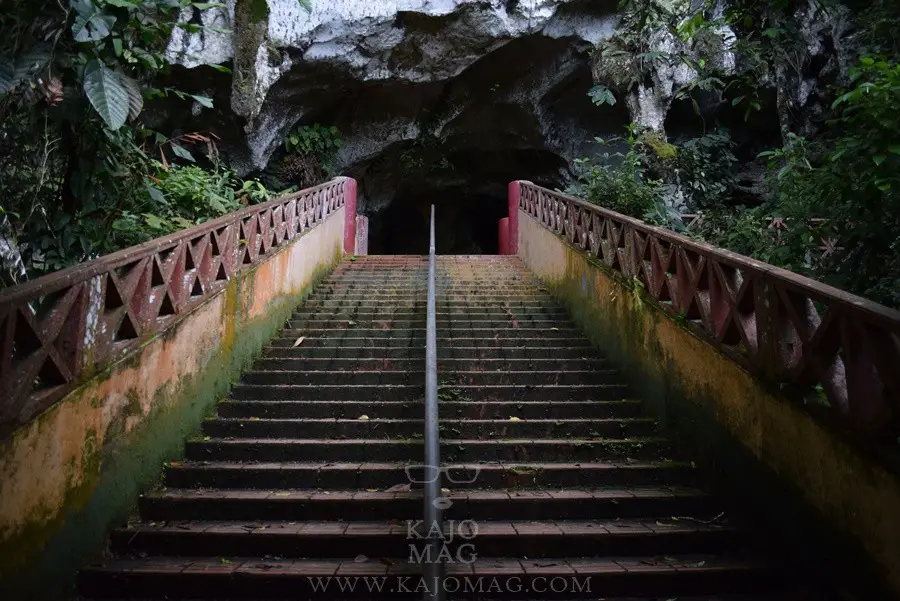
There is a flight of  concrete steps leading up to the entrance located high in the limestone cliff, which makes this place not suitable for the elderly or small children to visit.

Next to the concrete steps, there is a narrow stone ladder covered in mold and in ruin. These were the old steps which led up to the cave entrance.
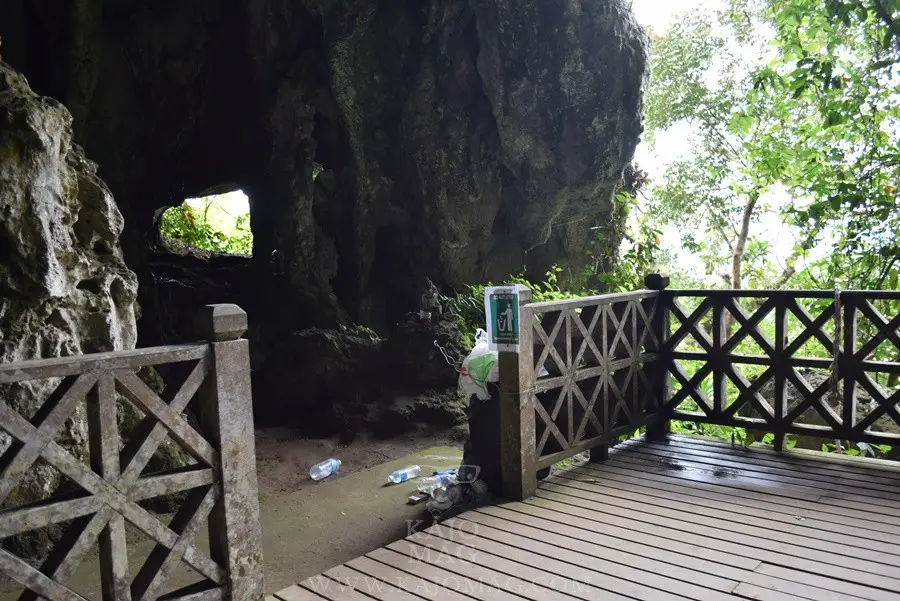
Once you get inside, there are plank walks for visitors to explore the cave.

Apart from that, Fairy cave makes a good site for a pleasant visit in the morning when the weather is a bit chilly.

If you are an avid photographer, the place offers a great location to explore outdoor photography.

The downside?

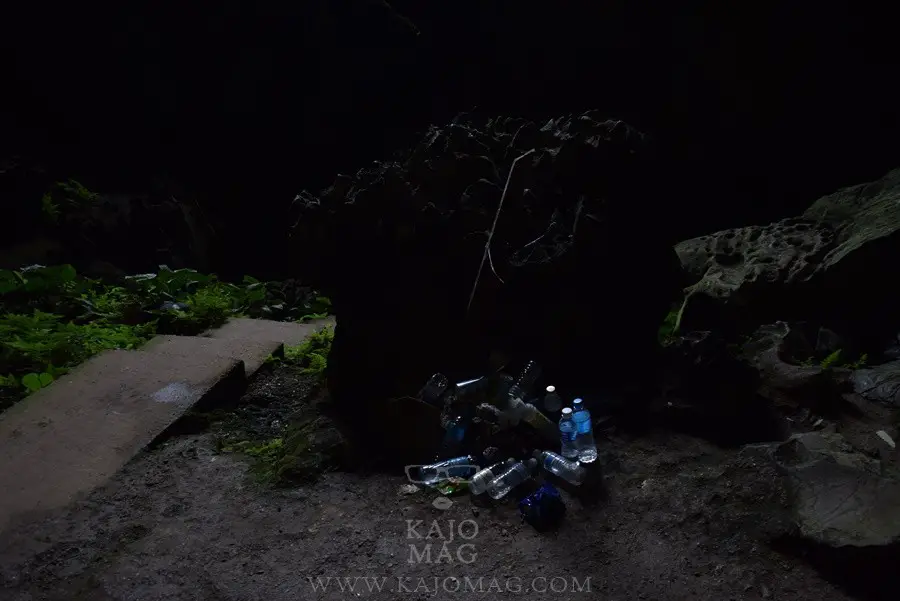
The disappointing part of Fairy cave is the rubbish. With only two dustbins on site, it’s time we start taking our litter home instead of leaving it behind at a nature reserve.

Legends and nature of Fairy Cave BauBring back your own rubbish, and start using reusable bottles for your drinking water.

Soak your body in Panchor Hot Spring for natural healing

When it comes to hot springs near Kuching, people automatically think of the Annah Rais Hot Springs.

For a lesser known, equally calming hot spring about 40km from Kuching city, there’s the Panchor Hot Spring located at Kampung Panchor Dayak which is accessible via Kuching-Serian Road.

It is famous among locals who believe a dip in the hot spring water will promote natural healing.

Soak your body in Panchor Hot Spring for natural healing
Welcome to Panchor Hot Spring!

Among the minerals which had been found in the water are calcium and sulfur.

According to the information displayed on the board at the hot spring, the Panchor Hot Spring haspositive therapeutic effects for skin ailments.

On top of that, it is also believed the minerals in the water can help to soothe arteriosclerosis, rheumatism and joint pains.

Some visitors have a dip in the hot spring for its detoxifying effects.

Soak your body in Panchor Hot Spring for natural healing
Visitors relaxing by the pool.

Firstly, here are the precautions visitors need to take when dipping at Panchor Hot Spring:

  1. Dip your feet first in order for your body to fully adjust to the temperature. The average temperature of water at Panchor Hot Spring is 42oC. Then slowly submerge your whole body into the pool.
  2. If you are not comfortable with the temperature, get out of the pool and take a rest. Visitors are advised to take cold water to alleviate any dizziness that might occur because of the hot temperature.
  3. Never ever jump directly into the pool. After your dip in the hot spring, do not immediately take a shower. Let your body temperature cool down first.
Soak your body in Panchor Hot Spring for natural healing
Never ever jump directly into the pool.

Panchor Hot Spring Facilities

Soak your body in Panchor Hot Spring for natural healing
A visit to Panchor Hot Spring gives back to the local community.

The hot spring is currently managed by the village security and development committee.

Thus, a visit to Panchor Hot Spring gives back to the local community.

Its facilities were upgraded by the Tourism Ministry in 2013 with electricity provided to the site.

There are wooden planks surrounding the pools making it convenient for visitors to sit by the hot spring while soaking their feet.

Visitors do not have to worry the about the weather as the pool areas including the corridors leading to it are covered with roofing.

Other basic facilities include a resting hut complete with benches and tables, public toilet and changing room.

Surrounded by forest, the hot spring makes another serene and short getaway from your hectic life in Kuching.

The hot spring is open daily from 7am till 10pm.

Soak your body in Panchor Hot Spring for natural healing
Pathway leading to the hot spring.

What makes a good tourism board website?

Although some travellers prefer travel blogs and social media, tourism board websites still remain important resources for accurate information on travelling to a specific country.

Most tourism board websites have evolved over the years, utilising social media platforms such as Instagram to promote their countries and give more insights on travelling tips.

While others still have lots to improve on, (*cough cough* Malaysia…) here are some things which can make a tourism board website stand out:

1. Good travel stories

What makes a good tourism board website?
Lake Tekapo in New Zealand. Credits: Pixabay.

Gone are the days where tourism board websites are only filled with press releases of official events.
For example, Tourism New Zealand’s media section has plenty of stories (and story ideas) covering a wide range of topics from activities and sports to nature and ecotourism as well as insights on Maori culture.
Go behind the scenes of famous eateries in New Zealand as the website also features interviews with chefs.

2. Full of tips and guides

What makes a good tourism board website?
Yosemite National Park in California, US. Credits: Pixabay.

There are a lot of tips and guides out there but what we need is specificity.
Like in the blogosphere, some travel bloggers are specialised in luxury travel while others give backpacking and budgeting tips.
When it comes to a good tourism board website, what we need it to be is an all-rounder.
It needs to be full of tips and guides covering all travelling needs.
The Visit California website, for example, offers various tips from how to travel with kids to how to pack for a trip to California.

3. It is all about the details

A good tourism board website website will tell you things that you never thought you needed to know.
Is the place wheelchair friendly? Do they provide baby strollers?
Is it kid-friendly? Where else can you visit in the nearby areas?
Go To Bermuda for instance, even explains to its future visitors how it’s like to drive in Bermuda.

4. More about food please

What makes a good tourism board website?
A night view of Stockholm. Credits: Pixabay.

To write about eating places is more than just listing down what to eat at a certain town.
Again, travellers need and want the details.
One very good example is Visit Stockholm website.
If it is a restaurant you are looking for, it narrows down to budget, mid-price or gourmet categories.
Looking for a cafe? Do you want it to be a cozy, trendy or a classic cafe?
How about a place to hit at night in town? The website details to a bar, a place with live music, or a club and even an LGBT bar.

5. Don’t forget about pop culture

What makes a good tourism board website?Pop culture tourism is the reason why The Abbey Road in London is famous. We want to go where the famous people go, to eat what the famous people eat, to visit where the famous films or dramas were filmed.
South Korea capitalises the popularity of its Kpop and Korean dramas by promoting Kpop music festivals and filming locations.
Visit Korea website lists downs all the filming locations for famous dramas including Goblin, Legend of the Blue Sea, Love in Moonlight, Moon Lovers: Scarlet Heart Ryeo and Uncontrollably Fond.

The grandeur of Sultan Omar Ali Saifuddin Mosque

The grandeur of Sultan Omar Ali Saifuddin Mosque
Sultan Omar Ali Saifuddin Mosque is located at Bandar Seri Begawan, Brunei

When travelling to Brunei, it is hard not to miss the magnificent architectural sight of the Sultan Omar Ali Saifuddin Mosque.

Located in the capital Bandar Seri Begawan, the Sultan Omar Ali Saifuddin Mosque serves as a symbol of Islamic faith in Brunei.

Considered one of the most beautiful mosques in the Asia Pacific, here are some fun facts about the majestic building.


Who is Sultan Omar Ali Saifuddin?

The grandeur of Sultan Omar Ali Saifuddin Mosque
The late Sultan Sir Muda Omar Ali Saifuddien III was the father of the current Sultan of Brunei (Picture source: Tanwir.my/)

The Sultan Omar Ali Saifuddin Mosque was named after the 28th Sultan of Brunei. Known as The Architect of Modern Brunei, he was the one who initiated the construction of the mosque.

Sultan Sir Muda Omar Ali Saifuddien III ruled from June 4th, 1950 until his voluntary abdication from the throne on October 5th, 1967. He was replaced by his eldest son, Sultan Haji Hassanal Bolkiah Mu’izzaddin Waddaulah.

When was it built?

The grandeur of Sultan Omar Ali Saifuddin Mosque
The mosque was built between 1954 and 1958

Sultan Omar Ali Saifuddin Mosque was built between 1954 and 1958. It was designed by A.O Coltman of Booty and Edwards Chartered Architects of UK, based in Malaysia at the time.

The mosque, a blend of Western and oriental architecture is surrounded by a breathtaking landscape, making it the best spot for selfies and sketching activities.

While you cannot take pictures inside the mosque, its interior is equally dazzling. The floor and walls are made from marble columns with stained glass windows and beautiful carvings. The granite is said to be from Shanghai, the chandeliers from England, and the carpets from Saudi Arabia and Belgium. The doors of the mosque were made from timber imported from the Philippines.

It is said that the Sultan Omar Ali Saifuddin Mosque can accommodate up to 3,000 people at a time.


Is that a gold dome?

The grandeur of Sultan Omar Ali Saifuddin Mosque
The gold dome is one of the distinguish feature of the mosque

Yes it is!

Made of pure gold, the gold domes are one of the most prominent features of the Sultan Omar Ali Saifuddin Mosque.

The domes contain 3.3 million fragments of Venetian mosaic, over a surface of 520m².

Apart from the gold dome, another exquisite feature of the Sultan Omar Ali Saifuddin Mosque is the main minaret. It reaches a height of 52 metres, offering a great view of the city.


Why is there a boat in the middle of the lake?

In the Sultan Omar Ali Saifuddin Mosque courtyard, you can see a ceremonial barge or mahligai.

The ceremonial barge is placed in the middle of an artificial lagoon on the banks of the Brunei River at Kampong Ayer.

It is a replica of a 16th century royal barge of Sultan Bolkiah, who was the 5th ruler of Brunei.

The royal barge was used by the then Sultan in his maritime exploits in the old days.

Completed in 1967, the barge was built to commemorate the 1, 400th anniversary of Nuzul Al-Quran (also known as Quran Revelation Day). It was also once used for Quran reading competitions.


Can a non-muslim visit the mosque?

The grandeur of Sultan Omar Ali Saifuddin Mosque
Remember to remove your footwear and dress appropriately when visiting the Sultan Omar Ali Saifuddin Mosque

Of course!

Visitors are allowed to visit the Sultan Omar Ali Saifuddin Mosque during non-praying time. The mosque is open from Saturday to Wednesday from 8.30 am to noon, 1.30 to 3 pm and 4.30 to 5.30 pm and closed on Thursday and Friday.

So, if you plan on visiting the Sultan Omar Ali Saifuddin Mosque, remember to remove your footwear and dress appropriately!

Muara Tebas temple, where the Chinese pray in a Malay village

A couple years ago, a clip of a group of Malay boys performing the lion dance went viral on social media.

They used a cardboard box as the lion’s costume and wooden sticks as well as empty cans for their instruments.

The boys credited their interest in this particular Chinese culture after watching lion dance performances at Ching San Yan temple.

This Buddhist place of worship is also widely known as Muara Tebas temple and has a history spanning over 200 years.

It is oddly located in Kampung Muara Tebas which is a Malay village.

Muara Tebas temple, where the Chinese pray in a Malay village
The staircase leading to Ching San Yan which means Green Hill Temple.

The history of Muara Tebas temple

According to legend, seafarers built the temple there after safely arriving in Kuching after crossing the South China Sea from China.

Here, devotees pray and extend their thanksgiving to Buddha Shakyamuni and Chinese sea goddess Mazu.

She is believed to roam the seas protecting her believers from harm.

The temple underwent renovation back in 1903. Since then, it was given a major facelift from 1994 to 2000.

Now, the Muara Tebas temple has exquisite wall paintings and elaborate sculptures, complete with a landscape garden.

Muara Tebas temple, where the Chinese pray in a Malay village
What you will see from the top of the staircase – an overview of the kampung and the Sarawak River.

It has a typical Chinese Buddhist architecture and layout. The grand mountain gate (front gate) is the entrance to welcome the visitors.

Two Imperial Guardian Lion statues stand at the entrance, ready to protect the temple.

Since it is built on a hill 120 feet above sea level, the temple offers a picturesque view over Sarawak river.

The colourful pavilion also offers a good place to enjoy the view.

Muara Tebas temple, where the Chinese pray in a Malay village
Visitors can sit at this pavilion and enjoy the view of the Sarawak River.

Once inside, you’ll discover that the main building has a courtyard, a  regular feature in most Chinese Buddhist temples.

And of course, there are plenty of statues of the Chinese Buddhist pantheon.

Kuching Hokkien Association has been responsible over the management of the temple since 1984.

Muara Tebas temple, where the Chinese pray in a Malay village
Some of the wall paintings found at the ceiling of the pavilion.

Muara Tebas temple during Chinese New Year

Muara Tebas temple, where the Chinese pray in a Malay village
The temple went through several major renovation before it became what it is today.

The temple is usually flooded with devotees during Chinese New Year.

However, the busiest day of the year would be on the fourth day of the Lunar New Year as devotees believe their deities return to Earth from heaven.

They would pray to and welcome the gods who went to heaven on the 24th day of the twelfth month to report on human deeds.

After visiting Muara Tebas temple, some faithfuls rent a boat to visit nearby island Pulau Lakei to visit ‘batu singa’ (lion rock).

The island is located near the northern part of Bako National Park, another tourist hotspot in the Muara Tebas peninsula.

The peninsula is situated about 30km from Kuching town and is also famous for its seafood restaurants.

For those who are travelling by car to visit the temple or enjoy the seafood, there is a small parking fee charged by the villagers.

Muara Tebas temple, where the Chinese pray in a Malay village
The temple is a fine example of Chinese Buddhist architecture.
Muara Tebas temple, where the Chinese pray in a Malay village
A landscape garden flanks one of the walkways up to the temple.
Muara Tebas temple, where the Chinese pray in a Malay village
The temple overlooks Kampung Muara Tebas.

Belaga bazaar: A visit to the heart of Sarawak

Belaga bazaar: A visit to the heart of Sarawak
Jalan Teo Tua Kheng is a street named after one of the early Chinese settlers in Belaga.

If you look at Belaga town on the map, you will definitely notice that it is slapped roughly in the middle of Sarawak.

According to historian Chang Pat Foh, the name Belaga actually derives from a type of fish – the Betta splendens – otherwise known as the Siamese fighting fish.

Others, however, say the name comes from the word ‘Berlaga’ which means ‘fighting’ because the local communities were always fighting against each other for survival.

The whole Belaga district is located on the upper reaches of the Rajang river, about 120km of Kapit.

As for Belaga bazaar, it is situated at the confluence of Belaga and Balui rivers, tributary of Rajang river.

There are many ethnic groups living along the Belaga and Balui rivers such as the Kayan, Kenyah, Penan, Punan, Sekapan, Ukit, and Tanjung.

These people of Belaga are connected to Kapit via river about 4.5 hours away by boat.

The town can be reached by car in 4 hours from Bintulu using the Bintulu-Bakun road and the infamous uneven, roller coaster-like 34 km Mejawah-Belaga road.

Back in 1893, Sarawak Gazette reported that there were 14 shophouses in the bazaar with 15 more under construction.

Belaga bazaar: A visit to the heart of Sarawak
District office cum public library in Belaga.

Why Fort Vyner was built

Though its history can be traced back to the 19th century, there is no tangible remnant of its past found at the bazaar.

This is because the oldest government building – Fort Vyner in Belaga – was burned down on March 23, 2015.

Fort Vyner held many stories little known by most Sarawakians.

One of those stories is of how the fort came to be built.

According to an associate research fellow at Universiti Malaysia Sarawak Jayl Langub, the deaths of two Brooke officers triggered the need to build Fort Vyner.

It was in 1859, when those two Brooke officers – Fox and Steele – were murdered. They were actually manning Fort Emma in Kanowit.

The two main suspects, Sawing and Sekalai, fled up the Rajang river to take refuge at the Kejaman longhouse at Tuju Matahap, just above the confluence of Belaga and Balui.

The then Resident of Third Division Sibu, Hugh Brooke Low was then assigned to build a fort in Belaga.

He jotted down in his journal how he put together a team of 869 people from various ethnic groups including Iban, Malay and Sihan to build the fort.

The fort was finally completed on January 13, 1884 and was named after the third White Rajah, Charles Vyner Brooke.

Over the years, the building housed a number of government agencies including the district office, post office, police department and Sarawak River Board (SRB).

One of the more modern shophouses in Belaga.

An antique shop in the middle of Sarawak

Although the fort is gone, one of the few early shophouses in town still stands to this day.

There, visitors will find an antique shop like no other.

Owned by Teo Hee Tong, the shop houses more than indigenous artifacts but also memories.

According to Teo, he bought the antiques from local people who sometimes were in need of fast cash, whether it was to pay for funerals or to foot medical bills.

From antique brass boxes to Orang Ulu beads, Teo’s shop can easily mistaken for a mini museum.

While some who sold their family heirlooms to him were fortunate enough to be able to repurchase the items, others never returned, leaving Teo with a handsome collection in his shop.

A visit to Belaga

Belaga is often marketed as the heartland of Sarawak, and a good place to start exploring the Sarawak interior.

Unfortunately, the reality is that not many are willing to go that distance.

With a few shophouses, the town is considerably small with less than 40,000 people spread out over 19,400km2 area of Belaga district.

The population also decreased significantly since the building of the Bakun dam in the 1990s with more than 10,000 local people living along the Balui river uprooted and resettled in Sungai Asap Resettlement Scheme.

The longhouses not affected by the dam are located nearer to the bazaar.

Undeniably, the bazaar is no longer as merry or as busy compared to days prior to Bakun dam.

But once every two years since four years ago, the town comes alive during the Belaga Regatta.

The biennial programme will be held this year from September 27-30.

Some of the other activities are a decorated boat contest, Belaga Rainforest Challenge trail, decorated cottage show and cultural night.

This is the perfect time to plan a trip to this interior town. While you’re in Belaga, don’t forget to try the town’s food specialty – Mee Sup Ikan Labang (Labang fish soup noodle).

Belaga bazaar: A visit to the heart of Sarawak
The only gas station in town.

Retelling the legend of Rentap at Sarawak Harvest and Folklore Festival

Sarawak Cultural Village (SCV) rebranded its annual World Harvest Festival to Sarawak Harvest and Folklore Festival this year.

Regardless of the rebranding, the highlight of the event remains its signature musical theme play which tells the tales and folklore of one of Sarawak’s many ethnic groups every year.

On April 28 the Iban community was this year’s featured ethnic group as they paid tribute to famous Iban warrior Rentap in a play called Rentap: The Untold Story.

Retelling the legend of Rentap at Sarawak Harvest and Folklore FestivalEach year, the act takes on a different ethnic group’s folk tales or stories and this year they featured the Iban community.


Although it did not present an exactly “untold” story of Rentap, the musical did highlight a number of important yet little known facts about him and his life.

Sarawak Harvest and Folklore Festival theme play

Born Libau anak Ningkan, Rentap was a great war chief who led a rebellion against the Brooke administration during the 19th century.

The tale of this fierce warrior took a romantic detour by showing the courtship and marriage between Rentap and his wife Sawai.

Besides Sawai, the musical introduced another important key person in Rentap’s life – Chief Orang Kaya Pemanca Dana Bayang.

Retelling the legend of Rentap at Sarawak Harvest and Folklore Festival
Rentap and Sawai courting under the moonlight during the musical act set on the SCV’s lake.

He was Rentap’s mentor who accompanied him on ngayau (ngayo) expeditions into West Kalimantan.

Of the numerous battles Rentap fought against the Brooke administration (spanning from James Brooke’s reign to Charles Brooke), the play featured a few important ones like the battle of Kerangan Peris in 1844 (which caused the death of a British officer known only as Mr Stewart) and the battle of Lintang Batang in 1853. The latter was a bloodbath which saw Alan Lee, another British officer beheaded by Rentap’s son in-law Layang.

The final battle was at Bukit Sadok, Rentap’s fort. It was during this battle Rentap suffered a great loss, marking the end of his war against the White Rajah.

The battle at Bukit Sadok also introduces ‘Bujang Sadok’, a 12-pounder brass cannon used by Charles Brooke as they attacked his fort. Historically, the shot from Bujang Sadok penetrated Rentap’s fort, killing the gunner operating his own cannon named ‘Bujang Timpang Berang’.

Bujang Sadok is now on display at The Brooke Gallery at Fort Margherita while Bujang Timpang Berang is at the Betong District Office.

Retelling the legend of Rentap at Sarawak Harvest and Folklore Festival
Watch out for the gunshots (fireworks)!
Retelling the legend of Rentap at Sarawak Harvest and Folklore Festival
A temporary wooden hut was set on fire during the play.

The verdict on Rentap: The Untold Story

Although most history purists would agree that the storyline of this Rentap musical was over-fictionalised, the play did capture Rentap’s famed courage and the essence of the Iban community in the olden days.

With fireworks depicting cannon ball explosions and gunfire, the musical act delivered an impressive array of special effects to the whole performance.


A scene showcasing the Battle of Beting Maru, where Brooke troops ambushed the Ibans was equally impressive. A wooden hut suddenly shot up in flames during the battle leaving the audience gasped in awe.

Retelling the legend of Rentap at Sarawak Harvest and Folklore Festival
Rentap and his army fleeing from an ambush by Brooke troops.


Retelling the legend of Rentap at Sarawak Harvest and Folklore Festival
The Brooke troop celebrating their victory on Bukit Sadok.

Sarawak Harvest and Folklore Festival events

Apart from the musical theme play, Sarawak Harvest and Folklore Festival featured other events including Miss Cultural Festival 2018 and Sape World Concert.

Held from Apr 17 to 28, visitors also got to enjoy the Tribal Ironman Challenge and Sarawak Kitchen Food Culinary Competition.

Going into its 11th year, the festival is a prelude to the statewide Gawai Dayak celebration.

The Ministry of Tourism, Arts, Culture, Youth and Sports together with Sarawak Economic Development Corporation supported the event.

5 halal western restaurants to visit within Kuching city centre

While Kuching offers plenty of choices of halal western restaurants, most of them are not in walking distance of the city centre.

Here are KajoMag’s recommendations of halal Western restaurants to visit within the vicinity of Kuching city. Furthermore, they are all walk-able distance from Kuching waterfront:

1. MK Classico Caffe
5 halal western restaurants to visit within Kuching city centre
Chicken Schnitzels anyone?

First of all, every part of this restaurant is definitely Instagram-worthy. It has that rustic and rugged interior with mortal walls and exposed wooden beams on its ceiling.

You can find antiques in every corner of the restaurant from an old typewriter to a classic radio.

Food-wise, you can give MK Special Burger, Chicken Schnitzels or MK Swedish Meatball a try for a hearty dinner.

If you are there for some socialising, order some MK Classic Nachos, MK Banana Cheese or its MK BBQ wings to share with your friends.

The place also offers coffees and various mocktails. Unfortunately, it only opens from 5pm onwards.


2. Sharing Downtown

This place is famous among locals as a cosy, casual place to have dinner. So don’t get frustrated if you can’t get a table during its peak hour in the evening.

For poultry lovers out there, you have several choices including Chicken Chop, Maryland, Ice Cream Chicken Chop, Double Cheezyland and other items to choose from.

If you’re into fish, there are items such as the classic Fish and Chips, Grilled Fish Fillet, Garlic Butter Fish Fillet, Cajun Fish Fillet and Atlantic Salmon.

For a high dose of carbs, pick any of their spaghetti dishes like Spaghetti Vegetable, Chicken Bolognese, Meatball Spaghetti, Carbonara, Seafood Aglio e Olio and so on.

The price is affordable and the portions are satisfying.

3. Kuehpedia Cake Boutique and Cafe

At Kuehpedia, you’ll find more than just ‘kueh’ or cakes. This hipster cafe at Wayang Street offers local dishes such as Nasi Gian and Nasi Dagang.

But they also offer western delights such as Creamy Salted Egg Pasta, Grilled Chicken and Crispy Beef Bacon Carbonara.

Patrons can satisfy their craving for sweets with both local and western desserts at Kuehpedia.

4. Bing! Coffee

Most visitors come to any of Bing! Coffee’s branches to wind down and relax with a cup of coffee, while only a few come specifically to sate their hunger here. But this place is perfect for those who want a quick Western food fix.

Bing! Coffee offers halal Western food such as Beef Lasagna, Beef Burger, variety of sandwiches made of Panini, Ciabatta, Bambini, or Focaccia breads.

5 halal western restaurants to visit within Kuching city centre
A quick grab of sandwich at Bing! Coffee.
5. Peridot Kuching

From thin crust pizza to creamy pasta, you can find these at Peridot Kuching.

Another highlight of this restaurant is its shakshouka, a dish of eggs poached in tomato sauce, chilli peppers and onions.

On TripAdvisors, visitors seemed to rave about its salmon saying it is well-cooked at a reasonable price. Why not give that a try on your next visit?

A look into the past of the Sarawak Chinese at the Chinese History Museum

The Chinese History Museum is an unassuming building located at Kuching Waterfront. Built in 1912, it originally served as a courthouse for the Chinese community from 1912 to 1921.

This was where the Chinese community handled their disputes from marriages to divorces and even division of property.

The third White Rajah, Charles Vyner Brooke wanted the Chinese community to manage their own affairs and so Ong Tiang Swee was selected as the first chairman and assisted by six judges elected annually from the community.

Inspired by English colonial architecture, the museum was known as the Chinese Chamber of Commerce building.

In 1993, the building was reopened and is what we know today as the Chinese History Museum.

A relatively small building (the hall itself is 46 square feet), this museum gives valuable insight on the livelihoods and the economic and historical contributions of the Chinese community in Sarawak.

The Chinese History Museum exhibit

The start of the exhibition educates visitors on how the Chinese immigrated to Sarawak.

In fact, the first wave of Chinese immigrants who landed in Sarawak in the 15th century were mainly the Hakkas.

They first settled in Pontianak, Sambas, and Singkawang before migrating to what we know now as the Bau area.

Then, the second wave of Chinese immigrants landed in Kuching even before James Brooke’s arrival. They were the Teochews and the Hokkiens.

Apart from that, the exhibition highlights some of the pioneering community leaders including Liu Shan Bang, Ong Tiang Swee and Ong Ewe Hua.

There are other modern Chinese leaders featured as well such as former deputy chief minister George Chan and James Wong, who holds the record as the longest serving assemblyman in the history of Sarawak (he held the office for nearly 50 years).

Although the Chinese in Sarawak travelled thousands of miles away from mainland China hundreds of years ago, the communities here still retain most of their ancestral culture.

Other aspects of their culture that they brought include the Chinese musical instruments found in Sarawak.

The Chinese History Museum showcases a handful of musical instruments such as Liu Qin, Er Hu, Yang Cin, Qin Qin and many more.

Other interesting exhibits found were an intricate ceramic lunch box and a pillow for smoking opium.

Some room for improvement…

Sadly, there were some disappointing aspects when KajoMag visited the museum in April 2018.

For starters, some of the lights were not working at all and some light bulbs were flickering, exuding that haunted house feel.

Most of the audio interactive systems like the sounds of the various musical instruments and dialects were not working, and some of the exhibits were dusty and not properly described.

Given the strategic location at Kuching waterfront which is a popular tourist attraction, a little bit of more care and attention could go a long way for this small yet important museum.

Read more:

A visit to Fort Hose, Marudi, Sarawak

A walk through history at Fort Sylvia, Kapit