Browse Category

Culture - Page 8

What to know about pig liver divination in Iban culture

If you are not familiar with the term ‘haruspex’, it is a term to describe one who is trained to practice a form of divination called ‘haruspicy’.

In ancient Rome, haruspicy involved the inspection of the entrails of sacrificed animals, especially the livers of sacrificed sheep and poultry, to divine omens and communicate with the gods.

The reading of omens specifically from the liver is also known by the Greek term hepatoscopy or hepatomancy.

However, the Greeks of ancient Romans were not the only one who practiced divination using animal livers.

The Iban people in Sarawak have also been known to practice liver divination, specifically from pigs.

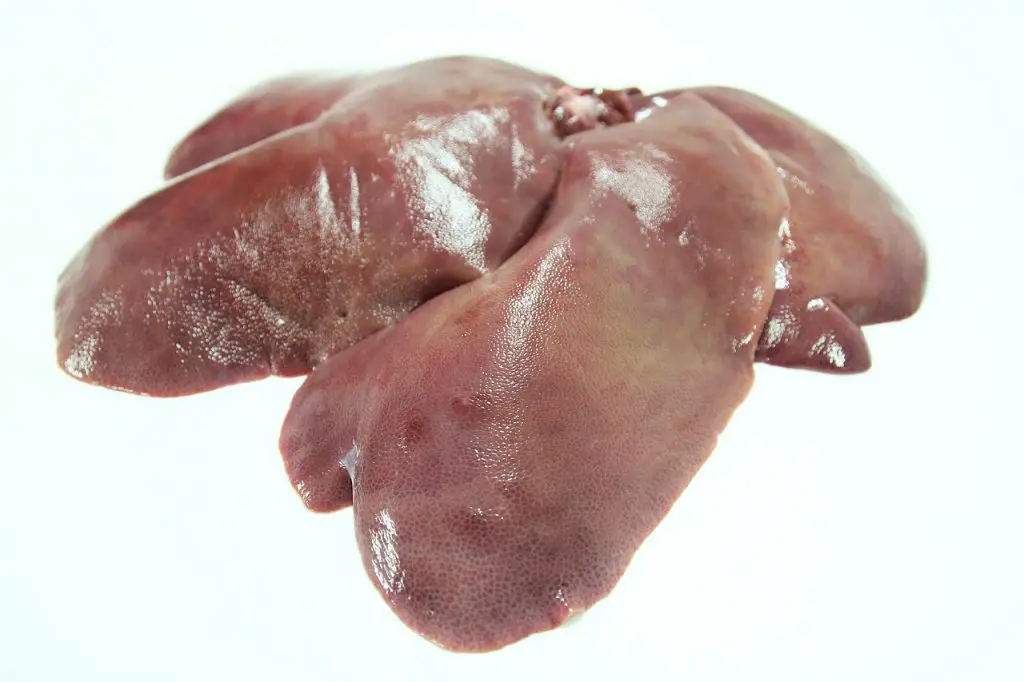
What to know about pig liver divination in Iban culture
Photo from Pixabay.com

Pig liver divination in Iban culture

One of the earliest records of pig liver divination in Iban culture was recorded by Leo Nyuak in a paper called ‘Religious rites and customs of the Iban or Dyaks of Sarawak’ in 1906.

In the paper, Nyuak explained how the ceremony was performed more than 100 years ago.

“The pig is bound and placed on the open air platform that fronts the house. A portion of rice which has been offered to the spirits is given by the women to the animal to eat.

The women then wash it and rub its body over with aromatic herbs and comb its hair; it is then rubbed over with oil. Offerings to the spirits are then ranged near the pig and the owner of the sacrifice leads the chief or other important member of the village who is to perform the ceremony, to his place, having beforehand put on his wrist a brass ring, and in his hand a barbed spear, which are supposed to preserve him from any evil the awful rite might bring upon him.

White and yellow rice is then sprinkled over the pigs body with the following imprecation; ‘May the eyes of our enemies be blinded, and may they fall on easy prey into our hands.’

Whilst the offering and invocations are being made, the pig is killed, the liver and gall extracted and placed in a plate and covered with the red leaves of the Sabang plant.

If on examination the auspicium is not bad, but there is something wanting to it, a fowl is killed and it is sprinkled with the blood to make up for what is wanting. If the auspicium is bad, a second pig is killed, and that failing, also a third. If the third auspicium proves bad it is accepted as final.”

The interpretation of pig liver divination before headhunting trip

“If small excrescences or pimples are seen on the liver, these are called igi sabang and foretell that the heads of enemies will be obtained. If the folds of the liver have some resemblance to the barb of a spear, the owner of the sacrifice will become renowned for bravery.

Should any portion of the liver ulcerated, the sign is bad. If it exhibits blood spots, it foretells wounds on the war path.

A liver the appearance of which is not pronounced as good or bad, is a sign of cowardice, but as this words is honourable, this sign is called ‘far from the enemy’.

If the gall does not lie flat on the liver but that is somewhat turned up, this is a sign of deceit that the owner of the sacrifice falsely claims to have obtained heads of the enemy: but if his bravery is well known the above sign foretells that he will soon add to the number of his trophies.”

Pig liver divination performed on the sick

Apart from foretelling the outcome of headhunting trips, the Iban people performed pig liver divination on the sick to predict the outcome their health.

“When the auspicium is taken on behalf of the sick, the following are the signs.

If the veins of the liver are at right angles with the gall it is a bad sign.

If the lobes of the liver come very close to one another it is also a bad sign, for the spirit of disease who dwells in one of the lobes is then said to be very near its victim and will capture him.

If the liver is bright and healthy looking, it is a sign of returning health.

However, if the left lobe where the evil spirit is supposed to dwell, is higher than the right, this shows that the spirit is stronger than the sick man and the patient will die.”

As not many Iban people perform this ritual nowadays, reading omens using pig’s liver has now become a rare heritage or tradition of Iban culture.

Escaping POW camps during WWII under Japanese occupation

The Geneva Conventions are four treaties and three additional protocols which establish international legal standards for humanitarian treatment in war.

Basically, the treaties define the basic rights of wartime prisoners for both civilians and military personnel.

In other words, just because you have conquered a country, it doesn’t mean that you can do whatever you want to the people who live there.

The first treaty was signed by international committees in 1864.

For the next century, the Geneva Conventions are negotiated over and over again.

In 1907 for instance, the convention added the standards for the ‘humane treatment’ of Prisoners-of-Wars (POWs).

Then in 1929, the Geneva Conventions Relative to the Treatment of Prisoners of War was signed by 47 governments including Japan.

But then why did so many POWs died during World War II (WWII) in the hands of Japanese forces?

This was because the Japanese government never ratified the 1929 treaty.

In 1942, the Japanese government stated it would follow the terms of the Convention mutatis mutandis (changing what has to be changed).

Escaping POW camps according to the Geneva Conventions

The Convention recognised that a POW may have the duty to attempt escape.

In fact the Geneva Convention prohibits a captor nation from executing a POW simply for attempting escape.

Under the authority of the senior official, a POW must be prepared to escape whenever the opportunity present itself.

In a POW compound, the senior POW must consider the welfare of those remaining behind after an escape.

However, as a matter of conscious determination, a POW must plan to escape, try to escape and assist others to escape.

During WWII, the POWs died in Germany at a rate 1.2 per cent. Meanwhile in the Pacific theatre, the rate was 37 per cent. In the Philippines alone, the death rate of POWs was 40 per cent.

One of the many motives contributing to these death rates was execution for escaping POW camps.

Escaping POW camps during WWII under Japanese occupation
Photograph taken during the Selarang Barracks Square Incident when Japanese General Fukuye concentrated 13350 British and 2050 Australian prisoners of war because of their refusal to sign a promise not to escape. The picture shows external excavations for latrines made necessary because of overcrowding in the barracks. Courtesy of Australian War Memorial (Copyright expired-Public Domain).

The Selarang Barracks Incident

In August 1942, four POWs escaped from the Selarang Barracks in Singapore. The barracks was used to house a British Army infantry regiment.

After the British surrender of Singapore on Feb 15, 1942, one of the places used by the Japanese as Allied POWs for internment was the Selarang Barracks.

The four escapees Australian Corporal Rodney Breavington and Private Victor Gale and British soldiers Private Harold Waters and Private Eric Fletcher were recaptured.

The newly arrived Japanese Commander General Shimpei Fukuye wanted every POWs intered at Selarang Barracks to sign a pledge to prevent any escaping attempts.

The pledge stated, “I the undersigned, hereby solemnly swear on my honour that I will not, under circumstances attempt to escape”

Only three agreed to sign while the rest refused to since it clearly against the Geneva Convention which stated the POWs had the right to attempt to escape.

General Fukuye then ordered all prisoners except the three who signed to gather at the parade square in Selarang Barracks.

The result? Almost 17,000 men had to cram themselves into the square which was designed to hold 800. (Some reports stated 15,000 men cramped into a space for 1,200).

Meanwhile, the four escapees were executed on Sept 2 with rifles. The initial shots were non-fatal and the poor men had to beg the Japanese to be finished off.

Despite the execution, the rest of the POWs stood firm and did not sign the oath.

However without food and little water available, and cramping under the hot sun, dysentery broke out among the POWs.

Slowly, those who were already sick before began to perish.

Before more men would die, Lieutenant Colonel Holmes ordered his men to sign the oath.

Taking advantage that the Japanese were not familiar with British names, the POWs signed them using false or meaningless names.

Finally on Sept 5, the Japanese allowed the prisoners to disperse and went back into the barrack buildings.

Escaping POW camps in Sandakan

Escaping POW camps during WWII under Japanese occupation
The cemetery at Sandakan POW Camp after the war.

Among the first to escape from Sandakan POW camp in Sabah were Herb Trackson and Matt Carr.

However, they were recaptured six weeks after their escape at the end of August 1942.

When being interrogated, they told that their commanding officer Major G.N. Campbell and Captain J.G. Scribner had ordered them to take any opportunity to escape.

The two officers then were also arrested. Due to this, the commandant in-charge Captain Susumi Hoshijima gathered all POWs to sign a contract.

The contract contained three demands; ‘we will attempt to accomplish any order given the Japanese, we will not attempt to escape and we are aware that we will be shot if we we attempt to escape.’

After back and forth debate between Hoshijima and the POWs about how the contract was not in line with the Geneva Convention, the POWs finally did signed the contracts.

However just like in Singapore, the Allied POWs signed them using fake names and even actors’ names.

Escaping POW camps – success stories

So did any of these POWs manage to escape Japanese POW camps without being captured?

The only successful mass escape from a Japanese camp during WWII was not as massive as 400 POWs that were rescued by Steve Rogers in Captain America (2011).

On April 4, 1943, US Air Force pilot Samuel Grashio, US Air Force Lieutenant William Dyess, US Marines Austin Shofner and Jack Hawkins, six other Americans and two Filipinos escaped from a camp in Davao, the Philippines.

Before their historical escape, they spent two months smuggling food and equipment to a jungle cache.

After wandering for three days in the swamp, they made contact with a group of Filipino guerrillas.

Over the course of the few months, seven of the men were transported using a submarine to Australia while three stayed behind with the guerrillas to fight.

Unfortunately, one of the three was killed by the Japanese.

The Berhala Eight

Escaping POW camps during WWII under Japanese occupation
One of the Berhala Eight, Jock McLaren (at left) returning to Berhala Island in October 1945. Awm121749. Credit: Public Domain (Copyright Expired).

Another group of POWs that managed to escape from Japanese camp was the Berhala Eight.

The Berhala island in Sandakan was made a temporary camp before the POWs were sent to a more permanent camp at Sandakan.

Eight men realised that it would be harder to escape from the permanent camp so they decided to escape from the island before they were to be transferred.

They managed to steal a boat and set off to the Tawi-tawi islands in the Philippines.

Their escape from Berhala Island save their lives as they then missed the infamous Sandakan Death Marches.

Speaking of Sandakan Death Marches, these were a series of forced marches from Sandakan to Ranau which resulted in the deaths of 2,434 Allied POWs.

There were only six survivors and they survived because they managed to escape.

The last POW to be alive at Sandakan camp was Australian John Skinner.

He was executed five hours before Emperor Hirohito announced Japan’s unconditional surrender marking the end of WWII.

Understanding the Japanese laws behind escaping POWs

Whether in it Singapore or Sandakan, what was with the Japanese obsession to have the POWs sign contracts stating that they would not escape?

Japanese historian Yuki Tanaka did some explanation in his book Hidden Horrors: Japanese War Crimes in World War II.

Generally, the contract incident was an example the distinction between Japanese and Western attitudes to law and the contradictions between the Geneva Convention and the principles of Japanese military law.

Tanaka stated,

“The seventh article of the Japanese law on punishment of prisoners states that the leader of a group of prisoners who had been captured while attempting to escape would be punished by death or between ten years and life imprisonment and all other members of the group would be imprisoned for a minimum of one year.

“The regulation on the treatment of POWs stipulates that POWs must sign a contract promising not to escape and that any prisoner who did not sign a contract would have thereby expressed an intention to attempt to escape and therefore be subject to heavier surveillance.

“If a prisoner did sign such an oath and subsequently attempted to escape, he would also be subject to a minimum sentence of one year’s imprisonment.”

Plus, a Japanese law dating from 1904 gave Japanese prison guards the right to shoot at escaping prisoners when such action was necessary to prevent a prisoner from successfully escaping.

Since their law did not define ‘when such action was necessary’, the Japanese guards would just shoot anybody who tried to escape.

The Japanese and Geneva Convention

The truth was actually simple; many of these Japanese commandants and POW camp guards were unaware of the contents or even the mere existence of the Geneva Convention and if their country had anything to do with it.

The commandant of Java POW camp Major General Saito Masazumi testified to the Tokyo War Crimes Tribunal after the war that and issue of international law in relation to POWs was never raised in a meeting.

Furthermore, he himself had no knowledge of any international law regarding to POWs and so he did not ask about it.

The same thing with Lieutenant Colonel Yanagida Shoichi, the commandant of a POW camp on the Burma-Thailand Railway. He testified that he never heard of the Geneva Convention.

Thus, just about all Japanese POW guards at every camp would shoot prisoners who made unsuccessful escape attempts.

Escaping POW camps under the Japanese was a gamble of life.

If they didn’t died being shot during the recapture, they were either executed later or died while being tortured.

Were there any justice for these men who were executed because they tried to escape after the war?

Generally, yes. For instance, General Fukuye who was responsible for the Selarang Barrack Incident was sentenced to death during the Singapore War Crimes Trial in 1946.

He was executed by firing squad on April 27, 1946 on the same spot where the four escapees were shot three years earlier.

Fortunately for the general, he died instantly and did not need to plead to be killed off.

Captain Lionel Matthews, the hero of Sandakan POW Camp

Captain Lionel Matthews might not be a familiar name for Sarawakians but during World War II (WWII) he was executed by a firing squad on Mar 2, 1944 in Kuching.

After the war, he was posthumously awarded the George Cross. It is the highest award for heroism or courage in the face of the enemy that could be awarded to the Australian armed forces at the time.

Captain Lionel Matthews, the hero of Sandakan POW Camp
Captain Lionel Colin Matthews. Credit: Public Domain.

Captain Lionel Matthews and the beginning of World War II

Matthews arrived in Singapore on Feb 18, 1941. In August, he arrived in Malaya and wqs posted as the signals officer there.

He served during the Malayan campaign and the Battle of Singapore.

After the Fall of Singapore on Feb 15, 1942, Matthews, like many other prisoners-of-war (POWs) was initially interned in the Changi POW camp, Singapore.

Then in July, ‘B’ Force which consisted nearly 1,500 Australian POWs including Matthews was sent to the Sandakan POW Camp, in then occupied British North Borneo.

Captain Lionel Matthews and the Sandakan Underground

Once in Sandakan, Matthews managed to set up a complex intelligence-gathering network.

This is because during the early days of the internment, the security at the POW camp was fairly lax and no guards accompanied the officers who worked outside in the garden.

Matthews first succeed in making contact with a Malay man who went by the name Dick Maginal while he was out in the garden.

Through Maginal, Matthews made contact with local constabulary Sergeant Ahbin.

Subsequently, Ahbin managed to organise communication between Sandakan Camp and another camp at the nearby Berhala Island as well as Dr James Taylor in Sandakan town.

Matthews and a number of Australian soldiers would go out in the garden. There, they would leave messages for Dr Taylor in some trees and would collect replies and small quantities of medicine from him in the same way.

Dr Taylor also supplied information on Japanese movements through the same method.

At the same time, Matthews made contact with a local Eurasian family, the Funk brothers. The three brothers Alex, Johnny and Paddy (Patrick) Funk served as the eyes and ears in what was later known as the Sandakan Underground.

Alex even provided Matthews with important maps of the Sandakan area, pinpointing the Japanese barracks, machine-gun posts and communication posts.

Through Alex, Matthews also made contact with anti-Japanese guerrillas operating in the southern Philippines.

These guerrillas then arranged for the supply of two machine guns, 27 rifles and 25 hundred rounds of ammunition to the POWs.

In May 1943, the Matthews group decided to build a radio transmitter. They received some radio parts that had been smuggled in by ‘E’ Force which had arrived the previous month.

Their plan was to obtain the remainder of the radio parts from the Sandakan Underground members outside of the camp.

This time, things did not go the way that they had planned.

Betraying Captain Lionel Matthews and the rest of Sandakan Underground

The Sandakan Underground group was betrayed. The motive behind the betrayal was “banal” according to Paul Ham in his book Sandakan.

“Neither fear or nor loyalty to the Japanese inspires the betrayal, just money. It is a tawdry act of extortion,” Ham wrote.

A member of the Sandakan intelligence group Heng Joo Ming had an argument with a sweeper named Dominic Koh at the airfield over illegal dealing of rice on the black market.

In anger, Koh told another friend named Bah Chik about Heng’s involvement with the POWs.

Koh and Bah Chik took this opportunity to blackmail Heng for a little money. Bah Chik who was a close friend of a local Japanese spy named Jackie Lo Ah Fok, threatened to betray Heng to the Japanese unless he paid him money.

Heng called Bah Chik’s bluff and paid nothing.

Breaking down under the kempeitai

However, the price was heavy for his actions. Bah Chick told Lo about Heng and soon enough the Kempeitai came for Heng.

Heng and his father were arrested before dawn on July 18, 1943 and were taken to a bungalow.

There, a guard who was skilled at jujitsu threw the father and son pair around the room. Still, Heng revealed no names.

They were then subjected to the ‘water torture’.

A large amounts of water were forced down into their throats. When their stomachs were bulging full of water, the interrogator jumped from a chair onto their stomachs.

Hearing the sounds of his father wailing in pain, Heng broke down and admitted his involvement with the Sandakan Underground.

He also spilled some names including the Funks, Dr Taylor and Matthews.

Captain Lionel Matthews and his Sandakan Underground members arrested

Captain Lionel Matthews, the hero of Sandakan POW Camp
The ruins of huts in the prisoner of war camp, Sandakan, North Borneo, October 1945. Those who were too ill for the march were eventually murdered here. Courtesy Australian War Memorial: 120457

All members of the Matthews intelligence group as well as Dr Taylor and police officer Ahbin were subsequently arrested.

On July 22, the camp was searched and they found two pistols and some maps. The Japanese did not find the radio.

Then on July 24, another search was made and this time they found a list of the radio parts smuggled into the camp.

The Japanese continued to arrest anybody who they suspected had been involved throughout August and September.

A total of 65 men were captured, all subjected to interrogation and torture by the kempeitai.

The interrogation and Morse Codes conversation

The means of interrogation were brutal and extreme. Matthews and his friends endured vicious beatings and the water tortures.

Still, they all refused to talk.

Lieutenant Gordon Weynton described the scene,

“We were placed in a triangular formation, all facing the sentry whose instructions were to watch and make sure there was no talking. Matthews communicated using Morse. He would come back from interrogation, sit down, cross his legs as we were instructed to and tap his fingers. He would go through the topic of which he’d been interrogated that morning and the answers he’d delivered.”

These messages that Matthews tapped, for the prisoners, “not only enabled prisoners to avoid accidental incrimination but they boosted confidence.”

The trial and execution in Kuching

On Oct 25, 1943, after more than three months of torture, the twenty or so members of the Matthews group were taken to Kuching, Sarawak.

There, the Japanese held a military trial to prosecuted the members.

In his book Hidden Horrors: Japanese War Crimes in World War II, Japanese historian Yuki Tanaka pointed out a very unlikely event that happened during the trial.

He stated,

Colonel Suga, commandant of the Borneo POW camp system, was present at the trial and made an open plea to the judges in the courtroom. He asked them to give the accused prisoners and civilians in trial in accordance with international law and to be merciful in their sentencing.

“This would have been an uncommon act even in a court-martial of Japanese soldiers; in a trial of enemy prisoners it was extremely unusual and courageous. Clearly Suga was aware that the trial of POWs by a Japanese military court was, to say the least, in potential conflict with the rules of international law.”

Regardless of Suga’s plea, Matthews, Ahbin, Alex Funk, Heng Joo Ming and five others were sentenced to death by firing squad and executed immediately after the trial on Mar 2, 1944.

Meanwhile, Dr Taylor was sentenced to 15 years’ imprisonment in Singapore’s Outram Road prison and the remainder were sentenced to prison terms ranging from six months to 15 years.

The funeral of Captain Lionel Matthews

Captain Lionel Matthews, the hero of Sandakan POW Camp
Flying over the prisoner of war camp (POW) in Batu Lintang at a low height, RAAF Beaufighter pilots reported sighting white POWs, clad in khaki shorts, who excitedly waved as the RAAF aircraft flew over to drop leaflets announcing Japan’s surrender. Credits: Public Domain (Copyright expired). https://www.awm.gov.au/collection/C242106

On the same day of the execution, the Australian POWS in Batu Lintang Camp, Kuching found out that one of their officers had been executed.

Lieutenant Jim Fraser remembered that he was standing near the gate of their compound when Colonel Suga passed by.

Looking very depressed, he reportedly said with a tear in his eyes, “I have just executed the bravest man I ever met.”

A small number of Australians were allowed to attend the funeral. Those who attended the funeral remembered that the coffin was oozing blood as it arrived at the cemetery.

Afterward, Suga gave permission to make a wooden cross for Matthews. They made one, inscribing his name and unit.

Then a day or two later, Suga drove one of the Australian officers out to the cemetery where they planted the cross at the head of the grave.

According to author Charlotte Nash, this event surely bolstered the determination of the rest of the Australians to survive their ordeal.

Remembering Captain Lionel Matthews

Dr Taylor survived the war and he remembered the day when Matthews was executed.

“I had never met Captain Matthews until we lay side by side in the hands of the kempeitai. Tall and thin and bearded, his appearance was – there is no other word for it but Christ-like.

“He knew he was going to be killed, yet even when he was racked with pain from the fearful beatings and tortures, his constant thoughts was for others. No man ever wore the uniform of an Australian officer more honourably.

“I remember him, on the morning he was to die, calmly dividing his food with his prisoners and he called back to them as he was taken out to be shot: ‘Keep your chins up, boys. What the Japs do to me doesn’t matter – they can’t win!’

“He faced a Japanese firing squad with eight of my loyal Asiatic helpers, they were buried in a common grave and I believe that he tore the handkerchief from his eyes and went to his death unflinchingly. I should call Captain Matthews the hero of Sandakan Camp. I have never met a man so unselfish and so unafraid.”

On Nov 22, 1950, Australian newspaper The Advertiser reported on the union between Johnny Funk and Captain Matthews’ widow.

In the meeting, Johnny shared to the attendees, “I was sitting next to Captain Matthews at the trial and we are not allowed to speak to each other. But he tapped with his feet in Morse code: ‘Johnny if you ever get to Australia, please tell my wife that I have died for my country.’

He also told Mrs Matthews, “I feel happy I have seen you, although it is a little sad. I would like to tell you what a brave man your husband was. He inspired the local boys to have no fear.”

The aftermath

After the war, Lieutenant Rod Wells, who had been sentenced to 12 years’ imprisonment for his part in the Sandakan Underground, filed a report of the trial to the Australian War Crimes Section.

He argued that the trial was clearly in breach of international law, as the accused had had no intention of starting a revolt in the prison.

Moreover, Wells claimed that the evidence had been distorted by prosecutors, that the defendants had no opportunity for legal representation.

This caused nine people including Matthews to have been unjustly executed.

According to Tanaka, the War Crimes Section did not prosecute the one surviving judge, Captain Tsutsui Yoichi (the other two had died during the war).

Meanwhile, the prosecutor Captain Watanabe Haruo, and the officer who authorised the executions, Lieutenant General Yamawaki Masataka, were tried but acquitted.

So was Matthews’ trial legal and in accordance with International Law or not?

Michelle Cunningham in her book Hell on Earth: Sandakan-Australia’s Greatest War Tragedy stated, “The court ruled that even though Japan had not signed the Geneva Convention the trial had been conducted according to Japanese military law, which was recognised under International Law.”

While the fact was hard to accept, Captain Matthews and others were trialed legally and they had received punishments according to the law, at least in the eyes of the Japanese.

After the war, Matthews’ body was exhumed and reinterred in the Labuan War Cemetery.

What causes the lunar eclipse, according to Dusun mythology

According to Dusun mythology, Kinharingan is a creator deity who came from a rock in the middle of the sea with his sister/wife Munsumundok.

In one version of the legend, Kinharingan and Munsumundok walked across the water, perhaps like Jesus in the Bible, until they arrived to the house of the god Bisagit.

Bisagit gave the pair earth and there, Kinharingan created the Dusuns.

The Dusun legend of Kinharingan and the snake

Kinharingan once pounded rice and made flour from it. After he made the flour, he called all the animals in the world together and ordered them to eat it.

When their mouths were so full they could not speak, Kinharingan asked them, “Who can cast off his skin?”

The snake, who had only been putting his mouth into the flour and pretending to eat, was the only one able to answer because his mouth was not full.

The snake answered, “I can.”

“Very well,” said Kinharingan, “if that is so, you shall not die.”

That is how a legend started that the snake would not die unless a man killed it.

The Tarob and the Lunar Eclipse

What causes the lunar eclipse, according to Dusun mythology

Here is a Dusun legend of how the lunar eclipse came about.

The children of Kinharingan were pounding rice when a spirit called Tarob came and ate it all up.

It became so that very time they pounded rice, the Tarob would come and eat it again.

Finally, they had enough and went to complain to their father.

Then Kinharingan told them, “If he comes again order him to eat the moon.”

When the Tarob came over wanting to steal the pounded rice again, Kinharingan’s children told him the exact thing that their father told them to.

Sure enough, the Tarob went to eat the moon, swallowing it and making it disappear from the night sky.

And that was how the lunar eclipse came to happen, accordin to Dusun mythology.

5 Asian foods created during World War II

World War Two (WWII) brought a lot of changes into the world including the food that we eat.

During the war, food supply was low in Japanese-occupied Asian countries because priority was given to the military.

There were even incidents of animal captives in zoos being sacrificed for Japanese military food.

When people are pushed into desperation, they tend to get creative.

Here are five Asian foods invented during WWII:

1.Nasi rames of Bandung (Indonesia)

When the Japanese occupied Dutch East Indies (now Indonesia) during WWII, food was scarce.

In order to help the Dutch community in Bandung, a Eurasian cook named Truus van der Capellan or Tante Truus ran a soup kitchen there.

She put together a balanced meal of rice, vegetable and meat onto a plate and called it nasi rames.

Other people in other places also had the same idea like Tante Truus but they mostly called it nasi campur.

2.Banana ketchup or banana sauce (Philippines)

During WWII, tomatoes were rare in the Philippines.

Food technologist Maria Y. Orasa (1893-1945) then invented the banana ketchup using bananas instead of tomato.

It is made using banana, sugar, vinegar and spices.

To make it looks like tomato ketchup, its original brownish-yellow colour was dyed with red colouring.

3.Darak (Philippines)

Orasa was also responsible for creating Filipino superfood during the war: the Darak.

It is a rice bran powder rich in thiamine and other vitamins which could treat beriberi.

Moreover, she created a Darak cookies recipes which saved many civilians.

Orasa’s original recipe was quite simple.

It needs 1/2 cup of rice bran powder, 1/2 cup of all-purpose flour, 1/3 cup of sugar, 1 teaspoon of lime zest, 1 egg, 1/2 cup of butter and oil for lining the sheets.

First of all, beat the eggs and set it aside. Preheat the oven to 180 degrees Celsius.

Then beat the butter until it turns creamy. Mix in sugar, rice bran powder, flour egg and lime zest gradually to make the dough.

After that, drop cookie dough using teaspoon and flatten them so that they can cook evenly.

Make sure the cookies are about two inches apart. Finally bake them until they turn golden brown.

4.Soyalac (Philippines)

Along with Darak, Orosa also invented the Soyalac (a protein-rich soybean powder) to help in the war.

In order to fight the Japanese, she joined Marking’s Guerrillas and became a captain.

The guerrillas hired carpenters to insert Soyalac and Darak into hollow bamboo sticks.

These sticks were then smuggled into prisoner-of-war camps.

These wartime foods saved the lives of many POWs who were starving during the war.

Unfortunately, Orosa died on Feb 13, 1945 after being hit in a bombing raid.

5.Instant noodles (Japan)

5 Asian foods created during World War II

While this food is not exactly a wartime food, it was created as a subsequent effect of WWII.

After the war ended, Japan was still suffering from a shortage of food.

The United States was supplying wheat flour to the Japanese people so the Ministry of Health encouraged their people to eat bread made from this flour.

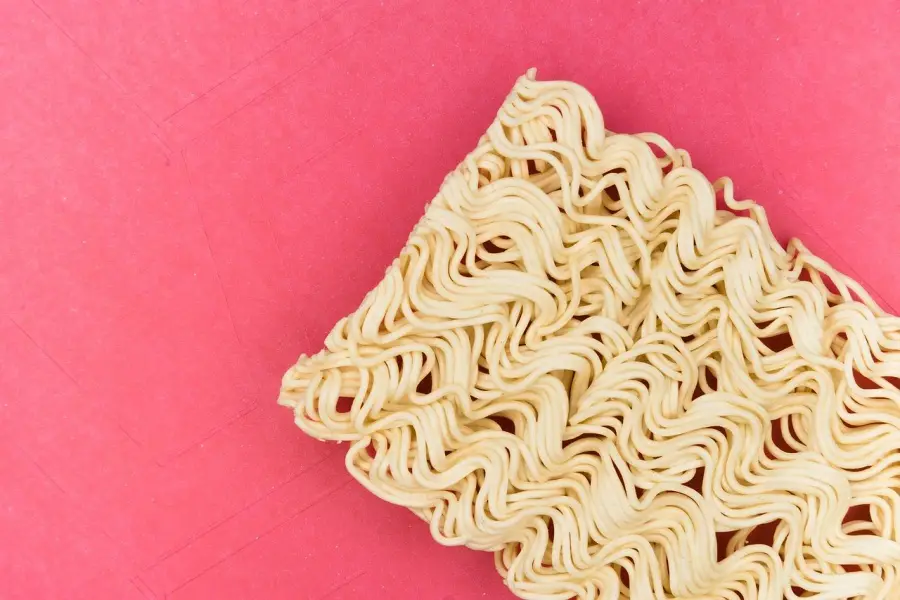
Momofuku Ando then had the idea to make instant noodles. After many trials and errors, he succeeded and introduced it to the world on Aug 25, 1958.

Since the first original flavour chicken, Ando called it ‘Chikin Ramen’.

Besides being known as the inventor of instant noodles, Ando is also known for creating the world’s first cup noodle.

The influence of Catholicism on Flores island during WWII

If you are not familiar with Flores island, Indonesia, it was the home of Homo floresiensis, a species of small archaic human.

This species of human was nicknamed ‘Hobbit’ by its discoverers, after the fictional race popularised in J.R.R. Tolkien’s book The Hobbit.

It is believed that the Homo floresiensis lived on Flores island until the arrival of modern humans about 50,000 years ago.

Scientists dated the Homo floresiensis skeletal material to about 60,000 to 100,000 years ago.

The remains of the individual discovered in 2003 would have stood about 1.1m in height, hence the nickname ‘The Hobbit’.

Flores island is one of the Lesser Sunda islands, a group of islands in the eastern half of Indonesia.

The largest towns on the island are Maumere and Ende.

The name Flores came from the Portuguese word for ‘flowers’.

The History of Flores island

This comes as no surprise because Portuguese traders and missionaries were the first foreigners who came in contact with the natives of the island.

The first group of Portuguese arrived in 1511 through the expedition of naval officer Antonio de Abreu and his vice-captain Francisco Serrao.

In 1613, the Dutch attacked the nearby island of Solor where there was a Portuguese settlement.

Fleeing the attack, the Portuguese moved to Larantuka town of Flores. There, they formed a mixed population of Portuguese Jewish merchants and local islanders descents called the Topasses.

The group spoke Portuguese when they prayed, Malay when they traded and a mixed dialect as their mother tongue.

The Topasses continued to dominate the region economically for the next 200 years.

In the same time, the Portuguese and the Dutch continued to fight for the sovereignty of island.

Until in 1854 when Portugal ceded all its historical claims on Flores and leaving the island became part of territory of the Dutch East Indies.

The Japanese occupation of Flores Island

After World War Two (WWII) broke out, the Japanese first arrived at Reo on the northwest coast of Flores on May 13, 1942.

Two days later, a few ships of the Japanese Imperial Navy anchored off Ende, the capital of Flores.

There was a huge difference in how the Japanese treated the Europeans on Flores compared to the rest of the world.

Although Germany was an ally of Japan, the Japanese saw all Europeans in an unfavourable light and interned them .

Batu Lintang Camp in Sarawak and Sandakan Camp in Sabah for example, were occupied by European internees and Allied Prisoners-of-Wars (POWs).

Paul Webb in ‘Too Many to Ignore’: Flores under the Japanese Occupation 1942-1945’ explained the reasons behind the differences in treatment.

He wrote,

“Compared with the excesses of the Japanese administration and military forces on the neighbouring islands of Sumba and Timor, where churches were used as brothels, vestments and sacred vessles thrown around carelessly, girls sought for Japanese army brothels, where Christians were killed as suspected Dutch sympathizers and were life under the Japanese was harsh in all respects – compared with all this the Florenese were being treated with ‘kids gloves’. So why were the Japanese so polite and courteous to the Catholics in Flores? Why did they allow European priests and sisters stay at their posts instead of interning them?

Perhaps the reason is that Flores was a strategically placed island for the possible defence of Balikpapan, the great oil town in Dutch Borneo.”

The influence of Catholicism on Flores island during WWII
Flores Island, Netherland East Indies. Aug 11, 1945. Aerial photo of a bombing run on four Japanese motor sail ships located near the shore of the island during shipping search ‘able’. Copyright expired- Public Domain. Courtesy of Australia War Memorial.

The influence of Catholicism on Flores island

The Japanese was informed that the Catholic religion was crucial to the people of Flores and there were too many of them to ignore.

Meanwhile, the Japanese forces were small and that if there were no priest left in the island it might become necessary to increase the occupation forces to ‘quieten an enraged population’.

Webb theorised that the Japanese was afraid that history might repeat themselves.

Between 1637 and 1638, the Shimabara rebellion took place near the city of Nagasaki.

It is said that 40,000 Catholic into an old castle on the Shimabara peninsula and held out against 120,000 Japanese soldiers for some four months.

In the end, all the Catholics were put to death after they had surrendered.

Whether the Japanese was afraid that a quarter of a million Catholics from a population of 580,000 would rebel against them or whatever other reason was, the Japanese knew that they could not take their clerics away from the Florenese.

In the end, the European priests and nun managed to stay in Flores without being interned throughout the occupation.

Comfort Women and Military Brothels on Flores island

While the clergy in Flores might escape from Japanese oppression, the rest of Indonesians and other Europeans, especially POWs, did not.

Like many Japanese-occupied territories during WWII, Flores had military brothels set up on the island to ‘cater’ for the Japanese forces.

Yuki Tanaka in his book Japan’s Comfort Women highlighted one of the many victims who were sent to Flores.

“According to a Javanese woman, Siti Fatimah, a daughter of Singadikarto, the sub-district head of Subang in west Java, she was told that she would be sent to Japan to study in Tokyo. In 1943, when she was 16 years old, she and four other girls from her home sub-district were put on a a ship at Tanjung Priok.

They joined a few hundred Indonesian girls who had been deceived by Japanese and believed that they were going to Tokyo. The ship went instead to Flores Island. As soon as they arrived, the Japanese attitude towards the girls suddenly changed. They were out into a camp and were forced to render sexual services to the Japanese soldiers. Each girl had to serve at least two soldiers every day. Three months later they were transported to the north of Buru Island, where they were put into a military compound. Here too, they were sexually abused every day until the end of the war.”

Both in Flores and Buru islands, many women died due to the maltreatment by the Japanese. Those who survived, suffered from psychological trauma from their abuse.

After the war, a military court report revealed that each woman was given a daily quota; twenty enlisted men in the morning, two NCOs in the afternoon and the senior officers at night.

Prisoners-of-war (POWs) and labour camps in Flores

By April 1943, more than 2,000 Dutch and other Europeans POWs arrived in Flores from Java in three ships.

They were brought in to build airfields on the island.

The first group of POWs built three camps near Maumere; two labour camp and another as a hospital camp.

Then by August 1943, another 300 POWs were stationed in a labour camp near Talibura about 60 kilometers east of Maumere.

The airfield in east of Maumere was completed in early November, 1943 so the POWs were sent to work elsewhere on the island.

Some were sent to work on the harbour and others were sent to build another two smaller airfields.

In 1944, these POWs were sent back to Java in batches with the last group left Flores on Sept 12, 1944.

The Japanese made sure there was no contact between the priests and these prisoners.

However, many Florenese helped the prisoners with gifts of food and little packets of fruits.

After the war, the missionaries in Flores received a letter from one of the former POWs.

The letter stated,

“In May 1943 we arrived in Maurmere – 1,200 POWs. Because there were many sick, two camps were built, one in Maumere and one a few kilometeres away. The population was friendly and because were sick they offered us coconuts, fish, meat and fruit. We could buy these cheaply at first but later on the Japanese raised the prices so that after a while the sale of food ceased.

“We often saw the natives being brutally beaten by the solders but we always had some contact with the people. Later on we worked at getting sand for the airstrip and whenever we saw the natives we were impressed by their expressions of loyalty to the Dutch. I remember that on August 31st, the Queen’s birthday, we found a little basket of food on the road, and in it a note which said that it hoped the Queen would receive blessings and a request that everyone in the camp would pray for the priests in Flores.

“When some of the prisoners were working on a new airstrip some Florenese girls were nearby and there are pleasant memories of all kinds of little gifts of sugar, fruit and so on which they passed to us. Some of the prisoners still have rosaries slipped to them by these girls.”

In the end, a total of 214 POWs in Flores did not make out from the island alive.

Flores after the war

The influence of Catholicism on Flores island during WWII
Maumere, Flores. Oct 23, 1945. The Bishop of Flores, Reverend H. Levem greeted Major John M. Baillieu and Lieutenant Colonel Whitehouse on their arrival. Copyright expired – public domain. Courtesy of Australia War Memorial.

After the war ended, Flores achieved its independence by being part of Indonesia.

Meanwhile, the Catholic community continued to grow in the island even after the European missionaries left.

On May 26, 2019, the Indonesian government officiated Flores’ St Paul Catholic University of Indonesia.

It is now the first Catholic University in Flores, Indonesia.

Read more:

The mystery behind eight missing priests in Sabah during WWII

The intriguing military history of Rabaul during WWII

Atrocities aboard Japanese destroyer Akikaze during WWII

From Sandakan POW Camp to Singapore Outram Prison

Outram Prison was one of the earliest prisons in Singapore.

Originally, it was known as Pearl’s Hill Prison before being called Outram Prison or Outram Road Prison.

Completed in 1882, the jail complex had five blocks for male criminals; four for natives and one for European.

Other buildings housed the female prisons, hospitals, employees’ quarters, execution room and morgue.

By January 1937, the long-term prisoners were transferred to the-then new Changi prison while leaving the short sentenced prisoners in Outram Prison.

During World War Two (WWII), Singapore was occupied by the Japanese Imperial Army. Immediately, the infamous Japanese military police known as Kempeitai took over Outram Prison.

They used the gaol to punish all those who broke their laws; prisoners of war (POWs), civilian internee and local people alike.

From Sandakan POW Camp to Singapore Outram Prison

The inmates jailed at Outram Prison were coming in from not only in Singapore but surrounding areas such as Malaya and Borneo.

They were transported by sea using Japanese hell ships. As if their journey to receive their sentences were not hellish enough, another form of hell welcomed them at Outram Prison.

These men and were punished for many reasons, from espionage to rebellion.

For a group of POWs from Sandakan POW camp in former British North Borneo, their crime against the Japanese circled around a radio.

From Singapore to Sandakan POW Camp

The Battle of Singapore or Fall of Singapore is till known today as the largest British surrender in history.

The intense fight took place lasted from Feb 8 to 15, 1942 which resulted in the Japanese capture of Singapore.

After the battle ended, about 80,000 British, Indian and Australian troops in Singapore became POWs along with 50,000 men who were taken by the Japanese during the earlier Malayan Campaign.

As for the Japanese, they were not entirely ready with this large influx of POWs.

One of the POWs who arrived in Sandakan POW camp to work on the airfield in July 1942 was Lionel Colin Matthews.

While many were taken prisoner in Changi Prison, thousands were transported to be used for forced labour on constructions like the Burma-Siam Railway and Sandakan airfield in North Borneo.

There, Matthews founded an intelligence network among the POWs. They collected information, weapons, medical supplies and radio.

The secret group even made contact with the local police as well as Filipino guerrillas.

Unfortunately in July 1943, four local Chinese members of Matthews’ underground group were betrayed to the Japanese.

After being tortured by the kempetai, they confessed to providing radio parts to Matthews and his team.

Matthews and his second in-command, Lieutenant Rod Wells as well as the members of the underground group were captured, beaten, tortured and starved during their interrogation.

After that, the group was sent to Kuching, Sarawak to stand for trial.

In Kuching, Matthews was sentenced to death along with two members of the British North Borneo Constabulary and six other local Sabahans.

Meanwhile, Wells and 18 others were sentenced to Outram Prison.

Rod Wells’ account on his experience at Outram Prison

Wells, who received 12 years of solitary confinement, said goodbye to Matthews with a handshake and a few personal message from Matthews to his wife.

Two days after departing Kuching, Wells arrived in Singapore where he had been captured two years before.

In Singapore, he was imprisoned at Outram Prison and here is his account as recorded by Christoper Somerville’s Our War: Real Stories of Commonwealth soldiers during World War II.

“On entering Outram Road Jail I found the most terrible sights of dejected people with absolutely no will to live, just slowly walking around. From the back you could see their reproductive organs hanging down between their legs – there was no flesh on them. It made sitting very hard. The hip bone would be pressing into bare skin. But you just had to sit and put up with the pain.

“Everything was done to order. No talking was allowed. When no order was given, you were silent and just stayed in the same position you were in when the last order was given. At nine o’clock at night you were sent back to your cell. There was a light on all night inside the cell, so that there was not a second of the twenty-four hours you were in darkness. And this went on, for me, for twenty-three months, including my period in Kuching. Twenty-three months in solitary.

“We worked at picking strands of hemp out of old ropes, to make a new ones. The strands were too tough to break with your hands; you had to follow them to find out where they started. If you left any of those knots untouched you got a belt across the back with a sword in its scabbard. And as an added incentive, if you didn’t do a hundred of these lengths of rope in day by picking out about 200 lengths of hemp from each – you got no rice that day.

“Meals were roughly five ounces of cooked rice and a bit of stewy water with a bit of weed in it, green grassy stuff. Tea – that was like a hundred to one whiskey and water, pale discoloured stuff that was always cold when you got to it.

“The little pair of shorts you had on had your number on it. 641, that was me. You had to learn that number in Japanese pretty quick, because that was your name and address and everything else. I lost all identity. I was no longer a POW – I was a criminal; just a number. That was the worst thing of the lot. Just a number.”

Bill Young’s account on his experience at Outram Prison and ‘The Postman’

Not all POWs who were sent from Sandakan POW Camp to Outram Prison belonged to Matthews’ group.

William Young or better known as Bill Young, was captured and trialed in Kuching for escaping Sandakan POW Camp.

They were captured by the Formosan guards an hour after their escape and then Young and his friend M.P Brown were severely beaten.

The duo both ended up with broken arms, a leg and an ankle.

In Kuching, Brown was sentenced to eight years of hard labour in Outram Prison while Young was sentenced to four years because of his age. Young was around 16 years old, making him one of the youngest Australian POWs during WWII.

One of the many things Young remembered about Outram Prison was a guard which the prisoners nicknamed ‘The Postman’.

“And there was one guard in particular we used to call ‘The Postman’, he was very, very particular about it. He’d open the door and come and bash you if you weren’t sitting properly. Some of the guards you knew were lazy or indifferent and you could get away with standing up, resting your legs out, reading the graffiti. Morse code. And there’s some guards you would never send a message or anything like that, you’d never read graffiti and you’d never not sit cross-legged, and the worst one was the bloke we called ‘The Postman’.

And sometimes, I know on one particular time, probably one of the first times I was caught by him. I didn’t realise he was on duty. I’m sitting back, with my back on the wall with my legs stretched and I’m shaking them and one thing and another, relaxing, and I heard the knock and that was the signal, only one knock, bang!, just one knock like that. There was about two or three minutes, which seemed to be hours in time, and you knew he was outside, you knew.

“Now after that you’d hear the key’d go in the lock, now it wouldn’t turn, you’d hear the key go in the lock, and then for another two or three minutes there’d be silence, but you’d know he was outside there, and then he’d turn the lock and you’d hear it turned and there’d be nothing else. Two, couple of minutes.

“And then all of a sudden, bang! The door’d be slammed back. Frightened the life out of you. And there would be The Postman. And they all had swords. But it was an old-fashioned jail and the locks were old-fashioned and the keys were great old-fashioned things. And he’d come in and you’d be looking up and you’d be at attention, as if you were like that all the time, you’re willing your hair to grow bit thicker because you know what’s coming.

And he’d stand just a little bit behind you on the side. Not much room between you but he’d get there, wasn’t a very big bloke actually, and then he’d be giving you a lecture or something like that and all of a sudden, while he’s doing this, he’s raising this flaming great big key and then bang! down it comes. And oh God, flaming lump or a cut, sometimes blood come down, and you couldn’t do anything and you’re sitting there and the tears come into your eyes because when you have lost all your weight, your food, your muscles go down, it’s not mentally, everything goes down too. Your resistance to pain, your resistance to everything.”

Surviving Sandakan POW Camp and Outram Prison

From Sandakan POW Camp to Singapore Outram Prison
The ruins of huts in the prisoner of war camp, Sandakan, North Borneo, October 1945. Those who were too ill for the march were eventually murdered here. Courtesy Australian War Memorial: 120457

After the war ended, Young returned to Sydney, Australia. He revealed to ABC news in 2016 at that time he couldn’t wait to reunite with his old mates from Sandakan.

But Young couldn’t find any of his friends. He told ABC, “I waited and waited and waited. It took me ages to find out.”

The sad truth was there were only six survivors from Sandakan POW camp and they had survived because they escaped.

After the war ended, 1,787 Australians died in Sandakan with many of them perishing during the 250km-long Death Marches from Sandakan to Ranau.

Those who were sent out from Sandakan to Outram Prison for their punishment had a narrow escape from death. If they were to stay in Sandakan, chances were high that they did not survive just like their friends.

Still, all of them did not escape from suffering caused by the Japanese at Outram Prison.

According to Australian War Memorial website, the prison was a place of starvation, torture and terror, a place of madness and for many, death.

Since these prisoners were sentenced to prison and not death, the Japanese couldn’t legally execute them.

Instead, the Japanese purposely trying to starve the prisoners to death by providing little food for them.

It is estimated about 1400 prisoners died at Outram Road Prison during Japanese occupation in Singapore.

5 things you should know about sumpit or blowpipe of Borneo

‘Sumpit’ or ‘sumpitan’ are what we call the blowpipe or blowgun in Borneo. Some communities in the Philippines and Sulawesi also refer to the blowpipe as ‘sumpit’.

In fact, the first written description of sumpit can be found in the works of Italian scholar and explorer Antonio Pigafetta in 1521 who visited the Palawan people.

He wrote, “”Those people of Polaoan (Palawan) go naked as do the others: almost all of them cultivate their fields. They have blowpipes with thick wooden arrows more than one palmo long, with harpoon points, and other tipped with fishbones, and poisoned with an herb; while others are tipped with points of bamboo like harpoon and are poisoned. At the end of the arrow they attach a little piece of softwood, instead of feathers. At the end of their blowpipes they fasten a bit of iron like a spearhead; and when they have shot all their arrows they fight with that.”

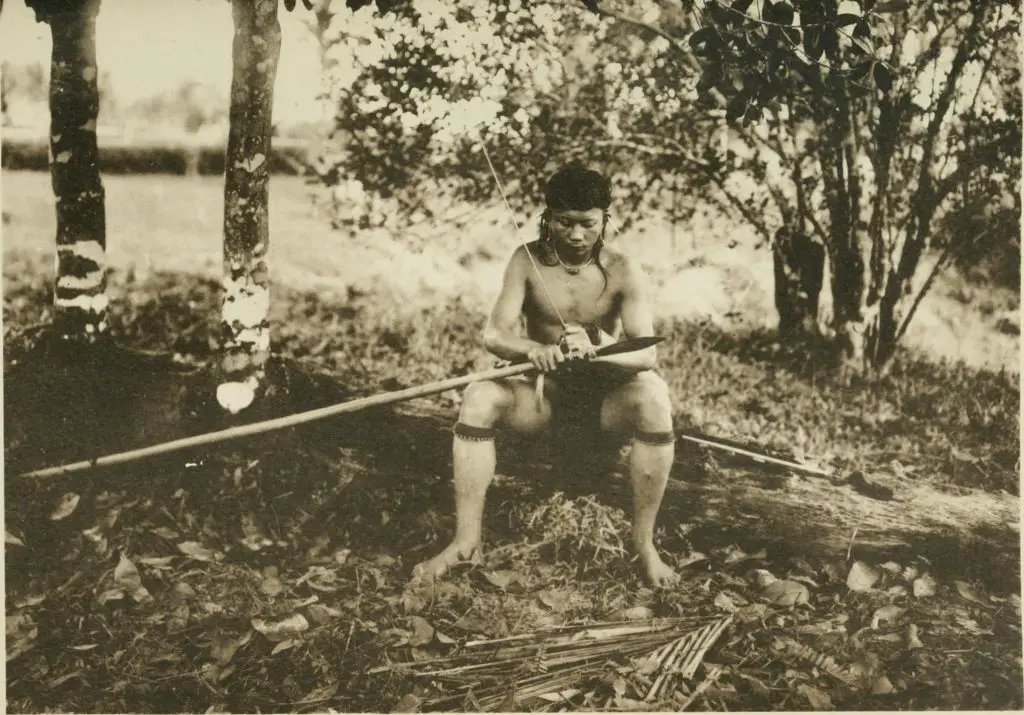
Just like the Palawan’s sumpit, the blowpipe in Borneo commonly has a spearhead attached to the end.

5 things you should know about sumpit or blowpipe of Borneo
A traditional blowpipe which also works as a spear.

Traditionally, the sumpit is used for hunting and in fights against the enemy. Today, they have become souvenirs or treasured family heirlooms.

Here are five things you should know about sumpit or blowpipe of Borneo:

5 things you should know about sumpit or blowpipe of Borneo
Kenyah man lashing spear-blade to a blowpipe. Circa 1912. Credit: Copyright expired.

1.The reason why people of Borneo use sumpit

Have you ever wondered why the Borneo natives chose the blowpipe over the bow when it came to hunting?

According to author Peter Metcalf, in the nineteenth century, ethnologists were curious why people who advanced using iron tools did not adopt or come up with the bow.

The reason lay on topography and landscape. Metcalf wrote “For hunting, they (bows) are ineffective because the dense vegetation seldom allows a clear shot.”

“For pigs or deer, a combination of dogs and spears brings the best results. In regard to small game in the lower branches of trees, such as birds and monkeys, they are easily shot with darts.”

Furthermore, the bow is difficult to shoot at such steep angles. And once you lose your arrows, it is impossible to recover them in the thick Bornean thick jungle.

2.The materials of the blowpipe

Generally, blowpipes are made from bamboo. However, there are some made from wood.

A blowpipe can be made from one to three pieces joined together.

The length of this weapon usually depends on the user. The typical length is about 1.2 to 1.6m and 2 to 3cm in diameter.

5 things you should know about sumpit or blowpipe of Borneo

3.How to make blowpipe darts

Thick wooden or palm leaf-rib darts are generally used in war.

Also known as damak, the dart is basically a single pointed sharp needle.

The needle is plugged into a cork-lie cushion with bird feathers to allow the blowgun to float constantly toward the target.

Then the tip of the damak is dipped in poison.

4.How to make blowpipe dart poison

According to Herwig Zahorka in his paper “Blowpipe dart poison in Borneo and the secret of its production”, the poison is generally produced from the latex of the Antiaris toxicaria tree which belongs to Moraceae (fig family).

He started, “This latex contains a variety of toxic chemical compounds. The principal toxic agent is a steroid glycoside known as beta-antiarin. A lethal dose is only about 0.1mg per kg weight of a warm-blooded animal.”

On how to make them, Zahorka explained, “To dehydrate the milky latex into a paste, a long, carefully implemented procedure is essential because the steroid glycoside compound is extremely heat-sensitive.

“Therefore, hunters perform the dehydration of the latex by using a young leaf from the small Licuala spinosa palm. The leaf is folded into a boat-shaped container to hold the latex at a carefully determined distance over a small flame for one week. This is possible because the young Licuala leaf is astonishingly fireproof and durable. If the latex were heated at too high a temperature, the glycoside compound would crack and its toxicity would be lost.”

5.How long does it take to kill using the blowpipe

Andrew Horsburgh who was in Sarawak from 1852 to 1856 as a missionary published a book called Sketches in Borneo (1858).

Regarding our local sumpit, he wrote, “The arrows are dipped again into the poison immediately before using and are used in hunting as well as in war, and kill not only birds and squirrels, but also large animals such as orangutans. To animals the poison proves fatal, because they cannot pull the arrow out of the wound; but men suffer little inconvenience from it, as their comrades can always extract the missile before the poison has been absorbed by the system. Squirrels and small animals drop a few minutes after they have been struck, but orangutans frequently clamber about among the trees for a whole day before the poison takes effect upon them as to bring them down.”

5 devastating stories about animals during World War II

When humans decide to start a war, there is always a price to pay. Other than innocent lives, the environment and the animals are the casualties of war which are often overlooked.

Looking back in history, here are five sad stories on what happened to some animals during World War II (WWII):

1.The British pet massacre

The year was 1939, the United Kingdom knew WWII was coming so they needed to prepare for the worst such as food shortage.

The British government then formed the National Air Raid Precautions Animals Committee (NARPAC) to decide what happened to pets before the war.

The committee’s solution? They distributed pamphlets titled “Advice to Animal Owners” advising pet owners to move their pets from the big cities into the countryside.

However, the pamphlets concluded with the statement, “If you cannot place them in the care of neighbours, it really is kindest to have them destroyed.”

It is estimated that over 750,000 pets were killed, especially during the beginning of the war.

Eventually, many pet owners blamed the government for starting the hysteria.

2.No thanks to air raids, a giraffe was frightened to death

During the second World War, the Whipsnade Zoo in England served as a refuge center for animals evacuated from the Regents Park London Zoo.

In 1940, altogether there were 41 bombs fell on Whipsnade Zoo during three different raids.

According to the zoo’s official website, there were only two casualties.

The first victim was a goose which was one of oldest inhabitants of the zoo.

Meanwhile the second casualty was a 3-year-old giraffe named Boxer, which had been born in captivity.

The poor giraffe was so frightened by the bombing sounds that she ran herself to exhaustion and died.

3.The animals were electrocuted because they couldn’t be poisoned

The Kamoike Zoo in Kagoshima city was built by a railway company on a former hunting grounds in 1916.

In those days, it was normal for railway companies to build zoos or amusement parks as attractions for new railroads.

According to official records, the Kamoike City Zoo killed two lions, seven bears, four alligators and two pythons from Oct 6 to 31, 1943.

However, it was not mentioned how they were executed.

Later, the zoo officials revealed in 1986 interviews that all fifteen animals were electrocuted.

M.Itoh in the book Japanese Wartime Zoo Policy: The Silent Victims of World War II stated,
“The zoo staff initially tried to poison them with strychnine nitrate. However, the animals sensed something unusual and refused to eat the poisoned food. Then the zoo staff connected high-voltage electricity from the nearby streetcar station early in the morning before the trains began to run and electrocuted the animals.”

4.The death of Ellie the Elephant

After the war broke out, basically all the zoos in Japan empire received order to kill their most ferocious animals.

Kumamoto City Zoo for instance, executed three tigers, two lions, two Japanese black bears, an Exo brown bear, a brown bear, a Malayan sun bear, a black leopard, a leopard and three wolves in 1944.

Other animals such as the python, hippopotamus and a ten-year-old elephant named Ellie were saved by the staff as they strongly argued that they were not “ferocious animals”.

Unfortunately, despite the effort, things did not end well for these animals during World War II.

In 1945, the Imperial Japanese Army (IJA) decided to kill Ellie in order to feed the servicemen instead.

At first, they tried to force Ellie go into a pool to which high-voltage electricity was connected.

Ellie’s instinct, however, kicked in sensing there was something unusual so she refused to enter the pool.

The army then made Ellie’s keeper in-charge Kanazawa Taro do something against his will.

They forced Kanazawa to feed Ellie using a stick with a potato.

Since the stick came from the human she trusted, Ellie accepted the potato using her mouth.

The stick actually was connected to an electric wire and Ellie was electrocuted to death.

Kanazawa who had been taking care of Ellie since she was three, reportedly stopped talking about the poor elephant since her death.

5.The Massacre of Ueno Zoo, Japan

5 devastating stories about animals during World War II
Animals during World War II are the silent victims of human war.
Lions are shot at Higashiyama Zoo in 1944. Photo credit: Copyright Expired.

In Japan, one of the horrific animal massacres took place in the oldest zoo in the country.

Opened on Mar 20, 1882, Ueno Zoo in Tokyo was started as a menagerie under the National Museum of Natural History.

During WWII, the animals in Ueno Zoo were killed systematically.

Most of them were executed using poison and strangulation.

Sadly, some had to go through slow and painful death by starvation.

Kyoko was a female hippopotamus who gave birth to a male offspring at Ueno Zoo in 1937.

While many of the animals in the zoo were killed in 1944, Kyoko and her son survived.

However, Allied air raids on Tokyo changed their fate. On the night of Mar 9-10, 1945, a series of bombing took place in Japan’s capital city.

The zookeeper then decided on Mar 19 to stop feeding Kyoko and her son due to lack of food.

Unfortunately, the son died first on Apr 1 and Kyoko only on Apr 24 after about a month long of starvation.

Apart from Kyoko and her son, three elephants and one polar bear were also put through the most cruel of execution method as they were purposefully starved to death by the zookeepers.

Sumatra Railway, the death railway you probably never heard of

Junyo Maru was one of the many Japanese hell ships during World War II. It was used to transport Prisoners of War (POWs) with bamboo cages built in to imprison them.

When it was attacked and sunk on Sept 18, 1944 by British submarine HMS Tradewind, it became the world’s greatest sea disaster at the time.

During her last voyage, she was packed with 1377 Dutch, 64 British and Australian and eight US POWs along with 4,200 Javanese romusha.

After the sinking, only 680 survived with 5,620 dead.

But the horrific fates of these 680 survivors did not end with the sinking of Junyo Maru as hell awaited them at the Sumatra Railway.

Sumatra Railway

The survivors were sent to work on the 220km Muora-Pekanbaru railway, which also became later known as the Sumatra railway.

The Japanese wanted to use it to transport coal and troop between Muora and Pekanbaru.

Along with the Junyo Maru survivors, there were over 120,000 romusha together with 6,500 Dutch POWs, 1000 POWs and the rest 300 POWs from the US, Australia and New Zealand.

The first group of labourers to work on the railway were the romushas who started in April 1943.

However, the Japanese became anxious and wanted to speed up the construction.

They then brought in the first group of POWs on May 19, 1944.

All of them were housed in 18 camps located along the railway.

Sumatra Railway in comparison to Burma-Siam Death Railway

When you hear mention of a ‘death railway’ during WWII, one immediately thinks of the Burma-Siam Death Railway.

Similar to the Sumatra Railway, the Burma-Siam Railway was built by the Empire of Japan from 1940-1944 to supply troops and weapons in the Burma campaign.

Overall, 60,000 Allied POWs and 180,000-250,000 romusha were forced to work on the railway.

In the end, about 90,000 labourers died along with more than 12,000 POWs.

Lizzie Oliver in her book Prisoners of the Sumatra Railway wrote, “Although the Sumatra Railway was half the length of the Burma-Siam Railway (220 kilometers vs 414 kilometers), it took almost the same number of months for POWs to complete (15 vs 16).

“Progress was approximately sixteen kilometers per month slower on Sumatra than in Burma and Siam. This slow progress each month indicates specific difficulties for those on Sumatra, two of which dominate the narratives of former POWs.

“First, the terrain on Sumatra was foreboding. The railway construction had to navigate through a ‘chain of mountains’, the rolling hills of volcanic and sedimentary rocks and the swampy and jungle-covered lowlands characterised by long rivers, sandbanks and mudflats. Second, having already been incarcerated, malnourished and forced into hard labour for over two years beforehand, the initial general condition of the Sumatra Railway workforce was poorer that that on Burma-Siam (the building of which began relatively early in captivity).”

Life on the Sumatra Railway

All the same, working on Sumatra and Burma-Siam railways were equally deadly.

One of the survivors of Sumatra railway, George Duffy once wrote, “Indeed death was no stranger there. We were overworked, underfed, provided with little medicine, and subjected to constant physical and mental abuse by our Japanese overseers.

“A hospital for malaria, dysentery, pellagra and beriberi patients existed in name only. It was simply a dilapidated bamboo-framed, thatched roof barracks where the sick were placed to await their eventual death.”

One of the few doctors treating the POWs was military surgeon W.J. van Ramshorst from The Hague.

The good doctor was brave enough to confront the Japanese army about the death rates of the prisoners.

He told them, “Camp 2 has about eight hundred patients. Around one hundred men die each month. If things continue as they are, all patients will be dead in eight months time.”

To this, the Japanese replied, “Your calculations are correct. That is exactly our goal.”

Liberation comes to Sumatra Railway

August 15 will always be remembered as V-J Day or Victory over Japan Day. It is a day the Imperial Japan surrendered in World War II, in effect bringing the war to an end.

It was also the day that Sumatra Railway officially completed. There was even a completion ceremony organised by the Japanese army.

Henk Hovinga in his book The Sumatra Railroad: Final Destination Pakan Baroe described how the prisoners welcomed the news of their freedom.

“For all prisoners, liberation after three and a half years of captivity was a moment they would never forget. Yet each man experienced that day in his own individual way. Some cried, other laughed, prayed or cursed.

“They had suffered too much to be only thankful that it had finally ended. Many were deadly ill or dying and could no longer grasp the magnitude of the news of their liberation.

“Others were too apathetic or too bitter to respond spontaneously. In every camp along the railway the moment of liberation was a different experience. And even prisoners living together in the same camp cherished different memories of the moment when the Japanese surrender was announced.”

Dr van Ramshorst for instance, remembered the day liberation as just another ordinary day.

“We all received as double ration of rice. After a couple of days, we were allowed to leave the camp, but still had to return. I walked leisurely to Pakan Baroe (Pekanbaru), visited the post office and asked the crazy question if I could send a telegram to my wife on Java. And strangely enough that was possible. I paid ten cents per word. In the meantime, the Japs had become friendly, but fearfully nervous. After they had burned all camp documents, some of them asked me if they should commit suicide. And I answered them: ‘Yes, if it is your custom to commit harakiri, then that is the best thing to do…”

What happened to the Japanese after the war?

It is not sure how many, if any, Japanese who actually took Dr van Ramshorst’s advice.

However, it is certain many Japanese army along with their Korean guards were prosecuted for war crimes they committed during the construction of Sumatra Railway.

Captain Ryohei Miyazaki who was responsible for the 18 camps along the railway was sentenced to death on May 30, 1948.

The man who was responsible for food and provisions General Yamamoto was sentenced to death on Dec 30, 1948.

Meanwhile, the chief medical officer Colonel Fukaya was executed on Dec 30, 1948.

Many of the guards received prison sentences ranging from 5 to 20 years of imprisonment.

What happened to Sumatra Railway after the war?

Sumatra Railway, the death railway you probably never heard of
Liberated prisoners distributing rice rations to campmates. Pakanbaroe, Sumatra, 1945. AWM 019382. Courtesy of Australian War Memorial.

After all the blood, sweat and tears put into the railway, in the end it was never fully utilised.

For a railway built for war purposes, the first train ride on the Sumatra Railway was used to transport former Dutch POWs from Muoro to Pekanbaru driven by a Japanese corporal.

The train derailed from its track but the passengers helped to get it back on line.

Then in early 1946, the last group of the Japanese railway engineers in Sumatra boarded the train from Muoro to Pekanbaru.

Since then, the railway between Muoro and Pekanbaru was never used again.

Many parts of the railway have been claimed back by nature as the areas are now overgrown by jungle.

It is even hard to see the remnants of the railway, as many of the parts have been removed for scrap.

In the end, the railway took the lives over 100,000 labourer including about 703 POWs.

Many of them died due to accident, sickness and abuse as well as execution by the Japanese.

1 6 7 8 9 10 39