Browse Category

Culture - Page 29

5 ways Sarawakians used to measure distance in the olden days

“One of the most difficult things in this world is to find out from a Dyak the distance between one place and another.”

This was what Charles Grant wrote in A Tour amongst the Dyaks of Sarawak Borneo in 1858 (1864).

According to Grant, most Dayaks would answer “Takut kabula” which means “I’m afraid of speaking untruly.”

He described their answers sometimes either “jau (far), ja-u(very far) or jau-u-u (awfully far) from the place”.

Without any knowledge of feet, meters or kilometers, how did they tell how far is a place?

Here are five ways Sarawakians used to measure distance in the olden days:
1.How many tobacco cigarettes away?

For some communities in Sarawak, one of the most common answers when asking the distance between two places was based on how many tobacco cigarettes one would smoke along the way.

Traditional tobacco cigarettes (made dried tobacco wrapped with dried banana leaves) were commonly smoked when travelling to the farm or another longhouse.

Besides to kill time, smoking these tobacco cigarettes also worked as natural insect repellent.

The only problem with this measurement was everybody smoked cigarettes at different rates. Furthermore, their cigarettes were never in the same size.

2.How many cooking pots of rice away?

According to Grant, another traditional way to tell a distance by the amount of pots to cook rice.

He wrote, “If the road is far, you will be told it is very far; if short, very short and so on. Their wars of reckoning, too are original. You are told you have gone one, or so many divisions, and have so many more to go; or that you will have to eat rice so many times between such and such a place.

“You are occasionally told you are so many cooking (or boiling) of rice from your destination (a cooking of rice maybe reckoned thirty or forty minutes).”

3.The sun position in the sky

Anglican bishop William Chalmers in 1859 pointed out as the Dayaks had no notion of dividing time into hours, their methods of reckoning distances were rather original.

One of the ways was, “To point to certain place in the heavens and say they can reach their destination when the sun is there.”

5 ways Sarawakians used to measure distance in the olden days
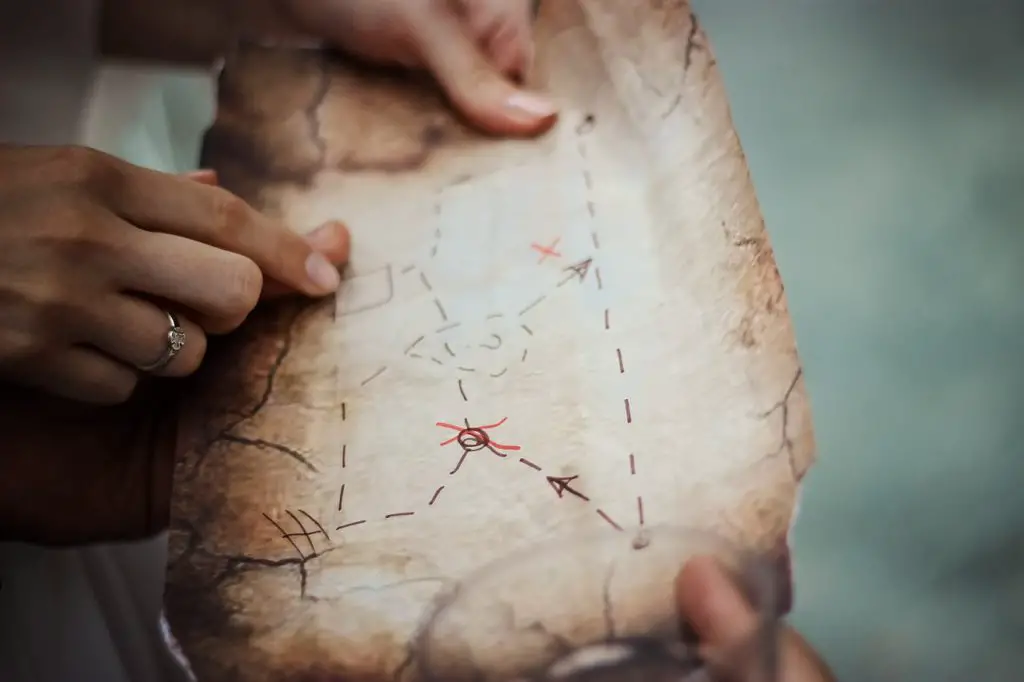
What do you think how far is that island according to the olden day’s measurement?
4.Is your hair dry yet?

Henry Ling Roth recorded in The Native of Sarawak and British North Borneo (1896) that the Sea Dayaks had a unique way to tell the distance.

“Short distances are described by arriving at such a place before the hair has had time to dry,” he stated.

5.Half a day or a day?

Here was and still is a common way to measure distance. It was either you would arrive at that place in a half a day or a day’s journey.

Besides these, do you know other ways Sarawakians used to measure distance back in the days? Leave them in the comment box.

Sarawak ten electrical commandments from the 1920s

Did you know that when plans for electric street lighting were drawn up in Penang and Kuala Lumpur in 1894, the second White Rajah Charles Brooke refused to adopt this new technology?

Despite his misgivings, Sarawak eventually had its first wired telephones installed around Kuching in 1898.

Then in 1914, the Anglo-Saxon Petroleum Company installed the first electrical power stations in Miri, while Borneo Company Limited installed another power station in Bau.

Finally in January 1923, a power station was completed at Khoo Hun Yeang Street and it started operation in June that year.

Today the road where the power station was once located is now known as Power Road, or Jalan Power.

After that, Sibu had its first power station installed in 1927, followed by Mukah in 1929.

From 1922 to 1932, the electrical supply in Kuching was managed by the Electrical Department, under the jurisdiction of the Public Works Department.

On Dec 1, 1928, the Electrical Department put out a PSA in The Sarawak Gazette to remind Sarawakians on how to use electricity wisely and safely.

Sarawak ten electrical commandments from the 1920s
Some of the Sarawak Ten Electrical Commandments from the 1920s are still applicable to this day.
Here is the PSA in which the department called the Ten Electrical Commandments. Some may be strange to us in 2019 as people who have Earth Day, high electricity bills, and a climate crisis, while a few are still applicable to this day:

1.Thou shalt have no needless drudgery in thy home – delegating to electricity all wearisome tasks.

2.Remember the clear light- leave it burning.

3.Thou shalt not permit the cords of thy appliances to become frayed and worn, and easy prey to short circuit.

4.Thou shalt not allow the frost to gather to an unseemly depth upon the freezing unit of thy refrigerator.

5.Remember thy bag of thy vacuum cleaner to keep it empty.

6.Thou shalt not forget that electricity is cheaper than eyesight, and shalt not use freely of the first to improve the second.

7.Thou shalt not tax thy electric circuits beyond their capacity lest they blow out their fuses.

8.Thou shalt not fail to keep extra lamps in the house against the day when they shall surely be needed.

9.Thou shalt have at least one light in every room controlled by a switch near each door – thus will you save much stubbing of toes and barking of shins.

10.Thou shalt utilise thy toaster and thy percolator and all thy table appliances to the fullest extent, for this wilt thou add to they own comfort and thy family’s enjoyment.

Sarawak ten electrical commandments from the 1920s
According to the Ten Electrical Commandments, you shalt not allow the frost to gather to an unseemly depth upon the freezing unit of your refrigerator.

How the Serian community reclaimed their paddy spirit from the Japanese post-WWII

How the Serian community reclaimed their paddy spirit from the Japanese post-WWII

After the Japanese surrendered on Aug 15, 1945, most of the occupied countries took a long time to repair the damage brought about by the war.

According to reports by British Military Administration (BMA), almost all of the coastal townships in North Borneo and Labuan were destroyed.

Meanwhile, Bintulu was deserted and the airstrip had been entirely destroyed. Other towns such as Jesselton (now Kota Kinabalu), Sandakan and Sibu were severely damaged.

Kuching, apart from minor damage in the bazaar area, was practically untouched.

On top of the destruction of infrastructures and buildings, the population in Borneo also suffered from widespread malnutrition and disease caused by acute food shortages.

Besides the loss of loved ones, their freedom, and sources of livelihood, the Japanese forces were also accused of taking a community’s paddy spirit.

Taking back the paddy spirit

A story published in The Sarawak Gazette Apr 1, 1947 was cited from an annual report of Serian District.

The district office reported it as “an interesting little bit of folklore” while the then Serian district officer described it as “obviously a new practice.”

The Dayak community in Serian back then claimed that during the Japanese occupation the Japanese government stole the paddy spirit.

The Japanese then kept the spirit in the district office, thus causing poor harvests and pest ridden crops in the area.

“In order to induce the paddy spirit to return to the Dayaks, after seeking permission from the District Office, they held a procession with gongs and drums and bearing food and drink around the inside of the office,” the report stated.

It continued, “The procession was led by the Dayong Narumboi (Priestesses) of the kampong chanting prayers and incantations.”

After the procession, a parcel of paddy was left overnight in the office.

Thankfully, the paddy spirit was reportedly pleased with the music and prayers. It entered into the parcel of paddy which was then brought back to the kampung the following day.

6 ways Sarawakians used forest products in the 19th century

Before logging for timber became one of Sarawak’s most controversial practices in the 20th century due to issues in scale and transparency, part of the Sarawak economy in the 19th century depended on other products from the rainforest as well.

With the dense rainforest available, Sarawakians have been relying on forest products as a source of livelihood for centuries.

These forest products were not limited to personal consumption but also for trade and commercial use.

Here are at least six Sarawak forest products that were greatly sourced during the 19th century.
6 ways Sarawakians used forest products in the 19th century
Sarawak: Four Kayan natives collecting gutta percha from a tree trunk. Credits: Creative Commons photo by Wellcome Collection.
1.Gutta-percha

Gutta-percha is naturally inert, resilient, electrically non-conductive thermoplastic latex produced from the sap of trees of the genus Palaquium.

Long before gutta-percha was introduced to the western world, gutta-percha was used for making knife handles, walking sticks and other purposes.

After it was discovered as a good electrical insulator, western inventors used it to insulate telegraph wire by 1845.

Here in Sarawak, the gutta-percha was mainly collected and processed to trade with the Chinese during the 19th century.

American zoologist and the first director of the New York Zoological Park William Temple Hornaday visited Sarawak in 1878. He travelled around the country observing the local cultures, including the Dayaks.

This was how Sarawakians processed gutta-percha back then, according to Hornaday.

“The native found a gutta tree, about ten inches in diameter and after cutting it down, he ringed it neatly all the way along the stem, at intervals of a yard or less.

Underneath each ring he put a calabash to catch the milk-white sap which slowly exuded. From this tree and another about the same size, he got about four quarts of sap, which, on being boiled that night for any special benefits, precipitated the gutta at the bottom in a mass like dough.

The longer it was boiled the harder the mass became, and at last it was taken out, placed upon a smooth board, kneaded vigorously with the hands and afterwards trodden with the bare feet of the operator. When it got almost too stiff to work, it was flattened out carefully, then rolled out in a wedge-shaped mass, a hole was punched through the thin end to serve as a handle and it was declared ready for the trader.

And he also observed how the sellers tried to trick the traders:

I have seen the Dyak roll up a good-sized wad of pounded bark in the centre of these wedges crude gutta, in order to get even with traders who cheat in weight, but I have also seen the sharp trader cut every lump of gutta in two before buying it. The crude gutta as a mottled, or marbled, light-brown appearance, is heavy and hard, and smooth on the outside.”

2.Nypa fruticans

Did you know that the large stems of Nypa fruticans (nipa palms) are used to train swimmers in Myanmar because of its buoyancy?

Meanwhile in Sarawak, this plant was used for various functions, from roofing, to basketry and even to make sugar.

In 19th century Sarawak, every part of the palm was turned into a different kind of forest products.

According to British colonial officer Hugh Low, nipa palms “though in growth amongst the humblest of the palm tribe, in its value to the native of this island is inferior to few of them.

“It is found on the margins of the rivers as far as the saltwater extends, and large salt marshes at the mouths of rivers are covered with it to the extent of thousands of acres; its chief value is for covering houses, the leaves of which for this purpose are made into ataps, and endure for two years.

“Salt is made in some places from its leaves by burning them, in others sugar is extracted from syrup supplied by its flower-stem. The fruit, though tasteless, is esteemed by the natives, and to make an excellent preserve. Its leaves, on luxuriant plants, are occasionally twenty feet long, all growing from the centre.”

3.Rattan

From the 19th century to this day, rattan is one of the most durable Sarawak forest products. It is not just bendable but it is also perfect for weaving.

Today, you can find it mainly used to make rattan mats and woven rattan baskets. In the olden days, it was even used to build longhouses when there were no nails available.

6 ways Sarawakians used forest products in the 19th century
Examples of rattan products.
4.Dammar

Dammar is a resin usually obtained from tapping trees although some is collected in fossilised form from the ground.

Like many of Sarawak forest products, dammar has a wide variety of uses. It can be burned to fuel fire, dissolved in molten paraffin wax to make batik, as incense and varnish.

According to Low, the Dayak mixed damar with oil to caulk their boats and make them leak-proof.

5.Oils

Speaking of oils, you can still get our native oils or ‘butter’ at the tamu or local markets today.

Here’s how the Dayaks once collected the minyak engkabang, according to Reverend Andrew Horsburgh in his book Sketches in Borneo (1858):

“Mengkabang, or vegetable tallow (Dipterocarpus) is procured in the following manner from one of the wild fruits of the jungle. When the fruit, a species of nut, has been gathered, it is picked, dried and pounded and after being thoroughly heated in a shallow cauldron, it is put into a rattan bag and subjected to a powerful pressure. The oil oozes from the bag, and being run into bamboo molds is there allowed to cool, in which state it becomes hard and yellow, somewhat resembling in purified bees’ wax. It is principally used by the Dyaks and Malays for cooking, being very palatable, but in this country it is employed for the manufacture of patent candles, for which it is superior to palm oil.

The press employed by the Dyaks in expressing these oils is, like many other of their contrivances, both simple and effective. It consists of two semi-cylindrical logs about seven feet long, placed in an upright position, their flat surfaces being fitted together and their lower ends securely fastened into each other.

On each of their upper ends a stout knob is cut, and a third piece of wood, about two feet long and three inches wide, is put over the knobs so as to clasp them together. Wedges are then inserted between the outside of the knob and the inside of the hole, and these when driven home subject whatever is between the logs to a powerful pressure.”

6.Bamboo

Bamboo was one of many multipurpose forest products in Sarawak during the 19th century. Thanks to its hard and durable surface, it was largely used for furniture, houses and bridges.

10 stories in The Sarawak Gazette that made us go “What the?!”

If you have been following KajoMag, you’ll know that we love The Sarawak Gazette.

The gazette was a pet project of the Second White Rajah Charles Brooke established in 1870.

Its first issue dated Aug 26, 1870 featured a summary of Reuter’s telegrams on the Franco-Prussian War in a three-page leaflet.

The Sarawak Gazette is an important part of Sarawak history as it contained information on commodity prices, agricultural information, anthropology, archeology and so much more.

Amidst these everyday topics, there are some news in these old publications that can leave one perplexed, and amused.

Here are 10 news (at least!) in The Sarawak Gazette that made us go “What the?!”
1.The man who was deported from Sibu (February 1, 1928)

Philip Hu a species of Christian Scientist or revivalist came from Singapore and held religious meetings but his ritual upset his converts especially the women that he was deported at the request of the leading Foochows.

2.A machine to attract male mosquitoes to their deaths? (February 1, 1932)

Professor Eliher Thomson, General Electric wizard, has found a death lure for mosquitoes that would be perfect if the female of the species were not more wary than the male. Discovery of a device that imitates the hum of the female mosquito lures millions of males to death, he says, but the female won’t give it a glance. And the sad part is the female is the one that stings. And what is now needed is for some one to tune a motor to sing in the baritone of a male mosquito and the problem is solved.

3.This Sarawak Gazette ad disguised as a PSA against pipe smokers (March 1, 1932)

Pipe Smokers Beware!!
Death lurks in disease-forming tobacco habit
Pause, consider
Examine your pipe mouthpiece under a microscope!!
Just imagine what germs lurk in its dark hollows, so close to your Lips, Gums, Teeth
Are they already infected?
Are you a social menace??
Do you notice people draw away from you?

Statistics show you have but little chance of escape from dread sino-escholtzia which takes it toll of four out of five adults over the critical age of 20.

Your only chance lies in our free treatment. Thousand cured-millions of testimonials- a crossing sweeper writes “I suffered for years and tried everything.

No one would think of crossing at my crossing. I was destitute. Then I tried your treatment two years ago and since then have used no other. (Original letter can be seen if required).

Cut out the coupon carefully, using the dotted line, with a pair of nail scissors, a sharp knife or cigar cutters and post NOW together with 3/6 in stamps (obtainable at any Post Office) and we will send you free illustrated booklet entitled.

4.“Build a longhouse together or get fined!” (February 1, 1929)

Tamanok Uyaw, of Kuala Medalam, complained that his people are scattering and will not agree to come together and build one house. He was told he may order them to build a house of about 15 doors near the site of Tama Suling’s old house, and to warn them that they would be fined if they did not obey his orders.

10 stories in The Sarawak Gazette that made us go "What the?!"
5.That time when the Public Work Department’s motor roller (or in this case, the horse) fell into the Sarawak river (May 1, 1929)

That rare phenomenon, a runaway roller, was observed on the 11th, when one of the PWD motor rollers took a bit in his teeth and bolted down the causeway known as Pengkallan Sapi and fell in the water. Whether he mistook the river for Becher’s Brook or the Canal Corner, it is not certain, but he is evidently not the stuff Aintree horses are made of.

6.When cattle were the casualties on the road (December 2, 1929)

Another valuable head of cattle belonging to the Government Dairy Farm was so seriously injured by a motor bus the other day it had to be destroyed.

Although in this case it was not altogether the fault of the driver, it is noticed that motor vehicles never go slow when passing the Government Farm. Notices are being put up 50 yards from either side of the entrance asking drivers to observe this rule.

7.‘Tiga ekor’ versus ‘Tiga buah’ (May 1, 1931)

On the 13th a squadron of three flying boats commanded by Squadron-Leader Livock arrived at Pending, leaving for Brunei early on the 15th.

The flying boats circled over Kuching before landing, and their arrival was announced by our domestic staff “downing dishes” with a glad cry of — “Ah! Datang tiga ekor!” Since aeroplanes of all kinds are referred to by Malays either as Kapal bilun or kapal terbang, surely datang tiga buah would have been correct; we referred the point to our leading Malay purists, who regretfully came to the conclusions that the inhabitants of Kuching do not know their own language. What a pity.

8.When the lottery first came to Sarawak (March 1, 1941)

Shortly after the drawing of the first Sarawak Lottery, an old Chinese appeared in the Chinese Secretariat, produced three tickets, and complained that the shop from which he had bought them had refused to give him his prize. A list of the winning numbers was brought and when it was pointed out to him that none of his tickets had been drawn he said, quite seriously with great emphasis, “That is very strange!” Then he thought for a moment, and added philosophically, “Well, I suppose there’s nothing for it but to go and get my three dollars back”.

9.In an article entitled ‘Police Cause Riots’ (May 1, 1935)

According to the Birmingham Mail, the Dyak Police employed to direct the traffic in Sandakan, North Borneo, were the cause of so much fighting among Dyaks of other tribes, who resented their position, that they were relieved of duty and replaced by imported Indians.

10.“A Perilous Mistake” (October 2, 1922)

An American scientist nearly hanged himself on the bedpost by means of his braces. It is believed that in a fit of absent mindedness he mistook himself for his trousers.

10 stories in The Sarawak Gazette that made us go "What the?!"

Sarawakians were once encouraged to catch sharks commercially

In the 21st century, the idea and thought of encouraging a shark industry here in Sarawak would anger the public, especially environmentalists and conservationists.

However 80 years ago, Sarawakians were welcome to catch sharks for commercial purposes.

Looking at how the shark industry was thriving in British Ceylon (present day Sri Lanka), Sarawak was seen to have the same potential.

In British Ceylon, shark meat was consumed locally and fresh while the fins were dried and exported to the Strait Settlements.

In a Sarawak Gazette publication dated Jan 4, 1937, an article that first appeared in the Ceylon Trade Journal two months before about the shark industry there caught the attention of one of their readers who later sent a copy to the Sarawak Museum Curator.

It stated, “The Curator, Sarawak Museum, to whom the article has been submitted, states that all the variety of sharks mentioned (in the journal) are found in Sarawak waters, but that since the larger specimens inhabit depths of from twenty to forty fathoms, they would only be taken off Kidurong and Tanjung Datu.”

“He adds that there is no reason why the exploitation of the smaller sharks should not also be paying proposition, and there is no doubt about the abundance of these off the Sarawak coast; six footers are sometimes taken by natives when pukat fishing along shallow beaches, and large catches of small sharks are often made when line fishing in ten or twelve fathom of water.”

The demands for shark skin

While these days sharks are hunted mainly for their fins to make shark fin soup, in the 1930s Sarawakians were encouraged to catch them for their skin and oils.

Back then, there was a strong demand for shark skins, not in Asia, but in Europe, especially England.

According to the Ceylon Trade journal article, the skins of tiger sharks, blue sharks and sand sharks were suitable for the leather industry.

They preferred sharks measuring at least six feet long for skinning because smaller sharks did not have enough cutting surface for commercial value.

Once caught, the shark had to be skinned as soon as possible because it would spoil in less than 24 hours.

The article also went into great detail in how to remove the skin and even what kind of salt should be used in the preservation process as well as the type of barrels to be used for transportation.

The fins and tail were cut off first before skinning the sharks. Then the carcass needed to be washed thoroughly in seawater making sure there was no blood or slime.

To cure it, the skin was covered in salt for up to six days. “Whilst curing they should, of course, not be exposed to the rays of the sun, or come in contact rain or other fresh water.”

Sarawakians were once encouraged to catch sharks commercially
Were there a lot of sharks in Sarawak 80 years ago? Credits: Pixabay.
The demand for shark oil

In England shark oil was in demand, pricing from £23 to £24 ( £1,535.28 to £1,602.03 in 2019) per tonne. Compare that to today’s prices of USD2,000 per metric tonne for fish oil ( £1,588.60) and you can see how significant shark oil was as a commodity.

Shark oil was prepared from the liver and it was important that the liver was fresh.

If it was not fresh, the oil made from it would be rancid and have a foul smell.

Sarawakians were once encouraged to catch sharks commercially
Sharks as long as six feet had been recorded caught in Sarawak waters.
These were the steps to process shark oil:

“As soon as the livers are cut out of the carcass, they should be washed thoroughly in sea water and the galls cut off. The oil can be economically rendered for industrial purposes in a steam jacketed copper kettle. If steam is not available, a plain iron kettle can be used with a fire underneath, in which case, the kettle should contain about one-third sea water.

“The kettle should not come into direct contact with the fire and a high temperature should not be used to render the oil as it will burn very quickly and become discoloured. The fresh livers after being put into the kettle should be boiled for three or four hours and stirred frequently to render the oil from livers. As soon as the oil is rendered and cooled, and the gutty settled, the oil can be dipped off and strained with several layers of fine cloth into a 50-gallon wooden barrel or iron drum.”

Besides the oil and skin, there was a demand for dried and salted shark meat as well. In England, the price for dried and salted shark meat ranged from £20 to £28 per tonne.

With high demand for these commodities back then and seeing how the shark industry was making money in other countries, it was not a surprise that Sarawakians were encouraged to catch these predators.

As it was stated in the gazette, “We understand that shark-fishing is carried on with considerable success in British North Borneo, and there seems to be no reason why it should not be equally successful in Sarawak. We commend the idea to anyone with enterprise and capital.”

The letter banning Anthony Brooke from entering into Sarawak

In 1946, the third White Rajah Vyner Brooke ceded Sarawak to the British Colonial Office.

Rajah Muda Of Sarawak Anthony Brooke, the designated heir, initially opposed the cession along with a majority members of Council Negri.

After the cession, the British government actually banned Anthony from entering Sarawak.

Have you ever wondered what was written on the ban letter and what basis the British government had for barring the Rajah Muda from entering Sarawak?

The then Governor-General of the British dependencies of Malaya, Singapore, Sarawak and North Borneo Malcolm MacDonald actually wrote an open letter to Anthony which was published in The Sarawak Gazette on Mar 7, 1949.

This was after Anthony wrote several letters requesting to lift his travel ban.

So this was the content of MacDonald’s reply to Anthony dated Feb 11, 1949:

Dear Mr Brooke,

Thank you for your letters of December 28th and January 4th. As I explained in my note of January 11th. I was away from Singapore when they arrived and only received them on my return that day.

In your first letter you say that since December 17, 1947, when the Secretary of State for the Colonies told the House of Commons that he was giving personal attention to the question of the ban on your entry to Sarawak, you have been given no indication of the outcome of his consideration of the matter. I would point out that you were given this indication on February 18, 1948 in the public statement made in the House of Commons reporting the Secretary of State’s decision.

The decisive reason for this was also stated in the speech made by the Under Secretary of State on that occasion. Let me restate the position.

The British Government did not propose that Sarawak should be ceded to His Majesty the King. That proposal was made by His Highness the Rajah of Sarawak himself and the Cession was afterwards effected by means which His Majesty’s government have no doubt were legal and constitutional/

You have consistently challenged the propriety of the change, and in this connection have expressed a wish to proceed to Sarawak.

It is sometimes suggested that as a British subject you should be permitted to travel freely and to advocate any constitutional policy in any part of His Majesty’s dominions.

But you are not in relation to Sarawak an ordinary British subject to the force of circumstances to which I have referred.

You are the ex-Rajah Muda and, incidentally, have made it clear that your purpose is to restore your family, with yourself in the immediate line of succession to Sarawak’s rule.

There have been instances in various countries where a Ruler has vacated his throne either by compulsory remove, voluntary abdication or constitutional cession of his territory. It is customary in all such cases that members of this individual’s family who might be regarded in some quarters as having a claim to rule in the place of those newly installed should be denied entry for at least many years afterwards to the territory concerned. This policy has been generally accepted, in British as well as foreign countries, even if the danger of disturbances resulting from such a visit might be slight. It is regarded as a right and necessary course in the interests of the uninterrupted peace and good government of the peoples of the country.

This policy therefore applies to you in Sarawak. It was thought proper to extend the ban to Brunei and North Borneo in view of their proximity and close intercourse with Sarawak.

It is not expected that there would be violent disturbances on a large scale in Sarawak if you were permitted to return there. The contentment of the overwhelming majority of the people under the new Government is evident.

Nevertheless, your presence would raise false hopes amongst the small minority who are your adherents and excite activities which would probably cause disturbances of the peace between them and other members of the public.

Such considerations were no doubt amongst the reasons which have so often led to the decision that an individual in your special position should not be permitted to visit the country where he was once in the line of succession to the throne, at least until many years after the constitutional change took place.

Naturally the need for the prohibition becomes even stronger when as in your case, the person concerned has declared his intention to strive for a reversal of the change.

I can therefore give you no reason to hope that the ban on your entry into any of the Borneo Territories will be modified or lifted in the foreseeable future.

Yours sincerely,
Malcolm MacDonald.

The letter banning Anthony Brooke from entering into Sarawak
Sarawak anti-cession demonstration. Borneo Asian Reports [Public domain], via Wikimedia Commons

Anthony still managed to return to Sarawak. Even though he died at his home in New Zealand on 2 March 2011 at the grand age of 98, his ashes were buried as per his last wish at the Brooke Family Graveyard near Brooke Heritage Trust near the Astana, on 21 September 2013.

His ashes were buried in a private ceremony attended by his wife Gita, grandson Jason Brooke, British Deputy High Commissioner Ray Kyles, and New Zealand High Commissioner David Pine.

How the Bornean rhinoceros was hunted to extinction in Sarawak

In the beginning of 20th century, the Bornean rhinoceros was common in Sarawak.

Also known as the Eastern Sumatran rhinoceros or Eastern hairy rhinoceros, it was one of the three subspecies of Sumatran rhinoceros.

Its subspecies name (Dicerohinus sumatrensis harrissoni) was named after British anthropologist and Sarawak museum curator Tom Harrisson.

Compared to other Sumatran rhinos, the Bornean rhinoceros has the darkest skin and the fur on its calves is much denser.

Unlike the other two subspecies, the Bornean rhinoceros is markedly smaller and its head size also relatively smaller.

Rhinoceros in Borneo during prehistoric times

When sea levels fell during the Late Miocene period, between five and seven million years ago, Sundaland probably stood above the sea once again.

These mammals included primitive rhinoceroses, elephants, and monkeys. In detail, these forests may have looked somewhat different from the forests we see today.

According to Hans P. Hazebroek and Abang Kashim Abang Morshidi in National Parks of Sarawak, many animals that were widespread across the Asian continent may have reached Borneo at this time.

When the sea level rose during the early Pliocene Epoch, Borneo turned into a huge island again. So the mammals that reached Borneo stayed here and continued to evolve in isolation.

How the Bornean rhinoceros was hunted to extinction in Sarawak
The primitive rhinoceros most probably came to Borneo five to seven million years ago.
Edward Banks’ account on rhinoceros hunting in Sarawak during the 1930s

While the primitive rhinoceroses survived their journey into Borneo, most of their descendants did not survive long enough on this island.

Over the past century, this animal was highly threatened by hunting, poaching for their horn and habitat loss.

Even during the 1930s, Sarawak Museum Curator Edward Banks described how the rhinoceros population in Sarawak had been greatly reduced.

In an article published on The Sarawak Gazette on Aug 2, 1937, he wrote, “Fifty years ago anyone who shot a rhino was rather disappointed; he couldn’t eat it all, it was too far to carry home, and the most that could be obtained from it was an occasional sword hilt made from the horn; these can still be obtained at a fabulous price.”

According to Banks, a rhino in the 1930s may fetch anything up to $300-$400. He pointed out, “Its horn being the most useful part but the blood and flesh also fetch a price, solely on account of the supposed aphrodisiac properties appreciated by the Chinese.”

Banks also highlighted areas in Sarawak that had high number of rhinoceros populations included Ulu Rejang, Ulu Baram and Ulu Trusan.

“There are almost none now and in fact after a prolonged visit to the Ulu Trusan into a once populous rhino country, I saw only once a trace made about three years ago and nothing else under five years ago,” Banks wrote in 1937.

He continued, “A once populous rhino district has been wiped out by the Dayaks and one can only feel that it is a good thing that no rhinos have strayed in during the last five years and attempted to repopulate the district as they would have assuredly gone too.”

Hunting Bornean rhinoceros

The museum curator also commented on how different ethnics hunted these rhinoceros. The Punan was “an uncontrollable curse until he had finished all the rhinos”. Meanwhile, the Kayans and Kenyahs “were, as usual, reasonable, shared their beasts out among themselves, and made them last, until they finally took up a little over the garden wall poaching.”

Nonetheless, the ones that brought more harm to the rhinos were the wandering bands of professional Dayak hunters.

Banks described them to be really persistent, stating “..(they) stay on the beast’s tracks from fifteen to twenty days until they catch it up.”

Even during the 1930s, there were no bands of hunters because there were no more rhinos.

Back then there were only few individuals on Mulu, Murud, Laiun and Tibang mountains. If there were odd ones that showed up in Baram and Trusan, there were the strays coming over from the Kalimantan side.

Hazebroek and Abang Kashim also pointed out, “It is reputed that the last rhinoceros in Mulu was hunted and killed just before the Second World War. Once these magnificent animals must have been quite common in Mulu. As indicated by Berawan guides, large pools on some ridges of Gunung Mulu presumably represent their wallows.”

Sarawak’s last rhinoceros is at Pulong Tau?

Pulong Tau is an area flanks the Bario highlands. It straddles part of the headwaters of the Baram, Tutoh and Limbang rivers.

In 1986, the National Parks and Wildlife Office staff sighted rhinoceros tracks and wallows in the area.

Then in 1997, they disovered rhinoceros tracks again but there were no sightings of the animals.

Regardless, the Malaysian government declared the Bornean rhinoceros to be extinct in the wild in Malaysian Borneo.

In March 2016, however, a young female rhino was captured on the other side of Sarawak border in East Kalimantan. Hence, this gives us hope that they still exist in the wild.

Is it fair to say that Sarawakians were the ones who drove the rhinoceros into extinction in our own backyard? We believe so.

In Banks’ own words, “It is not too much to say that the rhino has been immolated to provide the Chinese with babies, the Dayak hunters with patent leather shoes and their girlfriends with silk umbrellas.”

A headhunting story told through ngajat in 1871

The ngajat is a traditional Iban dance in Borneo. It is traditionally performed as a welcoming dance, before and after a war or headhunting trip and to celebrate a bountiful harvest.

Just like the Kayan kajer, a ngajat performance usually tells a story or a theme. The common story for men’s ngajat or kajer is a man showing his story of the hunt through dance, all while displaying his gracefulness and agility. Finally, the performance ends with the dancer successful in his ‘hunting trip’.

Another common story told through ngajat is performed by two male dancers. These two dancers battle each other in a ‘dance’ combat with one of them emerging victorious.

Unfortunately, most ngajat or kajer these days by young dancers center around elegant hand movements and smooth hopping without telling any specific story or theme.

Here at KajoMag, we look back at an example of how Iban male dancers in 1871 performed their ngajat and the story they told:

The Sarawak Gazette dated Dec 15, 1871 reported a performance in Kuching led by 15 Iban fortmen.

“First came a solemn dance by two men in native costume, that is to say with a long chawat or waist cloth wrapped around them and hanging down to their feet and a tight jacket, who gyrated round at opposite corners of a square formed by laying down four long planks on the ground, in a shuffling step, keeping time to a monotonous beating of gongs; this was succeeded by a spirited combat with drawn parangs and shields,” the report stated.

“Whenever they thought they were coming to too close quarters, both combatants rapidly retreated.

“It was grotesque enough when matters came to such a pass that the dancers, crouched or lying on the ground, took furtive stabs at each other round the edges of their shields.”

A headhunting story told through ngajat in 1871
The ngajat for men usually have the dancer holds a wooden shield in his left hand and a sword in his right hand and dances facing the enemy with his body swinging to the left and to the right. Credits: Pixabay.
The ‘cutting of head’ during ngajat

According to this Sarawak Gazette report, the ngajat performed for Singaporean guests featured a headhunting scene.

The choreography started like this, “One warrior is engaged in picking a thorn out of his foot, but is ever on the alert for the lurking enemy with his arms ready at hand. This enemy is at length suddenly discovered, and after some rapid attack and defence, a sudden plunge is made at him and he is dead upon the ground.”

Then the dancer performed the taking of his head in pantomime, which the writer reported, “The last agonies of the dying man were too painfully and probably too truthfully depicted to be altogether a pleasant sight.”

This happened in 1871 when headhunting was still rampant, so perhaps the depiction was too close to home. (There was a report of a Kayan man who danced too excitedly that he cut off the head of one of his audience members).

The story of the ngajat didn’t stop there, as the dramatic part of the ngajat that could inspire a plot in Korean drama or Spanish telenovela came next: The Iban warrior discovered that the man he was just slain was not his enemy but his own brother. (Cue dramatic sound effect).

In the end, the story told in this ngajat concluded with what the writer stated as “the least pleasing part of the performance – a man in a fit, writhing in frightful convulsions, being charmed into life and sanity by necromantic physicians.”

Perhaps the writer wouldn’t enjoy how Marvel characters are brought back to life.

Ngajat, a characteristic dance
A headhunting story told through ngajat in 1871
Sarawak: Sea Dayaks with weapons and head-dresses. Credits: Creative commons.

The unnamed writer (who is most likely a European) praised the ngajat as authentic to its roots and in its depictions.

He wrote, “Dyak dancing being really savage, is more characteristic than the mock savagery exhibited at the Northern Meetings in Scotland, and to our ears the musical accompaniment is rather less disagreeable than the nasal drone of the bagpipes.”

We can’t say which one is better; bagpipes or the tabuh. But we have to say it would be interesting to see a ngajat performance at the Sarawak Cultural Village or cultural function depict a gruesome headhunting scene followed by a victim writhing around on stage in pain.

Looking back at Simanggang peace making ceremony in 1920

After decades of tribal wars between the Ibans in Ulu Ai and the Skrang, Layar and Lemanak, they finally made peace in 1920.

To mark the peaceful agreement between these parties, a peace making ceremony was held at Simanggang (now Sri Aman) on Aug 4 that year.

Although the Iban from Ulu Ai had long declared their loyalty to the Brooke government in 1909 after a series of punitive expeditions, they had yet made peace with other Iban communities.

They continued to raid others longhouses like those on the Layar in 1914 and Ulu Skrang in 1915.

After a meeting that took place in June 1920, they finally agreed to come to term with each other by exchanging jars as a sign of peace.

According to a report by the Sarawak Gazette on Sept 1, 1920, the ceremony of exchanging jars was crucial in keeping peace among these headhunters communities.

The article explained, “This custom amongst Dayak dates from time immemorial and is known as the palit mata sapu moa literally to ‘dry the eyes and wipe the face’, meaning that once this exchange has been effected, all grief for those killed in the feud is assuaged. No Dayak peace has ever been lasting without this ceremony, as so many ‘pig-killings’ bear testimony. The jars exchanged are kept in the houses of the headmen of the respective tribes as tangible tokens of the settlement of the feud. At the time of the ceremony of exchanging these jars, terrible curses are uttered by the chief headman of either side whose should at any future reopen the feud by taking the head of an aforetime enemy.”

Days before the event, the Ibans from nearby areas flocked to Simanggang just to attend the peace making ceremony.

There was a pavilion decorated in the Sarawak colours erected just for the ceremony.

As what had been agreed in June, the Ibans Ulu Ai should hand over 20 jars and the Ibans from Engkari another 10 jars to the Skrang, Layar and Lemanak during the peace making ceremony.

In return, the Ibans from Skrang, Layar and Lemanak prepared 10 jars each.

So before the event, 30 jars from Ulu Ai and Engkari were displayed on the upriver side of the pavilion while another 30 jars from Skrang, Layar and Lemanak were displayed on the downriver side.

The third White Rajah of Sarawak, Vyner Brooke who attended the historical ceremony also delivered a speech in Iban.

Looking back at Simanggang peace making ceremony in 1920
An example of jar used during a peace making ceremony.
Here is a transcript of Vyner’s speech in Iban during the peace making ceremony:

“Nyadi baka aku datai ditu ka meda kita menoa Ulu Batang Ai enggai Skrang serta Layar enggau Lemanak bebunoh babi lalu besileh tajau ka pali mata ka sapu moa. Nyadi ari kalia, apai aku, Rajah Tuai, udah ga ngemata ka Balan serta Undup palit mata enggau Skrang. Nadai kala sida bunoh sama diri udah nya. Sida pen datai ka maiatu bisi ga tanda ti di bri apai aku, Rajah tuai, leboh nya. Baka nya pen bisi ga genap menoa tanda ari prentah.

Nyadi baka kita menoa Ulu udah baik enggau Skrang, enggau Layer, enggau Lemanak. Semua hukom semua pati nyawa ari spiak ari spiak pen udah tembu. Jako kita udah betemu udah sabaka, nadai tegal laya agi, babi pun udah mati. Alam asal kita nadai nyelai, kitai pen lebih nemu baka kita semua runding sama diri meyadi sama aki sama ini.

Nyadi tu aku ngamat ka aum kita di Krangan Telaus, laban aku baka apai enggau anak diri empu. Aku sayau meda kita sama belaya. Ti di rindu aku ngasoh semua kita sama lantang pendiau, ngasoh semua menoa tau endor nemuai, tau endor bepangan. Ngasoh kita semua berkabun, ulih ka wang, ulih ka mudal.

Nya alai aku ka bri kita jako, semua kita tuai ti bisi gempuru ditu ari ili ari ulu. Ingat, ingat peasn aku.

Sahari tu aku bri jako amat enggau kita nambah sumpah kita empu.

Enti dudi taun dudi hari bisi orang mungkal kerja kitai ditu, iya nya nyadi munsoh aku nambah kaban sida ti parai. Parai siku, ganti siku. Parai tiga, ganti tiga. Nadai tau pulai ka timbang nadai tau pulai ka hukom, maia ari ili, maia ari ulu, laban semua laya ari menya udah padam di moa aku sahari tu enggau tanda nya.

Nyadi tu, kita tuai menoa Ulu Batang Ai, aku mri tanda ngamat ka jako aku, nambah tajau palit mata, awak ka kita tau nampong semaia aku sampai ka tuboh anak kita, turun menurun.

Nyadi baka tajau ti enggi Penghulu Apai Laja, Penghulu Kana, serta Penghulu Jamit, aku tudong enggau bendai tu.

Nyadi baka kita tuai menoa ili, ingat kita jako nya. Nyadi aku bri kita tanda ka semaia aku enggau kita semua sahari tu. Baka Penghulu Labang alam Skrang, Penghulu Unji alam Layer, Penghulu Suel alam Lemanak, aku tudong tajau ti enggi kita enggau bendai tu.

Nyadi aku mri ka Penghulu Tarang enggau Chendan, sangkoh kena kring semengat, kuia kena kurang semengat, pua kumbu kena ngebap semengat.

Ingat, ingat kita semua pesan jako aku. Tu ikas jako aku.

The peace making ceremony
Looking back at Simanggang peace making ceremony in 1920
Exhibition of ceremonial and ancient jars at Fort Sylvia, Kapit today.

After Vyner delivered his speech, Penghulu Unji from Ulu Layar and Penghulu from Delok proceeded with the ‘sampi’ or oath to declare their settlement of all their feuds.

Then Penghulu Labang from Ulu Skrang and Penghulu Apai Laja from Engkari continued the ceremony by killing two pigs.

The Ibans from Ulu Skrang and Engkari proceeded to stand at downriver side of the pavilion where the jars from Skrang, Layar and Lemanak were displayed and vice versa.

Once the district officers called upon of every chief, they went on to carry off the jars given to them by their former enemies.

Vyner also gave out chanang to every Iban chief as a token of the ratification of their peace making.

The peace making ceremony ended with a toast of tuak.

The Sarawak Gazette also published a translation of Vyner’s speech in English:

“Thus have I come here to witness all you people of the upper river Skrang, Layar and Lemanak make peace by the killing of pigs and the exchange of jars as a sign of having buried all your past enmities. And so, in days gone by, did my father witness the peace making between the Balau, Undup and Skrang tribes, since when they have ever lived in peace and goodwill one with another. And, to this day, every race under my rule has such signs of good faith from their aforetime enemies.

Now that all of you upper river have settled the blood feud with the tribes of the Skrang, Layar and Lemanak, you recognise how all are of the same stock, and have no further cause for dispute, honour having been satisfied on both sides by the settlements at the Telaas meeting place and the blood of a pig having been spilled to testify to this.

But I have come here to ratify that compact, as I am like a father with his children, my sole desire being that all should live in peace and friendliness one with another, and all countries be open, that you may all gain in prosperity by the cultivation of the soil, and trading one with another in the produce of your forests.

Therefore I desire to speak to you all this day, all you chiefs gathered together here from the upper and lower rivers. Make sure to remember my words.

The oaths which you will utter according to your own custom this day, I confirm with my word that, should anyone reopen this feud at any future day, that man shall become my sworn enemy, and I shall demand the life of anyone who so takes the life of another.

In the past your blood feud has been recognised, but from now henceforth this no longer exist having been finally settled this day before me by the blood of these pigs and the exchanged of those jars.

Therefore I now give, as a token of my word, to you of the upper river three chanang to cover those jars which are to be held by Penghulu Apai Laja, Penghulu Kana and Penghulu Jamit, so that these may be kept by you as a sign of my ratification of this settlement evident to your children, and all future generations.

Likewise you men of the lower rivers, remember my words, and, as a pledge of these, I cover those jars to be held Penghulu Labang in the Skrang, Penghulu Unji in the Layar and Penghulu Suel in the Lemanak each with a chanang.

And you Penghulu Tarang and Chendan I present with a spear, kuna and pua to hand you from generation to generation as a seal from myself that the spirit of strife between these tribes, of which, though you have lived amidst, neither has been a party, has now been finally laid at rest.

Remember my words, all you chiefs. I have spoken.”

Looking back at Simanggang peace making ceremony in 1920
Simanggang today
1 27 28 29 30 31 38