Patricia Hului

Patricia Hului is a Kayan who wants to live in a world where you can eat whatever you want and not gain weight.

She grew up in Bintulu, Sarawak and graduated from the University Malaysia Sabah with a degree in Marine Science.

She is currently obsessed with silent vlogs during this Covid-19 pandemic.

Due to her obsession, she started her Youtube channel of slient vlogs.

Follow her on Instagram at @patriciahului, Facebook at Patricia Hului at Kajomag.com or Twitter at @patriciahului.

From Yang di-Pertua Negara to Yang di-Pertua Negeri of Sabah: How did that happen?

When Sabah, or back then known as North Borneo, agreed to join the Malaysian federation, they came up with a list of 20 points.

The terms in what was called the 20-point agreement were drawn to safeguard the rights and autonomy of Sabah upon joining the federation.

Point number 18 stated that the head of state was to be called ‘Yang di-Pertua Negara’.

From Yang di-Pertua Negara to Yang di-Pertua Negeri of Sabah: How did that happen?
The 20-point agreement drawn by Sabahans.

Who is the ‘Yang di-Pertua Negara’ and what does it mean?

Yang di-Pertua Negara was the official title of ceremonial governor in Sabah. It means ‘head of state’ in Malay.

Apart from Sabah, Malaysian states without hereditary monarchs include Penang, Malacca and Sarawak which also have governors instead.

The office of the head of state is a renewable four-year term position in Malaysia’s parliamentary democracy system.

They are also the members of the Conference of Rulers, a council made of nine rulers of the Malay states and the governors.

Unlike the Malay rulers or Sultans, however, governors cannot vote for the Yang di-Pertuan Agong (king), the ruler who will also function as the Head of Islam in their respective states.

How the title of Yang di-Pertua Negara in Sabah was abolished

Under Article 160 of the Constitution of Malaysia, the term governor was abolished and replaced with Yang di-Pertua Negeri on Aug 27, 1976.

Prior to 1976, Penang, Malacca and Sarawak had been using the title ‘Governor’ in English and ‘Yang di-Pertua Negeri’ in Malay. Meanwhile, Sabah’s head of state was called Yang di-Pertua Negara in both languages.

With the implementation of Article 160, Sabah could no longer use the title of Yang di-Pertua Negara.

So, Yang di-Pertua Negara or Yang di-Pertua Negeri? What’s the difference?

From Yang di-Pertua Negara to Yang di-Pertua Negeri of Sabah: How did that happen?
Report about Yang di-Pertua Negara’s Malaysia Day message published by daily express found at Sabah Museum.

‘Negara’ means country or nation in Malay while ‘negeri’ means state.

Some argued the change of title demoted Sabah from a country to a state. They also saw it as a breach of the 20-point agreement.

It was clearly stated in Malaysian Agreement 1963, “There shall be a Head of State for Sabah, to be called the Yang di-Pertua Negara, who shall be appointed by the Yang di-Pertuan Agong acting in his discretion but after consultation with the chief minister.”

Additionally, Sabah’s first Yang di-Pertua Negara Datu Mustapha Datu Harun referred to Sabah as a country during his message on Malaysia Day, Sept 16, 1963.

He was quoted saying, “Let us pray for God’s blessing in our beloved country, Sabah Maju Jaya!”

The battle between the Constitution of Malaysia and the Malaysia Agreement

The Constitution of Malaysia was previously known as the Constitution of Malaya. Back then, it was brought into force over the Federation of Malaya (then made up of 11 states) when it achieved independence from the British colony on Aug 31, 1957.

When the Malaysian federation was formed on Sept 16, 1963, the constitution name was changed from Constitution of Malaya to the Constitution of Malaysia.

It was then implemented in Sabah, Sarawak and Singapore before the last went separate ways and became the independent island nation it is today.

With this, combined with the simple name change in the title of the constitution from Malaya to Malaysia, some argued the establishment of Malaysia was not a creation of a new nation but simply the addition of new ‘states’.

Meanwhile, the Malaysia Agreement was signed by the United Kingdom, Malaya, North Borneo, Sarawak and Singapore. This made it an international agreement that could not and cannot be amended by Malaysian parliament.

The result of that agreement was Malaysia Act 1963, an Act of Parliament in the United Kingdom.

The Act made provisions for a union named Malaysia which consisted of North Borneo, Sarawak and Singapore with the existing states of the Federation of Malaya.

Many parties argued that Sabah, along with Sarawak should be called ‘negara’ making their heads of state Yang di-Pertua Negara.

Adding on to that, Sarawak and Sabah received their independence from the British on July 22, 1963 and Aug 31, 1963 respectively. Hence, they were technically a self-governing nations before forming the Malaysian federation on Sept 16, 1963.

Furthermore, the head of state of Sabah was called “Yang di-Pertua Negara” from 1963 to 1976.

If Sarawak and Sabah were meant to be just mere states, not equal partners with Malayan federation to form Malaysia, one might ask why did it take 13 years to realise that ‘negara’ actually meant country in Malay?

How did Sabah and Sarawak get downgraded from their sovereign status to a state?

It all comes down to an act passed in parliament on Aug 27, 1976 which saw an amendment to Article 1 of the Federal Constitution. Through Act A354 Section 2, Sarawak and Sabah became downgraded from regions that had equal rights with Peninsular Malaysia to being just one of 13 states in Malaysia.

A revealing press release by Sarawak United People’s Party (SUPP) in 2016 states how the parliamentarians of the time were mistaken in voting for the status downgrade, and how being designated as a state instead of one of the three founding partners has short-changed Sabah and Sarawak in terms of oil royalty and federal financial allocations.

It has long been a source of discontent for East Malaysians, so much so in its mission to create equity across Malaysia, it was included in Pakatan Harapan’s manifesto under Pillar 4: Return Sabah and Sarawak to the status accorded by the Malaysia Agreement 1963.

From Yang di-Pertua Negara to Yang di-Pertua Negeri of Sabah: How did that happen?
Pillar 4 of Pakatan Harapan’s manifesto includes returning Sabah and Sarawak’s status as it was defined in the spirit of MA63.

In July 2018, it was revealed that the Minister’s Cabinet had agreed to the formation of a special cabinet committee on the enforcement of the Malaysian Agreement 1963. The special committee will comprise representatives from the Peninsula, Sabah and Sarawak who have expertise in the matter.

A media statement from Bandar Kuching MP Dr. Kelvin Yii Lee Wuen on 20 July 2018 outlines how this special committee will be working on restoring these rights:

The committee will study and propose corrective measures in relation to the following matters:

  • The status of the Malaysian Agreement 1963 in the context of current legislation;
  • Efforts to improve the people’s understanding towards the Malaysia Agreement 1963 through the education system;
  • Implementation of the concept of federalism across the three territories – Peninsula, Sabah and Sarawak;
  • The rights of Sabah and Sarawak to natural resources as well as oil and gas;
  • Administrative matters that can be delegated to the states;
  • The amount of allocation that is within the rights of Sabah and Sarawak; and
  • Amendment to Article 1 of the Federal Constitution.

With efforts going in the direction of Sabah and Sarawak’s rights being restored, some people conjecture it’s still a long road ahead before both former territories see their pre-1976 status restored.

Read about Malaysia Act 1963 here.

It’s all about classic coffees and cute chalets at Yit Foh Factory, Tenom

The moment you step onto the grounds of Yit Foh Coffee Factory in Tenom, the smell of freshly roasted coffee immediately greets you.

Located about 170km from the Sabah capital of Kota Kinabalu, the town of Tenom is synonymous with coffee.

It’s all about classic coffees and cute chalets at Yit Foh Factory, Tenom
The town of Tenom is synonymous with coffee.

About Yit Foh Coffee Factory

Yit Foh Coffee Factory, also known as Yit Foh Tenom Coffee, is the oldest coffee manufacturer in Sabah.

Founded in 1960 by Yong Loong Vun, the factory still produces coffee grounds the traditional way by roasting the beans over a wood fire.

Visitors can visit the factory shop where you can look for various Yit Foh coffee products.

If you are a purist, you can purchase packages of coffee powder and make your own drinks.

But they also sell coffee sachets such as kopi O (black coffee with without sugar), kopi O 2 in 1 (black coffee with sugar), cafe latte 3 in 1 (coffee with sugar and creamer) and cafe latte 2 in 1 (coffee with creamer).

Other products are white coffee, cafe au lait, oat cereal, teh tarik kaw and three types of drip coffee; Americano coffee, Italiano and Java Mandheling.

It’s all about classic coffees and cute chalets at Yit Foh Factory, Tenom
Pick your choice of java.

When it comes to staying in Tenom town, however, there’s not much choice when it comes to accommodation.

But if you are willing to stay about five minutes outside the town, how about staying near a coffee factory at Yit Foh Coffee Cottage.

It has a longhouse style cabin, deluxe chalet and family hut and each room is named after a type of coffee beverage. How cute is that?

It’s all about classic coffees and cute chalets at Yit Foh Factory, Tenom
Do you want to stay in Kopi Susu or Mocha?
It’s all about classic coffees and cute chalets at Yit Foh Factory, Tenom
Imagine waking up in the morning from one of these cabins and immediately smelling the roasted fragrance of coffee.

Having a meal at Kafe Robusta

It’s all about classic coffees and cute chalets at Yit Foh Factory, Tenom
The outdoor sitting area of Kafe Robusta.

Even if you are not staying overnight, drop in on Kafe Robusta and have a meal.

They serve soto (chicken or beef soup), bakso (meatball served in soup with noodle), rojak (beef noodle in peanut gravy), laksa (spicy noodle soup) and other rice dishes at affordable prices.

Plus, you can order one of Yit Foh product to complement your meal.

If you are visiting Tenom for the first time, your visit to Sabah’s coffee capital is incomplete without a visit to the oldest coffee producer.

Style guide for women: 5 easy tips on how to dress better instantly

We’ve heard the phrases “dress for success” or “dress for the job that you want, not the job you have.”

Dressing up will boost your self-confidence, promote self-respect and give a good impression.

As Coco Chanel’s famous quote goes, “Dress shabbily and they remember the dress. Dress impeccably and they remember the woman.”

Now comes the question on how to be effortlessly more stylish with little effort.

Here are KajoMag’s five easy tips on how to dress better instantly without changing your whole wardrobe:

1. Don’t know what to wear? Pick a one-piece outfit.

Style guide for women: 5 easy tips on how to dress better instantly
Pick a dress or a jumpsuit if you are too lazy to mix and match your outfit. Credits: Pexels.

Ever have one of those days when you just don’t know what to wear? Most professionals advise that we should plan our outfits the night before so that you don’t have to make that decision in the morning. But if you are really stuck and tired of playing the mix and match game, pick a one-piece like a dress or a jumpsuit.

2. Highlight one feature on your face

Style guide for women: 5 easy tips on how to dress better instantly
Rock a red lipstick and you definitely look effortlessly stylish. Credits: Pexels.

You don’t need to have professional skills or a suitcase of cosmetics to know how to apply makeup.

First of all you need to pick your favourite facial feature, then start to work some magic on your face.

Put on a bold red lipstick with super light eye makeup or wear a pair of fake lashes while rocking nude lips. Either way, highlight only one feature on your face so that way you won’t spend tonnes of time on makeup and still look polished.

3. Fix your hair

Style guide for women: 5 easy tips on how to dress better instantly
Give your a quick blow dry before going out from the house. Credits: Pexels.

For women, our hair is the crown that we never take off. So no matter how lazy you are in the morning, the least you can do is to simply comb your hair.

There is no need to go full blown salon style on your hair. As long as you tame that frizzy mane, you are good to go.

4. Choose one statement accessory

Style guide for women: 5 easy tips on how to dress better instantly
Pick only one statement accessories and your outfits would immediately looked more stylish. Credits: Pexels.

Even if you outfit is plain and uninteresting, dress better instantly by pairing it with a statement accessory.
Choose a pair of statement earrings or necklace depending on your outfit. Accessories do make you look like you dressed to impress.

5. Wear a pair of covered shoes

Style guide for women: 5 easy tips on how to dress better instantly
A pair of close-toed shoes is always a good choice. Credits: Pexels.

Have you heard the saying, “I make shoe contact before eye contact?” Your shoes can be the first thing people notice when they see you.

However, if it is hard to make a choice of which pair of footwear to go with, go for covered shoes. Covered heels will always make you look more professional than a pair of open toed shoes. A pair of white sneakers, for example, definitely looks better with your jeans than flip-flops.

If you don’t believe a pair of shoes can make a difference, just remember Cinderella.

Alta Moda Sarawak aims to position Sarawak as a fashion destination

KUCHING, Aug 9: The inaugural Alta Moda Sarawak, a fashion showcase will place the spotlight on the work of at least 20 designers this Oct 25 to 27.

To be held at the old State Legislative Assembly building, the event aims to promote Sarawak as a state of diversity with different ethnics and cultures.

Speaking at a press conference on Aug 8, its chairperson Datin Esther Mujan Balan said Alta Moda Sarawak was a brand platform for Sarawak designers to come together to showcase their talents and creations in the field of arts, culture and crafts.

She said, “We are determined and focused for Alta Moda Sarawak to be a successful yearly event to promote Sarawak as a leading fashion hub in Southeast Asia and attract potential tourism traffic.

“The long term mission is to hold the event on an annual basis as part of Sarawak Tourism calendar with Sarawak Tourism Board as the main supporter and partner.”

The fashion event is expected to provide a rich insight into the world of fashion opportunities in Sarawak at both domestic and international levels.

This is done through diversified programs and activities that have been planned with the participation and support from local fashionistas, fashion interest group, celebrities, VVIPs, associate partners and media.

Esther stated, “We are hopeful through the support towards Alta Moda Sarawak 2018, this will be the next great Sarawak event to be reckoned with whilst promoting large multiethnics and multicultural of our people.”

The three-day event will gather young designers, promising designers who had some experiences as well designers who have established their names locally and internationally.

The press conference also featured a short runaway show to give the attendees snippets of what to expect during the event.

Among the designers that will be participating in the event are Anna Sue, Von Jolly Couture, Wan Bynun, Keith Sim, Paul Carling, Ben Nazry as well as Limkokwing University of Creative Technology and Universiti Sarawak Malaysia (Unimas).

Alta Moda Sarawak aims to position Sarawak as a fashion destination
Paul Carling (right) and his model. The Paul Carling label was founded in 2016 and originally known as Paul Carling Collections. The label focuses on bridal wear and fusions of modern mix wear incorporating mainly Borneo tribal motifs.
Alta Moda Sarawak aims to position Sarawak as a fashion destination
A design from Limkokwing University of Creative Technology.
Alta Moda Sarawak aims to position Sarawak as a fashion destination
Ben Nazry (left) and his model. He is a local designer known for his detailed and elegant work on couture and bridal gowns.
Alta Moda Sarawak aims to position Sarawak as a fashion destination
A young designer from Universiti Malaysia Sarawak (Unimas) and his model strutting down the runway.
Alta Moda Sarawak aims to position Sarawak as a fashion destination
Aaron Von Jolly (left) walks down the runway with his model during the press conference.
Alta Moda Sarawak aims to position Sarawak as a fashion destination
Widely known for her statement jewelries, Anna Sue (left) also has a pret-a-porte clothing line.

Take a ride to the past at Sabah Museum’s Railway Gallery

Before cars were the thing, transportation in Sabah – formerly known as North Borneo – relied heavily on trains.

In recognition of the historical significance of the railway system in Sabah, the Sabah State Museum opened up a gallery in 2017 dedicated to its locomotive industry.

Located in Sabah’s capital of Kota Kinabalu, the Railway Gallery offers a glimpse of the past through photographs and machines.

Take a ride to the past at Sabah Museum's Railway Gallery
Welcome to the Railway Gallery!

The history of Sabah Railways

In 1896, the British North Borneo Chartered Company introduced the first railway service in Sabah.

The first part of the construction was to the north heading to Beaufort at the bank of Padas river. Then, the track was extended to the south to Weston, about 100km from Kota Kinabalu.

After the Beaufort-Weston railway was completed in 1900, the construction continued from Beaufort to Jesselton (now Kota Kinabalu).

Take a ride to the past at Sabah Museum's Railway Gallery
How the train tickets looked like.

Around the same time, the construction of 48km Beaufort-Tenom railways started in 1903 and completed in 1905.

A year later, the Tenom-Melalap railway was completed.

Starting 1912, the railways worked as the main transportation for the country’s most important crop, rubber.

Due to high maintenance cost, the existence of road transportation and the failure of Weston town becoming a harbour, the Beaufort-Weston and Tenom-Melalap railways were forced to close in 1963 and 1970.

A few years later, the Tanjung Aru-Jesselton railway was also closed down.

Take a ride to the past at Sabah Museum's Railway Gallery
There were plenty of old photographs to browse through.

A walk through Sabah Railway Gallery

Visitors who make their way to Sabah State Museum must drop by its Railway Gallery located right behind the museum.

The gallery gives not only the historical timeline of the locomotive industry but also technical information of the old railway technology.

Take a ride to the past at Sabah Museum's Railway Gallery
You can sit at the passenger car and imagine it is early 1900s.

Putting aside the tonnes of typos, it was still fascinating to read through the descriptions on each panel.

The display of black and white photographs of now long gone railway stations and tracks give visitors a glimpse of how important this mode of transportation was back then.

There are plenty of things to see as well such as the tickets they used at the time, a weighing scale they used for parcels and telephones for station to station communication.

Plus, visitors can also sit and pose inside the passenger car imagining it’s the 1920s all over again.

If history or locomotives is your thing, the Sabah Railway Gallery is definitely a must-visit place in Kota Kinabalu.

For a real-life adventure, you can also take the North Borneo Railway which takes you from Tanjung Aru to Papar. Meanwhile, the Sabah State Railway – formerly the North Borneo Railway – still operates from Tanjung Aru to Tenom.


10 types of beauty masks you never thought you needed

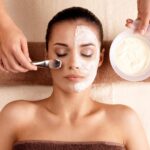
At the mention of beauty masks, one immediately thinks of the facial mask.

Not surprisingly though, the beauty industry has come up with so many innovations within this decade that you can find a mask for every inch of your body!

Well… Not exactly every inch of your body, but gone are the days when beauty masks are only meant for your face.

10 types of beauty masks you never thought you needed
The beauty industry has come with so many innovations over the last decade. Credit: Unsplash.

Here are 10 types of beauty masks you never thought you needed:

1. Foot mask

While most people are busy taking care of their faces and hair, some of us often neglect our feet. (Raise your foot if you wished your feet were smooth and soft before adulthood made them dry and cracked.)

The hottest thing in the beauty industry now is the foot peeling mask, which has becomean effective way to get rid of the dead skin on your feet. Be warned, the mask actually helps your feet peel like insects going through the molting process.

Place these masks like a sock on your freshly-cleansed feet and let the chemical do its magic. You will only see the results five to seven days after applying these masks when all the dead skin starts to peel off.

Some widely reviewed foot masks online are TONYMOLY Shiny Foot Super Peeling Liquid and Baby Foot Lavender.

2. Chin mask

This is reportedly a surgical-free way of lifting your jawline. V-mask, face lift mask, chin up mask are basically masks designed to reduce the appearance of your double chin. You can also use this to say goodbye to turkey neck.

Most of these masks for your chin claimed to to work to redefine your jawline after one 30-minute treatment.

3.Under-eye mask

https://www.youtube.com/watch?v=UrARKnACoN8

Puffiness, fine lines and dark circles… these are some of the problems we have under our eyes.

Nowadays, you can easily find comma-shaped masks at Malaysian drug stores work to reduce these problems. They are known to be a quick fix to brighten your eyes while giving a cooling effects on your skin.

4. Lip mask

https://www.youtube.com/watch?v=SOVE9QR78tM

Forget about lip balms, we are taking our lip care to another level with lip masks.
Famous beauty brands such as Laneige, TONYMOLY and Sephora have all come out with their own lip masks which work to soothe, replenish, moisturise and nourish your dry and cracked pout.

But if you are not willing to spend that kind of money, slathering your lips with butter and leaving it on overnight works too.

5. Elbow mask

South Korea will always a solution for every problem you have on your body no matter how small.

A couple years back, Etude House from South Korea came up with masks to moisturise and brighten your dry and rough elbows.

Well, that is definitely something we need just in case anybody noticed we have rough elbows in the first place.

6. Hand mask

This is another beauty inspiration which comes from South Korea.

Hand masks are meant to nourish your rough hands and brittle fingernails. L’Occitane has a product to gently slough off the dead skin on your hands. Lush also offers a hand mask that works like a specialised bath for your hands.

Gone are the days that you apply only lotion on your hands.

7. Body mask

Now what about the rest of our bodies? No worries, the 21st century beauty industry has you covered in that area too.

Body mask products are aimed to give users that spa-like experience at home, leaving your body smooth and refreshing.

8.Boob mask

The public won’t be able to see your breasts from top to bottom, but it doesn’t meant that you should neglect them.

Boob sheet masks are apparently a thing, and were created to hydrate the chest areas. They also have anti-aging and skin-brightening properties, ensuring your chest will look great in those décolleté tops and dresses.

9.Belly mask

Show some love to your belly! Pregnant mamas now can lighten the appearance of stretch marks while carrying their babies with beauty masks designed for their pregnant bellies.

They are also meant to soften scars after Caesarean section.

10. Butt mask

Finally, we are now talking about the tush! If you think your buttocks lack suppleness, firmness and bounciness, fret not! There are masks designed to restore those qualities to your butt.

Canada-based beauty brand Nannete de Gaspé is one of the leading players in the industry when it comes to beauty masks.

They introduced to the world the concept of dry masks in 2016. So it is no surprise, this brand offers masks for different parts for the body and that includes the bust and butt.

Symbolism and traditions behind a Melanau ‘9 Pikul’ Wedding

Indigenous to Sarawak, the Melanau people are among the earliest settlers in the land of hornbills.

The Melanau social ranks can be differentiated as pangeran or 15 pikul (royalty), 9 pikul, 7 pikul betirih and dipen or ulun. Each rank has a unique customs on their own and might be slightly different from the other ranks. One pikul is equivalent to 60 kg or 133 lbs of brass.

During the Cultural Snippets session of the Rainforest World Music Festival 2018, Salliza Sideni the gallery manager of the Brooke Gallery at Fort Margherita shared how a Melanau 9 pikul wedding was uniquely held.

The session was organised by local NGO, Friends or Sarawak Museum.

Symbolism and traditions behind a Melanau '9 Pikul' Wedding
Salliza Sideni (centre) explaining the intricate steps in a Melanau 9 Pikul wedding recently during Rainforest World Music Festival 2018.

Before the Melanau 9 pikul wedding

”Before the wedding, there will be the surong brian ceremony. It is literally translated as giving of gifts or bringing wealth to the bride,” she said.

According to Salliza, the future groom first and foremost will present his future bride one gold ring to signify the engagement.

Then there are also be customary gifts or adet including a gold ring, one gantang ( a measurement equalling to 2.6kg) of paddy, nine pieces of clothes, one piece of songket, one long sword, one piece of sugarcane, one unripe banana and one coconut with its husk completely intact.

During the engagement ceremony, the future bride has to take the unripe banana and sugarcane.

The unripe banana and sugarcane symbolise the worst and sweet moments that the bride will experience in marriage.

“In the olden days, brass items like cannons were offered. Today, there are other engagement gifts which are agreed by both parties including handbags, perfumes, shoes and so on.”

There is of course, a dowry of money as agreed by both parties.

She added, “Nowadays, the amount of dowry is based on the bride’s education level. A PhD holder has a dowry amounting up to RM21,000.”

A few days before the wedding, Bendera Tatunggul (colourful flags) will be placed within the vicinity of the wedding venues. This is to inform people about the upcoming wedding.

Salliza pointed out, “A minimum of seven different colours of flags would be needed for a 9 pikul wedding with a coconut husk hanging from each flag,

“A family’s rank or pikul can be told from the number of colours used for the flags.”

After the ceremony, the bride’s family will plant the coconut husk while preparing for the wedding.

Some elders believe that the growth of coconut tree signify the success of their marriage.

Symbolism and traditions behind a Melanau '9 Pikul' Wedding
How the Bendera Tatunggul will look like.

On the day of the 9 pikul wedding

A Melanau 9 pikul wedding starts with the head of custom or ketua adat receiving a sword from one of the representatives from the bride family.

The sword will be presented to the groom family as a symbol of protection for the bride in the absence of her husband.

During the ceremony, the groom’s mother will present a piece of songket brunei to the bride.

This is then followed by feeding both the bride and groom with belen. Salliza explained that this “would actually be betel nut wrapped in betel leaf. Belen is believed to have the ability to calm both of them throughout the wedding ceremony.”

In the case of a Melanau-Muslim wedding, there will also be khatam (recitation) of the Quran and bersanji (prayers).

There will also be an influence of Malay culture in a Melanau-Muslim wedding with ceremonies like ‘merenjis air mawar’ by the family elders.

Once the wedding is done, the newlyweds would go back to their homes to do another ceremony.

“Traditionally, the newlyweds would ascend and descend the house stairs three times. This is to symbolise that they are starting their new life together.”

Symbolism and traditions behind a Melanau '9 Pikul' Wedding
How a traditional Melanau wedding chamber would look like.

Three days after the wedding ceremony

There is another ceremony held three days after the wedding called adat petudui.

“In the olden days, strict Melanau customs prohibit newlyweds from leaving the house for fear of still having ‘darah manis’ or sweet blood.

“The bathing ceremony is to cleanse and further bless the newlyweds.”

Adat petudui usually takes place before the Subuh (morning) prayer at around 4.30am. They will use water that has been kept in jars for three days.

Salliza continued, “Once done, both newlyweds will perform morning prayers together with the guests and then they usually open their wedding gifts after breakfast.”

Her sharing was based on the weddings organised in her own family who hail from Kampung Penakub Hilir Mukah.

Symbolism and traditions behind a Melanau '9 Pikul' Wedding
A traditional Melanau tall house.

KajoPicks: 10 Japanese horror anime you must watch

There is something about Japanese horror stories that make them one of the scariest, most eerie tales in the South East Asian region.

Even if it is an anime, not a live-action story, the Japanese horror genre still manages to transcend cultural borders and language barriers to give its audience a good scare.

Here KajoMag’s top 10 Japanese horror anime you must watch:

1.Another

This anime is based on Japanese horror novel by Yukito Ayatsuji which was published in 2009.

The plot is about a boy named Kouichi Sakakibara who transfers to Yomiyama North Middle School. There, he finds himself fascinated with a girl name Mei Misaki who is being ignored by the whole class.

What makes this anime iconic among fans is not just how killing the suspense is but its legendary death-by-umbrella scene.

SPOILER ALERT
One of the characters, Yukari, accidentally trips and tumbles down the school stairs while carrying an umbrella.
As her umbrella drops, it pops open as she falls face first towards the umbrella’s sharp end and is gruesomely skewered through the neck.

Nobody will look at an umbrella the same again after watching this anime.

2.Death Parade

Do you know where you go after you die? How about a bar?

In the universe of this Japanese horror anime, humans either head to the eternal void or are reincarnated after death.
However if there are any doubts, the souls arrive at the Quindecim bar instead without any memories of having died. There, Decim the bartender will challenge them to a Death Game.

It is not as horrifying as the other anime on this list but each episode has a different twisted, distorted storyline.

3.Hell Girl

This anime is so iconic that its soundtracks are widely used as a horror theme song in various shows including South Korean variety show like Running Man.

Ai Enma, the main character offers an interesting service. Basically, she is the chauffeur for highway to hell. She carries out grudges on behalf of the clients by sending the person the clients hate to hell.

Putting aside her scary job, Ai is full of wisdom as she comes with smartest quotes throughout this anime like“When one person is cursed, two graves are dug” and “The real hell is inside the person.”

Hermost memorable quote is what she says every time she sends somebody to hell.

“O pitiful shadow bound in darkness,
Looking down upon people, and causing them pain.
A soul drowned in sinful karma,
Want to try dying this once?”

4.Blood+

Blood+ is a dark and sad but full of action. The story focuses on Saya Otonashi who seems to be just an ordinary girl living with her adoptive family.

One night, she is attacked by a mysterious creature called Chiropteran. One thing leads to another and Saya realises she has a special power to defeat these creatures.

5.Ghost Hunt

Ghost Hunt is one of those Japanese horror anime that I wouldn’t recommend to watch at night. Watch it during the day when everything is lit and you won’t be looking over your shoulder.

It is based on a light novel series written by Fuyumi Ono. The story follows the adventures of Shibuya Psychic Research as they investigate mysterious events all over Japan.

Some of these ‘ghostly’ occurrences have horrifying, scary background stories while there are some which are sad and heartbreaking.

KajoPicks: 10 Japanese horror anime you must watch
Ghost Hunt’s official poster.
6.Ousama Game

Also known as King’s Game The Animation, this is a twisted horror story based in a Japanese high school. A class of 32 people receive a message on their phones from a person only known as the “King.”

The message has orders that the students must obey or they die.

It has a sick, contorted storyline which plays on humans’ instinct to survive.

7.Corpse Party: Tortured Soul

This four-episode anime is a sequel to the Corpse Party: Missing Footage OVA (original video animation).

The story starts with a group of students gathered at their high school at night to say goodbye to a friend. They perform a ritual to make sure they are friends forever using doll-like charms.

The ritual leads them to being stuck in another dimension with scary ghosts from the past.

8.Yami Shibai: Japanese Ghost Stories

If a masked stranger showed up in a playground to tell ghost stories, would you let your children listen to him?

Every week at 5pm, an old man in a yellow mask shows up at a children’s playground and tells ghost stories based on Japanese myths and urban legends.

It is inspired by kamishibai, a form of Japanese street theatre and storytelling that was popular during the Depression of the 1930s.

9.Ayakashi: Japanese Classic Horror

This Japanese horror anime has three parts: Yotsuya Kaidan, Tenshu Monogatari and Bake Neko.

Yotsuya Kaidan is perhaps the most famous Japanese ghost story about a husband who betrays his wife to marry a rich man’s daughter. The wife’s spirit comes back from the dead to curse those who involved with her death.

Tenshu Monogatari is the story of forbidden love between a god and a human while Bake Neko is about a man who is a medicine seller and hunts mononoke (demons).

10.Tokyo Ghoul

Based on best-selling horror manga by Sui Ishida, the plot follows Ken Kaneki who is living a secret life as a half-ghoul, half-human.

The ghouls in this universe are vicious creatures who can blend in with humans so that they can prey on them as food.

Top 3 Sabah fermented foods you must try before you die

Located in the northern part of Borneo island, the Malaysian state of Sabah has its own distinct cuisine different from other states in the country.

Thanks to its multiracial population just like its neighbouring state of Sarawak, Sabah offers various ingredients and style of food preparation.

One of the famous ways they have of preparing food is by fermenting with salt, a similar method to making pekasam (Malaysian fermented food).

When you take a walk through any of their local markets you will find fermented food sold in all sorts of different sizes.

Besides the local market, you can also find them at the roadside stalls along the road from Kota Kinabalu to Ranau or Keningau.

Top 3 Sabah fermented foods you must try before you die
Local sellers selling different kinds of Sabah preserved foods. The ones in red are pickled ‘tuhau’ while the ones in yellow are pickled ‘bambangan’.

If you are up for it, here are top 3 Sabah fermented foods you must try before you die. We warn you; they are not for the faint-hearted because of their strong smell and flavours.

1. Pickled Tuhau

https://www.youtube.com/watch?v=VmsM-7FEmp4

The least threatening of all three Sabah fermented foods is pickled tuhau. Tuhau is a type of wild ginger scientifically known as Etlingera coccinea.

The edible part of this ginger is the inner sheath of the shoot. Chop it up and mix it with chives, chilli peppers, salt, sugar and vinegar.

It is usually served as a side dish with hot rice. You can also whisk in some tuhau with eggs to make an omelette.

2. Pickeled bambangan

https://www.instagram.com/p/BlnEZz9nLyO/?utm_source=ig_web_copy_link

Bambangan (Mangnifera pajang) is an endemic fruit only found in Borneo. The fruit is considered a type of wild mango but unlike the common mango, it has thick brown skin.

It is usually harvested raw and cured with salt and chilies to make pickled bambangan. The locals enjoy it with plain white rice and fried fish.

3.Bosou

https://www.instagram.com/p/BSxdzk9j0SQ/?utm_source=ig_web_copy_link

Bosou is also called nonsom, sambaat, kinaraatan, gagau and tinamba in different Kadazandusun dialects. It is a preserved fish or meat made with biji kepayang in Malay (Pangium edule) or pangi in Dusun language. The most common main ingredient for bosou is river fish. Mix the fish together with rice, salt and pangi.

To spice it up a little bit, you can also add in pineapple or tuhau. It takes up five to seven days for it to be fully fermented. There are two ways to take bosou; you can have it as a condiment or cook it with onions and chilies.

Your complete guide to Sarawak Teh C Peng Special

If Sarawak had a national drink, that beverage would definitely be Teh C Peng Special.

A drink that you can order throughout Sarawak, it is also known as three-layer tea because of how its ingredients look in the glass before you give it a really good stir.

Basically it is a beverage made of red tea, evaporated milk and gula melaka syrup (a type of palm sugar). It is an upgraded version of Teh C Peng which is iced tea with evaporated milk.

Add on the syrup and voila it becomes ‘special’!

What is Teh C Peng Special?

Can you see the three layers in this drink?

The commonly known origin of this drink is 7th mile Kuching’s Fresh Food Court. To this day, visitors still flock to this food court to have a taste of the original Teh C Peng Special.

The highlight of the drink is none other than the gula melaka syrup. Gula melaka (Malacca sugar in Malay) is a type of palm sugar made from the sap of flower buds mainly from the coconut palms.

Not all palm sugars are the same as they may differ in composition. Gula melaka can be dense and sticky which is why before you drink Teh C Peng Special, you need to stir it vigorously.

You can always make your own Teh C Peng Special at home as long as you have black tea, evaporated milk and gula melaka.

You can make your own syrup by melting solid gula melaka in some water over a slow flame, or buy a bottle of Teh C Peng Special syrup easily found in most Sarawak supermarkets.

When it comes to Malaysian drinks, the alphabet ‘C’ means evaporated milk. But why the letter ‘C’? Apparently it is inspired by the first initial of the most famous brand of evaporated milk from Nestle called Carnation.

Now comes the teh or tea part: Teh C Peng Special is made of red tea.

Red tea in Malaysia or other countries such as China is actually what Western countries refer to as black tea. It is more oxidised than oolong, green and white teas.

The most common brand of tea in this country is BOH Tea, which is also the largest black tea manufacturer in Malaysia.

Teh C Peng Special makes a great thirst-quenching drink especially in hot weather.

How a Teh C Peng Special looks like after a good stir.
1 66 67 68 69 70 75