Patricia Hului

Patricia Hului is a Kayan who wants to live in a world where you can eat whatever you want and not gain weight.

She grew up in Bintulu, Sarawak and graduated from the University Malaysia Sabah with a degree in Marine Science.

She is currently obsessed with silent vlogs during this Covid-19 pandemic.

Due to her obsession, she started her Youtube channel of slient vlogs.

Follow her on Instagram at @patriciahului, Facebook at Patricia Hului at Kajomag.com or Twitter at @patriciahului.

5 things every Sarawakian should know about Circular No.9/1946

When the third White Rajah of Sarawak Charles Vyner Brooke decided to cede the kingdom to Britain as a crown colony, many Sarawakians were unhappy.

This was because he previously stated he would grant the right self-rule to Sarawak according to the Nine Cardinal Principles of the rule of the English Rajah.

Despite the heavy resistance by the local people, the British declared Sarawak a crown colony on July 1, 1946 anyway.

Many of the local associations started an anti-cession movement around the country. Then the British government realised that civil servants made up most of the members of the anti-cession movement.

So the British fought back by issuing a warning in a secretariat circular. Here are 5 things you should know about the infamous anti-cession Circular No.9/1946:

5 things every Sarawakian should know about Circular No.9/1946
The current Sarawak Textile Museum. It used to house the Education Department of Sarawak State Museum.
1.Circular No.9/1946 came about due to a huge rally in Padang Merdeka

The members of anti-cession movement organised many rallies across the country. However, the biggest rally reportedly was held in Central Padang (now Padang Merdeka) where about 15,000 people attended.

2.It was issued to curb the anti-cession activity

Embarrassed by the fact it was attended mostly by civil servants, the Chief Secretary to the Government C.W. Dawson signed Circular No.9/1946 on Dec 31, 1946.

3.This was the exact words of the circular
‘In view of the political change in the Status of Sarawak by which on 1st July, 1946, it became a Crown Colony, His Excellency the Governor has directed that this circular should be sent to all Government officers on the establishment.

(a)Government experts and requires absolute loyalty from all servants.
(b)Since there is no question of any change in the present regime or any reversion to Brooke rule, Government will not permit or tolerate any association by its servants with any activities designed to keep alive the question of cession.
(c)There will be no victimisation for any speech or act of any Government servant in the past relating to the question of cession, but each Government servant must now make his mind weather he wishes to serve the present Government loyally and faithfully or not.
(d)If you do not feel that you wish to continue in the Government service under these conditions, you should inform your Resident, District Officer, or Head of Department, as the case may be, before 31st December, 1946, and he will advise you as to the course you should pursue.
(e)Any Government servant in future who associates himself with any activity designed to keep open the question of cession or commits any act of deliberate disloyalty Government will render himself liable to instant dismissal.’

4.How the circular backfired

If the British government were looking to scare the civil servants with Circular No.9/1946, the move backfired immediately.

The circular led to a mass resignation of at least 338 teachers and government servants on Apr 2, 1947. That number made up of 13% of the civil service.

The mass resignation forced the closure of more than 22 schools in Sarawak. Additionally, 56 university students quit their studies in protest.

A book containing all the signatures of civil servants who resigned is now on display at Urang Sarawak Exhibition at Sarawak Art Museum.

5.It led to the birth of Young Malay Association

Despite the mass resignation, the British were not going down without a fight. The then government allegedly used the racial card by disrupting the relationship between the Malays and the Dayaks.

They promoted the idea that Sarawak colonisation was to bring better life only to the Malays.

The British government reportedly encouraged the formation of Young Malay Association (YMA) which would only support Sarawak colonisation. The British recruited YMA members by threatening them or extorting them: If they refused to join, their children would be unable to attend school or join the civil service.

The climax of the anti-cession movement in Sarawak was the murder of the second Sarawak governor, Duncan Stewart.

Sarawak then continued remained as a colony until July 22, 1963 when the British granted it self-governance.

5 reasons why Netflix’s The Princess Switch is a mindlessly fun movie to watch

If you are subscribed to Netflix, then you might already know that The Princess Switch was released last Nov 16.

Directed by Mike Rohl, it is a Christmas romantic comedy starring Vanessa Hudgens, Sam Palladio and Nick Sagar.

Hudgens plays both Stacy DeNovo, a Chicago baker and Lady Margaret Delacourt the Duchess of Montenaro. Margaret was also the future bride of Edward, the crown prince of fictional Kingdom of Belgravia.

Stacy and Margaret decide to switch places for a couple of days as the latter was hoping to live a normal non-duchess life before her arranged marriage to Edward.

With a predictable storyline, the movie opened to mixed reviews with a handful of bloopers here and there.

Nonetheless here at KajoMag, we have five reasons The Princess Switch is a mindless fun movie for you to watch this Christmas.

1.Watch it for Vanessa Hudgens’ cringey British accent

5 reasons why Netflix’s The Princess Switch is a mindlessly fun movie to watch
Hudgens plays both Stacy DeNovo (left) and Lady Margaret Delacourt (right).

Hudgens playing the American Stacy DeNovo attempting to carry a British accent is funny to watch. However, Hudgens playing Lady Margaret Delacourt with what she means to be a native British accent was cringey. For this, you really have to watch The Princess Switch to experience the difference.

2.It features the world’s hottest sous chef

Nick Sagar playing Kevin Richards (Stacy’s best friend and sous chef) was one of, or maybe the best thing in the movie.

All I can say is there’s a scene featuring a shirtless Kevin and it was the only man-candy moment you need from a movie this Christmas.

5 reasons why Netflix’s The Princess Switch is a mindlessly fun movie to watch
Yes, everything is fine. Credits: Screenshot from Netflix trailer.

3.A life-swapping movie is always fun to watch

17 again, The Parents’ Trap, Freaky Friday, 13 Going 30; a life-swapping movie is always fun to watch.
Furthermore, it is always interesting to watch any actor acting two different characters in one movie.

4.The Duchess’s closet is worth killing for

Obviously, Lady Margaret the duchess has a way better wardrobe than Stacy the baker. And the Duchess’ closet is on top of my Christmas wish list this year. From the heels Stacy wore during her visit to the orphanage and her maroon ball gown, every fashion item was definitely to die for.

5.A good movie to watch mindlessly while sipping on a drink this Christmas

Putting aside the nonsensical idea of learning to be somebody else in just few hours, The Princess Switch was actually a fun movie to watch. Hudgens, should consider acting in more rom-coms as she was hilarious in the movie.

If you are watching The Princess Switch this Christmas, grab a glass of wine, beer, brandy, whiskey or eggnog and expect a fairly tale movie with a fairly tale ending.

10 interesting facts about the 19th century Iranun pirates

Forget about Captain Jack Sparrow, the most fearsome pirates in this part of the world were the Iranun people.

Although the Iranun people are native to Mindanao island in Philippines, they also had settlements on the west coast of Malaysian Sabah as well.

During the 19th century, they were infamous for their piracy activities.

The British gave them the exonym ‘Illanun’. That is where the Malay term ‘lanun’ or pirate came about.

Here are 10 interesting facts about the 19th century Iranun pirates:

10 interesting facts about the 19th century Iranun pirates
Illustrations of Illanun or Iranun pirates circa 1800s. Credits: Public Domain.
1.The Spanish called the Iranun pirates “los Illanuns de la Laguna”

This was because their main stronghold was located on the shores of a lagoon in Mindanao island. Besides being a stronghold, it was also where their wives and children lived.

2.They also had settlements in Sabah

Apart from Mindanau island, the Iranun pirates also had settlements along the coast of Sabah including Kota Marudu, Ambong Bay and Tempasuk back then.

3.The Iranun pirates were the fiercest pirates in this region during the 19th century.

According to author Owen Rutter, the Iranuns were the fiercest and most powerful pirates of the Eastern ships.

He wrote, “They never hesitated to attack European ships, and, while they might give quarter to a native crew, to white men, they showed no mercy, owing, it is said, to the former treatment they had received at the hands of the Spaniards.”

4.Their favourite weapon was called ‘kampilan’

A kampilan is a single-edged long sword, traditionally used by various ethnic groups in the Philippines. Apart from kampilan, the Iranun pirates were also known to use spears, kris (a type of dagger) and guns.

5.The Iranun pirates marked the number of heads they took on their kampilan

Remember Killmonger from Black Panther? He scarred his body with every kill he committed. As for the Iranuns, they marked their kampilan every time they beheaded someone. According to Rutter, he had seen an Iranun kampilan with no less than 27 markings.

6.They preferred to kill in a single blow

A kampilan had a long enough handle to be wielded with two hands. Combining the weight of the kampilan and the force of two hands, a single blow was enough to cut someone’s head off their shoulders.

10 interesting facts about the 19th century Iranun pirates
Piraguas piratas de los Joloanos c.1850 A depiction of garay warships used by Sulu pirates. Credits: Public Domain.
7.They cruised not only in the Sulu Archipelago

Although their piracy and sailing skills were well-known in the Sulu Archipelago, they also roamed the Malay peninsular, throughout the Philippines, Papua New Guinea, Java, Sumatra, Bay of Bengal and all the way up to Penang.

8.An Iranun squadron was usually up to 40 big vessels

Sometimes a fleet might be numbered up to even 200 vessels of different sizes. One man would command the whole fleet while each small boat had its own captain. Each small boat was usually made of their own relatives.

9.They had two main objectives for their piracy

The Iranun pirates had two reasons to commit piracy; plunder and slaves. They stole from the ships they boarded and they took slaves from the coastal villages they attacked.

In Borneo, they were known to attack the Melanau people who settled along the coast of Sarawak.

10.The Iranun pirates usually disguised themselves as traders

Their modus operandi was to disguise themselves as traders so that they could board a ship. They were cunning thieves as well; even when they robbed a ship, they avoided taking objects that could be identified easily as stolen property.

Rutter explained that this would be so it was difficult to prove that they were anything but peaceful traders when their ships were being overhauled.

Read about how the pirates killed the first European man who wrote about the Kayan people here.

Longhouses, Sarawak cultural heritage we lost to fire in 2018

On Nov 19, a 30-door Kenyah longhouse called Uma Bakung in Sungai Asap was razed by fire at around 10.46am.

Locally famous for its pineapple production, the longhouse fire left over 400 people homeless.

Many people may not realise that a loss of a longhouse is a loss of cultural heritage.

A longhouse is more than just a home where family memories are made, it’s also where family heirlooms and traditional crafts passed down from generation to generation are stored.

Taking the recently burnt Uma Bakong for example, every ‘bilik’ had a display of ‘sa’ong’(a Kenyah sunhat) in its living room as decoration.

A sa’ong, similar to the Kayan’s ‘hong’ is made from palm leaves and usually decorated with beads and fabric.

Nowadays, it is difficult to harvest palm leaves in the jungle and even more difficult to find is the art of making sa’ong among the younger generation.

Furthermore when a longhouse is lost to fire, it takes some time to rebuild it. For safety reasons, most wooden longhouses are rebuilt in concrete, forgoing the authenticity of the traditional structure.

While the worth of burnt properties could be estimated and become a Fire and Rescue Department statistic, the value of customary items and traditional artifacts to the family and the community as a whole can never be quantified.

Longhouses, Sarawak cultural heritage we lost to fire in 2018
A photo of Uma Bakung before it was taken by fire in early October 2018.
Longhouses, Sarawak cultural heritage we lost to fire in 2018
What is left of Uma Bakung after the fire on Nov 19.

Apart from Uma Bakung, here is a list of longhouses in Sarawak we lost so far to fire in 2018:

1. Rumah Langat Anthony Collin, Tinjar (Jan 31)

When fire gutted the entire 37-door Rumah Langat Anthony Collin, one of its residents reportedly died from an apparent heart attack after the incident.

Located in Nanga Majang, it takes two hours’ journey by boat from Marudi where the nearest fire station is situated.

2. Rumah Mawang Takan, Tatau (Jan 25)

A 21-door longhouse was engulfed in flames in Tatau on a late Thursday night. However, the fire and rescue department reportedly only received a distress call the next morning due to poor phone connectivity in the area.

3. Rumah Nyipak, Sebauh (Feb 4)

A Sunday night fire engulfed more than half of the 63-door longhouse at Rumah Nyipak in February.

In this case, the firefighters were able to save 27 units of the longhouse from being razed. Still, more than 250 people lost their homes that night.

4.Rumah King Brim Kartadem, Limbang (Mar 4)

Rumah King Brim Kartadem was one of many longhouses in rural Sarawak located too far from any fire station.

It took about four hours for personnel from the Limbang fire station to reach the scene when fire razed the seven-door longhouse. In the end, 27 victims were left homeless when their entire longhouse was completely destroyed.

5.Long Peluan, Ulu Baram (Apr 5)

A midnight fire destroyed a 19-door Kelabit longhouse block reportedly in just 15 minutes. The incident left 19 families homeless with nothing but their clothes on. The second block of the longhouse with 12 families was unaffected by the fire.

6.Rumah Museh, Pantu (Aug 19)

About 40 residents lost their homes to an afternoon fire on Aug 19. The fire gutted a 20-door Rumah Museh in Sri Aman. Only the kitchen section of two units were undisturbed while the rest of the longhouse was razed to the ground.

7.Rumah Sengalang, Tatau (Aug 27)

Luckily there were no injuries when a fire razed the 12-door longhouse in Jalan Seliliut Tatau-Bintulu. According to a statement by the Fire and Rescue Department, the firemen used water from the fire engines as well as from Sungai Selitut to take out the flame. Regardless, about 65 people lost their homes in the early morning fire.

7. Rumah Augustine Sait, Sri Aman (Sept 14)

This 24-door longhouse was reduced to ashes leaving 50 residents homeless. Thankfully, there were no reports of injuries or casualties.

8. Rumah Patrick Kebing, Tubau (Sept 12)

Two families lost their homes in a fire that burnt a five-door longhouse in Tubau, about an hour from Bintulu. Fortunately, there were no casualties in the incident.

9. Rumah Dagom Sanggai, Song (Sept 25)

Located at Nanga Makut in Sungai Katibas, Rumah Dagom Sanggai was one of the longhouses which still retained its traditional structure. A fire broke out at about 8am, razing the longhouse to the ground. The incident left almost 300 residents homeless.

10.Rumah Bada, Song (Sept 29)

Less than a week after fire in Rumah Dagom Sanggai, another longhouse in Song district went up in smoke. The 16-door Rumah Bada was completely destroyed in a fire happened around 6am.

Watch the video of Uma Bakung after fire on Nov 19, 2018 at 12.30pm:


Various efforts by the Fire and Rescue Department and corporations have been carried out to prevent or minimise fire damage which include training longhouse chiefs in fire safety. But with challenges in water supply, cell phone service and logistics for many rural and remote communities is it enough?

Read about how a longhouse was rebuilt after being razed to the ground:

The soul of a community: How a young architect helped resurrect a village longhouse in Borneo

5 interesting legends from Central Borneo recorded by Carl Sofus Lumholtz

Carl Sofus Lumholtz (1851-1922) was a Norwegian explorer and ethnographer. His best known works were publications on indigenous cultures of Australia and Mexico.

In 1913, Lumholtz made his way to Dutch Borneo, which is the current day Kalimantan. He spent roughly four years exploring the jungle and mingling with the Kayans, Kenyahs, Saputans, Bukits, Punans and many other Dayak tribes.

He died in New York while seeking treatment for tuberculosis in 1922. Lumholtz’s death was untimely as he was planning to write more about Borneo.

The only published record about Lumholtz’s journey in Borneo was a book called Through Central Borneo.

In the books, he wrote about the Borneo climate and ecosystem as well his adventure passing through Banjaramasin, Kayan and Mahakam rivers.

Published originally in Dutch on the year he died, the book also featured at least 23 legends particularly of the Dayak people.

Here at KajoMag, we narrowed down it to five interesting legends from Kalimantan recorded by Lumholtz:

1.The legend of patin fish

This legend came from Katingan regency, Indonesia.

There was a Dayak who went out fishing and caught a patin fish.

He left the fish in his prahu (boat) and asked his wife to fetch it. His wife was shocked to see that the fish had turned into a baby girl.

The couple decided to raise the girl as their own. Years later, the girl grew up and married. However, she first warned her husband that as long as they were married he was never to eat patin.

One day, the husband saw another man catching patin. He had a sudden craving for the fish and the man gave him some to take home.

The husband then took the fish and cooked it. When he was about to eat it, his wife walked in on him (talk about the perfect timing).

Sadly, the wife asked “Why did you eat the patin? You must not love me.” It seems that guilt trips don’t work on the husband as he insisted on having the fish and even fed it to the children.

Then the wife dropped the bomb on the husband telling that she was, in fact, a patin fish, telling him of her real origins. Because the husband ate the patin fish, she then turned back into one and left him.

To add some swagger to her exit (or maybe it was self-preservation), she also cursed her family on her way out, telling them that they will get sick if they ever eat a patin again.

2.The legend of burung punai
5 interesting legends from Central Borneo recorded by Carl Sofus Lumholtz
A view of Kapuas river, Kalimantan in Indonesia.

If somebody tells you not to eat something, the best thing to do is to listen and take heed.

The legend of burung punai or green pigeon (Treron spp.) comes from the Kahayan tribe of Kapuas river.

Long time ago, there was a man who tried to catch a green pigeon using a stick with glue on its end.

After several miserable attempts, he finally caught one. Suddenly, the bird turned into a woman. The man took the woman home and made her his wife. She agreed to marrying him, but made him promise not to eat a green pigeon ever again.

The couple had many children together. One day, he visited his friend’s house. There, they served green pigeon meat. The husband took some but when he returned home somehow the wife found out.

Like the legend of the patin fish, the wife turned back into a bird. Since then, her descendants kept the promise and never ate the bird.


3.The Dysfunctional Ghost Couple

Here is a ghost story of the Saputan tribe. There was a woman named Inu Songbakim and her husband Monjang Dahonghavon.

One day the man went out to cut some wood but accidentally hurt himself with an axe. Sadly, the man died. His parents took his body and restored his life.

How did they do that? Apparently, the man and his parents are ghosts or Lumholtz called them “antohs”.

Monjang Dahonghavon who was just risen from the dead, blamed Inu Songbakim for his demise for some unknown reason. He took a parang and tried to kill his wife but she was strong and able to fight him off.

In the midst of the fight, her parents were killed instead. Enraged, the wife killed his parents out of vengeance.

Monjang Dahonghavon left Inu Songbakim to look for another wife. But none were as strong or as good looking as his wife.

He returned to Inu Songbakim trying to mend their marriage. The wife also wanted to work things out but she put up a condition first. Monjang Dahonghavon first must restore her dead parents to life.

He answered, “I will do that if you first restore my parents to life.” Obviously they were both “antohs”.

The dead parents rose from the dead and they all lived happily ever after.

4. The disturbing love of an orangutan
5 interesting legends from Central Borneo recorded by Carl Sofus Lumholtz
A female orangutan enjoying her banana while hanging from a tree at Semenggoh Nature Reserve.

Lumholtz recorded this particular legend when he stayed at the the upper Kahayan river at Central Kalimantan.

There was a grieving man who just lost his wife and children.

He was devastated over his family’s deaths that he went far into the forest. Feeling exhausted, he took a nap underneath a tree. A female orangutan saw him and carried him up on her nest far up on a tree.

Imagine his surprise when he woke up to find out he was high up on a tree unable to come down.

So he decided to stay on that tree. Everyday the orangutan brought fruits and occasionally rice stolen from people’s homes for him.

After a few days, the orangutan tried to make her moves on him but the man declined. The animal was angry that it bit him on his shoulder. Unwillingly, the man surrendered.

He stayed on the tree for quite some time afraid for his life. In due time, a male child was born who was a human but covered with long hair.

One day while the orangutan was away looking for food, the man saw a ship at the coast putting out a boat for hauling water from the river nearby.

The man put his clothes together into a rope and began making a descent from the tree. The rope was not long enough but he still managed to jump into the river. Then he swam his way to the boat which took him to the ship.

When the orangutan did not find the man at their nest, she was furious. She saw the ship from a distance and tried to swim toward it but failed. The orangutan returned to her nest, took their son and tore him in half.

5.The otter that demands compensation

Here is another legend from the Saputan tribe.

There was a beautiful lady named Ohing Blibiching. Many men tried to court her but her eyes were set on Anyang Mokathimman because he was strong, skilful in catching animals and brave in headhunting.

Eventually they got married and lived together. One day, Anyang told Ohing he wanted to go away and hunt for heads. As a dutiful wife, she gave her consent, telling him to take as many men as possible.

With him out hunting, she continued to do her housework, doing laundry and catching fish for dinner. While she was husking paddy, a common hill myna bird (burung tiong) saw her and was enraptured by Ohing’s beauty.

The bird flew from tree to tree trying to catch a glimpse of Ohing. While it was jumping from branch to branch, a dead one broke and fell down. The fallen dead branch wounded a baby otter.

The mother otter was furious, she demanded an compensation from the bird. The bird told her, if she want any compensation, ask it from the woman.

The woman said she didn’t ask for the bird to look at her and told them they would settle the case tomorrow.

Tomorrow came, again the otter wanted some damages from the bird. Yet again, the bird insisted the the woman should pay.

While they were arguing, Anyang came home bringing with him prisoners and heads. Ohing complained to her husband about the two animals.

Anyang then settled it by giving the bird some fruits to eat and the otter some fish. They were both satisfied.

Then the couple proceeded to join the rest of villagers celebrating the success of a headhunting trip.

The Kayan man who danced so excitedly that he cut a head off while dancing

The first Ranee of Sarawak, Margaret Brooke showed great fascination towards Sarawakians in her book My Life in Sarawak.

She wrote about the people she met, stories she heard and some amusing encounters.

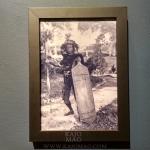
Perhaps the most amusing one was when a Kayan man performed in Bintulu in front of Margaret and her husband, Charles.

When it comes to dancing, the Kayan people have different kinds of dances to suit various purposes. The datud julud, or as some call it, the hornbill dance is a type of dance performed by women. They also have ngayo, a type of dance performed after a successful headhunting trip. A Kayan man usually performs the kajer lake’, a warrior dance which must be carried out with solemnity and complete seriousness.

A kajer lake’ would not be complete without a parang (a type of machete) and a shield.

A night at Fort Keppel

During their visit in Bintulu, Charles and Margaret along with their entourage stayed at Fort Keppel (which was bombed into inexistence in World War II).

There, they were visited by the natives who came from the far interior, including a group of Kayans.

The locals performed dances for the couple, entertaining them through the night.

Among the performers was a Kayan man, whom the Ranee described as a ‘small, rather plump individual’ who was ushered in, brandishing his parang.

According to the Ranee, at first he crouched down like an animated frog. Then he started to dance, jumping and spinning around on one leg while screaming his war-cry.

The Kayan man moved in agility, rapidly swinging his parang. Margaret wrote, “Once or twice he came so near to where we were sitting that I fancied the blade caused a draught over my head.”

Suddenly, three of his fellow Kayans sprang up and took him away, leaving his audience in puzzlement.

The Kayan man who danced too excitedly

Curious, the Rajah asked why the man had been taken away. Apparently, the Kayan man was a famous dancer from a longhouse outside the Rajah’s jurisdiction.

Back in his hometown, he once danced with so much excitement that he had actually swept the head off one of his audience members.

The three Kayan men who took him away halfway through his performance were there when the gruesome scene happened, so when they noticed the man was about to get carried away with his dance, they intervened quickly before anything irreversible happened.

Nonetheless, the evening ended very pleasantly according to the Ranee. “I thought a good deal about the little dancing man, and came to the conclusion that he must have been an artist in his way!”

I only spent RM10 at the Second Time Around Books Kuching

Kuchingites know it is the end of the year when the Second Time Around Books fair is in town.

The annual book fair is famous for offering up to 90% discounts on a wide range of books.

This year, the Second Time Around Books fair is being held at The Hills from Nov 3 till Dec 9. There are at least 100,000 used books for children and adults alike up for grabs.

And the fun part is it has a bargain section with up to 8,000 books for only RM1, RM2 and RM3.

Here at KajoMag, we want to make the most of our RM10 and these were the books we bought in the bargain section of Second Time Around Books:

1.Perfect Timing by Olga Bicos
I only spent RM10 at the Second Time Around Books Kuching
Perfect Timing by Olga Bicos for RM1.

Thanks to the magic of the Internet and the ever-ready smartphone, you can read the reviews first if you want to take a chance on an unknown writer.

Luckily for me, this 1998 book by Cuban author Olga Bicos had great reviews on Amazon. According to the reviewers, Perfect Timing is one of her best works. (Score!)

The story follows Cherish, Alec and Conor who survive a horrible airplane crash. A year after the incident, Cherish receives a strange message which unites her with Alec and Conor.

2.Home for Christmas by Anita Stansfield
I only spent RM10 at the Second Time Around Books Kuching
Home for Christmas by Anita Stansfield for RM1.

Since Christmas is around the corner, how about a book which complements the season? Home for Christmas by Anita Stansfield is a romance story. (Yes, there is a section on Romance at the Second Time Around Books fair for those who want to indulge that guilty pleasure.)

The reviews found online for Home for Christmas are mixed; some say it is a must-read during the holidays to get the Christmas mood going, while others found it too cheeky.

Nonetheless for that dose of Christmas spirit, perhaps this book is worth a try.

3.Sleepers by Lorenzo Carcaterra
I only spent RM10 at the Second Time Around Books Kuching
Sleepers by Lorenzo Carcaterra for RM1.

As you can see from the cover, Hollywood made a MAJOR MOTION PICTURE out of this book which is a nonfiction story about four friends who took the law into their own hands.

Set in the 60s, after a prank goes wrong and leaves a man seriously injured, the four friends are sent to a juvenile detention centre where they are sexually abused by the prison guards.

The story follows what happens years after their release.

4.Night by Elie Wiesel
I only spent RM10 at the Second Time Around Books Kuching
Night by Elie Wiesel only for RM1.

I first heard about this book when it was featured on Oprah’s Book Club in 2006. Then I tried to find it in nearby bookstores but failed. Back then there was no MPH Online or Book Depository and in the end the book slipped out of my mind.

So I actually gasped the moment I saw Night by Elie Wiesel which was selling at the price of RM1.

First published in 1960, the book is about Wiesel’s experience with his father in the Nazi German concentration camps at Auschwitz and Buchenwald in 1944-1945.

5.Vanity Fair by William Makepeace Thackeray
I only spent RM10 at the Second Time Around Books Kuching
A classic by William Thackery for RM2.

Here is another tip when it comes to choosing a book title; when in doubt, choose a classic because you can never go wrong with a classic. This classic English novel was first published as a 19-volume monthly serial from 1847-1848.

Vanity Fair follows the lives of Becky Sharp and Emily Sedly during and after the Napoleonic Wars.

6.Firefly Lane by Kristin Hannah
I only spent RM10 at the Second Time Around Books Kuching
Firefly Lane by Kristin Hannah only for RM2.

The first Kristin Hannah book I read was about 5 years ago. So I thought it was about time to break the long drought and pick – not so much of a favourite – but a familiar author.

Firefly Lane is about two friends Tully Hart and Kate Mularkey. One chose marriage and motherhood while the other opted for career and celebrity.

What I gained from my first impression was that it was a typical Hallmark friendship movie, making it a quick vacation read.

7.Hush, Hush by Becca Fitzpatrick
I only spent RM10 at the Second Time Around Books Kuching
Hush, Hush by Becca Fitzpatrick at RM2.

So far, we have picked up a Hallmark movie plot, a Christmas romance, a 19th century classic and even some true stories.

The last book which rounded up our RM10 total purchase at Second Time Around Books fair is an adult fantasy novel.

It focuses on Nora Grey, a teenager whose life is at risk after starting a romance with Patch. And in true adult fantasy fashion, Patch is actually a fallen angel with a dark connection to Nora.

With so many books to pick at Second Time Around Books, try to be a little bit more adventurous with your reading. Of course, there were more famous writers at the fair such as Sidney Sheldon, Mary Higgins Clark, Danielle Steele and so on.

Pick a new writer for yourself or try a different genre, you might be surprised what you can find at the Second Time Around Books even with only RM10.

Five Sarawak legends about people turning into stones

Petrification is found in many folklore and myths around the world. People are turned into stone for many reasons in these legends, but mostly as a punishment for their sins.

Here in Sarawak, there are five legends about people who were cursed and turned into stones:

1.Fairy Cave, Bau
Five Sarawak legends about people turning into stones
Fairy Cave, Bau.

The legend of Fairy Cave, Bau is quite popular among the locals. It tells of a poor boy who lived alone with his mother and is treated to a cruel trick by one of the villagers during one of their huge Gawai celebrations.

Infuriated, the mother plots her revenge against the whole village. Dressing a cat in a beautiful attire, she throws it into the middle of their Gawai celebration. The villagers laugh hysterically, bringing on a storm. The sky roars with thunder and blazes with lightning.

When the storm stops, it is discovered that all the villagers have turned into stone. These villagers are what make up the stalagmites and stalactites inside Fairy Cave.

2.The seven Seping longhouses that turned into stone
Five Sarawak legends about people turning into stones
Belaga town.

Legend has it that the Seping people slaughtered a dragon and ate it. As a result, their seven longhouses were turned into stone or swept away by flood.

Everybody was killed except for two siblings; a brother and a sister. They fled to Penyuan river, a tributary of the Belaga river.

The siblings grew up and (here it gets Game of Thrones-ish) eventually, they both marry each other and start a new Seping community.

The Seping people are believed to be the first tribe that settled around the Belaga river.

3.The legend of Ikan Pasit
Five Sarawak legends about people turning into stones
The cursed village of Marup was believed to be located not far from Lubok Antu.

This legend was found in My Life in Sarawak by Margaret Brooke, the first Ranee of Sarawak.

A long time ago, there was a village called Marup. One day there was a girl who went fishing and caught what the locals called ‘ikan pasit’. As she was preparing the fish, one of them jumped up and touched her breast.

“What are you doing? Do you imagine that you are my husband?” she said, laughing at her own joke.

The people who were there also laughed and those who heard the commotion came over and also laughed. Suddenly, the sky turned grey and a mighty wind blew accompanied by flashes of lightning.

Then a hail-storm began. Hail stones fell down non-stop and hitting everybody even their houses, turning them into stone.

Meanwhile, the girl who made fun of the ikan pasit was only partly petrified. Her head and neck were unchanged while the remaining part of her body was turned into stone.

Together with the rest of her village, the whole longhouse and its residents fell into the river. Sadly for the girl, she lived many years with a living head and stone as her body.

Many wanted to end her misery by striking her with a blade but nothing worked. Until one day, a man who heard her cries came. Like many who came before him, he tried to strike her head with an axe and a sword but neither worked.

Eventually he struck her with a spindle and her cries finally stopped while her head and neck slowly turned into stone. According to the Ranee, the group of rocks believed to be Marup village were not far from Lubok Antu.

4.The Sarawak version of Si Tanggang
Five Sarawak legends about people turning into stones
A bridge over Batang Lupar river.

Si Tanggang is a famous Southeast Asian folktale about an ungrateful son. It is about a poor boy who became a rich sailor and married a princess. Upon his return home, he was so ashamed of his poor origins and refused to recognise his elderly mother. So the mother cursed him, turning him and his ship into stone.

Margaret Brooke also recorded the Sarawak version of Si Tanggang in her book My Life in Sarawak.

The beginning of the legend is similar to Si Tanggang except it happened not far from the mouth of the Batang Lupar river. However, in this version the son came home unmarried and ashamed with his parents. He constantly berated his parents after his return.

“One day, after insulting them more than usual, a great storm arose, and father, mother, and son, together with the whole inhabitants of the village and their houses were tossed into the sea and turned into stone.”

5.The floating temple of Sebauh
Five Sarawak legends about people turning into stones
The Chinese temple of Sebauh.

If you have been to Sebauh town, then you have seen a Chinese temple right smack in the middle of Sebauh river.

There are different legends on how the island where the temple sits came about. Apparently, there was a group of sailors who anchored at Sebauh. The cook onboard made them linut or sago porridge known for its sticky texture.

The sailors played with the linut and teased each other. As you can expect from the other stories in this list, the sky suddenly turned dark and a storm thundered overhead.

Hail stones started to drop from the sky, turning everything the hail stones hit into rocks.

Hence, that was how the island of the floating temple in Sebauh was formed.

So the lesson here is that in Sarawak, you shouldn’t laugh at animals, eat a dragon or play with your food if you do not wish to be turned into stone.

Do you know about any other folktales about people being turned into stone in Sarawak? Let us know in the comment box!

How to avoid lightning strikes when you travel

Did you know that Malaysia has the third highest lightning activity in the world?

According to US National Lightning Safety Institute records, Malaysia recorded an average of 180 to 260 thunderstorm days a year, after Indonesia (322) and Columbia (275 to 320).

If you are living or travelling to these countries (or anywhere else), here are ways to avoid getting hit by lightning:

When you are indoors(!)
How to avoid lightning strikes when you travel
You still need to take precautions when you stay indoors when lightning strikes.


When a thunderstorm hits, get yourself under some shelter. Once inside, avoid using corded phones or electrical appliances.

Plus, the US National Weather Service urges the public to avoid showering during a lightning storm because a bolt might strike the water pipes and electrify your bathroom.

Even MythBusters, an Australian-American science television programme, proved that showering during a thunderstorm might not be a good idea.

So it doesn’t matter how filthy or stinky you are, do not wash your hands or take a shower.

The rainy weather might look beautiful for some but it is advisable to stay away from the windows.

When you are outdoors
How to avoid lightning strikes when you travel
Avoid the beach during thunderstorm. Credits: Pexels

Lightning can strike even when you think you are some distance away from the thunderstorm, so as soon as you hear a distant rumble, that’s when you should scramble for safety.

Even if there aren’t any in sight, never use a cliff or rocks for shelter. The same goes for trees.

What if you get caught in a thunderstorm while surrounded by trees? The best thing you can do is to get far from any trunks and avoid low-hanging branches.

Additionally, get as far as you can from street lamps, wire fences or power lines. These tall, metal objects attract lightnings like flies attracted to lights. You do not want to go near them.

When you are in open spaces
How to avoid lightning strikes when you travel
Check out the weather forecast before you go out. Credits: Pexels

In March 2018, it was reported that a lightning strike on a Penang beach instantly killed a man while injuring another. This is not an isolated case. There have been many reports of lightning strikes in open spaces like the beach all around the world.

Safety experts advise the public to stay away from water including ocean, lakes and rivers because water is a conductor of electricity.

If you’re in a group of people in an open space stuck in a thunderstorm during a futsal match for example, spread out so that everyone is at least three meters away from each other. This is to avoid any live currents travelling between you.

Three people were struck by lightning during in a futsal match in Kuala Lumpur earlier this month. Unfortunately one of the three died in the hospital a week after the incident.

For safety precaution, crouch down in a ball – low to the ground – but make sure to make as little contact with the ground as possible. (Which means no lying flat on the ground during a thunderstorm.)

When you are planning your travel itinerary

As much as you want to make full use of your time during travelling, always remember that safety comes first.

Check the weather forecast before making any plans. If a thunderstorm is on its way, ditch the park, beach, river, trekking trail, golf course and any sports in open fields.

Just relax and stay indoor with a good book, a cup of cocoa… or maybe a glass of wine.

What you need to know about Sarawakians favourite vegetable, midin

If the Malaysian state of Sarawak had to pick a national vegetable, that veg would definitely be midin. Although cassava leaves give a tight competition, this wild fern certainly takes the title.

In Sarawak, midin (Stenochlaena palustris) is that one vegetable you can find at a five-star hotel, a seafood restaurant in Kuching or a Kayan longhouse in rural Belaga.

As much as Sarawakians love to eat midin, we have not named any place after the fern.

However in the Philippines, there is a district called Diliman which is the Tagalog word for Stenochlaena palustris. It is located at the center of southern Quezon city.

In 2018, a wild rumour spread that Sarawak had one of the highest rates of stomach cancer due to eating midin or paku-pakis.

Thankfully, experts have debunked the rumour so Sarawakians can continue to enjoy this vegetable dish.

Here are 10 things you need to know about this wild vegetable, midin:

What you need to know about Sarawakians favourite vegetable, midin

1. You can find midin outside of Sarawak too!

While midin or lemidin grows wildly in Sarawak, it is also distributed naturally in South India through Southeast Asia up to Northern Australia and Polynesia.

In Sarawak, it grows in lowland areas at about 1,000m above sea level.

2. It is usually picked from the wild, not grown

You can find it thriving in forest, rubber estates, oil palm plantations and river banks.

Although it spreads across the ground, you can also find this fern up in the trees.

So far, there are no reports of cultivating the vegetable yet.


3. Shrimp paste and midin are a match made in heaven

Sarawakians’ favourite way to cook it is with belacan or shrimp paste. In India and Indonesia, the locals enjoy it with garlic.

One odd ingredient that goes well with this vegetable is a can of sardines in tomato sauce.

4. The nutritional value of lemidin

This fibrous vegetable is rich in antioxidants. It also contains potassium, phosphorus, iron as well as calcium, manganese, copper and zinc.

5. It is the original organic vegetable

Forget all the expensive ‘organic vegetables’ you find in one of those fancy supermarkets. Midin is the MVP of organic vegetables.

This is because this wild fern appears to be resistant to pests and disease. That is why you can see it grow with wild abandon even at the roadside without any proper care.

1 60 61 62 63 64 75