Patricia Hului

Patricia Hului is a Kayan who wants to live in a world where you can eat whatever you want and not gain weight.

She grew up in Bintulu, Sarawak and graduated from the University Malaysia Sabah with a degree in Marine Science.

She is currently obsessed with silent vlogs during this Covid-19 pandemic.

Due to her obsession, she started her Youtube channel of slient vlogs.

Follow her on Instagram at @patriciahului, Facebook at Patricia Hului at Kajomag.com or Twitter at @patriciahului.

Saying hello to the proboscis monkey in Tarakan’s Bekantan and Mangrove Conservation Park

While we call it’ ‘monyet belanda’ in Malaysia, in Indonesia it is called ‘bekantan’. The proboscis monkey (Nasalis larvatus) is endemic to Borneo and can be found in all three countries on the island.

But it can also be found on the island of Tarakan, in the eastern part of Borneo in North Kalimantan province of Indonesia.  

Here visitors can see them at the Bekantan and Mangrove Conservation Park, about 1km from the city center of Tarakan.

The Bekantan and Mangrove Conservation Park

The park is a conservation effort led by Tarakan city’s local government. In the beginning, the area only spanned three hectares, now it has increased to 22 hectares.

It was officially opened on June 5, 2003. Besides a conservation place for proboscis monkeys, it also served as the green lung for Tarakan city.

At first there were only two proboscis monkeys living in the park, now they have about 35 individuals.

Over the years, these proboscis monkeys have become used to human visitors, so it is easier to spot them and catch them on camera.

Plus, their reddish brown fur and unusually large noses make them easier to spot among the mangrove trees.

The best times to visit the Bekantan and Mangrove Conservation Park are between 11am to 2pm. This is because these are the extra feeding times for these bekantan.

Being seasonal eaters, these animals eat mostly fruit from January to May and leaves, especially mangrove leaves during June to December.

But the park rangers still feed them fruit with extra nutrients like bananas.

What to bring to the park

Visitors can walk around the park along its walkways that make it convenient to bring young families around.

Besides proboscis monkeys, visitors can also watch out for other animals such as crabs, birds, monitor lizards, squirrels, and mud fish. During high tide, you might even spot see snakes swimming through these mangrove roots.

Since the park is located near the city, visitors cannot escape from urban noise pollution, especially with noises coming in from a nearby school.

But with plenty of mangrove trees around, it is still a good place to see some greenery.

Although you can take photos of proboscis monkeys from a distance of 5m, it is still best to bring long-focus lenses to take their photographs.

Be respectful toward these animals and do not provoke them. Ever.

In Indonesia, proboscis monkeys are protected by Law Number 5 of 1990, Article 21, paragraph 2, which states that it is prohibited from capturing, injuring, killing, storing, possessing, maintaining, transporting and trading protected animals in living conditions. Anyone who intentionally violates the provisions of Article 21 paragraph 2 can be punished with a maximum imprisonment of 5 years and a maximum fine of Rp100 million (about RM28,000 or USD 7,000).

Besides Bekantan and Mangrove Conservation Park, proboscis monkeys can also be found in 16 protected areas in Indonesia.

These include Danau Sentarum National Park, Gunung Palung National Park, Kendawangan Nature Reserve, Kutai National Park, Lesan Protection Forest, Muara Kama Nature Reserve, Mandor Reserve and Tanjung Puting National Park.

5 things you should know about the aftermath of the 13 May incident

The 13 May 1969 incident remains a dark mark in Malaysian history to this day. The racial riots which happened after the 1969 Malaysian general election led to a state of national emergency or “Darurat” by the Yang di-Pertuan Agong on May 15.

The events also caused significant changes in the country, which included the first Prime Minister Tunku Abdul Rahman stepping down.

In the wake of the 13 May riots, a caretaker government – the National Operations Council (NOC) – was formed and chaired by Tun Haji Abdul Razak bin Dato’ Hussein.

As George Santayana once said, “Those who do not remember the past are condemned to repeat it.” Here are five things every Malaysian should know about the aftermath of the 13 May incident.
1.The birth of Rukunegara

After the 13 May incident, Malaysian racial balance and interrelations were fragile.

So the Malaysian government sought ways to foster unity among its people, one of the ways was by introducing the Rukunegara, Malaysia’s declaration of national philosophy instituted by royal proclamation:

WHEREAS OUR COUNTRY, MALAYSIA nurtures the ambitions of:

– Achieving a more perfect unity amongst the whole of her society;
– Preserving a democratic way of life;
– Creating a just society where the prosperity of the country can be enjoyed together in a fair and equitable manner;
– Guaranteeing a liberal approach towards her rich and varied cultural traditions; and
– Building a progressive society that will make use of science and modern technology.

WE, HER PEOPLE, pledge our united efforts to attain these ends guided by these principles:
– BELIEF IN GOD
– LOYALTY TO KING AND COUNTRY
– THE SUPREMACY OF THE CONSTITUTION
– THE RULE OF LAW
– COURTESY AND MORALITY

2.The introduction of the New Economic Policy (NEP)

Following the 13 May incident, the new Economic Policy was announced in The Second Malaysia Plan. Over the years, many have criticised NEP as an inefficient system as it believed to be promoting a laid-back attitude among the Bumiputeras.

Apart from that, some of the policies in NEP such as Bumiputera quotas in ownership of public company stock and housing sold exclusively to Bumiputeras were viewed as discriminatory.

Nonetheless, NOC in the beginning had justified the need for NEP, especially after 13 May, stating, “National Unity is unattainable without greater equity and balance among Malaysia’s social and ethnic groups in their participation in the development of the country and in the sharing of the benefits from modernisation and economic growth. National Unity cannot be fostered if vast sections of the population remain poor and if sufficient productive employment opportunities are not created for the expanding labour force.”

3. The 13 May racial riots did not happen in Sabah and Sarawak, but some believed that these two Borneo states paid an even heftier price.

While Sabah and Sarawak did not see riots happening in their streets, the two East Malaysian states were nonetheless affected.

According to Zainnal Ajamain, political analyst and author of The Queen’s Obligation, many ordinances and gazettes were issued when Parliament was suspended during the state of emergency.

During this period, Zainnal believed the laws used to take the Bornean states’ wealth included the Emergency (Essential Powers) Ordinance No. 7, 1969, the Continental Shelf Act 1966, and the Petroleum Mining Act 1966.

He cited one example which was Sabah and Sarawak territorial waters being reduced from 350 miles to 3 nautical miles through the new ordinances and gazettes.

Explaining more on the matter, the political analyst stated: “By virtue of the Emergency (Essential Powers) Ordinance No. 7 1969, the Continental Shelf Act 1966 of Sabah and Sarawak was owned by the federal state. The emergency ordinance limited the territorial waters so that whatever was beyond three nautical miles now belonged to the federal government.”

Since it was in a state of emergency, nothing that the federal government does can be challenged as unconstitutional.

Parliament only reconvened on Feb 20, 1971.

5 things you should know about the aftermath of the 13 May incident
13 May remains a dark piece in Malaysian history. Credits: Pixabay.
4.The number of dead to this day are still in dispute

Malaysia records the official number of casualties during the 13 May riots as 196; with 143 Chinese, 25 Malay, 13 Indian and 15 undetermined.

But Western media and other observers estimated the number up to ten times as many people had died with three quarters of the casualties were Chinese.

John J. Helbie who was working as a political officer at the US Embassy in Kuala Lumpur during the 13 May riots said the government casualty figures had not been an accurate account.

In a 1996 interview, Helbie shared his experience saying, “There was an AP (Associated Press) stringer in Kuala Lumpur whom we knew. Of course, in the best of journalistic traditions, he was out in the streets. Within hours he knew enough, for example, to check several of the local hospitals and find out something about casualties. The casualty figure came in slowly. The government casualty figures were never honest. We knew that from the diverse reports we were receiving.”

He continued, “This is not uncommon in situations where governments don’t want to admit the degree of disorder that has occurred and their inability to handle the situation. It was clear that the government had lost control. The police were totally outnumbered and didn’t have the resources to deal with the situations.”

5.The cause behind the riots remain in debate

On Oct 9, 1969, the NOC released a report cited racial politics as the primary cause of the 13 May incident.

Additionally, the government pointed its finger at opposition parties for creating tensions after the 1969 elections.

The most controversial cause believed to be the reason behind the 13 May riots was based on declassified documents, which have become available at the Public Record Office at London.

Scholar Dr Kua Kia Soong even published a book May 13: Declassified Documents on the Malaysian Riots of 1969 based on these records.

He challenged the Malaysian government’s official cause of the 13 May incident.

Dr Kua stated that the “ascendant state capitalist class” in ruling party United Malays National Organisation (UMNO), had intentionally started the riot. This move, Kua stated, was backed by the police and army as a coup d’etat to topple the Prime Minister Tunku Abdul Rahman to implement the new Malay Agenda.

According to one British Foreign Office document dated May 15, 1969, it succinctly ‘concludes that the riots were organised to formalise Malay dominance, sideline the Chinese and shelve the Tunku government’.

Meanwhile Tunku Abdul Rahman blamed opposition parties for the violence. He also blamed the influence of Communists, believing the incidents were sparked off by Chinese Communist youths.

As for the Malays who engaged in the violence, Tunku Abdul Rahman said they were merely responding to intolerable provocations.

Meanwhile, current day Prime Minister Tun Dr Mahathir Mohamad on May 14 this year said that the government would study the request to declassify the official report on the May 13 1969 racial riots.

What Sarawak nature looked like in the 19th century according to Harriette McDougall

Harriette McDougall was the wife of Francis Thomas McDougall, the first Anglican Bishop of Labuan and Sarawak from 1849 to 1868.

They first arrived in Sarawak on June 29, 1848 then subsequently established a medical mission as well as a home school here.

The couple spent the next 20 years -on and off- in the Kingdom, visiting various areas in Sarawak.

In 1888, Harriette published ‘Sketches of Our Life at Sarawak’, a book sharing her experience while staying in Borneo.

While some of her accounts were controversial, arguable and biased; she cited the deaths of the Great Kayan Expedition as “their own fault” and stated Islam as “not a faith which teaches mercy or respects life”, Harriette did give descriptions of Sarawak nature during the mid-19th century that would be important for historians or ecologists today.

They not only gave glimpses of how the state appeared back then, but how much has changed in term of biodiversity:

Here are some of the places Harriette described in her book ‘Sketches of Our Life at Sarawak’:
1.Buntal Bay
What Sarawak nature looked like in the 19th century according to Harriette McDougall
Welcome to Buntal Esplanade!

Over recent years, scientists identified Bako Buntal Bay as the wandering site for at least 27 migratory bird species in their annual migration between Southeast Asia and Australasia.

However, can you imagine that the number of bird species could be more during the mid 19th century?

According to Harriette, there was no settlement at Buntal bay when they occasionally visited the area.

Harriette wrote, “As the tide ebbed the birds arrived–tall storks, fishing eagles, gulls, curlew, plover, godwits, and many others we did not know. They flew in long lines, till they seemed to vanish and reappear, circling round and round, then swooping down upon the sand where the receding waves were leaving their supper. I never saw a prettier sight. The tall storks seemed to act like sentinels, watching while the others fed.”

She continued, “And there are many such spots in Borneo where no human foot ever trod, and where trees, flowers, and insects flourish exceedingly; where the birds sing songs of praise which are only heard by their Maker, and where the wild animals of the forest live and die unmolested. There is always something delightful to me in this idea. We are apt to think that this earth is made for man, but, after many ages, there are still some parts of his domain unconquered, some fair lands where the axe, the fire, and the plough arc still unknown.”

2.Muara Tebas
What Sarawak nature looked like in the 19th century according to Harriette McDougall
The view of Muara Tebas.

When Harriette and her companions needed to enter Sarawak, they used the Muara Tebas route.

Along this route, she took in the view of villages and environment along the river banks.

Though Harriette mistook crocodiles for alligators, she did describe how the mangrove forests came alive with glittering fireflies during the night.

During this 21st century, one can only imagine how beautiful that sight was.

“The river winds continually, and every new reach had its interest: a village of palm-leaf houses built close to the water, women and children standing on the steps with their long bamboo jars, or peeping out of the slits of windows at the schooner; boats of all sizes near the houses, fishing-nets hanging up to dry, wicked alligators lying basking on the mud; trees of many varieties–the nibong palm which furnishes the posts of the houses, the nipa which makes their mat walls, and close by the water the light and graceful mangroves, which at night arc all alive and glittering with fire-flies. On the boughs of some larger trees hanging over the stream, parties of monkeys might be seen eating the fruits, chattering, jumping, flying almost, from bough to bough.”


3.Batang Rajang

When Harriette arrived at Batang Rajang, she described it as a glorious river saying “It is not visited by a bore, and eighty miles from the sea it is half a mile broad, and deep to the banks.”

She also had high praises for the flowers in Borneo.

Harriette wrote, “They seldom grow on the ground, though you may sometimes come upon a huge bed of ground orchids, but mostly climb up the trees, and hang in festoons from the branches. One plant, the Ixora, for instance, propagating itself undisturbed, will become a garden itself, trailing its red or orange blossoms from bough to bough till the forest glows with colour.

The Rhododendron, growing in the forks of the great branches, takes possession of the tall trees, making them blush all over with delicate pinks and lilacs, or deepest rose clusters. Then the orchideous plants fix themselves in the branches, and send out long sprays of blossom of many colours and sweetest perfume.”

At the Rajang river, Harriette also paid attention to the sounds or birds.

According to her there were not many singing birds in Borneo but she did notice the curious creaking noise made by the wings of Rhinoceros hornbills as they fly past.

(We bet Sarawakians nowadays may not be aware of how hornbills’ wings sound.)

Regardless, the biggest noisemaker of the Borneon jungle was none other than the gibbons or as Harriette called them, the Wawa monkey.

Here is how she lengthily described the sounds of gibbons:

“More musical is the voice of the Wawa monkey, a bubbling like water running out of a narrow-necked bottle, always to be heard at early dawn, and the sweetest of alarums. A dead stillness reigns in the jungle by day, but at sunset every leaf almost becomes instinct with life. You might almost fancy yourself beset by Gideon’s army, when all the lamps in the pitchers rattled and broke, and every man blew his trumpet into your ear. It is an astounding noise certainly, and difficult to believe that so many pipes and rattles, whirring machines and trumpets, belong to good-sized beetles or flies, singing their evening song to the setting sun. As the light dies away all becomes still again, unless any marshy ground shelters frogs. But to hear all this you must go to the old jungle, where the tall trees stand near together and shut out the light of day, and almost the air, for there is a painful sense of suffocation in the dense wood.”

Discover The Peranakan Gallery at Orchard Road, Singapore

Phoenix in flight, dancing dragons and peonies in full bloom; visitors to The Peranakan Gallery at Orchard Road will be enthralled by artful depictions of these colourful and iconic Peranakan symbols throughout a gallery space that focuses on tracing the 500-year-old story of the Straits Chinese population in Southeast Asia.

Beginning from the arrival of Chinese Admiral Cheng Ho’s fleet in the early 15th Century, the Peranakans embraced cultural practices and aesthetics from local Malays and occupying Europeans over 300 years to shape a hybrid culture rich in its own tapestry of traditions.

Discover The Peranakan Gallery at Orchard Road, Singapore

The Peranakan Gallery brings to life this remarkable heritage within a setting that is accessible and intriguing to visitors with all levels of understanding of the Straits Chinese culture.

At the entrance, guests are greeted by a typical Peranakan shophouse facade complete with an ornately-carved Pintu Pagar (fence door). It is a traditional privacy screen placed in front of the home’s main entrance.

Furthermore, there is a table set-up for a game of Cherki (a olden card game similar to gin rummy) beckons within. Meanwhile, another large section is dedicated to the art of embroidering and wearing the iconic Sarong Kebaya and Kasut Manek (beaded slippers) traditionally worn by Peranakan women.

Authentic Peranakan Flavour The Peranakan Gallery’s main exhibit centers around an elaborate 20-seater Tok Panjang table set. On the table, there are exquisitely-crafted Nyonya ceramics, Chinese porcelain and Waterford crystalware. This a nod to the Malay, Mandarin and European influences beloved by the Peranakans and assimilated into their aesthetic.

Tok Panjang is a grand spread of dishes laid out with great care upon a table, in celebration of special occasions such as weddings, anniversaries and hallmark birthdays.

Centering this table at the heart of The Peranakan Gallery spotlights the importance that Babas (men) and Nyonyas (women) place on their distinct culinary heritage.

Visitors will be heartened to know that this Tok Panjang table isn’t merely a museum display. The gallery’s adjoining restaurant, The Peranakan, is able to serve up an authentic Tok Panjang feast comprising over 12 signature items at the table.

Encircling this centerpiece are displays of items and furnishings typical to Straits Chinese homes of yesteryear. From black and white family portraits, treasured and antique Kam Cheng, there is even a collection of vintage tiffin carriers and even enamel chamber pots.

Discover The Peranakan Gallery at Orchard Road, Singapore
The gallery is a celebration of life

Baba Raymond Khoo, founder of The Peranakan Gallery and also executive chef of The Peranakan shares, “The Peranakan Gallery is a celebration of our Straits Chinese way of life, created to transport visitors to the golden age of Peranakan heritage through an experience that is visually captivating and highly-immersive. We hope the gallery inspires each visitor to discover more about our unique hybrid culture that embraces East and West, and to be an active advocate for all things Peranakan. Our efforts in encouraging people to participate in and promote Singapore’s Peranakan culture stems from a passion to preserve our ancestral heritage for generations to come.”

Sharing more on the Orchard district’s Peranakan history, Baba Raymond explains, “Orchard Road was home to one of Singapore’s original Peranakan enclaves in the 1800s. We hope this exciting project both celebrates the heritage of Orchard Road whilst transforming the typical mall visit with an enriching insight into Peranakan culture.”

Discover The Peranakan Gallery at Orchard Road, Singapore

The Peranakan Gallery is opened in collaboration with Claymore Connect, a mall by CDL Hospitality Trusts (CDLHT).

The Peranakan Gallery is open daily from 11am to 10pm and is conveniently located at Level 2 of Claymore Connect Mall, 442 Orchard Road Singapore 238879.

The admission fee of S$15nett per person is waived for all visitors who present a hotel key card or a receipt from any outlet located at Claymore Connect.

Digging up the dead: Sarawak’s most chilling exhumation tale

Back in the olden days of Borneo, exhumation of the dead were common in Sarawak culture, especially among the Kenyah and Murut, for secondary burial purposes.

They usually waited until the body had fully decomposed. Then they would clean the bones and subsequently put them in a jar.

Another common reason for exhumation recorded in Sarawak was to relocate the dead bodies of military personnel buried after World War II.

But here is one reason for exhumation that is the stuff of Malaysian horror movies; a disturbing tale of desecrating the dead for charm purposes.

Digging up the dead to create a charm

In a Dec 7, 1949 article published in The Sarawak Gazette, George Jamuh told a story of how the grave of a first-born child, preferably a male, would be opened up the night of their burial.

Then, the perpetrator would hold the dead child in both hands and swing the body to and fro for some time until the strain would force the tongue to show.

George wrote, “This was the most frightening part of the performance as it was believed that all the cemetery spirits stood to watch the brave effort made by one not of their kin.”

And here comes the disturbing part of the story. According to George, the tongue must then be bitten off and tiny morsels of it obtained to be preserved in a certain mixture of oils that had been prepared with a spell.

Later, this preserved tongue would be used as a charm – usually for theft during broad daylight.

“Occasionally one hears stories of a thief walking into a house and asking for the key from the occupant and, after thoroughly ransacking the house, going off again the way he came, and not till some time afterwards would the alarm be given.

“The victim, it is said, cannot move and shout because of the spell whispered and blown by the thief who has the bitten-off piece of tongue inside his mouth during the whole period.”

This story might be just an urban legend from 1940s Sarawak as he said that the details of this particular exhumation were acquired from information given in various districts and at different times over a period of years.

Nonetheless, George noted that although there may be little truth to the taking of the infant’s tongue for a charm, he believed that the exhumation ceremony and biting off of the tongue were authentic.

Hiking up the hill of legendary Lundayeh hero Upai Semaring

The mystical story of Upai Semaring (spelled as Yuvai Semaring in Indonesia) is unlike other local legends. It transcends international boundaries, from the Kelabit Highlands of Sarawak, to Long Pa’ Sia in Sabah and even to Brunei.

However, his legend started from theKrayan Highlands in North Kalimantan, Indonesia.

Hiking up the hill of legendary Lundayeh hero Upai Semaring
Signage leading up to Yuvai Semaring hill which measures 1,103 dari permukaan laut (above sea level).

The legend of Upai Semaring in Krayan

Hiking up the hill of legendary Lundayeh hero Upai Semaring
Visitors need to cross a traditional makeshift bridge consisting of logs before making their ascent up the hill.

Since stories of his legendary exploits can be found among the Lun Bawang people in Sarawak and the Lundayeh people in Sabah, here is the Krayan Highlands’ version of Upai Semaring.

According to local guide Alex Ballang, Upai Semaring once lived in a cave on a hill in Long Bawan.

Upai Semaring was considered a local hero because of his fierce defense of the people, taking his stand on the top of this hill looking out for the enemy. (The hill became synonymous with him that it was named Yuvai Semaring hill or ‘bukit Yuvai Semaring’.)

Back in those days, headhunting was rampant. The hill worked as a watch tower for Upai Semaring looking out for headhunters from what we know as Sarawak and Sabah today.

Even before the enemy could even reach the Krayan Highlands, he would warn his people to be prepared. So the people of Krayan were always able to defeat their enemies.

Hiking up the hill of legendary Lundayeh hero Upai Semaring
A flag pole on the top of Yuvai Semaring hill.

Upai Semaring: An ancestor of current day Brunei Sultanate?

Hiking up the hill of legendary Lundayeh hero Upai Semaring

After some time, Upai Semaring left Krayan to explore, ending up in several places including Ba Kelalan, Long Pa’ Sia and Brunei.

In Brunei, there are many stories of how Upai Semaring became the ancestor of the Brunei Sultanate.

One legend has it there was a huge dragon living on the coast of Brunei, guarding a pearl. A king in Brunei offered up his daughter’s hand in marriage to anybody who could retrieve the pearl .

Since Upai Semaring was a giant, he was able to defeat the dragon and get the pearl. He married the princess, and it is believed that Upai Semaring’s descendants are today’s Brunei royal family.

Another version of the story has it that he was known as Awang Semaun in Brunei.

The sultan of Brunei back then was very fascinated by Awang Semaun’s strength that he offered one of his daughters to him in marriage.

Hiking up the hill of legendary Lundayeh hero Upai Semaring
The view of the summit from where Upai Semaring watched for his enemies.

Upai Semaring, the mystical blacksmith

Hiking up the hill of legendary Lundayeh hero Upai Semaring
The morning mist covering the top of the Krayan Highlands

Upai Semaring is renowned for his mystical powers; one of them being able to make a good parang.

“There is one spot near this hill where you can leave your parang and ask Upai Semaring to make it into a good blade. Come back the next day and your parang will be sharpest parang you could ever asked for,” Alex shared.

Hiking up the hill of legendary Lundayeh hero Upai Semaring
Alex Ballang

Although Upai Semaring travelled to so many places and died hundreds of years ago, his spirit is believed to have returned to the Krayan Highlands where it still lingers to this day.

No one to this day has ever claimed to have actually seen him, but his legend is still so strong that sometimes people say they can see campfire light coming from his cave, saying that it is him.

Hiking up the hill of legendary Lundayeh hero Upai Semaring
A view of the cave where Upai Semaring used to live.

Hiking up Yuvai Semaring hill

Hiking up the hill of legendary Lundayeh hero Upai Semaring
A group of media practitioners and travel writers led by WWF-Indonesia on a climb up Yuvai Semaring hill on Apr 4, 2019.

When the moon is full, some believe you can sometimes hear his flute playing from the cave in Long Bawan.

Alex said, “The cave still exists to this day but the entrance to it has been closed. There used to be a trail leading into the cave but only a few daring locals are willing to take that route.”

Although the cave is inaccessible, visitors to the Krayan Highlands are more than welcome to visit Yuvai Semaring hill.

Hiking up the hill of legendary Lundayeh hero Upai Semaring
Visitors can always take a break and relax after the steep climb uphill.

Yuvei Semaring hill stands about 1,100 meters above sea level. It takes less than an hour up a steep climb to reach to the top.

The top of the hill gives the perfect view of most parts of the Krayan Highlands settlements.

It might be the best place to catch a view of the sunrise if you are visiting it early in the morning.

Even if you miss it, the view is still magical as you watch the morning mist slowly being lifted, revealing the beautiful scenery of the villages and paddy fields down below.

Visitors can also see the mountain ranges which border the Krayan Highlands to Sarawak and Sabah from the top of the hill.

As you gaze down, you can imagine how Upai Semaring with his ever watchful eyes could see his enemies coming from miles away.

Hiking up the hill of legendary Lundayeh hero Upai Semaring
A view of Long Bawan.
Hiking up the hill of legendary Lundayeh hero Upai Semaring
The climb is short but steep.
Hiking up the hill of legendary Lundayeh hero Upai Semaring
The hill offers the perfect view to film time-lapse videos of the mist moving over the Krayan Highlands.
Hiking up the hill of legendary Lundayeh hero Upai Semaring
A view of Terang Baru and its surrounding villages.
Hiking up the hill of legendary Lundayeh hero Upai Semaring
Even at 7am heavy fog still clouds the top of the hill.
Hiking up the hill of legendary Lundayeh hero Upai Semaring
One needs to wait till 8am to 9am to finally see highlands without the mist.

Borneo states favoured Malaysia, according to United Nations 1963 report

Sept 16, 1963 marks the day the Federation of Malaysia was established. But did you know that the United Nations only released its UN Malaysia Assessment Mission report two days before on Sept 14?

UN Secretary-General U Thant had sent nine men on a mission with the agreement of Britain, to satisfy Indonesia and the Philippines on whether the Borneo states (Sarawak and North Borneo) agreed on the setting up of Malaysia. The Philippines was laying territorial claim on a portion of North Borneo, while Indonesia under President Sukarno objected to the formation of Malaysia, calling Tunku Abdul Rahman’s plans ‘neo-colonialist’.

In the UN report, U Thant stated: “In response to the request made by the Governments of the Federation of Malaya, the Republic of Indonesia, and the Republic of the Philippines, on Aug 5, 1963, I agreed to ascertain, prior to the establishment of the Federation, the wishes of the people of Sabah (North Borneo) and Sarawak.

“As foreseen in my communication of Aug 8, 1963, a mission was established, comprising two teams, one for Sarawak and the other for Sabah, working under the supervision of my personal representative.”

Headed by Laurence Michemore and composed entirely of UN secretariat members, the mission eventually found that the great majority of the people of Sabah and Sarawak ‘strongly supported’ Malaysia.

Borneo states favoured Malaysia, according to United Nations 1963 report
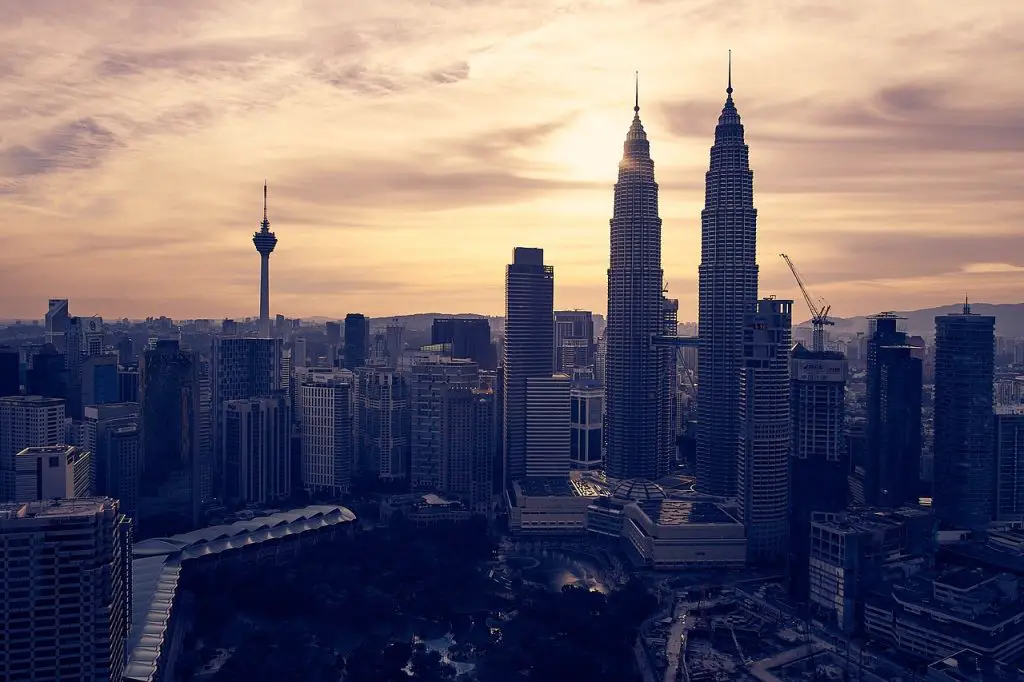
Kuala Lumpur, the capital city of Malaysian Federation. Credit: Pixabay.
Here are principal findings by the UN Malaysia Mission on Borneo states’ stand on the federation:

1.Sarawak and North Borneo had reached a stage a self-government that would enable their people to make a responsible choice of their future.

2.Their decision to join Malaysia was the result of the freely expressed wishes of their peoples.

3.The great majority of the people of North Borneo had strongly supported the Malaysia proposals from the time of the elections to the present.

4.An analysis of the Sarawak election returns showed 61% in favour of Malaysia; 22.2% opposed and 16.8% neutral.

5.Of the 183,191 Sarawak citizens who took definitive stands on Malaysia, 73.3% were in favour and 26.7% opposed.

6.Sarawak’s elected representatives stood in favour of Malaysia, 284 to 123, or 66.2% to 28.7%. The other 22 could not be classified in either groups.

7.In North Borneo, doubts and reservations appeared to be limited to groups, largely in the interior and may have been attributed to satisfaction with the status quo, lack of information or lack of clear understanding of the proposal or suspicion of unfamiliar ideas.

8.Popular support for Malaysia in North Borneo had increased since the elections.

9.Malaysia was a major issue in recent elections in both Borneo states and the vast majority of the electorate understood the proposal to join Malaysia.

10.The actions of Sarawak’s Council Negri in welcoming the establishment of Malaysia could be regarded as the expression of the wish of the people through established legislative institutions.

U Thant’s statement on the report

Meanwhile, U Thant also concluded that the majority of the peoples of North Borneo and Sarawak wanted the idea of Malaysia.

“I have come to the conclusion that the majority of the peoples of Sabah and of Sarawak have given serious and thoughtful consideration to their future and to the implications for them of participation in a Federation of Malaysia.”

However, some argued that the UN could not carry out such a comprehensive survey in large territories like Sabah and and Sarawak in such a short amount of time when most parts were not even accessible back then.

Still, U Thant defended the team stating, “While more time might have enabled the mission to obtain more copious documentation and other evidence, it would not have affected the conclusions to any significant extent.”

The little-known story of floating dead bodies off Buntal Bay

What would you do if you came across a scene of floating dead bodies? It is an unimaginable sight for today’s Sarawakians but that was what happened during the early part of World War II.

Before we get into the floating dead bodies, let’s talk about the Japanese attack on Kuching during World War II.

On Dec 16, 1941, the Japanese forces managed to secure Miri and Seria with only very little resistance from British forces.

About a week later on Dec 22, a Japanese convoy left Miri for Kuching but was spotted by a Dutch flying boat (otherwise known as a seaplane). It radioed in a warning to a Dutch submarine, HNLMS K XIV which was under the command of Lieutenant Commander Carel A. J. van Groenevald.

Since HNLMS K XIV saw the Japanese coming, it managed to break the Japanese convoy on Dec 23. It attacked two Japanese troopships Hiyoshi Maru and Katori Maru off the coast of Santubong.

Both of these army transports sunk together with hundreds of Japanese troops. Another troopship Hokkao Maru was beached to prevent it from sinking while Nichiran Maru was less seriously damaged.

The rest of the troops were able to land and they were met by the 15th Punjab Regiment which resisted the attack. But the British Indian Army was soon outnumbered and retreated up the river. By Christmas eve, Kuching was already in Japanese hands.

What happened to the dead bodies?
The little-known story of floating dead bodies off Buntal Bay
Kampung Buntal.

According to George Jamuh in an article published The Sarawak Gazette on Dec 7, 1949, one of the troopships was bombed at Tanjung Sipang on Santubong Peninsular.

After the bombing, hundreds of dead bodies floated into Buntal Bay with many of them washed ashore and some even wedged between the roots of mangrove trees.

“For weeks Buntal villagers did not dare to eat fish, particularly crabs, and some ikan badukang that were sent to the Kuching fish market contained fingers and toes of Japanese soldiers,” George wrote.

Soon enough, the area was full of flies, maggots and foul odours. Then, it came to a point that the villagers near Buntal bay, without waiting for orders, buried these dead bodies.

The villagers buried them where they found them, leaving some mark above each grave.

After some weeks, perhaps after the Japanese started to settle in Kuching, some of the Japanese officers came down and forced all the local men to exhume the bodies.

George was doubtful if all were the dead bodies were dug up because there were reports of more remains found after the war.

He wrote, “It was understood that only the skulls were taken to be cremated and the villagers were told that individual ashes were to be sent to relatives in Japan. This tale the villagers swallowed; but, in the absence of identity discs or dented numbers on the skulls, how could this be done? Unless, of course, it was done in the way APC powders were mixed and distributed by the Japanese.”

Now comes the question; is it possible that some of Japanese soldiers’ remains are still buried at Buntal bay?

Revisiting Malaysia Solidarity Consultative Committee’s December 1961 communique

The Malaysian Solidarity Consultative Committee was an organisation formed by political leaders from the Federation of Malaya, Singapore, Sarawak and North Borneo (now Sabah).

The committee held its first meeting on Aug 25, 1961 in Jesselton (now Kota Kinabalu), Sabah.

Then on Dec 18 till 20, 1961, the committee met up again in Kuching.

Aimed to discuss the formation of the Federation of Malaysia, the meeting was chaired by Sabah’s political leader Donald Stephens.

During the meeting, the Federation of Malaya was represented by seven people headed by Muhamad Khir Johari.

Singapore had four representatives with Prime Minister Lee Kuan Yew as the head while Sarawak had eight with Datu Mustapha Datu Harun as the leader.

After the meeting, the committee released a final communique.

Revisiting Malaysia Solidarity Consultative Committee's December 1961 communique
The Malaysian Solidarity Consultative Committee held its second meeting in Kuching on December 1961. Credit: Pixabay.
The communique wrapped up on several issues raised during the meeting including:
1.Religious freedom

A number of Borneo delegates asked whether the acceptance of Islam as the official religion of the Federation of Malaya would affect the religious freedom of other communities in Malaysia.

It was explained to them that although Islam was the religion of the Federation, every person and all communities had the right to profess and practice any religion under the Federation of Malaya constitution.

The communique stated that this right would be enshrined in the constitution of the Federation of Malaysia. The North Borneo and Sarawak delegates expressed satisfaction at the clarification that all the religious orders and religious freedom would remain as at present.

2.Representation in the Federal Parliament

Some of the Borneo delegates expressed anxiety that there might not be adequate representation for them in the central legislature, because of their sparse population.

According to the communique, they were assured by the Federation delegation that the universal practice in all democratic countries was to give weightage of representation to less densely populated areas. This principle would apply to the Borneo territories, which were all rural.

3.Migration

The communique stated that the delegates from North Borneo and Sarawak expressed their fear of their people being overwhelmed by unimpeded migration from other states of Malaysia.

The Federation of Malaya delegation pointed out that the Prime Minister, Tunku Abdul Rahman, had already expressed his understanding and sympathy of the natural desire of the people of the Borneo territories not to have their territories, which are sparsely populated, flooded with migrants from the other State of Malaysia.

The Federation delegation also stated that the constitutional provisions whereby such control could be affected by the State Governments of each of the Borneo Territories could be devised by constitutional experts.

4.Civil Service

It was agreed that all state civil service appointments would be under the control of the state governments.

According to the communique, the meeting endorsed that the progressive Borneanisation of the public services would occur and that in all Federal service appointments made to the Borneo territories, the people of Borneo territories would be given priority.

The delegates also stressed that all present serving officers would continue until there were suitable local officers to fill their posts.

Importance was also given to the training of indigenous people to equip them to hold professional and executive posts in administration and commerce.

Attention was drawn to the special provision in the Federation of Malaya constitution relating to Malays. There should be similar provisions to cover the indigenous peoples of the Borneo territories.

These provisions related to matters such as scholarships, training and civil service posts. At the same time, all present legitimate interests of the other communities would also be safeguarded.

5.National Language

All nations have a national language. Whether a component state has its own indigenous or other language media of education is a matter which can be resolved by the State and Central Government.

What you need to know about Operation Claret 1964-1966

Most Malaysians are aware about the Indonesian-Malaysian Confrontation, a conflict which happened in the years 1963-1966 as a result of Indonesia’s opposition to the creation of Malaysia.

However, most may not have heard about Operation Claret, which was a long running series of secretive cross-border raids by conducted by British Commonwealth forces in Borneo.

The operation was conducted during the confrontation across the border in Indonesian Kalimantan.

Here what you need to know about Operation Claret 1964-1966:

1.What was the mission of Operation Claret?

Claret was the code name given to highly classified and never publicised operations conducted from July 1964 until July 1966 in East Malaysia (Sabah and Sarawak) across the border in Indonesian Kalimantan.

It was part of a new strategy planned to stop Indonesian incursions by forcing them onto the defensive mode.

With the agreement of the British and Malaysian government, the operation was instigated by the Director of Borneo Operations (DOBOPS) Major General Walter Walker.

During the earlier part of the confrontation, both British Commonwealth and Malaysian troops were only patrolling the border and protecting the local communities in Malaysian Borneo.

Then, the operation slowly increased their penetration into Indonesian territory from 3,000 yards, to 6,000 yards and finally 10,000 yards in April 1965.

Since these operations were about penetrating the Indonesian border and it was a matter of violation of state sovereignty, Operation Claret was highly classified. All those involved were sworn to secrecy.

What you need to know about Operation Claret 1964-1966

British Royal Marines Commando unit armed with machine gun and Sten gun patrolling using a boat in the river on Serudong, Sabah between 1963 until 1966. Credit: Malaysian Archive [Public domain]
2.Who were involved in Operation Claret?

Most Claret operatives were from the British infantry units. As for special forces operations, they were undertaken by the British Special Air Service, Special Boat Sections, Guards Independent Parachute Company, Gurkha Independent Parachute Company, patrol companies of the Parachute Regiment (C Company 2nd and D Company 3rd Battalions), the Australian Special Air Service Regiment and the 1 Ranger Squadron, New Zealand Special Air Service.

But the reconnaissance and intelligence gathering activities of the Border Scouts, mostly trained by 22 SAS, are unclear (apart from their accompanying many infantry patrols). Plus, how involved the Malaysian Army units who undertook Claret operations is also unclear.

3.What were the ‘Golden Rules’ of Operation Claret?

In order to ensure the secrecy of Operation, all operatives needed to abide what they known as the ‘Golden Rules’.

These were the rules:
Every operation will be authorized by DOBOPS
Only trained and tested troops will be used.
Depth of penetration must be limited and the attacks must only be made to thwart offensive action by the enemy.
No air support will be given to any operation across the border, except in the most extreme of emergencies.
Every operation must be planned with the aid of a sand table and thoroughly rehearsed for at least two weeks.
Each operation will be planned and executed with maximum security. Every man taking part must be sworn to secrecy, full cover plans must be made and the operations to be given code-names and never discussed in detail on telephone or radio. Identity discs must be left behind before departure and no traces – such as cartridge cases, paper, ration packs, etc.- must be left in Kalimantan.
On no account must any soldier taking part be captured by the enemy- alive or dead.

Since no soldiers, alive or dead, were to be left behind, bodies and those who were wounded had to be carried back to the Malaysian side of the border no matter what.

Thankfully for the Commonwealth forces, there were only few such cases. Officially, there was only one helicopter ‘casevac’ (casualty evacuation) from Kalimantan recorded.

There are at least two cases of soldiers being lost across the border but there are no records of Indonesians found the bodies.

4.How secretive was Operation Claret?

Then Indonesian president Sukarno, who had been vocal about his opposition on the formation of Malaysia, possibly did not even know about Operation Claret.

According to Raffi Gregorian in “Claret Operations and Confrontation, 1964-1966”, Sukarno possibly never knew about British activities in Kalimantan or that by August 1965 his soldiers were no longer operating in East Malaysia.

For any casualties during Operation Claret, the deaths were publicly reported to have happened in East Malaysia, not in Kalimantan.

Furthermore, Britain only publicly disclosed Operation Claret in 1974 while the Australia only officially admitted its involvement in 1996.

To this day, the exact number of Claret operations and their objectives are unclear.

Operational reports are available in UK National Archives but they do not identify any actions specifically to Claret. As for any incidents of ‘contacts with Indonesian forces’, the reports implied that the action took place in East Malaysia.

Although the operations were done in complete secrecy, the operatives could not hide from the local people. For instance in the Krayan Highlands near the Indonesia-Malaysia border, some of the elders have pointed out some mountain ranges where they said the British soldiers hid during ‘konfrontasi’.

This was because throughout the second half of 1965 and into January 1966, the battalion continued to prevail over the Indonesian in the valley between Long Bawan and Long Midang. During this period, every man in Company ‘C’ had spent at least half of his time actually living in Kalimantan.

What you need to know about Operation Claret 1964-1966
Local guide Alex Ballang from Krayan Highlands pointing out where British soldiers were hiding during the confrontation.
5.How did Operation Claret help to end the Indonesian-Malaysian Confrontation?

Operation Claret in a way helped to avoid any unnecessary escalation during the confrontation. By keeping Operation Claret a secret and reporting any deaths happened on Malaysian side of the border, Britain, Malaysia and Australia were able to tell the world that Indonesia was the aggressor during the confrontation.

According to Gregorian, the operation may have increased the division between Sukarno and the army officers who played an important key role in his overthrow later.

The army would not have been telling Sukarno about his military failings on his side of the border. Meanwhile, Sukarno continued to believe that the war was fought on the Malaysian side of the border.

When the Battle of Plaman Mapu in Sarawak happened on Apr 27, 1965, it became the peak battle of Operation Claret and the turning point for the confrontation.

The battle was the last attempt by Indonesian forces to launch a major raid into Malaysian territory after being defeated a number of times, especially by Claret operatives.

Indonesia lost the battle with at least 30 casualties, while two were killed and eight wounded on the British side.

Due to this, tensions continued to rise between the army and the Communist Party of Indonesia (PKI) who backed up Sukarno.

Eventually, the communists were thrown out of power and left Sukarno alone with his Confrontation.

Since, the concept of ‘Konfrontasi’ was introduced to Sukarno by PKI. Without the support of the Communists, the Confrontation quickly became unpopular in Indonesia and eventually came to an end before it escalated into a full-fledged war.

1 50 51 52 53 54 75