Patricia Hului

Patricia Hului is a Kayan who wants to live in a world where you can eat whatever you want and not gain weight.

She grew up in Bintulu, Sarawak and graduated from the University Malaysia Sabah with a degree in Marine Science.

She is currently obsessed with silent vlogs during this Covid-19 pandemic.

Due to her obsession, she started her Youtube channel of slient vlogs.

Follow her on Instagram at @patriciahului, Facebook at Patricia Hului at Kajomag.com or Twitter at @patriciahului.

The legend of Iban warrior Unggang and goddesses of Mount Santubong

The legend of Iban warrior Unggang and goddesses of Mount Santubong

If it weren’t for Benedict Sandin (1918-1982), many Iban legends and folktales would have been forgotten by now. Originally from Paku, Benedict was an ethnologist, historian and Sarawak Museum curator (December 1966- March 1974).

The legend of Iban warrior Unggang and goddesses of Mount Santubong
Mount Santubong

Here is one of his stories that was published on the Sarawak Gazette. This time he told the story of Iban warrior Unggang.

Long time ago at a small stream called Entanak, lived a very powerful Iban war leader named Unggang “Lebor Menoa”.

During his time, there was no chief in the Saribas river area more well known than him.

When he was still a young warrior, Unggang dreamt that he was travelling in a boat from the mouth of the Saribas river to Mount Santubong.

He then attempted to climb to the top of that mountain. Halfway up, he met two beautiful maidens who just finished bathing.

They said that they did not have much time to talk, and one of them handed him a stone that she had used to scrub her skin. The stone was called Batu Perunsut.

She told him that the stone was a charm that he could use whenever he led his people to war.

The woman also told Unggang that none of the people who lived in the countries between Santubong and the mouth of Saribas river could possibly beat him in war.

Luckily for him, she warned him if he led his war parties southeast beyond Santubong, the stone would have no effect.

Later, the women revealed to him that they were Kumang and Lulong, the goddesses who lived on the summit of Santubong.

Unggang’s path to becoming a great warrior

Shortly after he had the dream, Unggang built a large war boat with which he used to lead his warriors to guard the mouth of the Saribas river from being penetrated by enemies. At the time they were the Bajau and Illanun pirates.

They also killed strangers that came into the river from the South China Sea.

Besides guarding his territory, Unggang sailed farther along the coast of Sarawak to look for trading ships.

During one of his sails, he came across with a band of Chinese traders who negotiated with him.

The Chinese traders sought his permission to trade in the Saribas country.

Unggang agreed with condition that these Chinese traders agreed to fly white flags on their vessels.

Due to this agreement, many Chinese traders came to Saribas to trade their cooking pots, brassware, earthen bows, pants and cloths. In return, the Chinese brought back shell armlets, beads, cowry shells and so on.

Meanwhile, Unggang and his men killed anybody who entered the Saribas river without flying a white flag on their boats.

Although Unggang seemed to be a ferocious warrior, he was also a savvy tactician, and allied himself with the Malays who lived in the coastal areas. Hence, he never attacked his Malay neighbours.

Unggang’s son Luta

The legend of Iban warrior Unggang and goddesses of Mount Santubong
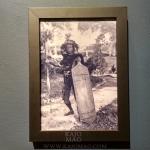
Illustration of Dayak men.

After Unggang died, his son Luta succeeded him as the chief. During Luta’s reign as chief, a fight started between the Dayaks of Saribas and Skrang against their neighbours of the lower Batang Lupar (the Dayaks from Undop, Balau and Sibuyau).

During one of these tribal wars, Luta’s youngest brother Ngadan was killed by Temenggong Juti and his men from Sebuyau.

Also killed during the war in Undop was Angkum, one of the brothers to Orang Kaya Pemancha Dana Bayang, a leader from Padeh who led the Saribas Iban.

Due to these incidents, Luta took his revenge by invading Sebuyau and killed many of them there.

Meanwhile, Dana Bayang avenged his brother’s death by invading Undop with the largest force from the Saribas and Skrang.

After invading Sebuyau, Luta took his brothers Mulok and Ketit to sail to the Belitung island near Sumatra.

He wanted to go there because he heard a rumour that someone in Belitung was selling a tuchong (shell armlet) which could be fitted over one’s head. Apparently, Luta was anxious to buy this for his inheritance.

However, the three brothers never returned to the Saribas. The rumour back then they were shipwrecked. A piece of their broken boat found at the beach near Sungai Ubah not far from Tanjung Datu.

The location of Luta’s alleged shipwreck was located beyond Santubong mountain from Saribas. Perhaps the charm that worked to protect Unggang before did not work to protect his sons once they went beyond southeastward of Santubong.

After the brothers’ untimely death, none of their descendants were able to lead their warriors to fight.

Hence, the leadership in the Saribas area fell onto the shoulders of Orang Kaya Pemancha Dana Bayang. He later became one of the most of famous Iban warriors and leaders.

That one time James Brooke almost died of smallpox

In May 1853, the first White Rajah of Sarawak James Brooke contracted the smallpox disease.

It was so severe that he almost died. At that time, he had just arrived in Sarawak from a visit to England.

Unfortunately for him, there was no doctor in Sarawak. The only man with some medical knowledge – Bishop Francis McDougall – was in England.

Brooke knew the disease was contagious, so he insisted on everyone who had never had the disease to keep out of his room.

He trusted an Arab man named Sheriff Moksain who knew some local treatment to take care of him.

There were also Captain John Brooke (James’ nephew) and his three loyal Malay servants as well as Arthur Crookshank and Reverend Andrew Horsburgh at his attendance.

That one time James Brooke almost died of smallpox
James Brooke
This was what Horsburgh about the event:

“Having heard that the Rajah would not allow any of his relations to attend upon him from fear of their taking the disease, I wrote to Captain Brooke and offered to nurse him. Captain Brooke first thought I had better not, as I might introduce the disease into the mission school; but early next morning I received a note from him asking me to go over and see the Rajah.

I found him in the height of the disease, and I need not describe the unsightly appearance, but at the same time I could not help being struck with the sharpness of his clear blue eye.

The fever was very high, his mind was so continually wandering that it was difficult to make him understand anything; yet he could generally be recalled to a subject by a direct address, and he could then express himself clearly upon it.

As I entered the room he saw me and called out, ‘Don’t come here! Have you had smallpox? Have you had it? Have you had it?’ to which I bluntly answered ‘Yes.’ I told Captain Brooke after leaving the room that I thought the Rajah very ill, but that I had seen as ill recover.

I had been reading in some medical publications that it was now the custom to treat fevers with wine and brandy, and I explained to Captain Brooke what I thought, and showed him the authorities on which I formed my opinion, for Mr. McDougall, who was then in England, had a medical library which we missionaries all studied.

I accordingly proposed that he should have some brandy, and Captain Brooke assenting, I mixed some with water and put in some things to make it taste like medicine, and brought it to him.”

The Rajah refused to take the ‘medicine’ for his smallpox

He resolutely refused to take or even to look at it. ‘For God’s sake, Rajah,’ said Captain Brooke, ‘do take it’, and he pleaded earnestly that he should.

He at last was so far moved as to what it was, so I told him that was quinine in it.

‘Anything else?’ I fenced with the brandy as long as possible, but before his eager and half angry questioning I was obliged at last to confess it.

This was enough, he turned his face to the ceiling, help up his hands, and exclaimed, ‘Whoever heard of brandy in smallpox!’

In the afternoon he seemed to be getting weaker, and I made up a stimulating prescription, which was given in one of the medical books, told Captain Brooke of it, and begged him to use his influence to get the Rajah to take it.

At Captain Brooke’s entreaty he took it, and it soothed him and gave him a little rest.

I continued to give the Rajah food and stimulants, but he did not like my pressing medicine on him and from the hands of Mr Crookshank especially he would not take what he would not from me.

James Brooke’s first letter after his sickness

It was not sure how long Brooke was sick in his bed. Nonetheless, the first letter he wrote to his friend John Templer in England dated on June 28, 1853.

He wrote, “For fifteen days I lay raging with fever, or shivering with the cold water, which they threw over me in my bed – my mind wandering, and without sleep, lingering between life and death. My constitution triumphed over disease, and after a prolonged sleep, brought on by a dose of opium, given me by Crookshank, I woke sensible to the loathsome state to which I was reduced; literally from head to foot I was seemed with this frightful disorder; and feeble as an infant, I strove to reconcile myself to the will of God, who had afflicted me.”

While the rajah was able to survive the disease, his face was scarred for life. In the same letter he sent to Templer, he stated “Since then I have been improving, and am now clear of the disgusting part of the disease, though I fear, my friends must learn to know me under a different face to any I have yet worn towards them.”

Even though the vaccination against smallpox had already been discovered in 1798 by British doctor Edward Jenner, it is odd that Brooke did not have himself vaccinated.

Vaccination against smallpox was finally introduced in Sarawak in the 1860s.

A Sarawakian legend of durian you probably never heard of

A Sarawak Gazette writer, Lee Kok Yin published an article about a durian legend that he heard when he was teaching in rural Sarawak.

Here is a legend from local Sarawakians about the King of Fruits – the durian – you probably never heard of:

A Sarawakian legend of durian you probably never heard of
King of Fruits, Durian! Credits: Pixabay.

Once upon a time, there was a poor family of eight who earned their living through farming.

The sad part was the father, who was supposed to be the head of the family, was a lazy man.

So all the work and responsibilities fell to the mother.

One day, the mother fell sick and was unable to work on the farm. Even so, the father still refused to work and continued with his lazy ways.

Slowly, the family’s food storage started getting low and their farm slowly turned into a jungle.

As she lay on her sickbed, the mother prayed to God to save her young children from starvation.

Thinking there was no hope for her to get better and being sick was a burden for her children, the mother decided to kill herself.

She then jumped into a deep pool and drowned to death.

A few nights after her death, the children dreamed that the mother told them to go to her tomb where they would find food.

When they woke up, they realised all of them had the same dream. Believing the words of their mother, they all went to her tomb.

There, they saw a tall tree bearing hundreds of thorny fruits. When they tasted the flesh of the fruit, they found it to be sweet and delicious.

Thus, this was how durian came about.

Another meaning of liu lian or durian

The Chinese word for durian, “liu lian” also means to ‘stop and stay’. According to Lee, in the olden days, before Chinese merchants sailed to the islands of the South Seas, their wives or parents always warned them not to eat any durian.

They believed that those who once tasted its flavour, would forever stay in that foreign country.

The first dragon boats to join Sarawak Regatta

While the Sarawak Regatta was started a long time ago during Brooke reign, the dragon boats only made their debut on the Sarawak river in 1952.

Originating from the Pearl River Delta region of China’s southern Guangdong province, the dragon boat dates back 2,000 years.

Every dragon boat has a drummer who leads the paddlers with their rhythmic drum beats.

The first dragon boats to join Sarawak Regatta
Dragon boat

According To Kao Lun-wei, there were two dragon boats that rode the waves of the Sarawak river during the 1952 Kuching regatta; one was green while the other one was red.

They provided a colourful spectacle for the crowd and served to introduce the local Chinese into water sports.

“Properly used, the dragon boat races are run on the fifth day of the fifth moon in the Chinese lunar calendar, corresponding this year to the 28th May; but it was agreed by the promoters that it would be an excellent thing to join in with the rest of the paddlers,” Kao stated.

Explaining about the legend behind dragon boats, Kao wrote, “The great beasts of China, heraldic, mythical and potent are tigers, dragons, kilins and lions. Dragons are the incarnation of the spirit of the waters, of the clouds, seas and rivers. It is the emblem of the power of the emperor (having five claws in place of the usual four). The tiger is the king of beasts (having the character wang meaning king on his forehead) and presumably being a land animal is not a good term with the dragon.

“As the dragon is the king of the waters, it is not surprising that he should be taken for the shape of a ritual boat”.

The dragon boats at the then Kuching Regatta

According to Kao, time was kept by the beating of a drum and gong in each boat. The drums for the Kuching Regatta in 1952 were brought especially from Singapore.

As for the gongs, Kao said they were unable to buy the correct type of gong in time, and hoped to get some from Hong Kong later.

The dragon boats were launched at Pengkalan Batu with an eye-dotting ceremony just like how it has been done in these recent years.

Instead of the chief minister like today, the ceremony was carried out by a Chinese priest.

Kao pointed out the launching ceremony was not done like in the olden days. “One reasons for not performing the ceremony was that it would have cost the Dragon Boat Society about $400 in sacrificial pig, incense, crackers and priest’s fees.”

Present-day dragon boat races

However, it was not mentioned if the two dragon boats had won any race during the Kuching Regatta in 1952.

Fast forward to the 21st century, the dragon boat race in Kuching has gone a lot bigger with participants coming from all over the world.

For 2019, there were 14 countries participating in The Sarawak International Dragon Boat Regatta including United Arab Emirates and United States of America.

Looking back at a ‘pusau anak’ ceremony at Long San in 1962

From April 29-30, 1962, a huge pusau anak celebration and the opening of a new longhouse were held at Long San.

It was a big occasion with many from throughout the Baram area being invited. The VIPs in the past included Marudi District Officer Malcolm McSporran, Kuching Municipal former president William Tan and Chinese Kapitan Ch’ng Teng Seng.

“’Pusau’ really means to name a child or children. This is the old custom, which nowadays merely means to name a child,” Stewart Ngau Ding wrote in his Sarawak Gazette article published on June 30, 1962.

“There is no time fixed between one pusau anak and another. It is celebrated when a house has a lot of children, after a good harvest, etc. The children to be pusau vary in ages from one month to 10 years.”

Furthermore, it was expensive to pusau one or two children. Most people waited until they had a lot of children so that every door of a longhouse may pusau their children at the same time.

This pusau anak celebration in 1962 at Long San was interwoven with Christianity. Hence, it was not carried out in its purely traditional form.

How Long San’s pusau anak celebration went down

On the first day of the celebration, people started to gather in the ruai. The late Bishop Anthony Galvin conducted a service to bless the new house.

After the service ended, the men brought out 64 jars of burak (rice wine) to the verandah, placing them in a line.

Then the mothers and helpers brought out their children to be pusau and sat them down in two lines behind the jars of burak. Each jar represented every child, and each door was decorated with items to indicate the sex of the child.

Looking back at a 'pusau anak' ceremony at Long San in 1962

It was not necessary to sit near one’s own jars or burak. Stewart stated, “It is impossible to distinguish the sex of a child to be pusau from the jars of burak. But it can be easily distinguished from the hanging up of sarong, hornbills, houses, parangs or shields, decorated with rolled-up local tobacco.”

Additionally, the number of sarongs, hornbills, or houses or parang or shields at every door signified the number of boys and girls in that bilik. They were hung outside every door where the children were to be pusau. The hornbills, shields or parangs signified boys and sarongs or houses, girls.

Speaking to the crowd, the bishop stressed religion and added that it was necessary to practice good adat lama, or old customs such as this one. He hoped that the young generation would not forget the good adat of their ancestors although now they embraced Christianity. Then he said a short prayer and went around to touch every child on the forehead and call it by its new name.

Attending to the guests

Stewart then went on to describe about how they treated their guests during the ceremony.

“The guests were sitting in two long rows. Then a woman led the way from downstairs, wearing the traditional dress of a man going to war. She was followed by other women but in ordinary traditional dress. There were about six other women dressed like the first one. They came in line. It was very impressive sight.”

He stated, “The first woman took a slice of a fat from the second girl who carried the fat in a large container. Then she pushed the fat into guests’ mouths and then she usually smeared the face by her oily hand. The guests could return the compliment if he wished by taking the fat given and smearing her face with it. There was no compulsion to eat the fat and guests were supplied with leaves or a container in which to put it. A guest could not take too much fat. Then the third girl holding a handkerchief took a spoonful of ayer lia (ginger water) from the fourth girl which was carried in a container. After she had served the guests, she usually cleaned their mouths with her handkerchief. The next group followed on the same routine.”

According to Stewart, when the women served the guest, they were not allowed to talk or to smile. They were supposed to be absolutely solemn. There were two sets of these groups representing one child of maran rank (higher rank). For those of lower birth, one group would be enough.

This marked the end of the pusau anak ceremony. As Stewart put it, it was the most exciting and impressive part of it.

Then in the afternoon the celebration continued with fun and games. Meanwhile at night, they drank and ate till their hearts drank contentedly.

The children who had their pusau anak ceremony during this event must be in their 60s or 70s now. Do you know anybody who might be one of these children? Plus, do you know the significant of giving the guests fat and ginger water? Let us know in the comment box.

The Sale of Japanese vessels by the Custodian of Enemy Property

The Sale of Japanese vessels by the Custodian of Enemy Property

Let say that a foreign country comes to attack us in war. After a while, they are chased back to where they came from leaving a lot of stuff behind. Some of these were originally taken from the civilian population and some belonged to the enemy. So, to whom does this property belongs to?

That is when the Custodian of Enemy Property comes in. It is an institution that handles property claims created by war.

In ancient times, these properties were considered as war loot and belonged to the ‘winner’ of the war.

However, in the Fourth Geneva Convention Article 147, this became categorised as a war crime.

All over the world, there are many records of Custodians of Enemy Property being established after wars ending.

For instance in India, The Custodian for Enemy Property for India was established to manage Pakistani property taken in the Second Kashmir War (1965).

Meanwhile in North Borneo (present-day Sabah), The Custodian of Enemy Property Jesselton was left in-charge of ships left behind by the Japanese after World War II (WWII).

A notice was given out to the public on Jan 31, 1952, about seven years after the war had ended, opening up the tender to purchase these ship wrecks.

This was the notice put out by the Custodian of Enemy Property:

Sale of Wrecked Vessels

The Custodian of Enemy Property, Jesselton, North Borneo, under the provision of the Japanese Property, (Vesting) Order 1951 invites tender for the purchase of certain wrecked vessels formerly of Japanese ownership lying around the coast of North Borneo. Each or all of the following vessles are offered as they lie and where they lie:-

1.The Custodian accepts no responsibility for the correctness of any part of the above description. In particular the tonnages given must be taken as merely estimated indications. Intending purchaser should arrange for their own inspection and survey of the vessels as they lie.

2.The successful tenderer will be required to obtain the approval of the Marine Superintendent Labuan, North Borneo, for the intended procedure of dealing with any wreck. Wrecks may be demolished at site. But if it is intended to attempt to float the wrecks, prior permission must be obtained from the Marine Superintendent who will require to be given full particulars of the method to be employed and of the equipment to be used in order to ensure that proper and safe methods to accordance with good salvage practice are employed. And that when floated or being removed any wreck is not likely to become a danger to navigation.

3.As regards wreck No. 1. it shall be a condition of sale that the vessel shall be totally removed, or that if partially removed or that if partially removed there shall be at least six fathoms of water over the vessel and clear obstruction at spring tides.

4.Tenderers must undertake to remove or demolish wrecks not later than 12 moths from the date of this notice. Scrap metal exported from the colony will be liable to export duty.

5.The full purchase amount must be paid to the Custodian of Property, Jesselton by the successful tenderer within fourteen days of notification of acceptance of the tender.

6.Tenders should be forwarded in sealed covers marked “Tender of the Japanese Wrecks” and addressed to the Custodian of the Property, Jesselton, North Borneo and must reach his office not later than June 14, 1952.

7.The Custodian does not bind himself to accept the highest or any tender.

Custodian of Enemy Property

KajoMag did not find any information on who bought these Japanese wrecks after this notice was published. Do you have more information on The Custodian of Enemy Property in Borneo after WWII? Let us know in the comment box.

The history of water fluoridation in Sarawak uncovered

Did you know that water fluoridation was first introduced in Sarawak in 1962? That was even before the state became part of the Malaysian federation.

Fluoridated water contains fluoride at a level that is effective for preventing cavities.

In the US, water fluoridation started in 1945 while the first state in Malaysia to install the system was Johor in 1957.

The number one reason for introducing fluoride to the public water supply was to prevent dental health problems.

So how does it work? The water works the surface of your teeth. It creates low levels of fluoride in saliva which reduces the rate that your tooth enamel de-mineralizes. At the same time, the water help to increase the rate of tooth enamel remineralizing in the early stages of cavities.

According to a Sarawak Gazette article published on Jan 31, 1962, the incidence of dental decay was very high.

“Decayed, missing and filled teeth are the accumulated ill effects of this decay and it constitutes a major dental health problem. Surveys carried out by a dental officer of the Medical Department among Simanggang school children have confirmed this high incidence. The suffering which decayed teeth can cause is only too well known. The extent to which the ability to chew and speak is affected and the disfigurement they cause, are common knowledge.”

Introducing water fluoridation to Sarawak

Sarawak used sodium silicofluoride in its water plants because “of safety in handling and relatively low solubility in water (0.8 per cent).”

The article further explained, “The chemical contains 60 per cent available fluoride and is therefore, added to the water supply in quantities of 1.2 parts per million part of water to give the required 0.7 parts of fluoride. Many types of dosing equipment are available but that selected for Sarawak is a simple displacement doser designed by the Hydraulics Branch of the Public Works Department and constructed in Brooke Dockyard.”

A simple metering device was installed to adjust the dosage of solution to the water passing through the plant.

For precautionary measure, the water plant operator back then regularly checked the fluoride level of the water at intervals of less than one hour.

On top of that, they also sent bulk samples of water bi-weekly to be analysed by the Chemical Bacteriological Laboratory.

To assure all Sarawakians, the article stated “One may ask of, despite all these precautions, it is possible to obtain an accidental toxic does. The answer is an emphatic ‘no’. It has been estimated that one person would have to drink about 500 gallons of water fluoridated to 0.7 parts per million a day in order to receive a toxic does.”

Overall, the cost of fluoridation equipment and installation to water authorities in Sarawak was estimated between $500 to $1500.

Additionally, the recurring cost of treating the water with fluorides was 0.04 cents per 1000 gallons.

This was considered to be a small cost to improve the dental health of Sarawakians.

The history of water fluoridation in Sarawak uncovered

7 people who turned their daily lives of living alone into YouTube sensations

If you think living alone is not interesting enough to be filmed and put on YouTube, then think again.

There are people out there who have posted their ordinary lives of living alone on YouTube. Some of these channels even have more than 2 million views.

7 people who turned their daily lives of living alone into YouTube sensations
How do you spend your alone time? Credits: Pexels

Imagine millions of people watching you doing the things you usually do on a normal day, like making your bed, cooking for breakfast and preparing to go to work. Heck, some of these YouTubers have even filmed themselves cleaning up, but the effect is so cinematic!

Maybe because of the cinematographic work put into these videos, these real-life Home Alone channels are quite interesting to watch.

Some of these videos could even be mistaken for a short film or commercial video.

Most of them do not talk on their videos or even show their faces, relying on captions to tell their stories.

Some viewers commented these videos are ‘inspiring’, ‘calming’ and ‘therapeutic’. We could not agree more because watching other people waking up early to make breakfast really reminds ourselves how lazy we are.

The phrase sometimes used to describe these videos is “hygge”, a Danish and Norwegian word for a mood of coziness and comfort as well as contentment.

Thanks to the internet, people are watching everything online. From watching people eating on camera (“mukbang”) to watching people studying on camera (“gongbang”).

Now, watching people living alone is also a thing.

As for filming oneself while living alone, there is a South Korean TV show showcasing celebrities living alone in their homes.

If you are interested to watch people living alone in their respective homes, here are five YouTube channels to follow:

1.Tina’s Life

Racking up with more than 285,000 subscribers, this channel is run by a Japanese woman living alone in Tokyo. She welcomes her viewers to add in subtitles onto her video, so do not be surprised if you can see so many language options on her videos. Some of the languages are Arabic, Chinese, Dutch, Turkish, Indonesian, Vietnamese, Korean and so on.
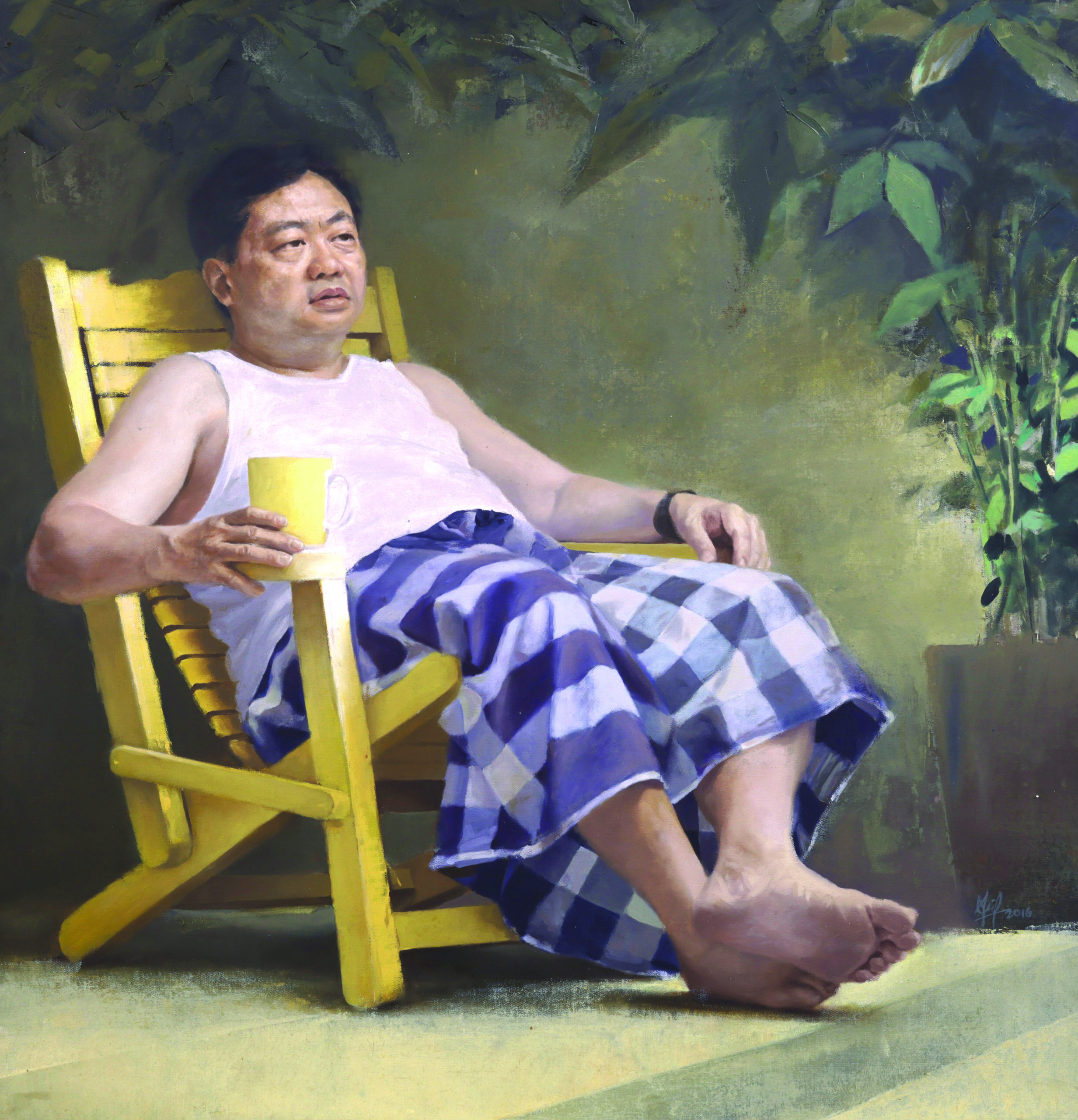
Her videos can be divided into two categories; her routine and Vlog. Most of her videos show how she prepares a meal for herself at home. The effort she puts on her food, even for simple snacks, is just inspiring, especially for those who always eat instant noodles when living alone.

The best part about Tina’s Life is that she even shows her mistakes on her channel. One time, she baked a cake but accidentally mistaking salt with sugar.

Watch her video here.

2.Ondo

There is not much to know about Ondo, except that she is a Korean woman. Apart from showing how she spent her time alone at home, she also filmed how she goes shopping alone.

Other videos include how she spent her hours after work and weekend with friends.

Ondo seems to enjoy entertaining so you can see in some of her videos how she prepares food when her friends come over.
That is the perk of living alone, you can invite your friends anytime you want and they do not have to tip-toe around your housemates or family members.

Basically, this YouTuber just show the people online her normal activities like cooking, decorating her home, doing bullet journals. By doing just that, she gathered more than 930,000 subscribers.

Watch her video here.

3.Sueddu

This Korean YouTuber filmed herself living alone with her dog Bebe while doing activities such as cooking and painting.

While her cute dog could have stolen the limelight from her, what is more impressive is the level of aesthetic of her videos. Combined with the soothing background music, her videos are almost addictive to watch.

Working as a freelancer means Sueddu spend a lot of times at home alone. According to her, her life as a freelancer and writer is a repetition of busyness and idleness.

She shared in one of her videos that it takes a lot to do everything alone including film herself, edit the videos and share them online. The things that a freelancer who lives alone can relate to.

Watch her video here.

4.Rhea Y.

Rhea Y. is originally from the Philippines but is living and working in Japan.

On her YouTube channel, she shows what happens in a day of her life, what she eats in a day while living alone and her minimalist lifestyle.

Though her contents are not as many as other homebody YouTubers, it is still fascinating to watch her living a simple life on her videos.

Her reactions while living alone are very honest like saying ‘O shit!’ when she accidentally screws up her cooking.

Watch her video here.

5.PlanD

Understandably, most of these homebodies turned YouTubers did not reveal much about themselves. Since you are already telling the whole world that you are living alone, it’s not such a smart move to tell them about your identity.

For example, all we know about PlanD that she is a South Korean. She shows how she spends her weekends, preparing her meals and sewing.

Some of her videos do not have any English subtitles but she still managed to gather more than 97,000 subscribers.

Her video of how she spend a whole weekend by herself has more than 400,000 views. And when you thought spending time alone by yourself on weekend could be draggy!

Watch her video here.

6.Nyangsoop

Here is another aesthetic video of people living alone. Everything is so aesthetic about her videos; even when she filmed a Q&A video by answering subscribers’ questions using an old typewriter.

Nyangsoop admitted once that she does not know how to cook but continuously perfects her skills so that she can film herself cooking and baking.

And the highlight of her videos? Her cat who often make appearances in her YouTube channel.

As for the works behind her video, Nyangsoop shared that she uses tripod to film herself and then does the editing by herself.

She always come back from her work at night so she only films herself on weekend morning when the lighting is great. Then she spends the rest of the time editing the videos.

Watch her video here.

7.DALGO

Do you know that some people love watching other people clean? If you are one of the people who have that fetish, then you might love this YouTube channel.

But let me warn you, her house already looks tidy and clean in the first place so it is not a home makeover kind of cleaning.

Get this, her video of cleaning shower curtains get more than 16,000 views.

Overall, her channel is mainly made of Vlogs of her almost wordlessly going through her days of living alone.

Watch her video here.

3 reasons to visit picturesque Ba Ho Waterfalls, Nha Trang

If you are for a change of scenery from the coastal city of Nha Trang, head to Ba Ho Waterfalls.

This nature attraction comprises three natural waterfalls.

Located about 20 kilometers north of Nha Trang, the waterfalls are a favorite spot for hikers and trekkers.

3 reasons to visit picturesque Ba Ho Waterfalls, Nha Trang
Relax and enjoy what nature has to offer.
Here are three reasons you need to visit Ba Ho Waterfalls:

1.Cliff-jumping

3 reasons to visit picturesque Ba Ho Waterfalls, Nha Trang
Pick a cliff for to jump down from.

It takes a 30-minute walk from the entrance to the first waterfall. After that, the climb becomes challenging that you need to have proper shoe attires to walk through them.

If you don’t have proper walking shoes for the waterfall, you can buy them at Nha Trang city. Our personal favourite sandals are the Vietnamese local brand, Vento Footwear. They are comfortable, durable and have a strong grip.

Once you reach the second and third waterfalls, watch out for signs indicating where you can jump from, face your fears and try out cliff-jumping. It is a little bit nerve-wracking but definitely worth the try.

If you are not a strong swimmer, make sure you wear the life jackets provided at every waterfall.

2.Enjoy other activities

3 reasons to visit picturesque Ba Ho Waterfalls, Nha Trang
Pick a water activity,

If you are not able to hike to the waterfalls, enjoy some activities not far from the entrance of Ba Ho Waterfalls.

You can kayak, ride a water bike or tire yourself out on a hamster water wheel. There is even a swimming pool right next to the river for visitors to swim in. You can use them for no additional charge after showing your entrance tickets to the person-in-charge.

Food and drinks are available at Ba Ho Waterfalls for sale so bring extra money just in case you are famished after all that sweating.

3.Escape from the mainstream tourists

3 reasons to visit picturesque Ba Ho Waterfalls, Nha Trang
Escape the crowd at the waterfall.

Since Ba Ho Waterfalls requires a little bit of physical stamina, it is not a popular place for the casual mainstream tourists.

It has relatively less crowd compared to Nha Trang’s other tourist attractions such as Po Nagar and Nha Trang Beach.

Here you can enjoy the solemnity of nature, relieving your stress before bracing yourself for the crowd and noise of Nha Trang city.

How to get to Ba Ho Waterfalls

3 reasons to visit picturesque Ba Ho Waterfalls, Nha Trang
The view on the way to Ba Ho Waterfalls.

You can book a Grabcar or a taxi to take you to Ba Ho Waterfalls. If you are confident with your driving skills amidst Vietnamese traffic, you can rent a car or motorcycle to go there. Or you can book a half-day tour using travel platforms such as TripAdvisor and Klook.

The perks of having a tour guide to bring you is to have a local explaining to you about the place, how to enjoy it (e.g. where to jump), telling you where are the best spots to take your photos and of course, take a photo of your scrunching face as you jump from the cliff.

Speaking of photographs, the site offers plenty of photo op backgrounds to choose from such as wooden arches, swings near the river and many more.

Before you make your way there, make sure you are fit, wear proper shoes and bring a spare change of clothes.

The road to the waterfalls will take you along the picturesque coastline of Nha Trang, so enjoy your journey.

5 things you must do at Vinpearl Land Nha Trang, Vietnam

Vinpearl Land Nha Trang is the Vietnamese take on Disneyworld.

Located on the Hon Tre Island, the amusement park is one of the must-visit places of Nha Trang city.

It doesn’t matter if you are a solo traveler, travelling with your better halves or with your whole family, there is something for all ages at Vinpearl Land Nha Trang.

How to buy a Vinpearl Land Nha Trang ticket and how to get there
5 things you must do at Vinpearl Land Nha Trang, Vietnam
Visitors lining up to get on the cable car.

For foreign travelers, there are several ways for you to purchase your entrance ticket to Vinpearl Land Nha Trang.

You can even buy your tickets online ahead of your arrival in Vietnam on travel platforms such as Klook. If you are staying in Nha Trang city, take a Grab ride or taxi from your hotel to Vinpearl Land Cable Car station and from there you can claim your physical ticket.

Secondly, you can purchase your Vinpearl Land Nha Trang ticket at your hotel reception desk. Check with your hotel if they are selling the entrance tickets.

Lastly you can go straight to Vinpearl Cable Car station and purchase your ticket. However, this last option might cause you to wait for a long queue especially during peak season (June to August).

If you are staying on the island, check at your hotel for the entry tickets.

A basic entrance ticket is for the entire day and it gives access to almost all rides and attractions.

Here is a tip: if your time or budget is limited, make your way to the park in the evening. Although you cannot visit some of the attractions such as the water park at night, the ticket is way cheaper.

Additionally, you can purchase entry for lunch buffet at the amusement park along with your entrance ticket.

If lunch buffet is not for you, there are several other eateries at the park so bring extra money for that. Food and drink are not allowed to be brought into the park.

5 things you must do at Vinpearl Land Nha Trang, Vietnam
Try some of the local cuisine at its lunch buffet.

Vinpearl Cable Car

5 things you must do at Vinpearl Land Nha Trang, Vietnam
The view as your cable car cabin approaches the amusement park.

Getting to Vinpearl Land Nha Trang via the cable car is a memorable experience on its own.

The 15-minute ride (depending on wind condition) per trip is one of the longest over-water cable car rides in the world.

Carrying passengers in 48 cabins in an hour, the cable car connects Vinpearl Land and Nha Trang beach.

The best part of the ride is taking in the beauty of Nha Trang Bay, one of the most famous and popular bays in the world.

It uses seven towers to support the cable car system over the sea. At night, these cable towers turn into mini-Eiffel towers lining the bay.

If you have acrophobia, you can also take Vinpearl-owned ferry from Nha Trang Beach to the island.

5 things you must do at Vinpearl Land Nha Trang, Vietnam
The view of the cable car system at night.

With so many things to do at Vinpearl Land, here are at least five activities you should put on your itinerary:

1.Go on all the amusement rides

5 things you must do at Vinpearl Land Nha Trang, Vietnam
The calm before the storm.

The amusement rides at Vinpearl Land cater to all kinds of thrill seekers.

Do you like the feeling of flying in the air? Then ride the Pirate Ship and Swing Carousel where you can have the taste of cruising in the air.

If getting dizzy is your thing, then give the Thrilling Ferris a try. It is perfect for those who do not mind being spun around high up in the air.

Free falling is definitely not for everyone. Imagine getting carried to the top of the tower with a height of over 20m. Before you take your moment to enjoy the ocean view, you are then suddenly dropped like nobody’s business. That is what you get when riding the Sky Drop.

5 things you must do at Vinpearl Land Nha Trang, Vietnam
Fly in the sky like a superman on this ride.

For those who have the need for speed, go on the Roller Coaster, Giant Sky Chaser and Adventures in the Mines.

Of all the rides, we highly suggest taking the Alpine Coaster. There are 50 sleds provided for this ride.

However, since it is one of the more famous rides in the park, it can take up to one hour of queuing before your turn.

The largest of its kind in Southeast Asia, Alpine Coaster Vinpearl Land features a total length of 1,760 meters. The height difference between two stations is up to 133 meter so it is quite a steep ride in the beginning.

At first, the Alpine Coaster ride will take visitors from the downhill station to the top hill station (at 140 meters above sea level) using the straight line pull system. Throughout this 540 meters long journey, visitors can enjoy the panoramic view of Nha Trang Bay.

Once the sled has reached the top hill station, the adrenaline rush begins. This is when visitors will experience the thrills sliding down a 1,220 meter winding road.

Even when you are battling with your fear while riding the Alpine Coaster, watch out for two cameras along your way. Remember to smile at the cameras and purchase your photos at the end of your ride.

For parents, there is a number of rides perfectly catered for young children.

5 things you must do at Vinpearl Land Nha Trang, Vietnam
This is the time to scream your lungs out!

2.Splash away at the waterpark

After all the adrenaline rush, continue your thrilling adventure at Vinpearl Land’s water park.

At the Rafting Slide, there are four slides to choose from with different turns and curves, all towering at 12 meters high.

You can ride alone or a pair but make sure to go on all four of the slides. Each slide promises to bring you different experiences.

If you are coming in a group of four or six, there is Family Rafting Slide for you to enjoy together as a group.

Do not have enough people with you? This is the perfect time for you to make new friends and enjoy the ride together.

Vinpearl Land always has the young travelers in mind. There is a Kid’s Pool with colourful slides for them to enjoy.

If you are sick of the chlorinated water at the water park, then head to Vinpearl Splash Bay. This giant floating game is located right at the shoreline Vinpearl Land covering a total area of 4,200 square meters. It is equipped with slides, climbing cliff, balancing brides and giant balloons.

Make sure you wear your life jackets before you go on the float. But for safety, there are life guards always on standby.

3.Stroll through one of the most beautiful gardens

After all the fun and adventure, slow it down by strolling through the Rose Kingdom at The World Garden of Vinpearl Land.

There is a 5,000 square meter piece of land dedicated only for roses and you can just smell the fragrance of these flowers.

If roses are not your cup of tea, there are many other types of plants at The World Garden. Botany lovers will never get enough of this attraction.

5 things you must do at Vinpearl Land Nha Trang, Vietnam
Smell the roses at Rose Garden.

4.Catch a glimpse of mermaids

5 things you must do at Vinpearl Land Nha Trang, Vietnam
Walk through this tunnel and watch the fishes swim!

Apparently, Vinpearl Land has the most modern aquarium system in Vietnam. Thus, a visit to the park would not be complete without visiting the aquarium.

The entire aquarium is a two-storey building block built in an artificial rock mountain. There are more than 300 marine species up for display.

The highlight of the aquarium is its ‘mermaid’ performances. At selected time of the day, ‘mermaids’ will swim around in front of live audience telling a story about the consequences of marine pollution.

5 things you must do at Vinpearl Land Nha Trang, Vietnam
Go early for the Mermaid Show so that you can have the front row seats.

5.Ride the Vinpearl Sky Wheel

5 things you must do at Vinpearl Land Nha Trang, Vietnam
The Vinpearl Sky Wheel.

Officially opened on Aug 30, 2017, the Vinpearl Sky Wheel is the country’s largest wheel in Vietnam.

At an impressive height of 120m, it is also recognised as one of Top 10 wheels in the world.

It can accommodate up to 480 passengers for every turn. What makes Vinpearl Sky Wheel is not just the humongous size, but also the view it offers. Overlooking the beautiful of Nha Trang Bay, the view from the wheel is simply breathtaking.

The best time is to plan when you want to ride the sky wheel. Let say that you want to catch the sunset from the ride, go early just in case there is a long queue waiting for you.

5 things you must do at Vinpearl Land Nha Trang, Vietnam
Enjoy the scenery of Nha Trang Bay from the top of Vinpearl Sky Wheel.

With so many things to do and so little time in a day, make sure you plan what you want to do.

Some of the ticketing officers at the counter do not speak English fluently so there might be some language barrier.

Nonetheless, make sure to grab an English information pamphlet at the counter. The pamphlets offer visitors information on activities, show times for performances as well as a map of the park. It is informative enough for you to plan your activities for a fun day out at Vinpearl Land Nha Trang.

5 things you must do at Vinpearl Land Nha Trang, Vietnam
Welcome to Vinpearl Land Nha Trang.
1 36 37 38 39 40 75