Patricia Hului

Patricia Hului is a Kayan who wants to live in a world where you can eat whatever you want and not gain weight.

She grew up in Bintulu, Sarawak and graduated from the University Malaysia Sabah with a degree in Marine Science.

She is currently obsessed with silent vlogs during this Covid-19 pandemic.

Due to her obsession, she started her Youtube channel of slient vlogs.

Follow her on Instagram at @patriciahului, Facebook at Patricia Hului at Kajomag.com or Twitter at @patriciahului.

Remembering Miri’s ‘Drinking Horse’ formation on Tusan Beach

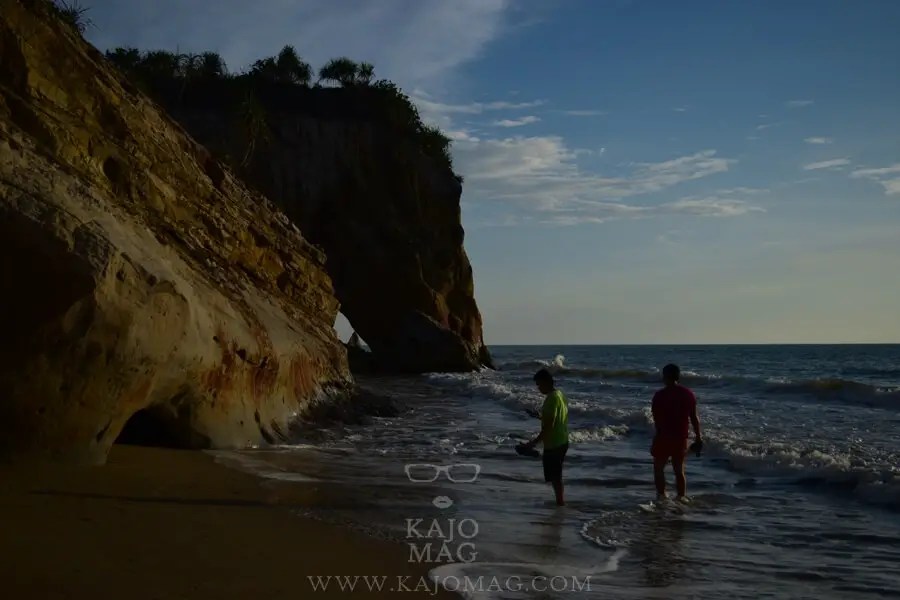
A year ago on Feb 20, 2020, the iconic rock formation dubbed the ‘Drinking Horse’ or ‘Horse Head’ at Tusan Beach, Miri collapsed.

Located about 40 minutes from Miri city, the geographical formation which resembles a horse drinking water was one of the major attractions of Tusan Beach.

The beach is also famous for the ‘blue tears’ phenomenon brought about by the bloom of tiny, bioluminescent creatures called dinoflagellates, causing the water to turn a luminescent blue.

Many mourned the loss of the sandstone formation, a landmark that had become so iconic that the government had been building various infrastructure like food stalls and a walkway around the spot hoping to leverage on its tourist pull.

The collapse of the Drinking Horse Formation

Could the ‘Drinking Horse’ formation been saved?

According to a study by Franz L. Kessler and John Jong, the development plans and actions to save the iconic rock formation came a bit late.

The study, which was published in 2020, stated that the Drinking Horse formation would have been nearly impossible to preserve.

“Only the placement of large boulders in a demi-circle could have prevented waves and longshore currents from scouring the monument, however there are no access roads to bring the necessary amount of rock.”

Kessler and Jong also stated that until today there was little consciousness and conservation efforts when it came to the potential touristic values of geological monuments.

Furthermore, the researchers suggested the preservation of geological monuments would require a masterplan spearheaded by the Miri City Council.

They emphasised that the council also needed the collaboration and the support of the Sarawak government, tourism board as well as local private industries to maintain them.

In 2019, the government had planned to build an access road in order to bring rocks down to build a retaining wall to protect the formation.

As of August 2019, the access road was reportedly 80% completed.

Any further effort taken to protect the ‘Drinking Horse’ formation proved to be too little too late.

How old was the Horse Head formation?

According to Kessler and Jong, the beginnings of the Horse Head formation started just 11 years ago. A photo as recent as 2009 only shows that the ‘horse head’ was just a column with no cave structure that would later on form as the ‘neck’ of the horse.

The caves, or space at where the formation joins with the cliff, would eventually take shape a few years later, forming what looked more like a boar’s head in 2012. Further erosion from wind, rain and the sea from there on would further carve out the space at the base of the column, to form the high arching throat of what would come to be identified as a horse head from the sandstone and clay composition of the cliffs.

Nonetheless in remembrance of Miri’s icon, here are photos of the rock formation, also known as Batu Kuda, taken in 2016.

#KajoPicks: 10 South Korean action-thriller movies you should watch

Here are just 10 of our favourite South Korean action-thriller movies:

#KajoPicks: 10 South Korean action-thriller movies you should watch

1.The Chaser (2008)

Inspired by a real-life serial killer, this Korean action-thriller is a must on our list. Yoo Young-chul is a South Korean serial killer, sex offender and self-confessed cannibal.

He admitted to having killed 20 people, mostly prostitutes and wealthy old men.

In this movie, actor Ha Jung-woo is particular impressive in his role as psychopath killer Je Yeong-min who is loosely based on Young-chul.

The story circles around a disgraced police Eom Joong-ho (Kim Yoon-seok) who became a pimp. He notices his girls keep on disappearing. After some time, he realises that all of the missing girls shared the same last customer. And that customer is Yeong-min.

This fictional character and the real life killer Young-chul have a couple things in common.

For instance, they both target prostitutes. Secondly, they both use a hammer as the main murder weapon.

In Young-chul’s case, it was the pimps who started to feel suspicious when their girls failed to show up. And they all connected the disappearances to the same phone number. They then notified the police which eventually led to the capture of Young-chul.

In terms of action, the movie offers a handful of hitting, smashing, kicking and various other forms of physical assault while the thriller part, basically a cat and mouse game between Joong-ho and Yeong-min.

Overall, The Chaser (2008) was a successful movie, becoming the third most popular film in South Korea in 2008.

Watch the trailer here.

2.The Yellow Sea (2010)

Speaking of The Chaser (2008), the film is directed by Na Hong-jin.

As the director of The Yellow Sea (2010), Noh reunites with his two lead actors in The Chaser, Ha Jung-woo and Kim Yoon-seok.

However this time, their roles are reversed. In The Yellow Sea, Jung-woo plays the protagonist while Yoon-seok plays the antagonist.

It revolves around a cab driver who agrees to carry out a hit in exchange for getting his debts paid.

After the hit goes wrong, he is chased by both the police and the gangster who assigned him the job.

Watch the trailer here.

3.The Suspect (2013)

KajoMag listed this as one of our favourite Korean movies about North Korean espionage.

Ji Dong-chul (Gong Yoo) is the best field agent in North Korea. Suddenly, he is abandoned during a mission. Additionally, he finds out that his wife and daughter murdered.

Hunted and on the run, torn between grief and vengeance, he takes a job as a night driver for the CEO of a powerful corporation.

After one bad thingafter another, the CEO is brutally assassinated and Dong-chul is the main suspect.

Now, he is on the run again. Accused of murder and wanted for treason, Dong-chul begins to hunt for the truth.

Won Shin-yun, the director of The Suspect (2013) is a former stuntman before making his directorial debut through The Wig (2005). Hence, you can expect him pushing his actors through all kinds of stunts especially Gong Yoo in this movie.

Watch the trailer here.

4.The Gangster, the Cop, the Devil (2019)

What happens when a crime boss is targeted by a serial killer?

The most logical thing to do is to turn to the police. Even a gangster wants to stay alive right?

The story follows the gangster Jang Dong-soo (Ma Dong-seok) who barely survives a violent attack by an elusive serial killer.

He then forms an unlikely partnership with local detective Jung Tae-seok (Kim Moo-yul) to catch the sadistic killer known as ‘K’.

The movie reportedly based on real events from a decade ago. However, there is no clear mention which part of this story is true.

In 2019, Sylvester Stallone announced that he would be producing the remake of The Gangster, the Cop, The Devil. Will Ma Dong-seok be reprising his role?

Watch the trailer here.

5.A Hard Day (2014)

Are you having a bad day? We bet your day is not as bad as the one the main character of this movie is having.

A Hard Day (2014) follows the story of corrupt cop Detective Ko Gun-su (Lee Sun-kyun). In the middle of his mother’s funeral, Gun-su is told that his squad is being investigated by internal affairs for bribery.

He decides to walk out in the middle of the funeral. Later, Gun-su crashes into a homeless man who wanders onto the road, killing him.

Instead of reporting it, he hides the body in his trunk. Then, Gun-su returns to his mother’s funeral and does the ‘unthinkable’. He seals the body inside his mother’s coffin.

Little that he knows, somebody is watching and using that to blackmail him.

6.Broken (2014)

This Korean action-thriller film is a classic tale of revenge. It revolves around a father who becomes a fugitive while he hunts down his daughter’s rapists and killers.

Lee Sang-hyeon (Jung Jae-young) lives a quite life with his 15-year-old daughter Su-jin. His world turns upside down her after dead body is found in an abandoned bathhouse with evidence of sexual assault.

Since the investigation into his daughter’s case is not progressing as fast as he wants, he decides to take charge.

After receiving an anonymous text with information about the case, he goes to the address that was given to him.

There, he finds a man laughing as he watches a video of Su-jin’s rape.

In a fit of rage, Sang-hyeon accidentally kills the man and finds there is a second accomplice.

Now, the police is hunting him and Sang-hyeon is hunting the second accomplice.

Watch the trailer here.

7.The Target (2010)

In movies – whether they are produced in Korea or Hollywood – retired professional killers tend to be depicted like bears going into hibernation. Disturb them when they hibernate and you will be running for your life.

The Target follows ex-mercenary killer Yeo-hoon (Rye Seung-ryong) who is now leading a normal life.

That normalcy ends when he is framed for the death of a prominent CEO. Yeo-hoon manages to escape but winds up in a hospital.

After a doctor at the hospital whose name is Tae-joon (Lee Jin-wook) decides to help him, Tae-joon’s pregnant wife is kidnapped.

Now, the two men are on the hunt to rescue her and find out who is responsible behind the fiasco.

Watch the trailer here.

8.Midnight FM (2010)

This is the South Korean action-thriller film which earned actress Soo Ae her Best Actress award at the 31st Blue Dragon Film Awards for her performance.

She plays the role of Ko Sun-young, a popular television announcer and midnight DJ.

Sun-young decides to resign from her jobs and moved to the United States after her daughter Eun-soo requires heart surgery there.

On her last day of work, her sister Ah-young babysits Eun-soo at Sun-young apartment.

While she is on air, Sun-young receives a call from Han Dong-soo who claims to be her fan.

As it turns out, Dong-soo after hearing about Sun-young’s retirement, holds her family hostage and threaten her to use her final broadcast for his own agenda.

9.Cold Eyes (2013)

This Korean action-thriller film is a remake of 2007 Hong Kong film Eye in the Sky.

It follows a group of detectives from the surveillance team of a special crime unit who work together to take down a bank robbing organisation.

It stars Sol Kyung-gu, Jung Woo-sung, Han Hyo-joo, Jin Kyung and Lee Jun-ho.

One of the best parts of this film is the cameo of Hong Kong actor Simon Yam, the original cast of Eye in the Sky.

Watch the trailer here.

10.No Mercy (2019)

How about a Korean action-thriller starring a woman?

Former professional boxer/actress Lee Si-young is the perfect cast for In-ae. She is a female bodyguard who went to jail after stabbing out the eye of a politician.

(Don’t feel bad for the politician; he raped In-ae’s sister Eun-hye.)

While In-ae is in jail, Eun-hye is bullied at school and frequently raped.

Even after In-ae is released, Eun-hye does not tell her of what happened.

Then one day, Eun-hye is abducted by a group of human traffickers. When the police refuse to do anything, In-ae goes on a one woman hunt to rescue her sister.

Watch the trailer here.

The origin stories behind 8 yōshoku dishes you might want to know

Nothing sums up ‘fusion food’ better than yōshoku.

Yōshoku is a Western-influenced cooking style of Japanese food. Most of these dishes originated during the Meiji Restoration era (1868 to 1912) when the Meiji Emperor opened its border to foreign ideas and trading.

During that time, the Emperor lifted the ban on red meat and promoted Western cuisine. The Japanese believed that Western food was the cause of the Westerners’ larger physique.

The first recorded of the term yōshoku can be traced back to 1872. The name of these dishes are mostly inspired by its original Western version.

So here are interesting origin stories behind eight yōshoku dishes you should know about:

1.Japanese curry rice

The origin stories behind 8 yōshoku dishes you might want to know

How curry powder was introduced to Japan all the way from India, is all thanks to the British.

During the Meiji era, the Indian subcontinent was under British colonial rule.

Legend has it that in the late 1800s, a shipwrecked British sailor was picked up by a fishing boat.

The lone sailor was carrying curry and introduced it to the Japanese after being rescued.

While the story of the lone sailor is most probably a myth, it is indeed true that the British navy brought curry powder over to Japan from India.

Japanese restaurants then started to serve curry as early as 1877. It was not until the Japanese started to feed their army and navy with it in the early 20th century that the dish gained its popularity.

Apart from the curry sauce, other ingredients include onions, carrots, potatoes, and a choice of meat such as beef, pork and chicken.

2.Nikujaga

Here is another yōshoku dish with a military origin story.

Togo Heihachiro was one of the Japan’s greatest naval heroes. When he studied in Portsmouth, England from 1870 to 1878, he really loved the beef stew there.

After he returned to Japan, he allegedly instructed the chefs of the Imperial Japanese Navy to recreate the dish and Nikujaga was born.

The dish is made from meat (beef in western Japan and pork in eastern Japan), potatoes, onion stewed in sweetened soy sauce and mirin.

It is often served with a bowl of white rice and miso soup.

Watch how to make it here.

3.Omurice

The origin stories behind 8 yōshoku dishes you might want to know

Just like many yōshoku dishes, there is no exact origin story behind omurice.

The dish allegedly came around in 1900 at a famous Western-style restaurant in Ginza, Tokyo, called Renga-tei.

The idea behind it was to create a dish that could be easily eaten with one hand while working in a busy kitchen.

Omurice is considered a Western dish because of the omelette.

The dish typically consists of fried rice wrapped in a thin omelette. For Malaysians, it is basically another version of Nasi Goreng Pattaya.

4.Hambagu

Also known as hamburg, this yōshoku is made from ground meat with finely chopped onion, egg and breadcrumbs flavoured with various spices.

It is believed the dish was first served in Yokohama, which was one of the first ports opened to foreigners during Meiji era.

Then during the 1960s, the dish became popular when magazines regularly printed the recipe.

Not to be confused with American hamburger, hambagu is basically a hamburg steak which was made popular by migrating Germans. The dish gained its popularity at the beginning of the 19th century.

Watch how to make it here.

5.Napolitan

If you want to have pasta but you don’t have any pasta sauce, try to make pasta sauce instead.

This yōshoku is typically made of spaghetti, tomato ketchup, onion, button mushrooms, green peppers, sausage and bacon.

Legend has it that the general chef of the New Grand Hotel (Hotel New Grand) in Yokohama was inspired by one of the military rations of the American forces during World War II.

At that time, tomato paste was rare so he used ketchup as a substitute.

He named it Napolitan or Naporitan after Naples, Italy.

Watch how to make it here. 

6.Doria

If you are not familiar with gratin, it is a culinary technique where the main ingredient is topped with a browned crust, often with breadcrumbs, grated cheese, egg or butter.

It has a golden crust on top after being baked or cooked under an overhead grill or broiler.

The most common example of this style of cooking is potatoes au gratin, funeral potatoes or potato bakes.

Instead of the potato, the Japanese used their local staple –  rice – as a base, creating a casserole dish called doria.

It is believed that a Swiss chef at New Grand Hotel in Yokohama named Saly Weil developed the dish in the 1930s.

He was inspired by the classic French gratins as well as baked Italian casseroles.

While Western gratins often used beef or ham, doria’s common ingredient is seafood.

To make doria, the rice must be cooked and buttered. Then add in other ingredients such as seafood, chicken and vegetables.

Fold in a classic French bechamel sauce which is made of butter, flour and milk.

Pour the mixture into a baking dish and topped with cheese such as Parmesan. Finally, bake it until the cheese is nice and golden in colour.

Watch how to make it here.

7.Korokke

Here is another yōshoku which inspired by French cuisine. Korokke is basically the Japanese version of French croquette.

It is made by mixing cooked chopped meat, seafood, vegetables with mashed potato or white sauce.

Shape the mixture into a flat patty, then roll it in flour, eggs and breadcrumbs. Lastly, fry it until brown on the outside.

The French reportedly introduced croquette to Japan some time in 1887. The earliest mentions of the dish is something called a ‘kuroketto’ which appear in recipe books from the Meiji era.

When korokke was first introduced to Japan, it was considered an expensive dish which only available at high-end restaurant.

Then came in a chef-turned-butcher named Seiroku Abe in the aftermath of the Great Kanto Earthquake of 1923.

According to Japan Times, Abe came up with the idea of using leftover meat scraps by grinding them and mixing the meat with potato. He also used lard (which was cheaper) back then to fry it. Since then, korokke became a common dish at Japanese butcher shops.

Today, the dish is a common dish that can be found in supermarket and convenience store.

Watch how to make it here.

8.Hayashi rice

The history of this yōshoku can be traced back to the 19th century Ikuno, a former mining town in Hyogo Prefecture.

Legend has it that a French engineer who worked for the mine back in 1868 improved the dish.

Hayashi rice mainly contains beef, onions and button mushrooms.

The western influence of this dish is the use of red wine and tomato sauce in its demi-glace sauce.

This sauce is served atop or alongside steamed rice.

There are several theories on how the name ‘Hayashi’ came about. Some believed that it was named after Yuteki Hayashi, the first president of published company Maruzen. Other believed that it was named after a cook named Hayashi who often served this dish for staff meals.

However, the most common understanding is that it derived from the phrase ‘hashed beef’.

The best thing thing about this dish is that you can keep your hayashi stew in the fridge for a few days. Or else try using it for other meals such as Omurice.

Watch how to make it here.

What we can learn about Iban customs from Rev Edwin H. Gomes

Reverend Edwin Herbert Gomes was an Anglican missionary in Sarawak at the beginning of the twentieth century.

During his 17 years of working here, he wrote several books about Sarawak including Seventeen Years Among the Sea Dyaks of Borneo (1911).

He received permission from ethnologist Dr Charles Hose to use his photographs for the book.

Through the book, readers can not only read a missionary’s experience in Sarawak but images to give the rough ideas of what it was like in those days.  

Rev Gomes recorded mostly about the customs of the Ibans with whom he worked closely.

From naming the children to burial rites, Gomes’ writing is based on what he had observed and what the Ibans in the early 19th century told him.

Perhaps because of the nature of his job as a pastor, the tone of his writing is not condescending but respectful.  

What we can learn about Iban customs from Rev Edwin H. Gomes
The figures in this picture were posed to give some idea of Dayak warfare. In the foreground was a ‘dead’ man. The Dayak over him was grasping his hair about to ‘cut off’ his head. Meanwhile, the two figures on the left and the man behind were waiting with their spears to attack the man who had taken refuge in the hole in the stump of a tree. Credit: Creative Commons. Copyright Expired.

So here are some of the things we learned about Iban customs as observed by Reverend Edwin Herbert Gomes:

What we can learn about Iban customs from Rev Edwin H. Gomes
A Sea Dayak with Shield
The man is dressed in the usual waist-cloth the Dayak wear. On his head is a headkerchief decorated with a fringe. He wears a necklace of large silver buttons. On his arms are sea-shell bracelets, and on his calves a large number of palm fibre rings. His right hand is holding the handle of his sword, the sheath of which is fastened to his belt, and his left hand is on his shield. The shield is made out of one piece of wood and coloured with a fanciful design. It is decorated with human hair from the head of dead enemies.
Credit: Creative Commons. Copyright Expired.

1. Iban customs on adultery

First of all, Gomes described Iban customs on adultery as “peculiar and worthy of notice.”

 “If a woman commit adultery with a married man, his wife may make a complaint to the headman of the house, and receive a fine from the guilty woman; or, if she prefer it, she may waylay the guilty woman and thrash her; but if she do so, she must forgo one-half of the fine otherwise due to her.

In the eyes of the Dyak the woman is alone to blame in a case like this. “She knew,” they say, “the man has a wife of his own; she had no business to entice him away from her.” If a married man commits adultery with an unmarried woman the procedure is similar. The wife of the man may punish the girl, but no one punishes the man. The whole blame, according to Dyak ideas, falls on the woman for tempting the man.

If a married man commits adultery with a married woman, the husband of the woman is allowed to strike him with a club or otherwise maltreat him, while the wife of the adulterer has the right to treat the adulteress in the same way.

The innocent husband supposes the one most to be blamed is not his wife, but her tempter, and vice versâ. This striking must not, however, take place in a house; it must be done in the open. The club used must not be of hard wood.

Very often this striking is merely a means of publishing the fact that adultery has been committed, and no one is much hurt, but I have known cases where the man has been very badly wounded.

No striking can take place after the matter has been talked about or confessed, and if one knew for certain of a case of adultery, one could easily stop this maltreatment of each other by talking about it publicly.

The case is then settled by fining the guilty parties. Where both parties are married, and no divorce follows, the fining is no punishment, because each party pays to the other.”

2. Who owns a tree according to Iban customs?

What we can learn about Iban customs from Rev Edwin H. Gomes
Iban longhouse. Credit: Creative Commons. Copyright Expired.

Gomes also recorded the Iban customs regarding the ownership of a tree and the answer might surprise you.

“Fruit-trees are owned by the people who plant them. The different families in a Dyak house plant fruit-trees near their part of the house. When they leave the spot and build a new habitation elsewhere, they each still claim ownership of the trees they planted.

The rule with regard to fruit-trees is that anyone may take the ripe fruit that has fallen, but only the owner or someone deputed by him may climb the tree.

Banting Hill, where I lived for some years, was covered with fruit-trees (durian), and at night during the fruit season crowds of men and boys would watch for the falling of the ripe fruit. They would each have a torch made of the bark of some tree, and they would sit and wait with the torch smouldering by their side.

As soon as a ripe durian fruit was heard to fall, they would wave their torches in the air to make them flare up into a flame, and they would rush to the spot, and the person who found the fruit would take possession of it.”

3.Iban customs when mourning

Every culture has its own custom especially when mourning for someone’s death including the Iban.

When anyone dies, the ulit, or mourning, has to be observed by the immediate relatives of the deceased, and continues until the feast in honour of the dead (Gawai Antu) is held. All the finery and bright articles of apparel belonging to the relatives are tied up in a bundle and put away. At the Gawai Antu the string which binds this bundle together is cut by the headman of the house, and they may use their bright garments again. The mourning (ulit) includes many other restrictions beside the prohibition of ornaments and bright-coloured clothing. There must be no striking of gongs or drums or dancing or merrymaking in the house. In the old days the mourning could not end until one of the relatives managed to secure a human head.

On the third day an observance called Pana is made. A plate containing rice and other eatables, as well as a Dyak chopper, an axe, and a cup, are taken by several of the neighbours to the room of the dead person. They go to tell the mourners to weep no more, and to give the dead man food. They enter the room, and one of them—generally[140] an old man of some standing—pushes open the window with the chopper, and the offering of food is thrown out for the benefit of the dead man and his spirit companions. Up to this time the near relatives of the dead man live in strict seclusion in their room, but after it they may come out to the public part of the house and return to their usual occupations. But the ulit, or mourning, is still observed, and does not come to an end till the feast in honour of the dead (Gawai Antu) is held.

4.The power of the tuai rumah

According to Iban customs, the tuai rumah or head of the longhouse also played the role of judge when there is a conflict. The reverend had the opportunity to witness trials during his missionary work in Sarawak.

“Whenever I have been present, the fine was cheerfully paid. The punishment, in fact, was very slight. Though the Government recognize this method of settling disputes among themselves, still, if Dyaks are discontented with the decision of their headmen, they can always bring their case for trial before the Government officer of the district. But this is seldom done. The fine imposed by the headman is so small compared to that which would have to be paid if the case were tried elsewhere that the guilty party generally prefers to pay it cheerfully rather than appeal to the Government.

If the dispute be between the inmates of one house and those of another, then the headmen of both houses have to be present at the trial. When matters are at all complicated, headmen from other houses are also asked to be present and help in the administration of justice.

I learn from conversations with the older Dyaks that in bygone days the power of the headman was much greater than it is now. Then he used to impose much heavier fines and take part of them himself for his trouble, and no Dyak dared to murmur against the decision of his Chief. In those days there was no court of appeal. The only means of protesting was to leave the house and build on to another, and in the old days such a thing was not so easily done as at present. The Dyak houses were much longer and built much farther apart, and to join another house meant moving to a district very far away and cutting off all connection with relatives and friends.

5. Iban custom of settling disputes by diving

Of all the Iban customs which recorded by Gomes, the one that no longer practiced is the diving ordeal since sometimes it resulted in death.

Here is Gomes’ record on it:

The practice of referring disputed questions to supernatural decision is not unknown to the Dyaks. They have the trial by ordeal, and believe that the gods are sure to help the innocent and punish the guilty. I have heard of several different methods, which are seldom resorted to nowadays. The only ordeal that I have frequently seen among the Dyaks is the Ordeal by Diving. When there is a dispute between two parties in which it is impossible to get any reliable evidence, or where one of the parties is not satisfied with the decision of the headman of the Dyak house, the Diving Ordeal is often resorted to.

Several preliminary meetings are held by the representatives of both parties to determine the time and place of the match. It is also decided what property each party should stake. This has to be paid by the loser to the victor. The various articles staked are brought out of the room, and placed in the public hall of the house in which each litigant lives, and there they are covered up and secured.

The Dyaks look upon a Diving Ordeal as a sacred rite, and for several days and nights before the contest they gather their friends together, and make offerings and sing incantations to the spirits, and beg of them to vindicate the just and cause their representative to win. Each party chooses a champion. There are many professional divers who for a trifling sum are willing to undergo the painful contest.

On the evening of the day previous to that on which the diving match is to take place each champion is fed with seven compressed balls of cooked rice. Then each is made to lie down on a fine mat, and is covered with the best Dyak woven sheet they have; an incantation is made over him, and the spirit inhabitants of the waters are invoked to come to the aid of the man whose cause is just.

Early the next morning the champions are roused from their sleep, and dressed each in a fine new waist-cloth. The articles staked are brought down from the houses and placed upon the bank. A large crowd of men, women, and children join the procession of the two champions and their friends and supporters to the scene of the contest at the riverside. As soon as the place is reached, fires are lit and mats are spread for the divers to sit on and warm themselves. While they sit by their respective fires, the necessary arrangements are made.

Each party provides a roughly-constructed wooden grating to be placed in the bed of the river for his champion to stand on in the water. These are placed within a few yards of each other, where the water is deep enough to reach the waist, and near each a pole is thrust firmly in the mud for the man to hold on to when he is diving.

The two men are led out into the river, and each stands on his own grating grasping his pole. At a given signal they plunge their heads simultaneously into the water. Immediately the spectators shout aloud at the top of their voices, over and over again, “Lobon—lobon,” and continue doing so during the whole contest. What these mysterious words mean, I have never been able to discover. When at length one of the champions shows signs of yielding, by his movements in the water and the shaking of the pole he is holding to, the excitement becomes very great. “Lobon—lobon,” is shouted louder and more rapidly than before. The shouts become deafening. The struggles of the poor victim who is fast becoming asphyxiated are painful to witness. The champions are generally plucky, and seldom come out of the water of their own will. They stay under water until the loser drops senseless, and is dragged ashore apparently lifeless by his companions. The friends of his opponent, raising a loud shout of triumph, hurry to the bank, and seize and carry off the stakes. The vanquished one, quite unconscious, is carried by his friends to the fire. In a few minutes he recovers, opens his eyes and gazes wildly around, and in a short time is able to walk slowly home. Next day he is probably in high fever from the effects of his dive. When both champions succumb at the same time, the one who first regains his senses is held to be the winner.

I have timed several diving contests, and where the divers are good they keep under water between three and four minutes.

Among some tribes of Dyaks, the champion is paid his fee whether he wins or loses. They say it is not the fault of the diver, but because his side is in the wrong, that he is beaten. Among other tribes, however, no fee is given to the losing champion, so he comes off very poorly indeed.

There are certain cases where diving seems to be the only means of a satisfactory decision. Take the case of the ownership of a durian tree. The tree probably does not bear fruit till fifteen years after it has been planted. Up to that time no one pays any attention to it. When the tree begins to bear fruit two or three lay claim to it. The man who originally planted it is probably dead, and no one knows for certain whom the tree belongs to. In a case like this, no amount of discussion can lead to a satisfactory decision, whereas a diving contest settles the matter to the satisfaction of all parties.

The Dyaks have great faith in the Diving Ordeal, and believe that the gods will always maintain right by making the man who is in the wrong be the loser. In fact, if a Dyak refuses the challenge of a Diving Ordeal, it is equivalent to his admitting that he is in the wrong.

Read Seventeen Years Among the Sea Dyaks of Borneo (1911) here.

8 Taiwanese bubble tea franchises you can find in Kuching

Nowadays, you can find boba shops in almost every corner of Kuching. Did you know that there are at least eight Taiwanese bubble tea brands available here?

If bubble tea has its own capital country, there is no denying that Taiwan would be it.

So far, there are two origin stories on how this chewy, milky drink came around.

The first claim derives back to 1986 in Tainan, where the owner of The Hanlin Tea room, Tu Tsong-he allegedly was inspired by white tapioca balls he saw at the market.

He then made tea using the tapioca balls, creating what we now know as bubble tea or pearl tea today.

Meanwhile, Chun Shui Tang Tearoom in Taichung began serving cold Chinese tea after observing cold coffee being served cold in Japan.

This new style of serving tea was a hit in the 1980s. Then came in the teahouse’ product development manager, Lin Hsiu Hui who randomly poured tapioca balls into her iced tea drink in 1988. From there, a new drink was born and it became an instant hit.

Regardless of which teahouse created bubble tea, we can all agree that Taiwan is the birth place of this drink.

Today, other countries such as China and Malaysia have also started their own home-grown brands of bubble tea.

In the meantime, Taiwanese bubble tea brands are opening their branches in all over the world including Malaysia.

If you are looking for Taiwanese bubble tea franchises in Kuching, here are eight of them you can visit (or order through delivery apps since we are in the middle of a pandemic):

1.The Alley

8 Taiwanese bubble tea franchises you can find in Kuching
Crunchy Brown Sugar Milk Tea

How about a Taiwanese bubble tea chain that is worthy of Korean royals? Netflix’s The King: Eternal Monarch (2020) is a hit Korean drama about a king from a parallel universe. He comes to our world using his inherited magic flute, falls in love with a girl and proceeds to have a date with her at The Alley.

In conjunction with the collaboration between the bubble tea brand and the drama, The Alley released a new crunchy milk tea series.

It comes in three flavours; Crunchy Cocoa Milk Tea, Crunchy Brown Sugar Milk Tea and Crunchy Tiramisu Milk.

Besides their crunchy milk tea series,The Alley beverages also comes in milk tea series, latte series, coffee series and more.

The brand is proud of their tapioca pearls which they claimed were made from scratch.

Looking back on its history, The Alley was launched in Taipei in 2013 by Taiwanese graphic designer and entrepreneur Chiu Mao Ting.

Today, you can find this Taiwanese bubble tea brand in North America, Europe, Southeast Asian region such as Singapore and Indonesia.

Location in Kuching: Ground & First Floor, Milan Square, Jalan Wan Alwi.

2.Gong Cha

Speaking of royalty, here is a Taiwanese bubble tea brand whose name translates to ‘tribute tea for the emperor’.

Gong Cha was founded in 2006 in Kaohsiung, Taiwan and opened it first franchise in Malaysia in 2011.

Their drinks are grouped into several categories such as brewed tea, milk tea, health tea, creative mix, latte, coffee and house special.

Some of our personal favourites from Gong Cha are Longan Red Date Tea, Matcha Milk Red Bean and Earl Grey Milk Tea with Coffee Jelly.

Locations in Kuching: Plaza Merdeka and tHe Spring

3.Daboba

While The Alley is known for its deer logo, Daboba is known for its bear logo.

The two brands share another similarity, they are both known for their take on the popular brown sugar milk beverage.

Daboba is mostly known to create the Honey Golden Pearl Green Milk Tea. Instead of black pearls, the boba is yellow in colour with faintly taste of honey.

Locations in Kuching: Galacity Street Mall, Jalan Tun Jugah

4.Ding Tea

According to their website, Ding Tea keeps a close eye on their quality and never use an overnight tea.

Founded in 2007, the brand aims to promote Taiwanese tea culture to the world.

Their drinks can be divided into different range such as milk tea, fresh tea, latte, flavoured tea, fruit juice and others.

Locations in Kuching: Everrise BDC, Plaza Merdeka, CityOne Megamall, Boulevard Shopping Mall, Vivacity Megamall, AEON Mall Kuching, iCom Square, The Hills

5.ChaTime

ChaTime currently has the largest teahouse franchise in the world.

It was founded in 2005 in Zhubei, Hsinchu, Taiwan.

Their best selling drink is none other than ChaTime ‘Pearl’ Milk Tea. Our personal preferences are Earl Grey Pearl Milk and Hazelnut Chocolate.

Locations in Kuching:
1.Aeon Kuching
Ground floor, Aeon Mall Kuching, Jalan Datuk Patinggi Haji Ahmad Zaidi Adruce
2.Vivacity Megamall
Level 3, Vivacity Megamall, Jalan Wan Alwi
3.Metrocity,
Ground Floor, Lot 14011 (SL36), Metrocity, Jalan Matang

6.Sharetea

Do you know that one of the oldest Taiwanese bubble tea franchise have a couple of branches in Kuching?

Sharetea was founded in 1992 by Chong Kai Lung in Taipei, Taiwan.

In Malaysia, the franchise was first brought over Wong Tai Yong in 2009.

Meanwhile in Sarawak, there are around 30 Sharetea branches located all over the state.

Some of our personal favourite drinks are Strawberry Blended with Ice Cream, Matcha Red Bean Milk Tea and QQhappy Family Milk Tea.

Locations in Kuching:

1.Tabuan Tranquility
Ground Floor, Jalan Canna
2.Gala Street Mall
GalaCity, Jalan Tun Jugah

7.Chun Yang Tea

Chun Yang Tea was founded by former Taiwanese basketball players Wang Xinkai and Chen Jianzhou in 2017.

Since then, it had received celebrity endorsement such as Jay Chow and Barbie Hsu.

Instead of artificial flavouring or syrups, Chun Yang is proud to say that they only use real fruit in their drinks.

Apart from that, they do not use milk powders as part of their ingredients.

The brand Chun Yang, was named after a village in Taiwan which is known for their traditional tea making,

Location in Kuching: Ground Floor, Emporium Kuching, Jalan Tun Jugah

8.Xing Fu Tang

Xing Fu Tang is perhaps the ‘baby’ among these Taiwanese bubble tea franchises because it was founded only back in January 2018.

They claim to be Taiwan No. 1 in their logo. However, we let Kuchingites to judge for that.

Their signature drink is Brown Sugar Boba Milk.

Location in Kuching: GalaCity, Jalan Tun Jugah

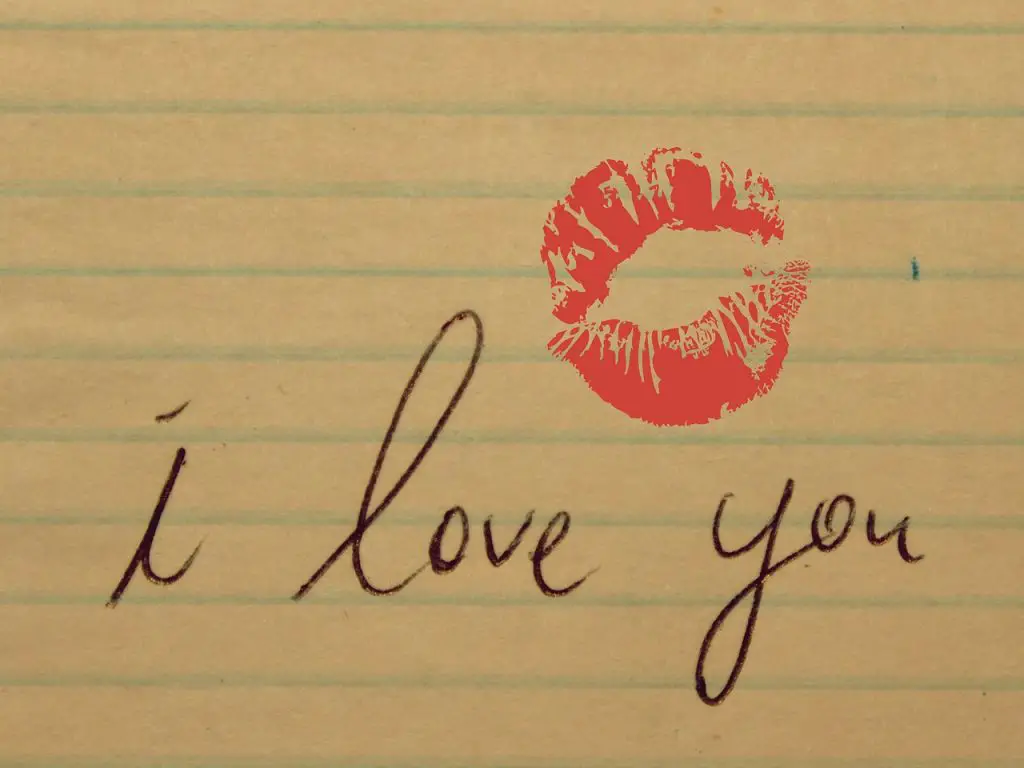
3 historical love letters that are more romantic than your K-drama

Do you know that one of the oldest love letters could be traced back to more than 5000 years ago in Indian mythology?

Princess Rukmini wrote a letter to King Krishna and it was carried by one of her messenger.

Fast forward to the 21st century with advanced technology, people hardly write love letters to express their feelings to their significant others anymore.

3 historical love letters that are more romantic than your K-drama

Since Valentine’s day is around the corner, let us look back at some hundreds-year-old love letters which are more romantic than your K-drama romance:

1.Napolean Bonaporte to his first wife Josephine de Beauharnais

Here is one of the earliest love letters French and political leader Napolean wrote to his wife which was translated by Henry Fuljambe Hall in 1901 from the original French:

Marmirolo, July 17, 1796

“I got your letter, my beloved; it has filled my heart with joy. I am grateful to you for the trouble you have taken to send me news; your health should be better to-day — I am sure you are cured. I urge you strongly to ride, which cannot fail to do you good. 

Ever since I left you, I have been sad. I am only happy when by your side. Ceaselessly I recall your kisses, your tears, your enchanting jealousy; and the charms of the incomparable Joséphine keep constantly alight a bright and burning flame in my heart and senses.

When, free from every worry, from all business, shall I spend all my moments by your side, to have nothing to do but to love you, and to prove it to you? I shall send your horse, but I am hoping that you will soon be able to rejoin me.

I thought I loved you some days ago; but, since I saw you, I feel that I love you even a thousand times more. Ever since I have known you, I worship you more every day; which proves who false is the maxim of La Bruyère that “Love comes all at once.” Everything in nature has a regular course, and different degrees of growth. 

Ah! pray let me see some of your faults; be less beautiful, less gracious, less tender, and, especially less kind; above all never be jealous, never weep; your tears madden me, fire my blood. Be sure that it is no longer possible for me to have a thought except for you, or an idea of which you shall not be the judge. 

Have a good rest. Haste to get well. Come and join me, so that, at least, before dying, we could say — “We were happy for so many days!!


Napolean sent many love letters to Josephine when they courted and some were quite sexual.

As romantic as this letter may sound, both Napolean and Josephine had affairs with other people while they were together.

Plus, imagine a man telling her to be less beautiful and less kind today, a 21st century woman might answer, “How could you?”


2.Ludwig van Beethoven to an unidentified ‘Immortal Beloved’ (1812)

Good morning, on 7 July

Even in bed my ideas yearn towards you, my Immortal Beloved, here and there joyfully, then again sadly, awaiting from Fate, whether it will listen to us. I can only live, either altogether with you or not at all.

Yes, I have determined to wander about for so long far away, until I can fly into your arms and call myself quite at home with you, can send my soul enveloped by yours into the realm of spirits — yes, I regret, it must be.

You will get over it all the more as you know my faithfulness to you; never another one can own my heart, never — never!

O God, why must one go away from what one loves so, and yet my life in W. as it is now is a miserable life. Your love made me the happiest and unhappiest at the same time. At my actual age I should need some continuity, sameness of life — can that exist under our circumstances?

Angel, I just hear that the post goes out every day — and must close therefore, so that you get the L. at once. Be calm — love me — today — yesterday.

What longing in tears for you — You — my Life — my All — farewell. Oh, go on loving me — never doubt the faithfullest heart
Of your beloved
L
Ever thine.
Ever mine.
Ever ours.

The story behind the mysterious letter

Today, this German composer and pianist is known as one of the most admired composers in the history of Western music.

After Beethoven passed away in March 1827, his assistant discovered a hidden drawer. Inside, he found some pictures, money and letters.

One of the letters was written in pencil spread over 10 small pages, addressed to his ‘immortal beloved’.

Many historians believed that Beethoven never had the chance to send the letter, while others believed that he actually did send a copy of the letter to his secret lover.

The identity of Beethoven’s ‘Immortal Beloved’ remains one of the greatest unsolved mysteries in musical history.


3. 500 years ago, a pregnant Korean woman wrote a letter to her dead husband, leaving it on his grave

To Won’s Father

June 1, 1586

You always said, ‘Dear, let’s live together until our hair turns grey and die on the same day. How could you pass away without me? Who should I and our little boy listen to and how should we live? How could you go ahead of me?

How did you bring your heart to me and how did I bring my heart to you?
Whenever we lay down together you always told me,

‘Dear, do other people cherish and love each other like we do? Are they really like us?’

How could you leave all that behind and go ahead of me? I just cannot live without you.

I just want to go to you. Please take me to where you are. My feelings toward you.

I cannot forget in this world and my sorrow knows no limit. Where would I put my heart in now and how can I live with the child missing you?

Please look at this letter and tell me in detail in my dreams. Because I want to listen to your saying in details in my dreams I write this letter and put it in. Look closely and talk to me.

When I give birth to the child in me, who should it call father? Can anyone fathom how I feel? There is no tragedy like this under the sky.

You are just in another place, and not in such a deep grief as I am. There is no limit and end (to my sorrows) that I write roughly. Please look closely at this letter and come to me in my dreams and show yourself in detail and tell me. I believe I can see you in my dreams and show yourself in detail and tell me. I believe I can see you in my dreams.

Come to me secretly and show yourself. There is no limit to what I want to say and I stop here.”

The story behind the letter to Won’s father

Written by a grief-stricken pregnant woman, this letter was found on top of a mummified body of a man in Andong city, South Korea.

There were 13 letters altogether addressed to a man named Eung-tae, who is presumed to be in the tomb.

The letter was discovered and translated in 2000. Little is known about the author of the letter but thanks to the well-preserved mummy, more is known about her husband.

Archeologists believe that Eung-tae was a member of Korea’s ancient Goseong Yi clan.

Standing at 175cm (5’8″), Eung-tae was considered taller than most Korean men during his time.

However, his cause of death and age remains unknown.

This Valentine’s day, stay at home and have your pick of any of these Korean dramas.

10 South Korean campus romance dramas to watch

8 Korean dramas about second chance romance to watch

8 Korean dramas about ‘noona’ romance dramas to watch

10 Korean office romance drama to watch

10 South Korean time-travel romance dramas to watch

The Raven (1935), the film that was banned in Miri back in 1937

A film, called The Raven, was banned in Miri, as being “purely morbid and gruesome.”

That was the the description that was published in The Sarawak Gazette on July 1, 1937.

So what was so morbid and gruesome about the movie that it was banned? Plus, where did Mirians watch movies back in the 1930s?

The Raven (1935), the film that was banned in Miri back in 1937

About The Raven (1935)

The Raven (1935), the film that was banned in Miri back in 1937

The Raven was the last film in the 1930s Universal Pictures Edgar Allan Poe trilogy, after the previous adaptations of Murders in the Rue Morgue and The Black Cat.

It is based on Poe’s 1845 poem The Raven.

The story follows Dr Richard Vollin (portrayed by Bela Lugosi, who played the first Count Dracula on film) who is obsessed with all things related to Poe. If only he was obsessed with normal merchandise such as T-shirts, mugs or socks, but nope…Dr Vollin was passionate in making torture devices inspired by Poe’s works.

When Jean Thatcher (Irene Ware) is injured in a car accident, her father Judge Thatcher (Samual S. Hinds) and boyfriend Jerry (Lester Matthews) ask Dr Vollin for help.

Vollin agrees and the operation is a success. Somewhere between the operation table to a recovered Jean, Vollin falls in love with the girl.

After finding out Vollin’s feelings, her father disapproves of his pursuit of Jean.

Unfortunately, the doctor does not handle rejection well so he plots revenge against the Thatchers, making full use of his Poe-inspired torture devices.

On Aug 4, 1935, The London Times wrote this in its review of this film:

“Every picture should have a purpose, preferably a high one. Any concentration upon Murder as Murder can only kill the films themselves. But it is difficult to speculate as to what intention, other than the stimulation of a low morbid interest, can be behind such a production as The Raven’….Here is a film of “horror” for “horror’s” sake…. It devises shelter under the statement that it has been inspired by the genius of Edgar Allan Poe. Non-sense. Neither story nor treatment give indication of any imaginative control.”

The earliest cinema in Miri

Now, comes the question of where did Mirians watch The Raven before it was banned?

They most probably watched it in an open air cinema on the field of Gymkhana Club which back then doubled as a baseball field.

Gymkhana Club Miri (GMC) was founded sometimes in 1913 and the club built the first swimming pool in Miri in 1926.

This open air cinema was reportedly started since the 1920s by Sarawak Oilfields Ltd.

The company was a subsidiary of the Shell/Royal Dutch Group which was established to run the oil industry in Miri.

The patrons of this open air cinema was most probably the employees and families of Sarawak Oilfields Ltd.

Have you heard of Sarawak national war song ‘Rix Rax’?

‘Rix Rax’ was originally written as a Sarawak war song, but it eventually became a closing hymn for a party.

The discussion on ‘Rix Rax’ in the Sarawak Gazette

In a letter published to the Sarawak Gazette on Feb 29, 1956, N.S Haile inquired about what he called the ‘Sarawak National Anthem’.

Haile wrote, “I wonder whether any of your readers can assist me in tracing the Sarawak National Anthem? Ever since I read about the existence of one, in John Macgregor’s Through the Buffer State, I have been hoping in vain to hear it played on Radio Sarawak, or by the Police Band in the Museum Gardens. Macgregor, who visited Kuching in the 1890s, makes the following reference to the anthem:

‘The country is kept in order by a small police force, mostly of Indian Sikhs… And there are also four companies of native Dyak troops, known as the Sarawak Rangers, commanded by Major D, a retired British officer, who takes the greatest interest in his lively little levy. This little corps has everything complete, from the commanding officer down to the drummer boy, and even a national anthem that goes under very melodious and patriotic name of ‘Rix Rax!’ whatever that may mean.’

Tracing the copy of ‘Rix Rax’

In response to Haile’s letter, N. Heyward wrote a letter to the gazette which was published a month later on Mar 31, 1956.

According to Heyward, his information on ‘Rix Rax’ was provided by the then Anglican Bishop of Borneo Reverend Nigel Edmund Cornwall.

In 1953 when the Bishop was on leave, he lunched with a retired schoolmaster named G. C. Turner. Turner was the grandson of Francis McDougall who was the first Bishop of Labuan and Sarawak (1855-1868).

Turner reportedly gave Bishop Cornwall a copy of the “Sarawak National War Song” which has the handwriting of Bishop McDougall’s wife Harriette.

According Heyward, Cornwall then handed a copy of the manuscript to Radio Sarawak in 1953.

Accompanying his letter to the gazette was the manuscript of ‘Rix Rax’ which was in Cornwall’s possession.

The Sarawak Gazette pointed out that the ink of the old manuscript was somewhat faded and it was ‘found impossible to get a clear and legible reproduction’.

However, the gazette did published the original words of the ‘Rix Rax’ song.

It goes:

Rix rax filly bon bon bon,
Filly bon bon bon,
Filly bon.

Rix rax filly bon bon bon,
Filly bon bon bon,
Filly bon.

Kayoh kayoh balah moussu
Kayoh kayoh balah moussu Sarawak
Sarawak menang
Sarawak Sarawak Sarawak menang.

‘Rix Rax’, the closing song of 19th century Sarawakian parties

If you need to get a bunch of Sarawakians to hype up during a party, just play the Iban song ‘Berkikis Bulu Betis’ by Andrewson Ngalai.

This song will surely get the crowd sing ‘La La La La La La La’.

Just like ‘Berkikis bulu betis’, the ‘Rix Rax’ song is a must-played song in Sarawak, not to pump up the crowd but to close a party.

We know this from Harriette McDougall, the wife of Bishop Francis McDougall.

She wrote in her book, “It is an established rule now that we go to the Rajah’s on Tuesday evening, and he comes to us on Thursday, and we are to dine together once a month… You have no idea how merry we are, but there is no resisting the fun of this patchwork society. Last Tuesday, Mr. H, a tall and immensely stout man, would persist in dancing a Minuet de la Cour with a little midshipman.

“He mounted a Dayak cap and feathers and made us laugh till we cried. I danced a quadrille with the Rajah, who dances beautifully and is as merry as a child. A charade was acted, which, with the dancing, infinitely amused the natives of whom I should think 150 were present. The evening closed with singing ‘Rix Rax’, the national anthem of Sarawak, the Europeans clapping their hands and the natives yelling a war yell for the chorus.”

Who wrote the ‘Rix Rax’?

According to author Nigel Barley in his book White Rajah: A Biography of Sir James Brooke, Harriette and Brooke Brooke had written ‘Rix Rax’. They based it on an old German nonsense song ‘catch’.

However, Barley stated the lyrics that he came across actually went like this,

‘Rix Rax, filly bow bow bow bow, filly bow bow bow,
Rix Rax Sarawak, Sarawak, Sarawak shall win,
I see from far the Dayak fleet of war. How fast!
And meet Saribas pirate fleet! And Sarawak and Sarawak and Sarawak shall win.’

Barley was correct in one thing that the song was based on an old German tune.

However, it was reportedly the first Rajah himself, James Brooke, who wrote the song, not as an anthem but as a Sarawak National War Song in 1848.

Regardless of how the lyrics originally went, wouldn’t be interesting fun to be able to hear this war song again, especially during a party?

KajoReaders, let us know what you think in the comment box.

KajoPicks: 10 South Korean campus romance dramas to watch

If you are looking for South Korean campus romance dramas to watch, here are KajoMag’s suggestions:

1.My ID is Gangnam Beauty (2018)

KajoPicks: 10 South Korean campus romance dramas to watch

The time you spend on your tertiary education is also the perfect time to discover more about yourself. And this drama offers a lot of lessons on self-discovery and staying true to oneself.

Based on the webtoon of the same name published in 2016 by Naver Webtoon, it centers around Kang Mi-rae (Im Soo-hyang) who grew up with low self-esteem due to be being bullied for being ‘ugly’.

Before she enters university, she decides to undergo plastic surgery to become ‘beautiful’.

However, her campus life turns complicated when some people find out about her surgery and ridicule her as a ‘plastic surgery monster’.

In the same time, Mi-rae begins to build her self-esteem when she befriends her former schoolmate Do Kyung-seok (Cha Eun-woo).

Romance starts to unfold between the two as Kyung-seok proves to Mi-rae that he doesn’t care about looks since he knew how she looked like before her plastic surgery.

The ‘villain’ of this Korean campus romance drama is Hyun Soo-ah (Joo Woo-ri). She masks her own insecurity by using her beauty and innocent persona to manipulate others into liking her.

Overall, My ID is Gangnam Beauty (2018) is entertaining to watch with realistic conflicts and no exaggerating plots.

Well, except for Eun-woo whose look is unrealistically handsome (and it is his natural look btw).

Watch the trailer here.

2.Weightlifting Fairy Kim Bok Joo (2016)

Inspired by the life of Olympic gold-medalist Jang Mi-ran, this Korean campus romance drama is set in a sport college.

Kim Bok-joo (Lee Sung-kyung) is a naturally gifted weightlifter whose father was also a former weightlifter.

She develops a crush on her friend Jung Joon-hyung’s (Nam Joo-hyuk) older brother, Jung Jae-yi (Lee Jae-young).

Joon-hyung, who is a competitive swimmer and Bok-joo are both childhood friend from they were in elementary schools.

They enjoy teasing each other and he eventually falls in love with her.

Generally, the drama focuses on the ups and downs of young athletes in achieving their dreams while finding love along the way.

Watch the trailer here.

3.What’s Up (2011)

This drama circles around a Korean campus romance going around in a university musical department.

Jae-Hun (Lim Ju-hwan) is a high school dropout who roams the streets at night with his two best friends.

After some struggles, he decides to go to university to study acting.

In the meantime, Park Tae-yii (Kim Ji-won) comes to Seoul to take an audition for entry into in the university.

She lives in the countryside with her grandfather, and inherited her musical talents from her father.

The third main character is Ha Do-sung (Daesung) who is the famous rock star Hades who presents himself by hiding his identity through a mask.

Due to his secret family background, Do-sung can’t reveal his real identity. So, he tries to live quietly without drawing attention to himself and joins the university.

Fourthly, Kim Byeong-gun (Jo Jung-suk) is the odd one out in his family of businessmen. He wishes to pursue a career in musicals, despite his fear of performing in front of others.

Meanwhile, Eun Chae-young (Jang Hee-jin) is the experienced actress who wants to prove that she has talent and not just a pretty face.

Finally, Oh Doo-ri (Lim Ju-eun), is an talented actress who prefers to spend her time playing first-person shooting computer games than rehearsing.

This group of young adults end up together in Haneul Arts University’s musical department.

Together, they learn what does it need to be successful in the musical world.

4.Love Story in Harvard (2004)

By the title of this drama, you can guess the campus romance takes place at Harvard University.

The first half of the drama set in the Ivy League university following the relationship between a law student Kim Hyun-woo (Kim Rae-won) and a medical student Lee Soo-in (Kim Tae-hee).

Things get complicated when Hyun-woo’s coursemate Alex Hong (Lee Jung-jin) also falls for Soo-in.

Hyun-woo and Soo-in eventually starts dating but their romance was short-lived.

Soo-in leaves Hyun-woo to work in South America and never contact him again.

Then the second part of the drama sets in Seoul when everyone graduated and living their own lives.

An unexpected circumstance brought all three together again and just like what happened in college, the trio involves in another round of love triangle.

5.Love Rain (2012)

KajoPicks: 10 South Korean campus romance dramas to watch

If you are into mellow, cinematic love stories, this is definitely the Korean campus romance drama for you.

Set in the ’70s and in the present day, it has Jang Keun-suk and Im Yoon-ah playing dual roles.

When Seo In-ha (Jang Keun-suk) and Kim Yoon-hee (Im Yoon-ah) first meet during their university students in the ’70s, they fall in love almost immediately.

However, life hits hard on them and circumstances brought them down different roads.

Fast forward to 2012, old In-ha (Jung Jin-young) is now unhappily married to Baek Hye-jung, one of Yoon-hee’s former best friends.

Fate brings the couple back together and they decide to make up for lost time.

But wait, since this is a Korean drama we are talking about, things can never be as easy as that.

In-ha’s son Seo-joon (Jang Keun-suk) meets Yoon-hee’s daughter Ha-na (Im Yoon-ah) by chance.

Despite arguing so much at first, the two gradually fall in love.

What happens to the young couple when their parents announce that they are getting married?

6.Age of Youth (2016)

Remember during your university days when you get to live under one roof with people from different backgrounds? This Korean campus romance drama will remind you of those days.

Also known as Hello, My Twenties!, this drama stars Han Ye-ri, Han Seung-yeon, Park Eun-bi, Ryu Hwa-young, Park Hye-su, Ji Woo and Choi Ara.

The story follows five girls who live together in a sharehouse called ‘Belle Epoque’ while studying in a university.

First we have Yoon Jin-myung, a business major who carries a complicated family problem on her shoulders.

Then Jung Ye-eun, a religious culinary art major and Song Ji-won, the supernatural believer who majors in journalism.

To add in the diversity in this group, we have Kang Yi-na, the sugar baby who has eyes for expensive things and Yoon Eun-jae who is the typical girl from the countryside.

Typically, it is a slice-of-life drama focusing on the struggles of college students nowadays.

Watch the trailer here.

7.Go Back Couple (2017)

If you had a chance to go back to the time when you are studying in university, what would you change?

For divorced couple Choi Ban-do and Ma Jin-joo (Jang Na-ra) who first met on campus, they vow not to fall in love with each other again.

Putting aside the fantasy aspect of the drama with all the time-travelling going on, Go Back Couple (2017) offers a handful of real-life lessons.

Some people might have a clear idea on what they going to do with the career, but the reality is not everyone can get their dream job. In fact, an architecture graduate might end up working as an insurance agent or a medical sales representative.

The drama shows that is okay as long as you are happy and living a fulfilling life.

When going back to the past, both Ban-do and Jin-joo have the opportunity to make good on their biggest regrets like appreciating the people around them.

Watch the trailer here

8.Naeil’s Cantabile (2014)

Adapted from the Japanese manga Nodame Cantabile by Tomoko Ninomiya, this drama sets in a music school.

It stars Joo Won and Shim Eun-kyung with Park Bo-gum, Go Kyung-pyo and Baek Yoon-sik.

The story follows of Cha Yoo-jin, a third year music student who majors in piano and dreams of being a world renowned conductor.

While he is undeniably talented in music, Yoo-jin’s fear of flying has become a hurdle in achieving his dream.

What happens when Yoo-jin meets a fellow genius pianist who is a free spirit and a bit of an odd character?

Watching this drama now would definitely give a sense of blast from the past, because two of South Korea’s leading actors today, Park Bo-gum and Go Kyung-pyo, are just playing supporting roles in this drama.

9.Reply 1994 (2013)

This second installment of the Reply series is set in 1994, and circles around six university students.

They come from different provinces of South Korea and live together at a boarding house in Seoul.

If you are familiar with the Reply series, this drama follows a nonlinear story-telling where it shifts between the past in 1994 and the present in 2013.

It keeps the viewers guessing which male character will be the husband of Sung Na-jung (Go Ara).

Imagine the American series How I Met Your Mother set among college students in the ’90s South Korea.

Speaking of the ’90s, the drama also depicts the historical events as well as pop culture that took place from 1994 and the years that follow.

Reply 1994 (2013) is one of the highest rated Korean dramas in cable television history, so you have to watch it to understand the buzz around it.

10.Love Playlist (2017)

Still want a dose of Korean campus romance dramas, but don’t have the time? Here is the series for you.

Love Playlist is a South Korean web series that spanned over four seasons from March 9, 2017 to August 8, 2019.

One episode is about 15-25 minutes, hence it is a perfect drama to watch for a quick break.

Moreover, you can watch it for free on Youtube.

The story revolves around a group of college students as they fall in love and break up while trying to get a degree.

Watch the trailer here.

Do not forget to check out our recommendation of Chinese campus dramas and coming-of-age dramas to watch!

The significance of lucky bamboo during Chinese New Year

First of all, the lucky bamboo is not a bamboo. Despite its name and appearance, this plant that you see being sold during Chinese New Year actually belongs to the Asparagaceae family, the same family as the asparagus.

Its scientific name Dracaena sanderiana is named after the German-English gardener Henry Frederick Conrad Sander (1847-1920).

Scientifically, this plant is more closely related to African lilies than the actual bamboo.

It is also known by its other names such as ribbon plant, Chinese water bamboo and Belgian evergreen.

The symbol of bamboo in Chinese culture

The significance of lucky bamboo during Chinese New Year

Even though lucky bamboo is not exactly a real bamboo, let us look at the meaning of the bamboo itself in Chinese culture.

You might notice bamboo is a common theme to see in Chinese painting and calligraphy.

This is because it is a symbol of Oriental beauty. It represents the character of resistance, moral integrity as well as modesty and loyalty.

A famous Tang Dynasty poet Bai Juyi (772-846) once summarised what the bamboo represented, according to its plant characteristics.

While its deep root represents resoluteness, a straight stem denotes honourability, while its hollow interior signifies modesty and clean exterior exemplifies chastity.

Overall, the bamboo is a positive symbol to encourage people to persevere and hang in there especially throughout a difficult situation.

The significance and symbolism of lucky bamboo during Chinese New Year

Coming back to the lucky bamboo, there are five elements surrounding the plant which makes it auspicious especially during Chinese New Year.

Before that, the plant must be decorated. First of all, there must be stones or pebbles surrounding it.

It is best to put it in a metal pot or hang some decorative coins on it. Then, tie a red ribbon around the plant or pot.

By doing so, you will have all the five elements to make your lucky bamboo plant to be auspicious.

The stones or pebbles represent the earth element while the metal pot or coin is the metal element.

While the fire element is represented by the red ribbon, the water element is the water used to nourish the plant and the wood element is the bamboo itself.

Moreover, the significance of the lucky bamboo depends on the number of stalks you put together.

Two stalks represent love and three stalks for wealth, happiness and longevity.

If you are doing business, put together five stalks because it represents wealth for businessmen.

Six stalks are for prosperity and seven stalks are supposed to bring you good health.

Let say you are looking for luck and motivation this year, put together eight stalks of lucky bamboo.

Nine stalks is for good fortune, ten for perfection and finally 21 stalks for abundance and blessings.

Even if you don’t believe in the symbol of the lucky bamboo and its significance, this indoor plant is actually beautiful and easy to care for, hence, making it a perfect decorative plant to brighten your home.

1 18 19 20 21 22 75